Hadrian viewed the inhabitants of southern Scotland—the “Picti,” or Picts—as a menace.

By Carly Silver
Public Historian and Associate Editor
HarperCollins
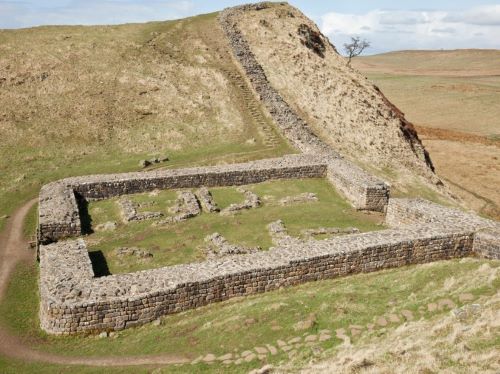
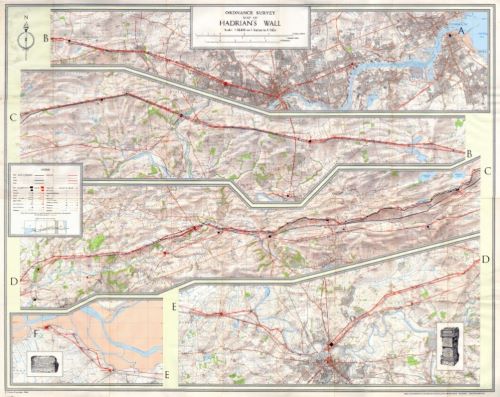
Stretching 80 miles from the Irish Sea in the west to the North Sea in the east, Hadrian’s Wall in northern England is one of the United Kingdom’s most famous structures. But the fortification was designed to protect the Roman province of Britannia from a threat few people remember today—the Picts, Britannia’s “barbarian” neighbors from Caledonia, now known as Scotland.
By the end of the first century, the Romans had successfully brought most of modern England into the imperial fold. The Empire still faced challenges in the north, though, and one provincial governor, Agricola, had already made some military headway in that area. According to his son-in-law and primary chronicler, Tacitus, the highlight of his northern campaign was a victory in 83 or 84 A.D. at the Battle of Mons Graupius, which probably took place in southern Scotland. Agricola established several northern forts, where he posted garrisons to secure the lands he’d conquered. But this attempt to subdue the northerners eventually failed, and Emperor Domitian recalled him a few years later.
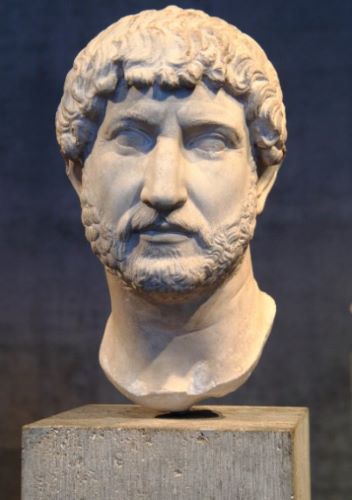
It wasn’t until the 120s that northern England got another taste of Rome’s iron-fisted rule. Emperor Hadrian “devoted his attention to maintaining peace throughout the world,” according to the Life of Hadrian in the Historia Augusta. Hadrian reformed his armies and earned their respect by living like an ordinary soldier and walking 20 miles a day in full military kit. Backed by the military he had reformed, he quelled armed resistance from rebellious tribes all over Europe.
But though Hadrian had the love of his own troops, he had political enemies—and was afraid of being assassinated in Rome. Driven from home by his fear, he visited nearly every province in his empire in person. The hands-on emperor settled disputes, spread Roman goodwill, and put a face to the imperial name. His destinations included northern Britain, where he decided to build a wall and a permanent militarized zone between “enemy” and Roman territory.
Primary sources on Hadrian’s Wall are widespread. They include everything from preserved letters to Roman historians to inscriptions on the wall itself. Historians have also used archaeological evidence like discarded pots and clothing to date the construction of different portions of the wall and reconstruct what daily life must have been like. But the documents that survive focus more on the Romans than the foes the wall was designed to conquer.

Before this period, the Romans had already fought enemies in northern England and southern Scotland for several decades, Rob Collins, author of Hadrian’s Wall and the End of Empire, says via email. One problem? They didn’t have enough men to maintain permanent control over the area. Hadrian’s Wall served as a line of defense, helping a small number of Roman soldiers shore up their forces against foes with much larger numbers.
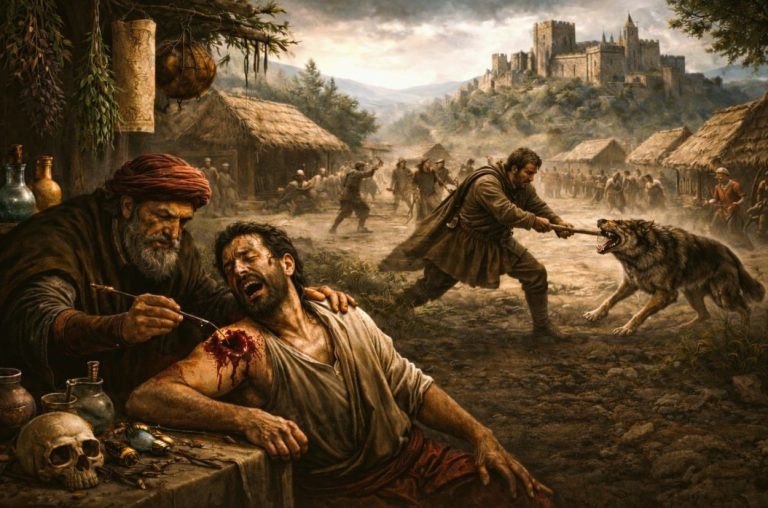
Hadrian viewed the inhabitants of southern Scotland—the “Picti,” or Picts—as a menace. Meaning “the painted ones” in Latin, the moniker referred to the group’s culturally significant body tattoos. The Romans used the name to refer collectively to a confederation of diverse tribes, says Hudson.
To Hadrian and his men, the Picts were legitimate threats. They frequently raided Roman territories, engaging in what Collins calls “guerilla warfare” that included stealing cattle and capturing slaves. Starting in the fourth century, constant raids began to take their toll on one of Rome’s westernmost provinces.
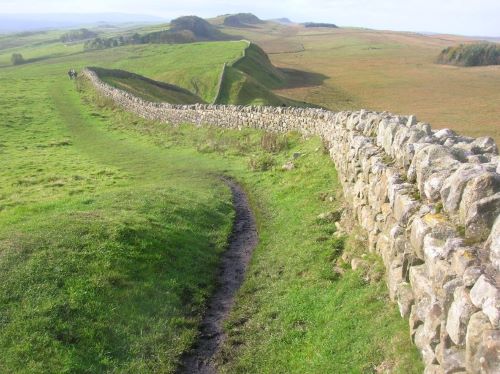
Hadrian’s Wall wasn’t just built to keep the Picts out. It likely served another important function—generating revenue for the empire. Historians think it established a customs barrier where Romans could tax anyone who entered. Similar barriers were discovered at other Roman frontier walls, like that at Porolissum in Dacia.
The wall may also have helped control the flow of people between north and south, making it easier for a few Romans to fight off a lot of Picts. “A handful of men could hold off a much larger force by using Hadrian’s Wall as a shield,” Benjamin Hudson, a professor of history at Pennsylvania State University and author of The Picts, says via email. “Delaying an attack for even a day or two would enable other troops to come to that area.” Because the Wall had limited checkpoints and gates, Collins notes, it would be difficult for mounted raiders to get too close. And because would-be invaders couldn’t take their horses over the Wall with them, a successful getaway would be that much harder.
The Romans had already controlled the area around their new wall for a generation, so its construction didn’t precipitate much cultural change. However, they would have had to confiscate massive tracts of land.
Most building materials, like stone and turf, were probably obtained locally. Special materials, like lead, were likely privately purchased, but paid for by the provincial governor. And no one had to worry about hiring extra men—either they would be Roman soldiers, who received regular wages, or conscripted, unpaid local men.
“Building the Wall would not have been ‘cheap,’ but the Romans probably did it as inexpensively as could be expected,” says Hudson. “Most of the funds would have come from tax revenues in Britain, although the indirect costs (such as the salaries for the garrisons) would have been part of operating expenses,” he adds.
There is no archaeological or written record of any local resistance to the wall’s construction. Since written Roman records focus on large-scale conflicts, rather than localized kerfuffles, they may have overlooked local hostility toward the wall. “Over the decades and centuries, hostility may still have been present, but it was probably not quite as local to the Wall itself,” says Collins. And future generations couldn’t even remember a time before its existence.
But for centuries, the Picts continued to raid. Shortly after the wall was built, they successfully raided the area around it, and as the rebellion wore on, Hadrian’s successors headed west to fight. In the 180s, the Picts even overtook the wall briefly. Throughout the centuries, Britain and other provinces rebelled against the Romans several times and occasionally seceded, the troops choosing different emperors before being brought back under the imperial thumb again.
Locals gained materially, thanks to military intervention and increased trade, but native Britons would have lost land and men. But it’s hard to tell just how hard they were hit by these skirmishes due to scattered, untranslatable Pict records.
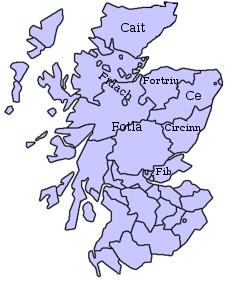
The Picts persisted. In the late third century, they invaded Roman lands beyond York, but Emperor Constantine Chlorus eventually quelled the rebellion. In 367-8, the Scotti—the Picts’ Irish allies—formed an alliance with the Picts, the Saxons, the Franks, and the Attacotti. In “The Barbarian Conspiracy,” they pillaged Roman outposts and murdered two high-ranking Roman military officials. Tensions continued to simmer and occasionally erupt over the next several decades.
Only in the fifth century did Roman influence in Britain gradually dwindle. Rome’s already tenuous control on northern England slipped due to turmoil within the politically fragmented empire and threats from other foes like the Visigoths and Vandals. Between 409 and 411 A.D., Britain officially left the empire.
The Romans may be long gone, but Hadrian’s Wall remains. Like modern walls, its most important effect might not have been tangible. As Costica Bradatan wrote in a 2011 New York Times op-ed about the proposed border wall between the U.S. and Mexico, walls “are built not for security, but for a sense of security.”
Hadrian’s Wall was ostensibly built to defend Romans. But its true purpose was to assuage the fears of those it supposedly guarded, England’s Roman conquerors and the Britons they subdued. Even if the Picts had never invaded, the wall would have been a symbol of Roman might—and the fact that they did only feeds into the legend of a barrier that’s long since become obsolete.
Originally published by Smithsonian Magazine, 04.26.2017, reprinted with permission for educational, non-commercial purposes.
About the Author