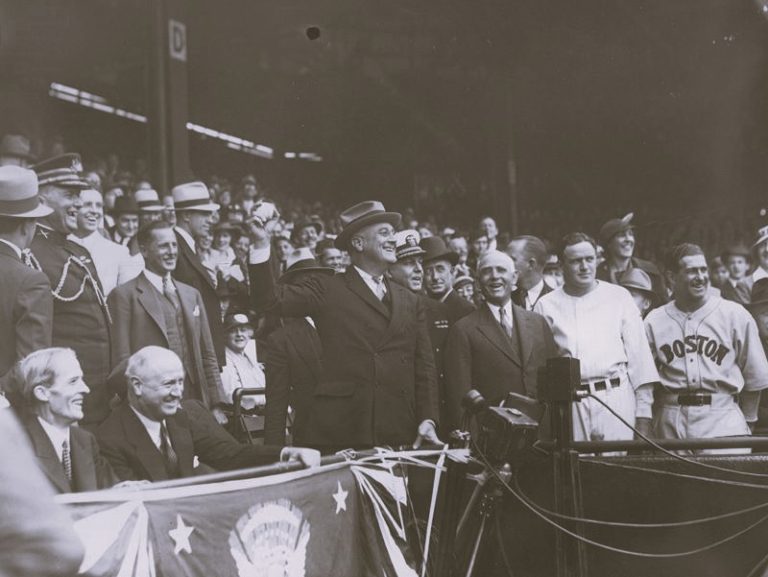

Feudalism can be found in a range of societies across different time periods.

By Dr. Vladimir Shlapentokh
Professor of Sociology,
Michigan State University

By Dr. Joshua Woods
Associate Professor of Sociology
West Virginia University
Introduction
The concept of feudalism has received an increasing amount of attention in recent years but remains largely undeveloped and undertheorized. For us, the terms feudal, feudalism, and the feudal model refer to an ideal type of social organization—that is, a theoretical construct that generally corresponds to the essential features of concrete reality but never replicates them precisely. Such a model, as Weber (1949, 93) wrote, is a “limiting concept with which the real situation or action is compared and surveyed for the explication of certain of its significant components.” Following Weber, we suggest that feudalism can be found in a range of societies across different time periods. Medieval France serves as the empirical basis of the feudal model, but even this society merely approximates the ideal-typical feudalism.
The model suggests that the feudal state manages to persist over long periods of time, in spite of the problems associated with political fragmentation, instability, and the state’s dependence on other social actors and organizations. In this way, ideal feudalism is neither “ideal” in the conventional sense nor a metaphor for social chaos and disorder. It is a dialectical construct, at the center of which lies a suboptimal yet sustainable brand of central authority.
In order to develop the feudal model as a tool of analysis, we begin by reviewing how it has been used by other investigators, past and present, and then synthesize some of these treatments in a cohesive conceptual framework. This treatment of feudalism builds on several of our previous works (Shlapentokh with Woods 2007; Shlapentokh 1996a, 1996b, 1997a, 1997b, 2003, 2004; Shlapentokh, Levita, and Loiberg 1997; Woods and Shlapentokh 2009).
“Feudalism” in Contemporary Social Analysis

The term feudalism is used in the discourse on contemporary society in a number of different ways. The “feudal perspective” cuts across a great deal of academic terrain, bridging the work of journalists, sociologists, political scientists, international relations experts, and historians. One group of authors includes journalists and pundits who, overlooking the scholarly research on feudalism, apply the term loosely to a range of corrupt, unsavory, or backward aspects of society. Judging from an electronic search of major world newspapers, these authors are more likely to associate feudalism with developing nations than with Western ones (Glionna 2008; Matthews and Nemsova 2006).
A second group offers a more cohesive conceptual framework and applies it to illustrate the problems of Western democracy and capitalism. A typical representative of this group is Farmer (2006), who paints a dark portrait of Walmart, the leading baron of big-box grocery stores. The founder of Walmart, Sam Walton, emerges as a “neo-feudal knight” who disregards social and legal standards and perpetuates a business climate “characterized by economic warfare, gold, and certainly significant autonomy” (Farmer 2006, 157).
The third group, composed mostly of American exceptionalists, is interested in how a society’s feudal heritage, or lack thereof, influences its development and contemporary circumstances. Schlesinger (1999, 152), for instance, suggested that America was “uncontaminated by feudal reminiscences,” while Hartz (1955, 99) wrote that the country “was unfamiliar with the heritage of feudalism” and that this circumstance defined “the American liberal experience.”[1]
The final group draws on feudalism to describe the processes in both post-communist societies and other non-Western countries that have recently undergone major political or economic transformations. By the late 1990s, the feudal perspective became quite fashionable in the analysis of so-called transition societies, postcommunist Russia in particular. Throughout the
1990s and early 2000s, the Russian state and several other former communist regimes were
unable to regulate the new and very powerful social actors and organizations that emerged following the collapse of the Soviet Union. The new business moguls, regional governors, and criminal organizations further weakened the state, encouraged corruption, and hindered the transition to democracy and a market economy.
These “feudal” circumstances were regarded as similar to the social reality in Europe after the downfall of the Roman Empire (Shlapentokh with Woods 2007). Latynina (2000, 2001, 2002, 2005), a well-known Russian political commentator, regularly refers to Russia’s “industrial feudalism” and labels big corporations as “feudal empires.” A number of other well-known Russian scholars also use the feudal metaphor in their descriptions of post-Soviet Russia (Konchalovskii 2006; Grinberg 2006; Orekhovskii 2005; Danilov 2000; Guriev 2001). Though less popular outside the country, several foreign experts draw on feudalism as well. Ericson (2000), for instance, applies the feudal model in his analysis of the Russian economy. In
Shadow Politics, Stavrakis (1997, 8) discusses the deinstitutionalization of the state, particularly in the peripheral regions, and argues that “Russia is now more nearly a feudal system rather than a federal one.” Treisman (2002, 58) takes a similar line, noting that the provincial governors of the Yeltsin era possessed the power to contest and bargain with the Kremlin and to exploit their regions like “feudal fiefdoms.” Although Russia receives the most attention in this respect, the feudal model (or direct comparison to medieval Europe) has also been used in analyses of Chechnya (Lieven 1998), Romania (Matei 2004), the former East Germany (Meier 1990), and Bosnia-Herzegovina (Deacon and Stubbs 1998).
Other scholars apply feudalism in broader discussions of East European (Verdery 1996) or post-communist countries in general (Karstedt 2000, 2003). Fairbanks (1999, 2000), for instance, suggests that the weakness of many post-communist states represents an unusual case in history. “Most transitions away from authoritarian rule in the last two hundred years, however revolutionary or disorderly, did not weaken the state. If they did not issue in democracy, a strong authoritarian regime usually emerged, sometimes after a brief period of anarchy” (Fairbanks 2000, 35). In contrast, almost all former communist regimes experienced a weakening of the state and the fragmentation of political power throughout the two decades following the start of perestroika. Fairbanks (2000, 35) further suggests that the closest historical comparison to these circumstances—“an overwhelming powerful and intrusive state succeeded by very weak states”—was the collapse of the Roman Empire, this being the justification for using “feudalism” in the analysis of post-communist countries. Our approach
is closely aligned with the views of Fairbanks and other post-Sovietologists. As discussed below, however, our treatment of feudalism has a few important deviations from this group, as well as from the others.
Our Approach: “Ideal Feudalism”
While our interpretation of feudalism overlaps, to varying degrees, with the four groups discussed above, our key assumptions are best understood by how they contrast with these approaches. Not surprisingly, the feudal model deviates furthest from the loose, journalistic treatments of the term. Given the lack of consensus on the meaning of feudalism, its usage requires a careful definition.
Ideal feudalism also departs in meaningful ways from the other three groups. First, unlike most members of these groups, we do not make direct comparisons between the United States and the European Middle Ages, even if these parallels are, in some cases, extremely interesting. As mentioned, we compare certain aspects of contemporary America to the feudal model, which allows researchers to draw comparisons between societies and across time periods. Feudalism, according to Weber (1978,1070), can be found not only in medieval Europe, but also in the preclassical period of Greece, in the last period of the Roman republic, in medieval China, and even in Ptolemaic Egypt. As suggested in The Encyclopedia of the Middle Ages (Cantor 1999, 164), feudalism can be used as “an abstract model or ideal type relevant not only to medieval Europe.” This perspective is particularly at odds with the approach of American exceptionalists, whose emphasis on the sequence of historical events and the specific course of institutional development contrasts with the notion of universal models and leads them to draw only concrete comparisons between America and medieval Europe.
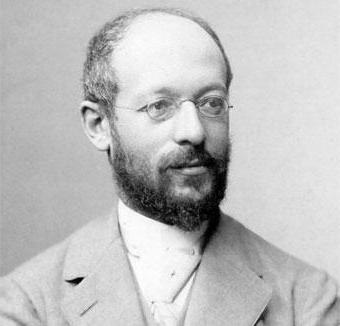
Our approach is inspired in part by Simmel’s “formal sociology,” a perspective that rejects the idea that new historical events change the essential nature of human interaction. Simmel argues that societies consist of universal patterns of interaction, which occur and reoccur throughout history and across different social and cultural settings. Two entirely different types of human behavior or interaction can be understood with the same formal concept or model. For instance, in many ways, conflicts between nations are similar to conflicts between husbands and wives. As another example more akin to the feudal model, the need for personal protection and the willingness of people to pay for it leads to a universal form of social interaction between providers and receivers of protection (Simmel 1968, 1978; see also Coser
1977).
A parallel perspective is shared, at least in part, by Simpson (1998), a historian of medieval law, who constructed a feudal model and used it to describe not only life in the Middle Ages, but certain aspects of American society as well. Among other things, he compared the ideal typical relations between medieval lords and vassals—their mutual rights and responsibilities, and sources of power—to the organized crime syndicate led by Al Capone in the 1920s and 1930s. Karstedt (2000) supported the universalistic perspective when suggesting that the patrimonial and feudal structural patterns of medieval Europe never disappeared. Smelser (1994) compared medieval developments to the circumstances in failing contemporary states. Webber and Wyldavsky (1994, 228), also consistent universalists, suggested that non-centralized governments, as seen in medieval times, have existed throughout history (in Mesopotamia during the Kassite period, in Egypt during the Middle Kingdom, in Japan between the ninth and eighteenth centuries).[2]
Another important distinction between our view and the others involves the “segmented approach” to social analysis, which emphasizes the need for multiple models to explain any society or complex organization, past or present (Shlapentokh 1997a, 1997b, 1998; Shlapentokh with Woods 2007). Concrete elements of society that do not fit a given model should not be seen merely as “deviations,” but rather as empirical evidence that more than one model is needed for the analysis.
Some authors, particularly those who link feudalism to post-communist societies, ignore other models and thereby overextend the explanatory power of the feudal model. While rejecting “one-system” approaches—or any type of totalizing perspective for that matter—our feudal model is designed merely to supplement other ideal types of social organization, such as the conventional models of liberal capitalism and authoritarianism. While feudalism may be one of the best parallels for describing contemporary Russia, particularly in the 1990s, it is not the only one and should not be considered as such.
The segmented approach breaks with the principles of “system analysis,” as formulated in the
1950s and 1960s by Parsons and others (Parsons 1952, 1971; Trevino 2001; Ackoff, Emery, and Ruben 2005; Cortés, Przeworski, and Sprague 1974). The one-system or holistic approach, even in classic Parsonian terms, has remained somewhat popular in the United States (Jacob and Toscano 1964, 209–10, 243–44) and Europe (Luhmann 1995). Our approach is intended to underscore the weakness of describing American society, or any society for that matter, with the use of a single model or system. A tendency to label societies as either liberal or authoritarian rose to prominence among scholars and particularly politicians in the postwar period (Curtis, Blondel, and Brown 1993; Mankiw and Harris 1998; Case and Fair 1996; Bornstein 1994). This dichotomous framework sometimes blurred the lines of otherwise subtle, nuanced comparative analyses of the United States and other countries.
The segmented approach is supported by those authors who have challenged the Parsonian vision of the United States as an integrated society and emphasized its deeply fragmented cultural and social patterns (Cascardi 1992; Kuper and Smith 1969). For instance, Robert Solo, a pioneer of this idea, refused to see the American economy as an integrative system that is effectively regulated by market laws. He characterized the economy as a combination of various types of economic organizations that pursue different goals and obey different laws (Solo 1967; Stiglitz and Walsh 2006).
In their analysis of various authoritarian regimes, several contemporary political scientists have abandoned the one-system approach to operate, instead, with the concept of a “hybrid” society, which is quite close to our methodology. However, proponents of the hybrid models look at society only in political terms. Thus, for them, a hybrid society is merely a mixture of different authoritarian and democratic institutions, while for us, the segmented approach supposes not only combinations of different political institutions, but also of economic and social institutions. To some degree, those political scientists who advocate “the graded approach” to authoritarianism and who try to measure the degree of democracy in society are close to the “hybrid” methodologists, sharing with them the same narrow perspective in their analysis of society (Levitsky and Way 2002; Diamond 2002).
Certain variants of the Marxist perspective can also be enrolled as supporters of the segmented approach. While some Marxists focus on the unifying role of a “mode of production” as the determinant of all aspects of society (in fact, like Parsons, they offer an “integrative” or holistic vision of society), others, such as Eric Olin Wright and Pierre Bourdieu, emphasize social stratification and the fissures between various classes and their lifestyles (Wright 1998; Bourdieu 1984; Harrington 1969; Greenberg 2004). Using Marxist terminology, Perry Anderson (1974a) developed a view that is similar to the segmented approach, suggesting that each society represents a combination of different modes of production. Using a segmented approach in the study of Latin American societies, Laclau (1971) talked about a “triple society,” pointing out the existence of feudal, slave, and capitalist elements in these countries. The concept of a “triple society” was applied to Latin America by other scholars as well (Mills, Taylor, and Graham 2002; Stern 1988; Romano and Stein, 1984).
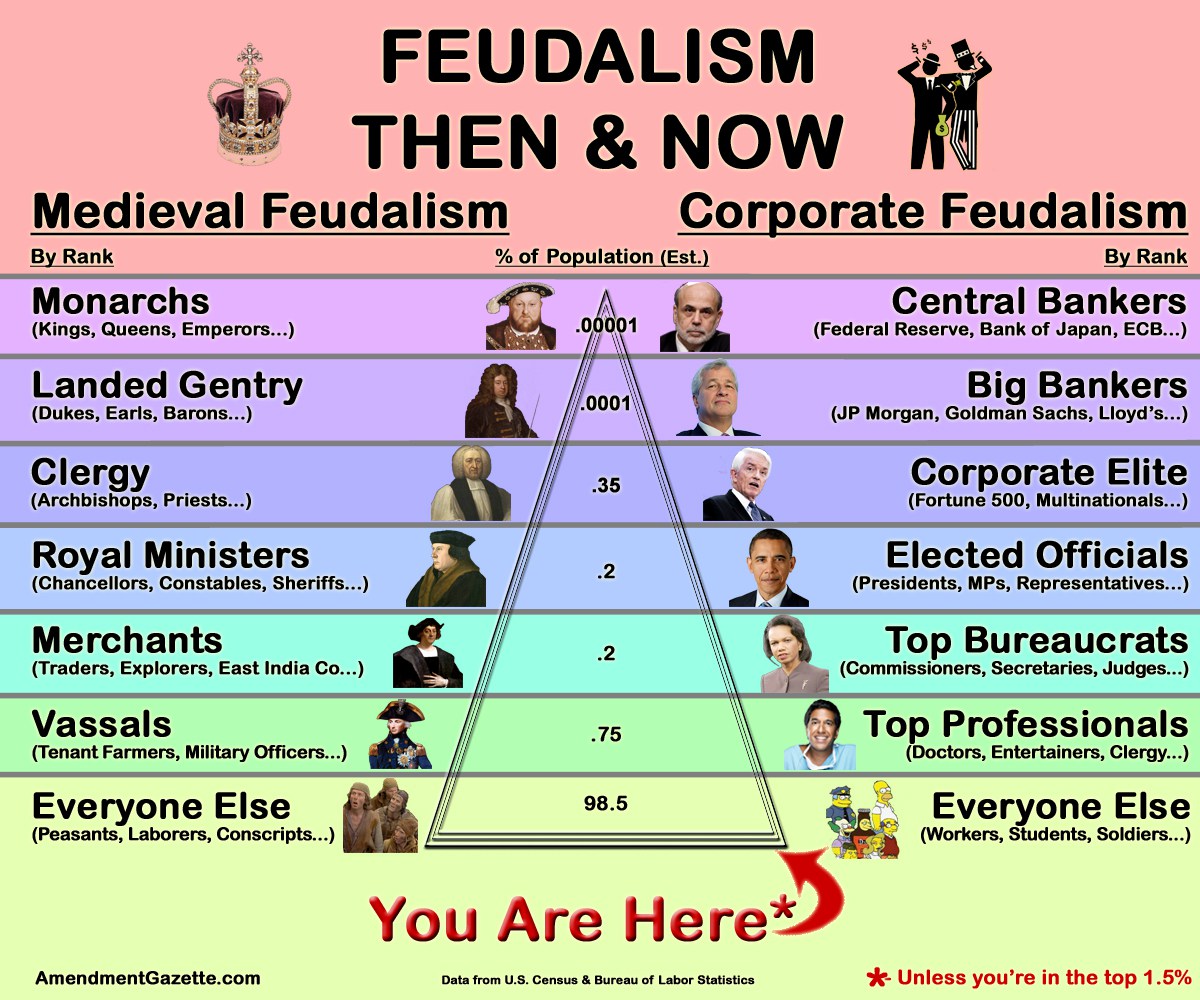
The segmented approach becomes all the more necessary when investigating the feudal elements of societies outside the postcommunist sphere, the United States in particular. The democratic model plays a crucial role in explaining many aspects of American political life, from grassroots community organizations to the national election system. The authoritarian model is also quite useful for understanding how many institutions function—bureaucracies, corporations, some churches, the penal system, the army, and even, to some extent, universities. Many key economic relationships may be explained by the market capitalist model (Mankiw 2001, 67). Rather than debunking these models, as many critics have done, we wish to expand current thinking about American society by adding the feudal model to the contemporary toolkit of social analysis.
The Feudal Model: State Weakness as a Key Characteristic

The feudal model may be sketched in a few succinct strokes for the sake of summarization. Although it is possible to create a more exhaustive list of features, we are focusing on six elements: (1) the weakness of the state and its inability to protect its territory, guarantee the security of its citizens, and enforce laws; (2) the collusion and conflicts between the central administration and major autonomous social actors possessing political and economic power; (3) conflicts and collusions between and within large organizations, involving corruption and other forms of illegal or semilegal actions; (4) the use of personal relations in political and economic life; (5) the prevalence of elitist ideology; and (6) the use of private agents and organizations for providing security and protection.
Again, while this model may have many parallels with the European societies of the Middle Ages, it is not meant to perfectly replicate either them or any other society. It is meant, rather, as a framework for studying certain aspects of almost all societies, from ninth-century France to contemporary America, which cannot be explained using the conventional models of social analysis, such as liberal capitalism and authoritarianism.The most important and perhaps unique element of the feudal model is its assumption about the relative weakness of the state compared to other prominent social actors and organizations. While different models encompass different types of authority, most suppose that the central authority itself—whether based on democratic principles or the dictates of a single ruler—can enforce the principles of its organizational structure. Ideal feudalism, in contrast, does not assume an efficacious central authority, but rather a middle ground between purely functional and dysfunctional authority. The model is designed to reflect the real-life tensions between the center’s efforts to establish order and operational efficiency, and the social forces and human appetites that fragment power structures and distort the formal coordination of society. Under such conditions, individual social actors and organizations—whether medieval lords or multinational corporations—systematically influence, manipulate, and contradict the state and each other, while pursuing their own interests—even when doing so conflicts with the interests of the state and society at large.
There are differing views on how to conceptualize and measure the strength of the state. According to Rotberg (2003), one option is to gauge the state’s strength by its ability to enforce laws and preserve its monopoly on the use of violence and coercion, or, in Rotberg’s terms, to effectively deliver crucial political goods—the most critical being “the supply of security, especially human security” (Agrawal 1990). The strength of the state depends on a range of factors, including the level of corruption and crime; the existence of independent (or near independent) centers of power that conflict with each other and with the central authority; the privatization of security; the prevalence of personal relations in business and politics, including kinship relations and nepotism; and the state’s access to scarce resources (Rotberg 2003; Hopkins 1972, 275–76; Ullman-Margalit 1977, 20–25; Migdal 1988, 3–39, 258–86; Shlapentokh 2006).
We can discern three levels of state weakness, which are associated with varying levels of feudal elements in contemporary society. The first level is typically found in Western countries, such as the United States, in which large social actors, such as corporations, play an important role in politics, and the state is only moderately successful infighting corruption, fraud, and other crimes. The second level is seen in some Latin American, African, and Asian countries, as well as in Russia, Ukraine, and other postcommunist countries. The central administration in these countries is unable to enforce laws, corruption is prevalent, and the local lords and oligarchs enjoy a high degree of autonomy. “Failed states” represent the third level of state weakness (Rotberg 2003). In this case, the central authority is close to losing control over its territory and is unable to stop severe internal conflicts between different actors (ethnic groups, regions, war lords, clans, tribes, companies). For countries such as Somalia, Sudan, and Afghanistan, the establishment of feudal relations would bring more stability to the political and economic arenas and greater observance of rules and laws (Osman 2007).
“Feudalism” in Medieval Historical Analysis

Thus far we have reviewed some of the prior applications of feudalism in the study of modern societies and described the general principles of our approach. The next task is to outline the specific content of the model itself and discuss the real-life social conditions it brings to light. To achieve this end, we turn to a discussion of feudalism in the context of medieval historical analysis.
Much of this literature falls into one of two groups: the socioeconomic school and the political school. The two schools are based on observations of the same or similar medieval European societies, but offer different models for understanding these societies. The socioeconomic school places social and economic relations at the center of its model, while the political school emphasizes power relations, military might, and the political structure in the given society. Although we argue that the political model is more relevant to contemporary American society, the two perspectives need not be seen as mutually exclusive. It is more important to differentiate them, as one is often mistaken for the other (Jha 2000; Mukhia 2000). To begin, however, we should first respond to a rather sizable group of authors who completely reject the use of models, in whatever form, in the analysis of medieval European societies.
Some authors have attempted to discredit the concept of feudalism altogether (e.g., Richardson and Sayles 1963; Brown 1974; Reynolds 1994; Backman 2003). They suggest that the concept should be dropped because the differences between any two so-called feudal societies (French, British, German) are so great that the term itself is meaningless. No feudal model, regardless of how it is constructed, can fully explain a medieval society, and they believe that any effort to use one does more to obfuscate reality than to reveal it (Reynolds
1994).
This critique has been raised against a wide range of ideal-typical social and historical analyses (Moore 1966). In the 1980s and 1990s, for instance, several authors suggested that capitalism had materialized in different forms in the United States, Europe, and Japan (Braudel 1992, 403). The range and diversity of these different types of capitalism were thought to diminish the general usefulness of any one ideal model of capitalism. Yet, as we suggest, a single model may be especially useful in revealing commonalities and differences in the concrete elements of capitalism across these nations.
Some of the criticism of the feudal model is aimed at the practice of using ideal types as tools of social analysis. The critique is directed not only against Weber’s epistemological methodology, but also against the construction of grand theories, which have been regarded as “privileged” and “subjective.” Some postmodern thinkers prefer “an ambiguous presentation,” which “permits, even encourages, an ‘infinity of interpretations’” (Rosenau 1992, 178). They tend to see the methods of the natural sciences as completely inapplicable to the social sciences.
The criticism of ideal types is not new. In the mid-1970s, Giddens (1976, 23) suggested that the whole Weberian methodology was “obsolete.” Confirming his dispute with Weber as early as the 1980s, Collins (2005, 23; 1986) more recently suggested that the use of ideal types leads to the neglect of “process” in favor of “structure,” an accusation directed at any scholar who describes or labels a society as a whole.
In spite of these attacks, many scholars, even some influenced by postmodern thinking, use ideal-typical analyses, explicitly or implicitly, in their study of contemporary societies. In line with Weber’s definitions, Bauman praised the use of “models,” “which aim to render intelligible the otherwise chaotic and scattered evidence of experience.” He underscored, as we do, that “ideal types are not descriptions of social reality but the tools of analysis and—hopefully—its comprehension” (Bauman 2007, 23; see also other scholars who use ideal types, such as Blackshaw 2005; Kreps 1986; Luke 1989).
In fact, the real problem with using a model lies not in the characteristics of the model itself, but in the fact that most researchers use only one. If, as mentioned, some elements of the economies of the United States, Europe, and Japan cannot be considered “capitalist” in nature, then other ideal models are needed. As Braudel (1992, 280) argued, “the formation of any national market has therefore to be studied in the diversity of its elements: each new combination is likely to be a special case.” A similar contention can be brought against those who used only one model—totalitarianism—to study Russia, China, or Cuba during the Soviet era (Gleason 1995; Fitzpatrick 1982; Lewin 1988; Hough 1980).
If we follow the argument made by feudalism’s detractors to its logical end, we must throw out all the major concepts in the social sciences, from democracy to totalitarianism. Indeed, there are no pure societies, and each real society contains elements of many ideal models. Again, the solution here is to embrace the complicated task of simultaneously applying multiple models to a single society or complex organization.
The Socioeconomic School

Moving now to a group of scholars who accept the use of models in social and historical analysis, the socioeconomic school identifies the main features of feudalism as the dominance of a landed aristocracy, the agrarian character of society, and the low level of technology and trade. When Marx talked about “feudalism,” he was usually referring to its economic structure. Other key concepts for Marx included small-scale “peasant agriculture,” which was unable to produce surplus value, “bondage,” and the “feudal services” that peasants provided to the lords (Marx 1906, 18). Marx and Engels (1906, 13), following the famous historians of the Restoration such as François Guizot and Augustin Thierry, focused on class stratification in medieval times and the differences in social status between “feudal lords, vassals, guild-masters, journeymen, apprentices, serfs.” While Marx only rarely discussed medieval political institutions, he did point out that “the might of a feudal lord . . . depended not on the length of his rent roll, but on the number of his subjects”; he also discussed the social significance of “the great feudal wars” (Marx 1906, 93, 789–90).
The socioeconomic model of feudalism, with its emphasis on the economic dominance of the aristocracy and on social inequality, has been developed primarily by scholars with Marxist orientations and those with a special interest in medieval class struggle (Hobsbawm 1990; Hilton 1966; Wallerstein 1974; Morton 2005; Laffey 2004). The advocates of this approach usually extended the “Middle Ages” far beyond the classic period, which fell roughly between the ninth and thirteenth centuries (Bloch 1989; Ganshof 1964, xv; Ullmann 1961, 1988). Among other things, they considered absolute monarchy, which emerged in the seventeenth century, to be a medieval institution and emphasized its support for the hereditary aristocracy, as well as for social and political inequality. This school generally disregarded the role of absolute monarchy as a unifying force in society, not to mention the higher levels of conflict and political fragmentation in the early Middle Ages.
Even though it emerged many centuries after the classic feudal period, the socioeconomic school, with its underestimation of the political nature of feudalism, characterized the French Revolution as “antifeudal,” because it was directed against landowners and inequality. This anti-feudal view of the French Revolution was developed by the famous French historian Lefebvre (2005) and several others (Markoff 1996; Mackrell 1973; Cobban 1999; Tonsor 1979). The same take on the French Revolution dominated the debates over the transition from feudalism that prevailed in England during the 1960s and 1970s, particularly among Marxist historians such as Sweezy (1978), Dobb (1947), Holton (1985), and others (Cornforth 1978; Kaye 1984). These authors tended to avoid the political dimensions of feudalism and concentrate on class struggle, technological innovation, and the market as the mechanisms of transition.
This disregard of the political dimension of feudalism is also typical for scholars who apply a feudal perspective to the analysis of developing countries. They have used the feudal model, for instance, to elucidate the social processes and structures in Latin American countries, though they ignored the roles of the state and noneconomic coercion. In the transition debate, they emphasized production relations from a Marxist perspective and focused only on the relations between peasants and landlords (Brewer 1980; Wiarda and Kline 1979; Wiarda 1992). Another group of Marxist scholars who also ignored the political dimension suggested that economic exploitation by the world capitalist metropolis, as formulated in Wallerstein’s dependence theory, was the driving force behind feudal relations in the Latin American context (Frank 1967; Cain and Harrison 2001).
The Political School
Our model of feudalism is more in line with the political school, which focuses on political fragmentation and the relative weakness of the central authority. The key advocates of this approach include Coulanges (1923), Vinogrado ff (1908), Ganshof (1964), and Bloch (1961, 1989).[3] The political school diverges from the socioeconomic school in the way it characterizes power relations in medieval societies. It treats socioeconomic phenomena, such as landed property, as products of the political structure, while the socioeconomic school argues just the opposite—that economic relations explain the characteristics of political institutions.
As a second difference, the political school directs its historical gaze at an earlier period of medieval society, focusing on the deep political fragmentation that existed after the collapse of the Roman Empire. In an effort to establish some order in society and protect themselves from foreign enemies, the most powerful rulers created networks of knights and endowed them with land and laborers. Prior to the rise of absolute monarchy, however, social order and stability remained tenuous. With few resources at their disposal, kings of the early Middle Ages were forced to yield part of their power to local emissaries, and ultimately to make them landowners with the right to bequest their property to their descendants. This was the price they paid to establish a modicum of order in the kingdom’s territory. The central authority resorted to decentralizing power as a way to secure order in society and tap local resources.
The feudal model is mostly based on the classic period of feudalism, be tween roughly the ninth and thirteenth centuries (Bloch 1989; Ganshof 1964, xv; Ullmann 1961, 1988). Following the death of Charlemagne, the decline of his empire, and the incursions of Vikings, Magyars, and Moslems, the central authority in European societies was extremely weak. An assortment of powerful landholders established regional hegemonies, or “kingdoms,” within the former boundaries of the empire. In many cases, however, the power of kings was only marginally greater than that of lower lords, the church, and various tribes and warrior clans.
Although a hierarchical relationship existed between lords and vassals, “power was not a pyramid; it was scattered” (Barendse 2003, 525). Societies of the Middle Ages were marked by “a dispersal of political authority amongst a hierarchy of persons who exercise in their own interest powers normally attributed to the state, which are often, in fact, derived from its break-up” (Ganshof 1952, xv). The vassal, or lower lord, was at once “subject and master” (Bloch 1989, 220), which naturally weakened and fragmented central authority. As a rule, lower lords attempted to limit their obligations to the higher lords, while at the same time trying to increase the obligations of their dependents.
Adding to the social instability, the state (or kingdom) lacked the resources to establish a coherent and effective judicial system. Although laws did exist and were, to some extent, respected by the people, many areas of life were unregulated or beyond the reach of the central authority. The judicial powers of the state, according to Bloch (1989), were fragmented, ineffective, and often overlapped or contradicted the powers of independent regional courts. The lord of a given territory often claimed the right to judicial authority. In other words, the lord’s legal or “public” right to judge others in court was rooted in his personal power and ability to protect his lands with military force and to dominate those who depended on it (Donovan et al. 1993, 30–31). As Bloch (1989, 372) suggested, “it is characteristic that the jurisdiction of the lord who exercised high justice ordinarily acquired the name of ‘castellany’—as if the only source of judicial rights that common opinion now recognized was the possession of a fortified dwelling, at once the origin and the symbol of actual power.” Power holders, for this reason, often went unpunished for even the most egregious offenses.
What is more, the central authority did not possess a monopoly on violence. All the major actors in society—from kings and lords to tiny chieftains—claimed the right to use military force to protect their jurisdictions. Given the state’s inability to establish social order throughout the territory, medieval societies experienced high levels of crime and violent conflict. This social instability, in turn, caused people to place a premium on security. Protecting one’s life and property was a central preoccupation of all members of society and played a key role in the development of political relationships and social structure (Volckart 2002). To ensure their security, lords supplied land to their vassals in exchange for military service, while vassals supplied protection to peasants in exchange for labor (Bloch 1989).[4]
What modern Western societies now regard as “corruption” (the exchange of money for political power) was a standard form of interaction between political and economic elites in medieval Europe. Given the king’s tenuous grasp on power, “illegal” bribes and gift giving in politics, as well as the outright purchase of public offices, were commonplace (Pirenne 1937; Davis 2000; Pollock and Maitland 1968). Corruption played a persistent role in the major institutions of medieval society, including the judicial system (Prest 1991; Dean 2001), customs agencies and other tax administrations (Baker 1961), the offices of sheriffs and bailiffs (Janin 2004), and the Church (Frank 1995).
The classic medieval period was a time of permanent conflicts, even if the feudal model does not adhere to the more extreme, Hobbesian vision of society as “a war of all against all.” As Tocqueville (1904, 211) suggested, the members of the ruling class, the feudal aristocracy, were always at war, and the idea of a national interest hardly existed. The concept of patrie,
the fatherland, was not used in France until the sixteenth century.
Under these generally unstable political conditions, roving bands of mercenaries offered “protection” to nobles and monasteries in the countryside (Cantor 1993). Illegitimate means of personal gain and power grabbing—such as patronage, conflicts of interest, bribery, extortion, graft, embezzlement, grand-scale thievery, and violent raids—were widespread in society until the rise of absolute monarchies in the seventeenth century. Circumscribing written and verbal agreements, the big social actors and organizations clashed and colluded, betrayed and befriended each other in a high-stakes contest to grab as much power, money, and land as possible.
Notions of a common good, social justice, or even a national interest were often neglected by elites in the Middle Ages. Instead, power holders created and maintained an elitist ideology that valued the status quo, extolled feudal aristocracy—particularly its paternal hierarchy, code of honor, and independence from the state—and commended the medieval “division of labor” be tween the knight, the parson, and the ploughman (see Hammond and Hammond 1969, 215). This ideology also held contempt for the members of the “third estate”—merchants, bankers, and shopkeepers (Clark 2000, 70,= 72).
Given the state’s inability to enforce laws and regulate society, most political and economic activities were channeled through personal relationships, “connections,” kinship ties, and nepotism; transactions, in other words, that were based largely on mutual trust and loyalty. The importance of personal relations was beyond question in the Middle Ages. Power was often exercised not through formal institutions, but through private agreements and personal prerogatives (Freeman 2001).
Although these power relations were quite unstable and inefficient, they endured for long periods and sustained a semblance of normality in society. There existed a sort of “feudal order,” which reflected the need for greater safety, predictability, and efficiency in everyday life across all strata of the population. Following this reasoning, Tocqueville discussed the strong ties that “united the vassal to the lord under the feudal system” and the code of honor, which helped the aristocracy establish social order (1904, 178, 209; see Gibbs 1953). Contract-based military services (Douglas 1969; Duby 1998) and some elements of the legal system (Ganshof 1964) were also known to be somewhat reliable. From this perspective, medieval societies can be seen as an unstable network of powerful agents who were often at odds with each other, yet coexisted and, in some cases, cooperated quite effectively.
Weber, the Feudal Model, and Modernity

Weber occupies a special place in the debate over feudalism. Taken as a whole, his work seems to oscillate between two models (political and socioeconomic). On one hand, Weber suggested that feudalism involved the rule of the “landed aristocracy” (1978, 1070), and associated it with the “manorial system” (1978, 67–68) or “patrimonial structure” (1978, 239). While Weber drew a distinction between “fief ” (“contractual” or “occidental”) and “fiscal” (“patrimonial”) feudalism, he argued that the difference between them should not be exaggerated, because both assumed that ruling elites held a monopoly over land (1978, 259–62). Following the socioeconomic school, Weber asserted that the French Revolution “put an end to the feudal system with one blow on the night of August 4, 1789” (1978, 98).
On the other hand, in some cases Weber demonstrated his interest in the political structure of medieval society. He generally described “fiefs” in political terms “as any grant of rights, especially of land use or of political territorial rights, in exchange for military or administrative service” (1978, 1071). He also underscored that “French feudal law” was intended, first and foremost, to “increase the political power of the territory” (1978, 70).
Weber’s ambiguity toward feudalism may be linked to his treatment of rationalism and modernity, and his belief in a linear form of social and historical progression. Weber (1978,
162, 192, 225) extolled a new époque of rationality in all spheres of life, beginning with the market economy, and on through to the new professional bureaucratic state (Brubaker 1984; Martin 2005). He and others who associated modernity with progress, such as Parsons, Haber-
mas, and Foucault, believed that, with the rise of rationalism, the Middle Ages had retreated into the past. Parsons, for instance, suggested that regional and cultural particularism (features of medieval societies) had yielded to the pressure of universalism (Giddens 1991, 256). In fact, such a contention had been raised as early as the Enlightenment, when several thinker—including the founders of the famous eighteenth-century French Encyclopedia—mocked feudalism as an obsolete system, given its obscurantism, mythology, religion, traditions, and irrational bureaucracy.
While modernity and modernization certainly brought radical social changes, Weber and his followers exaggerated the scale of modernization—a typical example of a “one-system” approach to the study of social phenomena—and encouraged later scholars to relegate feudalism, in its entirety, to the past (Turner 1992, 5). Giddens’s notion of a “postfeudal Europe,” for instance, is incompatible with the segmented approach and its central premise that different types of social organization—some old, some new—coexist in contemporary society. Under the spell of modernism, few general sociological works or textbooks discuss the “feudal” form of social organization (Horowitz and Strong 1971; Turner 1985; Gordon and Harvey 1978; Eitzen and Zinn 1993; Fichter 1971; Babbie 1983; Light and Keller 1982). Any simplified concept of “modernity” obscures the fact that multiple forms of organization and social relations can be found in almost any society, from ancient Rome and medieval Europe to the contemporary United States.
Of course, our critique of the exaggeration of modernity’s break with the past should not be understood as support for the admirers of medieval culture or romanticism’s rejection of modernity. “Medievalism” still exists among many people, particularly nationalist and separatist groups, and in many countries, such as England and France (Agrawal 1990, 254; Ortenberg 2006, 240).
Conclusion
Ideal feudalism supposes that the central authority in society is relatively weak and unable to fully regulate other power centers; a sort of pluralism of “the few,” to use Aristotle’s terminology. The model anticipates frequent conflicts and a low level of state-provided security for individuals and groups, though it does not suppose a complete absence of social order or stateless anarchy.
Our use of ideal types follows the intellectual tradition of Weber and Simmel. This approach has become common in the contemporary social sciences, particularly in the area of comparative analysis. Medieval France serves as the empirical basis of the feudal model, because its concrete political and social characteristics were quite similar to the abstract constructs of feudalism. However, the feudal model is, by definition, a simplification of reality. As such, it cannot explain all of the developments in medieval societies, or any other social context, across time and space. Nevertheless, we refute the claims of some historians who fail to distinguish between models of reality and reality itself, and who generally reject the use of the term feudalism as a tool of social and historical analysis. The feudal model, by itself, is a powerful instrument, but it is designed merely to supplement other ideal types of social organization. It stands as only one tool in the segmented approach to the study of society, which suggests the use of not one but several models.
Appendix
Notes
- For similar arguments, see Weinberg and Shabat 1965; Kelly 2001; Rabkin 1999. Some members of this group did not completely deny the impact of feudalism on America, but associated it only with earlier periods of American history, such as the seventeenth and eighteenth centuries, when immigrants poured into the country, bringing with them a set of life experiences that were colored by the feudal past. One author, for instance, suggested that certain aspects of the Middle Ages in fluenced the framers of the U.S. Constitution (Bailyn 1967, 282).
- For other authors who discuss how the feudal model overlaps with both medieval and modern times, see Hall (1962), Duus (1993), Grinberg (2006), and Beck and Beck-Gernsheim (1995).
- Other contemporary historians of the twentieth century who side with the political model of feudalism and focus on the relative weakness of the state include Dubuis (1995, 161), Chibnall (1986, 125), Le Goff (1988, 40), and Théis (1992). Even some Marxist scholars see the agrarian relations in the Middle Ages as a product of the fragmentation of political power. Perry Anderson, for instance, underscored that the specific organization of the seigniorial and serf classes were shaped by the “system of parcellised sovereignty,” which made it possible for landlords to use “extra-economic coercion . . . over the direct producers” (Anderson 1974b, 413–17).
- A few authors (e.g., Rosenwein 2005, 147) treat vassalage as “voluntary and public,” disregarding the fact that it was a form of protection against disorder in the absence of a strong, centralized state.
Bibliography
- Ackoff, Russell Lincoln, Frederick Edmund Emery, and Brent D. Ruben. 2005. On purposeful systems: An interdisciplinary analysis of individual and social behavior as a system of purposeful events. New Brunswick, N.J.: Aldine Transaction.
- Agrawal, R. R. 1990. The medieval revival and its influence on the romantic movement. New Delhi: Abhinav.
- Anderson, Perry. 1974a. Passages from antiquity to feudalism. London: NLB.
- Backman, Clifford R. 2003. The worlds of medieval Europe. New York: Oxford University Press.
- Blackshaw, Tony. 2005. Zygmunt Bauman. London: Routledge.
- Bauman, Zygmunt. 2007. Consuming life. Cambridge: Polity Press.
- Bourdieu, Pierre. 1984. Distinction: A social critique of the judgment of taste. Trans. Richard Nice. Cambridge: Harvard University Press.
- Braudel, Fernand. 1992. Civilization and capitalism, fifteenth–eighteenth century: The perspective of the world. Berkeley: University of California Press.
- Bornstein, Morris, ed. 1994. Comparative economic systems: Models and cases. Burr Ridge, Ill.: Irwin.
- Brown, Elizabeth A. R. 1974. The tyranny of a construct: Feudalism and historians of medieval Europe. American Historical Review 79 (4):1063–88.
- Cantor, Norman, ed. 1999. The encyclopedia of the Middle Ages. Viking: New York.
- Cascardi, Anthony J. 1992. The subject of modernity. Cambridge: Cambridge University Press.
- Case, Karl E., and Ray C. Fair. 1996. Principles of microeconomics. 4th ed. Upper Saddle River, N.J.: Prentice Hall.
- Collins, Randall. 2005. Weber and the sociology of revolution. In Max Weber’s economy and society: A critical companion, ed. Charles Camic, Philip S. Gorski, and David M. Trubek. Stanford: Stanford University Press.
- Cortés, Fernando, Adam Przeworski, and John Sprague. 1974. Systems analysis for social
scientists. New York: Wiley. - Coser, Lewis A. 1977. Masters of sociological thought: Ideas in historical and social context. 2nd ed. New York: Harcourt Brace Jovanovich.
- Curtis, Michael, Jean Blondel, and Bernard E. Brown. 1993. Introduction to comparative government. 3rd ed. New York: HarperCollins.
- Danilov, Viktor. 2000. Rossiiskoie pravitel’stvo w dwazatom weke. In Kuda idet Rossia:
Gosudarstvo, Obshchestvo, Lichnost, ed. T. I. Zaslavskaia. Moscow: Vysshaia shkola sotsial’nykh i ekonomicheskikh nauk. - Deacon, Bob, and Paul Stubbs. 1998. International actors and social policy development in Bosnia-Herzegovina: Globalism and the “new feudalism.” Journal of European Social Policy 8 (2):99–115.
- Fairbanks, Charles H., Jr. 2000. The feudal analogy. Journal of Democracy 11(3):34–36.
- Fairbanks, Charles H., Jr. 1999. The feudalization of the state. Journal of Democracy 10(2):47–53.
- Farmer, D. J. 2006. Wal-Mart: Neo-feudal (k)night? Administrative Theory and Praxis 28:148–61.
- Fitzpatrick, Sheila. 1982. The Russian Revolution. Oxford: Oxford University Press.
- Giddens, Anthony. 1976. New rules of sociological method: A positive critique of interpretative sociologies. New York: Basic Books.
- Gleason, Abbott. 1995. Totalitarianism: The inner history of the cold war. New York: Oxford University Press.
- Glionna, John M. 2008. A voice for rural women of China. Los Angeles Times, January 2.
- Greenberg, Stanley B. 2004. The two Americas: Our current political deadlock and how to
break it. New York: Thomas Dunne Books. - Grinberg, Ruslan. 2006. Interview with Moskovskii Komsomolets, March 31.
- Guriev, Sergei. 2001. Industral’nyi feudalism: nizkaia geografi cheskaia mobilnost’ trudovykh resursov meshaet perestroike ekonomiki. Ekspert, April 9.
- Harrington, Michael. 1969. The other America: Poverty in the United States. New York:Macmillan.
- Hartz, Louis. 1955. The liberal tradition in America: An interpretation of American political thought since the revolution. New York: Harcourt, Brace and World.
- Hopkins, Raymond F. 1972. Security authority: The view from the top. World Politics 24 (2):271–92.
- Hough, Jerry F. 1980. Soviet leadership in transition. Washington, D.C.: Brookings Institution.
- Jacob, Philip E., and James V. Toscano, eds. 1964. The integration of political communities. Philadelphia: Lippincott.
- Jha, Vishwa Mohan. 2000. A review of The Feudalism Debate by Harbans Mukhia. Social Scientist 28 (11/12):70–89.
- Karstedt, Susanne. 2000. Knights of crime: The success of “premodern” structures in the
illegal economy. In Social dynamics of crime and control: New theories for a world in transition,
ed. Susanne Karstedt and Kai-D Bussmann, 53–68. Oxford: Hart. - Karstedt, Susanne. 2003. Legacies of a culture of inequality: The Janus face of crime in post-
communist countries. Crime, Law, and Social Change 40 (2/3):295-320. - Konchalovskii, Andrei. 2006. Koruptsia? Kak eto po russki. Argumenty Nedeli, November 23. http://www.konchalovsky.ru.
- Kuper, Leo, and Michael G. Smith, eds. 1969. Pluralism in Africa. Berkeley: University of California Press.
- Kreps, Gary A., ed. 1989. Social structure and disaster. Newark: University of Delaware Press.
- Laclau, Ernesto. 1971. Feudalism and capitalism in Latin America. New Left Review 67:19–
38. - Latynina, Yulia. 2000. Access Code. On Moscow Echo Radio, May 19.
- Latynina, Yulia. 2001. Zakhvat: Segodniashnii peredelk sobstvennoti kak ekonomika voiny. Novaia Gazeta, March 26 and 28.
- Latynina, Yulia. 2002. Feodalnye woiny oligarkhov. Komsomol’skaia Pravda, December 10.
- Latynina, Yulia. 2005. Okhota na iziubra. Moscow: Eksmo.
- Lewin, Moshe. 1988. The Gorbachev phenomenon: A historical interpretation. Berkeley:University of California Press.
- Lieven, Anatol. 1998. Chechnya: Tombstone of Russian power. New Haven: Yale University Press.
- Luhmann, Niklas. 1995. Social systems. Trans. John Bednarz Jr. and Dirk Baecker. Stanford: Stanford University Press.
- Luke, Timothy W. 1989. Screens of power: Ideology, domination, and resistance in informational society. Urbana: University of Illinois Press.
- Mankiw, N. Gregory, and Robert B. Harris. 1998. Principles of microeconomics. 1st ed. New York: Dryden.
- Matei, Sorin. 2004. The emergent Romanian post-communist ethos: From nationalism to privatism. Problems of Post-Communism 51 (2):40–47.
- Matthews, Owen, and Anna Nemsova. 2006. The new feudalism: Forget corruption in Putin’s Russia, the nexus of payoffs and patronage is almost medieval, touching every aspect of life.
Newsweek International, October 23. - Meier, Ar tur. 1990. Abschied von der sozialistischen staendegesellschaft. Politik und Zeitgeschichte 16 (17):3–14.
- Migdal, Joel S. 1988. Strong societies and weak states: State-society relations and state capa-
bilities in the third world. Princeton: Princeton University Press. - Mills, Kenneth, William B. Taylor, and Sandra Lauderdale Graham, eds. 2002. Colonial Latin America: A documentary history. Wilmington, Del.: S. R. Books.
- Moore, Barrington, Jr. 1966. Social origins of dictatorship and democracy: Lord and peasant in the making of the modern world. Boston: Beacon Press.
- Mukhia, Harbans, ed. 2000. The feudalism debate. New Delhi: Manohar.
- Orekhovskii, Petr. 2005. Chem samoupravliat’ budem. Izvestiia, September 6.
- Osman, Abdulahi A. and Issaka K. Souaré, eds. 2007. Somalia at the crossroads: Challenges and perspectives in reconstituting a failed state. London: Adonis and Abbey.
- Parsons, Talcott. 1952. The social system. London: Tavistock.
- Parsons, Talcott. 1971. The system of modern societies. Englewood Cliffs, N.J.: Prentice Hall.
- Reynolds, Susan. 1994. Fiefs and vassals: The medieval evidence reinterpreted. Oxford:Oxford University Press.
- Richardson, Henry Gerald, and George Osborne Sayles. 1963. The governance of mediaeval England from the conquest to magna carta. Edinburgh: University Press.
- Romano, Ruggiero, and Stanley J. Stein. 1984. American feudalism. Hispanic American Historical Review 64 (1):123–34.
- Rosenau, Pauline Marie. 1992. Post-modernism and the social sciences: Insights, inroads,
and intrusions. Princeton: Princeton University Press. - Rotberg, Robert I., ed. 2003. When states fail: Causes and consequences. Princeton: Princeton University Press.
- Schlesinger, Arthur M., Jr. 1999. The cycles of American history. New York: Houghton Mifflin.
- Shlapentokh, Vladimir. 1996a. Early feudalism: The best parallel for contemporary Russia.
Europe-Asia Studies 48 (3):393–411. - Shlapentokh, Vladimir. 1996b. Russia: Privatization and illegalization of social and political life.
Washington Quarterly 19 (1):65–85. - Shlapentokh, Vladimir. 1997a. “Normal” Russia. Current History 212 (606):331–36.
- Shlapentokh, Vladimir. 1997b. The four faces of mother Russia. Transition 4 (5):60–61.
- Shlapentokh, Vladimir. 2003. Hobbes and Locke at odds in Putin’s Russia. Europa-Asia 7:981–1007.
- Shlapentokh, Vladimir. 2004. Wealth versus political power: The Russian case. Communist and Post-Communist Studies 37(2):135–60.
- Shlapentokh, Vladimir, with Joshua Woods. 2007. Contemporary Russia as a feudal society: A new perspective on the post-Soviet era. New York: Palgrave Macmillan.
- Shlapentokh, Vladimir. 2006. Fear in contemporary society: Its negative and positive effects.
New York: Palgrave Macmillan. - Shlapentokh, Vladimir, Roman Levita, and Mikhail Loiberg. 1997. From submission to rebellion: The provinces versus the center in Russia. Boulder: Westview.
- Simmel, Georg. 1968. The conflict in modern culture, and other essays. New York: Teachers
College Press. - Simmel, Georg. 1978. The philosophy of money. Boston: Routledge and Kegan Paul.
- Simpson, A. W. B. 1998. Land ownership and economic freedom. In Scheiber 1998, 13–43.
- Smelser, Neil J. 1994. Sociology. Cambridge: Blackwell.
- Solo, Robert. 1967. Economic organizations and social system. Ann Arbor: University of Michigan Press.
- Stavrakis, Peter J. 1997. Shadow politics: The Russian state in the twenty-first century. Harrisburg, Pa.: Strategic Studies Institute, U.S. Army War College.
- Stern, Steve J. 1988. Feudalism, capitalism, and the world-system in the perspective of Latin America and the Caribbean. American Historical Review 93 (4):829–72.
- Stiglitz, Joseph E., and Carl E. Walsh. 2006. Principles of microeconomics. New York: W.W. Norton .
- Trevino, Javier, ed. 2001. Talcott Parsons today: His theory and legacy in contemporary
sociology. Lanham, Md.: Rowman and Littlefield. - Ullmann-Margalit, Edna. 1977. The emergence of norms. Oxford: Clarendon.
- Verdery, Katherine. 1996. What was socialism, and what comes next? Princeton: Princeton University Press.
- Webber, Carolyn, and Aaron Wyldavsky. 1994. Feudalism nothing. In The Blackwell dictionary of twentieth-century social thought, ed. William Outhwait and Tom Bottomore. Oxford:Blackwell.
- Weber, Max. 1978. Economy and society: An outline of interpretive sociology. Berkeley: University of California Press.
- Weber, Max. 1949. The methodology and the social sciences. Trans. and ed. Edward A. Shils
and Henry A. Finch. Glencoe, Ill.: Free Press. - Wright, Erik Olin. 1998. The debate on classes. New York: Verso.
From Feudal America: Elements of the Middle Ages in Contemporary Society (Chapter 1, pp.1-17), published by JSTOR under the terms of a Creative Commons Attribution-NonCommercial-NoDerivatives 4.0 International license.
About the Author