Exposure to gun violence is vastly understudied. But new research uncovers the ripple effects.

By Rod McCullom
Science and Technology Writer
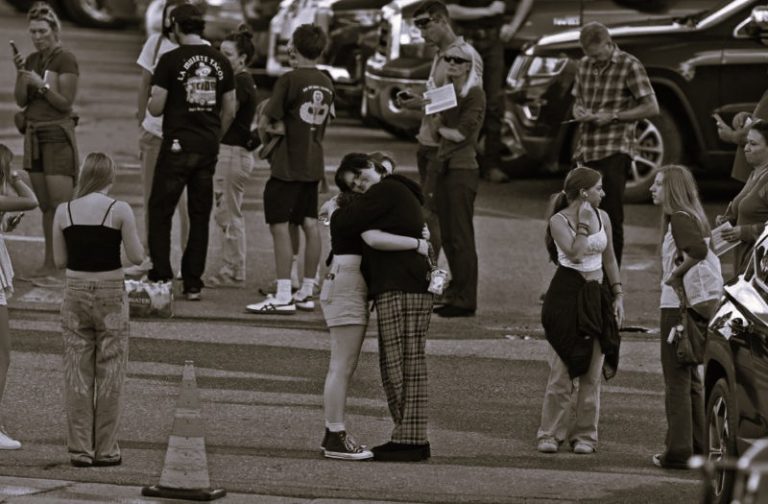
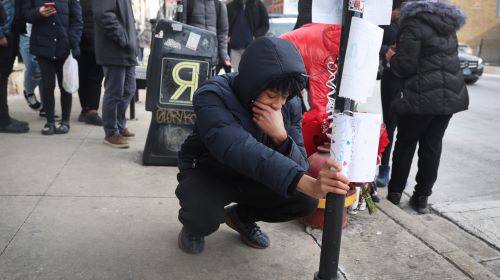
On the evening of June 1, 2023, 14-year-old Pierre Johnson was shot and killed while sitting on a porch opposite his home in the Fuller Park community on Chicago’s South Side. According to police reports, four gunmen drove to the alley behind the building and went through the adjoining vacant lot, killing Johnson and injuring four others. The mass shooting happened just across the street from where Pierre had seen his older brother Paris Johnson shot and left paralyzed in 2017. Paris died three years later.
Since 2020, gun violence has overtaken motor vehicle crashes to become the leading cause of death for children and adolescents aged 1 to 19 in the United States — a change mainly driven by homicides. Young Black men and teenagers like the Johnsons, who live in urban areas that experience high rates of poverty, unemployment, and violent crime are the hardest hit demographic. In fact, the CDC reports that gun homicides are the leading cause of death for African American boys and young men aged 15 to 24.
According to the Giffords Law Center to Prevent Gun Violence — a nonprofit public interest law and advocacy organization co-founded by former Congresswoman Gabrielle Giffords — more Black males aged 15- to 24-years-old “died in gun homicides than from unintentional injuries, suicide, heart disease, Covid-19, cancer, non-firearm homicides, diabetes, congenital abnormalities, and chronic respiratory diseases, police shootings, cerebrovascular diseases, anemias, sepsis, influenza and pneumonia, and HIV combined.”
Despite the staggering numbers of injuries and deaths, the long-term effects of exposure to firearm violence — whether witnessing a shooting, living near the scene of gun violence, or having a friend or relative become a shooting victim — has long been understudied, researchers say. One of the reasons is that a federal rule prevented the CDC from using funds to “advocate or promote gun control,” effectively halting research on gun violence for more than 20 years, from 1996 to 2019. With that funding now turned back on, there is an emerging research pipeline that focuses on the long-term effects of exposure to gun violence on adolescents, young adults, and adults.
Some of the more significant recent findings come from two studies of gun violence exposure led by researchers at Rutgers University. The researchers, along with physicians and social scientists, are hopeful the studies can help inform gun control policy and interventions such as the new White House Office of Gun Violence Prevention, which was announced last September.
The Rutgers studies found that in addition to the massive human and financial cost documented in previous research, gun violence is associated with negative physical and mental health outcomes across many communities.
Taken together, these findings suggest that “gun violence has a much broader impact on human health than we have truly taken seriously, it goes much further beyond” homicides and non-fatal injuries, said Daniel Semenza, a criminologist and public health researcher and the lead author of both papers. “That exposure has what a lot of people might call a ripple effect that much more broadly influences health.”
Meanwhile, two recent longitudinal studies also shed light on gun violence exposure and youth. The first one, published by a Texas-based research team, found that children exposed to gun violence before age 12 were more likely to carry handguns as adolescents, though that behavior did not carry into adulthood. Another study, published last May, showed that for three age cohorts, exposure to gun violence in Chicago increased rapidly in late adolescence.
Even though the total number of Americans killed or injured because of firearm violence (not including suicide) has declined from the record levels that accompanied the Covid-19 crisis, the toll is still higher than it was before the pandemic. About 18,850 people were killed by firearms in 2023, not including suicides, according to the not-for-profit Gun Violence Archive, a decline from the record number of approximately 21,000 people killed in 2021.
One of the key risk factors in firearm violence is gun carrying, which varies by age, race, and sex among adolescents, according to several recent papers.
“One in 15 male and one in 50 female high school students reported carrying a gun for nonrecreational purposes at least once during the preceding 12 months,” according to CDC’s 2017 and 2019 Youth Risk Behavior Surveys. In addition, “gun carrying was more prevalent among those who experienced violence, suicidal ideation or attempts, or substance use.”
The Youth Risk Behavior Survey is conducted every two years to monitor behavioral health outcomes among adolescents and young adults such as drinking, smoking, sexual activity, and violence. The prevalence of gun carrying was higher among high school students who experienced gun violence or were threatened with a gun on school property, according to the data, which drew on surveys of about 21,800 students across the country.
That appears to gel with the findings from the Texas-based research team. In the paper, published last July in Social Science and Medicine, a peer-reviewed academic journal, the authors note that “participants who reported witnessing seeing someone shot or shot at in childhood demonstrated higher odds of carrying a handgun in adolescence.”
The dataset drew on the results of the 1997 National Longitudinal Survey of Youth, launched by the Department of Labor’s Bureau of Labor Statistics to capture important life events among people over time. The participants — nearly 6,750 young people aged 12 to 17 — were interviewed each year from 1997 to 2011. About 8 percent of the respondents reported seeing someone shot or shot at before the age of 12. This exposure was moderately correlated with gun carrying from 1998 to 2011, according to the data.
One of the most surprising findings was that childhood gun violence exposure was associated with gun carrying in adolescence but not as an adult. This “decay effect” mimics human life experiences, co-author Benjamin Comer, an assistant professor of criminology and criminal justice at Texas Christian University, noted to Undark in an email.
The Youth Risk Behavior Survey is conducted every two years to monitor behavioral health outcomes among adolescents and young adults such as drinking, smoking, sexual activity, and violence. The prevalence of gun carrying was higher among high school students who experienced gun violence or were threatened with a gun on school property, according to the data, which drew on surveys of about 21,800 students across the country.
That appears to gel with the findings from the Texas-based research team. In the paper, published last July in Social Science and Medicine, a peer-reviewed academic journal, the authors note that “participants who reported witnessing seeing someone shot or shot at in childhood demonstrated higher odds of carrying a handgun in adolescence.”
The dataset drew on the results of the 1997 National Longitudinal Survey of Youth, launched by the Department of Labor’s Bureau of Labor Statistics to capture important life events among people over time. The participants — nearly 6,750 young people aged 12 to 17 — were interviewed each year from 1997 to 2011. About 8 percent of the respondents reported seeing someone shot or shot at before the age of 12. This exposure was moderately correlated with gun carrying from 1998 to 2011, according to the data.
One of the most surprising findings was that childhood gun violence exposure was associated with gun carrying in adolescence but not as an adult. This “decay effect” mimics human life experiences, co-author Benjamin Comer, an assistant professor of criminology and criminal justice at Texas Christian University, noted to Undark in an email.
There were significant racial disparities on gun violence exposure. On average, around half of the African American and Latino respondents witnessed a shooting by age 40, compared with only about 25 percent of White respondents, according to the data.
The likelihood of experiencing gun violence increased as respondents came of age during crime waves. “Direct experience of being shot was typically highest at all ages for the 1981 cohort, whose adolescence coincided with the 1990s peak in violence,” the authors wrote. “All cohorts displayed rapid increases in incidence of experiencing gun violence in late adolescence, except for the 1996 cohort, whose increase began earlier and was more gradual.”
The data collection began in the mid-1990s, when “violence was very high in American society and also in Chicago, which was one of the motivations for the study,” said Robert J. Sampson, the Harvard sociologist and criminologist, and one of the authors of the study. Sampson was a sociology professor at the University of Chicago in the 1990s when he began the research.
The Chicago study did not specifically track the residual effects of gun violence exposure. But the implication of gun violence exposure’s health outcomes was focus of the Rutgers-led research.
Beyond the direct physical effects of gun violence, both papers found that exposure is associated with poorer mental and physical health outcomes. On an individual level, exposure to gun violence increases the likelihood of depression, post-traumatic stress symptoms, anxiety disorders, substance abuse, suicidal ideation and poorer academic performance, according to multiple previously published studies.
Cumulative gun violence exposure affects physical and mental health outcomes both at the individual level and across entire neighborhoods, according to the two Rutgers papers published last fall.
The first paper, published in The Journal of Urban Health, found that residents in thousands of neighborhoods across the country exposed to high levels of gun violence experience poorer overall health outcomes and higher levels of allostatic load — “wear and tear” on the human body and stress response systems — that in turn can contribute to even higher levels of violence.
The long-term effects include “greater incidence of chronic disease, poorer healthcare utilization, and rate of mortality,” according to the paper, along with poorer sleep outcomes, higher rates of cigarette smoking, less physical activity, and worse self-reported physical and mental health. The results illustrate the outsized role that gun violence have in “perpetuating cycles of harm in local communities,” the authors wrote.

The researchers created a unique database of almost 16,000 census tracts in the nation’s 100 largest cities from 2014 to 2019. Census tracts are hyper-local geographic areas — usually averaging about 4,000 people — established by the U.S. Census Bureau to analyze demographic data. The researchers also included the total numbers of fatal and non-fatal shootings in each census tract according to data by the American Violence project, a database of gun violence statistics.
The researchers added three indicators of community health to the database from the PLACES project, a database of health outcomes in more than 70,000 census tracts across the United States. The dataset also included demographic data on “concentrated disadvantage” such as the extent of poverty, unemployment, and households headed by a woman in each tract.
“We specifically focused on health behaviors, which are things like smoking, the percentage of people who are getting poor sleep or not exercising. We also looked at health status, people who report poor mental and physical health, and then prevention efforts,” said Semenza. “For those living in the community, ‘Do they have health insurance? Are they getting their cholesterol checked? Are they getting core preventative services?’ Those were the main three health outcomes that we looked at, and we combine those as well to just look at health more broadly.”
The analysis produced several key findings: From 2014 through 2019, “gun violence was associated with poorer overall neighborhood health in most years” the authors wrote. They also found that health behaviors and health status were consistently negatively associated with exposure to gun violence, and that concentrated disadvantage helped predict gun violence.
“The strongest impact or association with gun violence exposure was for sleep,” Semenza said, even after accounting for mental health. “It can be everything from the literal auditory sounds of being kept up by gunshots to the stress of a kid worrying ‘Is mommy or daddy going to get hit by a gun?”
“I thought this was a really neat paper,” Karen Sheehan, a pediatric emergency medicine physician and gun violence researcher based at Lurie Children’s Hospital in Chicago, told Undark in an email. The researchers “were able to show the inter-relationship between gun violence, community health, and concentrated disadvantage.”
Sheehan, who was not involved in the study, pointed out that one limitation “is that the data is all pre-pandemic — not the author’s fault because they used what was available but the pandemic was so disruptive to society, it might change the findings.”
“An overall takeaway message can be that gun violence is intertwined with health and disadvantage as both a risk factor and an outcome,” said Beard, the Temple University Hospital trauma surgeon, of the paper. (Beard was not involved in Semenza’s research.) “And is thus a key contributor to disparities and inequities in community health and well-being where it is most prevalent.”
The second Rutgers paper, published in the peer-reviewed journal Health Affairs Scholar, drilled down into individual health outcomes. The researchers found that certain types of gun violence exposure – such as witnessing or hearing about a shooting — were associated with poorer health outcomes across African American respondents “while only being linked to poorer self-rated health” among Native America and Alaska Native respondents.
The study included data from national surveys of 3,015 African American and 527 Native American/Native Alaskan adults in April and May 2023.
The researchers measured four types of exposure: threatened with a firearm, shot with a firearm, knowing someone who was shot, and witnessing or hearing about a shooting.
One of the most surprising results was that “a majority of folks had been exposed to gun violence at some point,” Semenza said, because more than half of the respondents were exposed to at least one type of gun violence.
Policymakers and other experts are finally getting a better understanding of the consequences of exposure to gun violence — including the impact on health outcomes for individuals and entire neighborhoods.
After her son Pierre Johnson’s death, his mother Tharea Johnson told the Chicago Sun Times: “When your kids can’t come outside or come out to play and you’re stuck in the house every day, all day, due to gun violence, they feel trapped. I feel trapped, and I’m a grown woman. I’m scared to come outside.”
In an email to Undark, Beard, the Philadelphia-based trauma surgeon, emphasized that lawmakers need to take action. “We know how to prevent gun violence,” Beard wrote. “There are countless evidence-based policies and programs that we need as a society to enact to prevent harm to children in our country.”
Originally published by Undark Magazine, 04.24.2024, republished with permission for educational, non-commercial purposes.
About the Author