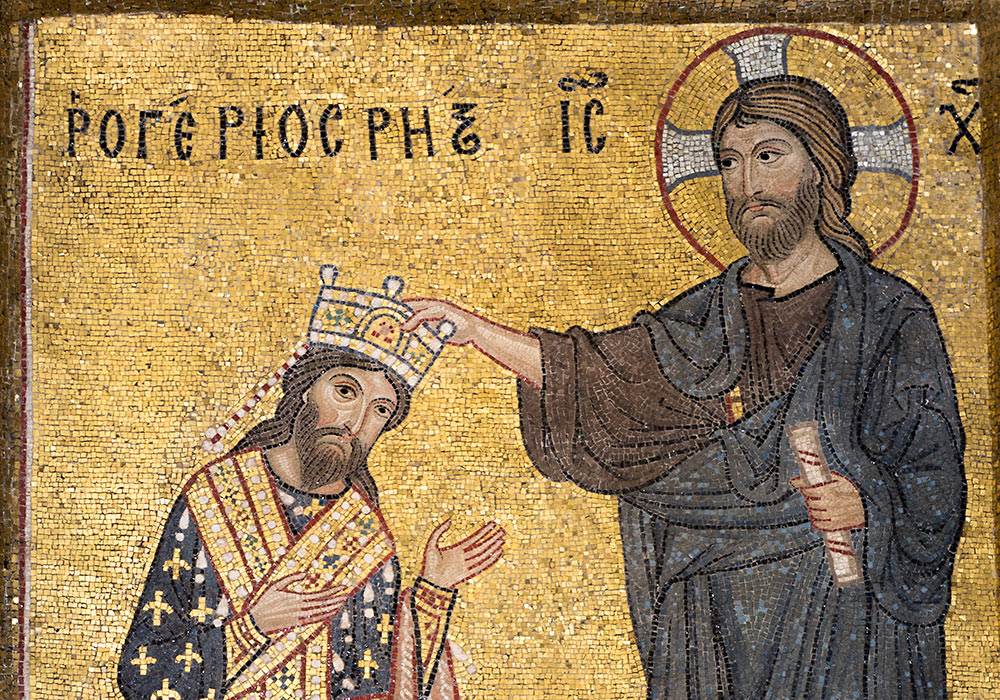
The idea of the sacred nature of political power in the medieval world.

By Dr. Lorena Stuparu
Institute of Political Sciences and International Relations
Romanian Academy
Abstract
Based on Ernst Kantorowicz’s work The King’s Two Bodies, this paper intends to show that the idea of the sacred nature of political power, of the legitimacy which transcends the secular institutions is still alive in collective mentality. Analyzing the symbolism of the duality of the king’s body (divine and human), Ernst Kantorowicz argues that the ideological foundations of the modern state are founded on in the idea that the kingdom is a mystical body whose head is the king – this is possible through the divine hypostasis of his body. According to the fundamental Christian ideology of kingship, in the first centuries of the Middle Ages, the king is human by nature and divine by grace. Also according to medieval mentality, the human side of the king embodies a veritable quantity of opposite characteristics – the mystery of the modern state can be interpreted on the level of a political philosophy which does not exclude the theological dimension of the secular society.
Introduction: On Legitimacy in the Frame of Traditional Domination
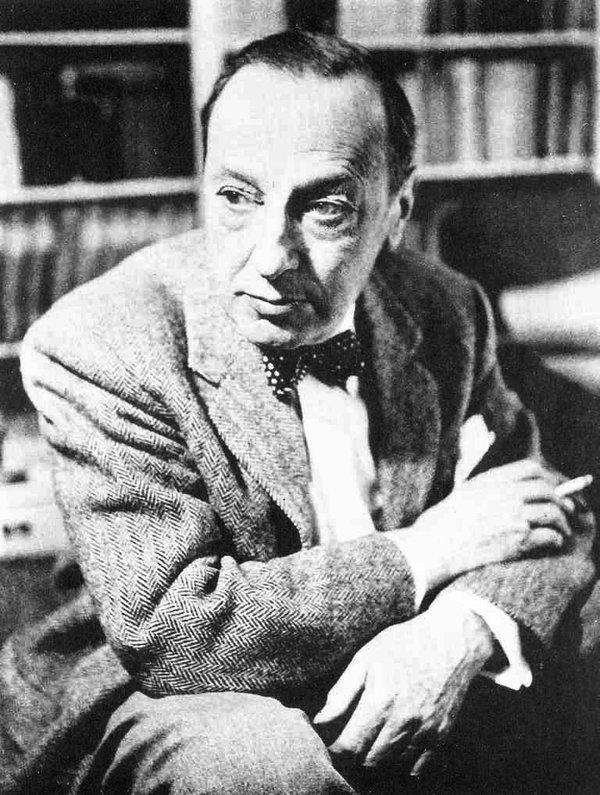
Whether one discusses the medieval idea of legitimacy in an argumentative manner, the idea of the king’s two bodies emerges, which was synthesized by English lawyers in 1571 and, explained, interpreted, and updated in Kantorowicz’s famous work The King’s Two Bodies.[1] Throughout history, the idea of legitimacy is linked to both the authority of tradition and to the tradition of authority. While in the modern era, the political authority collides with the individual autonomy thesis, in the Middle Ages, the idea of legitimacy was equivalent to the individual’s authority-king, since the king himself expressed a principle.
Generally, nowadays the legitimate power expresses a social will assumed by the political system, which is promoted on behalf of general purposes, defined as the common good.[2] This sociological observation (which also has an ideological flavor) is valid historically for “the common power” built by yielding individual powers and mandating a person or a group of people.[3] As Tom R. Tyler shows, legitimacy can be read as a “psychological property” of an authority, of an institution, or a social contract which determines those related to these forms to believe that they are appropriate and fair.[4]
However, the power’s legitimacy and illegitimacy contexts emphasize the function of symbols associated to the idea of its sacred or “magic” dimension. Lucien Sfez argues that “the politics belongs to the field of the symbolic” and the presentation of political symbolism also means defining the areas of politics, its borders, and its variations because “politics is only about legitimacy, i.e. beliefs and memories validated, i.e. symbols.”[5] According to the dogmatic theology based on the biblical hermeneutics of St. Paul, the principle of power is a divine one, and the terrestrial authority is an instrument in relation to the divine court which guides goodness and justice.[6] Regarding the mentality of legitimacy in the frame of traditional domination and of its extension to modernity and postmodernity, the work of Ernst Kantorowicz The King’s Two Bodies can be considered a demonstration of the fact that the idea of the political power’s sacred nature, of the legitimacy which transcends secular institutions is still alive in collective mentality. Using the metaphor of the king’s two bodies Ernst Kantorowicz argues that the symbolic and ideological foundations of the modern state are found in the idea that the kingdom is a mystical body whose head is the king – due to the divine dimension of his body. According to the fundamental Christian ideology of kingship in the first centuries of the Middle Ages, the king is human by nature and divine by grace.[7] Compared to this model, paradoxically, any perishable politician carries a perpetual form of the power, which is spiritual. In a certain sense, this form is recognized in democracies by those who invest in the political man by voting him. Also according to medieval mentality, apart from the physical body of the king, his body also embodies the state – the mystery of the modern state can be interpreted on the level of a political philosophy which does not exclude the theological dimension of the secular society.
From the analysis of the juridical, executive, and legislative dimensions of power (in terms of political imagination and of a polymorphism manifested in representations that uses myths, symbols, analogies, fictions), one can deduce that people allow to be governed by others because the political mystery emanates (even in secular societies) from the their belief that secular power comes to the elected officials from elsewhere – that is, that it is transferred from a higher court which remains hidden and inaccessible to ordinary people. This is even better visible in modern mass societies where power condenses such a force that “it requires an transcendent imaginary.[8] This is the current perception through mass media: “The politics never ceased to confront with theology”[9] asserts Wunenburger. The same author considers that it is not certain whether policy could, despite the efforts of contractualist texts, to invent autonomous categories which should not have “affiliation with theology and its representations of God.”[10] Furthermore, the ideas of sovereignty, of general will, of omnipotence, of state policy applied to the immanent order of the political society derive, without a doubt, from “intelligible forms of divinity, without losing symbolic substrate.”[11] in order to support these assertions, Wuneneburger’s work invokes Dumezil, Castoriadis, and Eliade. Although modern state’s leaders abandoned their magic-religious attributes (like the healing power of the kings of France), they kept some other astounding prerogatives (like the right of pardon, the state reason), through which they may be characterized as “holders of a right to life and death which can not be easily justified in terms of rationality.”[12] In most European countries, power is attached to a cohort of prerogatives (way of living, material benefits) which may seem incongruous with democracy, a “regime where any citizen, even the first, is neither above the law, nor above condition,”[13] But would a state leader (who would otherwise live in a modest way as a private individual) having the attributes of his office, answer “to the collective imaginary expectations?”[14] asks Wuneneburger. An affirmative answer can be given to this rhetorical question through the example of the President of Uruguay, who was characterized in 2012 as “the poorest head of state”[15] and can be considered as a model for ethical legitimacy consecration.

From theocracies to the most advanced democracies, the political systems are psychologically based on the belief that the source of power is of a transcendent order (whose office is not necessarily a sacred one, especially in the modern era), and that the power is transferred from a different court than those to which ordinary people relate. The representatives of the ruling class have the same mentality immortals do: they are the owners of functions, the masters of an imaginary empire extended to public decisions which become signs of their power.
In the pre-modern era, the political and personal authority was legitimized by the principle of the hereditary monarch, by the sacredness of this function. From this point of view, in the medieval West (but also in the Eastern areas of Europe) the political legitimacy implied the dualism of power which (in the formula of Pope Gelasius) confirmed the coexistence of the spiritual power (of the Church) with the political power (of the kings). But while the power embodied by the Church was raised to the level of “auctoritas,” the royal power was designated as “potestas.” Thus, the distinction between authority as founding power and authority as executive power emerges with clarity. The first is a plenary power, a source of legitimacy; the second is a factual power and it implies administration and governing. This involves the obedience of the political authority in a well-defined area, that of redemption. However, it does not imply the mutual submission of the spiritual authority.[16]
The idea of legitimacy from both historical and philosophical perspectives was broadened and defined with the help of Pope Innocent III. His conception went along the thoughts of Gregory VII, Urban II, and Alexander III, and his actions transformed Western society in a theocratic state directed by the pope, “God’s representative and therefore empowered to appoint and depose sovereigns and lead nations.”[17] Such principles, shows Ludovico Gatto, were expressed in the famous theory of the Sun and the Moon. The pontiff is the sun, while the king is the moon who receives energy from the sun, i.e. from the pope, who awarded the two epees, of the spiritual and temporal power. Pope Innocent manifested his influence over Sicily, Philip II August in France, John Lackland in England, and during the Albigensian Crusade (1208-1209). He ended the heresies spread in southern France and northern Italy, he suppressed the Cathars, while he also inspired the initiation of the Fourth Crusade (1202- 1204).[18]
We can consider that the astral symbolism of political power (sharing between the celestial diurnal body and the nocturnal heavenly body) foreshadows the symbolism of the duality of the king’s body. This body incorporates a number of opposing characteristics.
After the Hundred Years’ War, the English royal absolutism was consolidated under the Tudor Dynasty. Previously, for thirty years, the kingdom was crushed because of the War of the Roses, between the Lancasters and the Yorks. The fighting ended with the enthronement of Henry VII (1485- 1509) from the Tudor family, closely-related to the two rival houses.[19]
Similarly, other territories also consolidated the absolutism of the monarch, based on the same political concept.
The faith perspective of the medieval man intersects at a certain moment with the legal perspective of the political elite. Also, the political structure and the cultural structure forge a “forma mentis” of the West “both on its Atlantic front and on its Mediterranean front,” embodying one of the “foundations on which the modern civilization will be built.”[20]

The symbolic idea of legitimacy is obvious within the mentality of the medieval society. Georges Duby analyzes “the triangle scheme on which, in the spirit of the bishop from the year 1000”[21] (Adalbero of Laon) the paradigm of society was built, “one and divided into three, like the divinity who created it and who will judge it.”[22] He believes that this representation is a structure concealed in another one, “deeper, broader, encompassing,” as the first function “states, in the name of heaven, the order, the law” and legitimizes the power.[23]
Nowadays certain perspectives are rethinking the fundamental criterion for defining legitimacy, so that the prevalent belief in the legitimacy of power becomes popular belief “in the social value of institutions and the system capacity of maintaining this belief.”[24] The only thing collective memory preserved from the idea of traditional domination (based on the belief that the intangibility of the hereditary monarch conferrs legitimacy to its progeny), is the size of the “sacredness” of power. The representatives of the power do everything possible to maintain this state of mind, despite the demagogic democratic discourse. However, beyond the sacredness” or the ”magic” of power, the specialists of the imaginary also considered another dimension, less transparent: the ”mystery” as part of the horizon of understanding through which the power is credited by the citizens, whether they are people who accept this phenomenon as it is, or they aspire to rule themselves. There is a time of the beginning, as Ballandier showed, “the moment when royalty occurs from magic and religion” and “the sacredness of power consists of the relationship between the sovereign and the subject.”[25] A socioanthropological perspective on the contemporary epoch allows Pierre Bouvier, to present, through the concepts of “ritual” and ”ritualization,” our society as one which, besides the behaviours reflecting a willingness to transform and even a socio-political human “mutation,”[26] is still dependent on a mentality which conceives the foundation in symbolic order.[27] The recovery of the forgotten symbolic thinking seems necessary today in both the public and private space, as we can infer from some pertinent observations according to which “we come to the original contradiction of a society known in detail, but not understood as a whole.”[28]
The fact that politics is sometimes expressed in a trivial manner does not exempt this obscure area of being related to mystery. If all leaders should be distinguished from other citizens and they should govern them by virtue of special qualities, of grace, of heroism or extraordinary good deeds, it would be natural to believe in the miraculous emergence of such rulers. But the paradox consists in the fact that this association with the mysterious “sacredness” of power confers in reality legitimacy to the political man, irrespective of his behaviour: ranging from the psychological foundation of the subjective belief in the “goodness” of the leader, to the objective forms of recognition.
From the Idea of the King’s Two Bodies to the Idea of the Political Body
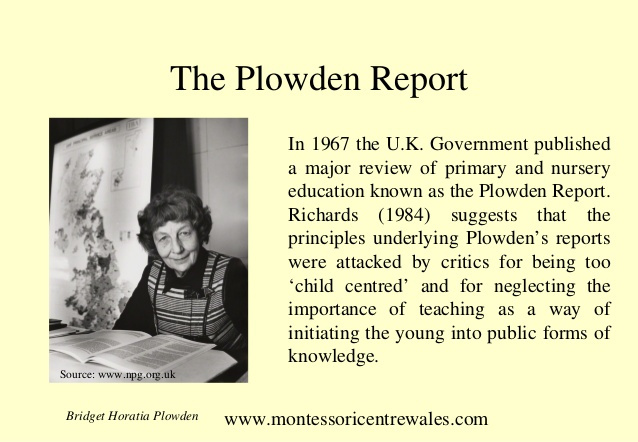
In a certain sense, a sort of invisible power confers legitimacy in the contemporary world too, although the democratic legislation does not include the concept of the leader’s “mystical body.” Beyond the discovery of the metaphysical foundations of the state, Kantorowicz argues that the ideological matrix of the modern state lies in the medieval “political theology” and more specifically in the idea that the kingdom is a mystical body whose King is the head, leading to a community where power is incorporated. Thus, studying the theme of royalty, according to his own statement in the Introduction to his book, he notes the essential role of the mystical, legal and political “fictions” for the definition of power institutions.[29] And among these complex intellectual constructs, the most original is the one concerning the king’s two bodies which emerged in the late medieval jurisprudence. Kantorowicz exposes the idea of the double body as it was formalized by the lawyers of Elizabeth I of England in the early seventeenth century and staged in Shakespeare’s Richard II. The idea of the king’s two bodies implies that the first body of the king is mortal and natural and the second body of the king is supernatural and immortal.
Quoting the ”Plowden’s Reports,” Kantorowicz describes the transformation of the idea of the King’s two bodies, in the idea of political body:
In 1571 an English jurist issued the ‘Plowden’s Reports’ which tried to resolve the tangled disputes which arose in connection to the notion of two kingly bodies and from the concepts of monarchical authority deduced from the concept of the King’s Two Bodies. Plowden highlighted the central points: that by the Common Law no Act which the King does as King, shall be defeated by his Nonage. For the King has in him two Bodies, viz., a Body natural, and a Body politic. His Body natural (if it be considered in itself) is a Body mortal, subject to all Infirmities that come by Nature or Accident, to the Imbecility of Infancy or old Age, and to the like Defects that happen to the natural Bodies of other People. But his Body politic is a Body that cannot be seen or handled, consisting of Policy and Government, and constituted for the Direction of the People, and the Management of the public weal, and this Body is utterly void of Infancy, and old Age, and other natural Defects and Imbecilities, which the Body natural is subject to, and for this Cause, what the King does in his Body politic, cannot be invalidated or frustrated by any Disability in his natural Body.[30]
Another paragraph recorded by Kantorowicz from Plowden’s Reports shows that:
[T]he King has two Capacities, for he has two Bodies, the one where of is a Body natural, consisting of natural Members as every other Man has, and in this he is subject to Passions and to Death as other Men are: the other is a Body politic, and the Members thereof are his Subjects, and he and his Subjects together compose the corporation, as Southcote said, and he is incorporated with them, and they with him, and he is the Head, and they are the Members, and he has sole Government of them: and this Body is not subject to Passions as the other is, nor to Death, for as to this Body the King never dies, and his natural Death is not called in our Law (as Harper said) the Death of the King, but the Demise of the King, not signifying by the Word (Demise) that the Body politic of the King is dead, but that there is a Separation of the two Bodies, and that the Body politic is transferred and conveyed over from the Body natural now dead, or now removed from the Dignity royal, to another Body natural.[31]
Based on these statements, Kantorowicz notes that “the King’s Two Bodies thus form a single indivisible unit, each being fully included in the other. However, there is no doubt about the superiority of the political body over the natural body.”[32]
Ernst Kantorowicz was always fascinated by the problem of the State as embodied in the personality of Frederick II (1194–1250), who was a Nietzschean superman who infused the medieval imperial attributes and the universal claims of imperial Rome as opposed to the universal claims of the Pope. Finnaly, the figure of the monarch can be found in the invisible political body consisting of the King and the State, rather than in the monarch’s body of flesh. The sacredness of the power is associated with the invisible political body and with the mystery of the state, and this problem is researched by Ernst Kantorowicz in his book on the King’s two bodies, but also in other works of his.[33]
In other words, the sovereignty of the monarch necessarily escapes death and this sacred body of political power is not subject to biological corruption. The idea of the immortal “political body“ is itself a theological-political idea, as it comes from the secularization of the conception of the church as mysticum corpus, as it was promoted by St. Paul.
From the Idea of the King’s Two Bodies to the Idea of the President’s Body

Relying on the work The King’s Two Bodies: A Study in Medieval Political Theology, Pierre Manent argues that although its idea about the corporation”[34] seems bizarre today,” it has, however, more than a cultural construction, a logical order, difficult to describe, but highly important. This is because the term ”political body” was used in Europe for a long period of time to denote a generic term of political organizations such as cities, principalities, or kingdoms. According to Pierre Manent, a body is more – and something else – than a body. And this is so because in a body, the whole is present in every part, the same life animates every part and enlivens the whole. Thus, Manent considers that the idea of body applied to political communities is not a mechanical idea, but on the contrary, it is a complex and spiritual idea. Such an idea implies that each member of a political community is himself a part of the whole and he lives his own life and equally the life of the whole. From this point of view, any political community is, in some way, a body.[35]
Kantorowicz noted that the conception of a symbolic body, which represents the nation and never dies, is a Christian theological one, because for a Christian, the Church is the body of Christ on Earth. The symbolic body was inviolable and through this symbolic body the king exercised his responsibility of divine right.[36] However, this doctrine is a secularization of the Christological model of the two bodies of Christ: a human body and a mystical body. By researching the medieval foundations of this thought, one discovers that in the early Middle Ages, when kingdoms were “founded on the image Christ,” the King is already “human by nature and divine by grace.”[37] However, this liturgical kingship disappears in the twelfth century, “giving way to a new royalty structure centred on the sphere of law.”[38] The perishable man carries the perpetual form of humanity. This conception prepares all the “republican,” simply parliamentary forms of corporal dualism.[39]
As already shown, “the transmutation of the royal figure has as starting point the model of the two natures of Christ.”[40] Edouard Delruelle explains this view, arguing that beyond the mimetic rivalry between the secular power and the Church, its accomplishment eventually passes through a temporal life which confers on the invisible political body of the King (and his ancestors and successors) and his present and future community, a higher legitimate reality than the monarch’s physical body. Furthermore, beyond the discovery of the state metaphysical foundations, Kantorowicz argues that the ideological matrix of the modern state lies in the medieval “political theology,” specifically in the idea that the kingdom is a mystical body whose King is the head, a community in which power exists consciously.[41]
In another recent interpretation, it appears that we are all susceptible to have two bodies because we are all susceptible to exercise responsibility. Our responsible body, our body engaged in action is different from our physical body, it is the tool for action and responsibility and we live according to this action and responsibility. Each man is engaged in action, and from this point of view he has two bodies similar to the king’s bodies: the physical body and the responsible body. The physical body is fed, cared for, maintained, while the responsible body is instrumentalized. The physical body knows things; the responsible body believes things because it acts with beliefs. But this hypothesis of the two bodies receives meaning only if we assume that the dialogue between the two bodies is not perfect.[42]
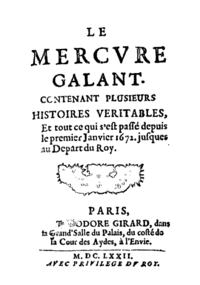
Reading Kantorowicz leads to the conclusion that the exercise of power has for a long time been associated with the sacredness of the person who embodies the reign, but it was desacralized by the exaggeration of this dimension. For example, the label of Versailles puts the formerly-rebellious nobility in the service of smaller daily acts of the royal person: each courtier running for the privilege of attending the monarch in his morning rise, his meals, walks, sunset, etc. The most innocuous events of the life of the king and his courtiers make the joy of newspapers like Le Mercure Galant, which, though not limited to this kind of information, provide the same effects as tabloids. Louis XIV’s entire life is dedicated to the representation of absolute power and to the aestheticization of royalty confounded with himself. Political representation is identical with artistic representation, which announces the contemporary paradigm of publicity.[43]
Thierry Saussez applied Kantorowicz’s theory of the king’s two bodies to Francois Hollande. The author explains how both are coexisting functions of the President of the Republic. Saussez highlights the trap of “normality,” this rather vague concept that corresponds to everything that is consistent with the standard, that neither surprises nor disturbs: the negation of the exception, a function, a destiny. He analyzes the phobic obsession of the President which consists in doing the opposite of Nicolas Sarkozy.[44]
But Nikolas Sarkozy was also the subject of a conference talk by Pascal Lardellier in 2011 in Bucharest suggestively titled «Le double corps» du Président. Une analyse sémio-anthropologique des «deux corps sarkoziens».[45] According to the French republican political tradition, the President is the heir of the symbolic prerogatives of the monarchs. As the real body is the support for the symbolic political power, the analysis of the public management of the body of President Nicolas Sarkozy through the intermediary of images in mass media, develops a discourse on the two bodies in different contexts. Similarly, a title like «Berlusconi, le corps du chef» written by Marco Belpoliti[46]is suggestive for the exploratory and hermeneutical value of the formula known as ”the king’s two bodies” which is used more or less ironically in order to decipher the ”mystery” of a political leader.
As a historian, Kantorowicz is interested in documents, but as the documents studied by him show the connections between the theological principles and politics, he discovers a kind of interpretive technique in political theology which becomes creative hermeneutics, an original and useful tool for understanding the essence of the past and present political phenomena. Furthermore, “bringing together liturgical works, images, and polemical material, The King’s Two Bodies explores the long Christian past behind this ’political theology.’ It provides a subtle history of how commonwealths developed symbolic means for establishing their sovereignty and, with such means, began to establish early forms of the nation-state.”[47]
Kantorowicz’s theory inspired thinkers such as Pierre Legendre, Régis Debray or Marcel Gauchet, who share the idea that politics can find legitimacy by defending the rights of the Institution, by the call to the Symbolic Order in a renowned world without landmarks. They also highlighted the idea that politics is not to pierce the nimbus to whom the state power conceals the actual mechanisms of exercise, but to legitimize this power as it “embodies” the only possible resistance to disséminantes market forces and media.[48]
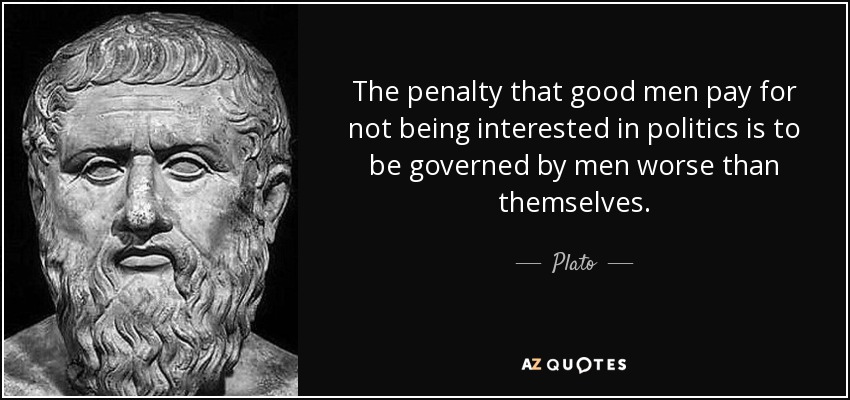
Kantorowicz’s book helps me question through a speculative approach the problem of today’s power, especially the specificity of its legitimacy. The updates and comments related to the Heads of State or contemporary politicians are interesting: we could rightfully say that they also have two bodies. In the end, I would like to recall Plato’s requirements to the political man. He should be able to master both the political science and the political art. His legitimacy consisted of the respect to laws and especially of the practice of a policy which became “art” (such as the military) which “interweaved” a “wrapper” that “included all people from cities,” as well as the fulfilling of the purposes of happiness.[49] The characteristics of the political man stated by Aristotle in Politics are nobleness, property, citizenship (freedom), warlike bravery and the spirit of justice.[50] Obviously, this refers to the ancient notion of justice, much different from that of today. The profile of the political man has evolved over time from this classical type to the modern traits involving for example, according to Machiavelli, the cunning, the ruthlessness to achieve a goal. In other words “Machiavelli opposes the idealism of classical political philosophy with a realistic approach of political matters.”[51] The “virtue” of the political man in Machiavelli’s vision is based on the concept of politics as an activity dominated by force, cunning, corruption, cupidity, and self-interest: just all of these imply the amorality of the political man. Thus, far from the traditional conceptions of “virtue,” the Machiavellian “capable man” is characterized by ambition, calculated ability to keep the power, cruelty if necessary, capacity to adapt to any new situation. While these characteristics of the political man can easily be recognized in the modern and postmodern history, certain traits like courage, energy, self-control, forecasting ability, and the force of character are rare to find.
I think that today, the political man can supply the absence of the mystical body through a series of personal qualities which would inspire trust, so that his legitimation be related to what has been called “the belief in legality.”[52] And today, the citizen does not want to find himself in the political leader, but in a higher principle. In my opinion, the empty place of “the mystical body” in democracy can be met by a legitimating process set above the electoral majority principle and beyond the more or less transparent political games, a process which should be based on a second axiological principle, which is yet to be found. I think that today, the political man can supply the absence of the mystical body through a series of personal qualities which would inspire trust, so that his legitimation be related to what has been called “the belief in legality.”[52] And today, the citizen does not want to find himself in the political leader, but in a higher principle. In my opinion, the empty place of “the mystical body” in democracy can be met by a legitimating process set above the electoral majority principle and beyond the more or less transparent political games, a process which should be based on a second axiological principle, which is yet to be found.
In conclusion, both the Church and the secular law have imposed the idea of the sacredness of power which lasts up until today in the collective mentality
Appendix
Notes
- Ernst H. Kantorowicz, The King’s Two Bodies: A Study in Medieval Political Theology (Princeton: Princeton University Press, 1957).
- Georges Burdeau, Traité de science politique, tome I : Le pouvoir politique (Paris: Librairie Générale de droit et de Jurisprudence “R. Pichon et R. Durand-Auzias”, 1949), 57-59.
- Pierre Manent, Originile politicii moderne. Machiavelli/Hobbes/Rousseau [The origins of modern policies: Machiavelli/Hobbes/Rousseau], trans. Alexandra Ionescu (Bucharest: Nemira, 2000), 68.
- T. R. Tyler, “Psychological Perspectives on Legitimacy and Legitimation.” In Annual Review of Psychology 57 (New-York: New-York University, 2006), 375.
- Lucien Sfez, Simbolistica politică [Political symbolism], trans. Diana Sălceanu (Iassy: Institutul European, 2000), 13.
- Jean Jacques Chevallier, Histoire de la pensée, II – La pensée chrétienne (Des origines à la fin du XVI-e siècle) (Paris: Flammarion, 1976), 173; 177.
- Ernst H. Kantorowicz, Cele două corpuri ale regelui. Un studiu asupra teologiei politice medievale [The King’s Two Bodies: A Study in Medieval Political Theology], trans. Andrei Sălăvăstru (Iassy, Polirom, 2014), 57.
- Jean Jacques Wunenburger, Imaginariile politicului [The imaginaries of the politics], trans. Ionel Buşe and Laurenţiu Ciontescu-Samfireag. (Bucharest: Paideia, 2005), 21.
- Ibidem, 22.
- Ibidem, 23.
- Ibidem, 58, 87.
- Ibidem, 22.
- Ibidem, 94.
- Ibidem, 23.
- Vladimir Hernandez, “Jose Mujica: The world’s ‘poorest’ president” In BBC News Magazine, 15 November 2012 http://www.bbc.com/news/magazine-20243493 (last time accesed: June 23, 2015).
- Jeannine Quillet, Cheile puterii în evul mediu [The keys of power in the Middle Ages], trans. Maria Pavel (Bucharest: Corint, 2003), 15.
- Ludovico Gatto, Secretele evului mediu. Societate, politică, economie și religie într-un mileniu de istorie [The secrets of the Middle Ages. Society, Policy, Economy and religion in one historical millennium], trans. Constantin Vlad (Bucharest: BIC ALL, 2005), 112.
- Ibidem.
- Ibidem, 170.
- Răzvan Teodorescu, “Prefaţă” [Preface], in George Duby, Arta și societatea 980-1420 [Art and society, 980- 1420], trans. Marina Rădulescu. (Bucharest: Meridiane, 1987), 18. See also: Georges Duby, Le temps des cathédrales. L’art et la société, 980-1420 (Paris, Éditions Gallimard, 1981).
- Georges Duby, Cele trei ordine sau imaginarul feudalismului [The three orders or the imaginary of feudalism], trans. Elena-Natalia Ionescu and Constanţa Tănăsescu (Bucharest: Meridiane, 1998), 15.
- Ibidem.
- Ibidem.
- Seymour Martin Lipset, Political Man (New York: Doubleday & Company, Inc., Glencoe, 1960), 91.
- Georges Balandier, Anthropologie politique (Paris: PUF, 1967). [Georges Balandier, Antropologie politică, trans. Doina Lică (Timişoara: Amarcord & CEU, 1998), 119].
- P. Bouvier, “Lectură ’socio-antropologică’ a epocii contemporane” [A social-anthropological “reading” of the contemporary times] in Mituri, rituri, simboluri în societatea contemporană [Myths, rituals, symbols in the contemporary society], ed. Monique Segré, trans. Beatrice Stanciu (Timişoara: Amarcord, 2000), 27. See also: D. Hall, “The Middle Ages,” in The Perthshire Book, ed. Donald Omand (Edinburgh: Birlinn, 1999), 59-73.
- Lorena Stuparu, “Simbolismul şi resemnificarea politică a discursului mitico-simbolic” [The symbolism and the political reinterpretation of the mythical-symbolic discourse], in Teorii ale legitimităţii puterii [Theories of the legitimacy of power], ed. Gabriela Tănăsescu (Bucharest: Institutul de Ştiinţe Politice şi Relaţii Internaţionale Publishing House) 274.
- Marcel Gauchet, Ieşirea din religie [Exiting religion], trans. Mona Antohi (Bucharest: Humanitas, 2006), 146.
- Ernst H. Kantorowicz, Cele două corpuri ale regelui. Un studiu asupra teologiei politice medievale [The King’s Two Bodies: A Study in Medieval Political Theology], trans. Andrei Sălăvăstru (Iassy, Polirom, 2014), 19; 35.
- Kantorowicz, The King’s Two Bodies, chapter one http://pages.uoregon.edu/kimball/Kantorowicz.htm (last time accessed: June 16, 2015). Kantorowicz, Cele două corpuri ale regelui, 22.
- Kantorowicz, The King’s Two Bodies, chapter one http://pages.uoregon.edu/kimball/Kantorowicz.htm (last time accessed: June 16, 2015); Kantorowicz, Cele două corpuri ale regelui, 27.
- Kantorowicz, Cele două corpuri ale regelui, 24.
- Ernst H. Kantorowicz, “Mysteries of State: An Absolutist Concept and its Late Medieval Origins,” Harvard Theological Review, Vol. XLVIII, 1955; Ernst H. Kantorowicz, “Pro Patria Mori in Medieval Political Thought,” The American Historical Review, Vol. 56 (3), 1951.
- ”(…) the other is a Body politic, and the Members thereof are his Subjects, and he and his Subjects together compose the corporation.” See: Kantorowicz, The King’s Two Bodies, chapter one http://pages.uoregon.edu/kimball/Kantorowicz.htm (last time accessed: June 16, 2015).
- Pierre Manent, O filozofie politică pentru cetăţean [A political philosophy for the citizen], trans. Mona Antohi (Bucharest: Humanitas, 2003), 220-222.
- Kantorowicz, Cele două corpuri ale regelui, 348.
- Patrick Boucheron, «Les Deux Corps du roi d’Ernst Kantorowicz », in http://www.histoire.presse.fr/livres/les-classiques/les-deux-corps-du-roi-d-ernst-kantorowicz-01-12-2006-4673 (last time accessed: June 16, 2015).
- Ibidem.
- Ibidem.
- Edouard Delruelle, «Démocratie et désincorporation », Noesis. http://noesis.revues.org/1353 (last time accessed: June 16, 2015).
- Edouard Delruelle, «Démocratie et désincorporation », Noesis. http://noesis.revues.org/1353 (last time accessed: June 16, 2015).
- Bruno Jarrosson, « Les catastrophes possibles et irréelles (2): les deux corps du décideur », in Philo Contemporaine, http://iphilo.fr/2013/12/02/catastrophes-possibles-et-irreelles-2/ (last time accessed: June 16, 2015).
- http://www.atlantico.fr/decryptage/louis-xiv-politique-people-avant-heure-politiques-sont-people-commeautres-jamil-dakhlia-435641.html#eShhvbpISkUdDTIO.99 (last time accessed: June 16, 2015).
- Thierry Saussez, Les deux corps du président (Paris:Éditions Robert Laffont, 2013) https://books.google.ro/books?id=ezo2KvfBUwcC&printsec=frontcover&dq=Thierry+Saussez,+Les+deux+corps +du+pr%C3%A9sident.+Un+an+apr%C3%A8s,+pourquoi+Hollande+estil+au+plus+bas%3F&hl=ro&sa=X&ei=_nuQVdW-IZKV7AawyIvICQ&redir_esc=y#v=onepage&q&f=false (last time accesed: June 29, 2015).
- http://wwwzoepetre.blogspot.ro/2011/06/le-double-corps-du-president.html (last time accesed: June 29, 2015).
- http://www.lemonde.fr/livres/article/2010/11/19/berlusconi-le-corps-du-chef-de-marcobelpoliti_1442314_3260. html (last time accessed: June 16, 2015).
- http://press.princeton.edu/titles/6168.html (last time accessed: June 16, 2015).
- Edouard Delruelle, « Démocratie et désincorporation » http://noesis.revues.org/1353 (last time accessed: June 16, 2015).
- Platon, Omul politic [The political man], trans. Ena Popescu, 304 a, 305 e, 311c, in Opere Complete [Complete works] IV, ed. Petru Creţia, Constantin Noica and Cătălin Partenie (Bucharest, Humanitas, 2004), 172, 175, 185.
- Aristotel, Politica [Policy], Cartea III. Despre stat și cetățean. Teoria guvernământului și suveranitatea. Despre regalitate [Book III. On the state and the citizen. The theory of governing and suzerainty. On royalty], 1, 6, https://archive.org/stream/Aristotel-Politica_05__/Aristotel-Politica_05___djvu.txt (last time accessed: June 16. 2015).
- Luc Ferry, Philosophie politique 1. Le droit: la nouvelle querelle des Anciens et de Modernes (Paris: Presses Universitaires de France, 1984), 55.
- Jos de Beus, Benno Netelembos, How to Signal and Label Democratic Crisis – Rethinking Political Legitimacy, Working Paper Politicologen Etmaal (Amsterdam, 2008), 18 http://www.slideshare.net/Nostrad/how-to-signaland-label-a-political-crisis-2008 (last time accesed: June 29, 2015).
References
- Boucheron, Patrick. Les Deux Corps du roi d’Ernst Kantorowicz, http://www.histoire.presse.fr/livres/les-classiques/les-deux-corps-du-roi-d-ernst-kantorowicz-01- 12-2006-4673 (last time accessed: June 16, 2015).
- Bouvier, Pierre. ”Lectură «socio-antropologică» a epocii contemporane” [A social-anthropological reading of the contemporary times]. In Mituri, rituri, simboluri în societatea contemporană [Myths, rituals, symbols in contemporary society], ed. Monique Segré, trans. Beatrice Stanciu. Timişoara: Amarcord, 2000.
- Chevallier, Jean Jacques. Histoire de la pensée, II – La pensée chrétienne (Des origines à la fin du XVI-e siècle). Paris: Flammarion, 1976.
- Duby, Georges. Cele trei ordine sau imaginarul feudalismului [The three orders or the imaginary of the feudalism], trans. Elena-Natalia Ionescu and Constanţa Tănăsescu. Bucharest: Meridiane, 1998.
- Delruelle, Edouard, “Démocratie et disincorporation.” Noesis [En ligne], http://noesis.revues.org/1353 (last time accessed: June 16, 2015).
- Ferry, Luc. Philosophie politique 1. Le droit: la nouvelle querelle des Anciens et de Modernes. Paris: Presses Universitaires de France, 1984.
- Gauchet, Marcel, Ieşirea din religie [Exiting religion], trans. Mona Antohi. Bucharest: Humanitas, 2006.
- Gatto, Ludovico. Secretele evului mediu. Societate, politică, economie și religie într-un mileniu de istorie [The secrets of the Middle Ages. Society, politics, economy and religion in one historical millenium], trans. Constantin Vlad. Bucharest: BIC ALL, 2005.
- Jarrosson, Bruno. “Les catastrophes possibles et irréelles (2): les deux corps du décideur” Philo Contemporaine, http://iphilo.fr/2013/12/02/catastrophes-possibles-et-irreelles-2/ (last time accessed: June 16, 2015).
- Kantorowicz, Ernst H. Cele două corpuri ale regelui. Un studiu asupra teologiei politice medieval [The King’s Two Bodies: A Study in Medieval Political Theology], trans. Andrei Sălăvăstru. Iassy: Polirom, 2014.
- _____. The King’s Two Bodies: A Study in Medieval Political Theology. Princeton: Princeton University Press, 1957.
- Manent, Pierre. O filozofie politică pentru cetăţean [Political philosophy for the citizem], trans. Mona Antohi. Bucharest: Humanitas, 2003.
- Plato. Omul politic [The political man], trans. Ena Popescu. In Opere Complete [Complete works] IV, ed. Petru Creţia, Constantin Noica and Cătălin Partenie. Bucharest: Humanitas, 2004.
- Quillet, Jeannine. Cheile puterii în evul mediu [The keys of power in the Middle Ages], trans. Maria Pavel. Bucharest: Corint, 2003.
- Saussez, Thierry. Les deux corps du président. Un an après, pourquoi Hollande est-il au plus bas? http://www.laffont.fr/site/les_deux_corps_du_president_&100&97 82221138199 .html (last time accessed: June 16, 2015).
- Sfez, Lucien. Simbolistica politică [Political symbolism], trans. Diana Sălceanu. Iassy: Institutul European, 2000.
- Stuparu, Lorena. ”Simbolismul şi resemnificarea politică a discursului mitico-simbolic” [The symbolism and the political reinterpretation of the mythical-symbolic discourse]. In Teorii ale legitimităţii puterii [Theories of the legitimacy of power], ed. Gabriela Tănăsescu. Bucharest: Editura Institutului de Ştiinţe Politice şi Relaţii Internaţionale Publishing House, 2014.
- Teodorescu, Răzvan. “Prefaţă” [Preface]. In George Duby, Arta și societatea 980-1420 [Art and society, 980-1420], trans. Marina Rădulescu. Bucharest: Meridiane, 1987. (Georges Duby, Le temps des cathédrales. L’art et la société, 980-1420. Paris: Éditions Gallimard, 1981).
- Wunenburger, Jean Jacques. Imaginariile politicului [Political Imaginaries], trans. Ionel Buşe and Laurenţiu Ciontescu-Samfireag. Bucharest: Editura Paideia, 2005.
- https://archive.org/stream/Aristotel-Politica_05__/Aristotel-Politica_05___djvu.txt, (last time accessed: June 16, 2015).
- http://press.princeton.edu/titles/6168.html, (last time accessed: June 16, 2015).
- http://www.lemonde.fr/livres/article/2010/11/19/berlusconi-le-corps-du-chef-de-marcobelpoliti_1442314_3260.html, (last time accessed: June 16, 2015).
- http://topub.unibuc.ro/conferinta-%E2%80%9Ele-double-corps-du-president%E2%80%9D-sustinutade-pascal-lardellier/, (last time accessed: June 16, 2015).
- http://www.atlantico.fr/decryptage/louis-xiv-politique-people-avant-heure-politiques-sont-peoplecomme-autres-jamil-dakhlia-435641.html#eShhvbpISkUdDTIO.99, (last time accessed: June 16, 2015).
- http://www.decitre.fr/livres/les-deux-corps-du-roi-9782070714162.html, (last time accessed: June 16, 2015).
Originally published by Trivent Publishing (2015) under the terms of a Creative Commons Attribution-NonCommercial-NoDerivatives 4.0 International license.
About the Author