Medieval pilgrimage looks on paper like a simple trip: you pack, you walk, you arrive, you pray. But beneath that simple shape lives a tangle of fears, hopes, rituals, and social forces. Pilgrims crossed mountains and seas for reasons that were emotional as much as doctrinal. To understand why people walked for weeks — sometimes years — we need to read medieval minds as well as medieval maps.
What “Pilgrimage” Meant then
A pilgrimage was not just tourism. It was a ritual journey to a shrine or holy place undertaken to seek divine help, give thanks, perform penance, or show devotion. This definition is useful because it ties motives to religious practice, law, and community expectations.
Motives: the Inner Engine
People left home for many layered reasons. Some sought healing for a sick child. Some hoped a saint would fix bad luck. Others were performing penance imposed by a court or priest. And for many, the journey itself was a way to order life: remove distractions, face danger, and return changed. The medieval Church added institutional incentives: indulgences, ritual acts that promised relief from the temporal effects of sin. Those formal promises — and the social prestige of having made a holy journey — pushed many to travel.
The Social Mind and Shared Stories
Pilgrimage satisfied social as well as private needs. People traveled in groups, swapped stories by night, and returned with tokens and tales that validated their experience. Pilgrimage was a social performance: the journey showed others that you had tried, suffered, and been transformed. The badges, souvenirs, or shell tokens pilgrims carried became proof of commitment. Material culture (badges, relic replicas) gave visible status to the invisible change the pilgrim claimed.
Risk, Reward, and the Psychology of Commitment
Imagine a person in a small village. The journey is long. Bandits, disease, bad weather — all real threats. Choosing to go anyway magnified the meaning of any positive outcome. Psychologists now call this a “sunk-cost and commitment” dynamic: effort makes belief stronger. The more you risk and lose, the more you value the payoff when something good happens. A cure at a shrine felt more convincing if it followed months of walking, repeated prayers, and physical deprivation. It’s simple human psychology — costly actions change how we interpret results.
Pilgrimage as Identity Work
Pilgrims remade themselves. The journey created rites of passage: departure, hardship, encounter, return. For some, especially younger men and women with limited social options, pilgrimage offered an accepted route to adulthood, to new contacts, even to marriage or patronage. For nobles or kings, pilgrimage could publicly display piety and strengthen political legitimacy. The outward act of pilgrimage thus supported inward identity transformation.
Case study: Santiago de Compostela
The shrine of Saint James in northern Spain became one of medieval Europe’s most famous destinations. By the 11th–13th centuries it had organized routes, hospices, and a culture around travel that drew people from across the continent. The Camino’s long history shows how a pilgrimage route can generate networks: roads, inns, maps, and songs that make further journeys more likely. Modern data remind us that the Camino still resonates: contemporary Compostela statistics count hundreds of thousands of pilgrims in recent years, a useful mirror for understanding past scale and meaning.
Modern Parallels and Unexpected Links
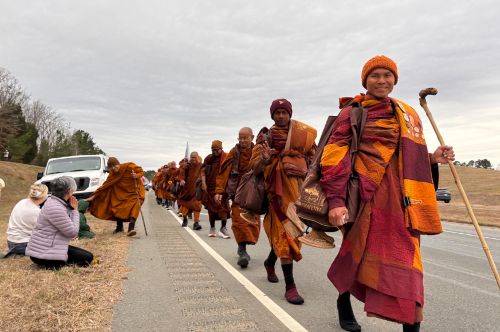
We don’t wander to shrines the same way anymore, but the psychological pattern persists. Today, people seek meaningful shared experiences in various forms: retreats, online spiritual groups, or collective challenges. The need to tell a story about transformation remains.
Interestingly, some modern spaces that amplify private stories are apps for anonymous group chat environments—places to talk without local judgment. The user simply opens a video chat, a good option for CallMeChat, and says whatever they want. The main advantage is that you can talk frankly in an anonymous online chat, without any fear. The medium has changed; the drive to find safe spaces for vulnerability has not.
Case study: Canterbury Cathedral and a martyr’s pull
When Archbishop Thomas Becket was murdered in 1170, his tomb quickly became a magnet. Reports of miracles and the rapid canonization that followed turned Canterbury into a major destination. For medieval people, the combination of dramatic martyrdom, recorded miracles, and royal attention made the shrine emotionally powerful — a place where suffering and divine favor met. Contemporary accounts and later historians show that thousands came to Canterbury each year in the centuries that followed.
Rituals that Shaped Belief
The medieval mind trusted physical signs. Touching a relic, bathing in holy water, or carrying a badge back home were not “superstitions” to medieval people; they were part of a credible causal chain linking human action and divine response. Rituals scaffolded belief: repeated gestures reduced ambiguity and created predictable outcomes. That predictability made pilgrimage psychologically attractive in a world of uncertainty.
Group Dynamics, Contagion, and Reputation
Group behavior mattered. Pilgrims shared accommodation, news, and advice. Stories of miraculous cures spread rapidly; social contagion made belief more likely. If someone in a neighboring village returned with a healed child and a pilgrim’s badge, that was persuasive. Reputation inside communities—who had gone, who had returned—also shaped decisions. Pilgrimage therefore functioned like an early information network: a mix of gossip, testimony, and material proof.
What the Numbers Say (briefly)
Hard numbers for the Middle Ages are imperfect. But sources agree that certain shrines — Rome, Santiago, Canterbury — drew large international flows in their heyday. Where medieval documentary trails exist, they show organized hospitality and steady demand. For modern comparators, official pilgrimage offices report hundreds of thousands visiting Santiago annually in recent years, which helps historians imagine the infrastructure and popularity that once existed.
Conclusion
Medieval pilgrimage combined private need, public ritual, and social proof. It offered a way to transform misfortune into meaning and danger into testimony. People traveled thousands of miles because pilgrimage bundled hope, commitment, community, and institutional reward into a single, comprehensible practice. If we look closely, we can see the same psychological patterns in modern life: in the way groups form around shared trials, in the power of testimony, and even in how anonymous online spaces allow people to seek, confess, and change. The road was long; but it led to something humans still hunger for: a place where suffering can be witnessed and — perhaps — healed.
About the Author