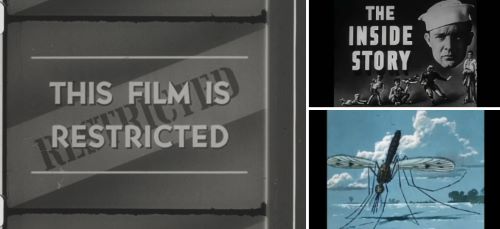
World War II also invigorated and shaped a variety of technological approaches to public health.

By Dr. Michael Sappol
Visiting Researcher, Department of History of Science and Ideas
Uppsala Universitet
Introduction
As the 1930s gave way to the 1940s, cinema—public health films included—was having a moment. With the onset of World War II, that moment exploded. Film was thought to be an especially influential medium. The US military had much to say and show audiences of soldiers and the public—and now, the funding to do it. Often in league with well-regarded filmmakers, the government sought to inform, inspire, and educate military men and women as well as the masses at home. This essay examines a group of 13 films representing a sampling of that oeuvre.
We commend to you that marvel of all ages—the greatest device that came from man’s ingenuity—the cinema—the long sought visual form of communication—the perfect form for teaching and the only qualitative gain to communication since the alphabet was evolved.
B. A. Aughinbaugh, 1941
Public health and war have long been close companions, and maybe strange bedfellows. Starting with the Crimean War, and then the first terrible round of “modern wars”—the American Civil War, the Franco-Prussian War and World War I—military officials and civilian leaders called on health professionals and volunteers to help mobilize and protect military forces and civilian populations. Health professionals and volunteers, in turn, viewed war as an opportunity to test and implement their theories, as an opportunity to use newly discovered knowledge and newly invented technologies—and eagerly jumped on war bandwagons to advance their professional, scientific, political and ideological goals. Not surprisingly then, public health and military establishments have come to share a common vocabulary (campaigns, mobilizations, officers, enemies, containments, crusades, surveillance, evacuation, battles, wars, victories, tactics, strategies, logistics), a common obsession with scientific and technological innovation, and a common organizational model: the disciplined, deployable, hierarchical service; command and control.
The synergistic relationship between health professionals and the military especially flourished during the most massive conflict of all: World War II. In the era of total war, the mobilization of science and technology on behalf of the war effort famously bore fruit in the development of antibiotics, radar, and the atomic bomb. But the war also invigorated and shaped a variety of technological approaches to public health—the development of chemical pesticides to kill mosquitoes and other insect disease vectors, the expansion of electronic communication networks for public health surveillance, and the production of public health films aimed at mass audiences of military personnel and civilians.
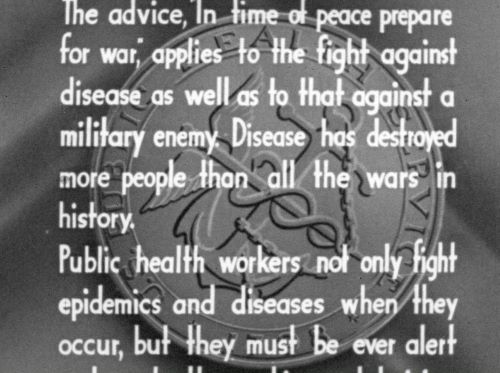
The use of film to educate and mobilize the public for health purposes was not new. Interest in the educational possibilities of motion pictures began practically with the invention of the technology. But the medium of film inspired larger visions. In 1910 Thomas Edison prophesied that the motion picture would “wipe out narrow-minded prejudices which are founded on ignorance,…create a feeling of sympathy and a desire to help the down-trodden people of the earth, and…give new ideals to be followed.”1 Edison clearly had an inventor’s (and investor’s) interest in promoting motion pictures, but his enthusiasm for his invention was widely shared. Film was almost universally regarded as an exemplary technology of modernity, a medium destined to transform society. In the early decades of the 20th century, military and civilian officials, educators, leaders of philanthropic organizations, and commercial companies like Pathé Frères and Eastman Kodak, all began making and exploring the uses of film to instruct the public and shape public opinion. Public health advocates and professionals—who had ambitious agendas of their own—were especially charmed, deeply impressed by cinema’s sway over mass audiences. The first public health film, on the “life drama of the fly,” was made in Great Britain in 1910 as part of a national anti-fly campaign. Other productions followed, in Britain, Germany, the United States, France, and, later, Italy and the Soviet Union, on the health hazards of alcoholism, water and food contamination, and other topics.2
After this initial wave of filmmaking, some public health professionals began to temper their enthusiasm, perhaps influenced by a larger post-war disillusionment that was setting in. Evart G. Routzahn and Mary Swain Routzahn, pioneering public health media specialists for the progressive Russell Sage Foundation, were skeptical about the effectiveness of the films that had been made. “The propaganda value of the motion picture,” they wrote in 1918, “is both very considerable and…overrated. It is unreasonable to expect results merely because people like motion pictures.” The Routzahns, and some other public health advocates, didn’t dismiss film entirely, but argued that the public health films of the period were poorly made, scientifically inaccurate, and lacking in credibility.3
Public Health and the State
According to most historians, in the 19th century and first three decades of the 20th, the United States was a weak and fragmented nation-state, hobbled by divided sovereignty, laissez-faire ideology, and low tax revenues, unable to cope with the new conditions of industrial modernity and the rise of great cities. 4 That assessment is largely derived from the writings of the era’s progressive reformers. From the 1880s to the 1940s, public health advocates, political and social activists, and geopolitical strategists saw themselves as social critics, reformers and nation-builders. Their shared ideal was of a centralized American state with a capable and effective infrastructure that married the force, legitimacy, and resources of the nation to the progressive advance of science. Only vigilant and thoroughly modern bureaucracies, under the stewardship of scientifically educated officials and their academic and philanthropic allies, could study, prevent, and eradicate social and medical pathologies.5
The health progressives had some successes. Between 1880 and 1920, public health bureaucracies took root in state and city governments, and national non-profit health advocacy organizations flourished. World War I especially spurred the expansion of the federal government’s role in public health, and public health film production, in the name of the war effort. After the war, many of the programs introduced during the war were discontinued, in an effort to reduce expenditures to pre-war levels. During the 1920s, the United States Public Health Service had no budget for film production, though some health films were produced by the Department of Agriculture and the Children’s Bureau of the U.S. Department of Labor.6 In those years, the most dynamic area of public health activity took place in some of the more progressive states (especially in New York and Wisconsin), philanthropic and advocacy organizations like the National Tuberculosis Association, and quasi-governmental organizations like the American Social Hygiene Association, although by the late 1920s these were hampered by the Great Depression and the overall contraction of the U.S. economy. With the landslide election of Franklin Roosevelt in 1932, there came a new burst of activity on the federal level. The New Deal agenda called for an enlarged, progressive federal government; the federal government began increasing its support for public health bureaus and activities, and many state governments followed suit. The onset of World War II (along with the return of economic prosperity, increased tax revenues and greater tolerance for budget deficits) spurred an even greater expansion of public health bureaus and programs, military and civilian.
This was predicated on a rising tide of popular support for government programs, including those related to public health. Public health programs, in turn, were designed to foster, mobilize and consolidate popular support, as well as fight disease. In the 1930s and ’40s, the American public was served an intoxicating brew of rationalism, professionalism and democratic ideology. A patriotic belief in activist democracy became fused with faith in the power of science and technology. For progressive reformers, a key part of the agenda was to create and nurture an “enlightened” or “intelligent” citizenry.7 U.S. Public Health Service public relations experts Elizabeth G. Pritchard, Joseph Hirsh, and Margaret T. Prince, in a typical formulation of the late New Deal period, argued that “intelligent citizenship” was “a prerequisite for the full enjoyment of our democratic privileges”:
Intelligent citizenship connotes knowledge of the facts concerning numerous inter-related social problems (of which human health is one) and the means for their solution…. Upon the professions—the physician, the educator, the journalist, the sociologist, economist, lawyer, scientist, and public administrator—devolves the major responsibility for making such knowledge generally available. No less does the obligation fall upon the non-professional citizen to acquaint himself with the facts; that this is so is evidenced by the unprecedented current demand upon responsible agencies, both public and private, for information with reference to reliable source materials on countless subjects.8
Armed with the facts, the public would demand action. Governmental efforts to inform the public and mobilize public support, and the increasing pace of scientific discovery and technological invention, would in turn lead to an increased role for science in an expanding and increasingly effective government. An informed and activist citizenry, led by a cadre of trained professionals in possession of the latest scientific advances, would remake society. Neglected or intractable problems would finally be remedied through “the rapid advance of scientific medicine, improvements in public health and medical practice, the increased speed with which new and better measures for the prevention and cure of diseases are applied, and a growing acceptance and employment of the knowledge and skills of other professions both by public health and medicine”:
In society as a whole, there is the gathering force springing from the wide-spread efforts of public administration and the social sciences to solve problems of industrialization and urbanization, unemployment, poverty, dependency, delinquency, and inadequate education. From these pressures both within and without, there is slowly emerging a clearer concept of the social functions of public health, medicine, and their ancillary professions in the United States.9
For health officials and advocates, mobilization was crucial—and education and technology were the keys to mobilization. The health of the public could only be secured by an informed and aroused populace working energetically and collectively to prevent the contamination of the water and food supply, accidents, and the spread of disease-bearing micro-organisms and insects. And among all the technologies of mobilization, the motion picture was seen as the most modern and most powerful.10
The New Deal-inspired revival of enthusiasm for activist progressive government shifted the locus of health education and propaganda from private philanthropies and commercial companies to the public sector. Public health officials renewed their efforts, producing and distributing short motion pictures for use in combination with other public health campaign components: posters, pamphlets, lectures, glass slide shows, exhibitions and displays, magazine advertisements and articles, radio programs and announcements. Many of these productions showed an increasing sophistication in the use of media. But film was not a central component of the campaigns: motion pictures required an infrastructure of film projectors in schools, community centers or “health-mobiles”. They were also costly to produce and required special expertise. Most public health films still suffered from poor production values, bad acting, and amateurish scripts.
With the onset of World War II, federal, state, and local government greatly expanded in size and scope, along with the American economy, and so did expenditures on public health. The long sought-after dream of a powerful and effective national government, guided by scientifically trained professionals—the public health holy grail—seemed finally at hand. Media specialists, filmmakers, actors, writers and professional experts were inducted into the military or civilian government, or granted government contracts. Projects long deferred or starved for money suddenly got funding, if they could be justified in the name of the war effort: in the last few years of the war, the U.S. military and information services’ combined budget for “visual education” (mainly instructional and documentary films) amounted to about $50,000,000, a considerable sum.11 And with this increased funding, public health advocates were able to make more films and better films—more competently scripted, edited, acted, and photographed—and better equipped to make use of sound.
The invention of synchronized sound motion pictures in 1929 made film more than just a visually kinetic medium: the motion picture became a hybrid of the visual and the aural. During the 1930s filmmakers in Hollywood and elsewhere created and explored new ways to juxtapose sound and images. The addition of sound made film viewing into a more powerful experience. Sound film, it was believed, could better educate and motivate film audiences, orchestrate their emotions, and shape their views. Public health professionals began to enthuse anew about the potential uses of motion pictures. However, the transition from silent pictures to sound did not occur instantaneously or evenly or as fast as it did in Hollywood. In the 1930s, while some medical and public health motion pictures did employ sound, many did not: producers lacked the budgets, skills and equipment to make sound films. Silent medical films continued to be produced throughout the ’30s and ’40s.
Going to War
The Second World War has seen the development of two new weapons: the airplane and the motion picture.
General George C. Marshall, ca. 1944, in Arthur L. Mayer, “Fact into Film,” Public Opinion Quarterly 8.2 (Summer 1944): 206
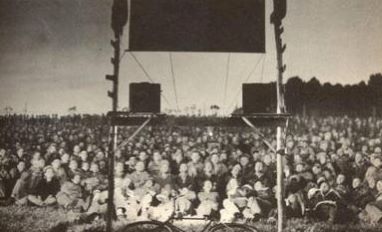
In the 1940s, public health sound cinema came into its own. It acquired a mass audience of military men and women (more than 12,000,000), schoolchildren, theatergoers, and community groups.12 It got larger budgets, in some cases well-known actors, producers, directors, and animators. And it got a starring role in public health campaigns which were more elaborately planned and coordinated than ever before. During the World War II-era, many of the techniques developed in Hollywood entertainment films over the previous decade—polished edits, orchestral musical backgrounds, exciting storylines, snappy patter—came to be used to build audience support and participation for public health programs and mobilizations. Budgets were still generally small—many films consisted of little more than edited footage (sometimes with older footage or stock footage mixed in), with a voiceover and maybe a canned score—but some were more ambitious, the public health equivalent of a top-line, “A” movie.
The most elaborate were those produced by the United States Armed Forces. Even before the U.S. entered the war, in 1940 and ’41, there was an upsurge in military spending and an increase in military-funded training films. The War Department took over the Astoria Studios in New York and the Army Air Force took over the Hal Roach Studio in Culver City, California. Shortly after Pearl Harbor, in 1941, Darryl F. Zanuck, the head of Twentieth-Century Fox, was commissioned as an officer in the U.S. Army Signal Corps, and began supervising production of training films.
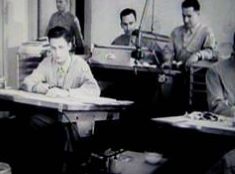
In 1942, with the U.S. fully engaged in the war against the Axis powers, President Franklin Delano Roosevelt signed an executive order creating an Office of War Information. The OWI’s mission was to use behavioral psychology and other social sciences (what was termed “social engineering”) to study how the U.S. government could best use newspapers and magazine articles, radio, motion pictures, comic strips, and anything else, to educate and mobilize the public on behalf of the war effort. The same year the U.S. Army established an Information and Education Division, led by Brigadier General Frederick H. Osborn (before the war, a prominent member of the Social Science Research Council). Osborn founded a filmmaking unit, headed by the celebrated Hollywood director Frank Capra. Capra in turn established an animation unit headed by Theodore Geisel (“Dr. Seuss”) and staffed by a roster of distinguished animators from Warner Brothers and other top studios, John Hubley, Friz Freleng, Chuck Jones, Bob Clampett, Frank Tashlin, Zack Schwartz, David Hilberman and many others. The onscreen animation talent featured soundtrack music by Warner Brothers composer Carl Stallings and voices by Mel Blanc (the voice of Bugs Bunny and Daffy Duck). The Navy, Marines, Army Air Force, and Coast Guard followed suit, employing filmmakers, actors and animators—increasingly working in consultation with educators, psychologists and sociologists. In the course of the war, the U.S. military made thousands of films, live action and animated. Although most of these had nothing to do with public health, focusing on other issues deemed crucial to the war effort, many films did include material on medicine and public health, and some were wholly devoted to health concerns.13
The purpose of this motion picture is to give you the facts, and then you as individuals and as citizens of a democracy must take action.
Thomas Parran, U.S. Surgeon-General, in To the People of the United States, 1944
But the World War II-era public health film was not just a military matter. During the war, the quasi-military U.S. Public Health Service, state and local departments of health, and non-governmental organizations (such as the National Tuberculosis Association and the Red Cross) intensified their film-making activities, often coordinating their efforts on federal, state and local levels. These health films testify to a widespread belief in the power of motion pictures to educate and mobilize. Many of them also document specific projects and campaigns. In 1940, for example, the federal Works Progress Administration (WPA) co-sponsored a health initiative in Alabama that included funding for production of “scripts for sound film programs”. These were to be produced in tandem with: posters; pamphlets; exhibitions; radio plays, “lectures,” interviews,” and “short radio talks” (with separate scripts “for Negro programs”); a speakers bureau; and a traveling marionette show.14 Public health motion pictures almost never stood alone: they were usually designed to serve in larger campaigns that deployed a variety of media.
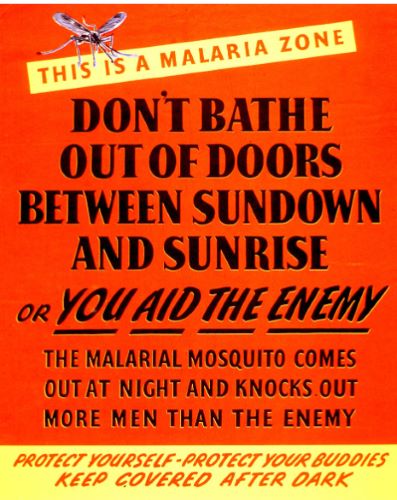
Like any complex cultural production, they were packed with meaning, rife with metaphors and representations of the social practices and conditions of the day: industrial warfare, machine technology, popular culture, consumer goods, urban and rural life, racial segregation, the automobile and the railroad. The public health films of the 1940s were part of a larger rhetorical effort to consolidate an ideological consensus. They celebrated a utopian, almost intoxicated, vision of American democracy—a missionary urge to democratize other nations and societies—and a deep faith in the ability of science to solve (previously intractable) problems of poverty and disease. They also promoted fear of the non-Western races and nations as a source of contagion, and were chock full of casual racism, class prejudice, and sexism. The contradiction that seems evident now, was invisible then: war-time public health films trafficked in racial, gender, class, and national stereotypes, even as they offered a vision of an egalitarian democratic society mobilized to fight the forces of bigotry and prejudice.
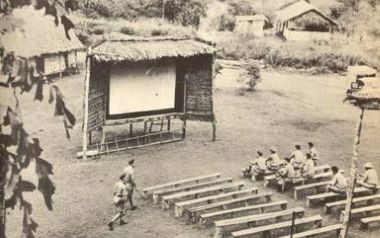
They were shown in a variety of venues—army bases, naval vessels, battlefield encampments, hospitals, schools, community centers, traveling health-mobiles, even movie theaters—to a variety of audiences.
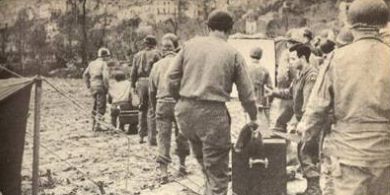
The public health filmmakers of the 1940s knew from first-hand experience that the public paid attention to movies that entertained, told a story and had characters and situations audience members could identify with. Armed with this conventional wisdom, filmmakers tried to make movies that recruited the emotions of audience members, and shaped their views. Their goal was not only to inform the public on the particulars of a specific public health campaign or issue, but to mold each viewer into an informed, “enlightened” citizen (or citizen-soldier), and to create a climate of support, that would further the larger goals of public health and collective action.15
Whether they succeeded is hard to tell. With the exponential increase in film production, there was a learning curve, and eventually the implementation of procedures to critique screenplays and review the effectiveness of how well films communicated specific skills and information to audiences. According to Adolf Nichtenhauser, the first historian of medical film and a participant in the planning and evaluation of war-time public health films, after a rough start in 1940 and ’41, military film producers learned to carefully study and apply “psychological and artistic factors in film design.”16
But it was less easy to determine the effectiveness of the subsidiary (or larger) purposes of film—the motion picture as a technology of opinion-making and consensus-building—which was more of an implicit belief, a widely held assumption.
As the films grew in sophistication, the issue of the relationship between sound and visual came to the fore: public health filmmakers began to think more critically about films which used visuals as backdrops for wordy lectures. “The motion picture,” Nichtenhauser comments, “had to be liberated from…verbalization, which had rendered it ineffective as a teaching tool.” As wartime production got underway, the “visual power” of cinema “was rediscovered and fostered and the permissible word-load determined.”17 Along with this renewed emphasis on the visual came an increasing belief that dramatization was superior to “purely logical expository treatment”, or at least that didactic or moral exhortation could be effective only if leavened with stories and characters which audience members could identify with.18
To some degree, this approach rested on an assessment of the intellectual and moral capacity of film audiences that undermined the goal of fostering an enlightened citizenry. It implied that audience members (except for specially selected groups) had the mental capacity of children, and that films should therefore only make “elementary mental requirements,” have a friendly informal tone, keep things very simple and make ample use of comic exaggeration and repetition.19 The entertainment-oriented public health film contained an implicit critique of mass culture, even as it deployed the techniques of mass culture. If the average American was a semi-literate simpleton, easily manipulated (if not hypnotized) by animated cartoons and cartoonish narratives, then film empowered the manipulators, who deployed film as a technology of manipulation, and not the people. At the same time, the increasing adoption of the forms of mass culture, and the increasing deployment of plebeian voices and characters, contained an implicit critique of high culture which, through its high-falutin’ neo-English accent, stage diction, pomposity and condescending tone, not only failed to communicate with the public, but even made itself slightly ridiculous.
The problem of motion-picture filmmaking is…not primarily one of equipment, photographic technique and finances but one of thinking in a visual language which has its own particular grammar, syntax and logic.
Adolf Nichtenhauser, 1950 in “A History of Motion Pictures in Medicine,” IV: 298
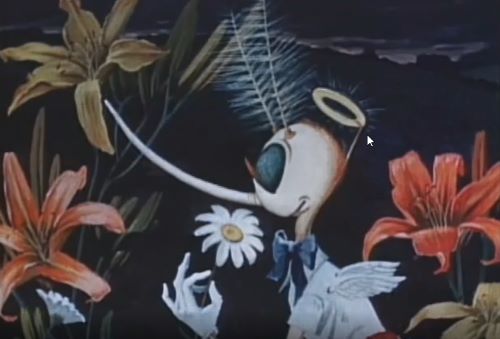
While Nichtenhauser and others praised the turn toward the visual, the new public health films of the 1940s used sound as much as cinematography, and were as much influenced by radio and Madison Avenue, as by Hollywood. Typically, the screen images, and theatrical dialogue (if any), were accompanied by the voice of an authoritative male narrator—sometimes disembodied, sometimes onscreen—who directly addressed the audience, using the rhetoric of science and reason to persuade viewers to change their private behavior and encourage participation in collective action. This was argued in some combination of political, moral, and ideological terms: disease makes people ill, citizens armed with the truth/science can prevent disease, the enemy is as much ignorance as it is disease, fighting disease and protecting the public health will help us defeat the Axis powers, etc. The assumption that audience members would identify with the narrator’s voice, and adopt it as their own “voice of reason,” initially came to the public health film from political speechmaking and pedagogical lecturing, but the influence of radio, advertising and marketing theory (which in this period were increasing drawing on sociology and behavioral psychology) gave narration a broader palette of colors. As an aid to identification, the voiceover could be delivered in a variety of registers and tones: friendly, colloquial, educated, scolding, seductive, jokey, or stentorian, depending on the subject and intended audience.20 To our ears, the direct address to the viewing audience sounds naïve and dated, and is mainly used to convey a sense of irony or nostalgia. But in the 1940s it was still au courant, regarded as very modern and very scientific.
A final point needs to be made about the increasing specialization and sophistication of war-time public health films. Nichtenhauser argued that “expert film professionals were needed to make effective films,” and that this was “a matter of teaming up the subject-matter specialist [e.g., public health officials, physicians, surgeons] with the film artist and the educator and the psychologist.”21 Before the war, the methodology of educational and propaganda films was much more haphazard. A few were made with trained specialists, who dealt with every aspect; most were made without much cinematic or pedagogical expertise, and without much critical evaluation. During the war, public health filmmakers learned on the job and had the opportunity to work with more experienced film professionals. By 1945, the standards of what constituted a successful public health film—and the expectations of what professional credentials, training and knowledge filmmakers needed to bring to the task–all were markedly higher than they had been in 1940. While most films were not subjected to rigorous testing for audience response and effectiveness (for which there was little time or money), many did undergo a review process during production and, after screenings, were assessed in reports and through word of mouth.
After the war, a certain amount of disillusionment set in. The military demobilized and federal government filmmaking budgets were slashed, or cut to zero. But Nichtenhauser (writing in 1950) remained positive about what had been accomplished. War-time public health and medical training films, he concluded, “had given far more than an inkling of what motion pictures might come to mean to medicine in the future.”22
Appendix
Endnotes
- Qtd. in “The Moving Picture and the National Character,” The American Review of Reviews 42 (9-1910): 315 [transcription, Adolf Nichtenhauser papers, MS C 277; box 8, folder 4; National Library of Medicine].
- Adolf Nichtenhauser, “A History of Motion Pictures in Medicine” (unpublished manuscript, MS C 380; National Library of Medicine, ca. 1950), 106-09.
- The ABC of Exhibit Planning</em> (New York: Russell Sage Foundation, 1918), 85-86.
- See Robert Wiebe, The Search for Order, 1877-1920 (New York, 1990); Theda Skocpol, Protecting Soldiers and Mothers: The Political Origins of Social Policy in the United States (Cambridge, MA, 1995).
- Reformers differed, according to the historical moment and political bent, on which state bureaucracies were the best model for the United States to follow: France, Great Britain, Wilhelmine Germany, Fascist Italy, the Soviet Union, Sweden and Denmark.
- Nichtenhauser, “History of Motion Pictures in Medicine”, III: 67-70.
- The idea, in some form, gained currency in the early 20th century. For an influential discussion, see John Dewey, Democracy and Education (New York, 1916).
- Elizabeth G. Pritchard, Joseph Hirsh & Margaret T. Prince, Select Bibliography on the Social Aspects of Public Health and Medical Care in the United States (Federal Security Agency, U.S. Public Health Service, 1940; mimeograph), 1, in Nichtenhauser Papers.
- Ibid., 1-2.
- For an influential statement of the usefulness of film in creating “intelligent, operative, civic-minded citizens,” see Thomas Baird, “Civic Education and the Motion Picture,” Journal of Educational Sociology 11.3 (11-1937): 142-48.
- Mary Losey, A Report on the Outlook for the Profitable Production of Documentary Films for the Non-Theatrical Market (Sugar Research Foundation; Film Program Services, 1948), 2 [mimeograph, Nichtenhauser Papers]. This dollar figure is for all films produced for “visual education”, not just health films.
- The 12,000,000 figure is from Losey, 2 [Nichtenhauser Papers].
- Christie Milliken, “Continence of the Continent: The Ideology of Disease and Hygiene in World War II Training Films,” in Lester D. Friedman, ed., Cultural Sutures: Medicine and Media (Durham, NC & London: Duke University Press, 2004).
- United States, Work Projects Administration. Alabama public health education program. Work Projects Administration (WPA). Official project 65-1-61-2317 (3-18-1940 to 4-8-1941). Sponsored by the Alabama State Board of Health. Montgomery, AL, 1941.
- This goal was not universally shared. Conservative opponents of the New Deal condemned government expenditures on public health and other informational films, which they saw as close cousins of the propaganda films produced in Nazi Germany and the U.S.S.R. Before the U.S. entered the war, Republican Senator Robert Taft of Ohio tried to kill funding for film production, but after Pearl Harbor, support for government-funded filmmaking was buoyed by the tidal wave of support for total war mobilization. Taft however did not give up and, in 1943, managed to impose severe budget cuts on OWI, which in his view was a nest of socialists pushing radical egalitarianism and a government/Popular Front line that the fight against fascism was a people’s war. Some prominent members of the film industry, both film distributors and studios, also opposed the idea of government-funded film as socialistic. See Clayton R. Koppes & Gregory D. Black, “What to Show the World: The Office of War Information and Hollywood, 1942-45,” Journal of American History 64.1 (6-1977): 87-105; Mayer, “Fact into Film,” 210-13.
- Nichtenhauser, “History of Motion Pictures in Medicine”, IV: 222.
- Ibid.
- Ibid., IV: 230.
- Ibid., IV: 231.
- Here as well there was a learning curve. The stentorian voice, while commonly used, eventually received much criticism among filmmakers, as an outdated reflex, a tic of expository filmmaking. Nichtenhauser complained that one film used the “intimidating, pseudo-authoritative, ever-continuing voice of the March of Time [style] narrator with its artificial sense of urgency and its intonation of doom.” Ibid., IV: 239-40.
- Ibid., IV: 281.
- Ibid.
Bibliography
- Cartwright, Lisa. Screening the Body: Tracing Medicine’s Visual Culture (Minneapolis: University of Minnesota Press, 1995).
- Editors of Look Magazine, Movie Lot to Beachhead: The Motion Picture Goes to War and Prepares for the Future (Garden City, NY: Doubleday, 1945).
- Fedunkiw, Marianne. “Malaria Films: Motion Pictures as a Public Health Tool,” American Journal of Public Health 93.7 (7-2003): 1046-57.
- Friedman, Lester D. ed., Cultural Sutures: Medicine and Media (Durham, NC & London: Duke University Press, 2004).
- Hearon, Fanning. “The Motion-Picture Program and Policy of the United States Government,” Journal of Educational Sociology 12 (11-1938): 147-62.
- Koppes, Clayton R. & Black, Gregory D. “What to Show the World: The Office of War Information and Hollywood, 1942-45,” Journal of American History 64.1 (6-1977): 87-105.
- Lederer, Susan E. & Parascandola, John. “Screening Syphilis: Dr. Ehrlich’s Magic Bullet meets the Public Health Service,” Journal of the History of Medicine and Allied Sciences 53.4 (10-1998): 345-70.
- Lederer, Susan E. & Rogers, Naomi “Media,” in Roger Cooter & John Pickstone, eds., Medicine in the Twentieth Century (Amsterdam: Harwood Academic Publ., 2000), 487-502.
- Mayer, Arthur L. “Fact into Film,” Public Opinion Quarterly 8.2 (Summer 1944): 206-25.
- Milliken, Christie. “Continence of the Continent: The Ideology of Disease and Hygiene in World War II Training Films,” in Lester D. Friedman, ed., Cultural Sutures: Medicine and Media (Durham, NC & London: Duke University Press, 2004).
- Nichtenhauser, Adolf. “A History of Motion Pictures in Medicine” (unpublished manuscript, National Library of Medicine, MS C 380, ca. 1950).
- Parascandola, John. “VD at the movies: PHS films of the 1930s and 1940s,” Public Health Reports 111.2 (Mar-Apr 1996): 173-75.
- Pernick, Martin. “Thomas Edison’s Tuberculosis Films: Mass Media and Health Propaganda,” Hastings Center Report (6-1978): 21-27.
- _____, “U.S. Government Sex Education Films in the 1920s,” Isis 84 (12-1993): 766-68.
- _____, The Black Stork: Eugenics and the Death of “Defective” Babies in American Medicine and Motion (New York: Oxford University Press, 1996).
Originally published by Medicine on Screen, National Library of Medicine, National Institutes of Health, 03.27.2023, to the public domain.
About the Author