Coded fascist symbols and other radical right-wing messages.

By Matthew Kriner
Middlebury Institute of International Studies
Middlebury College
Introduction
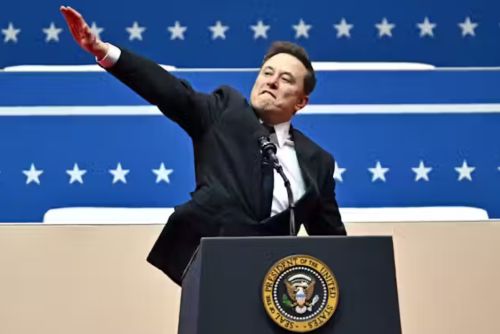
Once again, a presidential administration headed by Donald Trump is in the spotlight over allegations of hidden fascist sympathies. This time, it’s precipitated by what one observer called a “stiff-armed salute” that presidential supporter and adviser Elon Musk did twice during inauguration festivities.
Critics have said it is a clear Nazi salute, while others have claimed it was just an awkward motion. Perhaps it was just the world’s worst dab.
Musk turned the controversy over his gesture into something like a joke about Nazis. On X, he posted, “Don’t say Hess to Nazi accusations!” and “Bet you did nazi that coming.”
Don’t say Hess to Nazi accusations!
— Elon Musk (@elonmusk) January 23, 2025
Some people will Goebbels anything down!
Stop Gőring your enemies!
His pronouns would’ve been He/Himmler!
Bet you did nazi that coming 😂
This is not the first time that Trump or someone close to him has been accused of sending fascist messages, even if they denied doing so. Nor even is it the first time a well-known figure endorsing Donald Trump has been accused of giving a Nazi salute.
As a scholar of far-right extremism, I regularly review instances of coded fascist symbols and other right-wing messages being sent by public figures and their supporters, some more obvious than others.
In Plain Sight
Like Musk, TV commentator Laura Ingraham ended a fiery speech endorsing then-candidate Trump in 2016 with a rigidly outstretched arm with her palm down – in the exact manner German Nazis in the 1930s and 1940s and rank-and-file modern neo-Nazis perform the “Sieg Heil,” or Nazi salute. Ingraham dismissed the criticism and in 2025 defended Musk’s action.
In 2021, the Conservative Political Action Conference set up its center stage in the shape of an odal rune. That is an ancient pagan symbol coopted by Germany’s Nazi regime and worn prominently during World War II on the uniforms of the brutal Waffen SS units. Social media erupted in outrage over the likeness, and columnists spilled much ink. Event organizers rejected the criticism, calling it “outrageous and slanderous.”
Trump himself has been reluctant to criticize white supremacists. In August 2017, he responded to a reporter’s statement that neo-Nazis had “started” the violence during and after a rally they held in Charlottesville, Virginia, by saying “(t)hey didn’t put themselves down as neo-Nazis. And you had some very bad people in that group. But you also had people that were very fine people on both sides.”
During the September 2020 presidential debate, Trump responded to a request from moderator Chris Wallace to condemn right-wing paramilitary groups by instead referencing one of them, saying, “Proud Boys, stand back and stand by.”
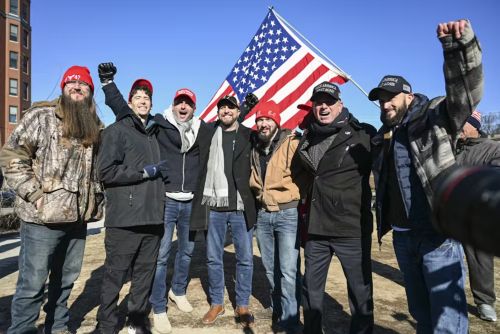
Just a few months later, several Proud Boys members would help spearhead the violent insurrection against the peaceful transfer of power at the U.S. Capitol on Jan. 6, 2021. Some of them were convicted of federal crimes for their efforts, though upon retaking office in 2025, Trump pardoned them or commuted their sentences.
More overtly, in November 2022 Trump invited Kanye West to dinner at Mar-a-Lago, despite West’s having posted antisemitic remarks recently on social media. Also at the dinner was well-known antisemite and white supremacist Nick Fuentes, whom Trump denied knowing anything about ahead of time, saying he arrived “unexpectedly” with West.
Coded Messages
In other more abstract and lesser-known incidents, Trump may make his sympathies known without making direct statements himself. And I have personally observed white supremacists remark upon – and take encouragement from – these implied messages on Telegram channels dedicated to antisemitism and hate.
In February 2018, during Trump’s first term as president, the Department of Homeland Security issued a 14-word press release titled “We Must Secure The Border And Build The Wall To Make America Safe Again.” I and other investigators of far-right extremism attributed this phrase’s use to a clear dog whistle of the common white supremacist saying known as “the 14 words” – “we must secure the existence of our people and a future for white children.”
In June 2020, Facebook removed Trump campaign ads for iconography invoking Nazi concentration camp symbols that “violat(ed) our policy against organized hate.” A campaign official disputed the association, saying other groups, including Facebook and anti-fascist groups, used the same symbol.
In September 2024, pro-Trump CEO Mike Lindell’s company MyPillow ran a sale discounting a pillow from $49.98 to $14.88. Critics quickly pointed out that this aligned with the 14-word white supremacist slogan and the numerical reference “88” that white supremacists use to mean “Heil Hitler,” because H is the eighth letter of the alphabet. Lindell denied any connection between the price and right-wing messaging.
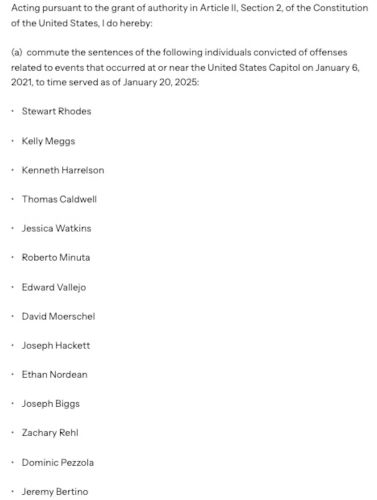
And on the very day he was inaugurated for his second term, Trump pardoned more than 1,500 people, including at least two alleged members of the Proud Boys, for their actions on Jan. 6, 2021. And he commuted the sentences of 14 people, including four members of the Proud Boys.
This extraordinary move was applauded by Proud Boys leader Enrique Tarrio, who was among those pardoned. Others who received presidential clemency said they were grateful to Trump and encouraged by his action.
Signaling Fascism
Sending these sorts of fascist and white supremacist messages allow Trump and his supporters to court right-wing extremist supporters while claiming innocence in the face of public outrage.
If they deny the allegations of veiled fascism or white supremacy, Trump and his backers can claim their opponents are inflamed against them and conducting ideological witch hunts.
But failure to directly deny allegations of fascism is a common strategy used by far-right and radical conservative movements seeking to obscure deeper links to extremist groups to avoid public backlash.
The lack of explicit admission can end up leaving these actions and symbols open to interpretation. Trump’s MAGA movement members, led by his inner circle of advisers and lieutenants, have consistently sought to use outrage and anger to generate additional momentum and attention for their agenda.
But as the old saying goes, “where there’s smoke there’s fire” – and in this case the smoke is probably closer to a book-burning bonfire in Berlin than a tiki torch carried in Charlottesville.
Originally published by The Conversation, 02.03.2025, under the terms of a Creative Commons Attribution/No derivatives license.
About the Author