By Dr. Colin Kidd
Professor of History
University of St. Andrews
Abstract
The modern world knows the Scottish Enlightenment as the nursery of today’s social sciences, when the outlines of economics, sociology and anthropology first became apparent in the works of Adam Smith and his contemporaries. However, deeper immersion in 18th-century Scottish culture reveals the enduring importance of classical antiquity to intellectuals who were as much late humanists as pioneer social scientists. Indeed, the unexpected fascination of enlightened Scots with the Trojan War and the ancient post-savage society described by Homer opens up new perspectives on Scottish Enlightenment sociology as an offshoot of classical erudition. Moreover, the Royal Society of Edinburgh, the institutional embodiment of the Scottish Enlightenment, played a dominant part in the late-18th- and early-19th century debate about the location of Troy.
Introduction
Anachronism and teleology lurk—far from unobtrusively—at the heart of Enlightenment studies. Here several of the cardinal sins deplored by the historical profession seem to flourish condoned and in plain sight. The value-laden term ‘Enlightenment’ warps the judgement. While academic propriety demands that historians exercise restraint in judging the past and its dramatis personae, the Enlightenment positively invites us to take sides, to measure its champions by retrospective standards of goodness, truth and political correctness and to ration our empathy and understanding for benighted un-Enlightened, or perhaps worse, anti-Enlightened positions and their advocates. Notwithstanding one’s grasp of historical method and inclination towards an objective dispassion in analysis, the temptation to write the history of the Enlightenment in the Whiggish mood appears irresistible. The ever-present tension in the framing of history—between capturing the past on its own terms and establishing the links which connect the past to the present—shifts decisively and almost inevitably in the study of the Enlightenment, towards the latter end of the spectrum. We feel a pressing need in this instance to know how the Enlightenment relates to modernity and its values. ‘The Enlightenment Project’—a coinage which enjoys wide currency among present-day commentators, as well as among philosophers and historians of ideas—certainly does not help. The gravitational attraction which brings Enlightenment studies within the orbit of a contemporary agenda raises false—or certainly ahistorical—expectations about the Enlightenment, and provokes disappointment when 18th-century values fail to match 21st-century standards. In today’s Culture Wars, the Right tends, on the whole, to be sweepingly dismissive of an over-determined Age of Reason as the font of all liberalism. The Left, on the other hand, simultaneously identifies with the idea of Enlightenment, all the while scarcely hiding its irritation with—sometimes its contempt for—the blindspots, omissions, reticence and conservative limitations of dead-white-male-philosophy-as-it-was-actually-practised: an exasperation with the 18th century for being old-fashioned, indeed for exhibiting 18th-century attitudes.[1]
The study of the Scottish Enlightenment generates its own distinctive variants of this strange disfigurement. The modern world knows the Scottish Enlightenment as the nursery of today’s social sciences, when the outlines of economics, sociology and anthropology first became apparent in the work of Adam Smith and his contemporaries. Of course, Smith and his colleagues did not think of themselves as economists or social scientists.[2] They were practitioners of a hitherto prescriptive moral philosophy which was in the process of thawing into a neutral, descriptive ‘science of man’. There are further complications, indeed distortions, of our original distortion. Here the predispositions of today’s Right and Left towards the Enlightenment become convoluted, for Smith’s The Wealth of Nations (1776) is widely recognised as a totem for free-marketeering conservatism of the Thatcherite sort. The Adam Smith Institute serves explicitly as a think tank for laissez-faire conservatism, while the David Hume Institute, though more tentative and non-partisan, serves to promote market-based solutions to social and economic problems. However, the Left has long recognised a direct route from the seemingly materialist sociology of the Scottish Enlightenment to Marxism itself, and there is a well-established Left–revisionist appreciation of Adam Smith himself. Nevertheless, both Right and Left, like the present-day academy, focus their attention on what they all see, rightly enough, as the most distinctive feature of the Scottish Enlightenment: a novel set of approaches in the science of society.
In recent years the main point of disciplinary contention within the historiography of the Scottish Enlightenment has been the question of whether a focus on Scotland’s distinctive approach to ‘the science of man’ has obscured 18th-century Scotland’s contribution to the natural sciences.[3] Arguably, science has not had its share of attention, but the point made by those who have concentrated their attentions on the ‘science of man’ is that it is Scotland’s achievements in the embryonic social sciences and in political economy which constituted the most distinctive features of Scottish intellectual life in the 18th century.[4] Was there anything as distinctive about Scottish scientific enquiry? But, equally, just as the natural sciences flourished in the Scottish Enlightenment, though not in a distinctively Scottish idiom that stands out from other enlightened centres, so too the classics remained an integral feature of intellectual life in 18th-century Scotland as elsewhere in Europe. Hugh Trevor-Roper once claimed that ‘every enlightenment entails a certain disposal of waste learning’,[5] and it had seemed a reasonable enough assumption—until the recent ‘classical turn’ in the historiography of the Enlightenment[6]—that the classics were largely redundant in an enlightenment focused upon political economy and the nascent social sciences.
To be fair, historians have been sensitive since the 1980s to the interplay of the idioms of civic humanism and natural jurisprudence in the formation of 18th-century Scottish social and political thought,[7] and the work of Richard Sher drew attention to the fusion of Christianity and Stoicism within the ideology of the Moderates, the party of Enlightenment in the Kirk.[8] However, it is only in the past couple of decades that there has been a decided turn towards the Scottish Enlightenment’s concern with the classical past.[9] In particular, James Harris and Thomas Ahnert have drawn attention to the 18th-century Scottish engagement with the ancient schools of pagan philosophy.[10] In his celebrated biography of David Hume, moreover, Harris has shown that Hume does not fit easily into our pint-pot category of what we understand by a philosopher. Harris demonstrates instead that Hume was foremost a man of letters with an eclectic range of interests, several of which related to the ancient world.[11]
Ancients, Moderns, and the Varieties of Classicism
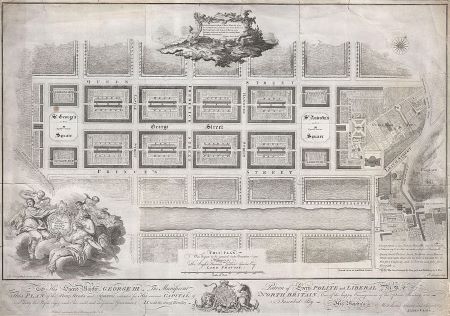
Eighteenth-century Scotland was immersed in the classics. The point is banal, but it is still worth making, for this is a phenomenon which has tended until very recently to be overlooked by historians, except insofar as neoclassicism provided a model for cultural emulation in the arts and in architecture,[12] most obviously in Edinburgh’s New Town and—more ambivalently—in the unfinished post-Napoleonic War homage to the Parthenon on Calton Hill.[13] Other facets of the 18th-century Scottish engagement with the classics have slipped from view. Authors associated with the Scottish Enlightenment published extensively on classical themes, such as Greek or Roman history[14] or ancient philosophy;[15] the Foulis Press in Glasgow achieved widespread fame for its superlative editions of classical texts;[16] and in Scottish academic life, and within the professions of law and medicine, Latin continued to maintain a consider-able grip over academic and professional exercises, orations and theses throughout the era of Enlightenment, and into the 19th century.[17] Throughout the period from the late 17th century to the early 19th century, Scottish writers engaged with a wide range of classical themes, including some which pertained particularly to Scotland. For instance, there was much discussion of the indigenous tradition of Scottish neo-Latin literature, and its foremost exponents, the 16th-century historian, poet and political theorist George Buchanan and the 17th-century Latin elegist Arthur Johnston (c. 1579–1641).[18] In particular, the Jacobite literati Archibald Pitcairne (1652–1713) and Thomas Ruddiman (1674–1757) tried to perpetuate the traditions of Scottish neo-Latin literature into the age of Enlightenment.[19] Literary scholars have, arguably, proved more alert than historians to the classical features of 18th-century Scottish culture.[20] Scottish antiquaries from the late 17th century onwards were fascinated by the legacy of Roman archaeology in Scotland, most especially the Antonine Wall which represented the terminus of Roman imperium beyond which had lain an unconquered land of ancient Caledonian freedom. As a result, a species of ‘Agricolamania’ entranced Scottish antiquaries throughout the 18th century.[21] The various classical obsessions of the Enlightenment era in Scotland were captured in the early 19th century by Sir Walter Scott in his Waverley Novels. In Waverley itself, a novel of the Jacobite rebellion of 1745, Scottish Latinity finds its emblem in the character of Baron Bradwardine, engrossed in his Livy which is more important to him than the cause of the Stuarts.[22] In The Pirate, set in Shetland, Scott pokes fun at an unworldly agrarian improver Triptolemus Yellowley who derives most of his insights into land reclamation and crop rotation from the georgics of the Ancients and from the classical agricultural treatise of Columella.[23] Bartoline Saddletree in Heart of Midlothian is an Edinburgh tradesman addicted—by way of unlettered but hyper- Latinate malapropism—to the terminology of Scots Romanist jurisprudence.[24] Moreover, Jonathan Oldbuck, the central character in Scott’s The Antiquary, is a deluded Agricolamaniac, who mistakes a ruined farmstead for a Roman temple.[25] Of course, Scott repeatedly deploys obsessive classicism for comic effect, but the repetition of this ploy also yields compelling evidence of the novelist’s own assumptions about the prevailing importance of the classics in 18th-century Scottish culture.
The reasoning and the beliefs that informed this extensive appropriation of the classical heritage by Enlightenment Scots have received far less attention than might be expected. The Scots’ interest in the ancient world was not unreflective, but mediated by sophisticated and complex ideas on a very broad range of issues, from the correct standards of literary taste, to the foundations of moral philosophy and the principles of the historical evolution of societies from ancient barbarism to modern refinement. Scottish discussions of classical antiquity were also shaped by the influential, pan-European dispute, beginning in the late 17th century, between ‘Ancients’ and ‘Moderns’, as to whether classical antiquity represented an intellectual and cultural model that ought to be emulated in the modern world.[26]
Nevertheless, it would be wrong to paint a picture of enlightened Scottish classical culture which was overly rosy and too bold in its lineaments. Indeed, the Scottish Enlightenment was accompanied by occasional lamentations about the decline of learning in Scotland and the rise in its stead of a vapid science of society,[27] and there was some debate about the relevance and propriety of classical and modern curricula.[28] When Dr Johnson on his tour of Scotland visited the Scottish judge and philosopher James Burnett, Lord Monboddo (1714–99), he complained about the decline of learning in England in his time, to which Monboddo replied: ‘You, sir, have lived to see its decrease in England, I its extinction in Scotland.’[29] There were marked divergences in certain respects between the classical cultures of Scotland and England, between the curricula of the Scottish universities and those at Oxford and Cambridge, and between the accepted thresholds of classical learning which fixed the norms of gentlemanly attainment north and south of the border. The boys of Scotland were exposed to the 3 Rs and to Latin in the burgh and parish schools, but were not exposed to Greek until their time (usually as teenagers) at university, when, as critics noted, the teaching in Scotland was more in the form of lectures than tutorials. The generalist and social scientific turns of the enlightened Scottish universities did come at a cost. Young Scots graduated with greater appreciation of the sociology of the ancient world, but were less well drilled than their Oxbridge counterparts in dactyls and spondees, and in the finer points of classical grammar, diction and syntax.
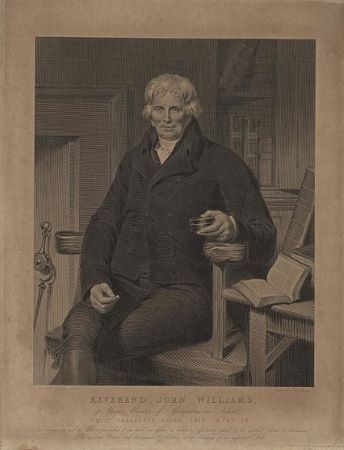
This deficit would come decisively into focus in the later decades of the Scottish Enlightenment and in its aftermath. There was an ongoing rivalry between Edinburgh University and the city’s High School, under its headmaster, himself a published classicist Alexander Adam (1741–1809), over how standards of Scottish classicism—not least the command of the languages, including Greek—might best be preserved and enhanced.[30] The focus of the universities on the philosophy and history of the classical world to the exclusion of philology and grammar notoriously caught the attention of ‘anglicising’ university reformers in the Royal Commission on the Scottish Universities of 1826–30, a controversy not entirely extinguished.[31] Moreover, it also created opportunities for the schools, such as Edinburgh Academy, founded in 1824, whose priorities were—pointedly and explicitly—to raise standards of training in the ancient Greek language.[32] The new Academy was immediately convulsed by a dispute over whether to use the Scottish or English pronunciation of Latin.[33] Significantly, perhaps, the Academy’s first headmaster was the Welsh Anglican, John Williams (1792–1858), later Archdeacon of Cardigan and a distinguished Homeric scholar.[34] In 1821 the precocious D.K. Sandford (1798–1838), who would become the Professor of Greek at Glasgow later that year, contended that the structural differences between the democratic equality of ministers in the Presbyterian kirk and the Anglican hierarchy accounted in some part for national differences in classical proficiency; for were not the ‘stalls, and mitres, and fat benefices’ of the Church of England ‘vouchers to hope, and spurs to industry’?[35]
Nevertheless, there is no denying that the 18th-century Scottish contribution to classical scholarship was more decidedly historical than philological. At the core of the revolution in sociological thinking wrought by the thinkers of the Scottish Enlightenment were questions of periodisation. How might the universal history of humankind be divided into persuasive and coherent units of interpretation? How stark were the differences between commercial early modernity and the cultures which had preceded it? Most famously, Scottish thinkers narrated a story of humanity’s progress from rudeness to refinement, of the material and cultural gains along the way, and the inevitable losses, not least of cultural cohesion and social bonding. In particular, Scotland’s pioneer sociologists divided the past into three or four main stages of development—the progression from savagery via barbarism to the refinement of commercial society—or put another way in four phases: an age of hunters and gatherers, an age of shepherds and pastoralists, an age of settled agriculturalists, and an age of merchants. Each age differed from the others not only in obvious material terms, but also—to use the idiom of natural jurisprudence, of which 18th-century Scottish sociology was an extension—in its prevailing mode of property: an age of commonality which preceded the rise of property, then the age of moveable property, then real estate, then money and bills of exchange and other forms of credit. The social and economic differences between the civilisations of antiquity and those of early modern European commerce were vast. In this respect at least, enlightened Scottish sociology provided—however indirectly—a commentary on the debate between the champions of the Ancients and the Moderns which had convulsed the intellectual elites of France and England in the late-17th and early-18th centuries. Indeed, though this too is often overlooked, Scotland too was deeply implicated in the Quarrel of Ancients and Moderns.
Traditionally, the Ancients versus Moderns debate in late-17th- and early-18th- century France and England was conceived of as a quarrel between antiquarian upholders of classical scholarship and champions of the 17th-century Scientific Revolution.[36] However, this picture has been significantly revised. Joseph Levine, in The Battle of the Books (1991), showed that the battle lines in England were not where historians had imagined them to be. Rather, the conflict there was between humanists on the side of the Ancients who valued the classical past as a model for the present which provided practical lessons for statesmen, and on the side—ironically—of the Moderns a new kind of classical scholar who wished to apply the most up-to-date methods of textual criticism, numismatics and the various other auxiliary branches of scholarship to further understanding of ancient history and literature. The Moderns, in other words, were not, as had been imagined, anti-classical. Arguably, indeed, they understood the world of classical antiquity better than the Ancients.[37] The prime example of the erudite Modern was the English classical scholar Richard Bentley.[38] While 18th-century Scotland did not produce a philological Modern to rival Bentley, this is not to say that the insights of the classical Moderns had no purchase there.
Indeed, one early-18th-century Scot, the peripatetic medic and Latin poet Archibald Pitcairne, was an active participant in a particular theatre of the French Querelle. André Dacier, one of the leading champions of the Ancients in France, had speculated that William Harvey’s early-17th-century discovery of the circulation of the blood was somewhat old hat. For, argued Dacier, had not the ancient Greek medical writer Hippocrates suggested something very similar? In his Solutio problematis de historicis; seu inventoribus (1688) Pitcairne published a comprehensive response to Dacier, the French translator of Hippocrates (and possibly also to the Dutch medics Johannes van der Linden and Theodoor van Almeloveen), which queried the view that Hippocrates had anticipated this Modern achievement. To be sure, Pitcairne conceded, Hippocrates had known something of circulation, but his knowledge, such as it was, fell well short of the substance of Harvey’s discovery.[39]
Hume’s contributions to the Ancients–Moderns controversy have been recognised as such since the work of Ernest Mossner in the mid-20th century.[40] The debate between Hume and his friendly adversary the Reverend Robert Wallace (1697–1771) over ancient demography marked Scotland’s most decided and original intervention in the wider quarrel. It was Montesquieu’s estimation of the populousness of ancient nations which initially prompted Hume’s investigation of this topic. However, Hume had also seen Wallace’s unpublished thoughts on ancient population before he published his own essay ‘On the Populousness of Ancient Nations’,[41] which was followed by Wallace’s extended A Dissertation on the Numbers of Mankind in Ancient and Modern Times (1753).[42] The central point of contention was whether the ancient world, as Wallace believed, had been more populous than the early modern present. Along with his pieces ‘Of Civil Liberty’ and ‘Of the Rise and Progress of the Arts and Sciences’,[43] Hume’s erudite essay on ancient demography marked a decisive contribution to the cause of the Moderns.
However, it would be a mistake to align the Scottish Enlightenment in its entirety within the forces of the Moderns. Adam Ferguson, as we shall see below, maintained a finely balanced position on the gains and losses associated with the long slow series of transitions from antiquity to early modernity. There were, in addition, outliers within the ranks of the Scottish literati who identified enthusiastically with the Ancients. The Aberdonian philosopher James Beattie (1735–1803) was a pillar of con-ervative orthodoxy, decidedly anti-Humean in his allegiances and, unsurprisingly, a foe of the Moderns. In an essay of 1769 entitled ‘Remarks on the Utility of Classical Learning’, Beattie challenged the prevailing ‘calumniators of Greek and Roman learning’ among the Moderns, not least as these ‘prejudices’ had recently been gaining traction, especially ‘in the northern part of this island’. Beattie reckoned it ‘better for a young man to be master of Euclid or Demosthenes, than to have a whole dictionary of arts and sciences by heart’. Deep learning in the Ancients was preferable to a superficial, sweeping acquaintance with the facts of the modern world, just as the study of dead languages provided a sounder platform for a true understanding of grammar than did familiarity with current spoken languages. ‘Every tongue is incorrect, while it is only spoken’, Beattie claimed; ‘and therefore, the study of Greek and Latin, being necessary to the perfection of the grammatical art, must also be necessary to the permanence and purity even of the modern tongues’. Not that Beattie championed classical antiquity wholesale. The modern revival of the scepticism of Pyrrho and Sextus Empiricus and the atheistic atomism found in Lucretius and Epicurus was regrettable, and he would have happily consigned the filth of Aristophanes and Petronius to ‘eternal oblivion, without the least detriment to literature’. Notwithstanding this repudiation of literature which was too conspicuously pagan, Beattie was otherwise committed—with a seemingly unwarranted complacency, even on his own terms—to the view that ‘the Greeks and Romans are our masters in all polite literature’.[44]
A more formidable champion of the Ancients was Monboddo, for whom the rise of civilisation had been accompanied by cultural declension and physical degeneracy. Monboddo’s strange oeuvre was a curious hybrid of Christianity and Platonism, and his declared aim was to ‘revive ancient Theism, particularly the theism of Plato and Aristotle’.[45] His multi-volume treatise Antient Metaphysics (1779–99) is described by Monboddo’s modern biographer ‘as a late volley in the Battle of the Books’.[46] However, even in Of the Origin and Progress of Language (1773–92), its title notwith-standing, Monboddo traced the signs of literary and linguistic decline from the pristine standards of early antiquity. A particular bugbear in modern literature was Alexander Pope’s translation of Homer,[47] though he admired Pope’s The Dunciad as a parody of Virgil, an epic poet of a later adulterated phase of Greco-Roman culture.[48] Indeed, Monboddo was something of a palaeo-Ancient, for whom later classical an tiquity was itself mired in decay. The Romans—Horace alone excepted—were inferior to the Greeks,[49] and he reckoned Tacitus, otherwise one of the most cited and influential classical writers in the early modern period,[50] as a slight figure by contrast with true Ancients such as Demosthenes, his particular hero, and Thucydides.[51]
18th-Century Scotland and the Homeric Past
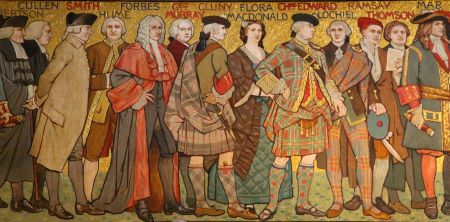
The point of the present paper is not simply to reprise 18th-century Scottish riffs on the theme of early modernity’s relationship with the classics. Rather, it is to delve much deeper into antiquity, into its quasi-mythological recesses, and to demonstrate enlightened Scotland’s engagement with the Homeric past, and in particular with the Trojan War, an event shrouded in prehistoric fog. Was it even history, however distorted? Or history mythologised? Or perhaps an allegory, which represented some-thing other than an historical episode? The recovery of 18th-century Scotland’s fascination with Homeric Troy provides an oblique but telling insight into the Scottish Enlightenment, its true character and academic values. The distinctiveness of the Scottish science of man—so often assumed to be the mainstream of the Scottish Enlightenment—should not divert attention from other more traditional rivulets into which 18th-century Scottish learning flowed. Close examination of Scotland’s Homeric interests—at times obsessions—calls into question conventional assumptions about mainstream and tributaries, about the extent to which innovation was self-consciously novel, and how far new sociological insights derived rather from glosses on classical literature. There were two distinct aspects to this phenomenon in the Scottish Enlightenment: sociological perspectives were applied to the study of classical antiquity, while ancient literature—including Homer—was mined for sociological evidence. In a further twist, Scottish theorists conjectured that epic was the form of literature which ancient heroic societies tended to generate. The study of classical literature and the study of ancient manners were mutually reinforcing, and hard, if not quixotically impossible, for the modern interpreter to prise apart. How does one distinguish between, on the one hand, historical sociology (even allowing for the anachronistic terminology here) which utilised classical material and, on the other, classical scholarship with a sociological dimension? If one starts not from a Whiggish vantage point which looks back from modern sociology to its 18th-century precursor, but examines the phenomenon from the perspective of contemporary norms in 18th-century scholarship, aspects of the new social enquiry emerge into focus as something other than an anticipation of a later discipline. More precisely the new sociology appears more plausibly as an offshoot of classical learning, and at certain particular moments as a brand of para-Homeric erudition.
Homer was a major, but under-acknowledged, presence in 18th-century Scottish culture. The celebrated ‘Glasgow Homer’ was published in two volumes during the 1750s, the Iliad in 1756 and the Odyssey in 1758, by the Foulis brothers, Robert and Andrew, the printers to Glasgow University. These immaculate editions of Homer were overseen by two Glasgow professors James Moor (1712–79), the Professor of Greek, and George Muirhead (1715–73), the Professor of Humanity [Latin].[52] Educated at Glasgow, the neoclassical painter Gavin Hamilton (1723–98) devoted his career in Italy largely to classical subjects, including a cycle of six paintings of scenes from the Iliad.[53] In the early 1790s the radical enlightened Catholic and biblical critic Alexander Geddes (1737–1802)[54] produced a translation of part of the Iliad. The impetus behind Geddes’s Homer was the recent flawed effort—as Geddes saw it—of the English poet William Cowper (1713–1800).[55] Geddes’s dissatisfaction with Cowper prompted his own translation of the first book of the Iliad into blank verse in 1792.[56]
However, the role of Homer in the Scottish Enlightenment was not simply as raw matter for editions, translations and artistic depictions of the Iliad, but as a point of departure for a sociological approach to literature and culture more broadly. Thomas Blackwell (1701–57) of Marischal College, Aberdeen, played a transformative role with his Enquiries into the Life and Writings of Homer (1735). Here Blackwell, the Professor of Greek at Marischal and later its Principal, decisively moved Homeric scholarship from the realm of theology and the aesthetics of divine or quasi-divine inspiration to a kind of sociology underpinned by the aesthetics of context. Standard fare was an insistence on the theological significance of Homer as the purveyor of patriarchal Old Testament truths to semi-benighted pagans, for instance as in Gerard Croese’s Homeros Hebraios (1704).[57] Homer, hitherto viewed by scholars largely as a receptacle of genius, possibly divinely inspired, was seen anew in Blackwell’s treatise as a poet of a very specific period and place, and his epics as the product of a particular milieu. Blackwell challenged the view that ‘there was a miracle in the case’ of Homer; that he sang as ‘the prophet and interpreter of the gods’; and that his works were of ‘heavenly origin’. Rather the Homeric achievement emerged from ‘a concourse of natural causes’, which ‘conspired to produce and cultivate that mighty genius’.[58] Blackwell’s Homer was a product of climate, culture and environment. Only perhaps in the books of the Neapolitans Giambattista Vico (1668–1744) and Gian Vincenzo Gravina (1664–1718), both of whose works were known to Blackwell,[59] and in that of the French Jesuit missionary Jean-François Lafitau (1684–1746), with his fascinating comparisons of ancient Greek and Amerindian culture, do we see anticipations of Blackwell’s focus on the ancient society which generated the Homeric epics.[60] Blackwell suggested a contrapuntal theme, contrasting the archaic instability which produced great poetry and the uninspiring comforts of prosperity and tranquillity: ‘a people’s felicity’, he noted, ‘clips the wings of their verse: it affords few materials for admiration or pity’.[61] In this respect Blackwell too was an Ancient, and he decried the affected imitation of the Ancients by Renaissance poets such as Pietro Bembo.[62] For it was context—the natural environment and the manners of an age which produced poetry; all else—even notionally in the same vein—was mere contrivance and affectation. Nor did Blackwell view the classics as an undifferentiated whole; rather he divided ancient Greek history into three periods: the dark ages to the Trojan War, from the fall of Troy to the invasion of Xerxes, and a final period through to the loss of Greek liberty under the Macedonians then Romans. He was alert to the ‘progression of manners’ among the ancient Greeks and to the ‘stages’ through which the Greek language had passed.[63] What is significant here is the very fact of periodisation, for the disaggregation of history into distinct stages of development was to be one of the hallmarks of the Scottish Enlightenment, and something adumbrated here perhaps in Blackwell’s Homeric scholarship. Indeed, Blackwell’s project has been seen as ‘foundational’ of later social enquiry in 18th-century Scotland.[64]
Blackwell’s Homer it is now recognised played a part in the resurrection, as his Scots champions thought, or fabrication of the Celtic Homer, Ossian. The relation-ship between Homer and Ossian in 18th-century Scotland was complex, ironic and double-edged. In the first place, as Fiona Stafford has shown, the young James Macpherson—the future editor, translator and fabricator of the poems of Ossian—was an undergraduate at Marischal under Blackwell’s regime.[65] This exposure to Blackwell, it is argued, shaped his response to the extant Gaelic balladry he encountered first orally among his countrymen in the central Highlands, and later on his journeys in quest of Ossianic materials in the west Highlands and islands. His discoveries Macpherson initially described as ‘fragments’ of ancient Scottish poetry. However, fragments of what? Macpherson’s strongest supporter, the Reverend Hugh Blair, the first Regius Professor of Rhetoric and Belles Lettres whose chair was founded in 1762 in the midst of the Ossian controversy, subscribed, like Blackwell, to a stadialist interpretation of literary composition. While modern commercial societies produced novels, ancient primitive societies—like Homeric Greece or the Caledonia of the 3rd century ad—favoured the epic.[66] Under Blair’s aegis,[67] Macpherson went on to conjecture—plausibly enough on these terms—that his ‘fragments’ were the remains of a lost epic,[68] whose reconstruction he attempted by filling in the gaps between the authentic remains of what we now know from Derick Thomson’s work were in fact 16th-century ballads.[69] The poems of Ossian were not a forgery in any straightforward sense, but was rather a compilation of ballad originals presented, with heavy and imaginative interpolation, as the work of a 3rd-century bard. The result was a Homeric epic, a sensational hybrid resulting from the fusion of genuinely historic Gaelic matter—though only a few hundred years old—with literary theories strongly inflected with the insights of Blackwell’s Homeric scholarship. Ossian was, of course, as its critics alleged, a fabrication (of sorts), but as much a meta-Homeric as it was a pseudo-Gaelic confection.
Literature, it was recognised in the Scottish Enlightenment, was a sole but explicable exception to the sociological history of humankind’s ascent from savagery to refinement. How did it happen, wondered the Reverend William Duff (1732–1815) in his An Essay on Original Genius (1767), that poetry was brought to the highest perfection at a point during the ‘uncultivated ages of society’ when the ‘other arts and sciences’ were ‘in a languishing state’? Why did Homer and Ossian excel, ‘when none of the other arts, whether liberal or mechanical’ were yet to flourish? The earliest poets, Duff reckoned, had come afresh and uninhibited to ‘the undivided empire of imagination’. The ‘mines of fancy’ were in a virgin state; nor were there yet any literary tradition or canons of criticism to ‘encumber’ or oppress the mind of the poet.[70]
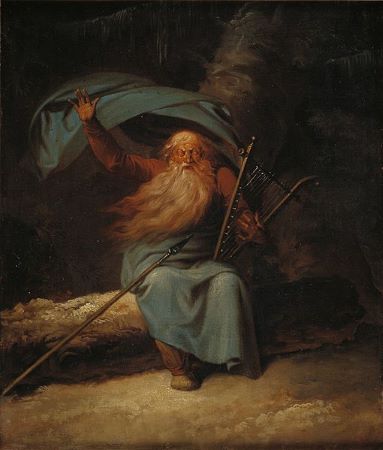
By a further irony the stunning success of the Ossianic phenomenon led to the Ossianising of Homer.[71] If the epics attributed to Ossian—Fingal and Temora—were at first compiled with due deference to Homeric norms, Homer was soon to be reimagined in terms which acknowledged the insights of Macpherson and Blair into the characteristics of ancient poetry. Macpherson himself was at the forefront of the Ossianic appropriation of Homer, with his translation of the Iliad, published in 1773, into a voice which echoed the incantatory prose-poetry found in his supposed translations. In his prefatory materials to the Iliad, Macpherson was unapologetic about this manoeuvre to recover what he believed was the authentic idiom of ancient simplicity. What modern authors found difficult to capture, Macpherson contended, was Homer’s ‘simplicity and ease’. Because this ‘magnificent simplicity’ could ‘never be characteristically expressed in the antithetical quaintness of modern fine writing’, modern renderings of Homer were, in effect, ‘rather paraphrases than faithful translations’. Macpherson kicked against the ‘fetters, which the prevailing taste of modern Europe, has imposed on poetry’. Contemporary aesthetic norms tended to ‘seduce’ the 18th-century writer into ‘modernised turns of language, which, however pleasing they may be in themselves, are utterly inconsistent, with the solemn gravity of an ancient epic poem’. This was to present Homer in a kind of modern drag: ‘in stripping him of his ancient weeds’, recent translators had ‘made him too much of a modern beau’. Why resort to ‘the cadence of the English heroic verse’—the rhythms of blank verse—when this impaired the dignity, gravity and simple solemnity of the original? In short, Macpherson’s presentation of Homer in Ossianic prose-poetry imposed ‘fewer fetters’ on the translator, and allowed him ‘to give Homer as he really is: and to endeavour, as much as possible, to make him speak English, with his own dignified simplicity and energy’.[72]
Adam Ferguson, whose moral philosophy encompassed a pioneering sociology of bonding and communal cohesion, belonged to the group of Moderate literati who had promoted Macpherson’s researches into the Ossianic poetry of Scottish Gaeldom.[73] Ferguson’s celebrated An Essay on the History of Civil Society (1767) drew a pointed contrast between the manners of ancient and modern societies. So tightly bonded were the ancient states of antiquity that their members brutally killed the state’s enemies as their own. Modern states were more loosely held together, with a clear differentiation between the interests of rulers and subjects, that the compassion and lenity of modern refinement— ‘the civilities of peace’—had found their way even onto the battlefield. Modern man had ‘mingled politeness with the use of the sword’. Ancient mores, and Homeric ways in particular, were not like that. In archaic Greece the willingness of citizen–warriors to kill on behalf of the community was the obverse side of an intimate identification with the public interest: ‘If their animosities were great, their affections were proportionate: they perhaps loved where we only pity; and were stern and inexorable, where we are not merciful, but only irresolute.’ The ‘moderation’ of the modern citizen derived in good part from his ‘indifference to national and public interests’. We moderns, Ferguson went on, were ‘accustomed to think of the individual with compassion, seldom of the public with zeal’. The contrast with the world described by Homer could not be greater, and Ferguson drew on the Iliad for evidence of archaic Greek identification with the community:
Our system of war differs not more from that of the Greeks, than the favourite characters of our early romance differed from those of the Iliad, and of every ancient poem. The hero of the Greek fable, endued with superior force, courage, and address, takes every advantage of an enemy, to kill with safety to himself; and actuated by a desire of spoil, or by a principle of revenge, is never stayed in his progress by interruptions of remorse or compassion. Homer, who, of all poets, knew best how to exhibit the emotions of a vehement affection, seldom attempts to excite commiseration. Hector falls unpitied, and his body is insulted by every Greek.
That the ‘hero of Greek poetry proceeds on the maxims of animosity and hostile passion’ was central to Ferguson’s social theory. But it raises the question of how far his work should be treated as a sociological extension of late humanism, or as some-thing perhaps more obviously indigenous, a distinctively Scottish sociology derived from the vivid contrast between the cultures of Highland and Lowland Scotland.[74]
Ferguson came from Logierait in Perthshire on the edges of the Highlands and was the only practitioner of the Scottish science of man with a Gaelic background. Indeed, Ferguson published a sermon in Erse (or Gaelic) in 1746 which he had delivered to the Black Watch in 1745 and also used a Gaelic code in some of his correspondence.[75] Given Ferguson’s wistful equivocation on the losses attendant on commercial modernity, particularly the loss of social cohesion and tight bonding found in older, pre-commercial societies, modern scholars have tended to identify Ferguson’s social theory with his Highland background.[76] Yet for all his interest in small communal clan-like societies, the social forms of the Scottish Highland constitute a conspicuous absence in Ferguson’s celebrated An Essay on the History of Civil Society. Rather it is Ferguson’s education in the classics at St Andrews rather than lived experience on the fringes of the Highlands which shines through the rich haul of ancient examples found in the Essay. Duncan Forbes in his edition of Ferguson’s Essay tries to have it both ways: ‘the Highland inspiration is clad in the fashionable garb’ of 18th-century classicism.[77] However, is it not easier to see Ferguson’s admiration of ancient Sparta for what it was, rather than as a modish way of identifying with the tightly knit clannish cohesion of the Gaels, who remain an absence—or at best a spectral but unmentioned presence—in the Essay? Not that one wants reductively to pigeonhole what is an elusive, surprising and multi-layered book. Ferguson’s Essay is far from straightforward, fusing ancient Stoicism with Christianity—though the Christianity of a ‘downright layman’ (as he confessed) who had abandoned the ministry for scholarly pursuits. Moreover, there are also hints of a deeper vein of theodicy lurking behind the sociological analysis which dominates the foreground of the Essay.[78]
Other 18th-century Scottish commentators on the history of society found themselves drawn to the world of archaic and Homeric Greece, which provided a rich seam of material on the manners and practices of savage-cum-barbarian society. Blair contended that Homeric manners retained ‘a considerable tincture of the savage state’; something which shone through in Homer’s simplicity but was inadequately captured in Pope’s smooth and sophisticated rendering of the ancient bard.[79] Henry Home, Lord Kames, detected a harshness in the manners described by Homer, and reckoned that the bard himself was flawed, being ‘tainted with the imperfections of such an age’.[80] However, blemishes of this sort were also grist to the mill of the new historical sociology. Scotland’s conjectural historians attempted to trace social, institutional and cultural change from the infancy of society;[81] but where was one to find evidence of society in its infant state? Possibly it might be found in travel accounts of primitive—mostly non-European—peoples, but as for records of such peoples nearer to home, the classics provided a rich sociological resource. So too did the Old Testament, which, like Homer, was plundered for sociological data.
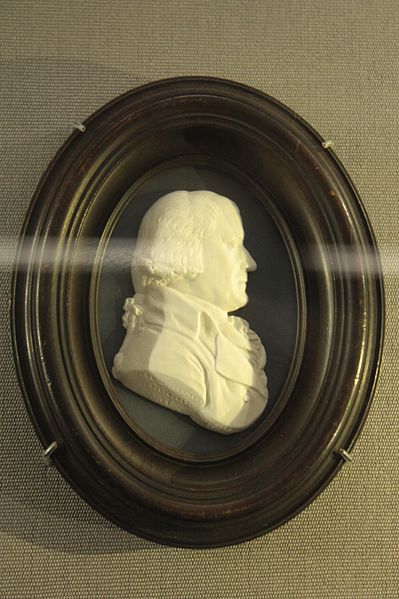
John Millar (1735–1801), the Professor of Civil Law at Glasgow University and a pioneering sociologist, used illustrations drawn from Homer, the Old Testament and the poems of Ossian in his Observations Concerning the Distinction of Ranks in Society (1771), as evidence of manners and values during the early glimmerings of civil society. Homeric poetry cast considerable light on the status of women at a time when the ‘heroic’ age Greeks—still lacking ‘delicacy and refinement’—had not ‘entirely shaken off their ancient barbarous manners’. The ‘elopement’ of Paris and Helen was not as it seemed to a later age a matter of romance, but a coarser issue of stolen chattels: ‘In the Iliad, the wife of Menelaus is considered as of little more value than the treasure which had been stolen along with her. The restitution of the lady and of that treasure is always mentioned in the same breath.’[82]
Millar’s insights found a clear echo in The History of Women (1779) by William Alexander (1742?–1788?). Instead of an unsophisticated worship of classical antiquity as the unvariegated scene of the highest excellences, Alexander championed a more nuanced appreciation of archaic Greece as an infant culture which had only toddled a few steps away from the grim rudeness of the savage condition. The social condition of Homeric Greece was for Alexander a form of post-savagery. To under-stand the classical world with insight and due discrimination, Alexander argued, it was necessary to knock antiquity off the pedestal on which infatuated modern classicists had placed Greco-Roman culture. ‘Though the Greeks were eminent in arts’, as Alexander properly conceded, ‘yet in politeness and elegance of manners, the highest pitch to which they ever arrived, was only a few degrees above savage barbarity’. Alexander saw the need to lower—very significantly—the expectations which 18th- century audiences brought to the matter of ancient Greece. The Greeks, he contended, were ‘a people whose fame has been so much trumpeted, that we are apt to annex the idea of every virtue to their name’, and to make the further assumption that ‘amongst them, the fair sex were treated with that indulgence, and raised to that dignity, which they commonly enjoy in nations the farthest advanced in the arts of culture and refinement: But in this expectation we shall be mistaken.’ Homeric Greece in particular was a conspicuous disappointment for unthinking champions of the classics. Helen of Troy, according to Alexander, was regarded as a chattel, not as a paragon of womanly beauty to be wooed and won or fought over by chivalrous warriors. Rather, like Millar, Alexander claimed that ‘Homer considers Helen, the wife of Menelaus, of little other value than as a part of the goods which were stolen along with her’. The Trojan War was launched not out of love, but from a demand for ‘restitution’. Menelaus, Alexander notes, ‘did not place the crime of Paris in having debauched his wife, but in having stolen from him to the amount of so much value’. Similarly, Homer had celebrated Penelope’s resistance to suitors during Odysseus’s long absence at Troy not for her chastity ‘but in preserving to his family the dowry she had brought along with her’, which would have been returned to her father in the event of a second marriage. Women in ancient Greece were treated neither with softness nor with delicacy. Their role, as Alexander understood it, was as ‘instruments of general propagation’, gazed upon with indifference by males except as ‘animal appetite’ was stirred, and, moreover subjected—even the highest women—to a life of menial drudgery. Had not Princess Nausicaa, the daughter of Alcinous, been described by Homer washing linen in a river?[83]
The Search for Troy
One of the principal theatres of the debate between Ancients and Moderns in the later Scottish Enlightenment concerned the geographical location of Troy.[84] In the late-18th century the French scholar Jean-Baptiste Le Chevalier (1752–1836) challenged conventional interpretations of Troy and its situation.[85] Le Chevalier was under the influence of his scholarly mentor, the French Ambassador to Constantinople between 1784 and 1792, Marie-Gabriel-Florent-Auguste de Choiseul-Gouffier (1752–1817), who, gathering around him a team of considerable antiquarian brilliance—including not only Le Chevalier, but also the textual scholar Jean-Baptiste Gaspard d’Ansse de Villoison (d.1805), the excavator Louis-François-Sebastien Fauvel (1753–1838), and the draughtsman Louis-François Cassas (1756–1827)—had carried out extensive field research in the Troad.[86] Indeed, it is unclear how far Le Chevalier—who made three visits to the Troad in November 1785, September 1786 and February 1787[87]—appropriated the insights of his patron as his own. Significantly, the French Revolution intervened and severely interrupted Choiseul-Gouffier’s project. While Le Chevalier made his way to Britain, Choiseul-Gouffier went eventually to St. Petersburg in 1792, only returning to Paris and to his incomplete, and now gazumped, multi-volume book on the Troad, in 1802.[88] Notwithstanding this antiquarian issue’s seeming remoteness from the concerns of the Scottish Enlightenment, Le Chevalier—championed by Andrew Dalzel (1742–1806), the Professor of Greek at Edinburgh[89]—spent six months at Edinburgh in 1791, where he was granted use of the Royal Society of Edinburgh (RSE) as a platform for his theories, and his work was disseminated to the world of the learned via the RSE’s Transactions.[90]

The question raised in an acute form one of the major issues of the Ancients versus Moderns debate: did the 18th-century Moderns, such as Le Chevalier, really know classical antiquity better than Ancient tradition, indeed better than the Ancients themselves? The debate over Troy would remain one of the major themes of discussion in Scottish erudition well into the 19th century. The Trojan question intersected with the debate over the Elgin Marbles, and involved a range of major figures in Scottish literary circles, as well as spilling over into classical and antiquarian circles in England. Indeed, the English geographer James Rennell (1742–1830) noted in 1814 that ‘the topography of the plain of Troy has become a kind of party question in literature’, fought over between the minority who subscribed to the opinion of the ancients and the enlightened followers of what he termed the ‘new doctrine’ of Le Chevalier.[91]
The traditional view of Troy’s location was largely derived from the views of the ancient grammarian Demetrius of Scepsis, who wrote a treatise on the array of forces in the Trojan War, which informed the work of the geographer Strabo. The ancient consensus, notwithstanding, a few wrinkles concerning the proximity of Troy to the sea and the silting of what might have once been an accessible harbour, was that Troy was located on a plateau in north-west Asia Minor near the Dardanelles in the vicinity of the classical township established at New Ilium (or New Troy), a community which had existed between 700 BC and 500 AD, near what was now the hill of Hissarlik and village of Chiblak[92] Strabo placed the original Troy a little further east on the plateau; but still near New Ilium.[93] From the plateau one could see the island of Tenedos, where the Greeks had supposedly quartered their forces. There were major nearby landmarks in Homer’s topography which helped to confirm this picture, including Mount Ida and the River Scamander, as well as less obvious features, such as a set of hot and cold springs, the location of which troubled Le Chevalier, who contended, contrary to two millennia of authority, that Homeric Troy had not been at New Ilium, but some miles further inland on rising ground above the modern-day Turkish village of Bunarbashi.[94] Le Chevalier noted that Strabo had never visited the Troad peninsula and had depended entirely on the seemingly unreliable Demetrius of Scepsis.[95]
Le Chevalier delivered his substantial dissertation, ‘Tableau de la Plaine de Troye’, in three installments, in French, at the RSE on 21 February, 28 February and 21 March 1791. It was later published in full in French in the RSE’s Transactions in 1794.[96] In the interim Dalzel had published an English translation as a book in 1791, with the endorsement of the RSE’s Committee of Publication.[97] Le Chevalier hoped that the imprimatur of a distinguished learned society such the RSE on his discovery would force the learned world of Europe to adopt his position: ‘et je me plais à éspérer, que lorsque la Societé royale d’Edimbourg aura prononcé un jugement favorable sur l’authenticité de ces monumens fameux, toutes les Académies de l’Europe s’empresseront de l’adopter’.[98]
Although by the early 19th century the RSE would become ‘an almost exclusively scientific organization’, its origins in the early 1780s, as Steven Shapin has shown, were much more eclectic, and the Society originated in good part as an effort by the Edinburgh establishment to thwart the disruptive radicalism of the unclubbable Earl of Buchan and the ‘corporate ambitions’ he had for the Society of Antiquaries (which he had established in 1780) and for its museum. In the late-18th century science was integrated with ‘general culture’, and the early years of the RSE saw a thriving ‘Literary’ class of Fellows.[99] Nor is there any indication that the turn towards sociological and economic enquiries in the Scottish Enlightenment had dented the prestige—academic and social—of the classics. As Professor of Greek between 1772 and his death in 1806, Dalzel remained a significant cultural broker in late Enlightenment Edinburgh, both as a co-founder of the RSE in 1783 and as its Literary Secretary between 1789 and 1796.
The Trojan question was already on the agenda of the Society, which at that stage published the papers of its Literary Section. One of the first papers delivered at the newly founded RSE, on 16 February 1784, by John MacLaurin (1734–96), was ‘A Dissertation to Prove that Troy Was Not Taken by the Greeks’. MacLaurin, the son of the distinguished mathematician Colin MacLaurin (1698–1746), was an advocate and Fellow of the Society, later elevated to the judicial bench as Lord Dreghorn. MacLaurin argued in his paper, which was published four years later in the first volume of the RSE’s Transactions, that Homer’s account of the Trojan War was an amalgam of allegory and untruth. Not only was it ‘incredible’, but it was ‘inconsistent with itself ’. MacLaurin went on to argue that ‘if ever there was at all a Trojan War’, it had not resulted in the Greek capture and sack of Troy, but that the Greeks ‘were obliged, by those who defended it, to raise the siege, and retire with loss and disgrace’. MacLaurin questioned both the fact of the Trojan War and—having his cake and eating it—accepted interpretations of its outcome, should it in fact have occurred at all. At any rate, the Homeric version of the war carried the ring of falsity. Troy, MacLaurin reckoned, had not in fact been taken by the Greeks, and but for the fact that no Trojan poetry of the era remained extant ‘we should have read the repulse of the Greeks in verse’.[100]
MacLaurin’s views found a curious echo in the polemics of the English antiquary and mythographer, Jacob Bryant (1715–1804), one of Le Chevalier’s fiercest critics. Bryant believed that the Trojan War had not occurred as Homer said it did, or, if it had, not in Asia Minor, but more probably in Egypt.[101] In his scepticism towards Homer Bryant was a Modern,[102] but did not espouse Le Chevalier’s Modern position on Homeric geography. Bryant’s eccentric position provoked a chorus of objection from English antiquaries,[103] and in turn prompted further interventions by Bryant himself.[104] A full-blown antiquarian debate ensued, with Bryant’s leading critics, J. B. S. Morritt (1771–1843) and the Unitarian dissenter Gilbert Wakefield (1756–1801), pointing out the unintended consequences of Bryant’s hyper-Modern scepticism. If Bryant was so uncertain about the reality and location of the Trojan War, how could he, they argued, be any more certain of the truths of primeval sacred history?[105] North of the border the debate focused on the defence of Le Chevalier, and Dalzel responded to Bryant’s criticism of his protégé in a paper delivered at the RSE on 4 September 1797. According to Dalzel, Bryant’s ‘paradoxes’ were ‘too whimsical, too violent, and too repugnant to the best authorities of antiquity, ever to admit of anything like a proof’.[106]
The geography of the Troad was vital to Dalzel’s Whiggish interpretation of primeval Greek history. The Trojan War was history, rather than myth, though the preliterate context in which Homer composed the Iliad meant that the bard had enjoyed some latitude ‘to invent and embellish as he pleased’. Nevertheless, this freedom of manoeuvre did not extend to the topography and situation of Troy. According to Dalzel, Homer ‘seems to have been sensible that the geography of the country was a permanent thing, which could not be altered, and which would always remain as testimony against him, if he should deviate from the truth in this particular’. The central kernel of truth which Dalzel respected was the participation of the various kings of the Greek city-states at the siege in Asia Minor. The siege of Troy had marked a decisive moment in the transition from monarchical to republican governments in archaic Greece. The original Greek polities had been monarchical, but the vacuum created by the decade-long absence of the ruling kings of these states at the siege of Troy destabilised monarchical rule. The result was usurpation, ‘confusion and anarchy’, which ‘paved the way for important revolutions’. The second post-Trojan phase of early Greek history was thus an era of liberty.[107]

Dalzel, it emerges, was the orchestrator of a network of educated Scots and other Hanoverian subjects who played bit parts in the dissemination of Le Chevalier’s arguments. Le Chevalier’s case was warmly supported, according to Dalzel, by two other Fellows of the RSE, John Playfair (1748–1819), the Professor of Mathematics at Edinburgh, and Alexander Fraser Tytler (1747–1813), the recent Professor of Civil History at Edinburgh who had just begun his judicial ascent which culminated in his elevation to the Court of Session as Lord Woodhouselee. Dalzel went on to publish a translation of the preface to the German edition of Le Chevalier which had been produced under the auspices of the distinguished Homeric scholar Professor Christian Heyne of the Hanoverian university at Göttingen.[108] Dalzel thanked for their assistance with this German strand of the project Alexander Brunton (1772–1854), a parish minister in the Lothians who had been private secretary to Joseph Ewart (1759–92), the British minister to the Prussian court in Berlin, and James Bonar of the Excise.[109] Brunton later became Professor of Oriental Languages at Edinburgh. Moreover, in establishing the veracity of Le Chevalier’s claims, Dalzel had enlisted the support of Sir Robert Liston (1742–1836), a friend of Dalzel’s, a former Edinburgh student and himself a Fellow of the RSE, who had become British Ambassador to the Sublime Porte at Constantinople. Liston agreed to travel to the Troad to investigate on the ground, suitably armed with a copy of Le Chevalier’s book. Liston was accompanied in these travels by two English naturalists, Dr John Sibthorp (1758–96) and John Hawkins (1758–1841).[110] Liston’s chaplain and physician, James Dallaway, also visited the Troad and joined the pro Le Chevalier/anti-Bryant chorus.[111]
The Scottish debate on the Trojan question also overlapped and intersected with other themes. Liston’s successor but two as British ambassador to Constantinople was another Scot, Thomas Bruce 7th Earl of Elgin (1766–1841), who had been educated at the University of St Andrews between 1782 and 1786. Unsurprisingly, given his later obsession with the Parthenon marbles, Elgin could not resist an expedition to Troy. En route to Constantinople, Elgin and his party stopped off at the Troad and made their way on horseback to the plain of Troy, where, Homer in hand, they tried to reconcile their surroundings with the topography of the Iliad.[112] Elgin was followed in the vicinity by his embassy chaplain, the former Cambridge professor of Arabic Joseph Dacre Carlyle (1758–1804), whose visit to the Troad in March 1801 coincided with that of another Cambridge scholar, Edward Clarke (1769–1822), the antiquary and metallurgist. The encounter of two Cantabrigian scholars in foreign parts was, as it is so often, prickly. Clarke and Carlyle disagreed about the site of Troy, and parted in high dudgeon.[113]
In Enlightenment Scotland the lines of demarcation between antiquarians and political economists were more porous than the current historiography suggests. Nor was Scottish high culture dominated entirely by Moderns supportive of Le Chevalier’s revisionism. In 1805 the Edinburgh Review published a review article by George Hamilton-Gordon (1784–1860), the 4th Earl of Aberdeen and future Prime Minister, and Sir William Drummond of Logiealmond (c.1770–1828), the British Ambassador in Constantinople in 1803–4, who had earlier been Aberdeen’s companion on a tour of Greece and the Levant. The book under review was the pro-Le Chevalier treatise The Topography of Troy by the English antiquary Sir William Gell (1777–1836). However, the real target of Aberdeen and Drummond was Le Chevalier, whom they condemned as the mere ‘interpreter of his own dream’ and decidedly less reliable than Homer and the bard’s ancient interpreters, such as Demetrius of Scepsis and Strabo.[114]Aberdeen and Drummond subscribed to the orthodoxy of the Ancients on the Trojan question; but they were far from conventional or unenlightened. Indeed, Aberdeen and Drummond were both Fellows of the RSE, and both also Fellows of the Royal Society in London. In 1805 Drummond published Academical Questions, a work of scepticism—Ancient and Humea—which probed the defences of Thomas Reid’s Common Sense response to Hume.[115] Drummond indeed earned some notoriety as a freethinker whose Oedipus Judaicus (1811) deconstructed Old Testament history as astrological allegory.[116] As Aberdeen and especially Drummond demonstrated, it was possible to be at the cutting edge of Enlightenment, yet also align oneself on the Trojan question with the wisdom of the Ancients.
Nor should we forget the visit of another celebrated Scot to the Troad. George Gordon, Lord Byron (1788–1824) grew up with his mother Catherine Gordon in Aberdeen and began his education at Aberdeen Grammar School between the ages of six and ten. Later he went to a school in Dulwich taught by an Aberdonian, Dr Glennie, though his principal education—such as it was—came at Harrow and Trinity College, Cambridge. Byron knew of the debate on Troy, and in his Journal he recorded that he had ‘stood upon that plain daily, for more than a month in 1810’.[117] Byron’s animus was directed at ‘the blackguard Bryant who had impugned’ the ‘veracity’ of Troy.[118] In Don Juan he declaimed: ‘… I’ve stood upon Achilles’ tomb/And heard Troy doubted; time will doubt of Rome’.[119] Byron also scoffed at ‘the Boke of Gell’,[120] and had scant sympathy for the debates of mere scholars. The Troad, Byron pronounced, was ‘a fine field for conjecture and snipe-shooting’.[121] The Scottish novelist John Galt (1779–1839), who knew Byron and had himself travelled in the Levant, described the poet’s position on the Trojan question in his The Life of Byron: ‘although no traveller could enter with sensibility into the local associations of celebrated places, he yet never seemed to care much about the visible features of antiquity, and was always more inclined to indulge in reflections than to puzzle his learning with dates or dimensions.’[122]
The last word in the Scottish debate over the location of Troy belonged to Charles MacLaren (1782–1866), the co-founder and editor of TheScotsman news-paper.[123] MacLaren was also representative of the Scottish Enlightenment, at least in its twilit phase. A Fellow of the RSE, he also played a central role in another of the major institutional embodiments of the Enlightenment, the Encyclopaedia Britannica, begun in Edinburgh in 1771 under the auspices of the botanist William Smellie (1740–95). MacLaren was employed by the publishers Constable as Editor of the sixth edition of the Encyclopaedia, and contributed a few articles himself, tellingly including one on ‘Troy’.[124] MacLaren also had strong personal links to the Enlightenment. His second wife, Jean Veitch, was the widow of David Hume the younger, the nephew of the philosopher. Notwithstanding his enlightened pedigree, his reformist Whiggism and his geological interests, MacLaren hoves into view on the Trojan question as an unlikely Ancient, committed to ‘restoration’ of the ancient orthodoxy which had pre-vailed before the intervention of Le Chevalier.[125] Indeed, MacLaren appears to invoke settled tradition as compelling authority, an unchallengeable answer to the recent turn towards scepticism:
During many ages, when the works of Homer were familiarly and critically studied, and when science and philosophy flourished, very few doubts were entertained respecting the identity of the ancient and recent city. The general concurrence of the learned and the powerful in this conclusion for so long a period in enlightened and inquisitive times, if not exactly equal to positive evidence, is surely more than sufficient to counterbalance the scepticism of the few writers who held a contrary opinion.[126]
MacLaren diverged from the modernist consensus on Burnabashi and identified ancient Troy with Hissarlik, near New Ilium. MacLaren eventually visited the Troad in 1847[127] and produced a revamped edition of his book on Troy in 1863[128] within a decade of Heinrich Schliemann’s successful excavations at Hissarlik in the 1870s,[129] which would once and for all dethrone Le Chevalier’s position, which until then had remained the modern orthodoxy.[130]
The Classics and the Enlightenment

Although this case study has focused on the particular case of Homeric and Trojan questions in the Scotland of the Enlightenment, it is intended to have wider implications about the relationship between classical scholarship and the Enlightenment, two areas of intellectual history which are so often assigned to separate pigeonholes. However, some recent turns in the study of the European Enlightenment are suggest-ive of more general connections. Dan Edelstein, in The Enlightenment: A Genealogy (2010), has shown how central the quarrel of the Ancients and Moderns was to the making of the European Enlightenment,[131] a significant refurbishment of Peter Gay’s interpretation of the Enlightenment as The Rise of Modern Paganism (1966).[132] Edelstein has argued that, while both Ancients and Moderns welcomed the rise of the new science, it was antiquity which provided the main matter of debate between the two parties, particularly in France, where the contest was really between two different kinds of Modern. Edelstein also points to the substantial influence of the Ancients on the philosophes in 18th-century France.[133] In a further refinement of the problem, Larry Norman, in The Shock of the Ancient (2011), a study of late-17th-century French literature, has shown that the appeal of antiquity was as a kind of quasi- ethnographic ‘otherness’, quite different from conventional understandings of the significance of neoclassicism. Both Ancients and Moderns, according to Norman, appreciated the gulf between antiquity and the present; but they read this fissure in different ways. Moreover, Norman shows that antiquity was itself disaggregated into a series of phases from an archaic, primitive era through to ages of greater classical sophistication.[134] No longer are scholars able to treat the Quarrel of the Ancients and Moderns as clashes of monolithic parties which differed fundamentally over the values of classical antiquity and scientific modernity.[135] The Enlightenment as a whole was in certain respects anti-Ancient, but it was not anti-classical. Rather, influenced in good measure by the insights of the Moderns, the Enlightenment developed as an outgrowth from classical scholarship.
The classics retained their prestige throughout the Scottish Enlightenment, notwithstanding significant shifts in intellectual life; however, these changes occurred as much within as between established disciplines. The advertised curriculum in Scotland did not alter as much as the ways in which its professors taught it. Nor did the classics—broadly defined to include the classical content found in other subjects—function as a conservative obstacle to innovation. Not only did the study of ancient history furnish radical republican possibilities, but the classics were closely aligned with new sociological departures in Scottish moral philosophy. Arguably, indeed, it was Blackwell, the Aberdonian classicist, whose innovative study in the 1730s of Homer’s context provided one of the first sociological landmarks in 18th-century Scottish scholarship. However, it would also be wrong to study the Scottish Enlightenment proper in isolation from other cultural phenomena, both within Scotland, where there was a continuing humanistic culture of a more traditional inflection which coexisted with the Enlightenment, occasionally intersecting with it too, and in England, where Blackwell’s work on Homer was widely read.[136] Nor did the Moderns have all the best tunes: Ancients too, as we have seen, contributed in significant ways to the Scottish Enlightenment. Scotland’s humanistic culture prevailed most conspicuously within an aristocratic and gentlemanly elite which was increasingly exposed to English influences. By the late 18th and early 19th centuries this integrated elite was exposed both to Enlightenment influences from within Scotland and to the culture of the Grand Tour, the ideals of the Dilettanti[137] and an antiquarian humanism. For the historian to assign cultural developments to separate silo-like categories denominated ‘Scottish Enlightenment’, ‘British Enlightenment’, ‘humanism’ and ‘Dilettanti’ is to miss the various slippages, fluidity and connections between different cultural projects and networks.[138] Arguably, indeed, the field of antiquities provoked chauvinistic conflicts, not at the Anglo–Scottish level, but between patriotic (though otherwise enlightened and cosmopolitan) British and French scholar–collectors.[139]
The lines of engagement confound today’s expectations and over-precise scholarly pigeonholing. Of course, Alexander Macbean (d.1784), Dr Johnson’s amanuensis and librarian to the 3rd Duke of Argyll, stands representative of traditional humanist erudition, as well as of unopinionated Grub Street toil.[140] However, other classical scholars are less easily classified. Robert Wood (1717–71), the leading Homeric scholar in 18th-century England, presents a case in point.[141] Wood was born in Ireland and educated at the University of Glasgow. Although Wood is normally identified as a Dilettante and his work the product of Grand Tour antiquarianism, his discussions of Homer and the location of Troy—notwithstanding the fact that the posthumous edition was seen through the press by Bryant[142]—were inflected with enlightened argu-ments; indeed, he cited Montesquieu. Wood estimated that earthquakes and other geological changes had probably altered the ancient topography of the Troad, and was also alert—in the manner of sociologically inclined Scots like Ferguson and Millar—to the ‘brutal ferocity’ of the rude, post-savage world of the Homeric heroes.[143] Wood’s career confounds our off-the-peg categories. Nor should we overlook a cross-grained figure such as Britain’s envoy in Naples, the celebrated cuckold Sir William Hamilton (1730–1803), of an aristocratic Scottish family but decidedly anglicised, whose erudite curioso’s interest in classical erotica was counterbalanced by an enlight-ened fascination with vulcanology.[144] Too often a highly selective picture is taken for the whole, and vivid caricature preferred to a shapeless sprawl in which Scotland and its Enlightenment are submerged alongside other features of 18th-century British culture.
How far have today’s historiographical assumptions really progressed from the contrasts painted by the novelist Thomas Love Peacock (1785–1866), best known as a comic writer of genius, whose best work exposes to ridicule the intellectual fashions of his day? Famously in Crotchet Castle (1831) Peacock encapsulated in the charac-ters of the Reverend Dr. Folliott and the rationalist Mr MacQuedy [i.e. QED] the vivid difference between the classical pedantry of Georgian Anglicanism and the windy theorising of late Enlightenment Scotland. But how wide was the gulf in prac-tice between the stereotypical Scotch metaphysics, science and political economy of MacQuedy, and Folliott’s prosodical obsessions with ‘a pure antispastic acatalectic tetrameter’?[145] Eighteenth-century Scotland was undeniably distinctive in its intellec-tual approaches to a range of questions in philosophy and social theory, but it nestled too in a wider and well-integrated British Enlightenment, and both the Scottish and British Enlightenments were interpenetrated by a traditional, but far from torpid, culture of classical and antiquarian scholarship; something which the historian who wishes to avoid the pitfalls of anachronism and Whiggish teleology is duty bound to acknowledge.
Appendix
Endnotes
- For overviews of the problem, see Outram (1995), Pagden (2013), Robertson (2015).
- See, e.g., Winch (1978).
- See, e.g., Wood (2003), Emerson (2009)
- 4 Robertson (2000).
- Trevor-Roper (1957: 16).
- Edelstein (2012).
- Hont & Ignatieff (1983).
- Sher (1985).
- Vivenza (2002).
- Harris (2010), Ahnert (2010).
- Harris (2015).
- Lenman (1981: 33–7), Berry (1997: 174–8).
- Youngson (1975: 159), Allan (2001).
- Blackwell (1753–5), Ferguson (1783), Gillies (1786), McDaniel (2013).
- Hume (1987: 138–80).
- Gaskell (1964).
- See, e.g., Sher (1985: 329, 336), Cairns & Cain (1989), Smitten (1993: 286), Kidd (2005: 211–15).
- McFarlane (1981), Adams (1955), MacQueen (1988).
- Duncan (1965), Kidd (1991).
- Freeman (1984), Duncan (1965), Hook (1988).
- Brown (1980), Gordon (1726).
- Scott (2007).
- Scott (2001).
- Scott (2000).
- Scott (1995).
- Levine (1991), Fumaroli (2001).
- Walker (1774: 11–35), Boswell (1970).
- Clason (1769), Gillies (1769).
- Boswell (1970: 209).
- Clarke (1945: 41, 1959: 137, 146–7).
- Davie (1981: 26–32).
- Magnusson (1974: 23, 27–8, 35, 62–4).
- Magnusson (1974: 112–19).
- Williams (1842).
- Sandford (1821: 305).
- Jones (1965).
- Levine (1991).
- Haugen (2011).
- Raffe (2017).
- Mossner (1949).
- Hume (1987: 377–464), Baumstark (2010).
- Wallace (1753).
- Hume (1987: 87–96, 111–37).
- Beattie (1776: 489, 493, 514–15, 540–2, 550).
- Monboddo (1779–99: vol. I, ‘Introduction’, i).
- Cloyd (1972: 109).
- Pope (1715–20).
- Monboddo (1967: vol. III, 110–111).
- Monboddo (1967: vol. III, 82, 381, 390, 395; vol. VI, 174, 176, 187, 190).
- Burke (1966).
- Monboddo (1967: vol. III, 81, 89; 190-1, 201, 210-51, 368, 376, 384, 407-8, 423, 430; vol. IV, 243–5, 407, 412; vol. V, 49; vol. VI, 110–111, 161–3, 175, 274, 320–470).
- Gaskell (1964: 318–19).
- Cassidy (2011).
- Goldie (1991), Carruthers (2004).
- Cowper (1791).
- Geddes (1792), Good (1803: 279–96).
- Foerster (1947: 22), Simonsuuri (1979: 146, 152), Webb (1982: 20–1).
- Blackwell (1735: 3–4).
- Simonsuuri (1979: 107, 120).
- Lafitau (1724).
- Blackwell (1735: 28).
- Blackwell (1735: 31).
- Blackwell (1735: 13–14, 45).
- Colthorp (1995: 58).
- Stafford (1988: 24–39).
- Blair (1996).
- Sher (1982).
- Macpherson (1996).
- Thomson (1952).
- Duff (1964: 260–86).
- Cf. Rubel (1978).
- Macpherson (1773: vol. I, xi, xv–xvi, xviii–xix).
- Sher (1982).
- Ferguson (1966: 198–200).
- Merolle (1995).
- Ferguson (1966: ‘Introduction’, xiii, xxxviii–xxxix, 1995: ‘Introduction’, vii–xiii).
- Ferguson (1966: ‘Introduction’, xxxix).
- Kidd (1996).
- Blair (2005: 489, 494).
- Kames (2007: 146, 173–4, 187–8).
- Hopfl (1978).
- Millar (1771: 14–48, 83–4, 89, 94, 124–9).
- Alexander (1995: I, 189–201).
- For overviews of the wider debate on the location of Troy, see Spencer (1957), Wallace (2001), Wood (2005), Gange & Bryant-Davies (2013). See also Leaf (1912).
- Le Chevalier (1791, 1794).
- Lascarides (1977: 29).
- Cook (1973: 21–2).
- Choiseul-Gouffier (1782–1822), Cook (1973: 23).
- Innes (1861).
- Le Chevalier (1794).
- Rennell (1814: v–vi).
- Lascarides (1977: 1).
- Cook (1973: 188), Lascarides (1977: 2).
- Le Chevalier (1791: 26–7).
- Le Chevalier (1791: 49).
- Le Chevalier (1794).
- Le chevalier (1791).
- Le Chevalier (1794: 92).
- Shapin (1974). Cf. Bell (1981).
- MacLaurin (1788: 50, 60).
- Bryant (1795).
- Kidd (2016: 116).
- See, e.g., Vincent (1797a, 1797b), Falconer (1799), Francklin (1800), Gell (1804).
- Bryant (1796, 1799a, 1799b).
- Wakefield (1797), Morritt (1798). See also Morritt (1800).
- Dalzel (1798: 74).
- Dalzel (1821).
- Dalzel (1798: 31).
- Dalzel (1798: 75).
- Dalzel (1798: 32-30.
- Dallaway (1797: 336–53).
- St. Clair (1983: 34–5).
- St. Clair (1983: 74–5).
- Aberdeen & Drummond (1805).
- Drummond (1805).
- Drummond (1811).
- Byron (1978: 21).
- Byron (1978: 22).
- Byron (1957: II, canto IV, stanza 101, p. 399).
- Byron (1950: I, p. 65).
- Byron (1950: I, p. 65).
- Galt (1830: 140).
- Magnusson (1967).
- MacLaren (1823: vol. XX, 490).
- MacLaren (1822: p. vii) .
- MacLaren (1822: 239).
- Wood (2005 :55).
- MacLaren (1863).
- Schliemann (2010: 43, 124).
- Marindin (1914: 129), Lascarides (1977: 63), Fitton (1995: 51).
- Edelstein (2010).
- Gay (1966).
- Edelstein (2010: 49–50).
- Norman (2011).
- See also the insights of Middleton (2004).
- Foerster (1947: 124–6).
- Redford (2008).
- Earlier generations of scholars were in this respect less constrained by modern disciplinary fields and their demarcation; cf. Whitney (1924), Foerster (1947).
- Jasanoff (2006), Hoock (2007, 2010).
- Macbean (1773).
- Spencer (1957).
- Butterworth (1985: 147).
- Wood (1775: 146, 155–6, 171–2, 179–80, 247, 308, 332, 338).
- Jenkins & Sloan (1996).
- Peacock (1986: 137).
Bibliography
- Allan, D. (2001), ‘The Age of Pericles in the Modern Athens: Greek History, Scottish Politics, and the Fading of Enlightenment’, Historical Journal, 44: 391–417. https://doi.org/10.1017/S0018246X01001686
- Baumstark, M. (2010), ‘Hume’s Reading of the Classics at Ninewells, 1749–51’, Journal of Scottish Philosophy, 8: 63–77. https://doi.org/10.3366/E1479665109000517.
- Beattie, J. (1776), ‘Remarks on the Utility of Classical Learning’, in J. Beattie Essays (Edinburgh, W. Creech).
- Bell, A. S. (ed.) (1981), The Scottish Antiquarian Tradition (Edinburgh, John Donald).
- Berry, C. (1997), Social Theory of the Scottish Enlightenment (Edinburgh, Edinburgh University Press).
- Blackwell, T. (1735), Enquiry into the Life and Writings of Homer (London).
- Blackwell, T. (1753–5), Memoirs of the Court of Augustus 2 vols (Edinburgh, Hamilton, Balfour and Neill).
- Blair, H. (1996), A Critical Dissertation on the Poems of Ossian, in H. Gaskill (ed.) The Poems of Ossian and Related Works (Edinburgh, Edinburgh University Press).
- Blair, H. (2005), Lectures on Rhetoric and Belles Lettres L. Ferreira-Buckley & S. Halloran (eds) (Carbondale, IL, Southern Illinois University Press).
- Boswell, J. (1970), Journal of a Tour to the Hebrides published together with Samuel Johnson A Journey to the Western Islands of Scotland R. W. Chapman (ed.) (Oxford, Oxford University Press).
- Brown, I. G. (1980), The Hobby-horsical Antiquary: A Scottish Character 1640–1830 (Edinburgh, National Library of Scotland).
- Bryant, J. (1795), Observations Upon a Treatise Entitled A Description of the Plain of Troy, by Monsieur Le Chevalier (Eton, M. Pote/Cadell and Davies).
- Bryant, J. (1796?), Dissertation Concerning the War of Troy (London).
- Bryant, J. (1799a), Some Observations upon the Vindication of Homer (Eton, M. Pote).
- Bryant, J. (1799b), An Expostulation Addressed to the British Critic (Eton, Pote and Williams).
- Burke, P. (1966), ‘A Survey of the Popularity of Ancient Historians’, History and Theory, 5: 135–52. https://doi.org/10.2307/2504511.
- Butterworth, J. (1985), ‘Robert Wood and Troy: A Comparative Failure’, Bulletin of the Institute of Classical Studies, 32: 147–54. https://doi.org/10.1111/j.2041-5370.1985.tb00175.x.
- Byron, G. Gordon, Lord (1950), Byron, A Self-portrait: Letters and Diaries 2 vols, P. Quennell (ed.) (London, John Murray).
- Byron, G. Gordon, Lord (1957), Don Juan 4 vols, T. G. Steffan & W. W. Pratt (eds) (Austin, TX and Edinburgh, University of Texas/Nelson).
- Byron, G. Gordon, Lord (1978), ‘Born for Opposition’: Byron’s Letters and Journals volume 8 L. Marchand (ed.) (London, John Murray).
- Cairns J. W. & Cain A. M. (eds) (1989), George Mackenzie, Oratio Inauguralis in Aperienda Jurisonsultorum Bibliotheca (Edinburgh, Faculty of Advocates).
- Carruthers, G. (2004), ‘Scattered Remains: The Literary Career of Alexander Geddes’, in W. Johnstone (ed.) The Bible and the Enlightenment: A Case Study, Dr Alexander Geddes (Journal for the Study of the Old Testament: supplement series, London: T and T. Clark).
- Cassidy, B. (2011), Life and Letters of Gavin Hamilton 2 vols (London, Harvey Miller).
- Choiseul-Gouffier, M. G. F. A. de (1782–1822), Voyage pittoresque de la Grce 3 vols (Paris).
- Clarke, M. L. (1945), Greek Studies in England 1700–1830 (Cambridge, Cambridge University Press).
- Clarke, M. L. (1959), Classical Education in Britain 1500–1900 (Cambridge, Cambridge University Press).
- Clason, P. (1769), Essays, viz. I. On the Origin of Colleges, or Universities. II. On the Origin of the Custom of Lecturing in Latin (Glasgow, Urie and Barry).
- Cloyd, E. L. (1972), James Burnett, Lord Monboddo (Oxford, Clarendon Press).
- Colthorp, D. (1995), ‘History and the Primitive: Homer, Blackwell and the Scottish Enlightenment’, Eighteenth-Century Life, 19: 57–69.
- Cook, J. M. (1973), The Troad: An Archaeological and Topographical Study (Oxford, Oxford University Press).
- Cowper, J. (1791), The Iliad and Odyssey of Homer (London, J. Johnson).
- Dallaway, J. (1797), Constantinople Ancient and Modern (London, Bensley/Cadell and Davies).
- Dalzel, A., (1798), ‘M. Chevalier’s Tableau de la Plaine de Troye Illustrated and Confirmed, from the Observations of Subsequent Travellers, and Others’, Transactions of the Royal Society of Edinburgh, 4: 29–121. https://doi.org/10.1017/S0080456800030878.
- Dalzel, A. (1821), Substance of Lectures on the Ancient Greeks 2 vols (Edinburgh).
- Davie, G. E. (1981), The Democratic Intellect new pbk edn (Edinburgh, Edinburgh University Press); first published 1961.
- Drummond, W. (1805), Academical Questions (London, W. Bulmer).
- Drummond, W. (1811), Oedipus Judaicus (London, privately published).
- Duff, W. (1964), An Essay on Original Genius reprint (Gainesville, FL, Scholars’ Facsimiles and Reprints); first published 1767 (London, E. and C. Dilly).
- Duncan, D. (1965), Thomas Ruddiman (Edinburgh, Oliver and Boyd).
- Edelstein, D. (2010), The Enlightenment: A Genealogy (Chicago, Chicago University Press). https://doi.org/10.7208/chicago/9780226184500.001.0001.
- Edelstein, D. (2012), ‘The Classical Turn in Enlightenment Studies’, Modern Intellectual History, 9: 61–71. https://doi.org/10.1017/S1479244311000461.
- Emerson, R. (2009), Essays on David Hume, Medical Men and the Scottish Enlightenment (Farnham and Burlington, VT, Ashgate).
- Falconer, T. (1799), Remarks on Some Passages in Mr Bryant’s Publications Respecting the War of Troy (London, Cadell and Davies).
- Ferguson, A. (1966), An Essay on the History of Civil Society D. Forbes (ed.) (Edinburgh, Edinburgh University Press).
- Ferguson, A. (1995), An Essay on the History of Civil Society F. Oz-Salzberger (ed.) (Cambridge, Cambridge University Press).
- Ferguson, A. (1783), The History of the Progress and Termination of the Roman Republic 3 vols (London, Strahan/Cadell/Creech).
- Fitton, J. L. (1995), The Discovery of the Greek Bronze Age (London, British Museum).
- Foerster, D. M. (1947), Homer in English Criticism: the Historical Approach in the Eighteenth Century (New Haven, CT, Yale University Press).
- Francklin, W. (1800), Remarkable Observations on the Plain of Troy During an Excursion in June 1799 (London, R. Faulder).
- Freeman, F. W. (1984), Robert Fergusson and the Scots Humanist Compromise (Edinburgh, Edinburgh University Press).
- Fumaroli, M. (2001), ‘Les Abeilles et les Araignées’, in A.-M. Lecoq (ed.), La Querelle des Anciens et des Modernes xviie et xviiie siècles (Paris, Gallimard), 7–218.
- Galt, J. (1830), The Life of Lord Byron (London, Colburn and Bentley).
- Gange, D. & Bryant Davies, R. (2013), ‘Troy’, in D. Gange & M. Ledger-Lomas (eds) Cities of God: The Bible and Archaeology in Nineteenth-century Britain (Cambridge, Cambridge University Press), 39–70. https://doi.org/10.1017/CBO9780511783647.002.
- Gaskell, P. (1964), A Bibliography of the Foulis Press (London, Hart-Davis). Gay, P. (1966), The Enlightenment, An Interpretation: The Rise of Modern Paganism (New York, Knopf).
- Geddes, A. (1792), The First Book of the Iliad of Homer (London, J. Debrett). Gell, W. (1804), The Topography of Troy, and its Vicinity (London, Longman and Rees).
- Gillies, J. (1769), An Inquiry, Whether the Study of the Ancient Languages be a Necessary Branch of Modern Education (Edinburgh, W. Gray).
- Gillies, J. (1786), The History of Ancient Greece (London, W. Strahan and T. Cadell).
- Goldie, M. (1991), ‘The Scottish Catholic Enlightenment’, Journal of British Studies, 30: 20–62. https://doi.org/10.1086/385972.
- Good., J. M. (1803), Memoirs of the Life and Writings of the Revd Alexander Geddes LL.D (London, G. Kearsley).
- Gordon, A. (1726), Itinerarium Septentrionale (London).
- Harris, J. (2010), ‘Introduction: The Place of the Ancients in the Moral Philosophy of the Scottish Enlightenment’, Journal of Scottish Philosophy, 8: 1–11. https://doi.org/10.3366/E1479665109000475.
- Harris, J. (2015), Hume: An Intellectual Biography (Cambridge, Cambridge University Press). https://doi.org/10.1017/CBO9781139033220.
- Haugen, K. (2011), Richard Bentley: Poetry and Enlightenment (Cambridge, MA, Harvard University Press). https://doi.org/10.4159/harvard.9780674061002.
- Hont, I. & Ignatieff, M. (eds) (1983), Wealth and Virtue: The Shaping of Political Economy in the Scottish Enlightenment (Cambridge, Cambridge University Press). https://doi.org/10.1017/CBO9780511625077.
- Hoock, H. (2007), ‘The British State and the Anglo–French Wars over Antiquities, 1798–1858’, Historical Journal, 50: 49–72. https://doi.org/10.1017/S0018246X06005917.
- Hoock, H. (2010), Empires of the Imagination: Politics, War, and the Arts in the British World, 1750–1850 (London, Profile Books).
- Hook, A. (ed.) (1988), The History of Scottish Literature Volume 3 1660–1800 (Aberdeen, Aberdeen University Press).
- Hopfl, H. (1978), ‘From Savage to Scotsman: Conjectural History in the Scottish Enlightenment’, Journal of British Studies, 17: 19–40. https://doi.org/10.1086/385720.
- Hume, D. (1987), Essays Moral, Political and Literary (Indianapolis, IN, Liberty Classics).
- Innes, C. (ed.), (1861), Memoir of Andrew Dalzel Professor of Greek in the University of Edinburgh (Edinburgh, T. Constable).
- Jasanoff, M. (2006), Edge of Empire: Conquest and Collecting in the East 1750–1850 (London, Harper Perennial).
- Jenkins, I. & Sloan, K. (1996), Vases and Volcanoes: Sir William Hamilton and his Collection (London, British Museum).
- Jones, R. F. (1965), Ancients and Moderns: Study of the Rise of the Scientific Movement in Seventeenth-century England 2nd edn (Berkeley, CA, University of California Press).
- Kames, Henry Home, Lord (2007), Sketches of the History of Man J. Harris (ed.) (Indianapolis, IN, Liberty Press).
- Kidd, C. (1991),‘The Ideological Significance of Scottish Jacobite Latinity’, in J. Black & J. Gregory (eds) Politics, Culture and Society in Britain 1688–1800 (Manchester, Manchester University Press).
- Kidd, C. (1996), ‘Bastard Gaelic Man’, London Review of Books, 18 (14 November): 14–15.
- Kidd, C. (2005), ‘Medicine, Race, and Radicalism in the Later Scottish Enlightenment’, in M. Pelling & S. Mandelbrote (eds) The Practice of Reform in Health, Medicine and Science, 1500–2000 (Aldershot and Burlington VT, Ashgate).
- Kidd, C. (2016), The World of Mr Casaubon (Cambridge, Cambridge University Press). https://doi.org/10.1017/9781139226646.
- Lafitau, J.-F. (1724), Moeurs des sauvages amériquains comparées aux moeurs des premiers temps (Paris).
- Lascarides, A. C. (1977), The Search for Troy 1553–1874 (Bloomington, IN, Lilly Library, Indiana University).
- Leaf, W. (1912), Troy: A Study in Homeric Geography (London, Macmillan).
- Le Chevalier, J.-B. (1791), Description of the Plain of Troy transl. A. Dalzel (Edinburgh, T. Cadell).
- Le Chevalier, J.-B. (1794), ‘Tableau de la Plain de Troye: accompagné d’une carte levée géométriquement, en 1785 et 1786’, Transactions of the Royal Society of Edinburgh, 3: part 2, section 2, 3–92. https://doi.org/10.1017/S0080456800024571.
- Lenman, B. (1981), Integration, Enlightenment and Industrialization: Scotland 1746–1832 (London, Edward Arnold).
- Levine, J. (1991), The Battle of the Books (Ithaca, NY, Cornell University Press).
- Macbean, A. (1773), A Dictionary of Ancient Geography (London, G. Robinson and T. Cadell).
- McDaniel, I. (2013), Adam Ferguson in the Scottish Enlightenment: The Roman Past and Europe’s Future (Cambridge, MA, Harvard University Press). https://doi.org/10.4159/harvard.9780674075269.
- McFarlane, I. D. (1981), Buchanan (London, Duckworth). MacLaren C. (1822), A Dissertation on the Topography of the Plain of Troy (Edinburgh, Constable).
- MacLaren,C. (1823), ‘Troja’, in Encylopaedia Britannica 6th edn (Edinburgh, Constable).
- MacLaren, C. (1863), The Plain of Troy Described; and the Identity of the Ilium of Homer with the New Ilium of Strabo Proved (Edinburgh, A. and C. Black). https://doi.org/10.1017/S0080456800029264.
- MacLaurin, J. (1788), ‘A Dissertation to Prove that Troy was not Taken by the Greeks’, Transactions of the Royal Society of Edinburgh, 1: part 2, section 2, 43–62.
- Macpherson, J., (1996), The Poems of Ossian and Related Works H. Gaskill (ed.) (Edinburgh, Edinburgh University Press).
- Macpherson, J. (1773), The Iliad of Homer 2 vols (London, Becket and De Hondt).
- MacQueen, J. (1988), ‘Scottish Latin Poetry’, in R. D. S. Jack (ed.), The History of Scottish Literature Volume I Origins to 1660 (Aberdeen, Aberdeen University Press), 213–26.
- Magnusson, M. (1967), The Glorious Privilege: The History of The Scotsman (London, Nelson).
- Magnusson, M. (1974), The Clacken and the Slate: The Story of the Edinburgh Academy 1824–1974 (London, Collins).
- Marindin, G. E. (ed.) (1914), The Letters of John B. S. Morritt of Rokeby Descriptive of Journeys in Europe and Asia Minor 1794–1796 (London, John Murray).
- Merolle, V. (ed.), (1995), Correspondence of Adam Ferguson (London, Pickering and Chatto).
- Middleton, R. (2004), ‘Introduction’, in J.-D. Le Roy, transl. D. Britt The Ruins of the Most Beautiful Monuments of Greece (Los Angeles, CA, Getty Research Institute).
- Millar, J. (1771), Observations Concerning the Distinction of Ranks in Society (London, J. Murray).
- Monboddo, James Burnett, Lord, (1779–99), Antient Metaphysics 6 vols (Edinburgh, T. Cadell and J. Balfour). Monboddo, James Burnett, Lord (1967), Of the Origin and Progress of Language 6 vols, reprint (Menston, Scolar Press).
- Morritt, J. B. S. (1798), A Vindication of Homer (York, Cadell and Davies).
- Morritt, J. B. S. (1800), Additional Remarks on the Topography of Troy (London, Cadell and Davies).
- Mossner, E. C. (1949), ‘Hume and the Ancient–Modern Controversy, 1725–52’, University of Texas Studies in English, 28: 139–53.
- Norman, L. F. (2011), The Shock of the Ancient: Literature and History in Early Modern France (Chicago, IL, University of Chicago Press). https://doi.org/10.7208/chicago/9780226591506.001.0001.
- Outram, D. (1995), The Enlightenment (Cambridge, Cambridge University Press).
- Pagden, A. (2013), The Enlightenment and Why It Still Matters (Oxford, Oxford University Press).
- Peacock, T. L. (1986), Crotchet Castle published with Nightmare Abbey (London, Penguin).
- Pope, A. (1715–20), The Iliad 6 vols (London, Bernard Lintot). Raffe, A. (2017), ‘Archibald Pitcairne and Scottish Heterodoxy, c. 1688–1713’, Historical Journal, 60: 633–57. https://doi.org/10.1017/S0018246X1600025X.
- Redford, B. (2008), Dilettanti: The Antic and the Antique in Eighteenth-century England (Los Angeles, CA, J. Paul Getty Museum).Rennell, J. (1814), Observations on the Topography of the Plain of Troy (Edinburgh, Constable).
- Robertson, J. (2000), ‘The Scottish Contribution to the Enlightenment’, in P. Wood (ed.) The Scottish Enlightenment: Essays in Reinterpretation (Woodbridge, University of Rochester Press).
- Robertson, J. (2015), The Enlightenment: A Very Short Introduction (Oxford, Oxford University Press). https://doi.org/10.1093/actrade/9780199591787.001.0001.
- Rubel, M. M. (1978), Savage and Barbarian: Historical Attitudes in the Criticism of Homer and Ossian in Britain, 1760–1800 (Amsterdam, North Holland).
- St. Clair, W. (1983), Lord Elgin and the Marbles 1967 (Oxford, Oxford University Press).
- Sandford, D. K. (1821), ‘Classical Education’, Edinburgh Review, 35: 302–14.
- Schliemann, H. (2010) Troy and its Remains P. Smith (ed.) (Cambridge, Cambridge University Press); first published 1875.
- Scott, W. (1995), The Antiquary (Edinburgh, Edinburgh University Press); first published 1816 (Edinburgh, Archibald Constable).
- Scott, W. (2000), Heart of Midlothian (Edinburgh, Edinburgh University Press) first published 1818 (Edinburgh, Archibald Constable).
- Scott, W. (2001), The Pirate (Edinburgh, Edinburgh University Press); first published 1822 (Edinburgh, Archibald Constable).
- Scott, W. (2007), Waverley (Edinburgh, Edinburgh University Press); first published 1814 (Edinburgh, Archibald Constable).
- Shapin, S. (1974), ‘Property, Patronage, and the Politics of Science: The Founding of the Royal Society of Edinburgh’, British Journal for the History of Science, 7: 1–41. https://doi.org/10.1017/S000708740001284X.
- Sher, R. (1982) ,‘ “Those Scotch Impostors and their Cabal”: Ossian and the Scottish Enlightenment’, Man and Nature, 1: 55–65. https://doi.org/10.7202/1011791ar.
- Sher, R. (1985), Church and University in the Scottish Enlightenment: The Moderate Literati of Edinburgh (Princeton/Edinburgh, Princeton/Edinburgh University Press)
- .Simonsuuri, K. (1979), Homer’s Original Genius: Eighteenth-century Notions of the Early Greek Epic (Cambridge, Cambridge University Press).
- Smith, A. (1776), The Wealth of Nations (London, W. Strahan and T. Cadell).
- Smitten, J. R. (1993), ‘The Shaping of Moderatism: William Robertson and Arminianism’, Studies in Eighteenth-Century Culture, 22: 281–300. https://doi.org/10.1353/sec.2010.0160.
- Spencer, T. J. B. (1957), ‘Robert Wood and the Problem of Troy in the Eighteenth Century’, Journal of the Warburg and Courtauld Institutes, 20: 75–105. https://doi.org/10.2307/750152.
- Stafford, F. (1988), The Sublime Savage (Edinburgh, Edinburgh University Press).
- Thomson, D. S. (1952), The Gaelic Sources of Macpherson’s Ossian (Edinburgh, Oliver and Boyd).
- Trevor-Roper, H. R. (1957), History Professional and Lay: An Inaugural Lecture Delivered before the University of Oxford on 12 November 1957 (Oxford).
- Vincent, W. (1797a), ‘Review of Bryant, Observations upon a Treatise Entitled, A Description of the Plain of Troy’, British Critic, (May, June, 1797), 535–47, 591–603.
- Vincent, W. (1797b), ‘Review of Bryant, A Dissertation Concerning the War of Troy’, British Critic, (June 1797), 604–15.
- Vivenza, G. (2002), Adam Smith and the Classics tranl. G. Vivenza (Oxford, Oxford University Press); first published 1984.
- Wakefield, G. (1797), A Letter to Jacob Bryant, Esq., Concerning his Dissertation on the War of Troy (London, A. Hamilton).
- Walker, T. (1774), A Vindication of the Discipline and Constitutions of the Church of Scotland (Edinburgh, W. Gray).
- Wallace, J. (2001), ‘Digging for Homer: Literary Authenticity and Romantic Archaeology’, Romanticism, 7: 73–87. https://doi.org/10.3366/rom.2001.7.1.73.
- Wallace, R. (1753), A Dissertation on the Numbers of Mankind in Ancient and Modern Times (Edinburgh, Hamilton and Balfour).
- Webb, T. (1982), English Romantic Hellenism 1700–1824 (Manchester, Manchester University Press).
- Whitney, L. (1924), ‘English Primitivistic Theories of Epic Origins’, Modern Philology, 21: 337–78. https://doi.org/10.1086/387511
- Williams, J. (1842), Homerus (London, John Murray).
- Winch, D. (1978), Adam Smith’s Politics (Cambridge, Cambridge University Press). https://doi.org/10.1017/CBO9780511558665.
- Wood, M. (2005), In Search of the Trojan War (London, BBC Books); first published 1985.
- Wood, P. (2003), ‘Science in the Scottish Enlightenment’, in A. Broadie (ed.), Cambridge Companion to the Scottish Enlightenment (Cambridge, Cambridge University Press), 94–116. https://doi.org/10.1017/CCOL0521802733.006.
- Wood, R. (1775), An Essay on the Original Genius of Homer: With a Comparative View of the Ancient and Present State of the Troade (London, H. Hughs).
- Youngson, A. J. (1975), The Making of Classical Edinburgh 1750–1840 (Edinburgh, Edinburgh University Press); first published 1966.
Originally published by the Journal of the British Academy 6 (March 15, 2018, 97-130), https://doi.org/10.5871/jba/006.097, under the terms of a Creative Commons Attribution-NonCommercial-NoDerivs 3.0 Unported license.
About the Author