As military operations continue, the questions surrounding evidence, legality, and accountability are only likely to grow.

By Matthew A. McIntosh
Public Historian
Brewminate
Introduction
President Trump has launched a new military campaign against drug trafficking, a sweeping initiative that authorizes lethal strikes on boats the administration labels as narcotics carriers. The United States has carried out multiple air and sea attacks in the Caribbean and Eastern Pacific, killing dozens of people identified by officials as traffickers. Supporters of the operation describe it as necessary to protect Americans from cartel violence and narcotics entering the country.
The administration presents this campaign as a decisive answer to a long-standing national crisis. Defense Secretary Pete Hegseth has framed the effort as a matter of homeland security, and Trump has positioned the strikes as proof that past approaches failed. The message is one of strength, urgency, and moral certainty. A message of character coming from an administration so lacking it cannot be overlooked.
The image of uncompromising resolve sits uneasily beside Trump’s record of clemency for convicted traffickers and his earlier praise for political allies later proven to be central figures in major drug networks. Among them is Jonathan Braun, who was granted clemency before being sent back to prison for violating his release conditions. Another is former Honduran president Juan Orlando Hernández, once praised publicly by Trump and later extradited and convicted in the United States for facilitating large-scale cocaine shipments and directing violence to protect traffickers.
The contrast between military strikes abroad and selective leniency at home raises deeper questions about the consistency and credibility of the administration’s “drug war.” It is a contradiction that invites scrutiny before any claims of moral clarity can be taken at face value.
What the New “Drug War” Actually Is
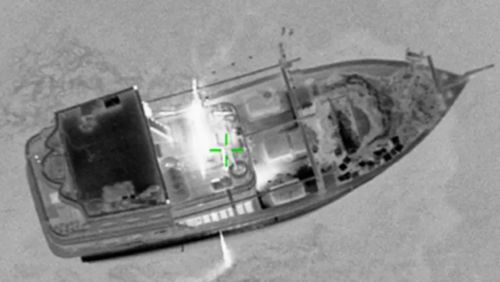
The centerpiece of Trump’s current strategy is a series of U.S. military operations targeting boats identified by officials as drug trafficking vessels. There have been multiple strikes across the Caribbean and Eastern Pacific that have resulted in more than 80 deaths to date. Defense officials describe, with no legal merit, these missions as precision attacks directed at crews believed to be transporting narcotics toward the United States.
The operations involve surveillance aircraft, naval assets, and armed drones. The targets consist of small boats that U.S. officials say are part of trafficking corridors long used by organized criminal groups. The administration argues that these missions reduce the flow of narcotics by taking out transport crews before they reach Central American or Caribbean staging points.
The Trump administration has adopted the term “narco terrorists” to describe the people aboard these vessels. This classification is being used to justify the shift from traditional law enforcement efforts toward military engagement. Officials have released limited public evidence supporting specific allegations against individual crews, and much of the information about the strikes remains classified. The administration maintains that the operations represent a necessary response to trafficking networks that have adapted to avoid U.S. interdiction efforts.
Supporters of the campaign point to the scale of cocaine and fentanyl entering the United States as justification for these tactics. They argue that traffickers have grown more sophisticated in avoiding patrols and that military action is required to disrupt their operations. What remains unclear is how evidence is evaluated, who is authorizing the identification of targets, and how the administration defines combatants in a context that has historically been handled by federal law enforcement.
The Official Narrative
Supporters of the new strategy describe the campaign as a necessary correction to what they consider years of ineffective drug enforcement. Trump has argued that the United States must take more aggressive action against trafficking networks before narcotics reach American cities, portraying the military strikes as evidence of a stronger national posture. In public remarks, administration officials say the operation is intended to break the supply chain at its earliest stages.
Hegseth has framed the strikes as part of a broader mission to protect Americans from criminal organizations that operate beyond the reach of domestic law enforcement. He has described traffickers as foreign adversaries who exploit maritime routes and rely on the limitations of traditional interdiction systems. Under this narrative, the military is positioned as the only institution capable of countering networks that move quickly, operate anonymously, and avoid detection across international waters.
The administration has presented the effort as an example of decisive leadership in a policy arena often marked by frustration and incremental progress. Officials argue that waiting for traffickers to reach U.S. borders allows drugs to slip through gaps in enforcement and contributes to the broader national crisis. By portraying the military as a tool of prevention rather than reaction, the administration is attempting to redefine the boundaries of drug control at a moment when public concern over narcotics remains high.
The Hypocrisy and Contradictions Inside Trump’s Drug Narrative
Clemency for Jonathan Braun
Jonathan Braun’s case stands out as a direct contradiction to the administration’s claim of uncompromising toughness. Braun, a convicted trafficker involved in large-scale marijuana smuggling and predatory lending schemes, received clemency from President Trump during his earlier term. Reporting from Business Insider and The Guardian detailed how his sentence was shortened despite a record that federal prosecutors described as violent and financially abusive. The decision offered leniency to an individual whose crimes directly contributed to the drug markets the administration now says require military-level force.
That judgment appeared even more questionable when Braun violated the conditions of his release. Braun was sent back to prison after being found in violation of the terms set following his clemency. His return to custody underscored the administration’s inconsistency: a trafficker known for predatory conduct was granted a new chance, only to reoffend, even as the government has embraced lethal action against alleged traffickers abroad.
Juan Orlando Hernández
The story of former Honduran president Juan Orlando Hernández presents an even more striking conflict between rhetoric and political reality. Hernández was extradited to the United States in 2022 and later convicted in federal court for facilitating the movement of massive quantities of cocaine into the country and for using violence, including murder, to protect drug routes. His conviction is extensively documented. The case offered rare insight into a political figure who operated at the highest levels while enabling transnational drug networks.
During Trump’s first term, Hernández was repeatedly praised as a strong regional partner. Trump publicly supported Hernández as a model of cooperation against immigration and crime. These statements came long before Hernández’s role in drug trafficking was formally revealed through U.S. indictments and trial testimony, but they remain part of the public record. The contrast between Trump’s praise and Hernández’s later conviction illustrates a pattern in which political utility appears to outweigh factual scrutiny.
The Hernández case complicates the administration’s narrative of necessary force. If drug traffickers are described as terrorists who must be stopped militarily, the question becomes why one of the hemisphere’s most significant traffickers, according to U.S. prosecutors, received public support. This contradiction casts doubt on the consistency of the administration’s approach and raises questions about how alliances were formed and justified during Trump’s earlier foreign policy efforts.
A Broader Pattern
The cases of Braun and Hernández suggest an uneven approach to the issue of drug trafficking. The administration’s posture is uncompromising toward alleged traffickers abroad, yet deeply lenient when political or personal relationships intersect with criminal behavior at home. This inconsistency calls into question whether the campaign is driven by principle or by selective political priorities.
The pattern also signals a divide between public messaging and actual decision-making. While Trump has framed the military campaign as a moral imperative, the record shows that individuals convicted of serious trafficking offenses have received support or clemency. These contradictions complicate the administration’s claim to zero tolerance and underscore the need for closer scrutiny of how drug policy is being applied.
Legal, Ethical, and Human Rights Concerns with Militarization
Allegations of Unlawful Killings
Serious questions have emerged about the legality of at least one early strike carried out under the new campaign. Survivors of a missile strike on a small vessel were killed afterward under circumstances that remain contested. The details raise concerns about whether the operation followed established rules of engagement or veered into actions that could violate domestic and international law.
These allegations have heightened scrutiny over the administration’s approach. Military strikes targeting alleged traffickers occur far from any declared war zone and rely on classifications that have limited public transparency. Without clear evidence of who was on board or what criteria were used to authorize force, questions persist about due process, oversight, and proportionality. These concerns form a critical backdrop to understanding the broader implications of the campaign.
Emerging Oversight and Investigations
Congressional interest in the operations has increased as more information has surfaced. Members of Congress, including some within the president’s own party, have begun pressing for details on how decisions are being made and who is responsible for authorizing specific strikes. Their inquiries reflect unease over the opaque nature of the program and the possibility that legal boundaries may have been crossed.
These concerns are amplified by the absence of publicly available evidence confirming the identities of those killed in the strikes. The administration has not disclosed intelligence assessments or provided documentation supporting its claims about trafficking operations on targeted vessels. This absence limits the ability of independent observers, human rights organizations, or lawmakers to verify or challenge the administration’s assertions about the nature of the threats involved.
The operational secrecy also complicates diplomatic relationships with countries in the region. Caribbean and Latin American governments have historically objected to unilateral U.S. military action in their waters, and the lack of transparency may strain partnerships that are essential for coordinated drug enforcement. Understanding these dynamics is crucial to assessing how the campaign fits into long-standing regional concerns about sovereignty and U.S. intervention.
Concerns About Evidence and Accountability
The shift toward military operations introduces new risks regarding accountability. Law enforcement agencies traditionally rely on documentation, arrests, prosecutions, and court oversight to demonstrate the legitimacy of their actions. Military strikes, however, take place without judicial processes and leave no opportunity for legal determination of guilt or innocence. In the absence of transparent criteria for target selection, questions arise about how the administration ensures accuracy and avoids wrongful killings.
These concerns reflect broader debates about the use of force in counter-narcotics operations. Military intervention has historically struggled to reduce drug supply, and without clear evidence linking each strike to verifiable trafficking activity, the campaign risks repeating past patterns of aggressive tactics with unclear outcomes. As the administration continues to justify the operations as necessary, the demands for accountability and credible evidence are likely to intensify.
Personal and Political Entanglements That Undercut the “Zero-Tolerance” Narrative
Documented Issues Within Trump’s Orbit
Public reporting has long documented instances of drug-related controversies within Trump’s political and administrative circles. Allegations involve aides and officials across his first administration, including stories of stimulant misuse and improper handling of controlled substances. These accounts emerged from interviews, internal communications, and staff testimony collected over time.
Reports have examined behavior among Trump insiders, relying on interviews and corroborating documents. Coverage included accounts of staff using substances to maintain long work hours and the normalization of certain addictive behaviors within high-pressure environments. While individual accounts vary in severity, the reporting collectively paints a picture of an administration with recurring issues related to substance use among officials.
These documented cases complicate the administration’s claim to moral clarity in its current drug policy. They form part of a public record that contrasts sharply with the image of uncompromising discipline that the new military campaign attempts to project. The presence of drug-related controversies within Trump’s own orbit raises questions about how zero-tolerance rhetoric coexists with a history of internal issues that have prompted media scrutiny.
Trump’s Own History of Addictive Behaviors
Beyond his staff, Trump’s own behavioral patterns have been the subject of analysis by clinicians and treatment specialists. Some have examined decades of Trump’s public behavior through the lens of addiction psychology, focusing on compulsive tendencies that appear across multiple areas of his life. The analysis draws on public interviews, Trump’s own statements, and reported episodes to highlight patterns consistent with addictive processes, such as compulsive work habits, attention seeking, and reliance on certain routines.
While I do not allege illicit drug use by Trump, his behavior can be placed within a broader clinical understanding of addiction that includes repetitive reward-seeking or compulsive behaviors. These patterns have been noted in his public persona for years, including long-term habits around media consumption, diet, and stress responses. By situating these behaviors within an evidence-based framework, the analysis offers a view of addiction not limited to substances but inclusive of broader psychological dynamics.
This broader understanding of addiction is relevant to how Trump presents the current drug campaign. The administration portrays the issue as one defined by criminality and external threat, but Trump’s own public history reflects behavioral patterns that treatment professionals categorize as addiction adjacent. This contrast underscores the complexity of addiction and raises questions about the moral framing that underlies the administration’s use of military force.
Combined Effect
These documented issues create a significant contradiction in the administration’s stance. The presence of substance-related controversies and addictive behavioral patterns among Trump’s circle challenges the sharp moral distinctions used to justify the military campaign. These contradictions weaken claims of clear ethical authority and complicate public understanding of the administration’s motivations.
As the government continues to defend the strikes as necessary and principled, the unresolved stories within Trump’s own history and political environment continue to linger. These internal contradictions contribute to doubts about the coherence and consistency of the current drug policy, especially when paired with the administration’s selective approach to clemency and alliances.
Consequences for U.S. Law, International Norms, and Regional Stability
The decision to use military force in counter-narcotics operations marks a significant shift away from the traditional frameworks that have governed American drug enforcement for decades. Law enforcement agencies rely on arrests, prosecutions, and judicial oversight to establish the legitimacy of their actions, but military strikes bypass these mechanisms entirely. When lethal force is applied without due process, questions arise about how the United States defines accountability and what safeguards exist to prevent wrongful deaths. The administration’s lack of transparency over evidence and target selection only sharpens concerns about how far these operations depart from established legal norms.
International law adds another layer of complexity. Most of the strikes have occurred in or near the territorial reach of Caribbean and Latin American nations that have historically objected to unilateral U.S. military actions. These countries maintain their own legal systems and enforcement priorities, and the use of armed force without public coordination risks undermining diplomatic relationships. Regional governments have long expressed concern about interventions that occur without clear evidence or direct consultation, and the current operations may place additional strain on efforts to maintain cooperative partnerships.
This tension is heightened by the history of U.S. counter-narcotics efforts abroad. Previous attempts to militarize drug enforcement in Latin America have often produced mixed or negative outcomes, contributing to instability without significantly reducing drug flows. The legacy of those interventions has made many countries wary of new military initiatives, particularly when evidence is not shared publicly or when the long-term strategy remains unclear. Without clear communication or structured oversight, the United States risks repeating patterns that generated resentment and mistrust in the past.
The broader implications extend beyond foreign policy. Expanding military authority over counter-narcotics operations blurs the line between law enforcement and national defense, setting precedents that future administrations may interpret even more broadly. If lethal force becomes normalized in contexts that traditionally involve judicial processes, the boundaries of federal power risk shifting in ways that outlast the current campaign. These developments underscore the importance of evaluating not only the immediate effects of the strikes but also the long-term consequences for legal standards, democratic accountability, and regional stability.
Conclusion
The administration’s new drug campaign presents an image of decisive action, but the broader record complicates that narrative. The contrast between lethal military strikes abroad and selective leniency toward convicted traffickers at home raises questions about the coherence and credibility of the government’s approach. The cases of Jonathan Braun and Juan Orlando Hernández, both linked to serious trafficking offenses, stand in sharp tension with a policy now framed as morally uncompromising and essential for public safety.
The internal contradictions do not end there. Documented substance-related issues within Trump’s political orbit and analyses of his own addictive behavioral patterns challenge the simplicity of the administration’s rhetoric. These factors create a divide between the image of zero tolerance and the realities that have defined Trump’s political and personal history. They suggest that the campaign’s moral framing rests on an unstable foundation.
As military operations continue, the questions surrounding evidence, legality, and accountability are only likely to grow. Drug trafficking is a serious problem that demands effective policy, but the current strategy risks repeating past mistakes rooted in spectacle rather than substance. A sustainable approach requires consistent standards, transparent justification, and respect for the legal processes that have long guided American counter-narcotics efforts.
Originally published by Brewminate, 12.01.2025, under the terms of a Creative Commons Attribution-NonCommercial-NoDerivatives 4.0 International license.
About the Author