Erdogan’s recent troubles with the U.S. prevent Turkey from playing a potentially constructive role in the Israel-Hamas war.

By Dr. Henri J. Barkey
Senior Fellow for Middle East Studies, Council on Foreign Relations
Bernard L. and Bertha F. Cohen Chair of International Relations, Lehigh University
Introduction
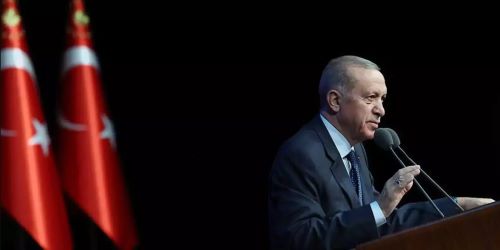
The timing and scope of the war between Israel and Hamas have put Turkey and its president, Recep Tayyip Erdogan, in a challenging situation.
At first, shocked by the violence perpetrated by Hamas, Erdogan reached out to his Israeli counterpart, Isaac Herzog. However, the strength of public support for Hamas in Turkey, the mobilization of the Israeli military, and the start of the Israeli aerial offensive in the Gaza Strip almost immediately made him shift his position. The tone of his criticism of Israel for its campaign in the Gaza Strip has progressively become more strident.
This has not prevented Erdogan from seeking to play a mediation role; he initiated several phone calls to regional leaders, UN Secretary-General António Guterres, and Russian President Vladimir Putin. Missing was U.S. President Joe Biden. Meanwhile, U.S. Secretary of State Antony Blinken launched a whirlwind tour of regional capitals as soon as the crisis erupted, seeking ways to prevent further deterioration. He appears to have deliberately sidestepped a visit to Ankara, preferring to confer with the Turkish foreign minister, Hakan Fidan, by telephone. The Biden-Erdogan relationship has been strained for some time; Biden, too, has limited his contacts with Erdogan and been unwilling to invite him, for instance, for a state visit to Washington.
A Widening U.S.-Turkey Rift
The current war between Israel and Hamas comes as Turkey and the United States are already at loggerheads over several issues. The most critical is Washington’s support for the Syrian Democratic Forces (SDF), predominantly Kurdish fighters who have been the United States’ primary allies in the fight against the self-proclaimed Islamic State, also known as ISIS. On October 5, this dispute reached a nadir when an American F-16 fighter aircraft shot down a Turkish drone that came within a few hundred yards of U.S. forces in northern Syria.
The Turkish military has been conducting numerous military operations—on the ground and in the air against the Syrian Kurds—that Washington perceives as undermining the fight against the Islamic State. Turkey is adamant in branding the Syrian Kurdish forces as nothing more than an extension of its own Kurdistan Workers’ Party (PKK), which Ankara and its allies have designated a terrorist organization. The U.S.-Turkey disagreement over the issue goes back to the advent of the Islamic State and its sweep through northern Syria and Iraq in 2014. Erdogan turned down U.S. President Barack Obama’s request to help fight terrorist groups, forcing the United States to work with the SDF. American forces and the SDF successfully defeated the Islamic State. However, in the absence of any state authority in northern Syria, Washington kept some nine hundred troops there and cooperated with the SDF to contain the Islamic State. The SDF also maintains a camp, al-Hol, that houses some fifty-thousand individuals with various links to the Islamic State.
Turkey recently also took umbrage at the language used by the Biden administration in an October 12 statement renewing the state of emergency in northern Syria. The statement’s wording was identical to that of one issued by U.S. President Donald Trump in 2019, though it did not elicit the same derision in Ankara then. The new White House statement said:
“The situation in and in relation to Syria, and in particular the actions by the Government of Turkey to conduct a military offensive into northeast Syria, undermines the campaign to defeat the Islamic State of Iraq and Syria, or ISIS, endangers civilians, and further threatens to undermine the peace, security, and stability in the region, and continues to pose an unusual and extraordinary threat to the national security and foreign policy of the United States.”
NATO, Warplanes, Carrier Deployments
The two countries have also been at odds over Sweden’s accession to the North Atlantic Treaty Organization (NATO). Erdogan took advantage of the ratification process to make a series of demands of Sweden before agreeing to send the accession resolution to the Turkish parliament, which he formally did on October 23. While Sweden made several concessions, ratification by Turkey has been overshadowed by Ankara’s request that Washington allow it to purchase new F-16s and modernization kits for the existing ones in its inventory.
The Biden administration’s strong support for the request has met stiff resistance in the U.S. Congress. Congressional leaders have made clear that the sale of F-16s is unlikely to be approved unless Turkey ratifies Sweden’s accession. In the aftermath of the U.S. government’s critical October 12 statement, Congress’s efforts to create a linkage to the F-16 sale, and increased tensions over the Israel-Hamas war, it is possible that the Turkish parliament—goaded by Erdogan behind the scenes—could delay its ratification of Swedish accession.
The onset of the conflict in Gaza has further estranged Erdogan from Washington. He reacted indignantly to the U.S. deployment of two aircraft carrier strike groups to the Eastern Mediterranean and suggested that the United States has no business sending the carriers or playing a role in this conflict. He also claimed that the carriers’ presence interferes with Turkey’s efforts to resolve the crisis. Erdogan’s foreign policy discourse increasingly reflects growing mistrust of the West and the United States. Starting with the 2016 coup attempt in Turkey, for which he blames Washington, he has also complained that Turkey’s poor economic performance is caused by Western (i.e., American) interference and sabotage. Yet, an analysis of Turkey’s trade statistics would demonstrate that its most consequential trading partners are Western ones. In 2022, the United States, Germany, the United Kingdom (UK), and ten European Union countries received almost 43 percent of Turkish exports. In 2021, five countries—the United States, Germany, Netherlands, Switzerland, and the UK—accounted for almost two-thirds of foreign direct investment into Turkey.
Support for Hamas
Erdogan has long supported Hamas, allowing its leaders to reside in Turkey and meet with its leadership, and he has refused to characterize the organization’s actions as terrorism. The Turkish public’s reaction, egged on by Erdogan, to the current conflict in Gaza is likely to strengthen this relationship. Still, Erdogan’s sympathies for Hamas notwithstanding, he is also acutely aware that a major conflagration in the region would be detrimental to everyone, Turkey included. This explains why he reportedly warned his Iranian counterpart, Ebrahim Raisi, against steps that would increase tensions.
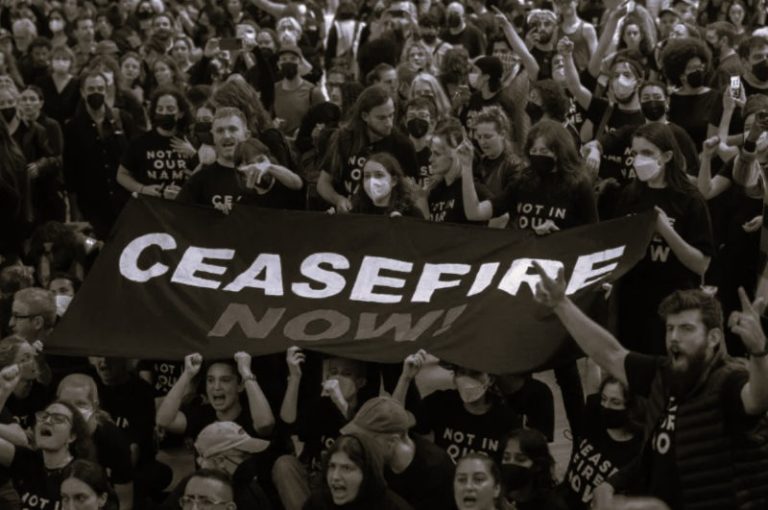
With no end to the conflict in sight, Erdogan also faces the prospect of relations deteriorating further with Israel and the United States. Demonstrations in Turkey have targeted U.S. installations—most importantly, the Kürecik radar base in Malatya, in southeastern Turkey. And the American consulate in Adana, in southern Turkey, was forced to shut down. Erdogan’s rhetoric vis-à-vis the United States is partially responsible for these events. Although some commentators have suggested that he has tried to distance himself from Hamas, in a speech on October 25, he pointedly argued that Hamas is not a terrorist organization but a group of freedom fighters and “mujahideen,” or people fighting for their faith. He also invited all Turkish citizens to a “Greater Palestine” demonstration in Istanbul that he will lead on October 28.
Erdogan could have initially contributed much to the search for a compromise in this conflict. He has eschewed the little trust Washington may have had in him with the stridency of his anti-American language. He appears to have dealt himself out of the U.S.-led negotiations.
Originally published by the Council on Foreign Relations, 10.25.2023, under the terms a Creative Commons Attribution-NonCommercial-NoDerivatives 4.0 International license.
About the Author