The individual required no regulation of his life through the channels of the official Church.

By Dr. Gert Melville
Senior Professor of History
Technical University of Dresden
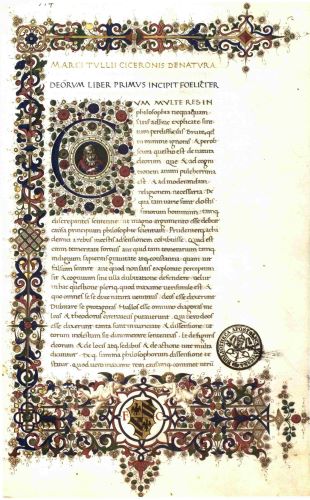
The Decretum Gratiani includes a canon (C. 19 q. 2 c. 2) whose content, according to the legal historian Peter Landau, ‘was able to lead directly to a relativisation of any ecclesiastical legislation’. ‘There are two laws: one is public, the other private’ (Duae sunt … leges: una publica, altera private), the paragraph begins and then explains. Lex publica was to be understood as the canon law which had been written down from the time of the Church Fathers; lex privata, by contrast, had to be seen as what was inscribed in the heart by an ‘impulse of the Holy Spirit’ (instinctu Sancti Spiritus; the term afflatus will be used for this). Subsequently, a relevant case is presented: a secular clergyman was permitted to join a monastery even if this conflicted with his bishop’s wishes, provided that – under inspiration from the holy spirit – he wanted to seek his salvation there. This is justified by the observation that the lex privata was worthier than the lex publica since the former was the law of the spirit of God and those who acted in the spirit of God were guided by the law of God. Who, then, as is asked in that paragraph, could defy the Holy Spirit? ‘Where the Spirit of the Lord is, there is freedom [ubi Spiritus Dei, ibi libertas]’; and thus a person guided by the spirit of God was exempt from any ecclesiastical law.1
Landau rightly deems the aforementioned lex privata to be the ‘right of freedom in relation to the prohibitions of the lex publica, the ius comune of the Church’. He continues that ‘the lex privata is valid independently of any written form … and can lead directly to a relativisation of the ecclesiastical legal order. It can be directly employed to break with positive legislation by means of the idea of a superordinate subjective law (überpositiven subjektiven Rechts)’.2 This interpretation refers to a legal norm which was equipped not with a casuistic but with a general claim to validity and in fact represents a juridical legitimization liberating the individual from institutional constraints by way of a transcendental appeal to a higher authority – that of God.
According to this norm, any individuals who were convinced of their ability to invoke an afflatus of God could disregard all ecclesiastical institutions; in fact, the individual required no regulation of his life through the channels of the official Church. The personal discovery of a norm rooted by God in the heart – something which could only spring from the individual conscience and had to be claimed before that conscience3 – stood against the positive law of an institution which on principle defined itself as the mediator of salvation interposed between God and individual. Here, the institution was instead confronted with a statement of a person’s immediate access to God, from which, indeed, a basic right to individual freedom could be inferred. This chapter therefore explores how medieval Christian thinkers and leaders – specifically ‘charismatic’ ones – tried to articulate a freedom of movement which was not arbitrary but structured by the theological and canonical precepts of the tradition. These latter stand for ‘scholasticism’ as an approach here; and although this chapter does not particularly comment on scholasticism systematically per se, the norms of theology and law permeate an exploration of the Problematik of how charismatic individuals could articulate themselves and whether they could do so institutionally.
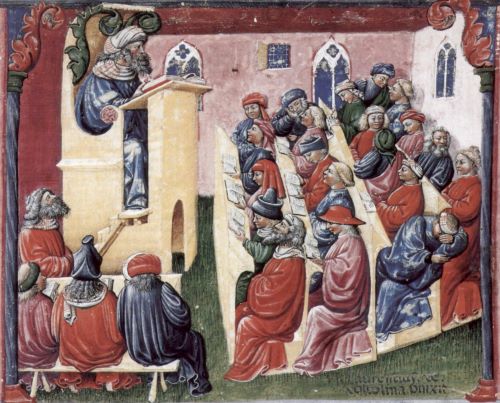
The ecclesiology of the period incrementally developed an understanding of the Church which was both the bride of Christ or the mystical body of Christ as well as the institution – as a community (universitas) – of redemptive power.4 The two were not mutually exclusive. From its roots in the apostles’ charismatic community and resting on its gospel base, the Church institutionalized itself over the centuries as a spiritual system and, at the same time, a firmly established organization. It was increasingly furnished, on the one hand, with a gradually solidifying body of sacraments in terms of perceptible, grace-conferring signs, as well as with the sacrality of ordinations, etc.; and, on the other hand, with precisely defined offices in pre-set hierarchies with both codified norms and normative practices together with juridical and administrative proceedings with rituals and symbols. This institutionalizing process generated normative traditions which were understood as divine revelations and thus linked with the Gospel. Their accessibility and connection to the truth of Church teachings, and thereby also to the latter’s redemptive power, were consequently based on two principles (sacraments and offices), the proper understanding of which was handed over to the judgement of the ecclesiastical magisterium. At the latest from the late eleventh-century Gregorian reforms onwards a proposition was in force, one set in stone: ‘S/he is not held a Catholic who does not agree with the Church of Rome’ (Quod catholicus non habeatur, qui non concordat Romane ecclesie),5 a phrase which gained its normative depth in connection with the dictum already formulated in patristic writings: ‘outside the church, no salvation’ (extra ecclesiam nulla salus).6
The Church was thus an institution conceived as God’s foundation, armed with a well-functioning organization with the ability to assert itself legally and through a symbolic world anchored in spiritual transcendence. Confrontation with just such a power was necessary for all those who believed that by appealing to the call of the Holy Spirit it was possible to derive a right to individual freedom from ecclesiastical regulation. If the formula ubi Spiritus Dei, ibi libertas is already found in Paul’s second Letter to the Corinthians (2 Corinthians III: 17) and delineated the Church’s basic ‘pneumatic’ principle, it nevertheless finds itself similarly faced with the Gregorian proposition stressing the rights of the Church.7 It was no coincidence that the fundamental tension between the official Church and individual freedom in the Spirit of God was extremely explosive during just this period, that is, from the late eleventh century onwards. In principle, this was about the confrontation between the official Church and those religious movements which – undoubtedly exacerbated by the conflicts of the investiture controversy – propagated a new religiosity stressing conscience and personal responsibility and which spread through Christendom generally, but predominantly in France and Italy.8 This religiosity was meant to lead to a new religious life by implementing evangelical counsels, imitation of the apostles and relinquishment of all possessions. In the person of charismatically effective holy men – both hermits and itinerant preachers – together with large followings across all social groups, this religiosity had found an extremely diverse, effective embodiment.9
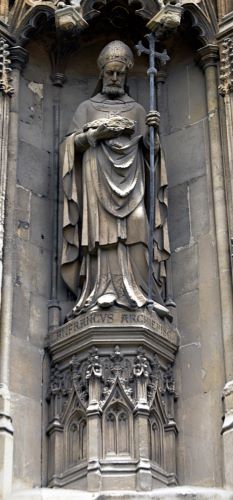
Thus, that Pauline statement of free and liberating choice grounded on the lex privata did not stand alone. For instance, a letter of Lanfranc of Canterbury (c.1010–89) circulated widely and was quoted many times. Lanfranc wrote that he would leave a monastery if he realized he was unable to save his soul there – even if he had sworn never to leave it. This would not be grounds for accusing him of having broken his oath since one did not break away from God if one abandoned the wrong path in order to remain with him.10 Perhaps the weightiest case of a consequence resulting from such a divinely obliged imperative was the founding of Cîteaux and thus the origins of the Cistercian order at the turn of the twelfth century.11 Robert, abbot of Molesme (1027–1111), came to think he could not properly fulfil his profession to follow the Rule of Benedict there and that if he remained in the monastery entrusted to him he would persistently transgress against the Rule. As a result he was fearful of the judgement of the heavenly ruler. He thus decided, together with a part of the monastery at Molesme, to travel to Cîteaux, although doing so gravely transgressed the fundamental canonical commitment to stability of place (stabilitas loci, that is, remaining at one’s monastery) and his abbatial duty of care. He justified his actions by the fact that he would have committed a sustained breaking of his vows had he remained. A generation later, the greatest of the period’s Cistercians, Bernard of Clairvaux (1090–1153), affirmed the propriety of the decision and recommended the same course of action to his contemporaries in times of need: ‘If in a given place life cannot be lead in accordance with the Rule, I advise you without reservation to follow the spirit of freedom [spiritui libertatis in reference to 2 Corinthians III: 17] and to transfer to another monastery’.12
A more pronounced reference to 2 Corinthians III: 17 and the passage from Gratian was employed in order to justify the tenacity of Clare of Assisi (1193/94–1253). The Legenda versificata Sanctae Clarae redacted in the mid thirteenth century describes how pope Gregory IX urged Clare to renounce her absolute poverty by accepting provisions in the form of land grants. She refused to accept them, the account continues, as she wanted in no way to be absolved from following Christ (sequela Christi). The Legenda, however, adds another striking commentary to the account of this occurrence. First, the text acknowledges Clare’s opposition as a remarkable risk by underlining Gregory’s position as Summus pontifex, thereby stating that ‘the divine power, the highest authority, granted him the right to loosen and to bind!’ (Pontifici summo, solvendi, sive ligandi | Suppremum cui posse dedit divina potestas!). The Legenda then explains Clare’s behaviour, arguing ‘that the Holy Spirit led her from within’ (quod agebat eam divinus Spiritus intus) and that the following principle thus holds true: ‘[W]here the spirit breathes, there is freedom. Those he moves are not beneath the law: he prejudges every law’ (Est ibi libertas, ubi spirat; quos agit, illi | Non sunt sub lege: legi preiudicat omni).13 The author thus bore witness to personal empowerment, granted by God to the individual souls from within and freeing them from institutional compulsion. This empowerment was viewed as greater than the general authorization granted by God to the highest office of the Church for the institutionalized ‘power of binding and releasing’ (potestas ligandi et solvendi).14 The statement on Clare’s position greatly exceeded Gratian’s postulation and thereby created an extremely broad view regarding the freedom of the holy spirit. With Gratian, it was a matter of ‘breaking away from positive legislation’, as Landau rightly notes. Here, however, we witness a hierarchical differentiation between two divine norms: a differentiation between a lex privata and a lex publica, which in this case were both divinely inspired law, whereby the lex of human freedom licensed the leapfrogging over another, more generally applicable, divine regulation.
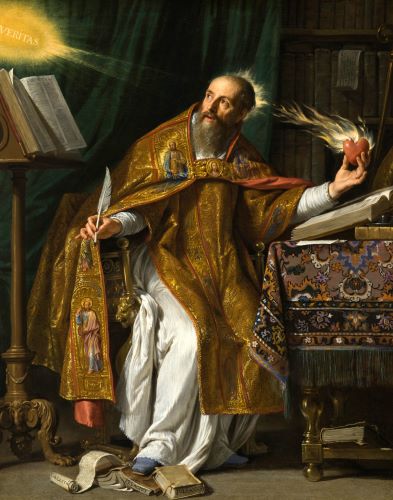
Such disregard for existing norms found a justification in a considerably more fundamental and comprehensive framework by means of increased ecclesiastical recourse to 1 Timothy 1:9: ‘[T]he law is not laid down for the just but for the lawless’ (quia iusto lex non est posita sed iniustis). Already Augustine had connected this passage to his famous dictum ‘Love and do what you will!’ (Dilige et quod uis fac) because he wanted to express his view that there was no need for laws in the presence of absolute love. He had also connected it to his statement that ‘where everything is good, there is no order, for highest equality does not require any order’ (ubi omnia bona sunt, ordo non est. Est enim summa aequalitas quae ordinem nihil desiderat).15 This dictum similarly enjoyed increased circulation from the late eleventh century onwards. It was in just such a way that Thomas Aquinas interpreted ubi spiritus Domini, ibi libertas, namely that ‘only that person is free who has ruled over him/herself ’. In other words, the Holy Spirit has so perfected the human soul that, saturated with love for God, it is ready to avoid evil on account of its own will, not because a written law forbids it. With that, the soul has reached the summit of religious exertion – and thereby liberated itself from every institutional constraint, including laws, because it no longer needs them.16
In all the above remarks, the individual appeared free from the obligation to act according to the rules of institutionalized systems of order. As a result, a trans- or supra-institutional space seemed to open up in which the individual will could develop freely. (This space could even result in an anti-institutional position.) At first glance, this finding appears to be accurate; yet if looked at more closely it has to be qualified. Severing ties to the rules of earthly institutions was only possible for individuals who knew they were bound to the rules of God and the divine order and acted in compliance with them: that is to say, to act not according to one’s own will but according to God’s will. Here lay the ethical core of individual autonomy apart from the institutions of this world. At the same time, however, this concrete anthropological articulation was only possible within a framework in which man gained this autonomy as a divine creature which obeyed its creator lovingly, which is why the Spirit of God endowed it with the exceptional ability to recognize the divine will.17 This brings us to the heart of the matter: the person inspired by the holy spirit was permitted to transcend the earthly institution only insofar as he or she was also bound up in God’s transcendence.
With that, we have outlined the question and its implications sufficiently to situate the special position of charismatic individuals in their particularly medieval tension between individuals and institutions. What has so far been explained with regard to individuals generally applies equally to medieval charismatic figures. This chapter will deal with several charismatic leaders of religious movements from the eleventh to the thirteenth centuries because the assumption that an individual leader – as a leader – must be definitionally opposed to existing institutional norms appears to relate to them most of all. This raises the question of how to define the idea of a charismatic leader per se. In the structural sense, a charismatic leader was a highly particular sort of individual who, because of his inherent capabilities, would more readily come into conflict with institutions. Such leaders not only claimed they were legitimately free from institutional norms but, still further, claimed that they themselves were also bearers, enunciators and enforcers of norms.18
By way of illustration, this chapter focuses on five charismatic religious figures as examples: Stephen of Muret (c.1047–1124); Stephen of Obazine (d. 1159); Norbert of Xanten (c.1080–1134); Robert of Arbrissel (d. 1117); and Francis of Assisi (1181/2–1226). By reference to these personalities, it is possible to establish proof of norm-creation and anti-institutional behaviour which strikingly match Max Weber’s thesis about periods of charismatic intensity. Weber argued that:
charisma is the great revolutionary power in eras founded on bonds of tradition. However, it operates in contrast to the equally revolutionary power of ‘reason’ [ratio, i.e., instrumental reasoning] which either works directly from the outside in – through changing living conditions and practical problems and hence, indirectly, through the changing attitudes to these which result: or, on the other hand, through intellectualizing them. Charisma can be transformative from the inside out, it signifies a conversion of the fundamental direction of both desire and action – arising from duress or enthusiasm – producing a completely new orientation of all attitudes towards all given ways of life and to the ‘world’ generally.19
Stephen of Muret broke with every tradition of the vita religiosa in the most radical way.20 In 1076 he withdrew to the solitude of the woods near Limoges; took his vows alone there without any ecclesiastical intermediary and thus directly in front of God; and then provided his disciples (who had gathered around him quite quickly) with the following words: ‘There is no rule beyond the Gospel of Christ, for this is the rule of rules’.21 Rules such as those of St Basil, Augustine or Benedict were not the source of piety (origo religionis) but merely its outgrowths (propagines); not the root but only the branches; they were merely the work of man. Thus, the gospel alone showed the right way. Francis of Assisi spoke out in a very similar way when he was requested to adopt one of the conventional rules:22 ‘My brethren, God Himself called me to the path of humility and showed me the path of simplicity … And so I do not want you to name any rule to me, neither that of Holy Benedict nor that of Holy Augustine or that of Holy Bernard, and in general no way or form of life apart from the one that God pitying me has shown and sent’.23 Norbert of Xanten’s followers are said to have asked him to renounce any adoption of an already existing rule since his conduct was entirely sufficient as a guideline of communal life for all:24 ‘The brothers who followed him believed that what they heard from his mouth would suffice for salvation’.25
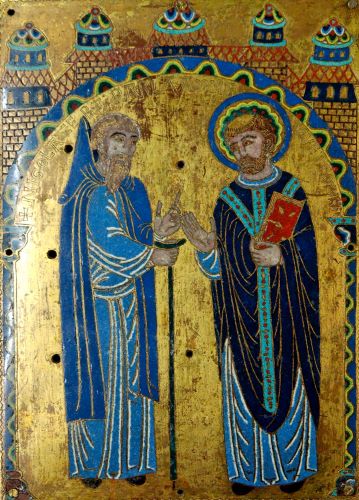
In all these cases there was frank disregard for traditional norms in favour of constituting norms of one’s own. These appeared, in principle, as a fundamental, coherent power which, in Max Weber’s already quoted words, is indeed to be defined as a ‘completely new orientation of all attitudes towards all given ways of life and to the “world” generally’. Those charismatics wanted a form of the vita religiosa which represented a complete alternative to the existing monasteries under the Benedictine observance. One pivotal element of this different form was strict poverty. When, on his deathbed, Stephen of Muret’s disciples asked him what he would leave them, he said: ‘If you adhere to God steadfastly out of love of poverty [amando paupertatem] and do not stray from this path of truth, He Himself will give you in abundance in accordance with His providence, through which He rules all things’.26 This poverty was a frontal assault on the rich monasteries of his time, which collected tithes and had their services in matters of faith remunerated by extensive land grants and other donations, a practice which met with general acceptance in the institutional surroundings.27 On the part of such charismatics, these monasteries were now reproached for merely satisfying the ‘observances of the cloister’ (claustrales observantiae) with Pharisaic arrogance while neglecting the internalization of the true commandments of the Lord.28 By contrast, the hermit Stephen of Obazine29 emphasized that his disciples were ‘veterans of the celestial militia’ but uneducated in terms of monastic regulations.30 His Vita explained this in the following way: ‘And since one had not adopted any statute law of any order, the instructions of the master were valued in lieu of law – instructions that taught nothing but humility, obedience, poverty, discipline and, above all, enduring love. One did not bother about Pharisaic traditions’.31
Such an unregulated way of life indeed corresponded to Max Weber’s above-quoted definition of charisma’s effects as ‘a conversion of the fundamental direction of both desire and action’. It could, however, only be achieved by the ‘extraordinary virtue’ through which – to quote Weber further – the charismatic was believed to be endowed ‘with supernatural, superhuman, or at least specifically exceptional powers or qualities, inaccessible to others’.32 It is precisely on that note that the Vita of Stephen of Obazine reads: ‘His word is like a burning fire that inflames the souls of his hearers and inebriates them with so much love that … the nature of their life and their ways is changed. And his outer appearance as well as his bearing are a sermon, as it were, and exhibit nothing but an ordered way of life and discipline in customs and action’.33 Such characterizations have been handed down with reference to all charismatic leaders from any period. The effect of a charismatic is most essentially – albeit not exclusively – linked to the ‘performance’ of his personal body rather than the grandeur of a transpersonal office. This effect could – as Weber asserts34 – certainly even assume magical forms of symbolical immediacy. Of Norbert of Xanten, for instance, it was said that when he was absent demons incessantly and cruelly tormented his disciples, yet as soon as he was present again, they vanished at once.35 Unconventional clothing which symbolically expressed the guiding principles of conduct could be of particular effect, too. Robert of Arbrissel was accused of damaging the reputation of the Church through his ragged appearance; Norbert of Xanten used his torn frock to style himself as John the Baptist. Both saw in their garments the message of the purity of the soul, of poverty and of contempt for the world.36
Attacks by the Church were bound to ensue and initially pushed each of those charismatics into the border zone of heresy, even though it was sometimes recognized that these leaders were inspired by God. Probably the most calculated accusation was made by the famous canonist Ivo of Chartres.37 He accused the charismatically led groups which had removed themselves into solitude of living ‘in concealed places according to their own law’ (in privatis locis, proprio iure) because they evaded all integration into the official Church and behaved like Sarabaites – those groups of monks in late antiquity who lived neither according to a rule nor in keeping with fixed conventions and who had already been condemned by the Benedictine rule. Here an extremely pejorative meaning was attributed to the term privatum. As it had, however, been formulated from exactly the point of view of the official Church, this in factsplendidly proves how strongly ‘individual freedom’ is linked to the privatum in the quotation from Gratian with which this chapter began. Therefore, in terms of how they positioned themselves relative to other groups, and how they perceived themselves and others perceived them, charismatically led groups truly seemed to stand in opposition to any form of institutionalism – as appears to be the case with people inspired by the holy spirit, who transcend worldly institutions.
Was this, however, actually the case? So far we have regarded only one part of the charismatic potential: the opposition to traditional authorities (as Weber described them) through the alternative modes of living accompanying the extraordinary virtue of the charismatic. In this one doubtlessly encountered that divergence. Yet if one looks around a little further, one indeed recognizes close points of contact with institutional forms – one can perhaps even discern an institutional structure in charisma itself. It depends on what one applies the term ‘institution’ to and how one defines it.
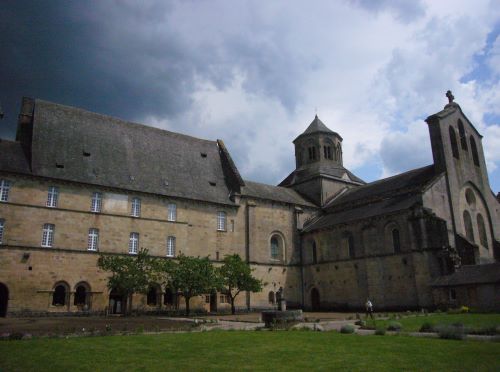
The weakest point of charismatic figures is the fact they are mortal. In order to save their life’s work, namely, their guiding principles and values, they have to make them immortal. To this end, however, the charismatic figure needs an institutional form, for only institutional organizations never die (universitas non moritur [the group/corporation never dies]).38 The group around Stephen of Obazine took the most radical measures, as has been handed down with astonishing explicitness: ‘Yet since the days of man are short [Job XIV: 5] and human instruction has an effect only as long as the instructor lives and is present, they decided to adopt the creed of one of the orders that are authorized in the Church, so that even after the mentor’s end the authority of the written law would remain with them as a never-ending one’.39 Ultimately, this course of action led to their admission to the Cistercian order while Stephen was still alive. However, the intention that written norms should outlast the transience of the body was of fundamental importance. Other charismatics pursued the same aspiration. With almost the same words, Norbert of Xanten answered his disciples when they suggested there was no need for written norms on account of Norbert’s exemplariness; and he introduced the rule of St Augustine to his group because it was the one which most corresponded to his concerns.40 Robert of Arbrissel authored statutes which were not only to be in force after his death but applicable straightaway whenever he was absent.41 For many years Francis worked on a rule which was predominantly based on quotations from holy scripture.42 Above all, he wrote his spiritual will and ‘testament’ in order to immortalize his message (although Pope Gregory IX abrogated it in his bull Quo elongati).43
Such written law inevitably articulated organizational institutional structures since an organization was needed, in turn, for the very purpose of guaranteeing the observance of the written law.44 Thus, a circular reference came into being which could rightly be understood as an institutionalization of the original charismatic guiding principles and values and which – in many cases with support from the official Church – led to the organizational form of a religious order. One must note, however, that there was a substantial difference on a sliding scale between one who transfers into another, pre-existing organization (Stephan of Obazine), the adaptation of a traditional rule (Norbert of Xanten) and a textualization of norms by the charismatic leader himself (Robert of Arbrissel).
To analyse both ends of this spectrum, Weber offered the model of the ‘routinization [Veralltäglichung] of charisma’.45 However, a reference to his threefold typology of authority (Herrschaft) – the legal, the traditional and the charismatic46 – will prove more fruitful here. As has been shown, religious movements under the individual leadership of a charismatic figure opposed the validity of ‘traditional authorities’. Ironically, then, with the translation of their guiding principles into written norms, they directly created a form of legal authority which, according to Weber, is characterized by its ‘resting on a belief in the legality of enacted rules and the right of those elevated to authority under such rules to issue commands’.47 The charismatic figure’s revolutionary power of liberation from traditionally oriented institutions led to a renewed institutionalization which now constituted the attempt at legal continuation of the charismatic power itself. Provided that such a system of legal authority was actually realized (that is, an order was formally founded), this power of the liberation of the individual could not, however, be transferred immediately to the followers. The latter now became institutionalized members of the order, subject to binding rules and laws. At best, they retained a right of co-determination regarding the writing of laws, something which had never been the case in traditional monastic communities.48
What, however, gave charismatic leaders the drive to want their work to continue beyond death? The answer to this question is of particular significance since it also contains the clarification of the afore-mentioned assumption that a particular institutional structure can be discerned in charisma itself. Let us remember the observation made at the beginning: although acting instinctu Sancti Spiritus signified the desire to obtain autonomy from the rules of earthly institutions, this did not imply pure arbitrariness but signified following the will of God. All charismatic leaders and their followers were convinced they were acting on behalf of God and in accordance to his providence. Here, the sociological meaning of the term ‘charisma’ coincides with the pneumatic one of the apostle Paul to the greatest possible extent.49 Stephen of Obazine’s Vita described the point when he was still seeking ecclesiastical instruction, but then decided to live as an autonomous hermit, thus: ‘The almighty God did not want him to be subjected to the guidance [magisterium] of anyone, so that might be fulfilled which He had intended for this holy man’.50 Robert of Abrissel once delivered a sermon before Pope Urban II; and the Pope believed that ‘the Holy Spirit had personally opened Robert’s mouth’.51 Francis of Assisi had two decisive visions of Christ which showed him the way.52 When he was writing the last version of his rule, he turned away all who wanted any changes and justified this by stating that the text did not originate from him but from Jesus himself: ‘Christ told me this, Christ told me this!’ (Christus mihi dixit, Christus mihi dixit!). In these examples the blessing of God was bestowed directly and linked with clear mandates. Thus, Francis was able to trust in bibliomancy when he blindly opened the gospel in order to find behavioural norms for himself and his first companions. Later he was able to emphasize in his will and testament that the Most High had instructed him to live according to the form of the gospel; that the Lord had shown him he had to commence a life in atonement; and that he had led him among the lepers in order to practise compassion.
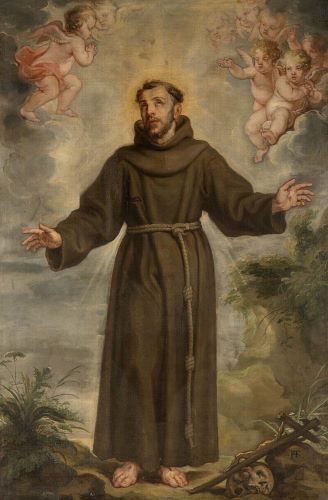
Those charismatic leaders, who perceived themselves as acting on behalf of God, possessed the legitimization of their work through this transcendent reference. They were incarnations, living symbols of divine norms, which they exemplified perfectly and which they tried to enforce: atonement, solitude, poverty, homelessness, love of one’s neighbour, compassion. The significance of these norms was, however, that they constituted truths of life which were claimed to be of timeless, eternal validity and neither to need tradition nor be subject to change by traditions – according to the word of Christ, who did not say: ‘I am the custom’, but ‘I am the truth’ (John XIV: 6). Thus, for instance, when defending his community against accusations of possessing no rule and no order because a habit alone did not justify identifying them as monks, Stephen of Muret used the following significant logic, which went even further: was there no rule and no order here when he required everyone to live in poverty, seclusion from the world, mutual love and so forth – that is to say – when he maintained the unalterable, basic values which marked out the religious life?53 Clearly, he wished to remain within the realm of these core values. Fundamentally, the term ordo generally signified every religious form of life practised communally and exclusively under the norms of ‘divine precepts’ (diuina praecepta) and the ‘gospel of Christ’ (euangelium Christi). In sum, it was ultimately only those who stood ‘outside all order or rule’ (extra omnem ordinem uel regulam) who deviated from diuina praecepta. In Stephen’s view, rule and order were manifested primarily by the spirit and not by the letter of the law.
Institutions are, in the first place, symbolic systems, regardless of whether they shape organizations around themselves or only substantiate themselves in social practices.54 All institutional forms ensure perpetuation and reiteration – an achievement which, however, can only be unalterably secured if contextual circumstances can be transcended and produce unchangeable frameworks: that is, if the institutions symbolize deep values and guiding principles through which they create and derive meaning. This criterion also gels effectively with the idea of the Church as an institution, as exemplified by the above-mentioned image of the bride of Christ as a symbol of divine transcendence. That image may itself stand for the virtually inexhaustible set of liturgical rites, daily rituals and sacramental signs and consecration which themselves render the normally unattainable divine symbolically – and in the eucharist even truly – present. These symbolizations were tied to abstract models of behaviour, ‘correct’ sequences of action, offices and formal norms which were applicable to every believer.55 They were transpersonal, that is, not restricted to the individuality of a person, and were thus persistent and durable.56
Medieval Christian charismatic figures drew on this wider symbolic grammar, notwithstanding their individuality. With it their entirely individual conduct could render the continuous, ubiquitous validity of this transcendent order-system present, visible and tangible here in this world, embedding it in earthly realities in a meaningful way. Since, as individuals, they were symbolic embodiments of divine order, they had an eminently institutional function – without requiring an organization or an office in that regard at all. When a person, as an individual, becomes an institution, that person has to carry and guarantee its continuity just as organizations do. With persistent commitment to a guiding principle and a certain methodical approach this can be achieved for a lifetime, as we have seen in the charismatic figures discussed above. Yet only ever for one lifetime!
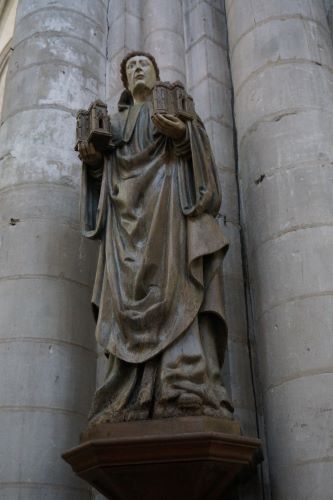
This is the case unless one immortalizes – and thereby universalizes – the values of the special, unique and limited life of a given charismatic figure. As shown above, this could be done through institutionalizing a person’s exemplary life in the form of a community under a ‘legal authority’ (in Weber’s terms). At this point, what had been a charismatically effective force gradually disappeared into honoured memory, receding behind transpersonally valid norms which became the institution’s moving force. This is precisely what happened with Robert of Molesme57 as the initiator of the Cistercian order, or Dominic58 as the founder of the Order of Preachers. Yet such an immortalization can also take place by means of a continued existence of the charismatic in a cult of remembrance, granting the dead leader a perceptible and mental presence. For this it also required more ‘evangelists’ who wrote vitae;59 iconographic programmes; funerary monuments (such as the Basilica San Francesco in Assisi); and redactors of rules who aimed to present retrospectively the dead charismatic figure, such as occurred with Stephen of Muret and others. In this way the individuality of the charismatic became the immortal model or exemplar, the symbolic point of reference for all subsequent generations searching for the ‘truth’ of life. That dead individuality became precisely – in order to penetrate the heart of the matter – the institutionalized form, figure, model and rule of life (forma, figura, exemplum and regula vitae) which imparted identity to the religious order.60
It is most remarkable how the individual impact of a charismatic leader, necessarily opposed to the institutional structures of established authorities to begin with, was then also able to turn into an institutional form which could provide a legitimate counterweight to these authorities.61 It must be mentioned that this occurred without neutralizing the individuality of the protagonist in the process. On the contrary: religious orders continued to direct believers to their founding figure to the highest degree, even if later generations incessantly quarrelled about precisely how this individuality should be seen as a model.
Endnotes
- 2 Corinthians III: 17. See below.
- P. Landau, ‘Officium und Libertas christiana’ (Sitzungsberichte der Bayerischen Akademie der Wissenschaften, philosophisch-historische Klasse 1991, i, Munich, 1991), pp. 55–96, at p. 60.
- M. Breitenstein, ‘Das “Haus des Gewissens”. Zur Konstruktion und Bedeutung innerer Räume im Religiosentum des hohen Mittelalters’, in Geist und Gestalt. Monastische Raumkonzepte als Ausdrucksformen religiöser Leitideen im Mittelalter, ed. J. Sonntag (Vita regularis, lxix, Berlin, 2016), pp. 19–55.
- S. A. Chodorow, Christian Political Theory and Church Politics in the Mid-Twelfth Century: the Ecclesiology of Gratian’s Decretum (Berkeley, Calif., 1972); P. von Moos, ‘Krise und Kritik der Institutionalität. Die mittelalterliche Kirche als “Anstalt” und “Himmelreich auf Erden”’, in Institutionalität und Symbolisierung. Verstetigung kultureller Ordnungsmuster in Vergangenheit und Gegenwart, ed. G. Melville (Cologne and Vienna, 2001), pp. 293–340.
- H. Fuhrmann, ‘“Quod catholicus non habeatur, qui non concordat Romanae ecclesiae”. Randnotizen zum Dictatus Papae’, in Festschrift für Helmut Beumann zum 65. Geburtstag, ed. K. U. Jäschke and R. Wenskus (Sigmaringen, 1977), pp. 263–87.
- J. Johrendt, ‘“Nulla salus extra ecclesiam”. Innocenzo III e la chiesa come istanza mediatrice di salvezza’, in Il lateranense IV: le ragioni di un concilio. Atti del LIII convegno storico internazionale: Todi, 9–12 ottobre 2016 (Spoleto, 2017), pp. 245–60.
- In the sense of pneuma as spiritual rather than earthly wind. On the medieval reception of 2 Corinthians III: 17 cf. von Moos, ‘Krise’, pp. 326–36; briefly also G. Melville, ‘“Dove c’è lo Spirito del Signore, lì è la libertà”. Aspetti del trascendimento istituzionale medievale’, in Libertas (secoli X–XIII). VI Settimana della Mendola, ed. N. d’Acunto (Milan, forthcoming).
- See H. Grundmann, Religious Movements in the Middle Ages: the Historical Links Between Heresy, the Mendicant Orders, and the Women’s Religious Movement in the Twelfth and Thirteenth Century, trans. S. W. Rowan (Notre Dame, Ind., 1995); G. Melville, Medieval Monasticism: its History and Forms of Life, trans. J. Mixson (Collegeville, Minn., 2016), pp. 89–124.
- See H. Leyser, Hermits and the New Monasticism: a Study of Religious Communities in Western Europe 1000–1150 (London, 1984); Ermites de France et d’Italie, XIe–XVe siècle, ed. A. Vauchez (Rome, 2003).
- Beati Lanfranci Cantuariensis archiepiscopi epistolarum liber, Ep. lx, in PL 150, col. 549 sq.
- Cf. G. Melville, ‘Die Zisterzienser und der Umbruch des Mönchtums im 11. und 12. Jahrhundert’, in Norm und Realität. Kontinuität und Wandel der Zisterzienser im Mittelalter, ed. F. J. Felten and W. Rösener (Vita regularis, xlii, Berlin, 2009), pp. 23–43.
- Bernard of Clairvaux, De praecepto et dispensatione, in Sancti Bernardi opera (8 vols, Rome, 1957–77), iii. Tractatus et opuscula, ed. J. Leclercq and H.-M. Rochais (Rome, 1963), pp. 252–94, at p. 284.
- Legenda versificata Sanctae Clarae, in Fontes Franciscani, ed. E. Menestò and S. Brufani (Assisi, 1995), pp. 2347–99, at p. 2360. Cf. also on the Franciscan context, G. Melville, ‘“Homo spiritum habens”. Francesco fra Chiesa istituzionale e transcendenza individuale’, Collectanea Franciscana, lxxxviii (2018), 281–300. For the historical background of Clara’s afterlife and influence, see M. P. Alberzoni, Chiara e il papato (Milan, 1995); Clara Claris Praeclara: l’esperienza cristiana e la memoria di Chiara d’Assisi in occasione del 750 anniversario della morte, Assisi 20–22 novembre 2003 (Assisi, 2004).
- I.e., the commission given by Christ to Peter in Matthew XVI: 29, also XVIII: 18.
- For Augustine, see De ordine, ed. W. M. Green, in Sancti Avrelii Avgvstini Contra academicos, De beata vita, De ordine, De magistro, De libero arbitrio (CCSL, xxix, Turnhout, 1970), pp. 87–137, at p. 107. Cf. G. Constable, ‘Love and Do What You Will’: the Medieval History of an Augustinian Precept (Kalamazoo, Mich., 1996); G. Melville, ‘“Liebe und tue, was du willst!” – Eine Herausforderung für den mittelalterlichen Menschen’, in Sorge, ed G. Melville, G. Vogt-Spira and M. Breitenstein (Europäische Grundbegriffe im Wandel: Verlangen nach Vollkommenheit, ii, Cologne and Vienna, 2015) pp. 79–95.
- Thomas Aquinas, Super II Epistolam b. Pauli ad Corinthios lectura, cap. 3, lectio 3, n. 112, in Sancti Thomae Aquinatis, Super Epistolas s. Pauli lectura, ed. R. Cai (2 vols, Turin/Rome, 1953), i. 463–4.
- See for early roots, J. K. Lee, ‘The Church and the holy spirit: ecclesiology and pneumatology in Tertullian, Cyprian, and Augustine’, Studia patristica, xci (2017), 189–206.
- Cf. Charisma und religiöse Gemeinschaften im Mittelalter, ed. G. Andenna, M. Breitenstein and G. Melville (Vita Regularis, xxvi, Münster, 2005); Das Charisma. Funktionen und symbolische Repräsentation, ed. P. Rychterová, S. Seit and R. Veit (Beiträge zu den historischen Kulturwissenschaften, ii, Berlin, 2008); Charisma and Religious Authority: Jewish, Christian, and Muslim Preaching, 1200–1500, ed. K. L. Jansen (Europa sacra, iv, Turnhout, 2010); Faces of Charisma: Image, Text, Object in Byzantium and the Medieval West, ed. B. M. Bedos-Rezak and M. D. Rust (Explorations in Medieval Culture, ix, Leiden, 2018).
- ‘Das Charisma ist die große revolutionäre Macht in traditional gebundenen Epochen. Zum Unterschied von der ebenfalls revolutionierenden Macht der “ratio”, die entweder geradezu von außen her wirkt: durch Veränderung der Lebensumstände und Lebensprobleme und dadurch mittelbar der Einstellungen zu diesen, oder aber: durch Intellektualisierung, kann Charisma eine Umformung von innen her sein, die aus Not oder Begeisterung geboren, eine Wandlung der zentralen Gesinnungs- und Tatenrichtung unter völliger Neuorientierung aller Einstellungen zu allen einzelnen Lebensformen und zur “Welt” überhaupt bedeutet’ (M. Weber, Wirtschaft und Gesellschaft, ed. J. Winckelmann, (5th edn, Tübingen, 1972), p. 142) (author’s translation).
- C. A. Hutchison, The Hermit Monks of Grandmont (Kalamazoo, Mich., 1989); J. Becquet, Etudes grandmontaines (Ussel, 1998); G. Melville, ‘“In solitudine ac paupertate”. Stephans von Muret Evangelium vor Franz von Assisi’, in In proposito paupertatis. Studien zum Armutsverständnis bei den mittelalterlichen Bettelorden, ed. A. Kehnel and G. Melville (Vita regularis, xiii, Münster, 2001), pp. 7–30.
- Liber de doctrina uel Liber sententiarum sev rationvm beati viri Stephani primi patris religionis Grandimontis, in Scriptores ordinis Grandimontensis, ed. J. Becquet (CCCM, viii, Turnhout, 1968), pp. 3–62, at p. 5.
- Cf. La regola dei Frati Minori. Atti del XXXVII Convegno internazionale, Assisi, 8–10 ottobre 2009 (Spoleto, 2010); A. Thompson, Francis of Assisi: a New Biography (Ithaca, N.Y., 2012); P. Alberzoni, Santa povertà e beata semplicità: Francesco d’Assisi e la Chiesa romana (Milan, 2015); F. Accrocca, Francesco e la Santa Chiesa Romana (Assisi, 2015); J. Dalarun, François d’Assise en questions (Paris, 2016).
- Compilatio Assisiensis, ed. in Menestò and S. Brufani, Fontes Franciscani, pp. 1471–1690, at p. 1498, cap. 18.
- Cf. Norbert von Xanten. Adliger, Ordensstifter, Kirchenfürst, ed. K. Elm (Cologne, 1984); F. J. Felten, ‘Norbert von Xanten, die Gründung von Prémontré und die Entstehung des Prämonstratenserordens’, in Norbert von Xanten und der Orden der Prämonstratenser, ed. C. Dölken (Magdeburg, 2010), pp. 7–32; S. Weinfurter, ‘Norbert von Xanten und sein neuer Lebensentwurf. Gesellschaftsordnung und Wertewandel im frühen 12. Jahrhundert’, in Dölken, Norbert von Xanten, pp. 151–74.
- Vita Norberti archiepiscopi Magdeburgensis, ed. R. Wilmans (MGH, SS, xii, Hanover, 1856), p. 683.
- Vita venerabilis viri Stephani Mvretensis a Stephano de Liciaco seu alio coaeuo redacta, in Becquet, Scriptores ordinis Grandimontensis, pp. 101–37, at pp. 123–4.
- G. Constable, Monastic Tithes from Their Origins to the Twelfth Century (Cambridge Studies in Medieval Life and Thought, n.s., x, Cambridge, 1964).
- G. Morin, ‘Rainaud l’ermite et Ives de Chartres: un épisode de la crise du cénobitisme au XIe–XIIe siècle’, Revue Bénédictine, xl (1928), 99–115, at pp. 109–10.
- G. Melville, ‘Stephan von Obazine: Begründung und Überwindung charismatischer Führung’, in Andenna, Breitenstein and Melville, Charisma, pp. 85–102.
- Vie de saint Étienne d’Obazine, ed. and trans. M. Aubrin (Clermont-Ferrand, 1970), p. 106.
- Aubrin, Vie de saint Étienne, p. 70.
- Weber, Wirtschaft und Gesellschaft, p. 140.
- Aubrin, Vie de saint Étienne, p. 58.
- Weber, Wirtschaft und Gesellschaft, p. 141.
- Wilmans, Vita Norberti, p. 685.
- Melville, Medieval Monasticism, pp. 113, 116.
- See G. Melville, ‘“In privatis locis proprio jure vivere”. Zu Diskursen des frühen 12. Jahrhunderts um religiöse Eigenbestimmung oder institutionelle Einbindung’, in G. Melville, Frommer Eifer und methodischer Betrieb. Beiträge zum mittelalterlichen Mönchtum, ed. C. Andenna and M. Breitenstein (Cologne, 2014), pp. 33–48.
- E. H. Kantorowicz, The King’s Two Bodies: a Study in Mediaeval Political Theology (Princeton, N.J.,1981 [1957]), pp. 302–13.
- Aubrin, Vie de saint Étienne, p. 96.
- Wilmans, Vita Norberti, p. 683.
- J. Dalarun, ‘Les plus anciens statuts de Fontevraud’, in Robert d’Arbrissel et la vie religieuse dans l’ouest de la France, ed. J. Dalarun (Turnhout, 2004), pp. 139–72.
- L Pellegrini, ‘La tradizione manoscritta della Regula non bullata; la genesi di un testo e la sua vicenda nella storia dell’Ordine minoritico’, in La regola dei Frati minori, pp. 83–116.
- H. Grundmann, ‘Die Bulle “Quo elongati” Papst Gregors IX’, Archivum Franciscanum historicum, liv (1961), 3–25.
- On ‘institutions’ as distinct from ‘organizations’, see my conclusion below.
- Weber, Wirtschaft und Gesellschaft, pp. 142–8.
- Weber, Wirtschaft und Gesellschaft, p. 124.
- Weber, Wirtschaft und Gesellschaft, p. 124.
- G. Melville, ‘The abbot of Cluny at the turning point from the charismatic traditional to legal authority: an analysis referring to Max Weber’s model’, in Abbots and Abbesses as a Human Resource in the Ninth- to Twelfth-Century West, ed. S. Vanderputten (Vita regularis, lxxiv, Berlin, 2018), pp. 151–64.
- For a comparison see K.-S. Rehberg, ‘Rationalisierungsschicksal und Charisma-Sehnsucht. Anmerkungen zur “Außeralltäglichkeit” im Rahmen der institutionellen Analyse’, in Andenna, Breitenstein and Melville, Charisma, pp. 3–23; K. Tanner, ‘Die Macht des Unverfügbaren. Charisma als Gnadengabe in der Thematisierung von Institutionalisierungsprozessen im Christentum’, in Andenna, Breitenstein and Melville, Charisma, pp. 25–44.
- Aubrin, Vie de saint Étienne, p. 48.
- Baudri de Bourgueil, Historia magistri Roberti, in Les deux Vies de Robert d’Arbrissel, fondateur de Fontevraud. Légendes, écrits et témoignages – The Two Lives of Robert of Arbrissel, Founder of Fontevraud: Legends, Writings, and Testimonies, ed. J. Dalarun (Disciplina monastica, iv, Turnhout, 2006), pp. 130–87, at p. 156.
- For the following, see Melville, “‘Homo spiritum habens”’.
- For this, see Becquet, Liber de doctrina uel Liber sententiarum, pp. 3–62, at pp. 60–2.
- G. Melville, ‘L’institutionnalité médiévale dans sa pluridimensionnalité’, in Les tendances actuelles de l’histoire du Moyen Âge en France et en Allemagne, ed. J.-C. Schmitt and O. G. Oexle (Paris, 2002), pp. 243–64; K.-S. Rehberg, Symbolische Ordnungen. Beiträge zu einer soziologischen Theorie der Institutionen, ed. H. Vorländer (Baden-Baden, 2014).
- For monastic institutions, cf. J. Sonntag, Klosterleben im Spiegel des Zeichenhaften. Symbolisches Denken und Handeln hochmittelalterlicher Mönche zwischen Dauer und Wandel, Regel und Gewohnheit (Vita regularis, xxxv, Berlin, 2008).
- Cf. Kantorowicz, The King’s Two Bodies, pp. 373–83.
- T. Merton, ‘Saint Robert of Molesme, 1028 to 1111’, Cistercian Stud. Quart., xlvi (2011), 273–6.
- A. Wesjohann, ‘Flüchtigkeit und Bewahrung des Charisma, oder: War der heilige Dominikus etwa auch ein Charismatiker?’, in Andenna, Breitenstein and Melville, Charisma, pp. 227–60.
- See the important contribution by S. C. Jaeger, ‘The saint’s life as a charismatic form: Bernard of Clairvaux and Francis of Assisi’, in Bedos-Rezak and Rust, Faces of Charisma, pp. 181–204.
- K. Elm, ‘Die Entwicklung des Franziskanerordens zwischen dem ersten und letzten Zeugnis des Jakob von Vitry’, in K. Elm, Vitas fratrum. Beiträge zur Geschichte der Eremiten- und Mendikantenorden des zwölften und dreizehnten Jahrhunderts, ed. D. Berg (Werl, 1994), pp. 173–93, at p. 192.
- For the exemplary case of Francis of Assisi, see Melville, ‘“Homo spiritum habens”’.
Chapter 5 (139-155) from Individuals and Institutions in Medieval Scholasticism, edited by Antonia Fitzpatrick and John Sabapathy (University of London, 09.25.2020), published by OAPEN under the terms of a Creative Commons Attribution-NonCommercial-NoDerivatives 4.0 International license.
About the Author