
How has this religious sect spread and what are the implications?
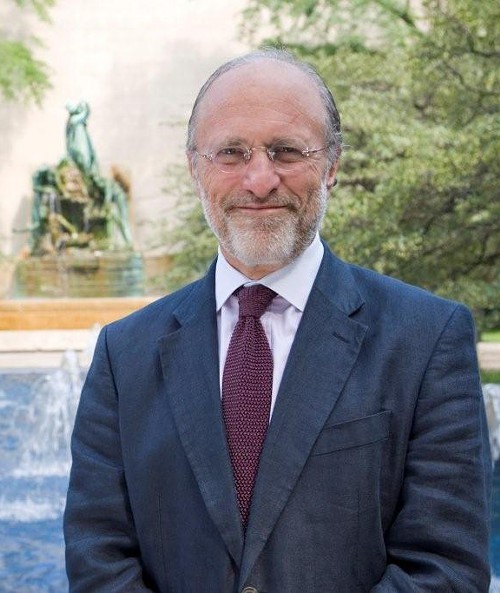
Interviewer: Dr. James Cuno
American Art Historian
Terence Ward
Author
Islam is the second largest religion in the world, with 1.8 billion adherents who follow many different sects and traditions. One sect, Wahhabism, has grown tremendously in recent decades, in large part due to Saudi Arabia’s financial backing. Wahhabism’s message is one of intolerance—including towards practitioners of other interpretations of Islam—and this has inspired much of the global terrorism today, including the recent attacks in Sri Lanka, which were claimed by ISIS.
In this episode, author Terence Ward discusses Saudi Arabia’s influence and Wahhabism’s impact. This is also the topic of his recent book The Wahhabi Code: How the Saudis Spread Extremism Globally.
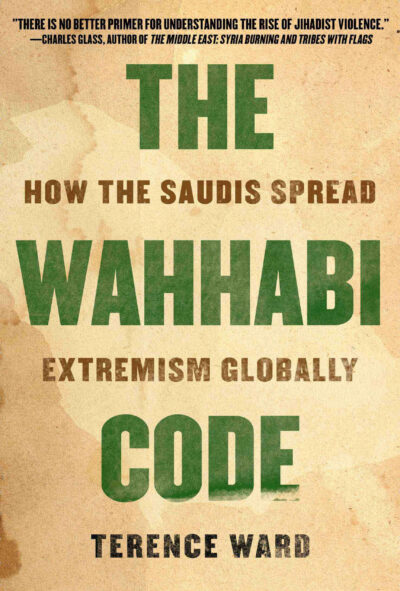
CUNO: In this episode, I speak with author Terence Ward about his new book The Wahhabi Code.
Terence Ward is a US-born author who grew up in Saudi Arabia, Iran, and Egypt, and worked for a decade with Middle East Industrial Relations Counselors. He has written multiple books on the region, is an international trustee for the World Conference of Religions for Peace, and a member of the Middle Eastern Institute in Rome. I took advantage of his recent visit to the Getty to speak with him about his new book, The Wahhabi Code: How the Saudis Spread Extremism Globally. This episode was recorded during a live event held at the Getty Center.
Good evening. Ladies and gentlemen, good evening. My name is Jim Cuno and I’m the president of the Getty Trust. It’s my pleasure to welcome you to tonight’s conversation with author Terence Ward, about his important new book, The Wahhabi Code.
Perhaps you saw the article in yesterday’s New York Times about the recent suicide bombings in Sri Lanka. It began like this: “When the Wahhabis came, with their austere ideology and abundant coffers, the town of Kattankudy yielded fertile ground. In this part of Sri Lanka, faith was often the sole surviving force during the civil war that raged for nearly three decades. Wahhabism, a hard strain of Islam blamed for breeding militancy, proposed a direct path to God, albeit it one that aimed to return the religion to the time of the prophet Muhammad.”
More than 350 deaths, including numerous children, resulted from that violence ten days ago, for which ISIS has recently claimed responsibility; ISIS, the self-named Caliphate, which is said to have been defeated weeks ago. This evening, we are going to learn about the history and ideology of Wahhabism and the role that Saudi Arabia is said to have played in perpetuating Wahhabism.
Our speaker tonight is Terence Ward, who was raised in Saudi Arabia, Iran, and Egypt. He’s now living in Florence and New York. And recently he published a book, The Wahhabi Code: How the Saudis Spread Extremism Globally, about which he will speak. Please join me in welcoming Terence Ward. [applause]
WARD: Good evening, Jim.
CUNO: You write in your book— you say that, “Today Israel and Saudi Arabia’s shared loathing of Iran has bound them together as allies. The risk of a Third World War is growing.” Is that an exaggeration?
WARD: Well, in the Middle East, the term “the enemy of my enemy is my friend” has always been a rule of the game. But we’ve had two wars in this part of the world, each one that cost a trillion dollars. Neither of them are over. But I’m reminded what Ambrose Bierce once wrote, “War is God’s way of teaching Americans geography.”
So in answer to your question, of course, Casandra, of course, made the same warnings. It’s a stark warning. I realize that. But both MBS and Mr. Netanyahu have been lobbying for an American strike for quite some time.
Another fact: No sitting president who is engaged in a war has ever lost a reelection bid. Recent history shows that America is quite competent at starting wars, but dramatically incompetent in ending them.
So any aggression with rupture our ties with the EU—we know that—with NATO, certainly. It will provoke conflict with both Russia and, I think more importantly, China, which is one of the major partners. But more dramatically, if any conflict erupts— And I bring you back, those of you who can remember, [to] the Gulf of Tonkin incident, which never happened, that provoked our entry into the Vietnam War.
Well, here, may I point out where that will be. And this little strait here is called the Straits of Hormuz. And that is where all of the oil that flows from Bahrain and Aramco out, from Qatar out, and from Iran out, and Iraq. If there is any exchange, you can be sure that those straits will be closed. And any owner of any tanker that is valued at $100 million, the first tanker that goes down, no owner is going to want to send their tanker through that spot.
So we will see shortages, we will see global markets panic, and we will also see, unfortunately, those straits closed until the shooting stops. So I think let us say it will be a time for lighting candles, unless cooler heads prevail.
CUNO: Yeah. Well, let me poke and prod again at another, perhaps, exaggeration, however important it is to remember the sources of the exaggeration. You say that, almost every terrorist attack in the West has had some connection to Saudi Arabia. Virtually none has been linked to Iran. I assume you mean that every foreign terrorist attack, since terrorist attacks in the United States have been overwhelmingly propagated by US citizens, beginning with the Oklahoma City bombing in 1995, which killed 198 people.
WARD: Exactly.
CUNO: So how do you square that claim that you made?
WARD: Okay. In writing this book, very few of the opinions are mine. I’ve tried to cite sources, to connect dots that have always been there. This is called curatorial journalism. Let me cite Fareed Zakaria, a Muslim American who, writing for the Washington Post, wrote these words. And it’s a dramatic truth, because you were right in your question, but there was one piece of information that was left out.
Which is according to the analysis, not of mine, of the Global Terrorism Database, which happens to be located at Kings College in London. And it is commanded by the professor Leif Wenar, who’s been following this issue for quite some time. He writes, “More than 94% of the deaths caused by Islamic terrorism since 2001 were perpetrated by Islamic State, al-Qaeda, and other Suni jihadists. Iran is fighting those groups, not fueling them. However, almost every terrorist attack in the West,” meaning Islamic terrorist attack in the West, “has had some connection to Saudi Arabia, and virtually none to Iran.”
And that tells us something, because we are about to careen into a war with Iran, perhaps in the next few months, and ostensibly, our president has accused that country for being the source of all terrorism in the world. And what this information informs us is something far different.
CUNO: Yeah. I guess I just didn’t want to let you leave us with the impression that we aren’t responsible ourselves for the overwhelming number of attacks on innocent civilians in this country; that this is not an imported problem.
WARD: Absolutely.
CUNO: Okay. I want you to map out this history that you’ve given us. You say that over the past three decades, the Saudis have launched five imperial projects in support of Wahhabism.
WARD: Yes.
CUNO: Pakistan in 1977; Afghanistan twenty years later; al-Qaeda’s financed global jihad, which led ultimately to 9/11; the development of ISIS, also known as ISIL or Daesh; and the development of a network of madrassas in Western Europe, funded by the Saudis. How much of this is planned by the Saudis, and how much of it is simply funded by them?
WARD: Let’s begin with the funding and stay with that, because as they always say “follow the money.” Let’s follow the money. In Pakistan, Zia-ul-Haq, a military general, takes over for Bhutto, immediately executes the president Bhutto, and installs martial law, and then installs the Sharia law. That in return, enormous sums of money arrived from Saudi Arabia. The first country in the Middle East to install Sharia law.
But along with that, shortly after, was the invasion of Afghanistan by the Soviet forces, to prop this socialist government there. At that point, a huge avalanche of refugees find themselves on the Pakistani western border. The Saudis offer, with funding, to create madrassas and to provide imams for those madrassas, to teach the young children.
That’s project number two, because those young children are called talib in Arabic. Talib means student. Taliban means the students. Flash forward ten years. These students, who have been trained in the Wahhabi doctrine then take Kabul. And in taking Kabul, they install that second, what I call the imperial project.
But the third is al-Qaeda. And remember, it was both American, but principally Saudi funding of jihadis who were sent there to fight against the heathen Soviets, the nonbelievers. The problem was that in so many of these projects—we saw it again in ISIS—what happened was what we call blowback, where bin Laden, Saudi, the majority of the fighters Saudi, who had all been on our side turned their guns.
And that becomes the third group. The fourth group was ISIS. Now, when I say a repeat, the same exact program took place in Syria. During that Arab Spring, all of a sudden there’s this clamor to unseat Assad. With whom, with what? The Saudis convinced our military and our CIA to allow them to send in jihadis. When those jihadis arrived, and also when the captive prisoners, Sunni soldiers who were in American prisons in Iraq, were radicalized by religious prisoners, they heard the magic word. Which was, the Wahhabi believe that all Shia, all Sufi, are heretics.
And hence, there is in the Wahhabi code, in the Wahhabi logic, there is a time to call them kaffirs, unbelievers. Takfir them, to condemn them, to excommunicate them. And in that action, they can be killed. And this was the fire that lit all across northern Syria.
And the last imperial project, of course, is what took place in Brussels. 1967, King Baudouin meets King Faisal in Brussels, asks him for a discount on oil. And why not? In return, he offers King Faisal the tropical pavilion for the first mosque in Brussels. That becomes a Wahhabi mosque because the imams were sent from Saudi Arabia. Within twenty years, there were seventy-seven mosques, Wahhabi mosques, within Brussels proper. All the young men who went into Paris that day and shot up so many innocent civilians on that Friday the 13th in November of 2015, all came from a little quarter in Brussels. And we know the name of that quarter called Molenbeek. So all to say that seeds have been planted. And unfortunately, chaos has come from those seeds.
Jim and the Getty Museum have explored the desecration of monuments in Timbuktu, as far away as northern Mali; they’ve explored the desecration of all of the Palmyra, here in north Syria; and then also we have the Bamiyan Buddhas here. All of these areas represent—from the al-Qaeda in the Maghreb to the Ansar al-Sharia in Sinai, which is a offshoot of ISIS; to Boko Haram here in Nigeria; to the al-Qaeda in southern Yemen; or even Al-Shabaab in Somalia—all of those groups adhere to the Wahhabi creed. They will call themselves the followers of Abdul Wahhab.
The fact that it is also the state religion of Saudi Arabia is problematic. But Saudi Arabia, in herself, has a different context to face. If you go to the far east, where all the oil sits and where I grew up with my brothers and our parents, all of that oil is on Shia territory. And if you then travel to Mecca or Medina up here, well, all of that is Sunni. And to say Sunni means it’s very different from the Wahhabi tradition.
And if we go through, let me just briefly expose to you some of these images of what is the fashion that you see in Saudi Arabia. The ladies are typically, from head to toe, covered. It’s a very conservative garb. But I want to point out that in this image here, this is in Raqqa, in Syria.
CUNO: And describe it for our podcast listeners.
WARD: Let me describe this, listeners. You have a poster that is in Raqqa, Syria, which was the capital of ISIS, that both shows the dress that a woman is meant to wear, and also the comportment that she is meant to give in— during the day. And strangely enough, I have another poster that was found in Libya, the exact same image.
And so my concern when I see images like this, I say to myself, “But is it possible that this is a coincidence? Or should we be saying that actually, Saudi culture has been exported to these countries?”
CUNO: Okay, well, let’s back to Wahhabism itself, and it’s history.
WARD: Yes.
CUNO: Dating back to Muhammad Abdul Wahhab, in the eighteenth century. Who was he? And what were the founding circumstances and development of the doctrine, the Wahhabi doctrine of Islam?
WARD: So Abdul Wahhab. We’re talking about 250 years ago. He was a passionate, very puritanical preacher, an imam who wanted to erase 1100 years of, shall we say, tradition and history. And you could even argue culture that had flowed into Islam over the years. Abdul Wahhab saw the practices that perhaps had come through the Ottoman period or through the Persian Gulf, he saw those as pollutants. He saw those as sort of, what he called bid`ah, innovations that had entered into the faith.
His idea was, he wanted to clean it completely. Which means go right back to the book and impose a very sterile, a very rash, a very puritanical view.
CUNO: From what position? Where did he have an influence?
WARD: So what he did was not only prohibit dance and music, he also prohibited the idea of praying for intercession. In the Catholic faith, you have people who pray to the Virgin Mary; they pray to Saint Antonio, if they lose their keys; if they’re going on a trip, they pray to Saint Christopher, who never existed, but that’s another story. But in the end, the idea of, say, the Sufis pray to their teachers. They have temples. They go, they make music, they will chant together.
The Shia tend to pray to their imams, their fallen saints. They ask Hussein or Ali for protection. Or Fatima, the daughter of Muhammad, is frequently sought after. The Sunnis will pray to Muhammad. In fact, they celebrate his birthday.
Abdul Wahhab says all of this is mamnu’, forbidden. All of this is actually shirk. And this word is terribly important as we go forward. Shirk means idolatry. A shirk is an idol. And to actually pray to an idol makes you a kaffir, an unbeliever.
And in one fell swoop, Jim, he gave Bedouins, who had been fighting back and forth with each other for centuries, he gave them a rallying cry. He gave them a license to attack their neighbors, whether they be Shia in the east or the Sufis to the west. But not only. They were given God’s grace to take their lives and to seize their property.
And there was a gentleman named Saud, who had his followers. So Abdul Wahhab sets a framework that frankly, you would’ve thought over time, would have minimized and would have somehow been softened. But what we’ve seen in the last fifteen years has been a hardening of this idea. That is why Sufi shrines are being blown up every other week in Pakistan, with innocents inside. Or Shia mosques are being detonated in parts of Syria. Or the Copts that are being attacked in Egypt.
This is totally new. It has never happened before, this inter-Islamic destructive forces. So the Wahhabis, in their purest state, will say that, “We are the true Islam, and everyone else is a fallen Muslim.” And if you look at the writings of ISIS leader Baghdadi, he says that. “We are the pure Wahhabis. The ones in Saudi Arabia have fallen. They’ve gotten soft. They drink, they smoke…But we were the pure ones.”
The first twelve books printed by ISIS, seven of them were the teachings of Abdul Wahhab. When the schools— All of the curriculum had to be burned when ISIS troops came in and took over towns. They had to replace it with something. What did they do? Well, they didn’t have the books, did they? They couldn’t have had their books. So they simply imported the books, the curriculum, from Saudi Arabia. What happened in the past, sadly enough, has informed all this violence in the future.
And I’ll just end by sending the first two major excursions out of Saudi Arabia to attack these so-called nonbelievers were in 1802, when the city of Karbala was seized by 10,000 Wahhabi followers, with the Saud leader charging the way. The shrine of the grandson of the prophet was ransacked. All of the gold was stolen. All of the diamonds, all the jewels in the shrine were taken. The city was put to the sword.
They went to Najaf; they did the same thing. Where Ali, the caliph, the fourth caliph, his tomb lies. And the same thing happened in Mecca, about four years later. They sacked Mecca and destroyed shrines, they destroyed tombs. This obsession with shirk and idols lies behind the whole theme of our talk tonight.
CUNO: So I want to round out some of this and give some framing to it. ’Cause there’s something I don’t quite understand about it. So isn’t ISIS, in its claims to have founded a caliphate, contradictory, or at least competitive with Wahhabism? Because it would seem to be at odds with Saudi Arabia, since a caliphate aspires to ruling over people and territory and is not just an ideology, a different kind of and a conservative kind of Islam, but an actual governing entity.
So here you’ve got a powerful nation-state, Saudi Arabia, and you’ve got radicalized individuals who are claiming for themselves a caliphate, with a caliph. How is that can coexist? I mean, I know that when it was founded in the middle of the eighteenth century, there was an Ottoman caliph in the Ottoman Empire.
WARD: Yeah, the key in understanding this nuance is that no one is Saudi Arabia, none of the ruling family refer to themselves as a caliph. So their title is only Keeper of the Two Holy Mosques. And the important thing to realize is the thing caliph means successor. So the idea was, who was the successor…
CUNO: Successor to the prophet.
WARD: …to the prophet?
CUNO: To the prophet, yeah.
WARD: Exactly.
CUNO: It would seem that in this case, you have the Saudis allowing for there to be a caliphate, a self-proclaimed caliph and a caliphate, so long as they can fund it, and by their funding of it, control it. That’s the kind of gamble they’re taking, right?
WARD: And sometimes the gamble turns and there’s blowback. And what was a very enthusiastic excitement about the emergence of ISIS at the beginning then became an enormous source of concern, when some of those Saudi fighters would return to Saudi Arabia and try and target government installations or police stations. And then all of a sudden, what was thought to be contained in Islamic State started to spill over into the Saudi Kingdom. That’s when the Saudi Kingdom turns on ISIS, realizes it’s a terrible mistake, and starts to persecute within.
But in none of the comments that I’m writing is there the suggestion that this is a designed image or plan from the central government with great clarity. You have to realize that as Abdul Wahhab needed to have a political ruler to give allegiance to—meaning the Saud family—they, in turn, had to honor his faith. And in Saudi Arabia, it is the Wahhabi base, if you will, that has to be always dealt with. So there are countless charities, Islamic charities—the World Muslim League is a classic charity that has funded madrassas and funded imams from as far away— to Indonesia to Morocco.
The estimate is that over $10 billion has been spent on Leif Wenar of Kings College considers this probably the greatest ideological campaign in history. So getting back to your question about the caliphate and how does that apply, there have been times in Islamic history when there have been two caliphs, when the Umayyad caliph in Spain was in power at the same time the Fatimid Caliphate was very much flourishing in Cairo.
It’s that what Baghdadi announced was this new state. And it caught many people in the Islamic world by surprise. And some were very excited about. Now, you can imagine. In America, we have different kinds of politics. There are those who you would say are the evangelists, who deeply, deeply want cultural legislation imposed here in these United States. Well, you can imagine in Saudi Arabia, great enthusiasm among some rather conservative Wahhabis, who found ways to channel their money and funnel their money into ISIS through various charities.
That is without a doubt. But the money of arms— the amount of arms— There’re American weapons that arrived. In one case, within two weeks from leaving the factory in Ohio, it was in the hands of fighters of ISIS. All of those wonderful Toyota Jeeps that we saw continually on display, those were American Jeeps, bought for the moderate fighters that we never could find. Because in fact, this was not meant to be a battle of moderates. This was really a Wahhabi project. So these two could coexist. But the caliphate of ISIS, in its strength, really wanted, finally, to go into Saudi Arabia.
CUNO: Yeah. So what keeps Saudi Arabia from proclaiming itself a caliphate?
WARD: Cannot. Couldn’t. I mean, impossible. First of all, there’s no lineage with the prophet at all. None. And that is always one concern. Also, remember—Mecca has only been in the hands of the Saudi regime, the Saud family, for only ninety-four years. It has been a very short period of time. All of this is new for Islam.
Now, who held Mecca before? This family. This gentleman was known as Sharif Hussein, the last guardian of Mecca, from the Hashemite Dynasty. And he instead was cosmopolitan, spoke four languages, had a vision that all the Arab world, after the First World War, would be united in a kingdom that he would, as a constitutional monarch, rule, but with a house of commons and a house of lords. And his role, Sharif Hussein of Mecca, the Hashemites had that direct link to the prophet.
He instead found himself in a very unfortunate position, because in the moments after the war, there was, shall we say, the smell of oil was in the air. And when there’s smell of oil in the air and it was time to decide the fate of that Middle East, different decisions were made.
CUNO: So he’s there in 1924. That’s the Saud family comes to power, right? Oil comes in the 1930s or as early as the twenties and thirties. And with that oil money then comes opportunism. Not only on their part, but on behalf[?] of some of the other nation-states and institutions. Tell us about the role of the French and the British [inaudible].
WARD: Well, what happens with the French and the British, it’s one of these moments where we say, “I say, Old Boy, the generals are outside. But shouldn’t we sort of divide this place up? I mean, why don’t you—
CUNO: After World War I, 1918.
WARD: Yes. At Versailles, after the First World War, the decision is made. The French will have authority over Lebanon and Syria, and the British will have authority over the mandate of Palestine, of what then was later called Transjordan, and a newly created state called Iraq that Gertrude Bell created by pulling a ruler out of her purse and just drawing straight lines.
Now, when our friend here heard about this betrayal— Because remember, when Lawrence of Arabia rode, he wasn’t leading the Arab revolt. He was one of many. But all of the riders came from the Hashemite Kingdom. And they were battling the Ottomans. He expected to be honored. Instead, what the British did was to tell the Sauds that were in central Arabia, “Do not attack our eastern borders. Do not attack Kuwait,” which was a protectorate, “do not attack the Trucial States—Abu Dhabi, Dubai, Sharjah, Fujairah, all of those Trucial States. Don’t touch Qatar. That also is a protectorate. But you can turn west, old boy, if you wish.”
And so the warriors, the Ikhwan, or the Wahhabi warriors, came into Mecca and they take Mecca for the first time. They have the entire city in their hands. And it’s then that the second wave of destruction begins. They destroy the house of Fatima. They destroy the house of the wife Khadija.
And of course, for centuries, pilgrims would go and perhaps say a word at their gravesites. All leveled. Absolutely blown apart. And if you think about the betrayal that the British did in order to protect that interest of money that would be coming with the new discovery of the oil—Churchill at that time had already shifted all of the Royal Navy from coal to oil. So this was key for the Brits.
And the sacrificial lamb was Mecca, because our Sharif Hussein also, as we say, read the Financial Times. And if he read the Financial Times, he probably would’ve done different things with his money. And he probably would’ve been a different kind of monarch, and the whole Middle East would have looked terribly different than it did today, perhaps a bit more independent. And oh, I’m sorry, we can’t have that.
And so Mecca finds herself—a city that used to have, for a thousand years, Sufi communities living within the midst, where there would be music and drum beating and dancing into the night, with chants, where you had people coming from as far as Samarkand to Java, to find their little community where their sacred teacher was buried. This mystical Islam, which views all of life, all of nature as sacred, as God’s creation—all of that is wiped out under the Saudis. Under the Wahhabis, destroy it, because that is where worshipping of idols takes place.
This is Mecca in 1890. You can see how this city really was the center of, one would even argue, the Sufi universe. Because in Islam, the popular traditional Islam, was this larger Sufi beliefs, these popular beliefs that have been handed down in each culture, whether it be in Tunisia, whether it be in Southern India. These are images that I’m showing you, before the conquest in 1924. And you can see how it was a very Medieval city, fortified city. All of these were destroyed. And these were shrines for the various members of the prophet’s family, and all of them were razed to the ground.
And this is Mecca as we see it today, a city that is almost vertical. Huge high-rises, parking lots on top of Khadija’s home, as I mentioned. And in this center is just one massive shopping center after another, after another, after another. All of the past erased.
And for most Muslims, they will lament to you and with you, if you ask them, “How do you feel about the present state of Mecca today?” There’re very few who speak terribly proudly about the Big Ben clock tower that stands above the Ka’aba that you see here.
CUNO: Well, tell me, then, having painted this Islamic of the Saudi regime, tell me what you think about the West’s economic and even political self-interest in Saudi Arabia, and how they have kept Western leaders from criticizing the Saudi leadership. And in our case, our government’s case, in denying the killing of the Saudi journalist Jamal Khashoggi.
WARD: Well, that’s really where the dots start to connect. The British, of course, after the Second World War, realized they could not contain all of their empire. And so FDR, on a naval vessel, the USS Quincy, meets, in 1945, Abdul Saud, who is the founder of the Saud dynasty, of the Saudi Kingdom. On that boat, two things are agreed. The first is, all that oil will flow freely and openly. In return, the family, Saud’s family, will be protected. And that Quincy Agreement has been held by Democrats and Republicans till this day.
Also, every administration has honored that agreement. The British, of course, had nominated Abdul Aziz “sir.” But let me frame this. If I was to tell you instead, in Washington, D.C., there are at least ten PR firms, all the best and the most costly on the Saudi payroll. How many lobbyists would you imagine are on the Saudi payroll? By lobbyists, we’re talking about ex-senators, congressmen, military generals, captains of industry. Any number? 146.
The amount of money that is paid by Google to influence our Congress last year, was a staggering sum. The Saudis paid more than three times that amount to influence our opinions here in this country.
So I think what we can argue is that yes, we may not have seen the dots connected, but there’s a reason. And stories are killed in editorial boardrooms, truths are hidden, dots are not connected, and sleights of hand are offered. Instead of invading one country, we invade another country—for instance, when we invaded Iraq. So I would say between the arms manufacturers that are profiting so greatly by what they sell, by this Quincy Agreement, and by the money spent by the Saudis, this silence has remained fairly intact.
CUNO: Well, I want to have a chance to ask you the most important question of all, the origin of the book, and how it came about from the conversation you had with your niece.
WARD: Well, that’s a story that actually gets to the heart of the matter. This is not my obsession, by any means. It is a part of the work that I know and I’ve been troubled with. I have a lot of Muslim friends who have been heartbroken over what’s been happening. And they’re absolutely shocked to realize that 1.5 billion Muslims have been accused for the work that could possibility be put at the hands of just a few.
And my niece, in Florence, came to me one day and she said to me, “Uncle, what is happening in that part of the world?” And I told her, “Look, I realize you’re worried.” And it had just been after Paris and all of the massacre that took place in Paris. And she said to me, “Can you please help my friends. They’re all so nervous. They want to know.” And I said, “Fine. Come back in a week and I’ll try and tell you what I know.” And when I came back in a week, I was told to go into this large archive. And I was perplexed by that. But when I entered inside, Jim, there were seventy people there.
And in front were the three young girls, right, with my niece Fioreta, and the three friends of hers in the front row. And I thought, my God, what’s happening? Look at this anxiety that’s crossing all the generations. And I started to speak as I’m doing now. I showed the same images to help them understand that this wasn’t something that just happened, but actually, there were roots. And then my brother-in-law said, “You have to write this down.” And I wrote it and it was translated, of course, in Italian. And I went to various schools and helped them.
So it really began as a hope to just very simply, very, shall we say, harmoniously, just to clarify all of that chaos that we’ve been thrown into.
CUNO: Yeah. Let’s go to the audience. We have a microphone here. And I think be[?] rushing right down to your seat. Here, three seats up.
WARD: If there’s any message I hope you can take away from this, 1.5 billion Muslims have nothing to do with anything that we have seen for the last seventeen years, from 2001 until today. What happened was that a small sect in the center of Arabia 250 years ago developed a very dangerous ideology that has now been playing out.
This is the issue at hand. If we can learn to pronounce the word Wahhabi, you exonerate 1.5 billion people and an entire faith. The reality is that we have been fed these lies for the last eighteen years. We have blamed 1.5 billion people who, for the most part, all worship a traditional, popular kind of Islam that I was trying to describe. They do not want to see their faith Wahhabized, thank you very much. The Sunnis do not want to see their faith Wahhabized. They do not see eye-to-eye with the Saudi vision.
And I’m not pointing fingers at the government and saying they’ve done it. There is a tremendous amount of money in that country. And we don’t know where that money is going. Go back and look in my book. You’ll see Hillary Clinton saying, “We know that funds are pouring out of Saudi Arabia and Qatar into ISIS. We can’t stop them.” But you know, they’re supposed to be our allies. Well, it’s called a double game. Precisely because they have their fundamentalists. They have their own base that are dangerous and could turn on them, just as our president here has his base and just like Bibi Netanyahu has his base. And I would make an argument that if there is an alliance at foot, it is those three bases—the conservative, very religious orthodox fundamentalist, in all three of these countries that I’ve mentioned, America, Israel, Saudi Arabia—who are absolutely united. The worldview is very clear. And the funds are there.
So some of it is to quiet that base. And when you keep the base happy, as we’ve seen when we have a president who says, “Well, there were good people on both sides.” What happens the day after he says that? Somebody goes into a synagogue and opens fire. I mean, these are the reactions. And the Saudis were desperately concerned when ISIS started to attack within the kingdom. And that’s when the tide was turned.
We come back to Khashoggi. The one thing that upsets the Saudi regime more than anything else is not that Erdogan found this new voice and started accusing them. No, those rivalries you have. It’s that Erdogan didn’t take their money and shut up. He didn’t be quiet. He kept at it. And that, the Saudis will never forgive him. Because this is a country that never went through colonialism. As the Ambassador to Saudi Arabia said to me in Washington when I spoke the other day, he said that this is a country that sees people in two forms. Themselves, Saudis, and employees. Okay?
CUNO: Well, let me just, if I could. I want to bring it back to the very beginning of the conversation that we had and to the work of the Getty. Zahran Hashim, who’s the alleged organizer of the attacks in Sri Lanka and the founder of an organization called the National Thowheeth Jama’ath, is said to have organized attacks on Buddhist sculptures, lopping off parts of their faces and hands, before he got involved in the attacks that resulted in those more than 350 deaths. Police in Manunela[sp?], a central Sri Lankan town, arrested thirteen people for damaging four sculptures before the attacks.
The question many journalists have asked is, what relationship is there between the two kinds of violent attacks, on cultural heritage and on the lives of those who profess a cultural identity with those cultural heritage and what they represent? For the better part of three years now, the Getty has organized many meetings with a wide range of experts who can help shed light on this perplexing problem. We’ve talked with cultural historians, museum directors, archaeologists, ambassadors, and military leaders, security experts, political scientists, medical doctors, humanitarian and civil society leaders, and the former Director General of UNESCO, Rita Bokova.
We have published two occasional papers on this topic, as part of an ongoing series of occasional papers on cultural heritage policy. And you can download these papers via our website at www.Getty.edu/publications/occasional-papers.
And our goal here in all these conversations, in all these meetings we’ve had, with another one coming up next week, and with publications that we’ve produced, is to develop and publish a legal and political framework for the protection of cultural heritage, for all of the reasons they deserve protection, including, as we have learned tonight, because there is a direct link between the destruction of people’s culture and the murder of the people themselves.
It was said by Heinrich Heine in the early part of the nineteenth century, a German-Jewish poet, said, “First they burn the books, then they burn the bodies. And there’s a direct link. Which I think can be demonstrated, about the willingness to destroy a few Buddhist sculptures and then ending the lives of 350 innocent civilians thereafter.
Anyway, Terence, that’s why we’ve asked you to come here and to illuminate this story on The Wahhabi Code for us. So thank you Terence.
WARD: Thank you.
Originally published by The Iris, 07.24.2018, under a Creative Commons Attribution 4.0 International license.
About the Author