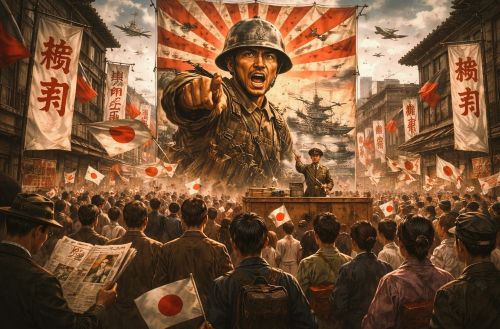
During World War II, Japan’s government tightly controlled news, radio, and propaganda to shape public perception, sustain morale, and frame the war as inevitable victory.

By Matthew A. McIntosh
Public Historian
Brewminate
Introduction: Information as a Weapon of War
Modern warfare has never been fought solely on battlefields. Governments engaged in large-scale conflicts have long recognized that the management of information can be as strategically important as military operations themselves. During periods of total war, the control of news, communication, and public communication becomes a powerful instrument for sustaining morale, legitimizing political authority, and mobilizing society for prolonged conflict. By shaping how citizens understand military developments and national objectives, governments engaged in war attempt to align public perception with the strategic needs of the state. Information itself becomes a weapon, deployed to reinforce unity, suppress dissent, and maintain confidence in eventual victory.
The case of Imperial Japan during the 1930s and World War II illustrates this dynamic with particular clarity. As Japan expanded its military presence across East Asia and the Pacific, the government increasingly treated the management of information as a central component of wartime governance. Newspapers, radio broadcasts, films, and educational materials were closely supervised by state institutions, ensuring that the narratives reaching the public reflected official priorities. Military victories were celebrated as evidence of national strength and moral purpose, while unfavorable developments were carefully filtered or reframed to prevent damage to public morale. Through these mechanisms, the Japanese state sought to maintain a unified national narrative in which the war appeared both justified and destined for success.
This expanding system of media regulation was closely connected to the political transformation of Japan during the interwar period. The growing influence of military leaders within the government coincided with the expansion of bureaucratic institutions responsible for regulating media and public communication. Agencies such as the Home Ministry and the Cabinet Information Bureau exercised increasing authority over the press, issuing guidelines that limited what journalists could report and how events were to be interpreted. These policies reflected the belief that unrestricted reporting could undermine national unity at a moment when the state required complete social mobilization. As the war intensified, the relationship between the state and the media became progressively more centralized, transforming the flow of information into an extension of wartime policy.
Wartime Japan employed censorship and propaganda to shape public understanding of the conflict between the 1930s and 1945. By controlling the dissemination of news and framing military developments within narratives of sacrifice and inevitable victory, the government attempted to sustain popular support even as the strategic situation deteriorated. The study of these practices reveals how the management of information functioned as a critical dimension of wartime state power, demonstrating that the struggle for public perception can become as consequential as the struggle for territory.
Political Transformation: Militarization and the Rise of the Wartime State
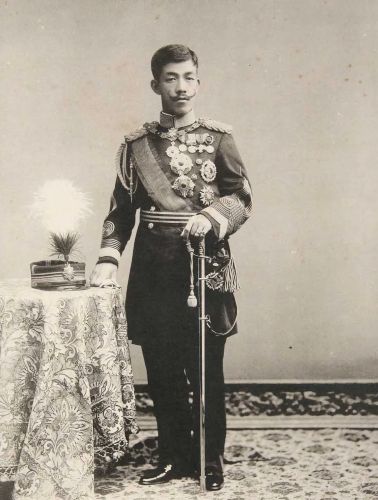
The expansion of information control in wartime Japan emerged from broader political transformations that reshaped the structure of the Japanese state during the interwar period. In the decades following World War I, Japan experienced a period of parliamentary politics sometimes described as “Taishō democracy,” characterized by competitive parties and expanding public participation in political life. Political parties gained influence in the Diet, and universal male suffrage was introduced in 1925, giving millions of Japanese citizens a formal voice in national politics for the first time. Newspapers and political organizations flourished during this period, contributing to a more open public sphere in which debates about economic policy, foreign relations, and social reform could take place. Yet this political openness existed alongside persistent structural tensions. The political system remained constrained by the authority of the emperor, the influence of elite bureaucratic institutions, and the privileged position of the military within the constitutional framework. Economic instability, social unrest, and dissatisfaction within segments of the armed forces gradually eroded confidence in civilian political leadership. By the late 1920s and early 1930s, the balance of power within the Japanese government had begun to shift toward institutions closely aligned with the military establishment.
The Imperial Japanese Army and Navy possessed a unique position within Japan’s constitutional framework. Under the Meiji Constitution, the military reported directly to the emperor rather than being subordinated to civilian authority in the same manner as other government ministries. This structure granted military leaders significant governmental influence, allowing them to shape national policy and exert pressure on civilian governments. The requirement that the ministers of the army and navy be active-duty officers further strengthened the political leverage of the armed forces, since the military could effectively bring down a cabinet by refusing to provide an officer to fill these positions. Military leaders were able to exert increasing influence over foreign policy and strategic planning. Officers within the armed forces increasingly argued that Japan’s survival depended on territorial expansion and greater national mobilization. These views were shaped in part by anxieties about resource scarcity and geopolitical competition, particularly as Western colonial powers maintained extensive empires across Asia. As global economic crises intensified competition for markets and raw materials during the early 1930s, expansionist arguments gained increasing traction among policymakers and the broader public.
The invasion of Manchuria in 1931 marked a turning point in this transformation. Acting without full authorization from the civilian government, elements of the Japanese Army staged the Mukden Incident and used it as a pretext to occupy the region. The success of this operation and the establishment of the puppet state of Manchukuo strengthened the political position of the military while weakening the authority of civilian leaders who had failed to restrain it. International criticism of the occupation, including Japan’s eventual withdrawal from the League of Nations in 1933, further reinforced the perception among senior officers that Japan should pursue an independent path free from foreign pressure.
Domestic politics during the 1930s increasingly reflected the growing power of the military establishment. Several assassination attempts and coup plots carried out by radical officers demonstrated the intensity of political tensions within the state. Although these incidents were not always successful, they contributed to an atmosphere in which civilian politicians became increasingly cautious about confronting military leaders. Governments that appeared insufficiently supportive of expansionist policies risked political instability or loss of military cooperation, further strengthening the influence of the armed forces over national decision-making.
As Japan moved toward full-scale war in China after 1937, the government adopted new measures designed to mobilize society for prolonged conflict. Wartime mobilization required not only military coordination but also the integration of economic production, labor, and public communication into a unified national effort. Legislation such as the National Mobilization Law of 1938 granted the state sweeping authority over industrial output, resource allocation, and labor deployment, effectively placing large sectors of the economy under government supervision. The state intensified efforts to cultivate ideological unity through education, propaganda, and public messaging that emphasized loyalty to the emperor and devotion to the national cause. Newspapers, publishing houses, and broadcasting institutions were increasingly expected to align their reporting with the objectives of the wartime government. Within this framework, the management of information became an essential component of national mobilization. Officials recognized that sustaining support for an expanding war effort required careful control over the narratives presented to the public, ensuring that reports of the conflict reinforced confidence in Japan’s mission and minimized doubts about the direction of the war.
The result was the emergence of a wartime political order in which military priorities shaped the direction of government policy and public communication alike. The state increasingly viewed newspapers, radio broadcasts, and other forms of media not as independent channels of information but as instruments that could reinforce national unity and mobilization. As the conflict expanded across East Asia and the Pacific, this transformation laid the institutional groundwork for the extensive system of censorship and propaganda that characterized Japan’s wartime information environment.
Censorship Institutions: The Machinery of Information Control
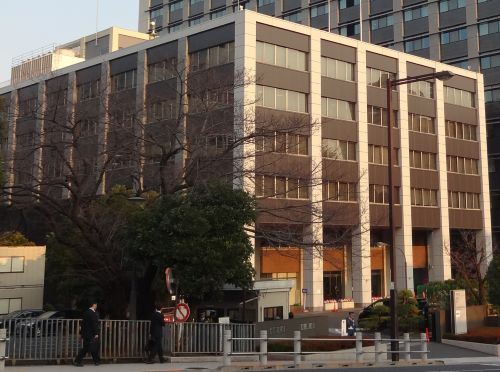
As Japan’s wartime state expanded during the late 1930s and early 1940s, the regulation of information became increasingly institutionalized through a network of government agencies tasked with supervising media and national communication. Officials recognized that modern warfare required not only military mobilization but also the careful management of public perception. Newspapers, radio broadcasts, film, and printed materials served as primary channels through which the population understood the progress of the war. By regulating these channels, the state sought to ensure that information circulating within Japanese society reinforced national unity and confidence in the government’s leadership. The emergence of formal censorship institutions reflected the belief that uncontrolled reporting could weaken morale, reveal strategic vulnerabilities, or encourage criticism of wartime policies.
Central to this system was the Cabinet Information Bureau, which functioned as the primary coordinating body for wartime propaganda and media supervision. Established in the late 1930s and expanded during the war, the bureau worked closely with military authorities and civilian ministries to guide the flow of information throughout the country. It issued directives to newspapers and broadcasters outlining how major events were to be reported and what subjects required careful handling. These guidelines shaped not only the factual content of reports but also the language and tone used in describing the war. Journalists were expected to present the conflict in ways that emphasized national unity, military determination, and the righteousness of Japan’s cause.
The Home Ministry also played a crucial role in maintaining oversight of the press and publishing industries. Through its police and administrative networks, the ministry monitored newspapers, magazines, and other printed materials to ensure compliance with government directives. Editors who failed to follow official guidelines risked warnings, suspension of publication, or other administrative penalties. This regulatory framework encouraged media organizations to practice extensive self-censorship, anticipating government expectations and adjusting their reporting accordingly. In many cases, journalists collaborated with state authorities to ensure that the information reaching the public aligned with government narratives.
Formal censorship was reinforced by the practice of press briefings organized by military authorities and government officials. These briefings provided journalists with authorized information about military operations while simultaneously limiting access to independent sources of news. Reporters relied heavily on these official statements when preparing articles for publication, which allowed the state to shape the interpretation of events before they reached the public. The information distributed through these briefings was often carefully structured, emphasizing victories, tactical progress, or acts of bravery by Japanese soldiers. When military operations produced unfavorable outcomes, officials frequently adjusted the language used in official communications, framing setbacks as temporary reversals or strategic withdrawals rather than outright defeats. Journalists who attended these briefings were expected to rely on the information provided and to avoid speculation that might contradict official statements. In this way, press briefings functioned as a mechanism through which the government could maintain centralized control over the narrative of the war while still presenting the appearance of regular news reporting.
The institutional structure of censorship also extended into emerging forms of mass media. Radio broadcasting, which had become an increasingly important source of information during the 1930s, was closely supervised by state authorities. Broadcast content was expected to support wartime mobilization, often including speeches, patriotic music, and reports celebrating military achievements. Film production similarly fell under government oversight, with wartime cinema frequently used to promote themes of sacrifice, loyalty, and collective duty. Through these channels, the state could reach large audiences with carefully crafted narratives that reinforced the ideological foundations of the war effort.
Together, these institutions formed a comprehensive system designed to manage the flow of information across Japanese society. By coordinating the activities of ministries, military authorities, and media organizations, the government constructed an information environment in which official narratives dominated public discourse. This machinery of censorship did not eliminate all uncertainty or private doubt, but it significantly shaped the range of information available to ordinary citizens. Within the context of total war, the regulation of communication became an essential component of the state’s broader effort to mobilize the population and sustain confidence in the national cause.
Propaganda and the Construction of Wartime Narrative
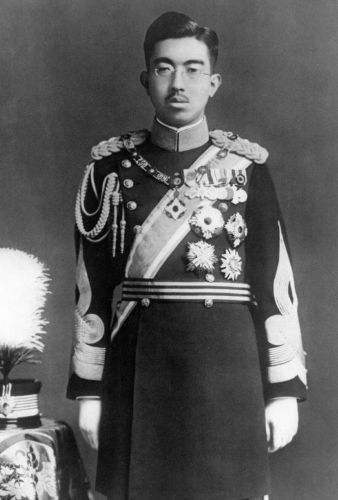
While censorship limited the circulation of undesirable information, propaganda actively constructed the narrative through which the war was presented to the Japanese public. Wartime propaganda did not simply conceal military realities but offered a coherent interpretive framework that explained the purpose of the conflict and the sacrifices required to sustain it. Government messaging emphasized themes of national unity, loyalty to the emperor, and the moral righteousness of Japan’s cause. By presenting the war as both necessary and historically justified, the state sought to cultivate a sense of shared mission that extended across social classes and regional divisions. Propaganda also framed the conflict within a broader narrative of national destiny, portraying Japan as a society uniquely suited to lead and protect Asia. Through repeated messaging across multiple media platforms, the government attempted to shape not only what citizens knew about the war but also how they understood their personal role within it. The resulting narrative environment encouraged individuals to interpret wartime hardship as meaningful participation in a collective national struggle.
Central to this messaging was the symbolic authority of Emperor Hirohito. Wartime propaganda frequently invoked the emperor as the spiritual center of the nation, encouraging citizens to view their personal sacrifices as acts of devotion to the imperial household. Public ceremonies, educational materials, and media broadcasts reinforced the idea that Japan was bound together by a unique moral and historical relationship between the emperor and the people. This emphasis on imperial loyalty helped frame the war not merely as a geopolitical struggle but as a sacred national endeavor in which participation carried deep moral significance.
Propaganda also portrayed the conflict as part of a broader historical mission within Asia. Government messaging frequently emphasized the concept of the “Greater East Asia Co-Prosperity Sphere,” presenting Japan as the leader of a regional effort to liberate Asian societies from Western colonial domination. Through newspapers, films, and public exhibitions, the state depicted Japanese expansion as a movement toward regional unity and shared prosperity. This narrative sought to legitimize military campaigns across East and Southeast Asia while encouraging the domestic population to view the war as part of a larger civilizational struggle.
Mass media played a crucial role in disseminating these narratives throughout Japanese society. Newspapers published reports highlighting battlefield successes, heroic acts by soldiers, and the resilience of the Japanese people under wartime conditions. These publications frequently featured stories designed to illustrate courage, discipline, and unwavering loyalty among both soldiers and civilians. Radio broadcasts delivered government messages directly into homes, combining official announcements with patriotic programming that reinforced national morale. The emotional tone of these broadcasts often emphasized determination and unity, encouraging listeners to view the war effort as a shared national responsibility. Films produced during the war further amplified these themes, depicting soldiers and civilians working together in pursuit of victory and portraying sacrifice and endurance as essential elements of national character. Through these channels, propaganda reached a wide audience and helped shape the emotional atmosphere of wartime Japan.
The narrative constructed through propaganda also emphasized the virtues of discipline, endurance, and collective responsibility. Citizens were encouraged to contribute to the national mobilization through labor, resource conservation, and participation in civil defense activities. Government campaigns promoted practices such as rationing, industrial production, and neighborhood mobilization as expressions of patriotic duty. Educational institutions reinforced these expectations by integrating wartime ideology into school curricula, teaching students that personal sacrifice for the nation represented the highest form of civic virtue. Children learned lessons that emphasized obedience, loyalty, and readiness to serve the state, while adults encountered similar messages through workplace programs and public ceremonies. These ideological efforts reinforced the belief that victory depended not only on military success but also on the willingness of the entire population to endure hardship for the national cause. By linking everyday behavior to the broader objectives of the war, propaganda encouraged individuals to interpret personal sacrifice as a meaningful contribution to national survival.
Through these overlapping forms of messaging, wartime propaganda created a powerful environment that framed the conflict in moral, historical, and emotional terms. By linking the war to imperial loyalty, regional liberation, and collective sacrifice, the Japanese state attempted to sustain public commitment to the war effort even as the conflict expanded in scale and intensity. The construction of this narrative demonstrates how propaganda functioned not merely as persuasion but as a structured effort to shape the worldview through which the population interpreted the unfolding events of the war.
Managing Defeat: Reframing Military Setbacks
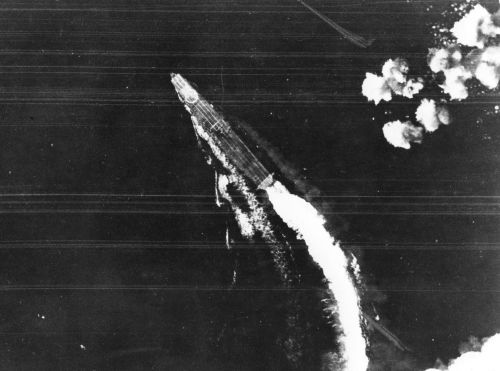
As the course of the Pacific War shifted against Japan after 1942, the wartime information system faced a growing challenge. Early victories in Southeast Asia and the Pacific had allowed the government to present the conflict as a series of decisive successes that demonstrated the strength and inevitability of Japanese expansion. However, the strategic situation changed dramatically following critical battles such as Midway and the prolonged campaign in the Solomon Islands. These setbacks threatened the carefully constructed narrative of unstoppable progress that had dominated wartime propaganda. Rather than openly acknowledging the changing balance of power, the Japanese government intensified its efforts to manage the interpretation of military developments presented to the public.
Official reporting increasingly relied on selective disclosure and careful framing. Newspapers and radio broadcasts often emphasized tactical details that portrayed Japanese forces as resilient and determined, even when strategic objectives had failed. Military communiqués frequently highlighted acts of bravery or temporary gains while minimizing the scale of losses or the significance of retreats. Reports might describe engagements in ways that suggested continued operational strength even when units had suffered severe casualties or had been forced to abandon strategic positions. In many cases, government announcements avoided precise numerical data about losses, instead focusing on symbolic elements of resistance or the supposed determination of Japanese troops. The language used in official announcements became an important tool in shaping perception, with defeats often described in terms that suggested continued resistance rather than strategic collapse. By presenting military setbacks as episodes within a longer struggle rather than signs of deteriorating prospects, the wartime information system sought to sustain confidence in the leadership of the state and the eventual success of the war effort.
The growing gap between official narratives and the realities of the battlefield became particularly pronounced during the later stages of the war. As Allied forces advanced across the Pacific and strategic bombing intensified, maintaining the image of inevitable victory became increasingly difficult. Government messaging adapted by emphasizing endurance and sacrifice rather than rapid military success. Public communications stressed the idea that hardship and loss were necessary components of a long struggle for national survival. By shifting the narrative away from immediate victory and toward collective perseverance, the state attempted to preserve morale despite worsening military conditions.
Propaganda increasingly celebrated acts of extreme sacrifice as symbols of national resolve. Stories highlighting the courage of soldiers facing overwhelming odds circulated widely in newspapers and broadcasts. Accounts of defensive battles, heroic last stands, and determined resistance against technologically superior enemies were presented as evidence of the moral strength of the Japanese people. Such narratives portrayed sacrifice not as tragedy but as proof of devotion to the emperor and the nation. This emphasis became particularly visible in the final stages of the war, when government messaging promoted the idea that unwavering commitment could compensate for material disadvantages. Public discourse often framed death in battle as an honorable contribution to the survival of the state, reinforcing cultural ideals of loyalty and duty that had long been associated with military service. The glorification of sacrifice therefore functioned both as a moral appeal and as a psychological strategy designed to reinforce the determination of the population during a period of mounting crisis.
Despite these efforts, the limitations of wartime information control gradually became apparent. As shortages intensified, cities experienced devastating air raids, and families received news of casualties, the discrepancy between official optimism and lived experience grew increasingly difficult to ignore. Rumors circulated through personal networks, and many citizens recognized that the war was not progressing as official statements suggested. The experience of these final years illustrates the inherent tension within systems of wartime propaganda: while the state can shape narratives and restrict information, it cannot fully control how individuals interpret the realities unfolding around them.
Public Reception and the Limits of Propaganda
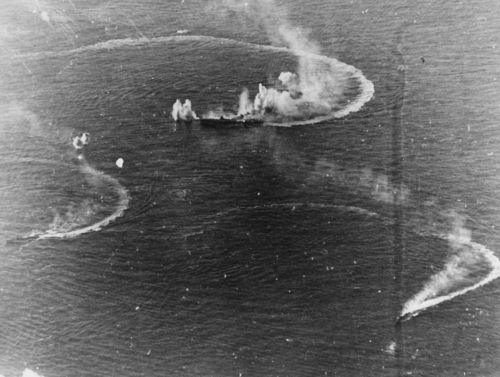
Although the Japanese wartime state invested enormous resources in censorship and propaganda, the reception of these messages among the population was neither uniform nor entirely predictable. Systems of wartime propaganda are most effective when state narratives align closely with everyday experience, but the conditions of total war often generate realities that are difficult to conceal indefinitely. In Japan, the government sought to shape public understanding of the conflict through tightly managed information channels, yet the lived experiences of ordinary citizens gradually complicated the image of unbroken national progress. As the war continued, individuals encountered evidence that sometimes reinforced official messaging but at other times raised doubts about the accuracy of state narratives.
During the early years of the conflict, propaganda proved relatively effective in sustaining public confidence. Rapid Japanese advances across East and Southeast Asia during 1941 and 1942 appeared to confirm the government’s portrayal of military strength and national destiny. Newspapers reported victories in dramatic language, and radio broadcasts celebrated the expansion of Japanese influence across the region. For many citizens, these developments seemed to validate the claim that Japan was achieving its strategic objectives. The convergence of military success and official messaging helped create a powerful sense of national momentum during the initial stages of the war.
The gap between propaganda and lived reality began to widen. Economic strain, shortages of consumer goods, and the mobilization of increasing numbers of men into military service affected daily life across Japan. Families received news of casualties from the front, and communities experienced the growing disruptions of wartime mobilization. These developments did not necessarily produce immediate resistance to official narratives, but they created conditions in which individuals could begin to question the optimistic tone of government messaging. Private conversations, personal letters, and informal networks of communication allowed people to share information that sometimes contradicted the more optimistic picture presented in official reports.
The intensification of Allied bombing campaigns against Japanese cities further exposed the limits of propaganda. Air raids caused widespread destruction and forced large segments of the population to confront the vulnerability of the home front. The devastation inflicted on urban centers such as Tokyo, Osaka, and Nagoya made it increasingly difficult for official narratives to maintain the appearance of strategic stability. Citizens who witnessed the destruction of neighborhoods, infrastructure, and industrial facilities experienced the war in ways that could not be fully reconciled with the image of national control promoted by the state. Entire districts were reduced to rubble, families were displaced, and the disruption of transportation and supply systems created daily hardships that could not be easily explained through the optimistic language of wartime propaganda. As these experiences accumulated, the credibility of official messaging faced growing strain. Even when government broadcasts continued to emphasize resilience and determination, the visible consequences of aerial warfare introduced powerful counter-evidence that shaped public understanding of the war.
Nevertheless, wartime propaganda did not simply collapse in the face of adversity. Cultural traditions emphasizing loyalty, endurance, and respect for authority continued to shape how many individuals interpreted the war. Even as hardships increased, many citizens framed their suffering within the moral language promoted by government propaganda, viewing sacrifice as a necessary component of national survival. The ideological emphasis on collective duty and devotion to the emperor provided a powerful framework through which individuals could interpret the difficulties of wartime life. Propaganda did not merely transmit information but also offered a moral vocabulary that helped structure public responses to crisis.
The experience of wartime Japan therefore illustrates both the power and the limits of state-controlled information systems. Propaganda and censorship were capable of shaping the informational environment in which citizens understood the war, influencing the narratives that dominated public discourse. Yet these mechanisms could not entirely override the impact of personal experience, social networks, and the visible consequences of military defeat. The interaction between official messaging and lived reality reveals the complex dynamics through which societies interpret wartime events, demonstrating that even highly organized systems of information control remain vulnerable to the pressures of unfolding historical circumstances.
Legacy: Propaganda, Memory, and Postwar Reflection
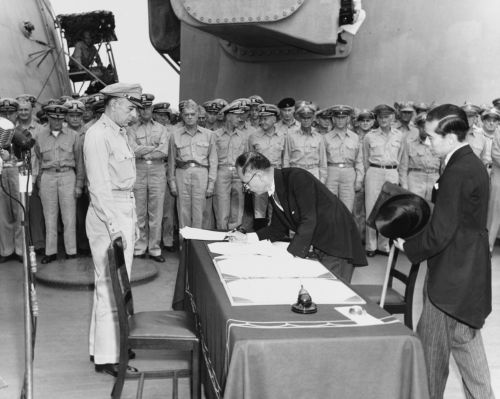
Japan’s defeat in 1945 fundamentally altered the political and informational structures that had sustained wartime propaganda. With the collapse of the imperial war effort and the beginning of the Allied occupation, many of the institutions responsible for censorship and information control were dismantled. Restrictions that had governed newspapers, radio broadcasts, and public discussion were removed or radically restructured under the supervision of occupation authorities. This sudden transformation exposed the extent to which wartime information had been filtered and shaped by the state. For many Japanese citizens, the immediate postwar years brought a gradual realization that the official narratives presented during the war had often concealed or distorted the realities of battlefield reversals and strategic decline.
The Allied occupation also initiated a broader process of political and intellectual reassessment within Japanese society. Reforms introduced during this period encouraged greater press freedom, academic inquiry, and public debate about the causes and consequences of the war. Journalists, scholars, and writers began to examine the mechanisms through which propaganda and censorship had operated, asking how such systems had influenced public understanding of the conflict. This period of reflection contributed to the development of a new media environment in which discussions of wartime responsibility, political authority, and the role of the emperor could take place more openly than had been possible during the war itself.
Historians and social critics played an important role in analyzing how wartime propaganda had shaped national consciousness. Later historical scholarship examined the relationship between state institutions, the media, and the broader culture of mobilization that had supported the war effort. Researchers investigated how official narratives had framed Japan’s expansion in Asia, how information about military defeats had been controlled, and how ideological messages about sacrifice and loyalty had been disseminated throughout society. These studies helped reveal the complex interaction between state power and public perception, demonstrating that propaganda had functioned not only as a tool of persuasion but also as a system that structured the knowledge environment in which citizens formed their understanding of the war.
Collective memory of the conflict developed through a mixture of reflection, debate, and cultural reinterpretation. Literature, film, and historical writing explored the experiences of soldiers and civilians who had lived through the war, often highlighting the gap between wartime propaganda and the hardships of everyday life. The destruction of Japanese cities, the suffering of civilians, and the eventual surrender of the country became central themes in postwar narratives. These cultural responses contributed to a broader effort to understand how wartime ideology had shaped the experiences and expectations of the population.
The legacy of wartime propaganda in Japan therefore extends beyond the period of the conflict itself. The postwar examination of censorship and state-controlled messaging has played an important role in shaping historical scholarship and public memory of the war. By studying how information was managed and how narratives were constructed during wartime, historians have gained deeper insight into the relationship between political authority and the control of public perception. The Japanese experience illustrates how propaganda can influence not only the conduct of war but also the ways in which societies later remember and interpret their own histories.
Conclusion: Information Control and the Politics of Wartime Perception
The experience of wartime Japan demonstrates how control over information can become a central instrument of governmental power during periods of total conflict. As Japan expanded its military campaigns across East Asia and the Pacific, government leaders increasingly recognized that sustaining public support required more than battlefield success. The management of newspapers, radio broadcasts, and other forms of communication allowed the state to shape the narratives through which citizens understood the war. By guiding how events were reported and interpreted, the government sought to maintain morale, reinforce collective solidarity, and legitimize the sacrifices demanded of the population.
The institutions of censorship and propaganda that emerged during this period illustrate the extent to which modern warfare transformed the relationship between governments and the flow of information. Agencies such as the Cabinet Information Bureau and the Home Ministry created an environment in which official narratives dominated public discourse. Military successes were highlighted as evidence of national strength, while unfavorable developments were reframed or minimized to preserve the appearance of strategic control. Through this coordinated system of messaging, the wartime state attempted to construct a narrative of inevitable victory that aligned public perception with the political priorities of the government.
Yet the Japanese experience also reveals the limitations of such systems of information control. As the war progressed and the material consequences of defeat became increasingly visible, the gap between official messaging and lived reality widened. The destruction caused by aerial bombing, the hardships of wartime mobilization, and the loss of soldiers on distant battlefields created experiences that could not be entirely reconciled with optimistic government narratives. These tensions demonstrate that while propaganda can influence the interpretation of events, it cannot fully eliminate the impact of direct experience on public understanding.
The history of wartime information control in Japan therefore highlights a broader pattern visible in many societies during periods of conflict. Governments may attempt to shape perception by regulating communication and constructing persuasive narratives about national purpose and military progress. Such efforts can temporarily sustain morale and reinforce political authority, particularly when early successes appear to confirm official claims. The credibility of state narratives depends upon their relationship to observable reality. The study of propaganda in wartime reveals how the struggle for public perception forms an essential dimension of modern warfare, demonstrating that the control of information can become as significant as the control of territory.
Bibliography
- Bix, Herbert P. Hirohito and the Making of Modern Japan. New York: HarperCollins, 2000.
- Dower, John W. War Without Mercy: Race and Power in the Pacific War. New York: Pantheon, 1986.
- Drea, Edward J. Japan’s Imperial Army: Its Rise and Fall, 1853–1945. Lawrence: University Press of Kansas, 2009.
- Duus, Peter. Modern Japan. Boston: Houghton Mifflin, 1998.
- Frank, Richard B. Downfall: The End of the Imperial Japanese Empire. New York: Random House, 1999.
- Germer, Andrea. “Visual Propaganda in Wartime East Asia – The Case of Natori Yōnosuke.” Asia-Pacific Journal 9:20-3 (2011), 1-29.
- Gluck, Carol. Japan’s Modern Myths: Ideology in the Late Meiji Period. Princeton: Princeton University Press, 1985.
- Gordon, Andrew. A Modern History of Japan: From Tokugawa Times to the Present. New York: Oxford University Press, 2002.
- Hasegawa, Tsuyoshi. Racing the Enemy: Stalin, Truman, and the Surrender of Japan. Cambridge, MA: Harvard University Press, 2005.
- Hotta, Eri. Japan 1941: Countdown to Infamy. New York: Knopf, 2013.
- Igarashi, Yoshikuni. Bodies of Memory: Narratives of War in Postwar Japanese Culture, 1945–1970. Princeton: Princeton University Press, 2000.
- Kershaw, Ian. The End: The Defiance and Destruction of Hitler’s Germany, 1944–1945. New York: Penguin Press, 2011.
- Kushner, Barak. The Thought War: Japanese Imperial Propaganda. Honolulu: University of Hawai‘i Press, 2005.
- Mizuno, Takeya. “An Enemy’s Talk of “Justice”: Japanese Radio Propaganda against Japanese American Mass Incarceration during World War II.” Journalism History 39:2 (2013), 94-103.
- Rotard, Alexander. “Imperial Japanese Propaganda and the Founding of The Japan Times 1897-1904.” Asia-Pacific Journal 19:12 (2021).
- Rowe, David Nelson. “The T’ai Chi Symbol in Japanese War Propaganda.” Public Opinion Quarterly 5:4 (1941), 532-547.
- Tipton, Elise K. Modern Japan: A Social and Political History. London: Routledge, 2002.
- Young, Louise. Japan’s Total Empire: Manchuria and the Culture of Wartime Imperialism. Berkeley: University of California Press, 1998.
Originally published by Brewminate, 03.10.2026, under the terms of a Creative Commons Attribution-NonCommercial-NoDerivatives 4.0 International license.
About the Author