One state tried to close religious schools a century ago – now they’re trying to fund them.

By Dr. Charles J. Russo, J.D.
Joseph Panzer Chair in Education
School of Education and Health Sciences
Research Professor of Law
University of Dayton
Introduction
Almost 100 years ago, a group of nuns joined a suit against the state of Oregon – and made it all the way to the U.S. Supreme Court.
Their cause? Keeping Catholic schools open. In 1922, voters approved an initiative requiring almost all children ages 8-16 to attend public schools – a motion aimed at closing faith-based schools in particular.
But the Supreme Court’s 1925 ruling in their case, Pierce v. Society of Sisters of the Holy Name of Jesus and Mary, favored the nuns. The ruling became a Magna Carta of sorts for private schools, including faith-based ones, safeguarding their right to operate – both secular and religious. Equally as importantly, Pierce has been used to protect parental rights to make choices about their children’s education.
Nonpublic schools such as the ones run by the Society of Sisters no longer must defend their rights to exist. Today, the pendulum has swung the other way: In recent years, the Supreme Court has increasingly allowed public funding to go to faith-based schools, their students or both.
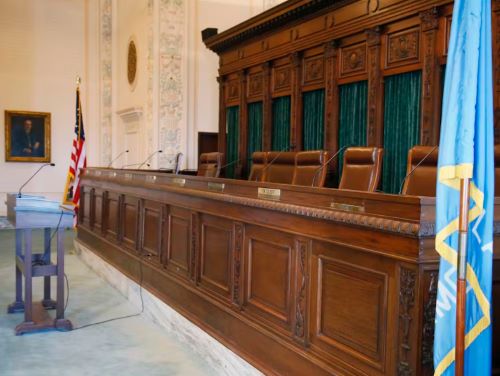
On April 2, 2024, Oklahoma’s Supreme Court will hear oral arguments in a case that could reshape rules even further: whether to allow a Catholic charter school to open its doors, which critics say would all but demolish the line between church and state in education.
Property and Parenting
In 1922, Oregon voters approved an initiative requiring parents of children ages 8-16 to send them to public schools. The act carved out many exceptions, including for children who had already completed eighth grade or lived too far away, but did not include private schools among them.
The law would have effectively outlawed nonpublic schools. This push came just as the influence of nativist groups such as the Know-Nothing Party, which opposed the largely Catholic waves of immigrants as un-American, began to wane.
Officials from a Catholic school challenged Oregon’s act, as did officials from the secular Hill Military Academy. After the federal trial court in Oregon decided that the statute could not go into effect, Gov. Walter M. Pierce appealed, acting on behalf of the state. The U.S. Supreme Court then unanimously affirmed in favor of the schools.
The Supreme Court made two major points, both of which rely on the 14th Amendment’s due process clause, which declares that no state shall “deprive any person of life, liberty, or property, without due process of law.”
The justices recognized the power of the state to “regulate all schools, to inspect, supervise, and examine them, their teachers and pupils,” whether private or public – though apart from health and safety issues, states typically impose fewer rules on nonpublic institutions. Yet, the Court agreed that the law would have seriously undermined the owners’ ability to operate their schools, while greatly diminishing the value of their properties.
Second, the justices turned to parental rights, identifying them as one of the liberties protected by the 14th Amendment. In often-quoted language, the court declared that the child “is not the mere creature of the state; those who nurture him and direct his destiny have the right, coupled with the high duty, to recognize and prepare him for additional obligations.”
The justices thereby invalidated Oregon’s statute, because it “unreasonably interfere[d] with the liberty of parents and guardians to direct the upbringing and education of children under their control.”
Nonpublic Schools, Public Funds
Recent battles over religion and education at the Supreme Court are not about faith-based schools’ right to exist but about how much state funding they and their students can receive. Starting in 2017, the Supreme Court handed down a trilogy of cases greatly increasing the governmental aid available.
The first, Trinity Lutheran Church v. Comer, arose after officials in Missouri prevented a Christian preschool and day care center from purchasing recycled, cut-up tires to resurface their playground to enhance safety – a state program available to other nonprofits.
The Supreme Court ruled in the church’s favor in 2017. The free exercise clause of the First Amendment forbids the government from prohibiting the “free exercise” of religion. The majority reasoned that the free exercise clause means states cannot single out institutions or people by denying them generally available benefits, for which they are otherwise eligible, solely on the basis of religion.
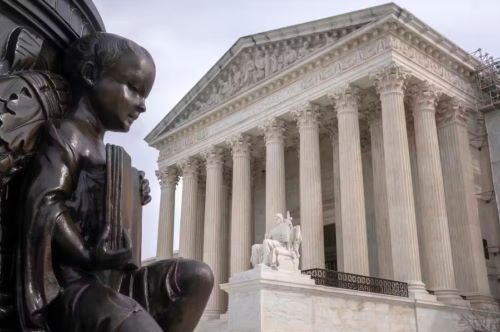
In 2020, the court again expanded the limits on aid for students at K-12 religious schools. This case, Espinoza v. Montana Department of Revenue, stemmed from a state program that allowed tax credits for parents sending their children to private schools. However, the state’s constitution prohibits public funding for religious education programs, so parents who sent their children to faith-based schools were barred from participating.
Using a rationale similar to the one it applied in Trinity Lutheran, the court held that this no-aid provision discriminated on the basis of religion, violating the free exercise clause of the Constitution.
Most recently, in 2022, the court further expanded public funding for faith-based schools in Carson v. Makin, a case from Maine. The Supreme Court invalidated a statute excluding “sectarian” schools from a tuition program for parents living in districts lacking public secondary schools. Because Maine’s constitution guarantees a free public education, the tuition payments allow parents in these districts to send their children to schools of their choice.
The justices also struck the law down because it violated the free exercise clause by treating religious people and institutions differently than others. Moreover, echoing Pierce, the court found that Maine’s statute failed to protect parents’ rights to send their children to the schools of their choice.
Pushing the Boundary
Pierce also laid the groundwork for the “parental choice movement” in education, including charter schools. Typically, these schools operate under performance contracts, or “charters,” with public sponsors: either local school boards or occasionally colleges. While charter schools have more freedom to design their own standards and curricula, they can, unlike regular public schools, be closed for failing to reach stated targets on student achievement.
In June 2023, Oklahoma’s statewide virtual school board authorized the creation of the nation’s first faith-based charter, demonstrating how far the pendulum of allowing government aid into religious schools may be swinging. But St. Isidore of Seville Catholic Virtual School, which plans to open under the direction of the Roman Catholic Archdiocese of Oklahoma City and the Diocese of Tulsa, will not start classes without a fight.
Oklahoma’s highest court has scheduled oral arguments for April 2, 2024, as the state’s attorney general and others filed suit to stop St. Isidore from opening. Opponents of the school argue that the existence of a faith-based charter would violate the U.S. Constitution, as well as Oklahoma’s state Constitution – according to which public schools shall be “free from sectarian control,” such that public funds cannot be used to support religious institutions – and various state statues.
Pierce remains a watershed moment for nonpublic schools’ rights to operate, including religious ones, and for parents’ rights. In light of recent Supreme Court developments, it appears that both of these rights are alive and well heading into Pierce’s second century – but not without controversy.
Originally published by The Conversation, 03.20.2024, under the terms of a Creative Commons Attribution/No derivatives license.
About the Author