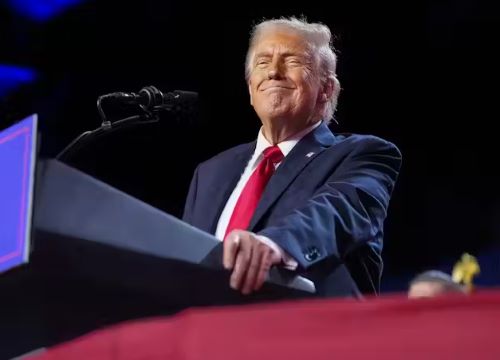
This is the conundrum facing American journalism now.

By Dr. Michael J. Socolow
Professor of Communication and Journalism
University of Maine
Introduction
Most people agree that actual facts matter – in such activities as debate, discussion and reporting. Once facts are gathered, verified and distributed, informed decision-making can proceed in such important exercises as voting.
But what happens when important, verified facts are published and broadcast widely, yet the resulting impact proves underwhelming – or even meaningless? If vital facts fail to affect the news audiences they intend to inform?
This is the conundrum facing American journalism after Nov. 5, 2024.
As a former journalist, and a scholar of media effects history, I know from both my experience and my research that even the most ethical and accurate reporting can have limited impact. Too often, critics and scholars assume that providing what they perceive to be the “right” information, while carefully policing “misinformation,” can solve the informational challenges in democratic governance.
But reality is not that simple.
Historical examples abound of American news consumers being presented with verified facts about controversial figures or events, only to have the excellent journalism have little to no effect.
Bitter – and Unfounded – Complaints
In the run-up to the war in Iraq in 2003, for example, one newspaper chain distinguished itself with ethical, skeptical reporting on the reality of whether Iraq possessed weapons of mass destruction, as the Bush administration asserted.
Despite their careful and accurate approach, there’s little evidence the reporters at Knight-Ridder convinced their bosses, their audiences or national politicians that their eventually vindicated framing of the issues was more accurate than the sensational and eventually largely discredited stories in The New York Times. In retrospect, the facts were ignored, and misinformation disastrously informed the citizenry.
The question of journalistic quality and its impact or influence in current events has again arisen due to the election of Donald Trump on Nov. 5, 2024.
Numerous media critics and academics have argued that American journalism failed to sufficiently inform the citizenry of Trump’s malfeasance and his clear and present danger to American constitutionalism and democracy. Some bitterly complained that “the legacy media” were complicit in the “relentless normalization” of Trump’s “extremism, madness and ugliness.” Others blamed Trump’s victory on journalism’s collective failure “to make a persuasive case for democracy” when confronted by Trump’s “extreme, authoritarian agenda.”
“Horse-race coverage is back in full force,” wrote The Intercept’s James Risen in August, “and the threat Trump poses to democracy is now an afterthought.”
Yet two months before Risen wrote that, The New York Times published a detailed enumeration of Trump’s proposed policies and explained with precision how they violated basic constitutional and democratic norms of governance. Even press critic Margaret Sullivan, once the Times’ in-house journalism critic, credited the newspaper with publishing such impressively detailed and specific reportage.
But Sullivan also argued that “too often, the coverage of Trump has been an embarrassing failure – sanewashing his lunacy, falsely equating him to his traditional rivals, or treating him as some sort of amusing sideshow.”
‘Widely Reported’ and Broadcast
You can easily find journalistic examples of accurate and fact-based reportage about Trump throughout autumn 2024.
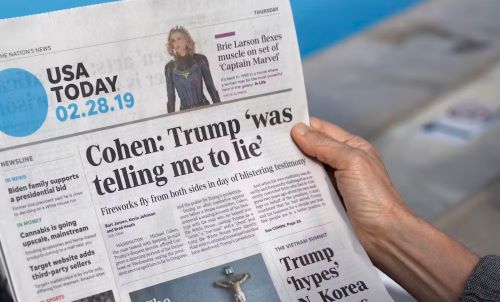
Numerous articles and broadcast stories appeared, in everything from USA Today, which warned readers just three days before the election of Trump’s desire to unconstitutionally “deploy U.S. troops to combat ‘the enemy within,’” to ABC News World News Tonight, which ran packages on several unconstitutional and authoritarian aspects of Trump’s plans if elected, including Trump’s announcement that he’d be a “dictator on day one” if elected.
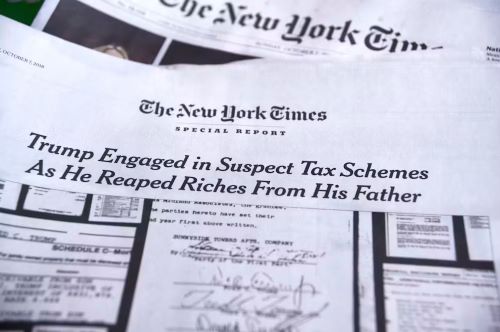
And during his first term in office, Trump’s behavior – and his illegality – was covered extensively. The American public learned that he interfered with the presidential election in Georgia, he did not properly pay his taxes or file appropriate regulatory paperwork, he cheated on his wife with an adult film actress, he incited a riot aimed at preventing the peaceful transfer of power, he dodged the draft in Vietnam with spurious bone spurs, he insulted America’s war dead in Europe, and he is charged with violating the law when he took top secret federal documents and hid them in his home in Florida, among other acts of illegality or malfeasance.
Trump also was found liable by a jury for sexual abuse, and he was earlier caught on a recording talking about grabbing women’s genitalia.
All of this information about the president-elect was widely reported and broadcast by credible, established news organizations in the United States. Such ethical and professional reporting has played a role in his lawyer and a top financial official at his company being convicted and serving jail time, with additional serial reportage continuing throughout the series of court cases that occurred over the past two years. I would guess almost every American knows that Trump is currently a convicted felon.
News Media Did Their Job
Yet despite such constant and widespread coverage, it failed to dent Trump’s popularity with the American people. For some critics, this was seen as clear evidence of journalistic failure; for surely if the citizens realized “the truth” about Trump, his career would be over.
Yet that’s not how the news process works.
Now that Trump secured over 70 million votes on Nov. 5, 2024, you can say with certainty that millions of Americans who know that Trump is a threat to democracy and constitutional governance still elected to vote for him.
It’s likely that women who have been sexually assaulted voted for him, knowing he’s sexually assaulted women. Business owners who pay their taxes and abide by legal and regulatory filings know that Trump has evaded both obligations – and still voted for him. Military servicemen and servicewomen who know what Trump has said about their dead predecessors and heroes such as John McCain still voted for him.
Millions of well-informed, moral, ethical and law-abiding Americans who know all about Trump’s behaviors, malfeasance and illegalities, and his threat to democracy and constitutionality, voted for him.
Somehow, despite reading and absorbing verified truths and accurate reports about Trump, their voting behavior failed to match their knowledge.
That’s not the fault of the news media. They did their job.
Perhaps Maslow’s Hierarchy of Needs best explains why so many news consumers who were informed of Trump’s malfeasance voted for him. Here’s how that hierarchy works: Long before we can satisfy our desire to live morally, ethically and with spiritual meaning, Maslow reasoned that physiological needs – e.g., food and shelter, safety and security, employment and health – must be met.
So just as the COVID-19 pandemic threatened health and job security, the rising price of food, medicine and housing destabilized people’s sense of security. To seriously consider Trump’s behavior or morality, or the way he seemingly threatened democratic governance and the constitutional order almost four years ago, would seem a luxury for families who can’t afford to buy an overpriced ramshackle house or old used car.
For most Americans, Washington, D.C., is distant from their local grocery store, and although inflation has diminished, many Americans seem to have voted on the memory of the less expensive world that existed during Trump’s presidency.
Rein in Expectations
Perhaps the most useful lesson a journalist can learn is humility.
Being more realistic and modest about the ultimate influence of any factual and verified report – no matter how sensational or vital to national security – might help lessen disappointment if audiences fail to receive the news as intended and act accordingly.
You can lead a horse to water, but you can’t make it drink. The media can repeatedly publish or broadcast numerous disqualifying truths about a politician, but they can’t ensure the prevention of his or her election. Journalists need to understand how distributing true and useful information out into the world can be its own rewarding service – no matter what happens next.
Ultimately, the First Amendment protects the right of journalists to report, publish and broadcast, but it can’t force citizens to read, listen, absorb or learn. In that sense, journalism didn’t fail us – we failed journalism.
Originally published by The Conversation, 11.08.2024, under the terms of a Creative Commons Attribution/No derivatives license.
About the Author