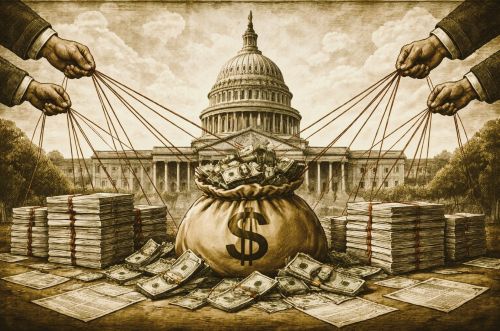
Congressional control of the budget has remained the most consistent and consequential instrument of oversight available to the legislative branch.

By Matthew A. McIntosh
Public Historian
Brewminate
Introduction: Oversight before Administration
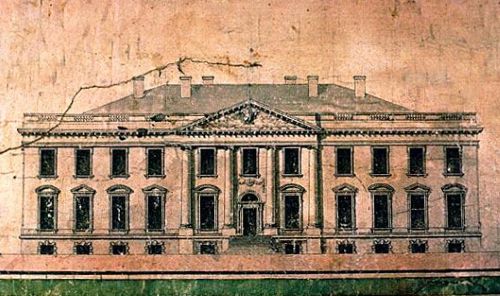
From the earliest days of the American republic, congressional oversight was conceived less as an investigatory practice than as a material one. The framers did not imagine a sprawling administrative state requiring constant monitoring through hearings and reports. Instead, they assumed that the most effective check on executive power would be financial. By vesting the power of appropriation exclusively in the legislative branch, the Constitution positioned Congress as the ultimate arbiter of the scope, duration, and character of federal action. Oversight, in this original conception, was exercised not after the fact, but in advance, through the deliberate control of resources.
This budgetary conception of oversight reflected deep anxieties about concentrated power. Early Americans associated standing armies, permanent offices, and long term appropriations with corruption and despotism. As a result, Congress relied on short term funding, narrow appropriations, and frequent renewals to prevent executive autonomy from hardening into institutional independence. Agencies, where they existed at all, were expected to justify their continued existence annually. Fiscal restraint was not merely a matter of economy. It was a constitutional mechanism for enforcing accountability in a political culture wary of administrative permanence.
What is striking in retrospect is how little formal administrative law or investigative oversight existed in the early republic. There were no professional inspectors general, no permanent oversight committees, and no routinized hearings. Yet this absence did not signal legislative weakness. On the contrary, Congress exercised extraordinary influence by deciding what would be funded, for how long, and under what conditions. The budget functioned as a form of continuous supervision, shaping executive behavior before it occurred rather than reacting to it afterward. In this sense, the power of the purse operated as both authorization and constraint.
Understanding congressional oversight in this original framework complicates modern assumptions about legislative decline. The erosion of budgetary control over time did not result from constitutional deficiency, but from political and institutional evolution. As federal functions expanded and appropriations became normalized, the budget gradually lost its character as an instrument of discipline and became instead a vehicle of accommodation. Recovering the early republic’s approach to fiscal oversight is therefore essential not as an exercise in nostalgia, but as a means of clarifying what Congress once understood about power, restraint, and the governance of agencies that had not yet come into being.
The Early Republic: Appropriations as a Tool of Suspicion (1789–1820s)

In the decades following ratification, Congress treated appropriations not as routine administrative necessities but as instruments of vigilance. Federal power was new, contested, and deliberately constrained. Lawmakers assumed that executive ambition would grow unless actively checked, and fiscal control was the most immediate means of doing so. Appropriations were therefore narrow, time limited, and often tied to specific purposes. The expectation was not continuity but justification. Agencies were required to return to Congress repeatedly, defending their expenditures as a condition of survival.
This suspicion was most evident in Congress’s approach to the military. Fear of standing armies ran deep, informed by British precedent and revolutionary experience. As a result, military appropriations were typically annual and closely scrutinized. Congress insisted on detailed accounting and resisted long term commitments that might enable executive independence. Budgetary control was thus inseparable from republican ideology. Limiting funds was understood as limiting power itself, ensuring that the executive could not act beyond legislative consent for extended periods.
Civil administration was treated with similar caution. Customs collectors, postmasters, and other federal officers operated under tight fiscal supervision. Salaries were set by statute, offices were narrowly defined, and appropriations often included conditions governing conduct. Congress did not rely on investigative oversight to police these officials. Instead, it constrained their authority structurally by regulating the flow of money. Misconduct or inefficiency could be addressed through denial or reduction of funding, a blunt but effective tool in a small federal state.
Budget debates during this period were rarely technical. They were moral and political arguments about the proper size and role of government. Legislators framed appropriations as expressions of trust or distrust, signaling whether an office or function deserved continuation. This approach reflected an understanding of oversight as anticipatory rather than corrective. By controlling appropriations, Congress sought to prevent abuses before they arose, rather than responding after harm had occurred.
The early republic’s reliance on fiscal suspicion reveals a conception of oversight that was deeply embedded in constitutional practice. Congress did not view budgetary control as ancillary to governance. It was governance. The absence of a large administrative apparatus made this possible, but the principle was clear. Power should be granted reluctantly, renewed deliberately, and withdrawn readily if it threatened republican balance. In this formative period, the budget was not a neutral ledger. It was Congress’s primary means of enforcing accountability in a fragile constitutional order.
Jacksonian Democracy and the Politics of Retrenchment (1820s–1840s)

The Jacksonian era reframed congressional budgetary oversight as a populist weapon against concentrated power. As democratic participation expanded, suspicion of entrenched institutions intensified. Legislators increasingly portrayed fiscal restraint as a defense of popular sovereignty rather than elite prerogative. Appropriations debates became arenas in which Congress asserted its authority to discipline offices and programs viewed as distant from, or hostile to, the electorate.
This logic was most visible in conflicts over internal improvements and centralized finance. Jacksonian lawmakers resisted long term appropriations for projects they associated with elite influence and sectional favoritism. Funding denials were not merely expressions of fiscal conservatism. They were acts of institutional judgment. By refusing to fund certain initiatives, Congress sought to limit the growth of administrative capacities that might operate beyond democratic control. Retrenchment functioned as oversight by subtraction.
The struggle over the Second Bank of the United States sharpened this approach. Although the Bank was not a conventional executive agency, congressional battles over its funding and charter illustrated how budgetary power could be used to dismantle institutions perceived as unaccountable. Jacksonian Democrats framed defunding as a corrective to undue influence rather than an attack on governance itself. In this sense, fiscal control served as a substitute for formal regulatory oversight, which remained rudimentary.
At the same time, the expansion of the spoils system complicates any simple account of Jacksonian retrenchment. Patronage redistributed offices without necessarily shrinking government. Yet even here, budgetary oversight retained significance. Congress continued to regulate salaries, limit appropriations, and restructure offices to prevent bureaucratic consolidation. The tension between democratization and administrative stability was mediated through fiscal decisions that signaled which forms of power would be tolerated.
The Jacksonian period thus reveals a transitional moment in the history of congressional oversight. The federal state was growing, but not yet normalized. Budgetary control remained a primary means of asserting legislative supremacy over emerging institutions. Retrenchment was not always consistent, and it was often selective, but it reflected a persistent belief that control of funding could restrain administrative authority more effectively than abstract commitments to accountability. In this era, Congress continued to treat the budget as an instrument of political judgment rather than a neutral administrative tool.
Civil War and Reconstruction: Emergency Spending and Its Aftermath
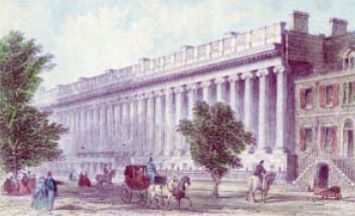
The Civil War marked a decisive rupture in the relationship between Congress, the executive, and the federal budget. Faced with an existential crisis, lawmakers authorized levels of spending previously unimaginable in the American political tradition. Emergency appropriations flowed rapidly to the War Department, the Treasury, and newly expanded administrative offices. Oversight, in the early years of the conflict, gave way to necessity. Speed and scale replaced suspicion as governing imperatives.
This suspension of fiscal restraint was widely understood as temporary. Congressional debates during the war repeatedly emphasized the exceptional nature of emergency spending. Extraordinary appropriations were justified as wartime measures rather than precedents for peacetime governance. Yet the administrative infrastructure created to manage the war did not dissolve with Appomattox. Instead, it left behind a vastly expanded federal apparatus whose existence now demanded normalization rather than justification.
In the immediate postwar period, Congress sought to reassert its authority through budgetary retrenchment. Lawmakers reduced military appropriations, scrutinized wartime contracts, and attempted to wind down emergency agencies. These efforts reflected an attempt to restore the prewar logic of fiscal oversight. Yet retrenchment proved uneven. Some institutions were dismantled, while others were quietly absorbed into the permanent structure of government. The scale of the wartime state made a full return to earlier practices impossible.
Reconstruction complicated this effort further. Congress now used appropriations not only to restrain executive power but to direct it. Conditional funding became a central mechanism for enforcing Reconstruction policy in the former Confederate states. Military expenditures, civil administration, and federal enforcement were tied explicitly to compliance with congressional mandates. Budgetary oversight thus took on a dual character. It constrained executive discretion while simultaneously compelling executive action.
This period exposed the limits of fiscal control as a purely negative instrument. Congress could deny funds to discipline agencies, but it also relied on appropriations to impose its own vision of governance. Oversight became entangled with governance itself. The budget no longer functioned solely as a brake on power. It became a steering mechanism, shaping the implementation of national policy through material means.
The aftermath of the Civil War therefore represents a turning point. Congressional control of the purse survived the crisis, but its meaning shifted. Emergency spending had normalized administrative expansion, and Reconstruction demonstrated how fiscal oversight could be used to enforce substantive political goals. The suspicion that once defined appropriations gave way to a more complex relationship between funding, administration, and authority. From this point forward, budgetary oversight would operate within a permanently enlarged state.
The Gilded Age and Progressive Era: From Patronage to Professional Oversight

By the late nineteenth century, congressional oversight through appropriations confronted a federal state that had grown both in scale and complexity. Patronage still structured much of public administration, but the sheer volume of federal activity strained older modes of fiscal suspicion. Annual appropriations remained the formal mechanism of control, yet they now operated alongside sprawling agencies whose routines and expertise reduced Congress’s day to day leverage. Budgetary oversight persisted, but its character began to change.
During the Gilded Age, Congress continued to use appropriations to influence administrative behavior, often through specificity and fragmentation. Line-item funding limited discretion by earmarking money for narrow purposes, while riders constrained how agencies could act. These techniques reflected a legislative effort to substitute detail for trust. If agencies could not be reduced, they could at least be fenced in. Oversight thus became increasingly procedural, embedded in the structure of appropriations acts themselves.
At the same time, patronage practices complicated fiscal control. Spoils appointments allowed legislators to exert informal influence over agencies, blurring the line between oversight and interference. Budgetary restraint coexisted with personal networks that softened its impact. Congress could threaten funding cuts, but patronage often provided alternative channels of leverage. This dual system limited the effectiveness of fiscal oversight while entrenching political dependency within administrative offices.
The Progressive Era challenged this arrangement by attacking patronage as corrupt and inefficient. Reformers sought to professionalize administration through civil service protections, expertise, and insulation from partisan pressure. These changes altered the relationship between Congress and agencies. As administrative professionalism increased, informal oversight weakened. Budgetary control therefore assumed greater importance as one of the few remaining levers available to legislators seeking to influence bureaucratic behavior.
Progressives were ambivalent about this outcome. On one hand, they favored strong agencies capable of regulating industrial capitalism. On the other, they remained wary of unchecked administrative power. Congress responded by refining its budgetary tools rather than abandoning them. Appropriations committees gained prominence, specialization increased, and fiscal review became more systematic. Oversight shifted from episodic suspicion to routinized scrutiny.
This transformation also reshaped the meaning of restraint. Budgetary oversight no longer aimed primarily at dismantling agencies, but at guiding their development. Congress used funding to shape priorities, expand favored programs, and limit others. Control was exercised through calibration rather than denial. The budget became a means of steering administrative growth, reflecting a new acceptance of the federal state’s permanence.
By the early twentieth century, the foundations of modern oversight were in place. Patronage was receding, professional administration was ascendant, and Congress relied increasingly on fiscal process rather than personal influence. Yet the underlying tension remained unresolved. As agencies grew more expert and autonomous, budgetary oversight became both more essential and more constrained. The Gilded Age and Progressive Era thus marked a critical transition, from oversight as suspicion to oversight as management, setting the terms for the administrative state that would follow.
The New Deal: Expansion Without Surrender (1930s–1940s)

The New Deal transformed the scale and scope of the federal government more dramatically than any previous episode in American history. In response to economic collapse, Congress authorized a vast array of new agencies, programs, and regulatory authorities. Spending expanded rapidly, often under emergency conditions that echoed those of the Civil War. Yet unlike earlier crises, the New Deal did not aim to dismantle administrative capacity once the emergency passed. The expansion of the state was no longer treated as provisional. It was openly embraced as necessary to national recovery.
This expansion, however, did not entail a complete surrender of congressional authority. Lawmakers remained acutely aware that the growth of executive agencies threatened to erode legislative influence. As a result, Congress relied heavily on appropriations to preserve oversight in an environment where statutory complexity and administrative expertise increasingly limited direct intervention. The budget became Congress’s most reliable means of shaping the New Deal state without openly challenging its legitimacy.
Appropriations during this period frequently included conditions designed to circumscribe administrative discretion. Sunset provisions required periodic renewal of funding, compelling agencies to return to Congress for continued authorization. Specific spending limits constrained the scope of programs whose permanence remained politically sensitive. These techniques reflected an effort to reconcile acceptance of administrative expansion with ongoing legislative supervision. Congress did not attempt to halt growth, but it sought to prevent irreversibility.
Tensions between legislative intent and administrative autonomy surfaced repeatedly. New Deal agencies often interpreted broad statutory mandates expansively, prompting congressional concern that fiscal authority was being diluted by executive initiative. Appropriations committees responded by asserting greater control over program design through funding language. Budgetary oversight thus served as a corrective mechanism when formal legislation proved too blunt or politically costly to amend.
The New Deal also marked the institutional consolidation of budgetary oversight. The creation of the Executive Office of the President and the Bureau of the Budget altered the informational landscape, yet Congress adapted rather than retreated. Appropriations committees professionalized, staff capacity increased, and fiscal review became more systematic. Oversight evolved from episodic intervention to continuous negotiation over resources and priorities.
Despite these efforts, the balance of power shifted. The sheer volume of spending and the political popularity of New Deal programs limited Congress’s willingness to impose sharp fiscal constraints. Oversight became selective, focused on marginal adjustments rather than structural retrenchment. The budget remained a site of influence, but its capacity to discipline agencies diminished as public expectations of federal responsibility solidified.
The New Deal thus represents a paradox in the history of congressional oversight. Congress accepted unprecedented administrative expansion while retaining, at least formally, the power of the purse. Yet the meaning of that power had changed. Budgetary oversight no longer served primarily to restrain growth. Instead, it functioned as a means of managing expansion without fully surrendering legislative authority. This accommodation set a precedent for later eras, in which Congress would continue to fund an ever larger state while struggling to preserve meaningful control over its direction.
Cold War Governance: Permanent Emergency and Budgetary Normalization

The onset of the Cold War introduced a new governing condition that fundamentally altered congressional oversight through the budget. Unlike previous crises, the Cold War was not bounded by a clear endpoint. National security became a permanent organizing principle of federal governance, and with it came sustained levels of military, intelligence, and foreign policy spending. What had once been justified as exceptional now appeared routine. Emergency, in effect, became normalized.
Congress responded to this shift by adapting its fiscal practices rather than resisting the premise of permanent preparedness. Defense and security budgets expanded year after year, often insulated from the kind of scrutiny that had characterized earlier appropriations debates. Classified programs, long term weapons systems, and overseas commitments limited the visibility of expenditures and narrowed the range of feasible legislative intervention. Budgetary oversight persisted in form, but its substance increasingly reflected accommodation rather than constraint.
The growth of continuing resolutions and omnibus appropriations further diluted congressional leverage. As deadlines and complexity multiplied, Congress relied more heavily on aggregate funding measures that bundled diverse programs together. This reduced the capacity to target specific agencies or functions through selective restraint. Budgetary decisions became less about judgment and more about maintenance. Oversight shifted from deliberate choice to procedural necessity.
National security agencies benefited disproportionately from this environment. The political costs of challenging defense spending were high, while the perceived risks of underfunding were framed as existential. Congress retained the theoretical power to deny funds, but the conditions under which that power could be exercised narrowed dramatically. Budgetary normalization transformed the purse from a disciplinary tool into a guarantor of continuity.
This period also witnessed a growing separation between rhetoric and resources. Lawmakers continued to voice concerns about executive overreach, secrecy, and bureaucratic excess. Yet appropriations rarely reflected those anxieties in material terms. Oversight increasingly took the form of hearings and reports rather than fiscal limits. The budget became less a site of confrontation and more a mechanism for sustaining an expansive national security apparatus.
By the late Cold War, congressional oversight through appropriations had entered a new phase. The power of the purse remained intact in constitutional theory, but its practical use had been reshaped by decades of normalized emergency. Funding levels conveyed acceptance of institutional permanence, even when legislators expressed unease about its implications. The Cold War thus marked a decisive moment in which budgetary oversight survived in name, but lost much of its capacity to impose restraint.
The Modern Administrative State: Oversight by Constraint or Abdication?

Today, congressional budgetary oversight confronts structural conditions fundamentally different from those of earlier eras. The size, complexity, and permanence of the administrative state have sharply narrowed the range of fiscal tools available to legislators. Mandatory spending now dominates large portions of the federal budget, placing significant categories of expenditure beyond the annual appropriations process. As a result, Congress’s capacity to use funding as a routine instrument of oversight has diminished, not because the power has vanished, but because much of it has been politically and procedurally insulated.
Where discretionary spending remains, its use as a disciplinary mechanism has become increasingly fraught. Efforts to reduce or condition funding for enforcement, security, or regulatory agencies are often framed as reckless or irresponsible, regardless of the underlying rationale. Political risk is unevenly distributed. Lawmakers face immediate backlash for cuts that can be portrayed as threatening safety or order, while the benefits of restraint are diffuse and difficult to demonstrate. Oversight by constraint, once an accepted practice, is now frequently treated as an act of extremism.
This environment has encouraged a substitution of oversight forms. Hearings, reports, and public statements proliferate, signaling concern without materially altering agency capacity. Congress routinely expresses dissatisfaction with administrative performance while continuing to appropriate funds at or above prior levels. The budget, in these cases, functions less as an instrument of accountability than as an acknowledgment of institutional entrenchment. Oversight persists rhetorically, but its fiscal dimension is muted.
The result is a growing disjunction between authority and responsibility. Congress retains constitutional control over appropriations yet often declines to exercise that control in ways that would meaningfully reshape administrative behavior. Agencies operate with an expectation of continuity, adjusting to criticism through procedural compliance rather than structural change. Budgetary oversight, once anticipatory and corrective, becomes reactive and symbolic.
This raises a fundamental question about the character of modern governance. Is Congress constrained by forces beyond its control, or has it acquiesced to a model of oversight that avoids fiscal confrontation? History suggests that the power of the purse remains available, but politically costly. The modern administrative state thus tests whether congressional oversight has been rendered impractical by scale and complexity, or whether it has been weakened by a sustained reluctance to impose material limits on the institutions it continues to fund.
Conclusion: The Enduring Power and Limits of the Purse
Across more than two centuries of American governance, congressional control of the budget has remained the most consistent and consequential instrument of oversight available to the legislative branch. From the early republic’s suspicion of permanent power to the managed expansion of the New Deal and the normalized emergencies of the Cold War, appropriations have shaped the boundaries of federal action more reliably than formal investigations or statutory reforms. The power of the purse has never been merely technical. It has functioned as a political judgment about which institutions deserve continuation, constraint, or expansion.
What history reveals, however, is a widening gap between capacity and willingness. Congress has not lost its constitutional authority over federal spending. It has increasingly declined to exercise that authority in ways that impose meaningful limits on administrative power. As budgets grew larger and agencies more entrenched, fiscal oversight shifted from denial to calibration, from restraint to maintenance. The purse remained powerful in theory, but its use became cautious, selective, and often symbolic.
This evolution should not be understood as an inevitable consequence of modern complexity alone. Earlier periods also confronted growth, crisis, and administrative expansion, yet legislators repeatedly chose to use funding as a disciplinary tool. The difference lies less in institutional design than in political resolve. As oversight became associated with disruption rather than governance, and restraint with risk rather than responsibility, Congress increasingly treated appropriations as obligations to be met rather than decisions to be weighed.
The history of budgetary oversight thus offers a clarifying perspective on contemporary debates. The question facing Congress is not whether it possesses the means to supervise federal agencies. It does. The question is whether it is prepared to translate concern into constraint, and rhetoric into fiscal action. The enduring lesson of the purse is that oversight is most effective when it is material, deliberate, and willing to accept the consequences of limiting power. Without that willingness, oversight persists in name, while authority quietly consolidates elsewhere.
Bibliography
- Annals of Congress, 1st–16th Congresses.
- Congressional Globe, 37th–43rd Congresses.
- Congressional Research Service. Selected reports on the federal appropriations process and administrative oversight.
- Fisher, Louis. Congressional Budgeting: Politics, Process, and Power. New York: Oxford University Press, 1974.
- Foner, Eric. Reconstruction: America’s Unfinished Revolution, 1863–1877. New York: Harper and Row, 1988.
- Gaddis, John Lewis. Strategies of Containment: A Critical Appraisal of American National Security Policy During the Cold War. New York: Oxford University Press, 1982.
- Hays, Samuel P. The Response to Industrialism, 1885–1914. Chicago: University of Chicago Press, 1957.
- Hogan, Michael J. A Cross of Iron: Harry S. Truman and the Origins of the National Security State, 1945–1954. Cambridge: Cambridge University Press, 1998.
- Kaldor, Mary. “After the Cold War: Obstacles and Opportunities in Cutting Arms Budgets.” The World Bank Economic Review 5:1 (1991): 141-156.
- Katznelson, Ira. Fear Itself: The New Deal and the Origins of Our Time. New York: Liveright, 2013.
- Kriner, Douglas L., and Eric Schickler. Investigating the President: Congressional Checks on Presidential Power. Princeton: Princeton University Press, 2016.
- Lee, Frances E. “Patronage, Logrolls, and Polarization: Congressional Parties of the Gilded Age, 1867-1896.” Studies in American Political Development 30:2 (2016): 116-127.
- Leuchtenburg, William E. Franklin D. Roosevelt and the New Deal, 1932–1940. New York: Harper and Row, 1963.
- Madison, James. The Federalist No. 58.
- Matherne, Max. “The Jacksonian Reformation: Political Patronage and Republican Identity.” PhD diss. The University of Tennessee, 2019.
- McCoy, Drew R. The Elusive Republic: Political Economy in Jeffersonian America. Chapel Hill: University of North Carolina Press, 1980.
- Peterson, Carissa. “Daddy ‘War’ Bucks: How Lincoln Funded the Civil War and Fathered the Modern System of American Finance.” Lincoln Memorial University Law Review 7:1 (2020): 1-19.
- Rakove, Jack N. Original Meanings: Politics and Ideas in the Making of the Constitution. New York: Knopf, 1996.
- Remini, Robert V. Andrew Jackson and the Course of American Democracy, 1833–1845. New York: Harper and Row, 1984.
- Richardson, Heather Cox. The Greatest Nation of the Earth: Republican Economic Policies during the Civil War. Cambridge: Harvard University Press, 1997.
- Schick, Allen. The Federal Budget: Politics, Policy, Process. Washington: Brookings Institute Press, 1995.
- Skowronek, Stephen. Building a New American State: The Expansion of National Administrative Capacities, 1877–1920. Cambridge: Cambridge University Press, 1982.
- Stourzh, Gerald. Alexander Hamilton and the Idea of Republican Government. Stanford: Stanford University Press, 1970.
- United States Government Accountability Office. Principles of Federal Appropriations Law , 4th ed. (Chapter 2: The Legal Framework). Washington: GAO, 2016.
- U.S. Congress. Selected appropriations acts and committee reports, 1933–1945.
- U.S. Constitution, Article I, Section 9.
- U.S. House Committee on Appropriations, selected hearings and reports, late nineteenth and early twentieth centuries.
- U.S. Senate Committee on Armed Services. Selected reports and hearings, 1947–1989.
- Wallis, John Joseph. “Lessons from the Political Economy of the New Deal.” Oxford Review of Economic Policy 26:3 (2010): 442-462.
- Wood, Gordon S. The Creation of the American Republic, 1776–1787. Chapel Hill: University of North Carolina Press, 1969.
- White, Leonard D. The Federalists: A Study in Administrative History. New York: Macmillan, 1948.
Originally published by Brewminate, 01.12.2026, under the terms of a Creative Commons Attribution-NonCommercial-NoDerivatives 4.0 International license.
About the Author