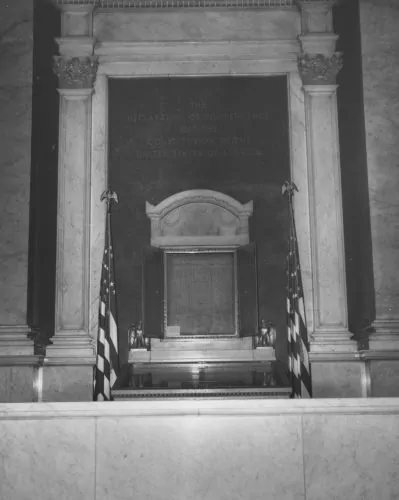
For more than a century, the Supreme Court treated the Bill of Rights as a limited restraint on federal authority, consistent with the constitutional framework of the early republic.

By Matthew A. McIntosh
Public Historian
Brewminate
Introduction: A Constitution with Uneven Reach
The Bill of Rights occupies a central place in American civic memory, routinely invoked as the foundation of individual liberty and constitutional restraint. In popular understanding, these first ten amendments are assumed to have functioned from the beginning as universal guarantees against all forms of government power. Yet this assumption obscures a far more complex and historically contingent reality. For much of American history, the Bill of Rights operated within sharply defined limits, restraining only the federal government while leaving state and local authorities largely unconstrained by its provisions.
This limitation was not an oversight, nor was it the result of judicial neglect in the narrow sense. It reflected the constitutional logic of the late eighteenth and early nineteenth centuries, in which federalism was understood as a primary safeguard of liberty. State governments were presumed to be closer to the people, more accountable, and therefore less threatening to individual rights than a distant national authority. Within this framework, the Bill of Rights emerged as a response to fears of centralized power, not as a comprehensive charter of personal freedoms enforceable against all levels of government.
The Supreme Court reinforced this understanding throughout the nineteenth century. Rather than serving as a vehicle for expanding rights protections, the Court functioned as a stabilizing force for the existing constitutional order. By interpreting the Bill of Rights as inapplicable to the states, the judiciary preserved a system in which civil liberties were shaped primarily by state constitutions, statutes, and courts. The result was a fragmented legal landscape, one in which the scope and security of fundamental rights varied dramatically depending on geography, politics, and social status.
Only in the twentieth century did this constitutional arrangement undergo a profound transformation. Through evolving interpretations of the Fourteenth Amendment, the Supreme Court gradually extended most provisions of the Bill of Rights to apply against the states. This shift, often described as incorporation, fundamentally altered the relationship between individuals, states, and the federal judiciary. Understanding this change requires more than tracing doctrinal developments. It demands a reckoning with the long period during which the Bill of Rights existed as a limited instrument, revered in principle but uneven in reach, and with the historical forces that reshaped its meaning without formally rewriting its text.
The Original Understanding: The Bill of Rights as a Federal Restraint

At the time of its ratification, the Bill of Rights was not widely understood as a declaration of universal civil liberties enforceable against all American governments. Instead, it emerged from a specific political conflict over the scope and dangers of federal power. The Constitution of 1787 created a national government with unprecedented authority, and it was this concentration of power that alarmed many Americans. The amendments that followed were crafted to address those fears, not to restructure the internal governance of the states.
Anti-Federalists were the most vocal proponents of a bill of rights, but their concerns were narrowly focused. They worried that the new federal government would encroach on traditional liberties through standing armies, centralized courts, and expansive taxing authority. Their objections were not rooted in distrust of state governments, which were viewed as closer to the people and more responsive to local values. In this context, the demand for a bill of rights was less a call for universal protections than a defensive measure against a potentially distant and unaccountable national authority.
Federalists, for their part, did not dispute this framing. Figures such as James Madison initially argued that a bill of rights was unnecessary precisely because the federal government possessed only enumerated powers. When Madison ultimately championed the amendments, he did so with assurances that they would not disrupt the federal balance. The language of the Bill of Rights reflects this understanding. Phrases such as “Congress shall make no law” and the absence of any reference to state governments signaled a deliberate choice to limit federal action rather than impose national standards on state governance.
Early constitutional practice reinforced this interpretation. State constitutions already contained their own declarations of rights, many of which predated the federal Bill of Rights. These documents varied widely in scope and enforcement, reflecting local priorities and political cultures. The coexistence of state rights regimes alongside a federally limited Bill of Rights suggests that Americans did not expect the national amendments to displace or standardize state protections. Rights were understood as plural, contingent, and rooted in local authority rather than uniform constitutional command.
This original understanding shaped constitutional interpretation well into the nineteenth century. The Bill of Rights functioned as a structural safeguard within a federal system, not as a comprehensive code of individual liberties. Its purpose was to restrain a specific locus of power, not to redefine the relationship between citizens and all levels of government. Recognizing this intent is essential to understanding why the Supreme Court initially viewed the application of the Bill of Rights to the states as not merely incorrect, but incompatible with the constitutional order as it was first conceived.
Early Supreme Court Doctrine: Barron v. Baltimore and Constitutional Closure

The Supreme Court gave definitive judicial expression to the original understanding of the Bill of Rights in its 1833 decision in Barron v. Baltimore. The case arose from a dispute that, on its surface, appeared technical and local: a wharf owner claimed that municipal public works had damaged his property and sought compensation under the Fifth Amendment’s Takings Clause. Beneath this narrow dispute, however, lay a fundamental constitutional question. Did the protections enumerated in the Bill of Rights apply to state and local governments, or were they confined to the federal sphere alone?
Chief Justice John Marshall’s opinion answered this question with striking clarity. Writing for a unanimous Court, Marshall held that the Bill of Rights restrained only the federal government. The Constitution, he argued, was established by the people of the United States for the purpose of limiting national authority. Had the framers intended to impose similar restrictions on the states, they would have said so explicitly. The absence of such language was not accidental but dispositive. In Marshall’s reasoning, constitutional silence signified exclusion, not ambiguity.
The logic of Barron reflected the Marshall Court’s broader constitutional philosophy. Marshall was deeply committed to preserving the federal structure established in 1787, even as he strengthened national authority in other contexts. Applying the Bill of Rights to the states would have dramatically altered that balance, subjecting state governments to federal judicial oversight in matters traditionally reserved to local control. Such a transformation, Marshall implied, lay beyond the proper role of judicial interpretation. Constitutional change of that magnitude would require amendment, not adjudication.
The consequences of Barron were far-reaching. By closing the door on federal enforcement of individual rights against the states, the decision entrenched a constitutional order in which civil liberties depended largely on state constitutions and political will. For nearly a century, the Supreme Court treated this framework as settled law. The Bill of Rights became a symbol of national principle rather than a tool of uniform enforcement, revered in theory while constitutionally sealed off from much of American governance.
The Consequences of Non-Application: Rights Without Remedies

The Supreme Court’s refusal to apply the Bill of Rights to the states produced a constitutional landscape in which rights existed unevenly and enforcement depended almost entirely on local law. In the absence of federal oversight, state governments retained broad discretion over criminal procedure, speech regulation, religious establishment, and property rights. While some states adopted robust protections in their own constitutions, others imposed significant restrictions with little fear of federal judicial intervention. The result was not simply diversity of practice, but a structural inequality in the protection of fundamental liberties.
This fragmentation was especially visible in criminal justice. States developed their own rules governing searches, confessions, jury trials, and punishments, many of which would later be deemed incompatible with federal constitutional standards. Without the application of the Fourth, Fifth, Sixth, or Eighth Amendments, defendants accused under state law possessed few uniform safeguards. What constituted due process or cruel punishment varied dramatically from one jurisdiction to another, often shaped by local political pressures rather than principled commitments to individual rights.
The consequences were even more severe for marginalized populations. Enslaved people, free Black Americans, religious minorities, and political dissidents frequently found that appeals to constitutional liberty carried little weight in state courts. State governments routinely restricted speech, enforced religious norms, and sanctioned racial discrimination without running afoul of federal constitutional limits. The Bill of Rights offered symbolic reassurance but no practical remedy. Rights without federal enforcement remained aspirational rather than operative.
This reality exposes a central weakness of the pre-incorporation constitutional order. By treating rights as dependent on state goodwill, the system assumed a level of civic virtue and equality that often did not exist. The absence of a national baseline for civil liberties meant that constitutional protections were strongest where they were least needed and weakest where they mattered most. The gap between constitutional ideals and lived experience widened, setting the stage for later demands that rights be made enforceable through federal authority rather than left to local discretion.
The Fourteenth Amendment: Reconstruction and Constitutional Reimagining

The constitutional settlement forged after the Civil War fundamentally altered the relationship between the individual, the states, and the federal government. The abolition of slavery exposed the inadequacy of a constitutional system that left civil rights largely in the hands of state authorities. In the defeated Confederate states, newly freed people encountered legal regimes that replicated many of the coercive features of slavery through Black Codes, discriminatory policing, and exclusion from basic civil participation. These developments made clear that the existing constitutional framework, including the Bill of Rights as it was then understood, offered little protection against state-sanctioned injustice.
Reconstruction Republicans responded by pursuing a constitutional transformation rather than relying solely on legislation. The Fourteenth Amendment, ratified in 1868, redefined national citizenship and imposed new constraints on state power. Its opening declaration that all persons born or naturalized in the United States were citizens represented a direct challenge to the prewar assumption that states controlled the meaning of political membership. Citizenship was nationalized, and with it came the possibility that fundamental rights might also acquire a national character enforceable against the states.
The Amendment’s core enforcement mechanisms lay in its three central clauses: Privileges or Immunities, Due Process, and Equal Protection. Each offered a distinct pathway for federal intervention in state governance. The Privileges or Immunities Clause appeared, at least on its face, to prohibit states from abridging the basic rights of national citizenship. The Due Process Clause imposed procedural and potentially substantive limits on state action. The Equal Protection Clause aimed to prevent discriminatory enforcement of laws. Together, these provisions introduced constitutional language capable of supporting a far more expansive vision of civil rights than had previously existed.
Yet the meaning of these clauses was deeply contested from the outset. Some members of Congress envisioned the Fourteenth Amendment as a vehicle for incorporating the protections of the Bill of Rights against the states. Others viewed it more narrowly as a safeguard against racial discrimination or a corrective to the specific injustices of the postwar South. This ambiguity was not accidental. The Amendment was the product of political compromise, crafted to secure ratification while leaving its full implications to be worked out through future interpretation.
Early enforcement efforts reflected both the promise and the limits of this reimagining. Congress enacted civil rights legislation and authorized federal intervention to protect newly freed citizens, signaling an unprecedented willingness to override state authority. At the same time, resistance from state governments and waning northern political will constrained these efforts. The constitutional text created new possibilities, but it did not guarantee their realization. Much depended on how the judiciary would interpret and apply the Amendment in the decades that followed.
The Fourteenth Amendment thus marked a turning point without immediately resolving the status of the Bill of Rights. It supplied the constitutional architecture necessary for national rights enforcement, but it did not mandate a specific doctrinal outcome. The transformation of the Bill of Rights from a federal restraint into a national guarantee was made possible by Reconstruction, but it was not completed there. That task would fall largely to the courts of the late nineteenth and twentieth centuries, whose choices would determine whether the Amendment’s promise would remain aspirational or become operative.
Judicial Resistance and the Slow Birth of Incorporation
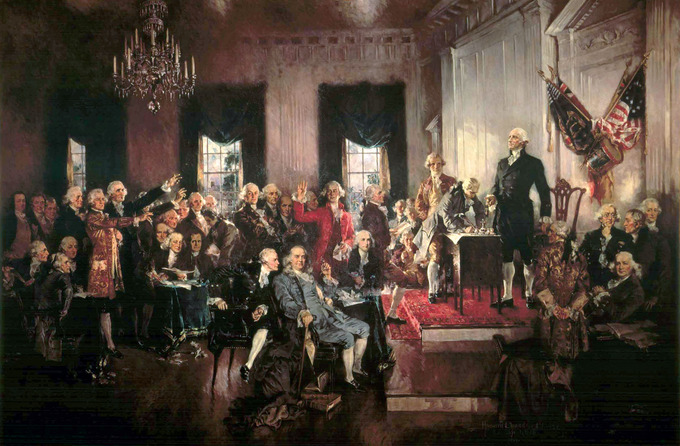
Despite the transformative language of the Fourteenth Amendment, the Supreme Court proved reluctant to interpret it as a sweeping mandate for national enforcement of civil liberties. In the decades following Reconstruction, the Court approached the Amendment cautiously, often reading its provisions in ways that preserved preexisting balances of power. Rather than embracing the possibility that the Bill of Rights now constrained state governments, the judiciary largely sought to contain the Amendment’s reach. This resistance ensured that incorporation, if it were to occur at all, would unfold gradually rather than as a single constitutional rupture.
The Court’s early Fourteenth Amendment jurisprudence set the tone for this restraint. In the Slaughter-House Cases (1873), the Court narrowly interpreted the Privileges or Immunities Clause, holding that it protected only a limited set of national rights and did not encompass the broad array of civil liberties many Reconstruction Republicans had envisioned. By effectively neutralizing the clause most clearly suited to incorporating the Bill of Rights, the Court foreclosed what might have been the most direct constitutional path to national rights enforcement. The decision redirected future litigation toward other, less explicit provisions of the Amendment.
As a result, incorporation efforts shifted toward the Due Process Clause. This move was neither inevitable nor conceptually straightforward. Due process had traditionally been understood as a guarantee of fair procedure rather than a source of substantive rights. Nevertheless, litigants and jurists increasingly argued that certain liberties were so fundamental that no state could deprive individuals of them without violating due process. This doctrinal evolution introduced ambiguity and inconsistency, as courts were forced to decide which rights qualified as fundamental and which did not.
Judicial hesitation persisted well into the early twentieth century. Even as the Court occasionally acknowledged that some protections in the Bill of Rights might apply to the states, it rejected the notion of wholesale incorporation. Instead, the Court insisted on case-by-case analysis, emphasizing historical practice and perceived necessity. This incremental approach reflected broader concerns about federalism and judicial overreach. Many justices feared that fully incorporating the Bill of Rights would transform the Supreme Court into a super-legislature overseeing state criminal justice systems and social regulation.
The slow birth of incorporation was therefore not simply a matter of constitutional interpretation, but of institutional self-restraint. The Court balanced competing imperatives: honoring the Fourteenth Amendment’s promise while avoiding a dramatic expansion of federal judicial power. Incorporation emerged not as a bold assertion of national authority, but as a cautious accommodation to changing political, social, and legal realities. The result was a constitutional transformation achieved through gradual accretion, shaped as much by judicial resistance as by judicial innovation.
Selective Incorporation in the Twentieth Century

The doctrine of selective incorporation took shape in the early twentieth century as the Supreme Court gradually accepted that certain rights enumerated in the Bill of Rights were fundamental to ordered liberty and therefore applicable to the states through the Fourteenth Amendment. Rather than incorporating all ten amendments at once, the Court adopted a piecemeal approach, evaluating individual rights and determining whether each was essential to a fair system of justice. This method reflected both judicial caution and an evolving understanding of the Constitution as a living framework responsive to modern conditions.
Criminal procedure became the primary arena in which selective incorporation unfolded. Beginning in the 1920s and accelerating after World War II, the Court applied key protections of the First, Fourth, Fifth, Sixth, and Eighth Amendments to the states. Freedom of speech and press were among the earliest to be incorporated, followed by protections against unreasonable searches and seizures, self-incrimination, and the denial of counsel. These decisions dramatically reshaped state criminal justice systems, imposing national standards where local discretion had long prevailed.
Selective incorporation was guided by an implicit hierarchy of rights. The Court distinguished between liberties deemed fundamental and those considered peripheral or procedural. Some provisions, such as the right to a jury trial in civil cases or the protection against excessive fines, were initially left unincorporated or only partially applied. This selectivity underscored the Court’s continued reluctance to embrace a fully nationalized Bill of Rights, even as it acknowledged the inadequacy of purely state-based protections in an increasingly mobile and interconnected society.
The cumulative effect of selective incorporation was transformative. By mid-century, most of the Bill of Rights constrained state governments in meaningful ways, fundamentally altering the balance of federalism. Yet this transformation remained incomplete and contingent. Because incorporation rested on judicial interpretation rather than constitutional amendment, it reflected changing judicial philosophies and social priorities. The Bill of Rights became national law not through a single constitutional moment, but through decades of adjudication that redefined liberty incrementally, one right at a time.
The Modern Legacy: Incorporation and Its Discontents
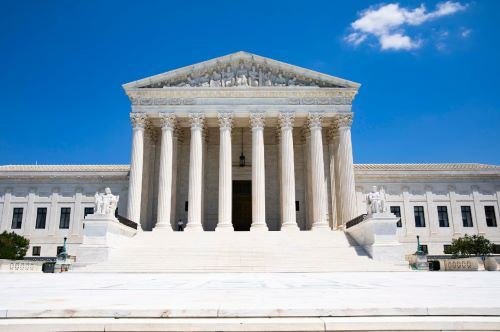
By the late twentieth century, incorporation had become a defining feature of American constitutional law. Most provisions of the Bill of Rights now constrained state governments, and federal courts routinely reviewed state practices for compliance with national standards. This development profoundly altered the balance of power envisioned in the nineteenth century, placing the judiciary at the center of rights enforcement. For many Americans, incorporation came to represent the fulfillment of constitutional promise, ensuring that fundamental liberties did not depend on geography or local politics.
Yet incorporation has never been free from controversy. Critics have argued that the doctrine concentrates excessive power in the federal judiciary, weakening democratic accountability and diminishing the autonomy of states. From this perspective, incorporation substitutes judicial judgment for local governance, imposing uniform solutions on diverse communities. These concerns have been especially prominent among advocates of originalism, who maintain that incorporation reflects twentieth-century values rather than the Constitution’s original meaning. For them, the nationalization of rights represents a constitutional revision achieved through interpretation rather than amendment.
Supporters of incorporation counter that uniform rights enforcement is essential in a modern constitutional order. They argue that the framers of the Fourteenth Amendment intended to create federal guarantees precisely because state governments had proven unreliable protectors of liberty. Under this view, incorporation is not an act of judicial overreach but a necessary response to historical experience. The persistence of racial discrimination, unequal criminal justice practices, and political repression at the state level underscores the limits of relying solely on local authority to safeguard fundamental rights.
The modern legacy of incorporation, then, is one of both achievement and tension. It has expanded access to constitutional protections while simultaneously reshaping federalism and judicial power. The Bill of Rights now functions as a national baseline, yet its scope and meaning remain subject to reinterpretation. Incorporation did not end constitutional conflict. It relocated it. The debate now centers not on whether rights apply to the states, but on how those rights should be defined, limited, or expanded in a changing legal and political landscape.
Conclusion: A Constitution That Changed Without Being Rewritten
The history of the Bill of Rights reveals a constitutional evolution that unfolded not through formal amendment, but through reinterpretation shaped by political necessity, judicial judgment, and historical experience. For more than a century, the Supreme Court treated the Bill of Rights as a limited restraint on federal authority, consistent with the constitutional framework of the early republic. This was not a failure of enforcement, but a faithful application of prevailing assumptions about federalism and the distribution of power within the American system.
The transformation brought about by the Fourteenth Amendment did not immediately overturn this order. Instead, it introduced new constitutional possibilities that remained unrealized for decades. Judicial resistance, narrow interpretations, and institutional caution delayed the nationalization of rights, even as social and political conditions increasingly demanded uniform protections. Incorporation emerged slowly, shaped as much by restraint as by innovation, reflecting the Court’s ongoing struggle to reconcile constitutional text with changing realities.
This history complicates modern assumptions about constitutional permanence. The Bill of Rights, often portrayed as timeless and fixed in meaning, has functioned differently across eras. Its protections expanded not because its language changed, but because the constitutional order surrounding it did. Judicial interpretation, rather than formal revision, proved decisive in redefining the reach of liberty. The Constitution remained the same on paper, even as its practical meaning shifted in fundamental ways.
Understanding this process is essential in the present moment. If constitutional rights can be expanded through interpretation, they can also be narrowed. The history of incorporation demonstrates both the fragility and the adaptability of constitutional protections. A Constitution that changed without being rewritten can change again. The enduring question is not whether the Bill of Rights exists, but how vigilantly its meaning is defended within the evolving structures of American governance.
Bibliography
Affiliate disclosure: Amazon links on this site are paid links. As an Amazon Associate I earn from qualifying purchases.
- Alschuler, Albert W., and Andrew G. Deiss. “A Brief History of the Criminal Jury in the United States.” University of Chicago Law Review 61, no. 3 (1994): 867–928.
- Amar, Akhil Reed. The Bill of Rights: Creation and Reconstruction. New Haven: Yale University Press, 1998.
- Barnett, Randy E. Restoring the Lost Constitution: The Presumption of Liberty. Princeton: Princeton University Press, 2003.
- Barron v. Baltimore, 32 U.S. (7 Pet.) 243 (1833).
- Black, Griffin. “Reconstruction State Constitutional Conventions and the Rebirth of American Schooling.” The Yale Law Journal 135 (2025): 280-345.
- Curtis, Michael Kent. No State Shall Abridge: The Fourteenth Amendment and the Bill of Rights. Durham, NC: Duke University Press, 1986.
- Duncan v. Louisiana, 391 U.S. 145 (1968).
- Ely, James W. Jr. The Guardian of Every Other Right: A Constitutional History of Property Rights. New York: Oxford University Press, 1998.
- Fairman, Charles. Reconstruction and Reunion, 1864–1888. New York: Macmillan, 1971.
- Foner, Eric. Reconstruction: America’s Unfinished Revolution, 1863–1877. New York: Harper and Row, 1988.
- Gitlow v. New York, 268 U.S. 652 (1925).
- Hall, Kermit L. The Magic Mirror: Law in American History. New York: Oxford University Press, 1989.
- Hall, Kermit L., James W. Ely Jr., Joel B. Grossman, and W. Wiecek. The Oxford Companion to the Supreme Court of the United States. 2nd ed. New York: Oxford University Press, 2005.
- Kettner, James H. The Development of American Citizenship, 1608–1870. Chapel Hill: University of North Carolina Press, 1978.
- Lash, Kurt T. “Become the ‘Bill of Rights’: The First Ten Amendments from Founding to Reconstruction.” Virginia Law Review 110:2 (2024): 110 Va. L. Rev. 411.
- Madison, James. “Speech Introducing the Bill of Rights,” June 8, 1789. In The Papers of James Madison, edited by William T. Hutchinson et al. Chicago: University of Chicago Press, 1962.
- Marshall, John. The Writings of John Marshall, edited by John F. Dillon. Chicago: Callaghan and Company, 1901.
- McConnell, Michael W. “The Origins and Historical Understanding of Free Exercise of Religion.” Harvard Law Review 103, no. 7 (1990): 1409–1517.
- Rakove, Jack N. Original Meanings: Politics and Ideas in the Making of the Constitution. New York: Vintage Books, 1996.
- Sawyer, Jeffrey K. “Diminishing the Bill of Rights: Barron v. Baltimore and the Foundations of American Liberty.” Journal of American History 105:1 (2018): 159-160.
- The Slaughter-House Cases, 83 U.S. (16 Wall.) 36 (1873).
- Storing, Herbert J., ed. The Complete Anti-Federalist. Chicago: University of Chicago Press, 1981.
- Wood, Gordon S. The Creation of the American Republic, 1776–1787. Chapel Hill: University of North Carolina Press, 1969.
Originally published by Brewminate, 01.16.2026, under the terms of a Creative Commons Attribution-NonCommercial-NoDerivatives 4.0 International license.
About the Author