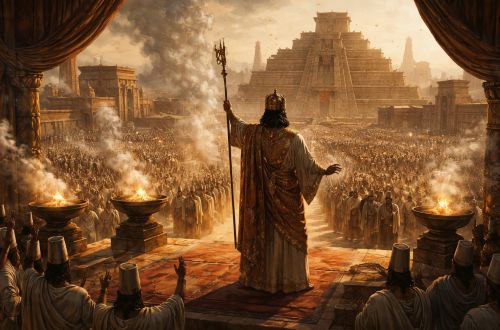
From Late Bronze Age Mesopotamia to modern administrative states, power survives by changing form rather than relinquishing itself.

By Matthew A. McIntosh
Public Historian
Brewminate
Introduction: When Power Survives Its Tools
Political authority rarely collapses the moment its practical capacity weakens. More often, authority lingers, sustained by habit, symbolism, and institutional inertia even as the mechanisms that once made it effective begin to fail. Rulers continue to issue commands, courts continue to perform obedience, and populations continue to behave as though control remains intact. The appearance of governance persists long after governance itself has become uneven, improvised, or hollow. This gap between authority and capacity is not an anomaly of modern bureaucracy or late-stage states. It is a recurring historical condition.
Late Bronze Age Mesopotamia offers one of the earliest and clearest examples of this pattern. Between roughly 1300 and 1000 BCE, Neo-Assyrian and Kassite kings presided over territories that were increasingly difficult to administer. Long-distance rule, succession instability, regional autonomy, and resource strain undermined consistent control. Yet royal authority did not immediately diminish in public form. Kings continued to present themselves as decisive, divinely sanctioned rulers whose commands shaped the cosmos as well as the state. The weakening of administrative reach did not produce open admission of failure. Instead, it produced compensatory performances of certainty.
As real control faltered, governance increasingly shifted into ritualized and mediated forms. Political decisions were deferred to omen interpretation, priestly consultation, and court-managed procedure. Responsibility moved sideways rather than downward. The king remained the visible source of authority, but judgment was displaced into symbolic systems that could neither be disproven nor directly challenged. Ritual did not replace power. It preserved the illusion that power was still functioning as intended. The court protected the image of decisiveness even as the material conditions for decisive rule eroded.
What follows argues that Late Bronze Age Mesopotamia establishes a foundational model of authority without capacity, one that reappears whenever institutions outlive their practical reach. When rulers can no longer reliably govern, power does not simply disappear or announce its own limits. It adapts. Authority becomes performative, procedural, and symbolic, sustained by repetition rather than effectiveness. Courts, priesthoods, and administrative elites learn to stabilize appearances, not outcomes. Offices are preserved even as their capacity drains away, because acknowledging loss would threaten the entire structure of legitimacy. Reality bends around authority through ritual, proclamation, and managed consensus until contradictions accumulate faster than they can be absorbed. At that point, collapse appears sudden, but it is only the delayed recognition of a long-standing condition. To understand political failure, then, one must first understand how systems learn to function without admitting that they no longer function well.
Late Bronze Age Mesopotamia and the Fragility of Rule (c. 1300–1000 BCE)
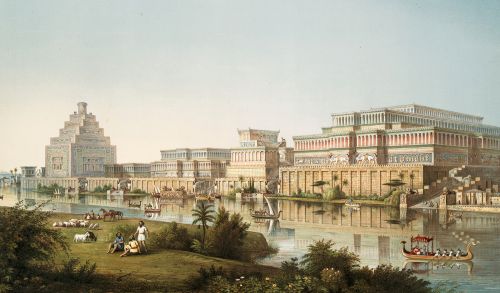
Late Bronze Age Mesopotamia was not a landscape of sudden collapse, but one of accumulating strain that revealed itself unevenly across time and space. Neo-Assyrian and Kassite kings ruled over territories that were large, diverse, and increasingly difficult to coordinate through existing administrative means. Communications moved slowly, provincial governors exercised wide discretion, and the center depended on layered chains of command that magnified delay, ambiguity, and distortion. Royal orders could take weeks or months to reach their destinations, and compliance depended as much on local conditions as on loyalty to the crown. The state remained visible and ceremonially intact even as its capacity to enforce decisions uniformly across its domains weakened. Rule persisted, but coherence became selective, episodic, and contingent rather than comprehensive.
The Kassite dynasty in Babylonia illustrates this fragility particularly well. Kassite kings maintained long reigns and a stable royal lineage, yet their authority depended heavily on negotiated relationships with local elites, temple institutions, and landed families. Administrative continuity masked limited reach. Royal inscriptions emphasized order and prosperity, but the day-to-day enforcement of policy relied on intermediaries whose loyalty was situational rather than absolute. The appearance of centralized control rested on accommodation more than command.
Neo-Assyrian rule during this period faced similar pressures, though expressed through a markedly different political culture. Assyrian kings articulated an aggressive ideology of domination, presenting themselves as divinely mandated conquerors, judges, and guarantors of cosmic order. This rhetoric intensified precisely as administration strained under the weight of expansion, succession crises, and regional unrest. Military campaigns projected power spectacularly but intermittently, while sustained governance required bureaucratic consistency that was increasingly difficult to maintain across distant provinces. The language of total control thus expanded at the same moment that practical oversight became more fragile. Royal certainty in inscriptions and proclamations compensated for administrative vulnerability on the ground, transforming ideology into a substitute for capacity rather than a reflection of it.
Succession instability further undermined effective control. Dynastic continuity was not guaranteed, and periods of weak or contested succession disrupted chains of authority. Court factions competed for influence, provincial leaders hedged their allegiance, and decision-making slowed or fragmented. Yet even in these moments, kingship as an institution remained intact. The throne was not abandoned. Instead, uncertainty was absorbed into ritual and protocol, allowing authority to continue functioning symbolically even as its practical foundations shifted.
What emerges from this period is not a picture of failed states, but of states adapting to operate under constraint. Administrative weakness did not produce immediate collapse because the system adjusted its expectations and methods. Governance became less about direct intervention and more about managing appearances, maintaining hierarchy, and projecting continuity. Royal authority survived by narrowing its claims to what could plausibly be asserted while broadening its symbolic reach through ritual, inscription, and ceremony. The fragility of rule lay not in the absence of power, but in the widening distance between what rulers proclaimed and what they could reliably achieve, a distance that courts learned to manage long before they could no longer conceal it.
Ritual as Governance: Omens, Priests, and Deferred Decision-Making

As administrative control weakened, governance did not grind to a halt. Instead, it migrated into ritualized forms that preserved the appearance of order while redistributing responsibility. Omens, divination, and priestly interpretation increasingly framed political decisions, not as acts of human judgment, but as responses to cosmic signals. This shift did not signal irrationality or superstition. It represented a structural adaptation. When rulers could no longer guarantee effective outcomes, decision-making was displaced into systems that could not be empirically falsified.
Divination had long been part of Mesopotamian political culture, but its role expanded markedly during periods of strain. Extispicy, astrology, and omen interpretation became central mechanisms through which choices were delayed, justified, or redirected. Questions of war, succession, building projects, and punishment were increasingly framed as matters requiring divine confirmation. The result was not paralysis, but deferral. Action still occurred, but accountability was softened by ritual consultation. Failure could be attributed to misread signs or divine will rather than administrative weakness.
Priests occupied a critical position in this system, one that extended beyond religious authority into the practical management of uncertainty. As interpreters of omens and custodians of ritual knowledge, they became indispensable intermediaries between the king and the act of decision itself. This did not diminish royal authority in public presentation. Kings still issued decrees, presided over ceremonies, and appeared as the ultimate arbiters of state action. Yet the pathway to those decisions was increasingly mediated. Priestly interpretation filtered options before they reached the throne, structuring what could be chosen and when. Governance thus became a collaborative performance in which sacred expertise stabilized political ambiguity, allowing rulers to act while shielding them from direct responsibility for outcomes.
Ritual governance also functioned as a temporal strategy, managing not only authority but time itself. Omens could always be sought again, rituals repeated, signs clarified, or procedures extended. This elasticity allowed courts to slow decision-making without openly admitting uncertainty or incapacity. Delay became sanctified rather than criticized. In moments of crisis, postponement was framed as prudence, patience, or reverence for divine will. The future was consulted rather than confronted. Through repetition and deferral, ritual absorbed the friction created by administrative limits, converting uncertainty into process and hesitation into obedience.
The political value of ritual lay precisely in its ambiguity. Unlike written law or administrative directive, omen interpretation could accommodate contradictory outcomes without undermining legitimacy. A failed campaign did not invalidate the system. It confirmed the inscrutability of the divine. Responsibility dissolved into interpretation. This flexibility made ritual an ideal governing technology for periods when control was uneven and outcomes unpredictable. It allowed authority to persist without demanding effectiveness.
Ritual governance was not a retreat from power, but a reconfiguration of it that preserved authority under conditions of decline. Kingship survived by aligning itself with cosmic necessity rather than administrative mastery, presenting obedience to the gods as the highest form of political wisdom. The state continued to function, not because it resolved its structural weaknesses, but because it transformed them into questions beyond human resolution. Legitimacy no longer depended primarily on outcomes, but on the visible performance of consultation, restraint, and fidelity to ritual order. In this way, ritual became a stabilizing technology, allowing authority to endure long after its capacity to govern directly had begun to fade.
Court Management and the Performance of Stability
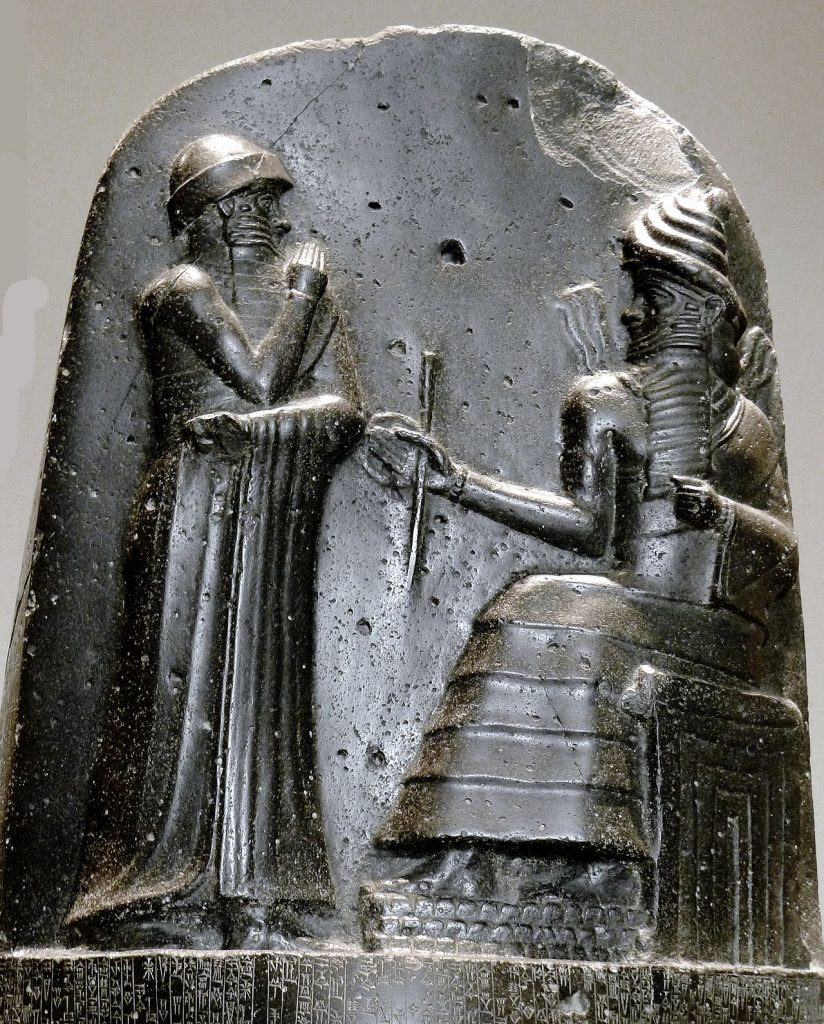
As administrative capacity thinned and ritual absorbed decision-making, the royal court assumed a new and increasingly central function. It became the space where instability was managed, filtered, and rendered invisible. Courtiers controlled access to the king, regulated information flow, and shaped the timing and framing of royal action. What reached the throne was curated. What left it was polished. The court did not merely support kingship. It actively stabilized the image of rule at moments when the substance of control was fragmenting.
Court officials served as buffers between authority and reality. Provincial reports, military intelligence, and fiscal assessments were selectively summarized, delayed, or softened before presentation. Bad news did not disappear, but it rarely arrived unmediated. This was not simple deception. It was institutional self-preservation. Acknowledging the full scope of dysfunction threatened not only the king’s authority, but the legitimacy of the entire governing structure that depended on it. The court learned to translate disorder into manageable narratives, preserving decisiveness by narrowing the scope of what required decision.
Public performance was equally critical, and it grew more elaborate as effective control became less reliable. Royal proclamations, building inscriptions, ceremonies, and legal pronouncements continued unabated, projecting continuity and confidence even when enforcement was uneven or symbolic. These acts did not require administrative reach to succeed in their primary function. They required repetition, visibility, and formal correctness. The court orchestrated these performances with care, calibrating language, ritual timing, and spectacle to reinforce the impression of unbroken authority. Kings appeared as constant centers of order, issuing commands that affirmed hierarchy and cosmic alignment, while the practical work of governance drifted outward to provincial elites, military commanders, and priestly specialists. Stability, in this context, became something enacted through display rather than secured through coordination.
The performance of stability thus became a governing strategy in its own right, not merely a byproduct of weakened administration. Courts protected authority by insulating it from contradiction, managing appearances so that the office of kingship remained intact even as its reach narrowed. This arrangement delayed confrontation with structural weakness by transforming governance into spectacle, procedure, and managed consensus. The system did not fail because it stopped functioning. It failed later because it functioned too effectively at concealing its own limits. By preserving the image of control, court management allowed authority to survive beyond capacity, sustaining obedience and expectation until the accumulated gap between image and reality could no longer be absorbed or deferred.
Authority without Capacity as a Repeating Political Pattern

The Mesopotamian experience reveals a broader political dynamic that extends far beyond its immediate historical context. Authority does not depend solely on effective control to survive. Instead, it often persists through symbolic continuity, institutional habit, and social expectation. When administrative capacity weakens, systems rarely acknowledge the loss directly. They recalibrate how authority is expressed, shifting emphasis from coordination and enforcement to ritual, procedure, and performance. What appears as stability is frequently a negotiated illusion, maintained because confronting incapacity would threaten the legitimacy of the entire political order.
This pattern recurs because authority is embedded in structures that resist sudden transformation. Offices, titles, courts, and ceremonies outlive the conditions that once made them functional, accumulating meaning precisely because they endure. Populations are conditioned over time to respond to symbols of rule regardless of outcomes, equating continuity with legitimacy. Institutions, meanwhile, are incentivized to preserve themselves rather than diagnose failure. They adapt around weakness, absorb dysfunction into new layers of process, and redefine success in symbolic rather than material terms. Authority thus becomes something preserved for its own sake, detached from the capacity to deliver consistent governance. Power survives not because it works, but because it is recognized and expected.
A critical feature of this dynamic is the distinction between collapse and hollowing. Political systems rarely fail all at once. They thin from the inside, losing coherence before they lose form. Decision-making slows, enforcement becomes uneven, and responsibility disperses across intermediaries who shield the center from accountability. Yet the outward forms of authority remain intact and often intensify. Declarations are issued with greater frequency. Ceremonies become more elaborate. Procedures multiply, not to solve problems, but to manage uncertainty. These activities reassure participants that governance continues even as effectiveness declines, allowing authority to persist as a performance rather than a capacity. The illusion of control delays confrontation with reality, often long enough to shift costs outward to peripheral populations or forward to future generations.
Understanding authority without capacity requires abandoning the assumption that legitimacy follows performance. History suggests the opposite is often true. Performance sustains legitimacy in the absence of results. The repetition of authority signals normalcy, and normalcy suppresses alarm. Only when contradictions accumulate faster than institutions can absorb them does the illusion fracture. By then, collapse appears abrupt, but it is merely the visible end of a long process of managed decline. The Mesopotamian case does not represent an early failure of governance. It represents an early mastery of how power survives after its tools have eroded.
Medieval Echoes: Kingship, Ritual, and the Limits of Rule
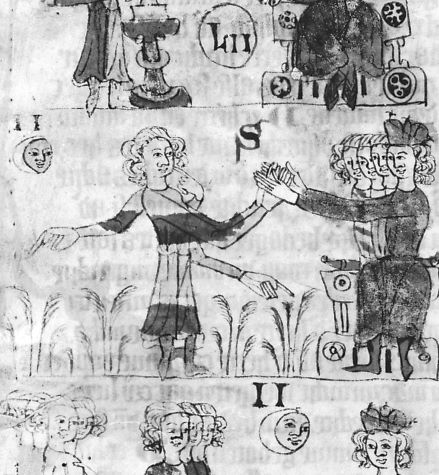
Medieval Europe did not inherit a fully centralized model of governance, nor did it expect one. Kings ruled over fragmented territories marked by local custom, overlapping jurisdictions, and uneven enforcement, conditions that made comprehensive administration structurally impossible. Royal power was real, but it was intermittent, negotiated, and heavily mediated by nobles, clergy, and municipal authorities. The distance between proclamation and practice was not an aberration of medieval rule. It was one of its defining features. Yet this gap did not undermine kingship as an institution. Instead, it shaped how authority was expressed. Where administrative reach was limited, legitimacy was reinforced through ritual, ceremony, and symbolic justice, allowing rule to persist without demanding uniform control.
Coronation rites, royal itinerancy, and public justice served to reaffirm authority in spaces where permanent administration was thin or absent. The king’s presence mattered precisely because it was intermittent. Ritual encounters substituted for continuous oversight. Oaths of fealty, ceremonial courts, and symbolic acts of punishment reinforced hierarchy even when enforcement depended on local elites. As in Mesopotamia, authority was sustained through visibility and repetition rather than constant intervention. Kingship remained credible because it was enacted regularly, not because it reached uniformly.
Law played a similar stabilizing role, functioning less as a mechanism of enforcement than as a language of authority. Medieval legal systems often projected universality while tolerating enormous variation in practice across regions and jurisdictions. Royal writs, charters, and proclamations articulated ideals of justice that exceeded administrative capacity, asserting coherence where fragmentation prevailed. Courts functioned unevenly, and enforcement depended heavily on local cooperation, negotiation, and compromise. Yet the persistence of legal ritual preserved the illusion of order. The promise of justice, repeatedly invoked and ceremonially affirmed, reassured subjects that authority existed even when remedies were delayed, partial, or symbolic. Law sustained legitimacy not by resolving disputes efficiently, but by affirming that resolution remained conceptually possible.
Religious sanction further insulated authority from the consequences of limited capacity. Divine right did not grant kings effective control over their realms. It granted them ontological legitimacy that placed their authority beyond ordinary political contestation. Failure could be reframed as divine testing, moral trial, or providential delay rather than administrative weakness. Like omen consultation in Mesopotamia, religious justification displaced responsibility upward, away from human institutions and toward sacred order. The sacred character of kingship discouraged direct challenge even as administrative shortcomings were widely recognized. Authority endured because it was embedded in a cosmological framework that transformed limitation into inevitability rather than failure.
The medieval period thus reinforces the broader pattern of authority without capacity. Kingship survived not by overcoming fragmentation, but by managing it symbolically. Ritual, law, and religion worked together to stabilize rule in the absence of comprehensive control. Medieval governance did not conceal its limits entirely, but it normalized them. The system functioned because expectations adjusted. Authority remained persuasive as long as it could be seen, named, and repeated. Capacity mattered, but legitimacy did not depend on it.
Modern Administration and the Survival of Hollow Authority
Modern states are often assumed to have resolved the problem of authority without capacity through bureaucracy, data collection, and procedural rationality. In practice, modern administration frequently reproduces the same structural gap in a new idiom. Formal hierarchies, regulatory frameworks, and managerial systems create the impression of comprehensive control even when institutions lack the material, personnel, or political means to implement decisions consistently. Authority persists through documentation, reporting requirements, and institutional ritual, while effective coordination becomes uneven, delayed, or symbolic. The state appears omnipresent on paper, in policy, and in procedural language even as its practical reach fragments across agencies, jurisdictions, and contractors.
Bureaucratic procedure plays a role closely analogous to ritual in earlier political systems. Rules, audits, compliance regimes, and review processes multiply not as evidence of mastery, but as responses to uncertainty and risk. When outcomes cannot be reliably produced, institutions redirect attention to process itself. Compliance replaces effectiveness as the primary measure of success. Decisions are justified through adherence to procedure rather than through results, allowing authority to remain insulated from failure. Responsibility is deferred sideways across offices, committees, and workflows, dispersing accountability until no single actor bears full ownership of outcomes. Like omen consultation or legal ceremony in earlier eras, bureaucracy converts uncertainty into process and delay into legitimacy.
Administrative language further sustains this hollow authority. Policy documents, strategic plans, and mission statements articulate ambitions that exceed institutional capacity while maintaining the appearance of rational control. Problems are redescribed as challenges, setbacks as transitions, and failure as the need for further study. This rhetorical discipline stabilizes authority by preventing contradiction from crystallizing into crisis. Institutions continue to function, not because they resolve underlying issues, but because they manage perception effectively. The performance of governance becomes indistinguishable from governance itself.
Modern authority without capacity is therefore not a breakdown of the administrative state, but one of its most durable configurations. Like courts and priesthoods before it, bureaucracy preserves legitimacy by sustaining continuity in the face of declining effectiveness. The survival of hollow authority depends on repetition, documentation, and procedural fidelity rather than substantive control. Collapse, when it comes, is rarely caused by the sudden loss of authority. It arrives when accumulated contradictions overwhelm the capacity of institutions to absorb them through process alone.
Why Institutions Protect Illusions

Institutions do not protect illusions accidentally. They do so because acknowledging the loss of control threatens their own reason for existence. Administrative systems, courts, priesthoods, and bureaucracies are built to manage continuity, not rupture. Their internal logic prioritizes stability, predictability, and procedural legitimacy. When effectiveness declines, admitting that decline would require a fundamental revaluation of authority itself. Protecting the illusion of control becomes a survival strategy, allowing institutions to continue operating without confronting questions they are structurally unequipped to answer.
One reason illusions persist is risk aversion embedded deep within institutional culture, reinforced through incentives and professional norms. Individuals within systems are rewarded for compliance, caution, and procedural fidelity rather than for disruptive truth-telling. To acknowledge that authority has outlived its capacity is to invite uncertainty, redistribution of power, or institutional dissolution. Careers are rarely built on naming structural failure. As a result, warning signs are softened, reframed, or deferred. Problems are translated into technical challenges, policy gaps, or future reforms rather than existential failures. Illusion becomes a buffer against responsibility, shielding both individuals and structures from the consequences of honest diagnosis while preserving internal cohesion.
Institutions also protect illusions because authority functions as a coordinating fiction. Even weakened authority provides a shared reference point that organizes behavior, expectations, and obedience. Removing that fiction too quickly risks fragmentation. Courts hesitate to invalidate authority outright. Administrations avoid declaring incapacity. Clerical and bureaucratic intermediaries continue to perform legitimacy because the alternative appears worse than managed decline. Illusion, in this sense, is not merely deception. It is a tool for delaying chaos, maintaining order long enough for adjustment, negotiation, or succession to occur.
Historical systems demonstrate that illusion is most fiercely defended when power is diffuse. When responsibility is spread across agencies, committees, or intermediaries, no single actor can declare failure without implicating the entire structure. Collective dependence on authority discourages individual dissent. The more complex the institution, the harder it becomes to locate accountability. Illusion thrives in complexity because complexity obscures causality. Failure becomes ambient rather than attributable, allowing authority to persist without scrutiny.
Institutions protect illusions because legitimacy is easier to preserve than capacity, and because appearances can be maintained long after effectiveness has declined. Restoring capacity requires resources, coordination, political will, and often conflict. Preserving appearance requires only repetition. Ritual, procedure, language, and performance are cheaper than reform and less threatening than accountability. These tools extend authority beyond its functional lifespan, often long enough to ensure institutional survival even as public trust erodes. Illusions collapse not when they are exposed, but when they can no longer organize behavior. Until that point, institutions will defend them relentlessly, because illusion remains the last barrier between managed order and open disintegration.
Conclusion: The Long Life of Empty Power
The history traced here demonstrates that authority does not vanish when its capacity erodes. From Late Bronze Age Mesopotamia to modern administrative states, power survives by changing form rather than relinquishing itself. When rulers and institutions can no longer reliably govern through direct control, they turn to ritual, procedure, language, and performance to preserve legitimacy. Authority becomes less about coordination and more about continuity. What endures is not effectiveness, but expectation.
This endurance is not accidental, nor is it merely the result of inertia. Systems learn, often quickly, that authority organizes behavior even when it no longer delivers results. Courts manage appearances to prevent contradiction from becoming crisis. Rituals defer responsibility upward or outward, insulating decision-makers from accountability. Laws promise coherence even when enforcement is uneven. Bureaucracies multiply procedure, creating the impression of rational mastery where coordination is in fact fragmented. Each adaptation delays confrontation with decline by transforming failure into process. The illusion of control is not simply tolerated as a byproduct of governance. It is cultivated, defended, and refined because it stabilizes systems long enough to preserve hierarchy, continuity, and institutional survival.
The danger of empty power lies not in its symbolism, but in its longevity and distributive effects. Illusions allow institutions to persist while quietly transferring costs outward and forward. Peripheral populations absorb dysfunction first, bearing the burdens of uneven enforcement, delayed justice, and administrative neglect. Future generations inherit accumulated contradictions that were managed rather than resolved. By the time collapse becomes visible, it appears sudden only because recognition has been postponed for so long. Authority without capacity does not fail dramatically. It fails slowly, quietly, and unevenly, sustained by its own performance until reality overwhelms the structures designed to defer it.
Recognizing this pattern does not require cynicism, but clarity. Political systems have always relied on symbols, rituals, and procedures. The problem arises when these tools replace capacity rather than support it. Empty power endures because it is easier to perform legitimacy than to restore effectiveness. The long life of authority without control is therefore not a historical anomaly. It is one of the most reliable features of governance itself.
Bibliography
- Arendt, Hannah. On Violence. New York: Harcourt, Brace and World, 1970.
- Bloch, Marc. The Royal Touch: Sacred Monarchy and Scrofula in England and France. London: Routledge, 1924.
- Bottéro, Jean. Religion in Ancient Mesopotamia. Translated by Teresa Lavender Fagan. Chicago: University of Chicago Press, 2001.
- Brinkman, J. A. A Political History of Post-Kassite Babylonia, 1158–722 B.C. Rome: Pontificium Institutum Biblicum, 1962.
- Brisch, Nicole. “Of Gods and Kings: Divine Kingship in Ancient Mesopotamia.” Religion Compass 7:2 (2013): 37-46.
- Brunner, Otto. Land and Lordship: Structures of Governance in Medieval Austria. Philadelphia: University of Pennsylvania Press, 1992.
- Debourse, Céline and Michael Jursa. “Conceptualizing a Priestly World: Past, Present, and Future in Hellenistic Babylon.” Religions 16:6 (2025): 731.
- Geertz, Clifford. Local Knowledge: Further Essays in Interpretive Anthropology. New York: Basic Books, 1983.
- Glassner, Jean-Jacques. Mesopotamian Chronicles. Atlanta: Society of Biblical Literature, 1993.
- Graeber, David. The Utopia of Rules: On Technology, Stupidity, and the Secret Joys of Bureaucracy. Brooklyn: Melville House, 2015.
- Hamilton, Gary G. and John R. Sutton. “The Problem of Control in the Weak State: Domination in the United States, 1880-1920.” Theory and Society 18:1 (1989): 1-46.
- Kantorowicz, Ernst H. The King’s Two Bodies: A Study in Medieval Political Theology. Princeton: Princeton University Press, 1957.
- Liverani, Mario. The Ancient Near East: History, Society and Economy. London: Routledge, 2013.
- Merton, Robert K. Social Theory and Social Structure. New York: Free Press, 1949.
- North, Douglass C. Institutions, Institutional Change and Economic Performance. Cambridge: Cambridge University Press, 1990.
- North, Douglass C., John Joseph Wallis, and Barry R. Weingast. Violence and Social Orders: A Conceptual Framework for Interpreting Recorded Human History. Cambridge: Cambridge University Press, 2009.
- Oppenheim, A. Leo. Letters from Mesopotamia: Official, Business, and Private Letters on Clay Tablets from Two Millennia. Chicago: The University of Chicago Press, 1967.
- Radner, Karen. Ancient Assyria: A Very Short Introduction. Oxford: Oxford University Press, 2015.
- Reynolds, Susan. Kingdoms and Communities in Western Europe, 900–1300. Oxford: Oxford University Press, 1984.
- Rochberg, Francesca. The Heavenly Writing: Divination, Horoscopy, and Astronomy in Mesopotamian Culture. Cambridge: Cambridge University Press, 2004.
- Roth, Martha T. “Mesopotamian Legal Tradition and the Laws of Hammurabi.” Chicago-Kent Law Review 71:1,3 (1995): 13-39.
- Scott, James C. Seeing Like a State: How Certain Schemes to Improve the Human Condition Have Failed. New Haven: Yale University Press, 1998.
- Ullmann, Walter. The Growth of Papal Government in the Middle Ages. London: Methuen, 1955.
- Van De Mieroop, Marc. A History of the Ancient Near East, ca. 3000–323 BC. 3rd ed. Malden, MA: Wiley-Blackwell, 2003.
- —-. Philosophy before the Greeks: The Pursuit of Truth in Ancient Babylonia. Princeton: Princeton University Press, 2015.
- Weber, Max. Economy and Society. Edited by Guenther Roth and Claus Wittich. Berkeley: University of California Press, 1978.
Originally published by Brewminate, 01.29.2026, under the terms of a Creative Commons Attribution-NonCommercial-NoDerivatives 4.0 International license.
About the Author