The Roman Republic demonstrates with unsettling clarity that elections can persist long after democratic or republican self-government has ceased to exist.

By Matthew A. McIntosh
Public Historian
Brewminate
Introduction: Elections as Political Form and Political Substance
Elections are often treated as the defining feature of democratic governance, the visible moment when political authority is granted or withdrawn. In both popular and scholarly discourse, the act of voting is frequently taken as synonymous with self-government itself. Historically, however, elections have functioned less as isolated events than as components of a larger constitutional machine. They structure political competition, distribute legitimacy, and, most critically, impose uncertainty on those who seek power. Genuine elections bind rulers to the ruled precisely because outcomes are not predetermined. When elections operate freely, they force elites to persuade, compromise, and submit to collective judgment. When their administration is captured or controlled, elections may persist in form while losing their capacity to constrain authority. Democracy, cannot be reduced to the existence of ballots or polling places. It depends on the relationship between elections and sovereignty.
This distinction between political form and political substance is critical for understanding how republics fail. Elections can survive constitutional breakdown precisely because they are useful symbols. They signal continuity, legality, and popular consent even when those qualities have been hollowed out. Administrative changes that alter who may stand for office, how votes are counted, or which bodies possess decisive authority often appear technical or temporary. Yet these adjustments determine whether elections constrain power or merely ratify it. The outward rituals of democracy can remain intact while their capacity to limit domination disappears.
The late Roman Republic illustrates this danger with particular clarity. Rome did not abandon elections as it moved toward autocracy. Assemblies continued to meet, magistrates continued to be chosen, and constitutional language remained in use. What changed was the administration of political competition. Through emergency measures, eligibility restrictions, and the centralization of authority, electoral outcomes became increasingly predictable and controllable. The republic’s institutions survived, but their adversarial character did not. Elections ceased to function as mechanisms of accountability and became instruments of managed consent.
What follows argues that the Roman experience reveals a structural truth about democratic collapse that extends far beyond antiquity. Democracy fails not when elections are canceled, but when control over them is consolidated in the hands of those who benefit most from their outcomes. By tracing the transformation of Roman electoral governance from the crises of the first century BCE through the constitutional interventions of Sulla and the monopolization of authority under Julius Caesar, this study demonstrates how constitutional forms can be preserved even as political substance is drained away. Rome’s warning is not that elections are fragile or easily destroyed, but that they are easily repurposed. When that repurposing occurs, democracy does not end loudly or dramatically. It ends procedurally, through rules, offices, and reforms that claim to save the system while quietly replacing popular sovereignty with administrative control.
The Roman Republican System: Assemblies, Magistracies, and Electoral Balance
The Roman Republic was not a democracy in the modern sense, but it was a carefully balanced system in which elections played a central legitimizing role. Political authority was distributed across multiple institutions, including popular assemblies, annually elected magistrates, and the Senate. No single body governed alone. Elections did not guarantee popular sovereignty, but they ensured that power remained contested. Magistrates required electoral authorization to govern, and that authorization was time-limited, public, and competitive. This structure created friction by design, preventing durable monopolies over authority.
Roman assemblies varied in composition and function, but together they formed the electoral backbone of the Republic. The comitia centuriata elected the highest magistrates and decided matters of war and peace, while the comitia tributa and concilium plebis elected lower officials and passed legislation. Although weighted by class, age, and status, these bodies nonetheless subjected elite ambition to collective procedures that could not be bypassed without consequence. Electoral success required extensive coalition-building, careful cultivation of public reputation, and conformity to shared expectations of conduct. Assemblies were arenas of competition as much as participation, ensuring that political advancement remained publicly visible and procedurally constrained.
Magistracies further reinforced this balance through collegiality, limited tenure, and rotation. Consuls, praetors, and other officials governed in pairs or groups, a design meant explicitly to frustrate unilateral domination and personal rule. Annual terms ensured constant turnover and recurring electoral accountability, preventing any single officeholder from embedding themselves permanently within the machinery of the state. Restrictions on immediate reelection further curtailed the consolidation of personal authority, while the expectation of future prosecution after office imposed additional restraint. Even extraordinary offices, such as the dictatorship, were bounded by strict temporal limits and narrowly defined purposes. Authority in the Roman system was intentionally fragmented, strong enough to govern effectively yet structured to expire before it could become entrenched.
The Senate, often mischaracterized as an oligarchic ruling body, functioned primarily as a coordinating institution rather than a sovereign one. It advised magistrates, managed foreign policy continuity, and shaped administrative norms, but it did not govern directly. Senators themselves were former magistrates whose authority derived indirectly from prior electoral success. The Senate’s influence rested on prestige and precedent rather than formal command. Its power depended on the cooperation of elected officials and the acceptance of its authority by the assemblies.
This system worked because no institution controlled the entire electoral process. Assemblies elected magistrates, magistrates exercised executive authority, and the Senate provided continuity and guidance. Each institution depended on the others for legitimacy and effectiveness, creating a web of mutual constraint rather than a hierarchy of command. Electoral competition introduced genuine uncertainty of outcome, ensuring that ambition could never rely solely on patronage or force. Institutional fragmentation reinforced this uncertainty by preventing any single body from redefining political reality unilaterally. The Republic’s durability rested not on the moral purity of any one institution, but on the interdependence of many, each limiting the others through procedure, expectation, and custom.
The Roman Republican system illustrates a crucial principle for understanding later collapse. Republican governance does not require universal equality, but it does require contested access to power and durable procedural restraint. Elections mattered not because they were democratic in a modern sense, but because they imposed limits on ambition and created predictable pathways for political competition. When those limits were respected, rivalry remained bounded and legitimacy broadly shared. When they were eroded through administrative manipulation or centralized oversight, the Republic could continue to look constitutional while ceasing to function as one.
Crisis as Opportunity: Civil War and the Delegitimization of Popular Rule
The late Roman Republic entered the first century BCE in a state of chronic instability that reached into every dimension of political life. Rome’s rapid imperial expansion had produced unprecedented wealth and military power, but it also destabilized traditional civic arrangements. Continuous warfare blurred the line between civilian and soldier, while the influx of spoils intensified competition among elites. Veterans returned from campaigns to find land shortages, debt, and political exclusion, fueling resentment and factional mobilization. At the same time, the political calendar itself became a battleground, as elections, legislation, and prosecutions were increasingly entangled with violence. Crisis ceased to be a temporary disruption and became the Republic’s normal condition.
These conditions provided fertile ground for reinterpreting popular rule as a liability rather than a safeguard. Assemblies that had once been arenas of legitimate contestation were increasingly depicted as volatile, corruptible, and susceptible to demagogic manipulation. Electoral competition, long celebrated as a means of balancing ambition, came to be framed as a source of disorder that undermined state security. Violence surrounding elections and legislative assemblies reinforced elite narratives that popular participation itself was the problem. The solution proposed was not the abolition of elections, but their containment.
Civil war accelerated this delegitimization by collapsing the distinction between political opposition and existential threat. Rival factions no longer recognized one another as participants in a shared constitutional order, but as enemies whose success would mean the Republic’s destruction. Political disagreement was recast as subversion, and procedural restraint as weakness. Once opposition could be labeled dangerous or illegitimate, bypassing assemblies and ignoring electoral outcomes appeared justified. Emergency rhetoric blurred the line between defense and domination, allowing leaders to claim that extraordinary power was not only permissible but necessary. As violence escalated, appeals to popular consent were increasingly dismissed as naive or irresponsible, reinforcing the idea that stability required control rather than participation.
The logic of crisis governance transformed constitutional norms into conditional privileges rather than binding rules. Assemblies could be ignored or intimidated in the name of urgency. Magistrates could exceed traditional limits under claims of necessity and precedent. Extraordinary commands, once rare and tightly constrained, became routine instruments of political control. Each deviation from established practice was defended as temporary and exceptional, yet collectively these measures eroded the expectation that power must pass through electoral authorization. The Republic’s constitutional framework remained formally intact even as its functional restraints weakened.
By the time figures like Sulla and later Caesar emerged as arbiters of order, the conceptual groundwork had already been laid. Popular rule had been rhetorically discredited as incompatible with stability, and centralized authority presented as the only viable alternative. Crisis did not merely enable authoritarian intervention. It reshaped political expectations, teaching Romans to equate control with competence and participation with danger. In this way, civil war became not just a symptom of republican breakdown, but its engine.
Sulla’s Constitutional “Reforms”: Centralizing Elections without Abolishing Them
Lucius Cornelius Sulla entered Roman politics as a product of the very instability he would later claim to cure. His march on Rome in 88 BCE shattered long-standing constitutional taboos and normalized the use of military force to resolve political disputes. Yet when Sulla assumed the dictatorship, he did so not as a revolutionary intent on abolishing republican institutions, but as a self-proclaimed restorer of order. His stated goal was not to end elections, assemblies, or magistracies, but to repair what he argued had been corrupted by popular excess and factional violence.
Central to Sulla’s program was the claim that republican collapse had resulted from too much popular power exercised too irresponsibly. Tribunes, assemblies, and electoral competition were portrayed as destabilizing forces that empowered demagogues and undermined senatorial authority. Popular participation itself was reframed as a structural weakness rather than a source of legitimacy. Sulla and his supporters argued that unchecked electoral politics invited corruption, violence, and short-sighted decision-making. His reforms aimed to insulate governance from mass pressure while preserving constitutional forms, presenting elite supervision as a corrective rather than a usurpation.
One of Sulla’s most consequential reforms involved restricting eligibility for office in ways that fundamentally altered electoral competition. He imposed rigid career sequences and age requirements that narrowed the pool of viable candidates, ensuring that advancement followed paths approved by the senatorial elite. These measures were framed as restorations of tradition, but in practice they functioned as gatekeeping mechanisms. While elections continued, the range of meaningful choice was sharply reduced. Potential challengers who lacked senatorial backing or who threatened established hierarchies found themselves excluded long before ballots were cast. Control over who could compete became as decisive as the act of voting itself, shifting power from the electorate to those who defined eligibility.
Sulla also weakened institutions that had historically mediated popular power. The tribunate, once a critical channel for plebeian influence, was stripped of much of its authority, and former tribunes were barred from holding higher office. This effectively neutralized the position as a stepping stone to political prominence. Assemblies remained intact, but their legislative capacity was constrained by procedural and institutional limits that favored senatorial initiative. Popular participation survived, but its capacity to shape outcomes diminished.
Crucially, Sulla framed these changes as temporary and restorative. His dictatorship was presented as an emergency measure designed to stabilize the Republic and then withdraw. By resigning his office and allowing elections to resume, Sulla reinforced the illusion that constitutional normalcy had been restored. Yet the institutional landscape had been permanently altered. Electoral competition now operated within boundaries defined by centralized authority, and the precedent that constitutional rules could be rewritten under claims of necessity had been firmly established.
Sulla’s legacy lay not in the durability of his specific reforms, many of which were later reversed, but in the logic he normalized. He demonstrated that elections need not be abolished to be controlled. By centralizing eligibility, subordinating popular institutions, and redefining administrative authority, he transformed elections into managed processes that legitimized outcomes increasingly determined elsewhere. The Republic still voted, but it did so within a framework hostile to genuine uncertainty of outcome. Sulla’s constitutional moment taught future leaders that power could be consolidated without destroying republican forms. Elections could survive, assemblies could meet, and magistrates could be chosen, all while sovereignty quietly migrated away from the people.
The Illusion of Restoration: Why “Temporary” Electoral Control Persists
Sulla’s resignation from the dictatorship and his ostentatious withdrawal from public life were carefully staged acts of political theater, designed to reassure Romans that the constitutional order had been restored. Elections resumed, magistrates were chosen, and the familiar rhythms of republican governance appeared to return. To many contemporaries, this seemed to confirm Sulla’s claim that his extraordinary powers had been exercised reluctantly and relinquished responsibly. Yet this apparent restoration masked a deeper transformation. The institutional environment in which elections now operated had been fundamentally altered, and those alterations did not vanish with Sulla’s retirement. What was framed as a temporary correction became a durable redefinition of how political authority could be reorganized during crisis.
The persistence of “temporary” electoral control rests on a structural asymmetry. Emergency powers are easy to justify and difficult to unwind, not simply because leaders may wish to retain them, but because they reshape institutions, incentives, and expectations. Once eligibility rules, administrative oversight, and procedural constraints are centralized, returning to prior conditions requires more than the formal resumption of elections. It demands a collective recommitment to uncertainty, competition, and restraint. In Rome, no such recommitment followed Sulla’s abdication. The Republic resumed voting, but it did so within boundaries that normalized elite supervision and narrowed the range of political possibility.
This pattern reveals why claims of restoration are so persuasive and so dangerous. By preserving the outward forms of constitutional order, leaders can plausibly argue that no lasting harm has been done. Voting continues. Offices are filled. Laws are debated. Yet the decisive changes lie beneath the surface, in who controls access to office, agenda-setting, and enforcement. Temporary measures harden into precedents, and precedents become expectations. Each subsequent crisis makes the invocation of emergency authority easier, as earlier interventions supply both justification and institutional scaffolding.
The Roman case demonstrates that the most enduring legacy of temporary control is not any single reform, but the erosion of constitutional imagination itself. Once a polity accepts that electoral sovereignty may be suspended, supervised, or redesigned for the greater good, it becomes difficult to insist that it must be fully restored. The range of what seems politically possible contracts. Elections persist, but their meaning shifts. They no longer function as mechanisms of collective self-rule, but as managed affirmations of an order already determined elsewhere. Restoration, in this sense, becomes not a return to democracy, but a ritual that obscures its quiet disappearance.
Julius Caesar and the Final Hollowing of the Republican Vote
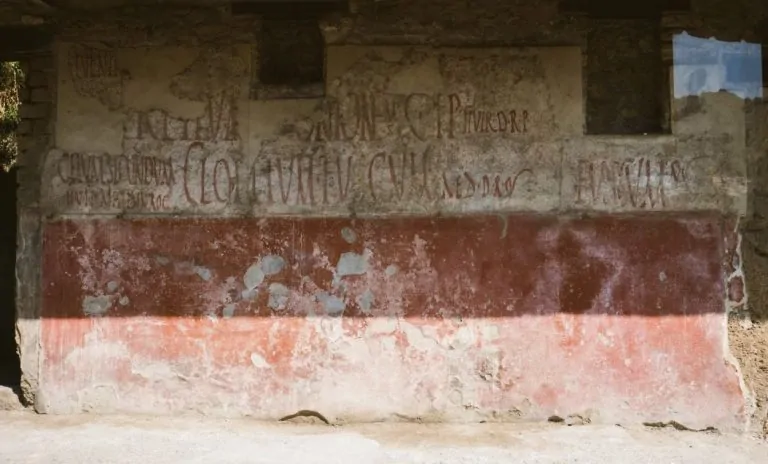
Julius Caesar did not overthrow the Roman Republic by abolishing its elections. He inherited a system already conditioned to accept centralized authority as a remedy for disorder and refined it to its logical conclusion. Where Sulla had restructured eligibility and procedure under the banner of restoration, Caesar perfected the art of electoral management. Assemblies continued to meet, magistracies were still filled, and constitutional language remained in circulation. What changed decisively was the locus of decision-making. Electoral outcomes became predictable not because voting ceased, but because choice was increasingly preempted.
Caesar’s dominance rested on monopolizing the pathways to office in ways that subtly but decisively reshaped political competition. Through repeated consulships, extraordinary military commands, and long-term provincial governorships, he positioned himself as the primary distributor of advancement and protection. Patronage networks expanded until loyalty to Caesar became a prerequisite for political survival. Candidates aligned with his interests advanced smoothly, while rivals encountered procedural delays, legal harassment, or exclusion from meaningful opportunities. Elections still occurred, but the field of viable contenders narrowed dramatically before any votes were cast. Competition persisted in form, but not in substance.
Administrative innovation played a critical role in consolidating this control. Caesar expanded the Senate and filled it with supporters, weakening its capacity to function as an independent counterweight while preserving its institutional façade. He manipulated electoral calendars, extended magistracies beyond traditional limits, and blurred the distinction between offices filled by election and those effectively granted by executive discretion. These measures did not abolish voting; they subordinated it. The assemblies’ role shifted from choosing among alternatives to affirming arrangements already engineered through centralized authority. Electoral procedures survived, but their capacity to introduce uncertainty into political outcomes steadily disappeared.
Equally important was the rhetorical framing that accompanied this consolidation. Caesar presented himself not as an autocrat, but as a necessary stabilizer of a fractured Republic. His interventions were justified as safeguards against corruption, paralysis, and renewed civil war. Popular participation was not formally denied, but it was carefully managed and choreographed. By maintaining the spectacle of elections, Caesar preserved the appearance of popular consent while stripping participation of its constraining force. Legitimacy was no longer produced by contestation, but by administration.
The final hollowing of the republican vote occurred through cumulative capture rather than dramatic rupture. By the time Caesar accepted perpetual honors and extraordinary authority, the electoral machinery of the Republic had already been repurposed. Voting continued, assemblies met, and offices were filled, but none of these processes meaningfully limited executive power. Elections survived as rituals of confirmation rather than mechanisms of accountability. The Roman case demonstrates that democracy does not require the formal abolition of the vote to die. It collapses when electoral administration becomes centralized, competition is preempted, and consent is managed rather than earned.
Elections as Theater: When Participation No Longer Constrains Power
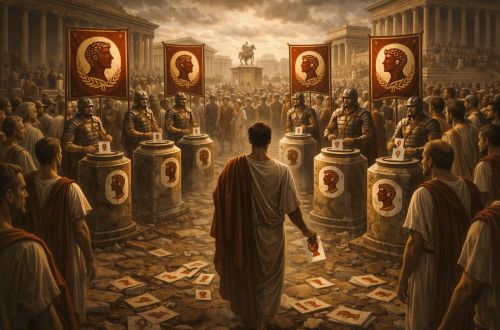
By the final decades of the Roman Republic, elections had ceased to function as instruments of restraint and had instead become performances of legitimacy. Voting continued, assemblies met, and magistrates were duly inaugurated, yet none of these acts meaningfully constrained those who held real authority. Participation remained visible, even celebrated, but its political effect was largely symbolic. Elections no longer introduced uncertainty into governance. They confirmed outcomes shaped elsewhere, transforming civic engagement into a ritual rather than a mechanism of accountability.
This theatrical quality depended on the careful preservation of form. Roman political culture remained deeply attached to ancestral custom, and outright abolition of elections would have been destabilizing and unnecessary. Instead, powerholders learned to stage participation while managing its limits. Candidates were preselected through patronage and administrative control. Procedures were observed, but only after competition had been neutralized. The people still gathered, still voted, still acclaimed, yet their role increasingly resembled that of an audience responding to a script rather than actors shaping the plot.
The shift from constraint to theater had profound consequences for political legitimacy and public perception. Because elections continued to occur, they generated a veneer of consent that insulated centralized authority from direct challenge. Republican symbols and rituals reassured citizens that continuity endured, even as the substance of self-rule eroded. This arrangement proved more stable than overt repression, as it allowed domination to operate invisibly. Responsibility for political outcomes became diffuse. Failures could be attributed to procedure, tradition, or fate rather than to concentrated power. The presence of elections itself became evidence of freedom, blunting resistance and normalizing passivity.
Rome’s experience illustrates a critical warning for all electoral systems. Democracy does not die when people stop voting. It dies when voting stops mattering as a constraint on power. Once participation no longer introduces uncertainty or limits authority, elections are repurposed as tools of stabilization rather than instruments of self-rule. They legitimate decisions without shaping them. In such systems, citizens are invited to participate, but only within boundaries set elsewhere. The pageantry of democracy survives, but its capacity to govern does not. What remains is not popular rule, but managed consent enacted through familiar and reassuring forms.
Conclusion: When Elections Survive but Democracy Does Not
The Roman Republic demonstrates with unsettling clarity that elections can persist long after democratic or republican self-government has ceased to exist. Rome continued to vote, assemble, and inaugurate magistrates even as sovereignty migrated away from the electorate. What collapsed was not procedure, but constraint. Elections no longer imposed uncertainty on those who governed, nor did they meaningfully limit the concentration of power. By the time the Republic fell in anything more than name, its electoral machinery had already been repurposed to legitimate authority rather than to restrain it.
This transformation did not occur through a single act of usurpation. It unfolded through a series of administrative adjustments, emergency measures, and “temporary” interventions that collectively redefined the meaning of participation. Eligibility was narrowed, competition managed, and outcomes increasingly shaped before votes were cast. At each stage, the outward forms of constitutional order were preserved, allowing leaders to claim continuity even as substance drained away. The danger lay precisely in this preservation. Elections that survive as ritual can mask the loss of sovereignty more effectively than their abolition ever could.
The Roman case also reveals why such systems are so resilient. Managed elections distribute responsibility and obscure domination. Citizens continue to participate, officials continue to govern, and institutions continue to function visibly. When outcomes disappoint or injustice prevails, blame is diffused across process rather than concentrated on power. In this way, electoral theater stabilizes authority while neutralizing accountability. Participation becomes performative, consent procedural, and legitimacy administrative.
The lesson for republics past and present is structural rather than moral. Democracy does not depend solely on the act of voting, but on who controls the conditions under which votes matter. When electoral administration is centralized, competition preempted, and uncertainty eliminated, elections may survive indefinitely while self-government does not. Rome warns that this outcome is not an aberration or a corruption imposed from outside the constitutional order. It is a mutation that grows from within it, using familiar institutions and lawful procedures to achieve profoundly illiberal ends.
In this sense, the survival of elections can be the most dangerous stage of democratic collapse. As long as ballots are cast and offices filled, it becomes possible to deny that anything fundamental has been lost. Yet history suggests the opposite. When elections no longer constrain power, democracy has already ended, even if no one has yet announced its death. What remains is a system that governs through consent that has been carefully engineered, participation that has been carefully managed, and legitimacy that no longer flows upward from the people but downward from authority itself.
Bibliography
Affiliate disclosure: Amazon links on this site are paid links. As an Amazon Associate I earn from qualifying purchases.
- Amar, Akhil Reed. America’s Constitution: A Biography. New York: Random House, 2005.
- Appian. The Civil Wars. Translated by John Carter. London: Penguin Classics, 1996.
- Arendt, Hannah. The Origins of Totalitarianism. New York: Harcourt, Brace & Company, 1951.
- —-. On Revolution. New York: Penguin Books, 1963.
- Beik, William. Absolutism and Society in Seventeenth-Century France: State Power and Provincial Aristocracy in Languedoc. Cambridge: Cambridge University Press, 1985.
- Collins, James B. The State in Early Modern France. Cambridge: Cambridge University Press, 1995.
- Evans, Richard J. The Coming of the Third Reich. New York: Penguin Press, 2003.
- Flower, Harriet I. Roman Republics. Princeton: Princeton University Press, 2010.
- Hamilton, Alexander. The Federalist No. 59. In The Federalist Papers. New York: Signet Classics, 2003.
- Hasen, Richard L. Election Meltdown: Dirty Tricks, Distrust, and the Threat to American Democracy. New Haven: Yale University Press, 2020.
- Levitsky, Steven, and Daniel Ziblatt. How Democracies Die. New York: Crown, 2018.
- Lintott, Andrew. The Constitution of the Roman Republic. Oxford: Oxford University Press, 1999.
- —-. Violence in Republican Rome. Oxford: Oxford University Press, 1999.
- Madison, James. The Federalist No. 39. In The Federalist Papers. New York: Signet Classics, 2003.
- Manin, Bernard. The Principles of Representative Government. Cambridge: Cambridge University Press, 1997.
- Mommsen, Hans. The Rise and Fall of Weimar Democracy. Chapel Hill: University of North Carolina Press, 1996.
- Morstein-Marx, Robert. Mass Oratory and Political Power in the Late Roman Republic. Cambridge: Cambridge University Press, 2004.
- Plutarch. Life of Caesar. In Parallel Lives. Translated by Bernadotte Perrin. Cambridge, MA: Harvard University Press, 1919.
- —-. Life of Sulla. In Parallel Lives. Translated by Bernadotte Perrin. Cambridge, MA: Harvard University Press, 1919.
- Polybius. The Histories. Translated by Robin Waterfield. Oxford: Oxford University Press, 2010.
- Schmitt, Carl. Political Theology: Four Chapters on the Concept of Sovereignty. Translated by George Schwab. Chicago: University of Chicago Press, 2005.
- Snyder, Timothy. On Tyranny: Twenty Lessons from the Twentieth Century. New York: Tim Duggan Books, 2017.
- Steel, Catherine. End of the Roman Republic 146–44 BC: Conquest and Crisis. Edinburgh: Edinburgh University Press, 2013.
- Suetonius. The Twelve Caesars. Translated by Robert Graves. London: Penguin Classics, 2007.
- Syme, Ronald. The Roman Revolution. Oxford: Oxford University Press, 1939.
- Tribe, Laurence H. American Constitutional Law. 3rd ed. New York: Foundation Press, 1978.
- Wolin, Sheldon S. Democracy Incorporated: Managed Democracy and the Specter of Inverted Totalitarianism. Princeton: Princeton University Press, 2008.
- —-. Politics and Vision: Continuity and Innovation in Western Political Thought. Princeton: Princeton University Press, 2004.
- Yakobson, Alexander. Elections and Electioneering in Rome. Stuttgart: Franz Steiner Verlag, 1999.
Originally published by Brewminate, 02.05.2026, under the terms of a Creative Commons Attribution-NonCommercial-NoDerivatives 4.0 International license.
About the Author