Memory itself became a political instrument, shaping how past events were interpreted and how future expectations were formed.

By Matthew A. McIntosh
Public Historian
Brewminate
Introduction: When the Republic Learned to Sign Its Name
The transformation of Rome from republic to empire did not occur through a single constitutional rupture, nor did it announce itself through the abolition of republican offices. Instead, it unfolded through subtler mechanisms that reshaped how power was remembered, narrated, and credited. After decades of civil war, Romans did not merely crave stability. They needed an explanation for why stability had returned and to whom it was owed. In that vacuum, legitimacy became a problem of memory rather than law.
Augustus understood this problem with extraordinary precision. Rather than ruling through overt declarations of personal supremacy, he embedded himself into the fabric of Roman public life so thoroughly that the state’s achievements appeared inseparable from his person. Roads, temples, festivals, priesthoods, calendars, and laws all came to bear his imprint, not as crude acts of domination but as signals of continuity and care. These were not presented as innovations that displaced republican tradition, but as restorations that saved it from collapse. Rome continued to function as a republic in form, its magistracies intact and its language unchanged, yet the explanation for why things worked increasingly pointed in one direction. Power did not simply operate through institutions anymore. It circulated through presence, repetition, and association until governance itself seemed to speak in a single, familiar voice.
At the center of this transformation stood the Res Gestae Divi Augusti. Ostensibly a record of deeds, the text functioned as something closer to an official balance sheet of political credit, meticulously itemizing what had been given, built, repaired, or restored. It did not argue for Augustus’ legitimacy or defend it against rivals. It rendered rivals invisible and debate unnecessary. Public works, restored peace, generosity to the people, and reverence for tradition were framed as personal contributions rather than collective outcomes or institutional processes. Even restraint was claimed as a virtue, emphasized as a voluntary choice rather than a structural limitation. The republic still existed rhetorically, but it was now narrated as something fragile, rescued, and sustained by a single steward whose presence explained its survival.
Augustus pioneered a durable political strategy in which public office gave way to personalized state memory. By redefining how Rome remembered itself, he made personal authority feel natural, inevitable, and deserved. The innovation was not tyranny in the traditional sense, but something more enduring. It was the conversion of the state into a narrative that bore a name.
After Civil War: The Political Need for Memory Control

Rome emerged from the last generation of republican civil wars materially intact but psychologically fractured. The repeated cycles of violence had not only destroyed lives and fortunes but had also hollowed out confidence in the republic’s moral authority. Civil war had become a recurring instrument of politics rather than an unthinkable failure of it. Victories blurred into vendettas, and defeats bred grievances that refused to fade. Even those who claimed to act in the republic’s name had demonstrated how easily its laws could be suspended when power was at stake. In such a climate, peace alone could not heal the damage. What Rome required was a narrative capable of explaining why conflict had ended and why it should not resume.
Civil war creates a particular danger for any political system because it exposes the contingency of power. Once citizens have seen laws suspended and armies turned inward, authority cannot simply resume its old shape. It must be reinterpreted. Memory becomes a governing problem. If the recent past is allowed to remain contested, the future remains unstable. Competing narratives about blame, justification, and rightful rule threaten to reopen wounds that institutions alone cannot close.
This was the political landscape inherited by Augustus. His challenge extended far beyond securing military dominance or neutralizing remaining rivals. He needed to manage how Romans understood the recent past itself. Too much punishment would perpetuate cycles of resentment. Too much acknowledgment of shared guilt would preserve the moral equivalence of competing factions. Augustus instead advanced a carefully calibrated silence, one that neither denied conflict nor dwelled on it. The civil wars were framed as a collective tragedy rather than a series of political choices, and their resolution was presented as an act of responsible guardianship rather than conquest. By shifting attention away from how power had been seized and toward how order had been restored, Augustus dissolved the moral claims of his opponents without naming them.
Control of memory functioned as a form of preventative governance. By narrating the civil wars as a tragic aberration resolved through responsible stewardship, Augustus transformed political trauma into moral instruction. The past became a cautionary tale rather than an open argument. This reframing allowed Rome to move forward without formally resolving the contradictions that had destroyed the republic. Stability was achieved not by settling those contradictions, but by teaching Romans how to remember them.
The Res Gestae as a State-Authorized Ledger of Personal Credit
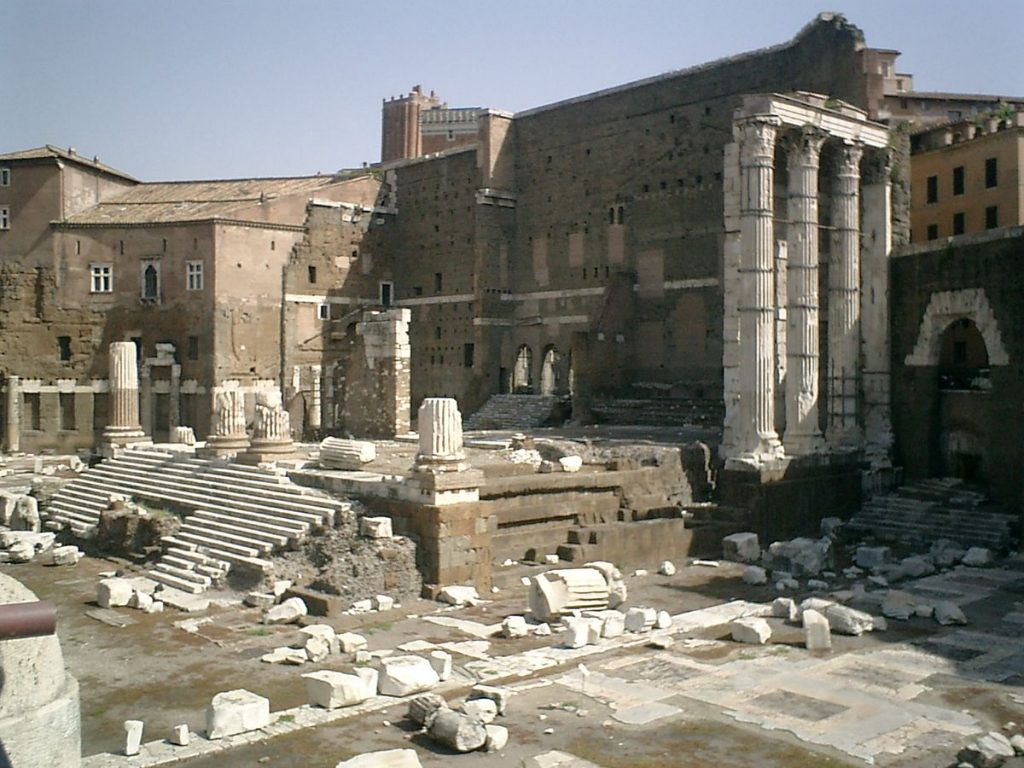
Among the many instruments Augustus used to shape Roman memory, none was more precise or more revealing than the Res Gestae. Presented as a straightforward account of achievements, the text avoided narrative drama, emotional appeal, or overt self-defense. Its power lay instead in accumulation. Line by line, it recorded offices held, benefactions bestowed, buildings erected, debts paid, and peace restored. What emerged was not a story but a balance sheet, a meticulous accounting in which political legitimacy appeared as the natural result of consistent personal contribution. The cumulative effect was subtle but decisive. By presenting achievement as a sequence of verifiable actions rather than contested decisions, the text transformed authority into something measurable, almost administrative, and consequently difficult to challenge.
The form of the Res Gestae was itself an assertion of authority. By adopting the language of record rather than persuasion, the text positioned Augustus above contestation and outside the arena of political debate. It did not invite judgment or rebuttal. It implied that judgment had already been rendered by time, order, and success. The absence of rhetorical flourish suggested transparency and restraint, qualities carefully cultivated as moral virtues. At the same time, the absence of alternative actors suggested inevitability. Collective effort vanished from view, replaced by a singular presence moving steadily through Rome’s institutional landscape. Magistracies, senatorial decrees, and popular assemblies appeared only as contexts in which Augustus acted or chose not to act, reinforcing the impression that stability itself depended on his discretion.
Equally significant was what the Res Gestae refused to acknowledge. Political rivals, contested elections, and the violence of civil war were almost entirely effaced. Conflict entered the text only as a problem that had been resolved, never as a struggle in which responsibility might be shared or debated. By omitting opponents, Augustus transformed political history into moral arithmetic. There were no competing claims to weigh, only services rendered and sacrifices made. The past became orderly because it had been edited to be so.
The physical dissemination of the Res Gestae reinforced this transformation of memory into authority. Inscribed on bronze pillars outside Augustus’ mausoleum and copied throughout the provinces, the text functioned as a permanent public document rather than a personal testament. Its placement mattered. Readers encountered it not in private libraries or elite circles but in civic space, alongside monuments, temples, and administrative centers. The repetition of the same text across the empire eliminated local variation and interpretation. Provincial subjects read Rome’s recent history through an identical lens, one that aligned local experience with a single, centralized narrative of benefaction and restraint.
Through the Res Gestae, Augustus converted governance into authorship. The state’s achievements became legible as his achievements, and memory itself became an extension of office. This was not merely commemoration after death, but a deliberate act of political ordering carried out in anticipation of it. By fixing the past in text and stone, Augustus ensured that future generations would encounter Rome’s transformation already explained, already justified, and already credited to one name.
Naming, Visibility, and the Saturation of Public Space
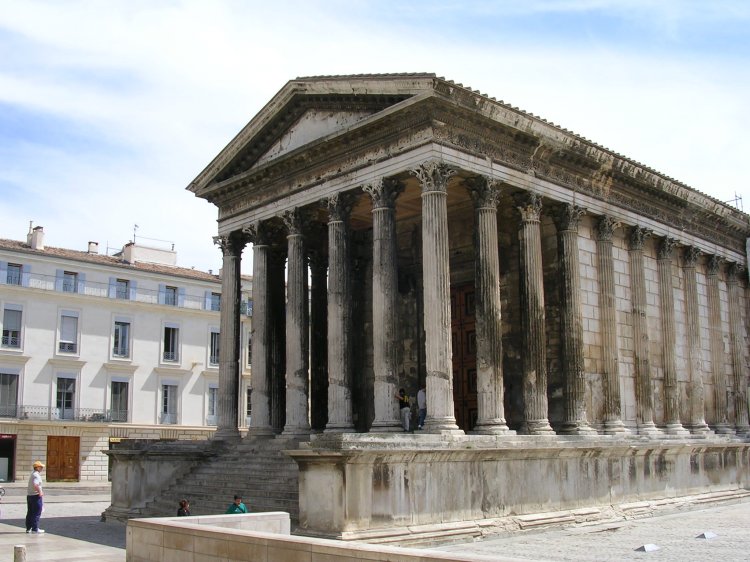
Augustan authority did not rely solely on texts or laws. It was reinforced daily through the visual and spatial transformation of Rome itself. Buildings, inscriptions, monuments, and rituals combined to produce an environment in which the presence of one individual became unavoidable. Public space did not merely commemorate power after the fact. It actively taught Romans how to see power as continuous, benevolent, and singular.
Urban renewal played a leading role in this process. Temples restored, forums redesigned, roads repaired, and theaters completed were presented as gifts rather than as routine functions of the state. Even when projects were funded through public treasuries or authorized by senatorial decree, their completion was framed as the result of personal initiative, foresight, or generosity. Inscriptions carefully foregrounded who had restored, dedicated, or financed a structure, compressing complex administrative processes into a single credited name. The emphasis on restoration rather than innovation further softened the transformation. Augustus appeared not as a disruptor of tradition but as its rescuer, returning Rome to an idealized past that conveniently coincided with his own rise. The city was not simply rebuilt. It was rhetorically reintroduced to itself as Augustan.
Visibility mattered as much as scale. Augustus understood that authority becomes durable when it is encountered repeatedly in ordinary life. Coins circulated his image across the empire. Calendars marked time according to events associated with his career. Festivals and public ceremonies synchronized civic participation with imperial memory. These encounters were not coercive. They were familiar. Familiarity eventually produced acceptance, and acceptance produced legitimacy that no decree could mandate.
Religious space further intensified this saturation. Priesthoods connected to the imperial household bound traditional worship to personal authority in ways that felt organic rather than imposed. The boundary between honoring the gods and honoring the ruler blurred without formally disappearing, preserving the appearance of continuity even as meaning shifted. By presenting himself as a restorer of neglected temples and a guardian of ancestral rites, Augustus positioned personal authority as an act of piety rather than ambition. Participation in public religion became inseparable from participation in imperial order, not through compulsion but through habit and reverence.
The cumulative effect of this saturation was psychological as much as political. When authority appears everywhere, it stops appearing as authority at all. It becomes background. Citizens no longer ask why power exists in a particular form because that form feels natural, even inevitable. The omnipresence of Augustan imagery and attribution trained Romans to associate stability with one figure without ever requiring an explicit declaration of ownership. Power dissolved into atmosphere. What had once been extraordinary became ordinary through repetition.
This transformation of public space also reshaped political memory. Monuments do not argue. They endure. By embedding his name and image into Rome’s physical landscape, Augustus ensured that future generations would encounter his authority as history rather than as choice. The city itself became a medium of persuasion, silently instructing its inhabitants on who had restored order and why that restoration should not be questioned.
Moral Reform and the Personalization of Virtue
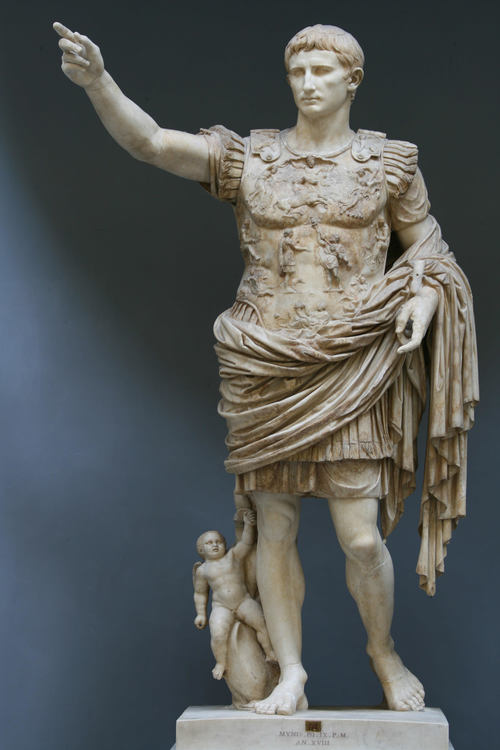
Augustus’ effort to stabilize Rome extended beyond monuments and memory into the moral life of the state. After civil war, disorder was not perceived solely as political failure but as ethical decay, a breakdown of discipline that threatened Rome’s future as much as armed conflict had threatened its present. Elite anxiety focused on falling birthrates, the dilution of aristocratic lineage, and the corrosive effects of wealth accumulated through conquest. Moral reform became a politically useful language through which instability could be reinterpreted as a solvable problem. By presenting himself as the restorer of virtue, Augustus reframed authority not as domination but as guardianship, making personal rule appear as a remedy rather than a rupture.
The marriage laws and social legislation of the late first century BCE were framed not as innovations but as revivals of ancestral customs. Adultery was criminalized, marriage encouraged, childbearing rewarded, and public honor increasingly tied to domestic behavior. These laws operated unevenly and were often resisted in practice, but their symbolic importance outweighed their enforcement. They established a moral baseline against which Roman identity could be measured, one that aligned order in private life with order in public affairs.
Crucially, these reforms were personalized rather than institutionalized. Augustus did not present moral renewal as a collective civic effort or as a senatorial program grounded in shared responsibility. Instead, virtue appeared as something he embodied, defended, and, when necessary, lamented. The laws themselves were repeatedly associated with his concern for Rome’s future, casting him as a reluctant moral physician rather than an intrusive legislator. Even when enforcement proved inconsistent or unpopular, the narrative remained intact: moral decline existed, reform was necessary, and the princeps alone possessed the authority to attempt it. In this way, moral failure within society became evidence of the need for personal oversight rather than a critique of the system itself.
This personalization was reinforced by Augustus’ careful self-presentation. His household was held up as a model of restraint, moderation, and traditional values, even when reality proved more complicated. Family scandal did not weaken the broader moral project because the project itself was defined by intention rather than outcome. By claiming the role of moral guardian, Augustus transformed private virtue into a political credential. Authority no longer derived solely from victory or benefaction, but from the claim to stand above society as its ethical measure.
Moral reform also served to blur the distinction between law and character. The state’s values were no longer articulated abstractly through custom or jurisprudence but reflected through the persona of its leader. To accept Augustan authority was to accept an accompanying vision of Roman virtue, one that privileged order, hierarchy, and restraint. Dissent from moral policy could be reframed as evidence of moral deficiency rather than political disagreement, shifting debate from the realm of law into the realm of character. This shift further insulated power by making criticism appear socially corrosive rather than constitutionally grounded.
Through these reforms, Augustus completed a crucial step in the personalization of the state. Rome was not only rebuilt in his image and remembered through his deeds. It was taught to see virtue itself as something that flowed from his example. Public order, moral stability, and political legitimacy converged in a single figure, reinforcing the illusion that the health of the republic depended less on institutions, norms, or shared accountability than on the character and vigilance of one man.
“The Republic Restored”: Rhetoric without Restoration
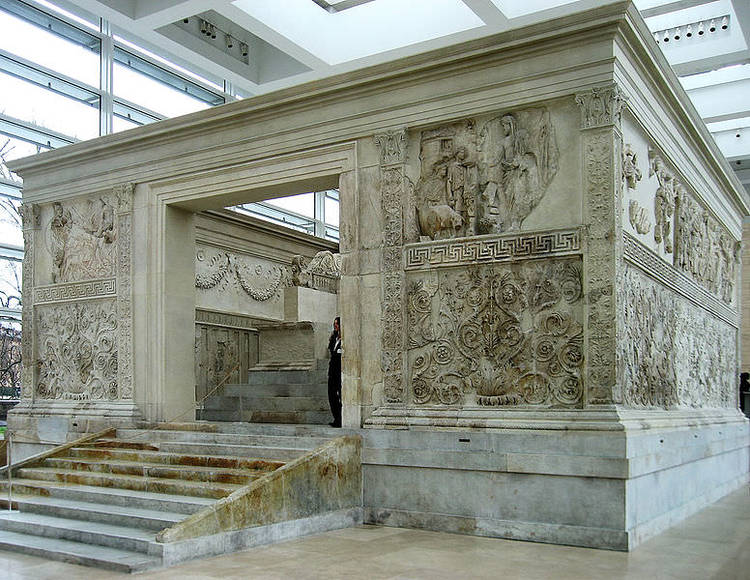
The claim that the republic had been restored stood at the center of Augustan political language and was repeated with deliberate consistency. Augustus insisted that extraordinary powers had been laid aside, that constitutional norms had been respected, and that traditional offices continued to function as they always had. This insistence was not incidental. It addressed a Roman public deeply traumatized by decades of civil war and deeply suspicious of kingship as a political form. By framing his authority as temporary, reluctant, and corrective, Augustus presented himself as the opposite of a tyrant. Restoration rhetoric reassured Romans that political abnormality had ended, even as the conditions that had once sustained republican competition had been permanently altered.
In practice, restoration functioned less as a constitutional reality than as a narrative solution. Magistracies continued to operate, the Senate convened, and elections were held, but the balance of initiative had shifted decisively. Authority flowed toward the princeps through informal influence, accumulated honors, and moral prestige rather than through explicit legal rupture. The preservation of republican forms masked a transformation in how decisions were made and credited. Institutions remained visible, but they no longer explained outcomes.
This rhetorical strategy depended on redefining what restoration meant. Rather than a return to shared governance or competitive politics, restoration was framed as stability, peace, and moral order. The republic was no longer measured by participation or contestation, but by its ability to function smoothly. By this standard, Augustus could plausibly claim success. The republic had been restored not as a system of power, but as an experience of order that depended on his continued presence.
Language played an important role in sustaining this illusion. Augustus avoided titles that suggested monarchy, preferring designations that emphasized service, restraint, and obligation. These linguistic choices were carefully calibrated to signal humility while preserving authority. By refusing the vocabulary of kingship, Augustus made power appear less threatening and less visible. This invisibility mattered. Power exercised openly invites resistance. Power exercised through reassurance invites consent. The claim of restoration neutralized opposition not by refuting it, but by denying that opposition was even relevant, since nothing fundamental was said to have changed.
The consequence of this rhetoric was a republic that existed primarily as memory and symbol. Romans could point to familiar offices and traditions while living within a political order that no longer required them to function independently. Restoration became a way of preserving the name of the republic while transferring its substance elsewhere. What survived was not republican governance, but republican language, repurposed to legitimize a personalized state.
From Office to Ownership: The Birth of Personalized State Memory

By the end of Augustus’ reign, Rome still possessed its republican offices, rituals, and vocabulary, but these no longer carried explanatory power. Authority had shifted from roles to reputation, from institutional function to personal presence. What mattered was not who held an office, but who stood behind it. The state continued to operate, yet its achievements increasingly appeared as extensions of a single will. Office remained visible. Ownership became implicit.
This shift marked a decisive break in Roman political culture. Republican governance had depended, at least in theory, on rotation, competition, and the diffusion of credit across magistracies and assemblies. Even when powerful individuals dominated, their authority was expected to expire with office and to be contested by rivals. Under Augustus, continuity replaced rotation and accumulation replaced rivalry. Honors, commands, and symbolic gestures layered upon one another without interruption. Achievements no longer dissolved back into the anonymity of the state at the end of a term. They adhered to the same figure over time, creating a sense that effective governance itself had a permanent custodian rather than a temporary steward.
Personalized state memory differed from earlier forms of commemoration in both durability and scope. Republican generals had celebrated triumphs, erected monuments, and claimed honor, but these acts existed within a competitive system that assumed succession and debate. No single narrative could dominate indefinitely because new victories and new men constantly challenged older claims. Augustus altered this logic entirely. His memory did not compete with others. It absorbed them. By controlling how recent history was narrated, inscribed, and displayed, he ensured that political life would no longer begin from a contested past. Instead, it would proceed from a settled account in which the causes of peace and prosperity were already assigned.
This transformation also reshaped the relationship between citizens and the state. Loyalty no longer attached primarily to laws, assemblies, or offices understood as independent sources of authority. It attached to the figure who appeared to guarantee their coherence and effectiveness. Gratitude replaced participation as the dominant civic emotion. Public benefaction encouraged acknowledgment rather than deliberation. The question of who governed Rome receded behind the assumption that Rome functioned because one individual remained at its center. Political dependence took the form of historical dependence, as memory itself trained citizens to associate order with personal continuity.
The Augustan settlement represents more than a successful consolidation of power. It marks the birth of a political model in which legitimacy is sustained through personalized memory rather than shared authority. By teaching Romans to remember the state through his deeds, Augustus converted governance into inheritance. The republic did not formally end. It was signed, claimed, and carried forward under a single name.
Conclusion: The State That Learned to Speak in One Name
Augustus did not abolish the Roman Republic. He preserved its offices, language, and ceremonies with careful attention, ensuring that continuity remained visible even as power was reorganized. What he transformed was not the structure of governance but the structure of explanation. Romans learned to understand stability, prosperity, and order as outcomes that flowed from one figure rather than from collective political life. The republic endured in form, but its meaning shifted, becoming inseparable from a personal narrative.
This transformation was neither accidental nor purely symbolic. Through the Res Gestae, the saturation of public space, and the personalization of moral reform, Augustus replaced institutional legitimacy with mnemonic authority. Memory itself became a political instrument, shaping how past events were interpreted and how future expectations were formed. By controlling the language, placement, and repetition of remembrance, Augustus narrowed the range of imaginable alternatives to his rule. The recent past was organized into a coherent story of rescue and restraint, leaving little room for unresolved questions about power, responsibility, or consent. In this way, memory did not simply commemorate authority. It preempted debate. Power no longer needed constant justification because it had already been embedded in the story Romans were taught to tell about themselves.
The durability of this model lay in its subtlety. Personalized state memory did not require perpetual coercion or spectacle. It relied on familiarity, repetition, and gratitude. Once citizens accepted that order depended on a single steward, the distinction between public office and personal authority blurred beyond repair. Loyalty became a matter of recognition rather than participation. The state spoke, but it spoke in one name.
Augustus’ greatest innovation was not the accumulation of titles or honors, but the conversion of the state into a signed document. Rome’s transformation was explained, recorded, and remembered as the achievement of one man, even as the republic’s shell remained intact. In learning to speak in one name, the Roman state revealed how easily institutions can survive while collective authority disappears. The lesson is not confined to antiquity. It endures wherever power learns to brand itself as memory.
Bibliography
- Armitage, David. “Civil Wars, from Beginning . . . to End?” The American Historical Review 120:5 (2015), 1829-1837.
- Augustus. Res Gestae Divi Augusti. Translated by Alison E. Cooley. Cambridge: Cambridge University Press, 2009.
- Beard, Mary. SPQR: A History of Ancient Rome. New York: Liveright, 2015.
- —-. Twelve Caesars. Princeton: Princeton University Press, 2021.
- Boatwright, Mary T. Imperial Women of Rome. Cambridge: Cambridge University Press, 2020.
- Cooley, Alison E. Res Gestae Divi Augusti: Text, Translation, and Commentary. Cambridge: Cambridge University Press, 2009.
- Galinsky, Karl. Augustan Culture: An Interpretive Introduction. Princeton: Princeton University Press, 1996.
- Güven, Suna. “Displaying the Res Gestae of Augustus: A Monument of Imperial Image for All.” Journal of the Society of Architectural Historians 57:1 (1998), 30-45.
- Korfmacher, William Charles. “Vergil, Spokesman for the Augustan Reforms.” The Classical Journal 51:7 (1956), 329-334.
- Lamp, Kathleen. “The Ara Pacis Augustae: Visual Rhetoric in Augustus’ Principate.” Rhetoric Society Quarterly 39:1 (2009), 1-24.
- Millar, Fergus. The Emperor in the Roman World. Ithaca: Cornell University Press, 1977.
- Starr, Raymond J. “Augustus as “Pater patriae” and Patronage Decrees.” Zeitschrift für Papyrologie und Epigraphik, Bd. 172 (2010), 296-298.
- Syme, Ronald. The Roman Revolution. Oxford: Oxford University Press, 1939.
- Turpin, William. “Res Gestae 34.1 and the Settlement of 27 B. C.” The Classical Quarterly 44:2 (1994), 427-347.
- Wallace-Hadrill, Andrew. Augustan Rome. London: Bristol Classical Press, 1993.
- Zanker, Paul. The Power of Images in the Age of Augustus. Ann Arbor: University of Michigan Press, 1988.
Originally published by Brewminate, 02.09.2026, under the terms of a Creative Commons Attribution-NonCommercial-NoDerivatives 4.0 International license.
About the Author