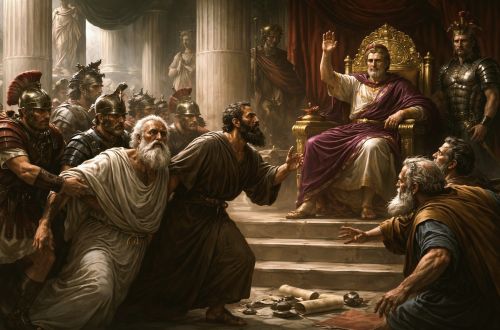
Under Emperor Domitian, suppressing elite criticism became a governing strategy, revealing how autocratic security and senatorial resentment reshaped Roman political culture.

By Matthew A. McIntosh
Public Historian
Brewminate
Introduction: Suppression without Silence
When the Roman Emperor Domitian expelled philosophers from Rome in the late first century CE, he did not abolish speech, dissolve the Senate, or announce a formal prohibition of intellectual life. The machinery of the empire continued to function. Magistrates held office, courts convened, and provincial administration proceeded with routine efficiency. Yet within this outward continuity, a narrowing occurred. Around 89–93 CE, philosophers, particularly those associated with Stoic circles critical of imperial conduct, were expelled or prosecuted. The event illustrates a political technique more subtle than blanket censorship: the selective removal of dissenting networks rather than the eradication of discourse itself.
Domitian’s reign, spanning 81 to 96 CE, has long been interpreted through the hostile accounts of senatorial authors who survived him. Tacitus, writing after Domitian’s death, described an atmosphere in which prominent men were silenced or destroyed under charges of treason, while others learned caution. Suetonius records expulsions of philosophers and rhetoricians, situating them within broader measures aimed at controlling perceived subversion. Cassius Dio likewise notes actions taken against philosophers whose teachings or associations were deemed politically dangerous. These accounts must be read critically, yet their convergence on the targeting of intellectual figures suggests that Domitian perceived organized philosophical communities as potential centers of elite opposition.
The Stoic philosophers associated with senatorial resistance in the mid- to late first century were not merely teachers of private ethics. Figures such as Thrasea Paetus and Helvidius Priscus, earlier critics under Nero and Vespasian, had embodied a tradition in which philosophical language of virtue, libertas, and moral constancy could shade into pointed political dissent. Stoic discourse emphasized the moral autonomy of the virtuous individual and the obligation to act in accordance with reason rather than fear, themes that resonated uneasily within an imperial system increasingly sensitive to perceived disloyalty. By Domitian’s time, Stoicism functioned as both intellectual discipline and social network among members of the Roman elite, including senators, equestrians, and rhetorically trained protégés. Philosophical schools were not mass movements, but they were nodes of influence within Rome’s governing class. Removing philosophers from the capital disrupted channels of elite communication and mentorship rather than suppressing abstract doctrines in the provinces. The expulsion signaled that certain modes of critique, especially those articulated within circles capable of shaping senatorial opinion, would no longer be tolerated at the symbolic and administrative center of imperial power.
Domitian’s expulsion of philosophers represents a case of suppression without silence. Speech was not universally banned; institutions were not formally dismantled. Instead, dissent was compressed through targeted action against influential intermediaries. By focusing on specific intellectual networks under the guise of maintaining order, Domitian preserved administrative continuity while recalibrating the boundaries of acceptable criticism. The episode reveals how political authority can contract the public sphere incrementally, not through sweeping decrees, but through calibrated pressure applied to those most capable of shaping elite discourse.
Domitian’s Principate: Stability, Centralization, and Sensitivity to Critique

Domitian inherited an empire stabilized by his father Vespasian and brother Titus after the turmoil of 69 CE. By the time he assumed power in 81 CE, the Flavian dynasty had restored fiscal order and reinforced imperial authority following civil war. Domitian did not preside over systemic collapse or administrative paralysis. On the contrary, ancient and modern assessments alike recognize that his reign was marked by attention to provincial administration, military discipline, and financial oversight. He strengthened frontier defenses along the Rhine and Danube, reorganized fiscal administration, and cultivated an image of imperial diligence. The empire functioned effectively under his direction.
Central to Domitian’s governance was a heightened emphasis on imperial dignity and centralized authority. He adopted titles and ceremonial forms that reinforced the sacral and hierarchical character of the principate. Suetonius records his preference for being addressed as dominus et deus, though the extent and context of this usage remain debated among scholars. What is clearer is that Domitian cultivated a political culture in which the emperor’s status was not merely administrative but symbolically elevated. Ritual, architecture, and court protocol all communicated a tightening of imperial presence at the center of Roman political life. Authority was not new to the principate, but its theatrical articulation under Domitian intensified perceptions of distance between ruler and Senate.
Relations with the senatorial class were correspondingly complex. Domitian appointed senators, consulted the Senate on legislation, and preserved the outward forms of republican procedure. Yet Tacitus and Dio portray an atmosphere in which prosecutions under the charge of maiestas fostered anxiety among elite families. Trials for treason, whether justified or politically motivated, signaled that criticism could carry lethal consequences. Even if the number of executions has been exaggerated by hostile sources, the perception of risk shaped senatorial behavior. The Senate continued to convene, but its capacity for candid critique narrowed under the shadow of imperial suspicion.
This sensitivity to elite dissent must be understood within the broader dynamics of Flavian consolidation. The memory of earlier conspiracies against Nero and the instability of 69 CE lingered within Roman political consciousness, shaping elite expectations about the fragility of imperial power. Emperors were acutely aware that senatorial alliances, provincial commanders, and rhetorically skilled critics could catalyze resistance. Domitian’s administration operated with an eye toward preventing the formation of oppositional coalitions before they matured into open challenge. Monitoring influential circles, pursuing treason charges, and isolating prominent dissenters were strategies aimed at preemptive containment. The emperor’s attentiveness to intellectual and senatorial networks should not be reduced to mere paranoia. It reflected a structural concern about influence within Rome’s governing strata. In a system where elite reputation and patronage relationships shaped political momentum, criticism voiced in the Senate or in philosophical circles could carry implications far beyond rhetorical disagreement. Domitian’s actions suggest an effort to manage that influence without dismantling the institutional forms that conferred legitimacy on his rule.
Domitian’s principate combined administrative competence with heightened vigilance. Stability and centralization did not eliminate sensitivity to critique; they intensified it. A ruler committed to preserving authority may perceive dissent not as tolerable pluralism but as destabilizing potential, especially when it emanates from socially prestigious intermediaries. The expulsion of philosophers later in his reign must be situated within a governance model that prized order, hierarchy, and symbolic control. Institutional continuity provided a façade of constitutional normalcy, while selective prosecutions and expulsions recalibrated the boundaries of permissible speech. Domitian did not abolish the Senate, nor did he suspend Roman law. Instead, he altered the environment in which those institutions operated, ensuring that public routine coexisted with implicit warnings about the risks of elite opposition.
The Stoic Network: Philosophy as Political Critique

Stoicism in the first century CE was not merely a system of personal ethics concerned with tranquility and self-mastery. In the Roman context, it functioned as a shared moral vocabulary among segments of the elite, especially senators and equestrians who framed political conduct in terms of virtue, liberty, and duty. The philosophical language of virtus, constancy, rational self-command, and fidelity to principle resonated strongly within a governing class that valued ancestral precedent and personal honor. Stoic teachers did not operate in isolation from public life; they instructed future magistrates, corresponded with administrators, and participated in conversations that shaped senatorial identity. In a system where the emperor embodied supreme authority, any articulation of moral independence risked being interpreted as commentary on imperial behavior. Stoicism operated at the intersection of ethical instruction and civic posture. It provided a framework through which elite Romans could evaluate not only their own conduct but also the character of those who ruled them, embedding philosophical discourse within the texture of political life.
Earlier episodes under Nero and Vespasian had already demonstrated the political valence of Stoic affiliation. Figures such as Thrasea Paetus and Helvidius Priscus became emblematic of principled resistance through their conduct in the Senate and their willingness to articulate dissent framed as moral obligation. Tacitus portrays these men not as revolutionaries but as defenders of traditional senatorial dignity. Their philosophical commitments reinforced a reputation for incorruptibility and frank speech. By the time Domitian assumed power, the memory of these earlier confrontations lingered, embedding Stoicism within a narrative of elite conscience opposed to imperial excess.
The Stoic network extended beyond isolated individuals. Teachers, students, patrons, and sympathizers formed interconnected circles that facilitated the circulation of ideas and reputations across generations. Philosophers taught publicly in Rome, advised prominent families, and cultivated disciples who would later assume positions within the imperial administration or provincial governance. These relationships created durable channels of influence. A young aristocrat shaped by Stoic instruction might carry those commitments into senatorial debate or administrative decision-making. Such networks did not constitute organized political parties, yet they generated shared interpretive frameworks through which imperial conduct could be assessed. Ethical discourse about tyranny, virtue, justice, and lawful authority traveled through these interpersonal ties, shaping elite expectations about appropriate behavior at the highest levels of power. In this sense, Stoicism was socially embedded rather than abstractly speculative. It was sustained through mentorship, correspondence, and patronage, giving philosophical commitments institutional presence within Rome’s governing class.
Philosophical rhetoric in this milieu often emphasized the moral autonomy of the wise person, the supremacy of reason over fear, and the duty to speak truth when circumstances demanded. While Stoic texts did not advocate rebellion, they upheld ideals that could expose the moral deficiencies of rulers. The concept of libertas, deeply rooted in Roman political tradition, acquired renewed significance when articulated within philosophical argument. A senator committed to Stoic principles might frame silence in the face of injustice as complicity rather than prudence. Such language did not require explicit denunciation of the emperor to carry critical force. The very act of maintaining moral independence could be construed as resistance within a climate sensitive to prestige and influence.
Domitian’s response to philosophers must be understood in relation to this networked character of Stoic influence. Expelling individual teachers disrupted chains of mentorship and patronage. Prosecuting prominent adherents signaled that philosophical prestige would not shield one from imperial scrutiny. By targeting nodes within these networks, Domitian could weaken the circulation of oppositional rhetoric without outlawing Stoicism as a doctrine. Philosophical schools continued elsewhere in the empire, but their capacity to shape elite discourse in Rome diminished. Suppression operated through selective dislocation rather than comprehensive prohibition.
The Stoic context demonstrates how ideas acquire political significance through social embedding. Philosophy was not confined to private contemplation; it intersected with senatorial debate, administrative counsel, and elite self-fashioning. In a hierarchical society attentive to status and reputation, moral discourse carried weight precisely because it was articulated by individuals positioned near power. When such discourse framed virtue as independence from arbitrary authority, it subtly recalibrated the standards by which imperial conduct could be judged. Domitian’s expulsion of philosophers did not extinguish Stoic doctrine, nor did it silence all criticism within Rome. Instead, it attenuated the connective tissue linking ethical argument to political influence. By thinning the relational webs that translated philosophy into elite posture, the emperor reshaped the range of voices capable of influencing public judgment. Control over influence, rather than control over abstract speech, proved to be the more decisive instrument of authority.
The Expulsion of Philosophers (c. 89–93 CE)
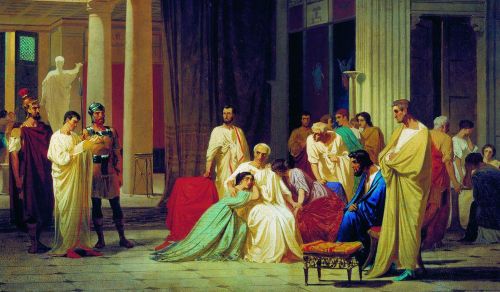
The expulsion of philosophers during Domitian’s reign must be reconstructed from sources written after his death and colored by retrospective hostility. Suetonius notes that philosophers were expelled from Rome and Italy, situating the measure within a broader pattern of disciplinary actions aimed at groups perceived as socially disruptive. Cassius Dio similarly records expulsions and prosecutions, associating them with Domitian’s increasing suspicion of elite dissent. While the precise scope of the decree remains debated, the convergence of accounts indicates that the emperor targeted philosophers as a recognizable and influential category within the capital.
The measure did not constitute a universal ban on philosophical teaching across the empire. There is no evidence of a systematic effort to eradicate Stoicism as a doctrinal tradition in the provinces, nor of an empire-wide purge of intellectual communities. Rather, the action appears geographically and socially concentrated, focusing on Rome and its immediate intellectual circles. This distinction is significant. Rome was not merely another city; it was the symbolic, ceremonial, and administrative center of imperial authority. Philosophical teachers operating there instructed members of the senatorial and equestrian classes, advised prominent households, and participated in conversations that shaped elite expectations about governance and virtue. Their proximity to power amplified their influence. Expelling philosophers from Rome disrupted their access to the networks through which ideas translated into political posture. It attenuated influence at its most sensitive point without requiring the logistical, military, or legal complexities that would accompany empire-wide suppression. By confining the action to the capital and its environs, Domitian preserved the appearance of tolerance elsewhere while recalibrating discourse at the center.
Individual cases underscore the selective nature of the policy. Dio recounts the prosecution of figures such as Helvidius Priscus the Younger, whose conduct and writings were perceived as politically charged. The charge of maiestas, or treason against the dignity of the Roman state and its ruler, provided a flexible legal instrument through which dissent could be framed as disloyalty. The elasticity of maiestas allowed authorities to interpret rhetorical critique or symbolic gestures as threats to imperial stability. In this legal environment, philosophical association could become evidence of political danger. Trials and expulsions signaled that intellectual prestige would not insulate individuals from prosecution.
Exile functioned as a calibrated tool of control. Unlike execution, which created martyrs and risked provoking broader sympathy, expulsion removed individuals from the center of discourse while preserving a veneer of moderation. Philosophers sent away from Rome lost immediate access to senatorial patrons, students, and public platforms. Their ideas might continue to circulate in correspondence or in distant locales, but their capacity to shape elite debate at the heart of imperial governance diminished sharply. The removal of a teacher could ripple outward, affecting pupils and allies whose public posture might subsequently become more cautious.
The timing of the expulsions also invites consideration. The late 80s and early 90s CE were marked by military pressures along the Danube, fiscal strain, and heightened awareness of conspiracy following earlier plots against emperors. Even if philosophical circles did not present an organized revolutionary threat, their rhetorical emphasis on virtue, liberty, and moral independence could be perceived as corrosive within a tense political climate. Imperial vigilance tends to intensify when external pressures converge with internal suspicion. In such circumstances, expressions of elite critique, however principled, may be interpreted less as intellectual debate and more as potential seeds of instability. Expelling philosophers allowed Domitian to project firmness without resorting to indiscriminate repression. The measure communicated that influential critics would not be tolerated at the core of imperial life, while the broader machinery of governance continued uninterrupted. The Senate convened, magistracies operated, and provincial administration proceeded, even as the density of oppositional discourse within Rome thinned perceptibly.
The expulsion of philosophers exemplifies suppression calibrated to preserve institutional continuity. Domitian did not abolish the Senate, outlaw Stoicism across the empire, or formally prohibit all forms of critique. Instead, he targeted particular networks whose influence intersected with elite political life. By dislocating key intellectual intermediaries, he reduced the density of oppositional discourse in Rome while maintaining the outward appearance of order. The episode demonstrates how the public sphere can be incrementally constricted through targeted enforcement rather than sweeping decree, reshaping the climate of debate without visibly dismantling the structures that sustain it.
Institutional Continuity: The Senate, Law, and the Appearance of Order

One of the most striking features of Domitian’s reign during the period of philosophical expulsions is the persistence of institutional routine. The Senate continued to convene, magistrates were elected or appointed, and provincial governance proceeded within established legal frameworks. There was no formal suspension of republican forms, no proclamation dissolving deliberative bodies, and no empire-wide ban on philosophical instruction. To observers not directly affected by prosecutions or expulsions, the structures of Roman governance appeared intact. Stability was not merely rhetorical; it was visible in the ordinary functioning of administration.
This continuity served a political function. The principate depended on the preservation of republican institutions as legitimizing architecture. Emperors ruled through a careful balance of power and appearance, exercising dominance while maintaining the forms of senatorial consultation and legal process. By allowing the Senate to operate and by conducting prosecutions through established courts, Domitian embedded suppression within recognizable procedures. Charges of maiestas were adjudicated through legal mechanisms, not through arbitrary proclamation. In this way, actions against critics could be framed as defense of the state rather than as personal vendetta. Law provided the vocabulary through which political discipline was articulated.
The Senate’s continued operation did not necessarily indicate robust deliberative freedom. Tacitus’ later reflections suggest an environment in which caution replaced frank speech. Senators might vote, debate, and administer provinces, yet the memory of trials and expulsions shaped the boundaries of permissible rhetoric. Formal continuity and deliberative vitality are not synonymous. A chamber may sit regularly while its members internalize constraints. The appearance of continuity can coexist with subtle shifts in tone, posture, and ambition among those who occupy official roles.
Legal process likewise functioned as both shield and instrument. The Roman system permitted prosecution for offenses construed as injurious to the dignity of the emperor or the state. The elasticity of these categories enabled authorities to interpret dissenting speech, symbolic gestures, or associations as threats. Because proceedings unfolded within formal courts, complete with indictments, defenses, and verdicts, they retained procedural legitimacy. Accusers could present charges, defendants could respond, and judgments were recorded within institutional memory. The invocation of law created a narrative of order and impartiality. Rather than announcing a contraction of discourse, the regime presented each case as a discrete matter of justice, tied to the preservation of stability. Yet the aggregation of such cases reshaped expectations. Observers learned which kinds of rhetoric drew scrutiny and which affiliations carried danger. Law normalized suppression by translating political unease into juridical categories. What appeared as defense of public order gradually defined the limits of acceptable speech among Rome’s governing elite.
Administrative routine in the provinces further reinforced the perception of normalcy. Governors continued to adjudicate disputes, collect taxes, and oversee military units. Public works projects proceeded, and imperial benefactions were distributed. Coins were minted, edicts promulgated, and infrastructure maintained. For many inhabitants of the empire, daily life changed little. The removal of philosophers from Rome did not disrupt agricultural cycles in Gaul or trade networks in the eastern Mediterranean. This disparity between elite intellectual suppression and broader administrative stability highlights the selective character of Domitian’s approach. Control was concentrated where influence intersected with proximity to power.
Institutional continuity operated as political camouflage. By preserving the forms of governance, Domitian avoided the appearance of systemic rupture and insulated himself from accusations of outright tyranny. The Senate’s survival and the maintenance of legal procedures signaled that the principate remained anchored in Roman tradition and republican memory. These forms reassured provincial administrators, military commanders, and urban elites that the empire remained structurally stable. Within this architecture of continuity, however, the boundaries of discourse shifted. The expulsion of philosophers and the prosecution of critics did not require constitutional revision or sweeping edicts. They required only the strategic application of authority within institutions already accepted as legitimate. Order and suppression were not opposites but complements. The visible endurance of law and Senate masked the quiet recalibration of influence, allowing Domitian to narrow the public sphere while presenting his rule as orderly and procedurally grounded.
Elite Intimidation and the Politics of Fear
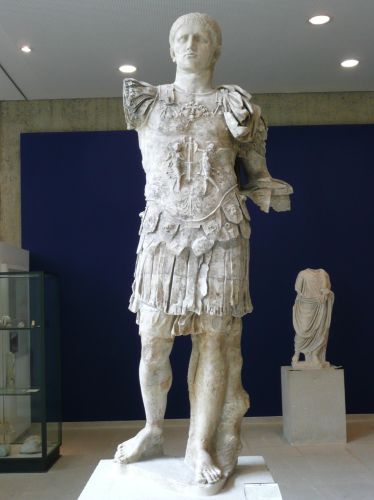
Selective suppression functions most effectively when it reshapes expectations rather than annihilating opposition outright. Under Domitian, the expulsion of philosophers and the prosecution of prominent figures communicated a lesson to Rome’s governing class: influence carried risk. Tacitus, reflecting on the period, evokes an atmosphere in which memory of punishment altered behavior. Whether every accusation was politically motivated or legally justified in context, the cumulative effect was unmistakable. Members of the elite observed which reputations were tarnished, which households destabilized, and which careers ended abruptly. Fear did not require universal terror; it required visible examples.
Elite intimidation differs from mass repression in both scale and intent. Domitian did not deploy indiscriminate violence against the broader population, nor did he institute sweeping prohibitions on public speech or civic participation. Instead, pressure concentrated on senators, rhetoricians, philosophers, and those embedded within circles of elite deliberation. These were individuals whose words could circulate within influential households, shape senatorial debate, and influence the interpretive climate surrounding imperial policy. In a hierarchical society such as Rome’s, discourse at the top filtered downward. When members of the governing class adjusted their rhetoric, moderated their criticism, or avoided association with controversial figures, they recalibrated the tone of political life more broadly. The expulsion of philosophers operated less as a public spectacle and more as a targeted signal directed at influential nodes within Rome’s governing elite. The message was neither generalized silence nor explicit prohibition. It was a warning that certain kinds of moral critique, especially when articulated within elite networks, entailed personal and professional risk. Intimidation, selectively applied, reshaped the environment in which influential actors calculated their public posture.
The legal instrument of maiestas amplified this effect. Its conceptual elasticity meant that individuals could not always predict with certainty which actions might be construed as injurious to imperial dignity. Ambiguity breeds caution. If boundaries are clearly drawn, actors can navigate them with confidence. When boundaries remain imprecise, self-regulation intensifies. Senators and intellectuals, aware that rhetorical gestures or symbolic alignments might be reinterpreted, had reason to narrow their own expression. Fear became internalized, reducing the need for continuous external enforcement.
Patronage networks also felt the pressure of intimidation. Philosophers and rhetoricians relied on elite patrons for protection, visibility, and social legitimacy. A teacher’s standing was reinforced by association with respected senatorial families; a senator’s reputation for cultivation and virtue could be enhanced by philosophical affiliation. When such associations became potentially hazardous, these reciprocal relationships were strained. Patrons might hesitate to host gatherings that included controversial figures, fearing that attendance itself could invite scrutiny. Students might distance themselves from mentors whose reputations had drawn imperial attention, calculating that proximity carried liability. Families invested in preserving status and security had incentives to avoid conspicuous alignment with outspoken critics. The removal or prosecution of a few prominent individuals sent ripples through interconnected households and salons. Intimidation worked not only through direct punishment but through anticipatory withdrawal. Networks thinned as participants recalibrated alliances, and the circulation of critical discourse narrowed without requiring universal enforcement.
The politics of fear under Domitian was calibrated rather than chaotic. By targeting symbolic nodes within Rome’s elite environment, the emperor fostered a climate in which dissent required calculation. Institutional structures remained intact, but the psychological environment shifted. Speech narrowed not because it was formally abolished, but because influential actors reassessed the costs of candor. The expulsion of philosophers and related prosecutions reveal how authority can reshape discourse through pressure rather than proclamation. Fear, selectively applied, proved sufficient to recalibrate the public sphere without overtly dismantling it.
Selective Suppression in Comparative Perspective
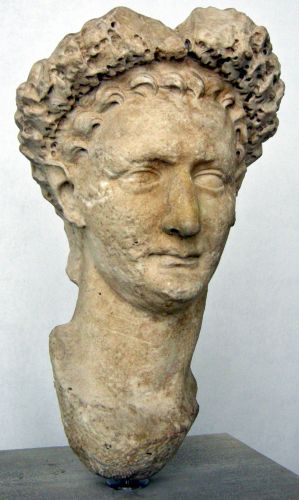
Domitian’s expulsion of philosophers can be illuminated by situating it within a broader pattern of selective suppression observable in Roman political history. Earlier emperors had likewise acted against particular groups or individuals deemed destabilizing without dismantling the formal structures of governance. Under Tiberius and Nero, prosecutions for maiestas targeted senators and equestrians whose conduct or rhetoric was construed as threatening, yet the Senate continued to function and legal procedures remained outwardly intact. These precedents reveal a recurrent logic within the principate: power could be consolidated not by abolishing institutions, but by disciplining those who animated them with dissenting energy.
What distinguishes Domitian’s approach is its focus on intellectual networks rather than overt conspiratorial plots. The Stoics were not organizing armed resistance, mobilizing provincial armies, or coordinating public agitation in the streets of Rome. They were shaping discourse among the elite, influencing how senators, administrators, and aspiring magistrates interpreted virtue, authority, and the moral limits of obedience. By concentrating enforcement on philosophers and their associates, Domitian narrowed influence at a critical junction between ethical argument and political action. Philosophical instruction provided frameworks through which imperial conduct could be evaluated and, implicitly, judged. Removing teachers from Rome weakened the transmission of that evaluative tradition within the capital. The strategy was preventive rather than reactive. It addressed the social infrastructure of critique before it could coalesce into overt opposition. In targeting the intermediaries who translated moral discourse into elite posture, Domitian disrupted the pathways through which principled dissent might gain coherence and prestige. The strategy did not eliminate disagreement altogether, but it reduced its institutional density in the environment closest to imperial power.
Comparative analysis also clarifies the durability of such strategies. Blanket censorship or mass repression can provoke backlash, generate martyrs, and strain administrative capacity. Targeted intimidation, by contrast, preserves procedural normalcy and minimizes disruption. Because institutions remain visibly intact, broader constituencies may perceive continuity rather than crisis. Those directly affected experience constraint, but the wider population continues daily routines. This asymmetry between elite discipline and general stability enhances the political sustainability of selective measures. Domitian’s Rome exemplifies how governance can appear orderly even as influential channels of dissent contract.
The episode invites reflection on the mechanics of narrowing public space across political systems. Selective suppression operates by identifying socially central actors and recalibrating the cost of participation in critique. It does not require ideological uniformity or universal silence. Instead, it reduces the density of oppositional voices in strategic locations, particularly near centers of authority. Domitian’s expulsion of philosophers demonstrates how power can discipline influence without rewriting constitutional forms. The comparative perspective reveals that the contraction of discourse often proceeds through pressure on networks rather than through overt prohibition, preserving institutional continuity while subtly reshaping the boundaries of political speech.
Conclusion: Power, Influence, and the Fragility of Public Discourse
The expulsion of philosophers under Domitian reveals a political dynamic subtler than overt censorship yet no less consequential. The Senate endured, courts operated, and provincial administration remained intact. Rome did not descend into visible institutional collapse, nor did the emperor proclaim a sweeping prohibition on speech. To contemporaries not directly entangled in elite intellectual circles, governance may have appeared steady and procedurally grounded. Yet within this continuity, the texture of elite discourse shifted. By removing key intellectual intermediaries and prosecuting prominent critics, Domitian recalibrated the range of voices able to shape opinion near the center of power. The transformation was not theatrical; it was structural. Influence thinned in precisely those spaces where moral argument intersected with political authority. The episode demonstrates that public discourse can contract without dramatic constitutional rupture, compressing not through abolition but through calibrated displacement.
Power in the principate was exercised not only through formal decrees but through the management of influence. Philosophical schools, patronage networks, and senatorial circles constituted channels through which moral evaluation intersected with political authority. When these channels were disrupted, the structure of debate altered even if the outward forms of governance remained. Domitian did not need to outlaw Stoicism across the empire. By displacing philosophers from Rome and signaling the costs of conspicuous dissent, he weakened the connective tissue linking ethical critique to institutional influence. Control over networks proved more decisive than control over doctrine.
The fragility of public discourse lies precisely in this dependence on intermediaries. Speech is sustained not merely by abstract freedom but by social environments that permit candor among influential actors and protect the reputational standing of those who challenge authority. When those actors perceive heightened risk, self-regulation intensifies, often invisibly. The narrowing of discourse may occur gradually, as caution replaces frankness and associations become selective. A senator who once invoked libertas openly may adopt circumspection; a patron who once sponsored philosophical debate may withdraw from controversial gatherings. Institutional continuity can mask these shifts, allowing regimes to maintain legitimacy while altering the boundaries of acceptable expression. Domitian’s Rome exemplifies how fear, strategically applied, reshapes elite behavior without requiring universal repression. The structures remain, but their internal vitality changes as participants recalibrate the costs of candor.
The broader lesson extends beyond the first century CE. Political systems may preserve procedural forms while recalibrating influence through selective enforcement. The expulsion of philosophers illustrates how authority can discipline networks rather than populations, narrowing the public sphere without abolishing it. Power need not silence everyone to reshape discourse; it need only recalibrate the incentives facing those positioned to speak most effectively. The fragility of public debate, , resides not solely in constitutional guarantees but in the resilience of the social networks that sustain critique. When those networks are thinned, the structures of governance may remain visible, yet the range of voices within them can quietly diminish.
Bibliography
- Cassius Dio. Roman History, Books 66-67. Translated by Earnest Cary. Cambridge, MA: Harvard University Press, 1914–1927.
- García, Antonio. “Domitian, the Emperor Who Persecuted Rumors and Libelous Writings.” La Brújula Verde, July 2024.
- Jones, Brian W. The Emperor Domitian. London: Routledge, 1992.
- Southern, Pat. Domitian: Tragic Tyrant. London: Routledge, 2009.
- Spinelli, Tommaso and Gian Luca Gregori. “(Un)-damning Subplots: The Principate of Domitian Between Literary Sources and Fresh Material Evidence.” Illinois Classical Studies 44:2 (2019), 242-267.
- Stevens, Saskia. “Domitian: An Innovative Emperor?” American Journal of Archaeology 127:1 (2023), 141-147.
- Suetonius. The Twelve Caesars. Translated by Robert Graves. London: Penguin Classics, 2007.
- Tacitus. Agricola. Germania. Dialogue on Oratory. Translated by M. Hutton and W. Peterson. Loeb Classical Library 35. Cambridge, MA: Harvard University Press, 1914.
- Tacitus. Histories. Translated by Clifford H. Moore. 2 vols. Loeb Classical Library 111 and 249. Cambridge, MA: Harvard University Press, 1925–1931.
Originally published by Brewminate, 02.24.2026, under the terms of a Creative Commons Attribution-NonCommercial-NoDerivatives 4.0 International license.
About the Author