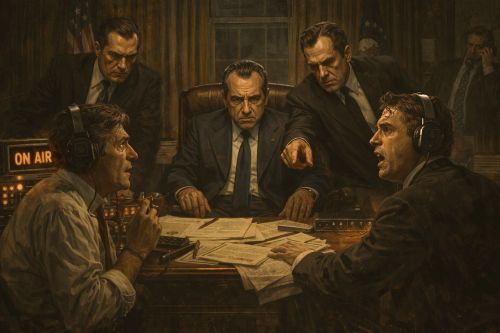
Under President Richard Nixon, the Fairness Doctrine became less a neutrality rule than a strategic lever for pressuring television networks.

By Matthew A. McIntosh
Public Historian
Brewminate
Introduction: Indirect Pressure in a Constitutional System
In constitutional democracies, suppression rarely announces itself through outright prohibition. The First Amendment to the United States Constitution sharply limits the government’s ability to censor the press, and by the late twentieth century formal prior restraint was widely understood as constitutionally suspect. Yet the absence of explicit censorship does not eliminate the possibility of indirect pressure. When speech depends upon official approval, licensing renewal, or administrative discretion, the structure of governance itself can become a site of leverage. The Nixon administration’s relationship with broadcast media between 1969 and 1974 illustrates how executive hostility toward critical coverage intersected with regulatory authority in ways that constricted the public sphere without abolishing it.
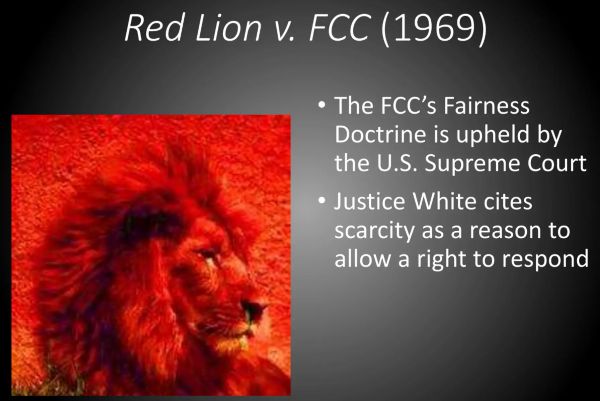
The Fairness Doctrine, administered by the Federal Communications Commission (FCC), did not originate as a tool of suppression. Rooted in the Communications Act of 1934 and justified by the scarcity of broadcast spectrum, it required licensed stations to present controversial issues of public importance in a manner that was honest, equitable, and balanced. The doctrine developed through FCC policy statements in the 1940s and 1950s, reflecting the agency’s view that broadcasters, as trustees of a limited public resource, bore affirmative obligations to the listening public. In 1969, the Supreme Court in Red Lion Broadcasting Co. v. FCC upheld the doctrine as consistent with the First Amendment, emphasizing the unique regulatory character of broadcasting and the government’s authority to ensure that diverse viewpoints reached the public. The Court reasoned that because the electromagnetic spectrum was scarce and access limited, licensees could be required to operate in the public interest. The decision reinforced the principle that broadcast journalism differed structurally from print media, whose independence from licensing insulated it from comparable regulatory leverage. At the same time, Red Lion entrenched the idea that oversight of content, when tied to spectrum management and public interest obligations, could coexist with constitutional protections.
During the Nixon years, this regulatory structure became entangled with executive frustration over media criticism. Internal memoranda and archival materials later revealed that members of the administration explored strategies for challenging broadcast licenses and encouraging scrutiny of networks perceived as hostile. The White House did not attempt to silence networks through direct prohibition. Instead, it examined the vulnerabilities embedded in the licensing process. Because broadcast stations depended upon periodic renewal and remained subject to FCC review, regulatory scrutiny could function as a form of pressure. The existence of legal authority created space for political strategy.
The Nixon administration’s engagement with the Fairness Doctrine exemplifies indirect pressure within a constitutional system. No statute repealed the First Amendment, no executive order shuttered television networks, and no formal ban eliminated adversarial journalism. Yet institutional leverage created incentives for caution and recalibration. Broadcasters aware of their dependency on license renewal operated within a framework where scrutiny could carry tangible institutional consequences. Even absent overt sanctions, the possibility of investigation or challenge could influence editorial judgment. The episode reveals how constitutional form and administrative power can intersect in ways that subtly reshape the public sphere. By examining the interaction between executive strategy and broadcast regulation, the following analysis explores how a system committed to free expression can nonetheless generate structural pressures that narrow the space of criticism without resorting to formal censorship.
The Fairness Doctrine: Origins, Rationale, and Legal Framework
The Fairness Doctrine emerged from the regulatory structure established by the Communications Act of 1934, which created the Federal Communications Commission and charged it with licensing broadcast stations in the “public interest, convenience, and necessity.” Because the electromagnetic spectrum was limited, Congress treated broadcast frequencies as a scarce public resource rather than private property. Unlike newspapers, which required no government permission to operate, radio and later television stations depended upon federal licenses. From its inception broadcast regulation combined technical management of spectrum allocation with normative expectations about responsible use.
In 1949, the FCC formally articulated the Fairness Doctrine as a policy requiring broadcasters to devote reasonable time to the discussion of controversial issues of public importance and to present contrasting viewpoints on those issues. The doctrine did not mandate strict equality of airtime, nor did it impose detailed content prescriptions or minute-by-minute balancing requirements. Instead, it relied on the agency’s supervisory authority to evaluate whether licensees had fulfilled their obligations in good faith. Broadcasters were expected to exercise journalistic discretion while remaining mindful of their role as trustees of a limited public resource. Complaints could be filed by members of the public, and the Commission could investigate whether a station’s coverage met the standard of fairness. This enforcement mechanism created a feedback loop between public dissatisfaction and regulatory review. The doctrine reflected a mid-twentieth-century confidence that regulatory oversight, administered by experts rather than politicians, could promote informed citizenship without stifling expression.
The intellectual foundation of the doctrine rested on the scarcity rationale. Because not all who wished to broadcast could be accommodated on the airwaves, the government could impose conditions on those who received licenses. This reasoning distinguished broadcast media from print, where abundance of outlets diminished the justification for content regulation. The scarcity rationale was controversial even at the time, but it provided the constitutional framework within which the FCC operated. By framing regulation as a mechanism to enhance, rather than restrict, the diversity of viewpoints available to the public, the doctrine positioned oversight as compatible with First Amendment values.
Judicial affirmation came in 1969 with Red Lion. The Supreme Court upheld the constitutionality of the Fairness Doctrine, emphasizing that the rights of viewers and listeners, rather than those of broadcasters alone, were paramount. Justice Byron White’s opinion reasoned that because spectrum scarcity limited access, the government could require licensees to present balanced coverage of controversial issues. The Court rejected the argument that such requirements constituted impermissible intrusion into editorial discretion, distinguishing broadcast regulation from print regulation on structural grounds. In doing so, the Court articulated a conception of the First Amendment that prioritized the collective interest in diverse information over the autonomy of individual broadcasters. The ruling strengthened the FCC’s authority and affirmed the doctrine’s compatibility with constitutional principles, embedding supervisory authority more firmly within the legal architecture of American broadcasting.
Yet even in its judicially approved form, the doctrine embedded discretionary authority within the regulatory state. The FCC possessed the power to investigate complaints, assess compliance, and condition license renewal on adherence to public-interest obligations. These powers were not merely theoretical; they were integrated into the routine renewal process that broadcasters faced at regular intervals. While the policy’s stated aim was to broaden debate, its enforcement mechanisms created potential leverage over licensees whose economic viability depended upon continued authorization. The doctrine’s flexibility, often praised as adaptable oversight, also meant that broadcasters operated within a framework of ongoing evaluation subject to administrative interpretation. Decisions about what constituted adequate balance or reasonable opportunity were not self-executing. They were determined through agency judgment. Regulatory supervision was continuous and interpretive rather than mechanical.
By the late 1960s, the Fairness Doctrine represented both a commitment to balanced discourse and an institutional structure of oversight. It had been conceived in a period of faith in administrative expertise and public-interest regulation. Its constitutional legitimacy had been affirmed by the Supreme Court. At the same time, its enforcement depended on agency discretion and license dependency. These structural features would become significant when executive actors recognized that oversight authority could be used not only to promote balance but also to apply pressure.
Broadcasting as a Regulatory Environment
Broadcast journalism in the mid-twentieth century operated within a regulatory framework fundamentally different from that governing print media. Newspapers could be established without federal approval, and their continued existence did not depend upon periodic governmental review. The First Amendment tradition surrounding print emphasized protection from prior restraint and insulation from licensing regimes. Broadcast stations, by contrast, required licenses issued by the FCC. These licenses were granted for fixed terms, assigned to specific frequencies, and subject to renewal under statutory standards. Entry into the broadcast field required regulatory approval from the outset, and continued operation depended upon compliance with federal requirements. The regulatory structure created an institutional dependency that shaped the environment in which television and radio journalism developed. Broadcast journalism operated within a system where legal supervision was not exceptional but foundational.
License renewal was not automatic. Stations were required to demonstrate continued service in the public interest, convenience, and necessity. Complaints filed by viewers, competing applicants, or advocacy groups could trigger FCC scrutiny during renewal proceedings. Although outright denial of renewal was rare, the process itself carried consequences. Investigation imposed financial and reputational costs. The possibility of administrative challenge created incentives for compliance with agency expectations. Even absent explicit threats, the structural vulnerability inherent in the licensing regime conditioned the conduct of broadcasters.
The scarcity rationale that justified the Fairness Doctrine also reinforced this environment of oversight. Because the broadcast spectrum was treated as a limited public resource, access to it was framed as a privilege rather than an entitlement. Licensees were described as trustees obligated to operate for the benefit of the public, a formulation that carried both symbolic and practical implications. This trustee model elevated the normative responsibilities of broadcasters while simultaneously legitimizing regulatory supervision. It implied that broadcast outlets held frequencies in trust for the citizenry and could be required to meet standards of balance and fairness. Unlike print publishers, who could invoke autonomy as a matter of private right grounded in property ownership and expressive freedom, broadcasters operated within a framework that blended professional journalism with public accountability enforced by administrative authority. The language of trusteeship subtly shifted the relationship between the state and the press in the broadcast context, embedding supervision within the legal conception of media responsibility.
The concentration of network power in a small number of national broadcasters amplified the stakes of regulation. In the late 1960s and early 1970s, three major networks dominated television news. Their reach into American households granted them substantial influence over political perception. For an executive branch frustrated by critical coverage, this concentration heightened sensitivity to perceived bias. At the same time, the networks’ reliance on local affiliate stations, each holding separate licenses, created multiple potential points of vulnerability. Pressure applied at the affiliate level could reverberate upward through the network structure.
These features made broadcasting a uniquely regulated environment in which legal oversight and political dynamics intersected. The framework did not eliminate journalistic independence, nor did it predetermine compliance with executive wishes. Yet it established structural leverage points. License dependency, renewal procedures, and discretionary evaluation formed a regulatory architecture capable of supporting both legitimate public-interest enforcement and strategic pressure. Understanding this environment is essential to assessing how the Nixon administration engaged with the Fairness Doctrine and FCC authority during its confrontation with critical media coverage.
Nixon’s Media Strategy and Executive Hostility

From the outset of his presidency in 1969, President Nixon viewed national television news as an adversarial force. The major broadcast networks had become central arbiters of political legitimacy, shaping public understanding of Vietnam, domestic protest, and executive decision-making. Nixon and his advisers believed that coverage often reflected elite skepticism toward administration policy. This perception did not arise in a vacuum. The late 1960s were marked by profound political division, and network news frequently aired criticism from members of Congress, antiwar activists, and policy analysts. Within the White House, such coverage was interpreted not merely as disagreement but as institutional bias.
The administration’s response was strategic rather than spontaneous. Senior advisers, including H. R. Haldeman and Charles Colson, discussed the political impact of network journalism and considered methods of countering it. Archival memoranda and diary entries later revealed that officials explored avenues for challenging the licenses of stations owned by networks viewed as hostile, as well as encouraging citizen complaints that could trigger FCC review. The objective was not to abolish television news or impose direct censorship. Rather, it was to remind broadcasters of their regulatory vulnerability and to signal that sustained critical coverage could invite heightened scrutiny. By raising the possibility that license renewal proceedings might become contested or complicated, the administration introduced uncertainty into an environment dependent upon FCC approval. The existing oversight framework provided a channel through which dissatisfaction could be translated into administrative pressure without overt prohibition.
Executive hostility toward the press also surfaced in public rhetoric. Nixon and Vice President Spiro Agnew delivered speeches criticizing what they described as media bias and unrepresentative elites within network newsrooms. Agnew’s 1969 address to the Midwest Regional Republican Committee, for example, condemned a small group of commentators for shaping national opinion, portraying network executives as detached from mainstream values. These speeches framed media criticism as a democratic corrective rather than an attack on press freedom. Yet the rhetorical campaign unfolded alongside internal discussions about regulatory leverage. The dual strategy combined public denunciation with private exploration of oversight mechanisms. By casting networks as politically powerful actors whose influence warranted accountability, the administration created a narrative context in which regulatory scrutiny could be justified as responsible governance rather than retaliation. The interplay between speech and structure amplified the pressure without crossing into formal censorship.
The existence of the Fairness Doctrine and FCC licensing authority gave these strategies institutional grounding. Because broadcasters were obligated to operate in the public interest, complaints about imbalance could be framed as regulatory concerns rather than purely partisan grievances. The administration could encourage scrutiny without issuing direct commands to censor. In this sense, hostility was mediated through legal structure. Pressure did not require overt suppression. It required recognition of where authority already resided.
Nixon’s media strategy reflected an intersection of political resentment and administrative opportunity. The White House did not dismantle the constitutional order governing the press. Instead, it sought to operate within it, leveraging regulatory mechanisms to contest unfavorable coverage. The episode reveals how executive dissatisfaction with journalism can migrate into the channels of oversight embedded in the regulatory state. Hostility, when coupled with licensing authority, can assume institutional form without ever appearing as formal censorship.
Administrative Pressure through the FCC
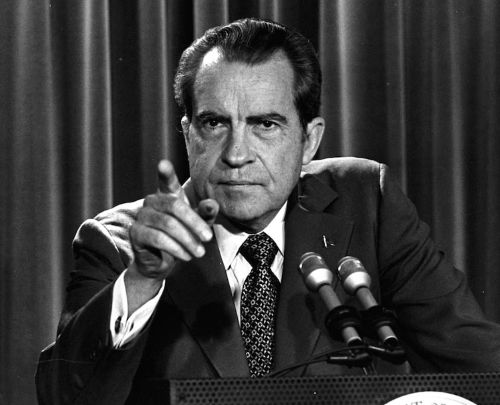
The Federal Communications Commission occupied a formally independent position within the federal regulatory system, yet its decisions were not insulated from political context. Created as an independent agency, the FCC was designed to operate at arm’s length from direct presidential control. Commissioners served fixed terms, and statutory mandates framed their authority in terms of public interest rather than partisan alignment. During the Nixon administration, however, attention increasingly turned toward the mechanisms through which the FCC evaluated broadcast license renewals and Fairness Doctrine complaints. Rather than issuing direct commands to silence critics, executive actors explored how existing procedures might be activated or intensified. The focus was not on rewriting the law or openly redefining constitutional doctrine, but on utilizing the discretion embedded within regulatory process. Agency review became a potential channel through which dissatisfaction with coverage could be translated into structured scrutiny. In this environment, the distinction between lawful oversight and strategic pressure depended less on statutory language than on how discretionary authority was exercised.
License challenges offered one such avenue. Because broadcast stations were required to renew their licenses periodically, interested parties could file petitions to deny renewal, alleging failure to operate in the public interest. Encouragement of such petitions, whether through informal signaling or coordination with allied groups, could place networks under heightened examination. Even if the likelihood of revocation remained low, the initiation of review carried consequences. Legal defense required resources, and public controversy surrounding renewal could affect reputation and investor confidence. In this context, regulatory process itself functioned as pressure.
The Fairness Doctrine provided another mechanism for administrative engagement. Complaints alleging imbalance or insufficient presentation of opposing viewpoints could prompt FCC inquiry. While the doctrine was framed as a means of promoting diversity of opinion, its enforcement involved evaluative judgments about content and tone. Increased scrutiny of programming critical of administration policy could be justified as routine enforcement. Because oversight was continuous and interpretive, it offered opportunities for selective emphasis without necessitating explicit directives to censor. Administrative action could be characterized as compliance monitoring rather than retaliation.
The interaction between executive preference and regulatory authority operated within constitutional boundaries while generating tangible effects. The Nixon administration did not need to dismantle the FCC or openly dictate outcomes in order to influence the environment in which broadcasters operated. It needed only to recognize that networks depended upon favorable regulatory treatment and that uncertainty in renewal proceedings could alter institutional behavior. The pressure was subtle but structural. Even the prospect of intensified review could encourage greater caution in editorial decision-making. By engaging with the existing apparatus of license evaluation and Fairness Doctrine enforcement, the administration illustrated how bureaucratic mechanisms can serve as instruments of indirect coercion. The FCC’s institutional role as guardian of the public interest became intertwined with political contestation over media criticism. In this convergence of supervision and executive frustration, regulatory authority revealed its dual character: at once a legitimate feature of democratic governance and a potential conduit for political leverage.
Indirect Coercion and Self-Censorship
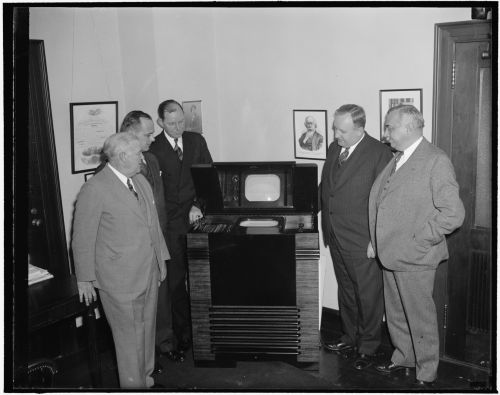
Indirect coercion operates not through explicit prohibition but through the anticipation of consequences. In the regulatory environment of broadcast journalism, the knowledge that licenses required periodic renewal and that complaints could trigger FCC review created a climate in which editorial judgment was necessarily attentive to oversight. Even absent formal sanction, the possibility of procedural complication introduced risk. Broadcasters did not need to receive a direct order to modify content; awareness of vulnerability could influence decisions about tone, framing, and persistence in controversial reporting. The pressure functioned structurally rather than episodically.
Self-censorship in this context did not necessarily mean suppression of entire stories. It could take subtler forms. Producers and editors might temper language, adjust the sequencing of segments, or balance critical analysis with additional commentary to forestall accusations of unfairness. News organizations aware of public accusations of bias, amplified by executive rhetoric, faced incentives to demonstrate compliance with fairness norms. Because the Fairness Doctrine required presentation of contrasting viewpoints on controversial issues, broadcasters were already accustomed to calibrating coverage. Heightened scrutiny, however, intensified the stakes of that calibration. Editorial discretion operated under the shadow of regulatory interpretation.
The chilling effect of regulatory pressure is difficult to quantify precisely, yet its logic is clear. When continuation of operations depends upon administrative approval, even low-probability threats can alter behavior. The mere initiation of inquiry imposes costs in time, legal fees, and public perception, regardless of ultimate outcome. For large networks with national visibility, protracted conflict with regulators could signal instability to advertisers, affiliates, and investors. In such an environment, risk management becomes part of editorial strategy. Journalists may internalize the boundaries implied by regulatory scrutiny, compressing the scope of investigative persistence or softening the framing of criticism to avoid sustained controversy. The effect does not require explicit directives. It arises from structural incentives embedded within the licensing regime. Anticipatory compliance becomes a rational adaptation to uncertainty, and such adaptations can subtly reshape norms of broadcast discourse.
The Nixon-era episode illustrates how constitutional form and indirect coercion can coexist. No broadcaster was formally shut down for criticizing the administration, and the First Amendment remained intact. Yet the structural conditions of licensing and oversight created channels through which executive hostility could exert influence. Self-censorship, whether conscious or anticipatory, emerged from the interaction between political resentment and regulatory leverage. Constrained discourse emerged without formal bans. It required only the presence of authority capable of shaping incentives within the public sphere.
The Appearance of Legality
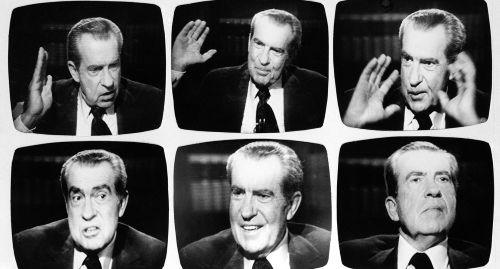
One of the most consequential features of the Nixon-era confrontation with broadcast media was that it unfolded within the bounds of existing law. No statute was amended to criminalize dissenting coverage, and no executive order suspended constitutional protections. The Fairness Doctrine remained formally intact as a policy justified by public-interest obligations and spectrum scarcity. License renewal procedures operated under long-standing FCC regulations. The institutional framework through which pressure could be applied was legally authorized and publicly defensible. This preservation of constitutional form distinguished regulatory leverage from overt censorship.
The appearance of legality mattered politically as well as constitutionally. Actions framed as enforcement of existing standards could be defended as neutral administration rather than partisan retaliation. Complaints about imbalance, requests for documentation, and scrutiny of renewal applications could all be presented as routine oversight grounded in statutory mandate. Because the FCC possessed clear authority to review licensees and assess compliance with public-interest obligations, engagement with broadcasters could be justified in bureaucratic rather than political terms. This procedural framing diffused confrontation. Even heightened scrutiny could be described as responsible governance. The use of established processes insulated executive actors from accusations of direct suppression, since no new powers were asserted and no constitutional provisions were openly challenged. In public discourse, the distinction between lawful oversight and political pressure became blurred precisely because both operated through the same institutional channels.
This legal framing complicated the boundary between governance and intimidation. The same mechanisms designed to promote balanced discourse could, in particular contexts, become instruments of leverage. The distinction lay less in statutory authority than in how discretion was exercised. When regulatory attention was selectively intensified toward outlets critical of administration policy, the signal conveyed extended beyond mere compliance review. Even absent formal sanction, concentrated scrutiny could communicate dissatisfaction and alter incentives. Administrative discretion, while legally grounded, is inherently interpretive. Broad standards such as public interest or fairness leave room for judgment, and judgment can be influenced by political environment. As a result, influence could be exerted without crossing into clear constitutional violation. The ambiguity of enforcement created space for pressure to operate under the mantle of legality.
The episode illustrates how constitutional systems can generate conditions in which coercive effects emerge under the cover of legality. The First Amendment remained intact, and the judiciary continued to affirm the constitutionality of the Fairness Doctrine during this period. Yet the regulatory architecture permitted executive actors to test the boundaries of influence. The appearance of legality did not eliminate the possibility of political pressure; it provided the medium through which such pressure could be exercised. In this dynamic, formal adherence to law coexisted with strategic use of administrative authority, underscoring the complexity of safeguarding media independence within a regulatory state.
Institutional and Judicial Constraints
Despite the potential for administrative pressure, the regulatory environment of the early 1970s was not an unbounded field of executive control. The FCC was structured as an independent agency, and its commissioners were not direct instruments of presidential command. Although appointments reflected political alignment, statutory mandates and procedural norms constrained overt interference. Commissioners were required to justify decisions within the framework of the Communications Act and existing FCC policy. These institutional features created friction between executive preference and regulatory action.
Judicial oversight also imposed meaningful limits. Courts retained authority to review FCC decisions, and broadcasters could challenge adverse rulings through established legal channels. The Supreme Court’s decision in Red Lion affirmed the constitutionality of the Fairness Doctrine, but it did not grant the executive branch unlimited discretion. The Court’s reasoning emphasized the rights of viewers and listeners and the structural uniqueness of broadcasting, not the prerogatives of presidential influence. Importantly, judicial review required the FCC to articulate defensible grounds for its actions, grounded in statutory authority and administrative record. Arbitrary or politically motivated enforcement could be overturned if it failed to satisfy procedural requirements or exceeded delegated power. This possibility of reversal imposed discipline on agency conduct. Even where executive actors favored aggressive scrutiny, the need to withstand judicial examination constrained the form and intensity of regulatory action.
Congressional oversight further complicated the landscape. Members of Congress monitored FCC operations and, at times, expressed concern about the politicization of regulatory authority. Hearings and public reporting increased transparency surrounding agency decisions and provided a forum for questioning enforcement patterns. The broader political climate of the Watergate era intensified scrutiny of executive conduct across multiple domains, including media relations. As investigations into administration practices unfolded and public confidence in executive integrity eroded, regulatory maneuvers risked attracting additional controversy. Congressional inquiry could expose internal communications or reveal coordination that might otherwise remain opaque. These political dynamics narrowed the safe space within which administrative pressure could operate. Institutional checks did not eliminate leverage dynamics, but they imposed reputational and legal costs that discouraged overtly partisan use of regulatory tools.
Professional norms within journalism and broadcasting also functioned as informal constraints. Network executives and news divisions possessed reputational incentives to resist clear encroachments upon editorial independence. Public awareness of potential regulatory retaliation could generate backlash. Because the legitimacy of the FCC depended in part on perceptions of neutrality, overtly partisan enforcement risked undermining the agency’s credibility. These reputational considerations imposed additional boundaries on how far regulatory leverage could be pushed without provoking institutional resistance.
The presence of institutional and judicial constraints underscores the complexity of the Nixon-era episode. Administrative pressure operated within a system characterized by separation of powers, statutory limits, and public accountability. The regulatory state provided tools that could be used strategically, but it also embedded countervailing mechanisms. The interaction between executive hostility and institutional restraint reveals a dynamic tension rather than unilateral domination. The boundaries of influence were contested, negotiated, and ultimately shaped by the interplay of law, oversight, and political exposure.
The Afterlife of the Fairness Doctrine
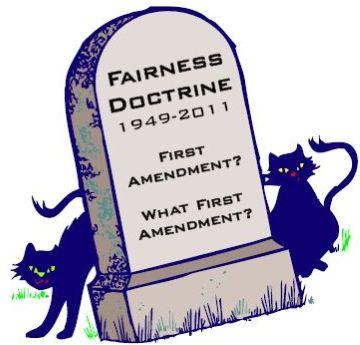
The controversy surrounding the Fairness Doctrine during the Nixon administration did not immediately dismantle the policy, but it contributed to a broader reassessment of broadcast regulation in the decades that followed. In the 1970s and 1980s, scholars, policymakers, and jurists increasingly questioned the scarcity rationale that had undergirded the doctrine. Technological developments, including the expansion of cable television and emerging media platforms, complicated the claim that access to the broadcast spectrum was so limited as to justify content-based obligations. The intellectual climate shifted toward greater skepticism of regulatory intervention in speech.
Critics argued that the doctrine’s enforcement mechanisms risked chilling robust debate rather than enhancing it. Rather than encouraging diversity of viewpoints, some maintained that the obligation to present contrasting perspectives discouraged broadcasters from addressing controversial issues at all. The administrative burden associated with compliance, coupled with the possibility of complaints and FCC review, created incentives to avoid risk. What had been conceived as a safeguard of democratic discourse was reinterpreted by opponents as a structural constraint. Academic commentary increasingly framed the doctrine as incompatible with evolving First Amendment doctrine, especially as judicial attitudes toward content regulation grew more protective of editorial autonomy.
This shift culminated in 1987, when the FCC formally repealed the Fairness Doctrine, concluding that it was no longer necessary to ensure diversity of viewpoints and that it may in fact inhibit speech. The Commission reasoned that changes in the media landscape had weakened the scarcity rationale and that marketplace forces could better promote a range of perspectives. Although Congress attempted to codify the doctrine statutorily, President Ronald Reagan vetoed the legislation, and the veto was sustained. The repeal marked a decisive turn away from mid-twentieth-century confidence in administrative management of balance toward a deregulatory understanding of broadcast speech.
The repeal did not eliminate debate about the doctrine’s legacy. Advocates of reinstatement argued that concentrated media ownership and ideological polarization revived concerns about equitable representation of viewpoints. Opponents countered that any revival of content-based obligations would reopen the door to governmental influence over editorial judgment. The Nixon-era episode lingered in these discussions as an example of how regulatory authority could be leveraged for political ends. Historical memory of administrative pressure shaped subsequent caution about empowering agencies to assess fairness in coverage.
Judicial doctrine evolved in parallel. While Red Lion remained formally intact, later decisions signaled increasing reluctance to treat broadcasting as categorically distinct from print. Courts became more protective of editorial discretion and less deferential to content-based regulatory requirements. Although the scarcity rationale was never explicitly overruled by the Supreme Court, its practical force diminished. The constitutional landscape moved toward stronger presumptions against governmental intrusion into media content, reflecting broader First Amendment developments.
The afterlife of the Fairness Doctrine reveals the enduring tension between regulatory oversight and media independence. The doctrine’s rise reflected faith in administrative management of the public sphere; its repeal reflected skepticism about the neutrality of such management. The Nixon administration’s engagement with FCC authority did not alone determine this trajectory, but it contributed to a reevaluation of how licensing power intersects with political incentive. The legacy of the doctrine underscores a central dilemma of the regulatory state: mechanisms designed to enhance democratic discourse can, under certain conditions, become instruments of influence. Its history remains a touchstone in debates over the proper relationship between government authority and broadcast journalism.
Conclusion: Regulatory State and the Fragility of Media Independence
The Nixon administration’s interaction with the Fairness Doctrine illustrates a central paradox of the modern regulatory state. Institutions designed to safeguard public discourse can simultaneously create channels through which political pressure is exerted. Broadcast regulation emerged from a mid-twentieth-century belief that administrative oversight would enhance democratic deliberation by ensuring balanced presentation of controversial issues and by preventing monopolization of the airwaves. The FCC was entrusted with managing spectrum scarcity in a manner consistent with the public interest, and the Fairness Doctrine embodied the conviction that structured supervision could widen rather than narrow debate. Yet the same structure that enabled accountability also embedded vulnerability. Licensing dependency and administrative discretion provided leverage points capable of shaping behavior without overt prohibition. What appeared as neutral governance in one context could operate as strategic pressure in another. The regulatory state contained within it both the promise of pluralism and the possibility of constraint.
The episode demonstrates that formal constitutional protections do not exhaust the mechanisms through which speech may be constrained. Throughout the Nixon years, constitutional guarantees remained formally unchanged, and network journalism continued to operate under established legal protections. Journalists were not formally barred from criticizing the administration, and the Supreme Court continued to affirm the legality of the Fairness Doctrine. Nevertheless, the regulatory architecture of broadcasting allowed executive dissatisfaction to migrate into the terrain of oversight. When editorial independence operates within a system of periodic review, discretionary enforcement, and public-interest evaluation, influence can occur indirectly. Pressure need not manifest as explicit censorship to affect behavior. It may arise from the anticipation of regulatory consequence, from the uncertainty surrounding renewal proceedings, and from the reputational costs of institutional conflict. The contraction of discourse in such circumstances reflects structural incentive rather than overt decree.
The events of 1969 to 1974 reveal the resilience of institutional checks. Judicial review, congressional oversight, and professional norms imposed meaningful limits on how far regulatory leverage could be pushed. The FCC retained statutory responsibilities that were not reducible to executive will. Public scrutiny during the Watergate era heightened sensitivity to the misuse of administrative authority. These countervailing forces did not eliminate tension, but they prevented the transformation of pressure into overt suppression. The fragility of media independence was accompanied by structural safeguards.
The history of the Fairness Doctrine during the Nixon administration underscores a broader lesson about democratic governance. When oversight authority intersects with political hostility, the boundary between lawful administration and coercive influence becomes contested terrain. The durability of media independence depends not solely on formal constitutional guarantees, but on vigilance within institutions charged with enforcement. In a system where speech and licensing intersect, the preservation of a robust public discourse requires constant attention to how power operates within procedural forms.
Bibliography
Affiliate disclosure: Amazon links on this site are paid links. As an Amazon Associate I earn from qualifying purchases.
- Beschloss, Michael R. Reaching for Glory: Lyndon Johnson’s Secret White House Tapes, 1964–1965. New York: Simon & Schuster, 2001.
- Communications Act of 1934, 47 U.S.C. § 151 et seq.
- Cronauer, Adrian. “The Fairness Doctrine: A Solution in Search of a Problem.” Federal Communications Law Journal 47:1,6 (1994), 51-77.
- Red Lion Broadcasting Co. v. Federal Communications Commission, 395 U.S. 367 (1969).
- Haldeman, H. R. The Haldeman Diaries: Inside the Nixon White House. New York: G. P. Putnam’s Sons, 1994.
- Hazlett, Thomas W. and David W. Sosa. “Was The Fairness Doctrine A ‘Chilling Effect’? Evidence from the Postderegulation Radio Market.” The Journal of Legal Studies 26:1 (1997), 279-301.
- Krasnow, Erwin G., Lawrence D. Longley, and Herbert A. Terry. The Politics of Broadcast Regulation. 3rd ed. New York: St. Martin’s Press, 1982.
- Kutler, Stanley I. The Wars of Watergate: The Last Crisis of Richard Nixon. New York: Alfred A. Knopf, 1990.
- Pickard, Victor. “The Strange Life and Death of the Fairness Doctrine: Tracing the Decline of Positive Freedoms in American Policy Discourse.” International Journal of Communication 12 (2018), 3434-3453.
- Small, Melvin. The Presidency of Richard Nixon. Lawrence: University Press of Kansas, 1999.
- Ugland, Eric. “The Fairness Doctrine Redux: Media Bias and the Rights of Broadcasters.” Minnesota Journal of Law, Science & Technology 7:1,16 (2005), 301-313.
Originally published by Brewminate, 02.24.2026, under the terms of a Creative Commons Attribution-NonCommercial-NoDerivatives 4.0 International license.
About the Author