Wondering what role evidence plays when determining guilt in criminal court? Well, one can say that it is, in fact, the very foundation of any criminal case. Evidence establishes the facts of the case, supports the arguments, and helps in deciding the case. In fact, no criminal case can proceed without credible or sufficient evidence.
The Importance of Evidence
As mentioned above, evidence plays a very important role in criminal cases. The evidence can either prove the victim guilty or innocent, depending on how strong it is. The evidence can be anything, such as physical injuries, witness testimonies, photos, videos, etc.
One of the main concepts that enhances the importance of the evidence is the burden of proof in criminal cases. This concept requires the prosecution team to have very strong evidence that proves that the suspect is guilty without a doubt. This is done to ensure that no individuals are proven guilty without strong evidence.
What Are the Types of Evidence Used in Criminal Courts?
A criminal court makes use of different types of evidence, where each of them serves a different purpose or role in shaping the outcome of the case.
1. Physical Evidence
Physical evidence includes items that are often collected from the crime scene, such as fingerprints, DNA, weapons, etc. Physical evidence can be one of the strongest pieces of evidence when it is collected properly and has not been tampered with.
2. Testimonial Evidence
This includes statements from people who have witnessed the incident, such as victims, bystanders, or other experts who may add useful information to the case. But this type of evidence has very low credibility.
3. Documentary Evidence
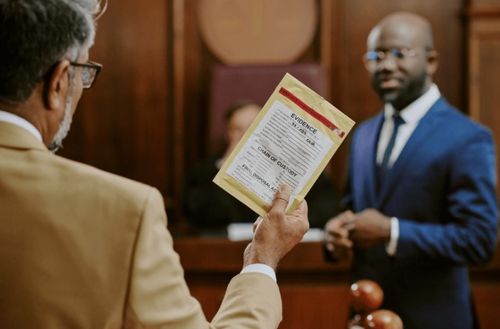
Documentary evidence includes written or recorded materials such as emails, contracts, or surveillance footage. This will help in establishing if there have been any connections between the victim and the suspect or if there is any intent.
4. Circumstantial Evidence
Circumstantial evidence does not directly prove the suspect guilty but gives a probability that they might be involved in the crime. For example, the suspect being seen near the crime scene, being in that area on that day, etc.
How Does a Court Evaluate Evidence?
Each piece of evidence is first thoroughly looked into by the judges, who then determine if the evidence is admissible. For evidence to be admissible, the prosecutor must ensure that it was lawfully obtained and meets all the legal standards.
Once the evidence is admitted, the credibility, reliability, and relevance are assessed. The weight of the evidence can be determined by factors such as whether there is sufficient proof that the suspect is guilty and the qualifications of the experts giving the testimony.
What is the Role of Defense and Cross-Examination?
Every person has a legal right to defend themselves. So, to ensure a fair trial, even suspects get a chance to defend themselves, even with evidence. Cross-examination allows the defense attorney to question the credibility of the evidence, highlight any inconsistencies, and try to defend the evidence.
Even if there is a small suspicion that the defendant is not guilty, the jury will acquit the defendant.
Why Evidence Must Meet a High Standard
When a crime happens, we want justice to be served, but it is only possible when you have very strong evidence that actually proves the crime. Keeping such high standards for evidence also ensures that no one is wrongly convicted of a crime, thereby giving everyone a fair chance and protecting the individual’s rights.
Key Takeaways
- Evidence is a key factor in determining guilt in a criminal court.
- A criminal case may require different types of evidence, such as physical, testimonial, and even documentary.
- Evidence is considered admissible when it is reliable and follows the legal standards.
- High standards are kept for evidence to ensure that suspects are not wrongly convicted.
About the Author