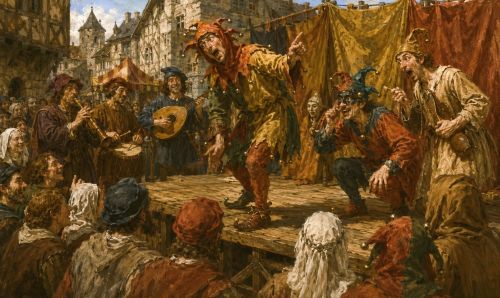
Medieval farces and soties used fools, tricksters, courts, households, and public laughter to expose the fragile performance of authority.

By Matthew A. McIntosh
Public Historian
Brewminate
Introduction: Medieval Laughter before Modern Comedy
Medieval theater is too often imagined as a solemn world of mystery cycles, saints’ lives, moral allegories, and church-sponsored instruction. Those traditions mattered deeply, but they were never the whole story. Alongside the devotional drama of medieval Europe, and often in the same public spaces that hosted religious performance, there flourished a rougher, quicker, more irreverent theatrical culture. Farces and soties belonged to that world of laughter, disorder, insult, impersonation, and comic exposure. They did not reject medieval society from outside it. They worked from within its streets, courts, guilds, schools, festivals, and public squares, turning the familiar structures of everyday life into scenes of theatrical instability. The result was a comic tradition that made medieval audiences laugh at husbands, wives, lawyers, merchants, clerics, officials, and fools, but also invited them to recognize how fragile many claims to authority could be when placed before a crowd.
Farce and sotie were related forms, but they did not do the same work. Farce usually drew its energy from recognizable social life: quarrelsome households, cheating tradesmen, greedy professionals, foolish spouses, cunning servants, dishonest lawyers, and small acts of deception that grew into public humiliation. Its comedy was fast, physical, verbal, and often bawdy, built from appetite, disguise, misrecognition, trickery, and reversal. The sotie, by contrast, moved more deliberately into the territory of social and political satire. Its characters were frequently fools, or sots, whose theatrical folly gave them license to speak truths that ordinary subjects might not safely utter. Where farce made the ordinary world absurd, sotie made absurdity into a public language, dressing criticism in bells, motley, allegory, and festive inversion.
These genres emerged from a broader medieval performance culture in which sacred and secular forms were not always cleanly separated. Religious drama created habits of public staging, communal spectatorship, pageantry, and episodic theatrical structure. Urban festivity, student culture, legal societies, guild associations, and civic celebrations supplied other energies: mockery, parody, song, noise, costume, procession, and temporary social inversion. Farce may have begun as comic “stuffing,” a short interlude placed among more serious dramatic materials, but by the later Middle Ages it had become a durable theatrical form in its own right. The sotie likewise belonged to a culture in which foolishness could be a mask for dangerous intelligence. Its fools were not merely silly figures; they were theatrical instruments through which late medieval society could think aloud about corruption, hypocrisy, hierarchy, and public disorder.
To study farces and soties is not to step away from serious medieval history into comic triviality. It is to enter one of the places where medieval society exposed itself most candidly. These plays reveal anxieties about law, marriage, gender, money, office, class, clerical authority, royal power, and the unstable relationship between speech and truth. Their laughter was not modern liberal protest, and it should not be romanticized as simple popular rebellion. It was more complicated than that. Farce could reinforce stereotypes even as it mocked power; sotie could attack one authority while serving another. Yet both forms show that medieval audiences understood something recognizably modern: comedy could puncture dignity, strip authority of its costume, and make public life visible by making it ridiculous.
Sacred Stages and Secular Openings: The Theatrical World That Made Farce Possible

Farce did not appear suddenly as a fully independent comic genre. It grew out of a medieval theatrical culture in which performance was already woven into religious observance, civic rhythm, seasonal festivity, and public gathering. The Christian church helped preserve and reshape dramatic action after the collapse of the ancient theatrical institutions of the Roman world, but it did not create a permanently sealed sacred stage. Liturgical drama, especially around Easter and Christmas, gave medieval communities a shared grammar of gesture, costume, movement, repetition, and public spectatorship. Clergy and choirs enacted sacred history within the church, while later vernacular religious drama moved outward into streets, marketplaces, and civic spaces. Once drama entered that larger public world, it became harder to keep solemn devotion entirely separate from laughter, noise, parody, and popular appetite.
The mystery play, miracle play, and morality play were not comic forms in the same sense as farce, but they helped make farce possible by creating the conditions for theatrical habit. They trained audiences to gather, watch, interpret, and respond. They accustomed communities to episodic structure, recognizable roles, symbolic costume, and the staging of moral conflict before a crowd. They also placed performance in the hands of more than clerics alone. Guilds, confraternities, municipal authorities, students, and lay associations all took part in theatrical production at different times and places. This widening of performance culture mattered. A society that could stage Noah, Herod, Pilate, devils, virtues, vices, martyrs, and saints could also stage a cheating merchant, a foolish husband, a greedy lawyer, or a wife who knew far more than her husband suspected.
The movement from sacred drama to secular comic drama should not be understood as a clean break. Medieval culture did not divide life into modern categories of religious seriousness and secular entertainment with the neatness later observers often assume. Feast days, processions, civic ceremonies, and religious festivals could carry both devotional and comic energies at once. The same public square might host sacred pageantry, moral instruction, music, mockery, eating, drinking, bargaining, flirtation, and theatrical improvisation. Serious drama needed pauses, transitions, and relief; crowds needed to be held; performers and organizers needed variety. Comic insertions, short interludes, and festive inversions found natural openings within and around more solemn theatrical occasions. The traditional association of farce with the idea of “stuffing” captures something important about this process, not because every farce can be traced mechanically to an inserted scene, but because comic performance often filled the spaces between official structures.
This is why the early history of farce is best treated as a history of theatrical permeability. Sacred drama supplied frameworks of staging, but urban life supplied farce with its substance. The world of the farce was not the biblical past or the allegorical landscape of salvation. It was the recognizable world of kitchens, shops, streets, law courts, bedrooms, taverns, and markets. Its characters were not usually saints or personified virtues, but wives, husbands, servants, merchants, doctors, priests, peasants, students, and clerks. These figures belonged to the same social world as the spectators. They argued over money, sex, food, labor, credit, status, authority, and reputation. Farce became possible when theatrical practice had become public enough, flexible enough, and familiar enough to make ordinary life itself stage-worthy.
The development of farce also depended on the late medieval city as a dense environment of speech and competition. Urban Europe generated a world of professions, guild identities, legal routines, commercial transactions, neighborhood rivalries, and social frictions that practically invited comic treatment. A merchant could be cheated because trade depended on trust and bargaining. A lawyer could be mocked because legal language promised order while often appearing obscure, self-serving, or manipulable. A husband could be humiliated because household authority was socially prized yet theatrically fragile. A cleric could become ridiculous because religious office carried moral claims that everyday behavior might contradict. Even the ordinary rhythms of buying, borrowing, hiring, accusing, marrying, and suing could become theatrical once they were exaggerated before a watching crowd. Farce fed on these tensions. It took institutions that claimed stability and revealed the disorder beneath them, not by argument alone, but by speed, confusion, impersonation, reversal, and laughter. Its comic world was crowded with people trying to control speech, money, bodies, labor, and reputation, only to discover that control itself could become a joke. In that sense, farce belonged especially to the late medieval town, where status was visible, exchange was constant, and public embarrassment could be as devastating as formal punishment.
By the later Middle Ages, farce was not merely a decorative comic aside attached to religious performance. It had become one of the ways urban and festive society examined itself. Its origins lay partly in the staging habits of religious drama, but its power came from secular recognition. Audiences laughed because they knew these people, these quarrels, these frauds, and these humiliations. Farce did not require a heroic plot or sacred subject because the ordinary world already contained enough disorder for comedy. The theatrical world that made farce possible was neither wholly sacred nor simply secular. It was a porous culture of performance in which devotion, festivity, mockery, instruction, and social criticism stood close enough together for laughter to move between them.
From Interlude to Genre: The Early Shape of French Farce
The early shape of French farce is easiest to understand if it is approached less as a single invented form than as a comic habit that gradually acquired theatrical identity. Short comic scenes, market entertainments, jongleur performances, festive inversions, and dramatic insertions all helped form the conditions from which farce emerged. The genre’s name itself suggests filling, stuffing, or insertion, but its development was not merely a technical matter of comic material wedged between more serious plays. Farce became recognizable when such comic energies began to cohere around recurring structures: deception, reversal, appetite, bodily embarrassment, quarrels, professional fraud, household conflict, and the public humiliation of someone who mistook social position for actual control. Its origins may have been occasional and flexible, but its later form was sharp, repeatable, and instantly legible to audiences.
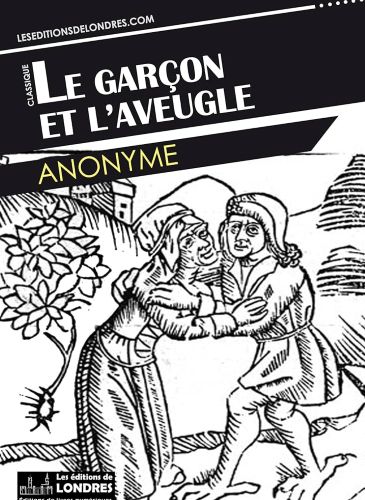
One of the earliest surviving examples associated with the farcical tradition is Le Garçon et l’Aveugle, a thirteenth-century French comic play often treated by scholars as an early farce or proto-farce. Its plot is simple and brutal: a blind beggar and a boy operate within a world of deceit, performance, and economic vulnerability, until the trickster himself becomes the victim of trickery. The play already contains several features that would remain central to farce: a small cast, minimal staging demands, aggressive verbal exchange, bodily action, comic cruelty, and the reversal of advantage. It also suggests that farce did not need elaborate scenery or institutional grandeur to work. A public space, two performers, recognizable social types, and an audience willing to laugh at exposure were enough. The world of farce could be carried almost anywhere because its true stage was not architecture but social tension. That portability matters because it helps explain why farce could live in the seams of medieval performance culture before becoming a more recognizable dramatic genre. Unlike large-scale religious pageants, which often required civic coordination, sacred calendar placement, costumes, platforms, and organized sponsorship, a compact comic play could depend on timing, voice, gesture, and immediately intelligible conflict. Le Garçon et l’Aveugle shows how little farce required materially and how much it could do socially. Its cruelty is not incidental; it exposes a comic world in which poverty, disability, cunning, and survival are tangled together without sentimental protection. The laughter it invites is uncomfortable, but that discomfort is historically revealing, because early farce did not soften social vulnerability so much as theatricalize the contests that vulnerability produced.
As farce developed in late medieval France, it drew heavily from ordinary life, but ordinary life was never treated neutrally. Farce compressed the familiar into a mechanism of comic disorder. A household quarrel became a contest over speech and obedience. A commercial exchange became an opportunity for fraud. A legal proceeding became a theater of manipulation. A meal, a debt, a stolen object, a marriage arrangement, or a professional consultation could become the starting point for reversal and ridicule. Farce did not require noble protagonists because its interest lay precisely in the theatrical instability of common social roles. Husbands, wives, servants, merchants, priests, lawyers, doctors, peasants, and fools could all be drawn into plots where the person who seemed to possess authority was revealed as gullible, greedy, lustful, cowardly, or ridiculous.
The genre’s comic style depended on speed and compression. Farces were generally short, and their brevity shaped their dramatic intelligence. They did not unfold slowly through psychological development or moral contemplation. They moved by pressure: an accusation, a scheme, a misunderstanding, a disguise, a bargain, a beating, an exposure. Characters entered already defined by appetite, profession, social position, or desire, and the play quickly forced those identities into conflict. This is why farce often feels both simple and precise. Its figures may be broad, even stereotyped, but the social relationships between them are rarely random. The joke works because audiences already understand the authority of husbands, the suspicion directed toward wives, the ambiguous reputation of lawyers, the moral claims of clerics, the tricks of merchants, and the vulnerability of the poor. Farce turns that shared knowledge into theatrical velocity.
By the fifteenth century, French farce had become a mature comic genre capable of more than interruption or amusement. Its humor could be coarse, physical, and openly cruel, but it also carried a sophisticated awareness of language and social performance. Characters survive by speaking well, lying effectively, pretending convincingly, or exposing the false performances of others. Farce is deeply theatrical even when its subjects are mundane. It shows society as a set of roles people try to inhabit and manipulate: husband, wife, master, servant, lawyer, client, buyer, seller, priest, patient, judge, beggar. Farce asks what happens when those roles fail, overlap, or become ridiculous under pressure. The answer is laughter, but it is laughter with structure. What began as comic filling had become a genre that could make daily life itself appear staged, unstable, and ripe for exposure. This maturity also meant that farce could move beyond simple mockery into a sharper investigation of how authority was performed. A lawyer’s power depended on language, a husband’s on household hierarchy, a merchant’s on trust, a cleric’s on moral reputation, and a master’s on obedience. Farce repeatedly shows these supports cracking under pressure. It does not usually offer reform, justice, or moral resolution in the solemn sense; instead, it offers exposure. The comic ending may restore nothing permanently, but for the duration of performance it reveals that many forms of power are theatrical bargains, maintained only so long as others continue to believe in them. That is why the farce’s shortness should not be mistaken for smallness. Its world is brief, loud, and unruly, but it is also one of the clearest medieval stages on which ordinary society could watch its own pretensions collapse.
Domestic Disorder: Marriage, Gender, Work, and the Comic Household
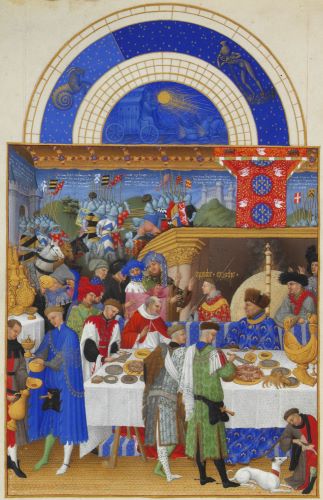
The household was one of farce’s most reliable stages because it was the place where medieval society imagined order and encountered disorder. Marriage, labor, food, sex, property, obedience, and reputation all converged there, making the home less a private sanctuary than a crowded institution of negotiation and surveillance. Farce understood this instinctively. It did not need kings, battles, saints, or miracles to produce dramatic tension. A husband trying to command, a wife refusing to submit, a servant exploiting confusion, a neighbor overhearing too much, or a household object becoming the center of dispute could generate enough conflict for an entire comic world. The domestic farce worked because the household was already theatrical. It had roles, scripts, expectations, entrances, secrets, overheard speech, and punishments. Comedy began when those arrangements failed in public. This was especially potent because medieval household order was never merely personal. It was moral, legal, economic, and communal. The family was expected to discipline desire, transmit property, regulate labor, uphold gender hierarchy, and maintain reputation before neighbors and kin. When farce brought that space onto the stage, it did more than mock private quarrels. It exposed how much social pressure rested on the household and how easily that pressure could turn into absurdity.
Marriage in farce was rarely sentimental. It was usually presented as a field of contest, suspicion, appetite, resentment, and tactical speech. Husbands often entered as figures of presumed authority, but farce delighted in showing how easily that authority could be mocked, evaded, or overturned. The husband might believe that law, custom, age, gender, or economic position gave him command over the house, yet the play often reveals that command as brittle. He can be deceived by language, manipulated by desire, trapped by his own vanity, or made ridiculous by his inability to understand what is happening around him. Farce turns patriarchal confidence into comic vulnerability. It does not necessarily overthrow patriarchal assumptions in a modern emancipatory sense, but it repeatedly shows that male household authority depended on performance, and performances could fail.
Wives in farce were equally shaped by stereotype and theatrical power. They could be scolds, deceivers, sexual agents, spendthrifts, clever managers, victims of foolish husbands, or conspirators in domestic reversal. These roles often drew from misogynistic traditions that imagined women as unruly, talkative, lustful, or manipulative. Yet the theatrical effect was more complicated than simple condemnation. The farcical wife frequently possesses the practical intelligence needed to navigate the world of the play. She understands desire, money, speech, timing, and household politics better than the man who claims formal control. Her cleverness may be framed as disorder, but it also becomes the engine of the comedy. The audience laughs partly because she violates expected obedience, but also because the men around her prove so easily fooled.
This tension makes domestic farce especially revealing as social evidence. It cannot be read as straightforward advocacy for women, nor can it be dismissed as only anti-female mockery. Farce stages gender as a conflict between official hierarchy and lived competence. Medieval marital ideology often emphasized male headship, female obedience, and household governance, but daily life required bargaining, labor, emotional calculation, and economic improvisation. A wife might be legally subordinate while practically indispensable. She might lack formal authority while controlling access to food, sex, information, credit, or household reputation. Farce exaggerated these realities into comic violence and deception, but the exaggeration depended on something recognizable. The household became funny because everyone knew it was never as orderly as sermons, law codes, or conduct literature claimed. That is precisely why the stage could make domestic hierarchy laughable without needing to deny its social power. The joke often emerges from contradiction: the ideology of obedience remains intact, but the obedient household cannot be found. Instead, farce presents a world where command requires negotiation, reputation requires concealment, and gendered power must constantly be performed in front of people who are ready to see the performance fail.
Work was central to this domestic disorder. The farcical household was not merely a place of intimacy; it was also a workplace. Cooking, cleaning, sewing, buying, selling, serving, lending, nursing, and provisioning all passed through domestic space. Servants, apprentices, hired laborers, wives, husbands, and children could all be implicated in its economy. This made household comedy inseparable from labor comedy. Who worked, who avoided work, who claimed the fruits of another’s work, and who controlled household resources were recurring sources of conflict. A lazy husband, a cunning servant, an overburdened wife, or a dishonest tradesman could all expose the fragile relationship between labor and authority. Farce repeatedly asks who actually keeps the household functioning, and the answer is often not the person who claims to rule it.
Food and appetite gave these conflicts bodily force. Meals, hunger, drink, sexual desire, and physical comfort appear throughout farcical logic because they made social disorder visible in the body. Farce rarely treats human beings as purely moral or spiritual creatures. They are hungry, lustful, tired, greedy, jealous, and afraid of being beaten or shamed. This bodily emphasis connected domestic comedy to the broader culture of carnival and festive inversion, where appetite could challenge hierarchy by dragging lofty claims down into the material world. A husband may claim moral seriousness, but he still wants food, sex, and obedience. A cleric may claim spiritual authority, but he can be made ridiculous through bodily desire. A merchant may speak of honest exchange, but he can be undone by greed. Farce made bodies expose the truth that social roles tried to conceal. The body was also difficult to discipline theatrically, which made it a perfect weapon against abstraction. Sermons, legal formulas, and household ideals might speak in orderly terms, but farce returned attention to stomachs, beds, blows, fatigue, pregnancy, aging, and embarrassment. It insisted that social life was lived through bodies that desired, suffered, cheated, consumed, and failed. Domestic farce turned appetite into criticism. It did not need to preach that authority was hypocritical; it could simply show authority hungry, aroused, frightened, drunk, beaten, or desperate to save face.
The comic household also depended on speech. Domestic farce is full of argument, accusation, bargaining, insult, evasion, and verbal trap-setting. Characters do not merely act; they talk themselves into and out of authority. A wife can delay obedience through words, a husband can threaten without understanding, a servant can redirect suspicion, and a neighbor can transform private conflict into public scandal. Reputation mattered enormously because the household was never fully sealed from the community. What happened inside could spill outward through gossip, litigation, mockery, or theatrical exposure. Farce turns this permeability into structure. Doors, windows, overheard conversations, hidden lovers, misunderstood commands, and sudden entrances all make the house porous. The private world is always on the edge of becoming public humiliation.
By making the household ridiculous, farce made one of medieval society’s foundational institutions visible as a performance under stress. Marriage could be sacred in doctrine, contractual in law, economic in practice, and comic onstage. Gender hierarchy could be affirmed in theory while mocked in action. Work could sustain domestic order while revealing who actually bore its burdens. Appetite could puncture moral pretension. Speech could unmake authority as quickly as it created it. This is why domestic farce mattered. It transformed the smallest social unit into a theater of larger contradictions. The household became the place where medieval audiences could laugh at the gap between order as proclaimed and order as lived, between the family as ideal and the family as daily struggle, between authority’s costume and the comic body underneath.
Law, Trickery, and Maistre Pierre Pathelin: Farce Enters the Courtroom
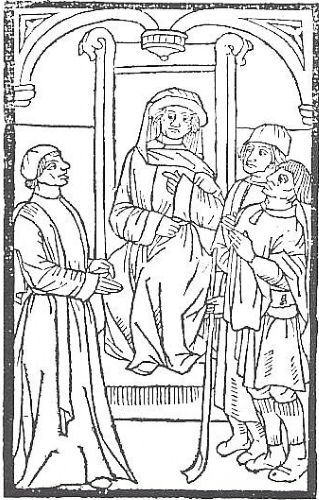
No surviving medieval French farce has carried more literary weight than La Farce de Maistre Pierre Pathelin. Usually dated to the fifteenth century, with uncertain authorship and early printed circulation by the late medieval period, the play stands at the center of the farcical tradition because it joins comic speed to social precision. It is not merely a funny play about a dishonest lawyer, a gullible merchant, and a clever shepherd. It is a drama about language as power, fraud as performance, and law as a theatrical system vulnerable to the very verbal tricks it claims to discipline. Earlier farces could make a household, marketplace, or tavern ridiculous; Pathelin brings the farcical imagination into the world of contracts, accusations, testimony, and judgment. It turns the courtroom into one of medieval comedy’s sharpest stages.
The plot begins outside the courtroom, in the world of commerce. Pierre Pathelin, a lawyer short of money and reputation, persuades a cloth merchant to extend him credit for fabric, then escapes payment by pretending to be gravely ill when the merchant comes to collect. The deception depends not on force, but on performance. Pathelin and his wife, Guillemette, stage illness so convincingly that the merchant’s economic claim collapses into confusion. Words, gestures, groans, domestic arrangement, and theatrical timing replace honest exchange. The merchant has been cheated, but he has also been outperformed. The scene exposes a key farcical principle: social reality can be manipulated when people accept the roles placed before them. Pathelin does not simply lie. He creates a scene in which the merchant cannot make his accusation intelligible.
The play then widens the joke by carrying this logic into legal space. The same merchant later appears in court against the shepherd Thibault Agnelet, whom he accuses of stealing sheep. Pathelin agrees to represent Agnelet and teaches him a strategy of radical verbal refusal: the shepherd should answer every question by bleating like a sheep. This advice transforms testimony into anti-testimony. The courtroom expects speech to clarify truth, but Agnelet’s animal sound empties legal procedure of its usual authority. The judge, merchant, lawyer, and accused all occupy recognizable institutional roles, yet the process is derailed by a performance that exploits the system’s dependence on language. The joke is absurd, but it is not random. It reveals how legal judgment requires not only facts, but also forms of speech that the court can recognize, organize, and control.
The courtroom scene is farcical because it makes law look like theater without pretending that law is unimportant. The judge sits as authority, the parties present claims, the advocate interprets, the accused performs innocence or confusion, and everyone competes to define what has happened. This is not a rejection of justice so much as a comic exposure of its fragility. The merchant, already deceived in the cloth episode, cannot separate his grievance against Pathelin from his case against Agnelet. His speech collapses into repetition and displacement. The lawyer who should clarify the dispute helped create the confusion. The shepherd who should answer the charge turns himself into an animal sound. The judge presides over order, but the proceedings reveal that order depends on unstable verbal conventions. Farce does not need to destroy the court; it only has to let everyone speak until the institution begins to look ridiculous.
Pathelin himself is the central figure because he embodies both legal intelligence and theatrical deceit. As a lawyer, he should represent the disciplined use of speech: argument, persuasion, interpretation, and procedural knowledge. As a farcical trickster, he uses those same skills to evade debt and manipulate judgment. The play refuses a clean distinction between legal rhetoric and comic lying. Pathelin’s cleverness is admirable onstage because it is energetic, inventive, and dazzling; it is also morally corrosive because it turns every social bond into an opportunity for fraud. His mastery of language makes him powerful, but it also places him inside the logic of farce, where every trick creates the conditions for reversal. The man who weaponizes speech cannot control what happens when others learn to do the same.
That reversal arrives when Agnelet uses Pathelin’s own lesson against him. After the shepherd escapes legal danger through the bleating strategy, Pathelin expects payment for his services. Agnelet responds with the same sheep-like refusal he used in court, reducing the lawyer to the position of the cheated merchant. The trickster is tricked, but the reversal is more than a neat comic ending. It completes the play’s argument about transferable deception. Once speech becomes a tool detached from truth, no one can permanently monopolize it. Pathelin can teach fraud, but he cannot reserve its benefits for himself. The final joke is deeply structural: the legal professional who manipulated commerce and court procedure is defeated by a poorer, lower-status figure who has learned that performance can overpower obligation. Farce makes social hierarchy wobble by showing that theatrical intelligence does not belong only to elites.
This is why Maistre Pierre Pathelin deserves its place as the most celebrated medieval French farce. It gathers the genre’s major energies into one compact structure: marketplace deceit, domestic staging, professional satire, courtroom disorder, verbal excess, role-playing, and reversal. Its world is morally unstable, but dramatically exact. Merchants are not simply honest victims, lawyers are not simply learned authorities, judges are not all-seeing guardians of truth, and peasants are not merely simple fools. Each figure becomes comic because each depends on a social role that can be manipulated or exposed. The play does not offer a program for legal reform, nor does it imagine justice as impossible. Instead, it shows why justice is theatrically vulnerable: it must pass through language, and language can be performed, twisted, withheld, echoed, or turned into a sheep’s bleat. In Pathelin, farce enters the courtroom and discovers that law, like comedy, depends on getting the audience to believe the scene.
Who Performed the Joke? Students, Guilds, Law Clerks, and Urban Comic Culture
Farce was not only a literary genre preserved in manuscripts and printed collections. It was also a social practice, made by performers who belonged to the urban worlds they mocked. Its jokes did not float above medieval society as detached entertainment; they came from groups that knew courts, guilds, markets, schools, and civic ceremonies from the inside. This matters because the farce’s precision depends on experience. A play that mocks legal jargon, professional deceit, household authority, or commercial bargaining gains force when its performers and spectators recognize those systems intimately. Late medieval comic theater was not simply “popular” in the vague sense of being enjoyed by crowds. It was urban, literate, communal, and semi-institutional, drawing on the energies of students, clerks, tradesmen, confraternities, and festive societies that could turn social familiarity into dramatic ridicule.
Among the most important of these groups were the law clerks associated with the Basoche. The Basoche, a society of legal clerks connected with the Paris law courts, became famous for theatrical activity and for its contribution to medieval French comedy. Its importance lies not merely in the fact that law clerks performed plays, but in the kind of theatrical intelligence their world encouraged. Law clerks lived amid documents, petitions, pleadings, offices, formulas, accusations, and procedural rituals. They knew how authority sounded. They knew how language could clarify, obscure, intimidate, delay, and deceive. It is hardly surprising, then, that legal farce became one of the most sophisticated branches of the genre. A group trained in the forms of law was exceptionally well placed to turn those forms into comedy.
This relationship between legal work and comic performance helps explain why so many farces are fascinated by speech. Lawyers, judges, litigants, clients, witnesses, merchants, and servants all depend on words that must be believed, interpreted, or challenged. A legal clerk watching a farce about a dishonest advocate or confused lawsuit would not encounter a distant fantasy. He would see the comic distortion of a world he knew professionally. Yet the audience did not have to be legally trained to enjoy the joke. Courtroom farce worked on two levels at once. It offered learned humor about procedure, rhetoric, and professional roles, while also giving broader audiences the pleasure of seeing lawyers, litigants, and officials dragged into confusion. The Basoche gave farce an institutional vocabulary, but the comedy remained public enough for the crowd. This dual address is one of the genre’s most important strengths. Farce could reward specialized knowledge without becoming private entertainment for specialists alone. A clerk might recognize the parody of legal form, while a market laborer might recognize the familiar terror of being trapped by technical language he could not control. Legal farce made institutional speech socially visible. It translated the hidden machinery of paperwork, pleading, and procedural expertise into comic action that a crowd could judge by laughter.
Guilds and civic associations also mattered because medieval theater was deeply tied to organized urban life. Religious drama often depended on guild sponsorship or participation, and secular comic performance benefited from the same habits of collective staging. Tradesmen, craftsmen, merchants, and apprentices inhabited a world of regulated labor, reputation, competition, and ceremonial display. Their associations could support performances, provide performers, and supply audiences already trained to see social roles theatrically. In farce, the tradesman was not an abstract economic figure. He was a neighbor, a customer, a rival, a creditor, a debtor, or a man whose public honor could be damaged by ridicule. Guild culture made professional identity visible, and farce turned that visibility into comic material. The merchant cheated in a play, the cobbler mocked onstage, or the professional exposed as foolish all belonged to a larger urban habit of making work publicly legible.
Students and educated young men brought another kind of energy to comic theater. Medieval schools and universities produced communities skilled in disputation, parody, Latin learning, vernacular play, and competitive verbal display. Student culture could be unruly, carnivalesque, and sharply satirical, especially when it crossed into festival life. Young men trained in grammar, rhetoric, law, or theology could parody the very forms of argument they were learning. This gave farce and related comic forms a distinctive blend of low subject matter and learned technique. A joke about sex, food, debt, or bodily humiliation might be structured with considerable rhetorical skill. That combination is central to late medieval comic theater: it often looks crude on the surface, but its timing, verbal reversals, and manipulation of audience expectation reveal performers who understood language as a craft.
The Enfants sans Souci and similar festive societies show how porous the boundary could be between theatrical entertainment and organized urban misrule. Britannica describes the Enfants sans Souci as one of medieval France’s large sociétés joyeuses, an association of merchants, craftsmen, and students in Paris that staged theatrical entertainments and amusements. That mixture is revealing. Comic theater was not confined to a single class or profession. It emerged from overlapping urban groups whose members could move between work, study, ceremony, and festivity. Such societies preserved something of the older culture of licensed foolishness while relocating it into public civic space. Their performances could amuse, mock, celebrate, and critique. They also prepared the way for the sotie, where the figure of the fool became not merely a comic type but a social mask through which political and moral commentary could be spoken.
The question of who performed farce is inseparable from what farce could say. A peasant, lawyer, merchant, priest, judge, wife, servant, or fool onstage was never only a fictional character. Each was a social role being handled by performers who understood how roles worked in public. The urban performer did not need to overthrow society to expose it. He could exaggerate a gesture, repeat a phrase, misuse a legal formula, mimic professional authority, or show a household command collapsing under its own absurdity. This is why farce belongs so strongly to the city and to organized public culture. Its jokes were produced by people who inhabited institutions closely enough to know their weaknesses. Medieval comic theater was not the voice of a shapeless crowd. It was the laughter of townspeople, clerks, students, workers, and festive companies who knew that authority was most vulnerable when it had to perform itself before others. That performance could happen in court, in a marketplace, in a guild setting, in a festive procession, or on a temporary stage before a mixed audience whose members brought different kinds of knowledge to the joke. The same scene could carry several meanings at once: professional parody for those inside the institution, social revenge for those subject to it, and communal amusement for those who simply delighted in seeing dignity punctured. Farce’s performers turned urban experience into comic form, and the city gave them the audience capable of understanding why the joke mattered.
From Farce to Sotie: The Fool as Licensed Truth-Teller
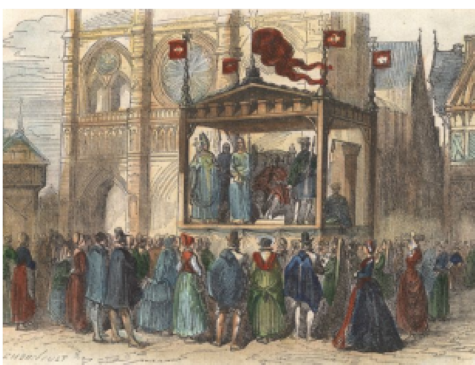
The movement from farce to sotie was not a simple evolution from one genre into another, as though domestic comedy naturally matured into political satire. Farce and sotie overlapped in time, audience, festivity, and comic energy, but they organized laughter differently. Farce usually began from recognizable social friction: a quarrel, a trick, a debt, a marriage, a lawsuit, a bodily appetite, or a professional deception. Sotie began from a more abstract and theatrical premise: the world itself could be staged as foolish. Its characters were not merely ridiculous individuals caught in comic plots. They were often sots, fools whose costume, language, and collective identity transformed folly into a public way of speaking. Where farce made social roles collapse under pressure, sotie made foolishness into a mask through which social and political order could be judged.
The fool was powerful because he occupied an unstable position between license and marginality. He could be dismissed as ridiculous, yet that ridiculousness allowed him to say what a sober speaker might not safely say. His apparent lack of seriousness became his protection. In medieval and late medieval culture, folly could function as inversion, parody, warning, or revelation. A fool might appear beneath dignity, but theatrical foolishness could expose the greater folly of rulers, clerics, judges, scholars, and citizens who mistook status for wisdom. Sotie exploited this paradox. Its fools wore the signs of absurdity, but those signs gave them a kind of satirical authority. By placing critique in the mouths of fools, the genre created a theatrical space where dangerous truths could be spoken as laughter. This is why the fool’s costume mattered so much. Bells, caps, motley, mock regalia, and exaggerated gestures did not simply decorate the performer; they marked a special condition of speech. The fool stood partly inside the community and partly outside its ordinary rules, recognizable enough to speak to the crowd but strange enough to unsettle it. His social weakness became theatrical leverage. Because he was already marked as foolish, he could reveal foolishness elsewhere without appearing to claim sober authority for himself. Sotie turned that paradox into dramatic method: the one person least expected to possess wisdom became the figure through whom wisdom could most safely, and most sharply, be staged.
This did not make the sotie politically innocent. Its license was real, but it was never unlimited. The fool could speak boldly because he was framed as a fool, yet that frame also allowed patrons, authorities, and audiences to manage the risk of what was being said. A sotie could mock hypocrisy, corruption, bad counsel, legal abuse, clerical pretension, or political disorder, but it did so through allegory, comic exaggeration, and theatrical displacement. The fool’s speech was double. On the surface, it belonged to madness, play, and festival. Beneath that surface, it could carry precise social accusation. This double structure gave the sotie its force. It allowed satire to move through a society that recognized hierarchy, feared disorder, and still made room for moments when order itself could be represented as foolish.
The relation between sotie and festive inversion is crucial here. Late medieval urban culture contained many moments in which ordinary hierarchy was temporarily bent, mocked, or turned upside down. Feast culture, carnival practices, mock courts, playful societies, and youth organizations all created occasions when costumes, parody, noise, and public performance could loosen the stiffness of official rank. Sotie drew from this atmosphere, but it was more than spontaneous misrule. It was crafted theater. The fool’s costume did not merely signal chaos; it announced a convention. Audiences knew they were entering a world in which the normal relation between wisdom and authority might be reversed. The wise could appear foolish, the low could judge the high, and laughter could become a method of public interpretation. The sotie took the temporary license of festive culture and gave it dramatic shape.
Compared with farce, the sotie often moved toward a broader social horizon. Farce might ridicule a husband, a merchant, a priest, or a lawyer as a recognizable type within ordinary life. Sotie could turn entire institutions, kingdoms, councils, churches, or political factions into comic allegory. Its characters might not represent individuals only; they could embody conditions, offices, vices, policies, or collective delusions. This allegorical reach made the genre especially useful for satire. It could criticize a particular abuse while presenting it as part of a larger disorder in the realm, the Church, or the moral life of the community. The fool’s world became a mirror in which society saw not isolated misbehavior, but a system of foolishness.
Yet the sotie’s power also lay in its ambiguity. A fool who tells the truth may still be a fool. A satire that attacks corruption may serve another authority. A performance that appears rebellious may be tolerated precisely because it channels criticism into ritualized laughter. Sotie should not be romanticized as modern free speech in medieval costume. Its critique was theatrical, conditional, and often entangled with patronage, civic politics, and institutional rivalry. That complexity is what makes the genre historically valuable. It shows a society testing the boundaries of public speech through comedy. If farce taught audiences that lawyers, husbands, merchants, and clerics could be ridiculous, sotie asked a sharper question: what if the whole world of authority had become a company of fools?
Carnival, Inversion, and the Political Uses of Foolishness
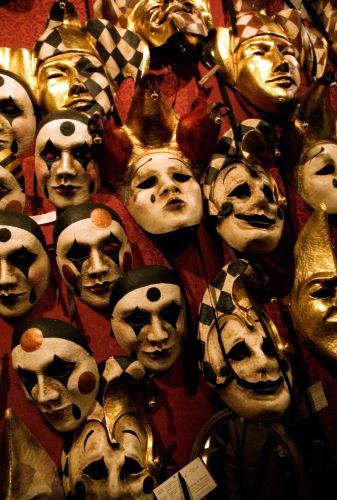
The sotie belongs to a wider culture of inversion in which medieval and early modern communities temporarily bent the rules of hierarchy without necessarily abolishing them. Feast days, carnival practices, mock courts, youth festivities, and playful urban societies all created spaces where the ordinary grammar of rank could be turned upside down. The low might mimic the high, fools might imitate rulers, clerics might be parodied, and solemn offices might be recast as comic roles. Such moments did not suspend society into pure freedom. They depended on custom, timing, permission, and recognizable convention. Yet their very existence mattered. Inversion made hierarchy visible by disturbing it. It showed that power was not only a structure of offices and laws, but also a repertoire of gestures, costumes, voices, processions, titles, and public performances.
Carnival has often been described through Mikhail Bakhtin’s influential account of popular laughter, grotesque realism, and the world turned upside down. Bakhtin’s work remains useful because it insists that laughter was not marginal to medieval and Renaissance culture. It could create an alternative way of seeing the world, one in which bodies, appetite, mockery, and collective festivity challenged the solemnity of official culture. In that sense, carnival laughter did not merely entertain. It dragged exalted claims down to earth, placing kings, clerics, scholars, judges, and moralists back among eating, aging, desiring, sweating, and ridiculous bodies. For the sotie, this mattered because the fool was a carnivalesque figure in dramatic form. He converted the temporary liberty of festive laughter into a theatrical role capable of speaking from inside folly against the foolishness of authority. The fool’s body, costume, and speech carried this lowering power. He did not argue from the pulpit, the bench, or the throne, but from the edge of dignity, where solemn claims could be mocked by bells, broken logic, appetite, and verbal disorder. This is why carnival theory helps illuminate the sotie without exhausting it. The sotie did not simply reproduce carnival on a stage; it selected carnival’s most useful theatrical principle: that the supposedly low, bodily, ridiculous, or excessive could reveal truths hidden by official seriousness. Laughter was not the absence of thought. It was another mode of interpretation.
Yet Bakhtin must be used carefully. Carnival was not a universal medieval democracy, and inversion was not the same thing as revolution. Many festive practices were tolerated precisely because they were temporary, bounded, and legible to the authorities who permitted or managed them. A mock bishop, a prince of fools, or a company of sots could ridicule dignity for a day without permanently dismantling the structures that made dignity powerful the next morning. This does not make carnival meaningless. It makes it historically complex. Inversion could reinforce hierarchy by containing criticism within ritualized limits, but it could also give audiences a shared vocabulary for recognizing hypocrisy, excess, and institutional absurdity. The political usefulness of foolishness lay in this tension between license and containment. The performance might end, the costumes might be put away, and ordinary offices might resume their force, but the experience of reversal could still leave behind a memory of exposure. A community that had watched authority mocked, even temporarily, had seen that authority as something staged, repeated, and potentially unstable. The point is not that carnival directly produced political liberation. The point is subtler and more historically plausible: carnival and sotie gave people symbolic tools for imagining that the world’s official arrangements were not identical with truth.
The sotie drew strength from that tension. Its fools were not merely participants in disorder; they were interpreters of disorder. They could stage a kingdom of fools, a council of fools, or a world governed by folly, and they transformed festive inversion into social analysis. The genre’s political edge came from the fact that foolishness could be distributed upward. A fool onstage might appear low, ridiculous, or marginal, but the play could reveal that bishops, princes, counselors, judges, and learned men were more deeply foolish than the sots who mocked them. This reversal did not require direct realism. Allegory could do the work. A character named for folly, abuse, empty counsel, ambition, or corruption could point toward recognizable public conditions while preserving the protective ambiguity of comic form.
This is where sotie differs from ordinary insult. A direct attack on a ruler, churchman, or official might be dangerous, but a world of fools could make criticism both sharper and harder to pin down. The fool’s speech was layered. It could be dismissed as nonsense by those who wished to ignore it, understood as satire by those prepared to hear it, and defended as theatrical play if challenged too directly. That ambiguity did not weaken the genre. It made the genre possible. Political satire often survives by indirection, and the sotie mastered the art of saying one thing while permitting several audiences to hear another. The joke could remain funny even when its target was serious. The laughter created a kind of public complicity, a shared recognition that something was being named without always being stated in the language of formal accusation. This was especially useful in societies where accusation had consequences and where honor, hierarchy, and patronage shaped public speech. The sotie’s foolishness allowed critique to circulate under cover of comic misrule. A spectator could laugh at an allegorical fool and still understand the resemblance to a bad counselor, a corrupt officeholder, or a self-serving cleric. The danger was precisely in that shared understanding. The target did not always need to be named because the audience could complete the accusation themselves.
The political uses of foolishness were especially potent in urban settings. Towns were dense with jurisdictional overlap, economic rivalry, clerical presence, royal authority, municipal regulation, professional identity, and festive association. They also contained audiences capable of reading satire at several levels. A legal clerk might hear procedural parody; a merchant might hear criticism of taxation or officeholding; a student might hear rhetorical play; a craft worker might hear resentment of social pretension; a magistrate might hear a warning disguised as amusement. The sotie could gather these forms of recognition into a public theatrical event. It did not need to produce a unified political program. Its force lay in staging disorder as something everyone could see, even if not everyone interpreted it in the same way.
This multiplicity also explains why the sotie could serve different political ends. It could mock authority from below, but it could also be used by one authority against another. A royal faction might sponsor satire against ecclesiastical opponents. Civic performers might ridicule abuses that municipal leaders also wished to condemn. A theatrical company might appear bold while remaining dependent on permission, patronage, or protection. The fool’s license was never pure. It could expose corruption, but it could also be recruited into propaganda. This does not lessen the importance of the genre. It makes the sotie an especially revealing form of political theater because it shows satire functioning within real systems of power, not outside them in some imaginary free zone.
The lasting importance of carnival inversion and theatrical foolishness lies in their ability to make authority appear contingent. For most of the year, hierarchy presented itself as natural, sacred, legal, hereditary, learned, or divinely sanctioned. In the festive and theatrical world of the sotie, those claims could be rearranged. A crown could become a fool’s cap, counsel could become babble, judgment could become confusion, and solemnity could become a mask for stupidity. The reversal might be temporary, but the perception it produced could linger. Once an audience had laughed at authority as performance, authority could not be seen in quite the same way. That was the political danger and the cultural value of foolishness: it did not always overthrow power, but it taught people how to recognize the theatrical seams by which power held itself together.
Pierre Gringore and the High Political Sotie
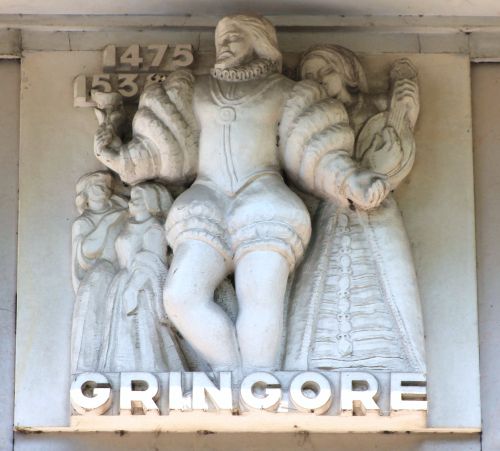
Pierre Gringore stands at the center of the sotie’s political history because his work shows the genre operating at its highest level of public ambition. He was not merely a playwright who happened to use fools for comic effect. He was an actor-manager, poet, and theatrical organizer associated with the Parisian world of the Enfants sans Souci, one of the festive societies that helped sustain late medieval comic performance. Britannica identifies him as a writer of soties for Les Enfants Sans Souci and notes his role as Mère Sotte, or Mother Fool, within that theatrical culture. That position matters because Gringore did not write political satire from a detached literary distance. He wrote from within an organized comic institution where costume, performance, civic festivity, and public speech overlapped. The fool’s mask was not ornamental. It was the condition that made his satire possible. His theatrical identity also reminds us that political sotie was not merely text on a page. It was embodied, costumed, voiced, and performed before audiences who understood the codes of public foolishness. Gringore’s authority came partly from his willingness to inhabit the very absurdity he used as a weapon. As Mère Sotte, he could preside over folly while directing it toward recognizable political targets, turning the comic company itself into a kind of alternative court where power could be judged by laughter.
His most famous political work, Le Jeu du Prince des Sotz et de Mère Sotte, was performed in the tense context of early sixteenth-century conflict between King Louis XII of France and Pope Julius II. The play is usually associated with Shrove Tuesday performance in Paris in 1512, though the dating of early print and performance traditions can be complicated by calendar usage and later editions. Its political purpose is clear. Gringore used the sotie’s foolish world to attack Julius II, presenting papal policy not through sober theological argument but through comic exposure. The pope could be mocked not simply as an enemy of the French crown, but as a figure whose claims to spiritual authority were made ridiculous by worldly ambition. In the sotie’s logic, the highest office could be dragged into folly without ceasing to be recognizable. That was the form’s danger and its appeal.
The play’s power comes from the way it converts international politics into theatrical misrule. A conflict involving kings, popes, councils, war, diplomacy, and competing claims of authority might seem too large for comic drama. The sotie makes it stageable by translating public crisis into a world of fools, masks, and allegorical rivalry. Mère Sotte is not simply a comic mother figure. She is a theatrical intelligence presiding over a realm in which folly exposes the ambitions of those who claim wisdom. The Prince of Fools and the surrounding comic figures create a political language that can speak about Rome, monarchy, and ecclesiastical power without adopting the solemn voice of official propaganda. Gringore’s genius lay in understanding that ridicule could do what argument alone could not. It could make an adversary appear not merely wrong, but absurd. This mattered because political legitimacy depended heavily on visible dignity, sacred language, ceremonial authority, and the ability to appear morally ordered before the public. The sotie attacked that appearance. By recasting conflict as foolishness, Gringore did not need to refute every papal claim point by point. He could instead alter the audience’s imaginative relation to power, inviting them to see a supposedly august opponent as vain, grasping, theatrical, and laughable. In that sense, the play’s politics worked through perception as much as proposition. It tried to change what authority looked like.
Yet Le Jeu du Prince des Sotz et de Mère Sotte also shows why the political sotie cannot be reduced to popular rebellion. Gringore’s satire of Julius II served the interests of Louis XII, who was locked in conflict with the pope. Britannica notes that Gringore enjoyed the favor of Louis XII and used the fool’s costume to launch attacks on the king’s enemy, Julius II. Modern scholarship likewise treats the play as part of a larger field of polemic, propaganda, and public discourse surrounding French royal policy. The sotie’s foolishness worked both against authority and for authority. It exposed papal ambition while supporting royal ambition. It mocked one sacred hierarchy while lending theatrical energy to another. This is not a contradiction to be solved away; it is the central political complexity of the genre.
That complexity makes Gringore’s work especially valuable for understanding satire as a historical instrument. Political comedy often presents itself as the speech of truth against power, but it is frequently entangled with patronage, faction, money, permission, and institutional rivalry. Gringore’s sotie could sound bold because it attacked a pope, but it could do so partly because it aligned with a king. Its freedom was both real and compromised. The fool’s costume created a license to speak, but the direction of that speech was shaped by political circumstance. This makes the play more, not less, revealing. It shows satire functioning within a world where public opinion mattered, theatrical crowds mattered, and rulers recognized that laughter could be used as a weapon.
The figure of Mère Sotte sharpens this ambiguity. As Mother Fool, Gringore inhabited a role that was both ridiculous and authoritative, low and commanding, festive and politically charged. The title itself reverses ordinary expectations. Wisdom is displaced into folly; political interpretation comes from a comic maternal figure; public judgment emerges from theatrical absurdity. This inversion allowed Gringore to speak in a voice that could ridicule solemnity while organizing the audience’s response to real events. Mère Sotte’s power lay in the fact that she did not need to appear respectable. Respectability belonged to the very authorities being mocked. By refusing dignity, the fool could expose how much dignity depended on performance, costume, and public belief.
Gringore’s high political sotie marks a crucial moment in the history of European comic theater. It shows late medieval and early Renaissance drama moving beyond household disorder, legal trickery, and professional satire into the arena of international politics and religious conflict. Farce had shown that lawyers, merchants, husbands, and clerics could become ridiculous when their roles collapsed under pressure. Gringore showed that popes and princes could be drawn into the same theatrical logic. The sotie did not merely laugh at power from outside the political world. It entered that world, borrowed its conflicts, served some of its interests, and exposed others to public ridicule. In Le Jeu du Prince des Sotz et de Mère Sotte, the fool became more than a comic figure. He became a political technology, a way of turning theater into argument and laughter into public force.
Performance, Censorship, and the Limits of Comic Freedom
The power of farce and sotie depended on performance, but performance also made comic speech vulnerable. A joke written in a manuscript could circulate quietly, but a joke spoken before a crowd became a public event. It gathered bodies, voices, gestures, costumes, laughter, and recognition in one place. That was what made comic theater socially potent. It was also what made it dangerous. Authorities did not need to believe that every farce or sotie would incite rebellion to worry about theatrical ridicule. Public laughter could injure reputation, reduce dignity, spread accusation, and make hierarchy look theatrical rather than natural. Comic freedom existed, but it existed within limits shaped by location, occasion, patronage, censorship, and the watchful presence of those who understood that laughter could become a form of judgment.
The limits were especially important because farce and sotie often depended on recognizable targets. A miserly merchant, corrupt lawyer, foolish husband, greedy cleric, or arrogant official could be presented as a type rather than a named individual, but audiences were capable of making connections. The theatrical type protected the performer only up to a point. A “bad counselor” might evoke a real minister; a foolish priest might resemble a local cleric; an allegorical figure of corruption might point toward a known abuse. This is why comic indirection mattered. Farce could hide behind broad social comedy, while sotie could hide behind allegory and folly. Yet those protections were never absolute. The more accurately satire struck, the more likely it was to be recognized by those with the power to punish or suppress it. Recognition was the very point of satire, but also its danger. A joke that nobody understood had no force; a joke that everyone understood could become evidence. Performers had to work in a delicate register, making the target legible enough for the crowd but unstable enough to deny simple accusation. This made farce and sotie art forms of implication. They depended on shared knowledge, social rumor, public memory, and the audience’s willingness to complete the joke.
Censorship in this world was not always centralized, uniform, or modern in form. It could operate through royal prohibition, municipal control, ecclesiastical anxiety, patronage, licensing, informal pressure, or the withdrawal of permission to perform. Public theater needed spaces, occasions, audiences, and often some degree of official tolerance. Civic authorities could allow festive mockery because it belonged to customary calendars, but they could also intervene when satire seemed too pointed, disorderly, or politically inconvenient. The same society that permitted fools to speak could decide that a particular fool had spoken too clearly. This made comic theater a negotiated art. Performers had to know not only how to make audiences laugh, but also how to manage risk.
The sotie’s dependence on foolishness made it unusually flexible under these conditions. Because the fool’s speech was layered, it could be defended as nonsense, festivity, or allegory even when audiences understood its sharper meaning. This gave performers room to maneuver. It did not give them immunity. The fool could say dangerous things because he was marked as foolish, but if the danger became too visible, foolishness might no longer protect him. The theatrical convention that enabled satire could also be judged as a cover for sedition, scandal, or disrespect. The sotie lived in a space of calculated ambiguity. It needed audiences clever enough to hear the criticism and authorities uncertain enough, or tolerant enough, not to crush it immediately.
Farce faced different but related limits. Its targets were often domestic, professional, and social rather than openly political, but that did not make it harmless. A play that mocked lawyers could trouble legal professionals; a farce about clerical desire could offend religious authorities; a comedy of marriage could expose household tensions that conduct literature tried to discipline. Farce also used bodies, sex, insult, beatings, and obscene implication, all of which could provoke moral concern. Its freedom came partly from being dismissed as low entertainment, yet that dismissal could cut both ways. Because it was “only” farce, it could speak with unusual bluntness. Because it was low, bawdy, and publicly disorderly, it could also be treated as something needing supervision. This double status gave farce a peculiar freedom. It could say things too vulgar for serious moral discourse and too familiar to be dismissed entirely. The audience might laugh at a beaten husband, a tricked merchant, a lustful cleric, or a foolish lawyer, but the laughter still touched real structures of authority. Farce’s roughness was not merely aesthetic. Its bawdy speed, physical aggression, and comic shamelessness helped it reach subjects that more dignified drama could approach only indirectly.
Patronage further complicated comic freedom. A performance might appear rebellious because it mocked powerful figures, but the ability to perform could depend on another powerful figure’s approval. Gringore’s anti-papal sotie, for example, gained force from its attack on Pope Julius II, but that attack aligned with the interests of King Louis XII. The result was not pure resistance, but weaponized ridicule within a political conflict. This pattern helps explain why medieval and early Renaissance satire should not be romanticized as free speech before its time. Comic theater could expose power, but it could also be recruited by power. It could give voice to resentment, but it could also serve faction, monarchy, civic authority, or institutional rivalry. Its freedom was real, but relational.
The limits of comic freedom reveal how seriously late medieval society took laughter. If farce and sotie had been mere amusement, they would not have required negotiation, tolerance, disguise, or occasional restraint. Their danger lay in their ability to make public structures appear contingent. A lawyer could become a trickster, a husband a fool, a merchant a dupe, a cleric a hypocrite, a pope a political actor, and a ruler’s enemy a figure of ridicule. Performance did not necessarily overthrow these structures, but it could make them visible as performances. That was enough to matter. Medieval comic theater lived at the edge of permission, where the crowd’s laughter could affirm community, release tension, flatter patrons, wound enemies, or reveal that authority was not as secure as it wished to appear.
From Medieval Comic Forms to Early Modern Theater: Commedia, Molière, and the Afterlife of Farce
The following video from Megan Best covers Commedia dell’Arte:
Farce and sotie did not pass into early modern theater as a single, unbroken inheritance, neatly transferred from medieval France into Renaissance and classical drama. The afterlife of these forms was more uneven, mobile, and adaptive than that. Some medieval comic structures faded, some were absorbed into new theatrical systems, and some survived less as named genres than as recurring habits of performance. The household quarrel, the trickster servant, the foolish master, the lecherous old man, the dishonest professional, the comic beating, the mistaken identity, the exposed hypocrite, and the public collapse of dignity all remained available to later comic theater. What endured was not simply a set of plots, but a theatrical understanding of society: authority could be performed, roles could be manipulated, bodies could betray pretension, and laughter could reveal the instability beneath order.
Italian commedia dell’arte offers one of the clearest early modern parallels, though it should not be treated as a direct continuation of French farce. Commedia developed in the sixteenth century as a professional, traveling, improvisational theater built around stock characters, masks, scenarios, and highly trained comic technique. Its world was populated by old men, braggarts, lovers, servants, tricksters, pedants, and schemers whose conflicts were organized around money, marriage, desire, status, and deception. Those concerns were not identical to medieval French farce, but they shared a comic grammar. Both forms found theatrical energy in recognizable social types rather than heroic individuals. Both prized speed, bodily expressiveness, verbal agility, and reversal. Both understood that a servant, fool, or trickster could see through the pretensions of masters more clearly than the masters saw themselves. The old merchant, the blocking father, the boasting soldier, the hungry servant, and the clever go-between all belonged to a comic universe in which social identity was legible almost instantly. That recognizability mattered because it allowed performance to move quickly. Audiences did not need lengthy exposition to understand who held power, who wanted money, who desired marriage, who was pretending wisdom, or who was likely to overturn the arrangement. Commedia and farce shared a practical theatrical intelligence: comedy works best when social types are recognizable enough to be grasped immediately and flexible enough to be rearranged into surprise.
The commedia performer also carried forward the importance of embodied comedy. Medieval farce had depended on action as much as language: blows, falls, disguises, entrances, exits, feigned illness, animal sounds, sexual implication, and frantic movement. Commedia refined such energies into a professional art of gesture, mask, and lazzo, the comic routine that could interrupt or intensify a scenario. This was a different theatrical economy, more dependent on specialized actors and traveling companies, but it preserved the older insight that comedy was not only literary. It lived in timing, posture, voice, rhythm, repetition, and the audience’s recognition of a body caught in social failure. The comic body remained a weapon against abstraction. It could pull law, marriage, learning, honor, and authority down into visible embarrassment.
Molière inherited this broad European comic world and transformed it into one of the great achievements of seventeenth-century theater. His work drew from multiple sources: classical comedy, French farce, Italian commedia dell’arte, court entertainment, provincial theatrical practice, and the demands of a professional company trying to survive in a competitive cultural market. Modern scholarship has repeatedly emphasized the importance of farce in Molière’s theater, not only in his shorter or rougher comic pieces but also in the deeper mechanics of his major plays. He did not merely borrow low comedy and dress it in elegant verse. He brought farcical pressure into the world of social ambition, religious hypocrisy, medical pretension, marital authority, bourgeois anxiety, and obsessive self-deception. The result was comedy that could satisfy courtly taste while retaining the sharpness of older popular forms.
This continuity is especially visible in Molière’s treatment of professional and moral pretension. Medieval farce had mocked lawyers, merchants, husbands, priests, and doctors by showing the gap between their claims and their behavior. Molière’s theater repeatedly expands that same gap into a more elaborate social and psychological structure. The doctor becomes a figure of learned absurdity; the religious hypocrite becomes a domestic and political danger; the miser becomes a prisoner of appetite disguised as prudence; the jealous husband becomes a ridiculous guardian of an authority he cannot secure. These figures are more developed than the types of medieval farce, but they belong to the same comic family. They are characters whose social language exceeds their moral substance. They speak as if office, piety, learning, money, or patriarchal control made them stable, and comedy shows that they are not. Molière’s achievement was to make this exposure both broader and sharper. The farcical type became psychologically intensified without losing its social function. Tartuffe is not merely a hypocrite in the abstract; he is a domestic invader whose false piety threatens property, marriage, and household order. Argan in Le Malade imaginaire is not merely a foolish patient; he is a man whose fear and vanity make him dependent on the language of medical authority. Harpagon in L’Avare is not merely greedy; he allows money to reorganize every human relationship around suspicion and control. In each case, the comic figure reveals an institution or value system under strain.
The trickster also survives, though in altered form. In medieval farce, the trickster might be a lawyer such as Pathelin, a servant, a wife, a peasant, or a deceiver who turns social expectation against itself. In commedia and Molière, the trickster servant becomes one of European comedy’s central engines. Scapin, Sganarelle, and related figures do more than create comic complications. They reveal the stupidity of masters, the artificiality of social rank, and the theatricality of obedience. The servant must perform submission while manipulating the household from below. That double position recalls the medieval fool’s license as well as the farcical trickster’s social mobility. Comedy repeatedly gives insight to characters without formal power because they survive by reading the desires, fears, and vanities of those above them.
The afterlife of sotie was less direct but still important. The specific French genre of the sotie did not dominate early modern European theater in the way farcical devices continued to circulate, yet the political use of foolishness endured. Fools, clowns, satirical allegories, and comic commentators remained crucial to theater’s ability to speak obliquely about power. The idea that folly could reveal truth moved through Renaissance satire, court entertainment, humanist writing, and dramatic comedy. Even when the formal sotie receded, its central insight survived: certain truths become speakable when placed in the mouth of a fool, a clown, a servant, or a theatrical outsider. Early modern theater inherited not only comic plots from the medieval world, but also a strategy of protected speech. That strategy can be seen wherever theatrical marginality becomes a form of perception. The fool does not need official rank because his dramatic value comes from his position at an angle to rank. He sees what rulers miss, says what courtiers avoid, and exposes what solemn institutions conceal. The medieval sotie gave this principle a distinctive public and political form, but its afterlife reached beyond the genre itself. Later theater continued to understand that comedy’s outsiders could become its sharpest interpreters of power.
The deeper afterlife of farce and sotie lies in their contribution to European theater’s understanding of comic exposure. Later comedy did not need to preserve every medieval form to inherit their logic. Commedia dell’arte professionalized comic types and bodily technique; Molière refined farcical energy into socially and morally ambitious drama; later satire continued to use fools, clowns, and comic outsiders to expose public delusion. Across these transformations, the central discovery remained recognizable. Comedy could make hierarchy visible as performance. It could show that marriage, law, medicine, religion, money, and office depended on fragile acts of belief. Medieval farce and sotie did not invent laughter, but they gave European theater durable ways to turn laughter into social knowledge.
Conclusion: Laughter as a Medieval Public Language
Farces and soties reveal a medieval theatrical world far more socially alert than any simple contrast between sacred drama and secular entertainment can explain. Religious theater mattered, but it did not exhaust the stage. Alongside saints, devils, virtues, miracles, and biblical history, medieval audiences encountered lawyers who lied, husbands who failed, wives who outmaneuvered them, merchants who were cheated, clerics who became ridiculous, fools who spoke dangerously well, and political authorities reduced to comic spectacle. These forms did not stand outside medieval society as detached amusement. They worked from within its households, markets, courts, guilds, festivals, and civic spaces. Their laughter was public because their subjects were public. Even the domestic quarrel, when staged before a crowd, became a way of examining the larger structures that shaped gender, labor, speech, reputation, and power.
Farce made ordinary life theatrical by showing that social roles were never as stable as they claimed to be. A husband could claim authority and still be humiliated. A lawyer could claim mastery of language and still be undone by another performer of deceit. A merchant could rely on exchange and credit only to discover how easily trust could become comic vulnerability. The household, courtroom, marketplace, and professional world became stages where authority had to be enacted before others, and where enactment could fail. Sotie expanded that insight into the political and allegorical realm. By placing truth in the mouth of the fool, it gave folly a strange public intelligence. The sotie did not simply celebrate disorder; it used disorder to reveal the foolishness already present within official order.
This does not mean that medieval comic theater was a simple ancestor of modern political freedom. Its liberties were conditional, negotiated, and often entangled with patronage or faction. A farce could reinforce stereotypes even while exposing authority. A sotie could mock one power while serving another. A fool could speak boldly because his speech was protected by performance, but that protection had limits. Precisely for that reason, these genres are historically valuable. They show not an impossible world of unrestricted speech, but a real world in which criticism moved through indirection, costume, timing, allegory, festival, and laughter. Medieval comedy knew how to survive by speaking slantwise. It understood that public truth often needed a mask. That mask could be bawdy, foolish, grotesque, festive, or apparently harmless, but it allowed social knowledge to circulate where direct accusation might fail or prove dangerous. The joke became a carrier of perception. It could gather discomfort, resentment, recognition, and pleasure into a form that audiences could share without always naming openly. This was not weakness. It was one of comedy’s great historical strengths: the ability to say what could not yet be said plainly.
The enduring importance of farce and sotie lies in their recognition that laughter is a form of social knowledge. It can entertain, but it can also diagnose. It can release tension, but it can also expose why the tension exists. It can wound, flatter, discipline, or liberate, depending on who laughs and at whom. Long before modern sketch comedy, street theater, satirical television, or political parody, medieval performers understood that authority was most vulnerable when made visible as performance. A crown could become a fool’s cap. A lawsuit could become a bleat. A household command could become a joke. In that moment, laughter did not merely interrupt medieval public life. It became one of its languages.
Bibliography
Affiliate disclosure: Amazon links on this site are paid links. As an Amazon Associate I earn from qualifying purchases.
- Akehurst, F. R. P. “Courtroom Scenes in Medieval French Theatre.” Cahiers de recherches médiévales et humanistes 25 (2013), 75-91.
- Andrews, Richard. Scripts and Scenarios: The Performance of Comedy in Renaissance Italy. Cambridge: Cambridge University Press, 1993.
- Anonymous. Le Cuvier. 15th century.
- —-. La Farce de Maistre Pierre Pathelin. 15th century.
- —-. La Farce du Pont aux Ânes. 15th century.
- —-. Le Garçon et l’Aveugle. 13th century.
- —-. Recueil de farces (1450–1550). Edited by André Tissier. Geneva: Droz, 1986–2000.
- —-. Recueil général des sotties. Edited by Émile Picot. 3 vols. Paris: Firmin-Didot, 1902–1912.
- Arden, Heather. Fools’ Plays: A Study of Satire in the Sottie. Cambridge: Cambridge University Press, 1980.
- Aubailly, Jean-Claude. Le Théâtre médiéval profane et comique. Paris: Larousse, 1975.
- Bakhtin, Mikhail. Rabelais and His World. Translated by Hélène Iswolsky. Cambridge, MA: MIT Press, 1965.
- Bouhaïk-Gironès, Marie. Les Clercs de la Basoche et le théâtre comique: Paris, 1420–1550. Paris: Honoré Champion, 2007.
- Bouhaïk-Gironès, Marie, Jelle Koopmans, and Katell Lavéant, eds. Recueil des sotties françaises. Paris: Classiques Garnier, 2014–.
- Bourqui, Claude. “Commedia dell’Arte.” In Molière in Context, edited by Jan Clarke. Cambridge: Cambridge University Press (2022), 98-106.
- Bowd, Stephen D. Hostile Humor in Renaissance France. Newark: University of Delaware Press, 2020.
- Brockett, Oscar G., and Franklin J. Hildy. History of the Theatre. 10th ed. Boston: Allyn and Bacon, 2007.
- Calder, Andrew. Molière: The Theory and Practice of Comedy. London: Athlone Press, 1993.
- Chambers, E. K. The Mediaeval Stage. 2 vols. Oxford: Clarendon Press, 1903.
- Chase, Carol J., and Marie-Sol Ortolá. “The Ideology of Deception in La Farce de Maistre Pathelin.” Modern Language Studies 16:3 (1986), 134–148.
- Davis, Natalie Zemon. Society and Culture in Early Modern France: Eight Essays. Stanford, CA: Stanford University Press, 1975.
- Duhl, Olga Anna. Folie et rhétorique dans la sottie. Geneva: Droz, 1994.
- Enders, Jody, ed. Trial by Farce: A Dozen Medieval French Comedies in English for the Modern Stage. Ann Arbor: University of Michigan Press, 2023.
- Frank, Grace. The Medieval French Drama. Oxford: Clarendon Press, 1954.
- Gringore, Pierre. Le Jeu du Prince des Sotz et de Mère Sotte. 1512.
- Guynn, Noah D. “A Justice to Come: The Role of Ethics in La Farce de Maistre Pierre Pathelin.” Theatre Survey 47:1 (2006), 13–31.
- Harris, Barbara. English Aristocratic Women, 1450–1550: Marriage and Family, Property and Careers. Oxford: Oxford University Press, 2002.
- Harvey, Howard Graham. The Theatre of the Basoche: The Contribution of the Law Societies to French Mediaeval Comedy. Cambridge, MA: Harvard University Press, 1941.
- Hindley, Alan, ed. Le Jeu du Prince des Sotz et de Mère Sotte. Paris: Honoré Champion, 2000.
- Katritzky, M. A. The Art of Commedia: A Study in the Commedia dell’Arte, 1560–1620 with Special Reference to the Visual Records. Amsterdam: Rodopi, 2006.
- Knight, Alan E. Aspects of Genre in Late Medieval French Drama. Manchester: Manchester University Press, 1983.
- Koopmans, Jelle. Le Théâtre des exclus au Moyen Âge: Hérétiques, sorcières et marginaux. Paris: Imago, 1997.
- Lanson, Gustave and Ruby Cohn. “Molière and Farce.” The Tulane Drama Review 7:4 (1963), 132–146.
- Maddox, Donald. Semiotics of Deceit: The Pathelin Era. Lewisburg, PA: Bucknell University Press, 1984.
- Mazouer, Charles. Le Théâtre français du Moyen Âge. Paris: SEDES, 1998.
- Molière. L’Avare. 1668.
- —-. Le Malade imaginaire. 1673.
- —-. Les Fourberies de Scapin. 1671.
- —-. Tartuffe. 1664.
- Muir, Edward. Ritual in Early Modern Europe. Cambridge: Cambridge University Press, 1997.
- Patton, Harlan R. “Tropismes and the Satire of Scientism in ‘Les Caves du Vatican’.” South Atlantic Review 48:1 (1983), 35-42.
- Rousse, Michel. La Scène et les tréteaux: Le théâtre de la farce au Moyen Âge. Orléans: Paradigme, 2004.
- Scott, Virginia. Molière: A Theatrical Life. Cambridge: Cambridge University Press, 2000.
- Symes, Carol. “The Boy and the Blind Man: A Medieval Play Script and Its Editors.” Exemplaria 25:3 (2013), 196–224.
Originally published by Brewminate, 06.01.2026, under the terms of a Creative Commons Attribution-NonCommercial-NoDerivatives 4.0 International license.
About the Author