Female ascetics across Buddhist, Christian, and Hindu worlds used renunciation to transform gender, authority, solitude, and sacred power.

By Matthew A. McIntosh
Public Historian
Brewminate
Introduction: The Paradox of Female Renunciation
Female asceticism in the ancient and medieval worlds began with a refusal. Women renounced marriage, wealth, adornment, sexual availability, ordinary food, family obligation, inheritance, household authority, and the social scripts by which most cultures made female life intelligible. Yet this refusal was never merely negative. To withdraw from the world was also to enter another kind of world, one governed by discipline, sacred hunger, prayer, celibacy, silence, pilgrimage, textual study, ritual obedience, and visionary encounter. In Christian, Buddhist, and Hindu traditions alike, women who abandoned conventional life often became more visible rather than less. They left households and were remembered as mothers of monks, founders of monasteries, teachers of doctrine, poets of divine love, enclosed counselors, wandering renouncers, and bodies through which communities imagined holiness. Their lives were paradoxical because renunciation diminished worldly identity while enlarging spiritual authority.
That paradox was sharpened by gender. Men who renounced family, sex, wealth, or power often appeared to intensify already recognized religious capacities: discipline, philosophical seriousness, ritual control, scriptural mastery, or heroic self-command. Women who did the same crossed more dangerous boundaries. A woman who refused marriage threatened kinship strategies; a woman who rejected motherhood unsettled social reproduction; a woman who fasted, veiled, shaved, disfigured, enclosed, or exposed her body challenged the assumption that female bodies existed primarily for beauty, sexuality, lineage, or service. In many ancient and medieval societies, female virtue was imagined through relational categories: daughter, wife, mother, widow, patroness, servant, or vessel of family honor. Ascetic renunciation disrupted those categories by placing a woman’s highest allegiance elsewhere, beyond father, husband, household, clan, or civic expectation. This did not necessarily make her free in any modern sense, but it did make her difficult to classify. She could be praised as holy precisely because she had become socially strange. Yet the same traditions that feared female autonomy could also sanctify it when it was framed as obedience to God, liberation from desire, devotion to Shiva, discipline under monastic rule, or surrender to divine vision. Female ascetics occupied an unstable place: revered and regulated, admired and suspected, empowered and contained. They became holy not by escaping gender altogether, but by forcing religious communities to reinterpret what a woman’s body and voice could mean.
Here I follow female ascetics chronologically across several ancient and medieval worlds, beginning with early Buddhist nuns and moving through late antique Christian virgins, Desert Mothers, Roman aristocratic renouncers, medieval nuns, Hindu bhakti saints, anchoresses, abbesses, mystics, and politically active holy women. Its argument is not that these traditions were the same, nor that “female asceticism” had one universal meaning. Buddhist bhikkhunīs pursued awakening within monastic discipline; Christian virgins and nuns often framed renunciation through celibacy, imitation of Christ, spiritual marriage, and salvation; Hindu devotional ascetics such as Karaikkal Ammaiyar transformed bodily rejection into ecstatic intimacy with Shiva. Still, across these differences, a recurring pattern appears. Women used renunciation to move outside ordinary structures of dependence, but their authority usually had to be justified through humility, discipline, suffering, purity, revelation, or devotion. The female ascetic could speak because she had silenced the ordinary claims of the self.
The sources that preserve these women are themselves part of the story. Some female ascetics left writings, poems, letters, visions, or theological works, while others survive mainly through male-authored hagiography, monastic rules, sayings collections, institutional memory, and later devotional retelling. This uneven archive must be read carefully. It reveals not only the women themselves, but the anxieties of the communities that recorded them. Female ascetics were remembered because they seemed extraordinary, but they were also edited into forms that made their extraordinariness safe: obedient virgins, holy widows, inspired visionaries, disciplined nuns, self-erasing servants, or terrifyingly purified bodies. The history of women’s asceticism is not only a history of solitude, fasting, enclosure, and prayer. It is a history of how women left the world and yet remained powerful enough that the world kept writing them down.
Before Christian Monasticism: Buddhist Women and the Early Renunciant Path
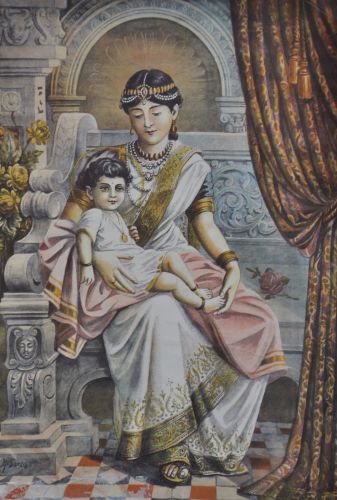
Before Christian monasticism took recognizable institutional form, Buddhist communities had already imagined a path by which women could leave household life, sexual obligation, kinship expectation, and ordinary social identity in pursuit of liberation. The early Buddhist renunciant world emerged in northern India during a broader age of śramaṇa movements, when wandering teachers, mendicants, philosophers, and ascetics challenged older ritual and domestic ideals. In that context, renunciation was not merely a private spiritual choice. It was a public rejection of the assumption that human purpose was fulfilled through family continuity, property, sacrifice, status, and reproduction. For women, this rejection carried special force because household life was one of the primary ways patriarchal society defined their value. To become a renunciant was to step outside the roles of daughter, wife, mother, widow, servant, and sexual object, even if the institutions that received women continued to mark them by gender.
The traditional beginning of the Buddhist female monastic order centers on Mahāpajāpatī Gotamī, the Buddha’s aunt and foster mother. According to canonical and later traditions, she requested admission to the renunciant community after the Buddha’s father, Śuddhodana, died, and she eventually became the first bhikkhunī, or fully ordained Buddhist nun. The story is important not because it can be read as simple biography in the modern sense, but because it reveals how early Buddhist memory understood women’s entry into the path. Mahāpajāpatī appears not as a marginal figure, but as a woman of kinship authority who uses that position to seek a life beyond kinship itself. Her request dramatizes the central contradiction of female renunciation in Buddhism: women could pursue awakening, but their institutional acceptance had to be argued, negotiated, and disciplined.
The founding narratives of the bhikkhunī order also preserve anxiety. In several versions, the Buddha initially hesitates or refuses before admitting women, and their admission is associated with the imposition of the garudhammas, or “heavy rules,” which subordinate nuns to monks regardless of seniority. The historical origin of these rules is debated, and modern scholarship has treated them carefully rather than assuming that every detail reflects the earliest community. Still, the ideological pattern matters. The tradition affirms that women are capable of awakening, but it embeds their renunciation inside a hierarchy that safeguards male monastic precedence. The nun renounces household subordination only to enter a sacred institution where gendered subordination is reconfigured rather than abolished. This is one of the earliest and clearest examples of the larger pattern that will recur throughout: asceticism can open a door for women while narrowing the corridor through which they must pass.
Yet the early Buddhist record also gives women something rare in ancient religious history: voices speaking from renunciant experience. The Therīgāthā, a collection of poems attributed to elder nuns, is indispensable because it presents women not merely as objects of regulation but as interpreters of their own liberation. Its speakers remember dead children, failed marriages, aging bodies, sexual danger, grief, poverty, desire, and the weariness of domestic obligation. Again and again, liberation is described not as abstraction but as release from the bindings of ordinary female life. A woman who had been consumed by mourning, a woman who had been valued for beauty, a woman trapped in household repetition, a woman pursued by desire or danger, could enter the path and reframe suffering through disciplined insight. The poems do not erase the female body. They transform its social meanings. Beauty becomes impermanent rather than defining; motherhood becomes a site of attachment and loss rather than the final measure of womanhood; grief becomes something to be understood rather than endlessly inhabited. The Therīgāthā offers more than testimony. It shows Buddhist women thinking through the very conditions that had confined them, turning lived experience into religious knowledge and making renunciation a language in which women could analyze the world they had left behind.
This makes early Buddhist female asceticism especially important for a comparative history of women’s renunciation. Unlike later Christian traditions that often centered virginity, spiritual marriage, bodily mortification, or mystical union with Christ, Buddhist women sought release through the extinguishing of craving, the discipline of perception, and the realization of impermanence and non-self. Their renunciation was not primarily a rejection of sex in favor of divine spousehood, nor a dramatization of suffering as imitation of a crucified savior. It was a disciplined escape from attachment itself. This distinction matters because it prevents us from flattening all ascetic women into one model of holy self-denial. A bhikkhunī’s shaved head, robe, alms bowl, celibacy, and communal discipline belonged to a distinct religious anthropology, one in which liberation required seeing through the very processes by which identity, desire, and suffering are made. The female renunciant did not become holy because her body was preserved for God, nor because pain made her resemble a divine sufferer. She became liberated by understanding that body, beauty, grief, kinship, and selfhood were unstable formations, subject to arising and passing away. That philosophical difference gives Buddhist female asceticism a particular intellectual force. Its women were not only escaping the household; they were learning to see household identity as part of a larger structure of craving, impermanence, and sorrow.
Buddhist women’s renunciation was never purely solitary. The bhikkhunī sangha offered an organized female community in which women could study, meditate, teach, receive instruction, maintain discipline, and inhabit an identity not defined by men’s households. This communal dimension is essential. Renunciation often appears in the imagination as an individual leaving, but for many women it meant entering a new society of women. The order created a space where widows, mothers, former wives, courtesans, aristocrats, servants, and women marked by grief or age could share a disciplined life oriented toward awakening. That did not erase hierarchy, caste background, seniority, or dependence on the male sangha, but it did create an alternative social world. Women were not simply alone in their renunciation; they were together in a new structure of meaning.
The early Buddhist case gives us our first major model of female ascetic life: a path both liberating and constrained, communal and hierarchical, bodily and philosophical. Buddhist nuns could leave marriage, motherhood, adornment, sexuality, grief, and domestic labor behind, but they did so within institutions that continued to negotiate the dangers of female autonomy. Mahāpajāpatī Gotamī’s remembered request, the contested authority of the garudhammas, and the poems of the elder nuns all reveal the same deep tension. Women could awaken, teach, discipline themselves, and speak about liberation in their own voices. Yet the tradition that preserved those voices also worked to contain them. Long before the Desert Mothers, anchoresses, abbesses, and Christian mystics entered the historical record, Buddhist women had already shown that renunciation could make a woman socially strange, spiritually formidable, and institutionally difficult to ignore.
Late Antiquity and the Christian Invention of Female Ascetic Authority
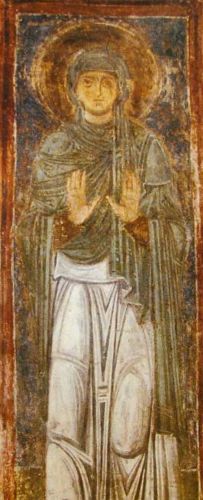
In late antiquity, Christian asceticism gave women a new and unstable language of authority. The Roman world had long measured respectable female life through marriage, fertility, household management, chastity within marriage, family honor, and the transmission of property. Christianity did not simply overturn those expectations, and many Christian writers continued to praise obedience, modesty, silence, and domestic virtue. Yet the ascetic turn introduced a powerful disruption. Virginity, widowhood, celibacy, fasting, voluntary poverty, and withdrawal from elite marriage markets allowed some women to claim a spiritual identity not governed by husbands, fathers, or reproductive obligation. A woman who refused marriage could be accused of disorder, pride, or social rebellion, but she could also be praised as a bride of Christ, a philosopher of the soul, a vessel of purity, or a living sign of the coming kingdom in which earthly marriage would lose its final claim. This was not freedom in a modern political sense, but it was a real rearrangement of religious possibility. The ascetic woman could inhabit a role that made her simultaneously socially irregular and spiritually legible, stepping outside ordinary female expectation while remaining interpretable within Christian categories of holiness, sacrifice, and eschatological hope.
This new authority did not arise in a vacuum. Late antique Christianity developed inside a world already filled with philosophical discipline, household hierarchy, Roman patronage, Jewish scriptural inheritance, martyr memory, and debates over the body. Earlier Christian admiration for martyrs helped prepare the way for ascetic holiness, because the martyr had already shown that bodily suffering could testify to spiritual truth. When persecution receded and martyrdom became less available as a public path to sanctity, asceticism offered another form of heroic witness. Fasting, celibacy, vigils, poverty, and bodily discipline became daily martyrdoms, a way of dying to the world without the spectacle of execution. For women, this was especially consequential. The female body, so often treated as a site of temptation, reproduction, weakness, and social exchange, could now be reimagined as a battlefield on which victory over desire became visible.
The language of virginity was central to this transformation. Christian writers such as Athanasius, Ambrose, Jerome, Gregory of Nyssa, and Augustine did not all understand virginity in exactly the same way, but together they helped make sexual renunciation one of the most powerful signs of Christian seriousness. Virginity was not merely the absence of sex. It was imagined as integrity, anticipation of angelic life, freedom from divided loyalty, and resistance to the demands of family and empire. Yet this ideal was never free from contradiction. Male theologians celebrated consecrated virgins while also surrounding them with warning, supervision, and suspicion. A virgin woman might be praised as spiritually superior to married women, but that superiority had to be guarded through enclosure, modest speech, controlled movement, plain dress, and submission to clerical judgment. The very holiness that elevated her also made her body an object of intensified surveillance.
Macrina the Younger offers one of the clearest examples of how female ascetic authority could emerge within kinship and yet exceed it. Known primarily through Gregory of Nyssa’s Life of Macrina, she appears as sister, teacher, philosopher, virgin, household organizer, and spiritual superior. After the death of her fiancé, Macrina embraced celibacy and helped transform her family estate into an ascetic community. What makes her important is not simply that she renounced marriage, but that she redirected an elite household away from aristocratic continuity and toward disciplined Christian life. Gregory presents her as intellectually and spiritually formidable, even casting her as the teacher who consoles and instructs him after the death of their brother Basil. In that literary portrait, Macrina does not become holy by vanishing. She becomes holy by reorganizing the meaning of family, authority, grief, property, and philosophical wisdom around ascetic purpose. Her authority is domestic in setting but not domestic in meaning: she uses the very terrain assigned to women, the household, sibling bonds, mourning, and moral formation, to create a new spiritual order. Macrina reveals how late antique female asceticism could work not only by fleeing the family, but by converting the family into a disciplined community where ordinary hierarchy was quietly but profoundly rearranged.
The household itself became one of late antiquity’s most important ascetic laboratories. Before monasticism was fully regularized, Christian women often practiced renunciation in domestic or semi-domestic settings: family estates, urban houses, widows’ circles, communities of virgins, and patronage networks attached to bishops, monks, pilgrims, and holy places. This mattered because the household was both the structure women were expected to serve and the structure some ascetic women learned to transform. A wealthy widow could use her resources to support clergy, fund charitable works, or gather women into disciplined community. A virgin daughter could refuse the marriage alliance her family expected and redirect her body toward Christ. A mother could become a spiritual instructor rather than merely a biological ancestor. These transformations did not erase class privilege; indeed, elite status often made female renunciation more visible and more institutionally consequential. But they did show that asceticism could turn familiar female roles into unexpected forms of religious agency.
The Christian invention of female ascetic authority also depended on a difficult balance between humility and command. Women could teach, advise, sponsor, rebuke, organize, and inspire, but they often had to do so through postures of self-denial. Their authority was safest when it appeared not to be their own. The consecrated virgin belonged to Christ; the widow served the poor; the ascetic sister instructed through sanctity rather than office; the holy woman spoke as one disciplined by Scripture, suffering, or revelation. This pattern would recur throughout medieval Christianity. Women gained power by renouncing the social forms of power available to them, then received a different authority precisely because they claimed not to seek it. The paradox is sharp: the more completely a woman rejected ambition, the more spiritually commanding she could become, provided male writers and institutions could interpret that command as obedience.
Late antique Christian female asceticism established themes that would shape centuries of religious life. It made celibacy a rival to marriage, sanctified withdrawal from household expectation, elevated women who could master appetite and desire, and created new spaces where female discipline could become communal, textual, and institutional. It bound women’s authority to the very structures that monitored them. Ascetic women could unsettle family, class, and gender, but they were remembered through theological categories that made their disruption legible: virgin, widow, bride of Christ, servant of the poor, spiritual mother, philosopher of renunciation. Those categories were empowering, but they were also restrictive. They allowed women to become extraordinary only by making their extraordinariness serve recognizable Christian ideals. A woman could reject marriage, but she was often described as belonging more completely to Christ; she could exercise judgment, but it was safest when presented as humility; she could command reverence, but only when her body testified to discipline rather than autonomy. Late antiquity did not give women simple freedom. It gave them a sacred grammar through which refusal could become authority, and through which authority could still be contained.
The Desert Mothers: Solitude, Wisdom, and the Female Voice in the Ascetic Wilderness
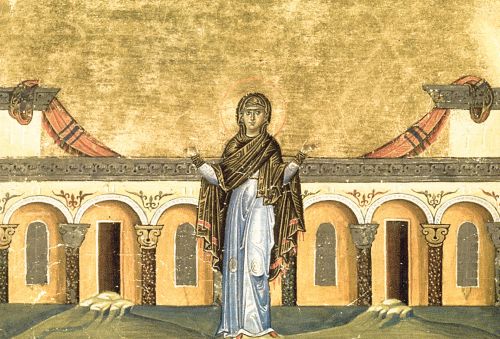
The Desert Mothers belonged to the same late antique ascetic revolution that produced the better-known Desert Fathers, yet their historical visibility is far thinner. In the fourth and fifth centuries CE, women entered the deserts, settlements, monastic circles, and ascetic households of Egypt, Palestine, and Syria, seeking the same radical purification that drew men away from cities, families, property, and ordinary social honor. They were remembered as ammas, spiritual mothers whose authority rested not on office, ordination, or public rank, but on discipline, discernment, prayer, endurance, and victory over the self. Their world was not simply empty wilderness. The desert functioned as a spiritual counter-society, a place where imperial status, urban prestige, family expectation, and bodily comfort could be stripped away. For women, that stripping away had particular force because the city and household had long defined female identity through kinship, sexuality, reproduction, and service. To become an amma was to inhabit a life that made ordinary womanhood almost unreadable.
The most important Desert Mothers survive in sayings collections and hagiographic memory rather than in extensive writings of their own. Amma Syncletica, Amma Sarah, and Amma Theodora appear as figures of spiritual intelligence, often speaking in compact teachings shaped by the ascetic culture of the desert. Syncletica of Alexandria, remembered as a wealthy woman who renounced her inheritance and withdrew with her blind sister, became associated with teachings on humility, struggle, fasting, temptation, and perseverance. Her remembered life joins aristocratic renunciation to desert severity, showing that female withdrawal could move from inherited privilege into disciplined obscurity without losing authority. Sarah, who was said to have lived near the Nile, appears in the tradition as a woman who endured spiritual combat without yielding to the desire for reputation. Her sayings often emphasize the refusal of vanity, a crucial point in a culture where even holiness could become another form of self-display. Theodora is remembered as a teacher whose sayings engage humility, judgment, and the hidden labor of repentance. These women were not presented merely as pious exceptions. They were authorities in the grammar of desert wisdom, able to diagnose the soul, expose vanity, and instruct others in the difficult art of inner freedom. Their authority did not depend on novelty or public spectacle. It depended on the recognition that they had endured the same interior warfare that made the desert such a compelling spiritual landscape.
The desert’s solitude was never only physical. It was also moral and psychological. The ascetic entered the wilderness to confront hunger, lust, pride, anger, boredom, memory, fear, and the need to be praised. For women, these struggles were filtered through inherited assumptions about female weakness and danger, but the sayings often turn those assumptions inside out. Amma Sarah’s famous refusal to accept gendered condescension, preserved in the tradition of the desert, is especially revealing. When male ascetics reportedly told her that she had become “like a man,” she answered that she was a woman in body but not in thought. Whether read as a literal historical exchange or as monastic memory, the saying exposes the gendered logic of ascetic excellence. Holiness was imagined in masculine terms, yet Sarah’s answer refuses simple imitation. She does not deny her female body. She denies that spiritual intelligence belongs to men.
That point matters because the Desert Mothers did not escape the gendered archive. Their memory survives through collections overwhelmingly dominated by male voices, transmitted by monastic communities that preserved women selectively and often briefly. The imbalance should not be treated as evidence of absence. It is evidence of preservation shaped by hierarchy. The Desert Mothers were present enough to be remembered, consulted, quoted, admired, and folded into the moral repertoire of monastic teaching, but not present enough in the surviving record to occupy equal textual space with male elders. Their fragmentary survival reveals both authority and erasure. They were spiritually formidable, yet the archive makes them appear as flashes: a saying, a story, a rebuke, a remembered act of endurance. That fragmentary quality can itself become part of the interpretation. The female ascetic voice reaches us not as a continuous institutional record, but as sharp speech breaking through a male-shaped tradition.
The content of that speech is often severe. The Desert Mothers do not offer an easy spirituality of comfort, nor do they present female holiness as softness. Their sayings emphasize vigilance, self-knowledge, restraint, silence, humility, and the danger of judging others. They belong to a world in which salvation required battle against the passions, and that battle was often described with military and athletic intensity. Yet the severity was not simply hatred of the body. It was a method of reordering desire. Fasting, solitude, night prayer, poverty, and celibacy were intended to loosen the grip of compulsions that bound the self to the world. For women whose bodies had been socially coded as sites of desire, fertility, temptation, and vulnerability, ascetic severity could become a way of reclaiming interpretive control. The holy woman’s body became thin, veiled, aged, hidden, exhausted, or withdrawn, but that transformation made it signify discipline rather than availability. This mattered because late antique Christian culture often treated women’s bodies as problems to be managed by fathers, husbands, bishops, confessors, or male ascetic teachers. The Desert Mothers inverted that logic by making bodily discipline a source of female authority. Their bodies did not disappear from the story; rather, the meaning of the body changed. Hunger became instruction, silence became discernment, solitude became resistance to vanity, and endurance became a form of speech. The result was a holiness that could seem harsh, but it was harsh because it refused the sentimental domestication of female sanctity.
The Desert Mothers deepen the central paradox. They were solitary, yet not voiceless; marginal, yet authoritative; bodily disciplined, yet intellectually sharp; remembered through male collections, yet not wholly contained by them. Their authority came from renunciation, but their renunciation produced counsel, memory, and spiritual motherhood. They show that female asceticism in late antiquity was not limited to elite households, aristocratic patronage, or formal institutions. It could also appear in the desert as a fierce wisdom tradition, where women who had left ordinary life became guides for others seeking to do the same. In the figures of Syncletica, Sarah, and Theodora, the wilderness becomes more than a place of withdrawal. It becomes a place where women learned to speak with the authority of those who had nothing left to prove.
Aristocratic Renunciation: Roman Patronesses, Wealth, and the Making of Holy Space
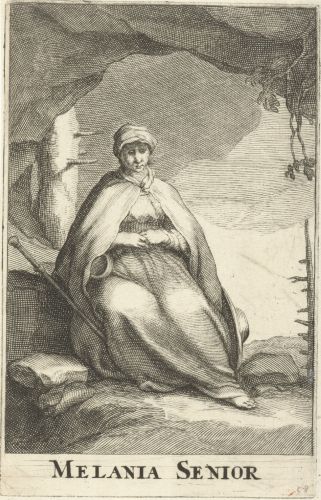
If the Desert Mothers revealed the authority of women who withdrew into austerity and fragmentary memory, the aristocratic renouncers of the late Roman world showed another path: the transformation of wealth into sacred geography. In the fourth and fifth centuries CE, elite Christian women such as Marcella, Paula, Eustochium, Melania the Elder, and Melania the Younger renounced marriage expectations, inherited privilege, luxurious households, and Roman social prestige, yet their renunciation was never simply a disappearance into poverty. Their wealth, education, family connections, and mobility allowed them to shape ascetic communities across Rome, North Africa, Egypt, and the Holy Land. They gave away fortunes, founded monasteries, supported clergy, funded charitable institutions, traveled as pilgrims, gathered circles of women, and made holy places materially possible. Their asceticism complicates any easy opposition between renunciation and power. They rejected aristocratic life, but they also used aristocratic resources to build Christian worlds.
This form of female asceticism emerged from the peculiar tensions of late Roman Christianity. The Roman aristocracy remained deeply invested in lineage, marriage alliance, household display, public benefaction, and the preservation of family wealth. Elite women were expected to participate in that system through marriage, motherhood, patronage, and the management of domestic honor. Christian renunciation challenged those expectations by redirecting wealth away from biological heirs and civic prestige toward monasteries, churches, pilgrims, poor relief, and holy landscapes. A widow who refused remarriage and gave away her fortune did more than make a personal spiritual choice. She disrupted the economic logic of family continuity. A daughter who chose virginity or ascetic study over marriage could frustrate the plans of kin who expected her body to secure alliances. In that sense, aristocratic female renunciation was not merely piety. It was a reallocation of property, social capital, and symbolic authority.
Marcella, one of the earliest prominent ascetic women in Rome, illustrates the urban beginning of this movement. A wealthy widow from an aristocratic family, she became associated with a circle of Christian women devoted to scriptural study, simplicity, prayer, and renunciation. Jerome’s letters present her as learned, disciplined, and influential, though always through the lens of his own theological and rhetorical concerns. Marcella did not flee immediately to the desert or Holy Land. Her asceticism took shape in Rome itself, inside the very city whose elite culture she was rejecting. That matters because it shows how renunciation could begin not as geographical escape, but as a transformation of domestic space. The aristocratic house could become a place of study and spiritual discipline, a counter-household within the capital of empire. In Marcella’s circle, learning itself became part of renunciation, because scriptural interpretation, theological conversation, and disciplined reading redirected elite education away from status performance and toward spiritual formation. Her home functioned as a kind of informal monastery before the boundaries of female religious life had hardened into later institutional patterns. Female ascetic authority first emerged here not through formal office, but through learning, patronage, and the ability to gather others around a disciplined way of life. Marcella’s significance lies precisely in that urban ambiguity: she remained socially recognizable as an aristocratic Roman widow, yet she helped create a Christian ascetic culture that quietly resisted the values of the aristocratic world from within its own walls.
Paula and her daughter Eustochium carried this pattern from Rome to the Holy Land. Under Jerome’s influence and in collaboration with him, Paula left Rome, traveled through the eastern Mediterranean, visited ascetic and biblical sites, and eventually settled in Bethlehem. There she helped establish monastic communities for women and men, along with a hospice for pilgrims. Her renunciation was extreme in its rejection of aristocratic comfort, but it was also institutionally creative. She did not merely abandon wealth; she converted wealth into durable religious infrastructure. Eustochium, praised by Jerome for her virginity and discipline, extended the same female ascetic lineage across generations. Mother and daughter together show how elite renunciation could reconfigure family continuity itself. Instead of producing heirs for Roman status, the family became a vehicle for ascetic memory, scriptural devotion, and sacred patronage.
Melania the Elder represents an even wider geography of aristocratic ascetic influence. Widowed young and immensely wealthy, she traveled to Egypt and Palestine, supported monks, founded religious communities on the Mount of Olives, and became connected to some of the most important ascetic and theological networks of her age. Her life reveals how aristocratic women could become mobile agents of Christian expansion, linking Roman wealth to eastern monastic landscapes. This mobility was itself striking. Roman elite women were not strangers to travel, but pilgrimage and ascetic patronage gave female movement a new sacred purpose. Melania’s renunciation did not remove her from networks of influence; it placed her at the center of transregional Christian exchange. Through her, wealth moved from senatorial inheritance into monasteries, libraries, hospitality, and theological community. The ascetic woman became a bridge between empire and desert, between property and poverty, between Rome’s social order and Christianity’s emerging holy map.
Melania the Younger sharpened these tensions still further. Born into extraordinary wealth, she and her husband Pinianus eventually embraced renunciation, freed enslaved people, sold or distributed vast estates, supported churches and monasteries, and moved through North Africa, Egypt, and the Holy Land. Her biography presents renunciation as heroic dispossession, but it also reveals how difficult such dispossession could be. Wealth at this level was not a pile of coins waiting to be handed away. It was land, labor, enslaved bodies, family strategy, political obligation, and aristocratic identity. To renounce it required negotiation, resistance, administration, and immense social leverage. Melania’s family and social world did not simply vanish when she chose asceticism; they had to be confronted, managed, persuaded, and sometimes resisted. Her renunciation exposes the material complexity hidden behind the language of holy poverty. Estates had tenants, dependents, administrators, legal claims, and political consequences, while enslaved people were entangled in the moral contradiction of Christian charity funded by aristocratic domination. Melania the Younger’s sanctity depended on the very power she sought to surrender. She could become poor in Christian memory because she had first been almost unimaginably rich. Her life exposes one of the deepest ambiguities of aristocratic asceticism: voluntary poverty could dramatize holiness, but it was most spectacular when performed by those whose privilege made renunciation visible. The poor did not become famous for lacking wealth; aristocrats became famous for giving it away.
The relationship between these women and male ecclesiastical writers was equally complicated. Jerome praised Paula, Eustochium, Marcella, and other ascetic women, but his praise was never neutral. He depended on elite female patronage, admired female learning when directed toward ascetic ends, and celebrated women who embraced virginity or widowhood under disciplined spiritual guidance. Yet his writings also reveal anxiety about women’s bodies, speech, clothing, social contact, and theological independence. Female patronesses could fund, protect, and sustain male ascetic projects, but they also had to be represented in forms that preserved clerical and masculine interpretive authority. The holy woman was safest when she appeared obedient, tearful, humble, disciplined, and deferential, even when her money and decisions made entire institutions possible. This tension was not incidental. It was part of the structure of late antique female sanctity. Women could create sacred space, but men often narrated the meaning of that creation.
Aristocratic renunciation transformed the map of Christian holiness. The desert had shown that women could become spiritual authorities by stripping themselves of ordinary social identity; aristocratic patronesses showed that women could also become powerful by redirecting the material foundations of that identity. Their houses became ascetic circles, their inheritances became monasteries, their pilgrimages linked sacred sites, and their gifts helped make the Holy Land into a Christian landscape of memory, devotion, and institutional presence. Yet the paradox remained. They renounced wealth, but wealth gave their renunciation historical force. They rejected family ambition, but their names endured through lineage, biography, and patronage. They embraced humility, but their choices altered the religious geography of the Mediterranean world. In Marcella, Paula, Eustochium, Melania the Elder, and Melania the Younger, female asceticism did not simply flee power. It converted power into holiness and revealed how difficult it was to separate sanctity from the social resources that made sanctity visible.
Female Asceticism in Early Medieval Monastic Worlds
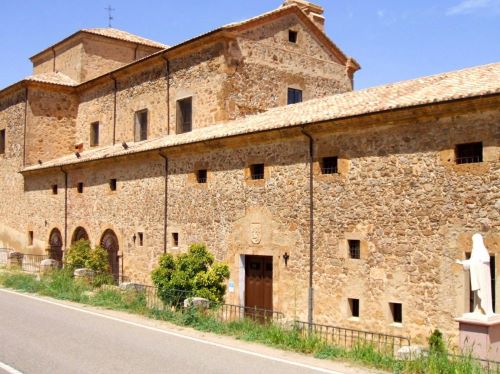
As female asceticism moved from late antiquity into the early medieval world, it became more institutionally stable and more carefully supervised. The holy woman did not disappear from deserts, households, or pilgrimage networks, but increasingly she entered recognizable monastic structures: convents, royal foundations, double monasteries, enclosed communities, and houses governed by rules. This shift mattered because institutionalization changed the meaning of renunciation. Earlier ascetic women could appear as startling exceptions, wealthy widows, desert teachers, wandering patrons, or household philosophers. Early medieval nuns, by contrast, were increasingly gathered into communities whose daily life was shaped by liturgy, obedience, fasting, prayer, manual labor, reading, silence, and hierarchy. Renunciation became less improvisational and more architectural. It had walls, offices, schedules, property, abbesses, rules, and bishops watching from beyond the cloister. This did not mean that female asceticism lost its intensity. Rather, its intensity was reorganized into durable forms. The wildness of renunciation was translated into chant, enclosure, communal discipline, regulated poverty, and repeated gestures of obedience. The woman who once might have become a solitary holy figure could now become part of a religious household that outlived her, preserving her name, training successors, managing lands, and linking private discipline to institutional continuity.
The development of rules for women’s communities reveals both opportunity and constraint. Caesarius of Arles’ rule for virgins, written in the early sixth century, offers one of the most important examples in the Latin West. It sought to protect a female religious community from the dangers of disorder, private property, uncontrolled contact with outsiders, and dependence on male households. In that sense, enclosure could be defended as security. It created a space where women might live together without being returned to marriage markets, family strategies, or ordinary domestic service. Yet the same rule also shows how female ascetic life was increasingly managed through regulation. Clothing, speech, movement, possessions, food, and social contact all became matters of communal discipline. The nun was removed from one household only to enter another, sacred household, where obedience replaced kinship as the organizing principle of life.
This did not make early medieval convents passive spaces. On the contrary, many became centers of literacy, aristocratic memory, liturgical prestige, education, manuscript culture, land management, and political connection. Abbesses could govern property, direct communities, correspond with bishops and rulers, supervise younger women, and preserve family prestige in religious form. Royal and aristocratic women were especially important to this development because monasteries often depended on elite patronage. A daughter placed in a convent might represent piety, dynastic strategy, protection of inheritance, or all three at once. A widow who entered or founded a monastery could transform her social position into religious authority. Here again the paradox of female asceticism appears: the monastery could shelter women from marriage and childbirth, but it could also serve the interests of powerful families who used religious life to manage property, alliance, and reputation.
Double monasteries sharpened this ambiguity. In several early medieval regions, especially in the Frankish, Anglo-Saxon, and Irish worlds, communities of men and women could exist under the authority of an abbess. Such institutions demonstrate that female religious leadership was not always marginal. Abbesses such as Hilda of Whitby became figures of learning, counsel, and ecclesiastical importance, remembered not merely as secluded holy women but as leaders whose houses shaped wider religious culture. Whitby itself became famous as the site of the synod of 664 CE, where questions of Easter dating and ecclesiastical alignment were debated in a monastery governed by a woman. Hilda’s authority did not mean that early medieval Christianity embraced gender equality, but it does show that female ascetic communities could become public religious centers. The cloister was not always a retreat from history. Sometimes it was where history gathered. A monastery ruled by an abbess could educate future bishops, shelter royal women, preserve dynastic memory, host ecclesiastical debate, and anchor regional Christian identity. This made female ascetic leadership both useful and unsettling. The abbess stood inside a religious hierarchy that denied women priestly office, yet she could still govern men and women, command property, shape learning, and influence the direction of church life. Her authority existed in the space between prohibition and practice, between formal exclusion and practical necessity.
The early medieval sanctity of women remained deeply tied to ideals of purity, obedience, humility, and bodily discipline. Hagiography often praised nuns and abbesses for virginity, fasting, prayer, miracle-working, resistance to marriage, and maternal care for their communities. The language of spiritual motherhood became especially important. An abbess could exercise command because she was imagined as a mother, not as a priest or bishop. This gave women real authority while translating that authority into a form acceptable to patriarchal religious culture. Female governance became legible when it appeared nurturing, disciplined, holy, and protective rather than openly ambitious. The abbess could direct land, labor, liturgy, and people, but her power was safest when interpreted as service. Early medieval monasticism preserved a tension already visible in late antiquity: women could lead, but the language of leadership had to be morally disguised.
Female asceticism in early medieval monastic worlds marks a crucial turning point in the history of women together and alone. The solitary desert amma and the aristocratic pilgrim did not vanish, but the convent became one of the most durable forms through which women practiced renunciation. Within its walls, women could escape some pressures of marriage, cultivate literacy, participate in liturgical life, govern property, create spiritual kinship, and preserve memories that might otherwise have been lost. Yet those same walls also made female holiness more controllable. Enclosure protected and confined; rules disciplined and enabled; aristocratic patronage empowered and entangled; abbesses governed and were watched. Early medieval monasticism did not resolve the paradox of female renunciation. It gave that paradox a lasting institution, one in which women could become both separated from the world and central to the religious worlds that separation helped build.
Hindu Female Devotion and the Ascetic Body: Karaikkal Ammaiyar and Bhakti Renunciation
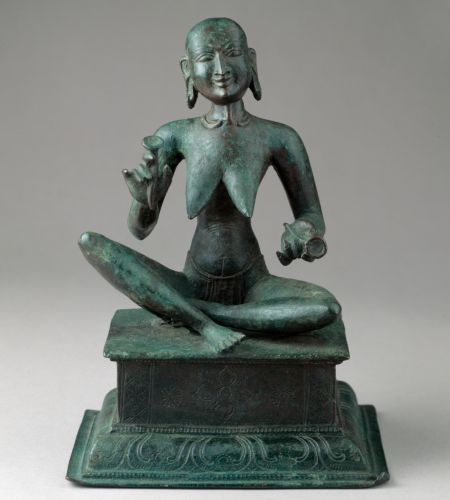
Karaikkal Ammaiyar, usually placed in the sixth century CE, brings the history of female asceticism into a different religious and cultural world. Unlike Buddhist bhikkhunīs, whose renunciation took shape within monastic discipline, or Christian nuns and anchoresses, whose holiness was often framed through virginity, enclosure, or spiritual marriage, Karaikkal Ammaiyar belongs to the Tamil Śaiva bhakti tradition. Her renunciation was devotional, poetic, embodied, and radically anti-domestic. She did not simply leave the world to cultivate silence or withdraw into institutional religious life. She remade herself through devotion to Shiva, rejecting the ordinary social meanings of wifehood, beauty, sexuality, and female respectability. In her life and poetry, renunciation became not only a discipline of absence, but a terrifyingly vivid presence: the female body transformed into a sign of ecstatic surrender.
The hagiographic tradition remembers her as Punītavatī, a woman from Karaikkal, married into a merchant household and marked by intense devotion to Shiva. The famous story turns on food, hospitality, miracle, and the breakdown of domestic expectation. When she gives a mango intended for her husband to a devotee of Shiva and later miraculously receives another, her husband recognizes her as no ordinary wife but as a divine being, or at least as someone no longer available to him within the categories of marriage. The story is not simply a pious miracle tale. It dramatizes the collapse of household identity under the pressure of devotion. The wife who should manage domestic goods for her husband redirects them toward Shiva’s devotee, and that redirection reveals a loyalty higher than marriage. Domestic virtue turns into divine excess, and the household cannot absorb it.
What follows is one of the most striking bodily transformations in medieval devotional literature. Karaikkal Ammaiyar asks Shiva to remove her beauty and grant her a demonic, skeletal form. She rejects the social body that made her legible as wife, woman, and object of desire. Her transformed body is often described as ghoul-like, emaciated, inverted, and unsettling. She becomes one of Shiva’s pey, a ghostly devotee, no longer bound to the erotic or reproductive expectations attached to feminine beauty. This is asceticism, but not in the same mode as Christian virginity or Buddhist monastic discipline. She does not preserve the female body as pure, nor does she simply discipline appetite into calm detachment. She makes the body strange. She turns beauty into a danger to be cast off, and ugliness into an offering.
This renunciation of beauty is central to her authority. In many patriarchal cultures, female religious seriousness had to negotiate the assumption that women’s bodies were either temptations, vessels of reproduction, or symbols of family honor. Karaikkal Ammaiyar refuses all three. Her skeletal form breaks the social contract by which feminine value is tied to desirability. Yet this rejection is not self-hatred in a simple sense. It is a devotional strategy. By becoming terrifying, she becomes free from the economy of male desire. By abandoning ordinary beauty, she acquires a new sacred visibility. Her body no longer points toward marriage, lineage, or domestic prosperity. It points toward Shiva’s cremation ground, the place where social distinctions dissolve and the body’s impermanence becomes impossible to deny. In that sense, her body becomes a theological argument. It refuses the ornamental femininity expected of a wife and replaces it with a body suited to divine proximity, a body no longer arranged for human approval but for participation in Shiva’s fierce, death-haunted world. The frightening quality of her transformation is not incidental. It is the sign that she has passed beyond the social uses of beauty and entered a devotional space where the rejected body becomes powerful precisely because it can no longer be possessed.
The cremation ground is not incidental scenery in her poetry. It is the sacred landscape that matches her transformed body. Karaikkal Ammaiyar sings of Shiva dancing among skulls, flames, spirits, corpses, jackals, and fierce attendants. This is not the polished religiosity of respectable domestic devotion. It is a devotion drawn toward the frightening margins of social life, where death exposes the instability of beauty, status, wealth, and household order. Her poetry does what her body does: it disorients. The world she imagines is not gentle, ornamental, or safely feminine. It is a world of burning grounds and divine dance, where terror becomes intimacy and the devotee finds nearness to Shiva precisely where ordinary society sees pollution, death, and disorder.
Her asceticism also complicates the relationship between solitude and community. Karaikkal Ammaiyar is remembered as a singular figure, a woman whose devotion makes her socially unassimilable, yet she belongs to a wider community of Tamil Śaiva saints, the Nāyaṉmārs. Her poetry participates in the early formation of Tamil bhakti as a public devotional culture, one that used vernacular song to make divine intimacy available outside strictly Sanskritic, priestly, or elite ritual frameworks. As one of the few women among the Nāyaṉmārs, she occupies a distinctive place. She is neither simply an isolated holy woman nor merely a member of a formal female order. Her community is poetic, devotional, remembered, and liturgical. She is alone in the extremity of her bodily transformation, but together with others in the shared project of singing Shiva into Tamil religious imagination.
The comparison with Christian and Buddhist female renunciants clarifies both similarity and difference. Like the Buddhist nuns of the Therīgāthā, Karaikkal Ammaiyar refuses the final authority of domestic life. Like Christian ascetic women, she challenges the assumption that female holiness must remain within marriage, beauty, and obedience. Yet her path is neither monastic ordination nor ecclesiastical enclosure. It is bhakti renunciation, where devotion overwhelms social identity and remakes the body itself as a sign of sacred belonging. Her authority comes through poetry rather than rule, through divine intimacy rather than institutional position, through grotesque transformation rather than virginal preservation. She does not become holy by becoming less visible. She becomes holy by becoming impossible to see in ordinary terms. This makes her especially useful for a comparative history of female asceticism because she prevents the category from becoming too narrowly Christian or monastic. She shows that renunciation could be ecstatic rather than regulated, poetic rather than institutional, and terrifying rather than domesticated. Where the Buddhist nun disciplined perception and the Christian virgin guarded purity, Karaikkal Ammaiyar dramatized devotion as a remaking of the self so complete that even the recognizable female body had to be surrendered.
Karaikkal Ammaiyar expands our understanding of female asceticism. Her life shows that renunciation could mean more than fasting, celibacy, poverty, or enclosure. It could mean the deliberate refusal of the beautiful female body as a social possession. It could mean choosing the cremation ground over the household, the ghostly body over the desirable body, the divine dance over domestic order. In her, female asceticism becomes an act of theological imagination as much as bodily discipline. She left the world not by disappearing from it, but by becoming strange enough that the world had to remember her differently. Her skeletal body, her fierce poems, and her devotion to Shiva reveal a form of sacred female authority forged not through institutional permission, but through the radical revaluation of what a woman’s body could signify.
The Medieval Anchoritic Turn: Enclosure, Death to the World, and Sacred Solitude
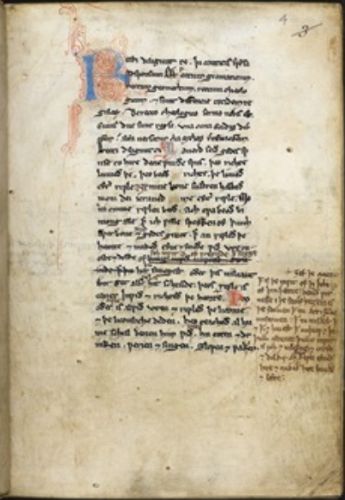
By the high Middle Ages, female asceticism in western Christianity took one of its most dramatic forms in the life of the anchoress. Unlike the nun, who entered a communal religious house, the anchoress withdrew into a small cell, often attached to a parish church, where she lived enclosed for life. This enclosure was not merely practical separation. It was a ritualized death to the world. The anchoritic cell became a tomb, a womb, a chapel, and a theater of holiness all at once. The woman inside was dead to ordinary society, yet intensely present to the religious imagination of the community around her. She had renounced marriage, property, mobility, and ordinary sociability, but her very immobility made her spiritually significant. The world could no longer claim her body in ordinary ways, but it could gather around her walls. This made anchoritism one of the sharpest expressions of medieval Christianity’s ability to turn withdrawal into visibility. The anchoress disappeared from ordinary social circulation, yet that disappearance became the condition of her authority. She was not simply hidden; she was set apart in a way the surrounding community could see, name, visit, support, regulate, and remember.
The anchoritic vocation was shaped by a deep medieval suspicion of the world’s instability. Urban growth, lay piety, clerical reform, crusading devotion, new forms of affective spirituality, and anxieties about sin all contributed to a religious culture in which withdrawal could appear as both protest and refuge. For women, enclosure offered a paradoxical protection. It shielded them from marriage, sexual vulnerability, family pressure, and some forms of male control, while also placing them under ecclesiastical supervision and local scrutiny. The anchoress was freer than a wife in some respects and more confined than almost anyone else in others. Her cell did not abolish patriarchy. It concentrated it into rules, windows, confessors, patrons, servants, liturgical routines, and the expectations of neighbors who came to see her as a holy presence.
The ceremony of enclosure made this paradox visible. In some cases, the rite resembled a funeral, marking the recluse as one who had left ordinary life permanently. The anchoress might hear prayers associated with burial, enter the cell, and remain there until death. The symbolism was severe, but it was also generative. To be dead to the world was to be reborn into a different kind of authority. The anchoritic body became unavailable to household economy, sexual exchange, and public movement, yet available as a site of prayer, counsel, penitence, and spiritual power. The cell’s architecture reinforced this double meaning. It often contained a window toward the church, through which the anchoress could hear Mass and receive the Eucharist; a window toward the outside, through which she might speak with visitors; and sometimes a smaller opening for servants or practical necessities. Enclosure produced solitude, but not total isolation.
The Ancrene Wisse, written in the early thirteenth century for anchoresses, reveals how carefully this life was imagined, regulated, and gendered. The text offers spiritual counsel, devotional instruction, and practical advice, but it is equally concerned with boundaries. It warns against excessive talk, careless looking, gossip, vanity, emotional entanglement, unnecessary visitors, and the dangers of servants moving between cell and world. Such concerns show that the anchoress was not invisible. She was dangerously visible, precisely because her holiness attracted attention. Her withdrawal could create a local center of fascination, and fascination could threaten the discipline that enclosure was meant to protect. The guide’s repeated concern with sight, speech, and contact reveals a medieval fear that the world might leak back into the cell through the smallest aperture. The anchoress had to guard not only her body, but the channels through which her body remained socially present. A glance, a conversation, a servant’s errand, a gift, a rumor, or an overly familiar visitor could become a breach in the spiritual architecture of enclosure. The cell was imagined as a defensive structure for the soul, but also as a porous place whose holiness had to be continuously maintained.
Yet the anchoritic cell also gave women a powerful religious role outside ordinary institutional office. An anchoress could not celebrate Mass, hold clerical authority, or preach publicly in the formal sense, but she could counsel, intercede, write, receive visitors, and become a spiritual landmark. The holiness of the enclosed woman was often understood as beneficial to the surrounding community. Her prayers mattered because she had sacrificed ordinary life; her advice mattered because she had stepped outside ordinary desire; her cell mattered because it gave a parish or town a living sign of sacred intensity. This was not withdrawal into irrelevance. The anchoress became a kind of fixed spiritual authority, rooted in one place but connected to many people through reputation, memory, and counsel. Her solitude was social because others believed that her separation gave her access to truths they needed.
The gendered meaning of enclosure remained unstable. On one hand, it could reproduce old suspicions about women: that they talked too much, looked too freely, desired too dangerously, or required stricter containment than men. On the other hand, the anchoress transformed containment into charisma. A woman enclosed by walls could become more authoritative than a woman moving freely through society. Her immobility became proof of seriousness; her silence gave weight to her speech; her bodily deprivation made her prayers seem powerful. Medieval culture often feared uncontrolled female movement, but anchoritism turned controlled female stillness into holiness. The result was a strange inversion. The walls that restricted her also magnified her. She was hidden but known; buried, but consulted; alone, but surrounded by expectation. This instability explains why anchoritic writing so often sounds both reverent and anxious. The enclosed woman could be imagined as spiritually elevated because she was separated from worldly traffic, but that elevation made her a focus of attention, and attention could become influence. Her authority did not fit cleanly into the official hierarchy of the Church, yet it could shape local devotion, lay conscience, and communal imagination. The anchoress became powerful at the very point where medieval society insisted she had renounced power.
The medieval anchoritic turn gives us one of its clearest images of female ascetic paradox. The anchoress withdrew so completely that her life could be described as death, yet that death produced a new mode of presence. She was enclosed from the world but woven into its spiritual needs. She surrendered mobility but gained rooted authority. She renounced household identity but often became the moral center of a local religious household larger than any family. In the anchoritic cell, female asceticism became architectural: walls made renunciation visible, windows managed contact, and sacred solitude became a social fact. The anchoress was together and alone in the most literal sense, sealed away from ordinary life while remaining close enough for the world to whisper through the wall.
Hildegard of Bingen: Ascetic Discipline, Visionary Authority, and Female Community

Hildegard of Bingen stands at the intersection of enclosure, community, authorship, and institutional female authority. Born in 1098 CE and placed as a child under the care of Jutta of Sponheim, Hildegard entered a religious world shaped by discipline, prayer, obedience, bodily restraint, and the expectation that female holiness should remain carefully bounded. Jutta’s enclosure at Disibodenberg formed the early setting of Hildegard’s religious life, but Hildegard did not remain merely the inheritor of another woman’s ascetic discipline. After Jutta’s death, she became magistra of the women’s community and eventually led her nuns to Rupertsberg, where she established a house more clearly under her own direction. This movement from formation under an enclosed holy woman to leadership over a female religious community is central to her significance. Hildegard did not reject ascetic discipline; she converted it into a foundation for authorship, governance, music, preaching, correspondence, and visionary theology.
Her authority rested on a carefully managed paradox. Hildegard repeatedly presented herself as weak, unlearned, and physically fragile, insisting that her visions came not from personal brilliance but from divine illumination. This posture of humility was not simply conventional modesty. It was a necessary strategy in a world where women were denied ordinary theological authority and where public female teaching could provoke suspicion. By attributing her knowledge to the “Living Light,” Hildegard made her speech simultaneously self-effacing and commanding. She did not claim authority as a scholar in the ordinary sense, yet she wrote Scivias, Liber vitae meritorum, and Liber divinorum operum, works of remarkable theological, cosmological, moral, and visionary ambition. The very claim that she spoke as an instrument allowed her to address popes, emperors, abbots, clergy, nuns, and laypeople with a boldness that would have been dangerous if presented as merely her own opinion. Her weakness became part of the structure of her authority: illness, trembling, reluctance, and divine compulsion helped make her speech appear less like ambition and more like obedience. This was not a surrender of intellect, but a rhetorical and spiritual framework that allowed intellect to operate under the cover of revelation. Hildegard’s voice could rebuke corruption, interpret Scripture, describe cosmic order, and command attention precisely because she insisted that the voice was not finally hers. Her visionary authorship reveals how medieval women could enter theological discourse through sanctioned vulnerability, using humility not as silence, but as a doorway into public speech.
Hildegard’s asceticism was not primarily a drama of solitary self-erasure. It was communal and creative. As abbess, she shaped the lives of women under her care, defended the dignity of her community, and imagined female religious life as more than containment. Her move from Disibodenberg to Rupertsberg was not only geographical; it was institutional and symbolic. It separated her community of women from a male monastery and asserted a more distinct female religious identity. Hildegard’s music, especially the songs later gathered in the Symphonia armonie celestium revelationum, gave that community a soundscape of its own, one in which women’s voices participated in cosmic praise. Her religious world was disciplined, but it was not narrow. It joined fasting, liturgy, obedience, and enclosure to song, vision, healing knowledge, natural philosophy, and elaborate symbolic interpretation. The female monastery became a place where renunciation generated culture.
Her visionary theology also gave the female body a more complex place than simple suspicion. Hildegard inherited many traditional anxieties about sexuality, disorder, and sin, and she did not stand outside the gender assumptions of her age. Yet her writings also imagined creation as vibrant, fertile, ordered, and filled with divine vitality. Her famous language of viriditas, often translated as greenness or living freshness, linked spiritual health to the generative life of creation. This did not make her a modern egalitarian, and it would be misleading to turn her into one. But it did allow her to think about body, soul, cosmos, and community in ways that exceeded a merely punitive asceticism. Discipline mattered because it restored order, not because creation itself was worthless. In that sense, Hildegard complicates the idea that female ascetic authority always depended on bodily negation. Her holiness was disciplined, but also expansive; enclosed, but cosmological; obedient in form, but astonishingly wide in reach.
Hildegard marks a major development in the history of women together and alone. Unlike the Desert Mothers, she is not preserved only in fragments; unlike the anchoress, she is not defined solely by enclosure; unlike aristocratic patronesses, she does not merely fund holy space from the outside. She governs, writes, sings, rebukes, interprets, and builds. Her authority grew from ascetic life, but it did not remain confined to private discipline. It became communal leadership and public theology. In Hildegard, female renunciation produced not silence but a vast symbolic universe, one in which a woman formed by enclosure could address the Church, imagine the cosmos, and create a durable female religious culture. Her life shows that ascetic discipline could make women less available to the ordinary world while making their voices more difficult for that world to ignore. The paradox is especially sharp because Hildegard never abandoned the language of submission, weakness, or divine obedience, yet within that language she produced one of the most ambitious bodies of writing by any medieval woman. Her example shows that female ascetic authority did not always emerge by breaking the walls of religious life. Sometimes it emerged by filling those walls with such intellectual, musical, and visionary force that enclosure itself became too small to contain the voice formed within it.
Catherine of Siena: Starvation, Vision, Politics, and the Public Ascetic Woman
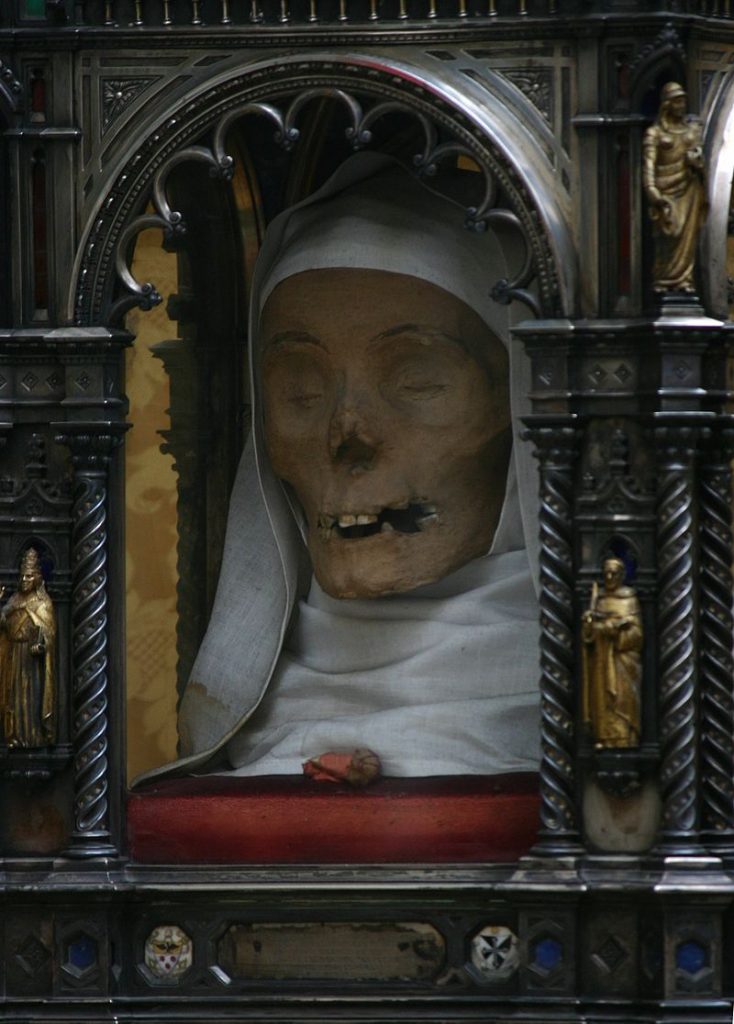
Catherine of Siena carried female ascetic authority out of enclosure and into the public crisis of the fourteenth-century Church. Born in 1347 CE, she entered not a cloistered convent but the lay Dominican world as a tertiary, remaining in urban society while practicing a life of intense prayer, celibacy, fasting, service, and visionary devotion. This position mattered. Catherine was neither a formally enclosed nun nor a woman safely absorbed into ordinary domestic life. She occupied a liminal place, one that allowed her to cultivate ascetic separation while remaining available to the sick, the poor, disciples, political actors, and ecclesiastical leaders. Her sanctity was rooted in bodily renunciation, but her influence depended on movement, correspondence, persuasion, and public intervention. She represents a different kind of female ascetic: not the woman behind the wall, but the woman whose disciplined body authorized her to speak beyond the limits normally imposed on her sex.
The extremity of Catherine’s fasting became central to both her holiness and the anxieties surrounding it. Medieval observers did not read her abstinence through modern clinical categories, and it would flatten the history to treat her simply as a pathological case. In her own devotional world, fasting belonged to Eucharistic desire, penitential discipline, imitation of Christ, and the struggle to detach the soul from ordinary appetite. Food was never merely food in medieval women’s religion. It could signify obedience, self-command, compassion, suffering, sacrifice, and intimacy with the body of Christ. Catherine’s refusal of ordinary nourishment worked as a visible theology. Her body became the site where hunger, grace, suffering, and authority converged. Yet that convergence was also dangerous. A woman who refused food could seem holy, but she could also appear disobedient, excessive, uncontrollable, or suspect. Catherine’s ascetic body made her powerful because it seemed conquered, but it also required constant interpretation by confessors, followers, critics, and later hagiographers.
Her visions and mystical experiences intensified that authority. Catherine described an intimate relationship with Christ shaped by bridal imagery, blood, wounds, exchange of hearts, and total surrender to divine will. Such language might seem private, but it generated public consequence. If Catherine spoke as one instructed by God, then her words could not be dismissed as merely feminine presumption. Her Dialogue presents a theology of divine providence, virtue, reform, obedience, and love, while her letters show her addressing popes, cardinals, rulers, mercenaries, religious women, and ordinary disciples with startling directness. The rhetoric of humility remained important, but Catherine’s humility did not soften her demands. She could urge repentance, rebuke corruption, call for peace, press for crusade, and insist that the pope return from Avignon to Rome. Her mystical language gave those interventions a theological force that ordinary political argument could not have supplied. She did not write as a diplomat bargaining for advantage, nor as a theologian claiming formal academic status, but as a soul compelled by divine love to speak into disorder. This made her letters unusually forceful. They combine tenderness and command, maternal concern and prophetic rebuke, bodily imagery and institutional urgency. Catherine’s authority depended on the claim that she had surrendered herself completely, yet that surrender released a voice capable of confronting men who possessed every official power she lacked. Her mystical authority became a language of public command, one that allowed a laywoman with no ecclesiastical office to intervene in some of the most urgent political and religious conflicts of her age.
Catherine’s involvement in Church politics reveals the paradox of the public ascetic woman with particular clarity. She did not claim institutional office, priestly power, or formal jurisdiction. Instead, she claimed obedience to God, love for the Church, and the urgency of reform. That posture made her intervention possible. She could speak to Pope Gregory XI not as a rival authority but as a daughter, servant, prophet, and bride of Christ calling spiritual fathers to their duty. Yet the content of her speech was anything but passive. She pressed the papacy, urged moral courage, and entered the fraught politics of the Avignon Papacy and the return to Rome. Later, during the Western Schism, her allegiance to Urban VI placed her in the center of an ecclesiastical fracture that revealed how deeply mystical speech could become entangled with institutional crisis. Catherine’s public authority was inseparable from risk. Her holiness allowed her to speak, but the moment she spoke, her asceticism became political.
Catherine of Siena shows how medieval female renunciation could move beyond the cell without abandoning the logic of bodily discipline. Her fasting, celibacy, visions, service, and letters formed a single pattern: the woman who renounced ordinary claims on her body gained the authority to make extraordinary claims on the world. Like Hildegard, she used humility to speak boldly; unlike Hildegard, she did not build authority chiefly through abbess-ship, music, and learned visionary cosmology, but through public counsel, suffering, charisma, and urgent intervention. Her life makes the central paradox sharper. The female ascetic could become influential not by entering recognized offices of power, but by appearing to have surrendered power altogether. Catherine’s starved and visionary body became a credential, a sign that she belonged less to family, appetite, and social expectation than to God. That sign did not remove her from history. It thrust her into it.
Julian of Norwich: Enclosed Solitude and Theological Vastness

Julian of Norwich brings the anchoritic tradition to one of its most intellectually expansive medieval forms. Living in late fourteenth- and early fifteenth-century England, she inhabited the severe discipline of enclosure, probably in a cell attached to St. Julian’s Church in Norwich. Yet her theological imagination was anything but small. Like other anchoresses, Julian was physically confined, separated from ordinary social life, and marked by a kind of ritual death to the world. But the text associated with her, usually known as Revelations of Divine Love, opens that enclosure into a vast meditation on sin, suffering, divine love, incarnation, motherhood, mercy, and the final restoration of creation. Her cell may have narrowed her bodily movement, but it did not narrow the scope of her thought. In Julian, enclosed solitude becomes a place from which a woman thinks at the scale of God, history, and the whole created order. That contrast between physical narrowness and theological vastness is essential. The anchoritic cell was designed to limit contact, discipline the body, and mark permanent withdrawal, yet Julian’s writing shows that confinement could become a condition of contemplative expansion rather than intellectual diminishment. She did not need geographic movement to produce spiritual range. Her immobility concentrated attention, and that attention widened into one of the most daring meditations on divine love in medieval Christian literature.
Julian’s authority began in illness and vision. In May 1373, when she was about thirty years old, she experienced a grave sickness and received a series of visions, or “showings,” centered on Christ’s Passion and divine love. These visions were not presented as private emotional episodes alone. They became the foundation for a long process of theological interpretation. The shorter version of her work appears closer to the visionary experience itself, while the longer version reflects years of meditation, revision, and intellectual deepening. This matters because Julian was not merely reporting what she had seen. She was thinking with it. Her text moves from vision to doctrine, from image to argument, from bodily crisis to theological patience. The enclosed woman becomes not only a recipient of revelation but an interpreter of revelation, and that interpretive labor gives her writing its unusual power.
Her theology is especially striking because it refuses to make sin stronger than love. Julian did not deny suffering, evil, or human brokenness; she wrote in a world marked by plague, social unrest, clerical anxiety, and the ordinary violence of mortality. Yet her vision insists that divine love is deeper than punishment and more ultimate than fear. Her famous confidence that “all shall be well” has often been sentimentalized, but in context it is neither easy optimism nor denial of pain. It is a theological claim wrestled from the contradiction between human suffering and divine goodness. Julian’s God is not distant legal authority alone, but intimate, courteous, patient, and maternal. Her language of Christ as mother does not simply soften theology. It expands it, allowing divine care to be imagined through nourishment, labor, birth, tenderness, and bodily intimacy. In a tradition that often treated female embodiment with suspicion, Julian used maternal imagery to describe God’s saving work.
This makes Julian central to the history of female ascetic authority. She did not govern a monastery like Hildegard, move through public politics like Catherine of Siena, or write from the ecstatic anti-domestic strangeness of Karaikkal Ammaiyar. Her authority was quieter, rooted in enclosure, contemplation, and textual endurance. Yet it was no less radical. As an anchoress, Julian occupied a socially sanctioned position of female withdrawal, but her writing exceeds the narrow expectations often placed on enclosed women. She does not simply offer devotional sweetness or private consolation. She develops a sustained theological account of divine love, human ignorance, sin’s mysterious place in providence, and the trustworthiness of God. The fact that this comes from an enclosed woman matters. Julian’s solitude did not produce silence. It produced one of the most sophisticated works of vernacular theology in medieval England, and the earliest surviving English-language book known to have been written by a woman.
Julian completes one arc of the argument here. Female asceticism could remove women from ordinary life, but it could also create conditions under which women became religious thinkers of extraordinary depth. Her cell was a limit, but also a frame; her solitude was deprivation, but also concentration; her visions were bodily, but also intellectual; her humility was real, but not the same as passivity. Like the Desert Mothers, she spoke from withdrawal. Like Hildegard, she made revelation into theology. Like Catherine, she turned bodily suffering into religious authority. But Julian’s distinct gift was theological spaciousness from within confinement. She shows that the female ascetic could be alone without being absent, enclosed without being small, and hidden from public office while still leaving a voice large enough to outlive the walls that held her.
Comparative Synthesis: Women Together, Women Alone, and the Gendered Meaning of Renunciation
The following video from “EREMOS Institute for Wilderness Spirituality” covers the psychology of the Desert Fathers and Desert Mothers:
Across these traditions, female asceticism appears first as departure, but its historical meaning lies in what departure made possible. Buddhist nuns left household life for the discipline of the sangha; Christian virgins, widows, nuns, abbesses, anchoresses, and mystics renounced marriage, property, sexual availability, and ordinary domestic expectation; Karaikkal Ammaiyar rejected the beautiful wife’s body and remade herself as Shiva’s ghostly devotee. The forms differed sharply, but the underlying social disruption was similar. Renunciation allowed women to step outside the structures through which most societies organized female value: fertility, beauty, obedience, lineage, domestic labor, and sexual regulation. Yet this step outside never produced a simple escape. Each tradition received renouncing women through its own hierarchies, rules, narratives, and anxieties. The woman who left the world had to be made intelligible to the world she left.
The tension between solitude and community runs through the whole history. Female ascetics were often imagined alone: the Desert Mother in the wilderness, the anchoress in her cell, Julian enclosed at Norwich, Catherine fasting in inward intimacy with Christ, Karaikkal Ammaiyar walking toward Shiva’s cremation ground. Yet none of them was simply isolated. The Buddhist bhikkhunī entered a female monastic order; the Desert Mother became an amma because others recognized her wisdom; aristocratic renouncers built communities with inherited wealth; early medieval abbesses governed religious households; Hildegard’s visions became the culture of a female monastery; Catherine’s private austerity generated public correspondence and political intervention. Even the enclosed anchoress depended on patrons, priests, servants, visitors, and neighbors. Female ascetic solitude was often a social technology. It marked separation, but separation produced new forms of relation. This is why the history of female renunciation cannot be told only as a history of women disappearing from the world. Withdrawal could create a new kind of proximity, one based not on kinship or sexuality but on counsel, memory, patronage, prayer, teaching, song, discipline, and sacred reputation. The woman who was least available in ordinary social terms could become intensely available in religious terms, precisely because her separation made her appear trustworthy, purified, or spiritually concentrated. Solitude gave women a language for refusing ordinary claims, while community gave that refusal historical force.
This makes the phrase “women together and alone” more than a title. It names a historical condition. Ascetic women often became authoritative because they were alone enough to seem detached from ordinary desire, yet connected enough for that detachment to matter. If no one visited the cell, copied the vision, remembered the saying, joined the monastery, read the poem, funded the foundation, or sought counsel from the holy woman, renunciation would leave little historical trace. Female ascetic authority required an audience, even when that audience was carefully managed or physically kept at a distance. The Desert Mothers’ sayings survive because communities preserved them. Julian’s solitude became theology because her writing moved beyond her cell. Catherine’s fasting became political because disciples, confessors, popes, and civic leaders interpreted it as a sign of divine urgency. Asceticism created sacred distance, but distance became power only when others believed it had meaning.
The body was the central site of this transformation. Female ascetics did not merely hold different ideas; they made their bodies signify differently. The Buddhist nun shaved her head, wore the robe, practiced celibacy, and trained perception away from attachment. The Christian virgin or widow turned sexual renunciation into a sign of eschatological identity. The Desert Mother made hunger, silence, and endurance into wisdom. The anchoress gave her body to the architecture of enclosure. Catherine’s starved body became a credential of divine intimacy and ecclesiastical urgency. Karaikkal Ammaiyar’s skeletal, ghoul-like form rejected the social economy of feminine beauty altogether. These bodily practices were not identical, and they should not be collapsed into one generic “self-denial.” In each case, the female body was reinterpreted within a specific religious anthropology. Yet the recurring pattern is unmistakable: women gained authority by making their bodies unavailable to ordinary social claims. This unavailability was not merely sexual, though sexuality was often central. It also involved food, movement, speech, clothing, adornment, sleep, labor, pain, and visibility. The ascetic body became a text that communities learned to read: shaved head, veil, enclosure, emaciation, celibacy, scars of discipline, plain dress, ecstatic trance, or terrifying transformation. These signs could be empowering because they separated women from the roles that had made them socially usable. But they also made women vulnerable to interpretation by others, especially male clerics, biographers, confessors, and institutional authorities who decided whether bodily extremity signaled holiness, delusion, disobedience, or danger.
That unavailable body was also dangerous. Religious communities repeatedly tried to distinguish holy renunciation from disorder, pride, heresy, madness, vanity, or rebellion. This is why female ascetic authority so often had to appear as obedience. The bhikkhunī entered a disciplined order shaped by rules and male precedence. The consecrated virgin belonged to Christ and to clerical oversight. The nun obeyed a rule and an abbess, while the abbess herself remained accountable to wider ecclesiastical structures. The anchoress was enclosed, but her windows, servants, and speech were regulated. Hildegard described herself as weak and divinely compelled. Catherine spoke as a humble servant even when she rebuked popes. Karaikkal Ammaiyar’s bodily extremity was made meaningful through devotion to Shiva rather than personal self-assertion. Again and again, renunciation authorized women by presenting their authority as surrendered authority. They could command because they seemed not to command for themselves.
The comparative history of female asceticism resists simple conclusions. These women were not merely victims of patriarchal religion, though they were constrained by it. They were not simply liberated heroines either, because their authority often depended on systems that disciplined, supervised, narrated, or contained them. Their significance lies in the unstable space between those poles. They used the religious languages available to them, Buddhist liberation, Christian virginity and mystical union, monastic obedience, Śaiva devotion, enclosure, fasting, vision, song, and sacred poverty, to make lives that ordinary gender roles could not easily absorb. Some governed communities. Some wrote theology. Some became remembered voices in male-shaped archives. Some turned their bodies into arguments against the world’s claims. Together, they show that renunciation was never only withdrawal. For women in the ancient and medieval worlds, it was one of the most powerful ways to become impossible to ignore.
Conclusion: The Power of Leaving
Female asceticism in the ancient and medieval worlds was never a single practice, a single theology, or a single path to holiness. It moved through Buddhist monastic discipline, late antique Christian virginity, desert wisdom, aristocratic patronage, early medieval convents, Tamil Śaiva devotion, anchoritic enclosure, visionary theology, and public mystical intervention. Yet across these different worlds, the same historical pressure keeps returning. Women left the roles that made them legible to society, and that leaving changed what society could imagine women to be. They renounced marriage, beauty, property, kinship, food, movement, sexuality, speech, and ordinary household obligation, but their renunciation did not make them disappear. It made them difficult, powerful, memorable, and sometimes dangerous.
The women considered here did not all seek the same end. Buddhist bhikkhunīs pursued liberation from craving and rebirth; Christian virgins, nuns, anchoresses, and mystics sought salvation, union with God, purity, reform, or contemplative knowledge; Karaikkal Ammaiyar surrendered herself to Shiva in a devotional transformation that made the female body strange to ordinary desire. These differences matter. To collapse them into one universal story of “holy women” would erase the specific religious worlds that shaped their practices and gave their bodies meaning. Still, comparison reveals a shared pattern: renunciation gave women a way to refuse the social uses of their bodies. The woman who would not marry, would not eat normally, would not display beauty, would not move freely, would not serve lineage, or would not remain silent in the expected way forced her community to interpret her differently. Asceticism became a language in which women could make refusal sacred.
That sacred refusal was never simple freedom. The bhikkhunī entered a gendered monastic order; the Christian virgin was praised and supervised; the Desert Mother was remembered in fragments; the aristocratic patroness depended on wealth even as she gave it away; the abbess governed within ecclesiastical limits; the anchoress became powerful through confinement; Hildegard spoke by declaring herself weak; Catherine entered politics through bodily suffering and divine compulsion; Julian wrote vast theology from a narrow cell; Karaikkal Ammaiyar became authoritative by abandoning the beautiful body expected of a wife. Again and again, female ascetic authority emerged through paradox. These women gained power by surrendering power, found voice through silence, built community through withdrawal, and became visible by becoming unavailable.
The power of leaving, then, was not the power of escape alone. It was the power to reorder meaning. Female ascetics exposed the fragility of the social worlds that claimed women as wives, mothers, ornaments, servants, heirs, temptations, or household managers. By stepping away, they revealed that those roles were not inevitable. They could be refused, transformed, sanctified, or made strange. Their lives remind us that solitude can become community, enclosure can become speech, hunger can become theology, ugliness can become devotion, and disappearance can become memory. They were together and alone, hidden and remembered, contained and immense. The world tried to define them by what they left behind, but history remembers them because leaving became a form of creation.
Bibliography
Affiliate disclosure: Amazon links on this site are paid links. As an Amazon Associate I earn from qualifying purchases.
- Ambrose. Concerning Virgins. In Select Works and Letters. Translated by H. de Romestin, E. de Romestin, and H. T. F. Duckworth. Nicene and Post-Nicene Fathers, Second Series, Vol. 10. New York: Christian Literature Publishing, 1896.
- Anālayo, Bhikkhu. The Foundation History of the Nuns’ Order. Hamburg: Hamburg University Press, 2016.
- Ancrene Wisse: A Guide for Anchoresses. Translated by Hugh White. London: Penguin Classics, 1993.
- Athanasius of Alexandria. The Life of Antony. Translated by Robert C. Gregg. New York: Paulist Press, 1980.
- Baird, Joseph L., and Radd K. Ehrman, trans. The Letters of Hildegard of Bingen. 3 vols. New York: Oxford University Press, 1994–2004.
- Baker, Denise N. Julian of Norwich’s Showings: From Vision to Book. Princeton: Princeton University Press, 1994.
- Bede. Ecclesiastical History of the English People. Translated by Leo Sherley-Price. Revised by R. E. Latham. London: Penguin Books, 1990.
- Blackstone, Kathryn R. Women in the Footsteps of the Buddha: Struggle for Liberation in the Therīgāthā. Richmond, UK: Curzon Press, 1998.
- Brown, Peter. The Body and Society: Men, Women, and Sexual Renunciation in Early Christianity. New York: Columbia University Press, 1988.
- Burrus, Virginia. The Sex Lives of Saints: An Erotics of Ancient Hagiography. Philadelphia: University of Pennsylvania Press, 2004.
- Bynum, Caroline Walker. Fragmentation and Redemption: Essays on Gender and the Human Body in Medieval Religion. New York: Zone Books, 1991.
- —-. Holy Feast and Holy Fast: The Religious Significance of Food to Medieval Women. Berkeley: University of California Press, 1987.
- Caesarius of Arles. The Rule for Nuns of St. Caesarius of Arles. In Caesarius of Arles: Life, Testament, Letters. Translated by William E. Klingshirn. Liverpool: Liverpool University Press, 1994.
- Catherine of Siena. The Dialogue. Grand Rapids: Christian Classics Ethereal Library.
- —-. The Letters of Catherine of Siena. Translated by Suzanne Noffke. 4 vols. Tempe: Arizona Center for Medieval and Renaissance Studies, 2000–2008.
- Chitty, Derwas J. The Desert a City: An Introduction to the Study of Egyptian and Palestinian Monasticism under the Christian Empire. Oxford: Basil Blackwell, 1966.
- Chowdhry, Prem. “Marriage, Sexuality and the Female ‘Ascetic’: Understanding a Hindu Sect.” Economic and Political Weekly 31:34 (1996), 2307-2321.
- Clark, Elizabeth A. Jerome, Chrysostom, and Friends: Essays and Translations. New York: Edwin Mellen Press, 1979.
- —-. The Life of Melania the Younger: Introduction, Translation, and Commentary. New York: Edwin Mellen Press, 1984.
- —-. Reading Renunciation: Asceticism and Scripture in Early Christianity. Princeton: Princeton University Press, 1999.
- Clay, Rotha Mary. The Hermits and Anchorites of England. London: Methuen, 1914.
- Coakley, John W. Women, Men, and Spiritual Power: Female Saints and Their Male Collaborators. New York: Columbia University Press, 2006.
- Collett, Alice. Lives of Early Buddhist Nuns: Biographies as History. New Delhi: Oxford University Press, 2016.
- Cooper, Kate. The Virgin and the Bride: Idealized Womanhood in Late Antiquity. Cambridge, MA: Harvard University Press, 1996.
- Craddock, Elaine. Śiva’s Demon Devotee: Kāraikkāl Ammaiyār. Albany: State University of New York Press, 2010.
- Cutler, Norman. Songs of Experience: The Poetics of Tamil Devotion. Bloomington: Indiana University Press, 1987.
- Dehejia, Vidya. Slaves of the Lord: The Path of the Tamil Saints. New Delhi: Munshiram Manoharlal, 1988.
- Diem, Albrecht. “The Gender of the Religious: Wo/Men and the Invention of Monasticism.” In The Oxford Handbook of Women and Gender in Medieval Europe, edited by Judith Bennett and Ruth Karras. Turnhout: Brepols (2020), 432-446.
- Driscoll, Jeremy. The “Ad Monachos” of Evagrius Ponticus: Its Structure and a Select Commentary. Rome: Pontificio Ateneo S. Anselmo, 1991.
- Dronke, Peter. Women Writers of the Middle Ages: A Critical Study of Texts from Perpetua to Marguerite Porete. Cambridge: Cambridge University Press, 1984.
- Earle, Mary C. The Desert Mothers: Spiritual Practices from the Women of the Wilderness. New York: Morehouse Publishing, 2007.
- Elm, Susanna. Virgins of God: The Making of Asceticism in Late Antiquity. Oxford: Clarendon Press, 1994.
- Eusebius Hieronymus. Select Letters of St. Jerome. Translated by F. A. Wright. Cambridge, MA: Harvard University Press, 1933.
- Flanagan, Sabina. Hildegard of Bingen, 1098–1179: A Visionary Life. London: Routledge, 1989.
- Foot, Sarah. Veiled Women. 2 vols. Aldershot: Ashgate, 2000.
- Gregory of Nyssa. The Life of St. Macrina. London: Society for Promoting Christian Knowledge, 1916.
- Hallisey, Charles, trans. Therīgāthā: Poems of the First Buddhist Women. Cambridge, MA: Harvard University Press, 2015.
- Harmless, William. Desert Christians: An Introduction to the Literature of Early Monasticism. Oxford: Oxford University Press, 2004.
- Hildegard of Bingen. Liber Scivias, 1151.
- —-. Symphonia: A Critical Edition of the Symphonia armonie celestium revelationum. Edited by Barbara Newman. Ithaca: Cornell University Press, 1988.
- Hollywood, Amy. The Soul as Virgin Wife: Mechthild of Magdeburg, Marguerite Porete, and Meister Eckhart. Notre Dame: University of Notre Dame Press, 1995.
- Horner, I. B. Women under Primitive Buddhism: Laywomen and Almswomen. London: George Routledge & Sons, 1930.
- Jantzen, Grace M. Julian of Norwich: Mystic and Theologian. Mahwah, NJ: Paulist Press, 2000.
- Jerome. The Principal Works of St. Jerome. Translated by W. H. Fremantle. Nicene and Post-Nicene Fathers, Second Series, Vol. 6. New York: Christian Literature Publishing, 1893.
- Jones, E. A., ed. Speculum Inclusorum: A Mirror for Recluses. Liverpool: Liverpool University Press, 2013.
- Julian of Norwich. Revelations of Divine Love. Edited by Grace Warrack. London: Methuen & Company, 1901.
- —-. The Showings of Julian of Norwich. Translated by Edmund Colledge and James Walsh. New York: Paulist Press, 1978.
- Licence, Tom. Hermits and Recluses in English Society, 950–1200. Oxford: Oxford University Press, 2011.
- Luongo, F. Thomas. The Saintly Politics of Catherine of Siena. Ithaca: Cornell University Press, 2006.
- Maddocks, Fiona. Hildegard of Bingen: The Woman of Her Age. New York: Doubleday, 2001.
- McAvoy, Liz Herbert. Anchoritic Traditions of Medieval Europe. Woodbridge: Boydell Press, 2010.
- —-. Authority and the Female Body in the Writings of Julian of Norwich and Margery Kempe. Cambridge: D. S. Brewer, 2004.
- McDermott, Thomas. Catherine of Siena: Spiritual Development in Her Life and Teaching. New York: Paulist Press, 2008.
- McNamara, Jo Ann. Sisters in Arms: Catholic Nuns through Two Millennia. Cambridge, MA: Harvard University Press, 1996.
- Murcott, Susan. The First Buddhist Women: Translations and Commentary on the Therigatha. Berkeley: Parallax Press, 1991.
- Newman, Barbara. Sister of Wisdom: St. Hildegard’s Theology of the Feminine. Berkeley: University of California Press, 1987.
- —-. Voice of the Living Light: Hildegard of Bingen and Her World. Berkeley: University of California Press, 1998.
- Noffke, Suzanne. Catherine of Siena: Vision through a Distant Eye. Collegeville, MN: Liturgical Press, 1996.
- Palladius. The Lausiac History. Translated by Robert T. Meyer. New York: Newman Press, 1964.
- Pechilis, Karen. Interpreting Devotion: The Poetry and Legacy of a Female Bhakti Saint of India. London: Routledge, 2012.
- Pelphrey, Brant. Love Was His Meaning: The Theology and Mysticism of Julian of Norwich. Salzburg: Institut für Anglistik und Amerikanistik, Universität Salzburg, 1982.
- Peterson, Indira Viswanathan. Poems to Śiva: The Hymns of the Tamil Saints. Princeton: Princeton University Press, 1989.
- Prentiss, Karen Pechilis. The Embodiment of Bhakti. New York: Oxford University Press, 1999.
- Ramanujan, A. K. Speaking of Śiva. London: Penguin Books, 1973.
- Rebenich, Stefan. Jerome. London: Routledge, 2002.
- Salisbury, Joyce E. Church Fathers, Independent Virgins. London: Verso, 1991.
- Salzman, Michele Renee. The Making of a Christian Aristocracy: Social and Religious Change in the Western Roman Empire. Cambridge, MA: Harvard University Press, 2002.
- Savage, Anne, and Nicholas Watson, trans. Anchoritic Spirituality: Ancrene Wisse and Associated Works. New York: Paulist Press, 1991.
- Schroeder, Caroline T. “Women in Anchoritic and Semi-Anchoritic Monasticism in Egypt: Rethinking the Landscape.” Church History 83:1 (2014), 1-17.
- —-. “Queer Eye for the Ascetic Guy? Homoeroticism, Children, and the Making of Monks in Late Antique Egypt.” Journal of the American Academy of Religion 77:2 (2009), 333-347.
- Schulenburg, Jane Tibbetts. Forgetful of Their Sex: Female Sanctity and Society, ca. 500–1100. Chicago: University of Chicago Press, 1998.
- —-. “Women’s Monastic Communities, 500-1100: Patterns of Expansion and Decline.” Signs 14:2 (1989), 261-292.
- Scott, Karen. “St. Catherine of Siena, ‘Apostola.’” Church History 61:1 (1992), 34–46.
- Sivan, Hagith. Palestine in Late Antiquity. Oxford: Oxford University Press, 2008.
- Sponberg, Alan. “Attitudes toward Women and the Feminine in Early Buddhism.” In Buddhism, Sexuality, and Gender, edited by José Ignacio Cabezón, 3–36. Albany: State University of New York Press, 1992.
- Swan, Laura. The Forgotten Desert Mothers: Sayings, Lives, and Stories of Early Christian Women. New York: Paulist Press, 2001.
- Ward, Benedicta. The Sayings of the Desert Fathers: The Alphabetical Collection. Kalamazoo, MI: Cistercian Publications, 1975.
- Warren, Ann K. Anchorites and Their Patrons in Medieval England. Berkeley: University of California Press, 1985.
- Watson, Nicholas, and Jacqueline Jenkins, eds. The Writings of Julian of Norwich: A Vision Showed to a Devout Woman and A Revelation of Love. University Park: Pennsylvania State University Press, 2006.
- Wemple, Suzanne Fonay. Women in Frankish Society: Marriage and the Cloister, 500 to 900. Philadelphia: University of Pennsylvania Press, 1981.
- Wijayaratna, Mohan. Buddhist Nuns: The Birth and Development of a Women’s Monastic Order. Translated by Claude Grangier and Steven Collins. Kandy: Buddhist Publication Society, 2010.
- Yorke, Barbara. Nunneries and the Anglo-Saxon Royal Houses. London: Continuum, 2003.
Originally published by Brewminate, 05.29.2026, under the terms of a Creative Commons Attribution-NonCommercial-NoDerivatives 4.0 International license.
About the Author