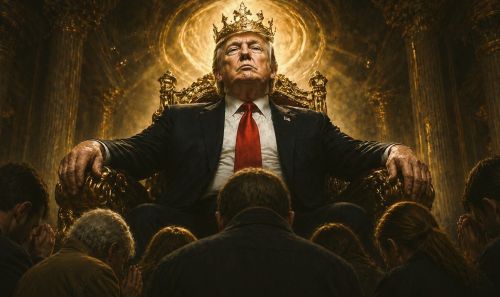
At the intersection of power, ego, and belief, the question of narcissism reveals how leadership can reshape, or displace, the very idea of humility at the heart of religious faith.
Psychologists Warn Trump’s ‘Magical Thinking’ Is a Terrifying Sign of Psychosis and Narcissism
By Reanna Smith
The Mirror
04.20.2026
A psychologist has suggested that Donald Trump is displaying indicators of “psychosis” as he expresses alarm regarding the president’s “magical thinking.”
Dr. John Gartner, a former Johns Hopkins University professor, drew attention to multiple delusional social media posts from Trump while voicing his worries about the commander-in-chief.
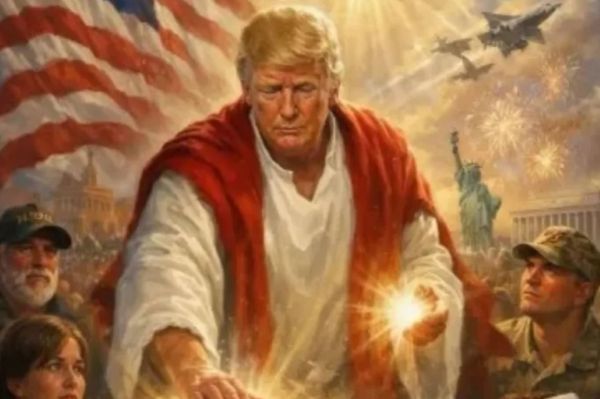
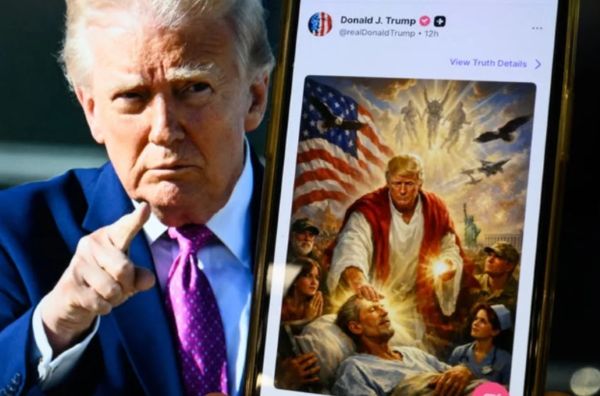
He referenced the president posting, then removing, an AI-generated image of himself as Jesus, along with another Truth Social message in which he described himself as the “acting president of Venezuela.”
The psychologist, who recently cautioned that Trump’s mental “deterioration” is speeding up, argued the posts demonstrated the president is participating in “magical thinking.” It comes after Trump made a disturbing sex comment on stage that silenced the audience.
“It’s something that, again, we associate with psychosis. We also associate it with young children. Freud called it ‘primary process.’ It’s kind of the most primitive type of thinking, where if you imagine it, it must be true,” he told The Daily Beast.
“But this is just magical thinking. Anything that occurs to him-any stray, crazy thought-is true.
“His grandiosity is so extreme that not only does he want to be the pope and Jesus and the president of Venezuela and the Mullah of Iran-he wants to be all of these things at once,” Dr Gartner observed.
“He wants the world to worship him, and he wants to erect massive monuments to praise himself,” he stated.
Gartner pointed to several of Trump’s vanity projects as additional proof of this behavior, including the so-called “Arc de Trump,” his extravagant White House ballroom and his tendency to put his name on various structures.
“The ways in which he’s been pressuring various states to rename their airports and their train stations and their tunnels after him,” are also indicators that the president “wants the world to worship him as a god,” Dr Gartner said.
Earlier this month, Dr Gartner asserted Trump is showing four significant symptoms of dementia.
“We’re seeing the deterioration of his thinking, of his verbal language, of his physical body, and of his behavior. Those are the four main areas we look for in dementia,” he noted.
The White House has consistently rejected claims that Trump is showing any type of decline.
Trump has frequently boasted about “acing” multiple cognitive tests and the White House physician maintains that the president remains in “excellent” health.
It comes after Trump sparked new health fears with a chilling 4-word Truth Social post.
Trump Lived by the Conspiracy Theory – Now He Pays the Price
By Matt Lewis
The Hill
04.24.2026
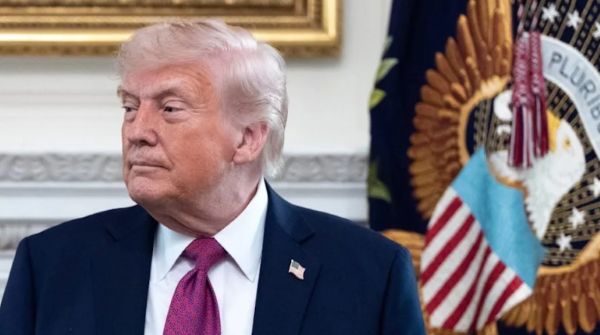
A truism of life — right up there with “don’t read the comments” — is that what goes around comes around. Put another way, if you live by the sword, you will eventually die by the sword.
For more than a decade, these maxims didn’t seem to apply to President Trump — a man who once strongly suggested that Barack Obama had not been born in America, that the 2020 election was stolen, and that Haitian immigrants in Ohio were eating dogs and cats, just to name a few of his whoppers.
To be sure, Trump defenders will note that Democratic conspiracy theories (“Russia-gate,” for example) have also been aimed at Trump. Yes, but Trump legitimately invited scrutiny, and credible analyses rejected the most extreme conclusions anyway — for example, the existence of a “pee tape” or the notion that Russia somehow manipulated election results or otherwise rigged the 2016 election on Trump’s behalf.
Regardless, we have entered a new and possibly ironic phase of the timeline: Trump is finally discovering what it’s like to be on the losing end of a conspiracy theory.
Trump’s failure to release Epstein files was probably the inflection point. But more recently, the conspiratorial thinking about Trump has metastasized.
After Trump cast himself as Jesus on a Truth Social post, some corners of his own political ecosystem began speculating that he might instead be the Antichrist.
Tucker Carlson, for example, went on his podcast and asked, “Could this [Trump] be the Antichrist? Well, who knows? At least that’s my conclusion: Who knows?”
Others settled on demonic possession, which in internet discourse is considered the moderate position.
Inevitably, this theological turn led to interpretations of the 2024 assassination attempt in Butler, Pennsylvania. Some figures, like Ali Alexander (of “Stop The Steal” fame), turned to the Book of Revelation, suggesting that “There is biblical prophecy in Revelation 13:3 apparently about the Antichrist being struck on the head.”
Comedian and podcaster Tim Dillon offered a theory about the assassination attempt that hinged less on eschatology and more on political survival: the assassination attempt might have been “staged” to “show people how important it was to vote for [Trump] and how far [he] was willing to go for them.”
There are, admittedly, details that fuel this sort of absurd speculation. Trump’s defiant, fist-pumping pose, moments after the attack, seemed at odds with his reputation as a man not overly fond of physical risk. The Secret Service response (allowing him to strike the heroic pose when there might have been a second shooter) seemed unorthodox. And — save for the bandage he wore during the 2024 Republican National Convention — the much-discussed ear injury appeared less than catastrophic.
On the other hand — and this is important — two people were shot and killed in that incident. Death tends to complicate the whole “it was staged” narrative, unless one is willing to follow that logic into some very dark places.
Still, the beauty of conspiracy theories is that they are unfalsifiable. As such, former Rep. Marjorie Taylor Greene’s (R-Ga.) framing of the assassination attempt — “I’m not calling the Butler assassination a hoax, but there are a lot of questions that deserve public answers” — is structurally identical to the rhetoric that has fueled past QAnon conspiracy theories.
But it’s not just the big, dramatic examples, like an assassination attempt or Trump casting himself as Jesus, that invite wild speculation. Even smaller, more ordinary events are now being filtered through the same conspiracy theory lens.
Take Trump’s recent “DoorDash grandma” event — a publicity stunt meant to promote Trump’s “no tax on tips” policy.
It turns out that the DoorDash deliverer had previously testified before Congress in support of the policy, which led some observers to conclude she might be a “paid actor” or (using an even more ominous phrase) a “crisis actor.”
Taken together, these examples make it pretty clear that MAGA influencers haven’t stopped their conspiracy-theorism. They have just finally migrated toward one of the most suspicious-looking supervillains in the nation — namely, Trump himself.
It would be easy to lament all of this as evidence that Americans have lost trust in institutions and a common reality. And yes, that is a huge problem. But it is also difficult to ignore the cosmic irony: Trump spent years encouraging the very style of thinking that now has people claiming he is the Antichrist who faked his own assassination attempt.
Which brings us back to the truism: What goes around comes around. And sometimes, when it comes around, it’s holding a laptop and is very, very interested in “just asking questions.”
Trump Urged to Stop Posting ‘Ridiculous’ Essays on Social Media
WonderWall.com Editors
Overview
Critics of Donald Trump are waiting for the latest versions of his rambling Truth Social musings, Wonderwall.com can reveal, as naysayers insist the president is quickly unraveling.
Trump has been on a tear online, often posting lengthy diatribes, while some of his closest allies continue to turn on him.
Trump’s Temper Tantrums
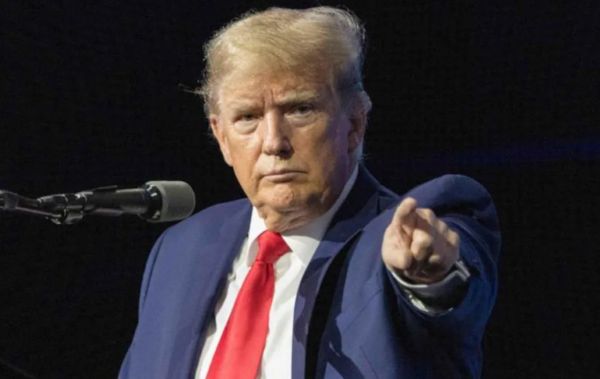
On April 22, Trump spent much of his day sharing his personal opinions on everything from regretting the Supreme Court justices he appointed to celebrating the ratings “juggernaut” that was the last season of The Apprentice.
Many of his posts would put the normal character limits on X to shame, including one bashing the “Democrat Justices” on the Supreme Court.
For those who want the Cliffs Notes version, the 79-year-old’s very last line summed up his ire: “I put certain people on the Supreme Court who totally misrepresented who they were, and the true ideology for which they stand!”
‘Raving Like a Lunatic’
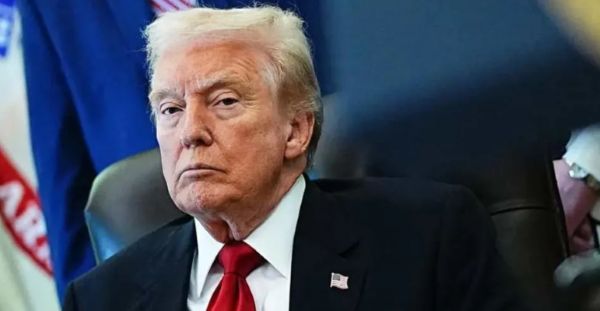
The president made his point in no fewer than 340 words, while many have called for him to just shut up.
“Who is reading all this s–t? These essays are getting ridiculous,” one person blasted on X while sharing Trump’s post. “MAGA is dead.”
Who the fu*k is reading all this shit?
— Evan Kilgore 🇺🇸 (@EvanAKilgore) April 22, 2026
These essays are getting ridiculous.
MAGA is dead. pic.twitter.com/Ik6TAEA2D7
Others agreed with them in the comments, with one user responding, “It’s like when a guilty person word vomits. Embarrassing for him. Awakening for the country.”
Another warned, “Don’t do it, man. I tried reading his mess, and I could feel my IQ slipping away in real time.”
One critic raged, “Can’t read Trump’s nonsense. Does he even know what he means? Raving like a lunatic.”
While one congratulated, “Bat-s–t crazy Grampa figured out how to use Chat.”
Joe Rogan vs. Trump
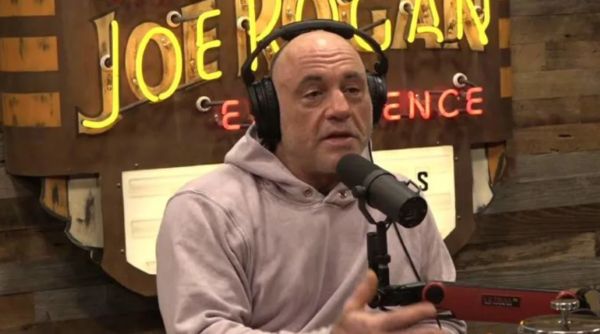
Trump isn’t just getting criticized by his opponents. Many of his one-time closest allies and supporters have lined up to turn in their MAGA cards.
Perhaps none of his defectors has loomed larger than outspoken podcaster Joe Rogan, whose endorsement of Trump was credited in helping the businessman retake the White House.
The former Newsradio star is singing a different tune now and has been very vocal about his objections to the war in Iran.
“It just seems so insane based on what he ran on,” Rogan exclaimed during one recent episode. “I mean, this is why a lot of people feel betrayed, right?”
The 58-year-old continued: “He ran on no more wars, end these stupid, senseless wars, and then we have one that we can’t even really clearly define why we did it. It just doesn’t make any sense to me.”
Megyn Kelly and Tucker Carlson United
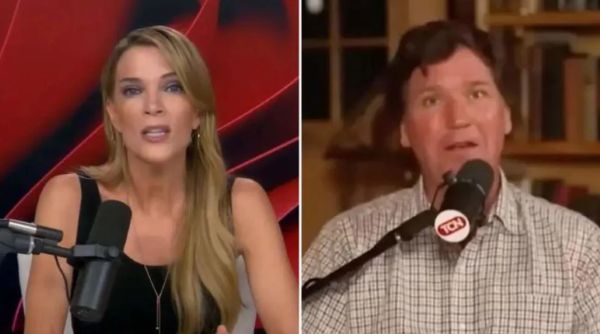
Rogan has been joined in the awakening by fellow far-right commentators Megyn Kelly and Tucker Carlson, who each took time on their respective shows to bash Trump.
Speaking on The Megyn Kelly Show, the SiriusXM host blasted Trump for claiming a controversial image of himself as Jesus was actually intended to depict a doctor – an explanation she flatly rejected.
“It was such a f–king lie!” Kelly raged. “So obvious – he wouldn’t stand by the me – okay, take it down. Just say you’re sorry or don’t say you’re sorry. Take it down. But don’t try to gaslight us! We can see!”
Meanwhile, Carlson issued his own mea culpa, framing his support for Trump as something he’ll struggle to live with.
“So I do think it’s like a moment to wrestle with our own consciences,” Carlson said. “You know, we’ll be tormented by it for a long time. I will be.”
He then issued a direct apology: “I want to say I’m sorry for misleading people. It was not intentional. That’s all I’ll say.”
Trump Can’t Stop Posting after Midnight
By Katie Mather
HuffPost
04.24.2026
Introduction
Between 6 p.m. Thursday and 8 a.m. Eastern on Friday, President Donald Trump posted and reposted 24times on Truth Social. The president is known for his love of the platform, but experts say that posting at this frequency overnight could reveal more than he realizes.
“From a secure marketing perspective, he is getting the desired attention that he constantly craves,” Greg Kushnick, a psychologist specializing in cognitive behavioral therapy, told HuffPost.
Kushnick is not diagnosing Trump, but is basing his assessment of the president’s general behavior on psychological studies about social media usage and his experience with patients.
“Doing it at night and having people wake up in the morning to hear about his messages — he’s basically controlling the news cycle,” Kushnick said. “If it didn’t get the attention, he probably wouldn’t do it as much.”
Thursday night’s posts ranged from calling for Senate Minority Leader Chuck Schumer (D-N.Y.) to “resign” to multiple posts accusing former President Barack Obama and former Secretary of State Hillary Clinton of treason, a falsely attributed quote to actor Clint Eastwood, and an update on his quest to end birthright citizenship in the United States.
This is not new for Trump. In 2017, he credited social media with helping him win the 2016 presidential election, saying it helped him consistently get his message out to voters.
“Initially, Trump used social media in an innovative way to achieve his goals, and he did so with great success,” Michael Genovese, a professor of political science and international relations at Loyola Marymount University, told HuffPost. “He was able to get around the media and go directly to the public. He compelled everyone else to report on his tweets and his posts, and it was a magnificent display of how to use new media and how to use it effectively.”
His messages have changed over the years, Genovese argued, which is why voters are becoming more concerned.
“In the beginning, he was colorful and creative,” Genovese said. “Now, it’s a little bit scary and threatening a civilization.”
Truth Social is an Echo Chamber
Truth Social, which is owned by Trump Media & Technology Group, is an “echo chamber” for the president — “an environment in which people seek out and consume information that reinforces their existing beliefs, values or opinions,” Manahil Riaz, a psychotherapist, told HuffPost in February.
On Truth Social, Trump’s worldview is essentially reiterated, Riaz said. Truth Social had 6 million monthly active users in 2024, according to Statista, compared to X’s 557 million and Facebook’s 3 billion.
For Trump, that echo chamber ensures he almost always gets the reaction he wants, Kushnick said.
Trump’s Late-Night Posting Could Be a Way to ‘Assert Authority’
Trump does generally post more often during the day, especially between 5 p.m. and 6 p.m. Eastern, according to one data journalist. But between January 2025 and January 2026, Trump posted over 300 times at midnight and over 100 times at 1 a.m. In December, the president posted 158 times between midnight and 3 a.m., Axios reported.
There are multiple reasons he might post late at night. For one thing, Trump rarely sleeps, White House press secretary Karoline Leavitt said at a Turning Point USA event earlier this week.
Asked what aspect of her job keeps her “up at night,” Leavitt said it was Trump’s “crazy” nocturnal nature.
“The fact that my boss is up all night and probably going to call at any hour,” Leavitt said. According to Leavitt, Trump sleeps “very little. Like maybe four hours a night. It’s crazy. I’m a third his age, and I can’t keep up.”
In 2018, while answering press questions about Trump’s health, White House physician Dr. Ronny Jackson said the president only sleeps four to five hours a night.
Kushnick theorizes that these late hours, when Trump is alone and his team is ostensibly off the clock, are when he can post “without any adviser’s influence.”
“It’s a way to assert authority,” Kushnick said. “He is going to do it on his own without the influence of others.”
Kushnick calls this type of behavior “pathological certainty,” a compulsive psychological state in which a person does not doubt their beliefs or ideas because there is no one there to challenge them.
Psychological studies have also found that, late at night, thoughts tend to be amplified. The “Mind After Midnight” hypothesis links “nocturnal wakefulness” to impaired decision-making, increased desire for attention and rewards, and limited emotional regulation.
Posting Frequently on Social Media also gives ‘Pseudo-Validation’
As of this reporting, Trump has posted almost 7,000 times on Truth Social in the past year and 590 times in April, according to the Roll Call databases.
When people post so frequently on social media, it adds to their sense of validation, Kushnick said, but he cautioned that it’s “pseudo-validation.”
Research has found that frequent social media engagement creates “The Slot Machine Effect,” in which users don’t know when they will get “likes” or comments, so it produces consistent dopamine spikes as they keep seeking that engagement.
“I’m sure there is that reinforcement where he gets to see the reactions it gets, and he keeps doing it because it feels good,” Kushnick said.
But with poll numbers turning against Trump, Genovese thinks he may be experiencing more anger and frustration than in his first term, which is why he’s lashing out more in his posts.
“We see him with seemingly no filters, no control, can’t stay focused,” Genovese said. It’s not the first time a political leader has been like this, either. During the Watergate scandal, then-President Richard Nixon’s aides reportedly let him air his frustrations out loud but contained them from the public.
Reactions on social media “are moving him, rather than him moving [them],” Genovese said. “The world is not responding to him the way he wants.”
But as long as the posts keep getting attention, experts said they feel the behavior is unlikely to change.
About the Author