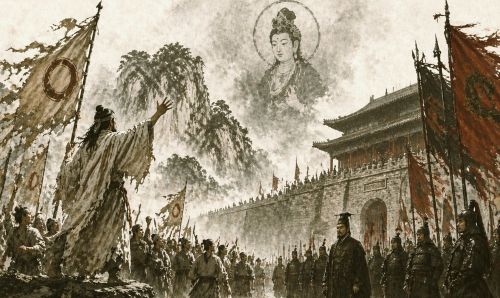
Chinese “cults,” often labeled xiejiao, were powerful sectarian movements that blended belief and rebellion, repeatedly challenging state authority across imperial and modern history.

By Matthew A. McIntosh
Public Historian
Brewminate
Introduction: Defining “Cult” and Xiejiao in Chinese Context
The application of the term “cult” to Chinese history presents immediate conceptual difficulties, requiring careful attention to language, context, and historical usage. In modern Western discourse, the term often carries connotations of marginality, deviance, or manipulation, typically referring to small, insular groups operating outside established religious traditions. Such assumptions do not map neatly onto the Chinese historical experience, where many movements labeled retrospectively as “cults” were in fact large-scale, socially embedded, and often widely supported. To impose the term without qualification risks distorting both the nature of these movements and the conditions under which they emerged, obscuring the complex interplay between belief, society, and political authority.
A more historically grounded approach begins with the Chinese concept of xiejiao, commonly translated as “heterodox teachings.” Unlike the modern notion of a cult, xiejiao was not defined primarily by internal characteristics such as doctrine or organization but by its relationship to the state and established orthodoxy. Imperial governments, particularly from the Ming and Qing periods onward, used the term to categorize religious movements that were perceived as socially disruptive or politically threatening. This designation was inherently flexible, allowing authorities to apply it to a wide range of groups whose beliefs, practices, or patterns of organization challenged existing structures of control. As such, xiejiao functioned less as a neutral descriptive category and more as an instrument of governance. Its application often depended on context, shifting with changing political needs and social conditions, which meant that the same movement could be tolerated at one moment and condemned at another. Legal codes, edicts, and official discourse reinforced this categorization, embedding it within the mechanisms of state control and surveillance. By labeling certain teachings as heterodox, the state not only delegitimized them but also justified intervention, suppression, and punishment. Xiejiao was not simply a reflection of religious difference but a strategic tool through which authority defined the boundaries of acceptable belief and practice.
The distinction between orthodoxy and heterodoxy in Chinese history was closely tied to broader frameworks of legitimacy, most notably the concept of the Mandate of Heaven. Religious movements that emerged during periods of social and political instability often drew upon shared cosmological ideas, including the belief that dynastic decline reflected a loss of moral and cosmic order. Leaders of such movements frequently presented themselves as agents of renewal, offering visions of a transformed world in which justice and balance would be restored. These claims could resonate widely among populations experiencing hardship, enabling sectarian groups to expand rapidly and, in some cases, to mobilize large-scale rebellion. The line between religious community and political movement was often blurred.
Movements labeled as “cults” in Chinese history are best understood as products of this dynamic interaction between belief, crisis, and state power. Rather than treating them as isolated or aberrant phenomena, it is more accurate to view them as recurring responses to structural conditions, shaped by both internal religious frameworks and external pressures. By examining these movements through the lens of xiejiao and its historical application, it becomes possible to move beyond reductive terminology and to engage more directly with the complexities of Chinese religious and political life. Such an approach not only clarifies the nature of these groups but also highlights the broader processes through which authority is contested and redefined.
Cosmology, Crisis, and Millenarian Expectation

Chinese sectarian movements commonly emerged from a shared cosmological framework that linked human affairs to the moral and structural order of the universe. Central to this worldview was the concept of the Mandate of Heaven, which held that dynastic authority was contingent upon moral governance and cosmic harmony. When natural disasters, social unrest, or economic distress intensified, these events were often interpreted as signs that the ruling dynasty had lost its mandate. Such conditions created fertile ground for alternative religious interpretations, as populations sought explanations for suffering and pathways toward renewal within an established cosmological logic.
Millenarian expectations played a critical role in shaping sectarian belief. Many movements articulated visions of an impending transformation of the world, often framed as the arrival of a new era characterized by justice, harmony, and divine intervention. These expectations were not arbitrary inventions but drew upon longstanding religious traditions, including elements of Daoism, Buddhism, and popular religion. Maitreya, the future Buddha, frequently appeared in such narratives, symbolizing the promise of salvation and the restoration of order. By invoking these familiar concepts, sectarian leaders were able to situate their teachings within a recognizable framework while offering a compelling alternative to existing conditions.
The appeal of millenarian belief was closely tied to periods of crisis, when existing structures appeared incapable of addressing widespread hardship. Economic instability, population displacement, and administrative breakdown contributed to a sense of uncertainty that made alternative interpretations of reality both plausible and attractive. Religious movements provided not only explanations for suffering but also a sense of community and purpose. The promise of imminent transformation could mobilize individuals who might otherwise remain disengaged, transforming shared grievance into collective action grounded in spiritual conviction.
Charismatic leadership often served as the focal point through which these beliefs were organized and disseminated. Leaders claimed access to divine knowledge or authority, positioning themselves as intermediaries between the human and cosmic realms. Their teachings combined doctrinal elements with practical guidance, offering both spiritual reassurance and a framework for action. The authority of these figures was reinforced through ritual, narrative, and the perceived fulfillment of prophecy, enabling them to attract and maintain large followings. These leaders frequently employed symbolic acts, healing practices, or proclamations of divine revelation to demonstrate their legitimacy, creating a persuasive blend of spiritual authority and tangible efficacy. Their authority was often not imposed from above but recognized and affirmed by followers who interpreted their actions as evidence of supernatural connection. This reciprocal relationship between leader and community strengthened the cohesion of the movement, allowing it to expand rapidly under conditions of shared belief. As their influence grew, these figures often became central nodes in networks of communication and organization, enabling the translation of religious ideology into coordinated action that could extend beyond local communities.
The integration of cosmology and crisis also facilitated the transition from religious movement to political challenge. As sectarian groups expanded, their critique of existing conditions often extended to the legitimacy of the ruling order itself. Millenarian narratives could be interpreted as calls for transformation not only of the cosmos but of the political system, blurring the distinction between spiritual renewal and social revolution. This convergence made such movements particularly threatening to established authority, as they combined ideological critique with the capacity for mobilization.
The recurring pattern of cosmology, crisis, and millenarian expectation reveals a fundamental dynamic within Chinese history. Religious movements did not arise in isolation but were deeply connected to the conditions in which they developed, drawing upon shared frameworks to interpret and respond to change. By situating these movements within their broader cosmological context, it becomes possible to understand their persistence and impact, as well as the reasons for their frequent classification as heterodox by the state. Millenarianism emerges not as an anomaly but as a structured response to uncertainty, rooted in enduring traditions of thought and belief.
The Yellow Turban Movement: Religion and the Collapse of the Han Dynasty

The Yellow Turban movement stands as one of the most consequential examples of the convergence of religious belief and political upheaval in early Chinese history. Emerging in the late second century CE, this movement developed within the broader context of Han Dynasty decline, a period marked by corruption, factional conflict, and widespread social distress. Under the leadership of Zhang Jue, the movement transformed from a religious healing sect into a mass uprising that would significantly weaken imperial authority. Its rapid expansion and eventual rebellion illustrate how sectarian belief systems could mobilize large populations in moments of systemic crisis.
At the core of the movement was the doctrine of the “Way of Great Peace” (Taiping Dao), which combined elements of Daoist cosmology with millenarian expectations of renewal. Zhang Jue and his followers preached that the existing order had lost the Mandate of Heaven and that a new era was imminent. This message resonated deeply with populations suffering from famine, taxation, and administrative neglect, offering both an explanation for their hardships and a vision of transformation. The promise of cosmic renewal provided a framework through which individuals could interpret their circumstances and participate in a collective response.
Healing practices played a central role in the movement’s early growth, serving as both a religious function and a means of recruitment. Zhang Jue and his associates were known for their use of ritual healing, confession of sins, and the distribution of talismans or sacred texts, practices that reinforced their spiritual authority while addressing immediate needs. These activities allowed the movement to establish networks of followers across multiple regions, creating a foundation for broader mobilization. The combination of practical assistance and spiritual guidance enhanced the appeal of the movement, enabling it to expand rapidly within a relatively short period. In addition, the communal nature of these practices fostered a sense of shared identity among adherents, binding individuals together through common rituals and beliefs. This cohesion proved essential in sustaining the movement’s growth, as it transformed loosely connected followers into organized communities capable of coordinated action. By addressing both material and spiritual concerns, the movement created a comprehensive framework that resonated with a wide range of participants.
The transition from religious community to armed rebellion occurred in 184 CE, when the Yellow Turbans launched coordinated uprisings across several provinces. Participants adopted the symbolic yellow headgear from which the movement takes its name, signaling both unity and ideological commitment. The scale of the rebellion reflected the depth of discontent within the Han Empire, as large numbers of peasants, laborers, and marginalized groups joined the cause. Although imperial forces eventually suppressed the uprising, the conflict exposed the fragility of the state and contributed to the fragmentation of central authority.
The aftermath of the rebellion had long-lasting consequences for the political landscape of China. While the immediate threat posed by the Yellow Turbans was contained, the weakening of imperial control allowed regional warlords to consolidate power, accelerating the decline of the Han Dynasty. The disruption of administrative structures and the redistribution of military authority created conditions that would eventually lead to the period of division known as the Three Kingdoms. The movement’s impact extended far beyond its initial objectives, reshaping the trajectory of Chinese history. The rebellion also demonstrated the capacity of religious movements to destabilize entrenched systems, revealing vulnerabilities that might otherwise have remained latent. The shift from centralized governance to regional power bases further altered the dynamics of political authority, creating new opportunities for both conflict and realignment. This transformation underscores the lasting influence of the Yellow Turban uprising, not only as an isolated event but as a catalyst for broader structural change.
The Yellow Turban movement exemplifies the dynamic relationship between religion, social crisis, and political change. What began as a sectarian movement grounded in cosmological belief evolved into a force capable of challenging one of the most established dynasties in Chinese history. Its development highlights the potential for religious systems to serve as vehicles for both spiritual expression and collective action, particularly in times of instability. By examining this case, it becomes clear that movements labeled as “heterodox” or “cultic” cannot be understood solely in terms of their beliefs but must also be considered in relation to the conditions that enabled their emergence and growth.
The White Lotus Tradition: Persistence, Adaptation, and Rebellion
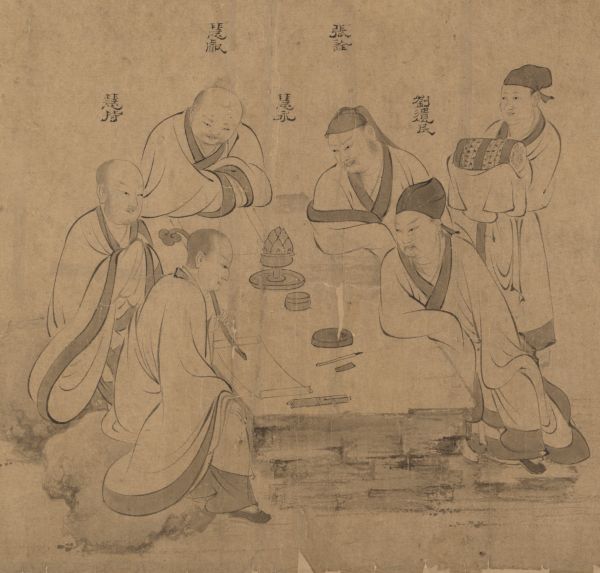
The White Lotus tradition represents one of the most enduring and adaptable forms of sectarian religious activity in Chinese history, spanning several centuries and multiple dynastic periods. Rather than a single, continuous organization, it is better understood as a loosely connected network of movements that shared common doctrinal elements, ritual practices, and symbolic frameworks. Originating in lay Buddhist devotional practices during the Song Dynasty, the tradition evolved into a vehicle for expressing both religious aspiration and social dissent. Its persistence across changing political contexts reflects its capacity to adapt to new conditions while maintaining a recognizable core identity.
At the center of White Lotus belief was a form of millenarian expectation rooted in Buddhist cosmology, particularly the anticipation of the future Buddha Maitreya. Followers often believed that the current age was one of decline and that a new era of justice and harmony would soon be established. This expectation was frequently linked to the appearance of a savior figure or enlightened leader who would guide the faithful through a period of transformation. Such ideas provided both a framework for interpreting social and political instability and a source of hope for those experiencing hardship, allowing the movement to resonate across different regions and communities. The emphasis on imminent renewal also fostered a sense of urgency, encouraging adherents to prepare for and participate in the coming transformation. This forward-looking orientation shaped both belief and behavior, reinforcing collective identity and commitment within the movement. By situating present suffering within a larger narrative of cosmic change, the tradition offered not only explanation but also a sense of purpose, enabling followers to endure hardship while anticipating a radically different future.
The adaptability of the White Lotus tradition is evident in its ability to incorporate elements from various religious and cultural sources. While its origins lay in Buddhist devotional practice, it drew upon Daoist concepts, popular religious traditions, and local beliefs, creating a syncretic system that could be tailored to specific contexts. This flexibility allowed the movement to evolve with changing circumstances, ensuring its continued relevance even as political and social conditions shifted. The incorporation of diverse elements also facilitated its spread, as it could be integrated into existing cultural frameworks without requiring complete transformation. This syncretism was not merely additive but dynamic, allowing different communities to emphasize particular aspects of the tradition according to local needs and conditions. In some contexts, ritual healing or moral instruction might be foregrounded, while in others, millenarian expectations or communal organization took precedence. This capacity for selective adaptation contributed significantly to the resilience of the tradition, enabling it to maintain continuity while accommodating variation across time and space.
The relationship between the White Lotus tradition and political authority was often marked by tension and conflict. During periods of stability, such movements might exist with limited interference, but in times of crisis they were more likely to be perceived as threats. This perception was reinforced by the capacity of White Lotus networks to mobilize large numbers of followers, particularly in rural areas where state control was weaker. The transformation of religious communities into organized resistance movements occurred in several instances, most notably during the Yuan, Ming, and Qing dynasties, when sectarian groups participated in uprisings that challenged imperial rule.
One of the most significant examples of this dynamic occurred during the late eighteenth and early nineteenth centuries, when White Lotus-inspired rebellions erupted under Qing rule. These uprisings were fueled by a combination of economic distress, population pressure, and administrative corruption, conditions that mirrored those seen in earlier periods of unrest. The religious framework of the movement provided both a means of organization and a source of legitimacy, enabling leaders to present their actions as part of a broader cosmic struggle. Although these rebellions were ultimately suppressed, they demonstrated the enduring capacity of the tradition to function as a vehicle for collective action. The scale and persistence of these uprisings revealed the depth of dissatisfaction among segments of the population, as well as the effectiveness of the networks that sustained them. Even in defeat, the movements left lasting impressions on both local communities and the state, prompting intensified efforts at surveillance and control. The cyclical emergence of such rebellions underscores the ongoing tension between centralized authority and localized expressions of belief, illustrating how religious traditions could repeatedly become focal points for resistance.
The White Lotus tradition illustrates the complex relationship between continuity and change in Chinese sectarian movements. Its ability to persist across centuries while adapting to new conditions reflects both the strength of its underlying beliefs and the flexibility of its organizational forms. By integrating religious aspiration with responses to social and political challenges, it became a recurring presence in Chinese history, shaping events in ways that extended far beyond its origins. The White Lotus tradition exemplifies the broader patterns identified here, demonstrating how systems of belief can evolve, endure, and at times transform into forces of significant historical consequence.
Manichaeanism and the Fictional “Ming Cult” and Sectarian Networks in the Yuan Period
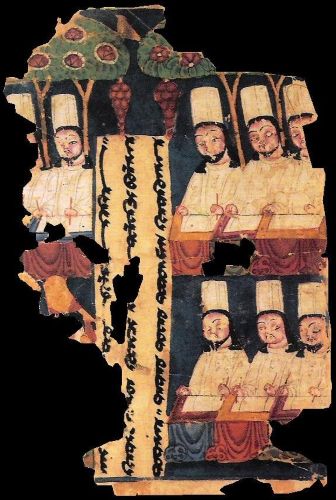
The so-called “Ming Cult” of fiction, more accurately understood as part of and based on a broader constellation of sectarian networks active during the Yuan Dynasty, illustrates the complex intersection of religion, ethnicity, and political resistance in late medieval China. These movements were shaped by the unique conditions of Mongol rule, which disrupted established social hierarchies and created new forms of tension between ruling elites and the majority Han Chinese population. Religious groups drawing on diverse traditions became vehicles for expressing both spiritual aspirations and political grievances, contributing to the formation of networks that could operate across regional boundaries. The fictional label “Ming Cult,” often applied retrospectively, obscures the fluid and decentralized nature of these groups, which were not unified under a single doctrine or leadership but instead consisted of overlapping communities connected by shared symbols and practices. This complexity reflects the broader dynamics of the period, in which social fragmentation and political instability encouraged the development of flexible and adaptive forms of organization that could respond to rapidly changing conditions.
A key feature of these movements was their syncretic nature, combining elements from multiple religious traditions into flexible systems of belief. Influences from Buddhism, Daoism, and popular religion were often interwoven with remnants of Manichaean thought, particularly in groups associated with what later sources described as the “Ming Cult.” This blending of traditions allowed sectarian movements to appeal to a wide audience, as they could incorporate familiar symbols and practices while offering new interpretations. The resulting systems were not static but continually evolving, reflecting the diverse contexts in which they operated.
The religious ideas circulating within these networks frequently included millenarian expectations and visions of renewal, echoing patterns seen in earlier and later sectarian movements. Followers were often drawn to promises of a transformed world in which justice would be restored and suffering alleviated. These beliefs resonated strongly during the Yuan period, when economic difficulties, social stratification, and ethnic tensions contributed to widespread dissatisfaction. The combination of spiritual promise and social critique provided a powerful framework for mobilizing support, enabling these movements to expand beyond localized communities.
Sectarian networks played a significant role in the uprisings that contributed to the decline of the Yuan Dynasty, particularly the Red Turban rebellions of the fourteenth century. These movements drew upon religious symbolism and organizational structures to coordinate large-scale resistance, linking disparate groups through shared beliefs and goals. Leaders associated with these uprisings often utilized religious language to legitimize their actions, framing rebellion as part of a broader cosmic struggle. While not all participants were motivated by religious conviction alone, the presence of these frameworks facilitated cohesion and coordination among diverse groups. The decentralized nature of these networks allowed them to adapt quickly to local conditions, enabling them to sustain prolonged resistance despite significant challenges. In addition, the use of shared symbols and narratives helped unify participants from different backgrounds, creating a sense of common purpose that transcended regional and social divisions. This capacity for coordination and adaptation underscores the importance of religious frameworks in shaping the dynamics of rebellion during this period.
The connection between these sectarian movements and the eventual establishment of the Ming Dynasty underscores their broader historical significance. Some such as Zhu Yuanzhang emerged from the milieu of rebellion shaped in part by these networks, drawing upon both military and ideological resources developed during the period of unrest. Although the new dynasty would later distance itself from the heterodox traditions associated with its origins, the role of these movements in facilitating the transition from Yuan to Ming rule cannot be overlooked. They provided both organizational models and symbolic frameworks that shaped the course of political change. The ability of leaders like Zhu Yuanzhang to harness and redirect these energies illustrates how religious movements could serve as incubators for political transformation, even when their original goals were not fully realized. The subsequent suppression of similar movements by the Ming state further highlights the ambivalent relationship between revolutionary origins and the consolidation of authority, as new regimes often sought to eliminate the very forces that had contributed to their rise.
The study of the so-called cult reveals the importance of viewing sectarian movements within their broader social and political contexts. Rather than isolated phenomena, these networks functioned as dynamic systems that linked belief, identity, and action in ways that could influence historical outcomes. Their ability to adapt, mobilize, and persist under conditions of constraint highlights the recurring patterns identified here. In examining these movements, it becomes clear that the boundaries between religion and politics were often fluid, with each shaping and reinforcing the other in the process of historical transformation.
State Response: Suppression, Classification, and Control

Across Chinese history, the state’s response to sectarian religious movements was shaped by the perceived relationship between belief and political stability. While local religious practices were often tolerated, movements that demonstrated the capacity for independent organization or mass mobilization were treated with suspicion. The classification of certain teachings as xiejiao (heterodox) provided a framework through which authorities could distinguish between acceptable and unacceptable forms of religious expression. This distinction was not fixed but evolved with changing conditions, reflecting the state’s ongoing effort to maintain control over both ideological and social structures.
The development of legal and administrative mechanisms for identifying and suppressing heterodox movements became particularly pronounced during the Ming and Qing dynasties. Official codes included specific provisions targeting groups deemed subversive, outlining penalties that ranged from fines and exile to execution. These measures were reinforced through the circulation of edicts and the maintenance of local surveillance systems, which relied on officials and community leaders to monitor religious activity. By embedding the concept of xiejiao within the legal system, the state institutionalized its authority to regulate belief and practice. This legal codification also standardized the criteria by which movements could be judged, even if those criteria remained practically flexible. Local magistrates were often tasked with interpreting and enforcing these regulations, creating a layer of discretion that could vary significantly across regions. In addition, the integration of religious oversight into administrative structures ensured that concerns about heterodoxy were treated as matters of governance rather than purely spiritual issues. The combination of centralized policy and localized enforcement allowed the state to extend its reach into communities, reinforcing its capacity to respond to perceived threats.
Suppression was not limited to direct punishment but also involved efforts to control the narrative surrounding sectarian movements. Official accounts often portrayed such groups as irrational, deceptive, or morally corrupt, emphasizing their deviation from accepted norms. This framing served to delegitimize the movements in the eyes of the broader population, reducing their appeal and justifying state intervention. It reinforced the authority of orthodox traditions, presenting them as stable and legitimate alternatives to heterodox teachings.
Despite these efforts, sectarian movements proved remarkably resilient, often adapting their structures and practices to evade detection. Decentralized organization, the use of coded language, and the integration of teachings into everyday practices allowed these groups to persist even under conditions of intense scrutiny. In some cases, suppression itself contributed to their transformation, as persecution reinforced group identity and commitment among adherents. This dynamic created a cycle in which movements would emerge, be suppressed, and reappear in new forms, reflecting the ongoing tension between state control and religious innovation. Adaptation could take many forms, including the fragmentation of larger groups into smaller, less visible cells or the reconfiguration of teachings to align more closely with accepted practices while retaining core beliefs. The persistence of these movements under pressure highlights their flexibility and the depth of their appeal, as well as the limits of state power in fully eradicating alternative systems of belief. This cycle of suppression and adaptation contributed to the continual reshaping of sectarian traditions, ensuring their survival even in the face of sustained opposition.
The effectiveness of state responses varied depending on the strength of central authority and the specific conditions of each period. In times of stability, suppression could limit the spread of sectarian movements, but during periods of crisis, the state’s capacity to enforce its policies was often weakened. Under such conditions, heterodox groups could expand rapidly, leveraging existing networks and shared grievances to mobilize support. The interplay between repression and opportunity played a significant role in shaping the trajectory of these movements.
The state’s approach to sectarian religion in Chinese history highlights the broader relationship between power, classification, and control. By defining certain beliefs as heterodox, authorities sought not only to regulate religious practice but also to maintain the ideological foundations of their rule. Yet the persistence of these movements demonstrates the limits of such efforts, as alternative systems of belief continued to emerge. This tension between suppression and adaptation forms a central theme in the study of Chinese religious history, illustrating how the boundaries of acceptable belief are continually negotiated and contested.
Modern Transformation: Yiguandao and 20th-Century Salvationism

The emergence of Yiguandao in the early twentieth century represents a significant transformation in the long history of Chinese sectarian religion, reflecting both continuity with earlier traditions and adaptation to modern conditions. Developing in the context of the late Qing collapse and the instability of the Republican era, Yiguandao drew upon established patterns of syncretic belief, millenarian expectation, and charismatic leadership. It responded to new social realities, including urbanization, political fragmentation, and exposure to global religious and ideological currents. This combination allowed it to expand rapidly, becoming one of the most prominent salvationist movements of its time.
At the core of Yiguandao’s teachings was a universalist and syncretic framework that incorporated elements from Confucianism, Daoism, Buddhism, and other traditions into a single system of belief. Central to its doctrine was the idea of a supreme, formless deity and the possibility of salvation through moral cultivation and initiation into the movement. Unlike earlier sectarian groups that often emphasized apocalyptic transformation, Yiguandao placed greater emphasis on personal spiritual development within a broader cosmological order. This shift did not eliminate millenarian elements but reconfigured them, aligning expectations of renewal with a more structured and institutionalized form of religious practice. The emphasis on ethical behavior, filial piety, and social harmony further grounded its teachings in familiar cultural values, making them accessible to a wide audience. Initiation rituals and doctrinal instruction created a sense of distinction and commitment among adherents, reinforcing internal cohesion. This balance between inclusivity and structure allowed the movement to appeal to diverse social groups while maintaining a clear identity, contributing to its rapid growth during a period of widespread uncertainty.
The organizational structure of Yiguandao also reflects its adaptation to modern conditions. The movement developed extensive networks that extended across both rural and urban areas, utilizing new forms of communication and social organization to sustain its growth. Leadership was structured through a system of initiates and instructors, creating a hierarchical yet flexible framework that could accommodate expansion. This organizational capacity enabled Yiguandao to operate effectively in a rapidly changing environment, maintaining cohesion while reaching diverse populations.
The rapid expansion of Yiguandao during the 1930s and 1940s can be attributed in part to the broader context of crisis and uncertainty that characterized the period. War, economic instability, and political fragmentation created conditions in which alternative forms of belief and community could flourish. Yiguandao offered not only a system of spiritual meaning but also a network of social support, providing followers with a sense of stability and belonging. Its emphasis on moral discipline and communal identity resonated with individuals seeking order in a time of upheaval. In addition, the movement’s adaptability allowed it to operate across different regions and social strata, integrating local practices while maintaining a coherent doctrinal framework. The ability to address both spiritual and practical concerns made it particularly appealing during times of dislocation, as it provided a sense of continuity amid rapid change. This combination of doctrinal clarity and social utility helped to sustain its growth even in the face of external pressures and competition from other movements.
Despite its growth, Yiguandao faced significant opposition from state authorities, both in mainland China and in other regions where it spread. The movement was classified as a heterodox or subversive organization, leading to campaigns of suppression that echoed earlier patterns in Chinese history. In the People’s Republic of China, it was banned and subjected to strict control, while in other contexts it experienced varying degrees of restriction. These responses reflect the enduring tension between sectarian religious movements and centralized authority, even as the forms of both evolved in the modern era. The classification of Yiguandao as a threat was shaped not only by its beliefs but also by its organizational capacity and ability to mobilize large numbers of followers, factors that have historically prompted state concern. Efforts to suppress the movement often involved both legal measures and broader campaigns aimed at delegitimizing its teachings, illustrating the multifaceted nature of state control. The persistence of Yiguandao despite these challenges underscores the resilience of such movements and their capacity to adapt to shifting political landscapes.
Yiguandao demonstrates the persistence of key patterns in Chinese religious history while also highlighting their ongoing transformation. The movement retained elements of syncretism, organization, and moral emphasis characteristic of earlier sectarian traditions, yet adapted them to a context shaped by modernity and global change. It illustrates the capacity of such movements to evolve without losing their core identity, continuing to provide frameworks for meaning and community in times of uncertainty.
Comparative Analysis: Patterns Across Chinese Sectarian Movements

When examined across different historical periods, Chinese sectarian movements reveal a set of recurring structural and ideological patterns that transcend specific dynastic contexts. From the Yellow Turbans of the late Han Dynasty to the White Lotus networks of the imperial era and the emergence of Yiguandao in the twentieth century, these movements consistently arose in moments of social strain and political uncertainty. Despite differences in doctrine and organization, they shared a common capacity to interpret crisis through religious frameworks, transforming material hardship into cosmological meaning. This continuity suggests that sectarian religion functioned as a recurring mechanism through which individuals and communities responded to instability.
A central pattern across these movements is the presence of millenarian or salvational expectation. Whether framed as the arrival of a new cosmic age, the restoration of moral order, or the promise of personal salvation, these beliefs provided a powerful means of mobilization. They allowed leaders to articulate a vision of transformation that resonated with followers, offering both explanation and hope. While the specific content of these expectations varied, their structural role remained consistent, linking present suffering to the anticipation of a radically different future and encouraging collective participation in its realization.
Another key feature is the importance of charismatic leadership in organizing and sustaining these movements. Those such as Zhang Jue in the Yellow Turban uprising or later sectarian leaders in White Lotus traditions exemplify the role of individuals who claimed access to special knowledge or divine authority. Their ability to communicate complex ideas in accessible forms, often reinforced through ritual and performance, enabled them to attract and maintain large followings. Leadership was not merely a matter of personal influence but was embedded within systems of belief that validated and amplified authority, creating a dynamic in which doctrine and leadership reinforced one another.
The relationship between sectarian movements and political authority also follows a consistent pattern of tension and conflict. While some groups initially operated within the margins of tolerated religious practice, their capacity for organization and mobilization frequently brought them into confrontation with the state. The classification of such movements as xiejiao provided a mechanism for suppression, but it also reflected the recognition that these groups could challenge established structures. The cycle of emergence, suppression, and reemergence highlights the limits of state control and the resilience of alternative systems of belief. This tension was not merely reactive but structural, rooted in the competing claims of authority made by both the state and sectarian leaders. As movements grew in scale and influence, their organizational capacity often mirrored that of official institutions, further intensifying state concern. Authorities deployed a range of strategies, from legal prohibition and military suppression to ideological campaigns aimed at delegitimizing sectarian teachings. Yet these efforts rarely resulted in permanent eradication, as underlying conditions of instability and dissatisfaction continued to generate new forms of religious expression. The persistence of this pattern underscores the dynamic interplay between governance and belief, in which attempts at control often produced adaptation rather than disappearance.
These patterns demonstrate that Chinese sectarian movements were not isolated anomalies but integral components of the broader historical landscape. Their recurrence across time reflects the persistence of underlying social and cosmological frameworks, as well as the ongoing interaction between belief and power. By identifying these common features, it becomes possible to understand these movements not simply as reactions to specific events but as part of a larger process through which societies negotiate crisis, authority, and meaning.
Historiography: Interpreting Sectarian Religion in Chinese Studies
The following video from “Kobean History” discusses the Mandate of Heaven:
The historiography of sectarian religion in China reflects broader shifts in scholarly method, source criticism, and interpretive framework. Early Western and late imperial Chinese accounts tended to view heterodox movements primarily through the lens of disorder and rebellion, emphasizing their role in destabilizing dynastic authority. Official histories, often compiled under state supervision, reinforced this perspective by portraying such groups as deceptive, irrational, or morally corrupt. These portrayals were not neutral descriptions but products of specific political and ideological contexts, shaping early modern and modern understandings of sectarian religion in ways that privileged state-centered narratives. The language used in these accounts frequently framed sectarian leaders as manipulators and their followers as victims or agitators, simplifying complex social phenomena into moralized categories. Such representations not only influenced contemporary responses but also shaped the foundation upon which later scholarship was built, embedding assumptions that would take considerable time and methodological innovation to reassess.
Twentieth-century scholarship began to challenge these interpretations by reexamining both the sources and the assumptions underlying earlier analyses. Historians and anthropologists increasingly recognized that official accounts reflected the concerns of governing authorities rather than the lived experiences of participants within these movements. By critically analyzing these sources, scholars were able to identify patterns of bias, exaggeration, and omission, particularly in the depiction of ritual practices and doctrinal beliefs. This shift marked an important step toward a more balanced understanding of sectarian religion, moving beyond the dichotomy of orthodoxy and deviance.
The incorporation of new methodological approaches further transformed the field. Social history emphasized the importance of examining sectarian movements within their local and regional contexts, focusing on the conditions that gave rise to them and the communities that sustained them. Anthropological perspectives introduced concepts such as ritual performance, symbolic systems, and communal identity, allowing scholars to interpret sectarian practices as meaningful and coherent rather than aberrant. These approaches highlighted the ways in which religious movements functioned as responses to social, economic, and political pressures, integrating belief with everyday life. By shifting attention away from elite and official narratives, scholars were able to uncover the internal logic of these movements, examining how participants understood their own actions and beliefs. This perspective revealed that practices previously dismissed as irrational were often deeply embedded in shared cultural frameworks, shaped by collective experience and local conditions. The integration of interdisciplinary methods further enriched this analysis, combining historical, anthropological, and textual approaches to produce a more comprehensive understanding of sectarian religion.
More recent scholarship has also benefited from the increased availability and analysis of non-official sources, including local records, religious texts, and ethnographic data. These materials provide alternative perspectives that complement and challenge the narratives found in official histories, offering insight into the internal dynamics of sectarian groups. By engaging with these sources, scholars have been able to reconstruct more nuanced accounts of belief, organization, and practice, revealing the diversity and adaptability of these movements. This expanded evidentiary base has contributed to a more comprehensive understanding of Chinese religious life.
The historiography of sectarian religion in Chinese studies reflects an ongoing process of reinterpretation, shaped by evolving methodologies and expanding sources. The movement away from viewing these groups solely as threats to political order toward recognizing them as complex social and religious phenomena represents a significant shift in the field. By situating sectarian movements within their broader historical contexts, scholars have been able to illuminate the intricate relationships between belief, community, and authority, providing a richer and more accurate account of their role in Chinese history.
Conclusion: Faith, Fear, and the Limits of Authority
The history of sectarian movements in China reveals a persistent and dynamic tension between systems of belief and structures of political authority. From the upheaval of the Yellow Turbans to the enduring adaptability of the White Lotus tradition and the modern transformation represented by Yiguandao, these movements emerged repeatedly at moments when existing institutions appeared unable to maintain social and cosmic order. Rather than anomalies, they were embedded responses to instability, drawing upon shared cosmological frameworks to interpret crisis and articulate visions of renewal. Their recurrence underscores the depth of the relationship between belief and the conditions of historical change.
Fear, both among ruling elites and within broader society, played a central role in shaping responses to these movements. For the state, sectarian groups represented not only religious deviation but the potential for organized resistance, capable of mobilizing large populations under alternative sources of authority. This perception led to the development of legal and ideological mechanisms aimed at classification and suppression, reinforcing the boundary between orthodoxy and heterodoxy. For followers, these movements often emerged from environments marked by uncertainty and distress, where fear of decline or disorder created a demand for new forms of meaning and community.
The interaction between faith and authority reveals the limits of state control over belief. While imperial and modern governments developed increasingly sophisticated methods for regulating religious practice, these efforts rarely achieved complete success. Sectarian movements adapted, reconfigured, and reemerged in response to suppression, demonstrating a resilience rooted in their capacity to address enduring human concerns. This cycle of control and adaptation highlights the difficulty of fully containing systems of belief that are deeply integrated into social and cultural life.
The study of these movements illustrates that authority, whether political or religious, is neither absolute nor uncontested. The persistence of sectarian traditions across centuries reflects the ongoing negotiation between competing claims to legitimacy, as individuals and communities navigate the relationship between established order and alternative visions of the world. By examining this history, it becomes clear that faith and power are intertwined in ways that both sustain and challenge authority, revealing the complex and evolving nature of belief within the broader structure of Chinese history.
Bibliography
Affiliate disclosure: Amazon links on this site are paid links. As an Amazon Associate I earn from qualifying purchases.
- Chan, Cheris Shun-ching. “The Falun Gong in China: A Sociological Perspective.” The China Quarterly 179 (2004), 665-683.
- Clart, Philip. “The Ritual Context of Morality Books: A Case-Study of a Taiwanese Spirit-Writing Cult.” Journal of Chinese Religions 25 (1997): 41–65.
- Dardess, John W. Ming China, 1368–1644: A Concise History of a Resilient Empire. Lanham, MD: Rowman & Littlefield, 2011.
- de Crespigny, Rafe. Fire Over Luoyang: A History of the Later Han Dynasty 23–220 AD. Leiden: Brill, 2016.
- Duara, Prasenjit. Rescuing History from the Nation: Questioning Narratives of Modern China. Chicago: University of Chicago Press, 1995.
- Goossaert, Vincent, and David A. Palmer. The Religious Question in Modern China. Chicago: University of Chicago Press, 2011.
- Kim-kwong, Chan. “Religion in China.” China Review (1994), 19.1-19.23.
- Mote, Frederick W. Imperial China 900–1800. Cambridge, MA: Harvard University Press, 1999.
- Naquin, Susan. Millenarian Rebellion in China: The Eight Trigrams Uprising of 1813. New Haven: Yale University Press, 1976.
- Overmyer, Daniel L. Folk Buddhist Religion: Dissenting Sects in Late Traditional China. Cambridge, MA: Harvard University Press, 1976.
- Ownby, David. Falun Gong and the Future of China. Oxford: Oxford University Press, 2008.
- Seiwert, Hubert. Popular Religious Movements and Heterodox Sects in Chinese History. Leiden: Brill, 2003.
- ter Haar, Barend J. The White Lotus Teachings in Chinese Religious History. Leiden: Brill, 1992.
- Zito, A. R. “City Gods, Filiality, and Hegemony in Late Imperial China.” Modern China 13:3 (1987), 333-371.
- Zuo, Jiping. “Political Religion: The Case of the Cultural Revolution in China.” Sociological Analysis 52:1 (1991), 99-110.
Originally published by Brewminate, 04.30.2026, under the terms of a Creative Commons Attribution-NonCommercial-NoDerivatives 4.0 International license.
About the Author