Explore Mesoamerican cult traditions, from jaguar worship to Xipe Totec, and how ritual shaped power, belief, and society.

By Matthew A. McIntosh
Public Historian
Brewminate
Introduction: Rethinking “Cults” in Mesoamerican Context
The term “cult,” when applied to Mesoamerican religious traditions, carries interpretive challenges that demand careful reconsideration. In modern usage, the word often implies marginal, secretive, or deviant groups operating outside dominant religious frameworks, frequently associated with manipulation, isolation, or extremism. Yet such connotations are poorly suited to the societies of pre-Hispanic Mesoamerica, where specialized forms of worship were not peripheral but deeply integrated into political, social, and cosmological life. What are often labeled as “cults” were structured systems of ritual practice centered on particular deities, symbols, or functions, embedded within broader religious traditions that governed the rhythms of existence. The application of the term risks importing modern assumptions into historical contexts where they do not apply, obscuring the ways in which these practices were understood by the people who performed them. Rather than representing deviation from a norm, these traditions were themselves part of the normative fabric of Mesoamerican societies, shaping both individual and collective identity.
Across Mesoamerican civilizations, from the Olmec to the Mexica, religious life was characterized by a complex interplay of localized devotion and overarching cosmological unity. Deities associated with fertility, war, death, and celestial forces were venerated through highly specific ritual practices that varied by region, community, and institutional setting. These practices were not isolated expressions of belief but components of an integrated system that linked human action to the maintenance of cosmic order. The specialization of ritual roles, the use of sacred materials, and the performance of elaborate ceremonies all contributed to a religious landscape in which diversity of practice coexisted with shared underlying principles.
The application of the term “cult” can obscure as much as it reveals. By isolating particular practices or deities from their broader context, it risks imposing an artificial distinction between central and peripheral religious activity. In Mesoamerica, such distinctions were often fluid or nonexistent, as the same ritual systems could operate at multiple levels simultaneously, from household observance to state-sponsored ceremony. The worship of figures such as Quetzalcoatl or Xipe Totec, for example, cannot be meaningfully separated from the political and economic structures within which they were embedded. To understand these traditions, it is necessary to move beyond reductive terminology and to examine the ways in which ritual, belief, and authority were interwoven.
So-called “cults” in Mesoamerican history functioned as essential components of broader systems of meaning, shaping and sustaining the societies in which they operated. By examining these traditions within their proper context, it becomes possible to appreciate their role not as anomalies but as foundational elements of religious and political life. Such an approach allows for a more nuanced understanding of Mesoamerican cultures, highlighting the coherence and sophistication of their belief systems while avoiding the distortions introduced by externally imposed categories.
Cosmology and Ritual Foundations in Mesoamerica

At the core of Mesoamerican religious life lay a cosmology that emphasized balance, reciprocity, and cyclical renewal. The universe was not conceived as a static creation but as a dynamic system sustained through continuous interaction between human and divine forces. Time itself was understood as cyclical, structured through complex calendrical systems that linked ritual activity to cosmic rhythms. Human beings were not passive inhabitants of the world but active participants in maintaining its stability, responsible for ensuring that the cycles of life, death, and regeneration continued without disruption.
Central to this cosmological vision was the principle of reciprocity between humans and the gods. Deities were believed to have sacrificed themselves to create and sustain the world, establishing an obligation that humans were required to fulfill through ritual offerings. These offerings took many forms, including food, incense, bloodletting, and, in certain contexts, human sacrifice. Such acts were not understood as arbitrary violence but as necessary exchanges that nourished the gods and, in turn, ensured the continuation of natural and cosmic processes. The logic of sacrifice was embedded within a broader system of meaning that linked individual action to universal stability.
Ritual specialists played a crucial role in mediating this relationship, serving as intermediaries between the human and divine realms. Priests, diviners, and other religious figures were responsible for interpreting signs, conducting ceremonies, and maintaining the knowledge required to perform complex rituals. Their authority derived not only from their position within the social hierarchy but from their mastery of specialized knowledge, including calendrical calculations, symbolic language, and ceremonial procedure. This expertise allowed them to guide communities in fulfilling their obligations, reinforcing the integration of religious practice into everyday life. The training of such specialists was often extensive and highly structured, involving the memorization of ritual texts, the interpretation of omens, and the precise execution of ceremonial acts. Their role extended beyond ritual performance to include advising rulers, determining auspicious times for action, and maintaining continuity between past traditions and present practice. Ritual specialists acted as both custodians of knowledge and active participants in the ongoing maintenance of cosmic order.
Material culture also formed an essential component of ritual practice, with specific objects and substances imbued with symbolic and functional significance. Obsidian blades, jade ornaments, incense burners, and reflective surfaces such as mirrors were not merely decorative but served as tools for engaging with the sacred. These materials were often associated with particular deities or forces, and their use in ritual contexts enhanced the perceived efficacy of the ceremonies in which they were employed. The selection and handling of such objects were governed by established traditions, further embedding ritual practice within a structured system of meaning. The physical properties of these materials, such as the sharpness of obsidian or the reflective quality of polished surfaces, contributed to their symbolic power, linking sensory experience with spiritual significance. In addition, the procurement and distribution of these materials often involved long-distance trade and elite control, reinforcing their association with status and authority. Through their use in ritual, these objects bridged the material and immaterial worlds, serving as tangible points of contact between human actors and divine forces.
The spatial organization of ritual activity reinforced these cosmological principles. Ceremonial centers, temples, and plazas were designed to reflect and enact the structure of the universe, aligning architectural forms with celestial and terrestrial elements. These spaces functioned as focal points for communal participation, bringing together different segments of society in acts that reaffirmed shared beliefs and obligations. The integration of architecture and ritual created environments in which cosmology was not only conceptualized but physically experienced, reinforcing its centrality in social life.
These elements illustrate the depth and coherence of Mesoamerican cosmology and its expression through ritual practice. Rather than a collection of isolated beliefs or activities, this system constituted a comprehensive framework that shaped perception, behavior, and social organization. Understanding these foundations is essential for interpreting the specific traditions often labeled as “cults,” as they reveal the broader context in which such practices were meaningful. Ritual emerges not as an extraordinary or marginal activity, but as a fundamental mechanism through which Mesoamerican societies understood and sustained their world.
The Olmec Jaguar Complex: Early Cultic Symbolism and Power
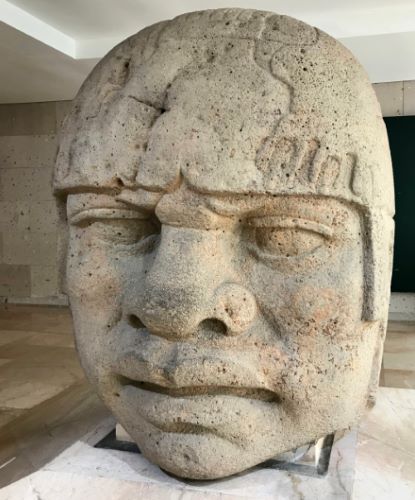
Among the earliest expressions of religious symbolism in Mesoamerica is the so-called “jaguar complex” associated with the Olmec civilization, whose influence can be traced across much of the region’s subsequent cultural development. Emerging during the Formative period, Olmec iconography frequently depicts hybrid beings that combine human and jaguar features, suggesting a symbolic system centered on transformation, power, and liminality. These images, carved in monumental stone and smaller portable objects, indicate that the jaguar was not merely an animal of ecological importance but central in a developing cosmological framework that linked rulership, fertility, and the supernatural. The recurrence of these motifs across multiple sites points to a shared symbolic vocabulary that was widely understood and deliberately employed, reflecting an early stage in the formation of complex religious systems. Rather than isolated artistic choices, these representations reveal a coherent set of ideas about the relationship between humans, animals, and divine forces, forming the foundation for later developments in Mesoamerican religious thought.
The jaguar’s symbolic significance appears to derive from its status as a dominant predator within the Mesoamerican environment. Its strength, stealth, and association with the forest and night imbued it with qualities that could be extended into the realm of the sacred. In Olmec art, the jaguar is often depicted with exaggerated features such as downturned mouths and cleft heads, elements that have been interpreted as markers of divine or supernatural identity. These representations suggest that the jaguar functioned as a conduit through which power could be conceptualized and expressed, bridging the gap between the human and the divine.
Central to the jaguar complex is the recurring motif of transformation, particularly the blending of human and animal forms. This imagery has been interpreted as reflecting shamanic practices in which ritual specialists sought to access other realms or states of being. The depiction of were-jaguar figures, often associated with infants or emerging forms, reinforces the idea of metamorphosis as a key theme within Olmec cosmology. Such representations may indicate beliefs in the fluidity of identity and the possibility of crossing boundaries between different levels of existence, a concept that would persist in later Mesoamerican traditions. The emphasis on transformation suggests that power was not understood as fixed but as something that could be acquired, embodied, and expressed through ritual practice. This dynamic conception of identity allowed for the integration of human and animal attributes in ways that conveyed both physical and symbolic potency, reinforcing the central role of transformation in the articulation of sacred authority.
The association between the jaguar and rulership further underscores the political dimensions of this symbolic system. Olmec elites appear to have adopted jaguar imagery as a means of legitimizing their authority, linking their position to supernatural power. Monumental sculptures, including colossal heads and altars, often incorporate elements that suggest a connection between rulers and the jaguar, whether through costume, posture, or accompanying symbols. This integration of religious and political imagery reflects a broader pattern in which authority was expressed through association with the sacred, reinforcing the idea that leadership was both a social and cosmological role. By embedding their identity within this symbolic framework, rulers could present themselves as intermediaries between different realms, capable of accessing and channeling forces beyond ordinary human experience. This association not only elevated their status but also provided a means of justifying their position within the social hierarchy, linking political power to divine sanction in a way that would become characteristic of later Mesoamerican states.
Material evidence also points to the widespread distribution and significance of jaguar symbolism. Objects bearing jaguar motifs have been found across multiple Olmec sites, as well as in regions influenced by Olmec culture, indicating that these ideas were not confined to a single locality. The consistency of these motifs suggests a shared set of meanings that could be recognized and interpreted across different communities. Variations in style and context indicate that the jaguar complex was adaptable, capable of being integrated into diverse cultural settings while retaining its core associations.
The Olmec jaguar complex represents an early and influential example of how symbolic systems can shape both religious practice and political authority. By linking natural imagery with concepts of transformation and power, this system provided a framework through which individuals and communities could understand their place within the cosmos. Its enduring influence on later Mesoamerican cultures highlights the importance of these early developments, demonstrating how foundational ideas can persist and evolve. The jaguar complex serves not only as a subject of study in its own right but as a key to understanding the broader trajectory of Mesoamerican religious thought.
Teotihuacan and the Mirror Complex: Vision, Divination, and Authority
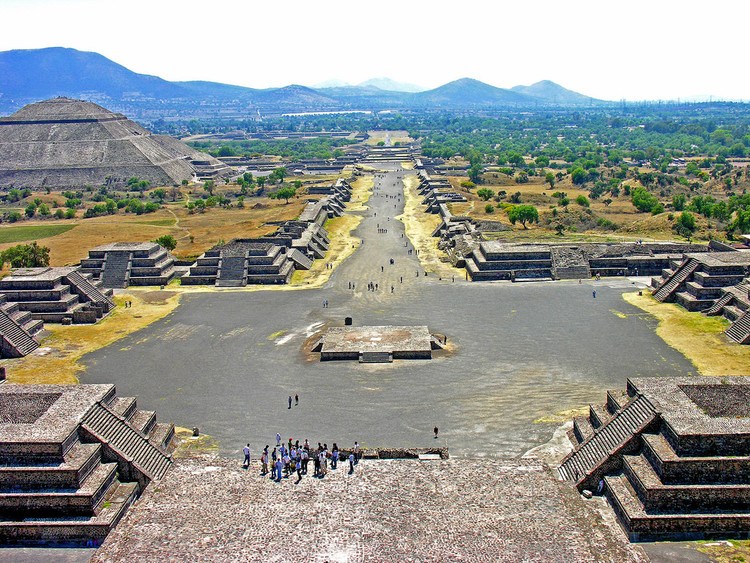
The city of Teotihuacan, one of the largest and most influential urban centers in ancient Mesoamerica, developed a ritual system in which reflective materials played a central symbolic and practical role. Archaeological evidence reveals the widespread use of polished pyrite and obsidian mirrors, objects that were not merely decorative but deeply embedded in religious and political life. These reflective surfaces were associated with vision, divination, and communication with the supernatural, forming what scholars have described as a “mirror complex” that linked material culture to cosmological understanding. Mirrors functioned as instruments through which unseen realms could be accessed and interpreted.
The significance of mirrors in Teotihuacan can be understood in relation to broader Mesoamerican concepts of sight and perception. Vision was not regarded as a passive process but as an active engagement with forces that extended beyond the visible world. Reflective surfaces, capable of capturing and transforming images, were believed to reveal hidden truths or facilitate contact with divine entities. The use of pyrite, with its metallic sheen, and obsidian, with its dark reflective quality, created visual effects that could evoke both illumination and obscurity, reinforcing their association with liminal states between knowledge and mystery.
Ritual specialists likely employed these mirrors in acts of divination, using them to interpret signs, foresee events, or communicate with deities. The placement of mirrors in elite burials and ceremonial contexts suggests that their use was restricted to individuals with specific roles and training, reinforcing their connection to authority and specialized knowledge. The mirror complex was not simply a set of practices but a system that structured access to sacred information, distinguishing those who could interpret the divine from those who could not. The control of such objects also implies institutional organization, in which access to mirrors and the knowledge required to use them was mediated through social hierarchy and ritual training. This exclusivity would have enhanced the perceived power of those who wielded them, as the ability to engage with the unseen was both rare and consequential. By embedding these practices within ceremonial and funerary contexts, Teotihuacan society reinforced the enduring association between mirrors, knowledge, and authority, extending their significance beyond individual use into broader systems of belief.
The association between mirrors and power is further evident in their integration into the visual and material culture of Teotihuacan’s ruling elite. Murals and artifacts depict figures adorned with reflective elements, suggesting that the ability to engage with these objects was a marker of status and legitimacy. By controlling the means of accessing divine knowledge, elites could reinforce their authority, presenting themselves as intermediaries capable of interpreting and enacting the will of the gods. This dynamic illustrates how material objects could function as both religious tools and political instruments. The visual prominence of mirrors in elite iconography further amplified their symbolic importance, as their reflective qualities could evoke both the presence of the divine and the capacity to perceive beyond ordinary limits. The integration of mirrors into elite representation was not merely decorative but communicative, signaling a form of power grounded in access to sacred knowledge. The repeated depiction of such elements across different contexts suggests a deliberate effort to associate leadership with the ability to see, interpret, and control forces that remained inaccessible to others.
The use of mirrors also intersected with practices of sacrifice, which were central to Teotihuacan’s ritual life. Excavations at major structures, including the Feathered Serpent Pyramid, have revealed evidence of human offerings associated with ceremonial activity. While the precise role of mirrors in these contexts remains a subject of interpretation, their presence within ritual assemblages suggests a connection between acts of sacrifice and the communication of divine intent. The integration of reflective materials into these practices highlights the interplay between vision, ritual action, and the maintenance of cosmic order.
The mirror complex of Teotihuacan represents a sophisticated system in which material culture, ritual practice, and political authority were closely intertwined. By facilitating access to the unseen, mirrors provided a means of interpreting and influencing the forces that governed existence, reinforcing the central role of ritual specialists and elites within the social hierarchy. This system demonstrates how objects could serve as focal points for complex networks of meaning, linking individual experience to broader cosmological structures. It offers a compelling example of how specialized forms of worship, often labeled as “cults,” functioned as integral components of Mesoamerican religious life.
The Cult of Quetzalcoatl: Transregional Belief and Cultural Integration

Quetzalcoatl, the Feathered Serpent, occupies a unique position within Mesoamerican religious traditions, representing one of the most widespread and adaptable forms of cultic devotion across the region. Unlike more localized deities, Quetzalcoatl appears in multiple cultural contexts, including the traditions of central Mexican societies, the Maya world, and later the Mexica. This broad distribution suggests not only the diffusion of religious ideas but also their capacity for reinterpretation within different social and political environments. The cult of Quetzalcoatl provides a compelling example of how religious systems could transcend linguistic and cultural boundaries while maintaining a recognizable core of symbolic meaning.
At the heart of Quetzalcoatl’s significance is his association with wind, knowledge, and creation. Often linked to the god Ehecatl in central Mexico, Quetzalcoatl was understood as a force that set the world in motion, both literally and metaphorically. His role in mythological narratives frequently involved acts of creation, sacrifice, and renewal, positioning him as a mediator between different realms of existence. These attributes made him particularly adaptable, as they could be integrated into a variety of cosmological frameworks without losing their essential coherence. The cult of Quetzalcoatl could be both specific and flexible, accommodating regional variations while preserving its broader significance.
The transregional nature of Quetzalcoatl worship is evident in its presence at major cultural centers such as Tollan (often associated with the Toltecs) and Chichén Itzá in the northern Maya lowlands. Architectural features, iconographic elements, and ritual practices at these sites indicate shared symbolic themes, particularly the prominence of the Feathered Serpent motif. At Chichén Itzá, for example, serpent imagery is integrated into monumental structures in ways that align with both local traditions and broader Mesoamerican patterns. This convergence suggests not a simple process of cultural transmission but a more complex interaction in which ideas were adapted and reinterpreted to fit new contexts. The architectural integration of serpent forms into stairways, platforms, and ceremonial spaces demonstrates how religious symbolism could be embedded into the built environment, reinforcing its presence in both ritual and daily life. The recurrence of similar motifs across distant regions indicates networks of communication, exchange, and shared symbolic language that facilitated the spread of these ideas. Rather than a single, unified cult imposed across regions, the evidence points to a dynamic process in which local communities adopted, reshaped, and recontextualized Quetzalcoatl within their own cultural frameworks.
The association of Quetzalcoatl with rulership and legitimacy further underscores the political dimensions of this cult. In some traditions, Quetzalcoatl is linked to the legendary ruler Topiltzin Quetzalcoatl, whose narrative blends historical and mythological elements. This connection provided a model of idealized leadership, emphasizing wisdom, restraint, and moral authority. By invoking Quetzalcoatl, rulers could align themselves with these qualities, reinforcing their legitimacy within a broader cosmological framework. The cult functioned not only as a system of religious devotion but as a resource for articulating and sustaining political power.
The adaptability of the Quetzalcoatl tradition also reflects its integration into diverse ritual practices. Offerings, ceremonies, and symbolic representations associated with the Feathered Serpent varied across regions, yet they consistently emphasized themes of transformation, renewal, and connection between different domains of existence. This flexibility allowed the cult to remain relevant across changing historical circumstances, accommodating shifts in political structure, economic conditions, and cultural interaction. In many contexts, the rituals associated with Quetzalcoatl were integrated into broader ceremonial cycles, linking them to agricultural rhythms, calendrical observances, and communal identity. The persistence of these practices suggests that their significance extended beyond elite ideology, resonating with wider segments of society. By adapting to local conditions while maintaining recognizable symbolic elements, the Quetzalcoatl tradition exemplifies how religious systems can achieve both continuity and change, ensuring their survival across diverse and evolving cultural landscapes.
The cult of Quetzalcoatl exemplifies the dynamic nature of Mesoamerican religious life, in which shared symbols could unify disparate communities without erasing local distinctiveness. By functioning across multiple cultural contexts, this tradition highlights the interconnectedness of the region and the role of religion in facilitating both continuity and change. As a transregional phenomenon, Quetzalcoatl worship challenges simplistic notions of isolated “cults,” revealing instead a complex network of beliefs and practices that contributed to the cohesion and adaptability of Mesoamerican societies.
Xipe Totec and Ritual Renewal: Violence, Fertility, and Transformation
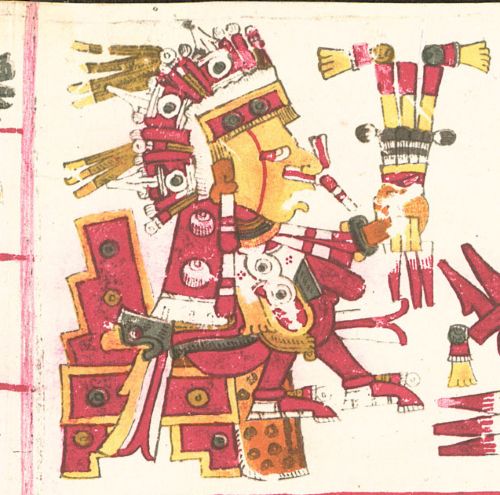
The worship of Xipe Totec, a prominent deity in the Mexica pantheon, represents one of the most striking examples of how ritual violence was integrated into systems of renewal and fertility in Mesoamerican religion. Often translated as “Our Lord the Flayed One,” Xipe Totec was associated with agricultural cycles, particularly the regeneration of crops in the spring. His imagery, which depicts a figure wearing the flayed skin of another, symbolizes the shedding of old layers to reveal new life beneath. While this imagery can appear extreme from a modern perspective, within its original context it conveyed a powerful metaphor of transformation, linking human ritual action to the cyclical processes of nature.
The central ritual associated with Xipe Totec involved the flaying of sacrificial victims during festivals such as Tlacaxipehualiztli. Priests and selected participants would wear the skins of these victims for a prescribed period, enacting the deity’s role and embodying the process of renewal. This act was not understood as mere spectacle but as a reenactment of divine transformation, in which the boundary between human and god was temporarily dissolved. Through this performance, participants became agents of regeneration, ensuring that the forces sustaining agricultural productivity and cosmic balance were properly maintained. The ritual also involved a sequence of highly structured actions, including combat sacrifices, ceremonial displays, and the redistribution of symbolic elements among participants, reinforcing its communal and performative dimensions. The wearing of the skins, which gradually decayed over the course of the ritual period, served as a visible reminder of the transition from death to renewal, embedding the symbolism of transformation into lived experience. The ritual extended beyond a single moment, unfolding over time as a process that mirrored the cycles it sought to sustain.
The symbolism of flaying extended beyond the immediate ritual context to encompass broader themes of growth and renewal. Just as seeds shed their outer coverings to germinate, the removal of skin represented the emergence of new life from decay. This analogy was reinforced through the timing of the rituals, which coincided with the agricultural calendar and the transition into the growing season. By aligning human action with natural processes, the cult of Xipe Totec integrated ritual violence into a coherent system of meaning that emphasized continuity and regeneration rather than destruction.
The role of Xipe Totec within the broader religious system also highlights the integration of specialized worship into state ideology. The rituals associated with this deity were not isolated practices but part of a larger network of ceremonies that reinforced the authority of the Mexica state. By overseeing and participating in these rites, rulers and priests demonstrated their ability to maintain cosmic order, linking political power to religious responsibility. The public nature of the ceremonies further reinforced their significance, as they involved communal participation and observation, embedding the symbolism of renewal within collective experience.
Material culture and iconography associated with Xipe Totec provide additional insight into the meaning of these practices. Sculptures, codices, and ceremonial objects depict the deity in flayed form, often with detailed attention to texture and layering, emphasizing the physical reality of transformation. These representations served both as reminders of the rituals and as tools for communicating their significance, reinforcing the connection between visual imagery and religious belief. The repetition of these motifs across different contexts indicates the centrality of the concept of renewal within Mexica thought. The stylization of flayed skin in artistic representation transformed a transient ritual act into a lasting symbolic form, allowing its meaning to persist beyond the temporal boundaries of the ceremony itself. These images were not passive reflections but active components of religious communication, shaping how participants understood and internalized the principles of regeneration. Through their circulation in both sacred and elite contexts, they contributed to the broader dissemination of the ideas embodied in the cult, reinforcing its integration into the fabric of Mexica society.
The cult of Xipe Totec illustrates how ritual practices that appear extreme can be understood as integral components of a broader cosmological system. By framing violence as a necessary element of regeneration, these practices linked human action to the cycles that sustained both society and the natural world. Rather than existing at the margins of religious life, the worship of Xipe Totec occupied a central place within it, demonstrating the ways in which specialized forms of devotion contributed to the coherence and continuity of Mesoamerican belief systems.
Death Cults and the Afterlife: Guiding the Soul Through Ritual
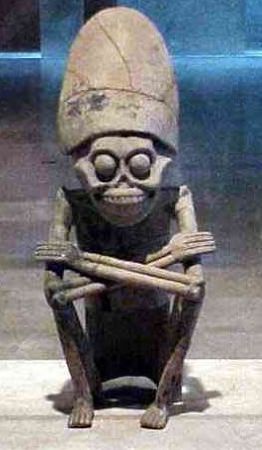
Beliefs surrounding death and the afterlife occupied a central place in Mesoamerican religious systems, shaping both individual experience and collective practice. Rather than viewing death as a final endpoint, these societies understood it as a transition within a broader cosmological cycle. The journey of the soul after death depended not on moral judgment in the abstract but on the manner of death and the ritual processes that accompanied it. This perspective produced a set of practices often described as “death cults,” though they were integral components of a wider system concerned with maintaining continuity between the living and the dead.
Among the Mexica, the afterlife was conceived as a series of distinct destinations, each associated with particular forms of death. Those who died in battle or through sacrificial rites were believed to accompany the sun, participating in its daily journey across the sky, while others who perished by water-related causes were associated with the realm of Tlaloc. The majority of the population were thought to travel to Mictlantecuhtli, the underworld presided over by deities such as Mictlantecuhtli. This journey was not immediate but required passage through multiple levels, each presenting challenges that the soul had to overcome, emphasizing the importance of preparation and guidance. These levels were conceptualized as a sequence of trials, including traversing mountains that collide, winds that cut like blades, and rivers that required assistance to cross, each stage symbolizing both physical and spiritual transformation. The duration of this journey, often described as lasting several years, further underscores the significance of ritual preparation, as the deceased depended on the proper performance of rites and the provision of offerings to navigate these obstacles successfully. The structure of the afterlife was not merely descriptive but prescriptive, shaping the actions of the living in their efforts to ensure a successful passage for the dead.
Ritual practices surrounding death were designed to facilitate this journey, ensuring that the deceased possessed the necessary resources to navigate the afterlife. Offerings placed in burials, including food, tools, and symbolic objects, served both practical and ceremonial functions, equipping the soul for its passage. Dogs, often represented or sacrificed in funerary contexts, were believed to assist in crossing rivers within the underworld, illustrating the integration of mythological belief into tangible practice. These rituals were not limited to the moment of death but extended into commemorative ceremonies that reinforced the connection between the living and the deceased.
The role of ritual specialists in these processes was significant, as they mediated between the realms of the living and the dead. Priests and other religious figures conducted ceremonies that both honored the deceased and ensured the proper execution of rites. Their knowledge of cosmological structure and ritual procedure allowed them to guide communities through the complex requirements of funerary practice. Death rituals were not merely acts of remembrance but essential components of maintaining cosmic balance, linking individual fate to the broader order of the universe.
Material and spatial elements further reinforced the significance of these practices. Burial sites, tombs, and offerings were arranged in ways that reflected cosmological principles, embedding the journey of the soul within a physical framework. Artistic representations of underworld deities and scenes of transition provided visual expressions of these beliefs, making abstract concepts accessible through tangible forms. The repetition of these elements across different regions and periods indicates the enduring importance of afterlife beliefs within Mesoamerican cultures. The placement of objects within graves often followed symbolic patterns, aligning the body and its accompanying items with directional or cosmological associations that reflected broader understandings of space and order. In addition, the use of specific materials, such as jade or obsidian, carried layered meanings that extended beyond their physical properties, linking them to concepts of vitality, transformation, and connection to the divine. These spatial and material arrangements transformed burial sites into microcosms of the larger universe, reinforcing the idea that the journey of the soul was part of a structured and meaningful process.
The so-called “death cults” of Mesoamerica reveal a sophisticated system of thought in which mortality was integrated into a larger cosmological narrative. Through ritual, symbolism, and communal practice, these societies developed methods for addressing the uncertainties of death while reinforcing social cohesion and continuity. Rather than existing as isolated or marginal traditions, these practices were central to the functioning of religious life, illustrating the depth and complexity of Mesoamerican approaches to existence and transformation.
Warrior Cults: Militarism, Religion, and State Power

Military organization in Mesoamerican societies, particularly among the Mexica, cannot be understood apart from its religious dimensions. Warfare was not merely a political or economic activity but a sacred enterprise embedded within a cosmological framework that linked martial success to divine favor. The so-called “warrior cults,” including the orders of Eagle and Jaguar warriors, functioned as institutionalized systems that combined ritual identity, social hierarchy, and military purpose. These groups were not marginal fraternities but central components of state structure, reinforcing both the expansion of imperial power and the maintenance of religious obligations.
Membership within these warrior orders was achieved through demonstrated success in battle, particularly the capture of enemies rather than their immediate killing. This emphasis reflects the integration of warfare with sacrificial practice, as captives were required for rituals that sustained the gods. Advancement within the military hierarchy was tied to participation in a system that linked personal valor to cosmic necessity. The attainment of rank brought not only material rewards but also symbolic recognition, as warriors were granted distinctive costumes, insignia, and privileges that marked their status within society.
The religious identity of these warriors was expressed through elaborate ritual practices and iconography. Eagle and Jaguar warriors, for example, adopted costumes that symbolized their association with specific deities and natural forces, embodying the qualities attributed to these beings. The eagle, linked to the sun and the heavens, and the jaguar, associated with the night and the underworld, represented complementary aspects of the cosmic order. By assuming these identities, warriors became participants in a symbolic system that extended beyond the battlefield, integrating their actions into the broader structure of Mesoamerican cosmology. These costumes were not merely decorative but functioned as ritual garments that transformed the wearer into a living representation of sacred power. The act of donning such attire signified entry into a different ontological state, one in which the boundaries between human and divine were deliberately blurred. This transformation reinforced the idea that warfare itself was a form of ritual performance, in which the outcome of battle carried significance not only for the state but for the maintenance of cosmic balance. Through these embodied practices, warriors enacted and reinforced the ideological foundations of the society they served.
State power was reinforced through the public performance of military and ritual activity. Ceremonies celebrating victories, the display of captives, and the execution of sacrificial rites all served to demonstrate the strength and legitimacy of the ruling order. These events were not only acts of devotion but also instruments of political communication, conveying messages about the relationship between the state, the gods, and the population. The visibility of these practices ensured that the connection between military success and divine favor was widely understood, reinforcing the authority of the leadership.
The integration of warrior cults into the social fabric also contributed to the cohesion of the state. Military service provided a pathway for social mobility, allowing individuals to gain status through participation in a system that was both meritocratic and ritualized. The shared identity of warriors fostered a sense of collective purpose, aligning individual ambition with the needs of the state. This alignment was crucial in sustaining the expansionist policies of the Mexica, as it ensured a steady supply of participants committed to both military and religious objectives. The recognition and rewards associated with military achievement created incentives that extended beyond immediate survival, encouraging individuals to pursue distinction within a structured framework of honor and obligation. At the communal level, the elevation of successful warriors reinforced social hierarchies while also providing models of ideal behavior, integrating personal achievement into broader narratives of collective identity. The warrior cults functioned as mechanisms for both individual advancement and systemic stability, binding personal ambition to the continued expansion and maintenance of the state.
The warrior cults of illustrate the close relationship between militarism, religion, and political authority. By framing warfare as a sacred duty and integrating it into systems of ritual and identity, these societies created structures that reinforced both internal cohesion and external dominance. The concept of a “cult” fails to capture the extent to which these practices were embedded within the core of social and political life. Rather than existing at the margins, warrior cults were central to the functioning of the state, demonstrating how systems of belief can shape and sustain the exercise of power.
The Ballgame Cult: Ritual Competition and Cosmic Drama

The Mesoamerican ballgame, practiced across numerous cultures over many centuries, functioned as far more than a form of recreation. It was a ritualized performance embedded within a broader cosmological and religious framework, often associated with themes of life, death, and renewal. Ballcourts, found at sites ranging from early Formative centers to later urban complexes, were constructed as formal spaces of sacred activity, their orientation and design reflecting symbolic connections to the structure of the universe. The ballgame can be understood as a “cultic” practice, though one that was deeply integrated into the social and religious life of Mesoamerican societies.
The symbolic meaning of the game is most clearly articulated in mythological traditions, particularly those preserved in Maya sources such as the Popol Vuh. In this narrative, the Hero Twins engage in a ballgame with the lords of the underworld, a contest that ultimately leads to death, transformation, and rebirth. This story encapsulates the broader cosmological significance of the game, presenting it as a reenactment of the struggle between opposing forces and the cyclical nature of existence. While the details of the narrative are specific to the Maya, similar themes appear across the region, suggesting a shared symbolic framework in which the ballgame served as a medium for expressing fundamental cosmological principles.
The performance of the ballgame itself reinforced these meanings through its physical and ritual elements. Players used specialized equipment and adhered to rules that distinguished the activity from ordinary sport, while the court served as a liminal space where different realms could intersect. The movement of the ball, often interpreted as representing celestial bodies such as the sun or planets, linked the game to broader cosmic cycles. In some contexts, the outcome of the game was associated with sacrificial rites, further emphasizing its connection to themes of death and renewal.
The relationship between the ballgame and sacrifice has been the subject of considerable scholarly debate, with evidence suggesting that ritual killing was sometimes associated with the conclusion of matches. Iconographic and archaeological data from sites such as El Tajín and Chichén Itzá depict scenes that link the game to sacrificial imagery, including decapitation and the offering of blood. These representations indicate that the ballgame could serve as a stage for enacting the principles of reciprocity that underpinned Mesoamerican cosmology, transforming competitive play into a ritual act with profound religious significance. The presence of such imagery does not necessarily indicate that every game ended in sacrifice, but it does reveal that the symbolic association between the two was deeply embedded in cultural understanding. In some contexts, the sacrifice may have involved captives or designated ritual participants rather than the players themselves, further complicating the relationship between competition and ritual outcome. The ambiguity surrounding these practices highlights the need to interpret the evidence within its broader symbolic and ceremonial framework, rather than reducing it to a singular, uniform practice across all regions and periods.
The integration of the ballgame into political and social structures further underscores its importance. Participation in the game, whether as players, spectators, or ritual specialists, reinforced communal identity and provided a means of expressing and negotiating power. Elites often sponsored or controlled major events, using them to display authority and to align themselves with the cosmological themes embodied in the game. The construction and maintenance of ballcourts themselves required significant resources, reflecting the centrality of the practice within urban and ceremonial life.
The ballgame cult illustrates the ways in which ritual, competition, and cosmology were intertwined in Mesoamerican societies. By transforming physical activity into a symbolic enactment of universal processes, the game provided a framework through which individuals and communities could engage with fundamental questions of existence. Its persistence across time and space highlights its adaptability and significance, demonstrating how a single practice could encompass a wide range of meanings while remaining deeply rooted in shared cosmological principles. The endurance of the ballgame across diverse cultural contexts also points to its capacity to accommodate regional variation while maintaining a coherent symbolic core. In different settings, the emphasis of the game could shift, highlighting particular aspects of cosmology, political authority, or communal identity, yet its underlying structure remained recognizable. This flexibility allowed the ballgame to function as both a unifying and differentiating element within Mesoamerican culture, reinforcing shared beliefs while allowing for local expression. As such, it stands as one of the most enduring and multifaceted ritual traditions in the region’s history.
Comparative Analysis: Patterns Across Mesoamerican Cult Traditions
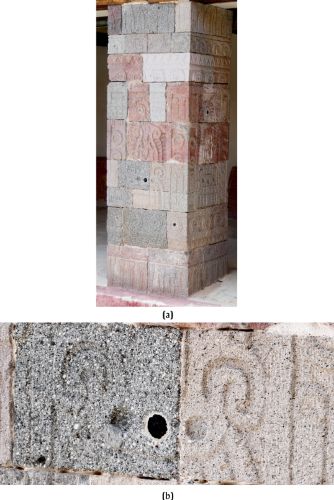
When examined collectively, the diverse traditions often labeled as “cults” in Mesoamerican history reveal a set of recurring structural and symbolic patterns that transcend regional variation. Whether focused on the jaguar in early Olmec contexts, the Feathered Serpent in central Mexico and the Maya world, or specialized practices such as the mirror complex at Teotihuacan, these systems share a common foundation in cosmological reciprocity. Human action, particularly in ritual form, was understood as essential to sustaining the balance of the universe, linking individual and communal behavior to the continuation of cosmic cycles. This underlying principle provided coherence across otherwise distinct practices, allowing them to function as components of a broader religious framework.
A second unifying pattern lies in the integration of material culture into religious expression. Across Mesoamerican societies, specific objects such as obsidian blades, jade ornaments, mirrors, and ceremonial costumes were imbued with symbolic significance and employed in ritual contexts. These materials served not only as tools but as mediators between the human and divine realms, enabling interaction with forces that could not be directly perceived. The consistent use of such objects across different traditions suggests a shared understanding of the relationship between materiality and spirituality, in which physical forms were essential to the enactment of sacred processes.
The role of ritual specialists and elites represents another point of convergence. In each of the traditions examined, access to sacred knowledge and the performance of complex rituals were mediated by individuals or groups who occupied positions of authority within the social hierarchy. Whether priests interpreting mirrors, rulers embodying divine attributes, or warriors enacting cosmological roles, these figures functioned as intermediaries between different realms of existence. Their authority was reinforced through their ability to engage with the sacred, creating a system in which religious and political power were closely intertwined.
The integration of these practices into broader social structures highlights their communal dimensions. Ritual activity was not confined to elites but involved varying degrees of participation from the wider population, whether through observation, contribution, or direct involvement. This collective engagement reinforced shared beliefs and identities, embedding cosmological principles within everyday life. Participation could take many forms, from attending public ceremonies and contributing offerings to adopting symbolic practices within household contexts, demonstrating the permeability between elite and popular religious expression. The repetition of rituals across time and space created a sense of continuity, linking past, present, and future within a unified framework of meaning. These recurring practices not only reaffirmed cosmological order but also reinforced social cohesion, providing shared experiences that connected individuals to their communities and to larger cultural narratives. Communal participation in ritual functioned as both a religious obligation and a mechanism for sustaining collective identity, ensuring that the principles underlying these traditions remained active and meaningful across generations.
These patterns demonstrate that Mesoamerican “cults” were not isolated phenomena but interconnected expressions of a comprehensive system of belief and practice. Their diversity reflects the adaptability of this system, while their shared features reveal the underlying principles that sustained it. By recognizing these commonalities, it becomes possible to move beyond fragmented interpretations and to understand Mesoamerican religion as a cohesive and dynamic whole, in which specialized traditions contributed to the stability and resilience of the societies that practiced them.
Historiography: Interpreting Mesoamerican Religion Beyond “Cult” Labels
The following video from “Pantheon Mythology” covers Mesoamerican mythologies:
Interpretations of Mesoamerican religion have undergone significant transformation, shaped by changing methodologies, source criticism, and evolving scholarly perspectives. Early understandings were heavily influenced by colonial-era accounts, particularly those produced by Spanish observers such as missionaries and conquistadors. These sources often framed indigenous practices in terms that emphasized their perceived otherness, frequently characterizing rituals as idolatrous, excessive, or irrational. Within this interpretive framework, the term “cult” emerged as a convenient label for practices that appeared unfamiliar or troubling to European sensibilities, reinforcing a distinction between “civilized” religion and its supposed opposites.
The limitations of these early interpretations have been increasingly recognized by modern scholars, who have sought to contextualize colonial narratives within the conditions of their production. Spanish accounts were not neutral descriptions but texts shaped by religious, political, and ideological agendas, often intended to justify conquest and conversion. They frequently emphasized elements such as human sacrifice while neglecting the broader systems of meaning in which such practices were embedded. The reliance on these sources without critical evaluation led to a distorted picture of Mesoamerican religion, one that privileged sensational aspects at the expense of structural understanding.
The development of archaeological and anthropological approaches in the twentieth century marked a turning point in the study of Mesoamerican religious traditions. Material evidence, including architecture, iconography, and ritual objects, provided new avenues for interpretation that were not dependent on colonial narratives. Scholars began to reconstruct religious systems through the analysis of spatial organization, symbolic patterns, and the distribution of artifacts, revealing a level of complexity and coherence that earlier accounts had obscured. This shift allowed for a more nuanced understanding of practices previously labeled as “cultic,” situating them within broader frameworks of cosmology and social organization. Advances in excavation techniques, stratigraphic analysis, and scientific dating methods further refined these interpretations, enabling researchers to establish clearer chronological sequences and to trace the development of religious practices. In addition, comparative approaches drawing on ethnographic analogies and cross-cultural analysis have provided further insight into the meanings of ritual behavior and symbolic representation. Together, these methodological innovations have transformed the study of Mesoamerican religion from a reliance on textual interpretation to a multidisciplinary field that integrates diverse forms of evidence.
The incorporation of indigenous-language sources, such as Nahuatl and Maya texts, has further enriched the historiography of Mesoamerican religion. These materials, while often recorded in the colonial period, preserve elements of pre-Hispanic thought that can be used to complement and challenge European accounts. By engaging with these sources, scholars have been able to access alternative perspectives on ritual, belief, and authority, highlighting the diversity of interpretations within Mesoamerican societies themselves. This approach underscores the importance of considering multiple voices in reconstructing historical understanding.
The historiography of Mesoamerican religion reflects a broader movement away from reductive and externally imposed categories toward more contextually grounded interpretations. The term “cult,” while still occasionally employed as a heuristic device, has largely been replaced by language that emphasizes integration, system, and function. This shift does not simply represent a change in terminology but a deeper transformation in how scholars conceptualize religious life in the region. By moving beyond inherited labels, it becomes possible to appreciate the complexity and sophistication of Mesoamerican traditions, recognizing them as dynamic systems that cannot be adequately captured through simplistic or anachronistic frameworks.
Conclusion: Ritual, Power, and the Structure of Belief
The examination of Mesoamerican religious traditions demonstrates that what are often labeled as “cults” were, in fact, deeply embedded systems of meaning that structured both individual experience and collective life. From the jaguar symbolism of the Olmec to the ritualized militarism of the Mexica, these practices reveal a consistent integration of cosmology, material culture, and social organization. Rather than existing at the margins, they functioned at the very center of religious and political systems, shaping how communities understood their place within the universe and their obligations to it.
Ritual emerges as the primary mechanism through which these systems operated. Through acts of sacrifice, divination, performance, and symbolic transformation, Mesoamerican societies maintained what they understood to be the balance of the cosmos. These practices were not arbitrary or irrational but were grounded in coherent frameworks that linked human action to natural and divine processes. The repetition and formalization of ritual activity ensured continuity across generations, reinforcing shared beliefs while allowing for adaptation to changing conditions. Ritual served as both a stabilizing force and a means of engaging with uncertainty.
Power, both political and spiritual, was inseparable from these structures of belief. Leaders, priests, and warriors derived their authority not only from their positions within social hierarchies but from their ability to participate in and control access to the sacred. The performance of ritual, the interpretation of divine signs, and the embodiment of symbolic identities all functioned as expressions of power, legitimizing authority and reinforcing social order. This relationship between ritual and authority highlights the extent to which religious systems were integral to the functioning of Mesoamerican states, rather than existing as separate or secondary domains. Control over ritual knowledge and ceremonial practice created hierarchies of access, in which those closest to the sacred could shape both ideology and governance. Public ceremonies served as visible demonstrations of this authority, reinforcing legitimacy through collective participation and spectacle. The dependence of rulers on ritual performance reveals a reciprocal dynamic, as authority required continual reaffirmation through successful engagement with the divine. Power was not static but contingent, sustained through ongoing interaction with the structures of belief that underpinned it.
The study of these traditions underscores the importance of approaching Mesoamerican religion on its own terms. By moving beyond reductive labels and examining the interconnected structures of ritual, power, and belief, it becomes possible to appreciate the complexity and sophistication of these societies. Their practices, far from being isolated or anomalous, represent coherent responses to fundamental questions about existence, continuity, and the relationship between humans and the cosmos. In recognizing this, we gain not only a clearer understanding of Mesoamerican history but also a broader perspective on the diverse ways in which human cultures construct meaning and order in the world.
Bibliography
Affiliate disclosure: Amazon links on this site are paid links. As an Amazon Associate I earn from qualifying purchases.
- Burkhart, Louise M. The Slippery Earth: Nahua-Christian Moral Dialogue in Sixteenth-Century Mexico. Tucson: University of Arizona Press, 1989.
- Carrasco, David. Religions of Mesoamerica: Cosmovision and Ceremonial Centers. 2nd ed. Long Grove, IL: Waveland Press, 2014.
- Clendinnen, Inga. Aztecs: An Interpretation. Cambridge: Cambridge University Press, 1991.
- Coe, Michael D., and Rex Koontz. Mexico: From the Olmecs to the Aztecs. 7th ed. London: Thames & Hudson, 2013.
- Diehl, Richard A. The Olmecs: America’s First Civilization. London: Thames & Hudson, 2004.
- Houston, Stephen, David Stuart, and Karl Taube. The Memory of Bones: Body, Being, and Experience among the Classic Maya. Austin: University of Texas Press, 2006.
- James, Susan E. “Some Aspects of the Aztec Religion in the Hopi Kachina Cult.” Journal of the Southwest 42:4 (2000), 897-926.
- Joralemon, Peter David. “A Study of Olmec Iconography.” Studies in Pre-Columbian Art and Archaeology 7 (1971), 1-95.
- Manzanilla, Linda. “Corporate Life in Apartment and Barrio Compounds at Teotihuacan, Central Mexico.” Proceedings of the National Academy of Sciences 109, no. 52 (2012), 20753–20758.
- Miller, Mary Ellen, and Karl Taube. An Illustrated Dictionary of the Gods and Symbols of Ancient Mexico and the Maya. London: Thames & Hudson, 1993.
- Nutini, Hugo G. “Pre-Hispanic Component of the Syncretic Cult of the Dead in Mesoamerica.” Ethnology 27:1 (1988), 57-78.
- Pasztory, Esther. Teotihuacan: An Experiment in Living. Norman: University of Oklahoma Press, 1997.
- Pool, Christopher A. Olmec Archaeology and Early Mesoamerica. Cambridge: Cambridge University Press, 2007.
- Restall, Matthew. Seven Myths of the Spanish Conquest. New York: Oxford University Press, 2003.
- Rice, Prudence M. “Time, Power, and the Maya.” Latin American Antiquity 19:3 (2008), 275-298.
- Sahagún, Bernardino de. Florentine Codex: General History of the Things of New Spain. Translated by Arthur J. O. Anderson and Charles E. Dibble. Santa Fe: School of American Research, 1950.
- Scarborough, Vernon L., and David R. Wilcox, eds. The Mesoamerican Ballgame. Tucson: University of Arizona Press, 1991.
- Schele, Linda, and Mary Ellen Miller. The Blood of Kings: Dynasty and Ritual in Maya Art. New York: George Braziller, 1986.
- Smith, Michael E. The Aztecs. 3rd ed. Malden, MA: Wiley-Blackwell, 2012.
- Sugiyama, Saburo. Human Sacrifice, Militarism, and Rulership: Materialization of State Ideology at the Feathered Serpent Pyramid, Teotihuacan. Cambridge: Cambridge University Press, 2005.
- Taube, Karl. “The Symbolism of Mirrors in Teotihuacan.” In Teotihuacan: Art from the City of the Gods, edited by Kathleen Berrin and Esther Pasztory, 169–177. San Francisco: Fine Arts Museums of San Francisco, 1993.
- Uriarte, María Teresa. “The Teotihuacan Ballgame and the Beginning of Time.” Ancient Mesoamerica 17:1 (2006), 17-38.
Originally published by Brewminate, 04.30.2026, under the terms of a Creative Commons Attribution-NonCommercial-NoDerivatives 4.0 International license.
About the Author