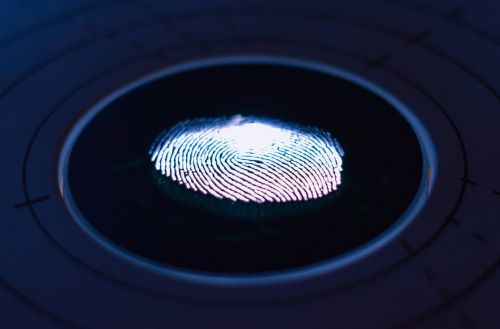
Fingerprints can help investigators find suspects or identify witnesses in criminal cases. The unique patterns of each person’s fingerprint make them useful for linking suspects to a crime scene, verifying a person’s identity, or other identification purposes. Fingerprint evidence is admissible in court when professionals have taken or collected the prints and studied them properly.
Police officers and forensics experts examine the types of fingerprints in a number of ways to try to understand the way prints look at a crime scene. Patent prints can be seen in blood, dust, or ink, whereas latent prints require the right chemical processing or lighting. Patent, latent, or plastic prints can give off various level details in investigations.
Findings by the National Institute of Justice on the reliability of latent fingerprint comparison state that forensic examiners are continually raising standards and accuracy for themselves. A further NIJ document on the consistency of fingerprint examiner judgments found that current comparison techniques produced low false-positive rates during testing. These advances have the potential to increase the reliability of fingerprint evidence in criminal investigations.
Why Are Fingerprints Important in Criminal Cases?
Fingerprints are useful because they can be difficult to counterfeit and frequently last a long time on objects. Over the years, investigators have often been able to find fingerprints on weapons, glass, phones, steering wheels, and door handles following a crime. The FBI reported two years back that the Next Generation Identification system was running an enormous number of biometric records, aiding agencies across the country.
Fingerprint examination can also assist investigators in reconstructing timelines and correlating evidence from one crime scene to another. For instance, if the prints found at two burglary scenes are consistent with one another, a defendant may be guilty of both. This can provide prosecutors with evidence to support a witness’s testimony or surveillance footage.
How Do Experts Collect Fingerprints?
Crime scene investigators use powders, chemicals, and scanning devices for the safe collection of fingerprints. No contact with potential evidence is made so that the credible data is not compromised by contamination. Police also take pictorial documentation of fingerprint placement before lifting or storing it for laboratory analysis.
Common fingerprint collection methods include:
- Dusting powder on a smooth surface
- Applying cyanoacrylate fumes to plastic or metal
- Scanning fingerprints into digital databases
Digital systems enable investigators to search prints more quickly than with previous manual systems. Automated systems are capable of searching large databases within minutes and coming up with a probable match quickly. But these results are carefully examined by forensic examiners before officials make arrests.
Can Fingerprint Evidence Be Challenged?
Fingerprints, like any other forensic evidence, can be challenged by defense lawyers if gathered in a negligent and unprofessional manner. For instance, smudged and unclear impressions, or fingerprints that have not been stored correctly, may hinder the strength of the evidence in court. In some cases, experts with opposing views on the same fingerprint statement appear.
The best results are obtained in comparison with other evidence, such as video images, witness statements, or DNA samples, rather than on fingerprint evidence alone. Increasingly, courts demand more than one form of evidence, which ensures justice and lessens the likelihood of mistakes.
What Makes Fingerprints Different from DNA Evidence?
Fingerprint evidence tends to be less expensive and quicker than DNA testing. Fingerprints can be easily collected from many surfaces, and fingerprint analysis can be immediate, whereas for DNA samples, the laboratory testing can be lengthy. Though DNA evidence can be stronger than fingerprint evidence in some cases.
Both practices are justified when investigators understand and implement protocols for evidence collection and storage.
Key Takeaways
- Fingerprints aid in identifying suspects and linking evidence.
- Chemical or light processing may be necessary in latent prints.
- Digital databases cut down on the time it takes to compare fingerprints.
- Courts evaluate how investigators have received and maintained evidence.
- Fingerprints are most effective when used in conjunction with other forensic evidence.
About the Author