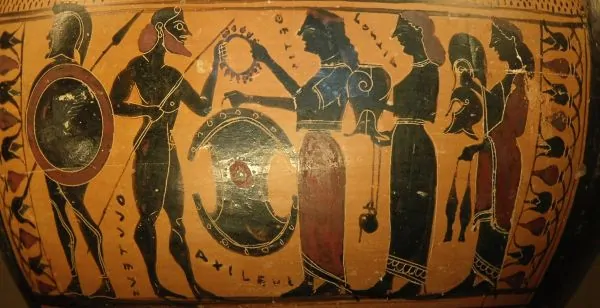
Forged by Hephaestus for a doomed hero, the Shield of Achilles contains a mortal world of war, peace, labor, law, music, nature, cosmic order, and the life Achilles cannot share.

By Matthew A. McIntosh
Public Historian
Brewminate
Introduction: The World Carried into Battle
The Shield of Achilles enters the Iliad at the point when the poem’s central conflict has become irreversible. Patroclus is dead, Hector has stripped the armor he wore from his body, and Achilles has resolved to return to battle despite knowing that his own death will follow Hector’s. The new shield forged by Hephaestus is not simply a replacement for lost equipment. It belongs to a transformed Achilles, one whose anger against Agamemnon has been overtaken by grief and whose pursuit of vengeance has become inseparable from an acceptance of mortality. Divine craftsmanship cannot release him from fate, nor can even the greatest defensive object in epic make him permanently secure. The armor instead prepares Achilles to enter the final stage of his heroic existence. Created between the death of his closest companion and his own return to killing, the shield stands at the threshold between bereavement and retaliation, withdrawal and action, life and approaching death.
What Hephaestus places upon that instrument of war is not a sequence of heroic victories but an astonishingly expansive image of existence. The earth, sea, sun, moon, and constellations establish a cosmic frame within which two cities contain marriage processions, music, dancing, public judgment, siege, ambush, and bloodshed. Beyond them appear fields being plowed, crops being harvested, grapes being gathered, cattle attacked by lions, sheep resting in protected folds, and young people moving together in a carefully ordered dance. Ocean encircles the whole composition, enclosing its variety within a single divine design. The contrast between the shield’s purpose and its imagery has understandably encouraged readings that oppose the peaceful fullness of ordinary life to the violence dominating the Iliad. Yet the images resist so simple a division. The city at peace contains a dispute arising from homicide, while the city at war contains families, defenders, strategy, and communal solidarity. Agricultural abundance depends upon repetitive labor and social hierarchy; pastoral order remains vulnerable to predation; celebration may coexist with mourning; and every image of continuity exists within a mortal world. The shield does not separate beauty from violence so much as reveal that both belong to the same human and natural order.
Achilles carries this order without fully belonging to it. The shield displays marriage, law, productive labor, seasonal renewal, music, courtship, and collective celebration, the experiences through which communities reproduce themselves and give continuity to lives otherwise bounded by death. Achilles has chosen a form of greatness that removes him from precisely that future. He will not grow old within a city, preside over fields, raise children, or participate in the ordinary succession of generations. The inhabitants of the shield are mostly anonymous, but their anonymity gives them a collective permanence that the uniquely famous warrior cannot possess. They represent not heroic exceptionality but the recurring life of the world.
The shield consequently enlarges the meaning of the Iliad beyond the immediate quarrel of kings or the fate of Troy. Hephaestus’ metalwork becomes a counterpart to Homeric poetry itself: a bounded composition capable of containing the heavens, cities, landscapes, human institutions, natural forces, and sequences of action that seem to unfold through time. Although the object is described as a visual artifact, Homer makes it speak, move, sing, argue, labor, and kill. The poet does not merely report finished pictures but narrates the god’s act of making them, allowing the audience to encounter the shield as both object and process. Its significance lies neither in a single allegorical code nor in a straightforward condemnation of warfare. Rather, it presents a carefully ordered totality against which Achilles’ return to combat acquires its full tragic measure. The warrior who has chosen everlasting fame at the cost of a long life advances beneath an image of everything that war claims to defend and everything that war can destroy. He carries into battle not an escape from mortality but a vision of the mortal world in all its beauty, labor, conflict, vulnerability, and capacity for renewal.
Before the Shield: The Loss of the First Armor
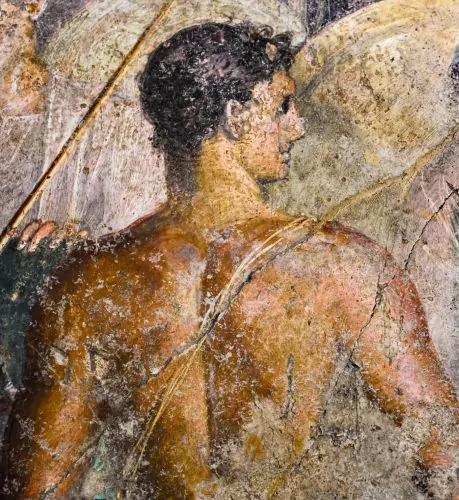
The creation of Achilles’ new shield can be understood only through the destruction of the arrangement by which he attempted to remain outside the war while continuing to influence it. After Agamemnon deprived him of Briseis, Achilles withdrew from combat and prayed that the Achaeans would suffer sufficiently to recognize how much they depended upon him. His refusal to fight was intensely personal, but its effects were collective. As the Trojans drove the Achaeans back toward their ships, Achilles watched the crisis develop from the margins, still bound to his companions yet unwilling to subordinate his grievance to their survival. Patroclus became the figure through whom this contradiction could temporarily be sustained. He could act where Achilles would not, defend the ships without formally ending Achilles’ quarrel, and carry the appearance of the absent warrior back onto the battlefield.
Patroclus’ request to wear Achilles’ armor is more than a practical military proposal. He hopes that the Trojans, seeing the familiar equipment, will mistake him for Achilles and retreat long enough for the exhausted Achaeans to recover. His plan depends upon the visual authority of heroic identity. Armor in the Iliad does not merely protect the body hidden beneath it; it announces rank, lineage, divine favor, wealth, and battlefield reputation. Achilles’ equipment has accumulated the terror associated with Achilles himself, so that its appearance can be expected to produce effects before the disguised warrior even begins to fight. When Patroclus puts it on, the poem gives him nearly the full ceremonial arming sequence of a major hero. He fastens the greaves, breastplate, sword, shield, and helmet, while the horsehair crest nods ominously above him. Yet he cannot take Achilles’ great Pelian ash spear, which no other Achaean is strong enough to wield. The omission quietly establishes the limit of the substitution. Patroclus may assume Achilles’ outward form, command his Myrmidons, and awaken fear under his name, but he cannot become Achilles completely.
For a time, the borrowed identity succeeds beyond its intended purpose. The Trojans recoil, the fire is driven from the Achaean ships, and Patroclus leads the Myrmidons into a devastating counterattack. His achievements reveal both his genuine martial excellence and the power conferred by appearing in Achilles’ place. The disguise does not make him an empty imitation. It releases a heroic capacity that had previously remained subordinate to Achilles’ greater fame. The danger lies in the rapid expansion of Patroclus’ mission. Achilles instructed him to save the ships and return, warning him not to pursue the Trojans toward their walls. Once victory begins, Patroclus exceeds that boundary. The armor that was supposed to create a controlled illusion draws him ever further into the role it signifies.
Patroclus’ advance toward Troy exposes the difference between assuming a hero’s appearance and possessing that hero’s place within fate. Apollo repeatedly drives him back from the walls, and the sequence of his death strips away the illusion in stages. The god strikes him from behind, knocks the helmet from his head, breaks the spear, loosens the shield, and removes the protection of the breastplate. Euphorbus wounds him, and Hector delivers the final blow. Patroclus dies neither in an equal duel nor through the strength of a single opponent. Divine intervention, human attack, physical disorientation, and the loss of armor combine to make his death possible. The dismantling of Achilles’ martial image precedes the destruction of the man who had temporarily inhabited it. Once the divine helmet rolls beneath the feet of horses and is stained with dust and blood, an object previously associated with Achilles’ almost superhuman prestige becomes part of the ordinary filth of battle.
Grief and Vengeance: The Decision to Die

The news of Patroclus’ death reaches Achilles not as a simple report of battlefield loss but as the collapse of the emotional and moral structure by which he had separated himself from the war. Antilochus finds him already fearing the worst, and when the truth is spoken Achilles falls to the ground, covers himself with dust, tears at his hair, and raises a cry so terrible that Thetis hears it beneath the sea. His response reverses the posture he had maintained since his quarrel with Agamemnon. Achilles had previously treated the suffering of the Achaeans as the necessary proof of his own dishonor, but Patroclus’ death makes that suffering immediate and personal. The consequences of his withdrawal can no longer be kept at a distance. His anger has helped create the conditions in which the person closest to him entered battle, exceeded his instructions, and died wearing his armor.
Grief does not simply replace Achilles’ wrath; it redirects and intensifies it. His earlier anger had been rooted in a dispute over honor, rank, and the public recognition owed to him by Agamemnon. It was sustained through refusal, isolation, and the determination to let others experience his absence. After Patroclus’ death, Achilles’ anger becomes inseparable from bereavement. Hector now appears not merely as the leading enemy warrior but as the man who killed Patroclus and wears the armor taken from his body. Vengeance offers Achilles a form of action that seems capable of answering grief, even though it cannot reverse the loss that produced it. The killing of Hector becomes, in Achilles’ mind, both a duty to Patroclus and the only remaining expression of their bond.
Thetis responds to her son’s anguish with a warning that gives the coming vengeance its tragic shape. If Achilles kills Hector, she tells him, his own death will follow soon afterward. The warning does not reveal an entirely unknown fate. Earlier in the poem Achilles had already explained that two possible destinies lay before him: he could remain at Troy and win undying fame at the cost of a short life, or return home and live without the same heroic renown. Patroclus’ death transforms that abstract choice into an immediate decision. Achilles no longer weighs a long life against glory as though both remained equally meaningful. Homecoming without Patroclus has lost its attraction. The future he might have preserved has been emptied by the death of the companion with whom he expected, at some level, to share it. His response to Thetis is among the most decisive statements in the Iliad. Achilles declares that he is willing to die once he has punished Hector, and he invokes Heracles as an example of a hero whom divine parentage could not save from fate. The comparison reveals a new clarity in his understanding of the heroic condition. Excellence, divine favor, and unmatched strength may shape the manner in which a life is remembered, but they cannot remove death from it. Achilles does not imagine that vengeance will make him safe, nor does he pretend that killing Hector will restore Patroclus. He accepts the approach of his own end because he now regards continued life without action as a deeper form of failure. His choice is heroic, but it is not uncomplicatedly triumphant. It arises from love, guilt, rage, and a diminished capacity to imagine any future beyond retaliation.
This decision also changes the meaning of Achilles’ relationship to the Achaeans. He will return to battle and reconcile formally with Agamemnon, but he does not do so because the original dispute has been resolved to his satisfaction. The restoration of gifts and status has become secondary. What once appeared sufficient to justify his withdrawal now seems almost irrelevant beside Patroclus’ corpse. Achilles’ return is not a return to the social order as it existed before the quarrel. He rejoins the army while remaining psychologically separated from it, driven by a private grief that exceeds ordinary military aims. The Achaeans seek survival and victory; Achilles seeks Hector. Their purposes temporarily converge, but they are not identical.
The new armor must be understood within this acceptance of death. Thetis cannot rescue Achilles from the fate he has embraced, and Hephaestus cannot forge equipment capable of granting immortality. The shield will protect Achilles in the limited sense that armor protects any warrior, but its deeper function is ceremonial and tragic: it equips him for the final fulfillment of the identity he has chosen. He will enter battle with the knowledge that victory over Hector is also a step toward his own destruction. This is why the world displayed upon the shield carries such force. At the moment Achilles renounces the possibility of a long human future, Hephaestus places before him images of marriage, judgment, agriculture, labor, music, dancing, family, civic life, and seasonal renewal. The shield does not simply defend the body of a man who has chosen to die. It surrounds that body with a vision of the life he is surrendering, the communities his strength may defend, and the fragile mortal order that his rage is capable of devastating.
Thetis and Hephaestus: A Mother’s Appeal to the Divine Craftsman
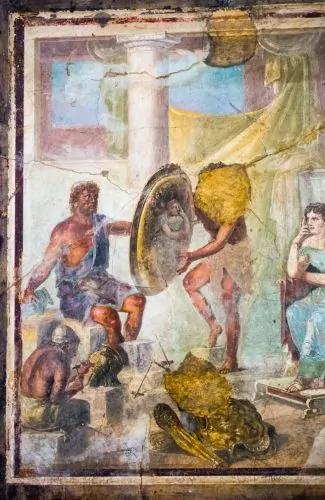
Thetis approaches Hephaestus because she has reached the limit of what maternal devotion can accomplish. She has heard Achilles declare that he will kill Hector even though his own death must soon follow, and she knows that no appeal to affection, prudence, or divine power will persuade him to abandon that course. Her journey is marked by a painful contradiction. She seeks armor that will protect her son in battle, yet the very act of arming him enables the vengeance that will bring his fate nearer. As an immortal mother of a mortal child, Thetis occupies one of the most tragic positions in the Iliad: she possesses access to gods, knowledge, and supernatural assistance, but none of these can grant Achilles the ordinary future he has rejected. She can delay decay, secure weapons, and plead before Olympus, but she cannot preserve him from death.
Hephaestus receives her as someone to whom he owes his own survival. After being cast from Olympus, he had been sheltered beneath the sea by Thetis and Eurynome, and the memory of that protection determines his response. The armor is produced through reciprocity, gratitude, and remembered vulnerability rather than through an impersonal exchange among gods.
The bond between Thetis and Hephaestus gains additional force because both figures stand uneasily within the divine order. Thetis is a goddess of extraordinary power whose marriage to Peleus has bound her to mortal loss. Her divinity intensifies rather than relieves her suffering, since she must foresee and outlive the death of the son she cannot save. Hephaestus, meanwhile, is indispensable to Olympus because of his skill, yet traditions of his fall, rejection, and bodily difference distinguish him from the idealized physical perfection associated with the gods. His workshop lies within the divine world but also apart from its political rivalries and displays of beauty. When Thetis enters that space, the episode creates a rare atmosphere of tenderness within an epic dominated by competition for honor. Charis welcomes her, Hephaestus remembers her kindness, and the appeal proceeds through hospitality and mutual recognition. Their exchange suggests that suffering can generate obligations different from those created by status or force. Thetis once offered refuge to a rejected god; Hephaestus now answers the anguish of a mother whose child is moving beyond rescue. Neither can undo the other’s original wound, but each responds through the form of care still available.
What Hephaestus gives Thetis is not deliverance but form. He cannot revive Patroclus, restrain Achilles, overturn fate, or return the lost years that Peleus and Thetis might have expected with their son. He can only make. Yet within the moral and imaginative structure of the episode, making is itself a profound answer to destruction. Warfare strips armor from corpses, tears companions from one another, and converts inherited objects into trophies; Hephaestus takes raw metal and creates coherence, beauty, and order. The shield arises directly from grief, but it does not reproduce grief alone. Upon an object intended for battle, the craftsman gathers the heavens, cities, fields, animals, music, law, labor, and celebration. Thetis asks for protection for a doomed warrior, and Hephaestus responds by giving him an image of the world his vengeance will defend, endanger, and ultimately leave behind.
The Forge of Hephaestus
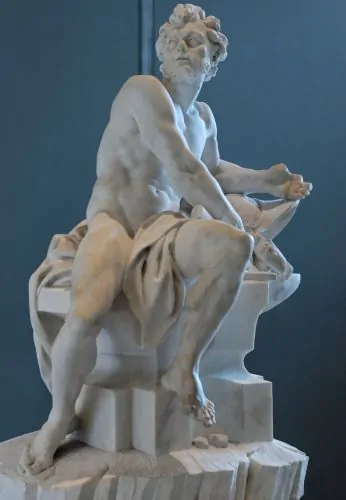
The workshop of Hephaestus is one of the Iliad’s most concentrated visions of divine technology. When Thetis arrives, the god is constructing twenty tripods intended to move by themselves into the assemblies of the immortals and return again to his house. Golden wheels are fitted beneath them, while handles remain unfinished when he interrupts his labor to receive his guest. The scene places Hephaestus within an environment defined by motion, precision, and controlled transformation. His forge is not merely a smithy enlarged to divine scale. It is a space in which metal can be given mobility, service, and an almost independent agency. What mortal artisans achieve through repeated bodily effort, Hephaestus accomplishes through a union of skill, intelligence, and supernatural command over materials.
The bellows embody that command most clearly. At Hephaestus’ instruction, they direct their blasts into the furnaces with different degrees of force, responding to the needs of each stage of the work. They behave not as passive tools but as instruments capable of regulated action. Homer imagines technology as an extension of the craftsman’s intention: the workshop obeys because the maker’s intelligence has entered its mechanisms.
The golden attendants who support Hephaestus deepen the boundary between artifact and living being. They are fashioned in the form of young women, yet they possess intelligence, speech, strength, and knowledge of skilled work. Their existence challenges any simple division between natural life and manufactured object. Homer does not explain their inner mechanism or treat them as philosophical curiosities; they belong naturally to the household of the divine smith. Even so, their presence reveals the extraordinary reach of Hephaestus’ art. He does not merely decorate inert matter but produces forms that imitate and participate in life. The attendants also complicate the relationship between the god’s physical impairment and his craftsmanship. Hephaestus moves with difficulty, but the figures he has made assist and stabilize him. Art compensates for bodily limitation without erasing it, creating an environment in which vulnerability becomes the occasion for invention rather than a sign of diminished power.
Modern descriptions of these objects as robots or automata can be illuminating, but they also risk imposing later technological categories upon Homeric imagination. The self-moving tripods and golden attendants are not presented as products of engineering separated from magic, divinity, or artistic skill. In Hephaestus’ workshop, those categories have not yet divided. Craft is simultaneously technical, animate, sacred, and aesthetic. His objects are marvelous because they reveal what perfect craftsmanship might accomplish when no firm boundary restricts matter to passivity.
The making of Achilles’ armor emerges from this larger world of animated craft. Hephaestus places bronze, tin, gold, and silver into the fire, raises his hammer, grips his tongs, and begins to impose structure upon molten material. Homer’s description stresses recognizable acts of smithing, but the finished shield exceeds the practical possibilities of metalwork. Its surface contains cosmic bodies, cities, fields, moving animals, singing youths, litigants, dancers, armies, and flowing water. The artifact occupies two levels at once. Within the story, it is a divine object of astonishing complexity; within the performance of the poem, it is created through language that grants static images movement, sound, sequence, and emotion. Hephaestus shapes metal as Homer shapes verse. Both artists take limited materials and produce an ordered world whose apparent life exceeds the medium from which it is made. The forge consequently becomes more than the place where Achilles receives new equipment. It is the site where divine craftsmanship and poetic creation mirror one another, transforming grief and raw matter into a form capable of holding the world.
How the Shield Is Organized: Center, Circles, and the Problem of Reconstruction

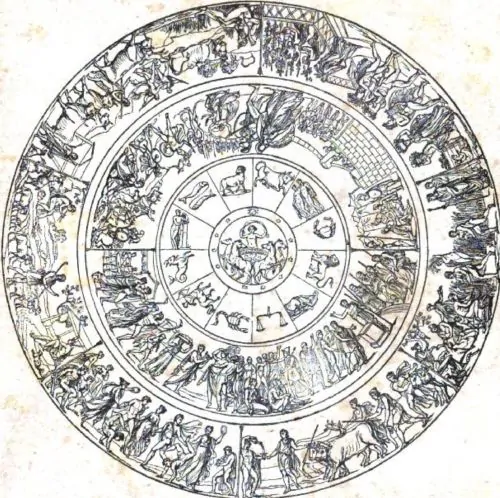
The Shield of Achilles is often imagined as a sequence of concentric circles moving outward from a cosmic center to the river Ocean at the rim. This arrangement is plausible, elegant, and consistent with the circular form of the object, but it is not supplied by Homer as a complete technical plan. The poet describes Hephaestus making a great and powerful shield, decorating it with elaborate designs, and surrounding it with a triple shining rim. He then narrates the images in an ordered sequence, beginning with earth, heaven, sea, and the celestial bodies and ending with Ocean placed around the shield’s outermost edge. Those two poles encourage a centripetal reading: the cosmos occupies the center, human life unfolds in successive bands, and Ocean encloses the whole. Yet Homer never pauses to identify the precise diameter of each zone, the boundaries between scenes, or the position from which the imagined viewer should examine them.
The shield is also said to contain five layers or folds, but these should not automatically be treated as five decorated pictorial bands. The phrase most naturally describes the construction or thickness of the object. Many modern diagrams have nevertheless transformed those structural layers into five concentric zones because doing so produces a coherent visual reconstruction. The result may help readers follow the description, but it remains an interpretation rather than information explicitly provided by the poem.
This uncertainty begins with the cosmic imagery itself. Because Hephaestus first places the earth, sky, sea, sun, moon, and constellations upon the shield, commentators commonly assign them to a central medallion. Such placement creates a compelling symbolic design: the physical world forms the center from which civic, agricultural, pastoral, and festive life radiates outward. It also establishes a movement in scale, passing from the cosmos to cities, fields, herds, individual laborers, and dancers before returning to the cosmic boundary of Ocean. The pattern resembles a movement from totality into particularity and back into totality. Nevertheless, the order in which a poet describes images need not reproduce their exact physical arrangement. Homer may begin with the heavens because they provide the widest possible frame, not because every constellation was imagined within a small circle at the shield’s center. The distinction matters because a symbolic reading can remain persuasive even when a literal diagram cannot be recovered.
The two cities present the greatest practical challenge. Each contains several episodes that unfold through space and time: wedding processions travel through streets, a crowd gathers around a legal dispute, an enemy army surrounds a city, defenders prepare an ambush, herds approach a watering place, and combat suddenly erupts. If all these actions were compressed into a narrow circular band, the result would be extraordinarily crowded. Some reconstructions divide the scenes into panels, while others treat them as continuous landscapes whose figures are distributed around the circumference. Homer’s description does not choose between these possibilities. More importantly, the poet gives the images qualities that no fixed arrangement can fully explain. People speak, musicians perform, litigants argue, crowds take sides, armies deliberate, and events follow one another causally. The shield operates in the imagination less like a static relief than like a sequence of living scenes. For that reason, the demand for a physically exact reconstruction may misunderstand the nature of the achievement. The Homeric shield is most complete as a verbal artifact.
Its apparent impossibility is not a flaw to be solved but part of its poetic force. Hephaestus can place immense cities, shifting seasons, moving animals, divine figures, music, violence, and collective emotion upon a finite surface because he is a god; Homer can make an audience perceive them because epic language is not bound by the limitations of bronze. Description expands the shield whenever another scene is introduced and contracts it again when the poet returns to the object as a whole. The audience is encouraged to imagine local details without continuously calculating whether they could coexist at a consistent scale. A constellation may occupy the heavens, a king may stand silently over a harvest, and a lion may tear at a bull with equal vividness, even though no single visual perspective could give all three the same prominence. Attempts to reproduce the shield in metal, drawing, or diagram necessarily choose dimensions, proportions, and relationships that Homer leaves open.
Circularity nevertheless remains essential to its meaning. Whether every scene occupies a neatly defined ring or not, the shield gathers multiplicity within an enclosing form. Circles suggest recurrence: celestial bodies revolve, seasons return, fields are plowed and harvested, generations marry and replace one another, dancers turn in coordinated patterns, and communities move repeatedly between conflict and restoration. The rim establishes a boundary without erasing the differences contained inside it. Ocean surrounds cities at peace and war, cultivated fields and dangerous animals, law and vengeance, celebration and death. The shield’s organization should not be approached as a puzzle with one lost archaeological solution. Its order is conceptual as much as spatial. Hephaestus arranges the world through correspondences, contrasts, repetitions, and enclosures, while Homer permits the design to remain open enough that no modern diagram can exhaust it.
The Cosmic Center
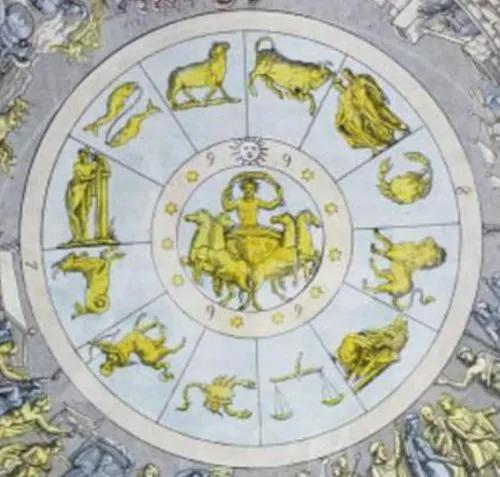
Hephaestus begins the shield not with Achilles, Troy, or even the human world, but with the largest possible frame: earth, sky, sea, the untiring sun, the full moon, and the constellations that crown the heavens. The order immediately places the Trojan War within a reality far greater than its heroes. Achilles and Hector may dominate the action of the Iliad, but neither occupies the center of the shield. The central position belongs instead to the structures that make all mortal life possible and that continue beyond the death of any individual warrior. Before cities can marry, judge, cultivate, celebrate, or fight, there must be land beneath them, water around them, light by which they labor, and a sky through which time becomes visible.
The inclusion of earth, heaven, and sea also recalls an early Greek conception of the cosmos as an ordered totality rather than an empty background. These are not decorative elements placed behind the scenes that follow. They establish the encompassing world within which every later action occurs.
The sun and moon introduce movement and recurrence into this cosmic structure. Homer calls the sun untiring, emphasizing its endless passage and the contrast between celestial regularity and mortal exhaustion. Warriors weaken, age, bleed, and die; the sun continues its course. The full moon supplies a complementary rhythm, governing the alternation of light and darkness and marking time through phases perceptible to human communities. Together, the two bodies suggest that the world represented on the shield is not frozen in a single instant. It belongs to repeating cycles of days, months, seasons, labor, and rest. This temporal dimension is essential to the agricultural scenes that appear later. Plowing, harvesting, gathering grapes, and tending animals depend upon the regularities first established in the heavens. The shield’s celestial beginning anticipates the practical life of the earth rather than withdrawing from it into abstract cosmology.
Homer names the Pleiades, the Hyades, Orion, and the Great Bear, which was also associated with the Wagon or Wain. The selection is not a complete map of the sky. Instead, it gathers some of the most visible and culturally significant star groups known to an archaic Greek audience. The Pleiades and Hyades were important as seasonal markers, while Orion was one of the most recognizable celestial figures. Their risings and settings could indicate changes in weather, the proper timing of agricultural work, and the approach of dangerous sailing conditions. The constellations joined mythology to observation: they were divine or heroic forms in the sky, but they were also practical signs by which mortal activity could be organized.
The Great Bear receives the most elaborate description. It circles in place, watches Orion, and alone among the named constellations never bathes in Ocean. The wording reflects the circumpolar character of the star group as seen from the Greek world: unlike constellations that rise and set below the horizon, the Bear appears to turn continually around the northern sky. Its unceasing rotation provides another image of permanence through motion. It does not remain fixed, yet neither does it disappear. The Bear’s watch upon Orion also transforms the sky into a field of relationships, pursuit, orientation, and mythic memory. Celestial bodies are not isolated points but participants in a patterned order whose movements can be read. Sailors could use the northern stars for direction, farmers could recognize seasons through stellar appearances, and poets could understand the same lights as bearers of traditional stories. The heavens unite practical knowledge with imaginative meaning.
The shield’s stars also establish a powerful contrast with Achilles’ chosen destiny. Their patterns return, but he will not. His fame may endure through poetry, yet the life that produces that fame is irrecoverable. This contrast should not be reduced to a simple opposition between an eternal cosmos and insignificant humanity. The shield does not diminish mortal life merely because the stars outlast it. On the contrary, cosmic order gives human actions their setting and measure. The marriage procession takes place beneath the same moon that shines upon the ambush; fields ripen under the same sun that illuminates weapons; Orion, the Pleiades, and the Hyades mark seasons in which communities plant, harvest, sail, feast, and fight. Human beings are temporary, but their lives participate in recurring structures that lend continuity to generations. The cosmos is both indifferent and sustaining. It does not intervene to save Patroclus or Achilles, yet it makes possible the world of work, justice, music, fertility, and memory represented elsewhere on the shield.
By beginning with the heavens, Hephaestus places every subsequent image inside a common frame. The two cities are not separate moral universes, nor are war and peace absolute conditions existing outside nature. Both occur beneath the same sun and stars. Agricultural abundance, civic judgment, animal violence, courtship, and battle all belong to one created order. The cosmic center prevents the shield from becoming merely an idealized portrait of society or a catalogue of human customs. It presents mortality from a perspective broad enough to contain both flourishing and destruction. Achilles will carry this ordered universe into the disorder of combat, bearing celestial permanence above a body that remains vulnerable to death. The heavens do not promise that he will survive, but they reveal how much larger the world is than the rage that now governs him.
The Two Cities: A Human World Divided and Completed
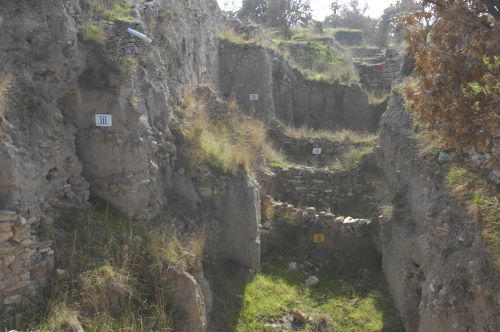
After establishing the cosmic frame, Hephaestus turns to the human world by placing two cities upon the shield. They are unnamed, populated by anonymous figures, and defined not by geography or political identity but by contrasting conditions of civic existence. One city is commonly described as being at peace, the other as being at war. Together they form the most extensive human composition on the shield and provide the central structure through which the poem explores organized society. Their placement after the earth, sea, sun, moon, and stars narrows the scale from cosmos to community, yet the cities are themselves miniature worlds. Within their walls appear marriage, law, public assembly, family, military strategy, economic wealth, religious expectation, and lethal violence. They do not merely illustrate two episodes; they represent the range of possibilities contained within communal life. Their anonymity also prevents them from being reduced to portraits of particular Greek or Trojan settlements. Instead, they become representative cities through which Homer can examine what holds a community together, what divides it, and how its members respond when violence arises from within or threatens from beyond. The movement from the cosmos to these civic scenes suggests that human society, no less than the heavens or the sea, belongs to the structure of the world Hephaestus is creating.
The distinction between them is real, but it is not absolute. The peaceful city contains a dispute arising from a killing, while the besieged city contains cooperation, planning, loyalty, and collective defense. Peace does not mean the absence of conflict, and war does not eliminate every form of social order.
The first city is alive with wedding processions, music, torchlight, dancing, and spectators, but its civic vitality is equally visible in the legal dispute unfolding in the marketplace. A man has been killed, compensation is contested, and the community gathers to hear the case. The scene does not conceal violence behind celebration. Instead, it shows a society attempting to prevent violence from reproducing itself through endless retaliation. Heralds restrain the crowd, elders sit in judgment, competing speakers present their claims, and a public reward awaits the judge who gives the straightest decision. Civic peace is represented as an achievement rather than a natural condition. It depends upon procedures capable of converting private anger into public speech and vengeance into adjudication. The marriage procession creates new households, while the court attempts to prevent one death from tearing the community apart. Both scenes concern the continuation of the city.
The second city faces a danger that cannot be resolved through internal judgment. Two armies surround it and debate whether to destroy it or accept a division of its wealth. Inside the walls, the defenders refuse surrender. Women, children, and elderly men remain behind while armed forces prepare an ambush outside the city. The scene shifts the meaning of civic unity. In the first city, institutions regulate conflict among citizens; in the second, the survival of the entire community depends upon resistance to an external enemy. The city at war is not simply the negative opposite of peaceful civilization. It reveals the conditions under which violence may be understood as protective, necessary, or inseparable from the defense of homes, families, and shared resources. The attackers’ interest in plunder exposes the material motives that often accompany heroic warfare. Honor, wealth, survival, and domination cannot be cleanly separated.
The resemblance to Troy is unmistakable, but the city is not explicitly identified as Troy. Its anonymity allows the scene to evoke the Trojan War while also exceeding it. Like Troy, it is besieged and watched by vulnerable noncombatants from the walls. Like the Achaean camp, it depends upon coordinated warriors and strategic action. Yet the shield refuses to assign the city wholly to one side of the epic conflict. It becomes a generalized image of any community threatened by war. This ambiguity is crucial because it prevents the audience from viewing destruction only from the standpoint of the victorious or the defeated. The same pattern can encompass Trojans defending their households, Achaeans protecting their ships, or any city whose political order is transformed by siege. It also unsettles the conventional heroic perspective by shifting attention away from individual champions and toward the collective body that gives their fighting meaning. Behind every warrior stand people who do not participate directly in combat but whose homes, children, property, and future depend upon its outcome. The shield removes war from the exclusive possession of famous heroes and restores the civilians, elders, children, and ordinary defenders who bear its consequences.
The two cities present civic life as a tension among continuity, conflict, and the institutions devised to manage both. One city contains violence but possesses mechanisms for containing it; the other must organize violence because its existence is under attack. Neither is morally pure, and neither represents a world untouched by danger. Their difference lies less between innocence and corruption than between conflict brought under civic judgment and conflict expanded into collective war. The shield thereby complicates any simple claim that Homer opposes peace to battle as separate realms. Human communities are completed by the presence of both possibilities. They celebrate marriages, settle disputes, defend boundaries, pursue wealth, and risk destruction. Achilles carries these cities together because the world he inhabits cannot be divided neatly into what war protects and what war destroys. The same social order that produces law, ceremony, and family also produces armies, siege, and vengeance.
The Continuation of the Community

The first scene within the city at peace is not a royal council or military parade but a series of weddings. Brides are led from their chambers through the streets beneath the light of blazing torches, while hymeneal songs rise around them and young men dance to the music of pipes and lyres. Women stand at the doors of their houses watching the processions pass. The city appears not as an abstract political institution but as a network of households publicly joining, observing, and renewing themselves. Marriage is simultaneously private and communal: it unites particular individuals, but its meaning depends upon recognition by families, neighbors, musicians, dancers, and spectators. Homer’s emphasis upon movement through the streets makes the transition visible. The bride leaves one household to enter another, while the city collectively witnesses the formation of a new domestic unit. The scene represents continuity in its most immediate social form. Warriors may win fame as individuals, but cities survive through marriages, births, inheritance, and the succession of generations.
Music gives this continuity an audible presence. The lyre and pipe regulate the movement of the dancers, while the wedding song announces the meaning of the procession to everyone who hears it. On Hephaestus’ shield, metal does not remain silent. Homer’s language permits the audience to hear instruments, voices, and the measured steps of bodies that exist only as crafted images. The scene consequently demonstrates the power of both divine workmanship and poetic description. Hephaestus gives visible form to communal joy, while Homer supplies duration, rhythm, and sound. The procession seems to advance because the poet narrates it as an event rather than inventories it as decoration. Wedding ritual, music, and dance become inseparable: each transforms a biological or contractual union into a public act of shared meaning. The prominence of women further distinguishes the scene from the battlefield world surrounding Achilles. Brides occupy the center of the processions, while women watching from their doorways represent established households observing the creation of new ones. Their presence reveals a civic order sustained through forms of participation that heroic epic often leaves at the margins. Yet the image should not be romanticized as a portrait of unrestricted female agency. Archaic marriage commonly involved negotiations among households, transfers of wealth, and the movement of a young woman into the authority of her husband’s family. The procession could signify celebration and social incorporation while also marking separation from the bride’s former home. Its symbolic richness lies partly in this doubleness. Marriage promises fertility, affiliation, and continuity, but it also requires departure, vulnerability, and a reorganization of personal identity.
For Achilles, the scene carries a painful significance. He has chosen the path that will prevent him from participating in the future displayed before him. Although marriage remains imaginable within his abandoned alternative of homecoming, his decision to pursue Hector closes that possibility. He will never lead a bride into the household of Peleus, become the center of a new family, or watch children continue his lineage. The weddings upon his shield represent more than peaceful life in general. They embody a specific form of human permanence unavailable to the warrior who seeks permanence through fame. The anonymous couples will disappear into the continuing life of their community, while Achilles will become individually unforgettable by dying young. Their future is genealogical and social; his will be poetic.
The contrast extends beyond Achilles to the entire war. The Trojan conflict began with the violation or contested transfer of a marriage, and its violence repeatedly destroys the households that marriage is meant to establish. Hector and Andromache offer the poem’s clearest image of a family threatened by war, but the danger reaches every unnamed bride, husband, mother, and child represented on the shield. Wedding torches illuminate streets that siege might later burn; songs of union sound within a world where bereavement can suddenly replace celebration. Hephaestus does not present marriage as an escape from mortality or conflict. He presents it as one of the principal ways communities answer them. By forming households and extending life into another generation, the city resists the finality that governs the heroic battlefield. Achilles carries this image into combat because war is fought in the name of communities built through such bonds, even as war remains capable of extinguishing them.
The Dispute over Blood-Price

The second major scene in the city at peace turns from marriage to homicide. Two men stand in dispute over the blood-price owed for a person who has been killed. One claims that he has paid everything due, while the other denies that he has received the compensation; both appeal to a judge, and the people gather around them in the public meeting place. The scene is brief, but its implications are extensive. Violence has already occurred, and the question is not whether the dead can be restored but whether the consequences of death can be transferred from private retaliation into a recognized civic process. The city’s peace rests not upon innocence but upon its capacity to prevent one killing from producing another.
Blood-price occupies an uncertain position between vengeance and law. Compensation does not erase the offense, nor does it make grief equivalent to material loss. It offers instead a socially accepted means of closing a cycle that might otherwise continue through retaliatory killing. The dispute on the shield suggests that even this mechanism can fail when parties disagree about payment, obligation, or truth. Law becomes necessary precisely because customary settlement has not resolved the conflict.
The public character of the hearing is crucial. Heralds restrain the crowd, elders sit upon polished stones within a sacred circle, and speakers take turns presenting their claims. Authority is distributed among procedure, communal attention, and the reputation of those who judge. The two talents of gold placed before the elders are commonly understood as a prize for the person who renders the straightest decision, though the exact legal function of the gold remains debated. What matters most is that judgment is neither private nor instantaneous. It must be spoken, heard, evaluated, and accepted within a civic setting. The scene presents justice as an activity performed before the community, where persuasion and procedure can interrupt the direct movement from injury to revenge.
This image bears directly upon Achilles’ anger. His grievance against Agamemnon began with a public insult, yet the quarrel was never successfully contained by public institutions. Assemblies were held, speeches delivered, gifts later offered, and reconciliation formally arranged, but none of these mechanisms prevented the consequences of his wrath from spreading through the Achaean army. After Patroclus’ death, Achilles abandons even the possibility that compensation might answer injury. No gift can substitute for the dead companion, and no judgment can satisfy him except Hector’s destruction. The legal scene on the shield represents a path that Achilles either cannot or will not follow. It imagines anger being submitted to communal decision at the very moment when the shield’s bearer has transformed anger into an absolute personal demand. Yet Homer does not present judgment as easy, infallible, or free from conflict. The crowd supports opposing sides, the facts remain contested, and the elders must struggle to determine the straightest resolution. Civic order depends upon labor no less than agriculture does. It requires restraint, listening, memory, persuasion, and the willingness to accept an outcome that may not satisfy every participant completely. The peaceful city is peaceful because it contains institutions capable of receiving violence without immediately reproducing it. Its law court offers no utopian escape from death; it offers a method by which the living may continue after death has entered the community. On Achilles’ shield, that possibility stands in silent contrast to the heroic world of the Iliad, where honor repeatedly exceeds mediation and anger presses toward blood.
War as Strategy and Suffering in the Besieged City
The second city on the shield is encircled by two armies, and the first question confronting the attackers is not how bravely they will fight but what they intend to do with the city and its wealth. They debate whether to destroy the settlement outright or accept a division of its possessions. The alternatives expose the material logic beneath heroic warfare. Siege is not presented solely as a contest for honor or military supremacy; it is also a struggle over property, survival, and control of accumulated resources. The city represents homes, herds, metals, food, labor, and generations of communal investment, all of which can be converted into plunder by a victorious army. Homer places economic calculation at the threshold of battle. Before blood is shed, the attackers are already imagining how conquest will transform another community’s life into their own reward.
The defenders refuse the proposed settlement and prepare resistance. Their decision gives the city at war a collective agency often obscured by epic concentration upon individual heroes. They are not merely passive objects of siege awaiting rescue by a champion. They deliberate, organize, arm themselves, and attempt to shape the circumstances under which the enemy will be confronted.
The city itself becomes a theater of divided participation. Women, children, and elderly men stand upon the walls while those capable of fighting move outside them. The image separates the community according to age, gender, and military function, but it also reveals the dependence of every group upon the others. The warriors do not fight in isolation. Behind them are the people whose continued existence gives defense its purpose, while those watching from the walls experience war through uncertainty and helplessness. Their elevated position allows them to see the battle, but not to control it. Spectatorship becomes a form of suffering: the city’s noncombatants must watch the bodies upon which their future depends move beyond the protection of the walls. The scene recalls the walls of Troy, where Priam, Hecuba, Andromache, and Helen repeatedly witness or anticipate violence they cannot prevent. The attackers, defenders, and onlookers are joined by divine figures. Ares and Athena, represented in gold and made larger than the mortals around them, lead the warriors into confrontation. Their presence grants the scene a mythic brilliance while also emphasizing the inequality between gods and human beings. Divine powers can enter battle magnificently, influence its direction, and withdraw without sharing the mortal consequences of defeat. The enlarged metallic gods may dominate the visual field, but it is the smaller human figures who will bleed, lose relatives, and see their city survive or fall. The contrast reflects the wider Iliad, where divine rivalries repeatedly intensify conflicts whose permanent costs are borne by mortals.
The besieged city also complicates heroic warfare by representing it as coordinated strategy rather than a succession of formal duels. The defenders plan an ambush, leave part of the population behind the walls, select advantageous terrain, and conceal their movements. Success depends upon intelligence, timing, discipline, and the ability to deceive the enemy. Such warfare is collective and uncertain. No single warrior controls the entire field, and courage alone cannot guarantee victory. The shield thereby widens the poem’s martial vision beyond the famous confrontations that dominate heroic memory. Battles may later be remembered through the names of exceptional men, but cities survive through scouts, ordinary soldiers, herdsmen, defenders, and civilians whose contributions rarely become the subjects of song.
The scene’s visual splendor must not obscure its suffering. Hephaestus fashions shining armor, golden gods, marching troops, and a city filled with purposeful movement, yet the beauty of the artifact does not make siege beautiful in moral terms. Its brilliance instead creates a disturbing tension between aesthetic order and human catastrophe. Every formation arranged upon the shield implies bodies that may soon be broken; every defended wall implies the possibility of massacre, enslavement, and dispossession if that defense fails. The city’s anonymity strengthens this effect. Because it is not definitively Troy, the audience cannot regard its danger as the deserved fate of a familiar enemy. It becomes any city encircled by armies and any population forced to place its future in the hands of violence. Achilles carries that vulnerability into battle upon his shield. He fights as the greatest protector available to the Achaeans, but he also embodies the destructive force from which cities require protection. The besieged city captures war’s central contradiction: it can be organized as the defense of communal life even while its methods threaten to annihilate the very forms of life represented elsewhere on the shield.
The Ambush

The defenders of the besieged city do not wait passively behind their fortifications. Leaving women, children, and elderly men upon the walls, the fighting force moves outward and establishes an ambush near a river where cattle and sheep are customarily watered. The location is carefully chosen. Watering places gather animals, herdsmen, and travelers into predictable paths, making them ideal points at which concealed troops can strike. The scene presents warfare as an exercise in knowledge as much as strength. The defenders must understand the landscape, anticipate routine movement, conceal their presence, and attack at the moment when the enemy is least prepared. Homer’s warriors often speak of courage and honor, but the shield acknowledges another martial reality: communities survive through planning, patience, and the intelligent manipulation of circumstances.
Deception is central to the operation. The ambushers remain hidden while scouts wait farther ahead for signs that the herds are approaching. Their success depends upon appearing absent until the instant of attack. Such tactics complicate any idealized picture of Homeric warfare as a sequence of open challenges between visibly matched champions.
The pastoral setting intensifies the violence because the attack enters through the ordinary rhythms of economic life. Herds approach the river accompanied by two shepherds playing their pipes, unaware of the soldiers concealed nearby. For a moment, the scene belongs to the same world as the shield’s peaceful images of cattle, sheepfolds, music, and agricultural abundance. Animals move toward water; herdsmen perform familiar work; music accompanies routine labor. Then hidden warriors rush upon them. The transition is abrupt, and that abruptness is the point. War does not remain confined to walls, armies, or formal battlefields. It interrupts food production, seizes livestock, kills or displaces workers, and turns landscapes of sustenance into sites of bloodshed. The shield thereby exposes the dependence of military power upon the same material world that violence repeatedly devastates.
Once the clash begins, the scene loses the order that made the ambush possible. The attackers hear the disturbance and move to respond; opposing forces collide at the riverbank; and Strife, Tumult, and destructive Fate enter among them. These personified powers do not merely decorate the fighting. They reveal how quickly controlled strategy gives way to forces that exceed individual intention. Strife spreads conflict, Tumult dissolves clarity, and Fate determines outcomes no warrior can fully command. One figure is shown wounded, another unwounded, while another lies dead and is dragged by the feet through the fighting. The juxtaposition reduces heroic distinction to bodily condition. Men who entered battle with plans, weapons, and social identities become wounded, surviving, or dead bodies within the confusion. Fate’s clothing is stained red with human blood, giving the metallic scene a physical horror that resists any attempt to interpret the combat as pure spectacle.
The ambush contains two visions of war at once. Before the attack, violence appears rational: commanders choose terrain, scouts observe movement, troops hide, and timing promises advantage. After contact, that apparent control fractures into noise, injury, pursuit, and death. Homer does not deny the value of intelligence, nor does he imply that strategy is dishonorable. The defenders’ deception is part of their effort to preserve a threatened city. Yet the scene refuses to allow tactical competence to sanitize what follows. Shepherds and animals are drawn into the conflict, corpses are handled without dignity, and anonymous fighters suffer beyond the explanatory language of heroic fame. On Achilles’ shield, the ambush serves as a miniature of warfare itself. Human beings design violence to achieve specific ends, but once released, it spreads through landscapes, bodies, and communities in ways that no plan can completely contain.
The Plowed Field
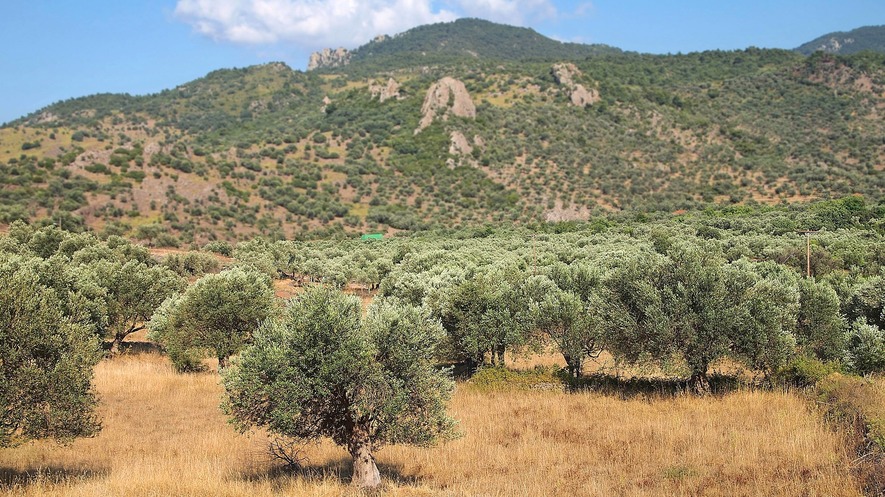
After the violence of the besieged city and the ambush by the river, Hephaestus turns to a broad field being worked by many plowmen. The transition is striking. The shield moves from men cutting down other men to human beings cutting orderly furrows into the earth, replacing the chaos of battle with repetitive, purposeful labor. Teams of oxen draw the plows across the field, while the workers guide them toward the boundary, turn, and begin again. The scene possesses no named hero and culminates in no singular achievement. Its meaning lies in recurrence. Each furrow resembles the one before it, yet together they transform uncultivated ground into land capable of sustaining a community. Homer gives agricultural work the dignity of attention usually reserved for combat, suggesting that civilization depends as much upon anonymous endurance as upon conspicuous courage.
At the end of each course, an attendant offers the plowmen a cup of honey-sweet wine. The small detail introduces rest and reward into the rhythm of exertion. The workers drink, turn their teams, and eagerly return to the furrow, so that pleasure does not end labor but helps sustain it.
The field is described as rich, deep, and repeatedly plowed, although Hephaestus has fashioned it from gold. As the plowshares pass through its surface, the earth behind them appears dark, as real soil darkens when freshly turned. Homer pauses over this effect and calls it an extraordinary wonder of the workmanship. The miracle does not consist simply in the value of the metal. Gold ordinarily signals brightness, permanence, and aristocratic wealth, yet Hephaestus makes it imitate moist, yielding earth marked by heavy labor. A resistant material appears soft; shining metal appears dark; a static surface seems to change beneath moving plows. The description deliberately exposes the impossibility of the artifact while intensifying belief in it. Divine art is most powerful not when it advertises precious materials but when it causes those materials to appear transformed into something living and useful.
Plowing also establishes a relationship between human order and the resistance of nature. The field does not produce food without intervention. Oxen must be harnessed, plows directed, boundaries observed, and labor repeated until the soil has been properly opened. The furrow is both a physical mark and a sign of cultural organization. It divides space, prepares the earth for seed, and projects human intention into the future, since the plowmen work toward a harvest not yet visible. Their task requires confidence in seasonal recurrence: that seed will germinate, rain will fall, crops will mature, and the community will survive to gather them. It also depends upon accumulated knowledge transmitted across generations, the selection of workable land, the timing of cultivation, the management of animals, and the coordination of many workers toward a result no individual can produce alone. The field is not merely nature subdued by strength. It is nature entered into a sustained relationship with human memory, discipline, and expectation. Every furrow joins present exertion to earlier experience and future need, making agricultural labor one of the clearest expressions of communal continuity on the shield. This orientation toward future abundance sharply contrasts with Achilles’ increasingly narrowed sense of time. He has abandoned the long future in favor of immediate vengeance, while the agricultural world upon his shield is built by people whose labor gains meaning only through patience and continuity.
Yet the plowed field is not merely a peaceful opposite to warfare. Homeric poetry frequently draws comparisons between battle and agricultural labor, describing advancing warriors, falling bodies, or blood-darkened ground through images of reaping and cultivation. Both farmer and fighter impose lines upon the landscape, exert force through sharpened instruments, and participate in collective activities essential to the survival of their communities. The moral difference lies in what their labor produces. The plow wounds the earth to release fertility; the weapon wounds the body and closes its future. By placing the field after the ambush, Hephaestus makes the contrast unavoidable without reducing it to a simple allegory. Human beings possess the capacity to organize effort toward either nourishment or destruction, and both activities require discipline, strength, and repetition. The miracle of the scene is not only that gold appears to become soil. It is that the shield makes ordinary labor visible as one of the foundations of the world Achilles carries into battle.
The Harvest: Unequal Social Order
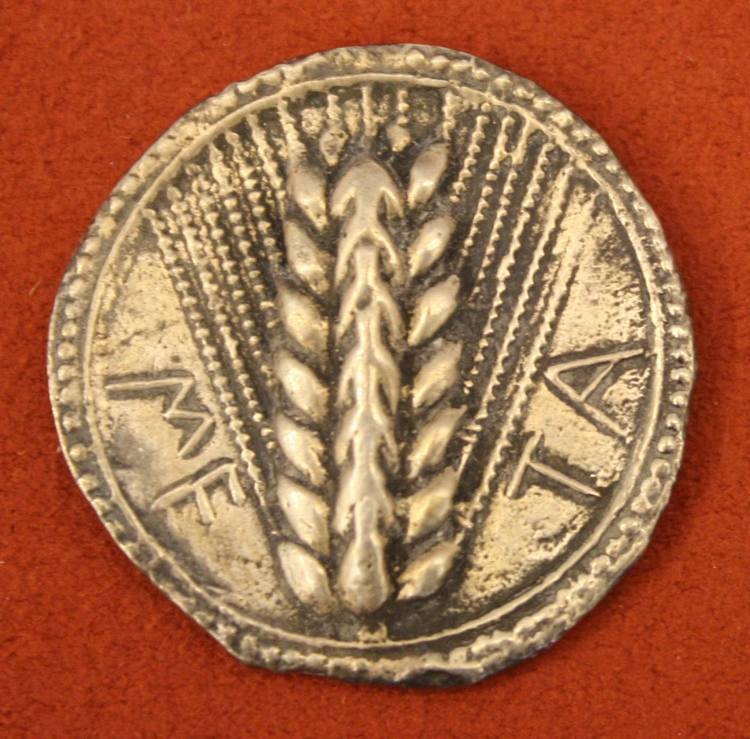
From the plowed field, Hephaestus moves to land already heavy with grain. Reapers advance through the crop carrying sharp sickles, cutting the stalks in disciplined rows as handfuls fall behind them. Binders gather the cut grain into sheaves, while boys collect armfuls and carry them onward. The scene completes the agricultural sequence begun with plowing: effort invested in the earth has become visible abundance. Unlike the uncertainty of battle, where skill and courage may still end in death, the harvest appears to reward coordinated labor with a material result that can be stored, distributed, and consumed. Yet the abundance is not spontaneous. It emerges from many bodies performing distinct tasks within an organized system whose success depends upon timing, cooperation, and endurance.
At the center stands a king, holding his staff and watching in silence. Homer describes him as joyful at heart, but he does not join the labor that produces his satisfaction. The king’s presence has often encouraged the scene to be read as an ideal image of prosperous rule. A successful ruler presides over fertile land, orderly labor, and a harvest sufficient to sustain the community. His staff marks authority, while his silent pleasure suggests that abundance itself testifies to the soundness of the social order. Kingship in early Greek thought was closely associated with the fertility and stability of the land, especially when rulers upheld justice and maintained proper relations among gods and mortals. The harvest may imply that political authority is validated through collective flourishing. The field is productive, the workers are coordinated, and the ruler can survey a result that promises food, wealth, and continuity.
That interpretation should not obscure the unequal distribution of work and power. The king receives the symbolic credit of presiding over prosperity, but others bend, cut, bind, lift, carry, slaughter, prepare, and serve. His stillness contrasts with their movement. The scene does not identify whether the laborers are free dependents, hired workers, household retainers, or enslaved people, and the social categories of the Homeric world cannot be reconstructed neatly from a few lines. What is visible is hierarchy. One figure supervises and possesses the signs of authority; many unnamed figures perform the physical labor upon which his satisfaction rests. The shield presents social coordination, but coordination is not the same as equality.
Beneath an oak, heralds prepare a feast for the workers. A great ox is slaughtered, and women make ready barley for the meal. The detail gives the harvest an atmosphere of communal completion, joining labor to food, sacrifice, and shared consumption. Yet the meal also reveals how abundance circulates through authority. The king or estate provides the feast, and the provision may be understood as generosity, obligation, compensation, or a combination of all three. The workers’ sustenance comes from the same agricultural system they have helped make productive, but it is redistributed through structures controlled by others. Homer does not pause to criticize the arrangement, nor does he describe resentment among the laborers. The scene is harmonious because each participant occupies an assigned place and because the harvest produces enough to support both work and celebration. Modern readers need not mistake harmony of representation for absence of exploitation. The shield can idealize an ordered hierarchy while still revealing how sharply labor, authority, and ownership are divided.
The harvest also casts a shadow toward the battlefield. Homeric poetry repeatedly compares warriors to crops cut down by reapers, transforming agricultural abundance into a metaphor for mass death. Sickles and swords both move through dense ranks; stalks and bodies both fall in rows; the work of many hands converts a living field into something gathered and removed. The resemblance does not make harvesting violent in the same moral sense as killing, but it exposes how readily human beings understand war through the language of productive labor. On the shield, the true harvest preserves life by feeding the community. Achilles’ harvest will be measured in Trojan corpses. He carries an image of labor that turns death in nature into nourishment while preparing to undertake labor that turns human life into fame, grief, and memory.
The Vineyard: Cultivated Nature

The vineyard scene shifts the shield from grain, kingship, and hierarchical labor to a landscape of youth, movement, music, and ripening fruit. Hephaestus fashions vines heavy with dark grapes, supported upon silver poles and enclosed by a trench of blue metal and a fence of tin. A single path runs through the vineyard, and along it young men and women carry baskets filled with the harvest. The scene is carefully cultivated rather than wild. Every element (the poles, boundary, path, baskets, and organized procession) reveals nature shaped through repeated human attention. Grapes do not simply appear as a spontaneous gift of the earth; they grow within an environment constructed to protect, guide, and gather them. Yet the labor here is rendered with a lightness absent from the plowed field and grain harvest. The workers move together, surrounded by music, and the scene joins productivity to celebration. At their center, a boy plays a clear-toned lyre and sings what Homer calls the Linos song. The precise meaning of this song has long remained uncertain. It may refer to a traditional harvest lament associated with the mythical Linos, or it may preserve the name of a refrain whose original significance had already become obscure. Whatever its exact ritual or mythological background, its presence complicates the apparent joy of the grape gathering.
The song seems to contain lament within celebration. This combination is not unusual in agrarian ritual, where ripeness and loss belong to the same seasonal process. Fruit reaches perfection only to be cut from the vine, carried away, crushed, and transformed. The harvest celebrates abundance while acknowledging the destruction necessary to convert growth into human nourishment and pleasure. The Linos song may have given emotional form to this doubleness, allowing grief and festivity to sound together. Homer does not explain its words, but he emphasizes the beauty of the boy’s voice and lyre while the others respond with singing, dancing, and rhythmic cries. Metal becomes sound, and agricultural work becomes performance. The vineyard is not merely a site of production; it is a cultural space in which labor is interpreted through inherited music.
The young men and women also introduce an unmistakable element of sexuality and courtship. Their presence together, dressed for communal activity and moving in coordinated rhythm, places the vineyard within the social world of attraction, fertility, and marriage. The ripening grapes reinforce these associations. Vines were closely connected with abundance, generative power, wine, and the pleasures that gather communities into feasting and ritual. Yet the scene does not descend into disorder. Desire is contained within procession, music, and shared work. The path through the vineyard directs movement just as social custom directs relations among the young. Cultivated nature becomes a metaphor for cultivated sexuality: fertile, pleasurable, and necessary to continuity, but shaped by boundaries, timing, and communal form.
For Achilles, this world of youth is both familiar and inaccessible. He too is young, physically magnificent, and associated with song; earlier in the Iliad, he is found playing the lyre and singing of heroic deeds. Yet the music of the vineyard belongs to a different future. It accompanies shared labor, courtship, seasonal recurrence, and the movement of young people toward adult participation in the community. Achilles’ song is solitary and retrospective, concerned with the fame of warriors already remembered. The vineyard song is collective and reproductive, binding the living to the rhythms through which communities continue. Even its possible lament remains part of renewal rather than final destruction. The youths will carry grapes, make wine, feast, marry, and return to the harvest in another season. Achilles will not return. By placing this scene upon his shield, Hephaestus surrounds the doomed warrior with a vision of youth directed toward fertility instead of death, pleasure instead of vengeance, and continuity instead of immortal fame purchased through a shortened life.
The Herd of Cattle and the Fragility of Order
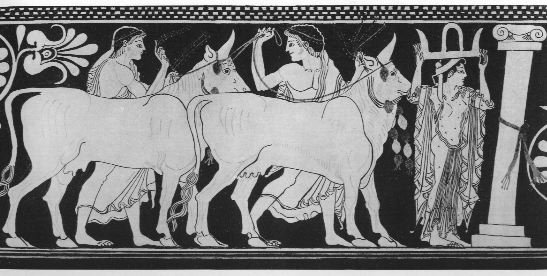
Hephaestus next fashions a herd of straight-horned cattle moving from their enclosure toward pasture beside a murmuring river and waving reeds. The animals are made of gold and tin, but Homer gives them the appearance of living movement as they low, advance, and follow the paths laid before them. Four herdsmen accompany the cattle, assisted by nine swift-footed dogs. The scene presents pastoral life as coordinated order: animals are bred, enclosed, released, guided, and protected through human labor. Unlike the grain field or vineyard, the wealth represented here is mobile. Cattle can wander, be stolen, attacked, sacrificed, exchanged, or driven away in war. Their value depends not only upon possession but upon the continuing ability to control and defend them.
In Homeric society, cattle are more than food. They measure wealth, establish prestige, supply sacrificial victims, and provide a standard through which valuable objects may be compared. Herds embody accumulated social power, but they also reveal how exposed that power remains.
The apparent calm is broken when two lions seize a great bull from the front of the herd. The predators drag it away as the animal bellows, while the herdsmen and dogs pursue them without successfully driving them off. The violence enters suddenly, but it is not unnatural. Unlike the ambush near the river, which introduces human warfare into pastoral routine, the lions belong to the same landscape as the cattle. Predation is part of the natural order from which domestication can never entirely separate its animals. The herdsmen may guide movement, build enclosures, and employ dogs, yet their authority has limits. The attack exposes the fragility beneath the image of controlled abundance. Wealth can be gathered and protected, but it cannot be rendered invulnerable.
The lions also complicate the heroic imagery that surrounds Achilles. Homeric warriors are frequently compared to lions because of their courage, ferocity, isolation, and irresistible force. Such comparisons elevate the fighter by associating him with an animal that does not hesitate before weaker prey. On the shield, the comparison’s violence is made visible from the victim’s perspective. The bull is not an abstract sign of defeat. It struggles, cries out, and is pulled from the herd while its protectors fail to save it. What appears glorious when imagined as leonine heroism becomes terrifying when seen as predation upon a living body. Achilles himself will soon move among the Trojans like a lion among cattle, overwhelming men whose fear and suffering the heroic simile can easily subordinate to his magnificence. The shield does not cancel that magnificence, but it reveals the cost hidden within it. Predatory strength creates glory for the attacker by destroying the order and value represented by the victim.
The cattle scene joins wealth, nature, and violence without resolving their tensions. The herd represents prosperity produced through breeding, labor, and protection, while the lions demonstrate how quickly that prosperity may be torn apart. Human beings can construct folds, appoint herdsmen, train dogs, and organize landscapes, but neither nature nor war guarantees respect for those arrangements. The scene echoes the wider world of the Iliad, where cities, armor, livestock, women, and precious metals become objects of seizure because accumulated wealth attracts violence as surely as a herd attracts predators. Achilles carries this lesson upon a shield that is itself an object of immeasurable value and potential plunder. The divine armor promises protection, yet its imagery repeatedly warns that no enclosure, social order, or possession can permanently exclude death.
The Sheepfold and the Architecture of Protection
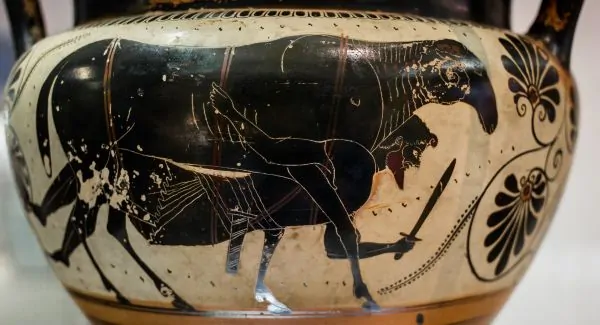
After the violence of the lions attacking the cattle, Hephaestus fashions a quieter pastoral scene: a broad grazing ground filled with white sheep, folds, roofed shelters, and enclosed pens. No predator appears, no warrior intrudes, and no animal struggles against death. The landscape seems governed by stillness and containment. Sheep move within spaces shaped for their protection, while huts and folds indicate a settled human presence capable of organizing the pasture around shelter, supervision, and recurring care. The scene offers one of the shield’s clearest images of peace, not as spectacular celebration but as the unobtrusive security of animals resting within a well-maintained environment. That security is architectural. Fences, pens, and roofed structures create boundaries between the vulnerable flock and the dangers beyond it.
The sheepfold represents domestication in its most visible form. Sheep depend upon human beings for guidance, defense, breeding, shearing, and access to pasture, while human communities depend upon them for wool, meat, milk, hides, exchange, and sacrifice. Pastoral order rests upon reciprocity, though not equality, between people and animals. The shepherd controls movement and reproduction, but he must also protect the flock from predators, thieves, weather, disease, and dispersal. Every enclosure embodies accumulated knowledge about risk. Its walls do not eliminate danger; they manage exposure by gathering animals into a space that can be watched and defended. In this respect, the folds resemble the city walls shown earlier on the shield. Both create a protected interior, establish a boundary between belonging and threat, and require continual maintenance if they are to remain effective. The analogy also extends to political language, in which rulers and warriors may imagine themselves as shepherds responsible for the people under their care. Yet the shield quietly reminds its audience that claiming such a role is not the same as fulfilling it. Protection must be enacted through vigilance rather than asserted through status.
The calm of the sheepfold is meaningful because it follows the failed defense of the cattle herd. Herdsmen and dogs could not save the bull from the lions, but the sheep appear protected within a more thoroughly constructed landscape. Hephaestus places two forms of pastoral life beside one another: mobility exposed to sudden attack and enclosure offering temporary refuge. The contrast should not be taken to mean that folds guarantee permanent safety. Homeric audiences knew that pens could be breached, flocks stolen, and shepherds killed. Indeed, livestock raiding forms part of the material background of heroic warfare, where cattle and sheep can be transformed rapidly from signs of prosperity into prizes of violence. The peace of the fold is consequently provisional. It exists because danger has, for the moment, been held outside.
The shield itself may be understood through the same architecture of protection. Like the sheepfold, it is a bounded structure designed to place something vulnerable behind a defensive surface. Its concentric form encloses cities, fields, animals, dancers, and celestial bodies just as a wall encloses a flock. Yet neither fold nor shield can abolish mortality. The pen may preserve sheep through the night, and divine armor may protect Achilles through particular blows, but both operate within a world where every boundary can eventually fail. The pastoral scene offers no fantasy of absolute security. Its peace lies in the temporary success of care, enclosure, and communal foresight. On a shield made for a warrior who cannot be saved from fate, that modest achievement becomes deeply significant: protection matters even when it cannot be permanent.
The Dance Floor and the Choreography of Community
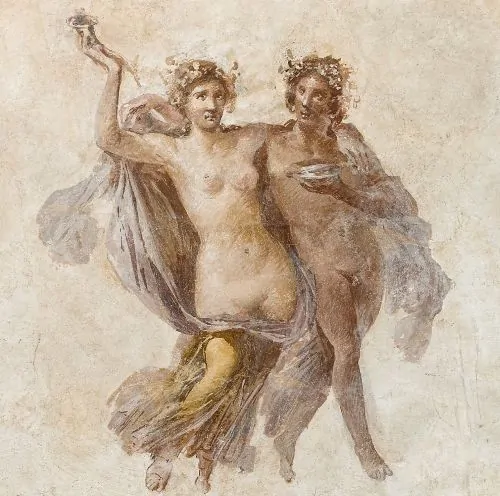
Near the outer reaches of the shield, Hephaestus fashions a dancing place modeled upon the one that Daedalus once made for Ariadne at Knossos. The reference is unusually specific within an otherwise anonymous sequence of cities, fields, workers, and animals. Daedalus enters the scene as the paradigmatic human craftsman, famous for works that blur the boundaries between skill, wonder, and apparent life. By comparing Hephaestus’ creation to a structure attributed to Daedalus, Homer places divine and human artistry in deliberate relation. Hephaestus creates the entire shield, but one of its most intricate communal scenes recalls a mortal maker whose reputation already belonged to mythic memory. Ariadne, meanwhile, brings with her associations of Crete, dance, courtship, abandonment, rescue, and transformation, although Homer does not narrate those later-developed traditions here. Her name lends the dance floor an aura of inherited story without fixing the scene to a single interpretation. The comparison also creates an artwork within an artwork. Hephaestus makes a shield upon which he depicts a dance floor modeled upon another famous crafted space, while Homer recreates all of them through verse.
Young men and women dance together upon this floor, holding one another by the wrists as they move in coordinated formations. Their clothing emphasizes both beauty and social distinction: the women wear fine linen garments and garlands, while the men are dressed in carefully woven tunics and carry golden knives suspended from silver straps. These are not laborers clothed for the field or warriors armored for combat. They appear in ceremonial dress, presenting themselves to one another and to the watching community as participants in a public display of youth, attractiveness, and readiness for adult social roles. The dance belongs to the same world of sexuality and generational renewal as the wedding processions and vineyard gathering. Yet courtship here is choreographed rather than private. Desire is placed within collective movement, ritualized display, and communal observation, allowing individual bodies to express attraction while remaining part of an ordered whole.
Homer compares the dancers’ circular motion to a potter testing a wheel between his hands. The simile links performance to craftsmanship: bodies become material shaped through rhythm, balance, and practiced control. At other moments, the dancers break from the circle and move toward one another in lines, showing that harmony does not require immobility or uniformity. Order arises from coordinated variation.
The dance floor offers one of the shield’s clearest alternatives to the battlefield. Both spaces contain groups of young people moving rapidly under the gaze of spectators, but their movements produce opposite results. Warriors advance, collide, separate, and fall; dancers turn, approach, withdraw, and rejoin without destroying one another. Battle converts bodily excellence into domination, while dance converts it into beauty shared by performers and observers alike. Even the men’s knives are ornamental rather than active, signs of status carried within a setting that suspends their violent use. The scene does not deny the physical energies admired in heroic culture (strength, speed, agility, discipline, and competitive display) but redirects them toward communal pleasure. It imagines a society in which young bodies can acquire recognition without becoming corpses. Two tumblers move among the dancers and lead the performance, adding another level of virtuosity to the scene. Their acrobatic motion introduces risk, surprise, and individual distinction, but these qualities remain integrated within the larger pattern. The community does not suppress excellence; it gives excellence a form that contributes to collective delight. This is the essential symbolism of the choreography. Each participant retains a visible identity, yet no one dominates the whole, and movement remains beautiful only because every body responds to the others. On Achilles’ shield, the dance becomes a model of social order achieved through rhythm rather than command, reciprocity rather than conquest, and repeated return rather than irreversible death.
For Achilles, the image is particularly poignant. He possesses the bodily grace, speed, and distinction that would make him remarkable in any gathering, yet his chosen arena is battle, where movement leads toward isolation and extinction. The dancers belong to a cycle of courtship, marriage, memory, and communal renewal; Achilles belongs to the singular trajectory of heroic fame. Their circles close and begin again, while his path moves relentlessly forward toward Hector and death. Hephaestus places near the shield’s boundary an image of human beings transforming physical power into ordered joy. The dance does not erase conflict from the world, but it shows that bodies capable of violence are also capable of creating beauty together.
Ocean at the Rim: The Limits of the Known World
Hephaestus completes the shield by placing the great stream of Ocean around its outermost rim. After the dense succession of cities, fields, vineyards, herds, sheepfolds, and dancers, the description returns to the cosmic scale with which it began. Ocean does not appear as another local river flowing through a particular landscape. It surrounds the entire represented world, forming the final boundary within which every other image is held. The shield closes as it opened: human life remains enclosed by powers and structures larger than any city, army, harvest, or individual fate.
In early Greek cosmological imagination, Ocean was commonly conceived as a vast river encircling the inhabited earth. It marked the outermost reach of the familiar world and the threshold beyond which ordinary geography gave way to divine, monstrous, or otherwise inaccessible regions. Its placement at the rim gives Ocean both a pictorial and a structural function. Visually, it forms the last continuous band of the shield, binding otherwise separate scenes into a single composition. Conceptually, it converts accumulation into totality. Without the encircling river, the images might appear as a sequence of disconnected episodes: a lawsuit, an ambush, a harvest, a lion attack, a dance. Ocean gathers them within one bounded world and insists upon their coexistence. Marriage and murder, cultivation and predation, law and siege all occur inside the same enclosure. The shield’s unity does not depend upon harmony among its scenes but upon their shared containment within a larger order.
Ocean also symbolizes the limits of human knowledge. The people depicted upon the shield inhabit cities, cultivate land, navigate social obligations, observe the heavens, and organize natural resources, but their world remains finite. Its edge can be imagined even when it cannot be crossed or fully understood. The encircling stream distinguishes the ordered realm of human experience from what lies beyond its boundary. Yet it does not function only as a barrier. Water moves, connects, nourishes, and returns. Rivers sustain settlements, seas permit travel, and Ocean belongs to a larger conception of circulation in which the world is bounded by something that is itself in perpetual motion. The rim is both limit and continuity.
The relationship between Ocean and the shield’s circular form reinforces the theme of recurrence. The sun and stars follow their courses, seasons return, land is plowed and harvested, vines ripen, animals reproduce, marriages create new households, and dancers turn in repeated formations. Ocean completes these cycles by surrounding them with another unbroken movement. Its circularity suggests that mortal life proceeds through patterns larger than the individuals who temporarily inhabit them. A particular harvest ends, a particular city falls, and a particular warrior dies, but the structures of life continue. Achilles’ tragedy lies partly in his separation from that continuity. His fame will endure, but he will not return within the cycles of household, labor, and generation represented upon the shield. The rim also invites comparison with the defensive purpose of the object itself. A shield protects by placing a boundary between the warrior’s body and the weapons directed against it. Ocean performs a similar symbolic act, enclosing the represented world within a final protective circumference. Yet the images inside repeatedly demonstrate that enclosure cannot guarantee safety. City walls may be besieged, cattle may be seized by lions, legal settlements may be contested, and warriors may die despite armor. Ocean contains the world without purifying it of danger. Its power lies not in eliminating mortality but in giving mortality a place within a comprehensible whole.
By ending with Ocean, Homer avoids granting the final word to either war or peace. The shield does not conclude with the ambush, the harvest, the lions, or the dance, because none of those scenes alone can define existence. The encircling river places them all within the same cosmic boundary and transforms the shield into an image of completeness rather than moral simplicity. Achilles will carry this bounded world into battle, holding before his mortal body an artifact whose outer edge contains everything he is about to defend, threaten, and leave behind. Ocean marks the limit of the shield, but it also reveals the ambition of the poem: to gather within a finite form a world whose meanings continue to flow beyond any single image.
What Is Missing from the Shield?
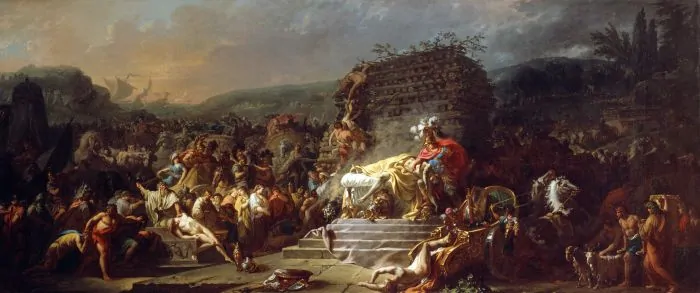
For all its apparent completeness, the Shield of Achilles is a selective image of the world rather than an exhaustive one. Its surface contains the heavens, two cities, agricultural labor, pastoral wealth, music, dance, law, warfare, and the boundary of Ocean, yet it excludes the named individuals who dominate the Iliad. Achilles does not appear upon his own shield. Neither do Patroclus, Hector, Agamemnon, Priam, Helen, or Andromache. Troy is never identified, and the Achaean camp is nowhere explicitly represented. The absence of familiar names prevents the shield from becoming a miniature illustration of the poem’s plot. Instead, its inhabitants remain anonymous participants in recurring forms of human life: brides, judges, kings, reapers, shepherds, dancers, soldiers, mothers, children, and the dead. Their lack of individual identity does not make them insignificant. It allows them to stand for communities and generations rather than singular heroic destinies. The omission of Achilles is striking. He carries the world upon his body without seeing himself placed within it, as though the life represented on the shield continues independently of the warrior whose fame overshadows the epic.
The shield also lacks a clearly depicted heroic funeral, despite being created because Patroclus has died and despite the Iliad’s growing concern with burial, mourning, and the treatment of corpses. Death appears in the legal dispute, the besieged city, the ambush, and the lions’ attack upon the bull, but no community is shown performing the rituals by which the dead are mourned and reintegrated into collective memory. This absence may intensify the distinction between the shield’s recurring social world and Achilles’ exceptional path. The communities portrayed by Hephaestus are oriented chiefly toward continuation (marriage, judgment, harvest, courtship, defense, and dance) whereas funeral ritual confronts the final removal of an individual from that continuity. The omission does not mean that death is marginal to the design. On the contrary, mortality presses against nearly every scene. What is missing is not death itself but the formal communal response to it, a response that the poem will later make central through the funeral games for Patroclus and Priam’s recovery of Hector’s body.
Formal religious life is likewise less visible than might be expected in a world governed by gods. Ares and Athena appear in the city at war, and divine craftsmanship creates the shield itself, but there are no prominently described temples, sanctuaries, priesthoods, or extended sacrificial ceremonies. The ox slaughtered during the harvest meal may carry sacrificial associations, yet the scene emphasizes food and communal provision more than ritual theology. This relative absence keeps the shield’s human world focused upon social practice rather than explicit devotion. The gods exist, influence events, and structure the cosmos, but the inhabitants of the shield are principally shown marrying, judging, laboring, fighting, tending animals, and dancing. Their world is sacred without being dominated visually by organized worship.
More troubling are the people who may be present in the shield’s economy but remain unnamed or socially indistinct. Fields are plowed, grain is harvested, livestock is managed, meals are prepared, wealth is accumulated, and kings preside, yet the poem does not identify the legal or social status of most workers. Some may be household dependents, hired laborers, retainers, or enslaved people, but the idealized surface absorbs these differences into harmonious activity. Women appear prominently as brides, dancers, spectators, and food preparers, though their perspectives and constraints are not explored. Captives, conquered populations, displaced families, and enslaved victims, the predictable human consequences of the siege depicted on the shield, remain outside the visible frame. The artifact presents a world broad enough to seem universal while retaining the assumptions of an aristocratic social imagination. Its omissions do not invalidate its claim to totality; they reveal how that totality is constructed. Hephaestus includes what makes ordered communal life recognizable to the poem’s audience, but he does not expose every form of inequality and suffering upon which that order may depend. The shield is complete as a poetic cosmos, yet incomplete as a record of all those who inhabit, sustain, or are crushed by the world it represents.
War and Peace: Opposition or Interdependence?
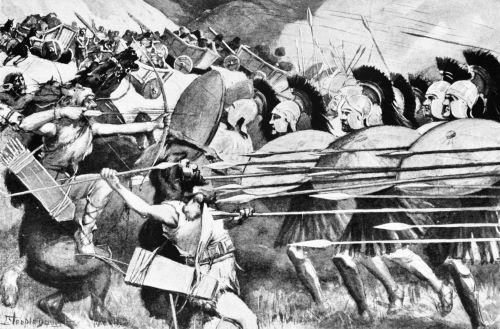
The shield is often read as a grand contrast between the violence of the Iliad and the peaceful life that warfare places at risk. That contrast is undeniably present. Wedding processions, legal judgment, plowing, harvesting, music, courtship, herding, and dance stand against siege, ambush, bloodshed, predation, and the dragging of corpses. Yet Hephaestus does not divide these conditions into separate moral worlds. The city at peace contains a dispute born from homicide, while the city at war displays loyalty, coordination, courage, and collective defense. The agricultural scenes depend upon sharp tools, disciplined force, and the conversion of living growth into harvested produce. Pastoral prosperity remains vulnerable to lions, theft, and sudden destruction. Even the vineyard song may hold lament within celebration. The shield does not present peace as innocence or war as pure chaos. It presents both as conditions emerging from the same human capacities for organization, competition, cooperation, desire, and violence.
Peace, in this design, is not simply what exists when fighting stops. It must be made and maintained.
The legal dispute shows this most clearly. A community remains peaceful not because no one has been killed but because anger can be submitted to judgment before it produces another death. Marriage ceremonies renew households, but those households require social recognition and protection. Fields yield abundance only through repeated labor, and herds remain orderly only through enclosure, supervision, and defense. Dance converts bodily energy into coordinated pleasure because participants accept rhythm, spacing, and mutual restraint. These scenes reveal peace as an active achievement composed of institutions, habits, boundaries, and repeated acts of cooperation. War is equally organized. The besiegers calculate, defenders deliberate, scouts observe, and ambushers exploit terrain. Both conditions require collective discipline; the difference lies in the ends toward which that discipline is directed. Peace organizes life so that it can continue. War organizes force so that one community may survive, dominate, punish, or seize from another.
The shield consequently resists the comforting belief that war arrives from outside an otherwise harmonious society. The city capable of judging disputes is also capable of producing warriors. The wealth generated by harvests and livestock can sustain households, finance feasts, furnish sacrifices, or become the object of plunder. The same courage that protects a wall can devastate the city beyond it, and the same social bonds that make communal life meaningful can intensify vengeance when one of those bonds is broken. Achilles embodies this interdependence. His power is necessary to defend the Achaeans, yet his anger nearly destroys them; his love for Patroclus becomes the source of a violence that exceeds military necessity. By placing peace and war together upon his shield, Hephaestus reveals that they are not self-contained opposites but unstable possibilities within one social world. The deepest question is not whether humanity belongs to peace or war, but how the energies of honor, loyalty, grief, ambition, and collective identity are governed before they pass from protection into destruction.
Achilles as the Bearer of a World He Cannot Enter
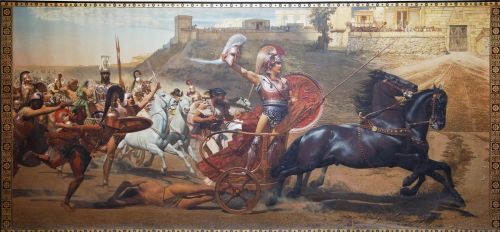
When Thetis brings the new armor to Achilles, the shield joins his body to a world from which his own choices have increasingly separated him. Its images contain nearly every form of continuity available to mortal human beings: marriage, household formation, civic judgment, agriculture, pastoral care, music, courtship, communal celebration, and the succession of seasons. Achilles belongs biologically to this world, but he no longer belongs to it socially or temporally. He is the son of Peleus and heir to a household in Phthia, yet he will not return to inherit his father’s position, marry, raise children, or grow old among his own people. The shield displays a future organized around repetition and renewal, while Achilles has committed himself to a path that can occur only once. He will kill Hector, win the highest form of heroic fame, and die before the ordinary stages of adult life can unfold.
The inhabitants of the shield are anonymous, but Achilles is uniquely named and remembered. Their anonymity allows them to continue as types (the bride, the judge, the plowman, the shepherd, the dancer) while his individuality isolates him from their recurring world.
This opposition reveals the cost of kleos, the enduring fame for which the Homeric hero exchanges the security of a long life. Achilles’ renown depends upon becoming incomparable, but the communities upon the shield survive through cooperation, succession, and the replacement of one generation by another. Farmers repeat inherited tasks, young people move toward marriage, elders judge disputes, and dancers coordinate their movements with those around them. Achilles, by contrast, becomes greatest by standing apart. His unmatched speed, strength, and martial ability resist incorporation into ordinary social rhythms. Even his grief takes an exceptional form, driving him beyond food, sleep, restraint, and eventually respect for the body of his enemy. The shield does more than show him what he will lose. It places his heroic singularity against the collective practices that make human life sustainable. His fame may outlast the anonymous workers and celebrants represented in metal, but their world possesses a continuity unavailable to him. They endure by becoming part of something larger than themselves; he endures in memory because he cannot be absorbed into ordinary life.
The deepest irony is that Achilles carries this world as both its defender and its potential destroyer. His return saves the Achaeans from military collapse, and his strength serves the communal cause from which his earlier anger had withdrawn him. Yet the violence he unleashes after Patroclus’ death exceeds the measured purpose of defense. He kills without restraint, chokes the river with corpses, denies burial to Hector, and turns grief into an assault upon the human customs that distinguish warfare from annihilation. The shield remains before him throughout this transformation, presenting law beside vengeance, cultivation beside devastation, coordinated movement beside chaotic slaughter, and communal continuity beside the isolation of heroic rage. Homer does not tell the audience that Achilles consciously interprets these images or recognizes their relevance to his own life. Their meaning may exist primarily for those who hear the poem and can perceive the distance between the shield’s bearer and the world he bears. Achilles advances beneath an image of everything that gives mortal existence value, but he cannot enter that image as an ordinary participant. He can protect its cities, consume its harvests, inspire its songs, and become the subject of its collective memory; he cannot join its marriages, labor through its seasons, submit his anger fully to its laws, or share its future. The shield becomes the most complete expression of his tragedy: the greatest warrior carries the whole human world precisely when he has chosen the form of greatness that excludes him from living within it.
The Shield as a Poem within the Poem
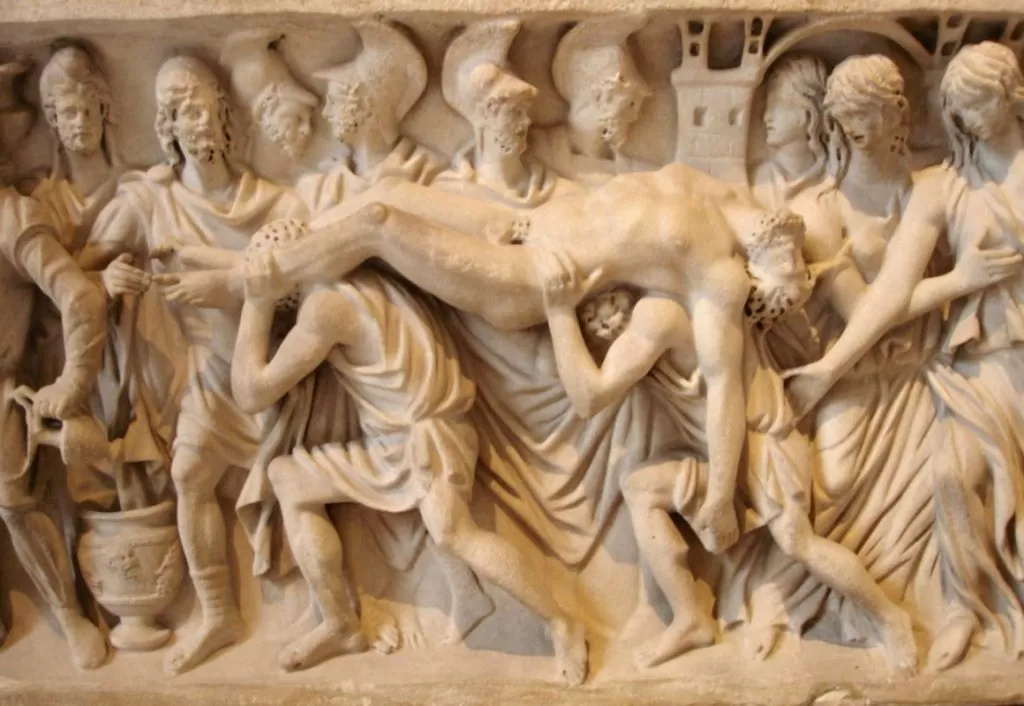
The Shield of Achilles is not merely an object described by the poet; it is a second work of art embedded inside the Iliad. Hephaestus arranges metals into a bounded composition, while Homer arranges words into a narrative capable of containing the same apparent world. The parallel is reinforced by the language of making. The god places, fashions, and embellishes each scene, moving from the cosmos through cities, fields, animals, and dancers before enclosing everything with Ocean. Homer performs an analogous act through verse, selecting details, controlling sequence, shifting scale, and joining separate images into an intelligible whole. The shield can be understood as a model of the epic itself: a finite artifact that seeks to represent a reality far larger than its physical or verbal limits.
The comparison does not make Hephaestus and Homer identical. The god creates an object within the story, while the poet creates the conditions under which that impossible object can be imagined.
Homer’s medium grants the shield powers that actual visual art could not easily possess. Figures speak, argue, sing, dance, deliberate, plow, attack, flee, and die. Crowds divide into factions, musicians produce recognizable sounds, scouts wait for approaching herds, and the earth seems to change color beneath the plow. These are not simply visual details. They unfold through time and depend upon knowledge of actions that a single static image could only imply. The verbal shield exceeds the physical shield that it claims to describe. Homer can move the audience’s attention from a panoramic cosmos to the expression of a king, from the movement of constellations to a cup offered at the end of a furrow, without explaining how these scales coexist upon one surface. He can also reveal intentions, emotions, and causal relationships invisible in metal: besiegers debate the fate of a city, litigants contradict one another, and workers return eagerly to their labor. The supposed description of visual art becomes narrative, while narrative presents itself as an act of seeing. This deliberate crossing of media lies at the center of ekphrasis. Words do not merely copy an image; they test their own ability to make an absent or impossible image present to the imagination.
The shield also contains other arts within its design. Musicians play lyres and pipes, singers perform wedding and harvest songs, dancers create changing formations, clothing displays skilled weaving, legal speakers practice persuasive speech, and Daedalus is remembered through the dance floor associated with Ariadne. Hephaestus’ metalwork becomes an encompassing art capable of representing performance, craft, law, movement, and storytelling. The Iliad makes a similar claim for epic poetry. Though centered upon Achilles’ wrath, the poem can contain domestic tenderness, political assembly, divine comedy, battlefield horror, lamentation, ritual, labor, and the rhythms of ordinary life. The shield is a poem within the poem not because its scenes reproduce the plot of the Iliad, but because they demonstrate the same power of artistic form to gather opposites without dissolving them. War and peace, beauty and terror, permanence and change remain distinct, yet all are held together by the order of the composition. Hephaestus makes a world in metal; Homer reveals that the fuller and more enduring world exists in the act of poetic narration.
The Shield in Combat: From Cosmic Artifact to Instrument of Death
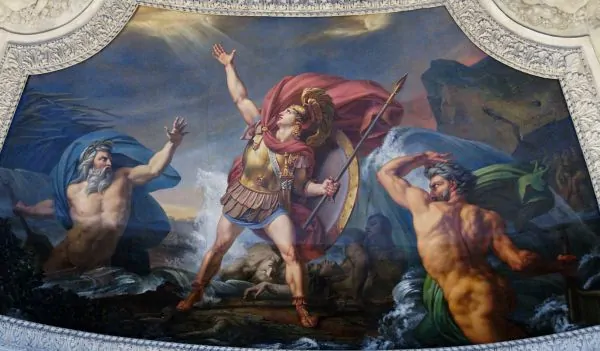
When Thetis places the new armor before Achilles, the shield passes from the divine workshop into the world of mortal violence. Its brilliance is so intense that the assembled Myrmidons recoil and cannot look directly upon it, while Achilles himself responds with a mixture of wonder, rage, and renewed purpose. The reaction establishes the armor as more than exceptionally fine equipment. It radiates the terrifying otherness of divine craftsmanship and marks Achilles as a warrior returning to battle in a form no ordinary opponent can match. Yet the shield’s magnificence does not moderate his grief. As he examines the workmanship, anger burns more fiercely within him, and the artifact that contains marriage, law, harvest, pastoral care, and dance becomes inseparable from his desire to kill Hector. The shield enters combat already burdened with contradiction: it represents the ordered fullness of life while strengthening a man whose emotional world has narrowed almost entirely to vengeance.
The cosmic image converted into a practical defense. Earth, cities, stars, fields, and Ocean are carried before Achilles as weapons strike against the shield’s surface. Achilles’ arming scene emphasizes this transformation. The armor fits him with divine precision, and the helmet blazes like a star as he tests the equipment and finds it light enough to move like wings upon his body. The imagery presents him as nearly superhuman without making him immortal. His shield may be invulnerable to ordinary craftsmanship, but the man behind it remains bound to fate. That distinction becomes clear during his struggle with the river Scamander. After Achilles fills the river with Trojan corpses, the offended god rises against him, overwhelming the battlefield with floodwater and threatening to bury him beneath mud and debris. The shield protects Achilles from weapons, but it cannot by itself master the elemental power of a god. Hephaestus must intervene with fire at Hera’s command. The episode exposes the limit of defensive technology, even when divinely made: armor can mediate danger, but it cannot remove the bearer from the cosmic forces represented upon its own surface.
The shield also participates in the visual terror Achilles projects across the battlefield. Its radiance magnifies his approach, while its size and divine origin distinguish him from the men he pursues. Yet Homer rarely treats it as an autonomous magical weapon. Its force lies primarily in protection, spectacle, and symbolic authority rather than in independent attack. Achilles remains deadly because of his speed, strength, spear, and overwhelming resolve. The shield makes that violence harder to answer and gives his body the appearance of something more than mortal, but it does not kill in his place.
This distinction matters most in the confrontation with Hector. Achilles advances carrying a shield that contains an anonymous besieged city, vulnerable families, organized defenders, and the sufferings of war, yet he confronts Hector as though no world exists beyond the body he intends to destroy. Athena assists him through deception, Hector’s spear fails against the divine shield, and Achilles finds the exposed point where Hector’s borrowed armor does not protect his throat. The old armor once worn by Achilles and then by Patroclus now covers Hector, while the new shield stands before its original owner. The duel brings the two generations of armor into direct opposition: one set has passed through inheritance, substitution, seizure, and impending death; the other has emerged from grief as a divine replacement. Achilles wins, but the shield does not convert his victory into justice or peace. After Hector falls, Achilles pierces his ankles, binds the corpse to his chariot, and drags it before Troy. The bearer of the cosmic artifact becomes the agent of a violence that denies the dignity, restraint, and communal order depicted upon it. Divine armor preserves his body long enough to fulfill vengeance, but it cannot protect him from moral disfigurement, grief, or fate. The shield delays death; it does not conquer mortality.
From Homer to Virgil: The Shield as an Epic Tradition
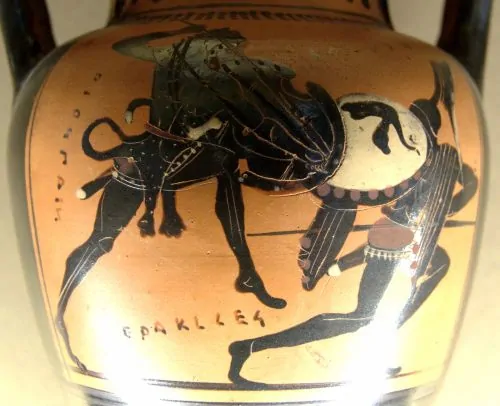
The Shield of Achilles established a model that later epic poets could imitate, revise, and contest. Its influence did not depend upon the simple repetition of a warrior receiving marvelous armor from a divine craftsman. More fundamentally, Homer demonstrated that the surface of a shield could become a second narrative space within an epic, capable of enlarging the poem beyond its immediate plot. The object could contain a world, arrange history or society into meaningful form, and establish a relationship between what the hero carries and what the larger poem asks its audience to contemplate. Once that possibility had been created, later poets could use decorated armor to declare their own subjects, values, and claims to poetic authority.
The Shield of Heracles, transmitted under the name of Hesiod, provides an early and deliberately elaborate response to the Homeric model. Its description includes cities, warfare, agriculture, marriage, music, animals, divine figures, and terrifying supernatural beings, yet its emotional atmosphere differs sharply from that of Achilles’ shield. Violence, fear, monstrous power, and martial spectacle occupy a more dominant place. The object belongs to Heracles, a hero defined by extraordinary strength and encounters with threats at the boundaries of the human world. Where Achilles’ shield holds conflict within a broad representation of civic and natural life, the shield attributed to Heracles presents a more aggressive concentration of danger and heroic power. The precise chronological and literary relationship between the surviving poems remains debated, but the comparison shows how early Greek epic could treat the shield description as a recognizable poetic form rather than a unique Homeric interruption.
Virgil transforms that form most decisively in Book 8 of the Aeneid. Like Achilles, Aeneas receives divinely made armor through the intervention of his mother: Venus persuades Vulcan to forge weapons for the son whose future depends upon renewed combat. The structural correspondence is unmistakable, and Virgil expects his audience to recognize it. Yet the shield Vulcan creates for Aeneas does not reproduce Homer’s anonymous cosmos of recurring human activity. It portrays episodes from Roman history, extending from the legendary beginnings of the city to the Augustan present. The hero carries not a generalized image of mortal existence but a prophetic account of the people, empire, and political order that will emerge from his actions. This difference reflects the distinct positions of the two heroes. Achilles knows that his return to battle will shorten his life, and his shield displays the ordinary human future he cannot enter. Aeneas bears the future he is commanded to make possible. He does not understand every image upon the shield, but he rejoices in the scenes and lifts upon his shoulder the fame and destiny of his descendants. His ignorance is not emptiness. The audience can recognize what the hero cannot yet interpret: the she-wolf and twins, the defense of the Capitol, Roman ceremonies, foreign wars, and the culmination of history in Augustus’ victory at Actium. The distance between Aeneas’ limited knowledge and the audience’s fuller understanding turns the shield into an instrument of prophecy. Achilles carries a world that exists around him; Aeneas carries a world that does not yet exist.
The Battle of Actium occupies the compositional and ideological climax of Virgil’s shield. Augustus stands with the forces of Italy, the Senate, the people, the household gods, and the ancestral deities, while Antony and Cleopatra command a coalition represented through eastern wealth, foreign gods, and monstrous imagery. The scene converts recent civil conflict into a cosmic and national victory, arranging Roman history so that Augustan supremacy appears as the fulfillment of destiny. This ideological clarity sharply distinguishes Virgil’s design from Homer’s. The two cities on Achilles’ shield remain unnamed, and neither peace nor war receives a final historical resolution. On Aeneas’ shield, by contrast, history advances toward a recognizable political conclusion. The artifact does not merely encompass Roman identity; it authorizes a particular version of that identity in which conquest, sacrifice, divine favor, and imperial order converge.
Virgil’s adaptation nevertheless preserves some of Homer’s underlying tensions. Aeneas carries images of future triumph, but that triumph will require warfare, displacement, and death in Italy. The glory of Rome is represented on a weapon, just as Homer’s images of marriage, law, agriculture, and dance appear upon an instrument carried into battle. Both shields join artistic beauty to organized violence, and both place meanings before their bearers that exceed the immediate act of fighting. The contrast lies in the direction of their vision. Homer’s shield expands outward from Achilles’ personal grief toward the recurring structures of the cosmos and human society; Virgil’s shield draws the past and future into a teleological history centered upon Rome. Through this transformation, the epic shield became a durable literary tradition, a place where poets could condense worlds, interpret history, rival their predecessors, and reveal what kind of order their heroes were destined to defend or create.
Modern Reinterpretations: Auden and the Collapse of the Homeric World
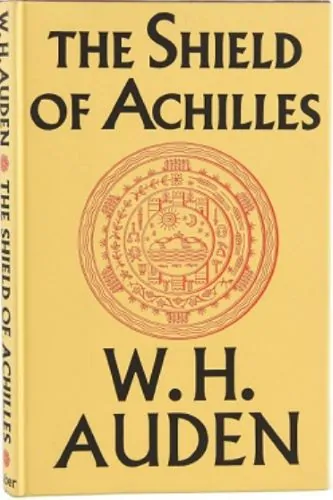
W. H. Auden’s “The Shield of Achilles” does not merely retell Homer’s description in a modern setting. It dismantles the moral and social assumptions that make the Homeric shield appear capable of representing a complete world. Auden retains the basic framework of Thetis watching Hephaestus forge armor for her son, but he transforms the mother into the poem’s disappointed interpreter. She expects to see the familiar images of cultivated order: vines, olive trees, prosperous cities, ceremonial sacrifice, athletic bodies, and disciplined ships upon the sea. Instead, she confronts landscapes emptied of fertility, community, and meaningful tradition. The modern shield preserves Homer’s method of placing a world upon a weapon, but the world it reveals has lost the structures through which violence might be contained, explained, or redeemed. The contrast depends upon memory. Auden’s readers are invited to recognize what should have appeared on the shield before they are shown what has replaced it.
Where Homer’s cities contain processions, public judgment, siege, and collective defense, Auden’s landscape is anonymous, barren, and politically coercive. Multitudes stand without visible individuality upon an empty plain, awaiting instructions issued by an impersonal voice. The setting lacks the local attachments that give Homeric conflict its tragic meaning. There are no households visibly threatened, no elders debating judgment, no farmers working toward harvest, and no dancers creating harmony through mutual response. Human beings appear as interchangeable units under administrative control. Violence is no longer embedded within a recognizable civic order; it is organized by systems so impersonal that responsibility seems to disappear into procedure. Auden thereby shifts the shield from an image of tragic human complexity to one of modern alienation, where power operates most effectively by stripping people of names, places, relationships, and the expectation that their suffering will be remembered.
The execution scene intensifies this collapse. Three condemned figures are bound to posts while officials observe and a crowd watches without intervention. Auden’s imagery evokes modern political executions, totalitarian spectacle, and the public normalization of cruelty, but it also invites comparison with the ancient tradition of sacrificial or judicial death. In Homer, even the homicide dispute presupposes that killing creates obligations requiring public judgment. In Auden, judgment has become indistinguishable from organized humiliation. The state does not restore order after violence; it uses violence to demonstrate order. The witnesses neither resist nor meaningfully participate. Their passivity reveals a society in which moral responsibility has been fragmented so thoroughly that cruelty can occur before everyone and belong to no one. Auden also replaces Homer’s scenes of youthful courtship and coordinated dance with an isolated boy whose actions reveal that violence has already entered childhood. The child throws a stone at a bird, observes the suffering of others without sympathy, and has never encountered the assumptions of a world in which promises are kept or grief answers death. This is among the poem’s bleakest revisions because it suggests that cultural collapse is no longer merely political. It has become educational and emotional. Homer’s young people inherit songs, dances, agricultural rhythms, marriage customs, and shared forms of pleasure. Auden’s child inherits indifference. He does not violate a moral order he understands; he has never been initiated into one. The failure is collective and generational. A society without trustworthy rituals, bonds, or examples produces individuals incapable of recognizing cruelty as a rupture.
Thetis’ final response gives the poem its tragic irony. She recognizes the familiar divine armor and knows that Achilles will soon die, but the imagery upon the shield has altered the meaning of that death. Homer’s Achilles sacrifices a long life for fame within a world still capable of marriage, law, cultivation, music, and mourning. Auden’s Achilles enters a world in which those forms have deteriorated or become sentimental memories. His violence no longer appears as an extreme but intelligible expression of heroic culture; it anticipates a modern order built upon coercion, emotional vacancy, and mass obedience. Yet Auden does not simply claim that Homeric society was peaceful or morally whole. His reinterpretation depends upon selecting the constructive energies of the ancient shield and measuring modernity against them. The Homeric world becomes a lost standard not because it lacked violence, but because it still imagined institutions and rituals capable of giving violence limits and human suffering meaning.
Auden’s poem consequently demonstrates the continuing power of the epic shield as a form of cultural judgment. Virgil had transformed Homer’s object into a prophetic history of Rome; Auden transforms it into an indictment of modern civilization. The shield remains a weapon, but its images now expose the society that manufactures and uses such weapons. In place of Homer’s densely inhabited cosmos, Auden presents empty spaces, bureaucratic crowds, executions, and damaged children. The modern world has not lost technical capacity, Hephaestus still makes flawless armor, but it has lost the moral choreography that once connected craftsmanship, community, and human flourishing. Divine artistry survives while the human world represented through it collapses. Auden’s achievement lies in showing that the most frightening shield is not one covered with monsters or battles, but one on which ordinary cruelty has become the accepted structure of life.
Major Interpretive Debates
The following video from “PhilosopherNinja” discusses ekphrasis and the Shielf of Achilles:
The Shield of Achilles has generated unusually diverse interpretations because it is at once a physical object within the story, a representation of the world, a commentary on Achilles, and a demonstration of poetic technique. Some scholars emphasize its cosmological scope, reading the shield as a microcosm in which earth, sea, sky, celestial bodies, cities, agriculture, animals, and Ocean form an ordered image of totality. Others stress its social dimension, treating the scenes as a selective representation of the institutions and activities that constitute human civilization. These approaches overlap but are not identical. A cosmological reading asks how the shield arranges the universe; a social reading asks what kind of human world the poem considers worth placing within that universe.
A second debate concerns whether the shield offers an alternative to the violence of the Iliad. Its weddings, fields, harvests, vineyards, sheepfolds, songs, and dances clearly expand the poem beyond combat, yet the shield’s peaceful scenes are never free from conflict, hierarchy, predation, or death.
Some interpreters resist describing the shield as a pacifist statement. The city at peace contains a homicide dispute; the city at war contains collective courage and defense; the harvest depends upon unequal labor; and the pastoral scenes remain vulnerable to predators. From this perspective, the shield does not oppose an innocent civilian world to a corrupt military one. It represents the full complexity of human existence, in which creation and destruction, cooperation and violence, continuity and loss remain intertwined. Other readings place greater emphasis upon Achilles’ alienation from this world. The shield displays marriage, law, agriculture, generational renewal, and civic participation at the precise moment when Achilles chooses a death that will exclude him from all of them. The object then becomes an implicit commentary upon the cost of heroic fame. Achilles carries the ordinary world he cannot inhabit, and the distance between bearer and image gives the episode its tragic power. The difficulty is determining whether this contrast belongs to Achilles’ consciousness or primarily to the understanding of the audience.
A related dispute concerns the shield’s status as visual art. Attempts to reconstruct it as a literal object often expose the practical impossibility of fitting its scenes, movements, sounds, and temporal sequences onto a single metal surface. Some scholars regard this unrealizability as evidence that the shield is fundamentally a verbal creation rather than a blueprint for an actual artifact.
This approach places ekphrasis at the center of interpretation. Homer does not simply describe what Hephaestus has made; he uses the shield to demonstrate what poetry can do that static art cannot. The images speak, move, deliberate, remember, and unfold through time. A crowd takes sides, a king feels pleasure, musicians produce sound, and an ambush develops from concealment into combat. The shield becomes a test of poetic representation, an artifact whose apparent visual form is continually exceeded by narrative. Yet even here debate remains over how coherent the design should be considered. One position treats the scenes as a carefully structured system of contrasts and correspondences, moving from cosmos through human society to the encircling Ocean. Another warns that modern critics may impose a philosophical unity upon what could have been experienced by an early audience as a brilliant accumulation of traditional motifs. The most persuasive reading lies between these extremes. The shield need not be a coded diagram in which every detail has one fixed meaning, but neither is it a random catalogue. Its order emerges through repetition, contrast, scale, and enclosure. It remains powerful precisely because it can sustain cosmological, social, ethical, and poetic interpretations without being exhausted by any one of them.
Is the Shield Really a Symbolic Key to the Iliad?
The following video from Hertog Foundation discusses the Shielf of Achilles:
The Shield of Achilles has invited expansive interpretation because it appears at a decisive moment and contains an unusually broad range of images. Yet it is possible to overstate its function. The passage may not be a hidden diagram through which every major theme of the Iliad can be decoded. Homer’s audience may have experienced it first as a display of poetic magnificence: a divine artifact worthy of the greatest warrior, described with enough richness to suspend the forward movement of the battle narrative. The shield’s scale and variety encourage interpretation, but interpretive abundance should not be confused with proof that every scene belongs to a single philosophical system.
Many of its images may also derive from familiar artistic and poetic motifs rather than from a tightly unified symbolic program. Cities, harvests, herds, lions, dancers, and celestial bodies were recognizable subjects in early Greek visual culture and song. Their presence need not mean that each was selected as a precise commentary on Achilles’ psychology.
The attempt to reconstruct the shield as a coherent visual object further exposes the limits of certainty. Homer never supplies a full diagram, and the scenes often contain more action, sound, and temporal development than a metal surface could plausibly display. Modern arrangements into concentric bands are persuasive but hypothetical. Once a reconstruction is treated as fixed, interpretation can begin to depend upon spatial relationships that the poem itself never explicitly establishes. A city may be called central, peripheral, opposed, or balanced against another scene because of a modern diagram rather than because of Homeric description. The shield’s organization is clearly purposeful, but the exact geometry of that purpose remains partly inaccessible. There is also no clear evidence that Achilles studies the images and derives from them the moral conclusions modern readers often emphasize. He responds to the armor’s radiance and craftsmanship, but the poem does not present him contemplating the legal dispute, the weddings, the harvest, or the dance as alternatives to heroic violence. The contrast between Achilles and the world he carries may belong primarily to the audience’s perspective. That does not make the interpretation invalid, but it requires restraint. A symbolic reading should distinguish between meanings produced by the shield’s position within the epic and meanings consciously recognized by its bearer.
The strongest counterargument is not that the shield is meaningless, decorative, or irrelevant. It is that its significance may be plural, suggestive, and only partly systematic. The shield can enlarge the world of the Iliad without serving as a master key to it. It can contrast ordinary life with heroic death without functioning as a pacifist manifesto. It can evoke cosmic order without encoding a complete cosmology, and it can demonstrate poetic power without becoming a formal theory of art. Its greatness may lie precisely in this resistance to final reduction. Hephaestus creates an object capable of containing incompatible scenes, and Homer creates a passage capable of sustaining incompatible but defensible readings. The shield is best understood not as a cipher that solves the epic, but as a concentrated poetic field in which the epic’s deepest tensions become visible without being resolved.
Conclusion: The Mortal World on an Immortal Shield
The Shield of Achilles is created at the precise moment when the hero’s personal world has collapsed. Patroclus is dead, the first armor has passed into Hector’s possession, and Achilles has chosen vengeance despite knowing that his own death will follow. Hephaestus answers this crisis not by depicting Achilles’ triumphs but by gathering the wider structures of existence onto a defensive object: earth and sea, sun and stars, marriage and law, siege and ambush, plowing and harvest, vineyards and herds, predation and shelter, music and dance. The shield interrupts the narrowing force of Achilles’ grief with an image of extraordinary breadth. While the warrior sees only Hector before him, the audience is made to see the world around them both.
That world is neither peaceful nor perfect. It contains homicide, disputed compensation, unequal labor, military conquest, animal suffering, and the constant vulnerability of ordered life. Yet it also contains the practices through which mortal communities resist dissolution. People marry, judge, cultivate, protect, sing, dance, feast, and prepare for generations they may never live to see. Peace appears not as the absence of conflict but as the repeated work of keeping conflict from consuming everything else.
The shield’s deepest paradox lies in the relationship between its permanence and its subject. Fashioned by an immortal god from precious metals, it gives enduring form to lives defined by change and death. Crops ripen only to be cut, grapes are gathered from the vine, animals fall to predators, warriors become corpses, and young people pass from courtship toward adulthood. Even cities exist between celebration and destruction. Hephaestus does not overcome mortality through art; he preserves its patterns within an object that seems capable of surviving them. Homer performs a similar act through poetry. The anonymous inhabitants of the shield do not possess Achilles’ individual fame, but their recurring activities reveal another form of endurance. Human beings continue not only through remembered heroes but through labor, custom, family, judgment, performance, and the transmission of communal life. The shield is immortal because it holds the image of a world whose individual inhabitants cannot be.
Achilles carries that world into battle without ever fully entering it. He can defend communities, win the resources upon which they depend, and become the subject of their songs, but he cannot share their long future. He will not preside over harvests, grow old among judges, raise children, or return season after season to the same fields and festivals. His path leads instead toward singular fame and irreversible death. The shield broadens the tragedy of the Iliad beyond the loss of one hero or the destruction of one city. It asks what heroic glory means when measured against everything ordinary life creates and preserves. Achilles’ greatness remains real, but it is surrounded by images of values that greatness cannot replace. On his arm rests a complete mortal world (beautiful, violent, cultivated, fragile, and continually renewed) while behind it stands a mortal body that no divine craftsmanship can save.
Bibliography
Affiliate disclosure: Amazon links on this site are paid links. As an Amazon Associate I earn from qualifying purchases.
- Auden, W. H. “The Shield of Achilles.” In Collected Poems, edited by Edward Mendelson. New York: Vintage International, 1991.
- Becker, Andrew Sprague. The Shield of Achilles and the Poetics of Ekphrasis. Lanham, MD: Rowman & Littlefield, 1995.
- Byre, Calvin S. “Narration, Description, and Theme in the Shield of Achilles.” Classical Journal 88:1 (1992), 33–42.
- Calame, Claude. Choruses of Young Women in Ancient Greece: Their Morphology, Religious Role, and Social Functions. Translated by Derek Collins and Janice Orion. Lanham, MD: Rowman & Littlefield, 1997.
- Dicks, D. R. Early Greek Astronomy to Aristotle. Ithaca, NY: Cornell University Press, 1970.
- Donlan, Walter. The Aristocratic Ideal in Ancient Greece: Attitudes of Superiority from Homer to the End of the Fifth Century B.C. Lawrence, KS: Coronado Press, 1980.
- Edwards, Mark W. The Iliad: A Commentary. Vol. 5, Books 17–20. Cambridge: Cambridge University Press, 1991.
- Fagles, Robert, trans. The Aeneid. By Virgil. New York: Viking, 2006.
- Finley, Moses I. The World of Odysseus. Rev. ed. New York: New York Review Books, 2002.
- Foley, Helene P. Female Acts in Greek Tragedy. Princeton, NJ: Princeton University Press, 2001.
- Ford, Andrew. Homer: The Poetry of the Past. Ithaca, NY: Cornell University Press, 1992.
- Fuller, John. W. H. Auden: A Commentary. Princeton, NJ: Princeton University Press, 1998.
- Gagarin, Michael. Early Greek Law. Berkeley: University of California Press, 1986.
- Gallant, Thomas W. Risk and Survival in Ancient Greece: Reconstructing the Rural Domestic Economy. Stanford, CA: Stanford University Press, 1991.
- Griffin, Jasper. Homer on Life and Death. Oxford: Clarendon Press, 1980.
- Hannah, Robert. Greek and Roman Calendars: Constructions of Time in the Classical World. London: Duckworth, 2005.
- Hardie, Philip R. “Imago Mundi: Cosmological and Ideological Aspects of the Shield of Achilles.” Journal of Hellenic Studies 105 (1985), 11–31.
- —-. Virgil’s Aeneid: Cosmos and Imperium. Oxford: Clarendon Press, 1986.
- Heffernan, James A. W. Museum of Words: The Poetics of Ekphrasis from Homer to Ashbery. Chicago: University of Chicago Press, 1993.
- Hesiod. The Shield, Catalogue of Women, Other Fragments. Edited and translated by Glenn W. Most. Cambridge, MA: Harvard University Press, 2007.
- —-. Theogony and Works and Days. Translated by M. L. West. Oxford: Oxford University Press, 1988.
- Homer. The Iliad. Translated by Richmond Lattimore. Chicago: University of Chicago Press, 1951.
- Janko, Richard. The Iliad: A Commentary. Vol. 4, Books 13–16. Cambridge: Cambridge University Press, 1992.
- Kirk, G. S. Myth: Its Meaning and Functions in Ancient and Other Cultures. Cambridge: Cambridge University Press, 1970.
- Lessing, Gotthold Ephraim. Laocoön: An Essay upon the Limits of Painting and Poetry. Translated by Ellen Frothingham. Boston: Roberts Brothers 1887.
- Lonsdale, Steven H. Dance and Ritual Play in Greek Religion. Baltimore: Johns Hopkins University Press, 1993.
- MacDowell, Douglas M. The Law in Classical Athens. Ithaca, NY: Cornell University Press, 1978.
- Mayor, Adrienne. Gods and Robots: Myths, Machines, and Ancient Dreams of Technology. Princeton, NJ: Princeton University Press, 2018.
- Mendelson, Edward. Later Auden. New York: Farrar, Straus and Giroux, 1999.
- Morris, Ian. “The Use and Abuse of Homer.” Classical Antiquity 5:1 (1986), 81–138.
- Morris, Sarah P. Daidalos and the Origins of Greek Art. Princeton, NJ: Princeton University Press, 1992.
- Muellner, Leonard. The Anger of Achilles: Mênis in Greek Epic. Ithaca, NY: Cornell University Press, 1996.
- Nagy, Gregory. The Best of the Achaeans: Concepts of the Hero in Archaic Greek Poetry. Rev. ed. Baltimore: Johns Hopkins University Press, 1999.
- Oakley, John H., and Rebecca H. Sinos. The Wedding in Ancient Athens. Madison: University of Wisconsin Press, 1993.
- Putnam, Michael C. J. Virgil’s Epic Designs: Ekphrasis in the Aeneid. New Haven, CT: Yale University Press, 1998.
- Redfield, James M. Nature and Culture in the Iliad: The Tragedy of Hector. Expanded ed. Durham, NC: Duke University Press, 1994.
- Richardson, Nicholas. The Iliad: A Commentary. Vol. 6, Books 21–24. Cambridge: Cambridge University Press, 1993.
- Schein, Seth L. The Mortal Hero: An Introduction to Homer’s Iliad. Berkeley: University of California Press, 1984.
- Scott, William C. The Oral Nature of the Homeric Simile. Leiden: Brill, 1974.
- Seaford, Richard. “The Structural Problems of Marriage in Euripides.” In Antonine Literature, edited by D. A. Russell, 151–76. Oxford: Clarendon Press, 1990.
- Slatkin, Laura M. The Staying Power of Thetis: Allusion and Interpretation in the Iliad. Berkeley: University of California Press, 1991.
- Snodgrass, Anthony. Homer and the Artists: Text and Picture in Early Greek Art. Cambridge: Cambridge University Press, 1998.
- Spears, Monroe K. The Poetry of W. H. Auden: The Disenchanted Island. New York: Oxford University Press, 1963.
- Taplin, Oliver. “The Shield of Achilles within the Iliad.” Greece & Rome 27:1 (1980), 1–21.
- van Wees, Hans. Greek Warfare: Myths and Realities. London: Duckworth, 2004.
- —-. Status Warriors: War, Violence and Society in Homer and History. Amsterdam: J. C. Gieben, 1992.
- Wasley, Aidan. The Age of Auden: Postwar Poetry and the American Scene. Princeton, NJ: Princeton University Press, 2010.
- West, M. L. Ancient Greek Music. Oxford: Clarendon Press, 1992.
- —-. The East Face of Helicon: West Asiatic Elements in Greek Poetry and Myth. Oxford: Clarendon Press, 1997.
- —-. Greek Epic Fragments from the Seventh to the Fifth Centuries BC. Cambridge, MA: Harvard University Press, 2003.
- —-. The Hesiodic Catalogue of Women: Its Nature, Structure, and Origins. Oxford: Clarendon Press, 1985.
- Williams, R. D. The Aeneid of Virgil: Books 7–12. London: Macmillan, 1973.
- Wilson, Donna F. Ransom, Revenge, and Heroic Identity in the Iliad. Cambridge: Cambridge University Press, 2002.
- Zanker, Graham. The Heart of Achilles: Characterization and Personal Ethics in the Iliad. Ann Arbor: University of Michigan Press, 1994.
Originally published by Brewminate, 07.28.2026, under the terms of a Creative Commons Attribution-NonCommercial-NoDerivatives 4.0 International license.
About the Author