
Ancient Athens and Rome recognized no universal right to remain silent. The power to resist compelled testimony depended on citizenship, slavery, social rank, and the authority of the court.

By Matthew A. McIntosh
Public Historian
Brewminate
Introduction: The Right That Did Not Yet Exist
To modern readers, the privilege against self-incrimination appears so fundamental that its absence can be difficult to imagine. It is tempting to assume that every fair legal system must permit an accused person to remain silent, prevent officials from compelling damaging testimony, and distrust any confession obtained through coercion. Yet these protections form a historically constructed body of rules rather than an instinctive or universal feature of law. Neither Classical Athens nor ancient Rome recognized a general principle equivalent to the modern right of an accused person not to become a source of evidence against himself. They possessed no comprehensive doctrine shielding defendants from incriminating questions, forbidding courts to interpret silence adversely, or excluding statements because officials had failed to warn a suspect of procedural rights. This absence did not mean that every accused person was routinely forced to confess, but it did mean that the law had not yet separated the obligation to answer an accusation from the danger of supplying the evidence needed for conviction.
Any comparison must begin by acknowledging that neither “Greek law” nor “Roman law” was a single, unchanging construct. Most surviving evidence for Greek trials comes from democratic Athens during the fifth and fourth centuries BCE, although the Greek world contained numerous communities with their own laws and institutions. Athenian litigation was largely driven by private individuals: accusers initiated proceedings, litigants gathered evidence, and the parties ordinarily delivered their own cases before citizen juries, even when professional speechwriters helped compose their arguments. Preliminary hearings, courtroom speeches, documentary evidence, witness statements, challenges, oaths, and appeals to personal character all placed pressure upon a defendant to provide a convincing account of his conduct. Rome presents an even broader chronological problem. Republican jury courts, civil actions before magistrates, senatorial proceedings, trials before emperors, and the more investigative procedures of imperial officials cannot be compressed into one timeless Roman model. Roman defendants frequently relied upon patrons and advocates to speak for them, but advocacy did not create a general right to withhold incriminating information. Across these different institutions, an accused person’s words, admissions, contradictions, conduct, and refusal to offer a persuasive explanation could all become part of the case against him.
The practical consequences of this missing right were distributed according to status. Free citizens in Athens and Rome often enjoyed substantial protection from physical interrogation, but that protection arose from civic standing, social honor, and legal privilege rather than from a universal belief that the state must respect personal silence. Wealthy or influential defendants could draw upon family connections, advocates, witnesses, reputation, and political allies, while the limited investigative capacity of ancient governments sometimes made it difficult for an accuser to uncover private wrongdoing. Enslaved people occupied a radically different evidentiary world. Their unsworn words were distrusted, their knowledge was treated as subject to the authority of an owner, and their bodies could be subjected to torture in the purported search for truth. Athenian litigants issued challenges involving the interrogation of enslaved people under torture, although scholars continue to debate how often accepted challenges culminated in actual examinations. Roman law likewise employed torture in questioning enslaved witnesses and suspects, while surrounding the practice with restrictions, exceptions, and repeated expressions of doubt about its reliability. Ancient procedure did not merely distinguish truthful statements from false ones; it assigned different kinds of credibility, compulsion, and bodily security to free and enslaved speakers.
The history of self-incrimination in antiquity must consequently be approached as a history of power rather than a search for an imperfect precursor to the Fifth Amendment. The decisive questions are who was required to answer, who could delegate the work of defense to another speaker, whose silence appeared suspicious, and whose body could be made to disclose information through pain. Athens and Rome did not simply neglect to formulate the later maxim nemo tenetur se ipsum accusare, because the recognizable legal force of that principle emerged from medieval canon law and the European ius commune, not intact from classical jurisprudence. Ancient courts instead operated within cultures that treated public self-explanation as an important obligation while making legal protection dependent upon freedom, citizenship, gender, reputation, and rank. Institutional limitations could give some defendants a practical capacity to remain silent, but that capacity was neither guaranteed nor equally available. Examining trials through the problem of self-incrimination reveals something larger than the absence of a particular procedural rule: it exposes the ancient division between those permitted to defend themselves through authoritative speech and those whose coerced bodies could be converted into evidence.
Status Before Rights: The Unequal Ownership of Speech

Ancient courts did not begin with the proposition that every human being possessed the same procedural rights. They began by locating each participant within a hierarchy of freedom, citizenship, gender, household authority, wealth, and public reputation. Those classifications determined whether a person could initiate litigation, appear independently before a tribunal, speak through a representative, offer evidence, take an oath, or be subjected to physical compulsion. Speech was not treated as an autonomous possession equally controlled by every individual. It was a legal and civic capacity whose authority depended upon the recognized status of the speaker, while silence could signify dignity for one person, incapacity for another, and defiance or guilt for someone else.
In democratic Athens, the adult male citizen occupied the privileged center of the legal order. He could prosecute or defend a case in his own name, address a citizen jury, question the character of his opponent, and construct a public account connecting his private conduct to his civic identity. His statements were not modern sworn testimony separated cleanly from advocacy; they formed part of a forensic performance in which narrative, argument, reputation, evidence, and emotional appeal reinforced one another. Citizenship gave that performance political meaning because the jurors judging him were fellow members of the same civic body. Yet even among citizens, the effective command of speech was unequal. A wealthy litigant could employ an experienced logographer, enlist supporting speakers, produce influential witnesses, and present a history of public generosity, whereas a poorer man might lack the social connections and rhetorical preparation needed to make his voice persuasive. The ideal of direct citizen speech consequently concealed an economy of assistance in which money, education, family, and reputation affected whose self-presentation sounded credible. An Athenian citizen owned his courtroom voice in a legal sense, but he did not necessarily control the conditions under which that voice would be heard.
The boundaries of that civic voice become clearer when women, resident foreigners, freed people, and enslaved people enter the picture. Athenian women could possess citizen status in the sense necessary for legitimate descent, inheritance, marriage, and participation in the religious life of the community, but they did not exercise the judicial and political speech of adult male citizens. Their interests ordinarily reached the courts through male relatives or guardians, and forensic speakers commonly represented women’s intentions, experiences, and alleged words without allowing those women to address the jury directly. Male metics could participate in litigation and commercial life, but residence did not make them members of the citizen body, and their access to law remained marked by foreign status, special obligations, and vulnerability to disputes over identity. Freed people occupied an unstable boundary because release from slavery did not erase the social memory of servitude or necessarily grant full civic incorporation. Enslaved people stood further outside independent forensic agency: injuries to them could be treated through the interests of their owners, their knowledge might be offered or withheld by those owners, and their statements could be subjected to evidentiary procedures that transformed control over a person into control over information.
Roman law created an even more elaborate landscape of status because its rules developed across centuries of conquest, political transformation, and imperial government. Roman jurists began the law of persons with the fundamental division between the free and the enslaved, but freedom itself did not establish equality. Citizens, Latins, and other noncitizen inhabitants possessed different legal capacities, while distinctions between the freeborn and the formerly enslaved continued to influence public honor and private obligation. Formal manumission could make a former slave a Roman citizen under specified conditions, yet the freedperson remained connected to a patron through duties such as respect, obedience, and agreed services. A freedman’s speech was legally freer than a slave’s without becoming socially equivalent to that of a freeborn aristocrat. Household position introduced another layer of dependence: Roman law distinguished those legally independent from those subject to another person’s authority, particularly descendants under paternal power. Women were not simply voiceless in Roman private law, for they could own property, inherit, incur obligations, and pursue legal interests under conditions that varied across time and status. Nevertheless, guardianship, family authority, restrictions on representing others, and ideals of female modesty limited the forms of public legal agency available to them. The Roman courtroom was consequently populated not by interchangeable individuals but by persons whose words carried the accumulated weight, or stigma, of citizenship, birth, gender, household standing, patronage, and social rank.
These hierarchies became most visible when legal systems moved from hearing speech to compelling it. The body of a respectable free citizen was ordinarily protected from the forms of evidentiary torture associated with slavery, not because personal bodily integrity was recognized as an equal human right, but because such treatment was considered incompatible with civic honor. Enslaved people could instead be interrogated under torture because the law simultaneously distrusted their voluntary words and permitted physical coercion to overcome their presumed fear, loyalty, or dishonesty. Their bodies served as instruments through which courts and litigants attempted to authenticate information, even though ancient observers themselves understood that suffering could produce falsehood as readily as truth. Roman imperial law gradually extended comparable vulnerability to lower-status free people, while members of privileged orders retained stronger protections. The developing distinction between honestiores and humiliores demonstrated that the expansion of Roman citizenship did not produce procedural equality: after citizenship became nearly universal among free imperial inhabitants in 212 CE, rank assumed even greater importance in determining exposure to degrading punishment and coercive examination. Freedom continued to matter, but it no longer supplied every free person with the bodily privileges once associated with citizenship.
Status governed not only who could speak but also who could refuse, delegate, or survive the consequences of speaking. A citizen litigant in Athens might be under intense pressure to explain himself, yet he addressed the court as a political actor whose voice was presumptively his own. A Roman aristocrat might rely upon advocates and patrons, allowing trained speakers to mediate between his conduct and the tribunal’s judgment. Women and dependents often entered the forensic record through words selected, paraphrased, or attributed to them by men who possessed formal authority to speak. Enslaved people could have intimate knowledge of households, transactions, sexual relationships, conspiracies, and crimes, but the law treated that knowledge as something masters and courts could surrender, purchase, challenge, or extract. None of these arrangements constituted a privilege against self-incrimination, yet neither did they expose everyone to compulsion in the same way. Before silence could become a right, the law would first have to imagine the individual as possessing a voice and body that government could not use at will; Athens and Rome instead allocated that possession according to status.
The Athenian Courtroom: Litigation as Civic Performance

The popular courts of Classical Athens were institutions of democratic government as well as places for resolving accusations and disputes. Their authority rested upon large panels of ordinary male citizens who listened to opposing speeches and decided the result by vote. A presiding magistrate administered the proceeding, but he did not perform the expansive role of a modern trial judge by interpreting the law for the jurors, controlling every argument, or composing a reasoned judgment. The jurors themselves determined how the relevant laws, disputed facts, social expectations, and competing narratives should be applied, and their verdict was ordinarily final. To describe litigation as civic performance is not to suggest that trials were insincere spectacles; it is to recognize that law became effective through public acts of speaking, listening, evaluating, and voting performed by citizens before one another.
Athens depended heavily upon individual initiative to bring wrongdoing before a court. The Athenians broadly distinguished between private actions, or dikai, ordinarily pursued by an injured party or someone acting for that person, and public actions, or graphai, concerning offenses understood to affect the wider community. In many public procedures, the principle of ho boulomenos permitted any qualified citizen who wished to do so to initiate a prosecution, although particular actions could impose more restrictive requirements. Athens consequently possessed no permanent corps of public prosecutors responsible for investigating and presenting ordinary criminal charges. Litigants were generally expected to address the jury in their own names, transforming prosecution and defense into visible demonstrations of civic competence. They could secretly purchase speeches from logographers and could sometimes divide their allotted time with supporting speakers, or synegoroi, whose presence revealed the importance of friendship, kinship, and political alliance. The courtroom performance was simultaneously personal and collaborative: the litigant appeared as the author of his defense even when the words, strategy, and authority supporting him had been assembled by a larger social network.
The jury constituted both the legal decision-maker and the immediate civic audience for that performance. In the elaborate fourth-century system described in the Athenian Constitution, jurors were drawn from an annual body of 6,000 citizens at least thirty years old and assigned to particular courts through procedures involving allotment machines, tokens, boxes, and repeated random selection. Private cases commonly went before panels of 201 or 401, depending upon the value at issue, while public actions generally employed at least 501 and could use substantially larger panels in largely consequential cases. Daily allotment made the composition of a court difficult to predict, juror pay enabled citizens of modest means to participate more readily, and the assembled panel represented the democratic people in a form smaller than the Assembly but empowered to make binding judgments.
Once a case was called, the formal accusation and the defendant’s reply defined the dispute placed before the court. The accuser or plaintiff ordinarily spoke first, after which the defendant answered, with supporting speakers required to share the time allocated to the side they assisted. A water clock, or klepsydra, measured the speeches, making time a visible and inexorable limit upon forensic persuasion. Under the procedures described for the later fourth century, the flow could be halted during certain official readings of laws, decrees, depositions, contracts, and other documents, although the precise treatment of time varied with the type of case. Litigants in private actions swore to speak to the matter at issue, but relevance was interpreted broadly enough to permit extensive narratives about relationships, motives, prior conduct, and character. The presiding magistrate did not normally interrupt a speaker to exclude a prejudicial statement or direct the jurors to disregard an improper argument. When the speeches ended, the jurors proceeded to a secret ballot without receiving a judicial summation or formally deliberating together, and a simple majority determined the outcome, with an equal division favoring the defendant. In cases requiring an assessed penalty, conviction was followed by shorter competing proposals from accuser and defendant and a second vote selecting between them.
What reached the jurors as evidence was inseparable from the speeches that framed its meaning. Aristotle classified laws, witnesses, contracts, statements obtained through the torture of enslaved people, and oaths among the “nonartistic” proofs that existed before the orator began constructing his argument. Witnesses in fourth-century practice could appear to confirm depositions that were read to the court, but they were not subjected to the sustained examination and cross-examination familiar from modern trials. Litigants selected the statutes and documents they wished the clerk to read, introduced testimony at advantageous moments, and explained why one piece of evidence deserved greater trust than another. Athenian law did regulate such matters as witness eligibility, false testimony, documentary challenges, and the wording of formal accusations, but it did not possess a modern evidentiary code administered continuously by a professionally trained judge. Evidence entered the courtroom not as a neutral collection of facts awaiting technical assessment, but as material embedded within rival stories about what had happened and what kind of people the parties were.
The litigant’s most important exhibit was often the identity he created for himself. Speakers invoked military service, public contributions, religious obligations, generosity toward relatives, loyalty to friends, respect for parents, and devotion to democracy as evidence that their present claims deserved belief. They portrayed opponents as violent neighbors, dishonest traders, sexually undisciplined men, ungrateful beneficiaries, arrogant aristocrats, cowardly soldiers, habitual informers, or enemies of the constitutional order. Family members might be brought before the jury to make suffering physically visible, while appeals to pity invited jurors to imagine the consequences of conviction for dependents who were formally outside the political community. Such arguments are sometimes described as “extralegal,” but that label risks imposing a modern separation between law and social judgment that the Athenian courtroom did not consistently observe. Scholars continue to debate whether jurors exercised broad discretion according to communal norms or generally attempted to decide cases through the applicable statutes and the terms of their oath. The two interpretations need not be mutually exclusive, because litigants commonly argued that law, justice, democratic interest, and their own civic character pointed toward the same verdict. Performance was not an ornamental addition to Athenian legality; it was one of the principal means through which written rules were connected to disputed events and converted into collective judgment.
This structure exposed an accused citizen to self-incrimination without placing him in the procedural position of a modern sworn defendant-witness. His speech combined factual assertion, legal interpretation, personal narrative, attacks upon the accuser, and appeals to the jury, rather than separating testimony from advocacy. No general privilege allowed him to refuse to address damaging matters while requiring the jurors to treat his silence as legally meaningless. An accuser could repeat his earlier statements, isolate apparent admissions, compare conflicting versions of events, and portray evasiveness as evidence that no credible defense existed. Yet the public trial was not a continuous state-directed interrogation: the defendant ordinarily controlled the organization of his allotted speech, and courtroom exchanges did not approximate the systematic cross-examination of a witness by a modern prosecutor. The coercive force arose instead from the political and rhetorical expectation that a citizen accused before fellow citizens must present an intelligible account of himself, because surrendering the public contest of explanation could be nearly indistinguishable from surrendering the case.
Anakrisis: Questioning Before the Public Trial
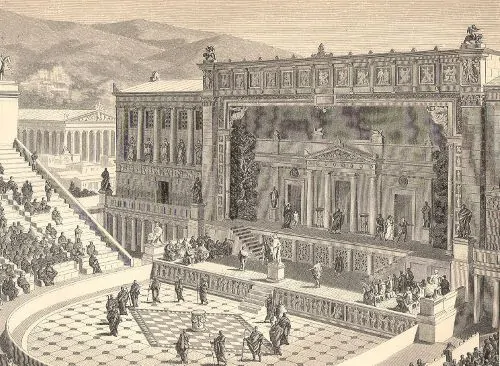
Between the initiation of an Athenian legal action and its presentation before a citizen jury stood a preliminary proceeding known as the anakrisis. The term conveyed examination or inquiry, but the procedure was neither a miniature trial nor a uniform stage conducted identically in every kind of case. Its central purpose was to clarify the accusation, establish the defendant’s response, identify procedural questions, and help determine whether and in what form the dispute should proceed to a dikasterion. Because Athens entrusted final judgment to popular courts, the magistrate conducting the hearing ordinarily did not resolve the contested facts or pronounce the defendant guilty. The anakrisis nevertheless forced the opposing parties into direct contact before the public contest, exposing elements of their positions that could later become sources of damaging contradiction.
A lawsuit began when the accuser summoned the defendant and submitted a written complaint to the magistrate possessing jurisdiction over the chosen procedure. In a private action the complaint might be called an enklēma, while graphē could designate both the written charge and the public action founded upon it; the defendant could answer with an antigraphē stating his opposing position. The parties then appeared before the appropriate magistrate, who might be one of the archons, the thesmothetai, the Eleven, or another official depending upon the subject and form of the action. Not every lawsuit followed the same path, since homicide proceedings involved preliminary appearances before the archōn basileus, many private disputes passed through public arbitration, and certain summary procedures possessed their own requirements. Within an ordinary anakrisis, the wording of the charge, the identity and standing of the parties, the jurisdiction of the magistrate, the timeliness of the action, and the legal sufficiency of the chosen procedure could all require clarification. The magistrate supervised that clarification and could direct the litigants to provide answers, although scholars disagree about how actively he questioned them rather than merely regulating their questions to one another. His function was not equivalent to that of a modern investigative judge searching independently for the truth. He instead helped frame the issue that the citizen jurors would ultimately be asked to decide.
Questioning between the adversaries gave the proceeding its most immediate relevance to self-incrimination. A legal text preserved in the Demosthenic corpus declares that opposing litigants were required to answer one another’s questions, while a narrative in Isaeus describes parties being questioned during preliminary hearings and ordered by the archon to answer according to law. Such evidence does not reveal a comprehensive code governing the permissible scope of every question, the exact sanctions for evasion, or the treatment of silence in every procedure. It does show that an Athenian defendant possessed no general privilege allowing him to refuse a damaging inquiry while requiring his opponent, the magistrate, and the eventual jurors to disregard that refusal.
The dangers were clear when the dispute depended upon facts known principally to the parties. In inheritance litigation, questions about marriages, adoptions, legitimate children, degrees of kinship, and possession of family property could force a claimant to define a genealogy upon which his entire case depended. Isaeus depicts one side questioning its opponents about their asserted relationship to an estate and later using their inability to supply satisfactory answers as evidence that the claim was fabricated. In other actions, a defendant might have to explain why the written charge employed the wrong procedure, why the magistrate lacked jurisdiction, why the accusation was untimely, or why the conduct alleged did not violate the law invoked by the accuser. Answers supplied during these exchanges gave each side advance knowledge of the other’s central legal and factual positions. A litigant who committed himself to one explanation could expect an opponent to compare it with documents, witness statements, earlier conduct, and the speech eventually delivered at trial. The anakrisis helped shape forensic strategy even when it produced no formal confession: speechwriters could prepare answers to anticipated objections, neutralize an opponent’s strongest contentions, and reserve unexpected rhetorical attacks for the jury. Demosthenes’ speech against Leptines, for example, recalls an objection raised during the preliminary proceedings and attempts to answer it before the opposition can give it renewed force. What had been said before the magistrate became part of the strategic history of the case, available for representation, reinterpretation, and accusation in the public courtroom.
The extent to which parties had to disclose their evidence at the anakrisis remains disputed. Written complaints and preliminary exchanges necessarily revealed the basic accusation and defense, and documents relevant to those positions could be presented, but the surviving evidence does not establish a universal system resembling modern discovery. The rule preventing the introduction of new evidence is clearest in private cases appealed from public arbitration, where documents, testimony, challenges, and laws were sealed in containers known as echinoi before the dispute proceeded to court; scholars disagree about how fully an equivalent restriction applied after an anakrisis. Litigants could learn much about an opponent’s position without knowing every argument, allegation, or rhetorical maneuver that would appear at trial. Most importantly, the proceeding was public, party-driven litigation rather than custodial interrogation conducted by a professional police or prosecution service against an isolated suspect. Its coercion arose from a different source: once accused, a citizen was expected to define his defense in an adversarial setting where answers could narrow his future choices, contradictions could damage his credibility, and silence enjoyed no protected legal meaning. The anakrisis did not systematically seek confessions, but it made self-explanation a procedural hazard before the defendant ever faced the jury.
The Defendant Who Had to Speak

For an Athenian defendant, answering an accusation was not merely one possible method of defense but the central act through which a defense became intelligible. The law did not recognize a general privilege allowing him to refuse incriminating questions while requiring the jurors to disregard his silence. “Had to speak” should not be understood as meaning that every defendant was physically compelled to deliver a confession or subjected to uninterrupted official interrogation. The compulsion was instead procedural, political, and rhetorical: an accuser had publicly narrated the defendant’s conduct, and only a competing narrative could prevent that account from standing substantially unanswered. A defendant who declined to explain himself risked allowing hundreds of citizen jurors to treat his silence not as the exercise of a protected right but as an inability to produce a credible response.
The defendant’s courtroom speech did not correspond neatly to testimony by an accused person in a modern trial. He was not ordinarily called to a witness stand, questioned first by his own advocate, cross-examined by a prosecutor, and instructed that he could decline to testify without adverse inference. Instead, he delivered an allotted speech in which factual assertions, legal arguments, character claims, documentary materials, witness statements, and attacks upon the accuser were woven into a single defense. Procedural oaths might bind the parties in particular actions, and homicide cases imposed solemn religious obligations, but the litigant’s speech remained distinct from the deposition supplied by a witness. The defendant decided how to organize his account, which allegations to confront directly, and where to replace factual explanation with attacks upon his opponent’s motives or reputation. That freedom gave him strategic control while also increasing his exposure. Every asserted fact could conflict with a document, witness statement, earlier answer, or generally known circumstance, while an omission could be represented as deliberate evasion. Because no professional judge routinely separated admissible testimony from advocacy, jurors encountered the defendant’s words as part of the entire persuasive contest. He did not surrender the protections of a modern right by choosing to speak, because the underlying right and the corresponding choice between protected silence and voluntary testimony did not yet exist.
The ideal of personal self-defense was softened, but not displaced, by professional and social assistance. A defendant could employ a logographer to write a speech that he would deliver as though it expressed his own spontaneous words, and he might share his allotted time with relatives, friends, or politically influential supporting speakers. Such assistance could supply legal knowledge, rhetorical polish, and reputational authority unavailable to the defendant acting alone. Nevertheless, the case remained attached to his civic identity, and even a carefully manufactured defense had to sound like the plausible voice of the man whose conduct was being judged.
The trial of Socrates in 399 BCE offers the most famous illustration of the citizen compelled to account publicly for himself, although it must be used with unusual caution. Plato’s Apology and Xenophon’s account are literary representations shaped by the concerns of their authors, not stenographic transcripts of everything said before the jury. Socrates faced a public prosecution for impiety, expressed through allegations that he did not recognize the city’s gods, introduced new divine beings, and corrupted the young. In Plato’s version, he answers the charge personally, questions Meletus before the jury, denies that he is an atheist, and interprets his philosophical activity as obedience to a divine mission. His exchange with Meletus demonstrates that courtroom questioning could occur, but it reverses the modern image of prosecutorial interrogation: the defendant questions the accuser while incorporating the answers into his own defense. Socrates nevertheless makes statements that could strengthen the jurors’ hostility toward him, affirming that he examines supposedly wise citizens, exposes their ignorance, and intends to continue doing so. He refuses to present his family as objects of pity or to adopt the posture of submissive repentance that might have reassured the court, and after conviction he initially proposes public maintenance in the Prytaneum before agreeing to a monetary penalty. These were not simple confessions to the statutory charge; they were attempts to redefine the meaning of conduct the prosecution had portrayed as irreligious and corrupting. Yet the effort exposed the central danger of Athenian self-defense: to preserve the integrity of his public identity, Socrates confirmed activities and attitudes that some jurors could interpret as evidence of civic defiance. His exceptional personality and philosophical purpose prevent his defense from representing ordinary forensic practice, but the trial makes unusually visible the pressure placed upon an accused citizen to explain not only what he had done but what kind of man he claimed to be.
Athenian defendants confronted the danger of self-incrimination principally through adversarial narration rather than systematic confession-seeking. They retained considerable control over the structure of their courtroom speeches, but that control operated within a proceeding that expected an answer and offered no protected legal meaning for silence. The defendant’s assertions could save him by replacing the accuser’s narrative with a more coherent account, yet the same assertions could supply admissions, expose inconsistencies, or reveal attitudes the jury considered dangerous. Assistance from speechwriters and supporting speakers might improve the performance without removing the accused person from its center. Even Socrates, whose defense challenged the values and assumptions of his judges, could not escape the need to define himself before them. The Athenian defendant had to speak because credibility depended upon successful self-disclosure, and every act of self-disclosure carried the possibility that his own words would help complete the case against him.
The Search for Probability

Athenian jurors did not search for truth through a formally ordered hierarchy in which confessions, eyewitness testimony, documents, and circumstantial evidence each possessed a predetermined legal weight. They instead heard rival speakers combine laws, witness statements, prior words, physical circumstances, motives, challenges, oaths, and appeals to ordinary experience into competing accounts of what had probably occurred. An opponent’s admission could be exceptionally damaging, but it did not operate as a self-authenticating confession automatically ending the dispute. Jurors still had to decide what the speaker had admitted, whether the words had been reported accurately, what context gave them meaning, and whether later qualifications represented reasonable clarification or dishonest retreat. The practical question was not simply whether a defendant had said something incriminating, but whether all the available words and actions formed a pattern more credible than the alternative offered by the other side.
An admission could emerge from several stages of litigation rather than from a formal interrogation designed to obtain one. A litigant might concede part of an allegation in his written response, answer a question during the anakrisis, accept the authenticity of a document, acknowledge a relationship or transaction, or construct his courtroom defense around conduct that the accuser had already characterized as unlawful. If his trial speech contradicted the version previously attributed to him, the opponent could portray the change as evidence that necessity rather than truth had produced the new account. Formal challenges created another source of damaging commitment, because a party who offered to submit a dispute to an oath, an examination of witnesses, or the questioning of enslaved people under torture publicly represented that test as favorable to his position. Conduct outside the courtroom could perform a comparable function: delay in bringing an accusation, continued association with an alleged murderer, destruction or concealment of evidence, flight, failure to summon an available witness, and refusal of a supposedly decisive challenge could all be made to speak. Yet the absence of stenographic records and systematic cross-examination requires caution, since the surviving orator controls the wording, order, and interpretation of nearly every statement attributed to his adversary. The jurors often heard a prior admission through the very speaker who benefited from making it appear conclusive. The surviving speeches consequently reveal less about neutral rules for admitting statements than about the rhetorical labor required to convert another person’s words into proof.
When direct knowledge was unavailable, Athenian speakers turned to eikos: what was likely, reasonable, or consistent with ordinary expectations about human behavior. This was not statistical probability calculated from measurable data, but practical inference from such considerations as motive, opportunity, fear, self-interest, age, wealth, reputation, and the anticipated conduct of innocent or guilty people. A speaker could argue that a person with nothing to hide would have acted promptly, produced a witness, accepted a challenge, or maintained the same story, whereas deception explained delay, contradiction, concealment, and evasion. Because those expectations were contestable, probability arguments were vulnerable to reversal: the very circumstance that made guilt appear likely could be invoked to show that an intelligent criminal would have avoided it, while an apparently unlikely act could be attributed to a plan designed to exploit expectations of innocence.
Antiphon’s First Tetralogy exposes both the attraction and the instability of this mode of reasoning. The four speeches are not transcripts of an identifiable trial but paired model arguments concerning the nighttime murder of a prominent man and the enslaved attendant accompanying him. The prosecution points to the defendant’s prior hostility toward the victim, the absence of robbery as an apparent motive, the circumstances of the attack, and the dying attendant’s identification of the accused. These elements are presented cumulatively: motive explains why the defendant would want the victim dead, the manner of the killing narrows the range of plausible suspects, and the dying statement appears to connect inference with direct knowledge. The defense replies that the accused would have understood that existing hostility made him the obvious suspect and would have been unusually unlikely to commit the murder in a manner certain to direct suspicion toward himself. Other enemies, robbers interrupted during the attack, or unidentified persons could have possessed motives that were invisible precisely because they had not previously quarreled with the victim. The prosecution then reverses the reversal, arguing that if obvious suspicion guaranteed acquittal, the safest murderer would be the man with the clearest known motive. Even the attendant’s words remain open to dispute because his death prevents further questioning, clarification, or testing of his reliability. The Tetralogy demonstrates that probability could illuminate a case without resolving it: every inference about how a reasonable guilty or innocent person would behave generated a counterargument about deception, foresight, accident, or hidden motive. Antiphon’s intellectual achievement lay partly in making jurors confront how easily plausible expectations could be turned in opposing directions when the decisive event had occurred beyond public view.
The surviving defense speech On the Murder of Herodes transfers that problem from a hypothetical exercise to a case apparently argued before an actual court. Herodes disappeared during a voyage after a storm forced the travelers into harbor, and neither his body nor an uncontested eyewitness account supplied a stable reconstruction of his death. The prosecution’s most damaging evidence appears to have been a statement extracted under torture from an enslaved man who allegedly confessed to assisting the defendant, conventionally called Euxitheus, in the murder. Euxitheus does not merely deny the accusation; he attacks the history of the evidence by insisting that the enslaved man gave inconsistent accounts, that another person questioned under compulsion did not incriminate him, and that Herodes’ relatives improperly killed the supposed accomplice instead of preserving him for lawful examination. The disappearance of that man becomes almost as important rhetorically as the disappearance of Herodes, because the prosecution has eliminated the person whose changing words most needed to be examined. Euxitheus also disputes alleged physical and documentary clues, separates what witnesses could actually confirm from what the accusers merely inferred, and argues that his own movements and lack of motive are inconsistent with a premeditated killing. His defense does not prove what happened to Herodes; it attempts to show that the prosecution transformed ambiguous traces into apparent certainty by suppressing contradictions and controlling the sources from which its narrative had been constructed. Because only the defense speech survives and the verdict is unknown, modern readers cannot determine whether Euxitheus was innocent, but the case reveals how an Athenian litigant could defend himself by placing the prosecution’s conduct, rather than only his own, under evidentiary suspicion.
Antiphon’s On the Choreutes shows that inconsistency could be found in behavior even when the central event occurred before numerous people. The defendant, a chorēgos responsible for preparing a boys’ chorus, was accused after the chorus member Diodotus died from drinking a substance administered during training, although the speaker maintained that he neither ordered, administered, nor witnessed the fatal act. He emphasizes that the accusers themselves acknowledged the absence of a deliberately planned murder and argues that the many free and enslaved people present made deliberate concealment implausible. More powerfully, he reconstructs the accusers’ subsequent conduct: they did not initially treat him as a murderer, continued to meet and converse with him, entered a reconciliation, delayed pursuing the charge when opportunities existed, and revived it amid political and financial conflicts. Their deeds are presented as admissions more truthful than their words, because relatives who genuinely believed him polluted by blood guilt should not have associated with him as though he were innocent. The prosecution’s chronology becomes an internal contradiction between professed conviction and observable behavior. Although the defense’s account is self-interested and cannot establish the accusers’ actual motives, it illustrates the Athenian assumption that credibility could be tested by asking whether a person’s actions consistently expressed the beliefs later asserted in court.
This search for consistency brought the danger of self-incrimination into the center of forensic argument without making confession its exclusive objective. A defendant who supplied details could be attacked when those details conflicted with witnesses, documents, earlier answers, or expected behavior, while one who avoided particulars could be accused of evasion. The jurors received no modern instruction requiring them to isolate an admission from character, probability, procedural conduct, and the broader plausibility of the narrative in which it appeared. Even the more solemn and comparatively restrained homicide courts had to decide hidden events from partial testimony, competing oaths, contested signs, and stories shaped by the parties themselves. Probability filled the space between what could be demonstrated and what still had to be believed, but Antiphon repeatedly showed that likelihood was a field of argument rather than a mechanical substitute for knowledge. The most persuasive case was constructed not from a single confession but from convergence: words, deeds, motives, witnesses, documents, and omissions all had to appear to point toward the same account of the past.
Law Without a Confession-Seeking State

Classical Athens administered an extensive body of law without maintaining the permanent machinery of criminal investigation familiar to a modern state. It possessed magistrates, courts, prisons, public slaves, executioners, and procedures for arrest, but it had no professional police detectives, public prosecutors, or officials routinely assigned to interrogate suspects until they confessed. Magistrates generally received accusations and supervised legal processes rather than independently reconstructing crimes. This institutional limitation reduced the likelihood that an ordinary defendant would be isolated, questioned repeatedly, and pressed by government agents to admit guilt before trial. The resulting protection was nevertheless incidental: the city had not recognized a personal right against compelled self-incrimination but had simply assigned most of the work of accusation and proof to private citizens.
Most Athenian proceedings began because an injured person, relative, rival, or civic volunteer decided to act. Private actions ordinarily depended upon the initiative of someone claiming injury, while many public actions allowed ho boulomenos, the qualified citizen who wished to do so, to prosecute conduct regarded as harmful to the community. The relatives of a homicide victim carried the responsibility for pursuing the alleged killer, and even offenses against the democratic order could be presented by individual citizens rather than by a standing prosecutorial service. The accuser selected the procedure, summoned the defendant, submitted the complaint, gathered supporting material, secured witnesses, and delivered the principal prosecutorial speech. Financial penalties and partial disenfranchisement could discourage public accusers who abandoned cases or failed to obtain a prescribed share of the jurors’ votes, but those safeguards did not transform them into impartial representatives of the state. The magistrate conducting the preliminary proceedings could address jurisdiction, standing, and procedural objections while helping define the issue for trial. He ordinarily did not dispatch investigators, interview witnesses privately, search for exculpatory material, or construct an official evidentiary file. Athenian law mobilized civic initiative more readily than administrative expertise, leaving prosecution dependent upon the knowledge, resources, persistence, and motives of the person bringing the charge.
This did not mean that Athens lacked coercive officers or methods of summary arrest. The Eleven supervised the prison, executions, and the treatment of certain categories of offenders brought before them, particularly alleged thieves, kidnappers, and other kakourgoi. According to the Athenian Constitution, an offender arrested through apagōgē who admitted guilt could be punished without an ordinary jury trial, whereas one who denied the accusation was brought before a court. Procedures such as apagōgē, endeixis, and ephēgēsis allowed citizens to arrest an alleged wrongdoer, denounce a legally disqualified person, or lead officials to someone liable to seizure. Publicly owned slaves, including the force conventionally known as the Scythian archers, helped magistrates maintain order and carry out commands, although their functions did not amount to a citywide detective service. Athens could take custody of an accused person and attach decisive consequences to an admission, but it did not routinely employ officers whose institutional purpose was to manufacture that admission through sustained interrogation.
Evidence gathering accordingly remained an extension of adversarial conflict. Litigants located witnesses, preserved or obtained contracts and other documents, issued formal challenges, recalled statements made during earlier dealings, and attempted to interpret an opponent’s conduct as proof. The court did not ordinarily provide either side with a comprehensive investigative record assembled by neutral officials. Nor did the city guarantee that an accuser would discover what had happened inside a household, workshop, ship, or private association unless someone with access to that setting was willing, or could be made, to disclose it. Kin, neighbors, business associates, bystanders, and enslaved members of a household consequently became essential sources of knowledge. Wealth and social connection influenced whether a litigant could find those sources, persuade them to cooperate, or prevent them from appearing for the other side. Formal challenges to produce enslaved people for questioning under torture exposed the relationship between ownership and evidentiary access, because relevant knowledge might remain physically under an opponent’s control. When direct evidence could not be obtained, speakers constructed cases from motive, opportunity, probability, prior words, and supposedly suspicious conduct. A defendant might escape conviction because his accuser could not penetrate the networks surrounding him, but such an escape demonstrated investigative weakness rather than respect for silence. Once the case reached court, the defendant was still expected to answer the narrative assembled against him.
Political emergencies could produce much more concentrated efforts to obtain admissions and denunciations. After the mutilation of the Herms and the alleged profanation of the Eleusinian Mysteries in 415 BCE, Athens offered rewards for information, received accusations from informers, arrested numerous suspects, and pursued allegations that became entangled with fears of oligarchic conspiracy. Thucydides describes a climate in which the city treated disclosures with urgency while suspicion widened far beyond the original acts of sacrilege. Andocides later presented his own information as a controlled disclosure that identified participants, ended indiscriminate arrests, and saved both himself and members of his family, although his retrospective account was crafted to secure acquittal and cannot be accepted uncritically. Confession and denunciation became intertwined because an informer could acknowledge personal knowledge while redirecting official coercion toward associates, rivals, or alleged accomplices. The Assembly, Council, magistrates, and specially empowered investigators could coordinate arrests and inquiries when the community believed its religion and constitution were under attack. Those actions demonstrate that Athenians were willing to seek incriminating disclosures aggressively when fear overcame ordinary procedural restraint. Their exceptional intensity also confirms the usual absence of a permanent confession-seeking bureaucracy: Athens assembled extraordinary investigative power in response to crisis rather than maintaining it as the normal condition of criminal justice.
Law without a confession-seeking state offered an uneven form of practical shelter. A prominent citizen surrounded by loyal relatives, clients, associates, and enslaved dependents might be difficult to investigate because an accuser lacked lawful access to the spaces and people containing decisive knowledge. A poor citizen, foreign resident, political outsider, or person seized in suspicious circumstances possessed fewer resources with which to resist accusation or construct a persuasive alternative account. Enslaved people received almost none of the incidental protection created by decentralized procedure, since their owners could surrender them for interrogation and their bodies could be treated as instruments for extracting information. The willingness to contemplate torture reveals that Athens’ limited reliance upon official interrogation did not arise from a principled rejection of coercion. A free defendant might sometimes avoid speaking before trial because no professional investigator was pursuing him, but his silence acquired no immunity once a citizen accusation placed him before the law. Athens separated accusation from government administration without separating the accused person from the evidentiary danger of his own words.
Basanos: When the Enslaved Body Became Evidence
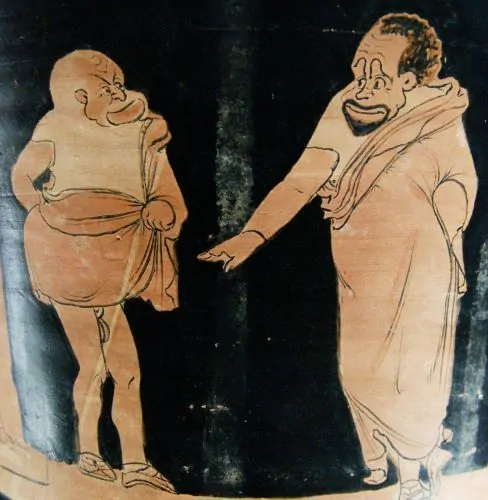
In Athenian forensic vocabulary, basanos carried within a single word an entire theory about truth, status, and the body. The term originally referred to a touchstone used to test the purity of precious metal, but it came to describe examinations intended to reveal whether a statement or claim was genuine. Applied to enslaved people, it denoted interrogation under physical torture, as though suffering could separate truthful knowledge from deception just as a stone distinguished gold from imitation. Enslaved members of a household might possess intimate knowledge of contracts, sexual relationships, family disputes, financial dealings, acts of violence, and conversations hidden from outsiders. The law nevertheless did not receive that knowledge as the autonomous testimony of persons capable of offering their own sworn accounts; it converted the enslaved person’s body into the instrument through which someone else attempted to authenticate information.
The mechanism most frequently described in the forensic speeches was the proklēsis eis basanon, a formal challenge or proposal to submit an enslaved person to questioning under torture. A litigant might offer one of his own enslaved people for examination or demand that an opponent produce someone believed to possess relevant knowledge. The proposal could identify the disputed issue, the people to be questioned, the questions to be asked, the individuals who would supervise or administer the examination, and responsibility for physical injury or loss of value. Because the enslaved person was legally property, an owner’s consent was generally necessary before an evidentiary basanos could proceed through this negotiated procedure. The arrangement was ordinarily created by the parties rather than imposed unilaterally by the presiding magistrate as part of an official investigation. If accepted, the examination might establish a particular fact, provide material for subsequent litigation, or function as an alternative test capable of settling the dispute before a jury heard it. The enslaved person whose body guaranteed the agreement possessed no corresponding power to accept its terms, limit the questions, withdraw consent, or refuse answers that endangered the owner, another household member, or the person being tortured. What appeared between litigants as a voluntary evidentiary compact was consequently founded upon the absolute involuntariness of the human being made to perform it.
Surviving orators usually invoke basanos through accounts of challenges offered and refused rather than through records of examinations successfully completed. A speaker claims that he placed potentially decisive knowledge at his opponent’s disposal, only to have the opponent retreat because the truth would have destroyed his case; refusal is then presented as a virtual admission of dishonesty. The argument depended upon the conventional assertion that free witnesses could lie from friendship, bribery, fear, or self-interest, whereas torture would overcome an enslaved person’s loyalty and compel disclosure. Yet a challenge could be framed so that rejection was predictable, especially when the owner faced danger to valuable human property, disputed the proposed questions, suspected that the enslaved person had been instructed by another party, or recognized that the conditions of the examination favored the challenger.
How frequently Athenians actually completed evidentiary torture under an accepted challenge remains one of the most persistent controversies in the study of their law. No surviving forensic speech unequivocally presents the results of a completed, mutually accepted basanos and then supplies a transparent record of the questioning for the jury’s evaluation. Scholars have emphasized the rhetorical function of the challenge, arguing in different ways that actual examinations of this kind may have been rare and that many proposals were designed principally to be rejected. David Mirhady has countered that an accepted challenge could resolve the contested issue outside court, making the absence of completed examples from speeches delivered at trials an expected consequence rather than proof that the procedure was fictitious. Neither interpretation can be conclusively demonstrated from a corpus preserving only a small and highly selective portion of Athenian litigation. Evidence from comedy, political investigations, household discipline, punishment, and incidental references nevertheless shows that the physical torture of enslaved people was not merely a forensic metaphor. Aristophanes could construct a comic scene around suggested methods of torturing an apparent slave because audiences understood the social practice being parodied. Antiphon’s On the Murder of Herodes describes an enslaved man who produced changing statements under torture before Herodes’ relatives killed him, although the defendant attacks the examination as irregular and the episode does not constitute a clear example of an agreed evidentiary challenge. The cautious conclusion is not that torture existed only in courtroom rhetoric, but that the surviving speeches reveal the ideological power of basanos much more clearly than they reveal its frequency, administration, or results.
The authority claimed for basanos rested upon a contradiction that Athenians could recognize without abandoning the practice. Aristotle’s Rhetoric supplies arguments both for and against statements obtained under torture: compulsion could be represented as the strongest guarantee of truth, but suffering could also make a person say whatever the interrogator wished to hear. Forensic speakers generally praised the reliability of basanos when invoking their own rejected challenges, since openly questioning the procedure would weaken the inference they sought to draw from an opponent’s refusal. The deeper distinction was consequently social rather than scientific: the free citizen’s unbroken body signified civic dignity, while the enslaved body could be violated because its pain was thought capable of serving another person’s case. An enslaved person subjected to basanos was often being compelled to incriminate an owner, household member, or litigant rather than standing formally accused, but nothing resembling a privilege protected that person from also disclosing personal wrongdoing or suffering punishment because of the answers extracted. In the history of self-incrimination, basanos marks a foundational exclusion: before law could recognize that an accused individual possessed a protected silence, Athens demonstrated how readily it could treat a person denied ownership of body and voice as evidence belonging to someone else.
Torture in Practice or Torture in Rhetoric?

The surviving evidence does not permit a simple choice between torture as an ordinary Athenian evidentiary practice and torture as an empty forensic fiction. Almost everything known about the proklēsis eis basanon comes from speeches composed for litigants who had strong reasons to exaggerate their willingness to submit enslaved people to examination and their opponents’ fear of doing the same. These texts preserve arguments rather than administrative records, transcripts of interrogation, or neutral descriptions of completed cases. Their silence about successful examinations is significant, but its meaning remains contested. It may indicate that accepted challenges were exceedingly rare, or it may reflect the fact that acceptance settled the disputed issue before a jury trial became necessary. Any reconstruction must consequently distinguish what Athenians said torture could prove, what litigants accomplished by proposing it, and what probably happened to enslaved people beyond the narrow field illuminated by extant courtroom speeches.
The strongest argument for treating evidentiary basanos principally as rhetoric begins with a conspicuous absence. The surviving orators repeatedly describe challenges that were refused, withdrawn, disputed, improperly framed, or allegedly prevented by an adversary, yet they provide no indisputable account of a mutually accepted challenge producing testimony that was subsequently evaluated in court. This pattern allowed scholars to argue that the proposal itself performed the essential legal and rhetorical work. A litigant could formulate a challenge under conditions his opponent was unlikely to accept, then present the predictable refusal as proof that the opponent feared exposure. The owner receiving the challenge faced serious risks: physical injury might reduce the monetary value of an enslaved person, the interrogators might exceed the agreed questions, and pain might produce an accusation damaging to the household whether or not it was true. Refusal could be prudent even when the owner believed his case just, but the challenger could suppress those complications when addressing the jury. The proposal created an appearance of absolute confidence at relatively little cost if its author expected rejection. Because no magistrate routinely compelled acceptance or guaranteed neutral administration, the proklēsis could become a carefully staged offer rather than a sincere attempt to discover unknown facts. On this interpretation, torture occupied Athenian trials less as a frequently completed procedure than as a rhetorical machine for turning an opponent’s caution into apparent confession.
The opposing interpretation begins by asking why Athenians would have found that machine persuasive if the procedure behind it was wholly imaginary. David Mirhady, reviving an argument originally associated with J. W. Headlam, maintains that an accepted challenge could function as an alternative method of decision whose result bound the parties or effectively settled the contested point. Cases in which the examination occurred would then be unlikely to generate speeches for a later jury trial, while rejected challenges would naturally appear in precisely the litigation that survives. The detailed terms attributed to some proposals (identification of enslaved people, specification of questions, appointment of examiners, and arrangements for compensation) also suggest familiarity with more than an abstract fantasy. This reasoning cannot establish how frequently torture was completed, but it demonstrates why silence in forensic speeches cannot by itself prove nonuse.
Evidence outside the pattern of rejected challenges makes outright denial still more difficult. In Antiphon’s On the Murder of Herodes, an enslaved man was tortured, produced changing statements, and was eventually killed by the victim’s relatives, although the defense condemns the procedure as irregular and the episode was not a standard, mutually negotiated evidentiary examination. Aristophanes’ Frogs derives comedy from Xanthias’ proposal that the man presented as his slave be tested by whipping, suspension, stretching, flaying, and other torments, a grotesque catalogue that depended upon an audience already familiar with the association between enslavement and bodily coercion. Comedy cannot establish courtroom frequency, and Antiphon’s partisan narrative cannot supply a neutral procedural record. Together, they place forensic claims within a society where torturing enslaved people was conceivable, recognizable, and materially possible. Household discipline, punishment, political investigation, and evidentiary examination did not constitute a single legal institution, but violence in one setting made threats in another credible. Aristotle’s treatment of basanos likewise assumes that statements obtained by compulsion could be introduced into argument, while advising speakers both to praise and to discredit them according to the needs of the case. The orator defending torture could claim that pain overcame loyalty and deception; the orator attacking it could answer that sufferers would say whatever ended their agony. This openly reversible reasoning shows that Athenians understood the defect at the procedure’s center even while continuing to invoke its authority. Torture was rhetorically useful not because its truthfulness was uncontested, but because the socially authorized vulnerability of the enslaved body allowed each litigant to present coercion as decisive whenever doing so served his position.
The most defensible conclusion is that basanos belonged simultaneously to practice and rhetoric, though the surviving evidence exposes the second far more clearly than the first. Actual evidentiary examinations under accepted challenges were probably less common than the frequency of courtroom references might suggest, but neither their rarity nor their poor documentation makes the violence imaginary. A formal offer could influence litigation even when no blow was struck, because the enslaved person’s availability for torture shaped negotiation, ownership decisions, and the inferences later urged upon jurors. The challenge also reaffirmed a constitutional hierarchy: free citizens disputed truth through public speech, whereas enslaved people could be imagined as revealing it only when force separated their words from the loyalties of the household. That hierarchy mattered whether a particular proposal ended in torture, refusal, settlement, or accusation before a jury. The historical question is not resolved by counting completed examinations that the sources were never designed to preserve. Torture became powerful in Athenian law because it was real enough to threaten, exceptional enough to dramatize, and rhetorically flexible enough to make either acceptance or refusal appear incriminating.
Restraining the Accuser: The One-Fifth Rule and the Fear of the Sycophant

Classical Athens faced a structural problem created by its reliance upon citizen prosecution: the same openness that allowed the laws to be enforced also permitted accusation to become an instrument of profit, intimidation, or revenge. Many public actions could be initiated by ho boulomenos, any legally qualified citizen willing to undertake the prosecution, even when he had suffered no direct personal injury. This broad standing enabled ordinary citizens to challenge officials, politicians, wealthy offenders, and conduct affecting the entire community without waiting for a public prosecutor who did not exist. It also allowed a determined litigant to impose financial expense, reputational damage, and the danger of conviction upon an enemy merely by constructing a plausible charge. Athens attempted to preserve the civic accuser while placing material and political risks upon the man whose prosecution received almost no support.
The most familiar restraint was the rule requiring the accuser in many public proceedings to obtain at least one-fifth of the jurors’ votes. He did not have to win the case to avoid punishment; he merely had to persuade a substantial minority that his accusation deserved acceptance. If he fell below that threshold, he ordinarily became liable for a fine of one thousand drachmas, an exceptionally serious financial penalty rather than a token payment for court costs. Ancient evidence also associates the failure with a form of partial atimia, or loss of civic rights connected with bringing future public actions. The precise extent of that disability remains disputed: some evidence suggests exclusion from several forms of public prosecution, while a more restrictive interpretation would bar only the same or similar procedures. A related rule penalized an accuser who initiated a covered public action but failed to carry it through, although scholars disagree over whether every withdrawal was punished or whether the central target was abandonment, corrupt settlement, or the sale of a prosecution to the defendant. The speech Against Theocrines explicitly connects the thousand-drachma penalty with preventing individuals from using public procedures for private gain and then compromising the city’s interests. These provisions were not perfectly uniform across every Athenian action, since procedures such as eisangelia possessed exceptional rules at different periods, apparently because the city did not wish to discourage citizens from reporting the most serious offenses against the state.
The one-fifth requirement acted as a threshold against overwhelming repudiation rather than as compensation automatically owed by every unsuccessful accuser. In an ordinary public jury of 501 citizens, a prosecutor could lose by a very large margin and still escape the penalty if roughly one hundred jurors supported him. The tolerated uncertain, controversial, and ultimately unsuccessful accusations while punishing the case that appeared to the assembled citizens almost entirely indefensible. Its defect was equally clear: a vote measured persuasiveness on one occasion, not the accuser’s original honesty, investigative diligence, or subjective belief in the charge.
Behind these sanctions stood the feared figure of the sykophantēs, conventionally rendered as “sycophant,” although the modern English word captures only part of its Athenian meaning. The literal sense of the Greek term is commonly given as “fig-revealer,” but its historical origin was already obscure in antiquity, and later stories connecting it to prohibited figs or informers against fig exporters cannot safely be treated as established fact. In political speeches and comedy, the sycophant was variously imagined as a habitual prosecutor, malicious informer, legal extortionist, fabricator of charges, paid agent, or parasite who lived by threatening other citizens with litigation. His defining characteristic was not simply that he prosecuted frequently, since democratic government depended upon citizens willing to enforce public law, but that he converted civic vigilance into an economy of private advantage. Some procedures promised successful accusers a portion of fines or confiscated property, creating incentives that Athenians regarded as useful when they encouraged enforcement and dangerous when they encouraged speculative accusations. Other sycophants allegedly profited without winning at all: they threatened wealthy citizens with public disgrace, initiated proceedings, and then accepted payment to abandon or sabotage the case. Aristophanes made the type into a recognizable feature of Athenian life, most memorably treating a captured informer in the Acharnians as though the city were exporting one of its most characteristic products. Forensic speakers likewise called their opponents sycophants so routinely that the accusation itself became a defensive strategy, inviting jurors to judge the prosecutor’s livelihood, associates, prior lawsuits, and motives instead of concentrating exclusively upon the present charge. Athens provided several possible legal procedures for proceeding against alleged sycophants, but no surviving evidence supplies a comprehensive definition capable of separating unlawful sycophancy neatly from aggressive, vindictive, or professionally assisted litigation. The sycophant was both a conceivable legal offender and a rhetorically manufactured social enemy whose alleged presence could be discovered whenever a speaker needed to discredit the person accusing him.
The prosecution of Ctesiphon by Aeschines in 330 BCE demonstrates why failure to obtain one-fifth could not itself prove that the accuser was a fraudulent extortionist. Aeschines challenged a decree proposing that Demosthenes receive a public crown, making the formal legality of the honors inseparable from a far larger judgment upon Demosthenes’ political career and resistance to Macedon. The surviving speeches reveal extensive legal argument, historical reconstruction, and political disagreement rather than an obviously fabricated accusation. Aeschines nevertheless received fewer than one-fifth of the votes, incurred the penalties associated with his defeat, and subsequently left Athens. His humiliation shows the force of the rule, but the importance of the dispute shows its bluntness: an accuser could fall below the threshold because the jury rejected his politics, distrusted his character, preferred his opponent’s account of recent history, or found his technically plausible charge contrary to the city’s desired verdict.
For an accused person, these restraints offered protection only indirectly and usually too late to prevent the harms of accusation. The one-fifth rule operated after the defendant had been summoned, had prepared his case, and had stood before hundreds of jurors to answer allegations capable of destroying his property, civic rights, reputation, or life. It did not create a preliminary institution that screened weak prosecutions before the defendant had to speak, nor did it give silence a protected meaning once litigation began. A resourceful sycophant might still calculate that intimidation, settlement, political sponsorship, or the possibility of securing a minority vote justified the risk, while a conscientious but poorer citizen might be deterred from bringing a meritorious public charge by the prospect of catastrophic punishment. The rule consequently restrained private enforcement while also narrowing the number of citizens willing and able to perform it. Athens feared the accuser who weaponized the law, yet it also feared leaving public wrongs unprosecuted in a system possessing no official service to take his place. The one-fifth threshold managed that conflict by making accusation itself a civic gamble, but it did not relieve the defendant of the necessity, and danger, of answering in his own words.
Rome Was Not One Court
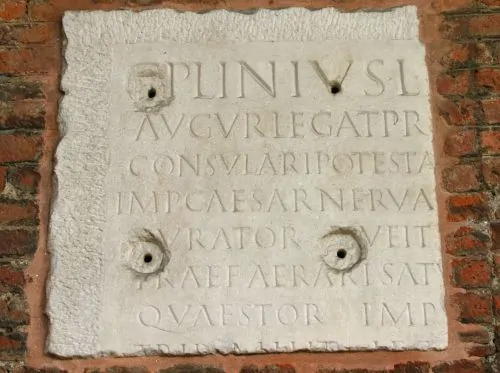
“Roman criminal justice” is a useful modern expression, but it can create the illusion of a single legal system operating through an unchanged kind of court. Over more than a millennium, Rome transferred judicial authority among popular assemblies, specially constituted tribunals, standing jury courts, the Senate, emperors, urban prefects, provincial governors, municipal officials, and other imperial delegates. Older jurisdictions frequently survived beside newer ones, while provincial custom and local institutions complicated every supposedly universal rule. The treatment of an accused person consequently depended upon period, location, citizenship, social rank, freedom or enslavement, the nature of the charge, and the official claiming jurisdiction. Any history of Roman self-incrimination must begin with courts and status rather than with the retrospective fiction that “Roman law” always supplied one answer.
During the Republic, the prosecution of serious wrongdoing developed from proceedings before the people and temporary commissions into a system increasingly dominated by permanent criminal jury courts, the quaestiones perpetuae. The first securely attested standing court was created in 149 BCE to hear claims of extortion against provincial governors, and later statutes established courts for treason, electoral corruption, embezzlement, murder and poisoning, violence, and other specified offenses. Each quaestio derived its jurisdiction and penalty from its constituting law, so the system consisted of several statutory courts rather than a general tribunal empowered to punish crime as such. A praetor or another magistrate presided, but an individual accuser normally initiated the case, formally committed himself to the prosecution, assembled evidence, and presented the charge. Jurors were drawn from politically defined status groups whose composition became a repeated source of conflict among senators, equestrians, and other eligible citizens. The defendant could answer personally and enlist advocates, patrons, relatives, and prominent supporters to speak on his behalf, making the trial a public contest among social authority, legal interpretation, evidence, and rhetorical credibility. He did not ordinarily appear as a modern sworn witness subjected to a methodical prosecutorial examination, yet neither did he possess a privilege that turned refusal to explain himself into protected silence. His words could supply admissions or contradictions, while his failure to confront an allegation could be represented as evidence that no adequate answer existed. Republican procedure made accusation adversarial without making the accused immune from the dangers of self-disclosure.
The protections celebrated under the Republic were principally privileges of citizenship and civic status rather than rights inherent in every human being. Provocatio and related traditions of Roman libertas limited the power of magistrates to inflict coercive punishment upon citizens without public accountability, while judicial torture remained strongly associated with enslavement. These restraints helped distinguish the free citizen’s body from the body that an owner or court could lawfully subject to pain, but they did not establish a general principle that government could never force a person to contribute to his own conviction. Provincials, noncitizens, enslaved people, and those caught beyond the effective reach of civic protection experienced Roman authority very differently. Even among citizens, emergency politics, military command, conspiracy accusations, and contested claims of public necessity could overwhelm procedural ideals.
The Principate did not immediately abolish the Republican courts, and Augustus both preserved and reorganized important parts of the quaestio structure. New centers of jurisdiction nevertheless developed around the emperor, the Senate, imperial prefects, and provincial governors, increasingly employing the flexible procedure known as cognitio extra ordinem. Under cognitio, the official who received the accusation could summon the parties, investigate disputed facts, question the accused and witnesses, evaluate the evidence, pronounce judgment, and select a punishment with considerably greater discretion than a Republican jury possessed. A named private accuser often remained necessary, especially because Roman authorities feared anonymous denunciation and malicious prosecution, but accuser and judge no longer defined the case through the same sharply separated roles found in the standing courts. Senatorial treason proceedings created their own mixture of political accusation, documentary inquiry, testimony, imperial influence, and deliberation by men who were simultaneously judges and potential targets. Provincial practice added another layer of variation because governors governed immense territories with limited staffs, depended upon local elites and petitions, and could adapt procedure to circumstances that Roman statutes had never anticipated. Pliny the Younger’s investigation of Christians in Bithynia illustrates the resulting concentration of authority. He questioned accused Christians repeatedly, threatened punishment, tested whether they would invoke the gods and curse Christ, executed those lacking Roman citizenship who persisted, and sent citizen defendants to Rome. He also ordered two enslaved Christian women identified as ministers to be tortured in an effort to discover what the group actually practiced. Trajan’s response prohibited searching indiscriminately for Christians and rejected anonymous accusations, but it approved punishment when a properly accused person refused to recant. The exchange reveals neither a completely arbitrary despotism nor a system of defined individual rights; it reveals an imperial judge questioning accused people, testing declarations of loyalty, coercing vulnerable witnesses, and requesting guidance from the emperor after constructing the inquiry himself.
This procedural transformation interacted with a widening legal division between the honestiores, people of elevated social standing, and the humiliores, the lower-status majority of the free population. Elite defendants ordinarily retained exemptions from punishments and humiliations considered servile, while lower-status people became increasingly vulnerable to flogging, forced labor, aggravated execution, and judicial torture. The broad grant of Roman citizenship under Caracalla in 212 CE did not create uniform protection because social rank had already begun replacing the older boundary between citizen and noncitizen. Even elite immunities could yield in prosecutions for treason, magic, conspiracy, and other offenses represented as exceptional dangers to imperial order. Roman jurists acknowledged that torture was an unreliable path to truth, warning that resilient people might withstand it while weaker people might say whatever pain required, but that insight produced regulation rather than abolition.
By Late Antiquity, cognitio had become the dominant framework of criminal adjudication, and imperial government described justice through an increasingly elaborate hierarchy of governors, vicars, prefects, palace officials, and emperors. Proceedings generated petitions, subscriptions, minutes, written statements, reports, rescripts, and dossiers that could travel between provincial and central authorities. Accusatorial forms persisted: legislation repeatedly demanded an identifiable accuser, threatened calumniators and informers who failed to prove their charges, and resisted anonymous denunciations. Officials could nevertheless initiate or expand investigations in matters involving public order, treason, corruption, religious offenses, taxation, and imperial security, blurring any neat distinction between adversarial accusation and official inquiry. Judges possessed authority to question defendants, confront them with testimony, detain them while evidence was gathered, order the interrogation of enslaved or low-status witnesses, and under authorized circumstances use torture against suspects. Imperial constitutions attempted to require substantial indications of guilt before torture, restrict its use against privileged persons, control repeated examination, and prevent confession from becoming the product of wholly unsupported suspicion. The frequency with which emperors restated such limitations suggests both an enduring concern with legality and an inability to prevent provincial officials from abusing coercive discretion. Late Roman prisons, moreover, were theoretically places of custody rather than punishment, yet prolonged confinement, chains, hunger, extortion, and unofficial violence could exert pressure before any formal sentence was imposed. Confession was valuable but not indispensable, since judges could convict from witnesses, documents, circumstances, and legal presumptions; torture could seek information about accomplices or concealed acts as well as an admission of personal guilt. The late imperial court was more bureaucratic, documentary, and judge-directed than its Republican predecessor without becoming uniform, professionally investigated, or reliably controlled from the center.
Rome’s transformation was not a straightforward journey from liberty to despotism or from primitive accusation to rational administration. Republican courts placed an accused citizen within an adversarial spectacle in which his public answer mattered, but their celebrated protections excluded much of the population. Imperial cognitio made government capable of investigating cases that private prosecution and rigid statutory courts handled poorly, while simultaneously bringing the accused into more direct contact with an official who could question, detain, judge, and punish. Late Roman legislation multiplied safeguards against unsupported accusation even as judicial torture and status-based coercion became embedded in ordinary legal administration. Private accusers, local elites, governors, imperial agents, and emperors continued to share authority in combinations that varied across the empire. Rome consequently produced no stable, universal privilege against self-incrimination. It produced a shifting landscape in which the danger of one’s own words depended upon which court was speaking, which official was asking, and what kind of person Roman law believed the accused to be.
The Speaking Roman Defendant

In the criminal courts of the late Republic, the accused entered a contest organized around public speech rather than an official search for confession. A private prosecutor formulated the accusation, presented evidence, called witnesses, and urged a jury to convict, while the defendant and his supporters constructed an answering account. The presiding magistrate maintained the tribunal and enforced the statute governing the particular quaestio, but he did not ordinarily conduct the case as an investigating judge. Jurors encountered the alleged crime through narratives shaped by men whose reputations, alliances, gestures, and rhetorical abilities were themselves visible evidence. The defendant was not normally placed under oath and examined as a modern witness, yet he could speak in his own defense, divide the defense with advocates, or allow distinguished patrons to answer for him. Roman procedure protected him from one particular form of compelled self-disclosure without recognizing silence as an inviolable right.
The accuser assumed a formally regulated public role even though he remained a private individual. He first sought permission to prosecute through postulatio, and when several candidates claimed the case, a preliminary divinatio could determine who appeared best qualified to conduct it. The chosen accuser then registered the charge through nominis delatio and committed himself to its pursuit, sometimes joined by subordinate prosecutors known as subscriptores. Depending upon the governing statute, he might receive time to collect documents, interview potential witnesses, travel to the province where the alleged acts occurred, and compel the production of relevant records. Cicero’s prosecution of Verres demonstrates both the possibilities and the obstruction surrounding this process: Cicero traveled through Sicily collecting testimony, while Verres’ allies allegedly attempted to discourage witnesses, manipulate schedules, and place a more accommodating prosecutor in control. Once trial began, the accuser had to transform his investigation into a persuasive oral case before jurors who were not supplied with an independently assembled dossier. He risked penalties for malicious accusation, corrupt abandonment, or collusion with the defendant, although enforcement was uncertain and political advantage could make prosecution attractive even without conviction. Accusation was neither a purely private grievance nor an impartial act of public administration. It was a temporary assumption of civic authority by a partisan whose credibility could be attacked as aggressively as the charge he brought.
The defendant answered through a culture of advocacy that possessed neither a modern legal profession nor a guaranteed right to appointed counsel. Roman terminology was fluid: a patronus might deliver the principal defense speech, while advocati could speak, advise, appear beside the accused, provide social support, or lend their standing without performing a narrowly defined professional function. Knowledge of statutes and procedure mattered, but so did the advocate’s ancestry, public career, friendships, and accumulated auctoritas. More than one speaker could divide a defense, assigning legal interpretation, factual reconstruction, character, and emotional appeal to the men thought best suited to each task. Such collective representation allowed the accused to avoid personally confronting every dangerous allegation while ensuring that an answer was placed before the jury. It also made protection profoundly unequal, because a wealthy or politically connected defendant could surround himself with eminent voices, whereas an obscure defendant might struggle to find anyone willing to risk association with him.
Personal defense nevertheless remained a recognized and sometimes prestigious practice. Republican memory celebrated figures such as Cato the Elder, who repeatedly defended himself against political accusations, and Servius Sulpicius Galba, who addressed the people when prosecuted over his treatment of the Lusitanians in 149 BCE. Publius Rutilius Rufus spoke for himself when charged with provincial extortion, maintaining an austerity that later writers admired as morally consistent even though the jury convicted him. Marcus Aemilius Scaurus likewise participated in his own defense while supported by an extraordinary group of leading advocates. The trial of Marcus Caelius Rufus in 56 BCE offers the clearest surviving example of distributed speech: Caelius answered first, Marcus Licinius Crassus followed, and Cicero delivered the concluding defense preserved as Pro Caelio. Caelius was already an experienced orator and former prosecutor, so allowing him to speak displayed the capacity and confidence expected of an ambitious Roman politician. Crassus and Cicero then supplied senior authority, divided the factual allegations, and redirected attention from the defendant’s conduct toward the character and motives of his accusers. This arrangement did not expose Caelius to systematic cross-examination after he finished, but every assertion he made could still be compared with witnesses, documents, probabilities, and the speeches of the other participants. Speaking personally offered immediacy and apparent sincerity while creating the possibility that a poorly judged denial, inconsistency, or admission would strengthen the prosecution. The defendant’s voice was not treated as compelled testimony, but it remained evidence in the broader Roman sense that jurors could use to decide what kind of man stood before them and whether his account deserved belief.
Even a defendant who entrusted the argument to advocates did not disappear from the courtroom. He could adopt the neglected clothing associated with distress, allow his hair and beard to grow, display wounds, weep, embrace relatives, and surround himself with children, friends, clients, and respected supporters. Character witnesses and formal laudationes placed his ancestry, military service, public generosity, municipal reputation, and political loyalties before the jury, often extending the case far beyond the statutory elements of the charge. Cicero repeatedly spoke as though his own standing guaranteed the seriousness of the defense, while his clients’ families and associates embodied the social consequences of condemnation. In Pro Roscio Amerino, the young Cicero explained the silence of more powerful defenders by pointing to their fear of Chrysogonus, transforming an apparent absence of support into evidence of the prosecution’s dangerous influence. In Pro Milone, he attempted to interpret Milo’s composure as the courage of an innocent patriot rather than the emotional coldness of a murderer. Silence, tears, steadiness, dress, and companionship could all be assigned incriminating or exculpatory meanings because Roman adjudication did not sharply separate demeanor from proof. The defendant spoke even when he said nothing, since advocates on both sides interpreted his visible body for the jury.
Republican criminal procedure consequently created distance between accusation and government without creating a privilege against self-incrimination. The defendant was not ordinarily seized by public investigators, isolated before trial, and required to supply a confession in response to official questioning. Nor was he compelled to become a sworn witness whom the prosecutor could cross-examine through a predetermined sequence of questions. Yet the adversarial structure demanded an effective response, especially when the accuser had offered witnesses, documents, motive, and a coherent narrative of guilt. A defendant who remained silent could ask advocates to answer for him, but he could not prevent the prosecution from portraying his failure to address a particular claim as evasion or tacit concession. Statements made before trial, explanations offered to friends or magistrates, letters, public speeches, and contradictions among different versions of events could all be incorporated into the forensic contest. The practical alternative to dangerous personal speech was representation, not protected silence. For prominent Romans, advocacy distributed the risks of answering among patrons, experts, relatives, and character witnesses; for defendants without such networks, the expectation of an answer could be nearly as coercive as a direct demand. Rome had produced a sophisticated defense culture, but its central concern was whether the accused could speak persuasively, not whether the law should protect him from becoming a source of evidence against himself.
Compelled Accounting

Confession in Roman law did not possess a single meaning or produce an identical result in every kind of proceeding. In private litigation, an admission could establish liability so decisively that the confessing party was treated much like a person against whom judgment had already been rendered, a principle eventually summarized by the expression confessus pro iudicato. Criminal adjudication remained more complicated because acknowledging an act did not necessarily concede criminal intent, reject a justification, or settle the appropriate punishment. Republican advocates could reinterpret an admission, imperial judges could demand explanations, and jurists could warn that even an apparently voluntary confession might be false. Silence likewise occupied an uncertain position: it was not automatically identical to confession, but Rome never transformed that distinction into a general right permitting the accused to withhold an account without procedural or rhetorical consequences.
The Republican quaestiones ordinarily placed the burden of constructing the accusation upon the prosecutor, who could not simply summon the defendant and require him to prove his innocence under official interrogation. That allocation offered meaningful protection against compelled confession, particularly when the defendant possessed advocates capable of exposing weaknesses in the prosecution while limiting his personal participation. It did not prevent the accuser from presenting the defendant’s prior words, contradictory explanations, evasions, letters, conduct, and apparent unwillingness to answer as evidence supporting guilt. Nor did it make every acknowledgment of conduct a complete confession of the charged crime. Cicero’s defense of Milo, for example, did not depend upon pretending that Milo and his party had no responsibility for the death of Clodius; it attempted to convert the killing from murderous ambush into justified resistance against an aggressor. The decisive dispute concerned who planned the encounter, who attacked first, what Milo intended, and whether killing Clodius could be defended as lawful self-preservation or service to the Republic. An accused person could similarly admit possession, association, payment, presence, or violence while disputing the prosecutor’s interpretation of those facts. The later jurist Paul captured the ambiguity in the maxim qui tacet, non utique fatetur: sed tamen verum est eum non negare: the silent person does not necessarily confess, although he also does not deny. That statement, preserved among general legal rules and derived from a different procedural context, should not be mistaken for a Republican rule excluding adverse comment upon criminal silence. It instead expresses the narrower Roman insight that silence lacked the affirmative force of confession while still leaving an unanswered allegation standing before the decision-maker.
Roman private procedure demonstrates how readily this distinction could coexist with compelled accounting. The Digest’s title concerning interrogatories put in iure describes questions about heirship, ownership, age, and other facts needed to identify the proper defendant or define the extent of liability. A person could be ordered to answer relevant questions, and a false acknowledgment might bind him as though the admitted status were true. Refusal by a representative could mean that he was not fully defending the person for whom he appeared, while a party’s unsupported silence might permit the proceedings to advance against him. The jurists nevertheless recognized limited exceptions, including a Hadrianic ruling protecting a person from being forced to answer whether he was an heir when either answer could prejudice a separate dispute over the inheritance. These materials concern civil litigation rather than a general criminal interrogation code, but they reveal the underlying procedural instinct: when adjudication required a party to disclose a legally decisive fact, Rome normally asked whether the question was relevant and prejudicial in that particular action, not whether personal autonomy created a universal privilege to refuse an incriminating answer.
Imperial cognitio brought that expectation of explanation more directly into criminal adjudication because the same official could receive the accusation, question the accused, investigate the answers, and render judgment. Pliny’s proceedings against Christians in Bithynia provide an unusually clear illustration. He asked suspected Christians whether they belonged to the group, repeated the question as many as three times, warned them of punishment, and treated persistence as evidence of an obstinacy deserving condemnation. Those who denied or renounced Christianity were required to demonstrate the truth of their answer by invoking the Roman gods, offering wine and incense before the emperor’s image, and cursing Christ. The demanded response was more than a statement about past identity; it was a compelled public performance through which the accused supplied evidence of present loyalty. Those who persisted were executed if they lacked Roman citizenship, while citizens were sent to Rome, and Pliny tortured two enslaved women identified as Christian ministers while investigating what the community practiced. Trajan imposed boundaries upon this process by instructing Pliny not to search proactively for Christians and not to accept anonymous accusations, but he did not prohibit questioning properly accused individuals or protect their refusal to answer. In such a proceeding, silence could appear as defiance of the governor’s authority, while an incomplete explanation could invite further inquiry into meetings, oaths, rituals, associates, and leadership. The imperial defendant increasingly faced a practical obligation to provide a satisfactory account even when no statute formally declared that silence constituted guilt.
Roman jurists nevertheless refused to make confession invariably conclusive. One rule directed that a defendant who confessed should be detained until sentence, showing that an admission could immediately change his procedural position without itself constituting the final judicial act. A rescript of Septimius Severus warned that the confessions of accused persons should not be treated as crimes established by investigation when no other proof guided the judge. Another passage recounts an enslaved man who falsely confessed to homicide, apparently from fear of being returned to his master, and required release after his innocence emerged despite his persistence in the confession. These cautions recognized fear, pain, private motives, psychological desperation, and official error as forces capable of producing untrue admissions. They were safeguards of reliability and judicial responsibility rather than expressions of a protected freedom to remain silent. Judges could seek corroboration while continuing to question the accused, and the growth of torture among enslaved people, convicted offenders, lower-status freemen, and eventually defendants in exceptional prosecutions made the demand for an account radically unequal. Rome contributed important warnings against equating speech with truth, but it did not reach the further principle that government must leave an accused person free to refuse the work of explaining, denying, or incriminating himself.
Quaestio de Servis: Testimony and the Roman Household

Quaestio de servis did not designate a permanent tribunal devoted to enslaved people, but an evidentiary examination in which their bodies were subjected to coercion in the search for facts. In Roman legal language, quaestio could mean an inquiry more generally, yet when applied to enslaved witnesses it ordinarily implied interrogation through tormenta, physical suffering imposed to extract answers. Domestic attendants, secretaries, accountants, nurses, tutors, cooks, porters, and personal servants inhabited spaces inaccessible to most free outsiders. They overheard conversations, handled letters and money, witnessed sexual relationships, recognized visitors, observed preparations for journeys or violence, and knew where household members had been at crucial moments. Their intimacy made them potentially valuable to accusers and judges, but their dependence upon an owner made every answer politically dangerous. Roman law consequently treated the enslaved member of the household neither as an autonomous witness nor simply as an accused person, but as a vulnerable repository of information whose body could be opened by force.
The procedure was not governed by a single standardized sequence of instruments, durations, or questions applicable throughout Roman history. Republican courts, imperial magistrates, provincial governors, and Late Roman officials operated within different institutions, while much surviving doctrine consists of juristic excerpts and imperial responses to particular disputes. By the Principate, legal authorities repeatedly insisted that torture should not begin an investigation unsupported by other evidence. A rescript of Hadrian directed that enslaved people be tortured only when suspicion had already attached to the accused and the remaining evidence appeared to require their statements for completion. Other rulings warned against relying upon a single enslaved witness, beginning a prosecution with testimony drawn from the accuser’s own household, or torturing people merely because an allegation had been made. Judges were supposed to decide the measure of torment according to reason and moderation rather than surrender control to an accuser demanding maximum pain. The interrogator ideally asked about observable facts (who entered a house, what words were spoken, where an object was placed, or whether an alleged act occurred) rather than asking the enslaved person to determine a legal conclusion. Cicero expressed this distinction brutally in his defense of Milo: the rack could investigate what happened, but the court had to decide whether it happened lawfully. Property rules also shaped the process because torture might injure, disable, or kill a person whose monetary value belonged to someone not accused of the offense. Some sources required the enslaved person to be appraised or a financial guarantee to be provided before examination. In adultery proceedings, an acquittal could lead to compensation for enslaved people who died under torture, while conviction could result in confiscation of the survivors. Such regulations did not protect the person being tortured from pain; they protected the investigation from appearing arbitrary and the owner from uncompensated loss.
The most important limitation was the traditional rule that an enslaved person should not be interrogated in caput domini, to the legal detriment of his or her own owner. Roman jurists sometimes extended the prohibition beyond formal torture, declaring that even voluntary statements by enslaved people should not prejudice the master when interrogation itself was forbidden. The rule rested partly upon doubts about testimony shaped by fear, resentment, obedience, or promised reward, but it more fundamentally protected the security and secrecy of slaveholding households. Ownership became an evidentiary question: courts had to determine who legally possessed the enslaved person, whether ownership had changed after proceedings began, whether a sale was genuine, and whether a manumission had been arranged to obstruct examination. The controversy appeared dramatically in Milo’s trial for the killing of Clodius, when the prosecution suggested that Milo had freed participants in the encounter to prevent their torture. Cicero replied that Milo had admitted the killing and disputed its legal character, while the ordinary prohibition against torturing enslaved people to incriminate their owner made the prosecution’s demand improper in any event. What superficially resembled a restriction upon compelled testimony was a privilege of the master, not a right of silence possessed by the enslaved witness.
Roman government nevertheless created exceptions whenever the protected privacy of the household collided with a sufficiently important public interest. Treason and conspiracy were the most enduring examples because threats to the state or emperor were thought to justify penetrating domestic loyalty by extraordinary means. During the prosecution of Marcus Scribonius Libo Drusus in 16 CE, Tiberius wanted statements from enslaved people belonging to the accused but confronted the traditional prohibition against using them in their owner’s destruction. According to Tacitus, the emperor solved the problem by ordering their transfer to a public agent before they were tortured, formally changing ownership so that the prohibition no longer applied. Whether Tacitus reproduced every technical detail accurately or sharpened the episode to expose imperial cunning, the story reveals how easily a rule framed through property could be defeated by manipulating property. Religious incestum, including offenses against the sanctity of the Vestal Virgins, also permitted exceptional examination, and Cicero recalled that enslaved people had been tortured during the scandal surrounding Clodius’ intrusion into the rites of the Bona Dea in 62 BCE. Augustus’ law against adultery widened the state’s ability to obtain evidence from within the accused household, providing mechanisms through which enslaved people could be acquired or confiscated for examination. Ulpian explained that removal from the accused person’s power was supposed to eliminate fear of being returned to an angry owner and thereby encourage truthful answers. The assumption was revealing: law recognized that ownership corrupted testimony through terror, yet its solution was to replace the owner’s coercion with the court’s torture. Trajan further permitted a husband’s enslaved people to be tortured in a proceeding against his wife, technically preserving the rule because the person incriminated was not their owner while exposing the household almost as fully as if the prohibition had been ignored. Exceptions for treason, adultery, religious violation, fiscal interests, and related offenses allowed the state to rearrange the legal boundaries of the family whenever domestic knowledge became too valuable to leave concealed.
The senatus consultum Silanianum of 10 CE carried the logic of household knowledge beyond ordinary witness examination. When an owner was violently killed, enslaved people who had lived under the same roof could be interrogated under torture and subjected to death if they had failed to assist, raise an alarm, reveal the plan, or otherwise protect the victim. Liability did not depend solely upon proof that each individual had participated in the killing. The decree presumed that proximity created both knowledge and a duty of intervention, converting the enslaved household into a compulsory surveillance network responsible for preserving the master’s life. Its most notorious enforcement followed the murder of the urban prefect Lucius Pedanius Secundus by one of his own enslaved men in 61 CE. Although the identity of the killer was known, approximately four hundred enslaved people in the household faced execution, provoking popular protest in Rome and opposition within the Senate. Tacitus places the defense of severity in the mouth of the jurist Gaius Cassius Longinus, who argued that masters surrounded by large and culturally diverse households could remain safe only if every enslaved person knew that silence or inaction would bring destruction upon all. The Senate upheld the executions, and Nero deployed armed forces along the route when the condemned were taken to their deaths. Here torture, testimony, punishment, and deterrence became almost impossible to separate: the inquiry sought information about the murder, but the collective penalty taught enslaved people that failure to inform against one another could itself be treated as complicity.
Roman jurists understood that this system did not reliably transform pain into truth. The Digest acknowledges that some people endured torture without speaking, while others escaped suffering by making false and changing confessions that implicated themselves and innocent people alike. Officials were accordingly instructed to corroborate statements, consider the circumstances of the witness, avoid beginning with torture, and refuse to treat coerced answers as automatically decisive. These cautions regulated judicial judgment without recognizing bodily integrity or a privilege against self-incrimination for enslaved people. The enslaved witness could be forced to accuse an owner, expose another member of the household, confess personal involvement, or provide names that widened the investigation, while the legal system debated primarily whether the resulting information was useful and whether the correct property rules had been observed. Quaestio de servis reveals the Roman household as both a protected private hierarchy and a reserve of human evidence that the state could invade: the master’s secrets received conditional protection, but the enslaved person’s body and voice never belonged to that protected silence.
Maiestas: Social Rank and the Expansion of Torture
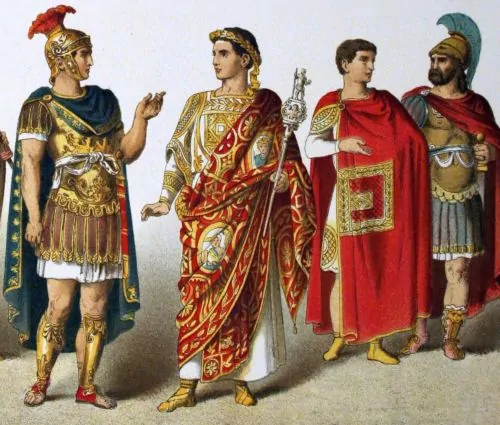
The expansion of Roman judicial torture did not occur through a single statute that suddenly abandoned the bodily privileges of freedom. Republican practice had drawn its most important line between the free citizen, whose physical integrity symbolized civic liberty, and the enslaved person, whose pain could be used to uncover another person’s crime. Under the Empire, that distinction remained legally meaningful, but it was increasingly crossed by a hierarchy that separated privileged from lower-status free people. The offense of maiestas exerted particular pressure upon older protections because it represented an injury to the superior authority upon which the political order depended. What had originally protected the majesty of the Roman people gradually became inseparable from the security, dignity, and person of the emperor. Once an accusation could be characterized as a threat to imperial sovereignty, restraints applicable to ordinary crimes became easier to suspend.
Successive Republican statutes transformed maiestas from a broad political idea into a criminal category encompassing conduct that diminished Roman power, betrayed military responsibilities, assisted enemies, or endangered the state. The Julian law of maiestas supplied the principal statutory framework inherited by the emperors, although imperial interpretation altered its reach far beyond any stable Republican definition. Under the Principate, conspiracy against the emperor, assistance to his enemies, sedition, hostile prophecy, defamatory writings, and disrespectful acts could all be brought within the orbit of treason under particular circumstances. Tacitus claimed that Augustus extended the law to libel and portrayed its vigorous enforcement under Tiberius as a corruption of legislation once directed against military betrayal and civic disorder. Informers and private accusers could gain political favor or financial reward by uncovering treason, while defendants faced a charge whose very seriousness encouraged exceptional investigation. The prosecution of Libo Drusus in 16 CE exposed the resulting strain upon domestic and bodily privilege when Tiberius arranged for Libo’s enslaved attendants to be transferred formally to another owner before they were tortured about their former master. The maneuver preserved the language of the prohibition against interrogating enslaved people to their owner’s detriment while destroying its practical protection. More broadly, maiestas permitted officials to penetrate households, examine associates, demand the names of accomplices, and reinterpret private words as evidence of public danger. Not every treason proceeding involved torture, and ancient narratives often magnified such trials to condemn particular emperors, but the offense established the enduring proposition that political emergency could make ordinary immunities expendable.
Alongside this exceptional jurisdiction developed the division between honestiores and humiliores, conventionally translated as the “more honorable” and the “more humble.” These were not two perfectly defined hereditary estates, and an individual’s classification could depend upon office, municipal standing, military service, profession, wealth, reputation, and local circumstances. Senators, equestrians, decurions, imperial officials, soldiers, veterans, and certain other respected groups commonly enjoyed protections unavailable to the mass of free laborers, peasants, and urban poor. The distinction affected not merely social deference but exposure to flogging, torture, forced labor, the mines, crucifixion, burning, and condemnation to wild beasts. Caracalla’s extension of Roman citizenship to most free inhabitants of the Empire in 212 CE did not equalize their bodies before criminal law, because social rank had already begun to perform much of the discriminatory work once accomplished by citizenship.
By the second and third centuries, imperial constitutions and juristic writings contemplated the torture of lower-status free people in serious criminal investigations, particularly when substantial suspicion already existed and ordinary evidence appeared insufficient. The change did not make torture a legally approved starting point in every inquiry. Jurists repeatedly advised judges not to begin with torment, not to treat statements extracted through pain as automatically true, and not to use coercion merely because an unsupported accuser demanded it. Those cautions governed the reliability and sequence of proof rather than recognizing an accused person’s control over his own body or speech. A low-status suspect could be compelled to confirm suspicious circumstances, confess participation, identify accomplices, disclose concealed objects, or explain words and associations that an official regarded as incriminating. The answers could then enlarge the investigation, producing new arrests and additional interrogations whose results appeared to corroborate one another even when they originated in the same coercive process. Social rank also influenced whose accusation deserved immediate attention, whose testimony required torture before it could be credited, and whose body could be endangered to complete a case against someone else. The parallel system of punishment expressed the same hierarchy: an honestior might receive exile, deportation, or a comparatively dignified execution for conduct that exposed a humilior to the mines, the beasts, crucifixion, or burning. Torture consequently became part of a broader penal order in which legal status determined both how truth could be sought and how suffering could be imposed.
Late Roman legislation restated privileges of rank while multiplying the circumstances in which those privileges might fail. Decurions, imperial officials, and other honored persons repeatedly received exemptions from degrading interrogation, but the repetition of such laws indicates uncertainty, evasion, and conflict over their enforcement. Maiestas remained the most powerful exception, and some imperial formulations declared that in a treason investigation all conditions were equal, meaning that dignity could not place even an eminent suspect categorically beyond torture. This was an equality of exposure to state violence, not an equality of protection from it. Accusations involving conspiratorial magic, illicit divination, or attempts to discover the emperor’s successor could acquire the character of treason because they implied knowledge of, or intervention in, the imperial future. Ammianus Marcellinus described investigations under Constantius II, Valentinian I, and Valens in which suspicious words, magical texts, private consultations, and tenuous associations generated chains of arrest, torture, confession, and accusation. His narratives were moral and political indictments rather than statistical descriptions of ordinary adjudication, but they demonstrate how contemporaries understood the capacity of an exceptional inquiry to consume both obscure people and members of the elite. High rank could still influence whether torture was authorized, which suspects suffered first, how officials evaluated the evidence, and whether an emperor intervened. The expansion was therefore uneven: it made coercion increasingly available against the free population without erasing the privileges that continued to distribute its risks.
Rome never converted its recognition of torture’s unreliability into a universal privilege against compelled self-incrimination. The principal shield against coercive questioning was status, and status protected a legally favored body rather than an autonomous human conscience. For the humilior, a serious accusation could transform citizenship into a weak defense against an official empowered to demand confession, information, and the names of others. For the honestior, immunity remained substantial but conditional, especially when the charge could be elevated into maiestas or another offense threatening imperial order. Jurists understood that pain made the resolute conceal truth and the vulnerable invent it, yet their solution was careful judicial evaluation, corroboration, and regulation of rank rather than a prohibition upon forcing the accused to speak. The history of Roman torture reveals a widening authority to extract self-incriminating words while preserving a social hierarchy that decided whose silence could be respected, whose body could be questioned, and whose alleged crime placed everyone connected to it in danger.
Athens and Rome Compared
Athens and Rome both associated freedom with the protection of the citizen’s body, but neither converted that civic privilege into a universal right against self-incrimination. In each society, the law distinguished sharply between those entitled to participate in the political community and those whose bodies could be used as instruments of proof. Free citizens generally answered accusations through speech, reputation, witnesses, documents, and supporters, while enslaved people could be subjected to torture because their uncoerced testimony was treated as compromised by dependence. Silence was never securely insulated from interpretation, even when it was not formally equivalent to confession. The crucial question was not whether every person possessed an autonomous right to withhold self-incriminating information, but what kind of person stood before the court and what methods the legal order considered appropriate to that status.
Classical Athens placed the citizen litigant at the center of a relatively stable accusatorial system. Most prosecutions were initiated and conducted by private individuals, magistrates performed preliminary and administrative functions, and large citizen juries heard the contending speeches before voting without judicial deliberation or a formally reasoned verdict. The accuser had to articulate a legally recognizable charge and persuade the jurors that the defendant’s conduct deserved punishment, but the defendant was ordinarily expected to provide an answering account. He could employ a logographer to compose his speech and might yield part of his allotted time to supporting speakers, yet the speech was conventionally presented as his own appeal to fellow citizens. Republican Rome likewise depended heavily upon private accusation, adversarial advocacy, and politically eligible jurors, but it permitted a more conspicuous division of the defense among patrons, advocates, relatives, and the accused himself. A prominent Roman defendant could allow several eminent men to construct his answer, whereas the Athenian ideal more insistently represented the litigant as personally telling his story. Neither arrangement required the accused to take a modern witness oath and submit to continuous prosecutorial cross-examination. Both nevertheless made an effective response practically indispensable because jurors evaluated not only formal evidence but plausibility, character, motive, social relationships, and the apparent adequacy of each side’s narrative.
The resulting silence differed from the silence protected by modern constitutional doctrine. An Athenian defendant who failed to confront an important allegation risked allowing his opponent to announce that the charge had gone unanswered, and a Roman advocate could similarly treat evasion or inconsistency as evidence of a defective defense. Neither system needed a legal rule declaring silence to be confession for silence to become rhetorically damaging. Litigants could explain why a witness was absent, why a document had not been produced, or why a particular question did not deserve an answer, but the opposing speaker remained free to attack that explanation. Silence was part of the forensic contest rather than a legally neutral space into which the accused could retreat.
Citizenship supplied meaningful protection because both polities ordinarily rejected the torture of citizens as a method of judicial proof. In Athens, basanos was closely associated with the interrogation of enslaved people, often following a formal challenge in which one litigant proposed that an enslaved person be surrendered for examination concerning disputed facts. Surviving speeches repeatedly describe such proposed tests and exploit an opponent’s refusal to accept them, although scholars continue to debate how often the torture actually occurred and whether many challenges were primarily rhetorical maneuvers. The citizen’s freedom from such examination distinguished his civic body from enslaved property, but it did not establish that compelled self-accusation was inherently unjust. Roman law drew a comparable early boundary between free citizens and enslaved people, while the prohibition against interrogating an enslaved person to the detriment of an owner protected the household hierarchy more than the enslaved witness. Rome then weakened its original boundary as imperial law divided the free population into privileged honestiores and vulnerable humiliores. Lower-status free people became increasingly exposed to torture in serious investigations, while treason and related offenses could remove even elite immunities. Athens excluded most residents from citizenship but guarded the citizen body with relative consistency; Rome extended citizenship across an empire while allowing rank and offense to determine how much bodily protection that citizenship actually carried.
Compulsion also reflected different understandings of how a court should discover truth. Athenian jurors normally received evidence as part of two opposing presentations constrained by speaking time, procedural rules, and the absence of a judge empowered to continue investigating until satisfied. Testimony, laws, contracts, challenges, oaths, and claims about character reached the jury through litigant-controlled speeches, leaving the jurors to choose between constructed accounts. Republican Roman jury trials shared much of that adversarial logic, although advocates and prosecutors could undertake extensive preparations and distribute argument among several speakers. Under imperial cognitio, the Roman official could summon, question, detain, investigate, judge, and punish, bringing the accused into more direct confrontation with state authority. Citizenship could still determine forum, penalty, and access to appeal, but it no longer reliably prevented the government from demanding an explanatory account.
The greatest contrast emerges not between a silent Athens and an interrogating Rome, but between different institutional locations of pressure. Athens compelled the citizen defendant primarily through the political and rhetorical expectation that he answer an accusation before fellow citizens. Its courts did not ordinarily place him under official examination, yet the structure of the trial made an unanswered allegation perilous and exposed every volunteered explanation to hostile reinterpretation. Republican Rome similarly encouraged the accused to answer through public advocacy, but its culture of patronage allowed powerful defendants to distribute the risks of speech among socially authoritative defenders. Imperial Rome increasingly relocated coercion into the office of the investigating magistrate, who could ask repeated questions, test denials through demanded acts, confront suspects with other statements, and authorize torture when status and charge permitted. Roman jurists openly recognized that torture could make the weak invent answers and the resolute conceal truth, but they responded with requirements of suspicion, moderation, corroboration, and judicial judgment rather than abolition. Athens rhetorically celebrated torture as a uniquely reliable “test” when discussing enslaved people even though forensic practice revealed distrust and strategic manipulation; Rome articulated a more explicit jurisprudence of unreliability while employing coercive interrogation across a wider range of persons. Both societies understood that compelled speech could be false, but neither concluded that the state or litigant must leave the accused entirely free to withhold it.
Athens and Rome consequently offer two related but distinct prehistories of the privilege against self-incrimination. Athens connected civic equality with personal participation in judgment and bodily freedom from servile interrogation, while expecting an accused citizen to defend himself through persuasive speech. Rome inherited a similar civic distinction but transformed it through imperial administration, differentiated status, and the expansion of judge-directed inquiry. In both systems, the protected person was first a citizen or privileged social actor, not an abstract rights-bearing individual, and the most vulnerable source of compelled truth remained the enslaved body. Their legal experience supplied later traditions with arguments about accusation, proof, confession, torture, and unreliable coercion, but not with a recognizable equivalent of the modern right to remain silent. The deeper commonality was a hierarchy of voices: some people were permitted to answer through advocates, some were expected to speak personally, and others were made to reveal what the court wanted through pain.
From Roman Texts to Nemo Tenetur

The road from Roman criminal procedure to nemo tenetur se ipsum accusare was neither direct nor continuous. No classical Roman statute or juristic rule declared that every accused person possessed a general privilege against being compelled to incriminate himself. Roman sources instead preserved narrower propositions: silence was not necessarily confession, accusations required some evidentiary foundation, a judge should distinguish an admission from proof, torture produced uncertain answers, and particular interrogatories could be rejected when they unfairly prejudiced a party. These doctrines coexisted with official questioning, compulsory oaths, status-based torture, and an expectation that suspects explain incriminating circumstances. The later maxim cannot be treated as an ancient Roman constitutional guarantee temporarily forgotten during the Middle Ages. It emerged when medieval jurists extracted fragments of Roman procedural reasoning, combined them with Christian teachings about confession and secrecy, and applied the resulting principles to institutions very different from those of Rome.
The crucial vehicle of transmission was Justinian’s sixth-century codification, particularly the Digest, which preserved the writings of Roman jurists within a legal order that outlived the Western Empire. Roman law remained authoritative in the Byzantine East and survived in more fragmentary forms in the West, but its intensive scholarly revival began in the late eleventh and twelfth centuries around Bologna. Glossators approached Justinian’s texts not simply as historical remains but as components of a coherent law capable of answering contemporary questions. They compared apparently contradictory passages, supplied distinctions, formulated general rules, and covered manuscripts with marginal and interlinear glosses explaining how ancient doctrine should operate. A Roman text originally concerned with an oath, admission, civil interrogatory, or evidentiary burden could consequently acquire implications beyond its initial setting. The ordinary gloss on Digest 12.2.26, for example, was eventually read to mean that a person need not answer a formal proposition that would disclose his own offense. That interpretation did not reproduce a clearly articulated classical Roman privilege; it converted a particular text into authority against a category of incriminating question. Medieval jurists inherited Roman words while changing their scale, linking scattered procedural protections to broader ideas about accusation, judicial office, and the proper boundaries of compelled disclosure.
Canon law supplied the theological distinction that allowed those Roman materials to become something more recognizable. Gratian’s Decretum, compiled around 1140, included a passage attributed to John Chrysostom instructing the sinner not to betray himself publicly or accuse himself before others, but to reveal his ways to God. Canonists interpreted this pastoral statement juridically, distinguishing the private or penitential forum from the external forum in which courts imposed public penalties. Sin ought to be confessed before God and, within sacramental discipline, to a priest, but secret wrongdoing did not automatically belong before a human judge. Huguccio expressed the underlying boundary by declaring that God, not man, was the judge of secrets. The protection of silence consequently arose partly from jurisdiction: a concealed sin might concern conscience and salvation without yet becoming a matter for compulsory public accusation.
The canonical development of inquisitorial procedure made that boundary both more necessary and more difficult to maintain. Earlier accusatorial ideals demanded a named accuser willing to formulate the charge and accept the risks of a failed prosecution, but ecclesiastical reformers also confronted offenses that intimidation, secrecy, or communal complicity made difficult to prosecute. Papal decretals and the Fourth Lateran Council regularized proceedings in which a judge could investigate by virtue of office when public fame, denunciation, notorious conduct, or other lawful indications supplied a preliminary basis. The judge was not supposed to wander through private life searching for unknown sins or begin with an oath designed to discover whether the person questioned had committed some unspecified offense. Public fama had to precede the inquiry, refer to a particular person and alleged transgression, and arise from credible communal report rather than from the judge’s invention or a malicious whisper. Once those conditions were satisfied, the accused could be required to swear to tell the truth, answer specific questions, and undergo canonical purgation if complete proof remained unavailable. The same system prohibited unsupported fishing expeditions while legitimizing compelled answers inside a properly initiated investigation. Its central question was not whether the accused had an absolute right to silence, but whether sufficient grounds already existed to move the alleged misconduct from the realm of secrets into the judicial forum. In theory, this prevented the court from manufacturing a crime from the defendant’s own mouth. Disputes over the existence and quality of fama gave judges considerable power to decide when the protection ended. Canonical procedure created a guarded threshold against self-betrayal, yet crossing that threshold could transform the duty to remain morally accountable into a legal duty to answer.
By the later thirteenth century, jurists were expressing the protective side of this law through increasingly concise formulations. William Durantis’ influential Speculum iudiciale declared that no one should be compelled to bear witness against himself because no one was bound to reveal his own shame. Hostiensis connected the rule with the pervasive reality of human wrongdoing: because no one lived entirely without fault, unrestricted official power to uncover secret offenses would expose virtually everyone to prosecution. Later canonists, including Panormitanus, repeated and elaborated the principle, while civilian procedural writers incorporated it into the shared Roman-canonical learning of the ius commune. Several closely related expressions circulated rather than one immutable formula: nemo tenetur prodere se ipsum, no one is bound to betray himself; nemo tenetur detegere turpitudinem suam, no one is bound to reveal his own shame; and eventually nemo tenetur se ipsum accusare, no one is bound to accuse himself. Jurists also argued that forcing an accused person to answer under oath created an intolerable temptation to perjury, since the suspect was placed between lying to escape punishment, confessing and condemning himself, or refusing and being punished for disobedience. This moral trilemma gave the rule a rationale that Roman evidentiary caution alone had never supplied. The law should not routinely make its own demand for truth an occasion for another grave sin.
Nemo tenetur nevertheless remained a qualified principle rather than a medieval equivalent of the modern right to remain silent. It offered its strongest protection when officials attempted to uncover a secret offense without an accuser, public fame, prior proof, or a properly defined charge. Once credible fama identified a suspect, the crime was notorious, public safety was endangered, or the proceeding concerned an offense such as heresy that seemed unusually threatening and difficult to prove, jurists could require answers despite the maxim. The accused might be protected from becoming the original source of an unknown accusation while still being compelled to respond after the court had established a lawful basis for inquiry. Roman law had contributed texts concerning oaths, proof, confession, and procedural prejudice; Christian theology had distinguished public judgment from the secrets of conscience; and canonists had transformed both into rules limiting inquisitorial power. The resulting doctrine was internally contested and frequently circumvented, but it marked a decisive conceptual change: compelled self-disclosure had become a legal problem demanding justification rather than merely one available technique for discovering truth.
Is “Self-Incrimination” the Wrong Question?
The following video from “History capsules” is a summary of ancient Roman law:
“Self-incrimination” may be an indispensable organizing concept for modern readers, but it can distort the ancient and medieval evidence if treated as a timeless legal category. The contemporary expression commonly evokes a cluster of protections: the right to remain silent, freedom from compelled testimonial disclosure, restrictions upon adverse inferences, access to counsel, and exclusion of unlawfully obtained statements. Athens, Rome, and the medieval ius commune did not combine those concerns into a comparable package. Their jurists separated accusation, confession, oath-taking, testimony, interrogation, torture, and silence according to procedure, status, and jurisdiction rather than according to a general principle of personal autonomy. Asking when the privilege against self-incrimination “began” can impose the destination upon the journey, making scattered restrictions appear to be incomplete versions of a right their creators were not attempting to formulate.
The distortion becomes visible when the inquiry concentrates exclusively upon the accused person’s words. In classical Athens, the citizen defendant’s obligation to answer arose principally from an adversarial culture in which litigants presented competing narratives before a citizen jury. No magistrate ordinarily conducted a sustained interrogation comparable to that of a modern investigator, yet a defendant who left significant allegations unanswered risked appearing evasive, dishonorable, or guilty. Republican Rome also relied upon private accusation and adversarial persuasion, although advocates, patrons, relatives, and character witnesses could speak so extensively that a powerful accused person did not always bear the burden of answering personally. Enslaved people in both societies encountered a fundamentally different regime because their bodies could be subjected to torture to obtain information about themselves, their owners, or other members of the household. Roman restrictions upon interrogating enslaved people against their masters protected ownership, domestic authority, and elite privacy rather than recognizing the enslaved person’s control over speech. Imperial law further differentiated free bodies by social rank, exposing humiliores to methods from which honestiores were ordinarily exempt and allowing accusations of maiestas to breach even privileged immunity. A history framed only around self-incrimination can obscure this defining inequality because it asks whether an individual was forced to accuse himself when the more revealing question is whose body could legally be converted into evidence. The deepest division was not between voluntary and involuntary speech in the abstract, but between people permitted to construct an answer and people from whom an answer could be physically extracted.
Discarding the concept entirely would conceal genuine continuities. Ancient advocates and jurists knew that compelled answers could be false, that confession did not invariably establish guilt, and that silence could differ from affirmative admission. Medieval canonists likewise recognized that an oath might trap an accused person between confession, perjury, and punishment for refusal. These were not modern constitutional doctrines, but they demonstrate a persistent awareness that making a person participate in his own condemnation created distinctive evidentiary and moral dangers.
A more historically productive inquiry asks how each legal order allocated the duty to provide an account. Who could initiate an accusation, what preliminary evidence was required, and when could a private allegation become an official investigation? Could the accused answer through advocates, supporting speakers, relatives, compurgators, or witnesses, or did the judge demand a personal response under oath? What consequences followed silence: formal condemnation, an adverse rhetorical inference, detention, ecclesiastical censure, renewed interrogation, or torture? The answers reveal transformations that the search for a single privilege tends to flatten. Athens placed pressure within competitive public speech while protecting the citizen body from methods associated with slavery. Republican Rome combined adversarial accusation with patronal representation, whereas imperial cognitio increasingly empowered an official to question, investigate, judge, and punish. Medieval Roman-canonical procedure then sought to regulate judge-directed inquiry by requiring an accusation, public fama, notoriety, or other lawful indications before secret misconduct could be investigated. Nemo tenetur emerged within that framework primarily as a prohibition against making a person disclose an otherwise unknown offense, not as an unconditional entitlement to refuse every incriminating question. Once sufficient grounds had transferred the matter from private conscience into the judicial forum, the obligation to answer could revive. Examining those thresholds explains not merely whether speech was compelled, but how legal institutions decided that a person had become answerable to another human authority.
“Self-incrimination” is the wrong question only when it is used as a verdict upon the past. Athens did not fail to invent the Fifth Amendment merely because its defendants lacked a protected courtroom silence, and Rome did not approach the privilege in a straight line whenever a jurist doubted torture or distinguished silence from confession. Medieval canonists were not simply recovering a complete Roman right, because they recombined ancient procedural texts with Christian ideas about sin, conscience, scandal, and the jurisdiction of human judges. Nevertheless, the concept remains valuable when used comparatively to identify recurring conflicts among truth-seeking, coercion, status, and individual survival. It directs attention to the moment when an accused person ceases to be merely the object of proof and is required to help produce the case against himself. The most accurate history is consequently not a genealogy of steadily expanding silence, but a history of contested accountability: who owed an answer, to whom it was owed, what authorized its extraction, and how much law permitted a person to lose for refusing to speak.
Conclusion: Who Had the Power to Remain Silent?
In Athens and Rome, the power to remain silent did not belong equally to every person brought within the reach of law. It followed citizenship, freedom, social rank, wealth, gender, reputation, and the procedural role assigned to the individual by the court. A citizen defendant might escape direct interrogation and retain some control over the account presented in his defense, but silence could still appear evasive when an accuser’s allegations demanded an answer. An enslaved person, by contrast, could be treated as a source of information whose body was available for coercive examination, while lower-status free people in imperial Rome gradually became vulnerable to similar methods. Silence was not an abstract personal liberty but a precarious advantage possessed most securely by those with the status and resources to make others speak on their behalf.
Classical Athens placed the accused citizen before fellow citizens and expected him to answer through the competitive language of the courtroom. He was not ordinarily examined as a modern witness, yet his credibility depended upon confronting allegations, presenting witnesses, explaining suspicious conduct, and supplying a persuasive narrative of events. Republican Rome similarly required a defense but allowed prominent defendants to distribute the work of answering among advocates, patrons, relatives, and supporters. That distinction mattered because the ability to speak through others reduced the personal danger of spontaneous admission, poorly chosen words, and hostile interpretation. Under imperial cognitio, the official’s increasing authority to summon, question, investigate, detain, and judge brought the accused into a more direct relationship with state power. Roman jurists cautioned that confession might be false, that torture was unreliable, and that silence was not necessarily an admission, but none of those propositions established an unconditional right to refuse incriminating questions. Their safeguards regulated the evaluation of coerced speech rather than placing the accused person’s voice beyond official demand. The hierarchy became most visible in the treatment of enslaved people, whose intimate knowledge of households made them evidentially valuable even as their legal dependence made their answers suspect. Rules forbidding their torture against their owners protected the master’s domestic security, not the enslaved person’s bodily integrity, and exceptions for treason, adultery, religious offenses, and threats to public order could penetrate that protection. Rome developed a sophisticated understanding of the dangers of compelled truth while preserving a system in which social position determined whose words could be requested, demanded, or extracted through pain.
The later maxim nemo tenetur se ipsum accusare did not descend intact from either Athens or Rome. Medieval canonists assembled it from Roman procedural fragments, Christian teachings about conscience, and concern that compulsory oaths could force a person to choose among confession, perjury, and punishment for refusal. Even then, the principle operated most strongly before lawful accusation, public fama, notoriety, or prior evidence had brought a secret offense within the jurisdiction of a human court. It initially protected a boundary against compulsory self-betrayal, not a universal courtroom right to remain silent after that boundary had been crossed.
Who, then, had the power to remain silent? The Athenian citizen had it only so far as he could survive the rhetorical consequences of leaving an accusation unanswered. The powerful Roman could preserve it through advocates, privilege, and control of the household, while the enslaved person and the humilior might be denied it by both law and physical force. The medieval Christian possessed a limited claim to conceal secret wrongdoing from an unauthorized human inquiry, but not necessarily from a court acting upon legally sufficient grounds. Across these systems, silence became effective when institutions lacked authority to demand an answer or when status made the cost of demanding one too high. The decisive historical change occurred when jurists began to ask whether compelled self-disclosure itself required justification, rather than merely whether the resulting confession could be trusted. That question did not yet produce the modern privilege against self-incrimination, but it shifted attention from the evidentiary usefulness of an answer toward the legitimacy of forcing a person to supply it. The ancient and medieval history of silence is not a steady march toward an inevitable constitutional right; it is the history of a power gradually detached from citizenship, mastery, and rank and reconceived, however incompletely, as something that might belong to the accused as such.
Bibliography
- Adamidis, Vasileios. “The Theory and Practice of Torture in Ancient Athenian Courts.” Schole 12:2 (2018), 466–485.
- Aeschines. Speeches. Translated by Chris Carey. Austin: University of Texas Press, 2000.
- Alexander, Michael C. The Case for the Prosecution in the Ciceronian Era. Ann Arbor: University of Michigan Press, 2002.
- —-. Trials in the Late Roman Republic, 149 BC to 50 BC. Toronto: University of Toronto Press, 1991.
- Allen, Danielle S. The World of Prometheus: The Politics of Punishing in Democratic Athens. Princeton, NJ: Princeton University Press, 2000.
- Ammianus Marcellinus. The Roman History of Ammianus Marcellinus during the Reigns of the Emperors Constantius, Julian, Jovianus, Valentinian, and Valens. Translated by John C. D. Yonge. London: George Bell & Sons, 1894.
- Antiphon and Andocides. Antiphon and Andocides. Translated by Michael Gagarin and Douglas M. MacDowell. Austin: University of Texas Press, 1998.
- —-. Minor Attic Orators. Translated by K. J. Maidment. Cambridge, MA: Harvard University Press, 1941.
- Aristophanes. Frogs. Translated by Jeffrey Henderson. Cambridge, MA: Harvard University Press (Loeb Classical Library), 2002.
- Aristotle. Athenaion Politeia [The Athenian Constitution]. Translated by H. Rackham. Cambridge, MA: Harvard University Press, 1935.
- —-. On Rhetoric: A Theory of Civic Discourse. 2nd ed. Translated by George A. Kennedy. New York: Oxford University Press, 1991.
- Asconius. Commentaries on Speeches by Cicero. Translated with commentary by R. G. Lewis. Oxford: Oxford University Press, 2006.
- Bablitz, Leanne. Actors and Audience in the Roman Courtroom. London: Routledge, 2007.
- Bauman, Richard A. Crime and Punishment in Ancient Rome. London: Routledge, 1996.
- —-. Impietas in Principem: A Study of Treason against the Roman Emperor with Special Reference to the First Century A.D. Munich: C. H. Beck, 1974.
- Bernstein, Neil W. “‘Torture Her until She Lies’: Torture, Testimony, and Social Status in Roman Rhetorical Education.” Greece & Rome 59:2 (2012), 165–177.
- Bers, Victor. Genos Dikanikon: Amateur and Professional Speech in the Courtrooms of Classical Athens. Washington, DC: Center for Hellenic Studies, 2009.
- Blok, Josine. Citizenship in Classical Athens. Cambridge: Cambridge University Press, 2017.
- Boegehold, Alan L., et.al. The Lawcourts at Athens: Sites, Buildings, Equipment, Procedure, and Testimonia. Princeton, NJ: American School of Classical Studies at Athens, 1995.
- Bradley, Keith R. Slavery and Society at Rome. Cambridge: Cambridge University Press, 1994.
- Brickhouse, Thomas C., and Nicholas D. Smith. Socrates on Trial. Princeton: Princeton University Press, 1989.
- Brundage, James A. Medieval Canon Law and the Crusader. Madison: University of Wisconsin Press, 1969.
- Brunt, P. A. “Evidence Given under Torture in the Principate.” Zeitschrift der Savigny-Stiftung für Rechtsgeschichte, Romanistische Abteilung 97 (1980), 256–265.
- Buckland, William Warwick. The Roman Law of Slavery: The Condition of the Slave in Private Law from Augustus to Justinian. Cambridge: Cambridge University Press, 1908.
- Carawan, Edwin M. “Erotesis: Interrogation in the Courts of Fourth-Century Athens.” Greek, Roman, and Byzantine Studies 24 (1983), 209–226.
- —-. Rhetoric and the Law of Draco. Oxford: Clarendon Press, 1998.
- Christ, Matthew R. The Litigious Athenian. Baltimore: Johns Hopkins University Press, 1998.
- Cicero. Brutus. Orator. Translated by G. L. Hendrickson and H. M. Hubbell. Cambridge, MA: Harvard University Press, 1939.
- —-. Defence Speeches. Translated by D. H. Berry. Oxford: Oxford University Press, 2000.
- —-. On the Ideal Orator. Translated by James M. May and Jakob Wisse. New York: Oxford University Press, 2001.
- —-. Pro Lege Manilia, Pro Caecina, Pro Cluentio, Pro Rabirio Perduellionis Reo. Translated by H. Grose Hodge. Cambridge, MA: Harvard University Press, 1927.
- —-. The Verrine Orations. Translated by L. H. G. Greenwood. 2 vols. Cambridge, MA: Harvard University Press, 1928–1935.
- Damaška, Mirjan R. The Faces of Justice and State Authority: A Comparative Approach to the Legal Process. New Haven, CT: Yale University Press, 1986.
- Demosthenes. Speeches 18 and 19. Translated by Harvey Yunis. Austin: University of Texas Press, 2005.
- —-. Demosthenes, Speeches 20–22. Translated by Edward M. Harris. Austin: University of Texas Press, 2008.
- —-. Speeches 27–38. Translated by A. T. Murray. Loeb Classical Library. Cambridge, MA: Harvard University Press, 1936.
- —-. Speeches 39–49. Translated by Adele C. Scafuro. Austin: University of Texas Press, 2011.
- —-. Speeches 50–59. Translated by Victor Bers. Austin: University of Texas Press, 2003.
- DuBois, Page. Torture and Truth. New York: Routledge, 1991.
- Durantis, Guillelmus. Speculum iudiciale. Basel, 1574.
- Filonik, Jakub. “The Organization of Evidence in Athenian Courts: Containers, Seals and the Management of Documents.” Classical Quarterly 74:2 (2024), 499–510.
- Forsdyke, Sara. Slaves and Slavery in Ancient Greece. Cambridge: Cambridge University Press, 2021.
- Gagarin, Michael. Antiphon the Athenian: Oratory, Law, and Justice in the Age of the Sophists. Austin: University of Texas Press, 2002.
- —-. “Eikos Arguments in Athenian Forensic Oratory.” In Probabilities, Hypotheticals, and Counterfactuals in Ancient Greek Thought, edited by Victoria Wohl, 15–29. Cambridge: Cambridge University Press, 2014.
- —-. The Murder of Herodes: A Study of Antiphon 5. Frankfurt am Main: Peter Lang, 1989.
- —-. “The Nature of Proofs in Antiphon.” Classical Philology 85:1 (1990), 22–32.
- —-. “The Torture of Slaves in Athenian Law.” Classical Philology 91:1 (1996), 1–18.
- Gagarin, Michael, and David Cohen, eds. The Cambridge Companion to Ancient Greek Law. Cambridge: Cambridge University Press, 2005.
- Gaius. The Institutes of Gaius. Translated by W. M. Gordon and O. F. Robinson. Ithaca, NY: Cornell University Press, 1988.
- Gamauf, Richard. “Cum aliter nulla domus tuta esse possit: Fear of Slaves and Roman Law.” In Fear of Slaves—Fear of Enslavement in the Ancient Mediterranean, 145–164. Besançon: Presses Universitaires de Franche-Comté, 2007.
- Gardner, Jane F. Women in Roman Law and Society. Bloomington: Indiana University Press, 1986.
- Garnsey, Peter. Social Status and Legal Privilege in the Roman Empire. Oxford: Clarendon Press, 1970.
- Gratian. Decretum. In Corpus Iuris Canonici. Edited by Emil Friedberg. Vol. 1. Leipzig: Bernhard Tauchnitz, 1879.
- Gregory IX. Decretales. In Corpus Iuris Canonici. Edited by Emil Friedberg. Vol. 2. Leipzig: Bernhard Tauchnitz, 1881.
- Hansen, Mogens Herman. The Athenian Democracy in the Age of Demosthenes: Structure, Principles, and Ideology. Norman: University of Oklahoma Press, 1991.
- —-. The Trial of Sokrates—from the Athenian Point of View. Copenhagen: Royal Danish Academy of Sciences and Letters, 1995.
- Harries, Jill. “Cicero and the Law.” In Cicero the Advocate, edited by Jonathan Powell and Jeremy Paterson, 147-164. Oxford: Oxford University Press, 2006.
- —-. Law and Crime in the Roman World. Cambridge: Cambridge University Press, 2007.
- —-. “The Senatus Consultum Silanianum: Court Decisions and Judicial Severity in the Early Roman Empire.” In New Frontiers: Law and Society in the Roman World, edited by Paul J. du Plessis, 51–70. Edinburgh: Edinburgh University Press, 2013.
- Harris, Edward M. Democracy and the Rule of Law in Classical Athens: Essays on Law, Society, and Politics. Cambridge: Cambridge University Press, 2006.
- —-. “The Plaint in Athenian Law and Legal Procedure.” In Archives and Archival Documents in Ancient Societies, edited by Michele Faraguna, 143–162. Trieste: Edizioni Università di Trieste, 2013.
- Harrison, A. R. W. The Law of Athens. Vol. 2, Procedure. Oxford: Clarendon Press, 1968.
- Harvey, F. D. “The Sykophant and Sykophancy: Vexatious Redefinition?” In Nomos: Essays in Athenian Law, Politics and Society, edited by Paul Cartledge, Paul Millett, and Stephen Todd, 103–121. Cambridge: Cambridge University Press, 1990.
- Headlam, James Wycliffe. “Review: Fowler’s ‘City-State of the Greeks and Romans’.” Classical Review 7:7 (1893), 325-326.
- Helmholz, R. H. “Origins of the Privilege against Self-Incrimination: The Role of the European Ius Commune.” New York University Law Review 65 (1990), 962–1002.
- —-. The Spirit of Classical Canon Law. Athens: University of Georgia Press, 1996.
- Hoffman, David C. “Murder in Sophistopolis: Paradox and Probability in the First Tetralogy.” Argumentation and Advocacy 45:1 (2008), 1–20.
- Hostiensis. In Sextum Decretalium Librum Commentaria. Venice, 1581.
- Hunter, Virginia J. Policing Athens: Social Control in the Attic Lawsuits, 420–320 B.C. Princeton: Princeton University Press, 1994.
- Isaeus. The Speeches. London: C. J. Clay and Sons, 1904.
- Johnstone, Steven. Disputes and Democracy: The Consequences of Litigation in Ancient Athens. Austin: University of Texas Press, 1999.
- Justinian. The Digest of Justinian. Edited by Theodor Mommsen and Paul Krueger. Translated by Alan Watson. 4 vols. Philadelphia: University of Pennsylvania Press, 1985.
- Kelly, J. M. Roman Litigation. Oxford: Clarendon Press, 1966.
- Kremmydas, Christos. “Anakrisis and the Framing of Strategies of Argumentation in Athenian Public Trials.” In Use and Abuse of Law in the Athenian Courts, edited by Chris Carey, Ifigeneia Giannadaki, and Brenda Griffith-Williams, 110–131. Leiden: Brill, 2018.
- Kucharski, Janek. “Vindictive Prosecution in Classical Athens: On Some Recent Theories.” Greek, Roman, and Byzantine Studies 52 (2012), 167–197.
- Kuttner, Stephan. Kanonistische Schuldlehre von Gratian bis auf die Dekretalen Gregors IX. Vatican City: Biblioteca Apostolica Vaticana, 1935.
- Langbein, John H. Torture and the Law of Proof: Europe and England in the Ancien Régime. Chicago: University of Chicago Press, 1977.
- Lanni, Adriaan. Law and Justice in the Courts of Classical Athens. Cambridge: Cambridge University Press, 2006.
- Levy, Leonard W. Origins of the Fifth Amendment: The Right against Self-Incrimination. New York: Macmillan, 1968.
- Lintott, Andrew. The Constitution of the Roman Republic. Oxford: Oxford University Press, 1999.
- Loska, Elżbieta. “Inconvenient Witnesses: Testimonies of Slaves in a Criminal Trial During the Republic and the Principate.” Studia Iuridica Lublinensia 30:1 (2021), 197–204.
- Lysias. The Speeches. Translated by S. C. Todd. Austin: University of Texas Press, 2000.
- MacDowell, Douglas M. The Law in Classical Athens. Ithaca, NY: Cornell University Press, 1978.
- MacMullen, Ramsay. Changes in the Roman Empire: Essay in the Ordinary. Princeton: Princeton University Press, 1990.
- May, James M. Trials of Character: The Eloquence of Ciceronian Ethos. Chapel Hill: University of North Carolina Press, 1988.
- Mirhady, David C. “Torture and Rhetoric in Athens.” Journal of Hellenic Studies 116 (1996), 119–131.
- Nippel, Wilfried. Public Order in Ancient Rome. Cambridge: Cambridge University Press, 1995.
- O’Connell, Peter A. “The Rhetoric of Visibility and Invisibility in Antiphon 5, On the Murder of Herodes.” Classical Quarterly 66:1 (2016), 46–58.
- Ober, Josiah. Mass and Elite in Democratic Athens: Rhetoric, Ideology, and the Power of the People. Princeton: Princeton University Press, 1989.
- Osborne, Robin. “Vexatious Litigation in Classical Athens: Sykophancy and the Sykophant.” In Nomos: Essays in Athenian Law, Politics and Society, edited by Paul Cartledge, Paul Millett, and S. C. Todd, 83–102. Cambridge: Cambridge University Press, 1990.
- Pennington, Kenneth. The Prince and the Law, 1200–1600: Sovereignty and Rights in the Western Legal Tradition. Berkeley: University of California Press, 1993.
- Perry, Matthew J. Gender, Manumission, and the Roman Freedwoman. Cambridge: Cambridge University Press, 2013.
- Plato. Euthyphro, Apology, Crito, Phaedo. Translated by Christopher Emlyn-Jones and William Preddy. Cambridge, MA: Harvard University Press, 2017.
- Pliny the Younger. Letters and Panegyricus. Translated by Betty Radice. 2 vols. Cambridge, MA: Harvard University Press, 1969.
- Pölönen, Janne. “Plebeians and Repression of Crime in the Roman Empire: From Torture of Convicts to Torture of Suspects.” Revue Internationale des Droits de l’Antiquité 51 (2004), 217–257.
- Powell, Jonathan, and Jeremy Paterson, eds. Cicero the Advocate. Oxford: Oxford University Press, 2004.
- Quintilian. The Orator’s Education. Edited and translated by Donald A. Russell. 5 vols. Cambridge, MA: Harvard University Press, 2001.
- Riggsby, Andrew M. Crime and Community in Ciceronian Rome. Austin: University of Texas Press, 1999.
- —-. Roman Law and the Legal World of the Romans. Cambridge: Cambridge University Press, 2010.
- Robinson, O. F. The Criminal Law of Ancient Rome. Baltimore: Johns Hopkins University Press, 1995.
- Rogers, Robert Samuel. Criminal Trials and Criminal Legislation under Tiberius. Middletown, CT: Wesleyan University Press, 1935.
- Rubinstein, Lene. Litigation and Cooperation: Supporting Speakers in the Courts of Classical Athens. Stuttgart: Franz Steiner Verlag, 2000.
- —-. “Volunteer Prosecutors in the Greek World.” Dike 6 (2003), 87–113.
- Sherwin-White, A. N. The Letters of Pliny: A Historical and Social Commentary. Oxford: Clarendon Press, 1966.
- Steel, Catherine. Roman Oratory. Cambridge: Cambridge University Press, 2006.
- Tacitus. The Annals. Translated by John Jackson. Cambridge, MA: Harvard University Press, 1931.
- Tanner, Norman P., ed. Decrees of the Ecumenical Councils. 2 vols. Washington, DC: Georgetown University Press, 1990.
- The Theodosian Code and Novels and the Sirmondian Constitutions. Translated by Clyde Pharr. Princeton, NJ: Princeton University Press, 1952.
- Thucydides. History of the Peloponnesian War. Translated by Rex Warner. Revised by M.I. Finley. London: Penguin Classics, 1972.
- Thür, Gerhard. Beweisführung vor den Schwurgerichtshöfen Athens: Die Proklesis zur Basanos. Vienna: Verlag der Österreichischen Akademie der Wissenschaften, 1977.
- —-. “The Principle of Fairness in Athenian Legal Procedure: Thoughts on the Echinos and Enklēma.” Dike 11 (2008), 51–73.
- —-. “Reply to D. C. Mirhady: Torture and Rhetoric in Athens.” Journal of Hellenic Studies 116 (1996), 132–134.
- Todd, S. C. “The Purpose of Evidence in Athenian Courts.” In Nomos: Essays in Athenian Law, Politics and Society, edited by Paul Cartledge, Paul Millett, and S. C. Todd, 19–39. Cambridge: Cambridge University Press, 1990.
- —-. The Shape of Athenian Law. Oxford: Clarendon Press, 1993.
- Valerius Maximus. Memorable Doings and Sayings. Edited and translated by D. R. Shackleton Bailey. 2 vols. Cambridge, MA: Harvard University Press, 2000.
- Vasaly, Ann. Representations: Images of the World in Ciceronian Oratory. Berkeley: University of California Press, 1993.
- Wallace, Robert W. “Withdrawing Graphai in Ancient Athens: A Case Study in ‘Sycophancy’ and Legal Idiosyncrasies.” In Symposion 2003: Vorträge zur griechischen und hellenistischen Rechtsgeschichte, edited by Hans-Albert Rupprecht, 57–66. Vienna: Verlag der Österreichischen Akademie der Wissenschaften, 2006.
- Watson, Alan. Roman Slave Law. Baltimore: Johns Hopkins University Press, 1987.
- Whitman, James Q. The Origins of Reasonable Doubt: Theological Roots of the Criminal Trial. New Haven, CT: Yale University Press, 2008.
- Wohl, Victoria. Law’s Cosmos: Juridical Discourse in Athenian Forensic Oratory. Cambridge: Cambridge University Press, 2010.
- Xenophon of Athens. Memorabilia and Apology. In Xenophon: Memorabilia and Oeconomicus, translated by E. C. Marchant. Cambridge, MA: Harvard University Press, Loeb Classical Library, 1923.
- Yunis, Harvey. “The Rhetoric of Law in Fourth-Century Athens.” In The Cambridge Companion to Ancient Greek Law, edited by Michael Gagarin and David Cohen, 191–210. Cambridge: Cambridge University Press, 2005.
Originally published by Brewminate, 08.02.2026, under the terms of a Creative Commons Attribution-NonCommercial-NoDerivatives 4.0 International license.
About the Author