In 1139, Lateran II condemned the use of crossbowmen and archers against Christians. Canon 29 entered church law, but rulers across medieval Europe kept hiring the troops it sought to restrain.

By Matthew A. McIntosh
Public Historian
Brewminate
Introduction: The Ban Everyone Remembers Incorrectly
The Second Lateran Council of 1139 left one terse sentence that later retellings inflated into a sweeping decree: the medieval Church had banned the crossbow. Canon 29 did condemn the “murderous art” of crossbowmen as “hateful to God,” but it named archers in the same breath and forbade their employment specifically against “Christians and Catholics.” It neither proscribed every use of these weapons nor ordered their destruction. The remembered ban is less a summary of the canon than a transformation of it.
That wording matters because the restriction attached illegitimacy to an act performed against a protected class, not simply to the mechanism that launched a projectile. Crossbows and bows could still be manufactured, owned, transported, practiced with, and employed against adversaries who fell outside the council’s religious boundary. A specialist who offended the canon while shooting at a Christian army might serve without violating its literal terms during a crusading campaign. The exemption consequently preserved the trained personnel, supply systems, and military knowledge required to use both weapons. This was consistent with a Church that generally sought to classify and redirect warfare rather than eliminate armed force altogether. Its councils protected selected people, places, and occasions while ecclesiastical authorities simultaneously sanctioned violence against approved enemies. Anathema gave Canon 29 spiritual gravity, but the text established no corresponding apparatus for supervision or uniform punishment. The familiar slogan about banning the crossbow erases this selective moral geography and replaces it with a universal humanitarian principle that the council never articulated.
Developments after 1139 make that distinction impossible to dismiss. Archers and crossbowmen remained embedded in siege operations, garrisons, fleets, and field armies, while rulers such as Richard I of England and Philip II of France employed missile specialists during conflicts that included Christian opponents. Their appearance in crusading forces does not itself demonstrate defiance because the canon left non-Christian enemies outside its protection; instead, it shows how readily permitted service could sustain capabilities later used elsewhere. The surviving record is too uneven to prove that no commander ever complied or that the decree never affected an individual decision. It nevertheless provides no persuasive evidence that Canon 29 halted the spread or institutionalization of crossbow warfare within Latin Christendom.
Seen in this light, Canon 29 offers something more revealing than an anecdote about medieval credulity. It exposes the distance between normative authority and strategic restraint. The council could stigmatize a way of killing, but it could not assure rival rulers that obedience would be mutual or impose a predictable cost upon those who defected. Because permissible campaigns preserved expertise and production, even sincere compliance in one theater could not remove the danger elsewhere. The decree still mattered as evidence that churchmen claimed jurisdiction over military conduct and believed certain practices could be judged independently of a ruler’s immediate advantage. Its comparison with efforts to prevent weapons from entering space rests upon structure rather than equivalence; both confront the fragility of partial restrictions when competitors retain the means to arm themselves. A declaration of illegitimacy becomes effective arms control only when the institutions surrounding it make adherence more secure than violation.
The Crossbow before 1139: An Existing Weapon, Not a Sudden Revolution
Canon 29 was not issued upon the first appearance of a startling new machine. Devices that stored a bow’s tension and released it through a stock-mounted mechanism had much older antecedents, while recognizably medieval crossbows had been present in European warfare well before April 1139. What changed during the eleventh and early twelfth centuries was their visibility and the degree to which armies organized specialists around them. Crossbowmen became increasingly useful wherever sieges, fortified positions, and maritime operations favored concentrated missile fire. Lateran II addressed an established military practice whose practitioners could no longer be treated as marginal figures.
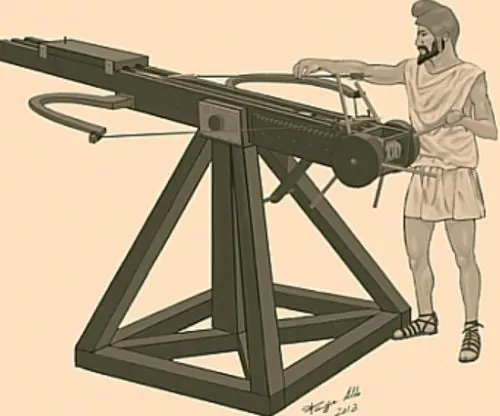
The weapon’s deeper ancestry is easy to describe too confidently. Greek technical writers discussed the gastraphetes, or belly bow, which combined a powerful bow with a stock and a sliding arrangement that allowed the operator to span it by pressing downward with his body. Roman texts and images contain terms such as ballista, manuballista, and arcuballista, although those words were not applied consistently and could refer to artillery rather than portable arms. Such evidence establishes that ancient Mediterranean engineers understood mechanical spanning and triggered release, but it does not demonstrate an uninterrupted institutional lineage extending into medieval Europe. Wooden components decayed, surviving metal fittings can be difficult to identify, and written descriptions rarely provide the precision expected from modern technical manuals. Even the Latin vocabulary remained elastic enough to blur distinctions among large bolt-throwers, smaller crossbows, and the men who operated them. Similar designs could also be recovered, adapted, or reinvented when military needs made them useful again. The most defensible history recognizes ancient precedents without filling the intervening centuries with an imagined chain of continuous development.
Firmer evidence appears as the crossbow returned to greater prominence in the Latin West during the centuries preceding the council. Anna Komnene’s account of the First Crusade describes the Western tzangra in sufficient detail to identify a crossbow, including the bodily effort required to span it and the force attributed to its bolt. Her language conveys Byzantine astonishment at an arm she regarded as characteristically Western and unusually dangerous. Because the Alexiad was composed decades after the events it narrates, its dramatic description cannot be treated as an eyewitness engineering report. It nevertheless demonstrates that the crossbow was associated with Western warriors of the late eleventh century rather than emerging without precedent shortly before 1139.
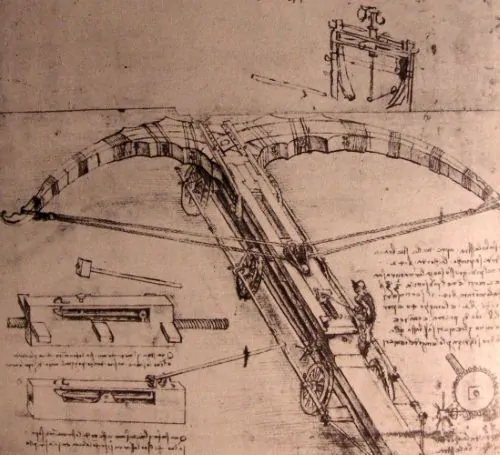
No single model represented the medieval crossbow encountered by contemporary armies. Early examples could employ wooden or composite prods fixed to stocks of differing lengths, with draw weights suited to varied purposes and spanning methods. The lock allowed a user to retain the string at full tension without continuing to hold the draw by muscular force, creating more time to aim from a wall, ship, or prepared position. That advantage came at the price of a slower loading cycle than an experienced archer could achieve with a conventional bow. Heavy spanning devices familiar from later medieval illustrations, including elaborate windlasses and cranequins, should not be projected indiscriminately backward into the early twelfth century. Performance also depended upon the construction of the prod, the quality of the string, and the bolt selected for the task. Range alone reveals little, since a projectile that traveled far might retain insufficient energy to defeat a shield or mail defense. Angle of impact, distance, metal quality, and the shape of the bolt head further complicated the result. Modern claims that the medieval crossbow effortlessly penetrated any armor compress centuries of technological change into a capability no individual weapon possessed.
Mechanical release did not convert an inexperienced recruit into a reliable soldier as soon as he received a crossbow. Compared with sustained proficiency in powerful self bows, competent aiming could be acquired more rapidly because the lock held the draw while the user aligned the shot. Effective service still required practiced spanning, equipment maintenance, careful ammunition handling, and the discipline to operate alongside other troops. A crossbowman caught while reloading remained vulnerable, which made terrain, fortifications, and supporting formations central to his survival. The arm reduced certain training demands without abolishing the need for professional skill.
By 1139, the crossbow had become one component of a diversified military system rather than the instrument of an overnight battlefield transformation. Mounted warriors retained their importance, ordinary archers remained indispensable, and close combat continued to decide many encounters. Crossbowmen added particular value during sieges, where cover reduced the disadvantage of a slow reload and a carefully aimed bolt could threaten defenders or attackers exposed above fortifications. Their growing presence also reflected the resources of rulers and urban communities able to obtain specialized equipment, maintain arsenals, and support paid personnel for extended operations. None of these developments made tactical adaptation automatic or produced the same results in every region. They instead created a gradual accumulation of expertise around an old mechanical principle. When the council condemned crossbowmen together with archers, it was responding less to a sudden invention than to the expanding place of missile specialists within the warfare of Christian Europe.
The Church and the Problem of Christian Violence

Long before the bishops gathered at Rome in 1139, Latin churchmen had confronted a persistent contradiction. The warrior aristocracy that endowed monasteries, protected dioceses, and supported reform was also a major source of predation. Ecclesiastical institutions possessed property that required defense, while priests ministered to rulers whose authority rested partly upon armed force. Christianity supplied powerful injunctions against private vengeance and bloodshed, yet its inherited theology did not make every act of coercion sinful. The practical question was how violence might be subordinated to Christian order without asking a society organized around lordship and war to renounce force altogether.
One early response developed through the Peace of God movement, which emerged in parts of southern and central France during the late tenth century. At the Council of Charroux in 989, bishops pronounced anathemas against those who violated churches, robbed poor people of livestock, or attacked unarmed clerics. Subsequent assemblies extended protection to additional groups and possessions considered particularly vulnerable to aristocratic warfare. These gatherings were not legislative sessions conducted by a centralized government. Bishops and abbots assembled relics, enlisted saints as guarantors, and preached before crowds whose participation gave public weight to sworn promises of restraint. Lords might accept such oaths from religious conviction, concern for reputation, or the political advantages offered by regional cooperation. The movement’s growth also reflected monastic reform, episcopal competition, and disputes over authority, making it more complicated than a spontaneous uprising against lawless knights. Its central innovation was to place particular acts of plunder and assault under ecclesiastical judgment even when secular custom might otherwise have tolerated them.
These protections never produced a uniform peace throughout Latin Christendom. Their wording varied by region, implementation depended heavily upon local alliances, and powerful offenders could resist censures that weaker men dared not ignore. Some peace associations even assembled armed forces to compel compliance, demonstrating how quickly an effort to suppress unauthorized aggression could generate coercion of its own. Support from princes and castellans could make ecclesiastical sanctions effective, but that cooperation also exposed the limits of independent clerical power. The Peace of God mattered less as a comprehensive solution than as proof that customary warfare had become subject to organized religious criticism.
A related innovation, the Truce of God, attempted to regulate when fighting could occur. Beginning in the early eleventh century, councils such as Toulouges in 1027 prohibited hostilities during portions of the week associated with Christ’s Passion and Resurrection. Later enactments extended the protected intervals and added seasons including Advent, Lent, and major feast days. The resulting calendar did not determine whether a lord’s cause was just, nor did it require him to dismiss his followers once the restricted period ended. Instead, it sought recurring suspensions during which raids, sieges, and feuding were supposed to cease. Breaking the truce could expose an offender to excommunication after episcopal warnings, transforming a military decision into an offense against the Church. Yet each extension increased the difficulty of observation, especially where bishops lacked cooperation from the men who commanded castles and armed retinues. Temporal restraint could narrow opportunities for violence without removing the rivalries that made combat attractive.
During the eleventh-century reform era, the papacy claimed a more assertive role in defining the obligations of rulers and warriors. Augustine’s writings had long permitted public force when legitimate authority used it to correct wrongdoing rather than satisfy cruelty or private appetite. Canonists inherited scattered and sometimes discordant passages on homicide, punishment, military service, and obedience. Compiled around 1140, Gratian’s Decretum brought many of those authorities into an organized legal argument, with Causa 23 asking whether Christians could wage war and under what conditions. Gratian’s work was a private scholarly compilation rather than legislation issued by Lateran II, but its rapid influence reveals the intellectual setting in which the council operated. Violence was increasingly examined through questions of authorization, culpability, intention, and ecclesiastical competence rather than accepted as an activity lying beyond religious law.
The crusading movement sharpened the distinction between condemned aggression and meritorious armed service. At Clermont in 1095, Urban II offered remission of imposed penance to those who undertook the expedition from devotion, joining warfare to the religious form of pilgrimage. Participants were expected to bear arms for the assistance of eastern Christians and the recovery of holy places rather than for ordinary enrichment or private feud. Subsequent preaching elaborated this penitential ideal even as actual campaigns remained entangled with dynastic ambition, material interest, and competition among commanders. Early military orders carried the synthesis further by joining religious vows with the permanent defense of Christian territories.
None of this meant that every war against a non-Christian opponent automatically received sacred approval. Papal authorization, purpose, vows, and the spiritual disposition attributed to participants continued to matter. Nevertheless, a warrior might be censured for attacking fellow Christians and praised for employing comparable force in an authorized expedition abroad. Efforts to reduce conflict within Christendom developed alongside institutions that endowed selected wars beyond its boundaries with exceptional religious value.
Against this background, the Second Lateran Council’s military provisions appear as parts of an established ecclesiastical project rather than isolated reactions. Canon 12 renewed the weekly and seasonal truce and prescribed excommunication for persistent violators after episcopal admonition. Canon 14 again condemned tournaments, threatening those killed in them with denial of Christian burial because such contests endangered bodies and souls without an acceptable public purpose. Canon 29 then addressed the employment of crossbowmen and archers against Christian targets. The provisions differed in subject and penalty, but each asserted that clerical authority could judge conduct commonly associated with aristocratic and princely warfare. They also retained the characteristic limitations of earlier peace legislation. Broad claims rested upon decentralized implementation and cooperation from those whose behavior was being restricted. The crossbow decree belonged to a long struggle over whether the Church could determine which forms of force lay outside acceptable Christian conduct.
Lateran II: Restoring Authority after Schism

The death of Pope Honorius II in February 1130 did not produce an orderly succession. A commission appointed to manage the election divided, and competing cardinal factions acted before any consensus could form. The group associated with the papal chancellor Haimeric elected Gregorio Papareschi, who took the name Innocent II, while a larger body of cardinals chose Pietro Pierleoni as Anacletus II. Both elections were conducted amid haste, factional maneuvering, and disputed interpretations of procedure. The rules governing papal elections had not yet acquired the precision they would receive later in the century, leaving each side able to construct a plausible legal defense. What followed was not merely a personal quarrel between two ambitious churchmen but an eight-year contest over who could speak for the Roman Church.
Control of Rome initially favored Anacletus. The Pierleoni family possessed wealth, military connections, and deep roots in the city, enabling his supporters to occupy important basilicas and dominate much of the local political apparatus. Innocent soon found his position untenable and departed first for Pisa and then for France. Anacletus remained in Rome, issued privileges, appointed clergy, and exercised the ordinary functions expected of a pope rather than behaving like a ceremonial pretender awaiting defeat. His most consequential alliance was with Roger II, whose control of Sicily and southern Italy offered protection against imperial intervention. In return, Anacletus recognized Roger’s royal title in 1130, creating a kingdom whose legitimacy became inseparable from the papal dispute. Innocent’s advocates attacked Pierleoni’s descent from a converted Jewish family, embedding antisemitic insinuations within arguments about corruption and illegitimacy. Later designation of Anacletus as an antipope reflects the eventual victory of the Innocentian obedience, not an uncontested verdict already apparent when the division began.
Exile compelled Innocent to transform weakness in Rome into recognition elsewhere. Bernard of Clairvaux became his most celebrated advocate, helping persuade influential clergy and rulers that character, reputation, and the needs of ecclesiastical unity outweighed the numerical strength claimed by Anacletus’s electors. Assemblies in France supported Innocent, as did Henry I of England and the German king Lothar III. Innocent also used councils at Reims in 1131 and Pisa in 1135 to gather bishops around his obedience, issue reforming legislation, and condemn his rival’s supporters. Lothar escorted him into Rome in 1133 and received the imperial crown at the Lateran because Anacletus still controlled Saint Peter’s. The location of that coronation disclosed the limits of Innocent’s recovery; he could perform one of the papacy’s greatest constitutional acts while remaining unable to master the city that housed his see. Repeated diplomatic and military efforts enlarged his coalition without bringing the conflict to a decisive conclusion.
The deadlock ended only after Anacletus died in January 1138. His remaining cardinals elected Gregory Conti as Victor IV, but the new claimant lacked the resources and loyalty that had sustained Pierleoni. Bernard of Clairvaux helped negotiate Victor’s submission to Innocent within a few months. Ecclesiastical unity was restored through death, attrition, and political bargaining rather than through an impartial adjudication of the original elections.
When the council assembled at the Lateran in April 1139, its immediate purpose was inseparable from Innocent’s need to make reunification permanent. Bishops, abbots, and other prelates arrived from across Latin Christendom to participate in an assembly whose scale advertised the breadth of his recognition. Later Catholic tradition would number it as the tenth ecumenical council, but its first audience consisted of people who had lived through rival papal courts and conflicting lines of obedience. Clergy promoted by Anacletus faced removal, degradation, or questions concerning the validity of the offices they had received. Canon 30 declared the ordinations performed by Pietro Pierleoni and other schismatics or heretics null, converting the victors’ interpretation of the schism into general law. Such measures imposed severe consequences upon men whose careers had depended upon judgments made while the outcome remained uncertain. They also prevented institutional compromise from becoming historical ambiguity, since acceptance of Innocent required repudiation of the rival hierarchy. The council did more than close an administrative rupture; it constructed an authoritative account of what that rupture had meant. Its thirty canons extended well beyond punishment of the defeated obedience. They addressed simony, clerical marriage, ecclesiastical property, usury, heresy, tournaments, truces, and other subjects familiar from earlier reforming councils. Much of this legislation repeated existing commands, but repetition served a purpose after years in which rival popes had claimed the right to govern the same Church. Reissuing disciplinary standards allowed Innocent to present unity as a restoration of proper order rather than the creation of a novel regime. Canon 29 entered this program as one assertion among many that the reunited hierarchy could pronounce upon conduct practiced far beyond Rome. Its restriction of archers and crossbowmen was promulgated by a council demonstrating recovered jurisdiction, not by a gathering devoted primarily to military technology.
Events beyond the council hall soon exposed how contingent that recovery remained. Roger II had survived the collapse of the Anacletian cause and showed no inclination to surrender the kingship his former papal ally had recognized. Innocent led a campaign into southern Italy during the summer of 1139, only to be captured after his forces were defeated near Galluccio. At Mignano, the captive pope recognized Roger as king of Sicily and acknowledged titles held by his sons, accepting much of the political settlement he had previously opposed. This reversal did not make Lateran II insignificant, since Innocent’s standing within the wider Latin Church remained substantially stronger than it had been during the schism. It did reveal that conciliar declarations and political mastery were different achievements. The authority restored in 1139 could define orthodoxy and issue commands, but its practical reach still depended upon negotiation with powers capable of resisting them.
What Canon 29 Actually Said
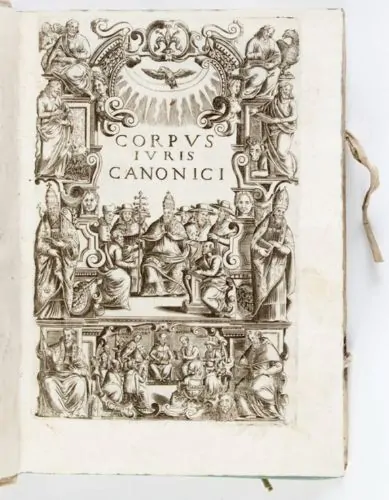
The entirety of Canon 29 consists of a single Latin sentence: Artem autem illam mortiferam et Deo odibilem ballistariorum et sagittariorum, adversus Christianos et catholicos exerceri de cetero sub anathemate prohibemus. Rendered directly, it declares that the deadly and God-hateful art of crossbowmen and archers must not henceforth be practiced against Christians and Catholics, under penalty of anathema. Its brevity makes every grammatical choice consequential. The canon identifies a practice, attributes that practice to two kinds of military specialists, specifies those against whom it must not be directed, and attaches a spiritual sanction. Popular summaries lose most of these elements by reducing the sentence to a papal command that “banned the crossbow.”
Its grammatical object is artem illam, “that art,” rather than a named piece of equipment. The passive infinitive exerceri means that this art is not to be exercised or practiced under the conditions subsequently defined. Such language could encompass a learned skill, an occupation, or a recognized method of fighting, all of which placed human activity at the center of the offense. Nothing in the construction declares the physical crossbow inherently unlawful to possess. Prohibemus is an unequivocal assertion of legislative authority, not a pious recommendation or generalized expression of distaste. The adjectives mortiferam and Deo odibilem pronounce a theological judgment without explaining the reasoning behind it. “Deadly” characterizes the art itself; the canon does not require proof that a particular bolt or arrow killed someone before the censure could apply. Its operative concern was employment, making the provision a restriction upon conduct rather than an attempt to eradicate technology.
The paired occupational nouns further undermine the crossbow-only legend. Ballistariorum is the genitive plural of ballistarius, a term whose medieval range included crossbowmen even though related vocabulary had earlier been used for operators of larger artillery. Sagittariorum refers plainly to archers, placing conventional bowmen within the same condemnation. This pairing broadens the decree beyond one mechanical arm while stopping short of a prohibition upon every projectile weapon, since it says nothing about slingers, javelin throwers, or crews operating stone-casting engines.
More consequential is the phrase adversus Christianos et catholicos, which defines the people against whom the condemned art must not be directed. The sentence specifies its targets but does not expressly identify the religious status of those operating the bows. The council legislated for a Christian community and depended upon Christian institutions for application, yet the grammar does not say that only Christian shooters could commit the forbidden act. The relationship between “Christians” and “Catholics” is less transparent than some translations imply. The words may form an emphatic pairing, or they may recognize a broader category of Christians alongside those in communion with Rome. They cannot safely be converted into a precise list of protected denominations, heretics, or eastern churches without evidence the canon itself fails to supply. What remains certain is that the sentence does not extend equivalent protection to every human adversary. It neither commands attacks upon non-Christians nor declares every such attack righteous, but violations against them did not fall within this particular prohibition. The restriction was consequently bounded by religious identity at the very point where it defined its victims.
The closing words establish temporal effect and punishment but leave the administration of that punishment uncertain. De cetero means “henceforth,” indicating a prospective command rather than a judgment upon earlier uses of missile troops. The phrase sub anathemate placed violation beneath one of the Church’s gravest forms of censure. In twelfth-century conciliar usage, anathema conveyed exclusion from Christian communion, although later technical distinctions among ecclesiastical penalties should not be imposed too rigidly upon the sentence. Canon 29 does not name the bishop or tribunal responsible for determining guilt, state whether the penalty followed automatically, or explain how absolution might be obtained. Nor does it resolve whether liability rested only upon the individual shooter or extended to the captain, employer, and ruler who ordered him into action.
Silence elsewhere in the text narrows its reach still further. No provisions require the dismantling of crossbows, suppression of workshops, registration of specialists, or abandonment of archery practice. The canon offers no separate rules for sieges, field engagements, private feuds, defensive operations, or attacks upon fortified towns. It establishes neither reciprocal pledges among rulers nor a procedure through which one army could verify another’s observance. Nevertheless, the decree did not disappear after 1139. Its inclusion in the Decretales of Gregory IX in 1234, under the title De sagittariis, preserved it within the principal collection of papal law used by later medieval canonists. That legal afterlife confirms that the sentence was more than an ephemeral protest, even though transmission did not enlarge its original wording. Canon 29 was broader than legend in the kinds of fighters it named and considerably narrower in the circumstances it governed. Understanding both dimensions is necessary before asking why churchmen selected these military arts for such exceptional condemnation.
Why Call Missile Warfare “Murderous”?
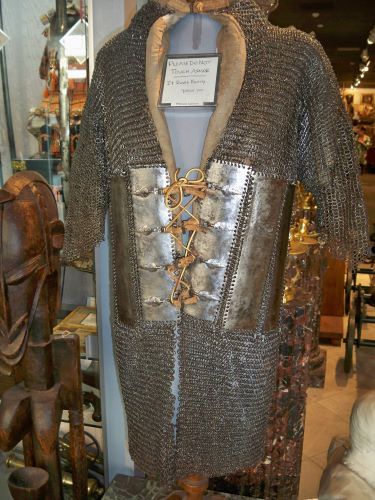
No preamble records why the bishops chose such severe language for Canon 29. The Latin adjective mortiferam can mean deadly or death-bearing, while the common English rendering “murderous” introduces the stronger implication of wrongful killing. That implication is not unreasonable because Deo odibilem immediately characterizes the practice as hateful to God. Even so, the wording supplies condemnation rather than an explanation of how the council reached it. Any account of the bishops’ motives must distinguish what the canon states from what military and religious circumstances make plausible.
Contemporaries had ample reason to fear the physical effects of arrows and crossbow bolts. Mail armor offered substantial protection, but it did not cover every part of the body or make the wearer immune to penetrating and blunt-force injuries. Faces, limbs, joints, and the openings required for sight and movement remained exposed, while horses presented much larger targets than their riders. A projectile that failed to pass completely through mail could still break bone, drive links into flesh, or disable a combatant through shock and blood loss. From a defended wall, a crossbowman could choose a target while remaining comparatively sheltered during the moment of release. Chroniclers emphasized extraordinary shots and devastating wounds because those episodes made compelling narratives, although their descriptions cannot be converted directly into consistent measurements of performance. Medical treatment offered no dependable answer to deep punctures, internal damage, or subsequent infection. None of this made missile wounds uniquely fatal since lances, swords, falling stones, and close-combat axes were fully capable of producing suffering just as severe.
Distance changed the social experience of danger even when it did not increase the number of deaths. A mounted warrior could be struck by someone he never saw, had no opportunity to challenge, and might be unable to reach before another shot was prepared. The projectile separated killing from the face-to-face encounter through which courage, identity, and status could supposedly become visible. It also complicated surrender because an archer releasing into a formation could not easily know that an individual within it wished to yield. Medieval Christianity nevertheless possessed no consistent doctrine that killing from afar was inherently more sinful than killing at arm’s length. Scriptural and historical traditions portrayed archers in several moral registers, and Christian rulers routinely valued their service.
Aristocratic customs supply another possible reason for hostility. Warfare among nobles often rewarded capture because a living knight could produce ransom, political concessions, or an exchange of prisoners. Recognition mattered within that economy. Rank had to be identified, submission accepted, and the defeated man kept alive long enough for negotiations to begin. A volley of arrows or bolts did not observe those distinctions. It could kill a wealthy lord who would have been worth far more as a captive, while the person responsible might remain anonymous amid a formation of shooters. Such deaths threatened both the personnel and the financial expectations of the military elite. Yet it would be misleading to imagine twelfth-century combat as a courteous ritual from which projectile weapons alone introduced brutality. Knights killed one another in charges and pursuits, defeated infantry could be massacred, and restraint was distributed very unevenly according to status. Canon 29 also named Christians generally rather than limiting its concern to nobles entitled to ransom. Chivalric interests may help explain why missile warfare provoked resentment, but they cannot by themselves account for the decree’s religious breadth.
The related claim that crossbows terrified the Church because an untrained peasant could suddenly destroy a knight reduces a complicated military culture to technological class warfare. Crossbows required skilled construction, dependable ammunition, maintenance, and practiced handling, making organized crossbow service an investment rather than an effortless mobilization of the poor. Operators could be paid professionals, urban militiamen, household troops, or men serving under aristocratic command. Social anxiety may have contributed to elite dislike, but the simultaneous condemnation of ordinary archers prevents it from serving as a complete explanation.
The environments in which missile troops proved most useful may offer a stronger clue. Sieges, raids, shipboard fighting, and contests around fortified settlements allowed projectiles to be launched from cover or across barriers that prevented immediate retaliation. Missile fire could begin before opponents entered speaking distance and continue against men retreating through gates, crossing rivers, or climbing siege works. Within a town under attack, bolts and arrows did not reliably distinguish armed defenders from inhabitants moving near walls and streets. Clerics who had spent generations trying to restrain raids and localized feuds could reasonably view such methods as aggravating forms of violence that were already difficult to contain. Even here, Canon 29 did not formulate a rule protecting civilians or prohibit indiscriminate bombardment as such. Its coverage depended upon the religious identity of those endangered, whether they were knights, foot soldiers, or bystanders. Tactical destructiveness helps explain alarm but still does not reproduce the decree’s actual boundary. Attention to the practitioners themselves adds a further dimension. Archers and crossbowmen could serve as organized groups whose effectiveness depended upon collective drill, commanders, and regular access to supplies. Their employment for wages made some units mobile assets available to rulers or cities able to purchase their service, although paid status did not automatically make them mercenaries in the later pejorative sense. Such fighters stood partly outside the idealized relationship between a landed warrior and his lord, making responsibility for their conduct easier to diffuse across recruiters and employers. The Third Lateran Council’s condemnation in 1179 of destructive hired bands shows that anxiety about mobile professional violence became explicit later in the century. That later legislation cannot be used as direct evidence of what every bishop intended in 1139. It does suggest that churchmen increasingly regarded certain organized specialists as forces whose military usefulness exceeded the reach of customary restraints.
No single explanation fully accounts for the description of these arts as deadly and hateful. Fear of penetrating wounds, aristocratic concern about unrecognized killers, siege warfare, and the growth of paid military service all supply credible parts of the setting, but the canon does not identify one as decisive. The inclusion of archers makes a sudden panic over crossbow engineering unlikely. Its language fits more comfortably within the Church’s continuing effort to limit forms of combat believed to intensify violence among Christians without condemning warfare in every setting. The decisive clue remains the restriction’s dependence upon the victim. If mechanical lethality alone made the practice abhorrent, the faith of the person struck would not alter its character. Canon 29 instead treated the same military skill differently according to the community against which it was directed. “Murderous” consequently expressed a judgment about unacceptable violence within Christendom rather than a neutral calculation that bows killed more efficiently than every available alternative.
Enemies Outside the Rule
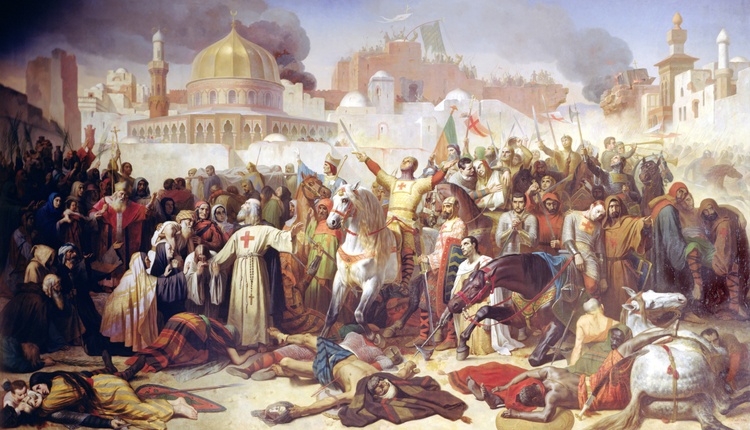
Canon 29 divided wartime injury according to religious belonging. Its restriction did not announce that missile fire was unacceptable wherever used; it identified a circle of victims whose Christian status activated ecclesiastical censure. That construction assumed a heightened obligation among members of Christendom even when their rulers took arms against one another. Anyone beyond the circle received no benefit from this sentence. The distinction was foundational to the decree rather than a minor exception appended to a universal principle.
Neither “Christians” nor “Catholics” possessed the precise denominational meaning that modern readers may instinctively assign to them. Christianus could describe the wider body of baptized believers, whereas catholicus often emphasized orthodoxy, communion, or adherence to the true Church claimed by the speaker. The division between the Latin and Greek churches after 1054 had not instantly produced two internally uniform institutions with universally accepted boundaries. Latin writers could recognize Greeks, Armenians, Syrians, and other eastern communities as Christian while disputing their doctrines, rites, or ecclesiastical allegiance. Some might read the canon’s paired nouns as extending protection beyond those directly obedient to Rome. Others could understand them as rhetorical reinforcement, with “Christian” and “Catholic” jointly describing the same faithful population. The council provided no definition that resolves the matter. It is consequently unsafe to translate the phrase into “Roman Catholics and Eastern Orthodox” or to assume that every baptized dissenter occupied an agreed position beneath it.
Falling outside Canon 29 did not necessarily mean that a person could be attacked without legal or religious restraint. Papal privileges in the tradition later associated with Sicut Judaeis prohibited forced baptism, physical abuse, seizure of property, and desecration of Jewish cemeteries, even though enforcement repeatedly failed. Muslims living under Christian rule could likewise possess protections grounded in treaties, local custom, royal privilege, or the fiscal interests of rulers. Broader teachings about legitimate authority and unjust aggression continued to apply beyond the single offense addressed at Lateran II. The absence of non-Christians from this decree withheld one particular safeguard without converting every assault upon them into an approved act.
The crusading world nevertheless supplied obvious settings in which bows and crossbows could be employed without violating the canon’s literal reach. Christian armies had relied upon ranged forces during the First Crusade, and the Latin settlements established afterward required archers and crossbowmen for garrison duty, siege operations, and campaigning in the eastern Mediterranean. Iberian warfare created another long frontier on which expeditions against Muslim powers could receive papal encouragement while retaining dynastic and territorial purposes. Northern campaigns against non-Christian peoples gradually added further arenas for armed service bearing religious sanction. None of these enterprises made every killing virtuous merely because the opponent was not Christian. Authorization, vows, penitential purpose, and obedience to commanders remained important to crusading ideology. Even so, Canon 29 gave soldiers in such conflicts no reason to abandon projectile weapons or allow the skills required to operate them to disappear. A military art condemned on one front could remain indispensable on another.
Actual armies made the religious boundary still less stable than conciliar language suggested. Norman rulers in Sicily employed Muslim soldiers, including archers, while Christian and Muslim powers in Iberia repeatedly entered alliances that crossed confessional lines. Christian mercenaries could serve Islamic rulers, just as Muslim contingents might fight for Christian princes against other Christians. Political loyalty, payment, local dependence, and hostility toward a neighboring ruler often outweighed expectations of permanent religious solidarity. Such arrangements produced questions Canon 29 never answered. A Muslim archer firing upon Christians in the service of a Christian king acted against the people named by the decree, yet ecclesiastical penalties could not operate upon him as they did upon a communicant. Responsibility might instead be sought in the ruler who hired him, the officer who directed him, or the Christian allies who benefited from his attack. Since the text assigned no hierarchy of culpability, mixed forces widened the distance between a clearly described offense and an identifiable person whom the Church could punish. The council had drawn a religious line across a military labor market whose participants crossed it with considerable ease.
Heresy and schism introduced a different uncertainty because the contested enemy was neither straightforwardly outside Christianity nor securely within Catholic communion. Lateran II had just concluded a papal schism and declared the acts of the defeated obedience invalid, while another canon condemned communities accused of rejecting accepted sacraments and ecclesiastical institutions. Baptism might identify such people as Christians even when church authorities treated their beliefs as a danger to the faithful. Canon 29 does not state whether loss of orthodoxy also meant loss of its protection. Later campaigns against heretics demonstrate how powerfully exclusionary labels could alter the treatment of opponents, but they cannot establish what the bishops of 1139 intended in every conceivable case.
The practical consequence of the target clause reached beyond theology. Authorized wars against Muslims and other non-Christian adversaries sustained demand for bows, crossbows, ammunition, training, and experienced operators. Men who acquired proficiency on those fronts could later enter conflicts among Christian rulers, bringing the same equipment and habits with them. Workshops had no confessional setting built into their products, while soldiers could change employers more quickly than ecclesiastical authorities could clarify their status. A prince contemplating restraint knew that potential opponents might retain missile forces through service elsewhere, even if they professed obedience when fighting fellow Christians. The exemption did not merely leave some victims unprotected; it preserved the military foundations of the conduct being restricted. By making identity rather than capability the hinge of its rule, Lateran II created a boundary that arms, practitioners, and political necessity could repeatedly traverse.
Anathema without Machinery: The Enforcement Problem

Anathema was not an ornamental threat added merely to make Canon 29 sound severe. A public sentence could exclude an offender from communion, impede access to the sacraments, damage relationships with other Christians, and require formal reconciliation before full participation in ecclesiastical life resumed. For rulers, visible condemnation might weaken political legitimacy or provide enemies with grounds for portraying their cause as impious. These consequences made spiritual penalties important within a society in which religious belonging carried legal and communal weight. Their effectiveness depended upon someone identifying the violation, pronouncing or recognizing the censure, and persuading others to treat the condemned person accordingly.
Medieval canon law operated through a dispersed network rather than a permanent central administration. General councils issued norms, but their decrees had to be copied, circulated, taught, and applied across dioceses whose bishops differed greatly in resources and political independence. Provincial and diocesan synods could repeat conciliar legislation, while archdeacons and ecclesiastical courts handled accusations arising within their territories. Preaching and confession extended regulation beyond formal trials by presenting prohibited conduct as a danger to the offender’s soul. Papal legates might intervene in major disputes, although their presence was temporary and their commissions limited. Secular rulers could arrest offenders, confiscate property, or compel submission when they chose to support an ecclesiastical judgment. The absence of a centralized enforcement service did not mean that church law was unreal, but it made compliance dependent upon overlapping institutions whose priorities did not always coincide.
Other provisions from Lateran II demonstrate that the council knew how to describe enforcement more specifically when it wished to do so. Canon 12 instructed bishops to warn violators of the truce repeatedly before imposing excommunication and expected neighboring bishops to uphold the sentence. Canon 14 attached a concrete consequence to tournaments by denying ecclesiastical burial to participants who died in them, even though penance and viaticum were not to be refused. Canon 29 supplied no comparable sequence of warning, investigation, judgment, and reconciliation; it announced anathema without explaining how the penalty reached a battlefield offender.
Attribution presented a difficult obstacle. A church or village seized during a raid could be inspected afterward, and responsibility might be associated with a lord whose followers occupied the site. An arrow released during a battle rarely carried evidence identifying the person who shot it, the officer who gave the command, or the employer who had arranged the unit’s service. Even when crossbowmen fought in a visible formation, their presence alone proved nothing because possession and deployment against unprotected enemies remained permissible. An accuser would have to establish that the prohibited art had actually been directed against people covered by the canon and then connect that act to someone subject to ecclesiastical discipline. Medieval procedure could rely upon witnesses, confession, documentary evidence, or public reputation, but battles produced confusion rather than orderly testimony. Command structures further complicated culpability because armies combined household troops, urban levies, allied contingents, hired companies, and individuals owing temporary service. A ruler might deny having ordered missile fire, while a captain could claim that shooters acted independently amid combat. The passive wording of Canon 29 offered no principle for deciding how far responsibility ascended from the operator to those who placed him in the field.
Jurisdiction added another layer of uncertainty. Armies moved across diocesan boundaries, and the bishop responsible for a soldier’s home might not be the prelate in whose territory the alleged offense occurred. Campaigns could also involve rulers upon whom local clergy depended for protection, patronage, and possession of church property. A bishop prepared to discipline an ordinary archer might hesitate before confronting the prince who had hired hundreds of them. Papal intervention remained possible, but Rome had limited information about individual operations and could not investigate every siege or regional war. An offender supported by his commander might ignore a sentence unless other bishops and secular authorities agreed to honor it. Ecclesiastical punishment carried the greatest force when the surrounding community cooperated, precisely the condition least certain during conflict between rival Christian powers. The surviving record does not contain a systematic body of prosecutions brought specifically under Canon 29. That silence cannot prove that no archer was ever denied absolution, required to perform penance, or warned by a confessor about prohibited service. Informal discipline left fewer records than papal litigation, and an offense involving missile troops might have been treated under broader rules concerning homicide, sacrilege, or violation of a truce. The canon’s inclusion in Gregory IX’s Decretales ensured that later lawyers could locate and discuss it, but preservation in a legal collection is not evidence of frequent adjudication. Without documented proceedings or sustained complaints against rulers, claims of either comprehensive enforcement or universal indifference exceed what the sources permit.
Measured as an enforcement design, the decree placed nearly all of its weight upon punishment after a contested act had occurred. It required no declaration of troop strength, disclosure of recruitment, surrender of equipment, or inspection of arsenals because none of those activities was prohibited. Nor did it provide a means by which opposing commanders could demonstrate that each intended to observe the same restraint. Ecclesiastical authorities could admonish individuals and threaten exclusion, but they could not assure an army that its adversary would enter battle without comparable missile forces. A rule enforced unevenly after combat offered little protection to the ruler who accepted a disadvantage beforehand. Canon 29 depended upon conscience, reputation, and episcopal courage where a successful restriction also required coordinated behavior among competing powers. Whether those powers modified their armies and tactics must be determined from what they continued to do after 1139.
The Battlefield Verdict: Continued Use and Expanding Organization
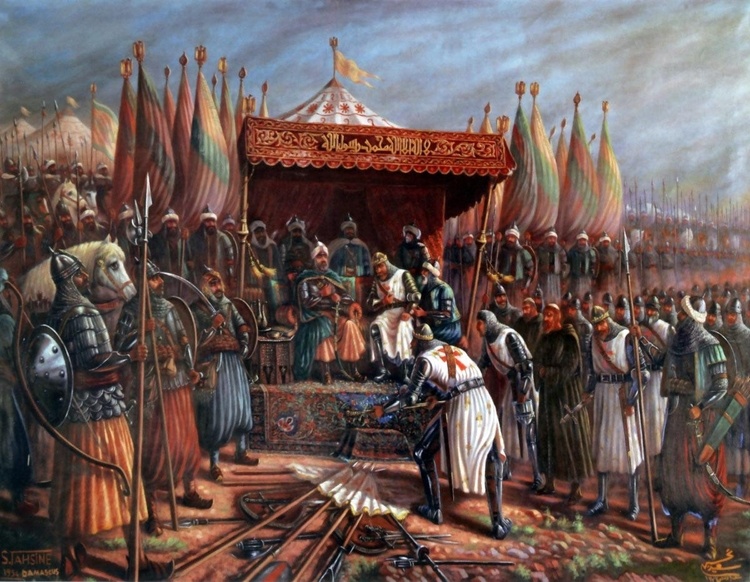
The evidence after 1139 does not deliver a simple, immediate referendum on Canon 29. Narrative accounts favor spectacular encounters, whereas administrative documents record wages and equipment without always naming the enemy or describing an actual shot. A crossbow in a crusading host could fall entirely outside the canon’s protected category, while silence in a chronicle cannot demonstrate that a commander abstained. Nor should scattered notices be converted into a fictitious year-by-year curve of compliance. The sounder test combines battle narratives, payrolls, legal formulas, procurement orders, and the creation of military offices. These materials reveal no sustained contraction of Christian investment in the weapon. Instead, they trace a movement from occasional recorded employment toward routinized recruitment, manufacture, transport, and command.
Campaigning in the Levant helped maintain that continuity. Ambroise and the Itinerarium Peregrinorum portray Richard I’s forces relying on disciplined missile troops, including crossbowmen, during the siege of Acre and the coastal operations culminating at Jaffa. Because these men fought Muslim opponents, their service did not violate the limitation established at Lateran II, yet it kept specialists employed and encouraged rulers to incorporate them into coordinated field armies. When the expedition ended, the expertise acquired overseas remained available for dynastic contests in western Europe.
English exchequer material offers less theatrical but more revealing evidence of normalization. The Pipe Roll for 1161–62 records £8 16s. in payments to eight crossbowmen serving Henry II, barely two decades after the council. Another royal crossbowman, Turpin, received payments calculated at six pence per day in 1183–84, a rate suggesting that his expertise carried appreciable value. By the later years of Henry’s reign, the legal treatise conventionally called Glanvill could use the obligation to supply a balistarius for royal service as an intelligible example in a model writ. None of these entries identifies every theater in which the men served, so they cannot all be counted as proven infractions. Their significance lies in the assumptions of the institutions producing them. Crossbowmen had become recognizable military personnel whose labor could be assessed, remunerated, and demanded through ordinary procedures. Royal clerks recorded that service without treating its existence as administratively anomalous.
Châlus supplies the most famous evidence that employment was not confined to approved enemies. In March 1199, while Richard I besieged a castle in the Limousin during a quarrel among Latin Christian lords, a defender struck him with a crossbow bolt; complications from the wound killed him soon afterward. Chroniclers disagreed over the shooter’s identity and motives, while William the Breton reshaped the episode into an indictment of a hostile king supposedly responsible for popularizing the arm in France. Those embellishments should not obscure the secure core of the event. A crossbow discharged in an intra-Christian siege had mortally wounded an anointed monarch approximately sixty years after Lateran II.
Capetian bookkeeping demonstrates something more consequential than a celebrated battlefield death. The general account of 1202–3, compiled during Philip II’s struggle with John, has been reconstructed as providing for eighty mounted and 133 foot crossbowmen among the forces maintained on the Norman frontier. The distinction between the two categories indicates deliberate calculation of mobility, cost, and military function; “mounted” need not mean that the men normally fired from horseback. These troops were not assembled for a crusade but for a campaign against another Christian ruler and his subjects. An account cannot establish that every person listed actually loosed a bolt, yet payment and deployment are themselves preparations to use force. The figures also show that the Capetian monarchy was treating crossbowmen as differentiated contingents rather than miscellaneous attendants. Here the relevant measure of failure is not merely that forbidden conduct occurred, but that a royal government budgeted for the capacity to commit it.
John’s government carried that process from employment into managed production. In 1204 a craftsman named Gerald worked at Windsor with royal wages and supplies of glue, sinew, and horn for making composite crossbows. The following year an order provided Walter de L’Isle with three wooden weapons and one thousand properly feathered quarrels. A shipment received at Porchester in 1213 contained thirty-five composite crossbows and 20,000 bolts, quantities that required purchasing, inspection, storage, transport, and trained labor. Such records disclose an administrative chain rather than a series of improvised acquisitions. Since John’s wars involved Philip II, dissident barons, and other coreligionists as well as opponents who might have fallen beyond the canon’s protection, this apparatus could not be neatly reserved for one religiously permissible front. Clause 51 of Magna Carta consequently demanded the removal of foreign knights, crossbowmen, sergeants, and mercenaries who had entered England to its harm. The clause did not prohibit crossbows; it identified imported military personnel as instruments of royal coercion. Baronial opposition confirms the crossbowmen’s political visibility even as it leaves Lateran II conspicuously absent from the grievance.
The longer chronology makes the outcome unmistakable. Under Louis IX, France recognized a master of the crossbowmen, while English chancery records distinguished wooden from composite weapons, one-foot from two-foot spanning systems, and batches assigned to particular castles. Flemish towns subsequently formed crossbow guilds that joined military preparedness to civic identity and religious association. At Crécy in 1346, the French host deployed hired Genoese crossbowmen against an English army, although their tactical defeat there has sometimes overshadowed the organizational history that placed them on the field. Evidence from the thirteenth and fourteenth centuries cannot reveal how many warriors quietly obeyed Canon 29 during the 1140s, and operational failure does not require the implausible claim that nobody ever complied. It demonstrates instead that the condemned practice acquired workshops, magazines, salaried contingents, offices, and corporate communities. Lateran II supplied a durable formula of disapproval, but it did not prevent secular governments from making missile warfare an increasingly regular component of military power.
Why the Prohibition Failed

Failure must first be defined precisely. If the familiar claim that Lateran II abolished the crossbow is used as the standard, Canon 29 was destined to disappoint because its language never attempted that task. Against the more exact measure established by the canon itself, the question is whether it appreciably reduced the use of bows and crossbows against those it designated as protected. Continued royal sponsorship, documented intra-Christian employment, and the growth of specialized military establishments indicate that it did not. This distinction matters because it identifies a failed restriction on conduct without attributing to the council an unrealistically comprehensive disarmament program.
The hardest obstacle arose from strategic uncertainty between rival powers. A prince who withheld missile troops while an adversary retained them risked losing castles, ships, territory, and perhaps his crown. Canon 29 offered no procedure through which opposing rulers could pledge simultaneous restraint, disclose their forces, or receive assurance that the other side had complied. An enemy’s abstention could not be verified before battle, while a hostile crossbowman’s presence might become apparent only after bolts began arriving. Commanders had strong incentives to preserve the disputed capability even if they hoped not to employ it. This calculation did not make medieval rulers indifferent to anathema or unconcerned with salvation. It made obedience most expensive at the moment when military danger was greatest and ecclesiastical punishment remained uncertain.
Because legality depended upon the opponent’s identity, permitted warfare continuously replenished resources that could be redirected elsewhere. Campaigns against Muslims, pagans, and other people outside the canon’s stated protection supported craftsmen, merchants, transport networks, ammunition production, and trained personnel. There was no practical means of segregating one body of equipment for crusading service and another for conflicts within Latin Christendom. A fleet returning from the eastern Mediterranean, for example, carried military knowledge that could be useful in a European siege without requiring any technological conversion. Campaigns could also change character as alliances shifted, while accusations of heresy, schism, or excommunication encouraged interested parties to argue that a particular opponent no longer merited ordinary protection. The canon supplied no tribunal capable of resolving such classifications at the speed demanded by war. Even conscientious observance in one theater consequently did little to diminish the material ability to violate the rule in another.
Ecclesiastical power was formidable in matters of reputation, sacramental participation, and political legitimacy, but it did not directly administer princely workshops, garrisons, or military budgets. Bishops expected to apply the sanction often depended upon local rulers for protection, revenue, and the execution of ecclesiastical judgments. Pursuing a victorious monarch or a valuable military captain could impose costs upon the churchman as well as the offender. Popes likewise needed armed allies during schisms, imperial conflicts, and campaigns in Italy, circumstances that discouraged a consistent confrontation with every patron of prohibited missile troops. A punishment whose application relied upon cooperation from the political authorities benefiting from the practice could rarely become uniform.
Material usefulness exerted pressure in the opposite direction. Crossbows were particularly valuable during sieges, aboard ships, along walls, and in garrisons where a shooter could remain behind cover while holding a weapon ready. They provided commanders with a means of defending confined approaches and contesting fortifications without relying exclusively upon cavalry or prolonged hand-to-hand combat. Such troops complemented spearmen, engineers, archers, and men-at-arms rather than simply replacing any one of them. Once rulers invested in quarrel production, storage facilities, imported components, specialist craftsmen, and differentiated rates of pay, abandonment became increasingly costly. Those expenditures also created officials and suppliers with an interest in continued procurement. The council offered no alternative method for performing the same military tasks and no compensation for forces surrendering a useful advantage. A moral rule that demanded a material sacrifice without reducing an opponent’s capacity asked each ruler to bear an immediate disadvantage for a collective benefit that might never appear. Military organization reinforced continued use even when clerics preserved the language of condemnation.
Responsibility also dispersed along the chain of hiring and command. The canon did not establish how guilt should be divided among the person who fired, the captain who issued an order, the contractor who recruited the unit, and the ruler who financed the campaign. Employers could describe foreign specialists as independent mercenaries, while commanders might claim that a particular discharge occurred without authorization amid the disorder of an assault. Individual shooters were often mobile, socially obscure, and difficult for ecclesiastical courts to identify once an army dispersed. This diffusion allowed each participant to place the gravest blame elsewhere, weakening a sanction conceived more readily for identifiable persons than for complex military organizations.
Incorporation into Gregory IX’s Decretales preserved Canon 29 within authoritative law, but textual survival did not resolve its competition with other accepted obligations. The canonical tradition also addressed legitimate defense, obedience, the protection of the innocent, recovery of property, fulfillment of oaths, and warfare under rightful authority. A ruler could present the use of missile troops as an unfortunate instrument of an otherwise lawful cause rather than as a deliberate rejection of ecclesiastical judgment. What never developed was an elaborate licensing or inspection regime capable of reconciling Canon 29 with those competing claims before armies mobilized.
Lateran III’s Canon 27 approached destructive violence by condemning notorious mercenary groups and the Christians who employed them, thereby assigning responsibility more explicitly to patrons and perpetrators. That measure did not repeal the earlier restriction, but it suggests that conciliar attention was moving toward predatory conduct and organized bands rather than toward a sustained campaign against particular missile weapons. Canon 29 remained available to jurists while more adaptable categories governed many actual disputes over warfare.
The most defensible conclusion is narrower than either the popular legend or a claim of total irrelevance. Canon 29 did not collapse because medieval society lacked religious belief, nor because every ruler treated ecclesiastical law with contempt. It was overcome by adverse incentives, contested classifications, preserved military capacity, uncertain liability, dependent enforcement, and the mounting expense of abandoning an established capability. The prohibition may still have influenced clerical rhetoric, individual conscience, or decisions that left no surviving record, and its language retained enough authority to be recopied by later canonists. Such effects cannot be measured securely, but neither would they reverse the visible pattern of official employment and institutional expansion. Recognizing that limited moral influence makes the failure more instructive, since it shows how an acknowledged norm can coexist with repeated conduct that contradicts it. The episode is valuable precisely because declaration and control proved to be separate achievements.
Was Canon 29 Really a Failed Arms-Control Measure?
The following video from “Styrman” discusses the medieval crossbow and the attempted ban:
The most serious objection here may concern my governing vocabulary. Canon 29 belonged to a body of conciliar legislation through which the Roman Church claimed jurisdiction over Christian conduct, not to a distinct technical category devoted to weapons. Its neighboring provisions addressed clerical discipline, marriage, tournaments, truces, arson, and other disorders that threatened ecclesiastical order. Anathema was the operative penalty, placing the forbidden practice within a sacramental and penitential construct. Describing this as “arms control” may assign the canon an objective its authors never stated. The council could condemn a manner of fighting without anticipating the disappearance of bows or crossbows. Its ruling simultaneously claimed that decisions made on the battlefield remained answerable to ecclesiastical judgment. A verdict based chiefly on continued possession or employment may judge a moral proscription by a purpose it did not have.
Uncertainty about the intended result makes “failure” equally difficult to prove. The canon ordered no weapons destroyed and said nothing about manufacture or ownership. It neither dissolved specialist companies nor extended its restriction to every opponent. Employment outside the designated Christian community remained permissible under its wording. Unless complete abolition is read into a text that never demanded it, survival of the technology cannot by itself settle the question.
Several features of medieval legal culture give this narrower reading real force. Contemporaries did not necessarily hear anathema as decorative language. Exclusion from communion could damage status at court and within local society, while restoration required submission to ecclesiastical terms. Much discipline also occurred close to the offender. A bishop might admonish publicly, whereas a confessor could impose penance without generating a central dossier. Canon law often worked by shaping conscience and reputation before a dispute reached a formal tribunal. Nor would every effect appear as a prosecution. A legate’s warning or a ruler’s concession might leave only an incidental trace, and a private change of conduct might leave none. The decree could also supply language for rebuke even when no formal sentence followed. Surviving documentation favors royal finance, narrative victories, and major litigation over private scruples or abandoned plans. It is impossible to count occasions when fear of sanction altered a recruitment decision or manner of attack. Incorporation of the prohibition into Gregory IX’s Liber Extra in 1234 further shows that it was not discarded as an embarrassing remnant of the council. Placement within the standard collection kept its judgment available to jurists and churchmen long after 1139. From this perspective, a rule might retain juridical and pastoral importance even though observance on campaign was inconsistent.
Yet this objection cannot carry the whole argument. Canon 29 did more than voice disapproval; it forbade the future exercise of a named practice against a defined population and attached anathema to the command. Royal accounts and narratives nevertheless show Christian powers recruiting crossbowmen and archers against one another, while those forces became more deliberately organized. Lost records may conceal obedience, but they cannot erase abundant testimony to contrary conduct. No surviving pattern of cases indicates that offenders routinely faced ecclesiastical punishment specifically for this offense. A text could remain authoritative in juristic books while military institutions developed with scant visible regard for it.
Canon 29 should not be treated as though the council had attempted to eliminate a weapons technology from Latin Christendom, because its wording supports no such claim. It was an ecclesiastical effort to govern a method of combat within a bounded Christian community, using the sanctions and channels available to the twelfth-century Church. In that limited sense, the decree achieved something enduring; it entered the canonical tradition and preserved an unusually explicit condemnation of particular battlefield practices. Practical success is harder to credit, because the behavior prohibited in 1139 remained common, useful, and increasingly institutionalized among rulers subject to the Church’s authority. Accordingly, the term “failed” is defensible only for the canon’s inability to secure sustained conformity with its stated restriction. It does not imply that the council sought technological abolition or that its moral judgment vanished. That qualification makes the argument less sweeping and more secure, locating the canon’s significance in the distance between an authoritative ecclesiastical command and the military conduct it sought to govern.
Conclusion: Declaring a Weapon Illegitimate Is Not Controlling It
Canon 29 survives in popular memory as a dramatic papal assault on the crossbow. The council’s own sentence tells a different story. It joined crossbowmen with archers, condemned their craft as deadly and hateful to God, and prohibited its exercise against Christians and Catholics under anathema. Nothing in that formulation ordered arsenals emptied or practitioners expelled from every theater of war. The familiar summary removes the communal boundary that gave the rule its meaning, converting a conditional command about combat into a universal prohibition of a device. Recovering the wording is not pedantry, because every judgment about motive, reach, and outcome depends upon what the canon actually required.
The decree entered a martial world whose incentives favored retention. Crossbowmen and archers were valuable during sieges, in garrison defense, aboard ships, and on campaign, where their usefulness could outweigh the uncertain spiritual consequences of employing them. A prince who dismissed such specialists had little reason to expect neighboring powers to make the same sacrifice. Movement from one theater of war to another could also alter the canon’s applicability without changing either the troops or their equipment. Anathema could burden conscience and reputation, but bishops did not command royal musters, and determining responsibility for a projectile loosed amid battle posed obvious difficulties. The council supplied no procedure by which battlefield accusations would become adjudicated cases. Warfare approved by ecclesiastical authorities also sustained demand for the skills condemned in conflicts within Christendom. By the thirteenth century, evidence of deliberate recruitment and organized service leaves little basis for imagining that the prohibition substantially redirected military development.
Practical weakness did not render the decree historically empty. It records a moment when a general council claimed authority to judge a particular way of killing, not merely the justice of the war in which it occurred. Its inclusion in Gregory IX’s Liber Extra preserved that judgment within canon law, and anathema announced a genuine demand upon Christian conscience. What endured most clearly was the Church’s assertion that military custom remained subject to moral judgment.
The episode’s importance rests in the disparity between condemnation and compliance. Lateran II could formulate a severe judgment, and the canonical tradition could preserve it. Neither fact gave the Church dependable command over princes, military households, or hired specialists. By permitting use outside the designated community, the canon also left martial expertise and equipment intact for deployment in other conflicts. It failed in the field it expressly addressed. Christian forces continued practicing against one another what the council had forbidden. This does not reduce medieval efforts to govern violence to empty gestures; it reveals how sincere moral claims could coexist with selective application and persistent disobedience. The Church could stigmatize conduct and threaten exclusion, but the organization of war remained largely in other hands. Declaring a weapon illegitimate was an act of jurisdiction, whereas controlling it required authority over the choices and resources that kept it in use.
Bibliography
- Alm, Josef. European Crossbows: A Survey. Translated by G. M. Wilson and H. Bartlett Wells. Leeds: Royal Armouries Museum, 1994.
- Ambroise. The History of the Holy War: Ambroise’s Estoire de la Guerre Sainte. Translated by Marianne Ailes and Malcolm Barber. Woodbridge: Boydell Press, 2003.
- Augustine of Hippo. The City of God against the Pagans. Edited and translated by R. W. Dyson. Cambridge: Cambridge University Press, 1998.
- Bachrach, David S. Administration and Organization of War in Thirteenth-Century England. London: Routledge, 2020.
- —-. “Crossbows for the King: The Crossbow during the Reigns of John and Henry III of England.” Technology and Culture 45:1 (2004), 102–19.
- —-. “The Origins of the English Crossbow Industry.” Journal of Medieval Military History 2 (2004), 73–88.
- —-. Religion and the Conduct of War, c. 300–c. 1215. Woodbridge: Boydell Press, 2003.
- Baldwin, John W. The Government of Philip Augustus: Foundations of French Royal Power in the Middle Ages. Berkeley: University of California Press, 1986.
- Bernard of Clairvaux. The Letters of St. Bernard of Clairvaux. Translated by Bruno Scott James. London: Burns Oates, 1953.
- Bradbury, Jim. The Medieval Archer. Woodbridge, Suffolk: Boydell Press, 1985.
- Brundage, James A. Medieval Canon Law and the Crusader. Madison: University of Wisconsin Press, 1969.
- Catlos, Brian A. Muslims of Medieval Latin Christendom, c. 1050–1614. Cambridge: Cambridge University Press, 2014.
- Contamine, Philippe. War in the Middle Ages. Translated by Michael Jones. Oxford: Basil Blackwell, 1984.
- Cowdrey, H. E. J. “The Peace and the Truce of God in the Eleventh Century.” Past & Present, 46 (1970), 42–67.
- Crombie, Laura. Archery and Crossbow Guilds in Medieval Flanders, 1300–1500. Woodbridge: Boydell Press, 2016.
- Crouch, David. The Birth of Nobility: Constructing Aristocracy in England and France, 900–1300. Harlow: Pearson Longman, 2005.
- DeVries, Kelly, and Robert Douglas Smith. Medieval Military Technology. 2nd ed. Toronto: University of Toronto Press, 2012.
- Doran, John, and Damien J. Smith, eds. Pope Innocent II (1130–43): The World vs the City. London: Routledge, 2016.
- Ellis-Gorman, Stuart. The Medieval Crossbow: A Weapon Fit to Kill a King. Barnsley: Pen & Sword Military, 2022.
- France, John. Victory in the East: A Military History of the First Crusade. Cambridge: Cambridge University Press, 1994.
- —-. Western Warfare in the Age of the Crusades, 1000–1300. Ithaca: Cornell University Press, 1999.
- Fulcher of Chartres. A History of the Expedition to Jerusalem, 1095–1127. Translated by Frances Rita Ryan. Edited by Harold S. Fink. Knoxville: University of Tennessee Press, 1969.
- Gillingham, John. Richard I. New Haven, CT: Yale University Press, 1964.
- Glanvill, Ranulf de. The Treatise on the Laws and Customs of the Realm of England Commonly Called Glanvill. Edited and translated by G. D. G. Hall. Oxford: Clarendon Press, 1965.
- Gratian. Decretum. In Corpus Iuris Canonici. Edited by Emil Friedberg. Vol. 1. Leipzig: Bernhard Tauchnitz, 1879.
- Great Britain, Exchequer. The Great Roll of the Pipe for the Eighth Year of the Reign of King Henry the Second, A.D. 1161–1162. Pipe Roll Society 5. London: Wyman and Sons, 1885.
- Great Britain, Record Commission. Rotuli de liberate ac de misis et praestitis, regnante Johanne. Edited by Thomas Duffus Hardy. London: George E. Eyre and Andrew Spottiswoode, 1844.
- Gregory IX. Liber Extra: Decretales Gregorii IX. In Corpus Iuris Canonici, edited by Emil Friedberg, vol. 2. Leipzig: Bernhard Tauchnitz, 1881.
- Hall, G. D. G., ed. The Treatise on the Laws and Customs of the Realm of England Commonly Called Glanvill. Oxford: Clarendon Press, 1965.
- Hartmann, Wilfried, and Kenneth Pennington, eds. The History of Medieval Canon Law in the Classical Period, 1140–1234: From Gratian to the Decretals of Pope Gregory IX. Washington, DC: Catholic University of America Press, 2008.
- Head, Thomas, and Richard Landes, eds. The Peace of God: Social Violence and Religious Response in France around the Year 1000. Ithaca, NY: Cornell University Press, 1992.
- Helmholz, R. H. The Spirit of Classical Canon Law. Athens: University of Georgia Press, 1996.
- Heron of Alexandria. Belopoeica. In Greek and Roman Artillery: Technical Treatises, edited and translated by E. W. Marsden. Oxford: Clarendon Press, 1971.
- Holden, A.J., ed. and S. Gregory, trans. The History of William Marshal. Historical notes by David Crouch. 3 vols. London: Anglo-Norman Text Society, 2002–2006.
- Houben, Hubert. Roger II of Sicily: A Ruler between East and West. Translated by Graham A. Loud and Diane Milburn. Cambridge: Cambridge University Press, 1997.
- Kaeuper, Richard W. Chivalry and Violence in Medieval Europe. Oxford: Oxford University Press, 1999.
- Kedar, Benjamin Z. Crusade and Mission: European Approaches toward the Muslims. Princeton, NJ: Princeton University Press, 1984.
- Keen, Maurice. Chivalry. New Haven, CT: Yale University Press, 1986.
- —-. The Laws of War in the Late Middle Ages. London: Routledge and Kegan Paul, 1965.
- Komnene, Anna. The Alexiad. Translated by E. R. A. Sewter. Revised with an introduction and notes by Peter Frankopan. London: Penguin Books, 2009.
- Lot, Ferdinand, and Robert Fawtier, eds. Le premier budget de la monarchie française: Le compte général de 1202–1203. Paris: Honoré Champion, 1932.
- Loud, G. A. The Latin Church in Norman Italy. Cambridge: Cambridge University Press, 2007.
- Magna Carta. Translated with an introduction by David Carpenter. London: Penguin Books, 2015.
- Mastnak, Tomaz. Crusading Peace: Christendom, the Muslim World, and Western Political Order. Berkeley: University of California Press, 2002.
- Moore, R. I. The Formation of a Persecuting Society: Authority and Deviance in Western Europe, 950–1250. Oxford: Blackwell, 1987.
- Morris, Colin. The Papal Monarchy: The Western Church from 1050 to 1250. Oxford: Clarendon Press, 1989.
- Orderic Vitalis. The Ecclesiastical History of Orderic Vitalis. Edited and translated by Marjorie Chibnall. Oxford: Clarendon Press, 1969–1980.
- Otto of Freising. The Two Cities: A Chronicle of Universal History to the Year 1146 A.D. Translated by Charles Christopher Mierow. Edited by Austin P. Evans and Charles Knapp. New York: Columbia University Press, 1928.
- Purton, Peter. A History of the Early Medieval Siege, c. 450–1220. Woodbridge, Suffolk: Boydell Press, 2009.
- Richard de Templo. The Chronicle of the Third Crusade: The Itinerarium Peregrinorum et Gesta Regis Ricardi. Translated by Helen J. Nicholson. Aldershot: Ashgate, 1997.
- Riley-Smith, Jonathan. The First Crusade and the Idea of Crusading. Philadelphia: University of Pennsylvania Press, 1972.
- Robinson, I. S. The Papacy, 1073–1198: Continuity and Innovation. Cambridge: Cambridge University Press, 1990.
- Roger of Howden. Chronica Magistri Rogeri de Houedene. Edited by William Stubbs. 4 vols. Rolls Series 51. London: Longman, 1868–1871.
- Russell, Frederick H. The Just War in the Middle Ages. Cambridge: Cambridge University Press, 1975.
- Schelling, Thomas C., and Morton H. Halperin. Strategy and Arms Control. New York: Twentieth Century Fund, 1961.
- Second Lateran Council. “Canons.” In Decrees of the Ecumenical Councils. Vol. 1. Edited by Norman P. Tanner, 195–203. Washington, DC: Georgetown University Press, 1990.
- Simonsohn, Shlomo, ed. The Apostolic See and the Jews: Documents, 492–1404. Vol. 1. Toronto: Pontifical Institute of Mediaeval Studies, 1988.
- Strickland, Matthew. War and Chivalry: The Conduct and Perception of War in England and Normandy, 1066–1217. Cambridge: Cambridge University Press, 1996.
- Stroll, Mary. The Jewish Pope: Ideology and Politics in the Papal Schism of 1130. Leiden: Brill, 1987.
- Tanner, Norman P., ed. Decrees of the Ecumenical Councils. 2 vols. Washington, DC: Georgetown University Press, 1990.
- van der Veen, Vincent. “Crossbows and Christians: The Church’s Ban of the Crossbow.” Medieval Warfare 2:2 (2012), 38-41.
- Vodola, Elisabeth. Excommunication in the Middle Ages. Berkeley: University of California Press, 1986.
- William the Breton. “Philippidos.” In Œuvres de Rigord et de Guillaume le Breton, historiens de Philippe-Auguste, edited by Henri-François Delaborde, vol. 2. Paris: Renouard, 1882.
- William of Tyre. A History of Deeds Done beyond the Sea. Translated by Emily Atwater Babcock and A. C. Krey. 2 vols. New York: Columbia University Press, 1943.
Originally published by Brewminate, 09.22.2026, under the terms of a Creative Commons Attribution-NonCommercial-NoDerivatives 4.0 International license.
About the Author