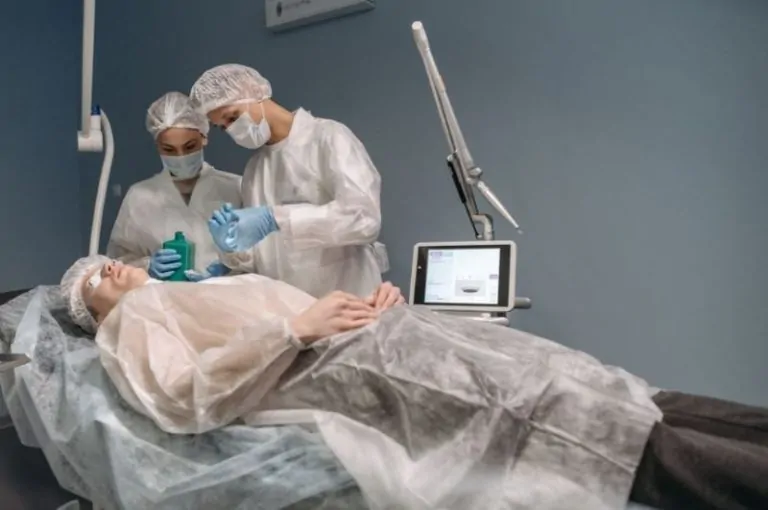

Yes, you can use your own eggs with gestational surrogacy to create embryos, which will be later transferred by a surrogate mother. In this case, she does not provide the eggs and has no genetic relationship with the child.
This option is often considered by women who have the option of retrieving eggs but lack a uterus, or who are unable to become pregnant or who are associated with serious medical risks.
How Does Surrogacy With My Own Eggs Work?
The first stage of this process begins with IVF. After ovarian stimulation, eggs are retrieved and fertilized with sperm from the partner or donor. After that the resulting embryo is transferred to the surrogate mother.
The American Society for Reproductive Medicine (ASRM) defines a gestational surrogate as a woman who carries an embryo created from the gametes of the intended parents, donors, or a combination of both.
| Stage | Who Is Involved |
| Egg provision | Expectant mother or donor |
| Sperm provision | Expectant father, partner, or donor |
| Carrying the pregnancy | Surrogate mother |
| Embryo creation | IVF laboratory |
Using one’s own eggs does not make the surrogate mother the child’s genetic mother. Her task is only to carry the pregnancy to term.
When Can One Use One’s Own Eggs?
Surrogacy may be considered the right option if pregnancy is impossible or poses a serious health risk. ASRM identifies indications such as the absence of a uterus, severe uterine abnormalities, severe medical conditions that could worsen during pregnancy, and some cases of repeated IVF failures despite the availability of high-quality embryos.
For example, after a hysterectomy, the ovaries may continue to function. If egg retrieval is medically feasible, they can be used to create embryos.
The decision depends on the condition of the ovaries and the reasons for needing a surrogate mother. A fertility specialist assesses the ovarian reserve, age, previous treatment attempts, and the prospects for using the patient’s own eggs.
Can a Single Woman Use Her Own Eggs?
Yes, surrogacy for single woman is medically possible. A single woman can create embryos from her own eggs and donor sperm and after that transfer them to a surrogate mother.
However, when exploring surrogacy programs for single women offered by different clinics such as ADONIS Fertility Solutions, it is important to consider not only medical options but also the laws of the chosen country. For example, some jurisdictions allow single parents, while others provide access only to married couples. So, you need to check the state laws first, because there is no Federal law that regulates this sisse.
Therefore, the sperm donation conditions, parental documentation, and the agreement with the surrogate mother should be reviewed before embryo transfer.
What If My Own Eggs Are Not Suitable?
Using your own eggs may not always be the optimal medical solution. With age, the egg quality as well as the likelihood of producing chromosomally normal embryos typically decline. Ovarian reserve also influences the number of eggs obtained per cycle.
If previous IVF attempts have yielded few viable embryos or there is a significant genetic risk, the clinic may offer donor eggs. This changes the genetic relationship with the child, but not the role of the surrogate mother: she still carries only an embryo to which she is not genetically related.
The choice between one’s own and donor eggs should be based on a medical examination, not on the assumption that surrogacy necessarily requires donor egg material.
Does the Country Where the Program Is Offered Matter?
Yes. The medical procedure may be very similar in different clinics, but the legal requirements may vary significantly depending on the country.
Before undergoing treatment abroad, you must carefully research countries where surrogacy is legal, including eligibility requirements and parenthood recognition procedures. Some countries only allow married opposite-sex couples to participate, while others offer programs for single parents and same-sex couples.
In the United States, there is no uniform federal law on surrogacy. According to the ASRM 2026 review, relationships are governed by state laws, court decisions, and regulations. Therefore, conditions can vary even within a single country.
What Should Be Verified Before Starting a Program?
Before participating in any program an intended parent must check three things: the clinic considers them suitable for IVF, the surrogate mother has undergone the recommended medical and psychological examinations, and the law recognizes the planned parenthood arrangement.
The main difference is that one’s own eggs provide the genetic contribution to the expectant mother, while the surrogate mother is responsible for carrying the pregnancy to term. In modern gestational surrogacy, these roles are not the same.
About the Author