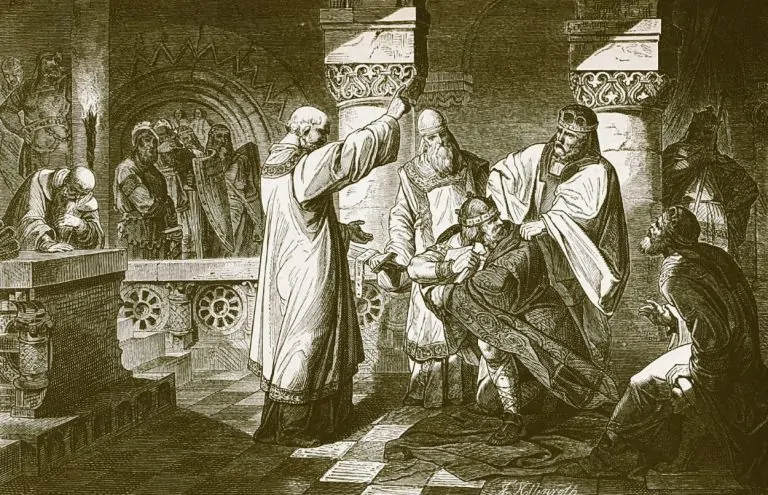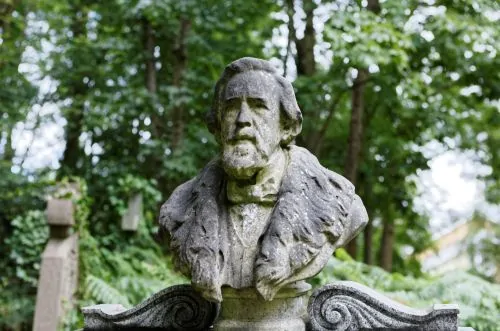
George Jacob Holyoake’s 1842 blasphemy trial exposed the limits of religious dissent. Over the next decade, he helped develop Secularism as an ethical project grounded in human needs.

By Matthew A. McIntosh
Public Historian
Brewminate
Introduction: When Unbelief Became a Public Offense
A warrant dated June 3, 1842, preserves the moment when George Jacob Holyoake’s religious dissent became a matter for the criminal authorities. The surviving document followed remarks delivered at Cheltenham’s Mechanics’ Institution on May 24, during an exchange about religion and social improvement. Holyoake had declared his disbelief in God and suggested that the deity should be placed on “half-pay,” connecting religious expenditure with the distress of the poor. On August 15, a jury at Gloucester Assizes convicted him of blasphemy, and he received six months’ imprisonment. An answer given before a lecture audience had become an offense understood to threaten the religious foundations of public life.
The prosecution exposed a difficulty within the boundaries of permissible religious discussion. Private unbelief was not itself the offense charged against Holyoake, and the courtroom account he later published represented Mr. Justice Erskine as recognizing a right to express dissent through sober argument. Yet that permission depended on judgments about reverence and contempt made within a legal order that accorded Christianity privileged protection. Erskine also maintained that religion supplied the foundation upon which morality could safely rest. These positions made the manner of expression inseparable from assumptions about the social value of what was being challenged. Someone who publicly ridiculed religious authority could be understood as weakening the restraints that made trustworthy conduct possible. Holyoake’s answer reached beyond a demand for greater latitude in theological controversy. He claimed that speaking honestly from conviction could express an obligation to others, including when the conviction contradicted the beliefs those others held sacred. His prosecution raised a question about moral authority: who could identify a duty, explain its grounds, and act upon it in public?
During the following decade, that question acquired a constructive expression in Holyoake’s development of Secularism. His participation in Owenite reform had already encouraged him to connect human character with the circumstances in which people lived. Through journalism and association, he helped formulate an ethical program concerned with improving those circumstances through human effort. By 1851–1852, Secularism was becoming a named movement whose proposed basis of cooperation did not require agreement about God. Its significance lay in making duties within the present world a sufficient ground for shared action, while leaving participants capable of disagreeing about matters beyond it.
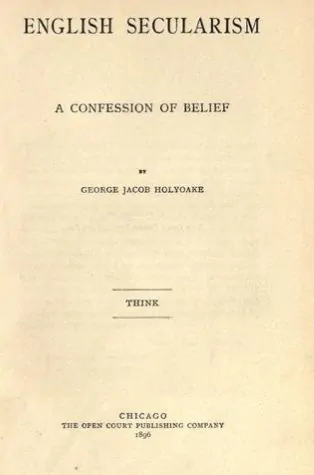
Following this development requires scrutiny of the evidence through which Holyoake explained himself. His trial narrative, published in 1850, acknowledged the reconstruction of events from recollection eight years afterward; English Secularism, issued in 1896, interpreted the movement’s origins from a much greater distance. Both works defended positions as well as recorded experiences. They must be read alongside contemporary reporting and the developing arguments of The Reasoner, without assuming that imprisonment necessarily produced the philosophy later associated with his name. The argument advanced here is that prosecution intensified an existing struggle over the independence of moral judgment, while the practical demands of reform helped give that struggle an affirmative program. Holyoake’s personal unbelief, his defense of unbelievers’ civil standing, and his proposals for ethical cooperation remained connected but distinguishable commitments. Their relationship explains why Secularism could challenge religion’s claimed monopoly on moral responsibility without making conversion to atheism the condition of belonging.
Before the Prosecution: Owenism and the Possibility of Human Improvement
Born in Birmingham in 1817, George Jacob Holyoake grew up in a household whose livelihood depended on metalworking. Employment at a foundry brought him into the discipline of industrial labor from childhood, while his interest in mathematics encouraged ambitions beyond the work available to him. His education also included Nonconformist religious instruction, giving him early acquaintance with arguments about duty and the proper ordering of life. Neither workshop experience nor chapel attendance prescribed his eventual opinions. They supplied different settings in which diligence was commended, authority was exercised, and the prospects of a working person were explained. His pursuit of further learning would bring those explanations into increasingly direct competition.
Robert Owen’s account of character offered a systematic challenge to the idea that existing inequalities reflected the freely chosen virtues and failings of individuals. In A New View of Society, published in successive essays between 1813 and 1816, Owen argued that people acquired their dispositions through the interaction of their original constitution with the circumstances surrounding them. Education mattered because those circumstances included the instruction children received and the examples adults placed before them. Religious beliefs were themselves among the influences requiring explanation, rather than an independent standard from which every other influence could be judged. This reasoning changed the practical meaning of reform. Condemnation after an offense had occurred seemed inadequate when damaging habits had been cultivated through conditions that society could alter. Owen’s experience as a manufacturer at New Lanark gave these claims a setting in the management of an industrial community, although his authority there also exposed the paternalism that could accompany benevolent supervision. Better surroundings were expected to produce better conduct, but someone still had to decide what counted as better and how the new arrangements should be administered.
Such reasoning did not require that harmful behavior be disregarded. It directed attention toward preventing injury and changing the conditions that encouraged it, rather than treating suffering as the deserved result of a character entirely of its possessor’s making. The religious implications were substantial because doctrines of culpability and punishment frequently assumed capacities Owen’s explanation called into question. Yet Owenism contained considerable variation in religious opinion, and Owen’s own language of rational religion complicates any description of the movement as uniformly atheistic. For a recruit such as Holyoake, accepting an account of social causation did not instantly settle every question about divine existence.
The movement that developed around these ideas provided an education through association as well as through doctrine. Owenite halls accommodated lectures and debate, making participation possible for people who lacked access to universities or established intellectual institutions. Sunday addresses adopted a familiar congregational rhythm while placing social questions before their audiences, and the designation “social missionary” gave organized reform a vocabulary recognizable from religious activity. Proposals for cooperative communities extended discussion into the arrangements of ordinary existence, including the relationship between earning a living and maintaining a household. These proposals also made domestic authority available for criticism. Some Owenite women argued that dependence within marriage and the unequal distribution of work obstructed the freedom socialism promised. As Barbara Taylor’s scholarship demonstrates, this feminist current belonged within the movement’s intellectual history, although its presence did not establish agreement among all Owenites or equality within their organizations. Holyoake entered an argumentative community whose members could share dissatisfaction with existing society while differing sharply about the relationships that should replace it.
His own educational advancement depended partly on people whose religious opinions differed from those he would later hold. After joining Birmingham’s Mechanics’ Institute in 1836, he developed his mathematical interests and acquired teaching experience. Unitarian acquaintances, including Daniel Wright and Hawkes Smith, figured prominently in his later recollections of this period. Those connections resist a simple division between religious obstruction and unbelieving enlightenment. Holyoake associated his failure to secure further advancement at the institute with his commitment to Owenism, making the costs of intellectual affiliation a question of employment as well as conviction.
Appointment as an Owenite lecturer offered another route into educational work. The movement’s Central Board stationed him at Worcester in October 1840 and transferred him to Sheffield in May 1841. A missionary was expected to explain socialism before an audience, answer objections, and sustain confidence in a cause whose proposed reconstruction of society could seem remote from its supporters’ immediate difficulties. The position carried responsibilities without ensuring financial security. Holyoake’s recollections of the Worcester period describe a narrow household income and efforts to supplement it through mathematical teaching. Although these accounts were written retrospectively, they show how closely he connected the development of his opinions with the practical difficulties of earning a living. His circumstances also exposed a problem within organized reform itself. A movement dedicated to the relief of insecurity had to find dependable ways to maintain the people employed to advocate its principles. Lecturing could give a working man an occupation founded on knowledge, while leaving him vulnerable to the resources and expectations of those who supported it.
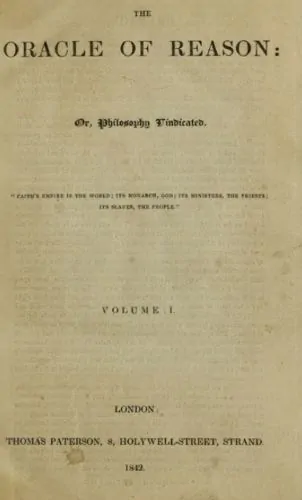
Political disagreement supplied a further education in the relationship between conviction and action. Holyoake participated in Birmingham Chartism but favored moral persuasion over the resort to physical force, a distinction that separated people who shared opposition to exclusion from political power. His attachment to Owenism likewise connected him with a broad undertaking without requiring permanent agreement with every proposal advanced in Owen’s name. The radical press offered another setting in which these commitments could be tested, and his association with The Oracle of Reason drew him into increasingly explicit criticism of Christianity. Charles Southwell’s imprisonment for blasphemy in 1842 made the vulnerability of that publishing enterprise unmistakable. Holyoake approached this controversy with experience as an instructor and socialist advocate, but his religious position was still developing. The movement had given him a powerful explanation of how people were formed; public controversy would press him to explain how a person formed under those influences could claim an independent right to judge and speak.
Christianity and Public Order: The Boundaries of Religious Dissent
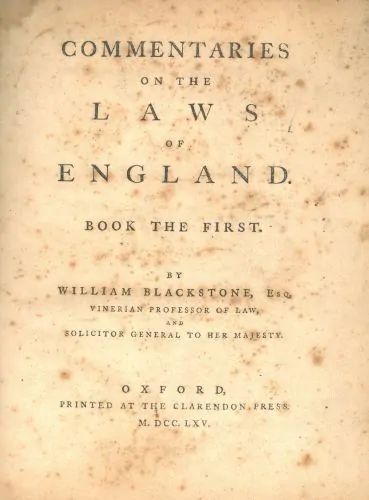
English arguments for protecting Christianity frequently assigned religious belief a function within the administration of justice itself. William Blackstone’s Commentaries on the Laws of England connected belief in divine oversight and future punishment with the reliability of judicial oaths. An oath invoked an authority capable of reaching conduct that human institutions could neither observe nor adequately punish. From this perspective, attacks on religion endangered one of the assurances upon which courts depended when receiving testimony. The reasoning extended beyond the preservation of worship or the prevention of personal offense. It made confidence in religious sanctions part of the explanation for why people could be trusted to fulfill obligations when dishonesty appeared advantageous. A challenge to Christianity could accordingly be represented as an attack on the conditions supporting lawful government.
That connection survived substantial changes in the position of religious minorities. Parliamentary relief in 1813 removed the exclusion of people denying the Trinity from the protections available to Protestant Dissenters and repealed specified statutory penalties against them. The measure did not abolish the separate common-law offense of blasphemy, which rested on judicial precedent. In 1828, repeal of sacramental qualifications for certain public offices further reduced the disabilities attached to religious difference. Yet the replacement declaration retained explicitly Christian language and required assurances concerning the established Protestant Church. These reforms mattered because they opened opportunities previously restricted by Anglican tests, but their scope remained defined by the questions Parliament had chosen to address. Access to office, permission to worship, and protection for religious criticism were distinguishable matters. Someone could welcome the admission of additional Christian denominations into public institutions while continuing to regard the denunciation of Christianity as punishable.
The boundary between inward conviction and outward expression also supplied less protection than a modern reader might initially suppose. Common-law proceedings addressed acts of communication, including publication, rather than attempting to punish an unexpressed mental condition. The beliefs communicated could enter directly into the definition of the offense. Blackstone’s account included denials of divine existence or providence alongside contemptuous treatment of sacred subjects. Nor did a prosecutor have to organize the entire argument around evidence that a riot was about to occur. The anticipated weakening of religious restraint could itself furnish an explanation of the danger attributed to a publication.
The contrasting fortunes of William Hone and Richard Carlile demonstrate how much depended on the interpretation of an alleged attack. In December 1817, Hone faced three successive trials over political parodies employing religious forms, including the catechism and litany. His defense distinguished the use of familiar sacred language for political criticism from an intention to discredit religion. He also produced earlier examples of parody, challenging the prosecution’s attempt to identify his publications as uniquely criminal. Three juries acquitted him, despite the pressure brought to bear through repeated proceedings. Those verdicts showed that prosecutors could fail to persuade readers and jurors to accept their account of a text’s purpose. Carlile’s convictions in 1819 for publishing works of religious criticism, prominently Thomas Paine’s Age of Reason, revealed the continuing force of the prohibition. His imprisonment, and subsequent proceedings against people maintaining the publishing business, made the practical circulation of prohibited arguments a central issue. The comparison offers no simple rule that satire was safe while philosophical criticism was forbidden; it shows that juries could interrupt prosecution without dismantling the legal structure that sustained it.
Readership supplied another way of distinguishing allegedly dangerous publications from tolerated discussion. When Henry Hetherington was tried in December 1840, Attorney-General John Campbell emphasized the low price of the prosecuted material and its accessibility to working people. In the published report, the prosecution’s reasoning assigned different capacities for judgment to different social groups. Arguments that educated readers might examine without injury became more threatening when they reached people presumed to lack the preparation needed to resist them. This was an assertion about the distribution of intellectual competence, carrying implications for who should be permitted to encounter doubt. Hetherington challenged that distribution by drawing attention to the uneven treatment of expensive and inexpensive publications. His objection concerned the practical terms on which knowledge entered ordinary households, as well as the consistency of criminal justice. If affordability increased suspicion, then widening access to reading could expose a publisher to penalties precisely because he had made controversial material available to a larger public.
Hetherington’s attempt to prosecute the publisher Edward Moxon over an edition of Shelley’s poetry brought those differences into sharper view. Moxon’s prosecution in 1841 placed passages from Queen Mab before a court, subjecting an established literary publication to a law more commonly associated with radical bookselling. The jury returned a guilty verdict, so the episode cannot accurately be described as a formal exemption granted to respectable literature. No punishment followed creating a striking contrast with Hetherington’s own imprisonment. The disparity encouraged the argument that literary reputation and social position affected the practical operation of a supposedly general prohibition. Genre also mattered, since poetry could be presented within a context different from that assigned to an inexpensive publication circulating among working readers. Such differences complicated the assessment of intention, although they did not make unequal outcomes self-explanatory or necessarily defensible. As Joss Marsh’s work demonstrates, the history of blasphemy belongs partly to the history of reading, including the conventions through which some texts acquired cultural protection while others remained exposed.
Christian opposition to prosecution prevents these controversies from becoming a simple confrontation between believers and their enemies. A petition presented to the House of Commons in July 1823, signed by Christians including numerous ministers, condemned prosecutions for religious opinion as contrary to Christianity and damaging to its cause. The petitioners also questioned the possibility of reliably separating permissible argument from punishable forms of expression. Their position challenged the assumption that defending Christian truth required the criminal punishment of its critics. Religious conviction could sustain an argument for open discussion as well as an argument for suppression.
Enforcement emerged through decisions taken by different institutions and individuals, whose purposes did not always coincide. Religious campaigning organizations, including the Society for the Suppression of Vice, could help initiate proceedings, while local complainants brought their own understanding of danger to magistrates. Judges interpreted inherited authorities, and juries assessed cases whose meanings had often already been contested in print. This arrangement gave blasphemy law a reach that extended beyond a centrally directed campaign, but it also left room for disagreement and failed prosecutions. The relevant legal history here is principally English; the existence of related controversies elsewhere in Britain does not establish uniform jurisdictions or practices. By the early 1840s, an expanding culture of public argument operated within a framework that still allowed religious criticism to become a criminal allegation. For someone earning a living through lecturing or publishing, the uncertainty concerned when an exchange of ideas might be treated as an injury to the community entitled to punishment.
The Cheltenham Lecture: Social Reform and an Unexpected Religious Question
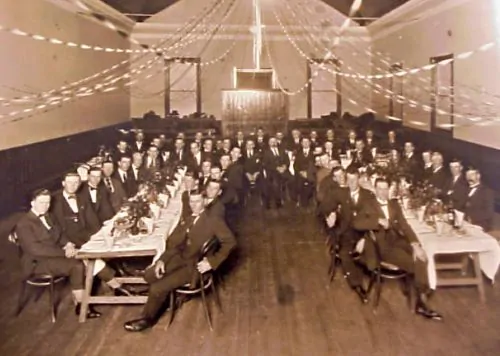
The announcement for Holyoake’s appearance at Cheltenham’s Mechanics’ Institution on May 24, 1842, promised an examination of poverty and its remedies. A witness later recalled the placard’s wording as “Home Colonisation, Emigration, Poor Laws Superseded,” placing the occasion within a recognizable field of socialist advocacy. Holyoake was travelling from Birmingham toward Bristol, where he intended to visit Charles Southwell in prison, and had arranged to lecture during his passage through Cheltenham. The audience included women as well as men, with one subsequent witness estimating its size at approximately one hundred. Attendance does not establish that those present shared either the speaker’s political commitments or his religious opinions. He addressed a public gathering whose members could listen to the same proposals with substantially different expectations.
The advertised alternatives concerned what should happen to people unable to secure an adequate livelihood. Following the Poor Law reforms of 1834, stronger central supervision and the grouping of parishes into unions had accompanied efforts to make workhouse discipline central to the treatment of able-bodied poverty. Implementation varied, and assistance outside the workhouse continued, but the deterrent purpose of the new arrangements supplied a powerful object of criticism. Emigration offered another response, promising opportunities beyond Britain while requiring people to leave familiar surroundings. Owenite home colonisation proposed productive settlements within the country, bringing agricultural work and manufacturing into cooperative arrangements. Its advocates expected organized employment to reduce dependence by changing how resources and labor were brought together. To supersede poor laws was an ambitious claim about preventing destitution, rather than simply withdrawing assistance from people already suffering it. The surviving case materials preserve much more of the religious controversy than of Holyoake’s exposition of these economic proposals, making it necessary to distinguish the movement’s established ideas from the details he can actually be shown to have presented that evening.
According to Holyoake’s account, the chairman invited questions and objections when the lecture ended. A man named Maitland, whom he described as a teetotaller and an informal local preacher, complained that the address had explained obligations toward humanity while neglecting obligations toward God. Maitland also asked whether the proposed communities would possess churches or chapels. That question had a substantive relationship to the announced subject, since a settlement required decisions about communal institutions as well as productive work. Nothing securely establishes whether Maitland intended to expose an objectionable doctrine or simply wanted an omission explained.
Holyoake’s reconstructed answer began by identifying the discussion as economic and objecting to the introduction of religion into it. But once challenged, he represented himself as answering openly rather than declining the question. He connected the burdens borne by poor people with the resources devoted to the national Church and religious institutions more generally, treating worship as an expense that could be weighed against competing needs. His estimate of that expenditure belonged to his argument and should not be accepted as an independently verified national account. The suggestion that the deity should be placed on “half-pay” then carried the comparison from religious institutions to the being they honored. Military half-pay supplied an intelligible image of reduced remuneration, but its application to God deliberately converted a sacred subject into a figure within fiscal satire. The resulting provocation depended upon that movement between meanings. What Holyoake presented as a criticism of expenditure could also be heard as reducing divine majesty to the status of a costly public employee whose provision might be curtailed.
The answer he preserved also distinguished his own refusal to propose chapels from an attempt to prevent other residents from establishing them. People who wanted religious buildings, he maintained, could make that choice for themselves. This qualification matters because it leaves room for religious practice within a community whose lecturer personally declined to support it. Yet the same reconstructed speech included far harsher expressions of aversion toward the Bible and toward Christians, extending beyond an argument about the allocation of funds. His recollection that he would “revolt at the touch of a Christian” prevents the exchange from being reduced to temperate financial criticism. Permission for others to worship coexisted with language capable of conveying personal hostility toward the religion they practiced.
The surviving versions differ over both the sequence of the evening and the wording of its most significant declaration. The Cheltenham Chronicle, in the passage Holyoake later reproduced, alleged that he had attacked the Church and religion before questions began, whereas his narrative placed the controversial reply after an economic address. More unusually, he attached a footnote to the explicit statement that he did not believe God existed, acknowledging that he could not remember using that precise phrase. He conceded that the witnesses might have recalled it accurately, while also suggesting that discussion among employees of the same newspaper could have encouraged agreement. That suggestion remains his explanation rather than an established account of how their evidence developed. James Bartram’s later sworn testimony still preserved important features of the economic setting, including references to poverty and the expense of religion. Under questioning, Bartram acknowledged that words had intervened between expressions subsequently presented together in the indictment, and he distinguished Holyoake’s remarks from an attack upon morality. These details restore context without supplying an exact transcript or demonstrating that every expression became unobjectionable when returned to its surrounding argument.
Audience reaction is equally resistant to a single authoritative description. Holyoake remembered conversational delivery producing quiet amusement, while the newspaper reported applause and treated that response as grounds for reproaching the listeners. Neither description allows the views of every person present to be recovered, and applause alone cannot establish which element of an extended answer won approval. The exchange had brought a practical question about communal provision into contact with a demand for religious acknowledgment, but its significance depended on how that encounter was recounted. A listener might retain the criticism of costly institutions, the rejection of belief, or the disrespect carried by the comparison with military pay. For readers who encountered only the reported answer, the lecturer’s religious character could become more prominent than the arrangements for employment and subsistence he had advertised.
Making a Blasphemer
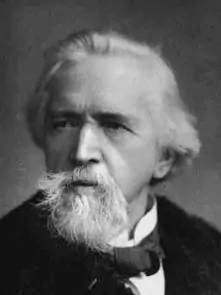
The Cheltenham Chronicle supplied more than an unfavorable account of Holyoake’s lecture. Its report concluded with an appeal for official intervention and announced that three people employed by the newspaper were prepared to verify its statements under oath. Publication served two connected purposes, presenting the alleged offense to readers while offering the authorities a means of pursuing it. The editorial voice assigned moral character to the speaker before any court had determined his guilt. Calling upon magistrates to act also encouraged readers to understand the incident as something requiring a public remedy. An argument heard within the Mechanics’ Institution had acquired an organized advocate for its punishment.
A subsequent notice, reproduced in Holyoake’s account under the heading “Holyoake the Blasphemous Socialist Lecturer,” described him as a monster and reported that magistrates had instructed the police to apprehend him. That notice is evidence of how the newspaper represented official action, rather than an independently preserved record of the magistrates’ deliberations. Holyoake associated the Chronicle with the religious party of the evangelical clergyman Francis Close, but this attribution does not establish Close’s authorship of the notices or personal direction of the prosecution. The published demands can be identified more securely than the conversations or instructions that may have preceded them. Holyoake portrayed his return to Cheltenham in early June as a deliberate response to the campaign against him. Lodging with the Adams family, he again appeared before a local audience, placing himself within reach of the authorities while attempting to answer the accusations publicly.
His narrative places the arrest on the evening of June 2, after another meeting at the Mechanics’ Institution. Superintendent Russell arrived with approximately twelve policemen, although Holyoake recalled continuing his address before the superintendent approached him when the meeting ended. Russell acknowledged that he possessed no warrant and explained that his instructions required him to apprehend the lecturer. Accompanied by a supporter named Hollis, Holyoake went to the station, where he placed his arrival between eleven and midnight. The physical seizure preceded the written instrument that survives from the following day.
On June 3, the proceedings moved before three county magistrates, Robert Capper, the Reverend Dr. J. B. Newell, and Joseph Overbury. The solicitor Bubb presented the common-law charge, while James Bartram and William Henry Pearce supplied evidence concerning the disputed remarks. Their connection with the newspaper office brought the published accusation and the preliminary hearing into direct contact through identifiable individuals. Holyoake’s report represents Bubb as suggesting that the economic subject had furnished a means of assembling an audience before prohibited opinions were delivered. That interpretation assigned a concealed purpose to the lecture, making its advertised subject part of the accusation rather than an explanation of the exchange. The defendant also attributed to Overbury a distinction between personal irreligion and the propagation of disbelief, the latter supposedly threatening disorder. Capper, in the same account, treated Holyoake’s conduct as a pursuit of notoriety. These reported interventions deserve the caution appropriate to reconstructed dialogue, but they reveal the kinds of judgments about sincerity and intention that Holyoake understood himself to be confronting before the case reached a jury.
The document dated June 3 gave the proceedings a form that other officials could execute. Although catalogued as a warrant for Holyoake’s arrest, its operative purpose was committal; it addressed both the constables responsible for conveying him and the keeper of Gloucester gaol responsible for receiving him. It expressly stated that he had already been brought before the magistrates. After reciting the sworn allegations, it directed his detention until the next Quarter Sessions, the provision of the required security, or discharge through lawful process. Its existence supplies no retrospective authorization for the warrantless arrest described the previous evening.
The conditions for release placed immediate demands upon Holyoake and those prepared to support him. The magistrates required his own recognizance of £100 together with two sureties of £50 each, obligations securing his appearance rather than a fee charged for release. Providing acceptable sureties depended on access to people whose financial standing satisfied the court and who were willing to assume responsibility. Holyoake described one proposed surety being accepted while another’s statement about the sufficiency of his means encountered objection. The warrant’s record that the required security had not been furnished must be read alongside those attempted arrangements. Failure to obtain release could arise through disagreement about a supporter’s qualification, even where assistance had been offered. Holyoake was conveyed to Gloucester that afternoon, and his account describes the indignity of restraint and public movement under guard. George Julian Harney’s contemporary letter in the Northern Star also circulated complaints about the arrest and the conditions attached to release, making the treatment of the accused an additional subject of public controversy. Such advocacy publicized procedural grievances without itself establishing every disputed circumstance.
The circle of people exposed to proceedings widened as supporters maintained the circulation of freethought publications. According to Holyoake, demand increased after his arrest, and George and Harriet Adams helped supply it. On June 13, George was arrested at a meeting for selling number 25 of the Oracle of Reason, placing distribution at the center of a further accusation. Harriet went to the station to see him and was served with a warrant concerning the sale of number 4. Her statement, preserved by Holyoake, describes a policeman accompanying her home to collect her infant while four other children remained there. Both adults were committed for trial, although their cases would not follow identical courses. These events reached beyond the person who had spoken at the original lecture to people whose activity made controversial writing available to others. They also imposed demands upon a household before any determination of guilt, with Harriet’s account recording the practical collision between detention and responsibility for children.
Concern about the handling of Holyoake’s case eventually reached the House of Commons. On July 18, John Arthur Roebuck asked whether the Home Secretary would produce correspondence concerning the allegedly improper committal. Sir James Graham acknowledged that his inquiry had disclosed “serious irregularities,” but declined publication because further legal proceedings might follow. Three days later, C. Berkeley raised the magistrates’ objection to the implications of that statement, and Graham clarified that he had not attributed the irregularities to them. The parliamentary reports support an official acknowledgment that something had gone wrong while leaving its precise allocation of responsibility unresolved. They are narrower than the more elaborate reconstruction subsequently printed by Holyoake and cannot be treated as a government endorsement of every grievance he advanced. The blasphemy allegation remained in place while the conduct of those enforcing it became a separate matter of dispute. When the prosecution proceeded toward trial, the accused already possessed grounds for challenging the administration of his case alongside the charge itself.
Before the Jury: Who Could Speak for Morality?
At Gloucester Assizes on August 15, 1842, Holyoake pleaded not guilty and conducted his own defense before Mr. Justice Erskine. George Adams had been convicted in the preceding case and sentenced to one month’s imprisonment, while Harriet Adams was never tried. The selection of Holyoake’s jury immediately raised questions about the judgment he could expect. John Lovesey left the jury box after Holyoake objected to his involvement in the preliminary proceedings and Lovesey expressed horror at the alleged offense. Another objection, directed against a prospective juror because he was a farmer, received no such accommodation. Holyoake’s subsequent ridicule of the jurors’ occupations reveals an assumption of his own; that limited acquaintance with philosophical controversy compromised their competence to decide the case. Their livelihoods cannot establish that incapacity, even if his concern about prior hostility deserved serious consideration.
The defense distinguished disbelief from a claim to possess conclusive knowledge that no deity existed. Holyoake presented himself as withholding assent where he found the evidence insufficient, rather than demanding acceptance of an independently demonstrated theological conclusion. That distinction resisted the prosecution’s characterization of his position as a deliberately destructive assertion. Its legal significance remained uncertain, since a sincerely held opinion could still be communicated in words judged contemptuous. His immediate task was to contest the malicious intention alleged against him while defending the legitimacy of expressing his conclusions at all.
The strongest ethical element of his address concerned the obligations created by an honestly reached conviction. Remaining silent, he argued, could require a person to tolerate what he believed to be error when speaking might benefit others. He invited the jurors to apply reciprocity, asking them to recognize that they would reject a demand to abandon their own beliefs merely because someone else commanded it. Punishing his refusal to surrender his judgment required a justification that religious disagreement alone could not supply. His appeal also drew upon standards the court itself professed to uphold. Prison regulations prohibited lying, yet he represented the prosecution as placing him in danger because he had answered candidly. At the close of the defense preserved in his later account, he appealed to an ability to recognize right conduct that extended beyond agreement about creeds. This was an argument for ethical recognition across disagreement, although it should not be mistaken for a completed exposition of Secularism. Holyoake subsequently acknowledged that he had avoided a comprehensive discussion of atheism’s moral implications because he considered his understanding insufficiently developed. The courtroom claim was narrower but substantial. A religious dissenter could understand himself as bound by duties that required public action.
Erskine’s summing-up restricted what the jury was authorized to decide. The court, he maintained, had to administer the law it received rather than deliberate upon whether prosecutions of this kind were desirable. Jurors were to determine whether Holyoake had intended to bring Christianity into contempt, not pronounce upon the truth of his opinions. Erskine recognized that religious dissent could be expressed through serious discussion, while insisting that contemptuous treatment fell outside that permission. His interpretation rested upon the conviction that religion provided the secure basis of morality. The distinction between discussion and reviling operated within a framework that assigned Christianity a protective social function before the defendant’s intentions were assessed. Where Holyoake asked the jurors to examine the justice of restraining conscientious speech, the judge directed them toward a more confined inquiry into whether the speech met the inherited definition of an offense.
Those directions also contained considerations favorable to the accused. Erskine acknowledged that the disputed answer had followed a question and that no evidence established a contrivance designed to provide an opportunity for religious provocation. He also rejected the inference that an ordinary word within the reported declaration of disbelief necessarily demonstrated contempt. More damaging, in his assessment, was language Holyoake himself had introduced by reading from his original account in the Oracle of Reason, including the comparison of the Bible to a viper. Material offered to explain the exchange could strengthen the case against the person supplying it. The judge instructed the jury to acquit if it entertained reasonable doubt about the alleged intention, leaving an identifiable route to a favorable verdict. Holyoake’s later acknowledgment of Erskine’s patience, and his description of the judge’s conduct overall as fair, must be taken seriously alongside his criticisms. Procedural consideration could coexist with the enforcement of a religious privilege he regarded as unjust.
After a brief deliberation, the jury returned a guilty verdict. Erskine imposed six calendar months in the common gaol, treating an answer delivered under the pressure of an immediate question more leniently than words deliberately prepared for printed circulation. In explaining the sentence, he presented the law as protecting people against indecent language rather than defending the reputation of God. The penalty rested upon a judgment about the effect and permissible form of religious criticism. Holyoake’s assertion of conscientious purpose had received an extended hearing, but it had failed to secure his liberty. The court accepted that he might speak as an unbeliever while retaining the power to punish the manner in which he had done so.
Six Months in Gloucester: Punishment Beyond the Defendant

Money sent to Gloucester for Holyoake’s food became part of the struggle to sustain his family elsewhere. Two Sheffield friends, John Fowler and Paul Rodgers, provided funds so that he could supplement the prison diet. From that assistance, he recalled saving a guinea to send home for a winter cloak for his daughter Madeline. The money was instead spent on her coffin. This episode joined the prisoner’s bodily needs to those of a household whose resources had contracted during his confinement. Support adequate for one purpose could prove insufficient when illness created another demand.
The regulations governing daily life repeatedly exposed that dependence upon outside assistance. In his memorial to the Home Secretary, Holyoake complained of the ordinary prison diet and explained that permission to purchase better food offered little benefit without money from friends already helping his family. Restrictions on evening activity also obstructed his attempt to contribute to their maintenance. He requested additional time for mathematical work, describing lengthy confinement in an unlit cell and anticipating still longer hours during winter. Permission eventually came to remain up until nine o’clock, but, according to his account, the authorities would provide neither fire nor light unless he paid for them. Mathematical instruments were withheld on security grounds, further limiting the usefulness of the concession. His refusal to attend weekday prayers brought another form of confinement, usually in the day room, although he agreed to attend Sunday preaching. These were restrictions upon a life that still included contact with other prisoners and opportunities for study, rather than an uninterrupted experience of solitude. Their practical severity depended partly on whether someone outside could supply what the institution withheld.
Eleanor carried responsibilities that could not be postponed until the sentence ended. Holyoake stated that the Anti-Persecution Union provided ten shillings weekly for the household, assembled through small subscriptions. Caring for the infant Eveline, he explained, left his wife little opportunity to supplement that income. His narrative also presented Eleanor as an informed participant in his commitments, recalling her encouragement when he considered taking Southwell’s place in the Oracle of Reason. Those remembered assurances conveyed a partnership founded upon obligations that both recognized, although her voice reaches the reader through her husband’s subsequent account. The same narrative acknowledged the emotional difficulty of seeking assistance and Eleanor’s withdrawal from acquaintances whom she believed feared further demands upon their generosity. Her contribution to the cause included the management of scarce resources and the care of children, work performed away from the audiences before whom her husband defended himself.
News of Madeline’s declining health reached him through communications that offered little capacity for immediate intervention. William Chilton sent warnings intended to prepare him for the possibility of her death, but Holyoake recalled resisting the prospect until the final message arrived. His explanation connected the family’s reduced means with repeated illness and a move into an inadequately ventilated house where fever was already present. That sequence supplies a plausible relationship between deprivation and exposure, but the narrative alone cannot establish a precise diagnosis or determine the contribution of every circumstance. The death itself and the father’s separation from his household are more securely recoverable than a complete medical account of causation. Holyoake remembered receiving the fatal letter after prison staff had opened it, making even the communication of bereavement subject to institutional inspection. His description of the turnkey’s awkward attempt at sympathy preserved a moment of human recognition within a procedure he found intrusive. Eleanor had endured the immediate demands of the illness, while his knowledge arrived through letters he could answer without being able to undertake the care they described.
The arrangements for Madeline’s burial extended the family’s convictions into a setting where religious participation might otherwise have been assumed. At Birmingham Cemetery, the clerk reportedly asked whether a minister should be provided and then understood the refusal to mean that the mourners would supply one themselves. The answer was that no minister was required. Those attending proceeded directly to the grave, where flowers accompanied the lowering of the coffin. Holyoake’s description gave this simple observance its own coherence, locating acknowledgment of the child’s life in the actions of the people gathered around her. Bereavement required a form of communal expression, and the account showed how that expression could be organized without clerical mediation.
Assistance during these months came through specific acts whose value depended upon attention to ordinary needs. Holyoake later thanked an innkeeper’s niece who brought refreshments and carried inquiries about his family, while Mrs. Price supplied Sunday dinners. Mrs. Ralph Thomas and others sent Eleanor three pounds following Madeline’s death. Such acknowledgments qualify his broader language of abandonment, even while his complaints indicate how unevenly he experienced support from former associates. Consideration also came from within the prison’s administration. After Eleanor requested a visit following the bereavement, the visiting magistrate Bransby Cooper arranged accommodation that allowed the family to meet with unusual privacy, substituting another room when the intended one was occupied. Holyoake recalled refusing wine and cigars brought by his sister Caroline because he wished to respect the confidence placed in him. The episode presented trust as capable of eliciting restraint without the immediate supervision that ordinarily regulated a prisoner’s behavior, and he expressly thanked Cooper for it.
Release in February 1843 allowed Holyoake to rejoin his family in Birmingham after brief visits of acknowledgment to supporters. During confinement he had continued intellectual work, including the preparation of writings against Paley and Christian apologetics, and had taught some willing fellow prisoners. Those activities preserved capacities that imprisonment had restricted without extinguishing. The household to which he returned had undergone changes that release could not reverse. In his later narrative, recollections of affection and loss also answered the accusation that unbelief destroyed tenderness, giving the domestic history a place within his public defense. The story of the sentence included the work and bereavement of people whom no court had convicted.
After Release: The Radical Press as a Place to Develop an Alternative
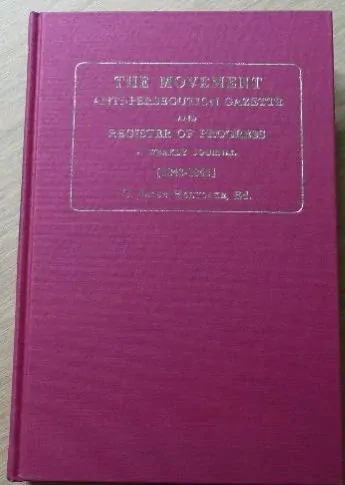
In December 1843, The Movement gave Holyoake another means of addressing the public beyond the lecture room. Edited with M. Q. Ryall, it connected opposition to religious coercion with arguments about republican government and utilitarian morality. Its appearance continued work undertaken through the Oracle of Reason, although the succession of publications should not be mistaken for the uninterrupted growth of a single institution. The Movement ceased in April 1845, and Holyoake subsequently contributed to the Owenite Herald of Progress. That enterprise was absorbed into the publication launched in June 1846 as The Reasoner and Herald of Progress, generally known as The Reasoner. These changes involved finding workable arrangements through which arguments could continue to appear, reach readers, and receive answers.
The intellectual position advanced through this publishing activity was becoming more substantial than a defense of permission to criticize Christianity. Holyoake’s Rationalism: A Treatise for the Times, published in 1845, reconsidered the implications of the Owenite account of character. If conduct arose through circumstances, the acquisition of knowledge could itself become a circumstance capable of changing subsequent behavior. Education supplied a reason for exertion rather than resignation. People could cultivate capacities whose development affected their own lives and those around them. Patrick John Corbeil’s analysis identifies this attempt to connect causal explanation with deliberate self-improvement as an important stage in Holyoake’s ethical thinking. The treatise assessed conduct through its usefulness to society, without making its religious designation the decisive test. Yet its treatment of human beings remained assertively materialist, preventing it from being read as an already completed framework accommodating every theological position. An affirmative account of conduct was developing within continued opposition to theology, rather than replacing that opposition through a single editorial decision.
Moral instruction also brought Holyoake into contact with audiences assembled for purposes other than religious controversy. His prize-winning addresses for the Manchester Unity of Oddfellows offered an opportunity to discuss obligations within an association concerned with mutual support. When The Reasoner began on June 3, 1846, this interest in the practical cultivation of conduct appeared alongside its broader radical commitments. Holyoake later recalled that the first number included “Moral Mathematics,” which posed questions about responding to anger without reproducing it and presenting convictions without dogmatism. A contemporary notice in the Northern Star identified the new weekly as openly opposed to theology and reprinted an article demanding plain language in scientific and philosophical discussion. Civility in controversy could coexist with an insistence that conclusions should be stated unmistakably.
The five Oddfellows prizes supplied fifty pounds, giving the new venture an initial financial resource. Joseph McCabe’s later biography reports that the first volume consumed this capital without producing an editorial profit. James Watson’s role as publisher connected the journal with an established radical bookselling business, but continued appearance still required further fundraising. Maintaining a weekly meant sustaining commitments that enthusiasm alone could not discharge. The opportunity to conduct an extended discussion depended upon people willing to support the publication through periods when its receipts failed to meet its needs.
By 1848, the series “The Moral Remains of the Bible” was testing a method of evaluation that reached beyond wholesale acceptance or rejection of scripture. Holyoake explained its purpose as identifying ethical value that readers might retain after abandoning biblical infallibility. Such a procedure required judgments about goodness that could be exercised independently of the book’s claim to divine authority. A passage would possess merit because its teaching could withstand examination, rather than acquire merit automatically from its location in a sacred volume. This approach preserved the possibility of learning from inherited texts while exposing their contents to criticism. The Northern Star recommended the series together with another undertaking, “Rudiments of Rhetoric,” showing that readers were being offered instruction in argument as well as materials upon which to exercise it. The combination mattered for a readership often denied the educational preparation assumed necessary for serious controversy. A periodical could help readers acquire the skills through which they might assess authorities for themselves.
Its intellectual life also included contributors whose participation complicates an account organized entirely around the editor. Sophia Dobson Collet, writing as “Panthea,” contributed to The Movement and The Reasoner, bringing a perspective that cannot simply be equated with Holyoake’s own developing position. He later credited Eleanor with a review of Harriet Martineau’s Household Education, placing her within the journal’s discussion of learning as well as within the domestic history of his career. Her contribution concerned a subject through which decisions made inside families acquired wider social importance. In 1847, Holyoake also proposed a publication conducted by women for women, although the venture did not materialize. Laura Schwartz’s scholarship places such initiatives within the opportunities and restrictions encountered by women in freethought organizations. The presence of women’s writing establishes participation without demonstrating equality in the allocation of editorial authority. It still broadens the range of people whose work must be considered when tracing the ideas circulated under a periodical’s collective title.
Contemporary responses reveal that fairness toward opponents did not necessarily satisfy readers seeking more vigorous political intervention. In July 1848, the Northern Star commended Holyoake’s treatment of theological antagonists while finding his politics insufficiently forceful. This mixed assessment came from within radical journalism, where the appropriate balance between religious discussion and immediate agitation remained open to dispute. A review in November 1849 described the new series of The Reasoner as more political and less polemical, praising articles on continental affairs and the factory question, together with W. J. Linton’s republican contributions. Those judgments caution against treating ethical discussion as evidence of a steady retreat from collective reform. They also show another newspaper helping to define what The Reasoner was becoming by selecting features for praise or criticism. The developing alternative remained connected to disagreements about the organization of society and the purposes a radical publication should serve.
Holyoake exercised considerable influence over how those disagreements reached the page. In his 1850 trial history, he contrasted the Oracle’s willingness to let contributors express themselves in their own manner with his current practice of extracting essential facts from reports burdened by weak commentary. He acknowledged that writers sometimes protested against this treatment. Editorial judgment imposed distinctions within a publication committed to independent thought, determining which formulations deserved space and which required alteration. Such decisions could make arguments more effective while also concentrating power in the person responsible for selecting them. The radical press provided a setting in which an alternative could develop through repeated examination, but its own standards remained matters of judgment that contributors and readers could contest.
Naming Secularism: A Program Takes Shape, 1851–1852
An exchange published in the Reasoner on June 25, 1851, made the choice of a name an explicit subject of discussion. Writing as “Edward Search,” William Henry Ashurst questioned whether “Atheist” accurately represented a position founded upon insufficient evidence for belief in God. He suggested “Secularist” as a more appropriate designation. Holyoake’s editorial reply developed the proposal beyond a correction of terminology, explaining that Secularism identified work already being undertaken through his advocacy. He described its scope as “larger than Atheism, and includes it.” The formulation retained a place for atheism while identifying an undertaking whose purposes could not be exhausted by a judgment about divine existence. A name associated with an enlarged sphere of activity offered possibilities that a disputed description of belief alone could not provide.
Holyoake’s contribution must be distinguished from the invention of the English word. Petros Spanou’s research identifies uses of “secularism” before 1851, including instances concerned with lay life or worldly preoccupations. These earlier meanings did not necessarily designate the ethical undertaking Holyoake promoted. They establish a prior vocabulary without demonstrating that he consciously borrowed from a specific predecessor. His later assertion that the term first appeared in the press in December 1851 is also contradicted by the June exchange in his own journal. The achievement requiring explanation is the development of a distinctive meaning and collective identity, rather than an isolated act of verbal creation.
Statements appearing toward the end of 1851 gave that identity greater definition. In “Truths to Teach,” published on November 19, Holyoake presented knowledge and duty as belonging to the world people inhabited, making the use of their present existence a central concern. The breadth of this claim exceeded an appeal for kinder treatment of religious dissenters. It proposed a field within which people should direct their attention and judge the worth of their efforts. A December 3 statement recommended “Secularist” as identifying the province of human obligation belonging to this life. Such language explained an affiliation through its subject matter, rather than through a shared denial alone. It also retained a critical edge toward religious teaching whenever Holyoake considered that claims about another existence displaced attention from accessible needs. The developing designation could widen cooperation while continuing to challenge doctrines its advocates regarded as obstacles.
The range of positions associated with the word soon became visible beyond Holyoake’s own explanations. In a letter to Charles Kingsley in 1852, Harriet Martineau called herself a secularist while affirming belief in a First Cause and rejecting popular theology. Her formulation illustrates how the designation could accommodate distinctions that an undifferentiated accusation of atheism concealed. Holyoake’s intellectual contacts likewise included religious radicals such as Francis William Newman, whose convictions differed substantially from his own. Michael Rectenwald places these overlapping relationships within the literary and philosophical circles that helped shape Secularism’s emergence. Cooperation among such people required more discrimination than a division of the public into believers and unbelievers. A common designation could identify converging interests while leaving disagreement about their ultimate explanation unresolved.
Public discussion also began to treat Secularism as an undertaking with a future requiring deliberate consideration. A meeting held on December 29, 1851, provided an occasion for a statement of its position, reported in the Reasoner early the following year. On February 4, 1852, a letter by Charles Frederick Nicholls appeared under the heading “Future of Secularism.” The subject had become something correspondents could address as a developing movement, rather than simply a description attached to the editor. That change created an opportunity for supporters to consider what continued participation should involve.
The implications included organized efforts to alter existing institutions. An August 1852 statement on the nature of Secular societies identified the repeal of parliamentary enactments interfering with secular practice as one public purpose. The name carried demands concerning the conditions under which its adherents could act, as well as their personal approach to conduct. Earlier campaigns against religious penalties could continue within this framework, but they now belonged to a more extensive account of legitimate activity. The designation linked the defense of freedom with proposals about its use. It also required decisions about which grievances fell within a society’s purposes and what its members could reasonably undertake together. Holyoake further clarified the intended scope by distinguishing Secularism from the contemporary campaign for secular education. In September 1852, he argued that supporters of such education were not necessarily Secularists and need not wish to be regarded as members of the developing movement. In their usage, “secular” described a mode of instruction; in his, it identified a much wider field of knowledge and obligation. Agreement about schooling established a shared policy without automatically establishing a common philosophical affiliation. This distinction limited the tendency to count everyone supporting a secular measure as an adherent. It also made the proposed identity more demanding than support for a single reform, since the term was intended to describe an orientation extending across life.
The conference held at Manchester’s Secular Institute on October 3, 1852, supplied an organizational landmark for this developing vocabulary. Holyoake’s later account listed delegates from numerous local societies, including groups in northern English towns and Scotland. Their participation indicates adoption beyond the immediate exchanges of a London periodical and its editor. It does not establish that every participant understood the designation identically or that a stable central organization already governed their activities. The meeting placed representatives of separate associations within an occasion explicitly identified by the new name. They could now consider common work under a description that had acquired recognizable public currency, even while its boundaries remained open to discussion.
Duties in This Life: The Grounds of Secular Ethics
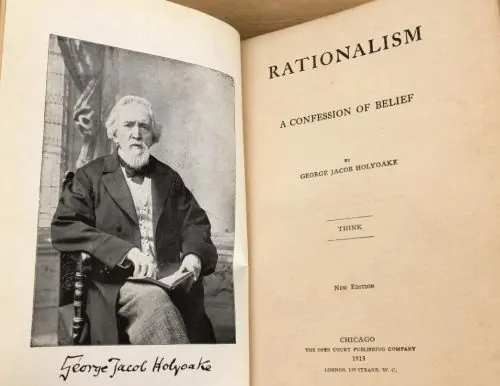
In Rationalism, Holyoake challenged the assumption that removing divine surveillance would deprive conduct of its significance. An action affected other people and helped form the person performing it, whether or not a supernatural observer watched. His criticism of an “Almighty Policeman” directed attention toward those relationships rather than toward the prospect of detection by an omniscient judge. Yet he expressly rejected the comforting proposition that honesty necessarily brought prosperity. A footnote invoked the fate of the imprisoned religious controversialist Thomas Woolston to dispute any dependable connection between integrity and worldly success. Probity could sustain self-respect without securing commercial advantage or protection against persecution. Different kinds of benefit required different circumstances, and possession of one virtue furnished no claim to every desirable outcome. Secular justification required something more demanding than an assurance that good behavior would always prove personally profitable.
A correspondent in the Reasoner pressed another difficulty in August 1851: how could people judge conduct through its effects when those effects extended indefinitely beyond their knowledge? The letter, signed “T.,” argued that finite understanding could never calculate the ultimate significance of an action. Something apparently beneficial might produce distant harm, while an undertaking dismissed as worthless might acquire importance for later generations. Religious faith appeared to offer an escape from this uncertainty through confidence in a revealed moral order. Holyoake’s editorial response refused the premise that action required a complete and certain creed. Much conduct already recognized as good remained neglected, he maintained, because people sought moral direction exclusively in religious authorities rather than examining the relations in which they lived. His practical standard was to judge consequences “as far as we can see them.” That answer accepted a limit upon the agent’s foresight without treating the limit as a sufficient reason for inaction. Responsibility involved using accessible knowledge, rather than postponing a decision until every possible result could be known.
Limited foresight coexisted with considerable confidence in the possibilities of moral science. In the 1845 treatise, Holyoake had suggested that the causes fostering integrity might eventually be traced with an accuracy comparable to mathematical or astronomical knowledge. This was an aspiration to discover dependable relationships between conditions and conduct, extending scientific inquiry into the cultivation of character. His position could combine a practical rule for deciding under uncertainty with an expectation that further investigation would make judgment increasingly exact. Neither a wholly tentative ethics nor a claim to possess an already infallible system adequately captures that combination.
Contributors to the Reasoner also investigated the motives capable of sustaining restraint. A letter signed “N.” answered fears that disbelief would dissolve sexual obligations by appealing to honor and chastity as values supported through human motives and cultivation. Holyoake welcomed further discussion, indicating that this subject remained under development within the journal. Another contributor, Samuel Pooley, distinguished the evaluation of actions through their effects from the correction of wrongdoing through attention to its causes. His example of almsgiving tested a familiar charitable command against its anticipated operation. Indiscriminate giving, he argued, might encourage imposture rather than produce general benefit. This reasoning made benevolent intention insufficient by itself, requiring inquiry into the circumstances of those requesting assistance. It also carried a conventional suspicion of mendicancy, showing how judgments presented as rational could retain assumptions familiar from contemporary discussions of poverty. These contributions were not interchangeable statements of Holyoake’s own position, revealing the range of questions that remained unsettled when moral authority was transferred from a sacred prescription to human assessment.
An exchange about naming children brought the issue into the obligations of family life. A Glasgow correspondent, “Timon,” accused Holyoake of inconsistency for publicly naming children after rejecting religious creeds. Holyoake answered that resemblance to a Christian practice did not establish the practice’s worthlessness, and distinguished what he had done from baptism. He had acted at the parents’ request and considered the occasion useful insofar as it could become their “pledge of duty.” Mere performance of a ceremony possessed no comparable value. The test concerned the undertaking made by adults toward a dependent child, rather than the preservation or rejection of an inherited form for its own sake. Public observance could acquire ethical significance through the responsibility it acknowledged, while remaining incapable of fulfilling that responsibility simply by announcing it.
The appeal to ascertainable effects depended upon a prior commitment concerning what deserved to be achieved. Knowledge of causes might identify an effective intervention without, by that fact alone, determining which interests should receive priority. Concern for human welfare supplied an end toward which investigation could be directed, and judgments about competing needs still required defense. Holyoake’s later English Secularism, published in 1896, condensed this commitment into the assertion that it was good to do good, while developing fuller explanations of service and reciprocal obligation. That mature formulation should be distinguished from the less consolidated discussions of the early 1850s. Those earlier exchanges already demanded that advocates explain their proposed benefits and consider whether their methods were likely to secure them. They also exposed the possibility of error within sincerely intended reform. Ethical independence placed an obligation upon the person making a judgment to offer reasons that others could examine, rather than treating conviction itself as adequate proof.
Building a Constituency: Cooperation and Participation
A correspondent signing “L.” described participation in the cause through the purchase of four weekly copies of the Reasoner. One was retained for binding, while the other three circulated among additional readers. Writing from Poplar in August 1851, the correspondent identified local booksellers displaying the paper and authorized the sale and replacement of copies placed in their windows. Copies also accompanied the writer outside the neighborhood, sometimes being exchanged for religious tracts offered at railway stations. This activity extended the publication’s reach through ordinary encounters, making a reader responsible for finding further readers. Such work supplied a form of participation that required neither a public reputation nor an official position within a society.
Existing associations provided another foundation upon which Holyoake could build. During his 1851 visit to Paisley, he first lectured at Wilson Hall, maintained by people he described as Socialist friends. His report named Motherwell as secretary and Glassford as president, praising the persistence and local standing of their branch. Subsequent appearances used the larger Exchange Rooms, while a requested lecture on Chartism brought political disagreements into the proceedings. These audiences had interests and loyalties that could not be reduced to their reception of Holyoake. Provincial connections also developed through offers of practical assistance. John Hindle informed the Reasoner that his Stockport establishment could supply liberal and freethinking publications and asked to be listed among those willing to help extend circulation. The monthly wrapper served as a directory through which a prospective reader might locate a supplier or correspondent. Organization grew through people making existing premises and relationships available for additional purposes.
Subscription lists recorded a similarly varied distribution of responsibility. The journal acknowledged small payments alongside more substantial contributions, while its standing appeal invited assistance according to ability. Holyoake proposed that an annual shilling from each reader could provide sufficient support, although the proposal cannot be treated as an accomplished subscription system. Published acknowledgments and promised accounts made financial administration visible to those supplying money. These practices joined requests for assistance to an obligation to explain how contributions were received and used.
Public gatherings brought different kinds of supporters into an advertised common undertaking. A notice for the East London Society of Reasoners’ meeting of November 17, 1851, combined a tea party with a report on the society’s activities around Victoria Park. Thornton Hunt was announced as chairman, with speakers including the museum proprietor William Devonshire Saull, James Watson, and Holyoake. Progressive songs were also included in the program, giving the occasion a social character beyond formal exposition. Tickets for tea cost ninepence, while admission later in the evening was offered for twopence. Those arrangements provided different ways of attending, although an advertisement establishes intentions rather than the actual composition of the gathering. Rectenwald’s interpretation of Holyoake’s developing connections as a form of class conciliation helps explain the significance of such combinations. Artisan advocacy could acquire additional outlets through association with literary figures and supporters possessing resources of their own, without those connections making every participant’s commitments identical.
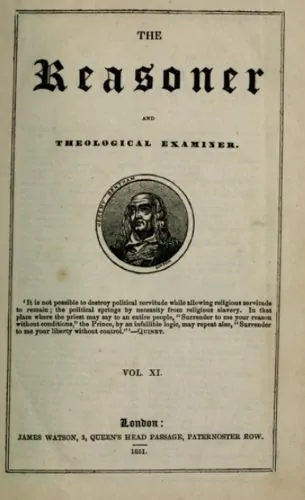
The pursuit of respectability within these relationships should not be understood simply as a demand for political deference. Simon Cordery’s research on friendly societies shows how working people could claim respectable standing through collective provision and independence from external supervision. That wider context helps distinguish a reputation for responsible association from acceptance of existing inequalities. Holyoake’s own address opening the eleventh volume of the Reasoner was emphatically combative, urging readers to strengthen their position until religious opponents could no longer disregard them. Respect, he argued, had to be secured through action rather than requests for acknowledgment. Courtesy toward individuals could accompany sustained opposition to claims he considered false. His language gives little support to a picture of moderation as passive withdrawal. The intended effect was to make the movement more capable of challenging its opponents while denying them easy grounds for dismissing its advocates.
Women’s participation becomes more visible when attention moves beyond the names most frequently associated with editorial leadership. Schwartz identifies the Reasoner’s publication of speeches by lesser-known women during the late 1840s, preserving interventions that a history confined to prominent male writers would miss. The paper also organized an appeal in 1846 for Mrs. Emery, a former lecturer facing destitution. Her circumstances indicate that service on the platform offered no dependable protection against poverty, while the appeal made assistance to a woman who had performed that work a matter of collective concern. Other forms of contribution surface in the subscription lists, which record remittances transmitted through Mrs. Watson. Such entries establish intermediary activity more securely than they reveal the identities of donors represented only by initials or pseudonyms. Public speech and the less conspicuous handling of money both helped sustain the undertaking, though neither establishes equal influence over its direction.
Participation also depended upon the risks attached to disclosure. A July 1851 appeal to fellow subscribers asked whether readers could openly avow their convictions without jeopardizing their livelihood. That question identified a limit upon the assumption that everyone persuaded by an argument could become its public advocate. Support expressed through purchasing or circulating a paper could carry different costs from speaking before an audience under one’s own name. Initials and pseudonyms do not, by themselves, prove fear of dismissal or exclusion, but the appeal shows that economic vulnerability formed part of the movement’s understanding of its constituency.
Holyoake wanted greater coherence in the arguments presented on its behalf. In “Reinforcement,” published in June 1851, he complained that opponents exploited poorly prepared defenses and treated statements found in almost any unbelieving publication as representative of the whole. His proposed “Cabinet of Reason” would provide an accredited collection of accessible works from which a more dependable case could be assembled. The proposal addressed a difficulty created by dispersed participation. The movement benefited from independent initiative while remaining vulnerable to being defined through arguments its principal advocates rejected. Holyoake also acknowledged that many readers of the Reasoner were not supporters, preventing circulation from serving as a straightforward measure of allegiance. A constituency could contain sympathetic workers, occasional allies, and interested opponents within the same channels of communication. Establishing an authorized body of argument promised greater effectiveness, while concentrating influence in those entitled to decide what should represent the cause.
Remembering the Trial: Autobiography and the Movement’s Origins
Holyoake’s 1850 account addressed the attorney general and British clergy, making its intended audience part of its argument. The dedication thanked William John Birch, an Oxford-educated supporter who had assisted the cause when its advocates were little known. These preliminary pages placed the narrative within relationships of patronage and prospective reform. They presented recollection as evidence that might change the conduct of people possessing influence over religious dissent, while acknowledging that the author’s ability to reach them depended upon assistance.
The courtroom narrative was assembled from materials produced at different moments and for different purposes. Holyoake identified Knight Hunt as the reporter of the original proceedings, but explained that he reproduced that report with additions. A passage narrated in the third person cannot be assumed to offer an untouched observer’s record simply because it differs grammatically from the autobiographical passages surrounding it. At the end of the trial chapter, he claimed to present the prosecution and the judge in full while providing an abstract of his own defense. He also described supplying connections between extracts whose earlier arrangement had made them appear disjointed. What he called greater completeness could include explanatory work performed after the event, giving arguments a continuity that the surviving contemporary report had not necessarily conveyed. Conversely, he acknowledged removing remarks by opponents that he believed they would no longer wish to repeat. His stated rationale was restraint, a qualification to any allegation that every editorial decision served to exaggerate hostility. Yet this exercise of fairness still left him responsible for deciding which exchanges deserved preservation and how their relationship should be understood. The book contains documentary evidence, reported speech, and later interpretation in close proximity, with their differences sometimes obscured by the continuity of the printed account. Historical use requires attention to those layers, rather than a single verdict upon the trustworthiness of the author.
The change of title also altered the question through which readers encountered the proceedings. The 1842 pamphlet described a trial on an indictment for blasphemy; the 1850 history called it the last trial by jury for atheism. That substitution expressed Holyoake’s judgment about the convictions being penalized, rather than supplying the offense’s formal legal name. The word “last” also carried an aspiration, since his preface explicitly hoped that the narrative would help prevent repetition. Later English prosecutions, including George William Foote’s conviction in 1883, rule out treating the title as evidence that punishment for blasphemy ended with his case. Its importance lies partly in the future it asked readers to create.
A different editorial arrangement governed the account of origins in English Secularism, published in 1896. There Holyoake assembled dated extracts into a sequence through which earlier advocacy could be understood as preparation for the movement’s developed position. Such an arrangement offers valuable directions to sources, but the presence of dates does not establish that each episode produced the next or that its meaning remained constant. An occasional statement composed for one controversy could acquire a more comprehensive function when placed beside later definitions. The book’s account of science as providence, for example, acknowledges a suggestion by H. T. Crosskey around 1854 and a subsequent adjustment of its wording. It also incorporates an explanation Holyoake identified as prepared for an international gathering in 1886. Those acknowledged layers prevent the mature exposition from serving as a transparent description of everything already established by 1852. Its chapter structure directs readers through stages of freethought toward a constructive destination, making earlier conflict intelligible through an outcome known to the elderly author. The result supplied adherents with a history in which their commitments appeared to emerge through disciplined development, while placing Holyoake prominently within its explanation. His references to work accomplished before Bradlaugh became conspicuous also made priority part of the narrative. These comparisons addressed later relationships within freethought as well as the circumstances of its early growth. As David Nash argues, movement history could instruct and encourage a reading community, giving struggles a place within an account of collective achievement. The organizing pattern belongs to the evidence, alongside the individual documents arranged within it.
Publishers also helped determine the identity offered to the reading public. Edward Royle notes that Holyoake preferred Sixty Years of an Educator’s Life, whereas T. Fisher Unwin favored the more marketable designation “Agitator” for the 1892 autobiography. The publisher’s preface to English Secularism likewise celebrated its author while declaring disagreement with his position and advancing its own religious interpretation of science. Such framing could enlarge his reputation while directing attention toward qualities selected by people other than himself.
The survival of the papers extended this process beyond Holyoake’s lifetime. His daughter Emilie Holyoake-Marsh deposited material at Bishopsgate after his death in 1906, preserving correspondence and manuscripts together with records of public activity. Diaries containing pasted documents and accumulated press cuttings reveal sustained attention to retaining evidence, although they do not disclose every reason why certain items survived. The archive’s present arrangement also reflects later conservation and cataloguing, rather than a sequence that can simply be attributed to its original owner. Nash’s warning that prominent secularists effectively helped create their own archives concerns the consequences of that unequal preservation for subsequent interpretation. Someone who repeatedly explained his purposes and retained responses to them acquired an evidentiary presence unavailable to many less conspicuous participants. Other people remained visible, but often through their relationship with the person whose papers became a substantial collection. This circumstance makes questions about emphasis and relative attention unavoidable, without authorizing unsupported allegations of deliberate suppression. Repetition creates an additional difficulty. A newspaper passage reproduced in a memoir and then quoted through that memoir by a biographer may appear in several publications while still representing one chain of transmission. Those appearances cannot automatically be counted as separate corroboration. The scholar must establish where a statement originated and what each subsequent writer changed, selected, or inferred.
Later reference writing demonstrates how easily complexity could contract into an origin story. The 1911 Encyclopaedia Britannica entry misdated the prosecution to 1841 and compressed release, publishing activity, and the introduction of Secularism into an apparently immediate succession. Events separated by several years became features of a single biographical turning point. This does not establish direct dependence upon a specific memoir, but it shows the convenience and durability of that explanatory form. Independent dating and comparison of sources restore intervals in which arguments developed and relationships changed. They also allow Holyoake’s testimony to retain its value without making his preferred account of development the only available explanation. His influence as a historical actor included the ability to shape the past that later readers would encounter.
Did Secularism Move beyond the Defense of Atheism?
The following video from the National Secular Society covers Holyoake’s life:
Even a qualified account of the prosecution’s influence can leave Secularism too dependent upon the identity its founder was accused of embodying. If the ethical project appears chiefly as a vindication of an injured unbeliever, the interpretation risks retaining the accusers’ classification as its organizing principle. The movement’s proposed field of action extended beyond securing a favorable judgment upon atheists. Its significance must also be assessed through obligations that could be acknowledged without first resolving the dispute that brought Holyoake into court.
The distinction between the offense prosecuted and the opinion associated with the defendant gives this objection substantial force. Erskine’s reported directions allowed religious dissent to be expressed within prescribed limits and left the jury an opportunity to acquit if contemptuous intention remained doubtful. An account that turns the proceedings into punishment for an inward conviction would erase those features and misrepresent the question formally submitted for decision. It would also obscure the possibility that the immediate controversy concerned the permissible conduct of public argument, a problem extending beyond any single religious position. Recognizing that legal structure does not require accepting the assumptions sustaining it. Christianity enjoyed a protection justified through its supposed necessity to social restraint, and the permission granted to its critics remained conditional upon judgments made within that framework. The defendant’s account of conscience encountered an institutional account of acceptable expression, rather than a simple prohibition upon thinking otherwise. This makes the trial important evidence of an inequality, but leaves its explanatory relationship to the later philosophy open. Nothing in the verdict determined that the appropriate response must be a new account of ethical action. The antecedents of that account lay partly in social reform and intellectual commitments already available to Holyoake, while its development required exchanges that imprisonment alone cannot explain.
A narrower skeptical interpretation would regard the new designation as a means of improving the standing of an existing unbelieving constituency. Its practical attractions were considerable, since an affirmative name could facilitate cooperation and reduce the burden imposed by hostile expectations. Those advantages make reputational strategy a legitimate part of the explanation, as Rectenwald’s attention to changing intellectual associations suggests. Yet a strategy’s usefulness cannot determine whether the propositions advanced through it possessed substantive content. The arguments examined in Rationalism and the early Reasoner concerned reasons for conduct and standards of judgment that required more than an alteration of public presentation.
The contemporary discussion with Henry Norrington helps distinguish an enlarged ethical undertaking from a disguised demand for universal unbelief. Writing as a Christian, Norrington defended freedom of inquiry and accepted that goodness and virtue did not owe their existence to Jesus or any other teacher. He regarded Christ as a uniquely valuable representative of those qualities and resisted conclusions that would diminish his exemplary importance. This position allowed agreement about moral value alongside disagreement about the interpretation and usefulness of Christianity. Publication of his letters establishes a real exchange, although it supplies no evidence that he joined a Secularist society or accepted Holyoake’s entire position. The journal’s invitation to opponents also operated within a declared interest in the rationalization of theology, giving its openness an intellectual condition. Ethical independence did not require indifference toward every explanation of conduct. Claims about revelation could still be challenged when they were used to exempt a rule from examination or displace attention from ascertainable effects. Believers had reason to recognize a substantial redistribution of authority in that procedure, even where they were not required to surrender belief in God. The disagreements concerned who could evaluate religious teaching and what justified a duty, rather than whether Christians were capable of behaving well. Corbeil’s account of ethical reconstruction gives appropriate weight to this substantive project. Its historical importance did not depend on discovering previously unknown virtues; it concerned the grounds upon which familiar obligations could be defended and the cooperation those grounds might permit.
The modifies my emphasis by reducing the explanatory privilege assigned to the events of 1842. The prosecution intensified a struggle over Holyoake’s standing as a conscientious speaker, while Secularism addressed questions that retained importance beyond his personal vindication. Its emergence belongs to a history of ethical reconstruction and association whose connections with religious criticism were close but not exhaustive. Continuing attacks on theology do not cancel that enlargement, just as an enlarged program does not erase the defensive purposes it could serve. The strongest interpretation preserves both features without treating either as the concealed truth of the other. The trial helps explain the project’s urgency and the inequalities it confronted; the subsequent work identifies purposes for which freedom of judgment was to be exercised.
Conclusion: Moral Responsibility without a Religious Test
Holyoake’s prosecution exposed a disparity in the recognition of moral seriousness. Christianity received legal protection partly because it was credited with sustaining dependable conduct, while the dissenter’s sincerity remained subject to restrictive judgments about its expression. The offense concerned words, yet the justification for punishment drew upon an account of what made society trustworthy. His defense challenged that account by asking the court to recognize a person who understood candid disagreement as something owed to others.
Secularism subsequently gave organized expression to purposes that exceeded the circumstances of that confrontation. Its advocates sought standards through which conduct could be evaluated by people who disagreed about the sources of existence and the prospects of another life. Attention to suffering supplied a reason to act before those questions were resolved, while inquiry into causes offered ways of choosing effective measures. This approach also placed demands upon the person claiming to act reasonably. An intention to benefit others required examination of whether the proposed intervention would actually help them, and confidence in a conclusion could not substitute for that examination. Limited knowledge made correction necessary without rendering every decision equally defensible. Nor did rejection of religious authority release freethinkers from the influence of inherited social expectations. Their judgments about deserving assistance or intellectual competence could reproduce exclusions within an undertaking committed to improvement. The same willingness to scrutinize a sacred rule had implications for the standards they employed themselves. Disbelief conferred no exemption from answering for an error, just as religious conviction supplied no sufficient defense of a harmful practice. Believers could bring different explanations of their obligations into an endeavor whose practical results remained available for discussion. The independence claimed for ethics enlarged the work of justification, requiring advocates to explain what they valued and why their methods deserved support.
By 1852, proponents had adopted a common name and established connections that could sustain continued advocacy. Their work depended upon local organizers and contributors whose activities extended well beyond the most prominent speaker’s account of his career. The household labor and financial assistance sustaining public intervention also formed part of its history, although those contributions rarely acquired equal visibility. Recognition remained contested within a society that retained powers to penalize religious offense. A developing constituency could demonstrate the possibility of association across disagreement while still encountering barriers that its principles alone could not remove.
The relation between the Cheltenham case and this wider project is clearest when the two are allowed their different scope. The trial concentrated a dispute about the conditions under which an unpopular conviction could be expressed; the movement developed resources for deciding what people should undertake with the freedom they claimed. Earlier reforming traditions and subsequent collaboration gave that work a history wider than the experience of imprisonment. Holyoake helped make the standing of unbelievers an issue that could be addressed through their responsibilities as well as their rights, without making their vindication the sole purpose of the association. His achievement lay partly in helping people organize around reasons for action that remained usable amid unresolved religious differences. The proposed measure of ethical credibility was the treatment of others and the defensibility of the reasons offered for it. Within that proposal, a profession of faith could not settle the assessment in advance, and unbelief offered no release from the responsibilities being assessed.
Bibliography
Affiliate disclosure: Amazon links on this site are paid links. As an Amazon Associate I earn from qualifying purchases.
- Bishopsgate Institute. “George Jacob Holyoake Archive (HOLYOAKE).” Catalogue by Stefan Dickers. London, August 2005.
- Blackstone, William. Commentaries on the Laws of England. Vol. 4. Oxford: Clarendon Press, 1765.
- Brown, Callum G. The Death of Christian Britain: Understanding Secularisation, 1800-2000. London: Routledge, 2001.
- Chadwick, Owen. The Secularization of the European Mind in the Nineteenth Century. Cambridge: Cambridge University Press, 1975.
- Claeys, Gregory. Machinery, Money, and the Millennium: From Moral Economy to Socialism, 1815–1860. Princeton, NJ: Princeton University Press, 1987.
- Corbeil, Patrick John. “Grounding Non-Theological Morality: The Victorian Secularist Movement, Secular Ethics, and Human Progress.” Secularism and Nonreligion 8 (2019), article 4.
- Cordery, Simon. “Friendly Societies and the Discourse of Respectability in Britain, 1825–1875.” Journal of British Studies 34:1 (1995), 35–58.
- Desmond, Adrian. Reign of the Beast: The Atheist World of W. D. Saull and His Museum of Evolution. Cambridge: Open Book Publishers, 2024.
- Great Britain. An Act to Relieve Persons Who Impugn the Doctrine of the Holy Trinity from Certain Penalties. 53 Geo. III c. 160. 1813.
- —-. An Act for Repealing So Much of Several Acts as Imposes the Necessity of Receiving the Sacrament of the Lord’s Supper as a Qualification for Certain Offices and Employments. 9 Geo. IV c. 17. 1828.
- —-. Parliament. House of Commons. “Magistrates Off Cheltenham.” Parliamentary Debates, 3rd ser., vol. 65, July 18, 1842, col. 243.
- —-. Parliament. House of Commons. “Religious Opinions—Petition of Ministers of the Christian Religion for Free Discussion.” Parliamentary Debates, 1st ser., vol. 9, July 1, 1823.
- Harney, George Julian. “Prosecutions for Blasphemy.” Northern Star, June 18, 1842, 3.
- Harrison, J. F. C. Robert Owen and the Owenites in Britain and America: The Quest for the New Moral World. London: Routledge & Kegan Paul, 1969.
- Hetherington, Henry. A Full Report of the Trial of Henry Hetherington, on an Indictment for Blasphemy, before Lord Denman and a Special Jury, at the Court of Queen’s Bench, Westminster, on Tuesday, December 8, 1840. London: Henry Hetherington, 1840.
- “Holyoake, George Jacob.” In The Encyclopaedia Britannica, 11th ed. Cambridge: Cambridge University Press, 1911.
- Holyoake, George Jacob. Bygones Worth Remembering. Vol. 1. New York: E. P. Dutton, 1905.
- —-. English Secularism: A Confession of Belief. Chicago: Open Court Publishing Company, 1896.
- —-. The History of the Last Trial by Jury for Atheism in England: A Fragment of Autobiography Submitted for the Perusal of Her Majesty’s Attorney-General and the British Clergy. London: James Watson, 1850.
- —-. Editorial response to “On the Word Atheist.” Reasoner and Theological Examiner 11:6 (June 25, 1851), 88.
- —-. Rationalism: A Treatise for the Times. London: J. Watson, 1845.
- —-. Sixty Years of an Agitator’s Life. 2 vols. London: T. Fisher Unwin, 1892.
- Hone, William. The Three Trials of William Hone, for Publishing Three Parodies. London: William Hone, 1818.
- LeGette, Casie. “Cooperative Quotation: George Eliot and George Jacob Holyoake.” Victorian Studies 59:4 (2017), 585-608.
- Marsh, Joss. Word Crimes: Blasphemy, Culture, and Literature in Nineteenth-Century England. Chicago: University of Chicago Press, 1998.
- McCabe, Joseph. Life and Letters of George Jacob Holyoake. Vol. 1. London: Watts & Co., 1908.
- McGowen, Randall. “The Well-Ordered Prison: England, 1780–1865.” In The Oxford History of the Prison: The Practice of Punishment in Western Society, edited by Norval Morris and David J. Rothman, 71–99. New York: Oxford University Press, 1997.
- Mullen, Shirley A. “Keeping the Faith: The Struggle for a Militant Atheist Press, 1839-62.” Victorian Periodicals Review 25:4 (1992), 150-158.
- N. “Morality Independent of Religion.” Reasoner and Theological Examiner 11 (July 23, 1851), 152–53.
- Nash, David. Blasphemy in Modern Britain: 1789 to the Present. Aldershot: Ashgate, 1999.
- —-. “Secularist History: Past Perspectives and Future Prospects.” Secularism and Nonreligion 8 (2019), article 1.
- Norrington, Henry. “The Reply of Mr. Norrington.” Reasoner and Theological Examiner 11 (1851), 279–281.
- Owen, Robert. A New View of Society and Other Writings. Edited by Gregory Claeys. London: Penguin Books, 1991.
- “Periodicals.” Northern Star, July 8, 1848, 3.
- Pooley, Samuel. “The Distinctive Features of Morality and Religion.” Reasoner and Theological Examiner 11 (October 1, 1851), 313–14.
- “The Reasoner.” Northern Star, November 17, 1849, 3.
- Rectenwald, Michael. “Secularism and the Cultures of Nineteenth-Century Scientific Naturalism.” The British Journal for the History of Science 46:2 (2013), 231-254.
- Royle, Edward. Victorian Infidels: The Origins of the British Secularist Movement, 1791–1866. Manchester: Manchester University Press, 1974.
- Schwartz, Laura. Infidel Feminism: Secularism, Religion and Women’s Emancipation, England 1830–1914. Manchester: Manchester University Press, 2013.
- Search, Edward [William Henry Ashurst]. “On the Word Atheist.” Reasoner and Theological Examiner 11:6 (June 25, 1851), 87–88.
- Spanou, Petros. “Coined by George J. Holyoake in 1851? Antedating the OED Entry for ‘Secularism’.” Notes and Queries (2026), 1–4.
- T. “Rationalism and Its Assurances.” With an editorial response by George Jacob Holyoake. Reasoner and Theological Examiner 11 (August 13, 1851), 201.
- Taylor, Barbara. Eve and the New Jerusalem: Socialism and Feminism in the Nineteenth Century. London: Virago, 1983.
- Timon. “Naming Children.” With an editorial response by George Jacob Holyoake. Reasoner and Theological Examiner 11 (August 13, 1851), 202.
- The Trial of George Jacob Holyoake, on an Indictment for Blasphemy, before Mr. Justice Erskine, and a Common Jury, at Gloucester, August the 15th, 1842. London: Printed and published for the Anti-Persecution Union by Thomas Paterson, 1842.
- “Warrant for Holyoake’s Arrest.” June 3, 1842. HOLYOAKE/7/13. George Jacob Holyoake Archive. Bishopsgate Institute, London.
- Zuckerman, Phil, and John R. Shook. “Introduction: The Study of Secularism.” In The Oxford Handbook of Secularism, edited by Phil Zuckerman and John R. Shook, 1–17. New York: Oxford University Press, 2017.
Originally published by Brewminate, 11.05.2026, under the terms of a Creative Commons Attribution-NonCommercial-NoDerivatives 4.0 International license.
About the Author