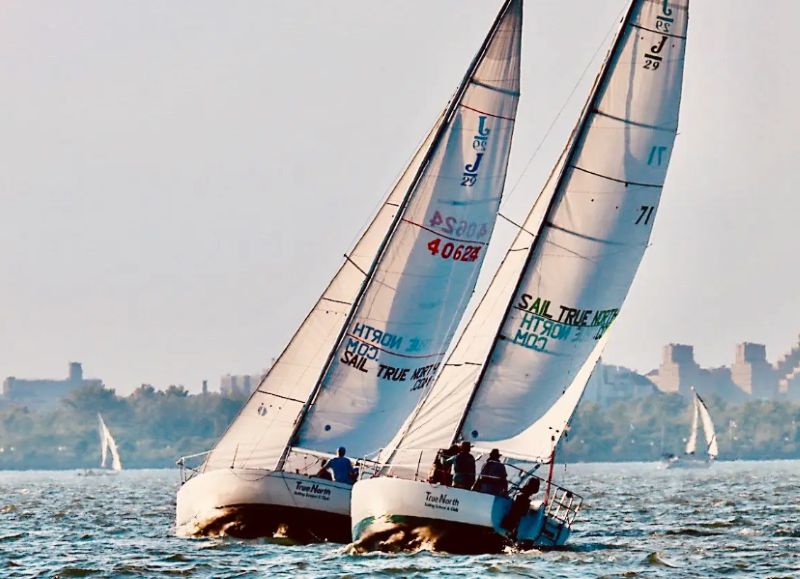
Most people assume the safest place to learn sailing is a quiet lake with nothing on it. I get the logic. Fewer variables, fewer ways to look foolish. But after watching beginners in New York Harbor find their footing in a single weekend, I think the quiet lake is a trap. Harbor sailing forces you to read wind, dodge ferries, and respect a current that does not care about your feelings. You learn faster because the water asks more of you.
The city is the other half of the story. You can finish a lesson, tie off the boat, and be back in Manhattan for coffee before the afternoon rush. No flights, no rental car, no resort week. That ease is why a lot of curious people now search for a sailing school jersey city and book a weekend course without ever having held a tiller. If you have been circling the idea for a while, this is your nudge.
What makes harbor water so different?
New York Harbor is a tidal estuary with active commercial traffic, which means every lesson carries real conditions. You get shifting wind near tall buildings, ferry wakes that arrive from three directions, and current that turns on a schedule. According to the National Oceanic and Atmospheric Administration, tides and currents are predictable forces you can plan around, not mysteries. That is the whole lesson compressed into one sentence: the harbor rewards preparation and punishes distraction.
On an inland lake you might sail for two hours and touch the tiller fifteen minutes. In the harbor you are constantly adjusting. Trim the sail. Watch the ferry lane. Check the angle of the buoy. That constant loop of small decisions is what builds instinct, and instinct is the thing that actually keeps you safe out there long after class ends.
My strong opinion: pick a school on water that will someday intimidate you. Learning on glassy water builds false confidence that dissolves the first time you see a real current. You are better off being slightly nervous in a controlled lesson than comfortable in a place that never tests you.
Certification actually means something
Plenty of businesses will teach you to sail. Fewer will hand you a credential other people recognize. The American Sailing Association sets the curriculum most recreational schools follow, and the national governing body for sailing treats structured instruction as the base of the sport. That matters when you want to charter a boat in the Caribbean or join a club closer to home. A paper from a one-off weekend with a friend does not open those doors.
Here is the practical path most beginners follow. Start with a basic keelboat course, which covers some ground but keeps you in sheltered water with an instructor within shouting distance. Then add the next level, where you handle a bigger boat and start running the crew more. Advanced coastal cruising and navigation courses come later, and those are the ones people take before they think seriously about bareboat charters abroad.
Do not rush this. I would rather see you repeat a basic course twice and genuinely own the skills than skip ahead for a certificate you cannot back up. A sailing certificate is a promise to the people aboard with you, and nobody wants to charter with someone who only passed a test.
A concrete scenario worth picturing
Imagine a Saturday in early May. You arrive at a marina minutes from lower Manhattan, meet three other beginners, and step onto a keelboat that is long enough to feel serious. Your instructor walks the crew through halyards, winches, and the safety talk. Then you motor out past the breakwater and the city turns into a skyline behind you.
First hour: you practice holding a course while the instructor points out ferries crossing ahead. Second hour: you tack, misjudge the timing, and get the jib flapping. Nobody yells. You reset, try again, and the third attempt clicks. By late afternoon you are reading puffs on the water and calling them before the boat heels. That single day teaches more about wind than a month of reading about it.
The harbor is part of the national landscape, too. The National Park Service manages historic waterfront sites around the harbor, and sailing past those landmarks gives the lesson a geography you carry with you. You are not just learning a skill, you are learning a place that has moved boats for centuries.
What to check before you book
Not every school is built the same, and the paperwork tells you quickly which kind you are dealing with. Run this list before you hand over a deposit.
- Which certification track do they teach, and do they list the exact course codes?
- How many students per boat, and how many instructors on board?
- What happens if weather cancels a day, and is the reschedule free?
- Do they sail the same water you will actually be learning in, or a quieter backup?
- Can you meet an instructor before paying?
The student-to-instructor ratio is the one people skip, and it is the one that matters most. Four students with one instructor means real helm time for each person. Eight students means you spend half the day as a passenger. Ask the number out loud and see how the answer feels.
The cost picture, honestly
Sailing is not a cheap hobby, and pretending otherwise sets you up for a bad surprise. A three-day beginner course in a major harbor generally lands in the several-hundred-dollar range, and advanced courses cost more. Compare that to a single bareboat charter in the Caribbean, where you rent the whole boat and take full responsibility for it, and the course starts looking like a bargain. You are buying the right to be trusted with someone else’s vessel.
My advice: budget for the first two courses before you buy anything else. Skip the gear. Schools provide boats, life jackets, and instruction. A pair of non-marking shoes and a decent rain shell will carry you through your first season. If the bug bites, then you can start browsing gloves and foul weather gear like everyone else who got hooked on the harbor.
Picking the right first course for you
Some people want the full club life right away, sailing several nights a week with a crew. Others just want to know they can handle a boat on vacation. Both are valid, and the right course depends on which person you are. If you picture yourself racing on Wednesday nights, say so when you call. If you picture a calm charter in the Mediterranean with friends, say that too. A good school will steer you toward different starting points.
And if you are unsure whether you even like sailing, book a single lesson or a gift card rather than a full package. There is no shame in testing the water before you commit to a season. In fact, I would argue it is the smartest order of operations. The harbor will not wait for you to feel ready. Wind builds, tides turn, ferries run their routes. Learning in that environment gives you a skill that holds up when conditions get interesting, and it gives you a city you see differently forever. Call a school this week, ask the ratio question, and put one Saturday on the calendar. What is the worst that happens? You spend a day on the water and discover you cannot stop thinking about it.
About the Author