In 976, Venetian rebels killed Pietro IV Candiano after rejecting his plea for mercy. His fall reveals the limits of ducal authority and the violence behind a change of government.

By Matthew A. McIntosh
Public Historian
Brewminate
Introduction: When a Promise to Yield Was No Longer Enough
In 976, fire forced Pietro IV Candiano out of the palace that his armed defenders had kept his opponents from entering. According to the near-contemporary historian John the Deacon, the attackers had set neighboring houses alight, allowing the flames to reach the ducal residence and spread through the surrounding settlement. When the doge attempted to escape through the atrium of San Marco, he encountered leading Venetians, including men connected to him by kinship. John represents Pietro as pleading for his life and promising to satisfy their wishes, with a conditional acknowledgment that he might have erred in speech or public affairs. His opponents answered that he deserved death and killed him. The encounter gives the revolt its central historical problem, since the prospect of correcting the ruler’s conduct no longer secured even his survival.
Pietro’s destruction emerged from a political context in which holding the ducal office required cooperation that possession of the palace could not guarantee. Tenth-century Venice was governed through relationships among influential households, ecclesiastical leaders, and a population whose public assent appears repeatedly in the surviving evidence, although its practical significance remains difficult to define. Family connections helped sustain claims to leadership, but they also generated competing expectations about succession and access to resources. Pietro himself had returned from exile to become doge in 959, demonstrating how dramatically an earlier rejection could be reversed. His subsequent marriage to Waldrada connected his household with powerful mainland interests and brought extensive property, for whose protection he recruited soldiers from the Italian kingdom. These arrangements increased his resources while potentially complicating his obligations to those whose cooperation sustained his position in the lagoon. Commercial restrictions enacted during his reign added another field of negotiation, bringing Venetian economic activity into contact with religious prohibitions and imperial pressure. Their political significance depended on how burdens and privileges were distributed, and on whether those affected continued to regard Pietro’s exercise of command as acceptable.
The surviving evidence permits a clearer reconstruction of the violent outcome than of the process by which his opponents reached it. John supplies neither an agreed list of rebel demands nor the names of the men who confronted Pietro during his escape. The speech attributed to the doge gives narrative form to a final appeal, rather than preserving an independently verifiable transcript of proposed concessions. It reveals how the chronicler understood the refusal of accommodation, while leaving historians to distinguish that representation from the intentions of an incompletely known coalition.
The killing of Pietro’s young son makes the character of the revolt difficult to reconcile with an uncomplicated account of liberation. John describes a child rescued from the fire by his nurse and then deliberately killed, extending the violence beyond the man whose government had provoked opposition. His condemnation of the perpetrators prevents his narrative from serving as a straightforward endorsement of their victory. The defeated household also retained interests that the successor government had to address, as Waldrada’s property settlement and the surviving adult son Vitale’s subsequent claims demonstrate. Such evidence directs attention toward the limits of removal as a political solution. The strongest interpretation of 976 concerns the breakdown of cooperation around Pietro himself, culminating in a refusal to permit further accommodation with him. That breakdown could destroy a ruler without producing agreement about the distribution of power after his death, and its explanation requires equal attention to the grievances against his government and the choices made by those who ended it.
Reading the Revolt through Unequal Sources
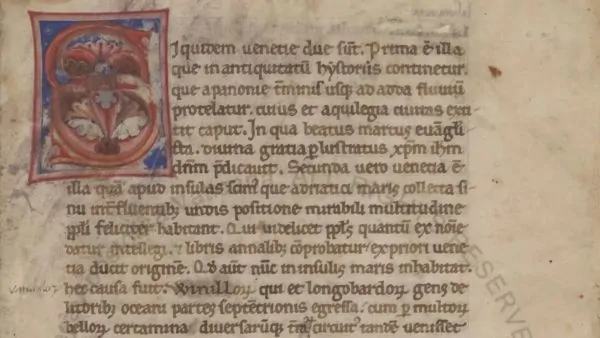
The Istoria Veneticorum belongs to the early eleventh century and carries its account of Venetian affairs through the reign of Pietro II Orseolo. Although anonymous in its surviving form, it is generally attributed to John the Deacon, a cleric and diplomatic representative associated with that doge. This identification places its author within a political structure where the conflicts of 976 remained within living memory, but it does not establish his personal presence at the events he describes. Information could have reached him through participants, household recollections, and conversations connected with public business. The resulting account possesses exceptional value because it preserves a connected explanation of Pietro IV’s downfall that cannot be reconstructed from the surviving documents alone. Its proximity to the period requires historians to consider how remembered experiences became an ordered narrative several decades afterward.
Association with the Orseolo household affected the circumstances in which that narrative took shape. John’s favorable treatment of Pietro Orseolo, the immediate successor of the murdered doge, gives the transition between their governments a pronounced ethical dimension. The new ruler appears reluctant to accept office, attentive to public needs, and distinguished by religious commitment, qualities that contrast with the severity attributed to his predecessor. Such characterization could make the succession intelligible to readers through judgments about the conduct appropriate to a Christian governor. Yet an account sympathetic to the succeeding household need not approve everything done by those who helped bring it to power. John condemns the perpetrators of the violence even while presenting Orseolo’s subsequent government in approving terms, preserving an uncomfortable relationship between political advantage and moral responsibility. His position is better understood through these intersecting commitments than through an assumption that every detail advances a single factional purpose. Berto’s analysis of the chronicler’s terminology is uniquely valuable here because it directs attention to the distinctions through which approval, criticism, and discretion could coexist within the same work.
Reported exchanges and collective designations introduce further interpretive difficulties. By assigning an appeal to Pietro and a declaration of condemnation to his opponents, John organizes the encounter around competing judgments of culpability and the possibility of mercy. His use of terms such as Venetici and populus also allows groups to act grammatically as a single subject, although the participants encompassed by those descriptions may have differed considerably in status and purpose. Close reading must examine what these narrative choices make visible while resisting the temptation to convert a collective noun into evidence of an undivided political will.
Peter Damian supplies a later account whose organizing concerns differ substantially from those of the Venetian chronicle. Written around 1042, his Vita beati Romualdi places Orseolo’s political career within a history of religious vocation and withdrawal from worldly distinction. Its treatment of the revolt implicates the future doge directly, describing an arrangement in which the destruction of his adjoining house would facilitate the attack on the palace and his own elevation to government. Within a narrative concerned with conversion, participation in compromised public affairs provides a setting in which renunciation acquires heightened significance. Emily Bannister’s study of the Vita emphasizes Damian’s construction of sanctity and the monastic ideals informing his selection and presentation of events. Those purposes do not make every political allegation fictitious, but they affect the questions his narrative was designed to answer. The passage also calls the slain predecessor Vitale Candiano, confusing Pietro with a later holder of the office. That error cautions against assuming precise knowledge of the Venetian succession without independently disproving the allegation concerning Orseolo. His potentially damaging version deserves examination through comparison with other testimony, rather than acceptance merely because it appears less flattering to the victorious side.
Public instruments preserve evidence produced under different constraints. The commercial measures of 960 and 971 record formal undertakings through which ducal government and those represented as participating sought to regulate conduct. Their surviving witnesses include early sixteenth-century copies derived from earlier copies, making it necessary to distinguish the date of an enactment from the date of the manuscript through which its wording is known. A lengthy transmission history can introduce omissions or corruptions, although later copying alone supplies no sufficient reason to reject a document’s substance. These texts remain useful for identifying obligations expressed publicly and the language through which those obligations acquired authority. They provide much less direct access to enforcement, practical compliance, or the private calculations of individual subscribers. The presence of a name establishes a recorded relationship with an act; it cannot automatically reveal the person’s subsequent allegiance.
Waldrada’s settlement demonstrates why the relationships among documentary witnesses matter as much as their individual contents. The September 976 release is preserved within the transmission of the proceedings conducted at Piacenza on 25 October, so the two cannot simply be counted as wholly independent confirmations of the same circumstances. Its extensive language concerning property and outstanding demands served the legal purpose of defining obligations and limiting future claims. Such provisions illuminate the interests requiring settlement, but they cannot establish that Waldrada approved the change of government or accepted its circumstances without pressure. References to the Venetian people identify parties protected by the agreement rather than furnishing a register of those involved in the uprising. The restitution instrument conventionally dated to 15 June 983 presents another problem, surviving through a complicated succession of copies that includes partial transmission. Its acknowledgment of property seizures and continuing claims is important evidence of the material aftermath, while its language about resources expended for the homeland’s salvation supplies a justification whose practical meaning still requires investigation. Provesi’s reconstruction of the women’s familial and proprietary connections helps explain these transactions without reducing their participants to passive representatives of competing men.
Corroboration must be assessed at the level of individual claims. An instrument recording a recognized entitlement may substantiate a relationship mentioned by a chronicler without confirming the motives that the narrative assigns to it. Conversely, a later religious account may preserve an allegation absent from an earlier history while remaining unreliable about names or chronology. Where witnesses diverge, their dates, purposes, and means of transmission help determine the weight each can bear. Reading them together permits a reconstruction that distinguishes supported events from plausible explanations and preserves unresolved questions where surviving testimony cannot decide between alternatives.
Governing the Lagoon before the Mature Republic
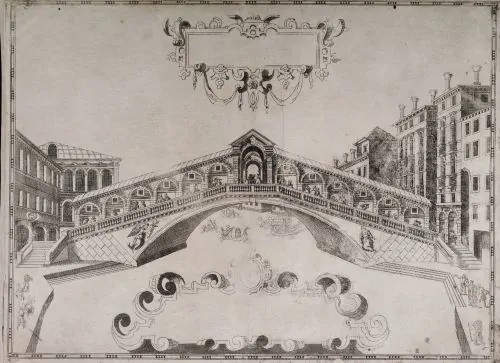
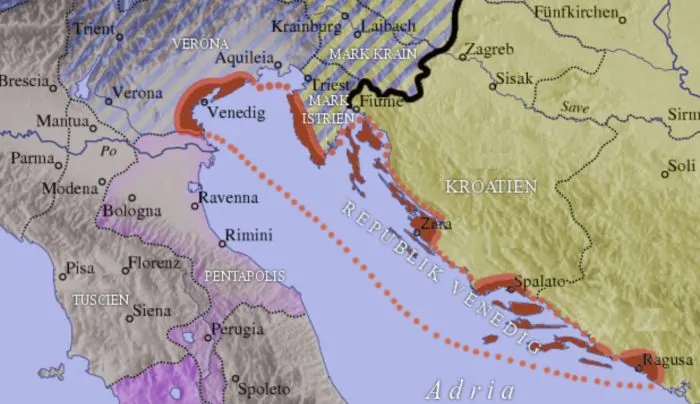
Venice in the tenth century comprised a dispersed duchy whose settlements occupied different positions within the waterways of the northern Adriatic. Rialto had become its governmental center, but Torcello, Malamocco, and Chioggia retained their own communities and economic importance. The territory included cultivated ground and resources along the mainland margins, as well as islands and navigable channels. Fishing and salt production supported livelihoods closely connected with the movement of goods, making the relationship between waterborne exchange and local resources fundamental to government. Control of this environment required attention to communities whose interests could diverge even when they acknowledged the same doge. The concentration of authority at Rialto had created an increasingly important urban center without turning the entire duchy into one compact city.
The doge exercised substantial powers within this territory. His office provided leadership for armed expeditions and a recognized means of conducting relations with neighboring rulers. Ducal government also participated in the administration of justice and the establishment of publicly binding measures, bringing disputes and collective obligations within the ruler’s sphere of action. The palace possessed significance beyond its function as a residence, serving as a location where business concerning the duchy could be conducted before others. These responsibilities gave an incumbent opportunities to reward cooperation and shape the circumstances in which influential people approached government. Their exercise involved consultation, and public acts placed ecclesiastical dignitaries and leading laymen beside the ruler. Such participation supplied knowledge and standing that a doge could use, while also making other people’s expectations difficult to disregard. The elaborate distribution of responsibilities among councils familiar from later Venetian history developed across subsequent centuries; in Pietro’s lifetime, the ducal position retained a breadth of initiative that those later arrangements would progressively qualify.
Public recognition gave these powers a form that others could acknowledge and undertake to support. Assemblies and solemn promises made acceptance significant, especially when obligations were strengthened by an oath whose breach carried religious as well as social significance. These practices allowed participants to affirm a governor’s position and bind themselves to specified conduct, although opportunities to influence the proceedings were conditioned by differences of status. Assent could carry considerable weight without operating through a defined electorate or an equal distribution of votes. Its importance lay partly in making allegiance an expressed obligation that could subsequently be invoked against those who had undertaken it.
Access to influence depended heavily on resources transmitted through households. Castagnetti’s reconstruction emphasizes the inheritance of wealth and standing, together with expectations that descendants might continue to participate in public affairs. Those expectations gave established families advantages, but their collective position should not be identified with the legally restricted patriciate of later centuries. The prominence of individual lineages changed, and the capacity to turn inherited advantages into effective leadership remained uneven. Economic distinctions also crossed categories that can appear deceptively separate in accounts of Venice’s development. A household involved in maritime business could possess land and cultivate relationships with religious institutions, drawing income and support from activities conducted in different settings. West-Harling’s comparative treatment of Venetian elites stresses this combination of landed and commercial wealth within the same aristocratic milieu. Describing the political order as a contest between merchants and landowners would separate interests that often belonged to the same people and obscure the competition among households with overlapping means of advancement.
Association with a reigning doge offered one powerful means of preparing a descendant for leadership. By admitting a son to participation in government, an incumbent could give a preferred successor experience and public visibility before his own death. The practice also presented other influential Venetians with a developing claim that they might support, tolerate, or oppose. Earlier ducal families had pursued continuity through arrangements of this kind, making dynastic preparation an established possibility within the duchy. Its recurrence did not create an automatic entitlement that removed the need for acceptance by others. Instead, shared rule could bring questions about the future into the present, exposing disagreements about the junior partner’s conduct or suitability while the senior ruler still held office.
Ecclesiastical organization provided a further distribution of authority across the lagoon. Grado possessed the patriarchal seat, while the bishop of Olivolo served the developing Rialto area from a separate episcopal center. San Marco was the ducal church, distinct from the bishop’s cathedral of San Pietro. This arrangement placed religious institutions with different functions and connections within the same political territory, complicating any attempt to imagine a single clerical hierarchy directed from the palace. Bishops participated in public acts, and monasteries held property that connected them with donors and other interested parties. Influential households could seek advantage through patronage or through the placement of relatives in religious communities and offices. Yet the standing of these institutions also rested on claims and relationships extending beyond the wishes of an individual governor. Rando’s account of the lagoon’s ecclesiastical structures reveals how diocesan interests and wider disputes could intersect with ducal policy, giving religious officeholders reasons for cooperation without guaranteeing that they would consistently pursue the same objectives.
Relations beyond the duchy widened the range of connections available to its inhabitants. Venetian government retained a Byzantine inheritance and continued to acknowledge an imperial relationship with Constantinople while conducting much of its business through considerable practical autonomy. The distance of the eastern court could make that relationship useful, offering prestige and a recognized affiliation without requiring continuous intervention in local decisions. Across the mainland boundary, exchanges with the Italian kingdom involved neighboring authorities and the conditions under which Venetians could travel, trade, or hold property. West-Harling places these landward relationships within the ordinary institutional and cultural setting of early Venice, whose inhabitants remained deeply involved in the northern Italian world. Their existence supplied a familiar context for political action; disputes could arise over the obligations they created and the additional influence they placed at someone’s disposal. Disagreement within this order could concern the exercise of an established office as readily as the selection of its holder. A governor might appeal to obligations already undertaken, while opponents claimed that accepted practices or legitimate interests had been disregarded. Both positions could draw upon recognized expectations without there being a settled procedure capable of resolving every confrontation. The absence of the later republican council system left room for initiative by the doge and for interventions whose effectiveness depended on the people able to sustain them. Under these conditions, a quarrel within a ruling household could extend well beyond domestic relations, involving the standing of an associated ruler and the obligations of those expected to accept him.
The Exile Venetians Recalled as Their Doge
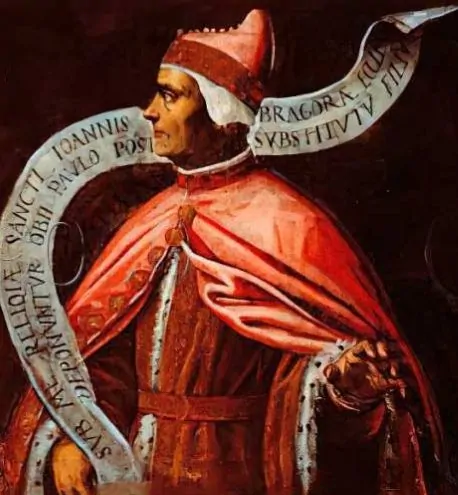
Pietro’s first attempt to displace a doge was directed against his own father. By 958, Pietro III Candiano had associated him with the government, giving the younger man a recognized position from which to acquire experience and exercise influence. John the Deacon describes this advancement as having occurred at the people’s suggestion, connecting the father’s choice with support beyond his household. The relationship subsequently deteriorated, and the chronicler presents the son as disregarding paternal admonitions before attempting to rise against the elder doge. Armed supporters of the opposing sides assembled in Rialto’s forum prepared for combat, although the account does not describe a battle actually taking place. The cause of their disagreement remains unspecified, making attempts to assign father and son to sharply opposed economic or diplomatic programs more conjectural than the confrontation itself.
The greater part of the population, in John’s telling, continued to obey Pietro III, whom he characterizes as elderly and infirm. That support placed the younger Pietro in immediate danger, since those opposing him wished to kill him. His father’s intervention prevented that outcome, but paternal protection did not restore the previous governing arrangement. To satisfy the people, the elder Candiano ordered his son to leave the duchy, accepting expulsion as the resolution of a challenge he had refused to allow others to settle through killing. The accompanying oath made the exclusion appear more comprehensive than an ordinary withdrawal from office. Bishops and clergy joined the people in swearing that they would never accept the younger Pietro as doge, either during his father’s lifetime or after his death. This final provision directly addressed succession, denying that the son’s earlier advancement or family position would entitle him to return when the incumbent could no longer govern. His life had been spared, but the sworn undertaking sought to extinguish his prospects of again exercising ducal authority.
Leaving the duchy did not deprive Pietro of every means of maintaining his standing. He traveled with the deacon George and the priest Gregory, accompanied by twelve servants of his own, preserving a small entourage during displacement. His reception at the court of Berengar II brought him into contact with a ruler whose activities offered opportunities for service outside Venetian territory. John reports that the king welcomed him and invited him to accompany a campaign against the marches of Spoleto and Camerino, giving the expelled associate a place within military enterprises that continued independently of his defeat at home.
Ravenna subsequently furnished the resources for an assault on Venetian shipping. After obtaining Berengar’s permission to take vengeance on the Venetians, Pietro learned that seven of their vessels were lying at Primarius, laden with merchandise and preparing to sail toward Fano. He acquired six Ravenna ships and captured the merchant vessels without resistance, according to John’s account. The chronicler identifies retaliation as the purpose of the operation, presenting it as a continuation of Pietro’s quarrel with the community that had expelled him. Its reported success demonstrated that exclusion from Rialto had left him capable of acting against Venetian interests through assistance obtained elsewhere. Those confronting him now faced a displaced claimant who could secure ships and employ them against commercial activity beyond their immediate surroundings. The episode gives substance to the possibility that his mainland connections affected subsequent calculations about his future, although it does not establish that the raid itself produced a decision to recall him. Neither the fate of the captured crews nor the eventual disposal of their cargoes is explained, limiting any precise assessment of the losses or leverage the seizure created.
Pietro III’s death opened the office whose future had already been addressed by the exclusion oath. John states that the father survived his son’s expulsion by no more than two months and fourteen days, locating the succession within a comparatively short interval after the confrontation. That reported interval should not be converted into an exact duration for every stage of the son’s absence, since the account does not provide a complete calendar of his movements. The reversal itself is assigned to 959, when a Venetian multitude assembled together with bishops and abbots to restore the man previously rejected. John pointedly describes their earlier sworn commitments as having been consigned to oblivion, emphasizing the discrepancy between the decisions. The participants prepared nearly three hundred vessels, in the chronicler’s reported figure, and went to Ravenna to receive Pietro. Within the narrative, the scale of the reception makes his return an emphatic demonstration of honor. They escorted him to the palace and confirmed his princely position through renewed oaths, replacing the public undertaking that had excluded him with commitments supporting his government. The process restored someone already familiar with ducal office while authorizing him to hold it independently after his father’s death.
The reasons for this change remain less certain than its public expression. Bertolini, following earlier scholarship, considers pressure from the Italian kingdom a plausible explanation, given Pietro’s reception by Berengar and his demonstrated ability to obtain assistance. These circumstances make outside influence credible, but they do not supply evidence of a royal ultimatum compelling the Venetians to accept him. Calculations within the duchy may also have changed once the elder doge’s death required agreement on a successor, and Provesi’s discussion draws attention to the flexibility of alliances and the advantages available through their rearrangement. The collective descriptions of expulsion and recall do not establish that every person involved in the first decision participated in the second. What the evidence securely shows is that a solemnly expressed rejection could be superseded by a new act of acceptance. Pietro entered his independent government having benefited from both mainland assistance and a conspicuous Venetian reception, but the renewed obligations supporting him remained necessary precisely because ancestry and previous office had proved insufficient to protect his position.
Two Marriages and the Reorganization of a Ruling Household

John places a substantial alteration of Pietro’s domestic arrangements after his return to government. The doge set aside his first wife, Giovanna, and, according to the chronicler, compelled her to take the monastic habit at San Zaccaria. The language of force matters because it identifies her removal as an exercise of power over someone whose position had previously rested on marriage to the ruler. Her subsequent religious standing cannot establish that she accepted this change willingly. Neither does the account preserve a judicial proceeding that would explain the marital separation through a documented annulment or another formal determination. What emerges clearly is Pietro’s determination to reorganize an existing union, with implications for a household that already included a son and for the people connected with Giovanna through her own ancestry.
A diploma issued by Otto I on 26 August 963 provides a dated point of reference for examining her subsequent position. It names an abbess, Iohannia, described as Ravennate, whom Provesi identifies with Pietro’s former wife. That description challenges the older interpretation of Giovanna as an embodiment of native Venetian interests displaced by a foreign replacement. If the identification is accepted, both marriages connected Pietro with families beyond the lagoon, although their precise relationships and advantages differed. Giovanna appears in the diploma acting for San Zaccaria, obtaining imperial protection for the institution’s possessions. Her religious office gave her responsibilities and a recognized capacity to seek assistance from a ruler whose intervention mattered to property outside the duchy. This activity does not reveal her feelings toward Pietro or establish that she approached Otto as his political representative. Provesi’s reconstruction gives greater weight to her institutional position, through which she could pursue interests that were related to, but not necessarily identical with, those of her former husband. Placement in a monastery had changed the circumstances of her activity without making her disappear from affairs of consequence.
For Vitale, the son of the first marriage, Pietro selected an ecclesiastical career and subsequently promoted his elevation to the patriarchate of Grado. John distinguishes these stages, but supplies no corresponding statement that Vitale resisted them or experienced the same compulsion expressly attributed to his mother’s profession. The appointment redirected his prospects toward an important religious office while preserving a Candiano presence within an institution possessing its own standing. It requires an interpretation more discriminating than either the removal of an unwanted son or an uncomplicated enhancement of his position.
Waldrada entered the household with a more readily identifiable aristocratic background. She was the daughter of Uberto, marquis of Tuscany, and Willa, whose ancestry connected her with the Hucpolding and Bosonid kindreds. Her brother Ugo would later become a major figure in Tuscan government and Ottonian politics, but his subsequent prominence cannot simply be transferred backward to explain the wedding. Manarini reconstructs the agreement between Waldrada’s parents and Pietro in 960–961, interpreting it within their effort to extend relationships beyond dependence on the Italian royal court. Other reconstructions differ over the chronology, and the surviving evidence does not fix an uncontested date for the marriage. Its political meaning also changed as the fortunes of Waldrada’s relatives developed. Connections formed within the world of Berengar II could require substantial adjustment following Otto I’s intervention in Italy, making a permanent designation of the match as pro-Ottonian misleading. The union linked Pietro with relatives who possessed ambitions and difficulties of their own, rather than providing him with a dependable route to favor from every holder of imperial power. The material arrangements created by the marriage involved transfers in more than one direction. John associates Waldrada’s arrival with extensive estates and numerous enslaved men and women received through the union. These resources increased the property interests around which the ducal household operated, although the narrative does not provide a surviving inventory sufficient to determine the location or legal disposition of every acquisition. Pietro also made provisions for Waldrada, including the morgengab, or morning gift, recorded in the later documentation of her claims. That provision must be distinguished from what she brought from her own family, since it represented an entitlement established for her from her husband’s resources. The record also refers to a promised quarter share of his property, demonstrating why describing marital wealth simply as something acquired by the doge obscures obligations extending beyond his immediate possession. Marriage enlarged the resources available within the household while establishing claims that could restrict how those resources were eventually distributed.
The birth of a second son introduced a further difference between the family’s existing members and its possible future. Vitale had already been directed toward ecclesiastical leadership, whereas Waldrada’s child could potentially be advanced along the lay route through which earlier doges had prepared descendants for office. No surviving evidence establishes that Pietro formally associated this younger son with the government or completed a binding succession arrangement in his favor. Yet the child’s existence gave Waldrada and her relatives an additional interest in the continuation of the household’s position. It also meant that plans concerning property or future leadership could affect members whose claims arose from different marriages. Such circumstances created possibilities for competition, but they do not establish that Giovanna’s connections immediately became hostile or that Vitale regarded his half-brother as an enemy. The evidence supports an altered distribution of prospects more securely than it supports the reconstruction of personal resentments. Any explanation built around rivalry between the two branches must retain that distinction, especially where later events tempt historians to supply an earlier motive.
Reconstructing these marriages requires keeping the women’s positions visible alongside Pietro’s initiatives. Giovanna’s recorded activity as abbess belongs within a career whose circumstances John describes as coercively imposed, while Waldrada’s marital provisions gave her interests that could not be reduced to her husband’s preferences. Neither woman can be shown directing the doge’s policies, and their later actions do not supply a complete account of the original negotiations. Their importance lies in the relationships and entitlements through which a change of wife reorganized more than companionship within the palace. Pietro’s remarriage added new commitments without demonstrating that the obligations and connections associated with his first union had ceased to matter.
Armed Followers and Imperial Connections

Possession of mainland estates brought requirements that a marriage agreement alone could not satisfy. Land had to be held against competing claims, and the resources attached to it could require protection in places beyond the doge’s immediate jurisdiction. John explicitly connects Pietro’s recruitment of warriors from the Italian kingdom with the ability to defend and possess the properties acquired through Waldrada. This explanation gives the armed following an initial function that should remain distinct from its possible usefulness in Venetian disputes. The men provided a means of sustaining interests whose practical security depended on conditions outside the lagoon. Their recruitment joined the management of property to military capacity, placing personnel obtained through mainland relationships at the disposal of someone who also held the duchy’s highest office.
The terms on which these warriors entered Pietro’s service are only partially recoverable. John identifies their origin and purpose without specifying contractual arrangements or the revenues supporting them. Peter Damian’s later account places greater emphasis on expenditure, describing costly recruitment from Lombardy and Tuscany and associating it with Pietro’s imitation of his brother-in-law Ugo. That explanation raises a financial dimension absent from John’s brief notice, although it cannot supply the missing accounts of payments or recruitment. Maintaining even a limited following required resources and some expectation that service would be rewarded. Men whose employment depended on arrangements with the doge could offer him an instrument of action different from assistance secured anew from other Venetian households. The potential advantage lay in having a force already connected with his interests when a dispute arose. Its existence might alter the calculations of opponents, but the evidence does not establish that Pietro financed it through new taxes or organized it as a permanent force with a defined place in ducal government.
Ferrara provides one indication of the reach of Pietro’s military activity. John reports that he subdued the inhabitants of its fortified settlement, locating ducal coercion within the riverine world through which Venetian interests extended into northern Italy. Ferrara’s position in the Po basin makes commercial competition relevant to interpretation, although the chronicler supplies no detailed statement of the expedition’s objectives. The reported victory establishes the use of force more securely than it establishes a territorial acquisition or a specific concession imposed afterward.
At Oderzo, the action described was more destructive. John states that Pietro ordered its fortified settlement devastated by fire, placing the episode among examples of his harsh treatment of those who resisted him. Oderzo occupied an important position in the mainland region adjoining the northeastern approaches to the duchy, where control of places and routes could affect Venetian interests. Imperial intervention added another element to this setting. In 963, Otto I granted jurisdiction over Oderzo to Giovanni, bishop of Belluno, strengthening an ecclesiastical neighbor whose authority could intersect with concerns arising from the lagoon. Provesi uses this grant to question an interpretation in which the emperor consistently arranged mainland affairs to Pietro’s advantage. The campaign itself cannot be dated closely enough to reconstruct a precise exchange between the grant and the destruction. The combination of imperial dispositions and ducal military action reveals a region containing several claims to authority, where assistance sought from a powerful ruler could coexist with decisions favorable to other beneficiaries.
Diplomacy placed Pietro within a wider transformation of the Italian political order. Otto’s imperial coronation in 962 and the defeat of Berengar II established a more formidable royal presence than that under which the younger Candiano had first obtained assistance. The agreement dated 2 December 967 renewed relations between Venice and the kingdom under conditions that Ortalli interprets as less favorable to the duchy than preceding formulations. Its provisions concerned the security of Venetian rights beyond the lagoon as well as obligations toward the royal government. Changes in territorial enumeration left some places without the explicit protection that earlier lists had supplied, while the treatment of boundaries reduced documentary certainty in areas susceptible to competing claims. Brondolo and Fossone are important examples of omissions, but their absence does not demonstrate that either locality was physically surrendered in 967. The designation of the annual payment as tributum also carried implications that historians have weighed differently when assessing Venice’s position. These changes support an argument about increased imperial pressure without requiring the conclusion that the duchy had thereby been annexed or that Pietro had become an obedient administrator of Otto’s wishes.
Grado benefited from a different aspect of the same relationship. The Roman synod of late 967 and early 968, attended by Otto and presided over by John XIII, recognized its patriarchal and metropolitan standing for Venice, with an imperial privilege following in January. This strengthened a church headed by Pietro’s son Vitale while advancing a longstanding concern of the duchy in its disputes with Aquileia. The result gave familial advantage and a wider Venetian objective a common institutional expression. It also demonstrates why cooperation with imperial government could remain worthwhile even when other negotiations produced burdensome terms. Pietro’s dealings involved several interests whose outcomes could differ within the same period of diplomatic engagement.
Individual grants further complicate any assessment based on a single measure of imperial favor. A Vitale identified in the documents as a Venetian received Musestre in 963 and subsequently obtained additional recognition of his holdings. Many scholars associate him with the doge’s brother, the later Vitale-Ugo, although the identification remains disputed and should not be confused with the more securely identifiable patriarch. The grant of Isola d’Istria in January 972, made through Adelaide’s intercession, belongs to this pattern of opportunities available through access to the imperial court. Such transactions could consolidate the standing of a beneficiary without resolving every question affecting the duchy’s collective rights. Nor did a grant to one person necessarily place all his relatives in an identical relationship with the emperor. Provesi’s reconstruction emphasizes how certain acquisitions and institutional connections might serve overlapping ambitions while retaining the possibility of divergence among those linked to Pietro. Imperial patronage increased the resources available within these networks, but it did not make their distribution politically neutral.
At the palace, the practical value of armed protection depended more on immediate effectiveness than on a demonstrably large establishment. When John introduces the confrontation that ended Pietro’s rule, he describes only a few formidable defenders, without expressly identifying them with the entire following previously recruited for estate protection. Their presence shows that the doge possessed a concentrated defensive resource, while leaving its composition and funding uncertain. The wider difficulty concerned the number of obligations Pietro was attempting to manage through resources that were partly personal and partly associated with office. Military action and imperial negotiation could secure some advantages while exposing other interests to costs or insecurity. His government also had to regulate the commerce from which many Venetians derived their income, bringing external demands into an area that reached far beyond the property of his own household.
Restricting Trade and Distributing Its Costs
In June 960, Pietro’s government renewed a prohibition on trafficking in enslaved people that the surviving act attributed to earlier doges. The measure recalled the intervention of Orso I Particiaco and his son Giovanni, complaining that their constitution had subsequently been violated. Pietro presented the undertaking as the restoration of an existing obligation, with the patriarch and bishops participating alongside leading laymen. Its religious language condemned the transactions as a serious wrong and connected correction with the possibility of divine forgiveness. This public justification placed commercial conduct within a field of responsibility extending beyond the parties to an individual bargain. It also required government to decide which transactions fell within the prohibition and which circumstances warranted different treatment.
The provisions addressed several stages through which trafficking could operate. Purchasing people for resale was prohibited, as was supplying money to those making such purchases, extending responsibility beyond the person who physically transported or sold them. Captains faced restrictions on embarkation, with Venice, Istria, and Dalmatia among the places expressly named. Another clause prevented Venetians from financing purchases through Greek intermediaries, showing that the regulation reached arrangements capable of separating investment from carriage. The transport provisions also addressed movement beyond Pola and the receipt of payment for carrying enslaved people from other regions. These restrictions concerned trafficking and its supporting transactions; they did not emancipate everyone already held in slavery. Exceptions involving redemption from captivity, benefit accruing in the homeland, and palace business further qualified the transport rule. The last category reserved a recognized purpose for ducal activity, potentially enlarging the importance of decisions about authorization without demonstrating that Pietro personally profited from transactions prohibited to others.
Correspondence occupied a separate place within the same enactment. Venetians had carried letters from the Italian kingdom and territories beyond the Alps to Constantinople, and the document complained that this activity had brought discredit upon the duchy and impaired the reception of its official communications. The restriction reserved the customary dispatches of the palace while prohibiting unauthorized carriage to the emperor or other Greek recipients. In this sphere, regulation concentrated control over communication whose effects could extend beyond its immediate sender and carrier. It strengthened the palace’s position as the recognized channel through which messages affecting Venetian diplomatic interests should pass.
By July 971, intervention from Constantinople had made the exposure associated with certain commercial supplies explicit. Byzantine representatives arrived to investigate the shipment of weapons and naval materials to Muslim territories, threatening the destruction of offending vessels together with the people and goods aboard them. Compliance promised protection against a danger that could fall upon an entire venture, while requiring merchants to abandon transactions that might otherwise have been advantageous. The resulting undertaking targeted military equipment and timber suitable for shipbuilding, leaving considerable scope for other exchange. Armor and weapons could be retained for the defense of Venetian crews, but those articles could not afterward be sold or given away. The text also prohibited obtaining forbidden naval timber at intermediate ports after departure from Venice. This provision sought to extend the restriction beyond the initial loading of a vessel, making the character of its later purchases relevant to compliance. The agreement regulated a chain of potential supply rather than simply naming a prohibited destination.
Permitted wooden goods made the limits of the undertaking visible. The document distinguished specified products and dimensions from materials capable of supplying naval construction, allowing certain boards and wooden utensils to remain articles of commerce. It also addressed three vessels already outfitted before the imperial representatives arrived, two intended for Megadia, identified with al-Mahdiyya, and one for Tripoli. Their operators received express permission to carry the permitted goods, preserving prepared ventures without authorizing the prohibited military supplies. The justification invoked their paupertas, a term whose meaning requires care. Ortalli interprets it in relation to insufficient power or protection rather than straightforward destitution, observing that those concerned were participating in overseas enterprises. Whatever their precise economic standing, the clause acknowledged circumstances requiring accommodation and made those circumstances part of the public explanation for the license.
The penalties established another way in which costs could fall differently upon participants. Under the 960 constitution, a person found guilty faced a payment of five pounds of refined gold, while inability to pay exposed the offender to loss of life or limbs and confiscation. Ecclesiastical exclusion added a further sanction, extending the consequences beyond a settlement with the palace. The 971 undertaking prescribed one hundred pounds of refined gold, with a capital sentence for an offender unable to meet that payment. These clauses made financial capacity important within the written rules, although they do not provide a record of punishments actually imposed. The later measure also took the form of a promise made by Venetians to the doge and his successors, with ecclesiastical participation and an assembly described as including several social grades. Its obligations emerged through a public act involving people beyond the ruler’s immediate household. Collective authorization could help secure compliance while leaving individuals exposed to sharply different practical results, depending on their resources and the activities in which they were engaged.
Commercial sacrifice remains a plausible source of dissatisfaction, but the regulations provide no means of calculating an aggregate loss or identifying a uniform response among merchants. Some participants could have regarded restrictions as necessary protection against reprisals, even while objecting to certain burdens or the discretion involved in granting permission. Others might have benefited from the preservation of lawful exchange once dangerous supplies were excluded. The documents reveal a government distributing obligations through prohibitions and exceptions, with penalties that made violations potentially ruinous. Their contribution to Pietro’s eventual downfall must be assessed through the way these arrangements were administered and understood, rather than assumed from the existence of restrictions alone.
What Made Pietro’s Government Intolerable?
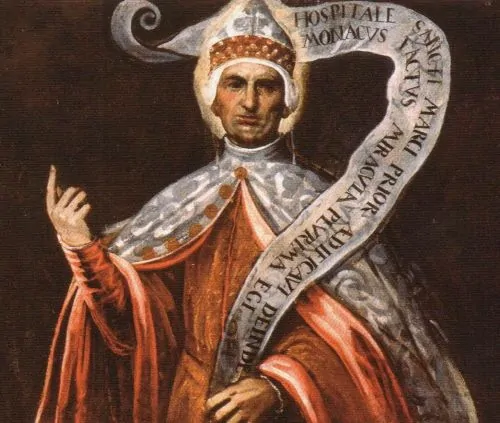
John explains the growth of hostility toward Pietro through judgments about his conduct, without identifying a single decision that precipitated the rupture. Two expressions have become central to interpreting that explanation, the virtutis rigor associated with his treatment of subjects and the austeritas for which he was reportedly hated. Their meaning affects the relationship between the doge’s governing practices and the opposition they provoked. Translating them as the enforcement of moral virtue creates a different explanation from reading them as descriptions of unusually oppressive command. The disagreement concerns the kind of purpose that can reasonably be inferred from a narrator’s characterization of rule.
Giorgio Cracco develops the religious interpretation by placing Pietro within a wider conception of Christian leadership. Prohibitions on sinful commerce expressed an obligation to correct conduct even where correction interfered with profitable activity. Religious language supplied more than an acceptable public explanation for decisions dictated elsewhere; it could articulate responsibilities that a ruler understood as binding upon him. Cracco connects this outlook with mainland aristocratic models and with the stabilizing religious associations he attributes to territorial interests. His interpretation gives Pietro an inflexible program of moral ordering, pursued through the powers available to his office. It does not require the doge to have been gentle, and his use of force presents no contradiction within the proposed explanation. Coercion could become the means by which a governor attempted to compel obedience to what he regarded as divine requirements. Opposition would then arise partly from the demands of this project, including the sacrifices it imposed on people unwilling to accept the ruler’s definition of their obligations.
The evidentiary difficulty lies in establishing that such a project governed Pietro’s decisions. Religious formulations in public instruments show how conduct was condemned and compliance justified, but their corporate setting complicates their use as direct evidence of an individual’s convictions. Connecting a change of outlook with the second marriage requires a further step, since John records no instruction or conversion through which Waldrada or her relatives supposedly transformed Pietro’s understanding of Christian government. Cracco offers a coherent reconstruction, yet the connection between the recorded language and the proposed personal program remains an interpretation requiring support beyond its internal plausibility.
Luigi Andrea Berto approaches the problem through the chronicler’s use of virtus elsewhere in the work. The word possesses a range of meanings, and its resemblance to the modern word “virtue” cannot determine which meaning applies in every passage. John uses it when describing bishops compelled by the authority of a Lombard king, a context in which royal power provides a more intelligible explanation than moral excellence. In another episode, a duke’s consent and virtus accompany action against political rivals, indicating support or authorization within a violent confrontation. These examples make an exclusively ethical translation difficult to sustain. Yet John also employs the same family of vocabulary to praise the moral qualities of Pietro Orseolo, showing that an ethical meaning remains available where the context supports it. Berto’s argument depends on this variability, rather than on replacing one universal translation with another. The accompanying austeritas offers less opportunity for comparison because it occurs only once in the chronicle. Its meaning must be considered through the surrounding account, where severity and the exercise of command are prominent.
The sentence containing the disputed expression provides important guidance. Pietro is said to have pressed his subjects more than was customary, with the comparison expressed through plus solito. John’s verb gives the passage a sense of pressure exerted upon others, while the reference to customary practice identifies excess in relation to an existing expectation. His description of audacia adds a judgment of presumption or overboldness to the manner in which that pressure was applied. These elements support Berto’s reading of a ruler whose methods exceeded what subjects were accustomed to bear. They do not identify a specific constitutional provision that Pietro violated, nor do they imply that ordinary government operated without coercion. The criticism concerns the degree and manner of its exercise, with customary experience supplying a measure against which his demands could be judged.
A persuasive translation still leaves part of the historical explanation unresolved. Berto also draws attention to the hostile and coercive actions assigned to Pietro before the second marriage, weakening the argument that a new religious mentality must account for them. Those earlier episodes establish continuity within John’s portrayal, but they cannot independently demonstrate an immutable personality from which every later decision followed. Pietro’s government continued from 959 until 976, and the reception that restored him had already shown that serious opposition could be superseded by acceptance. Explaining the duration of his rule requires attention to changing circumstances and to the different advantages people might obtain from cooperation. Some actions could secure assistance in one setting while making continued support more difficult elsewhere. Harshness becomes historically explanatory when related to those encounters, rather than treated as a personal attribute sufficient by itself to explain the eventual collapse.
John’s wording is most convincingly understood as criticism of an increasingly burdensome exercise of authority, while leaving room for religious conviction among the purposes Pietro pursued. Sincere belief could coexist with methods experienced as excessive, and the lexical argument does not require a judgment that every religious justification was insincere. What it removes is the basis for making exceptional moral virtue the central explanation of his destruction. The chronicler directs attention toward a persistent manner of dealing with subjects, evaluated against expectations that the doge was represented as exceeding. The remaining problem concerns the organization of the hostility he describes, since an adverse judgment on government still had to acquire the practical capacity for a concerted challenge.
From Grievances to a Coalition against the Doge

By the time John brings his narrative to 976, hostility toward Pietro has acquired an active purpose. He describes opponents persistently seeking an opportunity to destroy him before presenting their eventual concerted challenge. This progression distinguishes dissatisfaction from preparations directed against the incumbent, although the interval between them remains compressed within the account. John supplies no dated sequence of demands or negotiations through which the change can be followed. The formation of an effective opposition must instead be approached through the social relationships surrounding government and the limited evidence for alterations in Pietro’s public support. These materials offer different perspectives on the movement against him without revealing a continuous history of its organization.
Castagnetti’s comparison of the participants recorded in the commercial measures of 960 and 971 provides one means of examining those alterations. He identifies fifty-eight people by family in the earlier instrument and seventy-two in the later one, with only four recognizable individuals appearing in both. Other subscribers in 971 belonged to families already documented, but a substantial proportion entered the surviving record on that occasion. Castagnetti interprets the turnover as evidence that Pietro increasingly sought support beyond many of the established leading households. On this reconstruction, the doge’s position depended partly on people whose access to recorded public activity had expanded during his government. Such participation complicates an account in which his rule simply withdrew from Venetian society into an isolated circle. A governor could widen the range of people associated with a public undertaking while becoming estranged from others whose earlier prominence had made their cooperation important. The comparison suggests a reconfiguration of support, rather than its uniform contraction across every social group.
The meaning of new visibility requires careful distinction from recent arrival or enrichment. A family first named in 971 might already have possessed resources and connections that earlier surviving documents had failed to disclose. Some of these newly recorded families continued to appear afterward, while others disappeared from subsequent public instruments, making their prominence under Pietro an episode of differing duration. The pattern supports Castagnetti’s interest in changing access to public affairs, but it cannot establish a deliberate program to elevate poor men or replace an entire hereditary ruling class.
Established families also remained represented in the later act. Castagnetti draws attention to members of the Coloprini, Orseolo, Morosini, and Falier families among its participants, qualifying any sharp division between an old opposition and a wholly new body of supporters. The subscriber Pietro Orseolo, generally identified with the future doge, appears in both measures and occupied a recorded place in public business well before his accession. His presence establishes participation in those undertakings, without determining the position he adopted during every subsequent dispute. Later evidence makes the distinction between public association and durable political agreement clear. Coloprini and Morosini could appear within the same documentary setting even though hostility between those families became a major feature of the following period. Cooperation over a particular act allowed room for commitments that remained incompatible elsewhere. The subscription lists reveal occasions on which people participated together, leaving the stability and wider purposes of their relationships to be investigated separately.
Connections within the Candiano family present a more pointed problem. Three named Candiano men appeared among the subscribers in 960, whereas the identified dynastic presence in 971 was the patriarch Vitale. His ecclesiastical office itself gave him a reason to participate, making his appearance different in character from the recorded involvement of lay relatives. This contrast becomes relevant beside John’s identification of people linked to Pietro by kinship among those confronting him at the revolt’s culmination. The two forms of evidence make divisions within his wider family structure plausible, although they cannot turn the absent subscribers into identifiable perpetrators. Kinship extending through marriage could also connect the doge with people whose surnames would not place them within the Candiano lineage.
Provesi’s reconstruction develops this broader understanding of relationship. She suggests that connections associated with Giovanna may have contributed to the alignment against Pietro, directing attention toward relatives whose interests were not exhausted by their connection to the reigning doge. The identification remains hypothetical because John does not name the kinsmen involved. Its value lies in exposing possibilities that a reconstruction organized solely around male surnames could overlook. Relationships created through women might connect households otherwise classified as separate, while religious institutions provided additional settings in which those connections could acquire continuity. Familiarity developed through such associations could help people communicate and judge whom they might trust in a dispute. None of this establishes a campaign of revenge organized by Giovanna or demonstrates that everyone related to her adopted the same position. It does indicate why the opposition’s potential resources should be sought within overlapping relationships, rather than assigned in advance to fixed family camps.
The language describing concerted action also needs to be distinguished from a documented organizational structure. John’s reference to a conspiratio establishes an undertaking against Pietro, but it does not supply rules, named officers, or an account of an oath ceremony. In describing the earlier exclusion of the younger Candiano, the chronicler explicitly stated that participants swore an oath; he provides no equivalent description for the outbreak of 976. There is no basis for reconstructing a formal league from the term alone. Existing associations may have furnished sufficient means of arranging joint action without creating a separate institution. The common undertaking was directed against the doge, while agreements concerning his replacement or the subsequent distribution of influence remain outside what John records at this point.
Once opposition became open, its immediate problem was how to reach a ruler protected inside his residence. John explains that the men acting against Pietro knew the palace was guarded by formidable soldiers and did not dare penetrate it. Their cooperation had brought them to a confrontation, but it had not removed the practical obstacle posed by armed defense. Proceeding required a decision about means, with consequences that could extend beyond the individuals who had accepted the initial undertaking. The coalition’s cohesion would now be tested through choices affecting the surrounding community as well as the man it sought to overcome.
The Last Appeal and the Refusal of Accommodation
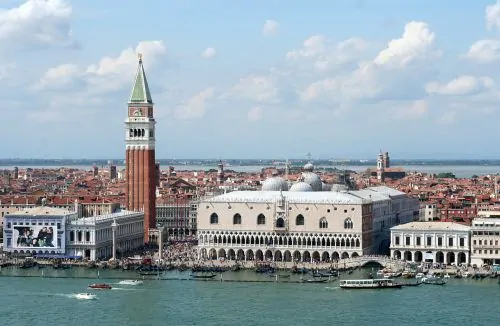
The doge’s last reported words belong to an attempted escape, when heat and suffocating smoke had made remaining inside the palace impossible. John describes Pietro passing through the doors of San Marco’s atrium with a few companions and encountering leading Venetians together with people connected to him by kinship. The circumstances placed the initiative in the hands of those awaiting him. His immediate security depended on their willingness to permit his survival, whatever resources or claims he might otherwise possess. The encounter brought the exercise of ducal command to a point at which Pietro had to address opponents capable of deciding what would happen to him before any further arrangement could be considered.
His opening address invokes a relationship that might still carry obligations. John gives him the words Et vos, fratres, confronting his listeners with their participation in his destruction while addressing them as brothers. The expression need not identify biological siblings, since fraternal language could encompass forms of fellowship extending beyond immediate descent. Its force within this scene comes partly from the chronicler’s accompanying reference to kinship, making the appeal resonate with connections already existing between the endangered ruler and some of those before him. Pietro is represented as seeking recognition through a vocabulary of belonging when his position as doge offers insufficient protection. This does not establish that everyone related to him had turned against him, or that the men present understood their obligations in the same way. It gives the exchange a moral dimension in which proximity becomes a possible reason for mercy, although one his opponents refuse to acknowledge as binding.
The acknowledgment of wrongdoing that follows is conditional. Pietro allows that he may have erred in words or public affairs without identifying specific acts or accepting a defined account of his offenses. Such a formulation permits a request for reconciliation while leaving responsibility for the underlying accusations partly unresolved. His willingness to offer satisfaction exceeds the specificity of his admission, opening the possibility of compliance without first settling every question about what he had done wrong.
The promise itself is expansive, undertaking to satisfy his opponents according to their wishes. In John’s formulation, the power to specify what would count as satisfaction appears to lie with the people whose mercy Pietro seeks. Yet the account supplies no concession, transfer of authority, or proposed reversal of policy through which that undertaking would operate. It also gives no explicit offer of abdication, making it unsafe to describe the exchange as the rejection of a completed constitutional settlement. The immediate request concerns continued life, which would allow whatever future obligations might be agreed to be performed. A surviving former ruler could potentially retain connections or recover assistance, and Pietro’s earlier restoration demonstrates that exclusion had not previously made his political return impossible. Such possibilities provide reasons why opponents might distrust a promise made under extreme pressure, but John does not attribute that calculation to the men confronting him. The refusal can be established more firmly than the considerations that made it preferable to any arrangement preserving his life.
Their answer changes the terms of the encounter. John represents them as declaring Pietro exceptionally wicked and deserving death, followed by an assertion that escape would not be possible. They offer no counterproposal through which his willingness to comply might be tested. The judgment instead attaches deserved punishment to the person making the appeal, closing the opportunity for further dealings with him. These words express a claim to the justice of killing, but the narrative records no formal hearing or prescribed judicial procedure through which that claim acquired legal authority. The subsequent blows from their blades make their determination effective, terminating both Pietro’s life and the possibility that he could answer their objections through the promised satisfaction.
John’s handling of the death prevents the opponents’ accusation from becoming an uncomplicated authorial verdict. He describes their blows as cruel and depicts Pietro’s soul leaving bodily imprisonment to ascend toward heaven, language that assigns dignity to the dying man after the earlier criticism of his government. Berto’s analysis draws attention to this separation between the adverse judgment placed in the participants’ mouths and the chronicler’s condemnation of the violence they commit. The scene permits a severe assessment of Pietro’s rule while presenting his killing as an act for which its perpetrators remain morally responsible. Its political significance also extends beyond a refusal to allow him to continue governing, because the request they reject is permission to survive. At this encounter, the prospect of future compliance no longer secures a hearing for accommodation with the living Pietro.
Killing the Child and Disgracing the Dead

Waldrada’s young son appears in John’s account as someone rescued from one danger only to be killed by another. His nurse had saved him from the fire before an unnamed man pierced him with a pointed weapon. The chronicler singles out that attacker with an expressly condemnatory description, distinguishing the act from an accidental death during the destruction. No exercise of government or act of resistance is attributed to the child. His presence within the ruling household exposed him to violence whose explanation must extend beyond responsibility for the decisions made by his father.
A possible dynastic motive makes the selection of this victim politically intelligible without establishing the killer’s intention. A son born to the doge and Waldrada could acquire significance through the claims that others might advance on his behalf. Even a child incapable of acting independently could become a focus for efforts to recover a family’s position. His death removed that possibility, but John records no declaration that identifies prevention of a future succession as the purpose. Nor does the surviving evidence establish that Pietro had formally designated him to inherit the office. Explaining the act through anticipated danger must remain distinct from treating it as a response to an accomplished succession arrangement. The outcome also requires definition, since the killing eliminated this father and younger son while leaving other Candiano relatives alive, including the patriarch Vitale. It destroyed a conjunction of parental authority and prospective continuity without extinguishing the wider kindred.
The soldiers who attempted to support Pietro were also killed. Their involvement belongs to the armed struggle surrounding the ruler, although John supplies too little detail to reconstruct the circumstances in which each man died. The child occupies a different position within the narrative because no corresponding participation in that struggle is assigned to him. Bringing these deaths into the same account reveals how the collapse of the ducal household exposed people whose relationships to its coercive power were markedly different.
The treatment of the remains extended the episode beyond the killing itself. John identifies the bodies of the father and son as those transported in a small boat to the butchers’ market, and he explicitly states that dishonor was intended. This attribution gives a firmer basis for discussing humiliation than the location alone would provide. The movement took the dead from the vicinity of the seat of government to a place associated with the handling of slaughtered animals, making their destination part of the repudiation. Yet the account does not describe butchers treating the bodies as meat, specify the length of their exposure, or record a prescribed ceremony. Those additions would turn a brief report of degrading treatment into a more elaborate performance than the evidence preserves.
Disgrace after death carried a claim about how the defeated household should be regarded. Pietro could no longer issue commands, but the treatment of his remains still concerned the standing attached to his person and family. The child shared that treatment because of his relationship to the doge, despite the absence of any recorded responsibility for his government. John’s identification of the two as father and offspring keeps that relationship visible within the description of their degradation. Their joint destination made the humiliation familial, broadening its meaning beyond the removal of an individual from office.
Giovanni Gradenigo’s intervention interrupted the sequence. John describes him in terms of exceptional holiness and credits his intercession with the subsequent conveyance of the bodies to Sant’Ilario. The wording makes him the person who requested a different treatment, without stating that he personally recovered or carried the remains. His action introduces a response that cannot be absorbed into the purpose of dishonor attributed to the earlier transfer. The same name later appears among those accompanying Pietro Orseolo’s departure for monastic life, complicating any attempt to assign care for the dead exclusively to the defeated ruler’s political supporters. Compassion toward Pietro and his son did not itself require a commitment to restore Candiano government. Gradenigo’s importance within John’s narration rests on what he sought for the bodies, rather than on an independently documented role in the opposition or its victory.
Sant’Ilario supplied a destination with longstanding connections to ducal patronage. Situated near the western mainland margin of the lagoon, the monastery had developed from an early ninth-century initiative associated with the Particiaci. Rapetti’s study shows how its institutional history joined religious observance with enduring relationships to the rulers and leading households of Venice. Conveying the remains there placed them within a recognized monastic setting, giving their treatment a different character from the dishonor that had preceded it.
John ends this part of the sequence with their transportation to the monastery, leaving the details of interment unstated. The intervention establishes that the degradation was interrupted and that another form of responsibility toward the dead could become effective. In the chronicler’s ordering, the choice of a successor follows a victory already marked by acts he condemns and an act of care he approves.
Pietro Orseolo and the Work of Governing after Ruin
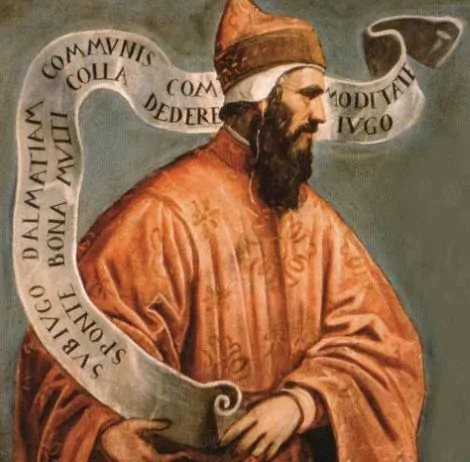
The assembly that elevated Pietro Orseolo met at San Pietro, away from the damaged palace and ducal church. John describes a common resolve to appoint him, followed by confirmation through oaths, placing the succession within practices of recognition that had survived the destruction. His account also presents the chosen man as reluctant to accept an office that might endanger his religious commitments. Acceptance becomes justified through the welfare of the polity, making service to others the reason for undertaking worldly responsibility. This characterization supplied a moral foundation for the new government without changing the practical demands attached to the position. Orseolo inherited an office whose customary places of business required restoration and whose capacity to act had to be demonstrated amid the consequences of the revolt.
For a time, he resided in his own house while work proceeded on the palace and San Marco. John attributes expenditure on their restoration to Orseolo’s personal resources, presenting him as a benefactor of institutions damaged during his accession. Repairing these buildings concerned the recovery of locations through which religious observance and government had operated together. Their condition affected where authority could be exercised and how its continuity could be made visible. The chronicler also credits Orseolo with commissioning a precious silver-and-gold furnishing for San Marco’s altar from Constantinople. This undertaking connected local recovery with the skills and materials available through an established relationship across the Adriatic. The evidence identifies projects and patronage, although it does not permit the reconstruction of a complete building program finished within his brief tenure.
Relief formed another part of John’s account of expenditure. He records one thousand pounds from Orseolo’s resources placed in the palace for Venetian assistance and another thousand assigned to the poor. These figures belong to the chronicler’s survey of benefactions, which distinguishes recipients without supplying accounts sufficient to identify every payment or its immediate purpose. Personal generosity provided one way to demonstrate the usefulness of the new ruler, but the surviving documents also reveal government pursuing revenue owed by others.
A record assigned to 978 places Orseolo with the leading men of Venice, requiring payment of outstanding patrimonial decime. This assessment concerned property and should be distinguished from the ecclesiastical tithe, despite the similarity of terminology. The undertaking appealed to the welfare of the homeland and invoked what predecessors had already paid, locating collection within an existing obligation. One entry records Fuschari Nimichani swearing that payment had been made under a doge Pietro Candiano, an acknowledgment that earlier compliance could remain valid after the change of ruler. The list also preserves contributions in material form, including garments and lime, although it does not expressly assign every item to reconstruction. Dominicia, the widow of Bono Caligario, appears among those whose payments were recorded after a spouse’s death. Such entries bring household liabilities into view alongside the larger benefactions attributed to the doge. They demonstrate that recovery involved checking prior payments and demanding performance from those still liable. The replacement of Candiano government had preserved fiscal claims whose administration required more than the successor’s willingness to distribute his own wealth.
Relations with Capodistria required a different form of renewal. On 12 October 977, its count Sicard and the community confirmed an agreement with Orseolo, explaining the need through the destruction of earlier documents in the fire associated with his predecessor’s death. The provisions protected Venetian travel and commerce, including freedom from the specified toll, and renewed an annual delivery of one hundred amphorae of wine. They also provided for Venetian representation and access to justice according to the customs of both sides. These arrangements addressed practical conditions under which merchants could resume or continue their activities beyond the lagoon. Renewing the instrument also restored a documentary basis for rights whose exercise should not depend solely on recollection after the loss of written records. Rebuilding government included obtaining fresh commitments from a neighboring community that had dealt with earlier doges. Opposition continued within Venice and through connections beyond it. John reports that some Venetians encouraged Patriarch Vitale to seek the assistance of Otto II, carrying the consequences of Pietro Candiano’s death into dealings with the imperial court. He subsequently connects resistance to Orseolo with people associated with that appeal and describes plans against the new doge’s life. The successor’s administration faced more than the ordinary difficulties of repairing damaged institutions. In John’s approving portrayal, Orseolo became aware of hostile designs and declined to repay wrongdoing with further wrongdoing, making restraint another quality of his government. That presentation provides a model of virtuous conduct, but its account of opposition remains significant within the favorable portrait. Public activity could proceed while the incumbent’s personal security remained unsettled.
Guarinus, abbot of Saint-Michel de Cuxà, introduced another possibility for Orseolo’s future. Returning from a journey to Rome, he stopped in Venice and engaged the doge in religious conversations that led toward a proposal to relinquish office for monastic life. John represents Orseolo as receptive, while requesting time to arrange his affairs before joining the abbot’s community. Their agreement included a future return by Guarinus, giving the withdrawal a period of preparation rather than presenting it as an unconsidered response to a single emergency.
In 978, Orseolo left Venice secretly with companions who included Giovanni Gradenigo and Giovanni Morosini, the latter identified by John as his son-in-law. The chronicler states that his wife, son, and followers had not been informed, making the departure a rupture in their expectations despite its earlier preparation with the abbot. Religious purpose supplies John’s explicit explanation, while the opposition he records forms part of the circumstances in which the decision took effect. Withdrawal ended Orseolo’s responsibility for an administration that had undertaken reconstruction and renewed agreements without eliminating its adversaries. The next doge was Vitale Candiano, a different person from the patriarch of the same name. His accession showed how quickly a Candiano could again occupy the office after the destruction of Pietro IV’s household. Remaining disputes generated by the events of 976 would continue beyond Orseolo’s brief government.
The Candiano Inheritance and the Limits of Victory
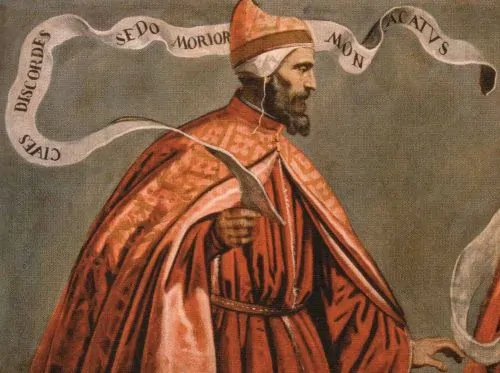
The seizure of Candiano property became one of the material consequences that successive governments had to address. A later restitution instrument acknowledged that holdings belonging to Pietro had been taken after his death and retained under the authority that followed him. This admission distinguishes possession obtained through political upheaval from an uncontested entitlement to everything the defeated ruler had owned. Surviving claims required decisions about what could remain with the government, what should be returned, and whose release would protect arrangements already made. The contest over these questions continued after the office itself had passed into other hands.
Waldrada’s September 976 instrument records an early settlement of obligations arising from her marriage. It refers to the four hundred pounds of silver Pietro had promised and to provisions involving a quarter share of his property, acknowledging satisfaction of the entitlements covered by the agreement. Provesi emphasizes the importance of reading these statements as an acknowledgment of receipt, correcting an interpretation that treats the document principally as Waldrada’s surrender of her marital gift. The distinction changes the character of the transaction. The new government obtained protection against further demands by recognizing property interests whose origin preceded its accession. The amounts and provisions mentioned establish the kinds of liability addressed, without furnishing a complete account from which the total value delivered can be calculated. They also concern rights created through the marriage, giving no basis for describing the settlement as a financial valuation of the deaths themselves.
Confirmation at Piacenza on 25 October placed the arrangement within imperial legal proceedings. Waldrada had sent Adelaide a letter sealed with her ring, requesting authorization for the Tuscan Hildevert to act as her advocate. Domenico Carimano appeared for Orseolo and the Venetian people, presenting the September instrument for recognition. The earlier transaction had already involved Gottifred, Adelaide’s chancellor and representative, so imperial participation extended across more than the final hearing. Waldrada’s use of a chosen representative demonstrates an ability to pursue her interests through procedures reaching beyond the lagoon. It does not require imagining her personally delivering a speech before the court, since the record establishes the actions of her advocate and the presentation of her letter. The proceedings sought confirmation of the instrument’s authenticity and voluntary execution, protecting it against later challenges on those grounds. These formal assurances strengthened the agreement’s legal standing without independently disclosing every pressure surrounding its negotiation.
The release had boundaries. Its extensive categories included interests associated with Waldrada’s deceased son and acquisitions attributed to her during the marriage, bringing several grounds of entitlement within the same settlement. Property she had brought from her natal relatives remained the subject of a separate reservation, with access to justice under the relevant customs preserved. The long descriptions of goods and transactions defined the claims being discharged rather than documenting each object handed over. Broad language intended to secure finality must be read together with the clauses specifying what still required determination.
Patriarch Vitale’s pursuit of his father’s property followed a more prolonged course. The later record recalled a favorable judgment under Doge Vitale Candiano, distinguishing that ruler from the patriarch who sought restitution. Its damaged wording indicates that recognition had not been followed by a completed resolution before the doge’s death. Under Tribuno Menio, the patriarch renewed his demands before the ruler and judges, and the instrument describes repeated, forceful appeals in the public palace. Such language preserves an active claimant pressing for performance over an extended period. The acts dated 15 June, with the year reconstructed as 983, record the eventual arrangement. His ecclesiastical position had provided a continuing place from which to pursue interests that his father’s political defeat had failed to extinguish.
Restoration was accompanied by a reciprocal release that protected dispositions already made. The government recognized Vitale’s recovery of paternal holdings, including property within and beyond the duchy’s boundaries. He, in turn, relinquished claims concerning assets previously distributed or expended for the homeland’s preservation, expressly including property assigned to Waldrada, whom the document identifies as his stepmother. This provision brought her earlier settlement into the resolution of his demands, securing recognition that some parts of the estate would remain outside his recovery. The justification of preserving the homeland explains how the parties represented those expenditures, but it supplies no detailed account proving the necessity or destination of every payment. Other questions remained open to proceedings according to law and custom. Claims against his father’s debtors were also reserved, showing that recovery concerned obligations owed to the estate as well as holdings physically controlled by the government. The settlement defined which disputes were closed while maintaining avenues through which remaining interests could be pursued.
These arrangements imposed limits upon both recovery and retention. Waldrada and Vitale obtained recognition of surviving rights, while the Venetian counterparties secured releases protecting specified transfers and expenditure. Restitution did not reverse the removal of Pietro, and the protection of earlier dispositions did not give the victors unrestricted control of his wealth. Written agreements made certain outcomes more secure by obtaining commitments from people whose claims remained consequential. Accommodation had failed in the confrontation with the doge himself, but dealing with his household’s survivors became part of establishing durable terms for the aftermath.
Remembering a Murdered Doge and a Saintly Successor

John’s portrait of Orseolo extends holiness beyond the conduct of an individual ruler. His account praises Felicia through an association between her name and her merits, attributes religious significance to the conception of their son, and describes the couple’s subsequent marital continence. The son, the future Pietro II Orseolo, shares his father’s name and is represented as resembling him in worthy conduct. These details create a family history in which devotion and legitimate leadership reinforce one another across generations. Their placement matters because the chronicler’s favorable presentation of the succeeding household could support admiration for Orseolo without requiring approval of every action that preceded his accession. The memory of a worthy ruler and the memory of reprehensible violence could remain together within the same narrative.
Monastic accounts organized his significance around different concerns. In Peter Damian’s Vita beati Romualdi, allegations of political wrongdoing could give conversion something to overcome, while the withdrawal of a powerful man demonstrated the spiritual authority associated with Romuald. Information damaging to Orseolo’s earlier career need not contradict the religious purpose of the story. A separate tradition developed around his life at Cuxà, preserved in the anonymous work edited by Ortalli as the Gesta vel obitus domni Petri ducis Venecie atque Dalmacie. Ortalli identifies its place of composition with that monastery and distinguishes its institutional construct from the pressures shaping Venetian accounts. Its exact date remains uncertain, and the surviving transmission presents substantial difficulties, but its geographical distance redirected attention toward Orseolo’s religious experience after government. Damian and the Cuxà tradition did not produce identical versions of his past. Their shared interest in sanctity accommodated differences that make it difficult to describe the remembrance of the former doge as a single coordinated effort to establish his political innocence.
Recognition as a saint also developed through circumstances distinct from those of his departure. Ortalli associates the early, initially difficult growth of Orseolo’s sanctity with the abbacy of Oliba, emphasizing the contribution of institutional and social interests. A former ruler remembered within a monastic community could enhance its standing, while the community provided a setting in which his religious example could acquire continuity. This history of recognition deserves attention alongside accounts of personal devotion, because the preservation and promotion of a holy reputation required people and institutions capable of sustaining it. The formal recognition of Orseolo’s cult by Clement XII in 1731 belonged to a much later political environment. By then, Venice could incorporate the former doge into ceremonies expressing the religious dignity of the Republic. Louis XV’s gift of a relic added a diplomatic dimension, connecting the honor paid to Orseolo with relations involving France as well as Rome. Piero Del Negro places these developments within the conjunction of civic ritual and devotion characteristic of the period, including the incorporation of the saint’s observance into palace ceremony. The remembered renunciation of worldly office could become an attribute honored by the institution from which he had withdrawn. This did not require officials to reconstruct every dispute surrounding his original accession. It allowed the Republic to claim a saintly predecessor whose distinction rested partly on choosing a life beyond government. The ceremonial use of his memory addressed eighteenth-century purposes and cannot be transferred backward as evidence of how Venetians collectively understood the killings of 976.
Modern historical writing introduced additional ways of making the episode coherent. Provesi’s critique of Cessi’s 1944 reconstruction identifies a vocabulary through which rebellious aristocrats became “the people” and Venice acquired the character of a “nation.” Within that account, Waldrada’s foreignness helped explain alienation from the doge, while her acceptance of property could be represented as withdrawal from a place inseparable from bereavement. These choices arranged the participants around a comparatively unified Venetian identity, giving the conflict a meaning that the surviving evidence does not independently establish. The difficulty concerns more than the factual question of Giovanna’s origins or the terms of Waldrada’s settlement. It involves the explanatory force supplied by the historian’s categories, which can make a divided political society appear to act with a common purpose. Provesi’s reconsideration returns attention to interests and relationships that cross those categories. Her criticism shows how a compelling account of communal resistance can acquire apparent clarity through distinctions introduced long after the event.
The remembrance of 976 contains several judgments that should remain distinguishable. Praise for Orseolo could concern his conduct in office, the religious value of his withdrawal, or the institutional honor later attached to his cult. Criticism of Candiano could explain hostility without making his death an exemplary act of public justice. The adverse treatment of the defeated household also remained available within traditions capable of admiring the successor, preventing the evidence from resolving into an uninterrupted celebration of liberation. The question of what the revolt represented must be answered through its participants and circumstances, with later acts of remembrance examined as further historical developments rather than accepted as the event’s final meaning.
Was This a Community’s Rejection of Tyranny or a Victory for Rival Families?
The following video from ExcitingEurope is a tour of the Doge’s Palace:
The strongest competing interpretation treats 976 as a contest for control of government among powerful households, with public grievances supplying a language through which the victors could justify their actions. A doge whose resources extended beyond the lagoon might reduce the bargaining power of other leading Venetians, making his removal attractive to men concerned with their own political standing. Those opponents could resent his conduct without sharing a principled commitment to limiting the authority of future rulers. Their willingness to kill him would then require explanation through the dangers associated with leaving a defeated rival alive. Mainland relationships and surviving dependents might make an expelled Pietro a continuing threat, even after he had surrendered office. Under those circumstances, promises made during his escape would offer little protection against a subsequent attempt at restoration. This interpretation explains the refusal of accommodation through calculations about the security of the victorious coalition. It also challenges any assumption that their determination necessarily expressed a general Venetian judgment about legitimate government.
Several features of Pietro’s position strengthen that objection because they belonged to a wider repertoire of ducal leadership. Advancement of relatives and dealings with rulers beyond the lagoon were established practices whose political acceptability depended on circumstances and relationships. The surviving commercial measures also record public commitments to restrictions responding to external pressures, even where the resulting obligations may have imposed unequal burdens. Identifying such arrangements as evidence of tyranny without examining how they operated risks turning the preferences of Pietro’s opponents into standards supposedly shared throughout Venetian society.
Yet an explanation centered exclusively on family competition encounters evidentiary difficulties of its own. Castagnetti’s examination of political participation reveals changing associations that cannot readily be organized into enduring hereditary parties. Provesi’s reconstruction of marital and cognatic relationships makes household interests essential to understanding the conflict, but the proposed connections do not establish a complete membership or common purpose for the conspiracy. Treating a surname as evidence of a unified faction would obscure the personal relationships through which support could shift within and between families. Berto’s interpretation of John’s account also supplies a substantive reason to take complaints about Pietro’s government seriously, since the chronicler describes an exercise of coercive authority exceeding customary expectations. Such testimony requires criticism, but it cannot simply be discarded because ambitious men might have benefited from the doge’s removal. Influential Venetians could pursue advantages for themselves while also objecting to conduct that disrupted the arrangements under which they accepted ducal leadership. The rival-family interpretation is strongest as an explanation of who possessed the connections and resources to organize resistance; it becomes less secure when offered as a complete explanation of why those people acted.
A further qualification concerns the chronology of rejection. John describes persistent hostility followed by concerted action, but he does not document successive negotiations through which demands for redress hardened into an agreed determination to kill. The final encounter presents a general promise made under immediate threat of death, leaving the preceding deliberations largely inaccessible. Its outcome cannot establish when each participant abandoned other possibilities, or whether everyone involved in the uprising had approved the same intended result. The scene supports a precise conclusion about the refusal represented there, while any reconstruction of a gradual passage from reform to irrevocable repudiation remains an interpretation of evidence that does not preserve the intervening stages.
The revolt is best understood as a coalition’s rejection of Pietro within a political society whose wider participation remains incompletely visible. Its participants could have combined objections to his government with fears or ambitions that did not extend to everyone encompassed by the chronicler’s collective language. The killing of his young son sharply limits an interpretation founded on the punishment of personal wrongdoing, since the violence reached someone with no recorded responsibility for ducal policy. Subsequent recognition of Waldrada’s entitlements and the patriarch Vitale’s property claims also demonstrates that the victorious government could acknowledge obligations arising from the household it had helped dispossess. Renewed Candiano officeholding further prevents the destruction of Pietro from becoming evidence of a lasting agreement to exclude his entire family. These developments qualify the political meaning of the uprising without making the complaints against him insubstantial. The episode reveals how a ruler could become unacceptable to those capable of removing him, while leaving unresolved how broadly their judgment was shared and whose interests their victory would ultimately serve.
Conclusion: What His Opponents Would No Longer Accept
Pietro IV Candiano’s final promise depended on something his opponents were no longer willing to provide: an opportunity for him to fulfill it. In John the Deacon’s account, the doge offered satisfaction without securing even the preservation of his life. The encounter reveals a limit to concession rooted in the relationship between the parties, since an undertaking could matter only if those receiving it remained prepared to deal with its author. Pietro’s enemies refused that relationship and killed the man whose cooperation they might otherwise have demanded. Their response establishes the severity of the rejection represented in the narrative, although it cannot disclose the intentions of everyone involved in the uprising. What ended at that encounter was the possibility that Pietro himself could participate in resolving the conflict surrounding his government.
His earlier recall makes the reversal revealing. Venetians had once received him despite his conduct in exile and their reported oath against accepting him, demonstrating that serious antagonism could give way to renewed political cooperation. The government established through that reversal endured for many years, during which familiar instruments of ducal leadership acquired increasingly contentious implications. His career exposes the instability of acceptance in a political setting where neither family position nor a previous demonstration of collective support could guarantee a ruler’s security.
The destruction of his household also places limits on what can be claimed for his defeat. His young son had no recorded responsibility for the government against which the insurgents acted, and the child’s killing cannot be absorbed into an explanation concerned solely with holding a ruler answerable for his conduct. The deliberate dishonoring of the dead further extended the violence beyond the immediate struggle for control of the palace. Such actions require judgment alongside the grievances that made resistance possible, without assuming that the legitimacy of a complaint justified everything done in its name. Orseolo’s subsequent government confronted obligations that the overthrow had left unsettled, including the practical demands of reconstruction and the claims of those connected to the defeated doge. Waldrada’s settlement and the patriarch Vitale’s eventual recovery of property demonstrate the continuing force of relationships that violence had failed to extinguish. The documents preserve negotiated arrangements where the narrative of the uprising culminates in an absolute refusal. These sources show how decisively the victors could reject Pietro while remaining answerable to interests and obligations associated with his rule.
Later admiration for Orseolo cannot settle the moral account of his accession, just as John’s criticism of Candiano cannot make the insurgents’ actions an uncomplicated exercise of public justice. The chronicler’s willingness to describe oppressive government and condemn the resulting killings preserves a difficulty that more unified stories of communal liberation tend to diminish. Venice emerged from the catastrophe with the dogeship intact, its political relationships still contested, and substantial work required to sustain government. The episode’s wider significance lies in the distance between acquiring the power to destroy a ruler and establishing an authority capable of commanding durable acceptance. Pietro’s opponents made his survival unacceptable to themselves; their success did not relieve them or their successors of the need to justify how power would thereafter be exercised.
Bibliography
- Bannister, Emily A. “‘From Nitria to Sitria’: The Construction of Peter Damian’s Vita Beati Romualdi.” European Review of History 18:4 (2011), 499–522.
- Berto, Luigi Andrea. Early Medieval Venice: Cultural Memory and History. Abingdon and New York: Routledge, 2020.
- Berto, Luigi Andrea. La guerra, la violenza, gli altri e la frontiera nella «Venetia» altomedievale. Pisa: Pisa University Press, 2016.
- —-. The Political and Social Vocabulary of John the Deacon’s “Istoria Veneticorum.” Turnhout: Brepols, 2013.
- Bertolini, Margherita Giuliana. “Candiano, Pietro.” In Dizionario biografico degli Italiani, 17:764–772. Rome: Istituto della Enciclopedia Italiana, 1974.
- Castagnetti, Andrea. “Famiglie e affermazione politica.” In Storia di Venezia dalle origini alla caduta della Serenissima, vol. 1, Origini–Età ducale, edited by Lellia Cracco Ruggini, Massimiliano Pavan, Giorgio Cracco, and Gherardo Ortalli, 613–44. Rome: Istituto della Enciclopedia Italiana, 1992.
- —-. “Insediamenti e ‘populi.’” In Storia di Venezia dalle origini alla caduta della Serenissima, vol. 1, Origini–Età ducale, edited by Lellia Cracco Ruggini, Massimiliano Pavan, Giorgio Cracco, and Gherardo Ortalli, 577–612. Rome: Istituto della Enciclopedia Italiana, 1992.
- Cessi, Roberto, ed. Documenti relativi alla storia di Venezia anteriori al Mille. Vol. 2. Padua: Gregoriana Editrice, 1942.
- Del Negro, Piero. “L’ultima fase della Serenissima: Nota introduttiva.” In Storia di Venezia dalle origini alla caduta della Serenissima, vol. 8, L’ultima fase della Serenissima, edited by Piero Del Negro and Paolo Preto. Rome: Istituto della Enciclopedia Italiana, 1998.
- Eisner, Manuel. “Killing Kings: Patterns of Regicide in Europe, AD 600-1800.” The British Journal of Criminology 51:3 (2011), 556-577.
- Gesta vel obitus domni Petri ducis Venecie atque Dalmacie. Edited by Gherardo Ortalli. Fonti per la storia dell’Italia medievale, Antiquitates 46. Rome: Istituto Storico Italiano per il Medio Evo, 2016.
- John the Deacon. Istoria Veneticorum. Edited and translated by Luigi Andrea Berto. Bologna: Zanichelli, 1999.
- Ortalli, Gherardo. “Il ducato e la ‘civitas Rivoalti’: Tra carolingi, bizantini e sassoni.” In Storia di Venezia dalle origini alla caduta della Serenissima, vol. 1, Origini–Età ducale, edited by Lellia Cracco Ruggini, Massimiliano Pavan, Giorgio Cracco, and Gherardo Ortalli, 725–90. Rome: Istituto della Enciclopedia Italiana, 1992.
- Manaresi, Cesare, ed. I placiti del “Regnum Italiae.” Vol. 2, pt. 1. Rome: Tipografia del Senato, 1957.
- Peruzzini, Giovanni. Pietro Candiano IV: Dramma lirico in quattro atti e otto quadri. Music by Martin Röder. Milano: Regio Stabilimento Ricordi, [1878?].
- Peter Damian. Vita beati Romualdi. Edited by Giovanni Tabacco. Fonti per la storia d’Italia 94. Rome: Istituto Storico Italiano per il Medio Evo, 1957.
- Pozza, Marco. “Pietro Orseolo, santo.” In Dizionario biografico degli Italiani, 83:529–531. Rome: Istituto della Enciclopedia Italiana, 2015.
- Provesi, Chiara. “Le due mogli di Pietro IV Candiano (959–976): Le donne e i loro gruppi parentali nella Venezia del X secolo.” Reti Medievali Rivista 16:2 (2015), 21–51.
- Puga, Diego and Daniel Trefler. “International Trade and Institutional Change: Medieval Venice’s Response to Globalization.” The Quarterly Journal of Economics 129:2 (2014), 753-822.
- Rando, Daniela. “Le strutture della Chiesa locale.” In Storia di Venezia dalle origini alla caduta della Serenissima, vol. 1, Origini–Età ducale, edited by Lellia Cracco Ruggini, Massimiliano Pavan, Giorgio Cracco, and Gherardo Ortalli, 645–75. Rome: Istituto della Enciclopedia Italiana, 1992.
- Rapetti, Anna. “Il doge e i suoi monaci: Il monastero dei Santi Ilario e Benedetto di Venezia fra laguna e terraferma nei secoli IX–X.” Reti Medievali Rivista 18:2 (2017), 3–28.
- Sickel, Theodor, ed. Conradi I, Heinrici I et Ottonis I diplomata. Monumenta Germaniae Historica, Diplomata regum et imperatorum Germaniae 1. Hannover: Hahn, 1879–1884.
- Smith, Daniel J., George R. Crowley, and J. Sebastian Leguizamon. “Long Live the Doge? Death as a Term Limit on Venetian Chief Executives.” Public Choice 188:3/4 (2021), 333-359.
- West-Harling, Veronica. Rome, Ravenna, and Venice, 750–1000: Byzantine Heritage, Imperial Present, and the Construction of City Identity. Oxford: Oxford University Press, 2020.
Originally published by Brewminate, 11.10.2026, under the terms of a Creative Commons Attribution-NonCommercial-NoDerivatives 4.0 International license.
About the Author