
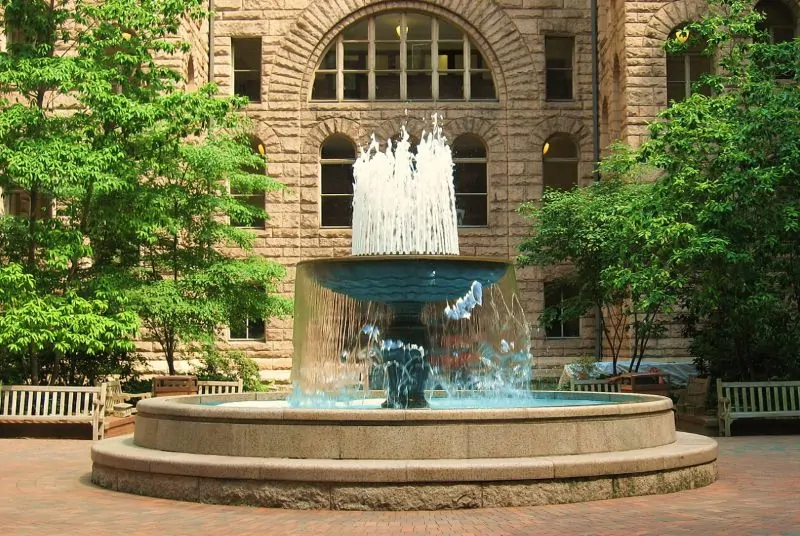
Walk up Grant Street and you pass the Allegheny County Courthouse, a Romanesque landmark completed in 1888 on the same ground where an earlier courthouse stood from 1841 until a fire in 1882. Pittsburgh’s courts have heard negligence claims through most of that stretch: rail yard injuries, mill accidents, streetcar collisions and, later, car crashes. The furniture changes. The docket numbers keep climbing. The shape of an injury case barely moves.
That continuity matters when you need an injury lawyer. The bones of Pennsylvania civil procedure, the way a case moves from complaint to discovery to trial, were set long before anyone alive today was born. Knowing that structure changes how you read a contingency agreement or judge a first meeting with a law firm in pittsburgh. You are not hiring someone to invent a process. You are hiring someone who already knows the grooves the process runs in.
This piece traces that history through three things you can actually see: the courthouse itself, the state constitution that guarantees a jury, and the court structure that routes injury claims to the right building.
Allegheny County Has a Long Record With Injury Claims
Allegheny County was formed in 1788, and Pittsburgh’s first courthouse, a wooden building on Market Square, opened in 1794. As the region industrialized, workplace and transportation injuries became a steady part of its civil docket. That history lives on in local practice: jury verdict patterns, the expectations of judges and the habits of insurance defense firms that have litigated here for generations.
An established Pittsburgh injury law firm carries that local memory. It knows how Allegheny County juries tend to view a disputed liability case and which medical experts hold up under cross-examination here. A firm that treats local history as trivia will miss things a firm that respects it will catch.
The federal courts sit alongside the county courts, which adds a wrinkle. The United States Courts maintain their own district structure, and an injury case against an out-of-state trucking company or manufacturer can move from state court to the federal court in Pittsburgh, depending on the parties and the amount at stake. That split isn’t trivia. It decides which building your case walks into.
The Three Layers Every Pittsburgh Injury Claim Passes Through
Think of the local system as a set of nested rooms. A claim enters through one door, and the door it picks shapes everything that follows.
• Magisterial district courts: Smaller civil claims, up to $12,000, can start here, such as a minor property damage dispute after a fender bender.
• Court of Common Pleas: Most injury lawsuits are filed in its Civil Division, where smaller claims go first to compulsory arbitration and larger ones move toward a jury trial.
• Appellate and federal courts: Appeals climb to the Superior Court, and certain cases go to federal court from the start.
Most people who call an injury lawyer don’t yet know which room their claim belongs in. That’s fine. But the first conversation should sort it out, and you should be wary of anyone who promises a specific outcome before they know the venue.
A Checklist for Your First Meeting
Here’s the practical part. Most injury firms offer a free initial case evaluation, so the meeting costs nothing, and these notes make it count.
1. Write down every date connected to the injury: the accident, the first doctor visit and each missed workday. The two-year filing deadline for most Pennsylvania injury claims runs from the date of injury.
2. Gather documents in one folder: the police or incident report, photos, medical bills, insurance letters and pay stubs.
3. Ask directly which court your claim would likely land in, and ask for a plain answer.
4. Request the fee agreement in writing. Pennsylvania requires contingent fee agreements to be written, and the agreement should show how case costs are handled.
5. Ask who else in the office will work on your file and whether you will meet them.
Notice what’s missing from that list: no question about winning. Nobody can answer that honestly on day one. The quality of the follow-up questions tells you more than the answers. A good attorney will ask about your treatment, any prior injuries and whether you’ve spoken to the other driver’s insurer. A weak one will spend the meeting selling.
The State Constitution Guarantees Your Right to a Jury
Pennsylvania’s first constitution dates to 1776, and the current version, adopted in 1968, still promises that the right of trial by jury will “remain inviolate.” That guarantee is the reason an injury claim that fails to settle can go before a panel of Allegheny County residents. The National Constitution Center documents how state and federal constitutional protections interact, and that overlap explains why the jury right sits at the center of civil practice.
For you, the practical consequence is simple. Settlement value depends on what a jury might do, so a firm’s trial record shapes every offer an insurer makes. Free consultations are the right place to ask how often the firm has taken cases like yours to verdict.
| Question to ask | Good answer sounds like | Red flag |
| How long have you practiced here? | Specific years, venues and injury case types | Vague talk about “decades of combined experience” |
| Who handles communication? | A named person and a stated response window | “Someone from the team will reach out” |
| What’s the next step? | A dated action item with a clear owner | Pressure to sign today |
Local Rules of Court Are the Hidden Variable
Every county court carries its own local rules on top of the statewide ones. Filing formats, motion deadlines, arbitration procedures and scheduling practices all vary. The Legal Information Institute keeps plain-language references on how civil procedure works across jurisdictions, and even a quick read shows why local familiarity carries weight.
Scale and local depth can work together. Some of the largest personal injury firms in the country keep Pittsburgh offices, and a massive national personal injury firm can staff local cases with lawyers who appear in Allegheny County every week. A high-volume national practice brings systems and funding. A long-standing Pittsburgh firm brings years in the same courtrooms. What matters most is who will stand up in front of your judge.
Here’s a scenario worth holding in mind. Two firms offer the same contingency percentage. One has argued motions before the same judge a dozen times and knows how that judge reads a brief. The other is building that knowledge from scratch. Same fee, very different starting line. You won’t see that difference in the agreement, which is why your questions matter so much.
What History Should Tell You
Old courtrooms aren’t just charm. They’re evidence that the process has been tested by generations of cases, and that the people who work inside it carry unwritten knowledge about how things really run. The most prominent local firms, many of them serving Pittsburgh for decades, built their reputations inside that system. A well known name still matters less than whether the lawyer across the table can explain how your case will move through it.
Ask about results too. A firm that has recovered over $100M for clients should be able to describe how injury cases like yours have resolved here, whether at arbitration, at settlement or at trial.
When you sit down with a firm, listen for whether they treat your claim as a problem to solve or a slot to fill. Ask about the venue, the deadline and the paper trail. The right lawyer will welcome those questions. The wrong one will change the subject. Which question have you been avoiding because you’re afraid the answer is “we don’t know”? Start there.
About the Author