A letter seeking Herakleides’s body reveals how burial in Ptolemaic Egypt depended on professional cooperation, while leaving the existence of a dispute open to interpretation.

By Matthew A. McIntosh
Public Historian
Brewminate
Introduction: A Dead Man between Different Authorities
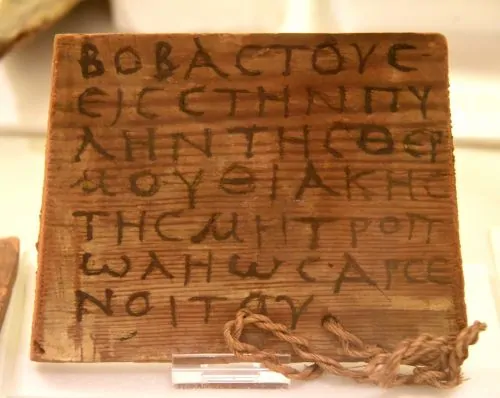
A letter from Athenagoras, who identified himself as chief physician (archiatros), preserves an effort to recover the body of his deceased subordinate Herakleides from funerary personnel near Hawara. Addressed to priests associated with the stolistai of the Labyrinth and to the stolistai themselves, the document states that Herakleides had died and was in their cemetery. Athenagoras had sent Nikias and Krokos to collect him and requested that the recipients release the body without imposing a charge, then assist with its conveyance as far as Ptolemais. He also mentioned correspondence from Alexandrian stolistai, revealing that arrangements for this single deceased person already involved communication among several parties.
The request depended on relationships extending beyond immediate physical custody. Those who could make Herakleides’s remains available were being approached by someone whose claim arose from his association with the deceased, while funerary personnel elsewhere had also intervened. Their respective positions cannot be reduced to a simple hierarchy in which one official issued an order that everyone else was automatically bound to obey. Across Ptolemaic Egypt, the preparation and burial of the dead supported professional interests whose organization varied between localities and whose economic value appears in contracts recording their division or transfer. Access to funerary work could provide an enduring livelihood, making the recognition of professional entitlement important to practitioners and their families. Such arrangements could establish dependable responsibility for the dead, yet they also created circumstances in which the movement of a body required agreement about who was entitled to act and whether payment was due. Herakleides’s case brings that institutional problem into view through a request whose apparently practical terms leave its underlying circumstances only partly visible.
P. W. Pestman interpreted the letter as the result of a professional infringement, arguing that local undertakers had buried someone whom they were not authorized to bury. On this reading, Athenagoras’s insistence upon release without compensation followed from the recipients’ improper intervention outside the limits of their entitlement. The surviving wording is less explicit about wrongdoing. It records the requested release and assistance, but supplies no account of an earlier refusal, no description of physical mistreatment, and no statement that the body was being deliberately retained to extract money. Pestman’s explanation makes professional boundaries central to the episode, although its plausibility must be tested against evidence independent of the instructions it seeks to explain.
The broader significance of the letter lies in the dependence of bodily care upon institutions capable of advancing claims of their own. Read alongside Hawara’s funerary agreements and carefully selected evidence from other Egyptian communities, it permits an investigation of how occupational privileges interacted with obligations toward an identifiable dead person. The central argument is that the organization which made burial practicable could also complicate the transfer of responsibility when those involved recognized different sources of authority. This does not require accepting that every professional restriction obstructed burial, or that Herakleides’s custodians had violated an established duty. It requires examining how entitlement acquired force, how responsibility passed between practitioners, and what an intervention such as Athenagoras’s could accomplish. Nor can the disposition he requested simply be equated with Herakleides’s own wishes, which the document does not preserve. The historical problem concerns the decisions others sought to make for him and the cooperation necessary to carry them out, in a setting where possession of a body did not by itself settle who should determine its destination.
Reading SB I 5216 as a Letter
The reference SB I 5216 identifies an entry in the Sammelbuch griechischer Urkunden aus Ägypten, a modern collection of documentary texts. G. Lefebvre first published the papyrus in 1912, and Hunt and Edgar subsequently included it as number 104 in the first volume of Select Papyri. These publications transmit the same ancient communication, so their agreement cannot be counted as independent contemporary confirmation of its contents. Each presentation introduces editorial choices that influence how the document is encountered. Pestman’s heading, “Dispute about a Mummy,” places an interpretation before the reader has reached the letter itself. That description may offer a persuasive explanation, but it belongs to the scholarly reconstruction of the circumstances, not to the ancient writer’s identification of his purpose.
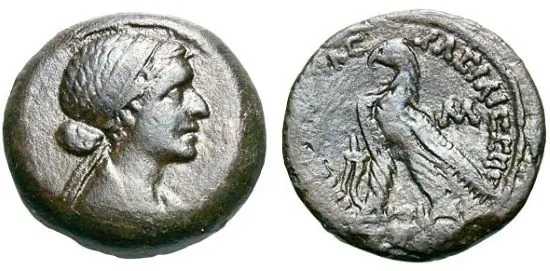
The closing formula supplies a fourteenth regnal year and the twenty-fifth day of Hathyr, without naming the ruler. Pestman preferred 101 BCE while allowing 68 BCE, and Antonia Sarri also lists 39 BCE among the proposed dates. The earliest alternative falls at the end of the second century BCE, whereas the others belong to the first. A late Ptolemaic setting is more secure than any precise assignment to a reign, and explanations involving changes in royal administration must accommodate that chronological uncertainty.
The arrangement of the message provides a firmer foundation for analysis. Athenagoras begins with his name and professional designation, identifies the recipients, and proceeds from the report of Herakleides’s death to the action he has taken in sending representatives. This sequence makes the notification of death the explanation for an undertaking already initiated by the sender. The following request, rendered in translation as “you will do well,” presents cooperation as the response expected from the addressees. Such courteous language was compatible with considerable differences in social standing and cannot, by itself, determine how freely the recipients could decline. Equally, the formula supplies no explicit legal instrument compelling their obedience. The concluding wishes for health belong to the conventional maintenance of relations through correspondence, giving the instructions a recognizable epistolary setting without revealing the degree of personal familiarity between the parties. Reading these elements together shows how the message seeks compliance while leaving much of the basis for that expectation unstated.
Greater precision is also necessary when describing Herakleides’s location. The statement that he was in the recipients’ cemetery establishes his presence within a funerary setting under their immediate control. It does not specify the procedural stage reached in handling his remains, and presence in a necropolis cannot automatically be translated into completed placement in a tomb. Describing the proposed recovery as an exhumation would add an operation that this locative statement never records. The distinction affects the reconstruction of the encounter, since surrendering remains awaiting further arrangements could involve different work from retrieving them after interment. The letter permits the requested handover to be identified more confidently than the physical circumstances from which it was to proceed. Even an apparent change of handwriting requires scrutiny. Sarri observes that the original edition and Select Papyri did not indicate a second hand before the farewell and date, whereas the Sammelbuch introduced such a division. Her examination finds no actual change at that point, citing continuity in the alignment of the writing and the formation of letters. This correction matters because an editorially marked second hand might otherwise encourage an argument that Athenagoras personally added an authentication after someone else drafted the message. The printed division cannot establish such participation, while continuity of handwriting does not identify the writer as Athenagoras himself. The surviving script and the named sender answer different questions about the production of the communication.
The mention of Alexandrian stolistai places this sheet within a larger exchange whose terms are unavailable. Athenagoras states that they had also written about Herakleides, but he neither reproduces their words nor explains how their approach related to his own. Referring to that communication could allow him to invoke information the recipients were expected to recognize without restating it. For the original addressees, the allusion may have supplied sufficient context to connect the visitors’ arrival with arrangements discussed elsewhere. For a modern reader, it marks a missing part of the documentary sequence. The instructions concerning delivery and assistance describe conduct still expected from the recipients, and the absence of a surviving reply prevents those expectations from being converted into completed events. Close reading ends with an attempted intervention whose wording can be examined in detail, even though its reception and execution remain beyond the preserved record.
Hawara and the Institutional Landscape of Burial
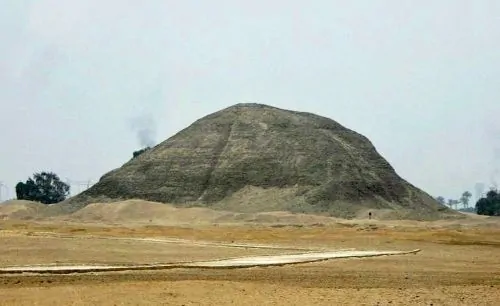
Hawara lay near the southeastern entrance to the Fayum, within the district known under the Ptolemies as the Arsinoite nome. Its location connected an inhabited community with burial grounds at the edge of the cultivated landscape. Funerary activity formed part of the settlement’s wider life, sustained by people whose households and economic relationships extended beyond their work with the dead. Understanding that setting requires attention to the village as well as its cemeteries. The local approach developed in Inge Uytterhoeven’s study of Hawara makes the connection essential, bringing documentary evidence into conversation with the physical remains of habitation and burial.
The Labyrinth gave this locality an association with a royal past considerably older than the Ptolemaic monarchy. The name belonged to the extensive complex beside the pyramid of Amenemhat III, whose Twelfth Dynasty foundation preceded Athenagoras’s correspondence by more than a millennium. Its later significance included its usefulness as a recognizable designation for religious personnel operating in the area. A correspondent could identify recipients through their association with the Labyrinth without describing the buildings they occupied or explaining the historical development of their offices. That practical use of the name demonstrates the continuing relevance of an ancient monumental setting, although it cannot establish uninterrupted operation of the original royal institution. Changes in buildings and religious organization could occur while a familiar designation remained intelligible. Hawara’s monumental inheritance supplies a historical setting for the letter, while the organization of its later funerary work has to be reconstructed from evidence belonging to those later communities.
The published Hawara papyri also disclose the domestic interests of people associated with funerary service. Marriage settlements and transactions involving houses appear alongside documents concerned with tombs and professional interests. These materials make it possible to investigate practitioners as members of households whose property arrangements could affect the circumstances in which their work continued. The juxtaposition is valuable because an agreement about burial might belong within a longer history of family transactions, rather than represent an isolated encounter between a customer and an otherwise anonymous provider.
Priestly involvement becomes more concrete in documents recording dealings between funerary workers and representatives of religious authority. P.Hawara XX, dated to 84 BCE, contains a loan agreement involving three undertakers and the representative of the prophet of Souchos, accompanied by an oath concerning mummies. In P.Hawara XXII, from 79 BCE, two undertakers swear an oath to the prophet concerning funerary rights. These records place religious personnel within the documented affairs of local practitioners and show that obligations connected with the dead could be expressed through transactions involving priestly offices. They leave room for several relationships between supervision and economic entitlement. Gert Baetens emphasizes that privately held funerary interests could exist alongside such institutional involvement. Participation by temple personnel requires examination in its specific documentary setting before it can be used to explain who controlled the work or received its proceeds. For Hawara, the evidence supports an institutional landscape in which religious authority intersected with professional affairs without necessarily absorbing every interest into temple ownership.
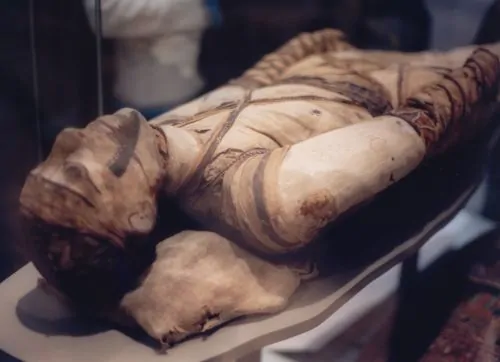
Archaeology supplies another dimension by locating funerary activity within a landscape used across successive periods. Burial grounds preserve evidence of the treatment and presentation of remains, while documents can identify obligations that leave little recognizable trace in a tomb. These bodies of evidence operate at different scales, and their conjunction requires chronological care. Hawara’s celebrated Roman portrait mummies belong to its later funerary history, making them valuable witnesses to developments that cannot simply be projected backward into Athenagoras’s surroundings. The considerable visual appeal of those discoveries can obscure the importance of less immediately striking Ptolemaic agreements. For the present investigation, the dated transactions provide a closer basis for discussing professional relationships, while the archaeological record helps establish the longer history of the places in which those relationships operated.
A local reconstruction also provides the necessary basis for comparison with other Egyptian necropolises. Maria Cannata’s survey of Ptolemaic funerary organization demonstrates the importance of regional and chronological variation, including differences in the responsibilities associated with professional titles. Evidence from Thebes or Memphis can illuminate possibilities that the Hawara material leaves poorly documented, but those comparisons become persuasive when their institutional differences remain explicit. A title encountered in two communities does not automatically establish an identical office, and a practice documented elsewhere needs local corroboration before it becomes a rule governing this case. Hawara’s own records allow the inquiry to proceed from identifiable transactions and religious offices toward broader questions about the organization of burial. Within that setting, Herakleides’s presence acquired significance through arrangements that connected the handling of his remains with institutions already embedded in the community.
Priests and Embalmers: The Distribution of Funerary Work
The personnel named in funerary documents become easier to understand when occupational identity is distinguished from the allocation of a task. A title might establish recognized standing within a community while leaving the holder’s duties on a given occasion unstated. Several designations could belong to one individual, and a change of language could alter how that individual was described. Reconstructing the workforce requires following what people did as well as recording what scribes called them.
The stolistai illustrate the connection between a religious designation and several possible responsibilities. Their name is associated with dressing, and the term could identify personnel responsible for clothing divine images. Its use in a funerary setting has encouraged interpretations connecting the office with the dressing or wrapping of the deceased. Tomasz Derda proposed a coordinating role in which stolistai directed the work of taricheutai and perhaps themselves applied bandages and shrouds. He also considered their possible involvement in organizing the transport of bodies. These suggestions offer a plausible account of religious expertise joined to practical supervision, although the proposed distribution of duties remains a reconstruction. The involvement directly attested in Herakleides’s case concerns making his remains available and assisting their departure. Someone approached for that purpose might have exercised influence over a funerary establishment without personally carrying out every operation performed within it. Establishing that influence is analytically different from identifying the hands that prepared the deceased.
Greek terminology could shift even within records concerning the same practitioners. In the Tanis archive, entaphiastai appears in P.Tarich. 3 and 6 for professionals elsewhere identified as taricheutai, a variation examined by Gert Baetens. Creating separate trades from these labels would obscure connections that the documentary group allows to be recovered. Their overlapping use in this archive also makes the familiar translation of taricheutai as embalmers a starting point for investigation, rather than a complete description of each holder’s activities.
Egyptian titles introduce further distinctions between recognized qualifications and the services furnished on a specific occasion. The lector-priest’s association with ritual recitation identifies expertise that could be essential to the religious treatment of a deceased person. Yet the same practitioner could appear in Greek under the designation taricheutes, bringing the conventional category of embalmer into contact with an Egyptian ritual office. Baetens’s analysis of the Tanis material strengthens this connection through the reading of the lector-priest’s title in its Demotic documents. At Hawara, P.Hawara X supplies an example of a practitioner bearing both the lector-priest and god’s seal-bearer titles. Their combination establishes that these identifications could coexist in one professional career; it does not explain their relationship through a simple division between a religious official and a manual worker. Baetens also cautions against treating taricheutes as an established equivalent of god’s seal-bearer merely because the terms appear in related records. Reading across the languages requires tracing the individual and the transaction before assigning a fixed correspondence between the offices. The resulting picture accommodates practitioners whose ritual standing and practical engagements crossed several categories of work.
Continuing service to the dead appears in the designation choachytes, conventionally associated with the pouring of libations. Its relevance extends the discussion beyond the initial preparation of remains to activities performed for people already buried. A title connected with those observances identifies a different emphasis in funerary work without requiring every community to maintain a separate occupation devoted exclusively to it. Burial could begin a continuing relationship with a practitioner, rather than conclude all professional involvement with the deceased.
A Hawara agreement from 220 BCE makes the distribution of responsibility more concrete than terminology alone can do. In P.Hawara IVa–b, a woman’s arrangements for her deceased husband distinguish the professional who had embalmed him elsewhere from another who was to receive him for burial in a family tomb at Hawara. The receiving practitioner’s undertaking concerned a body whose earlier preparation had already been entrusted to someone else. That distinction identifies successive responsibilities without establishing two mutually exclusive professions. Both participants could possess related qualifications while assuming different obligations in this transaction. The woman’s participation also shows that connections between practitioners could arise through the decisions of someone arranging a funeral. She had commissioned preparation in one place and sought burial in another, bringing separately situated providers into responsibility for the same deceased person. The receiving professional’s commitment to her established a direct obligation alongside whatever relationships he maintained with colleagues. This separation matters for understanding his position toward work completed before the remains reached him. An agreement governing reception needed to address the condition in which the body was delivered and the undertaking accepted by its recipient. The arrangement demonstrates how differentiated duties could exist within a profession whose members shared titles and forms of expertise. Continuity of care depended upon an understood handover, with each participant’s responsibility defined by the service undertaken.
Other participants entered the process without being assigned a funerary title in the surviving account. Nikias and Krokos were named as the people Athenagoras had sent for Herakleides, but their professional qualifications were not specified. Their commission supplies evidence of a representative function while leaving open how much physical work they were expected to undertake themselves. A reconstruction confined to explicitly titled specialists would miss these intermediaries, even though the mission described in the letter depended on their participation.
The double address to priests associated with the stolistai and to the stolistai themselves gives collective organization a further importance. Derda read this wording as suggesting that those engaged in the work did not all possess the same priestly status. It could allow a correspondent to reach people whose religious standing differed but whose cooperation was relevant to the requested action. His broader suggestion that stolistai might have headed an occupational corporation remains more tentative than that observation about the address. A collective response could involve differentiated duties that the communication had no practical reason to enumerate. Recognition of someone’s capacity to perform funerary work still left a separate question concerning which deceased people that practitioner was entitled to serve.
Who Could Bury Whom? Professional Territories and Their Boundaries
Professional boundaries determined whose services could legitimately be offered to a deceased person. The expression “territory” can suggest a bounded area in which every death automatically generated work for the same practitioners. Egyptian evidence requires a more flexible understanding, because an entitlement might concern an identifiable clientele or services associated with a named locality. Establishing its scope requires attention to the people covered by a claim as well as the geographical language used to describe it.
An oath from Hawara discussed by Dorothy Thompson provides evidence that practitioners recognized restrictions on accepting bodies. Her account describes an undertaking involving two families and eleven participants, with commitments concerning the collection of corpses to which they possessed no entitlement and the performance of funerary duties within specified localities. Such provisions addressed conduct at the point when responsibility for a deceased person was assumed. They indicate that obtaining physical access to remains was not necessarily sufficient to justify taking them into one’s professional care. The restriction also presupposed relationships among practitioners whose claims could be affected by another person’s intervention. An undertaking to respect those claims made the acceptance of a corpse answerable to obligations extending beyond the immediate transaction. This evidence supports the existence of recognized limits on professional activity, although it leaves the application of those limits to individual funerals dependent on the terms of the relevant arrangement. Its significance for Herakleides lies in establishing that questions about entitlement to receive a body belonged to the documented organization of funerary work. It does not supply the missing agreement governing his own case.
Hawara’s contractual records give geographical references a more specific documentary setting. In the agreements published as P.Hawara XVIIα–β, dated to 92 BCE, professional interests are identified through descriptions connecting funerary service with the local necropolis. P.Hawara XIXα–β, from 85 BCE, similarly associates an endowment with Hawara, while the Greek registration note refers to undertakers in the Labyrinth. These descriptions show that locality formed part of the identification of a recognized professional interest. As Baetens’s analysis makes clear, the wording belongs within records concerned with defined entitlements, whose geographical associations helped distinguish them from other interests. A reference to a necropolis identifies the setting of an entitlement more readily than it establishes an exclusive claim over every person who might be brought there.
Thompson’s broader discussion describes professional rights extending over specified households, villages, or sections of a population. These categories could produce different relationships between practitioners and prospective clients, even where the work occurred in the same burial grounds. Where an entitlement concerned a household, identifying the deceased’s membership in that household would matter alongside the location of death. The distinction makes personal affiliation relevant to the interpretation of professional boundaries without assuming that every community used the same means of assigning clients.
Pestman’s explanation of SB I 5216 depends upon identifying just such an affiliation. He understood Herakleides’s association with Athenagoras as evidence that the deceased came from Alexandria, placing him outside the entitlement of the Hawara practitioners. His commentary states the general restriction that an undertaker could not bury someone from outside his district without explicit authorization. Applied to the letter, this rule explains why a body present in a local cemetery might still have been received or buried improperly. The difficulty concerns the connection between the general restriction and the deceased’s position within it. Athenagoras’s description of Herakleides as one of his people establishes a relationship between the two men, but that relationship does not independently determine residence or membership in an assigned funerary clientele. The accompanying reference to the recipients’ district gives the association a geographical dimension without identifying its relationship to an undertaker’s professional jurisdiction. A district relevant to Herakleides’s work need not have coincided with the area or population covered by a funerary entitlement. Correspondence from Alexandrian stolistai strengthens the connection with that city, while leaving the precise grounds of their interest unstated. Pestman’s reconstruction brings a documented institutional possibility to bear on a case whose decisive personal classification remains uncertain.
Permission introduces an additional qualification into the proposed rule. Pestman’s formulation allows someone from outside a practitioner’s district to be buried when authorization has been given, making the boundary conditional rather than absolutely prohibitive. Approval for an individual funeral could permit cooperation without permanently changing the underlying allocation of professional rights. Before an infringement could be established in Herakleides’s case, it would be necessary to determine whose consent was required and whether the relevant parties had obtained it, matters the surviving communication does not explain.
Claims to provide funerary services must also be distinguished from control of the places where those services occurred. Possession of a tomb, an entitlement to serve certain clients, and immediate custody of remains each described a different relationship with the deceased. The Hawara evidence shows that professional interests could be associated with a cemetery without making those interests identical to ownership of its burial plots. Likewise, the fact that Herakleides was accessible through the recipients does not independently establish the extent of their authority over his eventual disposition. A territorial interpretation offers a possible explanation for a discrepancy between actual custody and recognized entitlement, but its application requires identifying the right alleged to have been infringed. The force of a professional claim lay in a recognized connection between providers and the people they were entitled to serve, a connection whose economic value could persist beyond any single funeral.
Funerary Privileges as Economic Interests
The language of Hawara’s funerary agreements could be strikingly arithmetical. Baetens notes expressions recording a fifth of a holder’s three-fifths share in an endowment, equivalent to three twenty-fifths of the specified interest. Such precision identifies divisible participation in something that could be defined independently of a single funeral. The fraction establishes the extent of that participation while providing no figure for the money its holder ultimately received.
These calculations belonged to a documentary vocabulary that distinguished a professional holding from the proceeds associated with it. In the Hawara material, the Demotic term sʿnḫ, conventionally translated as endowment, appears in descriptions of interests connected with funerary offices and their local settings. Greek registration notes sometimes employ geras, allowing the terminology of the Egyptian agreements to be compared with another way of identifying the same economic relationship. Documents such as P.Hawara XVIIα–β and XXIα–β record participation through fractional descriptions, making the extent of an individual claim important to the transaction. Baetens distinguishes this underlying entitlement from the revenues discussed in P.Tarich. 8, where karpeiai concerns its proceeds. His comparison with Demotic terminology, including šdy.w, reinforces the need to keep the interest and its returns analytically separate. A payment could satisfy a claim arising from work already performed, while an agreement concerning an endowment could affect participation in an enduring source of receipts. The latter had significance beyond settling the expenses of one deceased person. Its identification could matter when holders changed or when several people possessed claims requiring differentiation. The contracts preserve aspects of that continuing arrangement even where they leave the amount and regularity of its returns unknown.
Household agreements place the economic lives of practitioners within another documentary setting. Thompson discusses a property arrangement between the undertaker Herieus and his wife Senamounis, dated to 2 September 68 BCE, whose conventional inventory embraces extensive categories of assets and documents. Such wording expresses the breadth of a property undertaking, but it must be distinguished from an itemized statement demonstrating everything the individual actually possessed. Its relevance lies in bringing a funerary practitioner into the sphere of marital property arrangements, where economic commitments acquired a significance extending beyond occupational transactions. Professional earnings entered households, and the provision made within those households formed part of the circumstances in which practitioners sustained their livelihoods.
The form of a receipt also requires attention. Although karpeiai has been interpreted as referring to payments in kind, Baetens questions the grounds for restricting the term to that category. The word alone does not establish whether a return consisted of money or goods. Identifying the economic relationship requires the surrounding transaction, including any specification of what was owed and how it was to be delivered.
Divided participation raises a further question about the relationship between entitlement and performance. A fractional interest does not establish that its holder supplied the corresponding fraction of the labour required for every funeral. Preparing a deceased person involved operations that had to be completed, while a contractual share concerned the extent of someone’s recognized participation in an economic holding. The relationship between these two arrangements would have depended on how work and receipts were allocated among those involved. To determine whether a holder personally performed services, received proceeds through colleagues, or participated through some other agreement would require evidence beyond the fraction itself. The contractual record can be exact about participation while remaining silent about the practical arrangements supporting it. That silence should not turn every holder into a passive investor, any more than a professional title should make every recipient of income the sole performer of the work. What the fractional descriptions securely demonstrate is that economic participation could be recorded at a level of precision different from the identification of individual duties. This distinction helps explain why a funeral could involve several people whose respective contributions cannot be reconstructed simply by translating their financial shares into units of labour.
Receipts must also be considered alongside the resources consumed in providing services. Cannata’s treatment of funerary expenses places the acquisition of mummification materials and burial equipment within the practical economy of caring for the dead. Those requirements meant that access to payments carried potential obligations to obtain supplies or arrange the work for which payment was made. The division of such expenses between a practitioner and the person commissioning the funeral would affect what remained available as income. Without connected evidence for receipts and expenditure, the possession of a professional share cannot be converted into a reliable calculation of profit.
For Herakleides, this distinction brings the financial instruction into sharper focus. Athenagoras requested that no charge be imposed in connection with releasing the body, but the letter gives no amount and identifies no account against which that instruction should be measured. The request concerns a possible receipt, leaving the recipients’ underlying professional interests undescribed. Its economic significance would depend on whether they had provided compensable services and on the relationship between those services and the entitlement under which they acted. Neither a measurable loss nor a legally enforceable fee can be established from the instruction alone. The wider contracts explain why the handling of an individual deceased person could matter to people whose livelihoods rested upon continuing, divisible claims to funerary income.
Defending Professional Claims before Religious and Administrative Authorities
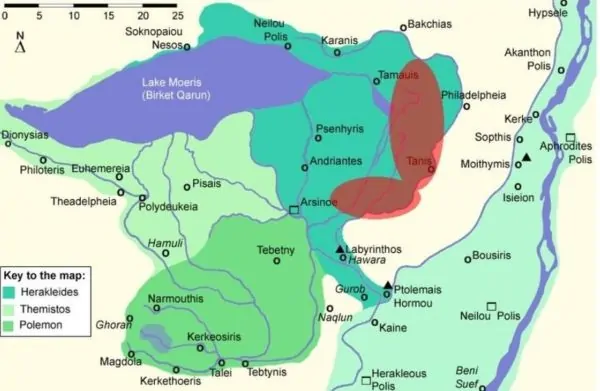
An earlier Ptolemaic dispute reveals how the acquisition of a funerary interest could depend on sustained approaches to officials. Amenneus son of Horos and Onnophris son of Teos, undertakers from Tanis in the northeastern Arsinoite nome, pursued an endowment associated with nearby Philadelpheia. The holding had belonged to Psenephmous, whose death became central to competing accounts of its legitimate disposition. Their surviving dossier records efforts to bring the matter before authorities capable of investigating the claim and enabling the proposed acquisition.
According to the petitioners, three undertakers from Philadelpheia, Abykis, Pasis, and Kelechonsis, had improperly appropriated the endowment after Psenephmous died. Amenneus and Onnophris asserted that he had supported the rebels and had left no heirs, circumstances they presented as grounds for confiscating and auctioning his property. Their case sought to transform possession by professional rivals into a matter requiring royal intervention. The allegation of rebellion placed the deceased’s political conduct within the account of his property’s status, while the asserted absence of heirs addressed the possibility of a legitimate successor. Baetens suggests that this second argument probably acquired importance after an amnesty allowed former rebels and their families to reclaim confiscated possessions. On that interpretation, insisting upon heirlessness answered a potential obstacle to the disposal the petitioners wanted. The development of their argument would reflect changing grounds upon which intervention could be requested, rather than the straightforward application of an uncontested rule. These remain elements of an interested presentation, whose reception must be distinguished from independent confirmation that the rival practitioners had acted unlawfully.
The petitioners’ commercial objective was explicit in their attempt to acquire the holding through the authorities. P.Tarich. 10 preserves a submission concerning its purchase addressed to Argeios, an official bearing the title epimeletes. Amenneus and Onnophris were advancing a proposal dependent upon the state’s claimed power to dispose of the interest, rather than seeking the restoration of an endowment they asserted had previously belonged to them. Their initiative demonstrates how professional competition could generate an appeal for administrative action whose successful outcome would create a new economic opportunity for those requesting it.
The ensuing correspondence shows what an inquiry could require before that opportunity became realizable. P.Tarich. 11 contains a petition to Petosiris, the royal scribe or basilikos grammateus, recounting preceding action and seeking completion of the business according to royal ordinances. P.Tarich. 12 preserves copies of associated communications, including a report by Phanesis, the village scribe of Philadelpheia, dated to 29 April 184 BCE. A forwarding message from Petesouchos, the topogrammateus, is dated five days later, on 4 May. These documents connect information gathered at village level with its transmission through officials occupying different administrative positions. They also make the accumulated written record part of the petitioners’ continuing approach to decision makers. A renewed submission could refer to an inquiry already undertaken and support that account through copies of communications generated by officials themselves. Preserving those copies gave the applicants documentary resources for pressing the matter beyond their original allegations. The sequence establishes administrative attention to the proposed transaction, but the surviving communications do not document a completed auction or acquisition.
Local officials could themselves become objects of complaint. In P.Tarich. 13, Onnophris appears without Amenneus, and Phanesis is included among those accused, whereas earlier documents place the village scribe within the official inquiry. Baetens considers the possibility that this petition belongs to a later phase, without treating its position in the sequence as certain. The possible change is significant because it places the conduct of an official involved in investigating the property within the disputed account, while establishing neither his wrongdoing nor the reason Onnophris acted alone.
Religious authority also entered the petitioners’ proposed means of resolving the affair. Baetens notes their request that the royal judges known as the chrematistai involve the prophet of Souchos. Seeking that involvement recognized a priestly office as relevant to the examination of a funerary interest, within proceedings pursued through judicial authority. Knowledge associated with the religious administration of funerary work could help clarify the character of a holding whose disposition had become contentious. The request envisaged consultation across offices with different forms of competence, rather than leaving every question to the officials transmitting the paperwork. Its preservation establishes what the petitioners wanted the judges to arrange; it does not establish the prophet’s eventual response or make him the author of a final decision. The episode shows practitioners attempting to assemble an effective combination of authoritative knowledge and administrative action.
Placed beside this dossier, Athenagoras’s communication represents a different documentary effort to secure action. Amenneus and Onnophris sought investigation and a prospective transaction, supporting their approaches through allegations and records of prior official involvement. Athenagoras requested practical cooperation from people already positioned to release Herakleides and assist his representatives. The contrast makes the documentary means of intervention historically significant, without assigning the chief physician’s request the procedural history preserved for the Tanis dispute. A letter addressed directly to custodians could seek an immediate result, while a contested acquisition might produce successive submissions as applicants attempted to advance their proposal. Professional interests acquired practical force through recognition by people able to act upon them, and the Tanis papers expose some of the sustained work required to obtain that recognition.
Obligations toward a Particular Body
Ta-sij appears in the Hawara records as a woman pursuing a complaint concerning the embalming of her deceased husband. Two Demotic documents, dated to March 220 BCE and published as P.Hawara IVa–b, preserve an undertaking obtained from the accused practitioner and her subsequent relinquishment of the complaint. Also cataloged as P.Carlsberg 37a–b, they identify the deceased and the contracting parties through personal names and parentage. Their precision makes the obligations recoverable at the level of an individual transaction, where a claimant sought assurances concerning the treatment and burial of one identifiable person.
The destination specified in the undertaking connected the promised service with Ta-sij’s family. Her husband was to be delivered to her father’s tomb in the necropolis of Hawara, giving the agreement a defined place against which performance could be assessed. The practitioner undertook to convey him as an already embalmed body, in the condition in which he had been entrusted to his care. This wording matters because it identifies the circumstances under which responsibility was accepted, rather than leaving the deceased’s condition entirely outside the agreement. Delivery to the named tomb was a commitment distinct from accepting possession of the remains. The reference to prior embalming did not dispose of the complaint, since the same instrument required an assurance concerning wrongdoing associated with that treatment. The document joined a prospective obligation to deliver the body with a procedure intended to address an accusation about its preparation.
Arensuphis, a god associated with a locality in the Arsinoite district, occupied a central position in that procedure. The practitioner promised to call before the god in Ta-sij’s presence concerning the disputed embalming. His undertaking required persistence until the prescribed divine response permitted the process to reach its conclusion. The woman’s presence placed her within the promised performance, allowing the procedure to address a demand she had made rather than an assurance exchanged exclusively among practitioners. Its terms gave religious action a specific contractual purpose, directed toward the accusation concerning her husband. The surviving wording does not explain the physical mechanism by which the god’s response was obtained. It would be premature to supply a moving image, an interpreted gesture, or a spoken pronouncement delivered by priests. What can be established is that the agreement made an acknowledged religious procedure part of the means by which the practitioner was to answer the complaint.
The assurance itself extended beyond a denial of wrongdoing personally committed. The practitioner was also to affirm that he had not allowed wrongdoing to occur in his name. That additional formulation made the scope of his answer broader than a description of what he had done with his own hands. It permits responsibility for acts associated with his professional involvement to be examined without turning the clause into evidence for a general Egyptian doctrine of negligence or liability for every assistant.
A financial condition gave the religious undertaking an additional means of enforcement. The practitioner promised ten pieces of silver in the circumstances specified by the agreement, with payment due within ten days of the relevant failure. The clause concerned refusal to perform the calling or its performance without the required divine response, although its unusual phrasing leaves aspects of the intended procedure difficult to reconstruct. The ten-day interval belongs to that conditional payment provision and supplies no general timetable for completing embalming or burial. His present and future property was pledged as security for the obligations recorded in the instrument. This language gave the undertaking a stated reach into his economic resources, beyond the assertion that he would comply. Ta-sij or her representative was authorized to pursue what was owed under its terms. The inclusion of a representative also allowed the demand to be advanced through someone acting for her, rather than making every stage dependent upon her personal intervention. These provisions establish the recourse contemplated by the agreement, while leaving any actual collection of money or action against property undocumented.
In the second instrument, Ta-sij represented the disputed matter as having reached a resolution. She recited that she had required an undertaking concerning the calling, that the practitioner had performed the procedure, and that his lack of wrongdoing had been established before the god. Her declaration recorded an acknowledged clearance within the process the parties had accepted. It did not admit that the accused man had mistreated the deceased, nor does it provide an independent physical examination of the remains. Ta-sij also acknowledged returning the document he had made for her concerning the calling. That return formed part of a written account in which the earlier demand was treated as satisfied and the associated accusation relinquished. The cession gave documentary expression to the ending of a specific complaint, without establishing that final interment had already occurred.
Her commitment carried a conditional financial consequence of its own. The cession stipulated twenty pieces of silver in connection with renewed accusations concerning the embalming, with payment governed by a thirty-day provision. Its language also addressed accusations by other people, extending the undertaking beyond a simple statement that Ta-sij herself would remain silent without establishing her authority over every possible claimant. The different sums and deadlines secured different parts of the arrangement, and neither their inclusion nor the recorded release proves that either penalty was paid.
These instruments make a claimant’s participation unusually visible within the documentary history of funerary work. Ta-sij obtained promises directed toward her husband’s body and subsequently declared the conditions under which she would relinquish her accusation. The practitioner’s qualifications supplied the setting for those commitments, but the agreement defined what he owed through the circumstances of this deceased person and the demand made on his behalf. Its distinctive religious procedure and difficult phrasing counsel against treating every clause as a standard rule governing Egyptian funerals. The pair demonstrates that obligations concerning a body could be articulated through promises whose performance another person was entitled to demand. The resulting record preserves an exchange in which an accusation prompted a secured undertaking, and an acknowledged response provided the stated basis for ending the dispute.
Speaking for Herakleides

Medical distinction supplied Athenagoras with a recognizable identity when he intervened concerning Herakleides. His designation as archiatros, conventionally translated as chief physician, expressed professional standing without specifying a legal power to direct funerary establishments. The title made his position visible to the recipients before they encountered the requested action. Their recognition of that position could give his approach weight independently of any formal jurisdiction over their work.
The description of Herakleides establishes a more personal basis for the intervention. Athenagoras identifies him through an affiliation that translations express as subordination or membership among his people. This supports a relationship of attachment without establishing the deceased’s precise duties or professional qualifications. More importantly, the association supplies the stated connection between the death being reported and the person taking action. Athenagoras presents himself as someone for whom Herakleides’s situation warrants practical involvement, and his dispatch of representatives gives that involvement a concrete form. The relationship continues to matter after the work or service connecting the two men has ended through death. Nothing in the letter converts this initiative into a general rule requiring chief physicians to arrange funerals for everyone attached to them. What it preserves is an individual accepting a role in the disposition of someone identified through their association. That action reveals one way in which professional attachments could become a basis for intervention beyond the immediate circumstances of employment.
Nikias and Krokos gave the intervention a means of operating through named intermediaries. By identifying the men he had sent, Athenagoras connected their mission with the instructions addressed to the people holding the body. The recipients were provided with a basis for recognizing whom they were being asked to assist. If carried out, the arrangement would replace local custody with custody exercised in execution of the sender’s request. Naming the representatives mattered to that prospective change, because their relationship with Athenagoras explained the capacity in which they sought to obtain Herakleides.
Alexandrian stolistai supplied another channel through which the deceased had become the subject of professional attention. Athenagoras mentioned their communication while writing under his own name, placing their involvement alongside the association he personally asserted. The reference could strengthen the expectation that the Hawara personnel would treat the matter as relevant to an established funerary network. A shared occupational designation offered a connection between the Alexandrian correspondents and local recipients that differed from the chief physician’s medical standing. These were potentially complementary grounds for securing attention, even though the letter does not establish that both approaches carried identical instructions. Athenagoras’s use of the reference brought another group’s engagement into his presentation of the case without reproducing its terms. Representation here could involve several interested parties, each approaching the same deceased person through a relationship whose significance depended upon recognition by others.
Kinship provides a useful comparison with this pattern of intervention. Ta-sij’s documents expressly identify her marital relationship to the deceased whose treatment she challenged, whereas Athenagoras foregrounds Herakleides’s attachment to himself. The difference concerns the relationships selected for expression in records serving different purposes. It cannot establish that Herakleides lacked relatives, that his relatives had declined to act, or that Athenagoras had displaced a family member entitled to make the arrangements.
Herakleides’s own preferences remain distinct from the measures Athenagoras requested. The letter contains no instruction attributed to the deceased explaining how he wanted his remains handled. That omission does not establish that he had expressed no wishes, since arrangements understood by the participants might have required little explanation in this communication. It does prevent the requested transfer from being described confidently as the fulfillment of his last instructions. An assessment of proper disposition must distinguish the plan recoverable from Athenagoras’s words from the preferences of the person whose body was involved. The sender’s initiative is historically visible through the actions he sought, while its relationship to Herakleides’s intentions remains unresolved. This distinction preserves the importance of the deceased without supplying him with a voice the document does not transmit. Professional association emerges as a practical avenue through which someone could intervene after death, giving continued effect to a relationship that had connected the deceased with the living.
Release without Payment

The monetary instruction makes the requested handover financially specific without describing an existing account. Athenagoras wanted Herakleides released without a charge being imposed, thereby placing a condition on the cooperation he sought. That condition concerns what the recipients were expected to do when responding to his approach. It cannot automatically be converted into a report that they had already demanded money, since the wording supplies no narrative of such an encounter.
Funerary expenditure encompassed obligations that could arise at different stages and through different relationships. Cannata’s treatment distinguishes questions concerning the provision of materials and equipment from the costs of mummification and burial, while also examining burial taxation. These categories matter because a sum associated with a deceased person might have rested upon work undertaken, supplies furnished, or an obligation arising through a recognized institution. The absence of a stated amount in Athenagoras’s letter prevents any proposed charge from being placed confidently within that range. Nor does the instruction identify a levy, specify an agreed price, or name the person who would otherwise have been expected to pay. Its breadth expresses the concession desired more clearly than the basis upon which money might have been collected. A reader can establish that payment was not to precede or condition the release requested by the sender. Reconstructing the obligation being waived requires information that the monetary clause itself does not provide.
Compensation for services already furnished raises a different issue from income claimed through an exclusive professional entitlement. Evidence that someone had worked on a body would help explain an expenditure, but would not by itself establish who had authorized the work or accepted responsibility for its cost. Conversely, recognition of a professional privilege would not prove that its holder had performed every service for which payment might be sought. These distinctions become important if Athenagoras’s instruction is understood as denying compensation altogether. The historian would then need to connect the recipients’ actions with the arrangements under which those actions were undertaken. The letter leaves that connection unstated, making it difficult to identify either the extent of a compensable service or the grounds for rejecting payment.
Pestman treated uncompensated release as evidence that the local practitioners had acted improperly. His commentary states that their being required to relinquish the corpse without compensation “shows that they were in the wrong.” The inference gives the payment clause a role in explaining the proposed territorial infringement, connecting the denial of proceeds with an absence of professional entitlement. It offers a coherent reason for the instruction if the recipients had undertaken a burial they were not authorized to perform. Its strength depends upon establishing that relationship between unauthorized action and nonpayment in this case. Athenagoras’s request records the outcome he sought, while an acknowledged finding would establish a different kind of evidence about what the recipients owed him. The contextual material on restricted funerary rights makes Pestman’s explanation institutionally plausible, but it cannot make the sender’s desired concession equivalent to an admission by those receiving the letter. To use nonpayment as confirmation of wrongdoing, it would be necessary to establish why that financial outcome followed from the relevant restriction. Otherwise, the proposed infringement explains the instruction only after the instruction has helped supply the infringement.
Athenagoras’s standing leaves other possible grounds for requesting a concession. Professional accommodation or a favor sought through personal influence could explain an appeal for cooperation without proving that the recipients lacked a valid interest. Equally, the letter might presuppose an understanding whose terms did not need to be repeated. These possibilities prevent the financial instruction from carrying a single necessary explanation, although none can be promoted into a documented exemption or agreement merely because it would make the request intelligible.
Assistance with conveyance also gives the financial question a practical dimension beyond the moment of surrender. The recipients were asked to help the representatives proceed with the body, an undertaking that could require time and resources even if no charge was collected at departure. The letter does not allocate those expenses or explain what support the men sent by Athenagoras would bring to the operation. A request that the establishment refrain from charging leaves open how the work was to be sustained. It also supplies no accounting of expenditure beyond the stage in which the local personnel were asked to participate. The monetary condition belongs within an arrangement for release and onward assistance, whose wider distribution of costs remains undefined.
Comparison with the paired documents concerning Ta-sij clarifies the difference between a financial instruction and a recorded settlement. Those instruments specify conditional sums, identify the events making them payable, and preserve undertakings made by the respective parties. Their penalties cannot serve as a tariff for ordinary funerary services; their comparative value lies in the explicit connection between a monetary consequence and a stated obligation. SB I 5216 contains no equivalent acknowledgment from its recipients accepting a financial liability or surrendering an agreed claim. That difference reflects the purposes of the documents, rather than making the letter an unsuccessful version of a contract. Athenagoras’s communication could seek practical action without reproducing the terms that a formal settlement would record. Its monetary clause establishes a clear demand for cooperation without payment, while leaving the justification and acceptance of that demand to be investigated through the surrounding institutional evidence.
Conveying the Dead across Institutional Boundaries

Ptolemais marked the stated limit of the assistance Athenagoras requested from the Hawara personnel. They were to release Herakleides and help convey him there with the men sent to collect him. Naming that destination gave their proposed participation an identifiable geographical extent. It also distinguished the work expected from these recipients from whatever arrangements might govern the body after their involvement ended.
Pestman identified the place as Ptolemais Hormou, at the entrance to the Arsinoite nome, an identification also adopted in Derda’s discussion. This places the requested movement within the connections between the Fayum and the Nile Valley. The geographical interpretation helps explain why assistance might be defined through a destination beyond the cemetery itself. It allows the instruction to be understood as directing cooperation toward a point through which a further journey could be arranged. Alexandria commonly supplies that further destination in scholarly reconstructions, encouraged by the involvement of stolistai from the city and Pestman’s understanding of Athenagoras’s connections. Yet the letter names Ptolemais as the destination of the requested assistance without specifying an Alexandrian burial place. Regional orientation and an eventual destination must be established at different levels of confidence. The former follows the identification of the named locality, while the latter depends upon connecting that stage with relationships mentioned elsewhere in the correspondence.
Conveyance extended the requested cooperation beyond making the remains accessible. A release could permit the representatives to depart, whereas assistance with their progress called for an additional contribution from the people addressed. Their role was envisaged as continuing outside the immediate circumstances of custody. The collective instruction does not require every priest or stolistēs to have travelled personally, since the requested work could have been arranged through participants whose individual duties were left unspecified. What matters is that Athenagoras sought support for movement as part of the recipients’ response. The instruction treated departure as an operation to be assisted, giving local cooperation a practical reach beyond surrender of possession alone.
The point at which custody would change is less clearly defined than the endpoint of that assistance. Derda envisaged Athenagoras’s people taking over the body at Ptolemais, presenting a plausible arrangement for reception there. No recipient at that destination is named in the surviving text. Nikias and Krokos had already been designated as the men sent for Herakleides, making another arrangement possible in which they assumed responsibility before local assistance ceased. Under that reading, the body could travel in their charge while others continued to facilitate its conveyance. Neither possibility can be converted into a documented reception at Ptolemais. The distinction matters because a boundary in the work expected from one group need not coincide precisely with the moment at which another group accepted custody.
The material form of the journey remains undescribed. Neither a means of carriage nor an elapsed travelling time is given, and the text does not identify a container. Herakleides’s preparation for movement is likewise left outside its account, preventing the logistical reconstruction from beginning with a securely described embalmed body. The proposed cooperation is recoverable in greater detail than the physical arrangements through which it was to be accomplished.
Comparison with the undertaking obtained by Ta-sij helps clarify what a named destination could establish. Her agreement specified delivery to a family tomb, connecting movement with an identified burial place. Athenagoras’s instruction instead defined assistance through Ptolemais, without naming an equivalent final resting place. The difference concerns the extent of the task expressed in each document, rather than the seriousness with which either deceased person was to be treated. If Ptolemais served as a staging point, the local undertaking could have been fulfilled while further arrangements remained necessary. Continuity would then depend upon coordination between commitments whose geographical extent differed. Movement across an institutional boundary can be understood in this practical sense, as a change in the people expected to supply assistance or accept responsibility. It need not imply a formally regulated checkpoint or a territorial frontier whose crossing is documented in the letter. The journey envisaged for Herakleides depended upon connecting limited acts of cooperation so that the ending of one group’s participation could become part of an onward arrangement.
Burial and the Continuing Responsibilities of Funerary Professionals
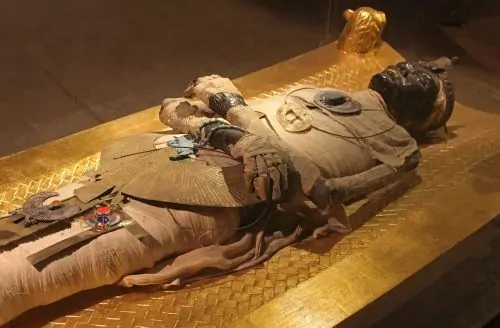
The Greek and Demotic papers studied by Pestman bring the Theban choachytes into view through relationships extending beyond initial interment. Their association with libations identifies work directed toward people who had already been buried. The documentary groups also preserve the household circumstances within which professional interests were maintained. These materials make it possible to investigate how the placement of remains could begin a period of service whose obligations required continued recognition among the living.
Pouring a libation involved an action performed for a recipient whose identity mattered after the funeral. Where repeated observances formed part of an undertaking, completing one occasion of service would not exhaust the practitioner’s responsibility. The burial place became somewhere to which an authorized person needed access, rather than simply the destination at which the original commission ended. This gives the relationship between families and funerary personnel a temporal dimension that the preparation of a corpse alone cannot explain. Arrangements supporting subsequent rites had to accommodate the continued involvement of people capable of performing them. Their significance could persist after the circumstances of the funeral had ceased to require immediate attention. The extent of that involvement depended on the undertaking concerned, since evidence for continuing service does not establish one schedule or an unlimited obligation applying to every deceased person. The historical task is to identify how commitments were sustained within the organization of mortuary work.
A Theban contract discussed by Brian Muhs supplies a concrete example of how service could be connected with the provision of burial space. Papyrus BM 10240, dated to year twenty of Ptolemy III, or 228 BCE, records the appointment of a choachyte who supplied the tomb while retaining ownership. The arrangement brought professional appointment and the material accommodation of burial within the same transaction. It also distinguished the provision made for the deceased from an outright transfer of the burial place. Muhs notes that contractual forms varied according to who supplied the tomb, with some relationships expressed through leases. These variations matter because the physical setting of mortuary service could be governed through an arrangement different from the one identifying the person responsible for its performance.
Family transmission introduces another question about the durability of such relationships. The preservation of professional interests within the Theban documentary groups shows that their management could extend beyond an individual practitioner’s career. A successor’s position might depend upon the recognition of claims established before that person assumed an active role. But continuity of an entitlement must be distinguished from the uninterrupted performance of a rite for the same deceased recipient. An interest could encompass prospective services and associated benefits without requiring every surviving document to enumerate obligations toward people already buried. Identifying what passed between holders is essential to reconstructing what remained to be done. Family papers preserve the management of professional claims, while the terms of individual undertakings remain necessary for determining the services attached to them.
Collective rules provide evidence for another form of continuing obligation among the Theban practitioners. P.Berlin 3115, dated to 109–106 BCE, concerns the association of choachytes connected with Amenope at Djeme and regulates participation in its religious life. Its provisions include attendance associated with burial and liturgy, placing conduct within expectations shared by members. Such obligations belonged to the organization of the group itself and must be distinguished from a service schedule promised to an outside client. Attendance at a fellow member’s funeral could express a responsibility arising through association membership, even where those attending also earned income from funerary work. The practitioner could participate in mortuary relationships as a colleague as well as a provider of services. The rules made aspects of that participation matters of collective concern, extending responsibility beyond whatever one person had agreed with a commissioning household. They reveal an organized setting in which the conduct expected around death could be sustained through membership and shared observance.
Prescriptive records establish expectations more readily than repeated performance. An agreement or association rule can identify an obligation without demonstrating that every required act occurred. The survival of a professional claim likewise proves that an interest was recorded and managed, rather than providing continuous observation of the rites associated with it. This distinction allows continuing responsibilities to be examined without turning documentary durability into an assumption of unfailing care.
Postburial service changes how the relationship between privilege and responsibility should be understood. Recognized access to funerary work could support a livelihood while also identifying people expected to act for the dead after the immediate funeral arrangements had been completed. Continuing responsibility need not require uninterrupted physical possession of remains, since service could depend instead upon access to a burial place and recognition of the role undertaken there. Changes in personnel or contractual arrangements could then raise questions about who would perform subsequent acts, even when the location of the deceased remained settled. The Theban evidence cannot supply an otherwise unrecorded agreement governing Herakleides, but it expands the institutional comparison beyond the immediate release and movement of his body. A history of professional care must include the maintenance of commitments after interment, when placement could be complete while work undertaken for the deceased continued.
Was This a Burial Dispute or an Ordinary Request for Assistance?
The following video from Timeline – World History Documentaries covers the mummification process:
The most substantial objection is that SB I 5216 is intelligible without a preceding infringement. Athenagoras could have been arranging an agreed or readily negotiable transfer through people accustomed to dealing with the dead. Such cooperation would still require information about who was being collected and what assistance was wanted. The existence of the letter can be explained by the practical requirements of organizing movement, without assuming that its purpose was to overcome resistance.
On this reading, the individual instructions form a coherent arrangement for collection. Naming Nikias and Krokos identified the representatives whom the recipients were being asked to assist, while mentioning Alexandrian colleagues connected their mission with another professional approach. Ptolemais supplied a limit to the requested local participation. The condition concerning payment could establish the terms Athenagoras wanted without correcting an earlier unlawful demand. An accommodation might be requested because the sender expected cooperation through professional relationships, even where the recipients had committed no wrong. A concise message carrying such instructions would have little need to explain the entire history of the arrangement to people already involved. “Ordinary” in this interpretation describes the document’s coordinating function, rather than a statistically established frequency of free assistance. The attraction of the reading is that the actions expressly requested explain the communication without requiring an additional confrontation to account for them.
Pestman’s interpretation still draws strength from institutions genuinely attested in the wider evidence. Undertakings restricting the acceptance of bodies show that professional entitlement could affect who legitimately assumed funerary work. Where such restrictions applied, a body’s presence in one establishment need not settle that establishment’s right to perform the services concerned. Uncompensated release could then fit a corrective arrangement following an unauthorized intervention. The reconstruction has a historical foundation, and the brevity of the letter cannot exclude a grievance already understood by its participants.
The difficulty lies in deciding how much the comparative evidence can establish about this encounter. Documents assembled to advance property claims or settle complaints disclose the language of contention because contention helped produce them. Their detailed allegations illuminate the circumstances in which professional rights could become disputed, but those circumstances cannot simply be supplied to another communication. Equally, courteous language in a short letter provides no positive demonstration that relations were harmonious. Interpretation also has to contend with the unequal visibility of the participants’ positions. The surviving instructions express what Athenagoras wanted, leaving the recipients’ understanding of their obligations unavailable. People who had furnished services might have possessed an interest in remuneration, although neither that interest nor any disagreement about it can be reconstructed as an actual response. Accepting the requested financial outcome as inherently justified would give the sender’s position the force of a determination that the document does not record. A fair assessment must examine his intervention without treating either his professional standing or his concern for Herakleides as sufficient to establish the recipients’ fault.
This challenge narrows the claim that Herakleides’s case can sustain while clarifying the value of its institutional setting. The letter securely records an attempt to obtain cooperation concerning a deceased person; actual obstruction remains unestablished. The broader papyri explain why practitioners’ recognized interests could matter to such an arrangement, and they demonstrate that claims were sometimes contested. They also reveal obligations through which funerary work could be organized and maintained, giving professional privileges a role in facilitating care. Herakleides’s correspondence cannot establish which effect predominated in his circumstances. The resulting interpretation treats territorial infringement as a possible explanation of the request, while grounding the case’s historical significance in the documented effort to arrange responsibility through several participants. That formulation preserves the possibility of conflict without requiring institutional dependence itself to count as evidence of failure.
Conclusion: Who Could Decide Where Herakleides Belonged?
Athenagoras approached the people holding Herakleides’s body with a definite proposal for changing its circumstances. His professional position and association with the deceased supplied the stated basis for an intervention that required others to act. The instructions identified representatives who were to obtain the remains and specified how far local assistance should extend. These details show where he sought cooperation, without establishing that his standing alone gave him authority over every decision concerning the burial.
The wider documentation explains why such an intervention could engage relationships extending beyond immediate custody. Professional interests were recorded as holdings capable of division, while agreements concerning individual deceased people could define undertakings that a claimant was entitled to demand. The connection between entitlement and obligation varied with the institution and transaction involved. Ta-sij’s documents, for example, secured promises through provisions reaching the practitioner’s property, making responsibility economically consequential without treating possession of the body as sufficient performance. Other evidence places funerary service within arrangements that continued after interment, when access to burial space and the recognition of professional roles remained relevant. These practices made the organization of care dependent upon more than technical preparation of remains. They also supplied different means of identifying who could act and what a person undertaking service had promised to accomplish. Disputes exposed the difficulty of reconciling those claims, but the same documentary arrangements could support the performance of obligations toward the dead.
Recognition of an entitlement and fulfillment of a responsibility remain separate historical findings. A recorded interest could explain who expected to perform services or receive proceeds, while an undertaking could specify what another party was entitled to require. Evidence that the promised action occurred would establish something further. For Herakleides, the communication survives at the point of requesting action, leaving its execution and his eventual burial unresolved.
The question of where Herakleides belonged must remain distinct from any assumption about his birthplace or preferred resting place. His own instructions are not preserved, and Athenagoras’s proposed arrangement cannot simply be substituted for them. What can be reconstructed is an attempt to make the deceased’s association with a living person effective within a setting of recognized professional interests. Pestman’s explanation offers one possible account of the difficulty behind that attempt, while the ordinary-assistance reading leaves its practical purpose intact. Either interpretation requires attention to how the recipients’ participation was sought, rather than allowing the possession of a title or the custody of remains to settle the entire matter. The historical significance of the case lies in that effort to secure action for an individual through relationships whose precise authority had to be understood by those involved. The papyrus preserves an attempt to give practical effect to responsibility for Herakleides through the people who could release and convey his body.
Bibliography
Affiliate disclosure: Amazon links on this site are paid links. As an Amazon Associate I earn from qualifying purchases.
- Allen, James P., trans. The Ancient Egyptian Pyramid Texts. 2nd ed. Atlanta: Society of Biblical Literature, 2015.
- Armoni, Charikleia. Das Archiv der Taricheuten Amenneus und Onnophris aus Tanis (P.Tarich). With a contribution by Heinz-Josef Thissen. Papyrologica Coloniensia 37. Paderborn: Ferdinand Schöningh, 2013.
- Athenagoras. “From the Chief Physician.” Select Papyri 1.104. Attalus. February 21, 2018.
- Baetens, Gert. “New Perspectives on the Undertakers from Tanis.” Bulletin of the American Society of Papyrologists 59 (2022), 289–310.
- Brier, Bob and Ronald S. Wade. “Surgical Procedures during Ancient Egyptian Mummification.” Chungara: Revista de Antropología Chilena 33:1 (2001), 117-123.
- Cannata, Maria. Three Hundred Years of Death: The Egyptian Funerary Industry in the Ptolemaic Period. Culture and History of the Ancient Near East 110. Leiden: Brill, 2020.
- Derda, Tomasz. “Necropolis Workers in Graeco-Roman Egypt in the Light of the Greek Papyri.” Journal of Juristic Papyrology 21 (1991), 13–36.
- Eyre, Christopher. “The Use of Documents in Pharaonic Egypt.” In The Oxford Handbook of Papyrology, edited by Roger S. Bagnall, 77–96. Oxford: Oxford University Press, 2009.
- Hunt, A. S., and C. C. Edgar, eds. and trans. Select Papyri. Vol. 1, Private Affairs. Loeb Classical Library 266. London: William Heinemann; Cambridge, MA: Harvard University Press, 1932. Especially no. 104.
- Ikram, Salima. Death and Burial in Ancient Egypt. Cairo: American University in Cairo Press, 2003.
- Lüddeckens, Erich. Demotische Urkunden aus Hawara. With the collaboration of Rolf Wassermann. Verzeichnis der orientalischen Handschriften in Deutschland, Supplementband 28. Stuttgart: Franz Steiner, 1998.
- Muhs, Brian. The Ancient Egyptian Economy: 3000–30 BCE. Cambridge: Cambridge University Press, 2016. Especially 211–252.
- Papyrus BM 10240. Contract appointing a choachyte. Thebes, 228 BCE. British Museum, London.
- Papyrus Berlin 3115. Regulations of the association of choachytes. Thebes, 109–106 BCE. Ägyptisches Museum und Papyrussammlung, Berlin.
- Pestman, P. W. The Archive of the Theban Choachytes (Second Century B.C.): A Survey of the Demotic and Greek Papyri Contained in the Archive. Studia Demotica 2. Leuven: Peeters, 1993.
- Pestman, P. W. The New Papyrological Primer. 2nd ed., rev. Leiden: Brill, 1994. Especially no. 12, 94–95.
- Reymond, E. A. E., and J. W. B. Barns. Embalmers’ Archives from Hawara. Catalogue of Demotic Papyri in the Ashmolean Museum 1. Oxford: Griffith Institute, 1973.
- Sarri, Antonia. Material Aspects of Letter Writing in the Graeco-Roman World. Berlin and Boston: De Gruyter, 2017. Especially 150 and 351.
- Sauneron, Serge. The Priests of Ancient Egypt. Translated by Ann Morrissett. Ithaca, NY: Cornell University Press, 2000.
- Taylor, John H. Death and the Afterlife in Ancient Egypt. Chicago: University of Chicago Press, 2001.
- Thompson, Dorothy J. Memphis under the Ptolemies. 2nd ed. Princeton, NJ: Princeton University Press, 2012.
- Uytterhoeven, Inge. Hawara in the Graeco-Roman Period: Life and Death in a Fayum Village. With an appendix by Sylvie Marchand. Orientalia Lovaniensia Analecta 174. Leuven: Peeters, 2009.
Originally published by Brewminate, 11.16.2026, under the terms of a Creative Commons Attribution-NonCommercial-NoDerivatives 4.0 International license.
About the Author