In ancient Mesopotamia the gods infused every aspect of daily life and this, of course, extended to health care.

By Dr. Joshua J. Mark / 05.21.2014
Professor of Philosophy
Marist College
Introduction
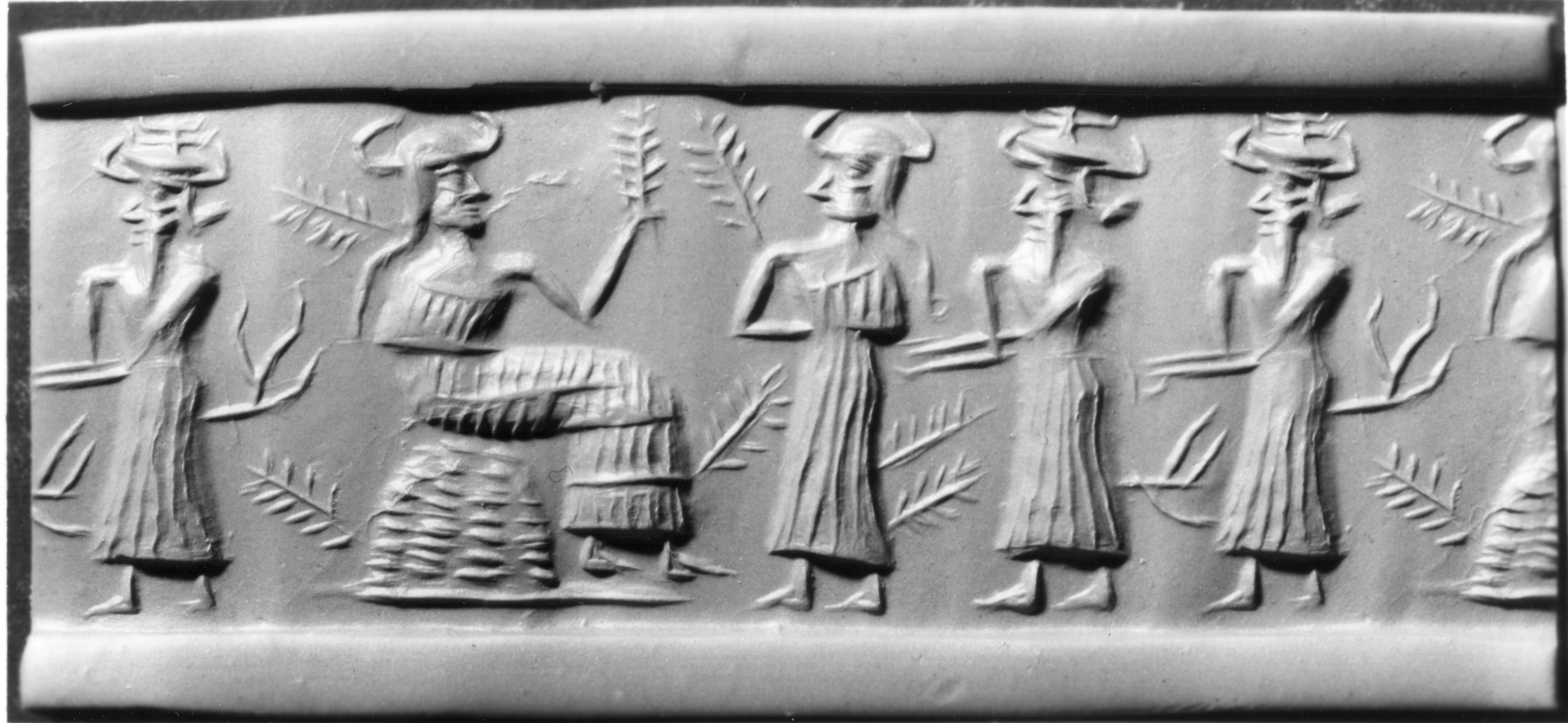
In ancient Mesopotamia the gods infused every aspect of daily life and this, of course, extended to health care. The goddess Gula (also known as Ninkarrak and Ninisinna) presided over health and healing aided by her husband Pabilsag (who was also a divine judge) and her sons Damu and Ninazu and daughter Gunurra. Gula was the primary deity of healing and health and was known as the “great physician of the black-headed ones” (meaning the Sumerians). Still, the rod intertwined with serpents, which today is the insignia of the medical profession, originated not with her but with her son, Ninazu, who was associated with serpents, the underworld, and healing. His name means `Lord Healer’ and he was steward of the underworld. Inscriptions differ as to whether he was the son of Gula or Ereshkigal but are uniform in their presentation of Ninazu, and his serpents, associated with health and healing (the continuation of mortal life) just as he was a part of death and dying (the life which came after). The serpent symbolized regeneration and transformation because it sheds its skin. Ninazu was associated with the serpent because he helped people to pass over to the afterlife or enabled them to recover from whatever ailed them. Doctors in Mesopotamia were simply the agents through which these deities worked in order to maintain the health of the people of Mesopotamia.
Medicine and the Gods
The primary function of the physician then, as now, was to heal people of illnesses and keep them in good health. The first step in treating a sick person was diagnosing the cause of the illness (as it remains so today), and that cause was always attributable to a sin the patient had committed, whether knowingly or unknowingly. The scholar Jean Bottero writes:
Every breach of whatever norm – immemorial `bans’; customary imperatives; implicit instructions of the law, or explicit instructions of the authorities – became an offence against the rule of the gods, a `misdeed’ against them, a `sin’. And as sovereigns punish anything that defies their authority, it was now up to the gods to suppress such unruliness with suitable punishments. These punishments were the ills and misfortunes of life, no longer inflicted by `demons’ on a whim [as was previously thought] but henceforward on the orders of the gods (168).
The Mesopotamians patterned their gods on themselves and their own communities, however, and so, just as a king might choose to pardon one’s offense, so could the gods. In order for them to do so, a person who was suffering simply had to confess the sin and submit to the proper treatment to remove the hand of whatever demon had been sent by the gods to inflict the punishment on the patient. Illness, in fact, was often referred to as `the hand of…’, as in “The patient is touched by the hand of the god Shamash” or “The hand of the demon Lamashtu is upon her” or the hand of this or that unhappy ghost. Whatever malady the patient presented with, and whatever the final cure, the diagnosis always referenced the will of the gods and their intervention in human affairs. Illness, then, equaled sin, and a cure for that illness required some form of confession of that sin, an acknowledgment that one had done wrong, and an affirmation to do right in the future.

Still, the gods reigned supreme, and it was entirely possible for a sick person to do everything right, and for the doctors to perform every incantation correctly and apply the proper medicines, and yet the patient would die. Even if one god intended only the best for the sick person, another god could have been offended and would refuse to be placated, no matter what offerings were made. To further complicate the situation, one also had to consider that it was not the gods causing a problem but, instead, a ghost whom the gods allowed to cause the trouble to rectify some wrong. The scholar Robert D. Biggs writes, “The dead – especially dead relatives – might also trouble the living, particularly if family obligations to supply offerings to the dead were neglected. Especially likely to return to trouble the living were ghosts of persons who died unnatural deaths or who were not properly buried – for example, death by drowning or death on a battlefield” (4). Medical books from the library of Ashurbanipal make it clear, however, that doctors had an impressive amount of medical knowledge and applied this regularly in caring for their patients and appeasing the gods and the spirits of the dead. Prior to the discovery of ancient Mesopotamian inscriptions like those found at Nineveh and Mari, scholars believed that the Mesopotamians had no doctors at all because of the account given by the Greek historian Herodotus. In his Histories he writes about health care in Mesopotamia:
They bring out all their sick into the streets, for they have no regular doctors. People that come along offer the sick man advice, either from what they personally have found to cure such a complaint, or what they have known someone else to be cured by. No one is allowed to pass by a sick person without asking him what ails him (Nemet-Nejat, 77).
Doctors in Ancient Mesopotamia
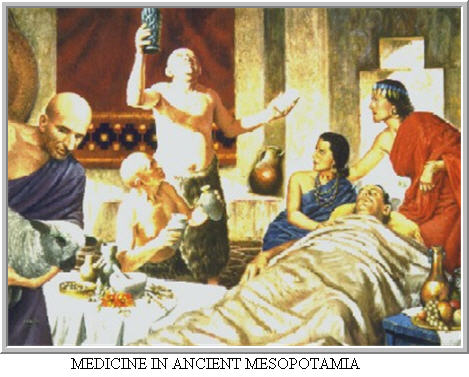
While this custom may have prevailed in parts of Mesopotamia, and at different times, the claim that Mesopotamians had no doctors is incorrect. There were two primary kinds of doctors throughout Mesopotamia’s history: the Asu (a medical doctor who treated illness empirically) and the Asipu (a healer who relied upon what modern sensibilities would call `magic’). There were also surgeons (who seem to have come from either of these medical backgrounds) and veterinarians (who also could be either Asu or Asipu). Dentistry was practiced by both kinds of doctors and both may have also presided at births although their role is unclear in this. It is certain that mid-wives (sabsutu) delivered the child, not the doctor, and yet the doctor was paid a fee for providing some kind of service at births, since records make it clear that they were paid more for the birth of a male child than a female. It is possible that the Asipu could have recited prayers to the gods or chants to ward off demons (most notably the demon Lamashtu who killed or carried off infants) or that the Asu could have eased labor pains with herbs but not assisted with the actual birth. As there is no mention of what precise purpose they served at a birth, however, this must remain speculation.
It is known that a pregnant woman, and one who was in labor, wore special amulets to protect her unborn child from Lamashtu and to invoke the protection of another demon called Pazuzu, who was a protective demon (it should be remembered that `demon’ did not always carry the connotation of evil that it does in the modern day. A `demon’ could be a benevolent spirit). Although modern-day scholarship sometimes refers to the Asipu as a `witch doctor’ and the Asu as a `medical practitioner’, the Mesopotamians regarded the two with equal respect. Biggs notes that “There is no hint in the ancient texts that one approach was more legitimate than the other. In fact, the two types of healers seem to have had equal legitimacy, to judge from such phrases as, `if neither medicine nor magic brings about a cure’, which occur a number of times in the medical texts” (1). The significant difference between the two types was that the Asipu relied more explicitly on the supernatural, while the Asu dealt more directly with the physical symptoms the patient presented with. Both types of healers would have accepted the supernatural source for illness, however, and the Asu should not be considered more ‘modern’ or ‘scientific’ than the Asipu.
The Physician at Work

Both types of physician operated out of the temples and treated patients there but also, more frequently, made house calls. Most patients were treated in their homes. The city of Isin was the cult center for the goddess Gula, and it is thought (though not entirely certain) that Isin served as a training center for physicians who were then sent to temples in various cities as needed. There is no evidence of private practice per se although kings and the more affluent had their own physicians. The doctor was always associated with some temple complex. Women and men could both be doctors though, as Bottero notes, “Women scribes or copyists, exorcists or experts in deductive divination [the Asipu and Asu] could be counted on the fingers of one hand” (117). It seems as though there were more female physicians in Sumer than elsewhere, and that women played a larger role in medicine prior to the advent of the Akkadian Empire and the dissemination of the Akkadian view of women as subordinate to men. From ancient texts it is known that the doctor shaved his head so as to be easily identifiable, and there has been some speculation that perhaps there were fewer female doctors because women were not as inclined as men to do so. This is unlikely, however, as women and men both routinely shaved their heads and wore wigs (a custom widely practiced later in Egypt). From the Gula Hymn (c. 1400 BCE) we know that doctors traveled about their city daily and carried with them the tools of their trade. Part of the hymn reads:
I am a physician, I can heal,
I carry around all healing herbs, I drive away disease,
I gird myself with the leather bag containing health-giving incantations,
I carry around texts which bring recovery,
I give cures to mankind.
My pure dressing alleviates the wound,
My soft bandage relieves the sick (Biggs, 10).
The physician, of both types but primarily the Asu, may also have made use of a portable bed. The scholar Emily K. Teall notes that, “a categorized list of physician’s equipment from Ugarit details a bed and coverlet, among surgical instruments and other medical trappings…seriously afflicted patients were examined and treated in bed, which in this instance was also the operating table. A coverlet could well be utilized in post-operative recovery” (2). Whether this list means that doctors carried a portable bed with them or simply made use of patients’ own beds is unclear. The Mesopotamians had an understanding of sickness being associated with uncleanliness (though they did not recognize ‘germs’ as one would today) and, since the poorer people of the cities slept on mats on the dirt floor, a bed to elevate a sick person for treatment would make sense. How the lone physician would have carried this through the city, along with everything else, presents a problem, however.
Treatments and Prescriptions
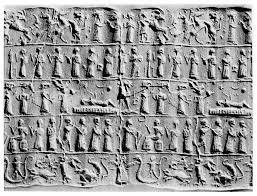
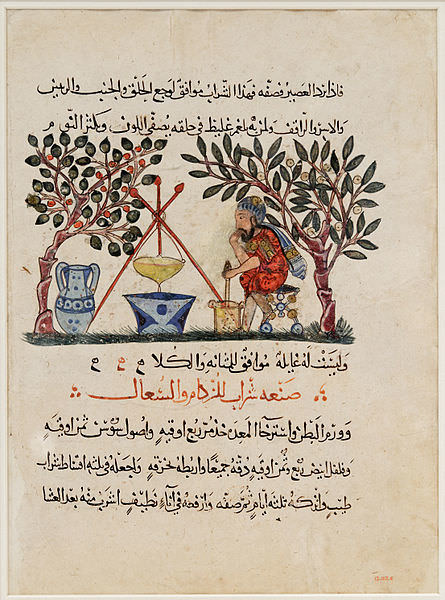
Fees for services were on a sliding scale depending on one’s social status. A doctor presiding over the birth of a noble was paid more than for a common birth. Prescriptions were on this same sliding scale and, whereas a doctor might be paid in gold for mixing a prescription for a prince, the payment for doing the same for a common person might be a bowl of soup or a clay cup. There is no evidence, however, that doctors refused to treat the poor and the same prescriptions were given, with the same ingredients, without regard for a patient’s social status. Prescriptions were ground by the doctor, usually, in the presence of the patient, while some incantation was recited. A prescription from Babylon for an injury to the face reads: “If a man is sick with a blow on the cheek, pound together fir-turpentine, pine-turpentine, tamarisk, daisy, flour of Inninnu; mix in milk and beer in a small copper pan; spread on skin, bind on him, and he shall recover” (Teall, 4-5). Antiseptics were made from a mixture of alcohol, honey, and myrrh, and surgery was more advanced than in other regions of the time (Teall, 5). Teall writes, “In the treatment of all wounds, there are three critical steps: washing, applying a plaster, and binding the wound” (6). The Mesopotamians recognized that washing a wound with clean water, and making sure the doctor’s hands were also clean, prevented infection and hastened healing. Hands and wounds were cleaned with a mixture of beer and hot water though, as Teall notes, “a liquid soap was already available” (6). Teall continues: “While some aspects of ancient Mesopotamian wound dressing are completely lacking as seen through the lens of modern biomedical practices…others were surprisingly advanced, such as the washing and the preparation of poultices for wounds” (6).
In addition to these poultices, of course, were always the recitations of prayers to the gods and incantations to ward off demons. Biggs notes that “the therapeutic medical texts frequently combine the two types of treatment, the medical (Asu) and the magical (Asipu)…The standard therapeutic texts normally describe a complaint, give a list of ingredients with instructions for their preparation, and give instructions for administering the medication” (4). These texts do not, however, give the specific amounts of ingredients to be mixed. Scholars believe that this is either because the physicians did not wish to give away trade secrets by having them written down, or because such information was not considered necessary as a doctor would already know how much of which herb to use from early training. Many of the plants and herbs mentioned in the texts cannot be identified today, and “we are not in a position to reproduce most of the prescriptions we have or to understand the effects of specific medications” (Biggs, 6). That the treatments were effective, however, is certain as the medical texts which have been discovered list treatments over a considerable span of centuries along with their efficacy.
Procedures and the Physician as Sex Therapist
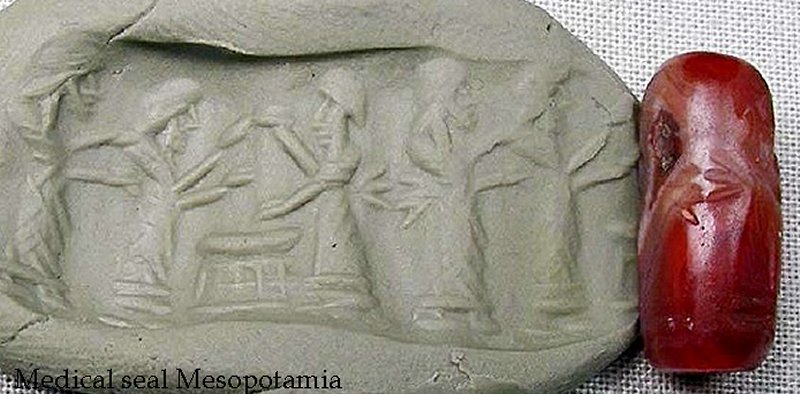
Biggs notes that “we have little evidence for the practice of dentistry as such” (7). Even so, there is evidence of healers who, today, would be called `dentists’, skilled at pulling teeth or allaying the pain of toothaches. A toothache was thought to be caused by a `tooth worm’ that, after its creation by the gods, refused all form of food except the blood from teeth. The worm cried out to the gods, “Let me live between the teeth and jaw! I will suck the blood from the teeth! I will chew upon the food in the jaw!” (Biggs, 7). A dentist would recite the incantation of the tooth worm and then administer a procedure, whether herbs or pulling the tooth, as the gods were called upon to smite the tooth worm and drive it from the patient. This seems to have been a standard and effective procedure as it, like many of the others, was consistently practiced.
Doctors also treated gastrointestinal problems, urinary tract infections, skin problems, heart disease, mental illness, and there were even eye, ear, nose, and throat specialists. Biggs notes that,
There is one text that apparently gives prescriptions for aborting a fetus. The relevant line reads, `to cause a pregnant woman to drop her fetus.’ The prescriptions consist of eight ingredients to be administered to the woman in wine and be drunk on an empty stomach. The section ends with the words, `that woman will drop her fetus’(9).
He also notes that, “besides dealing with illness of various sources discussed above, the Asipu was a sort of sex therapist. There was a special collection of texts known by its Sumerian name, SA ZI GA…literally `lifting of the heart’, where `heart’ seems to be a euphemism for penis” (15). These texts also deal with fertility problems in women but seem primarily focused on sexual potency in males and arousal in females. Biggs writes,
An example is the following passage from a Middle Babylonian text: `If a man loses his potency, you dry and crush a male bat that is ready to mate, you put it into water which has sat out on the roof, you give it to him to drink; that man will then recover his potency.’ A quite different approach is involved when the man’s and the woman’s sexual organs are to be rubbed with a specially prepared oils, sometimes mixed with magnetic iron ore (15).
This procedure was intended to improve the couple’s sex life. There is even a pregnancy test mentioned in the medical texts, whereby certain herbs were worn by a woman in her underwear which would absorb vaginal secretions and change color if the woman was pregnant. There were also practices to ensure fertility, optimal days during which a woman was more likely to conceive, and others to increase a woman’s sexual desire after giving birth.
Surgery and the Progress of Medical Knowledge
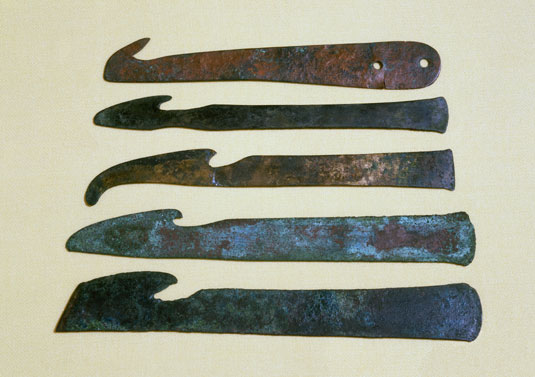
Doctors were not held liable if these procedures did not work. As the gods were the direct causes and curative agents of disease, a physician could only be held accountable for what he or she did or did not do in administering a procedure. If a prescription was followed precisely as written, even if the patient was not cured, the doctor had acted properly. The only exception to this rule concerned surgery where, if the operation failed, the doctor would have a hand amputated. Surgery was performed as early as 5000 BCE even though “the Mesopotamians knew little about anatomy and physiology; they were restricted by the religious taboo against dissecting a corpse. Animal anatomy may have helped, but the Mesopotamians dissected only the liver and lungs of perfectly healthy animals for divinatory purposes” (Nemet-Nejat, 82).
Although doctors understood the importance of taking a patient’s pulse to determine one’s state of health and recognized the importance of antiseptics and cleanliness, they never equated the pulse with a circulatory system which pumped blood through the body nor did they completely recognize uncleanliness as encouraging germs or infection. Nemet-Nejat writes, “in its two thousand years or so of existence, Mesopotamian medicine made little progress. The doctors still resorted to superstition and magical explanations. Though they could offer rational explanations for many symptoms and diseases, they never tried to collect data and theorize” (79). Proof of this is seen through certain medical texts themselves, known as the omen series, written down over many centuries which make clear how successful an Asipu will be with a patient based upon what sights the doctor sees while en route to the patient’s home:
If the exorcist sees either a black dog or a black pig, that sick man will die. If the exorcist sees a white pig, that sick man will live. If the exorcist sees pigs which keep lifting up their tails, as to that sick man, anxiety will not come near him (Nemet-Nejat, 79-80).
Following these predictions are others which describe certain diseases and symptoms and state how, based upon what is observed, the patient will either live or die. Dreams and visions of the patient are also taken into account: “If, when he was suffering from a long illness, he saw a dog, his illness will return to him; he will die. If, when he was suffering from a long illness, he saw a gazelle, that patient will recover. If, when he was suffering from a long illness, he saw a wild pig, when you have recited an incantation for him, he will recover” (Nemet-Nejat, 81).
At the same time as these `magical’ practices were in place, however, there was the continued practice of diagnoses based on empirical observation and what today would be termed `rational explanation’. The most famous instance of this is a letter from Zimri-Lim, King of Mari, to his wife concerning a woman of the court named Nanna who was suffering from some communicable disease. The king instructs his wife to keep Nanna from the others at court because the disease she has is contagious. This concept of contagion was never equated with the spread of germs, however; it was instead concluded that Nanna had committed some sin which made her ill and that, by proximity to the sick person, the gods would allow that disease to spread to others.
The Legacy of Mesopotamian Health Care
It would fall to the Egyptians to emphasize empirical observation and apply what one would term more `rational’ procedures in medicine. From Egypt, medical practice came to Greece and was codified by Hippocrates (c.460-370 BCE) who is known as “the father of western medicine”. Biggs claims that “There are some parallels between Mesopotamian medicine and medicine as attested in ancient Greece, but it does not appear that Greek medicine (in contrast to such fields as mathematics and astronomy) was in any way derivative of Mesopotamian medicine” (17).
Even so, the practices of the Mesopotamians certainly influenced the Egyptians from whom the Greeks received their understanding of medical practice and general health care. Teall writes, “More than a thousand years prior to the lifetime and teaching of Hippocrates, prior to the description of the acquisition and treatment of wounds in the Iliad…medicine in pre-1000 BCE Mesopotamia was a well-established profession that included diagnosis, pharmaceutical applications, and the proper treatment of wounds” (7). It is notable that the staff with intertwining serpents, the symbol of the medical profession in the modern day, is associated with Hippocrates and the Greeks when, in actuality, like medical practice itself, it originated in Mesopotamia.
Bibliography
- Medicine and Doctoring in Ancient Mesopotamia by Emily K. Teall
- Medicine, Surgery, and Public Health in Ancient Mesopotamia by Robert D. Biggs
- Bertman, S. Handbook to Life in Ancient Mesopotamia. (Oxford University Press, 2003).
- Bottéro, J. Everyday Life in Ancient Mesopotamia. (Johns Hopkins University Press, 1992).
- Nemet-Nejat, K.R. Daily Life in Ancient Mesopotamia. (Greenwood Press, CT, 1998).
Originally published by the World History Encyclopedia, 05.21.2014, under a Creative Commons: Attribution-NonCommercial-ShareAlike 3.0 Unported license.
About the Author