
What does the Bible say about how we are to treat refugees, immigrants and foreigners? It’s pretty clear, actually.

By Ray Albright
This question is making headlines these days. It’s a contemporary question and an old question which is addressed many times in the Jewish and Christian tradition.
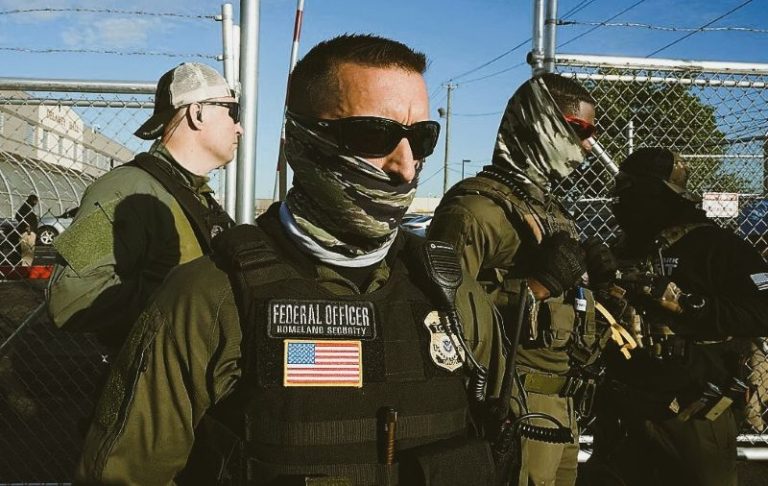
[Earlier this year], Attorney General of U.S. Jeff Session cite[d] the Bible to refute the criticism of his policy of separating parents from their children as a deterrent for refugees entering the U.S. (His verbatim remarks were): “I would cite the Apostle Paul and his clear and wise command in Romans 13 to obey the laws of the government because God has ordained them for the purpose of order.”
He [went] on to make this statement: “Orderly and lawful processes are good in themselves and protect the weak and lawful.”
I might point out, at this time, that this was the same verse being used by defenders of slavery in the U.S. South, the Nazi rule in Germany and apartheid in South Africa.
White House Press Secretary Sarah Huckabee Sanders said in her press briefing that,”It is very biblical to enforce the law. This is actually repeated a number of times throughout the Bible.” When pressed for more clarification as to why, her reply was, “Because it’s the law.”
So … What does the Bible say about how we are to treat refugees, immigrants and foreigners?
It’s pretty clear, actually, and starts all the way back in Exodus. God told Moses, and even the whole people of Israel, “You shall not oppress the resident aliens among you. You know the heart of an alien because you were aliens in the land of Egypt.” That’s two messages from God.
Number one: Care for the refugees and you need to remember, as outsiders and without friends, foreigners are vulnerable and often poor (just like the migrants and refugees today), so they needed special help…
Number two: God is reminding the Israelites that they were, themselves, aliens once when they were exiles in Egypt. The Old Testament reminds us of this in Exodus, Leviticus and Deuteronomy. In fact, Deuteronomy 10:18 states, “God loves the stranger.” In Psalm 146, “The Lord protects the stranger.”
This points out two essential things. First, God demands care for the refugees, migrants and aliens. Second, God has special love for them (in case you missed the point). In the book of Kings, Solomon tells his people to pay attention for the foreigner who does not belong to your people, Israel, who has come from a distant land. So what are we to do? Solomon says, “Do according to all that the foreigners calls us to do.” In other words, answer any need that the migrant or refugee has.
Jesus was even stronger about this in the New Testament. In the Parable of the Good Samaritan, Jesus tells the story of a Jewish man, going from Jerusalem to Jericho, who was beaten, robbed and left for dead. As he was lying beside the road, two people passed by: a priest and a Levite, from the man’s own religious group. They were probably afraid to stop because the road to Jericho was dangerous, filled with notorious thieves and robbers. Finally, a Samaritan man stopped to help. Now the Samaritans were the official opponent of the Jews, the outsiders.
But notice, the Samaritan doesn’t care about the danger, or maybe he does and helps the man anyway. Jesus reminds us that we’re called to help the stranger, even if there is risk involved. Jesus doesn’t say, “Help the stranger if it is risk free, or only if it’s convenient, or if that person is from the same religious group as you.” Jesus says, “Show mercy to the stranger, regardless.” He’s also saying that, just like the beaten man, our salvation depends upon it. In fact, Jesus says that the way we treat strangers will be a litmus test for entering into Heaven.
In Matthew 25:45, Jesus says,”Every time you didn’t help a stranger, you didn’t help me. That’s the way the Father decides who enters heaven.”
And just in case you think that this only applies to individuals, the “traditional” name for this passage in the New Testament might help. It’s called “The Judgement of the Nation.”
Perhaps the strongest message from Jesus is not what He said but what He did. After His birth, Mary and Joseph take Jesus from Israel to Egypt. Were there border guards and passports involved in what’s called “The Flight In to Egypt”? No! But Mary, Joseph and their Son were fleeing persecution and the threat of death at the hands of King Herod. So … using the contemporary definition, we can say that, among all the refugees that our world has seen were Mary, Joseph and Jesus!
Originally published by The Courier-Tribune (Ashboro, North Carolina) under the terms of a Creative Commons Non-Commercial license.
About the Author