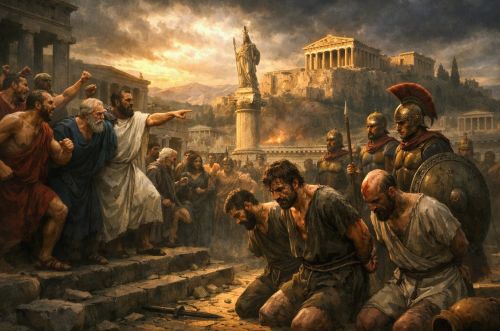
The Athenian settlement of 403 BCE stands as a rare example of democratic recovery that refused both vengeance and moral surrender.

By Matthew A. McIntosh
Public Historian
Brewminate
Introduction: Reconciliation without Commemoration
In 403 BCE, Athens emerged from one of the most severe internal ruptures in its history. The oligarchic regime known as the Thirty Tyrants had ruled through terror, executions, confiscations, and mass exile after Sparta’s victory in the Peloponnesian War. When democracy was restored, the city confronted a dilemma that has haunted political communities ever since: how to survive civil collapse without surrendering moral judgment. The Athenians understood that endless retribution would prolong instability and invite renewed violence, threatening the fragile return of civic order. At the same time, they recognized that treating betrayal as a regrettable but honorable chapter of the past would hollow democracy from within, dissolving the very distinctions that made self-rule intelligible. The problem was not merely how to punish or forgive, but how to remember without falsifying what had occurred.
The solution Athens adopted was striking in its restraint. The restored democracy enacted a broad amnesty designed to halt cycles of vengeance and stabilize the polis. Citizens swore not to prosecute one another for past political actions, an extraordinary act of collective self-limitation after years of bloodshed. Yet this amnesty was carefully bounded. Those who had collaborated with the oligarchic regime were reintegrated legally, but they were denied honor. No monuments were raised in their names. No civic rituals celebrated their deeds. The city chose peace without praise, forgiveness without commemoration.
This distinction mattered. By separating legal reconciliation from moral recognition, Athens preserved a shared understanding of what democracy was and what it was not. Collaboration with tyranny was not reframed as patriotic service or tragic necessity. It was treated as a civic failure that could be forgiven for the sake of stability but not redeemed through public memory. In refusing to mythologize betrayal, Athens protected the symbolic boundaries of democratic life. The city did not pretend that all past actions were morally equivalent in the name of unity.
The Athenian reconciliation of 403 BCE offers a durable model for democratic survival after internal collapse. Reconciliation does not require honoring those who helped destroy the polity and attempts to do so risk erasing the moral grammar that makes democracy meaningful. On the contrary, democratic stability depends on the ability to draw boundaries even as it forgoes revenge. By choosing amnesty without commemoration, Athens demonstrated that peace and principle need not be opposites. The refusal to celebrate betrayal was not an act of vengeance or exclusion, but an act of democratic self-preservation, preserving memory without weaponizing it and forgiveness without falsifying the past.
The Thirty Tyrants and the Destruction of Democratic Order
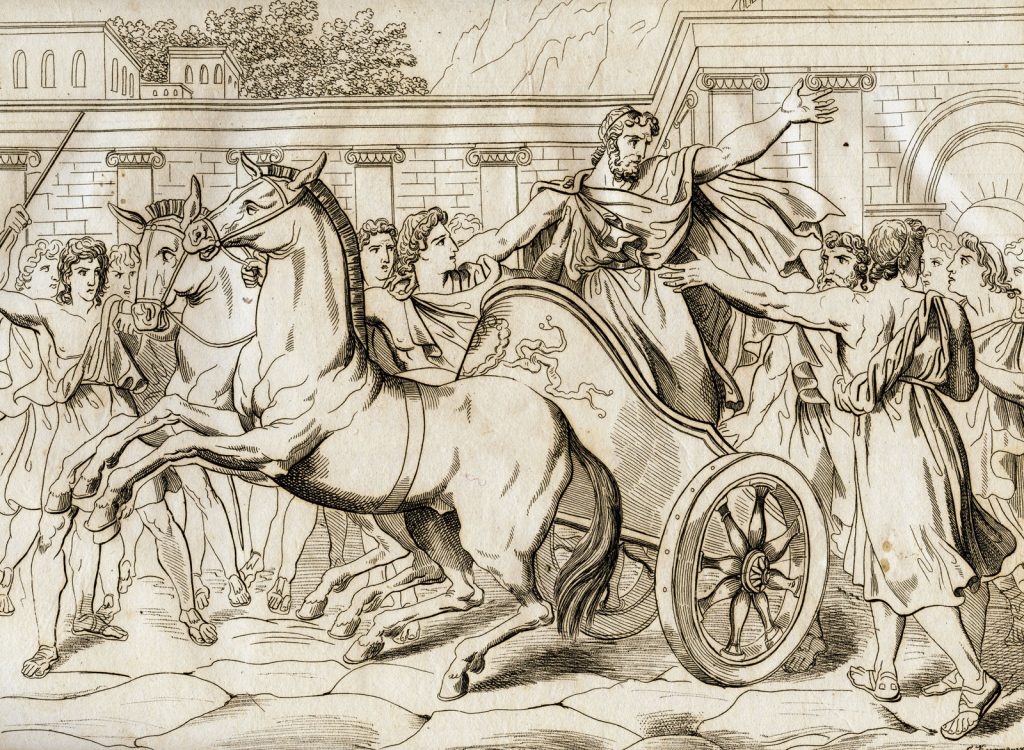
The regime known as the Thirty Tyrants did not merely suspend democratic procedures in Athens. It sought to dismantle the moral and institutional foundations of democratic life altogether. Installed with Spartan backing after Athens’ defeat in 404 BCE, the oligarchic council quickly moved beyond constitutional revision into systematic repression. Democratic norms of legal equality, civic participation, and public accountability were replaced by rule through fear. The Thirty governed not as caretakers of a damaged polity, but as agents of deliberate political rupture.
Central to their project was the elimination of legal constraint. The oligarchs restricted citizenship, dismantled jury courts, and hollowed out the popular institutions that had anchored democratic legitimacy. Established legal processes were replaced with ad hoc decrees enforced by armed loyalists. Executions were carried out without trial, often on the basis of denunciation or convenience. Property was confiscated to reward supporters and finance the regime, turning law into a mechanism of plunder as well as control. In this environment, law ceased to function as a shared framework binding rulers and ruled alike. It became an instrument of selective violence, applied according to political usefulness rather than justice. Democratic order was not merely paused. It was actively inverted.
The violence of the Thirty was not incidental excess or a byproduct of instability. It was a structural necessity of oligarchic rule. Their authority rested on exclusion, intimidation, and the permanent threat of death or exile. Ancient sources indicate that hundreds of citizens were executed and thousands driven from the city, a scale of repression unprecedented in Athens’ internal politics. The targets were not only prominent democratic leaders, but ordinary citizens whose wealth, independence, or civic standing made them potential obstacles. By eliminating civic equals, the oligarchs attempted to remake Athens into a narrower and more compliant political body, stripped of the pluralism that made democratic resistance possible.
Collaboration under the Thirty carried a distinct moral weight. Those who served the regime as magistrates, informers, or enforcers were not passive beneficiaries of circumstance or reluctant participants in an unavoidable transition. They participated directly in the dismantling of democratic institutions and the persecution of fellow citizens. Collaboration was institutional rather than merely ideological. It involved concrete actions that sustained repression, normalized illegality, and converted private advantage into public harm. This distinction would later matter deeply when Athens considered how to rebuild civic life without erasing responsibility.
The Thirty also sought to reshape political memory. By presenting democracy as chaotic, dangerous, and ultimately responsible for Athens’ defeat, they framed oligarchic rule as a corrective necessity. This narrative attempted to convert betrayal into prudence and repression into order. Yet the lived experience of terror steadily undermined this effort. Arbitrary executions, confiscations, and exile made clear that what was being restored was not stability but domination. In attempting to justify their rule through fear, the oligarchs clarified for many Athenians what democratic destruction actually entailed.
When democratic forces regrouped in exile and eventually overthrew the oligarchy in 403 BCE, they did so with a sharpened understanding of what had been lost and how it had been lost. The rule of the Thirty had demonstrated that democracy could be destroyed not only by foreign defeat, but by internal collaboration that hollowed institutions from within. This realization profoundly shaped the settlement that followed. Athens would forgive in order to survive, but it would not forget what collaboration had meant. Nor would it allow those who had participated in the regime to be transformed into civic exemplars. The memory of destruction would remain morally intact, even as vengeance was set aside.
The Democratic Restoration of 403 BCE

The restoration of democracy in Athens in 403 BCE was neither inevitable nor uncontested. After months of civil conflict, democratic exiles returned under precarious conditions, facing a city exhausted by war, terror, and internal division. The immediate danger was not merely political instability but the real possibility of renewed bloodshed. Athens stood at the edge of a cycle that had consumed many poleis: retaliation followed by counter-retaliation, justice blurred into vengeance, and reconciliation postponed indefinitely by unresolved grievance.
To avert this outcome, the restored democracy adopted an extraordinary legal measure: a general amnesty. Citizens swore an oath not to pursue prosecutions for acts committed during the oligarchic period, a commitment known by its core injunction, mē mnēsikakein, not to remember wrongs. This was not an act of moral amnesia, but a pragmatic decision designed to stabilize the polity. The oath bound citizens to restraint, not to reinterpretation. It prohibited legal retaliation while leaving moral judgment intact.
The amnesty was carefully structured to distinguish between reintegration and absolution. While most citizens were protected from prosecution, leading members of the oligarchic regime were explicitly excluded. The Thirty themselves, along with certain officials, remained legally accountable. This distinction reinforced the principle that forgiveness was not indiscriminate. It preserved the idea that some actions lay beyond the bounds of ordinary political disagreement, even as the city chose not to pursue widespread punishment.
The restoration prioritized the reestablishment of democratic institutions rather than symbolic reconciliation. Courts were reopened, assemblies reconvened, and civic procedures restored with remarkable speed, signaling a return to lawful self-government rather than a negotiated compromise with oligarchic memory. The emphasis was institutional before it was emotional. Athens rebuilt the machinery of self-rule without staging public rituals of unity or crafting narratives that blurred the line between defenders and destroyers of democracy. Stability was achieved through institutional clarity and procedural legitimacy, not through gestures of shared suffering or collective absolution. The city chose function over theater, law over sentiment.
The democratic settlement of 403 BCE represents a rare example of political restraint coupled with moral seriousness. By enforcing amnesty while maintaining boundaries of responsibility, Athens prevented civil war without erasing the meaning of betrayal. The restoration succeeded not because Athenians forgot what had happened, but because they agreed on what would and would not be honored going forward. Law restrained vengeance, but memory preserved judgment. This balance allowed democracy to resume without rewriting its own destruction as a tragic misunderstanding or shared failure. In refusing both revenge and rehabilitation, Athens demonstrated that reconciliation can coexist with moral discrimination, and that democratic survival sometimes depends less on forgiveness than on refusing to confuse peace with praise.
Amnesty as Political Strategy, Not Moral Praise

The amnesty enacted after 403 BCE was fundamentally a tool of political stabilization, not a declaration of moral equivalence or collective absolution. Its purpose was to halt the cycle of retaliation that had already devastated Athens and threatened to plunge the city into renewed civil war. It was not intended to reconcile competing moral narratives about the recent past. By drawing this distinction, the restored democracy treated amnesty as a forward-looking mechanism designed to secure peace, rather than a backward-looking judgment that reclassified past actions as acceptable or honorable. Forgiveness, in this sense, was procedural rather than moral. It restrained the courts and limited retribution, but it did not cleanse the record or revise the ethical meaning of collaboration.
This strategic character is evident in what the amnesty did not do. It did not authorize public honor for collaborators. It did not invite narratives of shared guilt or tragic misunderstanding. It did not frame oligarchic participation as a regrettable but necessary episode in Athenian history. Instead, the city allowed former collaborators to live without fear of prosecution while withholding the symbolic currency of praise. Civic honor remained reserved for those who had defended, restored, or embodied democratic values. Amnesty created space for coexistence, not for celebration.
By refusing moral praise, Athens preserved the ethical grammar of democracy. Political communities rely not only on laws and procedures, but on shared judgments about what kinds of actions deserve admiration and remembrance. To honor collaborators would have blurred the line between loyalty and betrayal, signaling that the destruction of democratic institutions could later be reframed as civic service. Such a move would have undermined the meaning of democratic commitment itself. Athens avoided this outcome by keeping memory disciplined. Silence replaced glorification. The absence of monuments, festivals, or public commendation functioned as a negative boundary, marking collaboration as something to be endured but not incorporated into democratic identity. What was forgiven was not redeemed.
This approach reveals a sophisticated understanding of reconciliation. Athens recognized that peace requires restraint, but legitimacy requires discrimination. Amnesty without honor allowed the city to move forward without legitimizing its own undoing. By separating legal mercy from moral recognition, the democracy affirmed that survival does not demand forgetting who dismantled it. Stability was achieved not by flattening moral distinctions, but by refusing to weaponize them through vengeance while also refusing to erase them through praise.
Memory, Silence, and the Refusal to Mythologize
In the aftermath of civil collapse, political communities must decide not only how to govern, but how to remember. Athens’ response to the fall of the Thirty Tyrants was notable not for elaborate commemorative practices, but for their absence. The restored democracy did not construct monuments to reconciliation, sponsor festivals of unity, or cultivate public narratives that reframed collaboration as tragic necessity or shared error. This restraint reflected a deliberate and considered choice rather than indifference. Memory was managed not through celebration or symbolic integration, but through silence, a silence that preserved moral distinctions without reopening wounds or legitimizing the actions that had shattered democratic life.
This silence was not the product of denial or collective forgetting. Athenians did not lack awareness of what had occurred under oligarchic rule. On the contrary, the experience of terror, execution, confiscation, and exile remained vivid in civic consciousness. What was refused was mythologization. The city declined to convert betrayal into a redemptive story of suffering overcome or unity restored. By withholding narrative closure, Athens avoided the temptation to domesticate the past into something comforting, reconcilable, or morally ambiguous. Silence functioned as a boundary, signaling that certain actions lay outside the realm of civic honor even if they were no longer subject to punishment.
The refusal to mythologize also protected democratic identity from distortion. Public memory in ancient Athens was deeply political, shaping citizens’ understanding of virtue, loyalty, and belonging across generations. Commemoration was pedagogical as much as symbolic. To honor collaborators, even indirectly, would have risked teaching future citizens that the destruction of democracy could later be reconciled with civic virtue or reframed as pragmatic service. By contrast, the absence of honors communicated a clear lesson: while peace required restraint, democratic identity required discrimination. What was not celebrated could not be mistaken for exemplary. Silence functioned as an ethical signal, preserving the boundaries of democratic commitment without the need for constant denunciation.
Silence further allowed Athens to avoid a different danger, that of perpetual accusation. By not rehearsing the crimes of the Thirty through ritual, spectacle, or commemorative performance, the city limited opportunities for renewed polarization. Memory was preserved without being weaponized. The past remained present as judgment rather than grievance. This balance reduced the likelihood that political life would be consumed by retrospective conflict while still preventing the erosion of moral clarity. Silence, in this sense, was not emptiness but containment.
The Athenian settlement demonstrates that memory need not always speak loudly to be effective. By refusing to mythologize betrayal, Athens preserved the integrity of its democratic narrative without reopening civil war. The city remembered by not honoring, judged by not celebrating, and reconciled by not pretending. In doing so, it revealed a form of civic maturity often absent in later political settlements, one in which silence served democracy better than spectacle.
Moral Boundary-Drawing as Democratic Survival
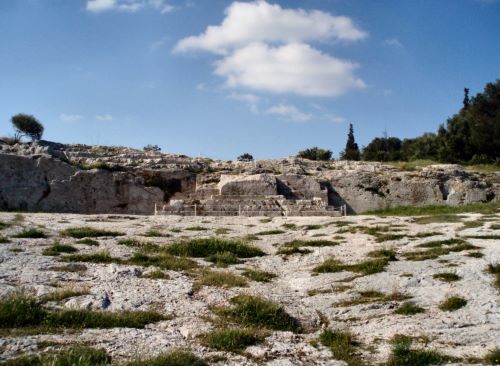
Democracy depends not only on procedures, participation, and law, but on shared moral boundaries that define what actions are compatible with civic belonging. In post-403 BCE Athens, the refusal to honor collaborators functioned as a deliberate act of boundary-drawing at a moment when those boundaries had been violently breached. By distinguishing between those who could be legally forgiven and those who could be publicly celebrated, the restored democracy clarified what it meant to belong to the political community at all. This distinction was not incidental or symbolic. It was foundational. Boundary-drawing served to reconstitute democratic identity after collapse, ensuring that the return of peace did not dissolve the ethical commitments that made democracy intelligible in the first place.
The decision not to memorialize or honor collaborators preserved the meaning of democratic loyalty in a society where loyalty had recently been weaponized against itself. Betrayal was not reframed as a difference of opinion, a tragic miscalculation, or an unavoidable response to defeat. It remained betrayal, even if it was no longer prosecuted. This clarity mattered because democracies rely on trust that civic institutions will not be dismantled from within without consequence. Honor is never neutral. It signals which actions the polity wishes to reproduce. To bestow honor on those who helped destroy democracy would have communicated that loyalty was optional and that success, rather than principle, determined virtue. Athens avoided this corrosive message by refusing recognition while extending legal restraint.
Moral boundary-drawing also protected democracy from the dangers of moral flattening. When all actions are treated as equally forgivable and equally honorable, political judgment collapses. Athens resisted this collapse by maintaining distinctions without pursuing vengeance. Accountability did not require punishment in every case, but it did require memory and restraint. The city demonstrated that forgiveness can coexist with moral clarity, and that unity does not require the erasure of ethical difference.
By refusing to honor collaborators, Athens preserved the conditions for democratic survival. Reconciliation without discrimination risks legitimizing the forces that destroyed the polity in the first place. The Athenian example shows that democracy can endure internal catastrophe not by celebrating its destroyers, but by refusing to absorb them into its moral narrative. Boundary-drawing, in this sense, was not exclusionary. It was protective.
When Reconciliation Fails by Honoring Betrayal

Athens’ post-403 BCE settlement becomes especially instructive when set beside cases in which reconciliation was pursued through honor rather than restraint. In such cases, the desire for unity led political communities to rehabilitate collaborators symbolically, folding acts of betrayal into narratives of shared suffering or national destiny. The effect was not healing, but confusion. When those who helped dismantle democratic institutions are publicly honored, the moral language of the polity collapses. Loyalty loses meaning, and future actors learn that power, not principle, ultimately determines virtue.
In many post-conflict societies, honoring collaborators has been justified as a gesture of closure. Monuments, official recognitions, or rehabilitative myths are presented as necessary to move forward. Yet these gestures often function as retroactive legitimation. By recasting collaboration as pragmatic adaptation or tragic necessity, the polity erases the distinction between those who defended democratic norms and those who violated them. Reconciliation becomes indistinguishable from endorsement. The past is not confronted. It is rewritten.
This failure has long-term consequences. When betrayal is honored, civic trust erodes. Citizens learn that democratic commitment is contingent, and that undermining institutions carries no lasting stigma if political circumstances shift. Memory becomes unstable, subject to revision whenever power changes hands. Rather than securing unity, such settlements leave democracies vulnerable to repetition. If the destruction of democracy can later be celebrated, there is little reason to believe it will not happen again.
Athens avoided this trap by refusing to confuse reconciliation with recognition. The city restored peace without transforming collaborators into civic exemplars. In doing so, it preserved a moral grammar capable of guiding future judgment. Comparison reveals that reconciliation fails not when it is restrained, but when it is indiscriminate. Honoring betrayal does not heal democracies. It teaches them how to forget why they exist.
Democracy, Honor, and the Ethics of Civic Memory

Democracy does not survive on law alone. It survives on judgment, on shared understandings of what actions merit honor and which must remain disqualified from admiration. Civic memory is not a neutral archive of events, but an ethical instrument that shapes political identity. What a democracy chooses to commemorate signals what it expects citizens to emulate. In post-403 BCE Athens, the refusal to honor collaborators was an ethical decision about the future, not merely a verdict on the past. Memory was treated as a form of political instruction.
Honor functions as one of the most powerful currencies in democratic life because it operates silently and persistently. It rewards behavior, models virtue, and establishes boundaries of legitimacy without the need for constant enforcement. When honor is distributed carefully, it reinforces civic norms across generations. When it is distributed carelessly or indiscriminately, it erodes the moral structure that sustains collective self-rule. Athens recognized this danger with unusual clarity. By withholding honor from those who had assisted in dismantling democracy, the city preserved the distinction between civic participation and civic destruction. Forgiveness allowed coexistence in the present, but honor remained conditional on fidelity to democratic order, ensuring that future citizens would not confuse survival with virtue.
This ethical use of memory reflects a broader understanding of politics found in ancient democratic thought. Aristotle emphasized that political communities are constituted not only by shared interests or mutual advantage, but by shared judgments about virtue and vice. Civic life depends on cultivating dispositions that sustain the regime, not merely on managing conflict in the short term. Honoring those who betrayed democratic institutions would have trained citizens to view power as morally self-justifying, regardless of the means by which it was acquired or exercised. Athens instead used memory to reinforce the idea that democracy demands loyalty even under pressure, and that political success achieved through institutional destruction does not qualify as civic excellence.
The Athenian approach also avoided a common temptation in post-conflict societies, the temptation to confuse unity with moral neutrality. Treating all past actions as equally understandable or equally tragic can feel conciliatory, but it often dissolves ethical clarity. Civic memory that refuses to discriminate ultimately teaches that principles are expendable. Athens resisted this flattening by maintaining a disciplined silence around collaborators. What was forgiven was not elevated. What was tolerated was not taught as virtue.
Ethical civic memory also protects democracy against future crises. When political collapse is remembered without moral boundaries, it becomes easier to repeat. Citizens lose a shared vocabulary for naming betrayal, collaboration, or institutional sabotage. By contrast, Athens preserved a stable moral grammar. Even without punishment, the absence of honor ensured that the destruction of democracy remained legible as a civic wrong. Memory functioned as a warning rather than a wound.
The ethics of civic memory, then, lie not in constant denunciation or ritualized condemnation, but in principled restraint. Athens demonstrated that democracies do not need to glorify reconciliation to survive, nor do they need to sanitize their past in the name of unity. They need to preserve meaning. By aligning honor with democratic fidelity, the city ensured that memory worked in service of self-rule rather than against it. Democracy endured not because it forgot its enemies or erased their actions, but because it refused to make them its exemplars, safeguarding the moral architecture on which democratic life depends.
Conclusion: Reconciliation Does Not Require Honoring Traitors
The Athenian settlement of 403 BCE stands as a rare example of democratic recovery that refused both vengeance and moral surrender. By extending amnesty while withholding honor, Athens demonstrated that political reconciliation can be achieved without collapsing ethical judgment. Peace was secured not by rewriting the past, but by disciplining how it would be remembered. The city chose stability without sanctification, forgiveness without praise, and unity without falsification.
This distinction allowed democracy to resume without erasing the meaning of betrayal. Collaborators were permitted to live as citizens and to reenter civic life without fear of prosecution, but they were not elevated as civic models or moral exemplars. The destruction of democratic institutions was not reframed as tragic necessity, patriotic adaptation, or unfortunate misunderstanding. It remained a civic wrong, even as punishment was curtailed for the sake of peace. In maintaining this boundary, Athens preserved the moral language necessary for democratic self-understanding. Citizens could move forward without being instructed, implicitly or explicitly, that loyalty and betrayal were interchangeable categories. Democracy survived not by pretending that all actions were equal, but by refusing to treat them as such.
The broader lesson extends beyond ancient Athens. Democracies repeatedly face moments of internal rupture in which the pressure to move on collides with the need to preserve meaning. When reconciliation is pursued through honor rather than restraint, it risks legitimizing the very forces that undermined democratic order. Celebrating collaborators teaches future actors that loyalty is negotiable and that institutional sabotage can be redeemed through power, narrative control, or historical distance. Athens avoided this trap by recognizing that reconciliation is a political necessity, but honor is a moral choice, and that conflating the two corrodes democratic legitimacy.
Reconciliation does not require honoring traitors. On the contrary, democratic survival often depends on the refusal to do so. Athens’ example reminds us that forgiveness and memory serve different purposes, and that confusing them weakens both. By separating legal mercy from civic recognition, the restored democracy preserved its identity without reopening civil war or institutionalizing resentment. The lesson is neither punitive nor nostalgic. It is principled and enduring: democracies do not protect themselves by celebrating those who dismantle them, but by remembering, with restraint and clarity, what must never be honored.
Bibliography
- Andocides. On the Mysteries. Translated by K. J. Maidment. Cambridge, MA: Harvard University Press, 1941.
- Arendt, Hannah. Between Past and Future: Eight Exercises in Political Thought. New York: Viking Press, 1968.
- Aristotle. Athenian Constitution. Translated by P. J. Rhodes. London: Penguin Classics, 1984.
- —-. Politics. Translated by C. D. C. Reeve. Indianapolis: Hackett Publishing, 1998.
- Brock, Roger. “Athenian Oligarchs: The Numbers Game.” The Journal of Hellenic Studies 109 (1989), 160-164.
- Connerton, Paul. How Societies Remember. Cambridge: Cambridge University Press, 1989.
- Hansen, Mogens Herman. The Athenian Democracy in the Age of Demosthenes. Norman: University of Oklahoma Press, 1991.
- Joyce, Christopher J. Amnesty and Reconciliation in Late Fifth-Century Athens: The Rule of Law under Restored Democracy. Edinburgh: Edinburgh University Press, 2022.
- Loraux, Nicole. The Divided City: On Memory and Forgetting in Ancient Athens. New York: Zone Books, 2002.
- Ober, Josiah. Democracy and Knowledge: Innovation and Learning in Classical Athens. Princeton: Princeton University Press, 2008.
- —-. Mass and Elite in Democratic Athens. Princeton: Princeton University Press, 1989.
- —-. Political Dissent in Democratic Athens. Princeton: Princeton University Press, 1998.
- Recht, Linus. “Thucydides at Melos: An Archaeology of Democracy and Oligarchy.” The Political Science Reviewer 46:1 (2022), 51-85.
- Rhodes, P. J. A History of the Classical Greek World, 478–323 BC. Malden, MA: Blackwell Publishing, 2006.
- Snyder, Timothy. On Tyranny: Twenty Lessons from the Twentieth Century. New York: Tim Duggan Books, 2017.
- Tridimas, George. “War, Disenfranchisement and the Fall of Ancient Athenian Democracy.” European Journal of Policial Economy 38 (2016), 102-117.
- Whitehead, David. “The Tribes of the Thirty Tyrants.” The Journal of Hellenic Studies 100 (1980), 208-213.
- Williams, Bernard. Shame and Necessity. Berkeley: University of California Press, 1993.
- Xenophon. Hellenica. Translated by Carleton L. Brownson. Cambridge, MA: Harvard University Press, 1918.
Originally published by Brewminate, 02.11.2026, under the terms of a Creative Commons Attribution-NonCommercial-NoDerivatives 4.0 International license.
About the Author