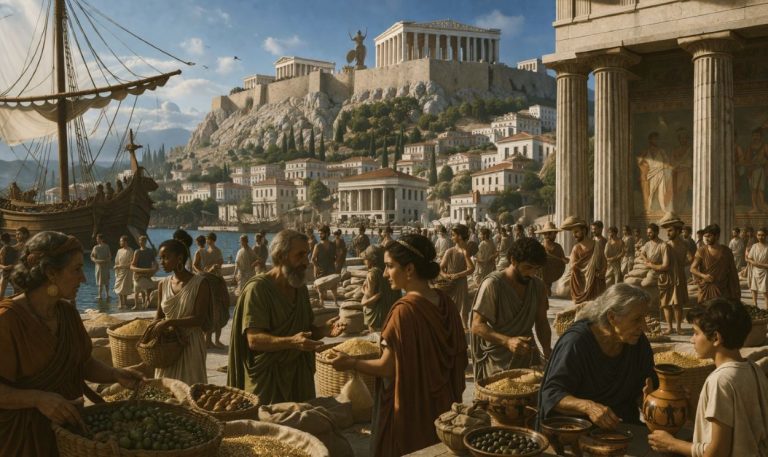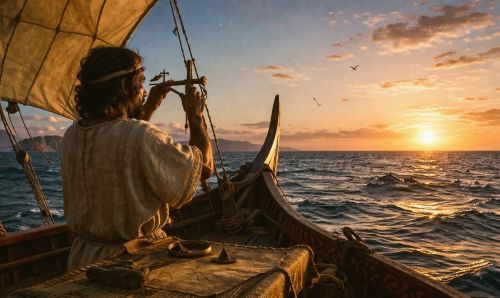
Ancient mariners crossed vast oceans without instruments, relying on stars, winds, and environmental knowledge to navigate with remarkable precision and adaptability.

By Matthew A. McIntosh
Public Historian
Brewminate
Introduction: Navigating the Unknown Before Instruments
The history of oceanic navigation before the advent of modern instruments reveals a level of sophistication that challenges long-standing assumptions about ancient seafaring. Far from being confined to coastal waters or guided by guesswork, early navigators developed complex systems that enabled them to traverse vast and often hostile environments with remarkable precision. These systems did not rely on mechanical devices or written charts in the modern sense but instead drew upon accumulated knowledge, sensory awareness, and deeply embedded cultural traditions. The absence of compasses, sextants, or chronometers did not signify a lack of navigational capability but rather the presence of alternative frameworks that were equally effective within their contexts.
At the core of ancient navigation was the integration of multiple forms of knowledge into a coherent and adaptable practice. Seafarers combined astronomical observation with environmental interpretation, using the rising and setting of stars alongside patterns in wind, waves, and wildlife to determine direction and location. This synthesis of information required not only technical skill but also extensive training and experience, often transmitted through oral traditions and apprenticeship. In many societies, navigation was a specialized discipline, entrusted to individuals who possessed both the cognitive ability and the cultural authority to guide voyages across open water. Their expertise was not reducible to a single technique but emerged from the interaction of observation, memory, and practice.
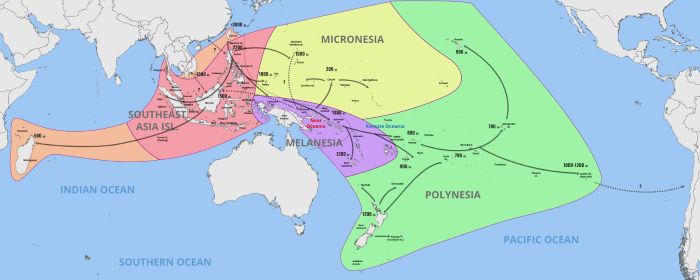
Geographically, these navigational systems developed across diverse maritime environments, each presenting unique challenges and opportunities. In the Pacific, Austronesian and Polynesian navigators mastered long-distance ocean travel across thousands of miles of open sea, relying on star paths and ocean swells to maintain course. In the Mediterranean, Phoenician, Greek, and Roman sailors employed sounding techniques and written periploi to navigate complex coastlines and trade routes. Meanwhile, in the Indian Ocean, Arab and South Asian mariners harnessed the predictable rhythms of monsoon winds to establish enduring commercial networks. Even in the North Atlantic, Norse seafarers adapted to conditions of limited visibility and harsh weather, possibly employing optical methods to orient themselves when celestial cues were obscured. These varied traditions illustrate that ancient navigation was not a single system but a constellation of regionally adapted practices united by a common reliance on human perception and environmental knowledge.
Ancient ocean navigation constituted a highly developed and systematic body of knowledge, capable of supporting sustained exploration and long-distance exchange well before the European Age of Exploration. By examining techniques such as star path navigation, environmental cue interpretation, depth sounding, textual sailing guides, and seasonal wind exploitation, it becomes clear that early seafarers were not merely reacting to their environments but actively interpreting and mastering them. The study of these systems not only enriches our understanding of maritime history but also invites a reconsideration of what constitutes technological sophistication. In recognizing the achievements of ancient navigators, we gain insight into the broader capacities of human cognition and the diverse ways in which knowledge can be organized and applied.
Star Path Navigation: Astronomy without Instruments
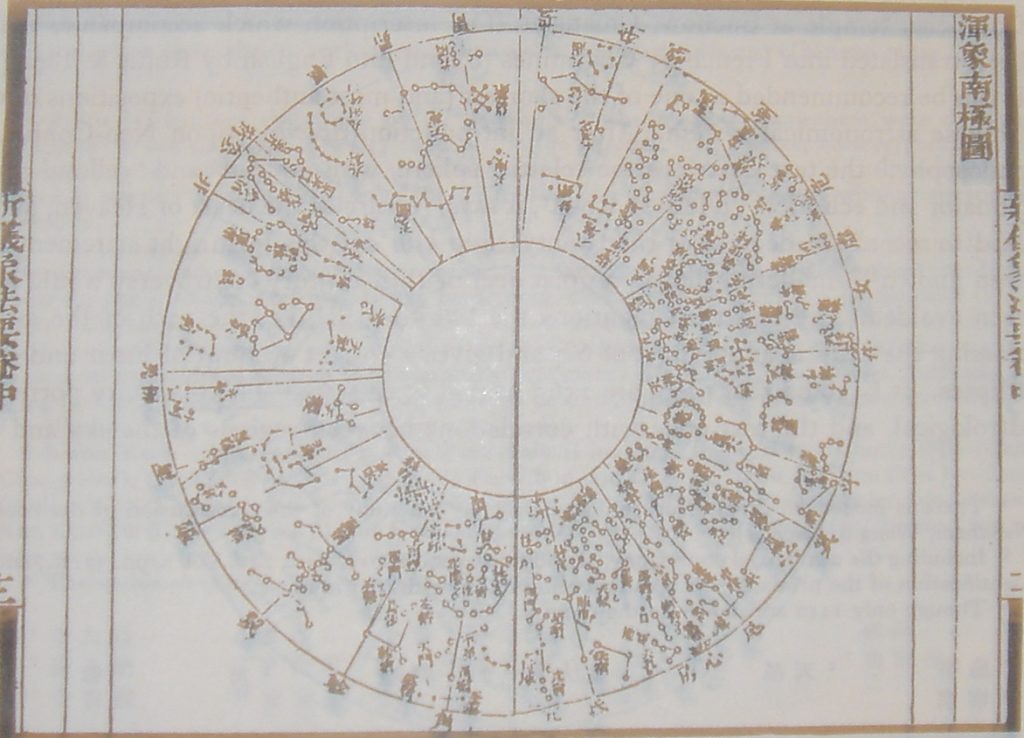
Star path navigation represents one of the most sophisticated achievements of ancient seafaring, particularly among Austronesian and Polynesian cultures. In the absence of mechanical instruments, navigators developed a precise and reliable system based on the observation of celestial bodies as they rose and set along the horizon. Rather than viewing the sky as a static map, these navigators understood it as a dynamic framework in which stars followed predictable paths tied to specific directional bearings. By memorizing these patterns, they were able to maintain consistent courses across vast expanses of open ocean, often without sight of land for weeks at a time.
Central to this system was the concept of the “star path,” in which individual stars or constellations were associated with particular directions of travel. Navigators identified which stars rose or set at the horizon points corresponding to their intended course, effectively using the movement of the heavens as a directional guide. As one star ascended too high in the sky to serve as a reliable reference, another would take its place, creating a sequence that could be followed throughout the night. This method required an extensive mental catalog of stars and their seasonal positions, as well as an understanding of how these patterns shifted.
The knowledge required for star path navigation was not merely observational but deeply cognitive and cultural. Navigators underwent rigorous training to internalize star sequences, horizon bearings, and seasonal variations, often learning through oral instruction and practical experience rather than written documentation. This process could take years, as apprentices gradually absorbed not only the positions of stars but also their relationships to one another, the timing of their appearances, and their significance within broader navigational frameworks. Knowledge was often encoded in mnemonic devices such as chants and narratives, which allowed complex astronomical information to be retained and transmitted across generations. In many cases, this instruction was restricted to select individuals, reinforcing the specialized and sometimes sacred status of navigators within their societies. Their expertise extended beyond memorization, requiring the ability to adapt knowledge to changing conditions at sea, where variables such as weather, season, and latitude could alter the appearance of the night sky. The navigator functioned as both a repository of inherited knowledge and an active interpreter of celestial information, capable of translating abstract patterns into practical decisions during a voyage.
Star navigation did not operate in isolation but was integrated with other forms of environmental awareness. While the stars provided a primary framework for direction, navigators continuously cross-referenced this information with observations of ocean swells, wind patterns, and other cues. This redundancy enhanced reliability, allowing navigators to maintain course even when certain indicators were temporarily unavailable. For example, during cloudy conditions when stars were obscured, experienced seafarers could rely on the remembered direction of swells or the feel of the vessel’s movement to approximate their heading until celestial cues reappeared.
The effectiveness of star path navigation is demonstrated by the scale of Polynesian voyaging, which connected islands separated by thousands of miles of open ocean. Archaeological and linguistic evidence indicates sustained contact across vast distances, while experimental voyages in the twentieth century have confirmed the viability of traditional methods. Projects such as the voyages of the Hōkūleʻa have provided empirical support for the accuracy and resilience of non-instrumental navigation, demonstrating that skilled practitioners can traverse long distances using only traditional techniques. These journeys have also highlighted the importance of experiential knowledge, as success depends not merely on theoretical understanding but on the ability to interpret subtle environmental cues in real time. The rediscovery and public demonstration of these methods have challenged earlier assumptions that such voyages were accidental or improbable, instead affirming that they were the result of deliberate and highly refined navigational practices. They have reshaped both scholarly and popular understandings of ancient seafaring capabilities.
The study of star path navigation raises important questions about how knowledge is transmitted and preserved. The decline of traditional navigation in many regions, particularly under the influence of colonialism and modernization, has led to the loss of certain techniques and practices. Recent efforts to revive and document indigenous navigation have underscored its continued relevance and sophistication. By examining star path navigation within both historical and contemporary contexts, scholars have gained a deeper appreciation for the intellectual achievements of ancient seafarers and the enduring value of their knowledge systems.
Reading the Ocean: Environmental Knowledge as Navigation
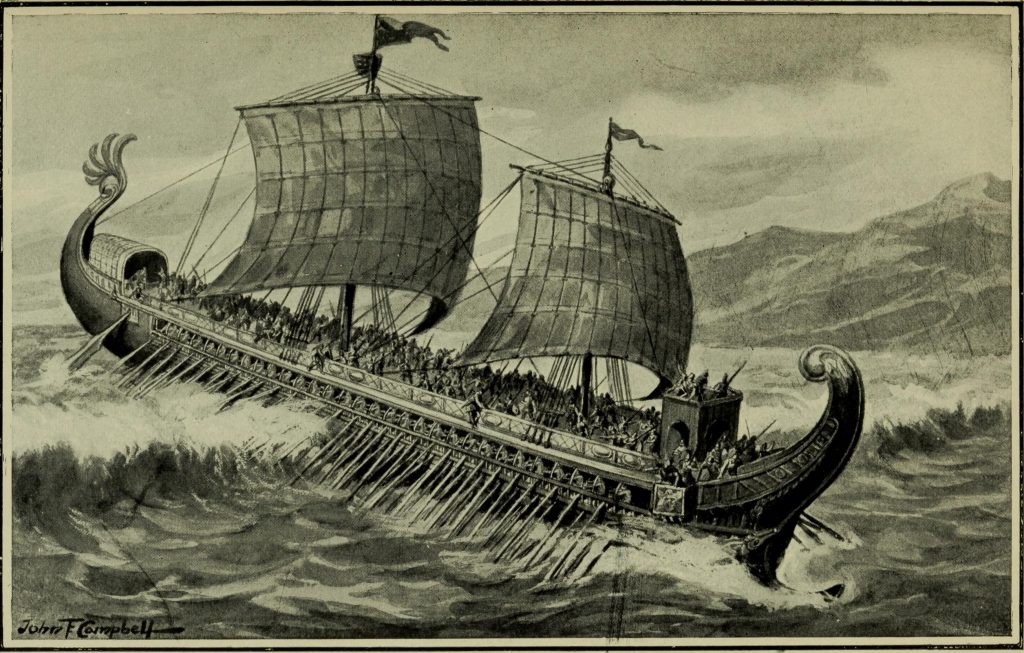
Ancient navigators did not rely solely on the sky to guide their journeys but developed equally sophisticated methods for interpreting the sea itself. The ocean was not perceived as an empty or featureless expanse but as a dynamic environment filled with patterns that could be read and understood. Swell direction, wave interference, water color, and the presence of marine life all provided valuable information about location and proximity to land. This environmental awareness functioned as a continuous navigational system, complementing celestial observation and ensuring that seafarers could maintain orientation even when the stars were obscured.
One of the most important elements of this system was the interpretation of ocean swells. In many regions, particularly the Pacific, long-distance swells generated by prevailing winds travel in consistent directions over great distances. Skilled navigators learned to detect multiple overlapping swell patterns and to distinguish between them, allowing them to determine direction with remarkable precision. By feeling the motion of the vessel and observing how waves interacted, navigators could maintain a steady course even in conditions of limited visibility. This process required not only physical sensitivity but also extensive experience, as the ability to interpret swell patterns depended on recognizing subtle variations in rhythm, direction, and intensity. Navigators often conceptualized these patterns as a kind of moving map, in which different swells intersected to form a stable framework of orientation across the open ocean. Even when surface conditions were disturbed by storms or shifting winds, underlying swell systems could still provide reliable directional cues, allowing experienced seafarers to maintain their bearings when less skilled observers might become disoriented.
Cloud formations also played a crucial role in identifying land. Islands often influence the behavior of clouds, creating distinctive patterns that can be observed from considerable distances. For example, clouds may form or linger above landmasses due to rising air currents, or they may reflect the color of lagoons and reefs, producing subtle visual cues. Experienced seafarers learned to recognize these signs, using them to locate islands long before they became visible on the horizon. This ability to interpret atmospheric conditions extended the effective range of navigation, reducing the uncertainty associated with open-ocean travel.
Bird behavior provided another important set of indicators. Certain species of seabirds follow predictable patterns of movement, particularly during feeding and nesting periods. Navigators observed the direction and timing of these flights, inferring the presence and location of land based on the habits of the birds. For instance, birds that forage at sea but return to land at night could signal the direction of nearby islands. This ecological knowledge required careful observation and an understanding of seasonal variations, reinforcing the interconnected nature of navigational practice. In some traditions, navigators distinguished between species with different ranges, recognizing which birds ventured far offshore and which remained close to land. The altitude, flight speed, and formation of bird groups could also provide clues, as changes in behavior often reflected proximity to feeding grounds or nesting sites. By integrating these observations with other environmental cues, seafarers could refine their estimates of distance and direction, reducing uncertainty as they approached land. This reliance on living indicators highlights the extent to which navigation was embedded within a broader understanding of ecological systems, where human movement was guided by patterns shared across the natural world.
The integration of environmental cues into navigation underscores the adaptability and depth of ancient maritime knowledge. Rather than relying on a single method, seafarers employed a layered approach in which multiple sources of information were continuously assessed and reconciled. This redundancy increased reliability and allowed navigators to respond effectively to changing conditions. The ability to “read” the ocean in this manner reflects a form of expertise that is both empirical and experiential, rooted in sustained interaction with the natural world. It demonstrates that ancient navigation was not limited by the absence of instruments but enriched by a holistic engagement with the environment.
Measuring the Invisible: Sounding Weights and Seafloor Analysis
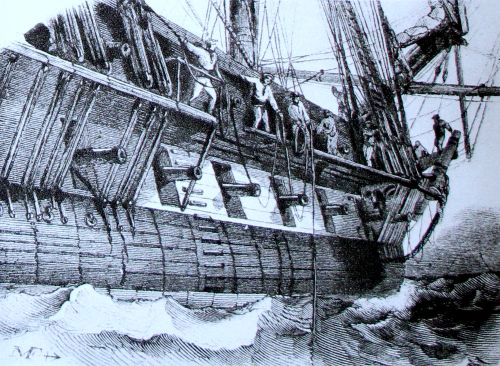
While celestial navigation and environmental interpretation dominated open-ocean travel, ancient mariners also developed practical techniques for understanding the unseen world beneath their vessels. Among the most important of these was the use of sounding weights, a method that allowed sailors to measure water depth and gather information about the seafloor. This practice, widely employed by Phoenician, Carthaginian, Greek, and later Roman navigators, reflects an early form of empirical observation in maritime contexts. By transforming invisible underwater features into actionable knowledge, sounding techniques extended the range and safety of navigation, particularly in coastal and semi-enclosed seas such as the Mediterranean.
The basic mechanism of sounding was deceptively simple. A weight, typically made of lead, was attached to a rope marked at regular intervals. Sailors would lower this line into the water until it reached the seabed, then measure the depth based on the length of rope deployed. Despite its simplicity, this method required precision and consistency, as accurate depth readings depended on careful calibration of the line and awareness of the vessel’s movement. The line itself was often knotted or otherwise marked at standardized intervals, allowing sailors to quickly assess depth even under difficult conditions such as poor lighting or rough seas. In some cases, specialized crew members were responsible for handling the sounding line, ensuring that the process was conducted efficiently and without error. Variations in depth could signal proximity to shore, underwater hazards, or known navigational routes, making sounding an essential tool for avoiding danger and maintaining orientation in unfamiliar waters. Repeated use of sounding in specific regions enabled sailors to build mental profiles of depth patterns, reinforcing their ability to navigate safely through complex maritime environments.
Beyond measuring depth, sounding weights were often equipped with a small cavity at their base, filled with a sticky substance such as tallow or wax. When the weight touched the seabed, particles of sediment would adhere to this material, allowing sailors to retrieve samples of the ocean floor. These samples provided valuable information about the composition of the seabed, including sand, mud, gravel, or shell fragments. By comparing these findings with known characteristics of specific regions, navigators could estimate their position even when visual landmarks were absent. This practice effectively turned the seabed into a map, one that could be read through touch and experience rather than sight. The interpretation of these samples required familiarity not only with the materials themselves but also with how they varied across different coastal zones. For instance, fine silts might indicate river outflows, while coarse sands or shell fragments could suggest proximity to reefs or shallow banks. Sounding became more than a measurement tool; it evolved into a diagnostic system that integrated physical evidence with accumulated maritime knowledge, allowing sailors to refine their spatial awareness in otherwise uncertain conditions.
The interpretation of sediment required both experience and local knowledge. Mariners needed to recognize not only the type of material collected but also its significance within a broader geographical context. Certain combinations of depth and sediment were associated with particular coastal features, harbors, or trade routes. This knowledge became codified within maritime traditions, allowing sailors to navigate with increasing confidence in complex and variable environments. The ability to correlate underwater conditions with surface geography demonstrates a sophisticated understanding of the relationship between different elements of the natural world.
Sounding was especially valuable in regions where visual navigation was limited, such as during poor weather or in areas with few distinctive landmarks. In the Mediterranean, where coastlines could be intricate and hazardous, the ability to determine depth and seabed composition provided a critical layer of security. It allowed sailors to approach unfamiliar shores with greater confidence and to avoid reefs, shoals, and other hidden dangers. This practical application underscores the role of sounding as both a navigational aid and a safety measure, contributing to the broader reliability of ancient maritime travel.
The use of sounding weights and seafloor analysis illustrates the empirical dimension of ancient navigation. Unlike celestial methods, which relied on observation of distant bodies, sounding engaged directly with the physical environment in a tactile and measurable way. It represents an early form of scientific reasoning, in which repeated observation and comparison produced reliable knowledge about otherwise inaccessible spaces. In combining measurement, material analysis, and experiential learning, ancient sailors demonstrated a capacity for innovation that challenges assumptions about the limits of premodern technology. Their ability to “measure the invisible” stands as a testament to the ingenuity and adaptability of early navigational systems.
Text as Technology: The Periplus Tradition
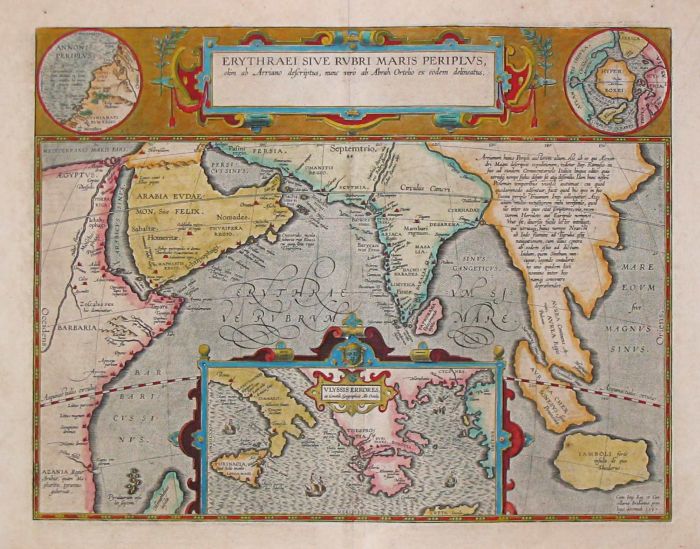
In addition to observational and experiential methods, ancient navigators increasingly relied on textual tools to record and transmit maritime knowledge. Among the most significant of these were periploi (singular: periplus), navigational texts that described coastal routes, harbors, distances, and notable landmarks. These works did not function as maps in the modern sense but instead provided structured, sequential information designed to guide sailors along known pathways. By organizing geographic knowledge into written form, the periplus tradition represents a crucial step in the externalization of navigational expertise, allowing information to be preserved, standardized, and shared across generations and regions.
The structure of a typical periplus reflects its practical purpose. Rather than offering abstract geographical theory, these texts present a linear account of a voyage, often beginning at a specific point and proceeding step by step along a coastline. Distances might be expressed in days of sailing or in stadia, while descriptions of ports and anchorages included information about water sources, hazards, and local populations. This format made periploi especially useful for traders and mariners operating within established networks, as it provided a reliable framework for planning and executing voyages. The emphasis on sequence and repetition also aided memorization, reinforcing the connection between written instruction and lived experience at sea.
One of the most famous examples of this tradition is the Periplus of the Erythraean Sea, a Greek text from the first century CE that details trade routes connecting the Mediterranean with the Red Sea, East Africa, and the Indian subcontinent. It offers insights into not only navigation but also commerce, describing goods, markets, and cultural interactions along the route. Similarly, earlier works attributed to authors such as Scylax of Caryanda demonstrate the long-standing importance of coastal description in Greek maritime practice. These texts reveal a world in which navigation, trade, and cultural exchange were deeply intertwined, with written knowledge serving as a bridge between different regions and communities. The Periplus of the Erythraean Sea provides granular detail about seasonal winds, port accessibility, and the political conditions of trading hubs, suggesting that its author or compilers were deeply familiar with the rhythms of long-distance commerce. It also reveals how navigational knowledge could be intertwined with economic intelligence, offering practical advice not only on where to sail but when to sail and what to trade. This fusion of geographic, commercial, and cultural data underscores the role of periploi as multifunctional guides, serving merchants, sailors, and administrators alike.
The use of periploi also reflects broader developments in literacy and knowledge transmission in the ancient world. As writing became more widely used for administrative, commercial, and intellectual purposes, it provided a new medium for encoding practical skills that had previously been transmitted orally. This shift did not replace experiential learning but supplemented it, creating a hybrid system in which written texts and embodied knowledge reinforced one another. Navigators still needed to interpret environmental and celestial cues, but periploi offered a stable reference point that could guide decision-making and reduce uncertainty.
By treating text itself as a form of technology, the periplus tradition highlights the intellectual dimension of ancient navigation. These works transformed individual experience into collective knowledge, enabling more complex and far-reaching maritime activity. They also demonstrate that innovation in navigation was not limited to physical instruments but extended to systems of information organization and communication. The periplus stands alongside tools like the sounding line and the observation of stars as a critical component of ancient seafaring, embodying the interplay between knowledge, practice, and the written word. Moreover, the durability of these texts allowed navigational knowledge to outlast individual voyages and even entire generations of sailors, creating a form of continuity that oral traditions alone could not always guarantee. As manuscripts were copied, adapted, and circulated, they contributed to the gradual accumulation of maritime knowledge across the Mediterranean and beyond. This process also introduced the possibility of error, interpretation, and revision, reminding us that written navigation, like all forms of knowledge, remained dynamic rather than fixed. The periplus tradition represents both the power and the limitations of text as technology, preserving expertise while simultaneously reshaping it through transmission.
Light through Stone: Viking Navigation and Sunstones

In the northern seas, where cloud cover and long twilight hours often obscured the sun and stars, Scandinavian navigators developed techniques adapted to a far less predictable sky. Viking seafarers, operating across the North Atlantic from the eighth to the eleventh centuries, relied on a combination of environmental knowledge, experience, and possibly specialized tools to maintain direction. Among the most debated of these tools is the so-called “sunstones,” minerals believed to assist in locating the sun’s position even when it was hidden behind clouds or below the horizon. Whether used systematically or only in particular conditions, the concept of sunstones reflects the ingenuity required to navigate in high-latitude environments where conventional celestial methods were often unreliable.
The idea of sunstones is rooted in both literary sources and modern experimental research. Icelandic sagas, particularly the Rauðúlfs þáttr, describe a device that could reveal the sun’s position under overcast skies. Although these texts were written centuries after the Viking Age, they preserve traditions that may reflect earlier practices. In recent decades, scholars and scientists have explored the possibility that certain crystals, such as Iceland spar (a form of calcite), possess optical properties that could make such navigation feasible. When rotated, these crystals can reveal patterns of polarized light in the sky, allowing a user to infer the position of the sun even when it is not directly visible.
Experimental studies have demonstrated that Iceland spar can indeed be used to detect the polarization of light, which remains present in the atmosphere even under cloud cover. By identifying the angle of polarization, a navigator could estimate the sun’s location with a reasonable degree of accuracy. This technique would not have provided precise measurements in the modern sense, but it could have been sufficient for maintaining general direction over long distances. The process required careful manipulation of the crystal, often involving rotation and comparison of light intensity patterns until a consistent axis could be identified. This would have demanded both training and repeated experience, as subtle differences in brightness or shadow could easily be misinterpreted by an unskilled observer. Environmental factors such as fog density, time of day, and seasonal light variation would also influence the reliability of the method, meaning that it likely functioned best as one component within a broader navigational toolkit rather than as a standalone solution. The potential use of such crystals suggests not only a sophisticated awareness of atmospheric phenomena but also an adaptive approach to uncertainty, in which navigators balanced multiple cues to maintain orientation.
The evidence for widespread use of sunstones remains inconclusive. Archaeological finds of such crystals in Viking contexts are rare, and the interpretation of saga literature is complicated by its late composition and narrative style. Some scholars argue that sunstones may have been used only occasionally or symbolically, while others suggest that they represent a practical but under-documented aspect of navigation. This debate highlights the challenges of reconstructing ancient technologies, particularly when they leave limited physical traces.
Regardless of the specific role of sunstones, Viking navigation clearly depended on a range of complementary methods. Seafarers observed wind patterns, ocean currents, bird behavior, and the color of the water, integrating these cues into a coherent system of orientation. They also used landmarks such as coastal features and, in some cases, constructed mental maps of sailing routes between known destinations like Norway, Iceland, Greenland, and North America. This holistic approach allowed them to undertake voyages across some of the most challenging maritime environments in the world. In addition, oral tradition played a significant role in preserving navigational knowledge, with experienced sailors passing down routes, hazards, and seasonal patterns to successive generations. Memory, storytelling, and communal experience reinforced practical skills, ensuring that knowledge remained adaptable rather than fixed. The integration of these elements created a resilient system capable of functioning under a wide range of conditions, reducing dependence on any single technique. Within this broader framework, even a tool like the sunstone, if used at all, would have been one part of a layered and flexible approach to navigation that prioritized redundancy and situational awareness.
The enduring fascination with sunstones reflects a broader recognition of Viking navigational skill and adaptability. Whether or not these crystals were widely used, the concept underscores the creative ways in which human societies have engaged with the natural world to solve practical problems. In the context of ancient navigation, sunstones serve as a symbol of the intersection between observation, experimentation, and cultural tradition. They remind us that even in the absence of modern instruments, seafarers developed innovative strategies to navigate uncertainty, transforming light itself into a guide across the open sea.
Seasonal Highways: Mastery of Monsoon Winds
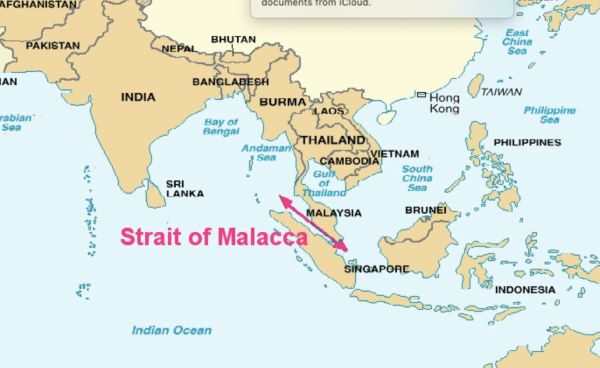
Across the Indian Ocean, ancient navigators developed a fundamentally different approach to maritime movement, one shaped not by constant environmental cues alone but by the predictable rhythm of seasonal winds. The monsoon system, driven by differential heating between land and sea, produces alternating wind patterns that reverse direction over the course of the year. Far from being an obstacle, these winds became the foundation of a sophisticated navigational strategy that enabled long-distance travel between East Africa, the Arabian Peninsula, India, and Southeast Asia. By learning to anticipate and exploit these seasonal shifts, sailors transformed the Indian Ocean into a network of cyclical “highways,” where timing was as crucial as direction.
The southwest monsoon, typically blowing from May to September, carried ships from the Arabian coast toward the Indian subcontinent, while the northeast monsoon, prevailing from November to February, facilitated the return journey. This predictable alternation allowed for relatively direct crossings of the open ocean, reducing the need for cautious coastal navigation. Mariners did not simply react to these winds but planned their voyages around them, often waiting months for favorable conditions before departing. This temporal dimension of navigation required careful coordination, as missing a seasonal window could delay a journey for an entire year, with significant economic consequences for traders and merchants. In practical terms, this meant that ports became staging grounds where crews prepared ships, gathered provisions, and monitored environmental signals indicating the onset of favorable winds. Knowledge of subtle atmospheric changes, such as shifts in humidity or cloud formation, helped sailors anticipate the transition between monsoon phases. This anticipation evolved into a structured calendar of movement, aligning maritime activity with seasonal predictability rather than improvisation.
The mastery of monsoon navigation is often associated with the expansion of trade networks during the Hellenistic and Roman periods, particularly following increased contact between the Mediterranean world and the Indian Ocean. Classical sources such as the Periplus and later accounts by writers like Pliny the Elder describe the use of direct sea routes enabled by knowledge of the monsoon winds. While earlier seafarers likely understood aspects of these patterns, their systematic exploitation marked a turning point in maritime history, enabling more regular and extensive exchange of goods, ideas, and cultural practices across vast distances. This shift reduced reliance on incremental coastal voyages and opened the possibility of predictable, large-scale commercial circuits linking distant regions. Commodities such as spices, textiles, metals, and luxury goods could move with greater efficiency, reshaping economic relationships across Afro-Eurasia. The growing confidence in monsoon navigation also encouraged investment in larger vessels and more ambitious expeditions, further reinforcing the integration of these maritime networks.
Beyond facilitating trade, the monsoon system shaped the very structure of maritime societies. Ports developed rhythms tied to the arrival and departure of seasonal winds, with communities adapting to cycles of intense activity followed by periods of relative inactivity. Merchants, sailors, and intermediaries often remained in foreign ports for extended periods, fostering cultural exchange and the formation of diasporic communities. Navigation was inseparable from broader patterns of economic and social interaction, illustrating how environmental knowledge could influence not only movement but also the organization of human life.
The use of monsoon winds underscores the importance of large-scale environmental patterns in ancient navigation. Unlike localized cues such as swells or bird behavior, monsoons operated across entire ocean basins, requiring navigators to think in terms of seasons and long-term planning. This shift from immediate observation to anticipatory strategy reflects a different kind of expertise, one grounded in the recognition of cyclical processes and their practical implications. Navigators had to internalize not only the direction of winds but also their timing, intensity, and variability across different regions of the ocean. This demanded a form of environmental literacy that extended beyond observation into prediction, blending empirical experience with inherited knowledge passed down through generations. In mastering these seasonal highways, ancient mariners demonstrated an ability to align human activity with the rhythms of the natural world, turning wind itself into a reliable and powerful instrument of navigation.
Underwater Innovation: Diving Bells and Freediving
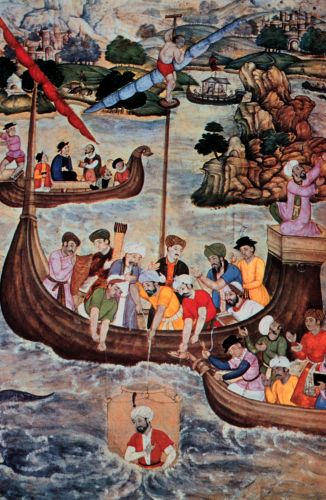
While most navigational techniques focused on guiding ships across the surface, ancient mariners also developed methods for interacting with the underwater environment itself. Diving, whether for salvage, construction, or resource extraction, required a different set of skills and technologies that expanded the practical boundaries of maritime activity. From simple breath-hold diving to the use of early mechanical devices such as diving bells, these practices reveal a lesser-known dimension of ancient seafaring. They demonstrate that the sea was not only traversed but also explored and exploited vertically, with significant implications for trade, warfare, and engineering.
Freediving represents the most basic and widespread form of underwater activity in the ancient world. Divers relied on breath control, physical conditioning, and experience to descend to considerable depths without the aid of equipment. Classical sources describe sponge divers in the eastern Mediterranean and pearl divers in regions such as the Red Sea and the Indian Ocean, indicating that such practices were both economically significant and geographically widespread. These divers developed techniques for equalizing pressure, managing limited oxygen, and navigating underwater environments, often working in teams to maximize efficiency and safety. Training for such activities likely began at a young age in communities where diving formed a central part of economic life, with knowledge passed down through demonstration and repeated practice. Divers learned to read subtle bodily signals indicating oxygen depletion, to pace their movements to conserve energy, and to coordinate with surface crews through rope signals or timing conventions. The risks were considerable, including drowning, barotrauma, and encounters with marine life, yet the persistence of these practices underscores both their value and the high level of skill attained by experienced practitioners.
In some cases, divers employed simple aids to extend their capabilities. Weights could be used to accelerate descent, while ropes provided a means of communication and retrieval. Archaeological and textual evidence suggests that divers were also involved in military operations, such as sabotaging enemy ships or recovering valuable cargo from wrecks. These activities required not only physical skill but also coordination and planning, highlighting the integration of diving into broader maritime strategies.
The development of diving bells marks a significant technological innovation in underwater exploration. Descriptions of such devices appear in ancient sources, including accounts attributed to Aristotle and later writers. A basic diving bell consisted of an inverted container, often weighted, that trapped air when submerged. This allowed divers to remain underwater for longer periods by periodically replenishing their air supply. While the effectiveness and widespread use of these devices in antiquity remain subjects of debate, their conceptual design demonstrates an early understanding of air pressure and buoyancy. The operation of such a device would have required careful handling, as maintaining a stable air pocket depended on the bell remaining properly oriented and not allowing water to displace the trapped air too quickly. Coordination between divers and surface crews would also have been essential, particularly if the bell needed to be raised, repositioned, or resupplied. Even in its simplest form, the diving bell represents a deliberate attempt to manipulate the underwater environment, creating a temporary extension of breathable space that pushed beyond the natural limits of human physiology.
The use of diving bells, whether experimental or practical, reflects a broader trend toward the mechanization of maritime activity. By creating a controlled air space underwater, these devices extended human presence into an environment that was otherwise hostile and inaccessible. This innovation parallels other technological developments in navigation, such as the sounding line and the codification of routes in periploi, all of which sought to reduce uncertainty and expand operational capacity. Even if their use was limited, diving bells represent an important conceptual leap in the history of underwater technology.
Together, freediving and early diving devices illustrate the versatility and ambition of ancient maritime cultures. These practices were not isolated curiosities but integral components of economic and military systems, enabling activities that ranged from resource extraction to ship repair and salvage. They also reveal a willingness to experiment with new techniques and technologies in response to practical challenges. In extending human activity beneath the surface, ancient seafarers demonstrated that navigation was not confined to horizontal movement across the sea but encompassed a broader engagement with the maritime environment in all its dimensions.
Integrated Knowledge Systems: Navigation as Embodied Practice
Ancient navigation was not a collection of isolated techniques but a deeply integrated system of knowledge in which observation, memory, and physical experience were inseparably linked. Navigators did not rely on a single method, such as stars or winds, but continuously synthesized multiple streams of information into a coherent understanding of their position and direction. This integration required more than technical skill; it demanded a form of embodied knowledge in which the navigator’s body itself became an instrument of perception. Through repeated exposure to the maritime environment, sailors developed an intuitive sense of movement, orientation, and change that could not be fully captured in written or verbal instruction.
The concept of embodied navigation is particularly evident in traditions where formal instruments were absent or minimal. In such contexts, the navigator’s sensory awareness played a central role. The feel of the vessel against the water, the rhythm of waves, the direction of wind on the skin, and even the smell of the air could all provide meaningful cues. These sensations were not interpreted in isolation but combined into a dynamic, continuously updated mental model of the surrounding environment. Experienced navigators learned to trust these perceptions, developing a level of confidence that allowed them to operate effectively even in uncertain or rapidly changing conditions. This sensory integration required constant attention and calibration, as conditions at sea could shift subtly or abruptly, demanding immediate adjustment. Navigators trained themselves to detect minute variations, such as slight changes in wave interference or faint shifts in wind direction, which might signal alterations in course or proximity to land. Perception itself became disciplined and refined, transforming ordinary sensory input into a specialized form of maritime intelligence that was both immediate and deeply contextual.
Memory functioned as a critical component of this system, enabling navigators to draw upon accumulated experience and shared knowledge. Routes, landmarks, seasonal patterns, and environmental cues were often encoded in oral traditions, stories, and mnemonic devices. In some cultures, navigational knowledge was transmitted through highly structured forms of instruction, ensuring that essential information could be retained and reproduced across generations. This reliance on memory did not imply a lack of sophistication but rather a different mode of knowledge organization, one that prioritized flexibility and adaptability over fixed representation. Memory allowed navigators to reconstruct routes mentally, to anticipate environmental changes, and to compare present conditions with past experiences in real time. These mental maps were not static but continuously revised, incorporating new information gained through each voyage. The act of remembering was active and interpretive, blending inherited knowledge with personal observation to produce a living, evolving framework for navigation.
The integration of multiple knowledge sources also created a form of redundancy that enhanced reliability. If one method failed, such as when clouds obscured the stars, others could compensate. This layered approach reduced the risk associated with any single point of failure and allowed navigators to maintain orientation under a wide range of conditions. It also encouraged a holistic understanding of the environment, in which different elements were seen as interconnected rather than independent. Navigation was not merely about reaching a destination but about maintaining a continuous relationship with the surrounding world.
Training in such systems required long periods of apprenticeship and practice. Novice sailors learned not only specific techniques but also how to integrate them into a unified framework. This process often involved guided experience under the supervision of more knowledgeable practitioners, allowing learners to gradually internalize complex patterns and relationships. The emphasis on practice and repetition reflects the importance of lived experience in the development of navigational expertise, reinforcing the idea that knowledge was something to be embodied rather than simply learned in abstraction. Apprentices were gradually exposed to increasing levels of responsibility, moving from observation to participation and eventually to independent decision-making. This progression ensured that knowledge was not only understood intellectually but also tested and reinforced through real-world application. Mistakes and corrections formed part of the learning process, embedding lessons more deeply than abstract instruction could achieve. The apprentice’s perception, memory, and judgment became aligned, producing a navigator capable of integrating multiple streams of information with confidence and precision.
Understanding navigation as an embodied practice challenges modern assumptions about technology and expertise. It reveals that sophisticated systems of knowledge can exist without reliance on complex instruments or written documentation, grounded instead in the interaction between human perception and the natural environment. Ancient navigators did not merely use tools; they became tools themselves, integrating observation, memory, and movement into a seamless whole. This perspective invites a broader appreciation of the diversity of human ingenuity and the many ways in which knowledge can be created, transmitted, and applied.
Comparative Perspective: Ancient vs Modern Navigation
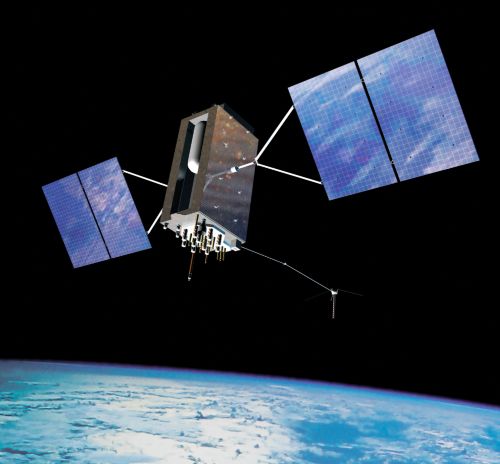
The contrast between ancient and modern navigation is often framed as a shift from uncertainty to precision, from intuition to calculation. Modern systems rely heavily on technological instruments such as compasses, chronometers, and, most significantly, satellite-based positioning systems like GPS. These tools provide exact coordinates in real time, reducing the need for interpretive judgment and minimizing the margin for error. In comparison, ancient navigation appears less precise, dependent on observation and experience rather than fixed measurements. Yet this contrast, while valid at a surface level, obscures deeper continuities in how humans engage with movement, environment, and knowledge. Even modern systems, for all their precision, are built upon principles that echo earlier practices, including the interpretation of signals, the calibration of instruments, and the translation of environmental data into actionable decisions. The difference lies not in the presence or absence of interpretation, but in where that interpretation occurs, whether within the human mind or within the technological system itself.
Ancient navigation required a constant synthesis of environmental cues, memory, and learned technique, producing a form of situational awareness that was both flexible and resilient. Modern navigation, by contrast, often externalizes these functions into devices that perform calculations automatically. While this shift has dramatically increased accuracy and efficiency, it has also altered the role of the navigator. The modern mariner or pilot is less likely to rely on bodily perception or long-term memory and more likely to depend on instruments that provide immediate and authoritative data. This transformation raises important questions about the nature of expertise, particularly in situations where technological systems fail or become unreliable.
Despite these differences, modern navigation still retains elements of earlier practices. Mariners and aviators are trained in backup methods such as dead reckoning and celestial navigation, precisely because reliance on technology alone can introduce new vulnerabilities. Historical cases of equipment failure or signal disruption have demonstrated the importance of maintaining these skills, reinforcing the idea that older forms of knowledge remain relevant even in technologically advanced contexts. Ancient and modern navigation are not entirely separate systems but overlapping layers of practice, each contributing to a more comprehensive understanding of movement and orientation. The continued teaching of these methods also reflects institutional recognition that technology, while powerful, is not infallible, and that human judgment remains a critical safeguard. In moments of crisis, the ability to revert to more fundamental techniques can mean the difference between successful navigation and disorientation, underscoring the enduring value of historically rooted knowledge.
The comparison also highlights differences in how knowledge is structured and transmitted. Ancient systems emphasized experiential learning, oral tradition, and the gradual accumulation of skill through practice. Modern systems, by contrast, prioritize standardized training, written manuals, and the use of instruments that produce consistent results regardless of individual experience. This shift reflects broader changes in epistemology, moving from knowledge embedded in individuals and communities to knowledge encoded in technologies and institutions. It also alters the social dynamics of navigation, reducing the reliance on mentorship and apprenticeship in favor of formalized instruction and certification. While this standardization increases accessibility and consistency, it can also distance practitioners from the environments they navigate, as interaction becomes mediated through screens and instruments rather than direct sensory engagement. The result is a different kind of expertise, one that is highly effective within structured systems but potentially less adaptable outside them.
The comparison between ancient and modern navigation reveals not a simple progression from primitive to advanced but a transformation in the balance between human perception and technological mediation. Ancient navigators operated within a deeply embodied framework, integrating multiple sources of information through experience and intuition. Modern navigators benefit from unparalleled precision but may risk losing some of this integrative awareness. Recognizing the strengths of both systems allows for a more nuanced understanding of navigation as a human practice, one that continues to evolve while retaining connections to its historical foundations.
Historiography: Rediscovering Indigenous and Ancient Knowledge
The following video discusses ancient navigation technologies:
For much of modern scholarship, ancient and Indigenous navigation was interpreted through a lens that emphasized deficiency rather than sophistication. Early historians, particularly those writing in the nineteenth and early twentieth centuries, often framed non-instrumental navigation as primitive or unreliable, contrasting it unfavorably with the technological advancements of European maritime traditions. This perspective reflected broader intellectual currents that privileged written records, mechanical instruments, and quantitative precision as markers of progress. Many complex systems of environmental knowledge, oral transmission, and embodied practice were either misunderstood or dismissed outright.
In recent decades, this historiographical approach has undergone significant revision. Scholars have increasingly recognized that earlier interpretations were shaped by cultural bias and limited methodological frameworks rather than by the evidence itself. Anthropological and interdisciplinary research has played a key role in this shift, bringing greater attention to living navigational traditions in regions such as the Pacific. Studies of Polynesian navigation, for example, have demonstrated that highly accurate long-distance voyaging can be achieved without modern instruments, relying instead on integrated systems of environmental observation and memory. These findings have prompted historians to reevaluate earlier assumptions and to approach ancient navigation with greater sensitivity to its internal logic and coherence.
The rediscovery of Indigenous knowledge has also been facilitated by collaborative efforts between scholars and practitioners. Navigators trained within traditional systems have contributed directly to research, offering insights that cannot be easily derived from textual sources alone. Experimental voyages, such as those undertaken by the Polynesian voyaging canoe Hōkūleʻa, have provided empirical demonstrations of non-instrumental navigation. These projects have not only validated historical accounts but also highlighted the depth and resilience of knowledge systems that have persisted despite centuries of colonial disruption. They have further shown that such knowledge is not static or merely preserved as cultural heritage, but actively practiced, refined, and adapted in contemporary contexts. The involvement of Indigenous navigators has also reshaped the interpretive process itself, challenging academic assumptions and introducing alternative frameworks for understanding space, direction, and environmental interaction. Collaborative research has not simply added new data to existing models but has fundamentally altered the questions historians ask and the methods they use to answer them.
The reinterpretation of ancient navigation has raised important questions about sources and methodology. Many navigational traditions were transmitted orally and are underrepresented in the historical record, which has traditionally privileged written documents. This imbalance requires historians to adopt more flexible approaches, incorporating archaeological evidence, ethnographic observation, and experimental reconstruction. It also demands a critical awareness of how knowledge is preserved and whose perspectives are included or excluded. The challenge is not only to recover lost or marginalized knowledge but also to understand it on its own terms, rather than forcing it into frameworks derived from modern scientific paradigms.
The evolving historiography of navigation reflects a broader shift toward recognizing the diversity of human knowledge systems. Ancient and Indigenous navigational practices are no longer seen as precursors to modern methods but as sophisticated systems in their own right, shaped by specific environmental, cultural, and historical contexts. This reassessment enriches our understanding of the past and challenges linear narratives of technological progress. It underscores the importance of humility in historical interpretation, reminding us that knowledge can take many forms, each with its own logic, strengths, and limitations.
Conclusion: Oceans without Instruments, Knowledge without Limits
Ancient navigation reveals a world in which movement across vast and uncertain spaces was made possible not through advanced machinery but through deeply cultivated knowledge systems. Seafarers did not simply traverse oceans; they interpreted them, engaging with winds, waves, stars, and living ecosystems as sources of information. This relationship between navigator and environment was dynamic and reciprocal, requiring constant attention, adaptation, and learning. The absence of modern instruments did not limit these systems but instead encouraged the development of integrated practices that were both resilient and remarkably effective. These systems were built over generations, refined through repeated voyages, and embedded within cultural traditions that preserved and transmitted essential knowledge. What emerges is not a picture of improvisation or guesswork but of disciplined practice, where skill, memory, and environmental awareness combined to produce reliable and repeatable outcomes even in the most challenging conditions.
Across different regions and cultures, from the Mediterranean to the Pacific and the North Atlantic, navigators developed methods suited to their specific environments while sharing a common reliance on observation and experience. Whether through the reading of ocean swells, the timing of monsoon winds, or the possible use of polarized light, these techniques demonstrate a consistent capacity to transform environmental patterns into navigational tools. The diversity of these approaches underscores the adaptability of human knowledge, showing that there is no single path to mastery but rather a range of solutions shaped by context and necessity.
The study of ancient navigation challenges modern assumptions about progress and technological superiority. While contemporary systems offer unprecedented precision, they also shift the balance away from embodied knowledge and toward externalized calculation. The comparison does not diminish modern achievements but instead highlights what has been gained and what may have been lost. Ancient navigators operated within a framework that demanded holistic awareness, integrating multiple forms of information into a continuous process of interpretation. This capacity for synthesis remains relevant, particularly in situations where technology is limited or fails. It also invites reflection on the nature of expertise itself, suggesting that true mastery lies not only in access to tools but in the ability to interpret and adapt to complex, changing conditions. By reconsidering the strengths of ancient systems, we gain insight into alternative ways of knowing that remain valuable in an increasingly technologized world.
The history of navigation is not simply a story of technological advancement but of human ingenuity in its many forms. The ability to cross oceans without instruments speaks to a broader truth about knowledge itself: that it can be cultivated through experience, transmitted through culture, and refined through practice. Ancient navigators demonstrate that understanding does not depend solely on tools but on the capacity to engage meaningfully with the world. In recognizing this, we gain not only a deeper appreciation of the past but also a more expansive view of what knowledge can be.
Bibliography
- Bérard, Benoît and Alexandra Biar. “Indigenous Navigation in the Caribbean Basin: A Historical, Ethnoarchaeological and Experimental Approach to the Caribbean-Guyanese Kanawa.” Archaeonautica (2021), 236-242.
- Bernáth, Bálint, et al. “How Could the Viking Navigators Have Found the Sun in a Foggy Sky? On the Use of Polarizing Sunstones.” Proceedings of the Royal Society A 469, no. 2156 (2013).
- Carlson, Deborah N. “The Seafarers and Shipwrecks of Ancient Greece and Rome.” In The Oxford Handbook of Maritime Archaeology, edited by Alexis Catsambis, Ben Ford, and Donny L. Hamilton. Oxford: Oxford University Press (2011), 379-405.
- Casson, Lionel. Ships and Seamanship in the Ancient World. Princeton: Princeton University Press, 1971.
- Dilke, O. A. W. Greek and Roman Maps. Ithaca: Cornell University Press, 1985.
- Evans, Jeff. Tāwera, Te Aramahiti – The Morning Star Guides Eastward: Reviving Traditional Navigation Knowledge in the Pacific. UNESCO, 2021.
- Finney, Ben. Voyage of Rediscovery: A Cultural Odyssey through Polynesia. Berkeley: University of California Press, 1994.
- Gladwin, Thomas. East Is a Big Bird: Navigation and Logic on Puluwat Atoll. Cambridge, MA: Harvard University Press, 1970.
- Horváth Gábor, et.al. “On the Trail of Vikings with Polarized Skylight: Experimental Study of the Atmospheric Optical Prerequisites Allowing Polarimetric Navigation by Viking Seafarers.” The Royal Society Philosophical Transactions B 366:1575 (2011), 772-782.
- Hourani, George F. Arab Seafaring in the Indian Ocean in Ancient and Early Medieval Times. Princeton: Princeton University Press, 1963.
- Howitt-Marshall, Duncan and Curtis Runnels. “Middle Pleistocene Sea-Crossings in the Eastern Mediterranean?” Journal of Anthropological Archaeology 42 (2016), 140-153.
- Hutchins, Edwin. Cognition in the Wild. Cambridge, MA: MIT Press, 1995.
- Jett, Stephen C. “Tracking Stone Age Mariners: Projecting into the Past.” Journal of Cultural Geography 41:2 (2024), 103-131.
- Karlsen, Leif K. Secrets of the Viking Navigators. London: One World Publications, 2003.
- Kowalski, Jean-Marie. “Sailing the Indian Ocean in Ancient Times.” Angles: New Perspectives on the Anglophone World 9 (2019), 1-14.
- Lewis, David. We, the Navigators: The Ancient Art of Landfinding in the Pacific. Honolulu: University of Hawai‘i Press, 1972.
- Pryor, John H. Geography, Technology, and War: Studies in the Maritime History of the Mediterranean, 649–1571. Cambridge: Cambridge University Press, 1988.
- Sobol, Dava. Longitude: The True Story of a Lone Genius Who Solved the Greatest Scientific Problem of His Time. New York: Walker & Company, 1995.
- Taylor, E. G. R. The Haven-Finding Art: A History of Navigation from Odysseus to Captain Cook. London: Hollis & Carter, 1956.
- Warmington, E. H. The Commerce between the Roman Empire and India. Cambridge: Cambridge University Press, 1928.
Originally published by Brewminate, 04.10.2026, under the terms of a Creative Commons Attribution-NonCommercial-NoDerivatives 4.0 International license.
About the Author