
With Cambyses II’s accession, inheritance hardened into cruel entitlement, revealing how royal succession in ancient Persia could magnify instability and fear.

By Matthew A. McIntosh
Public Historian
Brewminate
Introduction: Inheriting Empire, Inheriting Expectation
The succession of Cambyses II in the late sixth century BCE presents one of the earliest sustained reflections on the political psychology of inherited empire. When Cyrus the Great died in 530 BCE, he left behind not merely a vast territorial domain stretching from Anatolia to Central Asia, but a carefully cultivated reputation for magnanimity, administrative pragmatism, and religious accommodation. The problem confronting Cambyses was not only one of governance, but of symbolic continuity. He assumed authority at its zenith. The expectation that he would embody the same equilibrium of strength and restraint formed part of the imperial structure itself. In such a context, succession becomes a test not only of competence but of legitimacy renewed.
Our primary narrative of Cambyses derives from Herodotus, whose Histories provide a portrait of a ruler increasingly described as erratic, impulsive, and transgressive of established norms. Herodotus recounts episodes of elite humiliation, religious violation, and arbitrary severity, constructing a narrative in which imperial inheritance appears to mutate into entitlement. Whether these episodes reflect historical reality, Greek moralizing tropes, or a mixture of both, they frame Cambyses as a successor who mistook the prestige of dynastic continuity for inherent divine sanction. The historiographical challenge lies in reading Herodotus critically without dismissing the political anxieties encoded in his account.
Modern scholarship complicates the picture. The Achaemenid court operated within a complex administrative, economic, and ceremonial framework that cannot be reduced to Greek categories of tyranny or despotism. Persian kingship rested on negotiated authority across diverse populations, reinforced through satrapal governance, tribute systems, multilingual inscriptions, and ritualized demonstrations of royal favor. Legitimacy was articulated not only through conquest but through continuity, law, and the careful management of elite relationships. The Persian king was expected to protect established cults, respect local traditions, and maintain predictable channels of authority. Yet the stability of such a system depended on reciprocal expectations between ruler and ruled. When a successor appeared to disregard customary boundaries or undermine elite confidence, the perception of arbitrariness could erode administrative cohesion. Even exaggerated narratives of cruelty may signal deeper structural tensions within hereditary rule, revealing anxiety about whether dynastic authority could sustain imperial durability.
Cambyses can be approached not primarily as a psychological case study of royal instability, but as an early example of dynastic insulation from accountability. The transition from founder to heir often exposes a fundamental vulnerability in imperial systems: dynastic prestige may pass by lineage, but legitimacy must be enacted. In the shadow of Cyrus, Cambyses’ reign becomes a lens through which to examine how succession-based authority, when untethered from reciprocal governance, may transform from stabilizing continuity into perceived entitlement. The Cambyses narrative offers an early and enduring meditation on the fragility of authority secured by birth alone.
Cyrus the Great and the Architecture of Foundational Legitimacy
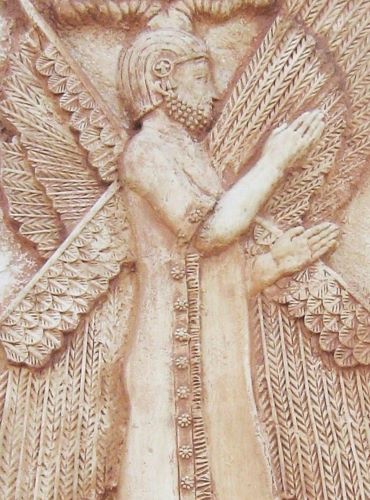
The reign of Cyrus the Great established not only the territorial foundations of the Achaemenid Empire but also the ideological architecture upon which its legitimacy rested. Emerging from the Persian periphery to overthrow Median supremacy and subsequently defeat Lydia and Babylon, Cyrus did not construct authority through annihilation alone. His expansion combined military effectiveness with calculated accommodation. Conquest was followed by integration. The durability of his rule depended upon persuading newly incorporated elites that Persian sovereignty offered stability rather than cultural erasure. In this respect, Cyrus functioned as both conqueror and political architect. His success lay not merely in battlefield victories, but in his capacity to convert military triumph into political settlement. The empire he forged was geographically expansive yet administratively restrained enough to avoid constant rebellion. From the outset, Persian kingship under Cyrus signaled that domination would be structured, predictable, and strategically moderated.
The conquest of Babylon in 539 BCE provides the clearest example of this integrative strategy. Rather than presenting himself as a foreign subjugator, Cyrus adopted the language of restoration. The so-called Cyrus Cylinder frames his rule as divinely sanctioned by Marduk and emphasizes the return of displaced cult images and the repair of sanctuaries. Modern scholarship rightly resists reading the inscription as an early declaration of universal tolerance, yet it remains evidence of deliberate political messaging. Cyrus understood that legitimacy in a multiethnic empire required symbolic alignment with local religious and civic expectations. Authority was articulated through continuity, not rupture.
Equally significant was the administrative flexibility that characterized early Achaemenid governance. Cyrus preserved regional power structures where possible, incorporating local elites into imperial administration rather than displacing them wholesale. The emerging satrapal administrative architecture, though refined under later rulers, reflected an awareness that imperial durability depended upon layered authority rather than centralized coercion alone. Tribute flowed to the imperial center, but local customs, legal practices, and cultic traditions were largely maintained. This pattern reinforced a reciprocal model of rule: subjects provided loyalty and resources, while the king provided order and protection. Such administrative pluralism reduced the immediate incentives for revolt and allowed diverse regions to experience imperial incorporation as adaptation rather than annihilation. In practical terms, this meant that the empire expanded without requiring uniform cultural transformation. Governance operated through calibrated oversight, balancing imperial authority with local continuity. The political effect was to normalize Persian sovereignty as a framework rather than an intrusion.
Such a system generated what might be termed foundational legitimacy. Cyrus’ authority was not merely enforced; it was narrated, ritualized, and institutionally embedded. The memory of his moderation became part of the empire’s political inheritance. Later inscriptions, including those of Darius I, consciously positioned subsequent rulers within the moral framework Cyrus had established. Founder charisma hardened into imperial expectation. The king was to be strong, but also just. He was to expand dominion, yet preserve equilibrium. These dual expectations formed the normative benchmark against which successors would be judged.
For Cambyses inheritance meant more than succession to territory. It meant stepping into a political role already defined by success and restraint. The architecture of legitimacy constructed by Cyrus amplified the risk of deviation. Any appearance of arbitrariness, excess, or instability would not be measured in isolation, but against a remembered ideal. In this sense, the greatness of the founder intensified the scrutiny of the heir. The imperial system he bequeathed was robust, yet it carried within it the seeds of comparison that could magnify perceived failure.
Herodotus and the Construction of Cambyses’ Character
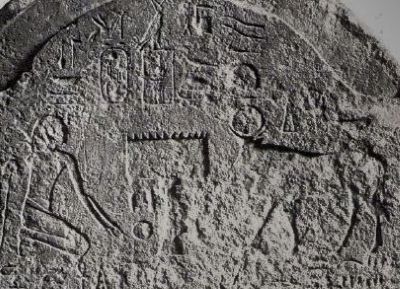
The dominant ancient portrait of Cambyses II is shaped by Herodotus, who presents the Persian king as a ruler progressively unmoored from restraint. In Book III of Histories, Cambyses appears not merely flawed but destabilized, prone to impulsive violence and symbolic transgression. Herodotus recounts episodes in which Cambyses mocks sacred traditions, humiliates Egyptian elites, and executes close advisors without measured deliberation. The narrative arc suggests a monarch who confuses inherited supremacy with unquestionable authority. Rather than embodying the integrative moderation attributed to Cyrus, Cambyses is depicted as testing the limits of power through spectacle and severity.
Yet Herodotus writes from within a Greek historiographical tradition that frequently moralizes monarchy and frames autocratic authority through the lens of excess. The trope of the “mad king” or hubristic tyrant functions not only as a descriptive category but as a cautionary pattern embedded in Greek political thought. Persian rulers, filtered through Greek anxieties about concentrated power, often become narrative vehicles for exploring the corrupting potential of unchecked sovereignty. Cambyses’ alleged desecration of Egyptian religious practices, including the infamous episode involving the Apis bull, may reflect Greek narrative conventions about impiety and sacrilege as much as documented policy. Moreover, Herodotus composed his work decades after the events he describes, drawing on oral traditions, local informants, and interpretive frameworks shaped by Greco-Persian conflict. His account blends ethnography, moral instruction, and political reflection. Modern scholars have urged caution in accepting Herodotus’ portrayal at face value, emphasizing the need to situate his narrative within cross-cultural misunderstanding, memory politics, and the rhetorical demands of his genre. The task is not to dismiss Herodotus, but to read him critically, attentive to the interplay between historical memory and literary construction.
Herodotus cannot be reduced to caricature or dismissed as pure invention. His work preserves details that align with broader patterns of imperial strain following rapid expansion. Cambyses’ Egyptian campaign, logistical challenges, and the difficulty of governing distant territories under conditions of succession pressure are historically plausible stressors. Episodes that Herodotus frames as madness may encode perceptions of erratic governance among subject populations or displaced elites. Even exaggeration can illuminate underlying tensions. The narrative construction of cruelty and arbitrariness may reveal less about psychological pathology and more about the fragility of authority when reciprocity appears compromised.
Herodotus’ Cambyses ultimately operates as a narrative contrast to Cyrus. Where the founder embodies disciplined expansion and political tact, the successor risks appearing impulsive and destabilizing. This contrast heightens the interpretive stakes of succession. By constructing Cambyses as a ruler who mistakes inheritance for invulnerability, Herodotus offers an early meditation on dynastic vulnerability. Whether fully accurate or rhetorically shaped, the account forces modern readers to confront a persistent question in imperial history: when does inherited power cease to stabilize and begin to corrode legitimacy?
Dynastic Insulation from Accountability
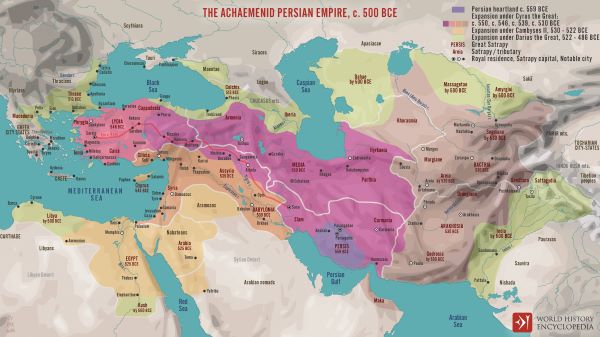
Dynastic rule introduces a structural condition distinct from elective or aristocratically competitive systems: authority is secured by birth before it is tested by performance. In hereditary monarchies, legitimacy is presumed continuous, transmitted as a matter of lineage rather than earned through institutional contestation. This presumption can stabilize succession by reducing open conflict, yet it also insulates heirs from mechanisms of correction. When power is guaranteed by bloodline, the threshold for removal or restraint rises dramatically. The successor enters office not as a provisional ruler dependent upon elite consent, but as the embodiment of continuity itself. The very strength of dynastic legitimacy creates a zone of reduced accountability.
In the Achaemenid Empire, royal ideology reinforced this insulation. The king was not merely a political administrator but a divinely favored sovereign whose authority was articulated through ritual, inscription, and court ceremony. Although Persian governance depended upon cooperation with local elites, the symbolic center of power remained intensely personalized. A successor raised within this environment would experience authority as inherited certainty rather than negotiated privilege. The court, structured around proximity to the monarch, rewarded loyalty and access over candid dissent. Under such conditions, corrective feedback could be muted, delayed, or reframed as disloyalty.
This insulation did not eliminate constraints entirely. Elite families, military commanders, and regional administrators retained leverage within the imperial system. Yet their influence operated through negotiation, factional balance, and the cultivation of access rather than through formalized institutional opposition. There existed no standing assembly capable of vetoing royal initiative, no codified succession review, and no bureaucratic apparatus empowered to compel transparency. Constraint was relational, not structural. It depended upon the ruler’s willingness to interpret elite counsel as stabilizing rather than adversarial. In such an environment, the political culture of the court becomes decisive. If dissent is welcomed as information, insulation can coexist with stability. If dissent is equated with betrayal, insulation hardens into isolation. Fear of reprisal can distort the informational environment around the monarch, narrowing the range of perspectives available and amplifying affirming voices. What begins as protective continuity risks evolving into epistemic enclosure, where the ruler’s perception of reality becomes increasingly mediated by loyalty rather than accuracy.
The narrative surrounding Cambyses, whether fully accurate or not, reflects precisely this anxiety. A ruler raised in the shadow of extraordinary imperial success may internalize continuity as entitlement. When obedience is expected as inheritance rather than maintained through reciprocity, the distance between ruler and ruled widens. Dynastic insulation transforms from protective mechanism into structural vulnerability. The system that once secured stability begins to depend precariously upon the personal temperament of the heir. In this light, Cambyses’ reign becomes less an aberration and more an illustration of how hereditary power, absent durable channels of accountability, risks mistaking continuity for immunity.
Inherited Greatness and the Performance of Power
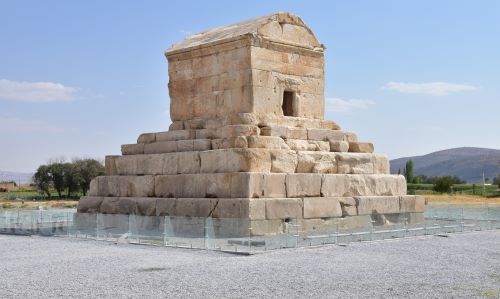
If dynastic insulation explains how a successor is protected from immediate accountability, inherited greatness explains the psychological and political burden that accompanies such protection. Cambyses did not ascend the throne as an untested provincial ruler. He succeeded Cyrus, a conqueror whose name had already hardened into imperial legend. The successor inherited not only territory but comparison. Founders generate mythic capital through visible achievement. Heirs inherit that capital without having generated it. The resulting imbalance often produces a need to perform authority rather than simply exercise it.
In hereditary systems, power must be demonstrated publicly to dispel doubts about weakness. For a founder, legitimacy emerges through conquest, settlement, and institutional creation. For a successor, legitimacy must be reaffirmed through visible acts of control that reassure both court and provinces. This dynamic can encourage symbolic gestures of dominance that exceed practical necessity. Ritual humiliation of elites, dramatic assertions of royal prerogative, and uncompromising responses to perceived dissent become tools of performance. Authority shifts from integrative negotiation toward demonstrative control. Symbolic assertion becomes a substitute for earned credibility. The logic of demonstration can displace the logic of administration. Decisions are calibrated less for long-term stability and more for immediate visibility. In this environment, restraint risks being misread as weakness, while spectacle appears as strength. The successor, conscious of comparison, may overcorrect, converting inherited prestige into heightened assertion in order to silence latent doubt.
Herodotus’ portrait of Cambyses may be read through this lens. Episodes of severity and alleged irreverence toward Egyptian religious practices function narratively as evidence of excess. Yet they also illustrate a ruler signaling that imperial continuity rests fully in his person. When a successor acts in ways that disregard established norms, the message may be less about impiety and more about supremacy. Inherited greatness, untempered by reciprocal consultation, can encourage a conception of sovereignty in which limits appear optional. The ruler embodies the empire, and assumes that personal will and imperial interest are indistinguishable.
Such dynamics are not unique to Persia. Political thought across civilizations has observed that second-generation rulers often confront a crisis of validation. The founder’s authority is remembered as decisive, even heroic, because it emerged from visible struggle. The heir inherits a stabilized order and must operate within institutions already shaped by another’s triumph. The contrast can generate pressure to produce equally dramatic markers of rule. Where the founder subdued rivals and forged unity, the successor may seek moments that display comparable vigor. If institutional culture valorizes conquest and expansion, the absence of new founding crises can leave a vacuum of narrative legitimacy. The heir faces a paradox. Ordinary competence sustains the state but does not generate myth. Extraordinary assertion generates myth but risks destabilization. When the memory of the founder is idealized, the successor’s measured governance may appear insufficiently grand. In such an atmosphere, performance becomes both temptation and trap, promising affirmation while potentially eroding the cooperative networks upon which imperial durability depends.
In the Achaemenid case, the scale of the empire intensified this challenge. Governing vast territories required cooperation from regional elites and administrators. Stability depended less on theatrical dominance and more on predictable exchange between center and periphery. If Cambyses’ actions appeared erratic or disproportionate, the perception alone could erode confidence among those responsible for maintaining imperial order. Performance that reassures at the center may unsettle at the periphery. In this way, inherited greatness can become destabilizing when the need to demonstrate supremacy overrides the quieter work of sustaining equilibrium.
The broader implication is structural rather than personal. Inherited greatness creates asymmetrical expectations. The heir must match or exceed the founder without replicating the founder’s unique historical circumstances. Where greatness is mythologized, ordinary governance may appear insufficient. The temptation to convert inherited prestige into conspicuous assertion becomes powerful. Whether Cambyses embodied this dynamic fully or whether Herodotus amplified it rhetorically, the pattern remains instructive. Empire inherited is not empire secured. Without careful calibration, conspicuous assertion can begin to displace the disciplined practice of rule.
Court Culture and the Enabling of Excess
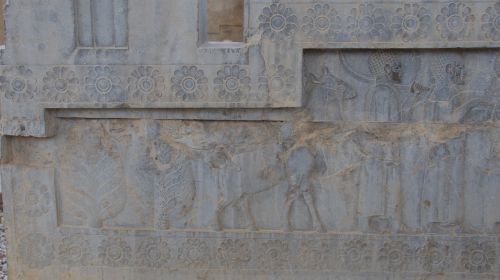
Imperial courts are not merely ceremonial spaces. They are political ecosystems structured around proximity, access, and favor. In hereditary monarchies, where authority concentrates in a single person, the court mediates the flow of information, shapes perception, and calibrates loyalty. The Achaemenid court was highly ritualized, embedding hierarchy in protocol and reinforcing royal centrality through spectacle. Such structures could stabilize authority by clarifying rank and expectation. Yet they could also narrow the channels through which corrective counsel reached the sovereign. When power is personal, the quality of advice depends on the courage and security of those permitted to speak. The court becomes the filter through which reality passes before reaching the throne. If that filter privileges affirmation over accuracy, distortion becomes systemic. The ruler’s understanding of provincial conditions, elite sentiment, and military readiness may reflect not the empire’s actual state but the curated impressions of those seeking favor. In this way, court culture does not simply surround power. It shapes its field of vision.
In the Persian case, elite families and administrators were deeply integrated into imperial governance. Their participation was essential for revenue collection, military mobilization, and regional stability. However, access to the king was itself a resource, distributed through favor. Court officials operated within a delicate balance of competition and compliance. Advancement required visible loyalty. Under a founder whose authority rested on demonstrated competence, loyalty and pragmatic counsel could coexist. Under a successor perceived as volatile or insecure, incentives might shift. Prudence could give way to caution. Caution could become silence.
Herodotus’ narrative of Cambyses includes episodes in which close advisors are executed or dismissed for perceived insolence. Whether literal or embellished, such accounts reflect an anxiety about the fragility of court candor. If dissent is punished, the court’s informational environment contracts. Reports are filtered to avoid displeasure. Risks are underreported. The monarch’s decisions, deprived of accurate feedback, may become increasingly detached from administrative realities. Excess in this sense is not merely personal temperament; it is institutionally amplified. Court culture can transform isolated impulses into sustained patterns by failing to mediate or moderate them. The execution of a trusted counselor, whether historical or narratively symbolic, signals to others that proximity carries danger. Fear recalibrates speech. Advisors begin to anticipate what the ruler wishes to hear rather than what he needs to hear. In such an atmosphere, even measured policy disagreements may disappear from formal discourse. The erosion of honest counsel becomes gradual and often invisible, masking deterioration beneath a veneer of unanimity.
The structure of royal ritual further complicates this dynamic. Persian kingship emphasized distance and elevation. Ceremonial practices reinforced the monarch’s singular status, distinguishing him from subjects and magnifying the symbolic aura of sovereignty. Such ritual centralization strengthens legitimacy but also insulates perception. When the ruler is positioned as both apex and embodiment of empire, disagreement acquires moral weight. To oppose policy risks appearing to oppose order itself. The conflation of personal authority with imperial stability discourages frank critique. Court culture, designed to dramatize unity, may inadvertently suppress the dissent necessary for adaptive governance. Ritualized submission, proskynesis, and carefully choreographed audience procedures underscore hierarchy, but they also remind participants that access is conditional. The psychological effect of repeated ceremonial deference can normalize asymmetry to such a degree that challenge feels transgressive rather than constructive. In this environment, the distinction between reverence and compliance blurs, and the king’s perspective increasingly dominates deliberation without meaningful friction.
The enabling of excess becomes less a matter of individual cruelty than of systemic reinforcement. A court that prioritizes access over accuracy and loyalty over correction can unintentionally validate imprudence. If Cambyses’ reign appeared erratic, the explanation may lie as much in the political environment surrounding him as in his personal disposition. Dynastic insulation and inherited prestige set the stage, but court culture determines whether impulses are tempered or magnified. The Achaemenid court, like many imperial centers before and after it, possessed the capacity to stabilize succession. It also carried within it the potential to amplify the very vulnerabilities it sought to contain.
Loyalty without Stability: The Erosion of Reciprocal Rule

The early Achaemenid Empire rested upon a reciprocal understanding between the king and his subjects. Conquered regions were expected to provide tribute, troops, and formal acknowledgment of Persian sovereignty. In return, the monarch guaranteed order, protection, and a measured respect for local custom. This balance was neither egalitarian nor democratic, yet it was functional. Stability flowed from predictability. When imperial authority operated within recognizable bounds, loyalty could be sustained even across vast cultural and geographic distances. The durability of Cyrus’ settlement suggests that subjects accepted Persian rule because it delivered continuity rather than constant disruption.
Reciprocity, however, is fragile when it depends heavily upon the perceived reliability of the sovereign. If royal conduct appears erratic, punitive beyond precedent, or inattentive to established norms, the calculus of loyalty shifts. Elites who once viewed imperial authority as stabilizing may begin to reassess risk. Tribute becomes burden rather than exchange. Obedience becomes precaution rather than partnership. The erosion of reciprocal rule does not necessarily produce immediate rebellion. It more often generates quiet hedging, delayed compliance, and diminished enthusiasm for imperial initiatives. Stability weakens gradually, often beneath the surface of formal submission. Administrative friction increases. Local authorities may comply in form while subtly limiting cooperation in substance. Communication slows. Military mobilization becomes less efficient. These shifts are rarely announced, yet they accumulate. What appears from the center as continued obedience may conceal an emerging pattern of conditional loyalty, sustained not by confidence but by calculation.
Herodotus’ account of Cambyses’ Egyptian campaign and subsequent internal turmoil hints at such erosion. Reports of harsh treatment toward local elites, whether fully accurate or rhetorically amplified, suggest a ruler whose actions unsettled the balance upon which imperial cooperation depended. If provincial administrators perceived royal directives as unpredictable, their incentive to invest fully in imperial governance could diminish. The appearance of arbitrary punishment undermines trust more effectively than measured severity. Even isolated incidents, once widely known, can recalibrate expectations across the empire. Loyalty grounded in fear may secure short-term obedience, but it rarely sustains durable allegiance.
The broader structural implication is clear. Empires endure not solely through force but through a stable exchange of authority and protection. When the ruler demands loyalty without reinforcing the conditions that make loyalty rational, reciprocity decays. Inherited sovereignty amplifies this risk, for the successor may assume that allegiance is automatic, embedded in lineage and secured by precedent. Yet loyalty is not transmitted genetically. It is continually renegotiated through governance that appears predictable, proportionate, and attentive to shared interests. Where stability falters, allegiance becomes transactional and contingent. Subjects may continue to bow, pay tribute, and profess fidelity, yet their commitment grows shallow. This thinning of reciprocity leaves the imperial structure vulnerable to shock. A crisis that might once have been absorbed through trust instead exposes the fragility beneath outward compliance. Whether Cambyses’ reign truly marked a sharp departure from Cyrus or whether later narratives exaggerated instability, the anxiety preserved in our sources reflects a fundamental truth of imperial politics: obedience secured without stability erodes from within.
Madness, Narrative, or Political Breakdown?

The question of Cambyses’ alleged madness has long occupied both ancient commentators and modern historians. Herodotus presents a ruler increasingly detached from restraint, attributing his behavior to psychological instability, sacrilege, and impulsive cruelty. The interpretive temptation is to accept this portrait at face value and classify Cambyses as an early example of pathological kingship. Yet such a conclusion risks conflating narrative framing with clinical reality. Ancient historiography frequently moralized political decline by personalizing it. To explain instability through madness is rhetorically efficient. It simplifies structural strain into individual defect.
Greek writers often deployed madness as a political metaphor, embedding psychological language within moral and constitutional critique. Excessive power, in this tradition, produces imbalance not only in conduct but in character. When a ruler transgresses established norms, the violation is described not merely as miscalculation but as derangement, as though the internal order of the ruler mirrors the disrupted order of the state. The language of insanity functions as political diagnosis. In Cambyses’ case, alleged acts of impiety toward Egyptian religion and cruelty toward advisers become symptoms of disequilibrium rather than discrete policy choices. Yet cross-cultural misinterpretation and polemical exaggeration complicate these accounts. Egyptian evidence does not uniformly confirm the most dramatic accusations, and Persian royal inscriptions, though selective in their silence, do not preserve a narrative of visible collapse. Herodotus writes decades after the events he narrates, drawing upon stories shaped by imperial conflict and retrospective interpretation. The gap between Greek storytelling and administrative documentation invites caution. Madness may serve as explanatory shorthand for political tension that contemporaries could sense but not fully articulate in structural terms.
Dismissing Herodotus entirely would be methodologically unsound. Rapid territorial expansion, extended military campaigns, and the logistical challenges of ruling Egypt from the imperial core created substantial strain. Succession following a dominant founder can generate insecurity, especially if rival claimants or elite factions linger in the background. Political breakdown need not require psychological pathology. Stress, factional maneuvering, and communication failures can produce erratic outcomes that observers interpret as madness. In this light, Herodotus’ narrative may preserve perceptions of instability without accurately diagnosing their cause.
Modern scholarship has shifted from asking whether Cambyses was insane to examining whether his reign exhibited signs of administrative disruption. The brevity of his rule, the contested transition that followed his death, and the emergence of Darius I after a period of uncertainty indicate that the imperial center experienced measurable strain. Rather than isolating individual temperament, historians now explore institutional stress points: succession ambiguity, elite rivalry, regional integration challenges, and the difficulties inherent in governing newly annexed territories. Empires that expand rapidly often confront a moment when consolidation lags behind conquest. Communication networks remain stretched. Loyalty remains provisional. Revenue systems require refinement. In such contexts, even routine missteps can be magnified into crisis. What appears retrospectively as erratic leadership may reflect the strain of managing diversity, distance, and expectation simultaneously. By reframing the question from pathology to political process, modern analysis situates Cambyses within broader patterns of imperial transition rather than treating him as an isolated aberration.
The trope of the “mad king” also performs a legitimizing function for successors. By portraying Cambyses as unstable, later narratives implicitly justify the restoration of order under Darius. Madness becomes retrospective explanation, smoothing the narrative of transition. The disorder of succession is reframed as the removal of a flawed ruler rather than as systemic vulnerability. Narrative closure replaces structural critique.
The dichotomy between madness and political breakdown may be false. The more instructive question concerns how inherited authority interacts with institutional resilience. If court culture narrows counsel, if reciprocity weakens, and if performance replaces prudence, governance may appear erratic even without clinical instability. Cambyses’ reign, whether accurately depicted or rhetorically sharpened, occupies this ambiguous space. The persistence of the madness narrative underscores ancient discomfort with concentrated power untethered from visible restraint. What Herodotus dramatized as insanity may, at its core, reflect the perennial instability of succession in empires built upon personal legitimacy.
Comparative Dynamics: Early Imperial Entitlement across History
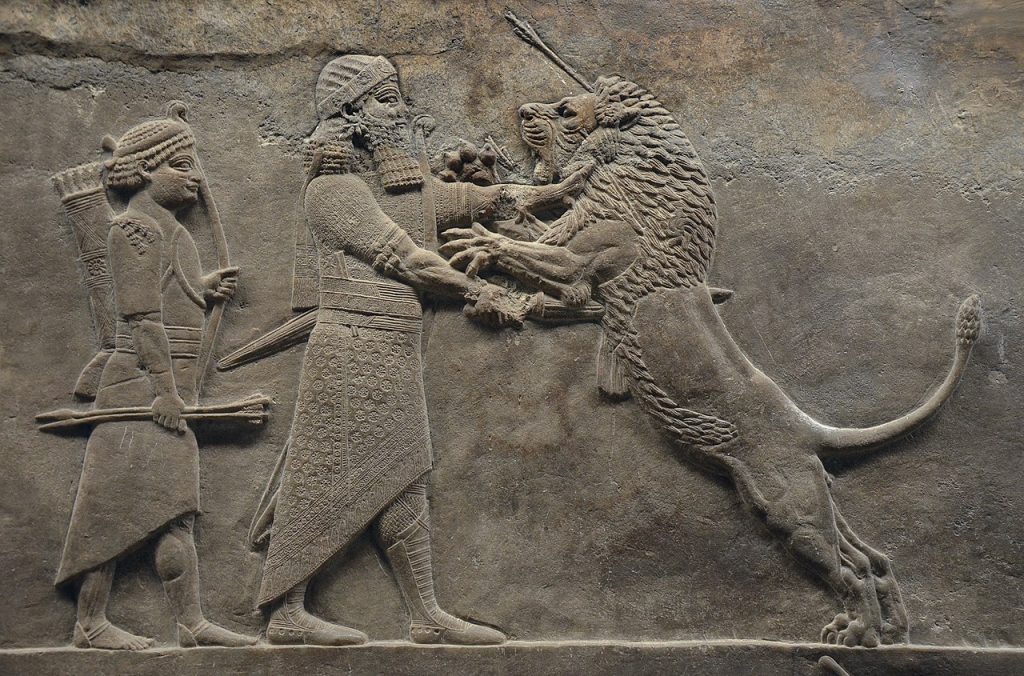
The tensions visible in the succession from Cyrus to Cambyses are not unique to the Achaemenid world. Across imperial systems, the transition from founder to heir frequently exposes structural fault lines that conquest alone cannot conceal. Founders accumulate legitimacy through visible achievement, overcoming rivals and embedding authority within institutional form. Successors inherit the narrative without having authored it. The resulting imbalance between inherited prestige and untested performance creates a recurring vulnerability. Entitlement becomes tempting precisely where comparison is unavoidable.
In the ancient Near Eastern and Mediterranean worlds, second-generation rulers often confronted the challenge of sustaining founder charisma without replicating founder circumstances. The consolidation phase of empire differs from the expansion phase. Where the founder’s authority emerges from crisis, the heir governs within relative stability. Stability, however, reduces opportunities for dramatic legitimacy-building. The heir must rely on institutional continuity and symbolic affirmation rather than existential struggle. If institutions are robust, this transition proceeds quietly. If authority remains personalized, the temptation to dramatize power can grow. Performance replaces integration as the visible marker of sovereignty. Moreover, the memory of the founder can harden into an implicit standard that is impossible to meet. Every decision by the heir is measured against an idealized past. Where the founder’s achievements are mythologized, moderation may be interpreted as mediocrity. In such climates, successors may seek to demonstrate vigor through conspicuous assertion, even when stability would be better served by restraint. The second generation governs not only an empire, but a legacy that constantly invites comparison.
Roman imperial history offers instructive parallels. The Julio-Claudian dynasty illustrates how proximity to a revered founder can distort political expectation. Augustus crafted an image of restrained authority within republican forms, embedding his power within institutional language. His successors inherited the apparatus but not the founding crisis that legitimized it. When later emperors leaned more heavily on personal assertion or court favoritism, senatorial trust fluctuated. The Roman case underscores that inherited systems require continuous calibration. The perception of excess may arise not solely from cruelty but from the erosion of reciprocal elite engagement.
Similar dynamics appear in later imperial contexts beyond antiquity. In dynastic monarchies where succession is predetermined, insulation from accountability and dependence on court culture recur as structural features. Heirs raised within environments of deference may internalize authority as natural rather than contingent. When inherited greatness is interpreted as personal invulnerability, the feedback mechanisms necessary for adaptive governance weaken. Comparative political theory has long recognized that hereditary systems rely disproportionately on the temperament and prudence of individual rulers. Where those qualities falter, institutional resilience is tested abruptly. The absence of formalized corrective mechanisms means that adjustment depends upon informal influence, factional balance, or crisis intervention. In stable moments, these informal structures may suffice. In transitional moments, they may prove inadequate. The second generation often reveals whether an empire has successfully transformed founder charisma into enduring administrative norms.
Cambyses’ reign occupies a recognizable pattern rather than an isolated anomaly. Whether or not his conduct matched Herodotus’ dramatic portrayal, the anxieties embedded in that narrative reflect a broader historical rhythm. Empires founded on personal legitimacy must translate that legitimacy into durable institutions capable of outliving the founder’s charisma. When inheritance substitutes for renewal, entitlement risks displacing equilibrium. The comparative lens does not condemn hereditary rule outright, but it clarifies its recurring challenge. Greatness transmitted by lineage must still be secured by governance. Where that distinction blurs, the second generation becomes the empire’s most revealing test.
Conclusion: Imperial Inheritance and the Fragility of Legitimacy
The reign of Cambyses II, filtered through ancient narrative and modern reassessment, reveals less about individual pathology than about the precarious architecture of inherited authority. Empires forged by exceptional founders carry within them both strength and strain. The strength lies in consolidated territory, institutional frameworks, and accumulated prestige. The strain emerges in succession. Legitimacy generated through visible achievement must be renewed by governance rather than assumed by lineage. When inheritance substitutes for renewal, authority risks drifting from stability toward performance.
Cyrus constructed an imperial model grounded in negotiated power, ritual affirmation, and administrative flexibility. That settlement created expectations as much as it secured territory. Cambyses inherited not a blank slate but a calibrated equilibrium that depended upon predictable exchange between center and periphery. The founder’s moderation became normative, shaping how elites interpreted royal behavior and how subject populations assessed imperial reliability. Whether Cambyses destabilized that settlement through erratic conduct or whether later narratives exaggerated deviation, the anxiety surrounding his reign reflects a structural truth. Dynastic shielding narrows accountability. Court culture shapes perception. Durable allegiance depends upon predictability. When these elements operate in balance, empire can absorb transition without rupture. When they weaken simultaneously, fragility becomes visible. Succession then exposes whether institutions have matured beyond the founder’s personality or remain tethered to it.
The persistence of the madness narrative underscores how ancient observers sought to interpret this fragility. To attribute instability to insanity personalizes structural tension. Yet political systems do not collapse solely because rulers lose composure. They falter when institutional feedback loops constrict, when performance overshadows prudence, and when reciprocity erodes beneath formal obedience. Cambyses’ historical image may be contested, but the pattern it encodes remains instructive. Imperial inheritance tests whether charisma has been transformed into durable governance.
The transition from founder to heir constitutes the most revealing moment in any hereditary regime. Conquest can create empire. Administration can sustain it. Succession determines whether it endures. Cambyses stands at this threshold, a figure shaped by both narrative exaggeration and genuine structural tension. His reign illustrates that greatness transmitted by bloodline is never self-sustaining. Legitimacy must be continually enacted through restraint, reciprocity, and institutional resilience. Where these are assumed rather than cultivated, the empire’s strength conceals its vulnerability. In that tension lies the enduring lesson of early imperial entitlement.
Bibliography
- Abdul Amir Mohsen, Hala and Ahmed Majed Ahmed. “Cambyses II: Roots of the Past and Echoes of the Present in Colonialism and Dictatorship.” International Journal of Arabic-English Studies 25:2 (2025), 63-82.
- Besley, Timothy and Marta Reynal-Querol. “The Logic of Hereditary Rule.” Journal of Economic Growth 22:2 (2017), 123-144.
- Briant, Pierre. From Cyrus to Alexander: A History of the Persian Empire. Winona Lake: Eisenbrauns, 1996.
- Depuydt, Leo. “Murder in Memphis: The Story of Cambyses’s Mortal Wounding of the Apis Bull (Ca. 523 B. C. E.).” Journal of Near Eastern Studies 52:2 (1995), 119-126.
- Herodotus. Histories. Translated by Robin Waterfield. Oxford: Oxford University Press, 1998.
- Kuhrt, Amélie. “The Achaemenid Empire.” In The Cambridge Ancient History, 2nd ed., vol. 4, edited by John Boardman et al., 647–754. Cambridge: Cambridge University Press, 1988.
- —-. The Persian Empire: A Corpus of Sources from the Achaemenid Period. London: Routledge, 2007.
- Millar, Fergus. The Emperor in the Roman World. Ithaca: Cornell University Press, 1977.
- Rollinger, Robert. “The Median ‘Empire,’ the End of Urartu, and Cyrus the Great’s Campaign in 547 BCE.” In Proceedings of the 7th International Congress on the Archaeology of the Ancient Near East, edited by Roger Matthews and John Curtis, 3–19. Wiesbaden: Harrassowitz, 2012.
- Sancisi-Weerdenburg, Heleen, and Amélie Kuhrt, eds. Achaemenid History II: The Greek Sources. Leiden: Nederlands Instituut voor het Nabije Oosten, 1987.
- Syme, Ronald. The Roman Revolution. Oxford: Oxford University Press, 1939.
- Waters, Matt. Ancient Persia: A Concise History of the Achaemenid Empire, 550–330 BCE. Cambridge: Cambridge University Press, 2014.
- Zhang, Zhiqian. “To What Extent Did the Rule of Cambyses II and Darius I Influence Egyptian Society?” Communications in Humanities Research 4 (2023), 348-353.
Originally published by Brewminate, 02.26.2026, under the terms of a Creative Commons Attribution-NonCommercial-NoDerivatives 4.0 International license.
About the Author