In the nineteenth century, scientists and thinkers widely believed the universe was filled with life, a confidence later challenged by advancing observation and scientific rigor.

By Matthew A. McIntosh
Public Historian
Brewminate
Introduction: A Crowded Universe Assumed
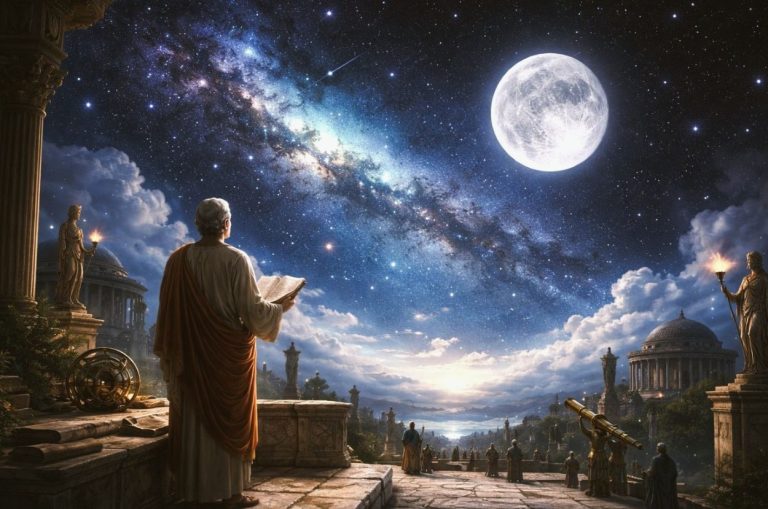
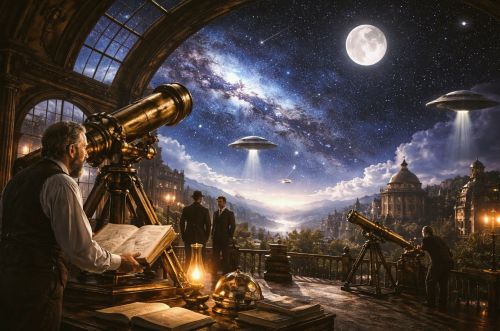
The idea that the universe is filled with life feels modern, but nineteenth-century scientists already believed it was true. Many nineteenth-century scientists believed in extraterrestrial life and assumed the universe contained multiple inhabited worlds. This belief, commonly described as the “plurality of worlds” or cosmic pluralism, reflected confidence in humanity’s ability to understand the structure of the cosmos. Rather than asking whether extraterrestrial life existed, many nineteenth-century thinkers assumed that it almost certainly did. Nineteenth-century scientists believed in extraterrestrial life because they assumed natural laws were universal, the universe was vast, and a rational creation would not leave worlds empty.
This confidence emerged from the convergence of several intellectual traditions. Enlightenment rationalism had encouraged thinkers to seek universal laws governing nature, while advances in astronomy expanded the perceived scale of the universe. The stars, once understood as distant points of light, were increasingly recognized as suns analogous to our own, each potentially surrounded by planetary systems. Observations by astronomers such as William Herschel reinforced this expanding vision of the cosmos, suggesting the vast number of stars and their structural similarities to the Sun. If the solar system contained planets capable of sustaining life, it seemed reasonable to assume that other stars did as well. In this expanding cosmic framework, the Earth appeared less like a unique creation and more like one example among many similar worlds, embedded in a universe governed by consistent and intelligible laws.
The philosophical and theological foundations of this belief were equally significant. The long-standing idea known as the Principle of Plenitude held that a rational and benevolent Creator would not allow potential forms of existence to remain unrealized. Applied to the cosmos, this reasoning suggested that empty worlds would represent a kind of divine inefficiency or waste. Instead, the vastness of the universe was interpreted as evidence of abundance, with life distributed widely across its expanse. This argument relied not on empirical observation but on a broader conception of order, purpose, and completeness in creation.
Yet the very certainty that characterized nineteenth-century belief in extraterrestrial life also reveals its limitations. Lacking direct evidence, thinkers used analogies, philosophical reasoning, and incomplete observations to support their conclusions. What appeared as logical necessity often rested on assumptions about uniformity and purpose that would later be questioned. The nineteenth century stands as a moment of intellectual confidence, when the universe was imagined as crowded and alive, just before scientific methods began to dismantle that certainty.
Intellectual Foundations: The Principle of Plenitude
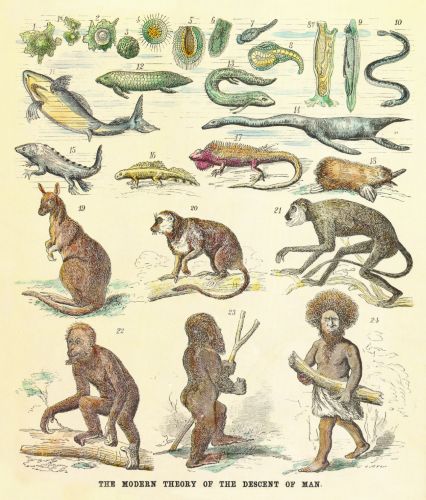
The widespread nineteenth-century belief in extraterrestrial life did not arise from empirical discovery but from a deeper philosophical inheritance rooted in the Principle of Plenitude. This idea, with origins in ancient Greek philosophy and later developed through medieval and early modern thought, held that all possible forms of existence must be realized. In its classical formulation, it suggested that a perfect and rational universe would contain no gaps, no unrealized potentials, and no unnecessary absences. By the nineteenth century, this principle had been absorbed into both scientific and theological reasoning, providing a powerful intellectual foundation for the assumption that life must exist beyond Earth.
Within a theological context, the Principle of Plenitude was often framed as a reflection of divine generosity and perfection. A Creator capable of producing a vast and complex universe would not, it was argued, leave most of it empty or unused. The immense number of stars and planets suggested not desolation but abundance, each world potentially serving as a stage for life. To imagine otherwise was to impose limitations on divine creativity, an idea that many nineteenth-century thinkers found philosophically and theologically untenable. This reasoning was reinforced by broader theological traditions that emphasized the fullness and continuity of creation, linking the existence of diverse forms of life to the perfection of divine design. Belief in extraterrestrial life was not seen as a challenge to religious doctrine but as a natural extension of it, aligning scientific curiosity with theological affirmation.
Philosophically, the principle also aligned with broader Enlightenment assumptions about order and continuity in nature. The universe was increasingly understood as governed by consistent laws, and these laws were believed to operate uniformly across all space. If the conditions necessary for life existed on Earth, then it followed, by analogy, that similar conditions elsewhere would yield similar results. This reasoning did not require direct observation of extraterrestrial organisms; it depended instead on a commitment to the universality of natural processes. The logic was inductive but confident, grounded in the belief that nature did not operate arbitrarily.
The Principle of Plenitude blurred the boundary between philosophical necessity and empirical reality. It transformed a possibility into a presumed fact, elevating a metaphysical argument into a widely accepted conclusion. This shift reveals the extent to which nineteenth-century thought was shaped by underlying assumptions about completeness and perfection. The absence of observable evidence for extraterrestrial life did not undermine the belief but was interpreted as a temporary limitation of human knowledge that would eventually be overcome.
The influence of the Principle of Plenitude extended far beyond abstract philosophy, shaping scientific expectations and public imagination alike. It provided a coherent framework within which the plurality of worlds appeared not only plausible but inevitable. It contributed to a broader intellectual climate in which the universe was envisioned as fully inhabited, a place where life was the rule rather than the exception. This assumption informed not only scholarly discourse but also popular culture, educational materials, and public lectures, reinforcing the idea that humanity occupied just one of many living worlds. The belief in extraterrestrial life became deeply embedded in nineteenth-century thought, persisting until new scientific developments began to challenge its foundational premises.
Scientific Confidence: Newtonian Universality and Life

The intellectual authority of Newtonian physics played a decisive role in shaping nineteenth-century confidence in extraterrestrial life. By the early 1800s, Isaac Newton’s laws of motion and universal gravitation had come to be seen not merely as successful scientific theories but as foundational truths about the structure of the universe. These laws appeared to operate consistently across both terrestrial and celestial domains, uniting the motion of falling objects on Earth with the movements of planets and stars. This unification encouraged a broader assumption: if the same physical laws governed the entire cosmos, then the processes observed on Earth might reasonably be expected to occur elsewhere as well. The predictive success of Newtonian mechanics, demonstrated through increasingly precise astronomical calculations, reinforced the belief that the universe was orderly, intelligible, and governed by principles that could be universally applied. In this intellectual climate, it seemed natural to extend these principles beyond motion and matter to encompass the conditions necessary for life.
From this premise, many thinkers extended the logic of universality beyond physics to the domain of life itself. If gravity, motion, and matter behaved uniformly throughout the universe, then the conditions that produced life on Earth could not be unique. The Earth was no longer seen as a singular exception but as one instance of a broader pattern. This reasoning rested on analogy rather than direct evidence, yet it remained highly persuasive. The success of Newtonian science fostered a sense of intellectual continuity, suggesting that the universe operated according to stable and predictable principles that could be applied across all scales.
Astronomical discoveries further reinforced this outlook. Observations by figures such as William Herschel expanded the known structure of the cosmos, revealing vast numbers of stars and complex galactic formations. Herschel himself speculated about the possibility of inhabited worlds, including even the Sun, reflecting the extent to which scientific observation and imaginative inference were intertwined. The recognition that stars were distant suns implied the potential existence of planetary systems beyond our own, each governed by the same physical laws. Within this expanding universe, it seemed increasingly implausible that Earth alone would host life. As telescopic capabilities improved, the sheer scale and richness of the cosmos became more apparent, strengthening the intuition that such a vast system would not exist without purpose or habitation. This expansion of cosmic perspective made the idea of a lifeless universe appear not only unlikely but philosophically unsatisfying to many nineteenth-century observers.
The extension of physical laws to biological processes introduced a significant conceptual leap. While Newtonian mechanics successfully described motion and force, it offered no direct explanation for the origin or nature of life. Nevertheless, many nineteenth-century thinkers assumed that life itself was a natural consequence of physical conditions, arising wherever suitable environments existed. This assumption reflected both the strengths and the limitations of the period’s scientific understanding. It demonstrated confidence in the universality of nature while also revealing the absence of a developed biological framework capable of explaining how life actually emerges. The gap between physical explanation and biological complexity was often overlooked or minimized, as the success of physics encouraged broader generalizations that were not yet supported by empirical evidence in the life sciences.
This produced a powerful synthesis of observation, theory, and inference that supported the broader doctrine of cosmic pluralism. Newtonian universality provided the intellectual scaffolding upon which beliefs about extraterrestrial life could be constructed, lending scientific credibility to what might otherwise have remained purely speculative. The universe appeared not only vast but generative, governed by laws that produced both order and life across its expanse. This confidence would endure throughout much of the nineteenth century, even as its underlying assumptions would later be subjected to increasing scrutiny.
The Solar System as a Living Neighborhood
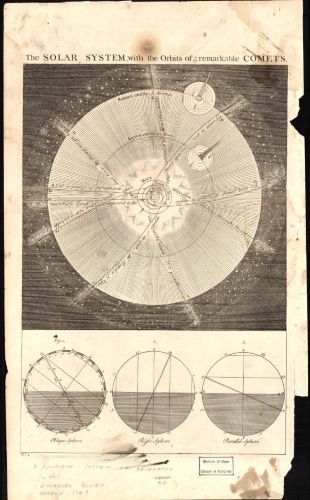
For much of the nineteenth century, speculation about extraterrestrial life was directed not toward distant stars but toward the familiar bodies of the solar system. Planets were not yet understood as fundamentally different from Earth but were instead interpreted as variations on a common theme, each with its own environment, climate, and potential for habitation. This perspective transformed the solar system into a kind of cosmic neighborhood, in which other worlds were imagined as accessible, knowable, and likely inhabited. The conceptual leap required to imagine life beyond Earth was relatively small, grounded in analogy rather than abstraction. Rather than confronting the vast unknown, nineteenth-century thinkers focused on nearby celestial bodies that could be observed, described, and compared, making the idea of extraterrestrial life feel immediate and tangible rather than distant and speculative.
This outlook was reinforced by the limited but suggestive observations available to astronomers of the time. Surface features on planets such as Mars and Venus appeared, through early telescopes, to exhibit patterns that could be interpreted as landmasses, atmospheres, or even vegetation. Seasonal changes observed on Mars encouraged comparisons with Earth’s climate cycles, suggesting the presence of water and possibly life. These interpretations were often tentative, yet they were readily incorporated into broader frameworks that assumed habitability as the default condition rather than the exception.
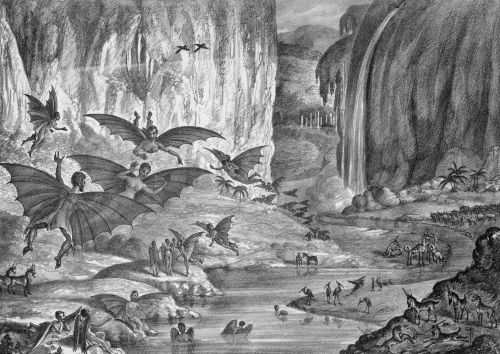
The Moon, despite its proximity, also played a significant role in shaping this vision of a populated solar system. Early in the century, some astronomers entertained the possibility that it might support life, while popular imagination embraced even more elaborate scenarios. The famous Great Moon Hoax of 1835, which described fantastical lunar creatures and landscapes, captured public attention precisely because it resonated with existing expectations. Newspapers presented detailed accounts of bat-like humanoids, strange animals, and lush lunar environments, blending scientific language with imaginative storytelling. Although quickly exposed as fiction, the episode reveals the extent to which the idea of inhabited worlds had already taken hold, blurring the boundary between scientific speculation and imaginative narrative. It also highlights the growing influence of mass media in shaping public understanding of science, demonstrating how easily scientific authority could be leveraged to lend credibility to extraordinary claims.
These assumptions created a model of the solar system as a continuum of worlds rather than a collection of fundamentally distinct environments. Earth was not seen as unique but as one inhabited planet among several, differing perhaps in degree but not in kind. This framework provided a tangible and immediate context for the broader doctrine of cosmic pluralism, making the existence of extraterrestrial life seem not only plausible but practically observable. Only later, as observational techniques improved, would this vision of a living solar system begin to unravel.
The Moon: Early Speculation and Popular Imagination
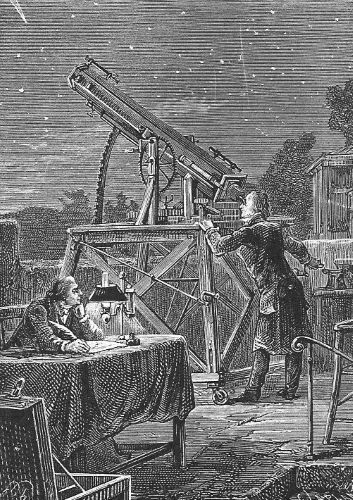
In the early nineteenth century, the Moon occupied a unique place in discussions of extraterrestrial life. Its proximity made it the most accessible object of astronomical observation, and its visible surface features invited interpretation in ways that more distant bodies did not. Through telescopes, observers could discern mountains, plains, and shadowed regions, which were often analogized to familiar terrestrial landscapes. This visual familiarity encouraged the assumption that the Moon might share not only physical characteristics with Earth but also the conditions necessary for life.
Scientific opinion on lunar habitability was far from uniform, yet the absence of definitive evidence allowed speculation to flourish. Some astronomers cautiously entertained the possibility of a lunar atmosphere or forms of life adapted to different conditions, while others remained skeptical. The limits of observational technology meant that even skepticism could not be conclusively demonstrated. In this space of uncertainty, the Moon became a canvas onto which both scientific reasoning and imaginative projection could be applied, reinforcing its role as a plausible site of extraterrestrial existence. The debate itself often reflected broader intellectual tensions between empirical restraint and philosophical expectation, as the desire to find life beyond Earth sometimes outpaced the available evidence. The Moon functioned less as a resolved scientific question than as an open field of interpretation shaped by competing assumptions and limited data.
The broader public proved especially receptive to such ideas, as the Moon’s visibility made it a familiar yet mysterious presence in everyday life. Popular science writing, lectures, and illustrated works brought astronomical speculation into the cultural mainstream, often blurring the line between cautious hypothesis and confident assertion. The Moon was frequently depicted as a world not entirely unlike Earth, differing in degree rather than in kind. This portrayal resonated with audiences who were already inclined to view the cosmos as populated and accessible.
The most famous expression of this popular imagination was the aforementioned Great Moon Hoax of 1835, published in the New York Sun. Presented as a series of reports on the supposed discoveries of the British astronomer John Herschel, the articles described an elaborate lunar ecosystem populated by exotic flora and fauna, including winged humanoid creatures. The detailed and authoritative tone of the reports lent them an air of credibility, leading many readers to accept them as genuine scientific findings. The hoax’s success was not merely a product of deception but of cultural readiness; it confirmed what many already believed to be likely. The narrative drew upon contemporary scientific language and observational authority, making its claims appear consistent with existing knowledge rather than fantastical invention. It revealed how easily scientific credibility could be constructed and disseminated in an age of expanding print culture.
The eventual exposure of the hoax did little to diminish the broader appeal of lunar life. Instead, it revealed the extent to which scientific authority could be appropriated and the ease with which imaginative narratives could be integrated into public understanding of the cosmos. The episode also highlights the growing role of mass media in shaping scientific discourse, as newspapers and popular publications became key intermediaries between professional astronomers and the general public. The Moon functioned as both a scientific object and a cultural symbol, embodying the possibilities of life beyond Earth. Even after the hoax was discredited, the idea of a populated Moon continued to circulate in popular imagination, demonstrating the persistence of belief once it had been culturally embedded.
By the mid-nineteenth century, more careful observations began to challenge earlier assumptions about lunar habitability. Improvements in telescopic resolution and a better understanding of atmospheric conditions led many scientists to conclude that the Moon lacked the environment necessary to support life as it was known on Earth. Yet even as scientific opinion shifted, the earlier period of speculation left a lasting imprint on both scientific and popular thought. The Moon had served as the first testing ground for the idea of extraterrestrial life, demonstrating how observation, imagination, and cultural expectation could combine to produce a compelling vision of a populated cosmos.
Mars Emerges: Observation and Interpretation
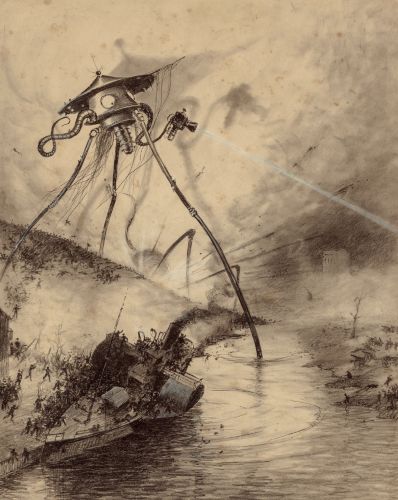
As the nineteenth century progressed, Mars gradually supplanted the Moon as the primary focus of speculation about extraterrestrial life. Unlike the Moon, whose increasing scrutiny began to reveal a barren and inhospitable surface, Mars presented features that seemed to invite comparison with Earth. Through improved telescopic observation, astronomers identified polar caps, shifting surface markings, and variations in color that appeared to change with the seasons. These characteristics suggested a dynamic environment, one that could plausibly support life, and positioned Mars as the most promising candidate within the solar system for habitation. Its relative proximity, combined with its visible changes over time, made it uniquely suited to sustained observation, allowing astronomers to construct increasingly detailed interpretations of its surface and atmospheric conditions.
The interpretation of these observations was shaped as much by expectation as by evidence. The presence of polar caps, which appeared to grow and recede, was taken as an indication of frozen water and seasonal cycles similar to those on Earth. Darker regions on the planet’s surface were often interpreted as vegetation or bodies of water, reinforcing the analogy between Mars and a habitable world. Although these conclusions were tentative, they aligned closely with the prevailing belief in cosmic pluralism, making them readily accepted within both scientific and popular contexts.
The limitations of observational technology introduced significant ambiguity. Telescopes of the period, though increasingly sophisticated, were still constrained by atmospheric distortion and resolution limits, leading to images that were often blurred or incomplete. Under such conditions, observers frequently filled in gaps with inference, projecting familiar patterns onto uncertain visual data. This process of interpretation, while not unique to Mars, played a particularly important role in shaping perceptions of the planet, as its features seemed just distinct enough to suggest complexity while remaining sufficiently unclear to invite speculation.
Mars became a focal point for the intersection of scientific observation and imaginative interpretation. It occupied a middle ground between certainty and uncertainty, where limited evidence could be expanded into broader conclusions about planetary conditions and potential life. This interpretive flexibility positioned Mars as a bridge between the established belief in inhabited worlds and the emerging need for empirical validation. As observations accumulated, the planet took on an increasingly vivid presence in both scientific discourse and popular imagination, transforming from a distant celestial object into a world that seemed almost within reach of human understanding. In the decades that followed, this dynamic would intensify, transforming Mars from a subject of cautious interest into the center of one of the most enduring and influential episodes in the history of extraterrestrial speculation.
The Canal Craze: Intelligence on Mars
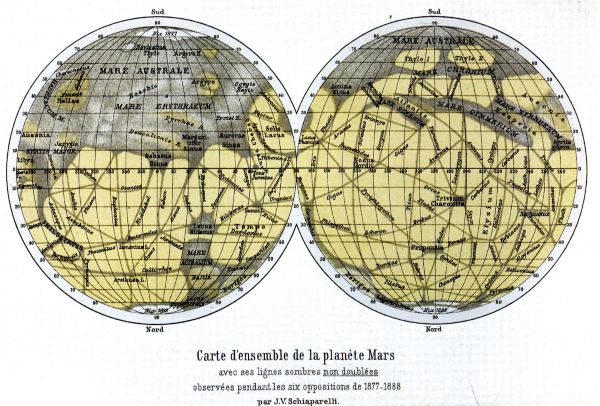
The late nineteenth century witnessed a dramatic escalation in speculation about life on Mars, culminating in what became known as the “canal craze.” This development was triggered in large part by the observations of the Italian astronomer Giovanni Schiaparelli during the favorable opposition of Mars in 1877. Using improved telescopic equipment, Schiaparelli reported the presence of linear features on the Martian surface, which he described using the Italian term canali, meaning channels or grooves. Although his observations were cautious and descriptive, the translation of canali into English as “canals” introduced a crucial interpretive shift, suggesting not natural formations but artificial constructions.
This linguistic shift had far-reaching consequences. The idea of canals implied engineering, and engineering implied intelligence. What began as a matter of observational astronomy quickly became a question of extraterrestrial civilization. The notion that Mars was inhabited by intelligent beings capable of constructing vast planetary-scale irrigation systems captured the imagination of both scientists and the public. It also aligned seamlessly with existing assumptions about the plurality of worlds, reinforcing the belief that other planets were not only inhabited but potentially home to advanced societies.
Among the most influential proponents of this interpretation was the American astronomer Percival Lowell, who devoted much of his career to the study of Mars. Lowell expanded upon Schiaparelli’s observations, producing detailed maps that depicted an extensive network of canals crisscrossing the planet’s surface. He argued that these structures were the result of a deliberate effort by a highly intelligent civilization to distribute water from the polar regions across an increasingly arid world. In Lowell’s account, Mars was not only inhabited but inhabited by a technologically sophisticated and environmentally adaptive species facing the challenges of planetary decline. He further suggested that the geometric regularity and apparent organization of the canals could not be explained by natural processes, reinforcing his conviction that they were artificial in origin. Lowell’s writings, lectures, and observatory work played a significant role in popularizing this vision, extending its influence beyond scientific circles into the broader public imagination and embedding the idea of intelligent Martians deeply within late nineteenth-century culture.
The canal theory resonated deeply with the cultural and intellectual currents of the time. It reflected broader nineteenth-century concerns about industrialization, resource management, and environmental change, projecting these issues onto a planetary scale. Mars became a mirror through which humanity could contemplate its own future, with the imagined Martian civilization embodying both technological achievement and ecological vulnerability. This blending of scientific observation and cultural narrative shows how interpretations of extraterrestrial life were shaped as much by human experience as by empirical data.
Despite its widespread acceptance, the canal theory was ultimately undermined by improved observational techniques and critical scrutiny. As telescopic resolution increased and photographic methods advanced, the linear features described by earlier observers became less distinct, often dissolving into irregular patterns or optical illusions. By the early twentieth century, the consensus among astronomers had shifted, and the idea of a canal-building Martian civilization was largely abandoned. Yet the episode remains a striking example of how limited data, interpretive frameworks, and cultural imagination combined to produce one of the most enduring visions of extraterrestrial intelligence in modern history.
Communicating with Other Worlds
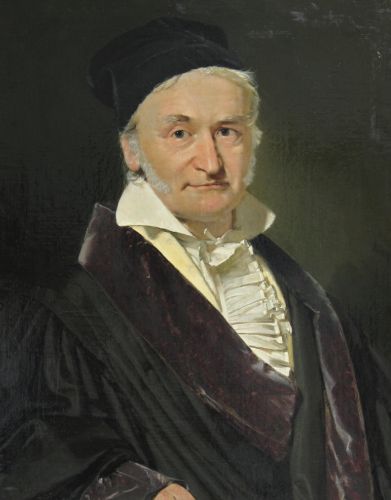
The widespread nineteenth-century belief in extraterrestrial intelligence naturally gave rise to an equally ambitious question: if other intelligent beings existed, could they be contacted? Unlike modern efforts grounded in radio astronomy and digital technology, nineteenth-century proposals relied on visible, large-scale signals designed to attract the attention of distant observers. These ideas were not merely speculative fantasies but often advanced by respected scientists and intellectuals, reflecting the seriousness with which the possibility of interplanetary communication was considered.
One of the most notable proposals came from the mathematician Carl Friedrich Gauss, who suggested using vast geometric patterns as a means of signaling intelligence. By arranging large shapes, such as a representation of the Pythagorean theorem, in a region like the Siberian tundra, it was believed that extraterrestrial observers might recognize these patterns as evidence of rational thought. The underlying assumption was that mathematics represented a universal language, intelligible to any sufficiently advanced civilization. This idea reflects both the optimism and the anthropocentrism of the period, projecting human modes of reasoning onto hypothetical extraterrestrial minds.
Other proposals focused on the use of light as a signaling mechanism. The development of heliotropes, which could reflect sunlight over long distances, inspired suggestions that coordinated flashes of light might be directed toward the Moon or Mars. More elaborate schemes envisioned massive engineering projects, such as the construction of large trenches filled with combustible materials that could be ignited to produce visible patterns or sustained beacons. Some proposals even imagined coordinated efforts across large geographic areas, requiring significant labor and resources to create signals that would be unmistakable from a planetary distance. These ideas reveal not only the scale of ambition involved but also the belief that communication across space was a problem of visibility rather than one of distance or time delay. They underscore the extent to which nineteenth-century thinkers underestimated the physical challenges involved while simultaneously demonstrating a willingness to conceive of communication in bold and unprecedented ways.
Despite their ingenuity, these efforts remained theoretical and were never implemented. They reveal a crucial aspect of nineteenth-century thought: the assumption that extraterrestrial intelligence was not only real but potentially reachable. Communication was imagined as a practical problem awaiting a solution, rather than an uncertain possibility dependent on unknown variables. The proposals to signal other worlds illustrate the depth of confidence that characterized the era, a confidence that would later be tempered by the growing recognition of the vast distances and formidable challenges involved in interstellar communication.
Popular Culture and the Victorian Imagination
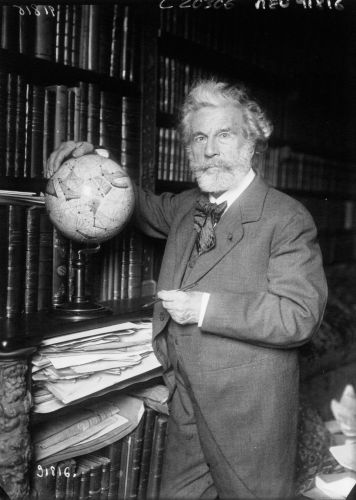
The nineteenth century did not confine belief in extraterrestrial life to scientific or philosophical circles; it permeated popular culture and became a widely shared assumption among the public. As literacy rates increased and print media expanded, ideas about inhabited worlds were disseminated through newspapers, magazines, public lectures, and illustrated works. These outlets did not merely transmit scientific knowledge but actively shaped it, presenting complex astronomical concepts in accessible and often imaginative forms. They helped transform cosmic pluralism from an intellectual position into a cultural expectation.
Popularizers of science played a crucial role in this process. Writers and lecturers translated technical observations into narratives that emphasized wonder, possibility, and human connection to the broader universe. Figures such as Camille Flammarion, a French astronomer and prolific author, brought the idea of inhabited worlds to a wide audience through works that blended scientific discussion with speculative imagery. Flammarion’s writings, which often depicted diverse forms of life on other planets, exemplify the porous boundary between scientific exposition and imaginative elaboration during this period. His ability to move fluidly between empirical observation and speculative visualization allowed readers to engage with complex ideas in a vivid and emotionally resonant way, reinforcing the plausibility of extraterrestrial life through narrative rather than direct evidence.
Literature further amplified these ideas, embedding them within stories that explored both the possibilities and implications of extraterrestrial life. Early works of speculative fiction drew upon contemporary scientific discourse, presenting other worlds as extensions of known reality rather than purely fantastical realms. These narratives often reflected social, political, and technological concerns of the time, using imagined extraterrestrial societies as a means of commenting on human conditions. Literature became a space where scientific speculation and cultural reflection intersected.
Visual culture also contributed to the widespread acceptance of a populated universe. Illustrations in books and periodicals depicted detailed scenes of lunar and Martian landscapes, complete with vegetation, architecture, and inhabitants. These images gave concrete form to otherwise abstract ideas, making the concept of extraterrestrial life more immediate and believable. Advances in printing technology allowed such images to circulate widely, reaching audiences who might not engage with scientific texts directly. By presenting extraterrestrial environments in familiar visual terms, these illustrations reinforced the idea that other worlds were not radically alien but variations of known landscapes, thereby strengthening the assumption of their habitability.
The interplay between science and popular culture created a feedback loop in which each reinforced the other. Scientific observations inspired imaginative interpretations, which in turn shaped public expectations and influenced how new discoveries were received. This dynamic blurred the distinction between evidence and speculation, allowing ideas about extraterrestrial life to gain traction even in the absence of definitive proof. Popular enthusiasm, in turn, placed pressure on scientific discourse, encouraging interpretations that aligned with prevailing expectations of a populated universe. The boundary between scientific reasoning and cultural imagination became increasingly permeable, with each domain contributing to the persistence and expansion of cosmic pluralism.
By the end of the century, the idea of extraterrestrial life had become deeply embedded in the cultural consciousness, influencing not only scientific discourse but also broader conceptions of humanity’s place in the cosmos. The universe was no longer seen as a vast and empty expanse but as a populated and interconnected system of worlds. This vision, sustained by both scientific authority and cultural expression, would persist until emerging evidence and new methods of inquiry began to challenge its underlying assumptions. The legacy of this period remains significant, shaping the ways in which extraterrestrial life continues to be imagined and debated today.
Theological Tensions and Support
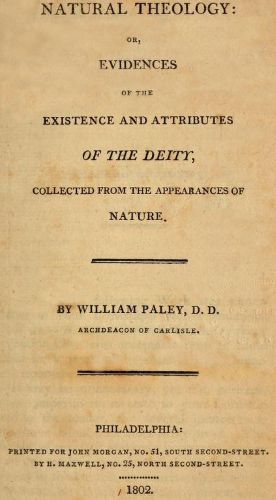
Religious thought in the nineteenth century did not uniformly oppose the idea of extraterrestrial life; rather, it often provided some of its strongest intellectual support. Many theologians viewed the plurality of worlds as consistent with, and even affirming of, divine power and creativity. A universe filled with inhabited planets could be understood as a more complete expression of God’s generative capacity, extending life and purpose across an expansive creation. In this view, the existence of extraterrestrial beings did not diminish humanity’s significance but placed it within a broader and more intricate divine order.
This theological openness was rooted in earlier traditions that emphasized the abundance and continuity of creation. Natural theology, which sought to understand God through the observation of nature, encouraged the interpretation of the cosmos as a coherent and purposeful system. The discovery of countless stars and the growing recognition of their similarity to the Sun reinforced the idea that creation was not confined to a single world. Instead, the universe appeared as a vast, interconnected structure in which life could plausibly emerge in many locations, each reflecting the same underlying divine principles. This reasoning allowed theologians to integrate new astronomical knowledge into existing frameworks without abandoning core beliefs, presenting scientific discovery as a deeper revelation of divine design rather than a challenge. The plurality of worlds could be interpreted not as a disruption of religious understanding but as its natural expansion.
Not all religious thinkers embraced this view without reservation. The possibility of extraterrestrial life raised challenging questions about humanity’s unique relationship with God, particularly within Christian theological frameworks. If other intelligent beings existed, did they share in the same divine plan of salvation? Were they subject to the same moral and spiritual conditions as humans? These questions introduced a degree of theological uncertainty, revealing tensions between the expanding scientific vision of the universe and established doctrinal positions. For some, the idea of multiple inhabited worlds complicated traditional narratives centered on human exceptionalism, forcing reconsideration of doctrines related to creation, incarnation, and redemption. These concerns did not necessarily lead to outright rejection of extraterrestrial life but did prompt more cautious and nuanced engagement with the concept.
Some theologians responded to these challenges by reinterpreting key aspects of religious belief. Rather than insisting on human uniqueness in a literal sense, they emphasized the universality of divine law and the possibility that different worlds might participate in creation in distinct ways. This approach allowed for the coexistence of cosmic pluralism and theological coherence, suggesting that the diversity of life across the universe could reflect different expressions of a unified divine purpose. It preserved the integrity of religious belief while accommodating new scientific and philosophical ideas.
The resulting landscape of nineteenth-century theology was characterized by both support and tension. While many embraced the idea of a populated universe as evidence of divine abundance, others grappled with its implications for human identity and spiritual significance. These debates highlight the adaptability of religious thought in the face of expanding knowledge, as well as the enduring effort to reconcile new understandings of the cosmos with long-standing beliefs. Theology functioned not as a barrier to the idea of extraterrestrial life but as an active participant in its interpretation.
William Whewell and the Case for Skepticism
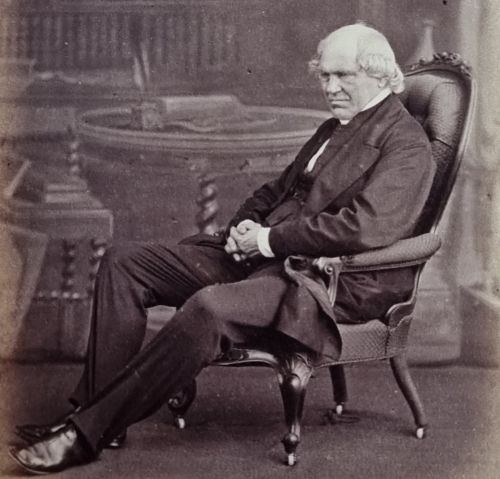
Amid the widespread nineteenth-century confidence in extraterrestrial life, the English polymath William Whewell emerged as one of the most prominent and influential critics of cosmic pluralism. In his 1853 work Of the Plurality of Worlds, Whewell challenged the prevailing assumption that the universe must be filled with inhabited planets. Unlike many of his contemporaries, he rejected the philosophical and theological arguments that had sustained this belief, arguing instead for a more cautious approach grounded in empirical evidence. His intervention marked a turning point in the intellectual history of the debate.
Whewell’s critique was notable for its rejection of the Principle of Plenitude as a valid basis for scientific or theological reasoning. He argued that the assumption of a fully populated universe rested on speculative philosophy rather than demonstrable fact. The vastness of the cosmos, in his view, did not necessarily imply abundance of life but rather highlighted the limits of human knowledge. By challenging the idea that potential existence must always be realized, Whewell undermined one of the central pillars supporting nineteenth-century belief in extraterrestrial life.
In addition to his philosophical objections, Whewell advanced arguments based on emerging scientific understanding. He emphasized the specific conditions required for life as known on Earth, suggesting that such conditions might be far more limited than previously assumed. The Moon, for example, appeared to lack an atmosphere and the environmental stability necessary to support life, casting doubt on earlier speculations about its habitability. By focusing on observable evidence and known physical constraints, Whewell introduced a more rigorous standard for evaluating claims about extraterrestrial existence. His reasoning reflected a growing awareness that habitability could not be assumed simply from superficial similarities but required a careful assessment of environmental conditions such as temperature, atmospheric composition, and physical stability. Whewell’s approach anticipated later developments in planetary science, which would place increasing emphasis on measurable criteria rather than analogical reasoning.
Whewell’s position was also shaped by theological considerations, though in a different direction from those who supported cosmic pluralism. Rather than viewing a populated universe as a reflection of divine abundance, he emphasized the possibility of human uniqueness within creation. This development aligned with a more conservative interpretation of Christian doctrine, in which Earth and humanity occupied a central place in the divine plan. While not denying the possibility of extraterrestrial life outright, Whewell argued that there was no compelling reason to assume its existence in the absence of evidence.
The impact of Whewell’s critique was gradual but significant. Although it did not immediately overturn the widespread belief in a plurality of worlds, it introduced a framework of skepticism that would gain traction in the latter half of the nineteenth century. By insisting on empirical evidence and questioning philosophical assumptions, Whewell helped shift the debate from confident assertion to cautious inquiry. His work encouraged a more disciplined approach to speculation, one that required claims about extraterrestrial life to be supported by observable data rather than inferred from general principles. This shift contributed to a broader transformation in scientific thought, as the study of the cosmos became increasingly grounded in measurement, verification, and methodological rigor. Whewell’s critique played a foundational role in moving the discussion of extraterrestrial life from philosophical certainty toward scientific uncertainty.
The Collapse of Certainty: Science Pushes Back
By the late nineteenth century, the confident assumptions that had sustained belief in a populated universe began to encounter increasing resistance from advances in scientific observation and methodology. The same intellectual tools that had once supported cosmic pluralism now began to undermine it. Improvements in telescopic technology, combined with more systematic approaches to astronomical observation, revealed details that challenged earlier interpretations of planetary environments. As the limits of analogy became more apparent, the gap between expectation and evidence grew increasingly difficult to ignore.
One of the most significant developments was the refinement of telescopic resolution, which allowed astronomers to observe planetary surfaces with greater clarity. Features that had once appeared as structured or patterned began to dissolve into irregular and ambiguous forms under closer scrutiny. The linear markings on Mars, previously interpreted as canals, became less distinct, suggesting that they were artifacts of observation rather than physical realities. This shift illustrates how earlier conclusions often depended on the limitations of available instruments, with improved technology exposing the provisional nature of those interpretations.
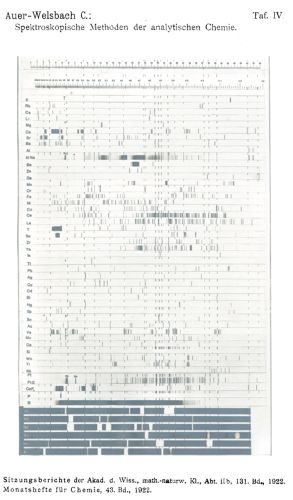
The emerging field of spectroscopy provided new insights into the composition of planetary atmospheres. By analyzing the light reflected from celestial bodies, scientists could infer the presence or absence of specific gases, offering a more direct means of assessing habitability. These techniques revealed that many planets lacked the atmospheric conditions necessary to support life as it was understood on Earth. The Moon, for example, was confirmed to be essentially airless, while observations of Mars suggested a much thinner atmosphere than previously assumed. Such findings introduced a level of empirical constraint that had been largely absent from earlier discussions. Moreover, spectroscopy expanded beyond simple detection to increasingly refined measurements, allowing scientists to compare planetary environments with growing precision. This emerging capability reinforced the realization that Earth’s conditions were not easily replicated elsewhere, undermining earlier assumptions that life would naturally arise wherever planets existed.
These developments also contributed to a broader shift in scientific methodology. Nineteenth-century science increasingly emphasized precision, measurement, and verification, moving away from reliance on philosophical reasoning and analogical inference. Claims about extraterrestrial life were no longer evaluated solely on the basis of plausibility but were subjected to stricter evidentiary standards. This transition did not eliminate speculation, but it placed new limits on what could be reasonably asserted, narrowing the range of acceptable conclusions.
The cumulative effect of these changes was a gradual erosion of the certainty that had characterized earlier belief in cosmic pluralism. While the idea of extraterrestrial life was not entirely abandoned, it was no longer treated as an inevitable conclusion. Instead, it became a question to be investigated, requiring evidence rather than assumption. This shift marks a broader transformation in the relationship between science and belief, as confidence gave way to caution and the unknown was increasingly defined by its resistance to easy explanation. Importantly, this transition also reshaped public expectations, as popular enthusiasm for inhabited worlds began to wane in response to scientific findings that offered fewer dramatic possibilities. What had once been imagined as a universe full of neighbors gradually became a cosmos marked by silence and uncertainty.
By the early twentieth century, the vision of a universe teeming with life had largely receded from mainstream scientific discourse. Mars, once imagined as a world of canals and civilizations, was reinterpreted as a cold and inhospitable planet. The solar system, previously conceived as a living neighborhood, appeared increasingly barren. Yet this collapse of certainty did not represent a failure of inquiry but a maturation of it, marking the transition from speculative confidence to disciplined uncertainty. In this new framework, the question of extraterrestrial life remained open, but its answer would depend on evidence rather than expectation.
From Confidence to Doubt: The Early Twentieth Century Shift
The transition into the twentieth century marked a decisive shift in attitudes toward extraterrestrial life, as the confident assertions of the nineteenth century gave way to a more restrained and uncertain perspective. This transformation did not occur suddenly but emerged from the cumulative weight of scientific developments that had steadily eroded earlier assumptions. What had once been treated as a near certainty became an open question, reflecting a broader change in the standards by which knowledge was evaluated.
One of the most important factors in this shift was the continued refinement of astronomical observation. Larger telescopes and improved optical techniques allowed for more detailed examination of planetary surfaces, particularly Mars. The canal system, which had captured the imagination of both scientists and the public, began to lose credibility as observers failed to consistently reproduce the same linear features. Increasingly, these markings were understood as optical illusions or artifacts of perception rather than evidence of intelligent design.
The growing influence of laboratory science also played a critical role in reshaping expectations about life beyond Earth. Advances in physics and chemistry provided a more precise understanding of the conditions necessary for life, emphasizing the importance of temperature, atmospheric composition, and chemical stability. These developments suggested that life might require a far narrower range of conditions than previously assumed, challenging the earlier belief that it would naturally arise wherever suitable material existed. The idea of a universe uniformly populated with life became increasingly difficult to sustain.
Planetary science began to develop as a more rigorous field of study, incorporating data from spectroscopy, thermodynamics, and celestial mechanics. These approaches reinforced the view that many planets within the solar system were inhospitable to life as understood on Earth. Mars, once considered the most promising candidate for extraterrestrial civilization, appeared increasingly barren, with evidence pointing toward a thin atmosphere and limited water availability. Observations of seasonal changes, once interpreted as signs of vegetation or climate cycles similar to Earth’s, were reevaluated in light of more precise measurements that suggested far more extreme and hostile conditions. The Moon and other bodies were similarly reclassified as lifeless environments, further narrowing the scope of plausible habitats. This shift in understanding reflected not only improved data but also a changing methodological mindset, one that prioritized measurable conditions over imaginative interpretation and placed increasing emphasis on the physical constraints that govern planetary environments.
Public perception also evolved in response to these scientific developments. While the nineteenth century had been characterized by imaginative speculation and widespread enthusiasm for inhabited worlds, the early twentieth century saw a gradual decline in such optimism. The romantic vision of a populated cosmos gave way to a more sober recognition of uncertainty, as scientific authority increasingly challenged popular narratives. This shift illustrates the complex interaction between scientific knowledge and cultural belief, with changes in one domain influencing the other.
By the early decades of the twentieth century, the intellectual landscape had been fundamentally transformed. The assumption of a crowded universe had been replaced by a recognition of profound uncertainty, with extraterrestrial life no longer taken for granted but treated as a question requiring empirical investigation. This transition did not eliminate interest in the possibility of life beyond Earth, but it reframed the debate in terms that would shape its future development. In this new context, the search for extraterrestrial life would proceed not from confidence but from doubt, guided by the emerging standards of modern science.
Historiography: Interpreting Nineteenth-Century Belief
Historians of science have approached nineteenth-century belief in extraterrestrial life not as a simple error to be corrected, but as a meaningful intellectual position shaped by its cultural and scientific context. Rather than dismissing cosmic pluralism as naïve or speculative, modern scholarship has emphasized its coherence within the frameworks available at the time. The widespread acceptance of inhabited worlds reflected not a lack of rigor, but a synthesis of philosophical reasoning, theological interpretation, and the best empirical knowledge then accessible.
One major historiographical approach has focused on the role of intellectual inheritance, tracing how ideas from ancient atomism and Enlightenment natural philosophy continued to influence nineteenth-century thought. Scholars have shown that the Principle of Plenitude and the assumption of universal laws were not arbitrary beliefs but deeply rooted concepts that shaped how thinkers interpreted new astronomical discoveries. In this view, nineteenth-century pluralism appears less as an anomaly and more as the continuation of a long-standing tradition that sought to understand the cosmos as a unified and generative system. This perspective also underscores how intellectual continuity can persist even as scientific knowledge evolves, with inherited frameworks providing both guidance and constraint. Rather than being discarded, earlier philosophical ideas were adapted and reinterpreted, allowing them to coexist with emerging scientific insights and giving nineteenth-century thinkers a coherent lens through which to interpret the expanding universe.
Another line of interpretation emphasizes the importance of technological and observational limitations. Historians have argued that many of the conclusions drawn about extraterrestrial life were conditioned by the constraints of available instruments and methods. The apparent canals on Mars, for example, are often cited as a case study in how perception and expectation can interact to produce convincing but ultimately misleading interpretations. This shift highlights the provisional nature of scientific knowledge, demonstrating how conclusions are shaped not only by data but also by the tools used to obtain it. It also draws attention to the human element in scientific observation, where interpretation, bias, and visual limitation can influence what is perceived as objective reality. Nineteenth-century astronomy reveals the complex interplay between observer and observation, reminding us that scientific conclusions are always embedded within the capabilities and limitations of their time.
Cultural historians have also examined the broader social and intellectual environment in which these ideas developed. The nineteenth century was a period marked by rapid scientific progress, imperial expansion, and a growing confidence in human reason. The belief in a populated universe can be seen as an extension of a broader optimism about discovery and mastery over nature. These ideas were embedded in popular culture, appearing in literature, public lectures, and periodicals, which helped to reinforce and disseminate them beyond specialized scientific circles.
Finally, historiography has increasingly emphasized the transition from certainty to uncertainty as a key theme in the development of modern scientific thought. The decline of cosmic pluralism is not interpreted simply as the correction of a mistaken belief, but as part of a broader shift toward more rigorous standards of evidence and a more cautious approach to inference. This transformation reflects the maturation of scientific methodology, as well as a changing understanding of the limits of human knowledge. Nineteenth-century belief in extraterrestrial life occupies an important place in the history of science, illustrating both the power and the constraints of human attempts to comprehend the cosmos.
Conclusion: From Certainty to Silence
The nineteenth century stands as a remarkable moment in the history of human thought, when the universe was widely imagined not as empty and indifferent but as richly inhabited and alive with intelligence. This confidence emerged from a convergence of philosophical reasoning, theological interpretation, and scientific discovery, all of which seemed to point toward a cosmos filled with worlds like our own. The assumption of extraterrestrial life was not a fringe belief but a logical extension of the intellectual tools available at the time, reflecting both the ambitions and the limitations of nineteenth-century knowledge.
Yet this confidence proved fragile. As scientific methods became more precise and observational evidence more reliable, the foundations of cosmic pluralism began to erode. The Moon was revealed as barren, Mars lost its canals and its imagined civilizations, and the broader solar system appeared increasingly hostile to life. These developments did not simply overturn earlier beliefs but transformed the very criteria by which such beliefs were evaluated, shifting the focus from philosophical plausibility to empirical verification. In this process, certainty gave way to doubt, and the populated universe receded into the realm of possibility rather than assumed reality.
This transition holds broader significance for the history of science. It illustrates how deeply human understanding is shaped by the interplay between imagination and evidence, and how shifts in method can redefine what is considered knowable. The nineteenth century’s belief in extraterrestrial life was not an error to be dismissed but a stage in the ongoing effort to comprehend the cosmos. Its eventual decline reflects the maturation of scientific inquiry, as well as a growing recognition of the limits imposed by observation and measurement. This shift underscores the enduring tension between the human desire for meaning and the discipline required to test that meaning against the natural world. The movement from confident assertion to careful inquiry did not extinguish curiosity but refined it, transforming speculative certainty into a more disciplined form of questioning that continues to shape modern science. The collapse of nineteenth-century pluralism can be understood not as a retreat but as an intellectual recalibration, one that laid the groundwork for future exploration grounded in evidence rather than assumption.
By the early twentieth century, the universe had grown quieter. Where once there had been confidence in countless inhabited worlds, there was now an awareness of silence and uncertainty. This silence did not close the question of extraterrestrial life but reframed it, inviting investigation rather than assumption. The journey from certainty to silence marks not an end but a beginning, establishing the conditions under which the modern search for life beyond Earth would proceed with caution, rigor, and enduring curiosity.
Bibliography
- Beer, Gillian. Darwin’s Plots: Evolutionary Narrative in Darwin, George Eliot and Nineteenth-Century Fiction. Cambridge: Cambridge University Press, 2000.
- Brooke, John Hedley. Science and Religion: Some Historical Perspectives. Cambridge: Cambridge University Press, 1991.
- Carver, Ben. “‘A Gleaming and Glorious Star’: Rethinking History in the Plurality-of-Worlds Debate.” Journal of Victorian Culture 18:4 (2013), 429-452.
- Crowe, Michael J. “Astronomy and Religion (1780-1915): Four Case Studies Involving Ideas of Extraterrestrial Life.” Osiris 16 (2001), 209-226.
- —-. The Extraterrestrial Life Debate, 1750–1900: The Idea of a Plurality of Worlds from Kant to Lowell. Cambridge: Cambridge University Press, 1986.
- de Asúa, Miguel. “Sir David Brewster’s Changing Ideas on the Plurality of Worlds.” Journal of Astronomical History and Heritage 9:1 (2006), 83-92.
- Dick, Steven J. Plurality of Worlds: The Origins of the Extraterrestrial Life Debate from Democritus to Kant. Cambridge: Cambridge University Press, 1982.
- Flammarion, Camille. La pluralité des mondes habités. Paris: Didier, 1862.
- Goodman, Matthew. The Sun and the Moon: The Remarkable True Account of Hoaxers, Showmen, Dueling Journalists, and Lunar Man-Bats in Nineteenth-Century New York. New York: Basic Books, 2008.
- Hearnshaw, John B. The Analysis of Starlight: Two Centuries of Astronomical Spectroscopy. Cambridge: Cambridge University Press, 1986.
- Hoskin, Michael. William Herschel and the Construction of the Heavens. Cambridge: Cambridge University Press, 1963.
- Kanas, Nick. Star Maps: History, Artistry, and Cartography. New York: Springer, 2007.
- Krige, John, and Dominique Pestre, eds. Science in the Twentieth Century. Amsterdam: Harwood Academic Publishers, 1997.
- Lightman, Bernard. Victorian Popularizers of Science: Designing Nature for New Audiences. Chicago: University of Chicago Press, 2007.
- Lovejoy, Arthur O. The Great Chain of Being: A Study of the History of an Idea. Cambridge, MA: Harvard University Press, 1936.
- Lowell, Percival. Mars. Boston: Houghton Mifflin, 1895.
- Newton, Isaac. Philosophiæ Naturalis Principia Mathematica. London, 1687.
- Numbers, Ronald L. Galileo Goes to Jail and Other Myths about Science and Religion. Cambridge, MA: Harvard University Press, 2009.
- Sagan, Carl. Communication with Extraterrestrial Intelligence (CETI). Cambridge, MA: MIT Press, 1973.
- —-. Cosmos. New York: Random House, 1980.
- Schiaparelli, Giovanni. Osservazioni astronomiche e fisiche sull’asse di rotazione e sulla topografia del pianeta Marte. Milan, 1878.
- Secord, James A. Victorian Sensation: The Extraordinary Publication, Reception, and Secret Authorship of Vestiges of the Natural History of Creation. Chicago: University of Chicago Press, 2000.
- Sheehan, William. The Planet Mars: A History of Observation and Discovery. Tucson: University of Arizona Press, 1996.
- Smith, Robert W. “Alfred Russel Wallace, Extraterrestrial Life, Mars, and the Nature of the Universe.” Victorian Review 41:2 (2015), 151-175.
- Standage, Tom. The Victorian Internet. New York: Walker & Company, 1998.
- Whewell, William. Of the Plurality of Worlds: An Essay. London: John W. Parker and Son, 1853.
- Yeo, Richard. Defining Science: William Whewell, Natural Knowledge, and Public Debate in Early Victorian Britain. Cambridge: Cambridge University Press, 1993.
Originally published by Brewminate, 03.27.2026, under the terms of a Creative Commons Attribution-NonCommercial-NoDerivatives 4.0 International license.
About the Author