Though certainly interrelated, there is a difference between ‘western civilization’ and ‘western thinking’.

By Dr. Martin Davies
Associate Professor
Principal Fellow in Higher Education
Melbourne Graduate School of Education
University of Melbourne
Introduction
[In October 2018], it emerged that a Ramsay Centre-funded degree at the University of Sydney could be rebadged ‘western tradition’ rather than ‘western civilisation’.
The course has attracted controversy after the Ramsay Centre for Western Civilisation – a conservative institute that counts former Coalition prime ministers John Howard and Tony Abbott among its board members – offered millions to fund courses on “great books” that promote “an interest in and awareness of western civilisation”.

Western Civilization 1
Contemporary historians seem to despise the view of history that I describe as Western Civilisation 1. To them, it’s inaccurate and reeks of colonial imperialism. Real history is not as simple as a single narrative of White Men Rule: civilisations ebb and flow and take many forms and directions. Not all of them are pretty.
As Greg Craven, academic and Australian Catholic University vice-chancellor, has noted “… Western civilisation that brought us Mozart and Mahler also brought us the Holocaust and Hiroshima”.
‘Western’ civilisation has also availed itself of many non-western influences from China, the Middle East and elsewhere. ‘Western’ civilisation belongs to everyone and one can admire it for all it offers, without necessarily promoting or grandstanding about it.
A suitably western approach to western civilisation would not abandon self-criticism either. Nor is it a coherent single offering; more a smorgasbord, and it’s conceivable to take what one likes and reject the rest.
Compare China, the ‘socialist system with western characteristics’ that seems to have done quite well for itself economically despite not having some staples of western civilisation, notably human rights, freedom of the press and an independent judiciary. Western civilisation need not be adopted en bloc.
Western Civilization 2
Some suggest the notion of ‘western civilisation’ is past its use-by date and that history should ask “… why things are historically significant to certain people at certain times. They need to understand the past from their position in the world, as well as different perspectives in relation to their own cultural identities”.

This is a relativist account of historical thinking and assumes each culture and civilisation is as good as any other. This is far from clear. There is much to admire about western civilisation and plenty of reasons to prefer it to other misogynistic, autocratic or culturally backward systems.
As former British PM Winston Churchill was reported to have said in relation to one crucial feature of western civilisation, democracy: “is the worst form of government, except other forms that have been tried from time to time”.
Western culture has offered great advances in innovation, from space travel and modern telecommunications to modern medicine and healthcare. We can add (western) analytic philosophy, a goodly proportion of it emanating from Australia.
That’s some legacy.
Not Everything Is Equal
A rejection of Western Civilisation 1 as a historical narrative does not mean that every system merits equal attention from one’s own perspectives and cultural identities. In a certain sense, western civilisation and culture offers a clear advance over despotic regimes. Were it not so, it would not be so popular nor widespread.
In contrast to Western Civilisation 1, Western Civilisation 2 (WC2) is a contingent claim: western civilisation is, in principle, no better nor worse than other civilisations, though it does appear to have palpable advantages which other civilisations end-up coveting.
This neatly side steps the ‘Great White Man’ narrative that is objectionable and goes some way to defusing the history wars.
Western Civilisation 2 is the weaker thesis – it just turns out that history took the course it did and that western civilisation triumphed or failed where it did, and spread where it spread.
An impartial analysis would also point out the less than favourable aspects, like great wealth inequality and its history of oppression (although western civilisation is not unique in that regard, and indeed fares somewhat better than most).
A Ramsay-style course devoted to western civilisation can be critical of Western Civilisation 1 and full of admiration of Western Civilisation 2. It is important to get the emphasis right, but it seems to be needed when many millennials seem ignorant of the culture that gives rise to and safely harbours them.
Cultural Independence
I think the real aim of the Ramsay Centres’ largesse is to fund a program in western thinking which, as opposed to western civilisation, is unambiguously something to celebrate. ‘Western thinking’ is culturally independent (no-one, and no culture, has a monopoly over thinking) while ‘western civilisation’ carries the baggage of hostilities over the ‘history wars’.

While originating largely from a history of western traditions, plenty of thinkers around the world have contributed to ‘western thinking’, like the great Indian mathematician, Srinivasa Ramanujan, and the Arabs in Mesapotmia who invented the concept of ‘zero’.
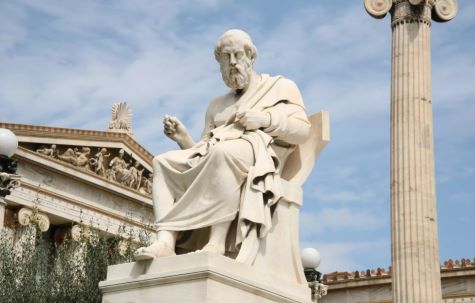
The Pre-Socratics like Democritus invented the atomic theory of the universe, while Socrates, Plato and Aristotle devised a ‘method’ for thinking philosophically and invented logic as a discipline.
The enlightenment thinkers of Bacon, Descartes, Locke, Voltaire, Rousseau, Mill, Hume and Kant championed tolerance, anti-religiosity, rational thinking, the scientific method, and reductionism.
Onwards to analytic philosophy and thinkers like Rudolf Carnap, Gottolb Frege, Bertrand Russell, Ludwig Wittgenstein, and Alan Turing. The latter is usually regarded as the ‘father’ of computer science but also published his famous paper on ‘Computing Machinery and Intelligence’ in the philosophy journal, Mind.
Then there’s Mary Wollstonecraft, Simone de Beauvoir, Phillipa Foot, G. E. M. Anscombe, Martha Nussbaum, Iris Murdoch, and the recently departed, Mary Midgley – who are all notable representatives of the pantheon of female thinkers in the modern era
There is evidence of western-style thinking in many literary works too.
‘Western’ Thinking
Could this thinking have emanated in the Middle East or Asia? Could the enlightenment have started in China, Thailand or Japan? Could the renaissance have commenced in India? Could the scientific revolution have started anywhere in the East? Could traditions of innovative western thinking have arisen elsewhere?
In principle, absolutely, they could have; in practice, it appears they did not. Why not?

Psychologist Richard Nisbett has looked at subtle differences in intercultural thinking patterns. He concluded there are differences in the thinking patterns of those in the ‘West’ and ‘East’ that have resulted in the disproportionate contributions of ‘western’ thinkers to the history of intellectual thought.
But without a program of study that focusses on the unique legacy of western thinking, and a program that offers a dedicated opportunity to teach and critique it in an unbiased and coordinated way, we will remain forever in the dark.
Originally published by Pursuit, University of Melbourne, 10.22.2018, under the terms of a Creative Commons Attribution-NoDerivs 3.0 Australia license.
About the Author