In 1917 Oklahoma, agrarian populism, economic hardship, and anti-draft sentiment converged in a short-lived revolt against federal authority.

By Matthew A. McIntosh
Public Historian
Brewminate
Introduction: War, Conscription, and Rural Anxiety
When the United States entered the First World War in April 1917, the Wilson administration moved rapidly to mobilize manpower and resources on a national scale. President Woodrow Wilson framed intervention as a defense of democratic principles and international stability, language that resonated strongly in urban centers and among political elites. Yet mobilization required more than rhetoric. It demanded bodies. The Selective Service Act of May 1917 institutionalized conscription, marking a decisive expansion of federal authority over individual citizens. For many Americans, the draft signaled patriotic duty and collective sacrifice in a moment of global crisis. In rural Oklahoma, however, conscription was filtered through local experience: tenant farming, indebtedness, volatile crop markets, and longstanding suspicion of centralized power. The call to arms arrived not as an abstract national necessity but as an immediate disruption to fragile household economies already stretched thin.
Oklahoma’s social landscape in 1917 was shaped by agrarian instability and uneven prosperity. A high proportion of farmers were tenants or sharecroppers who did not own the land they cultivated and who relied on credit from local merchants to survive between harvests. Cotton prices fluctuated sharply in the years preceding the war, deepening cycles of debt. Economic precarity sharpened resistance to policies perceived as benefiting distant industrial and financial interests while offering little protection to rural laborers. Radical politics in the state drew strength from precisely these conditions. Rural socialism and populism flourished not in urban factories but in cotton fields and tenant cabins. Meetings of the Socialist Party and affiliated organizations often took place in schoolhouses and open-air gatherings, where discussions of class, debt, and federal overreach intertwined. For communities already wary of banks, railroads, and federal taxation, the draft appeared not as shared sacrifice but as another instrument of external control imposed by authorities far removed from local realities.
Conscription carried both economic and symbolic weight. Removing young men from farms during planting and harvest seasons threatened household survival. Families reliant on seasonal labor feared not only the absence of sons and husbands but the potential foreclosure of land. At the same time, the draft embodied federal intrusion into local autonomy. The authority of Washington now extended directly into rural districts, registering bodies and compelling service. In a region where local governance and community networks traditionally mediated power, this sudden assertion of centralized control generated unease that exceeded immediate economic calculation.
The Green Corn Rebellion (GCR) emerged at the intersection of these anxieties. It was not a coordinated revolutionary movement, nor did it approach the scale of national insurrection. Rather, it reflected a convergence of anti-war sentiment, economic strain, and distrust of federal authority within specific rural communities. Understanding this episode requires situating it within the broader dynamics of wartime mobilization and agrarian politics. The rebellion was brief, but it revealed the fault lines that could appear when national unity encountered local vulnerability.
Agrarian Populism and the Oklahoma Socialist Movement
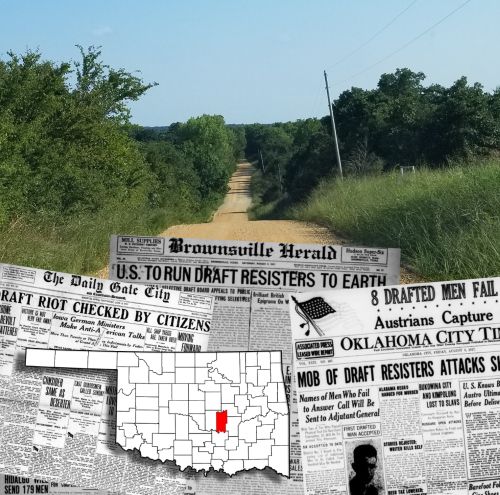
The GCR cannot be understood apart from the distinctive political culture of early twentieth-century Oklahoma. Unlike many southern states, Oklahoma developed a robust rural socialist movement that drew strength from tenant farmers, sharecroppers, and smallholders burdened by debt. The state’s rapid settlement after 1889 had produced both opportunity and instability. Land hunger collided with speculation, fluctuating crop prices, and exploitative credit systems. In this environment, political radicalism was less an imported ideology than a local response to structural inequality.
The Socialist Party of America achieved unusual success in Oklahoma during the 1910s. In several counties, socialist candidates won significant shares of the vote, and party newspapers circulated widely among rural readers. Socialism in the Southwest was deeply rooted in agrarian grievance rather than urban industrial labor alone. Meetings were held in rural schoolhouses, and party organizers framed socialism in language accessible to farmers, emphasizing fairness, cooperative ownership, and resistance to economic exploitation. This form of socialism was pragmatic and intertwined with populist traditions rather than doctrinaire or revolutionary in the European sense. Oklahoma at one point boasted one of the highest per capita memberships in the Socialist Party in the United States. Campaign speeches frequently connected international socialist rhetoric with immediate concerns about crop prices, land tenure, and credit dependency. Rather than advocating abrupt revolution, many organizers emphasized democratic participation, electoral campaigns, and local reform. This adaptation of socialist ideology to rural realities helped explain its resonance and its durability in the years preceding the First World War.
Agrarian populism had earlier shaped Oklahoma’s political development. The People’s Party and related reform movements in the 1890s attacked railroads, banks, and corporate monopolies, calling for regulation and monetary reform. Although the Populist Party declined nationally, its rhetoric and networks endured locally. Suspicion of concentrated wealth and centralized authority remained powerful themes in rural discourse. The transition from populism to socialism in Oklahoma was less a rupture than an evolution. Many activists moved between movements, carrying forward critiques of industrial capitalism and federal neglect. The language of producerism, which divided society between honest laborers and exploitative elites, persisted across ideological labels. Rural political meetings often blended scriptural references, populist memory, and socialist theory into a shared critique of economic injustice. By 1917, distrust of banks, railroads, and distant decision-makers was not marginal rhetoric but part of an established political vocabulary that shaped community identity.
Tenant farming intensified receptivity to radical ideas. A large proportion of Oklahoma farmers did not own the land they cultivated. Sharecropping contracts often left families with minimal profit after debts were paid. Crop liens tied farmers to merchants who advanced supplies at high interest rates. This cycle of dependency fostered resentment toward economic structures perceived as exploitative and unresponsive. Socialism offered not only critique but community. It provided organizational frameworks through which grievances could be articulated collectively rather than endured privately.
The Working Class Union (WCU), active in southeastern Oklahoma, further reflected this fusion of agrarian hardship and political radicalism. Although not formally identical with the Socialist Party, the Union drew from similar constituencies and emphasized solidarity among tenant farmers and laborers. It resisted conscription and promoted local organization in the face of perceived state intrusion. Historians debate the extent of coordination between socialist leadership and the Green Corn participants, yet the broader ideological climate of rural dissent clearly shaped the rebellion’s context.
Agrarian populism and socialism in Oklahoma created a political environment receptive to anti-draft resistance. The rebellion did not arise in an ideological vacuum. It emerged from communities already mobilized around critiques of economic inequality and centralized authority. When wartime conscription appeared to compound existing burdens, radical language and networks provided interpretive tools and, however briefly, organizational momentum. The convergence of populist memory, socialist organization, and immediate economic strain made resistance thinkable, even if it proved unsustainable. The Green Corn episode reflects how local political cultures can shape both the emergence and the limits of civil disobedience.
The Draft as Catalyst: Conscription and Economic Fear
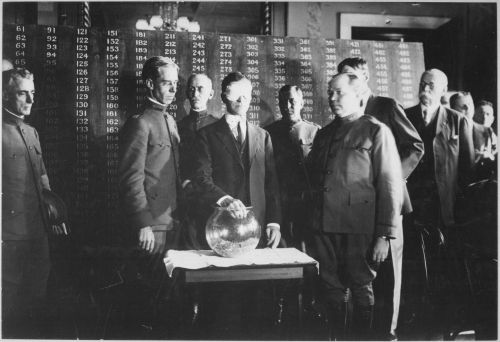
The Selective Service Act of 1917 transformed wartime mobilization from voluntary enlistment into compulsory service. Unlike earlier American conflicts that relied heavily on volunteers or substitutes, the new system asserted direct federal authority over male citizens of military age. Registration boards were established across counties, including rural districts where local officials became agents of national policy. The draft represented a significant extension of federal power into everyday life, standardizing obligation and diminishing local discretion. For many rural Oklahomans, this bureaucratic process made distant war immediate. Registration forms, medical examinations, and classification decisions entered communities accustomed to greater autonomy.
Economic fear accompanied the legal mandate. Tenant farmers and sharecroppers relied on family labor to sustain planting and harvesting cycles. The removal of able-bodied men during peak agricultural seasons threatened crop yields and household income. Unlike wealthier landowners, many small farmers lacked reserves to absorb disruption. In Oklahoma’s countryside, the draft was perceived not merely as patriotic service but as a potential sentence to economic collapse. The calculus was stark. Without sufficient labor, crops might fail, debts would mount, and eviction loomed. Conscription carried consequences that extended beyond battlefield risk into the daily arithmetic of survival.
The draft also intersected with existing grievances about taxation and state intrusion. War finance required revenue, and rural populations felt the cumulative weight of economic obligation. Although federal taxation was less direct for the poorest farmers, the broader wartime economy altered prices and credit relationships. Government authority appeared to expand simultaneously in military and fiscal domains. For communities already skeptical of centralized control, conscription symbolized a government capable of compelling obedience without addressing local hardship. The draft was not experienced as reciprocal partnership but as unilateral demand.
Resistance gained coherence. Anti-draft sentiment did not arise solely from pacifist ideology or abstract anti-imperialism. It emerged from the convergence of material vulnerability and distrust of federal authority. The Green Corn participants interpreted conscription as an immediate threat to livelihood as well as liberty. The draft acted as catalyst, converting diffuse dissatisfaction into collective defiance. Though brief and poorly organized, the rebellion revealed how wartime mobilization could destabilize fragile rural communities and expose tensions between national policy and local survival.
The Rebellion Itself: Planning, Symbolism, and Suppression

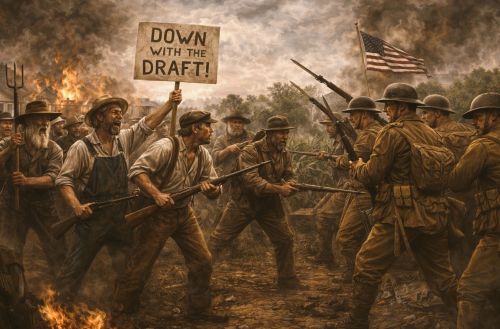
The GCR coalesced in August 1917 in Seminole, Pontotoc, and Hughes counties in southeastern Oklahoma. Participants included tenant farmers, sharecroppers, and a small number of Native Americans, many of whom were affiliated with or influenced by the WCU. Estimates of involvement vary, but historians agree that the numbers were limited and the organization loose. The uprising lacked centralized leadership, clear strategic objectives, or sustained logistical planning. Yet within these constraints, participants articulated a shared intention: to resist the draft and challenge what they perceived as unjust federal authority.
The most enduring feature of the episode is its reported plan to march eastward toward Washington, D.C., gathering supporters along the way. According to contemporary accounts, rebels intended to live off the land, roasting green corn as they advanced. This imagery, whether fully realized or partially exaggerated in later retellings, carried symbolic weight. Green corn represented subsistence and immediacy. It signified a return to the land as source of sustenance independent of state structures. The proposed march blended populist imagination with agrarian practicality. Rather than sophisticated insurgency, it reflected a belief that collective movement and rural solidarity could counter distant political power.
Planning appears to have involved meetings in wooded areas, where small groups discussed strategy and swore informal oaths of cooperation. Weapons were rudimentary, and coordination across counties was uneven. While radical rhetoric circulated widely in the Oklahoma countryside, translating dissent into sustained military resistance proved far more difficult. The rebellion’s organizational fragility underscores its character as reactive rather than revolutionary. Participants acted under pressure of imminent draft enforcement, not as architects of long-term insurrection.
The rebellion unraveled quickly. Local law enforcement, aided by posses and state authorities, confronted groups before they could mobilize beyond scattered gatherings. Skirmishes were minor and casualties limited. Arrests followed rapidly. Within days, the uprising had effectively collapsed. Its inability to expand beyond a small regional base revealed both the limits of rural radical networks and the strength of wartime state capacity. The swift suppression prevented the episode from escalating into broader regional unrest.
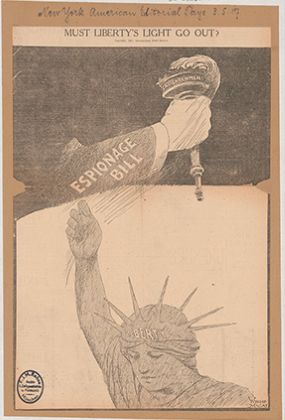
Public reaction outside the affected counties ranged from bewilderment to condemnation. Newspapers portrayed the rebels as misguided radicals or traitors influenced by socialist agitation. Wartime patriotism intensified suspicion toward dissent. The federal government, already empowered by legislation such as the Espionage Act of 1917, viewed anti-draft resistance as potential threat to national unity. Though the GCR never approached serious national danger, its existence reinforced federal vigilance against domestic unrest during wartime mobilization.
The rebellion’s brevity should not obscure its significance. It illuminated the tensions between rural communities and expanding federal authority at a moment of global crisis. The plan to march east, however impractical, revealed a populist belief that collective action could confront centralized power. Its rapid suppression demonstrated the limits of such belief in the face of coordinated state response. The GCR stands as a brief but revealing episode in American wartime dissent, where symbolism, economic fear, and ideological grievance converged before yielding to federal enforcement.
State Response: Repression, Surveillance, and Wartime Unity
The suppression of the GCR was swift and decisive, reflecting the broader wartime climate of vigilance and control. Local sheriffs, posses, and state authorities acted quickly to disperse gatherings and apprehend suspected participants. The limited scale of the uprising made suppression manageable, yet officials treated the episode as a warning sign. The United States had entered a total war that demanded unity, and resistance to conscription was framed not merely as dissent but as obstruction of national defense. Swift arrests reinforced the message that wartime defiance would not be tolerated.
Legal proceedings followed, drawing on an expanding body of wartime legislation designed to regulate speech and conduct. The Espionage Act of 1917 provided federal authority to prosecute interference with military recruitment and enlistment. Although the GCR itself remained largely a state-level affair, the broader legal environment shaped how authorities interpreted resistance. The First World War normalized a culture of coercive patriotism in which dissent could be equated with disloyalty and noncompliance reframed as moral failure. In this environment, refusal to register or agitation against conscription was not treated as policy disagreement but as betrayal of collective sacrifice. The legal framework did more than punish action. It defined the boundaries of acceptable speech and association. Draft resistance, even when localized and poorly organized, entered a national narrative that demanded conformity in the name of security. The prosecution of dissent operated within a climate that fused statutory authority with moral expectation.
Surveillance and monitoring of radical organizations intensified after the rebellion. The WCU and rural socialist networks drew particular scrutiny. Federal and state authorities sought to distinguish between legitimate political advocacy and subversive agitation, though the line was often blurred in practice. Wartime mobilization expanded investigative capacity and encouraged cooperation between local law enforcement and national agencies. The rebellion, though small, reinforced official assumptions that radical rhetoric could translate into disruptive action. Preventive monitoring became part of the apparatus of wartime governance.
Public rhetoric further consolidated repression within a framework of unity. Newspapers and civic leaders invoked themes of loyalty and sacrifice, portraying the draft as shared obligation rather than negotiable policy. Editorials framed resistance as dangerous naïveté at best and treachery at worst. In this climate, anti-draft sentiment risked social ostracism as well as legal penalty. The war fostered powerful expectations of solidarity, narrowing the space for legitimate opposition and reinforcing majoritarian definitions of patriotism. Community pressure amplified state authority. Neighbors monitored neighbors. Public meetings celebrated enlistment and stigmatized hesitation. The Green Corn participants, cast as misguided radicals influenced by subversive ideology, found little sympathy beyond their immediate circles. Wartime nationalism functioned as both emotional bond and disciplinary mechanism, shaping not only policy but everyday social relations.
Sentencing reinforced the seriousness with which authorities regarded the episode. Participants faced imprisonment, fines, and the stigma of criminal conviction. The relatively light casualties of the rebellion did not translate into leniency. Instead, punishment served a deterrent function. Officials sought to signal that even minor uprisings would be met with firm response. The combination of legal sanction and public condemnation curtailed further organized resistance in the region.
The state’s reaction to the GCR illustrates how wartime governments manage dissent at the margins through overlapping mechanisms of law, surveillance, and moral suasion. The episode did not threaten national stability, yet it prompted decisive action to preserve unity and assert federal supremacy. Repression operated through courts that enforced new wartime statutes, investigative networks that monitored political organization, and public discourse that equated conformity with loyalty. The rebellion’s swift disappearance from the national stage reflects both its limited scope and the effectiveness of wartime enforcement in constraining rural populist defiance. At the same time, the episode reveals the costs of such unity. By narrowing the space for dissent, the wartime state consolidated authority while exposing the fragility of consensus when economic strain and ideological conviction converged.
Ideology, Desperation, and Distrust of Centralized Power
The GCR cannot be reduced to a single motivating cause. It emerged from the convergence of ideological conviction, economic vulnerability, and deep-seated distrust of centralized authority. Anti-war sentiment within American socialism provided one interpretive framework. Many socialists viewed the First World War as a conflict driven by imperial competition rather than democratic necessity. Party platforms and speeches frequently criticized militarism and warned that working-class men would bear disproportionate costs. In rural Oklahoma, these ideas did not circulate in isolation. They merged with agrarian grievances, reinforcing the perception that conscription served interests far removed from local communities.
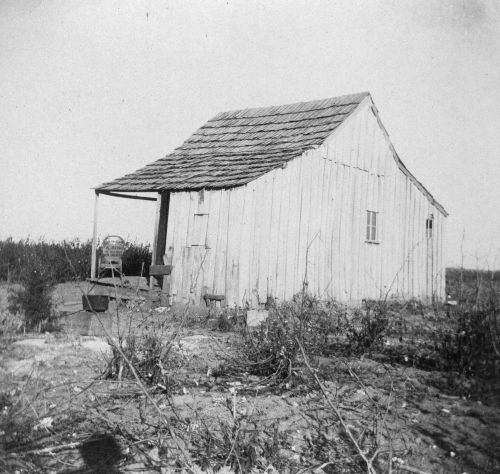
Economic desperation sharpened ideological critique in immediate and tangible ways. Tenant farmers and sharecroppers operated within narrow margins, often dependent on a single successful harvest to meet debts accumulated through the crop-lien system. Loss of labor threatened immediate hardship, not abstract inconvenience. Rural radicalism in Oklahoma was frequently grounded less in theoretical socialism than in lived experience of debt, tenancy, and economic insecurity. When the draft demanded participation in a distant war, it compounded existing strain that many families were already struggling to absorb. For some participants, resistance was less about geopolitical principle than about preserving the viability of household economies. The removal of a son or husband during planting or harvesting seasons could determine whether land was retained or lost. Ideology and necessity overlapped. Political language supplied moral justification for actions rooted in survival. In this fusion, economic anxiety did not replace ideological conviction. It intensified it.
Distrust of centralized power further intensified resistance. Oklahoma’s political culture had long exhibited suspicion toward federal intervention, whether in regulation, taxation, or land policy. The rapid expansion of federal authority during wartime mobilization appeared to confirm fears of distant control overriding local autonomy. World War I accelerated the consolidation of national power and reshaped expectations of citizenship. In rural districts accustomed to local mediation of authority, this transformation felt abrupt. The draft symbolized the state’s capacity to reach into households and compel compliance without reciprocal accommodation.
The rebellion reflected a layered response to perceived overreach. Anti-war rhetoric framed opposition as moral stance against militarism. Economic strain framed it as defense of livelihood. Political memory framed it as continuation of populist resistance to concentrated power. None of these elements alone fully explains the uprising. Together, they created a climate in which defiance appeared thinkable. The participants did not articulate a comprehensive revolutionary program. They reacted to immediate pressures through the vocabulary available to them.
Civil disobedience in this instance arose not from martyrdom or disciplined strategic calculation, but from convergence of grievance and conviction. The GCR illustrates how dissent can emerge at the margins of national consensus when ideological critique intersects with material vulnerability and historical distrust of authority. It underscores that resistance to centralized power may draw simultaneously from abstract principle and practical fear, from political philosophy and economic insecurity. In rural Oklahoma in 1917, distrust of federal authority was not an abstract doctrine debated in pamphlets alone. It was a lived condition shaped by tenancy, debt, and the perception that national policy prioritized distant interests over local survival. The rebellion’s brevity does not diminish its significance. It reveals how quickly overlapping pressures can crystallize into collective defiance when communities perceive that legal structures no longer safeguard their well-being.
Memory and Marginality: Why the Green Corn Rebellion Faded
Despite the drama of its name, the GCR never assumed a central place in American historical memory. Its scale was limited, its duration brief, and its organizational capacity weak. Unlike more sustained movements, it produced no enduring leadership cadre, no sweeping manifesto, and no transformative legislative consequence. Historiographically, it has remained largely confined to regional studies and specialized scholarship on rural radicalism. The rebellion did not fit easily into dominant national narratives of the First World War, which emphasized mobilization, unity, and overseas combat rather than domestic dissent at the margins.
Wartime patriotism further marginalized the episode. In 1917 and 1918, public discourse privileged sacrifice and loyalty. Narratives that complicated this image of unity risked appearing disloyal or unrepresentative. The war reshaped civic expectations and fostered powerful norms of conformity. The Green Corn participants, quickly prosecuted and publicly stigmatized, were incorporated into a broader framework that equated dissent with extremism. Their failure to sustain resistance reinforced the perception that they represented an aberration rather than a significant current within American political life.
The rebellion’s association with socialism also contributed to its marginalization, particularly in the decades following the war. The Red Scare of 1919–1920 intensified suspicion toward radical politics nationwide. Rural socialism in Oklahoma declined sharply under political pressure and economic change. The once-vibrant socialist presence in the state diminished under surveillance, repression, and shifting political alliances. With the movement’s decline, episodes connected to it, including the Green Corn uprising, receded from broader public awareness.
Finally, the rebellion lacked a compelling martyr narrative capable of sustaining memory. There were no widely commemorated deaths, no charismatic figure whose personal story galvanized subsequent movements. Without symbolic anchors, the episode remained episodic rather than foundational. Its historical significance lies less in dramatic consequence than in what it reveals about wartime dissent, agrarian politics, and the limits of rural resistance to centralized authority. The GCR faded not because it was insignificant, but because its challenge to national unity was swiftly contained and absorbed into the larger arc of American wartime consolidation.
Conclusion: Civil Disobedience at the Edge of the Republic
The Green Corn Rebellion occupies an uneasy place in the history of American dissent. It was neither a principled martyrdom rooted in theological conviction nor a carefully choreographed campaign aimed at legislative reform. Instead, it emerged from the friction between national mobilization and local vulnerability. Wartime conscription exposed the distance between federal authority and rural economic realities. In that space, civil disobedience took shape not as polished ideology, but as improvised resistance at the margins of state power.
This episode illustrates that dissent within democratic societies often arises not from abstract rejection of the system but from perceived failure of that system to protect survival and autonomy. The draft symbolized obligation without reciprocity. For tenant farmers and sharecroppers already navigating debt, unstable crop prices, and precarious land tenure, federal demands appeared indifferent to local hardship. Conscription required sacrifice while offering little immediate assurance that rural communities would be shielded from foreclosure or economic collapse. Resistance, though brief and poorly organized, represented an attempt to reclaim agency in the face of policies experienced as externally imposed and locally destabilizing. Civil disobedience functioned less as strategic calculation than as expression of layered grievance. Ideological opposition to war, economic fear, and suspicion of centralized authority converged into collective action that was reactive rather than revolutionary. The rebellion reveals how democratic participation can fracture when citizens perceive obligation detached from protection.
At the same time, the rebellion demonstrates the limits of such resistance when confronted by consolidated state authority. Wartime governance combined legal sanction, surveillance, and public rhetoric to neutralize rural defiance swiftly. The state’s capacity to enforce unity, reinforced by patriotic expectation, constrained dissent before it could expand. The GCR reveals that civil disobedience at the edge of the republic faces structural disadvantages when it lacks broad coalition, organizational depth, and sustained narrative power.
Yet its historical significance lies precisely in its marginality. The episode reminds us that beneath moments of national consensus, fault lines persist. Civil disobedience can arise from ideological conviction, economic strain, or distrust of centralized power, and sometimes from all three simultaneously. The GCR did not alter the course of the First World War, nor did it produce enduring institutional reform. What it did expose was the fragility of wartime unity when national demands intersected with local precarity. It demonstrated that citizenship is not experienced uniformly across regions or classes. At the edge of the republic, resistance flickered briefly, illuminating tensions between obligation and autonomy, authority and survival. The rebellion’s rapid suppression ensured its marginal place in memory, but it remains instructive as a case study in how democratic systems respond to dissent that emerges from economic vulnerability and political distrust rather than organized ideological insurgency.
Bibliography
- Burbank, Garin. When Farmers Voted Red: The Gospel of Socialism in the Oklahoma Countryside, 1910–1924. Westport, CT: Greenwood Press, 1976.
- Capozzola, Christopher. Uncle Sam Wants You: World War I and the Making of the Modern American Citizen. Oxford: Oxford University Press, 2008.
- Espionage Act of 1917, Pub. L. 65-24, 40 Stat. 217.
- Green, James R. Grass-Roots Socialism: Radical Movements in the Southwest, 1895–1943. Baton Rouge: Louisiana State University Press, 1978.
- Hicks, John D. The Populist Revolt: A History of the Farmers’ Alliance and the People’s Party. Minneapolis: University of Minnesota Press, 1931.
- Kennedy, David M. Over Here: The First World War and American Society. Oxford: Oxford University Press, 1980.
- Selective Service Act, Pub. L. 65-12, 40 Stat. 76 (1917).
- Scoones, Ian. “Pastoralists and Peasants: Perspectives on Agrarian Change.” The Journal of Peasant Studies 48:1 (2021), 1-47.
- Sellars, Nigel Anthony. “Treasonous Tenant Farmers and Seditionist Sharecroppers: The 1917 Green Corn Rebellion Trials.” Oklahoma City University Law Review 27 (2002), 1097-1141.
Originally published by Brewminate, 03.04.2026, under the terms of a Creative Commons Attribution-NonCommercial-NoDerivatives 4.0 International license.
About the Author