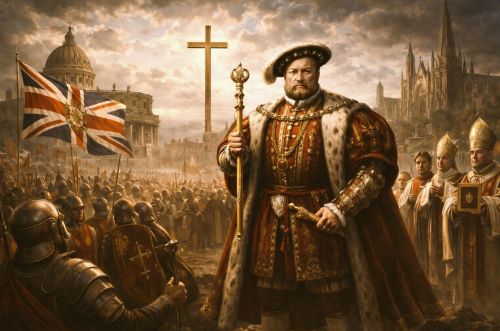
Henry VIII did not set out to reform Christian theology in England; he set out to secure his dynasty and assert sovereign control.

By Matthew A. McIntosh
Public Historian
Brewminate
Introduction: Power before Piety
Henry VIII is often positioned at the center of the English Reformation, yet the origins of his break with Rome reveal a drama less about theology than about sovereignty. In the early years of his reign, Henry stood as a loyal son of the Catholic Church, immersed in the devotional culture of late medieval England. He attended Mass regularly, sponsored religious houses, and cultivated the image of a Renaissance prince committed to orthodoxy. In 1521 he authored, with clerical assistance, a defense of the seven sacraments against Martin Luther, earning from Pope Leo X the title Defender of the Faith. Nothing in his early career suggests a reformer driven by Protestant conviction or evangelical zeal. The rupture that would redefine English Christianity did not arise from doctrinal crisis or personal spiritual awakening. It emerged from political frustration and dynastic anxiety, reshaping religion only after power demanded it.
The crisis known as the King’s Great Matter was rooted in succession. Henry’s marriage to Catherine of Aragon produced no surviving male heir, raising fears of instability that recalled the factional violence of the previous century. The Tudor dynasty remained young, and the absence of a clear male successor threatened the continuity Henry regarded as essential to national stability. An annulment was not framed in theological abstraction; it was articulated as a political necessity. Henry persuaded himself that the marriage had been unlawful in the sight of God, yet his urgency intensified when papal delay became entangled with international diplomacy. Catherine’s nephew, Emperor Charles V, exerted influence over Rome, complicating any decision. What began as a marital petition evolved into a constitutional confrontation. The question ceased to be whether the marriage was valid and became instead who possessed ultimate authority within England to determine such matters. Religion entered the conflict not as a field of conscience, but as terrain of sovereignty.
The legislative measures that followed reveal the direction of Henry’s ambition. The Act in Restraint of Appeals and the Act of Supremacy did not introduce new doctrines; they relocated ecclesiastical authority from Rome to the English crown. Parliament declared the king “Supreme Head on earth of the Church of England,” transforming a dynastic dispute into constitutional redefinition. The break with Rome represented an assertion of national autonomy framed in religious language. Faith was reorganized administratively before it was reshaped doctrinally.
Henry did not initiate a theological reformation; he rebranded religion to secure authority. His policies demonstrate how leaders with limited theological agenda can deploy faith as a lever of state power. Compliant clergy and political elites rationalized the shift, adapting doctrine to preserve institutional survival under new sovereignty. In Henry’s England, power preceded piety. Religion did not guide the crown; the crown redirected religion.
Late Medieval English Catholicism before the Break

To understand the nature of Henry VIII’s rupture with Rome, it is necessary to recover the condition of English religion before the break. Contrary to older Protestant historiography that portrayed late medieval Catholicism as corrupt and decayed, recent scholarship has demonstrated the vitality of pre-Reformation religious life. Parish churches were active centers of devotion, funded by lay contributions and maintained through communal participation. The rhythms of the liturgical calendar structured social life, and sacramental practice formed the core of communal identity. English Catholicism in the early sixteenth century was not collapsing under spiritual exhaustion; it was functioning with institutional coherence.
Parish religion in particular reflected deep lay investment. Guilds sponsored altars and processions, endowed chantries for the dead, and financed church repairs, vestments, and sacred vessels. Wills from the period frequently included bequests for candles, prayers, and commemorative Masses, revealing confidence in the intercessory system of the church. The Mass was central to devotional life, not merely as ritual but as communal expression of belonging and continuity across generations. Parishioners participated in feast days, mystery plays, and seasonal observances that bound religious meaning to local identity. The material culture of piety (rood screens carved with intricate detail, stained glass depicting saints, painted wall art, and illuminated manuscripts) testifies to a society deeply engaged with sacramental symbolism. While anticlerical sentiment and calls for reform existed, they coexisted with vibrant participation rather than wholesale rejection. The texture of English Catholicism was complex, active, and socially embedded.
Monastic institutions likewise played significant roles within English society. Monasteries functioned as centers of learning, hospitality, and economic administration. While some houses suffered from internal weaknesses, many remained financially stable and socially embedded. Monastic landholdings contributed to regional economies, and religious communities provided alms, education, and spiritual intercession. Criticism of monastic wealth or discipline existed, but such critique did not necessarily equate to wholesale rejection of the system. The religious landscape was textured rather than uniformly decadent.
Clerical authority maintained recognizable ties to Rome without provoking sustained national resentment. Appeals to papal courts occurred, and papal appointments influenced episcopal selection, yet these mechanisms operated within accepted legal frameworks familiar to educated elites. Papal taxation and dispensations were occasionally criticized, but they were not widely experienced as intolerable burdens demanding immediate rupture. England’s church was integrated into broader Latin Christendom, sharing theological consensus, canon law structures, and sacramental practice with continental Europe. Universities such as Oxford and Cambridge trained clergy within orthodox Catholic frameworks, reinforcing doctrinal continuity. There was no organized national campaign for ecclesiastical independence before the annulment crisis. Loyalty to Rome functioned as part of a larger Christian identity rather than as evidence of political subordination. The absence of widespread agitation underscores how abrupt and politically driven the eventual break would be.
This underscores the transactional character of the break. Henry did not inherit a church on the verge of rebellion against papal authority. He confronted an institution that was religiously active, economically significant, and structurally stable. The transformation that followed was not the culmination of popular theological uprising but the result of royal initiative. By recognizing the strength of late medieval Catholicism, the extent of the political intervention becomes clearer. The English Reformation began not from grassroots doctrinal revolt but from the top, where dynastic necessity reshaped ecclesiastical allegiance.
The King’s Great Matter: Marriage, Inheritance, and Dynastic Anxiety

Henry’s determination to annul his marriage to Catherine of Aragon cannot be separated from the fragile foundations of Tudor rule. The Wars of the Roses had demonstrated how disputed succession could plunge England into prolonged violence. The Tudor dynasty, established by Henry VII in 1485, lacked the deep historical entrenchment of older royal houses. By the 1520s, Catherine had produced only one surviving child, Princess Mary. The absence of a male heir sharpened Henry’s fear that dynastic instability would return upon his death. The king’s marital dilemma assumed national significance in his own mind, intertwining personal frustration with constitutional anxiety.
Henry gradually persuaded himself that his marriage to Catherine was invalid in the eyes of God. Catherine had been the widow of his brother Arthur, and although a papal dispensation had permitted the union, Henry later invoked biblical prohibitions against marrying a brother’s wife, particularly passages from Leviticus. Whether this conviction arose from genuine theological scruple, political calculation, or a combination of both remains debated among historians. What is clear is that the king framed his desire for annulment in terms of divine displeasure and providential warning. The lack of a male heir was interpreted as evidence that the marriage stood under divine judgment and that England’s future depended upon correction of this perceived spiritual error. Conscience, in this narrative, served dynastic necessity. The language of sin and obedience to divine law provided moral gravity to what was, at its core, a question of succession and sovereignty.
The political environment surrounding the annulment further complicated the matter. Pope Clement VII’s authority was constrained by the dominance of Emperor Charles V, Catherine’s nephew, whose military forces had recently sacked Rome. Granting Henry’s request risked alienating one of Europe’s most powerful rulers. Papal hesitation was not merely theological caution but diplomatic calculation. Henry’s impatience grew as negotiations stalled. The annulment question expanded from private petition to international impasse, exposing the limits of English leverage within continental politics.
As frustration mounted, Henry began to reinterpret the dispute as one of jurisdiction rather than solely of marriage. If Rome could not or would not resolve the matter swiftly, perhaps the problem lay in the structure of authority itself. Advisors such as Thomas Cromwell advanced arguments emphasizing the ancient sovereignty of the English crown and the idea that England constituted an autonomous political community answerable to no external tribunal. Legal scholars searched medieval precedents to minimize papal interference in domestic ecclesiastical affairs. Pamphlets and parliamentary debates increasingly framed the issue as one of national dignity and legal independence. The annulment became a catalyst for constitutional innovation. What had begun as a marital request evolved into a claim about the locus of ultimate authority within the realm, shifting the conflict from personal grievance to structural realignment of power.
Parliamentary measures in the early 1530s reflected this shift with decisive clarity. The Act in Restraint of Appeals declared that England was an empire governed by one supreme head and that no foreign jurisdiction could intervene in its legal processes. This assertion of imperial status did more than solve the king’s marital predicament; it articulated a theory of sovereignty grounded in national autonomy. The language of empire elevated the crown’s authority above papal claims and repositioned ecclesiastical jurisdiction within domestic control. By legislating the break, Henry ensured that the annulment would be resolved not as a concession from Rome but as an exercise of English supremacy. Marriage, inheritance, and sovereignty converged in statutory form, transforming dynastic anxiety into constitutional doctrine. The king’s personal objective was reframed as national principle.
The King’s Great Matter reveals how dynastic anxiety transformed into ecclesiastical revolution. Henry’s pursuit of a male heir destabilized England’s relationship with Rome and prompted a redefinition of royal supremacy. Theological arguments provided moral vocabulary, but the driving force remained political survival. The annulment crisis did not begin as Protestant reform; it began as succession strategy. In seeking control over his marriage, Henry moved toward control over the church itself.
Parliamentary Revolution and the Legal Break with Rome
The annulment crisis culminated not in a theological manifesto but in a series of parliamentary statutes that redefined the structure of English governance. Between 1529 and 1536, what historians have often termed the Reformation Parliament enacted legislation that systematically dismantled papal jurisdiction within England and transferred ecclesiastical authority to the crown. The transformation unfolded through calculated stages rather than abrupt proclamation. Financial measures restricted payments to Rome, legal reforms curtailed appeals beyond the realm, and oaths bound subjects to new definitions of loyalty. Authority previously exercised by the papacy was relocated through legal instruments crafted in Westminster rather than decreed in convocation. The English Reformation began as a constitutional recalibration, engineered through statute and oath, embedding religious change within the mechanisms of parliamentary governance.
The Act in Restraint of Appeals of 1533 marked a turning point in this legislative progression. By declaring that “this realm of England is an empire,” the statute articulated a theory of sovereignty that placed ultimate judicial authority within the kingdom itself. Appeals to Rome in matrimonial and ecclesiastical cases were prohibited, effectively closing the door to papal arbitration in matters that had long acknowledged external jurisdiction. The language of empire was deliberate and forceful. It invoked the idea of a self-contained political community governed by one supreme head accountable only to God. This was not a technical procedural adjustment; it was a constitutional statement that reimagined England’s place within Christendom. The statute framed resistance to royal jurisdiction as resistance to the integrity of the realm, thereby aligning ecclesiastical obedience with political loyalty.
The following year’s Act of Supremacy formalized this shift by recognizing Henry VIII as “Supreme Head on earth of the Church of England.” The phrase signaled a remarkable relocation of spiritual authority. While careful wording left ultimate headship to Christ, the statute effectively nationalized ecclesiastical governance. Royal supremacy meant that appointments, disciplinary measures, and doctrinal enforcement fell under the crown’s purview. The church was not abolished; it was absorbed into the architecture of state power.
Parliamentary participation in this transformation lent it constitutional legitimacy. Rather than acting through unilateral decree, Henry secured statutory endorsement, embedding religious change within the framework of representative governance. This process strengthened the appearance of collective consent. The Reformation Parliament did not debate Lutheran theology; it legislated sovereignty. By channeling the break through parliamentary procedure, the crown insulated its actions from charges of arbitrary rebellion and grounded them in legal continuity.
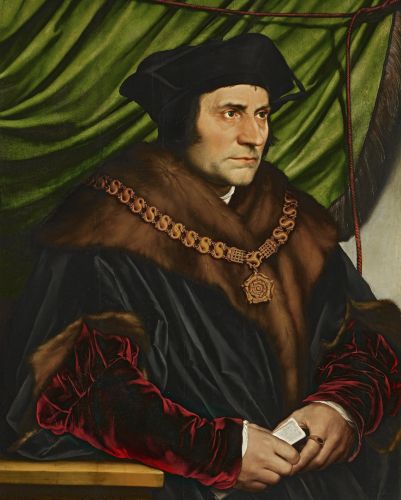
Resistance to these measures revealed the stakes involved. Figures such as Sir Thomas More and Bishop John Fisher refused to swear the Oath of Supremacy and were executed for treason. Their resistance underscored that the conflict concerned obedience to authority rather than doctrinal nuance. To deny royal supremacy was to deny the constitutional reordering enacted by Parliament. Loyalty to Rome became equated with disloyalty to the crown. Religious allegiance was redefined as political allegiance.
The legal break with Rome represents a parliamentary revolution in authority rather than a grassroots theological uprising. Through statute, oath, and carefully constructed legal rhetoric, Henry reconstituted the English church as an arm of national sovereignty. The transformation demonstrates how law can reshape religious structure without immediate doctrinal overhaul, redefining obedience through legislative means rather than theological persuasion. By embedding ecclesiastical change within parliamentary authority, the crown secured durability and institutional reinforcement for its claims. Power was relocated first; belief would be negotiated later. In this sequence, statecraft preceded reform, and parliamentary machinery became the instrument through which ecclesiastical revolution was achieved.
Henry’s Theology: Conservative Doctrine under Royal Control
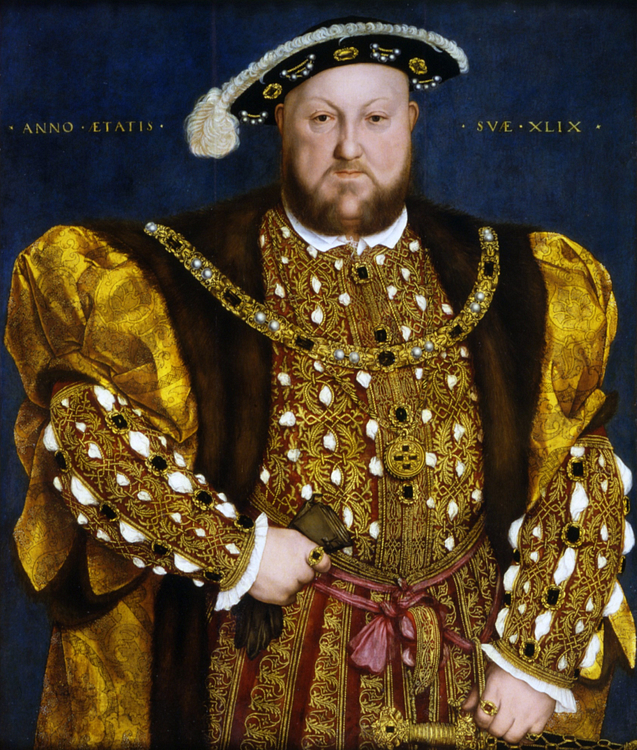
Despite the dramatic constitutional rupture with Rome, VIII did not immediately pursue Protestant theological reform. On the contrary, his doctrinal instincts remained largely conservative. The king rejected papal supremacy but retained core elements of Catholic sacramental theology. Transubstantiation, clerical celibacy, and auricular confession remained doctrinally affirmed during much of his reign. The English Reformation under Henry was administrative before it was evangelical. Religious authority shifted location, yet many traditional teachings endured.
The Ten Articles of 1536 and the Bishop’s Book of 1537 illustrate this transitional posture. These documents introduced modest reforms, including a reduced emphasis on certain traditional practices and cautious movement toward justification by faith, yet they stopped well short of endorsing Lutheran theology. They preserved the importance of baptism, penance, and the Eucharist while carefully redefining doctrinal language in ways that avoided overt rupture with Catholic orthodoxy. The king balanced between reformist advisors such as Thomas Cromwell and Thomas Cranmer and conservative bishops who feared doctrinal destabilization. This ambiguity reflected political calculation rather than systematic theological agenda. Henry sought unity and control, not doctrinal experimentation. Reformist impulses were tolerated only within limits that maintained royal supremacy and prevented factional fragmentation within the realm.
The Six Articles of 1539 confirmed the conservative trajectory. Often described as a reactionary measure, the statute reaffirmed transubstantiation, upheld clerical celibacy, and enforced traditional sacramental practice under severe penalties. Individuals who denied core Catholic teachings faced prosecution. At the same time, those who rejected royal supremacy faced charges of treason. The regime punished both radical Protestants and loyal papalists. Orthodoxy was defined by allegiance to the crown as much as by theological formulation.
Henry’s theological conservatism reveals that his primary objective was not confessional transformation but sovereign control. Protestantism, where it advanced, did so within boundaries set by royal authority. Reform was permitted only insofar as it did not undermine the stability of the regime. The king positioned himself as final arbiter of doctrinal boundaries, intervening when debate threatened cohesion. Theology functioned within parameters established by political necessity.
Under Henry VIII religious change was constrained by executive will. The church of England became independent from Rome, yet it did not become doctrinally revolutionary. The break rebranded allegiance while preserving much of inherited belief and sacramental structure. Even when reforms were introduced, they were carefully calibrated to avoid destabilizing social order or empowering clerical factions beyond royal oversight. Faith was reshaped administratively and selectively, demonstrating how a ruler with limited reformist conviction could manipulate religious structure without surrendering theological conservatism. Doctrine endured, but it endured under royal command, subordinated to the imperatives of sovereignty rather than animated by evangelical transformation.
Clerical Compliance and Doctrinal Rationalization
The reordering of ecclesiastical authority under Henry VIII required not only statutory innovation but clerical cooperation. Bishops, theologians, and parish clergy were compelled to confront a redefinition of obedience. The Oath of Supremacy demanded recognition of the king as Supreme Head of the Church of England, transforming allegiance from papal hierarchy to royal sovereignty. For many clergy, compliance was not a matter of doctrinal conviction but institutional survival. Refusal risked deprivation, imprisonment, or death. Acceptance required theological reframing.
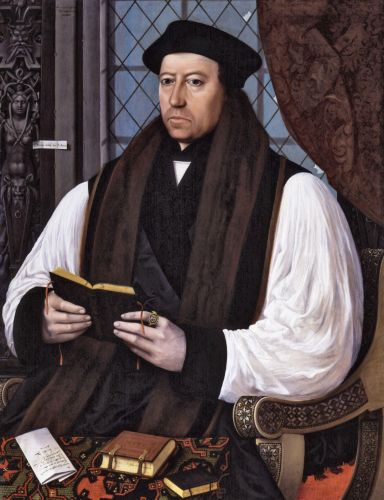
Theologians such as Thomas Cranmer played pivotal roles in constructing intellectual justification for royal supremacy. Arguments were advanced emphasizing the historical autonomy of the English church and the biblical legitimacy of princely oversight in spiritual matters. Appeals to early church precedent and to scriptural models of godly kings allowed reformist clergy to present the king’s authority as consonant with divine order. Cranmer and others developed nuanced arguments distinguishing between spiritual headship belonging to Christ and earthly governance entrusted to the monarch. Even those less inclined toward Protestant reform found ways to articulate obedience within traditional frameworks of submission to lawful rulers, drawing upon long-standing medieval teachings about temporal authority. This interpretive flexibility enabled clergy to reconcile inherited theology with altered jurisdiction. Doctrine was not discarded; it was recalibrated to absorb political transformation without appearing to abandon orthodoxy.
The execution of dissenters underscored the limits of rationalization. Sir Thomas More and Bishop John Fisher refused the oath, insisting upon papal primacy as a matter of conscience. Their deaths sent a clear signal that theological disagreement could not override statutory allegiance. The line between heresy and treason blurred. Religious dissent became political defiance. Clerical compliance cannot be understood solely as opportunism; it emerged within a system that tightly linked orthodoxy to obedience.
Institutional incentives further encouraged accommodation. Episcopal appointments increasingly reflected loyalty to the crown, and advancement depended upon acceptance of the new order. Patronage networks tied ecclesiastical office to royal favor, reinforcing conformity through career incentive as well as legal compulsion. Sermons, homilies, and official proclamations reinforced the legitimacy of royal supremacy, embedding it within parish instruction and normalizing the shift for lay audiences. Universities adapted curricula to align with the revised constitutional framework, shaping a generation of clergy trained under the assumption of national ecclesiastical autonomy. What began as coerced acknowledgment evolved into normalized structure. Theological vocabulary adjusted to political fact, and repeated affirmation transformed necessity into perceived legitimacy. Obedience to the monarch was framed as obedience to God’s providential arrangement, allowing compliance to be presented not merely as survival strategy but as spiritual duty.
Clerical compliance functioned as the bridge between statutory revolution and religious continuity. Without interpretive adaptation by religious elites, the legal break with Rome might have remained unstable. By rationalizing royal supremacy within theological discourse, clergy stabilized the regime’s claims. The alliance between throne and altar did not require shared reformist zeal; it required mutual recognition of institutional benefit and survival. In this recalibration, doctrine bent toward authority, and obedience became the organizing principle of religious life under Henry VIII.
The Dissolution of the Monasteries and Institutional Incentive

The Dissolution of the Monasteries between 1536 and 1541 represented the most dramatic material consequence of Henry’s ecclesiastical revolution. What began as a constitutional assertion of royal supremacy expanded into large-scale confiscation of religious property that permanently altered England’s social and economic landscape. Through a series of visitations, commissions, and parliamentary statutes, monastic houses were investigated, categorized, and progressively suppressed. Official reports emphasized alleged moral corruption and administrative failure, providing rhetorical justification for closure. Yet the systematic nature of the campaign, coupled with the scale of asset seizure, reveals motivations that extended beyond spiritual reform. Monasteries, priories, and convents were dissolved in waves, beginning with smaller houses and culminating in the suppression of the larger foundations. Their lands, buildings, plate, and revenues were transferred to the crown. The campaign did not merely reform religious life; it dismantled an entire institutional network and redirected its wealth toward royal authority.
The economic implications were immense and transformative. Monastic institutions controlled a substantial portion of English land and generated significant income through rents, tithes, and agricultural production. Their dissolution provided Henry with an immediate influx of resources at a moment when foreign policy and court expenditure strained royal finances. While some lands were retained by the crown to bolster fiscal stability, a considerable portion was sold or granted to members of the gentry and nobility at favorable terms. This redistribution was not accidental; it strategically bound influential elites to the new religious settlement. By granting former monastic estates to loyal subjects, the regime cultivated vested interests in the permanence of reform. Any restoration of papal authority would have threatened the legitimacy of these transfers and jeopardized property rights. Material gain reinforced political loyalty, embedding the break with Rome within the emerging structure of landed wealth and social advancement.
The suppression of monasteries also eliminated alternative centers of social authority. Monastic houses had served as hubs of charity, education, and local administration. Their removal concentrated power more firmly in royal and aristocratic hands. While critics of monastic wealth had long existed, the systematic dissolution transformed institutional landscape in ways that extended beyond theology. The church’s economic independence was dismantled, reducing its capacity to resist royal control.
The Dissolution demonstrates how religious restructuring generated concrete incentives for compliance. Clergy and lay elites who might have hesitated over doctrinal changes found advantage in the redistribution of property and patronage. Economic integration strengthened the alliance between crown and supporters. Religion became not only a matter of obedience and belief but of ownership and material stake. In this transformation, faith was further subordinated to sovereignty, and institutional survival became inseparable from political alignment.
Religion as Sovereignty Technology

Henry VIII’s ecclesiastical policies demonstrate how religion can function as a technology of sovereignty rather than merely as a field of belief. By severing papal jurisdiction and asserting royal supremacy, Henry transformed the church from a transnational institution into a national instrument. Religious authority became inseparable from executive command. The crown now controlled episcopal appointments, doctrinal enforcement, and ecclesiastical courts. Spiritual governance was integrated into the machinery of state power, extending royal oversight into every parish and diocese.
This integration redefined obedience at multiple levels of English society. Where allegiance had once been distributed between crown and papacy, it was consolidated under the monarch through statute, oath, and liturgical conformity. Oaths of Supremacy compelled clergy and officials to publicly affirm the king’s headship, transforming theological assent into a measurable act of political loyalty. Sermons reinforced the idea that resistance to royal authority constituted resistance to divine providence. Ecclesiastical courts now operated under royal oversight, aligning moral discipline with sovereign command. By redefining the locus of ecclesiastical jurisdiction, Henry ensured that dissent could be construed not only as theological deviation but as civil disobedience. The spiritual sphere expanded the state’s reach into conscience and community, embedding sovereignty within the rhythms of worship and parish life.
The reconfiguration also altered the symbolic dimension of kingship. Medieval monarchs had long been anointed with sacred ceremony, yet Henry’s supremacy extended beyond ritual symbolism into institutional command. The monarch became guardian of orthodoxy, arbiter of doctrinal boundaries, and final court of appeal in ecclesiastical disputes. Royal proclamations carried theological implications. By absorbing religious governance, the crown fused sacred and political authority in unprecedented administrative form.
Administrative centralization reinforced this transformation. Cromwell’s bureaucratic reforms expanded record-keeping, financial oversight, and communication networks. Ecclesiastical visitation reports flowed to central authorities, enhancing surveillance capacity. Uniformity of instruction was promoted through authorized texts and official homilies. The result was not merely independence from Rome but a more centralized and coordinated religious structure within England. Religion became embedded within the expanding apparatus of Tudor governance.
Henry VIII converted religious allegiance into a stabilizing component of statecraft. The church did not disappear; it was recalibrated as an extension of executive authority, its hierarchy and discipline aligned with royal command. Sovereignty was articulated not only through law and coercion but through doctrinal supervision, liturgical conformity, and institutional integration. By redefining obedience as both spiritual duty and civic requirement, the crown ensured that faith reinforced governance rather than competing with it. In this configuration, religion functioned as sovereignty technology, legitimizing authority, reinforcing unity, and consolidating the Tudor state through sacred vocabulary fused with administrative control.
Comparative Political Theology: Sanctifying the Useful Monarch

Henry VIII’s religious transformation fits within a broader historical pattern in which rulers are sacralized not primarily for spiritual devotion but for political utility. Political theology has long demonstrated that religious institutions often align themselves with executive authority when such alignment promises security, influence, or survival. In Henry’s case, the clergy who endorsed royal supremacy were not affirming a saintly reformer or prophetic theologian. They were affirming a monarch who offered protection, patronage, and institutional continuity under altered jurisdiction. Sanctification functioned less as recognition of holiness and more as rationalization of power consolidation. The monarch became divinely framed because his authority stabilized ecclesiastical existence within a new constitutional structure.
This dynamic reveals how sacred language adapts to political necessity. Theologians reinterpreted obedience doctrines to accommodate royal headship, drawing upon scriptural precedents of godly kings while minimizing papal claims. Religious elites translated constitutional change into providential narrative. The king’s assertion of supremacy was described not merely as legal reform but as restoration of rightful order. Through this reframing, political realignment was absorbed into theological continuity. Sanctification did not eliminate tension; it resolved it rhetorically.
Comparative analysis across historical contexts underscores the durability of this pattern. Leaders who lack sustained theological conviction may nonetheless be embraced as instruments of divine will when they deliver institutional advantage. Religious endorsement can hinge less upon moral exemplarity than upon strategic outcome. Henry VIII’s limited doctrinal innovation and fluctuating religious commitments did not prevent clergy from presenting him as legitimate head of the church. What mattered was that royal authority ensured survival and protected clerical office within the new order.
The sanctification of the useful monarch illuminates a recurring structure in political theology. Faith communities confronted with shifting power arrangements often choose alignment over resistance when institutional stability is at stake. The language of divine mandate becomes a mechanism through which political expediency acquires sacred legitimacy. Henry’s England demonstrates how religious elites can recast authority in theological terms without requiring the ruler himself to embody consistent religious devotion. In this convergence, holiness becomes strategic, and sanctification operates as a tool of governance rather than solely as recognition of piety.
Modern Parallel: Evangelical Support and Instrumental Religion

The alliance between large segments of white evangelicals and President Donald Trump during his first term and continuing into his second term beginning in 2025 reflects a contemporary manifestation of instrumental religious alignment. Trump has not consistently embodied the devotional patterns, moral discipline, or theological literacy traditionally emphasized within evangelical teaching. Public religious fluency, regular church attendance, and sustained engagement with doctrinal language have not been central features of his political identity. His personal history and rhetorical style have often diverged from evangelical norms concerning humility, restraint, and sexual ethics. Yet these divergences have not prevented sustained and enthusiastic support among many evangelical institutions and influential pastors. The alignment has been anchored less in personal piety than in political outcome, revealing a prioritization of structural power over spiritual exemplarity. As in earlier historical contexts, religious endorsement has functioned not as certification of holiness but as affirmation of usefulness.
Policy objectives have served as the principal adhesive of this partnership. Judicial appointments, particularly to the Supreme Court and federal appellate courts, have been framed as decisive victories for evangelical priorities, especially regarding abortion jurisprudence and religious liberty claims. Executive rhetoric defending Christian identity within public life has further reinforced perceptions of cultural protection. In this framework, political effectiveness functions as theological validation. A leader may be described as divinely used not because he models spiritual discipline, but because he advances an agenda perceived as morally urgent.
Evangelical leaders have frequently invoked biblical precedents of imperfect rulers employed by God to accomplish providential ends. Such comparisons provide interpretive flexibility, allowing moral inconsistency to be subordinated to strategic achievement. Sacred language transforms political calculation into narrative of divine purpose. The rhetoric does not deny flaws; it reframes them as secondary to outcome. As in earlier periods, sanctification operates as interpretive mechanism rather than as recognition of exemplary devotion.
The structural parallel with earlier historical cases lies in the prioritization of institutional advantage. Religious endorsement strengthens executive authority, while executive power secures policy influence for religious actors. The alliance stabilizes both parties through mutual reinforcement. In this arrangement, faith becomes integrated into political strategy, and political strategy is cloaked in sacred vocabulary. The pattern illustrates how religious communities may align with leaders not for spiritual congruence but for instrumental benefit, reaffirming the enduring relationship between sovereignty and sanctification within political theology.
Conclusion: When Authority Rewrites Doctrine
Henry VIII did not set out to reform Christian theology in England; he set out to secure his dynasty and assert sovereign control. The ecclesiastical transformation that followed was the byproduct of political necessity rather than doctrinal awakening. By relocating authority from Rome to the English crown, Henry redefined the structure within which belief operated. Theological continuity persisted in many respects, yet its institutional framework had been fundamentally altered. The English church became national not because of confessional revolution, but because sovereignty demanded it.
The compliance of clergy and the redistribution of monastic wealth reveal how religious transformation can be stabilized through both intellectual rationalization and material incentive. Doctrine adjusted not through wholesale theological conversion but through reinterpretation under new authority. Obedience to the monarch was reframed as obedience to divine providence, and sermons, oaths, and official texts reinforced this recalibration of loyalty. The crown’s supremacy was embedded in law, reinforced by oath, and normalized in liturgy, creating a culture in which spiritual conformity and political allegiance were intertwined. Material redistribution bound elites to the new order, ensuring that reversal would threaten both conscience and property. Religion did not disappear under Henry’s rule; it was reorganized to function within the architecture of Tudor governance, where survival required adaptation and theological language was employed to stabilize a reconfigured power structure.
Comparative political theology underscores that this pattern is not confined to sixteenth-century England. Across eras, rulers with limited theological agenda have drawn upon religious legitimacy to consolidate authority, while religious elites have rationalized alignment in exchange for institutional security and influence. Sanctification can operate as strategy, translating political calculation into sacred narrative. The sacred vocabulary of chosenness and divine mandate provides interpretive coherence for political consolidation, enabling communities to interpret structural shifts as providential developments rather than coerced accommodations. In such moments, doctrine bends toward power rather than power submitting to doctrine, and interpretive frameworks evolve to protect institutional continuity. Henry’s England stands as one illustration within a broader historical continuum in which sovereignty reshapes sacred structure without necessarily dismantling belief itself.
When authority rewrites doctrine, faith is neither eradicated nor purely instrumentalized; it is redirected. Religious language becomes a medium through which sovereignty is articulated and stabilized. Henry VIII’s reformation demonstrates how institutional survival and political ambition can converge, reshaping ecclesiastical allegiance without immediate theological revolution. The enduring lesson lies in the malleability of religious structures when confronted with executive power. Belief may endure, but its institutional expression can be recast to serve the demands of sovereignty.
Bibliography
- Bernard, G. W. The King’s Reformation: Henry VIII and the Remaking of the English Church. New Haven: Yale University Press, 2005.
- Du Mez, Kristin Kobes. Jesus and John Wayne: How White Evangelicals Corrupted a Faith and Fractured a Nation. New York: Liveright, 2020.
- Duffy, Eamon. The Stripping of the Altars: Traditional Religion in England, 1400–1580. New Haven: Yale University Press, 1992.
- Elton, G. R. The Tudor Revolution in Government: Administrative Changes in the Reign of Henry VIII. Cambridge: Cambridge University Press, 2009.
- Fea, John. Believe Me: The Evangelical Road to Donald Trump. Grand Rapids, MI: Eerdmans, 2018.
- Haigh, Christopher. English Reformations: Religion, Politics, and Society under the Tudors. Oxford: Clarendon Press, 1993.
- Hoyle, R. W. The Pilgrimage of Grace and the Politics of the 1530s. Oxford: Oxford University Press, 2001.
- Jones, Robert P. The End of White Christian America. New York: Simon & Schuster, 2016.
- MacCulloch, Diarmaid. The Reformation: A History. New York: Viking, 2003.
- —-. Thomas Cranmer: A Life. New Haven: Yale University Press, 1996.
- Oakley, Francis. Kingship: The Politics of Enchantment. Malden, MA: Blackwell, 2006.
- Rex, Richard and C. D. C. Armstrong. “Henry VIII’s Ecclesiastical and Collegiate Foundations.” Historical Research 75:190 (2002), 390-407.
- Ryrie, Alec. “Divine Kingship and Royal Theology in Henry VIII’s Reformation.” Reformation 7:1 (2002), 49-77.
- Scarisbrick, J. J. Henry VIII. New Haven: Yale University Press, 1968.
- Smith, Lacey Baldwin. “Henry VIII and the Protestant Triumph.” The American Historical Review 71:4 (1966), 1237-1264.
Originally published by Brewminate, 02.20.2026, under the terms of a Creative Commons Attribution-NonCommercial-NoDerivatives 4.0 International license.
About the Author