
Examining the connectedness and transnational interactions in the French spice project through the lens of Poivre’s informal networks.

By Dr. Dorit Brixius
Postdoctoral Researcher
Deutsches Historisches Institut Paris
“One of these rare men, who reflect about things which are really useful, and who does not abandon a project until it is finished, had decided to bring wealth to France, his homeland, with the help of fine spice trees. This man was M. Poivre.”
‘Epiceries’, Encyclopédie méthodique: Agriculture[1]
Introduction
What a hero, this Poivre, one might think! This paper, however, seeks to dismantle this heroic story. Narratives about Poivre’s apparent success of the spice project largely undermine the interplay and importance of his networks to conduct such a project. Focusing on these networks and go-betweens[2] my paper is dedicated to the role of mediators who facilitated the French spice project.
Indeed, in 1748, the young adventurer Pierre Poivre (1719-1786) proposed to the Compagnie des Indes Orientales (hereafter CIO) to collect spices in different parts of the world. Poivre, who later became the intendant of the Mascarene Islands (1767-1772), consisting of Isle de France (present-day Mauritius), Bourbon (present-day La Réunion) and Rodrigues, strove to smuggle clove and nutmeg from the Dutch-possessed Moluccas (or Maluku Islands of the Malay Archipelago) and introduce these spices in the Isle de France with the aim to turn the island into a cultivating ground for the French spice trade. Even though Isle de France remained marginal and vulnerable under the French office, it was to become an island of strength, particularly after the Seven Years’ War (1756-1763), which had become a disaster for France and humiliated Louis XV as few monarchs had been humiliated before.[3] The French defeat in this battle was a major reversal for the on-going colonization and the Treaty of Paris of 1763 ratified the losses in Canada, Louisiana and India. The response was the French colonial administration’s attempts to compensate for the loss of its possessions in the Atlantic and the Indian Ocean. This crucial moment overlapped with colonial innovations and traditional approaches.[4] It was also in this moment, when expansion in the overseas territories went hand in hand with the rising military dominance of the British in the Indian Seas, that the French were forced to extend their commercial expansion to the Indo-Pacific region.[5]
Previously, historians have told this story by centering on Poivre himself and the “Frenchness” of the spice quest.[6] However, since the Moluccas held the key to the Dutch spice monopoly and were therefore rather well protected, Poivre had to rely on the assistance of previously neglected peripheral actors coming from diverse backgrounds and ethnic groups. In this respect, of major importance were Poivre’s earlier travels in the region in the 1740s when he received information that Chinese and Malay merchants traded fresh nuts and seedling in the Philippines, using Manila as a transit spot. Though Poivre cleverly used this episode in his life for self-fashioning, this paper argues that this project was by no means a solitary or a purely French affair, but, instead, required an informal and cross-cultural network of brokers, Indo-Pacific islanders, Chinese traders, as well as the Spanish and Portuguese allies.[7] This paper seeks to re-examine the traditional narrative, by focusing in particular on the role of the Moluccans as brokers and suppliers, previously omitted in mainstream history. By looking at a single man rather than at his networks, previous studies of the French spice trade have widely ignored the multinational contributions to Isle de France’s spice gardens in the making. By examining these networks from a bottom-up perspective, I argue that the so-called “French” spice project was heavily dependent on informal, cross-cultural relations. On the one hand, this paper seeks to demonstrate the central importance of informal relations and patronage in the Malay-Filipino region for the spice project. On the other hand, it explores the mutual interdependence between European actors as well as French and islanders in Southeast Asia, stressing the profit-making activities of actors belonging to the Malay world. I insist on the role of middlemen for the French spice quests as brokers across cultural divides.
Hence, moving beyond national and imperial narratives, the purpose of this paper is to closely examine the connectedness and transnational interactions in the French spice project through the lens of Poivre’s informal networks. The cross-cultural connections were essential for this project and, as this paper unveils, Asian merchants and brokers were indispensable for Poivre’s aim to acquire nutmeg from the Dutch territory. I examine this “invisible empire,” that is to say its actors operating outside of the imperial governance and formal conventions, firstly, by looking into the Spanish-French collaboration in the 1750s and, secondly, by tracing the development of these relations which formed the basis for a wide and intense exchange of knowledge, information, and materials within an informal Indo-Pacific island network in the late 1760s and 1770s. The necessity of relying on this system was intensified by the lack of support from the French colonial authorities, making the project dependent on more local agents.
Between Monopolies and Smugglers: The Spice Routes of the 1750s

After the CIO accepted Poivre’s proposal to smuggle spices from Manila in 1748, the governor general of French India Joseph-François Dupleix (1697-1763) handed a secret letter to Poivre in which he offered 20,000 piasters for 25 nutmeg and clove plants each.[8] Dupleix presented the same letter to a Spanish merchant named Cavaillo, who sailed from Pondicherry to Manila, and apparently, this certain Cavaillo was prone to gossip: To Poivre’s great surprise, when he disembarked in Manila in late May 1751, the contents of the letter had become publicly known and the mission was no longer a secret affair.[9] The CIO had good reason not to trust Poivre who had not proved his credibility yet (and indeed lost it after the first attempts over a dispute about the “true” nutmeg in 1754.[10]
Rather than supporting the spice project, therefore, Dupleix’s endeavors made Poivre’s assignment more challenging,[11] since the Dutch were now likely to intervene in his plan. Poivre explained this situation in his letter to the Secret Committee in September 1752 during his stay in Manila: “Due to Dupleix’s actions in 1750, the interests of the Company regarding the spices are now so widely known that it was impossible for me to disembark without everyone being aware of the aim of my voyage, and after all there were the Dutch here.”[12] Indeed, the Dutch sought to obtain their monopoly over trade in clove and nutmeg through the use of violent deterrents in most of the Moluccas while the Dutch Vereenigde Oost-Indische Compagnie (VOC) was on the downfall.
Despite these complications, Poivre was lucky enough to come across merchants from the Moluccas and Borneo on the river in Manila. He hoped to receive information about spices from these traders and was able to buy 300 fresh nuts in the shell from a Chinese merchant, some even with their mace.[13] According to Poivre’s report, he was able to make a good dozen of the nuts sprout, and later repeat his success with another 32 nuts bought from the same Chinese merchant.[14]
Although the search for nutmeg was shaping up nicely, finding clove was more difficult: as Poivre explained in his report to the CIO, clove seeds were not common among traders, as they only sold grown plants. For that reason, Poivre decided to collect clove seeds directly in the Dutch-possessed Moluccas. However, since vessels rarely sailed directly to the Moluccas, he addressed the Spanish governor-general of the Philippines, Don Francisco José de Ovando (1693-1755). Without Poivre giving away that his mission to challenge the Dutch spice trade had become public, both partners signed a convention which, firstly, was to order Juan González Del Pulgar, the Spanish governor of Zamboanga (a district of Mindanao), to provide an armed ship with Mindanao islanders on board, which was to take Poivre to the Spice Islands and, secondly, to order Del Pulgar to enquire of the representatives of the Mindanao natives to mobilize their people in the search for spices on their island.[15] Although Del Pulgar expressed a great interest in such an enterprise, the governor-general Ovando, however, learned meanwhile that Poivre’s mission had become public – a fact which Poivre concealed from him when arranging the agreement. Not willing to risk an open conflict with the Dutch – after all, Poivre’s mission clearly aimed to challenge their spice monopoly – Ovando withdrew his orders and decided to modify his plan.
By so doing, Ovando was playing a diplomatic game: On the one hand, he could not risk an open conflict with the Dutch, yet on the other hand, he was interested in challenging their spice monopoly. The power relations in the region were shifting and the Dutch on the decline, which led on the one hand to informal alliance between the French and Spanish. Therefore, he did not retract his orders entirely but merely adjusted them: Now, officially, the search for spice plants served his own personal interests.[16] But why did Ovando risk a diplomatic gaffe, given that the Dutch could find out about his deal? His reasons must have been economic ones: In a letter dated from Manila on 30 September 1751, Poivre explained to Monsieur le St Priest, one of the CIO directors, that the Spanish market and the colonies of the Philippines had suffered a lot after losing a galleon from Acapulco.[17] The Manilan government was in constant need of money from the Spanish Crown and the relations with both the Dutch and the English were on the decline. Moreover, Ovando must have flirted with the idea of acquiring high quality nutmeg from other parts of the region: Although nutmeg was native to some of the Philippine islands, the plants grew high in the mountains, thus regions controlled by the indigenous peoples who did not permit the Spaniards to collect the spice.[18] Many years later, in 1769, the Spanish governor announced that the “true” nutmeg was found in the Philippines but the great excitement caused by this news was brought to a quick end when the commissaire de la marine, Jean Mathieu Simon Provost (1728-1776), examined the plants and identified them as not “true.”[19] This meant that the nutmeg in question was a different and an inferior type, which possessed features distinct from the “true” kind, namely oval leaves, a felt-covered fruit and, most importantly, by no means the “power of the true spice.”[20]
Of Spanish and Portuguese Middlemen and the Silent French Authorities
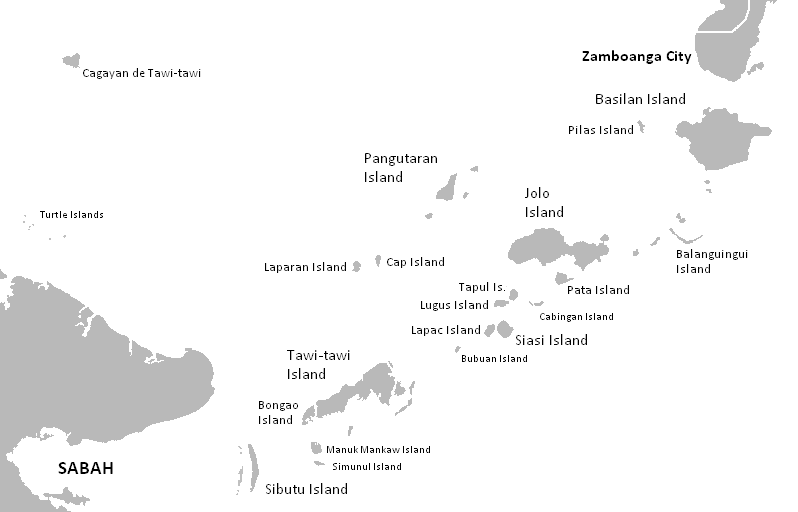
Probably with the help of Del Pulgar, Poivre was able to hire two Spanish vessels under the command of a Malay Capitan who navigated them to the island of Jolo (an island of the Sulu Archipelago) in March 1752.[21] While Poivre continued his mission to collect spices – which had minimal chances of success since he arrived in the wrong season, right before the arrival of the monsoons –, his collaborator Del Pulgar, the governor of Zamboanga, passed away in 1752, being succeeded by Francisco Domingo Oscote who was named the governor in February 1753.[22] Oscote, who also supported Poivre’s mission, had friendly relations with the people of Mindanao and therefore turned out to be greatly important as a mediator.
While Poivre received help from Spanish intermediaries, the CIO remained silent and the ships that Poivre had ordered from Isle de France were never sent out. This lack of French support, which can be explained because Poivre did not have any credibility at this point in his career, forced Poivre to use informal networks even more extensively. That said, he embarked together with 19 nutmeg plants on a vessel to Pondicherry from where he later sent the plants to Isle de France before heading back to the Mascarenes himself in December 1753. At this time, the struggle between him and his rival Jean Baptiste Christophore Fusée-Aublet (1720-1778) began, who claimed that Poivre’s nutmeg was not “true.” Even though Poivre had been assured that the one of the nutmeg plants from Mindanao was the “true spice plant” of the highest quality, an official approval of the plant’s authenticity was required. Isle de France’s governor Jean-Baptiste Charles Bouvet de Lozier (1705-1786), however, was not in favor of a procès-verbal and the nutmeg entered Isle de France as “mangosteen.”[23] In brief, Poivre failed to obtain an official approval of the authenticity of his nutmeg and his previous efforts more generally, which forced him to continue his attempts returning to Manila in May 1754.
This, however, was an unfortunate moment to arrive, since war had broken out between the islanders of Jolo and the Spaniards of Manila,[24] circumstances under which Zamboanga’s governor Oscote was unable to aid Poivre. All the plants which Oscote’s men had collected were dead by the time he could send them to Manila where Poivre was awaiting their delivery.[25] In other words, Poivre’s efforts in the Philippines failed. Yet, he could not return to Isle de France with empty hands and made one last attempt before writing to the CIO that he had encountered too many obstacles to achieve his goals.[26] Hence, before heading back westwards, he stopped over in the Portuguese colony in the island of Timor.[27] Even though his spice quests and reliance on the joint Spanish-Filipino collaboration were largely unsuccessful, Poivre sought further help of middlemen, this time among the Portuguese in Timor.[28]
The local governor Manuel Doutel de Figueiredo Sarmento (1751-1759?) promised to support the French and hired two indigenes for the search for nutmeg. The two islanders were able to locate small plants in the western part of the island, which Poivre identified as nutmeg but which was clearly inferior to the “true” one in aroma and taste. To sum up, although Poivre failed to bring “true” spices to Isle de France, he took away a considerably more precious “souvenir”: an informal network of allies in the region, on which he could rely during his future attempts.
Brokers, Pirates, and Spi(c)es
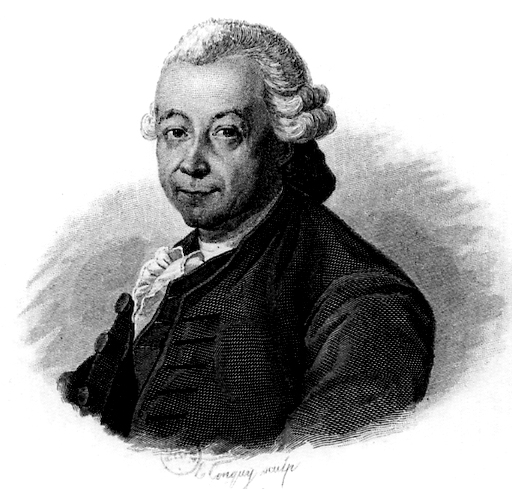
While the attempts in the 1750s had a very limited outcome overall, the search for spices continued between 1768 and 1772 when Poivre, now as the intendant, initiated four expeditions,[29] authorizing Jean Mathieu Simon Provost to negotiate with the indigenous people on his behalf. Provost’s ability to speak basic Bahasa Malay, widely spoken in the region, greatly facilitated his mission. Poivre, moreover, had written down the indigenous words for both nutmeg, which was and still is “pala”, and clove, spelled “digne.”[30] Thanks to his language abilities, Provost could interact with many islanders directly and, therefore, more easily acquire information about the spice plants, as well as Dutch vessels, omnipresent in the Moluccas. Furthermore, his communication skills allowed him to readily obtain refreshments for the ships’ crew, which the islanders presented to them.[31] When Provost reported about this hospitality to Isle de France, the island’s governor Desroches wrote to Versailles in July 1770 that although the Malay people were said to be the most malicious ones on earth, Provost found, instead, humanity, friendship and reliability.[32]
Provost also managed to establish friendly relations with several kings in both the Moluccas and the Philippines during his voyages. When it seemed that the Dutch forces could threaten the French on their spice quest, they were offered 3,000 men as reinforcements by a local king.[33] To highlight another example, during his earlier travels in the 1750s, Poivre succeeded in gaining the favor of the Sultan of Jolo.[34] This alliance was reinforced in 1770 when Sultan Mohamad Alino Dien of Jolo (who, when baptized in 1749, became King Fernando I of Jolo) nominated the French King as his immediate protector.[35] This was not the only alliance that the French formed in the region, as during the first mission to the Moluccas in June 1768, Poivre laid the foundations for an intense Franco-Malay collaboration in Kedah (located in the western Malaysian peninsula): Together with the commander Trémigon and relying on the help of a Muslim go-between Hadé Hachem, an old and respected dervish, Provost managed to negotiate informal arrangements with a Bugis pirate from Celebes[36] (present-day Sulawesi) named Dinck Poudony to gather spices for him, which he planned to collect a year later in July 1769. The four held a secret meeting in the house of Hadé Hachem[37] where they came to an agreement using basic Portuguese and also some Bahasa Malay.[38] As a result, the Frenchmen signed a contract that promised them spices in exchange for money and gunpowder.[39] Furthermore, they agreed to cover the expenses of Dinck Poudony’s voyage to Selangor,[40] while Hadé Hachem was to engage more captains in the Malaysian peninsula in a similar way. With this deal, Provost was convinced that he could achieve a breakthrough with the spices by the following year.
Hence, it is important to stress that the spice quest was by no means a matter of exploitation of the islanders. They were employed as spies and paid with either goods or money in exchange for collecting spices. The price rose with the difficulty of obtaining the plants and was for instance higher if the islanders were to travel in the mountains or in a foreign territory. For instance, the inhabitants of the mountains of Seram were called the “Alphours” and were said to know “no manners, no religion and no authority,” and not even the Dutch were brave enough to challenge them.[41] For this reason, nutmeg and clove still grew in their lands, which the Dutch would have otherwise sought to conquer in order to keep their monopoly over the spice trade, as was the case in other parts of the Moluccan Sea. Nutmeg grew in the mountains, making it difficult to collect – even for local islanders—and the additional effort required to harvest it meant higher prices for the French.
In challenging both each other and their European enemies, the islanders played a diplomatic game. Some of the locals were willing to collaborate with European explorers who did not showed show any interest in conquering their lands. Such locals included the chief who offered to help the French against the Dutch or Sultan Mohamad Alino Dien of Jolo, who was open to an alliance with the French but not with the Spaniards. A collaboration with the French appealed to them mainly for two reasons: First, it promised an acquisition of money and goods in exchange for various services and, second, it allowed the islanders to enter the diplomatic games of the European states and pit the competing powers against each other in order to protect their own interests. The islanders saw the French as an opportunity to weaken the Dutch dominance in the area, while the French capitalized on the conflict between the islanders and the Dutch to obtain valuable spices.[42]
Conclusion
As this paper has explored, the French quest for spices was a complex, entangled, fluid and, above all, informal process. As argued, the success of the project heavily depended on collaboration with brokers, local informants, spies and pirates coming from different backgrounds, ethnic groups and religions – and by no means on a single and self-proclaimed botanist called Poivre. The search for spices was a matter of informal arrangements and multinational networks which extended all over the Indo-Pacific and involved French, Filipino, Moluccan, Malay, Spanish and Portuguese agents. These networks were independent of French colonial politics or specific economic structures. Rather, the French actors relied heavily on both brokers, such as local informants from Jolo, and Chinese traders and Muslim sailors who – often secretly – traded nutmeg in different parts of Southeast Asia. In seeking knowledge about spices, the French drew largely on various Asian sources, while in acquiring the actual plant material, they turned to a network of indigenous people who offered their services in exchange for money and other goods. To conclude, the extent to which French overseas actors relied on local informants and indigenous knowledge must be explored in detail and in different contexts. French colonial history concerned with the Indo-Pacific is opening up to these questions and they will surely spice up the existing historiography.
Notes
- Entry on “Epiceries”, Encyclopédie méthodique (1796), IV: 194.
- See in particular Simon Schaffer et al., The brokered world: go-betweens and global intelligence, 1770-1820 (Sagamore Beach, Mass: Science History Publications, 2009).
- Christopher Hodson, The Acadian Diaspora: An Eighteenth-Century History (Oxford University Press, 2012), 79; Daniel Albert Baugh, The global Seven Years War, 1754-1763: Britain and France in a great power contest (Harlow and New York: Longman, 2011).
- PernilleRøge, “A Natural Order of Empire: The Physiocratic Vision of Colonial France after the Seven Years’ War,” in The Political Economy of Empire in the Early Modern World, eds. Sophus A. Reinert and Pernille Røge, Cambridge Imperial and Post-Colonial Studies Series (Houndmills, Basingstoke, Hampshire: Palgrave Macmillan, 2013), 32.
- Madeleine Ly-Tio-Fane, “Pierre Poivre et L’expansion Française Dans l’Indo-Pacifique,” Bulletin de l’Ecole Française d’Extrême-Orient 53, no. 2 (1967): 455–8.
- Louis Malleret, Pierre Poivre, Publications de l’Ecole Française d’Extrême-Orient 92 (Paris: Adrien-Maisonneuve, 1974); Madeleine Ly-Tio-Fane, Mauritius and the Spice Trade, the Odyssey of Pierre Poivre; (Port Louis, Mauritius: Esclapon, 1958); Marthe de Fels, Pierre Poivre Ou L’amour Des épices (Paris: Hachette, 1968); Olivier Le Gouic, “Pierre Poivre et les épices: une transplantation réussie,” in Techniques et colonies (XVIe-XXe siècles), eds. Sylviane Llinares and Philippe Hrodej (Paris: Publications de la Société française d’Histoire d’Outre Mer et de l’Université de Bretagne Sud-Solito, 2005), 103–26; Denis Piat, L’île Maurice: sur la routes des épices, 1598-1810, (Paris: les Éd. du Pacifique, 2010).
- For the Spanish-French interaction and the spice quests in the Philippines, see H. de la Costa “Early French Contacts with the Philippines,” Philippine Studies 11, no. 3 (1963): 401–18; Denis Nardin “La France et Les Philippines Sous l’Ancien Régime,” Revue Française D’histoire D’outre-Mer 63, no. 230 (1976): 5–43; Also Poive’s biographer Malleret offers a superficial insight into Poivre’s contacts in Southeast Asia, Malleret, Pierre Poivre, chapter 7.
- “Rapport de la mission du sieur Poivre,” Biblothèque nationale de France, Paris (hereafter BNF), Nouvelles acquisitions françaises (hereafter NAF) 9377, fol. 57v.
- In a letter to M. de St Priest, Canton, 31 December 1750, NAF 9224, fols. 149r-154r.
- Emma C. Spary, “Of Nutmegs and Botanists: The Colonial Cultivation of Botanical Identity,” in Colonial Botany: Science, Commerce, and Politics in the Early Modern World, eds. L. Schiebinger and Claudia Swan (Philadelphia: University of Pennsylvania Press, 2005), 187–203.
- “Rapport de la mission du sieur Poivre,” NAF 9377, fols. 57v-58r. See also Dupleix’s letter to the CIO, 3 October 1750, Archives nationales d’outre-mer Aix-en-Provence (hereafter ANOM) COL C/2/82, fol. 284.
- Poivre to the Secret Committee, 10 September 1752, ANOM COL C/4/7, Carton 85, n° 24. All translations are my own if not differently indicated.
- K. P. Funke, “Muskatnüsse,” Magazin Der Handels- Und Gewerbskunde 3, no. 1 (1805): 70. On maces see also “Instructions sur la maniere de planter et cultiver avec success les plants et graines de gerofliers et muscadiers. A l’usage de M. M. Les Habitants des Isles de France & de Bourbon,” 1772, Archives nationales (hereafter AN) Paris, MAR G/101. The mace was (and is) also called the nutmeg flower, yet this term is misleading, since the mace is not a flower, but a sort of a net-like texture which surrounds the nut when it is released from its thick shell and which was traded as a different kind of spice. Maces (or in French “macis”) were traded separately and as a dried spice.
- “Rapport de la mission du sieur Poivre,” NAF 9377, fol. 58r.
- Ibid.
- “Rapport de la mission du sieur Poivre,” NAF 9377, fol. 58v.
- Poivre to M. de St. Priest, Manila, 30 September 1751, NAF 9224, fols. 169v-174r.
- On the struggle between Spain and Mindanao Islanders in relation to the cultivation of spices see, for instance, “El comercio de Manila y las Convenicias y Beneficio de las Islas Phelipinas,” Madrid, 2 September 1757, by Nicolás Norton Nicols, Archivo General de Indias (hereafter AGI) Sevilla FILIPINAS 199, N. 7 and the map entitled “La Ysla de Mindanao, dedicada al Rey Nuestro Señor Don Fernando VI qui Dios guarde, por Don Nicolás Norton Nicols,” 1957, AGI FILIPINAS 39.
- This is what commander Trémigon confirmed in his journal: “Extrait du journal de M. de Trémigon relativement à l’acquisition qu’il a fait des plants de muscadier et de géroflier,” ANOM COL C/4/25, fol. 126r.
- Funke, “Muskatnüsse,” 72.
- Poivre to the Secret Committee, 10 September 1752, ANOM COL C/4/7, Carton 85, n°24. He considered himself as an “homme capable et de confiance.”
- Duplicado de carta del marqués de Ovando sobre gobernador de Zamboanga, 5 February 1753, AGI FILIPINAS, 464, N. 4. Oscote is spelt in the French source Oscotte. Poivre paid Oscote 2,000 piasters in advance, cf. “Rapport de la mission du sieur Poivre,” NAF 9377, fol. 60r.
- “Rapport de la mission du sieur Poivre,” NAF 9377, fol. 60v. On these five plants, see also Bouvet’s letter to the minister, ANOM COL C/4/8, letter dated 10 January 1754, as well as Poivre’s letter to the Secret Committee from 10 January 1754, ANOM COL C/4/8.
- On the conflict, which led to the imprisonment of the King of Jolo, see AGI FILIPINAS 706 and 707.
- “Rapport de la mission du sieur Poivre,” NAF 9377, fol. 62r.
- Poivre to the CIO, letter dated 15 November 1755, printed in Ly-Tio-Fane, Mauritius and the Spice Trade, the Odyssey of Pierre Poivre, 61–73.
- On the Timor-Portuguese relations see Artur Teodoro de Matos, Timor Português, 1515-1769: contribuição para a sua história (Lisboa: Faculdade de Letras da Universidade de Lisboa, Instituto Histórico Infante Dom Henrique, 1974); Abdul Kohar Rony and Iêda Siqueira Wiarda, The Portuguese in Southeast Asia: Malacca, Moluccas, East Timor (Hamburg: Abera Verlag, 1997); For a cultural history of the Estado da India see Shihan de S Jayasuriya, The Portuguese in the East a Cultural History of a Maritime Trading Empire (London; New York: Tauris Academic Studies, 2008).
- See also “Mémoire sur le commerce de Cochinchine,” par. M. de Montaran, commissaire du Roi, 12 July 1748, in Henri Cordier “Mémoires divers sur la Cochinchine,” Revue de L’Extrême-Orient 3 (1883), 305-98.
- On these spice quests see particularly Le Gouic, “Pierre Poivre et les épices: une transplantation réussie.” Gouic’s chapter mentions Asian contributions, however, he dismisses the Moluccans’ importance for the search for spices.
- Poivre’s secret instructions to Trémigon and Provost, 4 February 1768, ANOM COL C/4/22. Indeed, “pala” means “nutmeg” in Malay and Indonesian. “Digne” was probably the French way to spell “chenge(h),” “chengkeh” or “chenke(h)”, an earlier form of today’s “cengkeh,” which means “clove”. In early modern Dutch, the spelling was “tjengke.” In Bugis (the language of Celebes and thus of Dinck Poudouny, a Bugis pirate who was employed, cf. page 10) however, the clove is “imokimong.” I thank Peter Boomgaard for pointing me to these different spellings and distinct vocabularies.
- “Journal de Sonnerat lors de son expédition aux Moluques Décembre 1771 à mai 1772,” Récit rapporté par Jean-Nicolas Céré, in Madeleine Ly-Tio-Fane, Mauritius and the Spice Trade: The Triumph of Jean Nicolas Céré and His Isle Bourbon Collaborators (Paris, The Hague: Mouton and Company, 1970), doc 18. Céré’s report refers to Sonnerat’s journal which was later published as Pierre Sonnerat, Voyage à la Nouvelle Guinée: dans lequel on trouve la description des lieux, des observations physiques et morales, et des détails relatifs à l’histoire naturelle dans le règne animal et le règne végétal (Paris: Ruault, 1776).
- Provosts’s memoire attached to Desroches’ letter to the minister, 22 July 1770, ANOM COL C/4/26, fols. 168r-179r.
- “Journal de Sonnerat,” in Ly-Tio-Fane, Mauritius and the Spice Trade, doc. 18. The Dutch gathered their forces in the island of Gilolo (also spelt Jilolo or Jailolo, present-day Halmahera), the biggest island of the Northern Moluccas.
- See “Extrait du journal de M. de Trémigon,” ANOM COL C/4/22, fols. 247-259v. This extract, together with Provost’s journal (fols. 260r-263r) are attached to Poivre’s letter to the minister, dated 18 December 1768.
- Sultan Mohamad Alino Dien to Louis XV, Jolo, ? February 1770, ANOM COL C/4/27, fol. 43. See also Pierre-Samuel Dupont de Nemours, Notice sur la vie de M. Poivre, chevalier de l’ordre du roi, ancien intendant des isles de France et de Bourbon (Philadelphia: Moutard, 1786), 46.
- The Bugis had been well established in the Malay world for centuries, see particularly the works by Christian Pelras, such as The Bugis (Oxford: Blackwell Pub, 1996). While the Dutch sought already by the 1610s/20s to win the spice trade, the Bugis started a black market.
- Also Hadé Hassen.
- Trémigon’s journal, ANOM COL C/4/22, fol. 247v.
- Ibid., fol. 249r.
- Ibid., fol. 249v.
- Desroches to Praslin, 22 July 1770, ANOM COL C/4/26, fol. 168 ff.
- Poivre to the Duc de Praslin, letter dated 16 June 1768, secret letter, ANOM COL C/4/22, n° 66.
Originally published by the Journal of the Western Society for French History 43 (2015) under the terms of a Creative Commons Attribution-NonCommercial-NoDerivs 3.0 Unported license.
About the Author