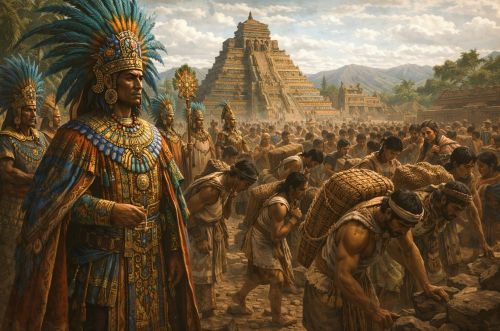
Aztec society rested on a powerful hierarchy in which noble pipiltin governed while commoner macehualtin sustained the empire through labor, tribute, and warfare.

By Matthew A. McIntosh
Public Historian
Brewminate
Introduction: Hierarchy in an Imperial Society
The Aztec Empire developed one of the most structured and stratified societies in the pre-Columbian Americas. By the early sixteenth century, the capital city of Tenochtitlan stood at the center of a vast political network extending across central Mexico. This system depended not only on military conquest and tribute extraction but also on a carefully organized social hierarchy that regulated authority, labor, and access to resources. Within this hierarchy, noble families known as the pipiltin dominated political leadership, military command, and religious institutions, while commoners, or macehualtin, formed the economic and demographic foundation of the empire. The distinction between these groups shaped nearly every dimension of Aztec life, from governance and warfare to agriculture and ritual practice.
Aztec social organization reflected the broader political structure of the empire. Power flowed outward from the emperor, or tlatoani, through networks of noble families who held administrative, military, and priestly positions. These elites controlled land, directed tribute flows, and supervised local governance within the imperial system. Their authority was reinforced through lineage, education, and access to specialized institutions that trained noble youth for leadership roles. Schools such as the calmecac provided advanced instruction in religion, history, astronomy, and political administration, preparing young nobles for roles within the governing and priestly classes. These educational structures ensured that leadership remained concentrated within families connected to the imperial elite, preserving continuity in political authority across generations. Through these institutional mechanisms the pipiltin maintained influence over both the ideological and administrative structures that sustained imperial rule.
In contrast, the majority of the population participated in the imperial economy primarily through agricultural labor, tribute obligations, and military service. Commoners typically lived within community units known as calpulli, which organized landholding, agricultural production, and local governance. These communities provided the labor necessary to cultivate maize, beans, squash, and other crops that supported both local populations and imperial tribute systems. Members of the calpulli were also responsible for contributing goods and services demanded by imperial authorities, including textiles, agricultural products, and other forms of tribute that flowed toward the imperial center. Despite these responsibilities, the macehualtin retained limited local autonomy within their communities, managing agricultural lands and maintaining social networks that structured daily life. Yet their position within the broader imperial system remained subordinate to that of the noble class, whose authority shaped the political and economic framework within which these communities operated.
Despite the rigidity of this hierarchical system, Aztec society did contain limited avenues for social mobility. Military achievement offered one of the few recognized paths through which commoners could improve their status. Successful warriors might receive honors, wealth, or privileges that elevated their position within the social order. Yet these opportunities did not fundamentally challenge the dominance of noble lineages, which continued to control the most influential positions within the empire’s political and religious institutions. Even when individuals from commoner backgrounds achieved distinction, their advancement occurred within a system designed to preserve the broader framework of elite authority.
Understanding the division between pipiltin and macehualtin provides critical insight into the functioning of Aztec imperial power. The hierarchical organization of society supported the administrative and economic mechanisms that sustained the empire, ensuring that labor, tribute, and military service flowed upward toward the imperial center. The ideological foundations of Aztec religion and political culture reinforced the legitimacy of this structure by presenting hierarchy as part of a broader cosmic and social order. The Aztec Empire illustrates how institutionalized class divisions could shape governance, economic production, and cultural identity within a powerful premodern state.
Foundations of Aztec Social Structure

Aztec society was organized through a clearly defined hierarchy that structured political authority, economic production, and social identity. This hierarchy reflected both inherited status and the institutional framework of the Aztec state. At its core stood the emperor, or tlatoani, whose authority symbolized the unity and power of the imperial system centered in Tenochtitlan. Beneath him existed a layered social structure that included noble elites, specialized occupational groups, common agricultural populations, and dependent laborers. These distinctions shaped access to land, education, political office, and religious authority, reinforcing a social order that concentrated power within a relatively small elite class.
The noble class, known as the pipiltin, formed the upper tier of this social hierarchy. Noble status was largely hereditary and tied to lineage connections with ruling families and distinguished warriors. Members of this class controlled many of the key institutions that sustained the empire, including political administration, military leadership, and temple hierarchies. Noble households often held extensive land rights and enjoyed privileges that distinguished them from the broader population. These privileges included access to elite education, distinctive forms of dress, and participation in governing councils that advised the emperor. Noble youths typically attended the calmecac, an elite educational institution where they studied religious traditions, political history, ritual practices, and administrative responsibilities. Training at the calmecac prepared them for leadership roles in both civil and religious life, reinforcing the expectation that noble families would supply the empire’s administrators, priests, and military commanders. Through these mechanisms, noble families maintained influence across multiple spheres of Aztec political and cultural life and ensured that power remained concentrated within recognized aristocratic lineages.
Beneath the noble elite stood the macehualtin, the commoner population that comprised the majority of Aztec society. These individuals typically lived within calpulli, community-based social units that organized landholding, agricultural production, and local governance. Members of the calpulli cultivated communal lands allocated to households and contributed labor or tribute to support both local institutions and imperial administration. The economic productivity of these communities sustained the broader political structure of the Aztec Empire. Agricultural output not only supported the population of Tenochtitlan but also supplied tribute goods required by imperial authorities and noble households.
Aztec society also included additional social categories that reflected specialized economic or social roles. Merchant groups known as pochteca occupied a distinctive position within the broader social order. Although technically classified outside the hereditary nobility, successful merchants could accumulate wealth and influence through long-distance trade networks that connected the Aztec Empire with distant regions of Mesoamerica. Their commercial activities supplied luxury goods such as jade, feathers, cacao, and exotic textiles that were highly valued by the imperial elite and frequently used in ritual and diplomatic exchanges. The pochteca organized themselves into guild-like associations that regulated commercial activity and protected shared economic interests. Because their expeditions often took them into regions beyond direct imperial control, merchants also gathered valuable information about foreign territories, political conditions, and potential opportunities for conquest. In this capacity they served not only as traders but also as unofficial agents of imperial expansion, linking economic exchange with political intelligence and strategic planning.
Another group within Aztec society consisted of the mayeque, individuals who worked lands controlled directly by nobles or temples rather than by community-based calpulli structures. Unlike typical macehualtin farmers, the mayeque were more closely tied to estates belonging to elite institutions. Their labor contributed directly to the wealth and resources of noble households and religious establishments. This arrangement reinforced the concentration of economic power within elite circles while further differentiating the experiences of various groups within the broader commoner population.
Together these social categories formed a complex but highly structured hierarchy that regulated everyday life in the Aztec Empire. The distribution of land, access to education, and opportunities for political participation were shaped by these distinctions. Noble families controlled the most influential positions in administration, religious leadership, and military command, while commoners sustained the imperial economy through agriculture, tribute, and labor. Specialized groups such as merchants and estate laborers further diversified the social landscape, illustrating how different roles were integrated into the functioning of the imperial system. Although exceptional individuals could sometimes achieve recognition through military success or economic achievement, these pathways rarely disrupted the broader structure of inherited privilege. The foundations of Aztec social organization reinforced a political system designed to maintain elite authority while mobilizing the productive capacity of the wider population.
The Pipiltin: Noble Lineages and Political Authority
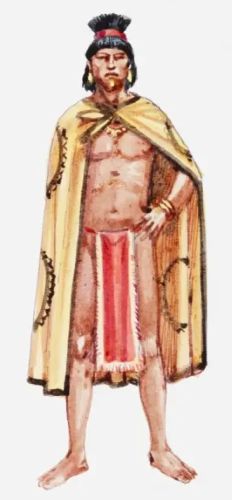
The pipiltin, or noble class, occupied the highest social ranks beneath the emperor within the Aztec political order. Their authority rested primarily on lineage, as noble status was generally inherited through families connected to earlier rulers, distinguished warriors, or influential administrators. These lineages formed the political backbone of the Aztec Empire, supplying leaders who governed cities, commanded armies, and directed religious institutions. Membership in the noble class represented not only a social distinction but also a mechanism through which political authority was transmitted and preserved across generations.
Noble families played a central role in the governance of the altepetl, the city-state units that formed the political structure of the Aztec world. Each altepetl possessed its own ruler, administrative officials, and governing councils, many of whom were drawn from established noble lineages. These elites oversaw the collection of tribute, maintained local order, and organized military obligations required by the imperial system. Administrative responsibilities extended beyond taxation, including judicial functions, management of agricultural lands connected to noble households, and coordination of labor for state or temple projects. While the emperor in Tenochtitlan exercised overarching authority, effective governance depended on cooperation among these local noble administrations. Through this decentralized network of elite families, the empire maintained control over a diverse and geographically expansive population. Local nobles also served as intermediaries between imperial authorities and community institutions such as the calpulli, translating imperial demands into practical administrative practices within regional societies.
Political authority among the pipiltin was closely connected to military leadership. Warfare played a central role in Aztec imperial expansion, and noble warriors often served as commanders responsible for organizing campaigns and directing troops. Military success enhanced the prestige of noble families and reinforced their claim to leadership within the empire. The culture of warfare also provided an ideological framework that linked aristocratic status to martial excellence. Elite warriors displayed distinctive regalia and insignia that marked their achievements and publicly affirmed their place within the hierarchy of Aztec society.
Education and cultural training further reinforced the authority of noble lineages. Young members of the pipiltin typically attended the calmecac, where they received instruction in religion, political history, astronomy, ritual practice, and administrative responsibilities. These institutions prepared nobles for the complex roles they would later assume as priests, administrators, and military leaders. Instruction at the calmecac also transmitted the historical traditions and ideological principles that legitimized imperial rule, ensuring that successive generations of elites shared a common understanding of their responsibilities within the political order.
The concentration of authority within noble families represented a defining feature of Aztec governance. By controlling political offices, military command structures, and key religious institutions, the pipiltin maintained a powerful position within the imperial system. Their influence extended from the imperial capital to provincial communities across the imperial territories, shaping the mechanisms through which tribute was collected, laws were enforced, and military campaigns were organized. Noble elites also acted as custodians of political memory, preserving genealogies, ritual traditions, and historical narratives that reinforced their legitimacy as leaders. Through their participation in governing councils, temple hierarchies, and military command networks, noble lineages ensured that authority remained closely tied to hereditary status. In this way the pipiltin formed an interconnected ruling class whose influence sustained both the administrative stability and ideological coherence of the Aztec Empire.
The Macehualtin: Labor, Tribute, and the Foundations of the Empire
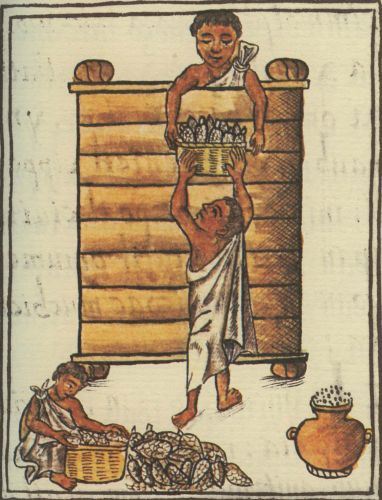
While noble families dominated the political and religious institutions of the Aztec Empire, the economic strength of the imperial system depended overwhelmingly on the labor of the macehualtin, the commoner population that formed the majority of society. These individuals sustained the empire through agricultural production, craft work, tribute obligations, and military service. Their daily labor supported not only their own communities but also the administrative and ceremonial life of major urban centers such as Tenochtitlan. Markets, temples, palaces, and public infrastructure all relied on the steady flow of goods and services produced by commoner households. In many respects the prosperity of the capital reflected the productivity of these rural communities. Without the productive capacity of the macehualtin, the elaborate political and ritual structures of the Aztec state could not have been maintained.
Most macehualtin lived within social units known as calpulli, which organized landholding, agricultural work, and communal responsibilities. These communities functioned as both economic and social institutions, allocating farmland to individual households while maintaining collective oversight of production and tribute obligations. The calpulli provided a framework through which imperial authorities could mobilize labor and resources while also preserving local traditions of cooperation and community governance. Through this system, agricultural land remained tied to community membership rather than to private ownership in the modern sense, ensuring that productive land remained available to the families responsible for cultivating it.
Agriculture formed the backbone of the macehualtin economy. Farmers cultivated maize, beans, squash, and other staple crops that sustained local populations and contributed to the tribute networks supporting the capital. In regions around Lake Texcoco, intensive agricultural techniques such as chinampa cultivation allowed farmers to produce high yields on relatively small plots of land. These artificial agricultural islands, constructed in shallow lake environments, created fertile and well-watered growing areas that could be cultivated multiple times each year. The productivity of chinampa agriculture enabled communities near the capital to generate substantial food surpluses, supporting both urban populations and the logistical needs of imperial administration. These highly productive farming systems played a crucial role in supporting the large urban population of Tenochtitlan and its surrounding communities. Agricultural surpluses generated through these methods enabled the imperial state to maintain large administrative institutions and ceremonial complexes.
Beyond agricultural work, macehualtin households contributed to the imperial system through tribute and labor obligations. Communities were required to supply goods such as textiles, food products, building materials, and other resources demanded by imperial authorities. Tribute lists recorded in codices demonstrate the variety of items collected from subject regions, reflecting the wide-ranging economic networks that sustained Aztec political power. Cotton cloth, maize, cacao, feathers, and crafted objects all formed part of the tribute system that supplied the capital. In addition to material contributions, commoners also participated in public labor projects, including the construction of temples, causeways, and other infrastructure that supported the growth of imperial cities. These labor obligations represented an important means through which the state mobilized human resources for large-scale projects that symbolized imperial authority and religious devotion.
Although the position of the macehualtin was subordinate to that of the noble class, their participation in the imperial system was essential to the functioning of Aztec society. Through agricultural production, tribute payments, and communal labor, commoner communities provided the resources that sustained both the political authority of the pipiltin and the ceremonial life of the empire. Their contributions illustrate how the Aztec imperial structure depended upon the organized labor of local communities, integrating everyday economic activity with the broader mechanisms of state power and imperial expansion.
Military Service and Limited Social Mobility

Military service occupied a central position within Aztec society and provided one of the few recognized pathways through which individuals from commoner backgrounds might gain prestige. Warfare was not merely a political instrument of imperial expansion but also a deeply embedded cultural institution that shaped social identity and hierarchy. The Aztec state depended on regular military campaigns to expand its influence, secure tribute from conquered territories, and capture prisoners for ritual sacrifice. Participation in warfare became a crucial responsibility for the macehualtin, who formed the majority of the empire’s fighting forces. Service in the military linked the obligations of commoner households directly to the expansion and maintenance of imperial power.
Aztec warfare also functioned as a structured system through which martial achievement could be publicly recognized. Warriors gained honor and advancement primarily through the capture of enemy combatants rather than through battlefield slaughter. Capturing prisoners held religious and symbolic significance, as these captives were often destined for ritual sacrifice in ceremonies dedicated to the gods. Warriors who successfully captured multiple enemies could receive distinctive clothing, insignia, and privileges that marked their achievements. Such honors might include membership in prestigious warrior societies, such as the Eagle and Jaguar orders, whose members enjoyed elevated status within the military hierarchy and participated in important ceremonial events.
Despite these opportunities for distinction, the potential for social mobility within the Aztec system remained limited. Although exceptional warriors from commoner backgrounds could gain recognition and certain privileges, these achievements rarely translated into full membership within the hereditary noble class. The pipiltin retained control over the most influential political offices, religious positions, and administrative institutions of the empire. Military success could elevate a commoner’s reputation and occasionally bring limited material rewards, such as gifts of clothing, land access, or ceremonial honors, yet the broader framework of aristocratic dominance remained largely intact. Advancement tended to occur within carefully defined boundaries that preserved the authority of established elite families. Even decorated warriors who rose to positions of respect within military circles typically remained outside the hereditary structures that governed high political authority. As a result, upward mobility through warfare functioned more as a means of reinforcing the values of the imperial system than as a mechanism for fundamentally altering the social hierarchy.
The emphasis placed on military achievement nevertheless served an important ideological purpose within Aztec society. By linking honor and prestige to martial success, the imperial state encouraged participation in campaigns that expanded and defended its political authority. Commoner warriors could pursue recognition and rewards through bravery in battle, while noble commanders reinforced their leadership through successful campaigns. Military achievement also carried symbolic importance in religious life, as captured enemies played a central role in rituals that honored deities associated with warfare and cosmic order. Through this fusion of military duty, religious ideology, and social prestige, warfare became a powerful cultural institution that bound individuals to the broader goals of the empire. In this way, military service connected the ambitions of individual warriors with the expansion and stability of Aztec imperial power while simultaneously reinforcing the stratified order that defined Aztec society.
Religious Institutions and the Reinforcement of Hierarchy
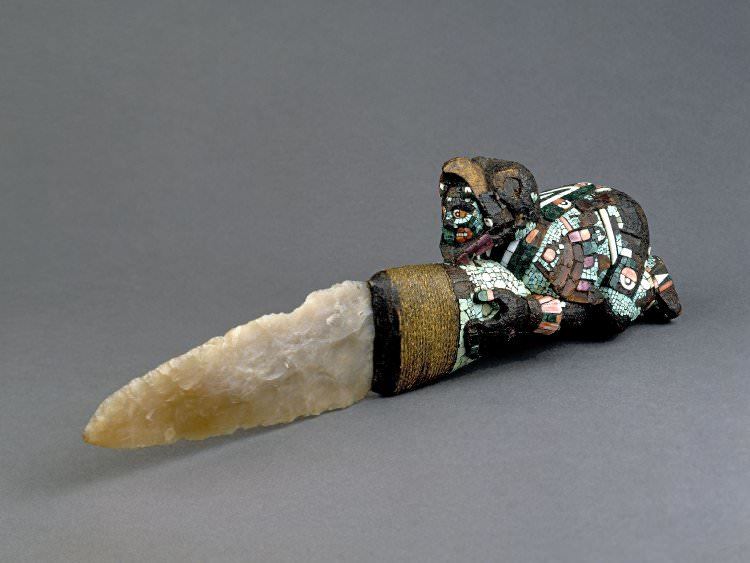
Religion occupied a central place in Aztec society, shaping not only spiritual life but also the political and social structures of the empire. Religious institutions were deeply intertwined with governance, providing ideological justification for the authority of rulers and the hierarchical organization of society. Temples, rituals, and priestly institutions helped frame the Aztec political order as part of a broader cosmic system in which humans, gods, and the natural world were bound together through reciprocal obligations. Within this framework, social hierarchy was not merely a political arrangement but an expression of divine order.
The priesthood played a crucial role in maintaining this religious and political framework. Many of the highest-ranking priests were drawn from noble families, reinforcing the connection between elite lineage and religious authority. These individuals supervised temple rituals, maintained sacred calendars, and interpreted religious traditions that guided both ceremonial life and political decision-making. Priests oversaw the complex ritual cycle that structured Aztec religious life, including seasonal festivals, sacrificial ceremonies, and rites connected to agricultural renewal and cosmic balance. Their specialized knowledge of sacred calendars and ritual procedures gave them considerable influence within the imperial court. Because noble families supplied many of the individuals who occupied these positions, the priesthood functioned as another institutional sphere in which aristocratic authority could be exercised and reinforced. Through their control of ritual knowledge and ceremonial practice, priestly elites helped legitimize the social hierarchy that structured Aztec society.
Temples themselves functioned as important centers of both religious and political activity. The most prominent of these structures, such as the Templo Mayor in Tenochtitlan, symbolized the spiritual heart of the empire and served as stages for elaborate ceremonies dedicated to major deities. Ritual events held at these temples drew large crowds and reinforced the visibility of imperial authority. Public ceremonies often involved rulers, priests, and warriors performing roles that reflected their positions within the social hierarchy. Through these rituals, the structure of Aztec society was dramatized before the population, linking political leadership with sacred responsibility.
Religious ceremonies also incorporated practices that reinforced the connection between warfare, sacrifice, and imperial power. Captured enemies were frequently offered as sacrificial victims in rituals dedicated to deities associated with the sun, warfare, and cosmic renewal. These ceremonies served both spiritual and political purposes. They affirmed the belief that the gods required nourishment through sacrifice while simultaneously demonstrating the military strength of the empire. The public performance of sacrifice emphasized the role of successful warriors, many of whom were members of the noble class or commanded by noble officers, in sustaining the cosmic order through their victories in battle. Ritual sacrifice also symbolized the empire’s dominance over conquered peoples, as captives taken in war became central participants in ceremonies that affirmed Aztec religious beliefs. By integrating military success, religious devotion, and imperial authority into a single ceremonial framework, these rituals reinforced the ideological connection between elite leadership and the preservation of cosmic balance.
Education within temple institutions further strengthened the ideological foundations of Aztec hierarchy. Young nobles studying at the calmecac received instruction not only in political administration but also in religious doctrine, ritual performance, and historical traditions. Through this education they learned narratives that explained the origins of the Aztec people, the authority of the ruling dynasty, and the cosmic responsibilities of imperial leadership. By transmitting these traditions to successive generations of elites, religious institutions ensured continuity in the ideological principles that supported imperial rule.
Through these various institutions and practices, religion functioned as a powerful mechanism for reinforcing the hierarchical organization of Aztec society. Ritual life, priestly authority, and temple institutions all contributed to a worldview in which political leadership and social rank were understood as part of a divinely ordered system. In this way religious belief and practice helped sustain the authority of the pipiltin while integrating the broader population into the ideological framework of the empire.
Tribute, Economy, and the Imperial System
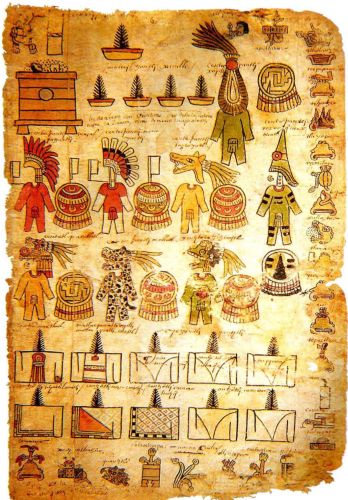
The economic foundation of the Aztec Empire rested upon an extensive tribute system that linked conquered territories to the capital of Tenochtitlan. Rather than administering distant provinces through direct bureaucratic control, the Aztec state relied heavily on tribute extraction from subject regions. Conquered cities and provinces were required to provide regular payments of goods and resources to the imperial center. These obligations supplied the material wealth that sustained imperial administration, supported the noble class, and financed the ceremonial life of the empire. Tribute payments were not merely economic transactions but also visible expressions of political subordination. The regular delivery of goods from subject communities reinforced the authority of the Aztec rulers and symbolized the integration of conquered territories into the imperial system. Through this network of obligations, the empire transformed regional production into a steady flow of resources directed toward the capital and its governing elite.
Tribute demands varied depending on the resources available in each region. Agricultural communities contributed maize, beans, and other staple crops, while areas with specialized resources supplied goods such as cotton textiles, cacao, feathers, jade, or obsidian. Tribute records preserved in codices demonstrate the remarkable diversity of products that flowed toward the capital. These documents provide detailed lists of goods required from specific provinces and reveal the highly organized nature of the tribute system. Some regions delivered large quantities of woven cloth, while others supplied luxury materials used in elite clothing and ceremonial regalia. Still others contributed foodstuffs or raw materials that supported everyday economic life within the capital. These goods not only sustained the urban population of Tenochtitlan but also provided the resources necessary for temple rituals, diplomatic gifts, and military rewards distributed by the imperial court.
The organization of tribute collection required a complex administrative structure overseen largely by members of the noble class. Imperial officials supervised the assessment of tribute obligations and ensured that goods were delivered according to established schedules. Local rulers in conquered territories often retained their positions but were required to cooperate with imperial administrators in gathering tribute from their populations. This arrangement allowed the Aztec state to extend its influence across large territories without constructing a highly centralized bureaucracy in every region.
Markets and commercial exchange also played an important role within the broader Aztec economy. Large urban markets, particularly the famous market at Tlatelolco, facilitated the circulation of goods among merchants, artisans, and farmers. Although tribute formed the backbone of the imperial economy, market activity enabled goods to move between communities and supported everyday economic life within the empire. Merchants, including the pochteca, organized long-distance trade expeditions that connected the Aztec heartland with distant regions of Mesoamerica.
The tribute economy reinforced the hierarchical structure of Aztec society. Goods extracted from subject regions were distributed through elite networks that favored the noble class and supported the political authority of the imperial court. These goods often supplied palace households, funded temple ceremonies, and rewarded warriors and administrators who served the empire. Through this system, economic resources flowed upward from commoner communities and conquered territories toward the imperial elite.
By integrating tribute extraction, market exchange, and administrative oversight, the Aztec Empire constructed an economic system that sustained both its political authority and its social hierarchy. The steady flow of goods into the capital allowed rulers and nobles to maintain large ceremonial institutions and display their wealth and power through public rituals and architectural projects. Tribute supported the maintenance of temples, the provisioning of priestly institutions, and the elaborate festivals that formed an essential part of Aztec religious life. It also enabled the imperial court to reward loyal allies and reinforce networks of patronage among noble families. In this way the tribute economy functioned not only as a material foundation of imperial rule but also as a visible demonstration of the empire’s reach and authority across Mesoamerica.
Spanish Observations and the Documentation of Aztec Social Order

Much of what historians know about Aztec social hierarchy comes from accounts written during the early decades of Spanish colonial rule. When Spanish forces entered central Mexico in the early sixteenth century, they encountered a complex and highly organized society whose institutions differed significantly from those of Europe. Spanish soldiers, missionaries, and administrators recorded their observations of Aztec political and social structures, producing written descriptions that later became important historical sources. These accounts documented the distinction between nobles and commoners, the organization of tribute systems, and the elaborate ceremonial life that characterized the capital of Tenochtitlan. Early observers frequently expressed surprise at the scale and organization of the city, noting its marketplaces, temples, canals, and administrative institutions. Such descriptions offered Europeans their first sustained glimpse into a sophisticated urban civilization in the Americas. These writings were produced within the context of conquest and colonial expansion, which inevitably shaped the ways in which Aztec institutions were interpreted and described.
Among the most influential early observers was the Franciscan friar Bernardino de Sahagún, whose extensive ethnographic work sought to record the customs, beliefs, and institutions of the Nahua peoples of central Mexico. Sahagún collaborated with Indigenous scholars and informants to compile detailed descriptions of Aztec religion, governance, and everyday life. His work, commonly known as the Florentine Codex, preserves valuable information about social hierarchy, education, and economic organization within Aztec society. Because Sahagún relied heavily on Indigenous testimony and bilingual documentation, his work provides a particularly rich perspective on the functioning of pre-conquest institutions.
Other Spanish chroniclers also contributed to the documentation of Aztec society, though their interpretations were often shaped by European assumptions about governance and social order. Figures such as Hernán Cortés and later colonial writers described the capital and its political structures in ways that attempted to compare them with familiar European institutions. These observers frequently commented on the authority exercised by noble lineages and the obligations placed upon commoners through tribute and labor. Some writers described the elaborate systems of tribute collection and the administrative organization that sustained the empire, drawing comparisons to forms of imperial governance known in Europe. Their descriptions of Tenochtitlan’s markets, temples, and political hierarchy helped convey the scale and complexity of Aztec society to European audiences. These interpretations sometimes filtered Indigenous institutions through European categories of kingship, nobility, and governance, which could obscure important differences between the Aztec political system and European monarchies. For modern historians, these accounts remain valuable but require careful contextual interpretation.
Indigenous sources produced during the early colonial period also play a critical role in reconstructing Aztec social structures. Documents such as the Codex Mendoza and other pictorial manuscripts recorded tribute obligations, political offices, and social categories within the imperial system. These materials often combined Indigenous forms of visual representation with explanations added by colonial administrators or scribes. As a result, they provide a valuable bridge between pre-conquest traditions of record keeping and the written documentation produced under Spanish rule.
Although these sources are indispensable for understanding Aztec society, historians must approach them critically. Many of the surviving records were created within the context of colonial transformation, when Indigenous institutions were being reshaped by Spanish rule. The perspectives of missionaries, administrators, and Indigenous collaborators all influenced the way information was recorded. By comparing multiple types of sources and analyzing them within their historical context, scholars have been able to reconstruct a more balanced picture of the social hierarchy that structured Aztec life before the Spanish conquest.
Conclusion: Hierarchy, Power, and Imperial Stability
The structure of Aztec society reveals how deeply political authority, economic organization, and religious ideology were intertwined within the imperial system. The division between the pipiltin and the macehualtin formed the central axis around which the social order revolved. Noble lineages dominated positions of governance, military leadership, and priestly authority, while commoner communities sustained the empire through agricultural production, tribute payments, and participation in warfare. These roles were not simply social categories but institutionalized functions that enabled the empire to mobilize resources, maintain political authority, and coordinate complex administrative structures across a wide geographic region.
The stability of the Aztec Empire depended in large part on the effectiveness of this hierarchical framework. By concentrating political authority within established noble families, the imperial state ensured continuity in leadership and administration. These lineages supplied rulers, military commanders, priests, and administrators whose authority shaped both local governance and imperial policy. Systems of tribute extraction, communal labor, and military service integrated commoner populations into the functioning of the empire. Agricultural production, market exchange, and tribute payments generated the resources necessary to sustain large urban centers, temple institutions, and imperial armies. Through institutions such as the calpulli, local communities remained connected to imperial governance while preserving internal structures that organized everyday life and collective responsibility. These community organizations allowed imperial demands to be translated into local obligations that could be managed within established social networks. This combination of centralized authority and local organization allowed the empire to govern diverse territories without requiring direct administrative control over every community.
Religious ideology further strengthened this social structure by framing hierarchy as part of a broader cosmic order. Temples, rituals, and priestly institutions linked political leadership to sacred responsibility, presenting the authority of rulers and nobles as essential to maintaining balance between the human and divine realms. Public ceremonies and sacrificial rituals dramatized this relationship, making the hierarchical organization of society visible to the broader population. Through these ideological and ceremonial practices, the social distinctions between nobles and commoners were embedded within a worldview that presented hierarchy as both natural and necessary.
The Aztec Empire demonstrates how institutionalized hierarchy could function as a stabilizing force within a large and complex state. Political authority, economic organization, and religious belief all reinforced the concentration of power among elite lineages while integrating commoner communities into the wider imperial system. Although limited mobility existed through military achievement or economic success, the underlying structure of Aztec society remained firmly oriented toward maintaining elite authority. In this way the social hierarchy of the Aztec world helped sustain imperial expansion, administrative coordination, and cultural cohesion until the arrival of Spanish forces in the early sixteenth century transformed the political landscape of Mesoamerica.
Bibliography
- Almazán, Marco A. “The Aztec States-Society: Roots of Civil Society and Social Capital.” The Annals of the American Academy of Political and Social Science 565:1 (1999), 162-175.
- Baquedano, Elizabeth. “Aztec Sovereignty and Motecuhzoma Xocoyotzin’s Sacred and Secular Roles.” World Art 15:1 (2025), 95-121.
- Berdan, Frances F. Aztec Archaeology and Ethnohistory. Cambridge: Cambridge University Press, 2014.
- Berdan, Frances F., and Patricia Rieff Anawalt. The Codex Mendoza. 4 vols. Berkeley: University of California Press, 1992.
- Carrasco, Davíd. The Aztecs: A Very Short Introduction. Oxford: Oxford University Press, 2012.
- —-. Religions of Mesoamerica: Cosmovision and Ceremonial Centers. 2nd ed. Long Grove, IL: Waveland Press, 2014.
- Coe, Michael D., and Rex Koontz. Mexico: From the Olmecs to the Aztecs. 7th ed. London: Thames & Hudson, 2013.
- Cortés, Hernán. Letters from Mexico. Translated by Anthony Pagden. New Haven: Yale University Press, 1986.
- Evans, Susan Toby. Ancient Mexico and Central America: Archaeology and Culture History. 3rd ed. London: Thames & Hudson, 2013.
- Hassig, Ross. Aztec Warfare: Imperial Expansion and Political Control. Norman: University of Oklahoma Press, 1988.
- —-. Trade, Tribute, and Transportation: The Sixteenth-Century Political Economy of the Valley of Mexico. Norman: University of Oklahoma Press, 1985.
- López Austin, Alfredo, and Leonardo López Luján. The Myth of Quetzalcoatl: Religion, Rulership, and History in the Nahua World. Boulder: University Press of Colorado, 2009.
- Pohl, John M. D. Aztec Warrior AD 1325–1521. Oxford: Osprey Publishing, 2001.
- Sahagún, Bernardino de. Florentine Codex: General History of the Things of New Spain. Translated by Arthur J. O. Anderson and Charles E. Dibble. Santa Fe: School of American Research, 1950.
- Smith, Michael E. The Aztecs. 3rd ed. Malden, MA: Wiley-Blackwell, 2011.
- —-. “Durable Inequality in Aztec Society.” Journal of Anthropological Research 77:2 (2021).
- Townsend, Camilla. Fifth Sun: A New History of the Aztecs. New York: Oxford University Press, 2019.
Originally published by Brewminate, 03.11.2026, under the terms of a Creative Commons Attribution-NonCommercial-NoDerivatives 4.0 International license.
About the Author