
Under King Richard II, demands for unquestioned loyalty strained England’s political order, exposing the limits of sacral monarchy and aristocratic obedience.

By Matthew A. McIntosh
Public Historian
Brewminate
Introduction: Crowned in Childhood, Sovereign in Imagination
Richard II ascended the English throne in 1377 at the age of ten, inheriting not only the crown of Edward III but the political burdens of a kingdom strained by war, fiscal pressure, and social unrest. His accession occurred within a dynastic framework that preserved continuity, yet it also exposed the vulnerability of minority rule. A child-king cannot govern directly. Authority must be exercised in his name while his person remains protected, educated, and symbolically elevated. In such circumstances, the monarchy becomes at once institutional and intensely personal. The king’s body embodies sovereignty, even when others wield practical control. From the beginning, Richard’s political identity was shaped within a structure designed to insulate him from immediate accountability while magnifying his sacral status.
Minority rule in late medieval England did not suspend royal ideology. It intensified it. The young king was presented not merely as heir but as divinely ordained sovereign, anointed and sacred despite his youth. Royal ceremony, liturgical language, and coronation theology reinforced the sacramental dimensions of kingship, embedding the monarch within a sacred framework that transcended age or experience. Chroniclers emphasized the sanctity of the crown even as regency councils managed policy, thereby preserving the fiction of uninterrupted royal authority. Governance occurred through guardians, but legitimacy radiated from the king’s consecrated body. The Peasants’ Revolt of 1381, which brought the adolescent Richard face to face with insurgent subjects, revealed the paradox of his position. He appeared publicly as decisive monarch, confronting rebels at Smithfield and speaking in the language of sovereign command, while remaining structurally dependent on aristocratic guardianship and council direction. The episode reinforced the symbolic association between his person and the stability of the realm. In quelling the revolt, whether through courage, circumstance, or narrative embellishment, Richard’s image as divinely protected ruler was strengthened. The crisis did not diminish sacral kingship. It dramatized it. In the public imagination, the boy-king had restored order, further entwining his identity with the preservation of the state.
As Richard matured, this formative insulation shaped his understanding of sovereignty. The protective court culture that shielded him from early correction also cultivated heightened expectations of deference. Unlike kings who forged legitimacy through military triumph or negotiated settlement, Richard inherited prestige already constructed. His reign unfolded in the long shadow of Edward III’s martial success. Yet prestige inherited differs from prestige earned. The transition from protected monarch to governing sovereign required recalibration between sacral authority and aristocratic cooperation. It is precisely at this juncture that Richard’s political imagination appears to have shifted toward a more personal conception of rule.
Richard II gradually transformed inherited kingship into individualized sovereignty, demanding loyalty framed as devotion to his person rather than reciprocal obligation to the crown. Raised within a royal environment that magnified sacral identity and minimized early resistance, he came to equate divine legitimacy with unquestioned authority. The consequences of this conflation would emerge over two decades, culminating in deposition. Richard’s fall was not merely the product of factional rivalry. It was the structural outcome of entitlement without sustained cooperation in a polity where aristocratic consent remained essential to monarchical endurance.
Minority Rule and the Formation of Royal Self-Conception

Richard II’s minority was governed through councils dominated by senior magnates, most notably his uncles John of Gaunt and Thomas of Woodstock. Formally, the kingdom was administered in the king’s name; practically, authority rested with experienced aristocrats who sought to balance royal dignity with fiscal necessity and wartime management. The regency framework preserved institutional continuity, yet it also cultivated a political environment in which Richard’s personal agency was constrained while his symbolic centrality was amplified. The child-king presided over ceremonies, received oaths, and embodied sovereignty, even as others shaped policy. This separation between image and execution created a distinctive formative experience: kingship appeared absolute in theory yet mediated in practice.
Such mediation could foster resentment or impatience in a monarch approaching adulthood. The English crown, unlike later absolutist models, depended upon aristocratic collaboration and parliamentary consent, particularly in matters of taxation and military funding. Parliament exercised fiscal leverage with increasing confidence during the late fourteenth century, and magnates expected consultation as a matter of political norm rather than concession. During Richard’s youth, these constraints were normalized through routine governance by council, embedding habits of shared decision-making among the political elite. Yet normalization of constraint does not guarantee its internalization by the monarch himself. As he matured, Richard encountered a political landscape in which elite voices had long spoken authoritatively in his name, issuing proclamations and directing policy while invoking royal legitimacy. The process of reclaiming active sovereignty required renegotiation of relationships already accustomed to influence. Tension was structurally embedded within the transition from minority to majority. What had functioned as necessary guardianship during childhood could later appear as encroachment upon personal kingship.
The Peasants’ Revolt of 1381 functioned as a defining episode in this transition. Richard’s visible role in confronting the rebels at Mile End and Smithfield offered an early opportunity to perform kingship decisively before both subjects and magnates. Chroniclers portray him as composed and resolute, emphasizing his youth alongside divine protection and rhetorical command. Whether these accounts magnify his agency or compress complex negotiations into dramatic narrative, they nonetheless contributed to a developing royal self-image grounded in personal intervention. The revolt reinforced the perception that the king himself could restore order through presence and authoritative speech, independent of magnate mediation. In confronting Wat Tyler and addressing the rebels directly, Richard momentarily occupied the role of unchallenged sovereign rather than protected minor. Such an experience, occurring at a formative age and subsequently memorialized in chronicles, may have strengthened his conviction that sovereignty resided fundamentally in his person rather than in collaborative governance. Crisis became both political challenge and psychological reinforcement.
As Richard assumed fuller control in the mid-1380s, the imprint of minority rule became more visible. He did not inherit a blank political slate but a structure shaped by aristocratic management. His efforts to assert independence, including the elevation of favored advisers and resistance to parliamentary pressure, can be read as attempts to reclaim undiluted authority. The formative years of ceremonial sacralization and episodic triumph had cultivated a conception of kingship centered upon personal supremacy. Minority rule, intended to protect the crown, contributed to a royal self-conception that would later strain the reciprocal foundations of English monarchy.
Divine Kingship and the Language of Personal Authority

Richard II’s mature kingship increasingly drew upon a heightened theology of sovereignty. Medieval English monarchy had long been sacral, grounded in coronation rites that emphasized divine anointing and the king’s role as God’s lieutenant on earth. Yet sacral language did not automatically entail absolutist practice. The English crown functioned within a framework of customary law, aristocratic counsel, and parliamentary negotiation. What distinguishes Richard’s reign is the intensification of divine kingship rhetoric into a more personal register. The sacred quality of the crown appeared to migrate toward the sanctity of the king’s person.
Royal ceremony and iconography reinforced this shift. Richard cultivated elaborate court ritual, elevated the aesthetic dimensions of kingship, and emphasized the inviolability of royal majesty. Contemporary observers noted his insistence upon deference and the careful choreography of access. The court became not merely administrative center but theatrical space in which hierarchy was visibly enacted. Sacred kingship, once embedded in institutional continuity, now appeared increasingly attached to personal reverence. To challenge policy risked appearing to challenge divine order itself.
The language of prerogative further reflects this transformation. Richard asserted expansive interpretations of royal authority, particularly during the later years of his reign. Parliamentary proceedings record moments in which the king emphasized the indivisibility of royal power and the impropriety of constraint. Treason charges were employed not solely against overt rebellion but against perceived affronts to royal dignity. The extension of treason into realms of speech and counsel signals a narrowing tolerance for dissent. When divine sanction is framed as inherent in the king’s person, critique becomes sacrilege rather than political disagreement.
This evolution did not occur in isolation from broader European currents. Late medieval political thought wrestled with tensions between sacred monarchy and communal governance, drawing upon biblical precedent, canon law, and scholastic argument. French articulations of sacral kingship, particularly those emphasizing the quasi-priestly dimension of coronation and the mystical body of the king, provided influential models that circulated across aristocratic courts. Yet England possessed its own constitutional traditions rooted in Magna Carta, parliamentary taxation rights, and a political culture accustomed to negotiated counsel. The English king was anointed and sacred, but he also ruled within a framework that recognized the claims of the realm. Richard’s heightened emphasis on personal majesty and divine immediacy collided with entrenched expectations of consultation and consent. The more explicitly he framed obedience as moral duty owed to his person, the more conspicuous the divergence became between royal ideology and aristocratic political memory. This widening gap did not immediately produce open rupture, but it deepened the tension between sacral self-conception and constitutional habit.
Divine kingship under Richard II functioned not merely as theological affirmation but as political psychology. It provided language through which the king could frame obedience as moral necessity and dissent as moral failure. In doing so, it subtly reoriented the relationship between ruler and elite. The crown as institution had long commanded loyalty. Richard’s articulation increasingly demanded loyalty to himself as divinely protected sovereign. The distinction proved consequential. When sacred authority is personalized, its collapse risks becoming equally personal, destabilizing not only policy but the very image of kingship.
Favorites, Court Culture, and the Narrowing of Counsel

Richard II’s assertion of personal kingship was accompanied by a reshaping of court culture that elevated intimacy over breadth of counsel. As he emerged from minority rule, the king increasingly relied upon a circle of trusted companions whose influence exceeded their traditional standing within the aristocratic hierarchy. Among the most prominent were Robert de Vere, Earl of Oxford, and Michael de la Pole, who rose rapidly through royal favor. Their advancement symbolized more than personal loyalty. It signaled a shift in the structure of political access. Proximity to the king became the decisive qualification for power.
The promotion of favorites altered the dynamics of aristocratic expectation. Late medieval English governance functioned through consultation among magnates whose lineage, military contribution, and regional influence anchored their political authority. When Richard privileged intimate associates over established lords, he disrupted this equilibrium. De la Pole’s appointment as Chancellor and de Vere’s elevation to Duke of Ireland were perceived not merely as honors but as affronts to the existing hierarchy. Patronage had always shaped politics, yet its distribution traditionally acknowledged aristocratic consensus. Under Richard, patronage appeared increasingly personalized.
Court culture reinforced this narrowing of counsel. Richard cultivated ceremony, aesthetic refinement, and elaborate displays of majesty that distinguished his reign from the more martial ethos of Edward III. The court became a carefully managed space in which hierarchy was choreographed and dissent rendered socially perilous. Access to the king was filtered through layers of favor, reducing the ability of critics to speak candidly. Such environments encourage affirmation over correction. When royal presence is magnified and dissent stigmatized, the range of policy debate contracts. Counsel becomes echo.
The tensions produced by this narrowing erupted during the crisis of 1387–1388. A coalition of magnates later known as the Lords Appellant challenged the king’s reliance on favorites, accusing de Vere and de la Pole of mismanagement and corruption. The resulting Merciless Parliament condemned several of Richard’s associates, executing or exiling key figures. This episode reveals the structural stakes of personalized patronage. The issue was not merely jealousy or rivalry, nor simply the displacement of individual courtiers. It was the perceived displacement of aristocratic consultation by court-centered favoritism. The magnates framed their intervention as defense of the realm against corrupt counsel, invoking the language of communal responsibility and lawful governance. In their view, royal intimacy had supplanted political accountability. The dramatic punishments enacted during the Merciless Parliament underscored how seriously the political nation regarded the narrowing of advisory channels. The crisis exposed the fragility of a system in which personal loyalty had begun to override broader aristocratic participation.
Richard’s response to this humiliation left a lasting imprint. Rather than recalibrating his approach to counsel, he appears to have internalized the episode as personal betrayal. When he later reasserted authority in the 1390s, he did so with renewed determination to control the composition of his advisory circle. The memory of aristocratic challenge reinforced suspicion of magnate autonomy. Narrowing counsel became defensive as well as preferential. Loyalty, rather than broad representation, defined political trust.
The long-term effect of this court-centered governance was cumulative alienation. By prioritizing personal affinity over established networks of consultation, Richard weakened the informal bonds that sustained monarchical legitimacy. Aristocratic cooperation did not disappear, but it became conditional and increasingly brittle. Magnates who felt excluded or marginalized retained their regional power bases and political influence, creating latent instability beneath the surface of royal ceremony. The court, intended to project splendor and unity, increasingly symbolized exclusion and favoritism. Ritual magnificence could not compensate indefinitely for eroded trust. When elite consensus fractured in 1399, the memory of favoritism, constrained counsel, and punitive politics formed part of the broader indictment articulated against the king. Court culture had magnified royal majesty, yet it had simultaneously narrowed the foundation upon which that majesty depended, leaving the monarchy vulnerable once collective patience gave way to collective action.
Loyalty as Devotion: Punishing Dissent

As Richard II consolidated authority in the 1390s, loyalty was increasingly framed not merely as political obligation but as personal devotion to the king. Medieval monarchy had always required allegiance, expressed through oaths of fealty and ritual submission. Yet under Richard, the language of fidelity appears to have shifted toward a more intimate register. Obedience was not simply owed to the crown as institutional embodiment of the realm. It was owed to Richard himself as divinely anointed sovereign. In this formulation, dissent threatened not only policy but sanctity. The distinction between political disagreement and moral transgression narrowed perceptibly.
This narrowing became visible in Richard’s response to earlier challenges from the Lords Appellant. Having endured humiliation during the Merciless Parliament, the king later reasserted control by targeting former opponents with charges of treason. The legal category of treason, already expansive in late medieval England, provided a mechanism for redefining opposition as betrayal. Arrests, trials, and forced submissions underscored the king’s determination to reframe past resistance as criminal defiance. Public ritual accompanied these acts. Submission ceremonies reinforced the hierarchy between sovereign and subject, dramatizing the restoration of royal supremacy. Punishment served both juridical and symbolic purposes.
The extension of punitive authority deepened anxiety among the political elite. When treason charges are deployed broadly, the boundary between lawful counsel and disloyalty becomes uncertain. Magnates accustomed to robust participation in governance faced a climate in which candid advice could later be construed as subversion. This ambiguity fostered caution rather than collaboration. Loyalty, in such conditions, is performed outwardly while withheld inwardly. Fear replaces confidence as the adhesive of political order. The king’s insistence on personal devotion amplified the perception that political disagreement would not be tolerated as legitimate.
By recasting dissent as moral betrayal, Richard altered the equilibrium between crown and political nation in ways that extended beyond individual prosecutions. English kingship depended upon consent as much as consecration, upon a shared understanding that authority operated within recognizable bounds of custom and counsel. When consent becomes compulsory affirmation, its stabilizing function erodes. Magnates may kneel, swear renewed oaths, and participate in ceremonial displays of reconciliation, yet the substance of trust thins beneath the performance. The punitive phase of Richard’s reign did not immediately dismantle aristocratic cooperation, but it strained it by redefining the terms of loyalty. Devotion demanded under threat carries a different political weight than allegiance freely offered. This distinction becomes decisive. Loyalty framed as personal devotion may secure temporary compliance, especially in the absence of immediate alternatives. It does not guarantee enduring allegiance once the calculus of power shifts. In the long arc of his reign, the punishment of dissent contributed to the brittle consensus that ultimately fractured in 1399, revealing how fragile a monarchy becomes when reverence replaces reciprocity.
The Personalization of Kingship and Constitutional Strain
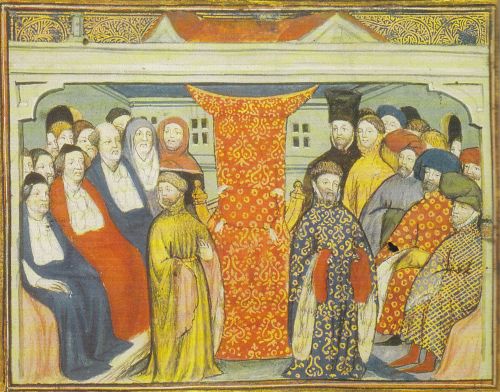
By the later 1390s, Richard II’s style of rule revealed the cumulative effects of personalized kingship upon England’s constitutional framework. The English monarchy operated within a system that, while sacral in theory and grounded in the theology of anointed rule, depended heavily in practice upon parliamentary taxation, aristocratic consultation, and customary legal process. Royal authority was expansive, yet it functioned within expectations shaped by precedent, statute, and negotiated consent. Richard’s increasingly assertive interpretation of royal prerogative strained these conventions. His insistence that the king’s will carried binding authority independent of collective assent marked a departure from the negotiated habits that had characterized much of fourteenth-century governance. The preservation of parliamentary forms masked a deeper shift in emphasis. Personal sovereignty began to eclipse constitutional balance. The monarchy, which had long rested upon a dynamic interplay between majesty and consultation, tilted toward unilateral expression.
The parliamentary sessions of 1397 and 1398 illustrate this strain. Richard moved decisively against former opponents, securing legal judgments that invalidated earlier acts of the Lords Appellant and retroactively condemned their resistance. By prosecuting past dissent and reinforcing treason statutes, the king sought not only retribution but juridical affirmation of his supremacy. Parliamentary forms were preserved, yet their function shifted. Rather than serving as arenas of negotiation, they increasingly ratified decisions already shaped by royal initiative. The outward continuity of institutional procedure masked an inward reorientation toward executive dominance.
Financial policy further exposed constitutional tension. Royal revenue in late medieval England depended upon parliamentary grants and negotiated subsidies, mechanisms that reinforced the principle of consent in fiscal matters. Richard’s use of fines, forced loans, and exploitation of feudal dues during his later years signaled a willingness to bypass ordinary channels when cooperation proved inconvenient. Such measures were not without precedent, but their scale, timing, and cumulative effect intensified aristocratic unease. Fiscal exactions carried symbolic weight. They suggested that the king viewed the realm’s resources as extensions of personal authority rather than communal trust. In a polity deeply conscious of statutory tradition and the memory of Magna Carta, the perception that royal will could override established fiscal negotiation proved destabilizing. Financial policy became more than administrative necessity. It became a litmus test for the balance between prerogative and consent.
The exile of Henry Bolingbroke in 1398 represents another moment of constitutional inflection. When Richard banished Bolingbroke and later confiscated his Lancastrian inheritance, he transformed a dynastic dispute into a broader political crisis. The confiscation challenged assumptions about property rights and noble security. If inheritance could be revoked by royal fiat, aristocratic autonomy stood on precarious ground. Personal enmity appeared to dictate policy. The episode crystallized elite anxiety regarding the reach of royal prerogative under Richard’s interpretation.
Constitutional strain did not immediately produce open rebellion, but it narrowed the coalition sustaining the crown. Personalization of kingship altered the equilibrium between sacred authority and communal governance. The more the king emphasized indivisible sovereignty, the more magnates perceived vulnerability in their own position. The English constitutional order, though not codified in modern terms, rested upon shared expectations of restraint and consultation. When those expectations eroded, the monarchy’s durability depended increasingly upon personal dominance rather than institutional consent. Such a foundation could endure only as long as elite acquiescence remained intact.
Elite Fatigue and the Mechanics of Deposition

By 1399, the cumulative effects of narrowed counsel, punitive governance, and constitutional strain had produced a quiet but decisive exhaustion among England’s political elite. Richard II’s authority had not collapsed through popular uprising nor through immediate military defeat. Rather, it eroded through attrition. Magnates who had endured ceremonial humiliation, fiscal exactions, and uncertain security recalculated their allegiance when Henry Bolingbroke returned from exile. The issue was no longer merely personal grievance. It was the sustainability of a kingship perceived as increasingly detached from reciprocal obligation. Elite fatigue does not always announce itself in dramatic confrontation. It manifests in hesitation, in silence, and ultimately in withdrawal of support.
Bolingbroke’s landing in July 1399 initially framed his cause as a claim to his rightful inheritance. This limited objective provided political cover for magnates uncertain about open rebellion. Yet as support coalesced around him, the broader implications became clear. Richard’s absence in Ireland during the crisis further exposed the vulnerability of personalized rule. Authority heavily concentrated in the king’s person leaves little institutional resilience when that person is geographically removed. The rapid alignment of nobles with Bolingbroke reflects less spontaneous enthusiasm than accumulated calculation. Years of constrained counsel and punitive policy had narrowed the reservoir of loyalty upon which Richard could draw.
The deposition proceedings later that year translated political rupture into constitutional language of striking precision. Parliament did not simply acknowledge Richard’s displacement as a fait accompli. It constructed a formal indictment, enumerating grievances that framed his removal as lawful remedy rather than opportunistic usurpation. The articles of deposition accused the king of injustice, financial oppression, arbitrary rule, and failure to govern according to established customs. By articulating specific charges, the political nation sought to ground removal in principles rather than in force alone. This procedural framing preserved the fiction of continuity while redefining the terms of legitimacy. The crown, as sacred institution, was not repudiated. Instead, it was separated from a ruler judged to have violated its obligations. The rhetorical emphasis on misgovernment signaled that kingship remained conditional upon the maintenance of law and reciprocal duty. Deposition became not merely an act of power but an argument about the nature of monarchy itself.
Richard II’s fall reveals the mechanics of elite-driven constitutional adjustment in late medieval England. Personal devotion could not compensate indefinitely for strained reciprocity. When aristocratic confidence fractured, the monarchy’s sacral aura proved insufficient to secure survival. The king who had emphasized divine kingship and personal authority found himself judged by the political nation whose consent sustained the crown. Deposition did not abolish monarchy. It reaffirmed its conditional nature. In that reaffirmation lies the central lesson of Richard’s reign: entitlement without sustained cooperation invites structural correction.
Comparative Reflection: Personal Kingship vs. Institutional Monarchy

Richard II’s reign gains sharper clarity when set against the broader arc of late medieval English monarchy. English kingship was never purely personal nor purely institutional. It existed at the intersection of sacred anointing, hereditary right, aristocratic consultation, and parliamentary consent. The durability of the crown depended upon maintaining equilibrium among these elements. When personal identity overshadowed institutional reciprocity, tension followed. Richard’s reign illustrates the risks inherent in tipping that balance too far toward sovereign personality.
A comparison with Edward III underscores this contrast. Edward cultivated prestige through military success in the early phases of the Hundred Years’ War, embedding personal authority within collective aristocratic enterprise. His court celebrated chivalric culture, yet it also integrated magnate participation into the performance of kingship. Military campaigns, parliamentary taxation, and noble patronage formed a mutually reinforcing system. Authority radiated from the king but was sustained through shared endeavor. Richard inherited this legacy without replicating its integrative mechanisms. The absence of martial triumph and the narrowing of counsel weakened the connective tissue between sovereign and political nation.
The contrast with Henry IV further clarifies the structural distinction. Bolingbroke’s accession, though born of deposition, required immediate negotiation and consolidation. Henry IV’s kingship depended upon reaffirming parliamentary cooperation, securing aristocratic support, and stabilizing a polity unsettled by the removal of an anointed monarch. His legitimacy could not rest solely on hereditary claim. It required active cultivation through consultation, fiscal moderation, and responsiveness to elite concern. The early years of his reign demonstrate a deliberate effort to rebuild trust and normalize governance after constitutional rupture. Parliament resumed its familiar role as fiscal partner and political forum. Magnates were reintegrated into decision-making structures. Henry’s authority remained contested in some quarters, yet his strategy emphasized institutional continuity over personal inviolability. In this recalibration, one observes the reassertion of constitutional monarchy as practical necessity. Where Richard had elevated sacral kingship and personalized devotion, Henry’s survival depended upon visible accommodation. Institutional monarchy reemerged not as abstract theory but as political imperative.
Richard’s experience demonstrates that English monarchy functioned as conditional sovereignty. The king’s body was sacred, yet its authority operated within recognized boundaries. Personal kingship that minimizes consultation or redefines dissent as treason risks provoking elite correction. Institutional monarchy, by contrast, absorbs personality within structure. It allows for royal individuality while preserving the mechanisms of consent. The tension between these modes does not disappear. It requires constant management.
In comparative perspective, Richard II represents not aberration but amplification. His reign magnified latent tensions between sacral authority and constitutional expectation, pushing them toward visible crisis. The deposition of 1399 reveals the resilience of institutional monarchy when confronted by personalized excess. The crown survived because it was more than the king, and because political actors possessed both conceptual language and procedural tools to articulate removal without dismantling monarchy itself. English political culture proved capable of distinguishing between office and occupant, between divine anointing and political accountability. The recalibration that followed did not eliminate conflict, yet it reaffirmed that sovereignty was mediated through community as well as consecration. The lesson extends beyond Richard’s reign: monarchy endures not through majesty alone but through the sustained negotiation of authority between ruler and realm.
Conclusion: Entitlement Without Reciprocity
Richard II’s reign demonstrates how sacral kingship, when reframed as personal entitlement, can unsettle the reciprocal foundations of medieval monarchy. Crowned in childhood and formed within a protective royal environment, he inherited both prestige and vulnerability. The theology of anointed sovereignty elevated his status beyond ordinary political contestation. Yet English governance required more than sacred aura. It required consultation, negotiation, and sustained aristocratic confidence. When divine legitimacy became intertwined with expectations of unquestioned devotion, the alignment between king and political nation narrowed.
The shift toward monarch-centered authority did not occur through sudden rupture. It unfolded incrementally across decades of political recalibration. Favoritism narrowed counsel and signaled exclusion. Punishment reframed dissent as betrayal rather than debate. Fiscal and legal innovations extended prerogative in ways that strained customary expectation. Each measure preserved the outward language of monarchy while subtly redefining its operational practice. Parliament continued to meet. Ceremonies continued to affirm royal majesty. Yet beneath these continuities, the balance between sovereign will and communal participation shifted. Allegiance shifted from institutional obligation to individual affirmation, from allegiance to the crown as enduring office to devotion to Richard as individual. This transformation thinned the reservoir of trust that undergirded royal authority. Magnates complied outwardly, aware of the dangers of resistance, yet their cooperation became increasingly conditional and defensive. Apparent stability concealed accumulating brittleness.
Richard’s deposition in 1399 reveals the structural limits of entitlement divorced from reciprocity. The political nation articulated removal through constitutional language, emphasizing misgovernment rather than repudiating monarchy itself. This distinction underscores the resilience of institutional kingship even as personal kingship faltered. The crown endured because it remained embedded within communal expectation. Sovereignty in England, though sacral in form, operated within negotiated bounds. When those bounds were perceived to have been breached, corrective action followed.
Entitlement without reciprocity proves unstable in systems dependent upon elite consent. Richard II’s reign magnifies this principle within a late medieval context. Sacred authority alone could not sustain allegiance once trust eroded. The deposition of an anointed king was extraordinary, yet it reaffirmed that English monarchy was conditional rather than absolute. In this recognition lies the enduring lesson of Richard’s rule: consecration alone cannot secure political endurance; authority must be continually sustained through shared trust.
Bibliography
- Barron, Caroline M. “The Tyranny of Richard II.” Historical Research 41:103 (1968), 1-18.
- Bennett, Michael. Richard II and the Revolution of 1399. Stroud: Sutton Publishing, 1999.
- Fletcher, Christopher. “Manhood and Politics in the Reign of Richard II.” Past & Present 189:1 (2005), 3-39.
- Given-Wilson, Chris. Henry IV. New Haven: Yale University Press, 2016.
- Granger, Timothy. “Uneasy Lies the Head: Richard II, Henry IV, and the Struggle for Legitimacy.” Vulcan Historical Review 20:18 (2016), 169-184.
- Harriss, G. L. Shaping the Nation: England 1360–1461. Oxford: Oxford University Press, 2005.
- Saul, Nigel. Richard II. New Haven: Yale University Press, 1997.
- Steel, Anthony. Richard II. Cambridge: Cambridge University Press, 1941.
- Walsingham, Thomas. The Chronica Maiora of Thomas Walsingham, 1376–1422. Translated by David Preest. Woodbridge: Boydell Press, 2005.
- The Westminster Chronicle, 1381–1394. Edited and translated by L. C. Hector and Barbara F. Harvey. Oxford: Clarendon Press, 1982.
Originally published by Brewminate, 02.26.2026, under the terms of a Creative Commons Attribution-NonCommercial-NoDerivatives 4.0 International license.
About the Author